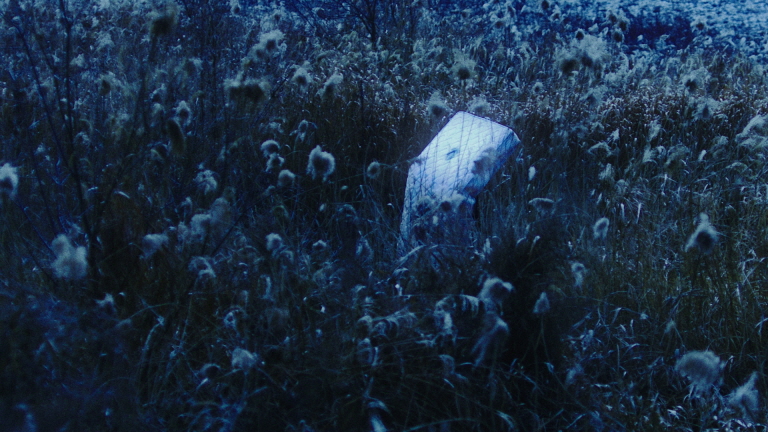
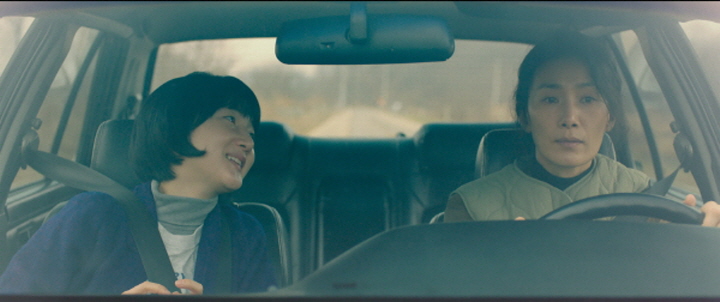
Septet: The Story of Hong Kong (2020) ☆☆☆(3/4): Seven different stories in Hong Kong

Hong Kong anthology drama film “Septet: The Story of Hong Kong” attempts to cover seven decades of Hong Kong via seven different intimate segments. Like many other anthology movies, the movie is not entirely perfect due to the different level of achievement of each of its segments, but it is still enjoyable on the whole thanks to the considerable personal sincerity and affection toward its main subjects, and it is surely something to check out for you if you are familiar with a bunch of notable Hong Kong filmmakers behind this film.

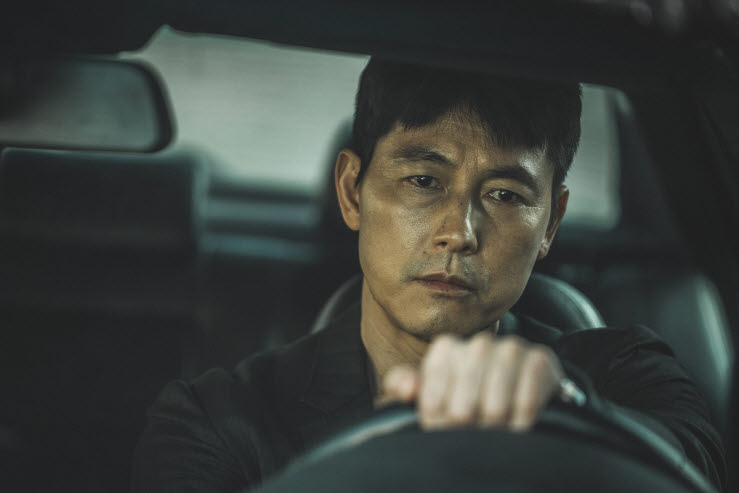
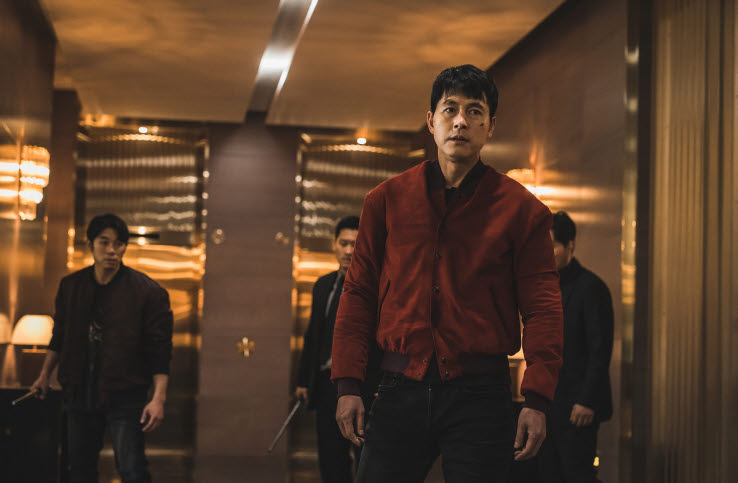
The first segment, “Exercise”, is directed by Sammo Hung and it is set in Hong Kong during the 1950s. This is a very simple and innocent story about a strict kung fu master, played by Hung’s elder son Timmy Hung, and a bunch of young trainees under his teaching, but you will be amazed by those young performers who show much more physical agility and flexibility than most of us, and you will also be touched a bit as clearly sensing some autobiographical elements from Hung’s life.

Set in Hong Kong during the 1960s, Ann Hui’s “Headmaster” will grow on you more as you come to reflect more on those seemingly simple personal moments observed from its titular character and one of young female teachers working under him. Both of them are good teachers who genuinely care about their students, and then we gradually come to discern that there is something developing between him and that young female teacher, which, to his sadness, he belatedly comes to realize many years later. Around this main story, Hui also adds a little episode involved with three naughty students, and the unaffected natural acting of the child performers in the film will bring some warm smile to your face whenever they appear on the screen.

The third segment, “Tender Is the Night”, is directed by Patrick Tam, and it is about two young lovers who will have to say goodbye to each other on one day of the 1980s. Right from when their eyes met, they quickly and passionately fell in love with each other, but now the girl is going to leave Hong Kong along with her family, and she cannot help but feel angry as her lover has already been quite resigned about the end of their relationship. As these two characters pull and push each other during their last meeting, the mood becomes more bittersweet, and that eventually culminates to a sublime moment of loss and sadness.

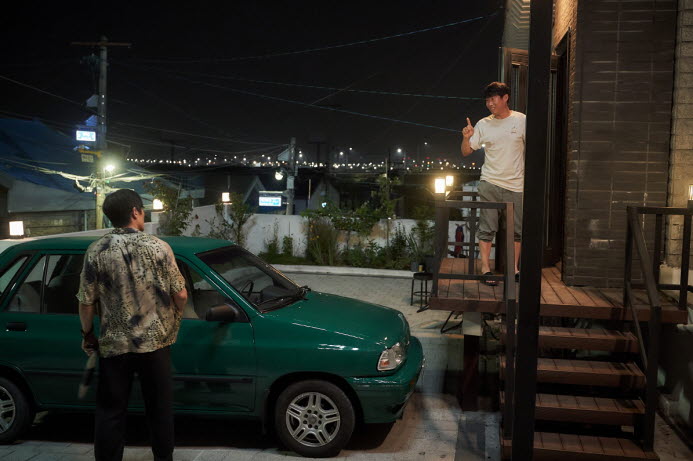
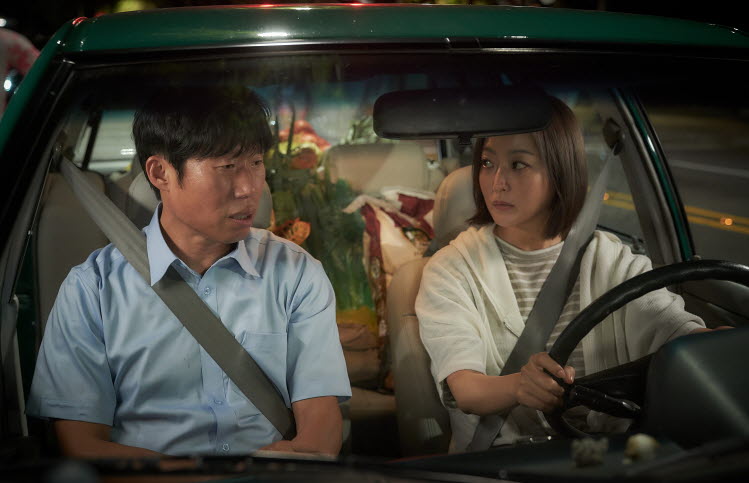
In contrast, Yuen Woo-ping’s “Homecoming”, which is set in the 1990s, is more cheerful in comparison as a funny and heartwarming story about an old guy and his granddaughter who has just returned to Hong Kong for some important examination. Right from when his granddaughter arrives at his residence, both the old guy and his granddaughter become more aware of the considerable generation gap between them, but, what do you know, they soon get quite closer to each other than expected after he shows a bit of his old Kung fu skill for her at one point. Yes, there will be always some distance between them in one way or another, his granddaughter comes to love and care about her grandfather more than before, and he surely appreciates that a lot while becoming more conscious of his mortality.

The fifth segment, “Bonanza”, is directed by Johnnie To, who is incidentally one of the co-producers of the film and shows a bit of his humorous side here. It shows several short episodic moments observed from three friends living in Hong Kong in the 2000s, and their clumsy attempts for getting rich via all those frenzies surrounding the local stock market are rather repetitive but hilarious nonetheless. Now I am reminded of what late Chicago film critic Gene Siskel’s helpful advice on stock market to his longtime colleague/competitor/friend Roger Ebert: “You can never outsmart the market, if that’s what you’re trying to do. Find something you love, for reasons you understand, that not everyone agrees with you about, and put your money in it.”

Ringo Lam’s “Astray”, which is set in Hong Kong in the 2010s, is quite poignant not only because of its small but tender and reflective family drama but also Lam’s death in 2018. As wandering here and there around in the city, a middle-aged man played by Simon Yam cannot help but become wistfully nostalgic about how the city looked many years ago, and then he feels quite confused and frustrated while hurriedly looking for the spot where his wife and son are waiting for him. Not long after one sudden accident happens to him, he and his wife move to his family home outside the city, and he becomes more peaceful than before, though he cannot help but annoyed by how his son and several other young men are rather disrespectful to his old traditional values. In the end, as reflecting more on his relationship with his father in the past, he comes to accept what he cannot possibly change, and that is soon followed by a powerful personal moment to linger on your mind.

The last segment, directed by Tsui Hark, is unfortunately the weakest one in the bunch, but it is not wholly without entertainment at least. Although it is no more than a neurotically self-conscious comedy sketch set in the middle of the 2020s, all performers in this segment are clearly having a fun with their deliberate overacting at least, and I will not deny that I was delighted by the cameo appearance by one of Hark’s fellow directors.

Overall, “Septet: The Story of Hong Kong”, which was premiered at the Busan International Film Festival in 2020 but was belatedly released in Hong Kong in last year before getting released in South Korea in this week, is an engaging mixed bag to be admired and savored. It is a bit of shame that John Woo, who was supposed to handle its 1970s part, dropped out for his health problem at the last minute, but that is just one of minor flaws in the charming tapestries of Hong Kong and its history and people, and I assure you that you will have a fairly good time with this lovely cinematic package.

Posted in Movies | Tagged , | Leave a comment

Next Door (2022) ☆1/2(1.5/4): “Why don’t you just call the police first, you idiot?”

Yesterday, I went to my dentist uncle for my routine scaling and a bit of dental treatment, and I had to deal with the possibility of physical stress and pain although everything turned out to be fairly fine on the whole after around 30 minutes. To be frank with you, I would rather go through this uncomfortable process more than once instead of enduring the 93-minute running time of South Korean film “Next Door”, which is one of the worst South Korean movies of last year in my humble opinion. This wretched piece of work is a brainless insult to any moviegoer who simply wants to be entertained, and now I must say this; I disliked, detested, and despised every nerve-grating minute of incompetence and stupidity in the film.

The story premise of the screenplay by director/writer Yeom Ji-ho looks promising at first. Its pathetic loser hero, Chan-woo (Oh Dong-min), has been preparing for his another attempt on the police department examination in an one-room apartment building full of young people like him, but then one of his friends calls him for drinking together in the evening, and he does not say no even though he really has to focus on his examination study right now. After drinking too much during that evening, he wakes up in the next morning to find himself in the one-room apartment right next to his, and then he is shocked to find a body on the bloody floor.

Not so surprisingly, Chan-woo is quickly thrown into panic and confusion, and he comes to commit a number of stupid things which will make your eyes roll more than once. Instead of instantly calling the police, he quickly gets out of that one-room apartment just because of being afraid of becoming the prime suspect, which may jeopardize his current preparation for the upcoming police department examination. Unfortunately, he happened to leave his smartphone in that one-room apartment, so he comes to do a very risky act for getting back into that one-room apartment again and then retrieving his smartphone.

Of course, the situation becomes quite more problematic shortly after he manages to get inside that one-room apartment. Mainly because of the landlady who soon comes to his one-room apartment for its boiler repair, Chan-woo only finds himself trapped inside his neighbor’s resdience much longer than expected, and he becomes more agitated by the growing possibility of getting himself exposed at any chance.

Now, this is certainly a typical setup for the fusion between thriller and black comedy, but the movie does not provide much thrill or humor or interest for getting things to roll within its limited background. While the screenplay is often quite trite and predictable as lackadaisically throwing one plot turn after another along the story, it is also very annoying due to its cheap sense of humor as well as its glaring lack of character development, and we simply observe its rather banal and uninteresting hero’s accumulating plight without much care or interest. After all, he had it coming from the start, so we do not feel so sorry for him as observing him from the distance, but his pathetic struggles along the story are not even amusing or compelling enough to hold our attention.

This is not the fault of Oh Dong-min at all, who certainly tries hard to sell his character from the beginning to the end. Sadly, he is stuck with delivering numerous bad lines besides forced to utter the same Korean slang many, many, many times throughout the running time of the film, and this does not bring any comic or dramatic depth to his character while only adding more annoyance for us. Sure, the movie does not expect us to like his character, but, let’s admit it, folks, he is your average superficial South Korean male jerk, and I must tell you that I do not have much tolerance for such characters like him especially if there is not any interesting thing to observe and write about.

And the movie only gets worse during its second half, where it tries more idiotic things here and there around its hero. First of all, it ruins any remaining taut sense of isolation and desperation via the introduction of a few other characters in the story, and it also annoys us a lot more than before as its hero continues to be stupid as usual. At one point, he clumsily tries to “investigate” the crime scene for understanding what the hell is really going on around him, but his silly attempt only reminds us that he will not be a very good policeman even if he manages to pass the examination. He also gets several opportunities to call the police, but he always chooses to do wrong things instead, and, as you have already guessed, his misguided choices only make things worse for him.

During my viewing, I became all the more frustrated with how contrived the movie really is, and I even found myself loudly shouting “Call the police now, you idiot!” more than once during my viewing. Fortunately, I was watching it at my residence via Netflix instead of watching it at a movie theater along with other audiences, so I did not have to be embarrassed at all, and that was probably the only saving grace in my terrible experience with the movie.

By the way, the main reason I watched “Next Door” yesterday was pretty simple. Several days ago, one of my acquaintances asked me to watch and then rate “Next Door” and several other South Korea independent films including “Drown” (2022) and “Three” (2020) for an upcoming local movie award ceremony, and I am rather depressed to report to you that I was not satisfied enough with any of these three films. I did not have to pay to see them at least, but should have I said no, I wonder?

Posted in Movies | Tagged , , , , | Leave a comment

Drown (2022) ☆☆(2/4): At an old motel

South Korean film “Drown” disappoints me in more than one aspect. Mainly revolving around an old motel run by its increasingly unreliable hero, the movie attempts a moody psychological thriller filled with anxiety and confusion, but it often falters due to its shallow narrative and thin characterization, and it does not even handle well some borrowed elements from other notable genre films such as, yes, “Psycho” (1960).

At first, the movie establishes how things have been frustrating for a middle-aged guy named Do-woo (Lee Joong-ok). For many years, he has run a little motel located in some rural region, but his motel business has been seriously declining during last several years due to many reasons including the decreasing number of guests. To make matters worse, there is another guest who committed suicide in his motel not long after the previous suicide incident, and this certainly does not help his motel business much to say the least.

In case of his private life, Do-woo does not have anyone close to him except his senile mother, who incidentally has a serious dementia problem. Because there was no one else to take care of her, Do-woo had to handle many things including medicine for his mother, and he has been devoted to his mother as much as Norman Bates, but his mother’s medical condition only gets worse day by day to his exasperation and frustration. While she is usually quiet and still without saying any word, she often goes into her tantrums without recognizing her son at all, and that certainly interrupts his motel business everytime.

After her latest big tantrum, Do-woo becomes so stressed that he comes to swallow some of his mother’s tranquillizer pills, and then something happens not long after he consequently comes to sleep during next several hours without any interruption. While his mother happens to occupy the reception desk in the meantime, somebody comes with a young woman, and, not so surprisingly, something bad happens shortly after that unknown figure checks into a motel room along with that young woman.

When Do-woo wakes up some time later, everything seems to be mostly fine and uneventful as before, but he soon comes to realize that something is quite wrong, because his mother is disappeared for no apparent reason. After trying to search for her alone by himself, he eventually contacts with the local police, and that is soon followed by an extensive search upon the motel and its surrounding area including a big nearby lake, though they still do not find any clue on his mother’s whereabouts.

As Do-woo becomes more anxious and disturbed due to his mother’s disappearance, another unknown figure comes to the motel. Because he previously saw this mysterious figure, Do-woo does not hesitate to let this mysterious figure stay at his motel, but then we gradually sense more of the bad influence from this mysterious figure, who seems to be quite interested in spending some time with Do-woo for no apparent reason. When some pretty lass comes just because she needs a place to stay at the motel later, the mood becomes a bit lighter than before, but Do-woo remains shy and introverted as usual, even when that young woman in question looks willing to get closer to him.

In the meantime, the situation surrounding the disappearance of Do-woo’s mother becomes more ominous than before. A local female detective assigned to the case soon comes to find about those two unknown guests who came to the motel around the time of his mother’s disappearance, and she soon begins to regard Do-woo with more suspicion because she senses that he did not tell everything to her from the very beginning.

Around that narrative point where Do-woo’s viewpoint becomes gradually unreliable, you may come to have some pretty good idea about what is really happening around him, if you are a seasoned moviegoer like me. All I can say for now is that the screenplay by director/writer Lim Sang-su, who is not incidentally related to prominent South Korean filmmaker Im Sang-soo, will not surprise you much in the end. Yes, there eventually comes a surprising moment of revelation for Do-woo later in the story, but we are already seeing that coming from the distance, and we become all the more frustrated when the movie tries to muddle the situation more without much dramatic impact.

In case of Lee Joong-ok and several other main cast members in the film, they try as much as possible with their rather superficial roles. Lee did a good job of embodying his character’s longtime desperation and frustration without showing them off at all, Kim Dae-geon and Kim Yeon-kyo are well-cast in their crucial supporting parts, and Byun Joon-hee, Kang Mal-geum, and Gong Min-jung manage to leave some impression despite being stuck with their underdeveloped roles from the beginning.

On the whole, “Drown” is not a lousy piece of work at all, and I appreciated its foreboding atmosphere coupled with some bleak realism, but I observed its story and characters without much care and attention. To be frank with you, I happened to be quite tired when I watched the film right after returning from Seoul, and I just became all the more tired with lots of dissatisfaction. Perhaps, I should give it another chance later considering how I did not feel that well during my viewing, but, for now, I am not so particularly willing to do that.

Posted in Movies | Tagged , , | Leave a comment

Three (2020) ☆☆1/2 (2.5/4): A dryly chilling serial killing story from Kazakhstan

Not long after “Borat: Cultural Learnings of America for Make Benefit Glorious Nation of Kazakhstan” (2006) was released, there came “Tulpan” (2008), a little overlooked comic gem from Kazakhstan which shows a lot about that country which was hilariously misrepresented in the former. Around the time when “Borat Subsequent Moviefilm: Delivery of Prodigious Bribe to American Regime for Make Benefit Once Glorious Nation of Kazakhstan” (2020) was released, there came “Three”, a small but chilling film inspired by a real-life serial case in Kazakhstan in the late 1970s. Although it is automatically compared to other similar genre films ranging from “Se7en” (1995) to “Memories of Murder” (2003), “Three” is often engaging while taking us back to its dry but realistic period background, and that compensates for its several notable flaws in terms of story and characters to some degree.

After the gruesome opening scene showing the serial killer in the story committing his latest act of killing and cannibalism, the movie introduces us to a young police officer who has just begun his first day in a local police station in an unspecified city of Kazakhstan. Like any other rookie cop, Sher Sadikhov (Askar Ilyasov) is ready to prove himself as much as he can, and his seniors including his direct superior naturally observe him with mildly detached amusement while going through another usual day of theirs.

However, there soon comes a big case which troubles all of them. The severed head of some woman is discovered, and Sher and other cops begin to search for any possible suspect. When some guy, who later turns out to be the boyfriend of that murdered women, comes to the police station for his confession, it looks like all they will have to do now is recording his confession, but they all come to sense that this guy is lying, and it is eventually revealed that he has a rather pathetic motive behind his false confession.

Nevertheless, this guy also turns out to be a very valuable witness to help the investigation. When more suspects are brought to the police station, he suddenly becomes quite nervous at one point, Sher and his colleagues instantly sense that there is certainly the killer in this group of suspects. Two persons in the group eventually come to draw more attention, and Sher later visits one of them without much expectation.

Of course, it does not take much time for Sher (and us) to realize that there is something fishy about that suspect. While this suspect looks like your average loser on the surface, there is also something creepy about his attitude, and, what do you know, he turns out to be the one Sher and his colleagues are looking for. He subsequently does another shocking thing right in front of his drunken friends, and that is just a tip of the horror of what he has committed for months.

However, things get more complicated when this serial killer somehow escapes when Sher and his colleagues come for his arrest. Because Sher gets injured a bit on his shoulder at that point, his older sister Dina (Samal Yeslyamova), a schoolteacher who has lived with him for years since they lost their dear parents, becomes quite upset, and Sher is embarrassed a lot because of that. Sure, she cares a lot about him, and he also cares about her, but he cannot help but become annoyed by how much she is still devoted to him while not taking care of herself that much in contrast.

And then Dina is suddenly disappeared not long after she argued a lot with Sher, and Sher becomes quite concerned about because it is highly possible that she becomes the latest victim of the serial killer. Although he is not fully recovered from his injury, he is quite willing to participated in the ongoing search, and his direct superior allows that despite some reservation.

Around that time, we are supposed to care more about what actually happened to Sher’s older sister, but she is not particularly developed well even though she is one of a very few substantial female characters in the story. While Samal Yeslyamova, who won the Best Actress award for “Ayka” (2018) at the Cannes Film Festival, brings some genuine warmth to the screen, but we do not get to know that much about Dina besides her relationship with her brother, and she ends up being no more than a mere plot element.

During its last act, the movie also attempts to make some points on how much the Soviet government was willing to ignore and cover up the case just for preserving the public image of its country at that time, but that is where it becomes a lot less subtle than before. We even get an urgent chase scene unfolded inside a moving train, and the mood certainly becomes quite violent as Sher finally confronts the killer again. While Askar Ilyasov is effective as his character is driven more by his growing obsession with the case, Zhandos Aibassov is as disturbing as required by his murderous role, and Igor Savochkin and Nurzhan Sadybekov are also solid as two senior police officers around Sher.

“Three” is the second feature film of director/producer/co-writer Ruslan Pak, an Uzbekistani filmmaker of Korean descent who previously made “Hannan” (2011). Although I am not so satisfied with “Three”, it still shows at least that he is a competent filmmaker who knows how to draw our attention via mood and details, and I sincerely hope that he will impress me more in the next time.

Posted in Movies | Tagged , , , , | Leave a comment

Return to Seoul (2022) ☆☆☆1/2(3.5/4): A manic pixie adoptee girl returning to South Korea

“Return to Seoul”, which was the official submission of Cambodia for Best International Film Oscar in last year (It was later included in the shortlist, by the way), is an interesting work to observe and admire for good reasons. As calmly but sensitively observing its conflicted adoptee heroine’s quiet but intense struggle in South Korea, the movie serves us a series of sublime emotional moments often alternatively baffling and striking, and we come to have some human understanding and empathy on her even though we still regard her from the distance along with the movie itself.

The first act, which is set in 2013, opens with its heroine’s arrival at a little inn located somewhere in the middle of Seoul, South Korea. While she was supposed to go to Tokyo, Japan, Frédérique “Freddie” Benoît (Park Ji-Min) chose to come to Seoul instead just because of an impulsive decision of hers, and, fortunately, she quickly comes across someone who can be a guide/friend/translator for her during her following staying period in South Korea.

Although the movie does not tell or show a lot about Freddie, we gradually gather some details of her life and herself. She was born in South Korea, but then she was abandoned not long after her birth, and then she eventually got adopted by some nice French couple. While everything certainly looks so alien to her in South Korea, that does not stop her carefree spirit at all when she is when she is drinking with her new friend at a local restaurant, and she surely enlivens the mood a lot. As watching how much she is driven to live for any good moment of joy and freedom, I wrote down this in my mental note: “This is the first manic pixie adoptee girl movie I have ever seen.”

Meanwhile, Freddie comes to learn about a local foundation center for South Korean adoptees looking for their biological parents. She seems not so interested at first, but, what do you know, she later goes to that local foundation center for getting to know anything about her biological parents. Although she did not prepare anything for the following procedure, both of her biological parents are soon located and then notified of her wish to contact with either of them, and she and her new friend later go down to Gunsan, a little seaside local city where her biological father has resided with his family. She is certainly welcomed a lot by her biological father and his family when she eventually arrives there, but she cannot help but feel uncomfortable as being more aware of the cultural/lingual gap between her and her ‘new’ family. As a matter of fact, she even attempted to go back to Seoul despite being in the middle of the bus trip to Gunsan, and you can see how much anxious and confused she is behind her rather detached façade.

Her biological father and his family try to be nice and comforting to Freddie, but we come to wince more than once as they annoy and bother her a lot even though they and she are total strangers to each other from the beginning. In case of her biological father, he is a pathetic middle-aged loser who also often drinks a lot, and, as a South Korean audience, I must tell you that I have frequently seen such guys like him not only on the screen but also in my real life. At one point, he is so wallowed in alcohol as well as self-pity that Freddie wishes more to see her biological mother, but, sadly, her biological mother does not seem to get involved with her again no matter how much Freddie and that foundation center tries.

The second act, which is set in 2015, shows Freddie living in Seoul now, and we observe how casually and aimlessly her current life is. She is living with some young tattoo artist, and he seems to love and care about her a lot, but she is rather distant to him in their open relationship. She does not hide at all who was her latest blind date via Tinder, and she even lets him and herself have a sort of little threesome moment with a fellow South Korean adoptee of hers when they all happen to be in the middle of a wild private birthday party for her.

When Freddie eventually gets tired more of being in Seoul, the movie jumps forward to the last act, which is set in 2020 as reflected by the sights of numerous people wearing mask on the streets and alleys of Seoul. At first, Freddie, who has just returned to Seoul after spending some years outside South Korea, seems to be more stable and well-adjusted than before with her French boyfriend, but we soon come to sense lots of discontent and conflict from her even though she does not signify much as she and her boyfriend have a cordial lunch with her biological father and aunt.

All these and other individual moments in the film do not seem to add up much when it eventually arrives at the epilogue part, but they come to convey to us a growing sense of isolation and alienation surrounding our heroine, and Chou and his crew members including cinematographer Thomas Favel did a fabulous job of bringing a considerable amount of palpable realism to the screen. For example, a number of real locations in Seoul and some other areas of South Korea are effectively utilized for bringing more local atmosphere to the movie, and I was certainly delighted a bit by a few shots of my hometown Jeonju later in the film.

Although several notable South Korean performers including Oh Kwang-rok appear as the crucial supporting characters in the story, they look believable as plain ordinary people, and they seldom overshadow the exceptional lead performance from Park Ji-Min. Despite never having any acting experience before this film, Park, who closely collaborated with Chou on bringing more life and authenticity to the story and her character (Her character is actually inspired by a friend of Chou, by the way), creates a vivid and complex human character to observe, and her performance is strong enough to hold our attention even when her character becomes quite distant and unlikable.

Overall, “Return to Seoul”, which is Chou’s second feature film after “Diamond Island” (2016), will require some patience from you due to its rather opaque storytelling and slow narrative pacing, but it will engage you more than expected if you just go along with its indelible mood and Park’s strong acting. As a Korean adoptee drama made by a French-Cambodian filmmaker, the movie is certainly curious from the start, and I am happy to report you that it is much more than being merely curious on the outside.

Posted in Movies | Tagged , , | Leave a comment

The Pope’s Exorcist (2023) ☆☆1/2(2.5/4): A usual demonic stuff

Maybe because I am your average seasoned moviegoer, “The Pope’s Exorcist” mildly amuses me without scaring me that much on the whole. As I probably said before, I have seen heaps of movies about demonic possessions since I watched “The Exorcist” (1973) for the first time in 1996, and there were some good ones while there were also bad ones. I must say that “The Pope’s Exorcist” does not belong to the former group, but it is a well-made flick which shows some competence and amusement at least.

The movie, which is set in 1987, closely follows the story formula of “The Exorcist”. During the opening scene, we are introduced to Father Gabriele Amorth (Russell Crowe), and we see how he executes his latest exorcism ritual on some Italian lad who seems to be possessed by some demon. Although it is possible that this young man is simply an extreme case of mental illness, Father Amorth skillfully handles the situation as a well-experienced expert, and it looks like everything ends up being pretty well except for that poor big black pig at the scene.

However, he is not regarded well in Vatican, though he has considerable reputation as the chief exorcist representing Vatican while trusted and protected by the Pope himself. As he admits in front of cardinals, most of his cases have been just serious cases of mental illness, and he simply opens the door for professional psychiatrists via his theatrical ritual, but he also believes in the existence of devils because of a few inexplicable cases which are strongly suggestive of that.

Anyway, the Pope, played by Franco Nero with some mild gusto, soon assigns Father Amorth to a serious case happening in some rural area of Spain, which looks more like Ireland under its gloomy weather because the movie was actually shot there in last year. An American widow and her two kids recently moved into an old abbey which happened to be the only asset left by her dead husband, and she hopes that the following renovation will earn some money for her family, but, of course, there quickly come several bad signs here and there as she and her family go through their first several days at the abbey. In the end, one of her kids end up looking quite disturbed to say the least, and it does not take much time for a young local priest to realize that they really need an expert who can handle this frightening incident.

Father Amorth comes to the rescue by his little motorcycle (Isn’t it better to go there by an airplane, considering how urgent the circumstance looks?), and he discerns right from the beginning that he is dealing with a genuine case of demonic possession (Is this a spoiler?). It seems that whatever is possessing that poor kid has some old score to settle with Father Amorth, and Father Amorth really needs to be careful about this powerful demon.

What follows next does not surprise you much if you already watched “The Exorcist” and its countless imitators. While that possessed kid hisses or threatens a lot, many disturbing things happen here and there around Father Amorth and several others around him, and it also turns out that the abbey has a very dark past right beneath its old ground. Things seem to get more interesting when the movie attempts to juxtapose a certain infamous part of the history of the Catholic Church with its supernatural main subject, but, alas, the movie only comes to make a superficial excuse on one of the greatest sins committed by the Catholic Church.

As some of you know, Father Amorth is a real-life figure, and the movie is actually based on his two books “An Exorcist Tells His Story” and “An Exorcist: More Stories”. Even if you have not read them yet (I have not either, by the way), you can clearly see how the movie goes all the way for more exaggeration, and that only makes it look only quite generic and clichéd. In case of that poor American family in the film, these supporting characters are not so developed well from the beginning, and that reminds me of how crucial the quiet but realistic first act of “The Exorcist” is in many aspects. That classic movie takes some time for establishing a realistic background and a bunch of credible characters living inside the background, and that is why what eventually happens along its story is still compelling and powerful even though it comes to lose some of its shock and awe during last 50 years.

Nonetheless, Russell Crowe is having some fun with his inherently showy role compared to many other main cast members of the film, who are mostly stuck in their colorless supporting roles in contrast. Although he seems to be away from the prime period of his acting career nowadays, Crowe has willingly become a colorful character actor during his later years like Laurence Olivier did, and his engaging presence is more than enough to compensate for his questionable delivery of Italian accent and dialogues. Come to think of it, how can we possibly expect any authenticity from a decidedly unrealistic exorcist flick?

In conclusion, “The Pope’s Exorcist”, which is directed by Julius Avery, is rather middling while not bringing any particularly new or fresh to its very familiar genre territory, but I was not bored when I watched it yesterday. It is not recommendable enough, but you will not probably be disappointed that much if you keep your expectation as low as possible.

Posted in Movies | Tagged , , , , , | Leave a comment

Master Gardener (2022) ☆☆1/2(2.5/4): The Gardener in the Room

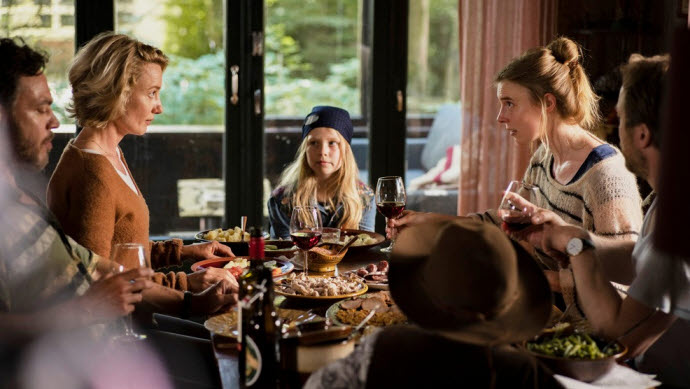
Paul Schrader’s latest film “Master Gardener”, which was recently shown at the Jeonju International Film Festival in South Korea, is another typical drama of his which sadly does not work as well as intended for several glaring bad reasons. Again, Schrader attempts to tell the familiar story of a solitary man austerely struggling alone with his hidden dark sides, but his own storytelling story does not fit that well with the pulpy aspects of the story and characters, while also regrettably showing how out-of-touch he can be.

The titular hero of the story is Narvel Roth (Jeol Edgerton), who has worked as the chief gardener of some lovely Southern manor owned by a middle-aged dowager named Mrs. Haverhill (Sigourney Weaver). While he does not say much about himself, we get to know more about him bit by bit as he routinely writes his private journal just like Ethan Hawke’s priest character in “First Reformed” (2017) or Oscar Isaac’s gambler character in “The Card Counter” (2021).

As the important annual horticultural event for Mrs. Haverhill is coming, Narvel and his several fellow employees certainly have to pay more attention than before while expected a lot from Mrs. Haverhill, and then there comes an odd request from her. It turns out that she has a young grandniece, and, because this young lady is incidentally the only close family member of hers, Mrs. Haverhill wants Narvel to prepare her grandniece for taking over the estate and its garden someday.

When Maya (Quintessa Swindell) begins her first day at her grand aunt’s garden, she seems to be eager to learn one thing after another from Narvel, and everything looks fine during her next several days, but Narvel gradually senses that something is not all right with this young woman. After all, as his employer already told him, she had a rather troubled childhood due to her problematic parents who are already dead at present, and Narvel becomes more watchful when he comes to recognize later that she actually has an addiction problem just he did a long time ago.

Not so surprisingly, Narvel turns out to have kept something quite dark behind his back for years. While he simply wants to lead the quiet and peaceful life of a gardener as before, he also keeps reminding himself of his very troubled past, and that is quite apparent to us when he takes off his shirts while being alone in his small residence. Time has passed a lot since he decided to be a different man, and he is relatively safer than before, but, as a close associate of his reminds him at one point, he has never been forgotten at all due to his remaining notoriety out there.

In addition, Mrs. Haverhill and her grandniece cause more anxiety and uncertainty in Narvel’s life. Mrs. Haverhill actually knows a lot about Narvel, and that is how she has kept him under her power and influence for years. When Maya happens to be threatened by someone from her past, Narvel decides to be a little more active, and Maya surely appreciates that, but then she inadvertently gets Narvel into a big trouble between him and her grandaunt.

Now this sounds like your average pulpy Southern melodrama, but Schrader’s screenplay adamantly sticks to its calm and restrained attitude as before, and we become more aware of how the screenplay feels increasingly problematic in the handling of its three main characters. Narvel initially draws our interest as another interesting case of “the Man in the Room” by Schrader, but the screenplay fails to bring enough human depth and personality, and that is one of the main reasons why its supposedly redemptive finale does not work as well as intended. In case of Maya and her grandaunt, they are even less developed compared to Narvel, and Schrader’s rather superficial treatment of their supposedly complex relationships with Narvel indirectly reminds us of how insensitive he has been to gender issues during last several years. To be frank with you, many of female characters in Schrader’s works are more like story elements at times, and “Master Gardener” presents the worst recent example of that in my humble opinion.

Anyway, Schrader’s main cast members try their best. Joel Edgerton, who has been one of the most dependable actors in our time while steadily working here and there during last 20 years, did a good job of bringing quiet intensity and authenticity to his character as required, and his several diary scenes in the film may make you hope that he will get a chance to work on the audiobook of any good gardening book someday. While mostly stuck in her thankless role, Sigourney Weaver fills her character with enough sense of power and authority at least, and you can instantly see that her character is not someone you can easily mess with. Compared to Edgerton and Weaver, Quintessa Swindell, a non-binary performer who recently appeared in “Black Adam” (2022), is unfortunately under-utilized, but their acting is fairly good on the whole, and we may see more of their talent during next several years.

In conclusion, “Master Gardner” is two or three steps below “First Reformed” and “The Card Counter”, and that is a big disappointment to say the least. To some degree, I appreciate how Schrader keeps going as usual in his own artistic territory even though it has been almost 50 years since he wrote his first screenplay in the early 1970s, but the movie is misguided at best and gender-insensitive at worst, and I can only wish that he will soon compensate for this minor failure.
Posted in Movies | Tagged , , , | Leave a comment

Infinity Pool (2023) ☆☆☆(3/4): Brendon Cronenberg strikes again

Brendon Cronenberg’s new film “Infinity Pool” is his another striking piece of work which is not only perversely provocative but also gruesomely violent. Like his previous film “Possessor” (2020), it often unsettles us a lot via a series of very disturbing moments of violence and madness, but it still engages and fascinates us under his skillful direction, and the overall result surely confirms that Cronenberg is indeed a talented filmmaker which may have his own genre territory just like his famous filmmaker father David Cronenberg.

At first, we are introduced to James (Alexander Skarsgård) and Em (Cleopatra Coleman), a young married couple enjoying their luxurious summer vacation at a resort located in the seaside area of some fictional Eastern European country. Nothing much has happened around them and many other guests, but we cannot help but observe how insular and isolated the resort really is. For their safety, the guests are not allowed to go outside the resort and its surrounding area which is heavily guarded to say the least, and we come to gather that they are not so welcomed much by those local people out there.

When James and Em later happen to get themselves involved with a young woman named Gabi (Mia Goth) and her older husband, we get to know a bit more about James. Although he published his first novel several years ago, he still does not know what to write next while going nowhere in his supposedly promising career, and it is clear that he feels rather ashamed about how he has depended a lot on his wife, whose father is incidentally the owner of the company which published his first novel.

Anyway, Gabi and her husband suggest that Em and James should have some fun time with them outside the resort, and James and Em eventually go outside along with Gabi and her husband despite their reservation. While these four people are spending some time at a remote place, Gabi suddenly approaches to James when he happens to be alone for a little private business of his at one point, and he soon finds himself in a very embarrassing situation because of what Gabi commits without any hesitation.

However, that turns out to be almost nothing compared to another sudden trouble happening to James and others not long after that. While driving them back to the resort in the middle of the night, James, who happens to be considerably drunk, inadvertently hits some local person on the road, and he is thrown into more panic and fear when he is subsequently arrested by the local police on the next day. According to the local law, he must be executed even though his act of manslaughter was completely accidental, and it seems that there is no way out for him no matter how much he protests.

However, it turns out that there is actually a legal loophole ready for those unfortunate foreign people like him. All James and Em will have to do is paying enough for getting him cloned somehow, and the resulting clone, who is identical to him not only physically but also mentally, will be promptly executed instead as watched by him and several other people including the family members of the victim.

Once the execution is done, James and Em are ready to leave as soon as possible, but, what do you know, James finds himself stuck in the resort due to a small problem with his passport, and then he gets himself involved more with Gabi and her husband and their “special” group. They all had that weird experience of getting themselves cloned for not getting executed, and they are quite ready to make James embrace their depraved lifestyle which is probably resulted from how they have been able to get away with murder more than once.

While understandably reluctant at first, James slowly lets himself tumble into more depravity and debauchery along with his new friends, and the movie throws shocking moments of cruelty and violence to us. Totally free from their legal comeuppance, James’ new friends are willing to do whatever they are pleased to do right now, and they come to look more like monstrous humanoids instead of real human beings. At one point, they commit a heinous act of home invasion just for their twisted fun, and then they kill several persons as a result, but, of course, they soon get freed as their clones are quickly executed.

The movie begins to spin its wheels during the last act, but Cronenberg continues to generate more discomfort and nervousness along the story. There are several psychedelic hallucinogenic moments which powerfully reflect James’ growing confusion and implosion, and everything eventually culminates to a loony bloody moment as he is coerced to go through a sort of transformative act by Gabi and her gangs. Thanks to Alexander Skarsgård’s committed acting, this moment is delivered with full dramatic impact, and Mia Goth, who is no stranger to violent horror films considering her breakout performance in Ti West’s “X” (2022) and “Pearl” (2022), delightfully chews every moment of hers in the film while Cleopatra Coleman is unfortunately under-utilized in contrast as stuck in her thankless supporting role.

Although I think it could delve deeper into its story and characters, “Infinity Pool” is still impressive mainly for its style and mood, and it will be interesting to see what Cronenberg will do next after this film. He shows his considerable potential as he previously did in “Possessor”, and I can only hope that these two films will be regarded as the preludes for better things to come from him in the future.

Posted in Movies | Tagged , , , | 1 Comment

Crimes of the Future (2022) ☆☆☆(3/4): Cronenberg still has it…

David Cronenberg’s latest film “Crimes of the Future” is akin to a compilation album filled with his old hits. As usual, human bodies function as carnal theaters of horror to be sliced and then explored to the extreme degrees, and the movie certainly shocks and disturbs us a lot under Cronenberg’s cool and cerebral approach to its sensational story and characters, while also evoking numerous elements from his many other horror thriller films ranging from “The Brood” (1979) to “eXistenZ” (1999).

At first, it takes some time for us to get accustomed a bit to the strange dystopian background of the movie, where both humanity and medical technology are so weirdly and grotesquely advanced to our discomfort and fascination. While many people in this world are virtually impervious to physical pain and infection in addition to often randomly developing new organs inside or outside their bodies due to “Accelerated Evolution Syndrome”, advanced surgery technology becomes quite common and casual, so one can easily perform a surgery on oneself via widely available surgery equipments.

As one of the most extreme cases of Accelerated Evolution Syndrome, Saul Tenser (Viggo Mortensen) has frequently done his own “performance art” along with his partner Capris (Léa Seydoux). Whenever new organs start to develop inside his body, they prepare themselves for their latest personal operating theatre, and many people willingly come to observe and record their “performance” as Capris has Tenser’s body get eviscerated here and there before eventually arriving at their finishing touch.

And then there come two unexpected changes into Tenser and Caprice’s barren daily life, which is as detached as the kinky private sex life of that bored married couple played by James Spader and Deborah Kara Unger in “Crash” (1996). They are approached by two different bureaucrats handling the registration of newly developed human organs, and one of them, a young woman named Timlin (Kristen Stewart), seems to be more interested in Tenser and Caprice’s artistic process than registering whatever Tenser is developing inside his body at present. Watching a long conversation scene between these two bureaucrats and Tenser and Caprice, you may scratch your head a bit for not fully understanding what the hell they are actually talking about, but Cronenberg and his performers keep us engaged as deftly conveying to us the main characters’ flat and detached attitude to their freakish matters of flesh and blood, and this will certainly take you back to how clinically intellectual many of Cronenberg’s physical horror films are despite lots of gory sights including that disturbingly fascinating genetic fusion of fly and human in “The Fly” (1986).

Meanwhile, Tenser is also approached by a detective who wants him to work as a sort of undercover agent. There is a group of subversive people quite willing to push their own accelerated evolution process all the way for some unspecified cause, and we later come to learn that their newly developed organs can actually digest plastic matters. I really do not know whether there is really any kind of evolutionary advantage on that, though I am sure that, as indirectly reflected by the unnerving prologue scene of the film, they are bound to be the ultimate garbage men for all mankind.

As expected, Tenser is soon approached by the leader of this subversive group, and we get to know more about what this subversive group has been planning in secret. Via Tenser performing his latest surgery show on a certain dead body, they are about to make a sort of reactionary public statement somewhere between “Videodrome” (1983) and “eXistenZ”. Although he is not so eager about this, Tenser lets himself get associated with this subversive group as requested by that cop, and he also gets himself involved with some shady doctor who asks him to participate in a sort of “inner beauty contest”, which may remind you of a certain memorable line from one of the twin characters played by Jeremy Irons in “Dead Ringers” (1988).

The movie is often a little too murky and confusing for us, but we can also sense that Cronenberg is having a little naughty fun with his old territory of flesh and blood after delving into the realm of mind during last two decades as reflected by “A History of Violence” (2005), “Eastern Promises” (2007), and “A Dangerous Method” (2011), which incidentally has Sigmund Freud and Karl Jung at the center of its story. I guess he simply demonstrates here that he has not lost any of his old artistic skills and touches, and that is probably more than enough for you if you have admired his distinctive artistic style and talent like I have since I watched “The Fly” for the first time when I was young and wild.

Three main cast members of the film ably dial down themselves for immersing themselves into the dryly drab environment inhabited by their respective characters. While Viggo Mortensen, who already worked with Cronenberg in his three previous films, dutifully holds the middle spot as required, Léa Seydoux and Kristen Stewart skillfully complement their co-star in one way or another, and Stewart, who has been one of the most compelling actresses working in Hollywood as distancing herself further from those disposable vampire romance flicks in her early career years, is particularly fun to watch when her character flatly gushes out her enthusiasm toward Tenser and Caprice’s artistic activity.

Although it is not exactly one of the better works from Cronenberg, “Crimes of the Future” is an interesting piece of work which will engage you enough if you are well aware of what you can expect from Cronenberg. I cannot say I was entertained during my viewing, but it is still worthwhile to check out for its indelible mood and style, and you will surely be reminded again of why Cronenberg is still one of best masters of horror in our time.

Posted in Movies | Tagged , , , | Leave a comment

Judy Blume Forever (2023) ☆☆☆1/2(3.5/4): She still tells all

Documentary film “Judy Blume Forever”, which was released on Amazon Prime a few weeks ago, is a delightful tribute to Judy Blume, a famous American writer with whom I was regrettably not so familiar before hearing about the recent movie adaptation of her iconic middle-grade book “Are You There God? It’s Me, Margaret.” Besides wonderfully illuminating Blume’s interesting life and career, the documentary shows us why many of her works remain important and relevant even at this point, and Blume often shines at its center while quite frank and humorous about many things including herself.

The documentary simply lets Blume talk in front of the camera, and she certainly tells all as many of you can expect from her. Even when she was young, she wanted to be a writer, and she did not give her dream at all even after marrying her first husband in 1959 and then having two kids in their suburban house in New Jersey. She certainly tried hard to be a good housewife and mother to her family, but she always felt something lacking in her suburban daily life, and she eventually went for writing when she came to have more spare time later.

Her several attempts on children’s book were not so successful to say the least, but Blume was not daunted by these failures at all. As a matter of fact, she became all the more determined to succeed as a writer, and she instantly moved onto writing for teenagers once she came to see that she was not that good at writing children’s books. In 1969, she eventually came to publish her first book “The One in the Middle Is the Green Kangaroo”, and its small but significant success soon led her to her second book “Iggie’s House” in 1970.

However, it was her third book, “Are You There God? It’s Me, Margaret.” that catapulted her to much more fame and popularity in US. Via its ordinary adolescent heroine who becomes quite conflicted about many sensitive things including her sexual development, the book boldly and honestly explores what average adolescent girls experience as getting physically and emotionally matured day by day, and its very frank attitude was wholeheartedly welcomed by millions of young readers out there.

Emboldened by the enormous success of “Are You There God? It’s Me, Margaret.”, Blume decided to go further for more honesty and understanding, and she happened to be in the right time for that. As the American society went through a series of big social/political upheavals in the 1960s, many people demanded more changes than before, and this eventually boosted the female rights movement in the 1970s. People were more willing to talk about sex and many other things associated with adolescence, and Blume actively responded to that as writing a number of equally important works such as “Blubber”, “Starring Sally J. Freedman as Herself”, and “Forever…”, which still draws the ire of some conservative people out there because of its very frank presentation of the carnal aspects of one plain adolescent romance.

Because I have not touched any of these and other works by Blume yet, I cannot say much about whether they actually have any artistic quality to admire, but I am touched nonetheless by how much Blume cares about not only her works but also her many young readers out there. As a matter of fact, most of her young readers often sent their personal letters to her, and Blume willingly corresponded with each of them for showing some generous support to each own personal matter. Some of these young readers interacted with Blume for quite a long time, and one of them tells us how much she was excited when Blume willingly attended her high school graduation ceremony as requested.

In addition, the documentary assembled a bunch of many different interviewees who gladly talk about how much their lives have been influenced by Blume’s works in one way or another. While Lena Dunham and Molly Ringwald are certainly the most prominent ones in the bunch, many of other interviewees including authors Jason Reynolds and Mary H.K. Choi also have some interesting things to talk about, and you can easily sense their respect and admiration toward Blume’s works.

As playfully pointed out around the end of the documentary, many of Blume’s works become dated to some degree as the products of their time, but they do not lose any of their importance at all because of being unfairly targeted by those unpleasantly intolerant conservative zealots out there. When Ronald Reagan entered the White House at the beginning of the 1980s, lots of backlashes against the progressive movements of the 1960-70s followed, and, as shown from a series of archival footages clips, Blume had to endure a lot just because she wrote quite frankly about teenagers in her books. As many of you know, this toxic social trend returned several decades later as Donald J. Trump deliberately opened the door for more virulent bigotry and intolerance, and Blume is not so pleased about that to say the least.
Nevertheless, Blume does not stand back as usual while fighting against censorship as before. While she does not write more after publishing “In the Unlikely Event” in 2015, she recently came to run a little bookstore of her own along with her third husband after moving to Key West, Florida, and, as far as I can see from the documentary, she and her husband are doing fairly well in their small business.

Overall, “Judy Blume Forever” is not only informative but entertaining mainly thanks to Blume’s ebullient presence, and directors/producers Davina Pardo and Leah Wolchok present Blume and her works with lots of care and respect. I cannot be sure about when I will try on Blume’s works, but I must admit that I was charmed and entertained enough by the documentary, and I am certainly looking forward to watching the recent movie adaptation of “Are You There God? It’s Me, Margaret.”.

Posted in Movies | Tagged , , , | Leave a comment