Sisu (2022) ☆☆☆(3/4): Let’s kill them all!

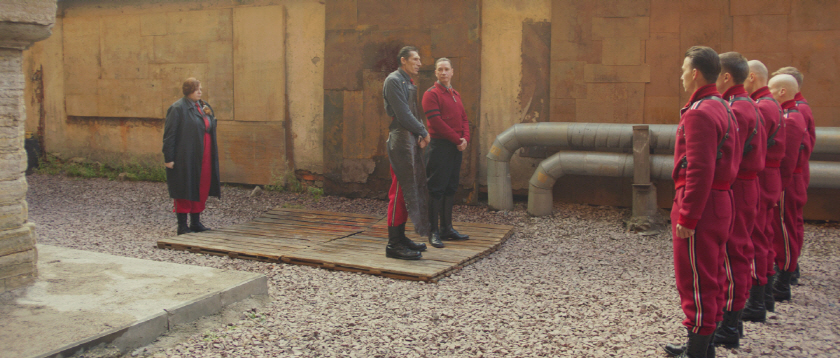
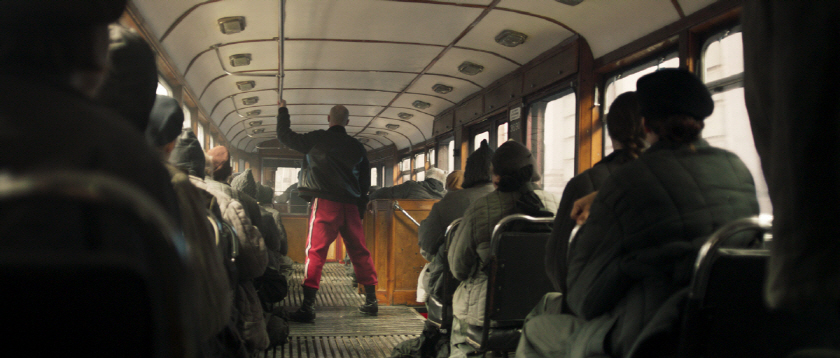
I winced and then was amused more than once as watching Jalmari Helander’s new film “Sisu”, an extremely violent but preposterously entertaining World War II film which really goes over the top along with its silent but striking hero. As stoic, lethal, and unstoppable as John Wick and John Rambo, this dude is quite determined to eliminate all those bad guys on his way for retrieving what is rightfully his, and you will appreciate how deftly the movie balances itself between sheer intensity and a sly sense of deadpan humor.

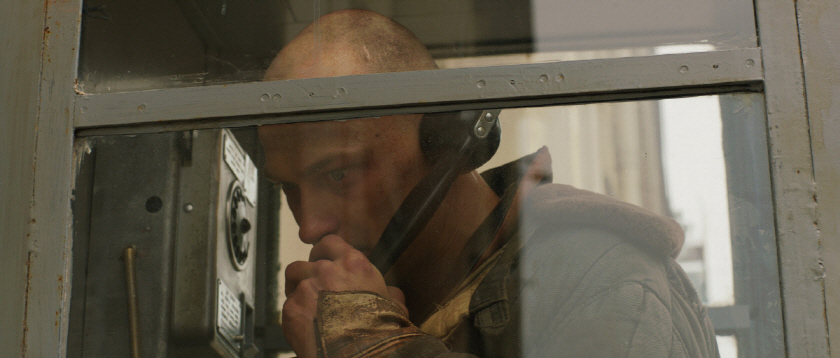
The movie is set in the Lapland area of Finland in late 1944. The country has been ravaged by the war by Russia and Nazi Germany, but that does not seem to worry its hero that much. At the beginning of the story, he is silently and steadily prospecting for gold alone at some remote spot, and he eventually succeeds in finding large chunks of gold ore in the ground. All he has to do now is taking his gold to Helsinki, though the journey to the city will be quite risky due to those Nazi soldiers in the area.

Our hero tries as much as possible for not throwing any attention, but, alas, things do not go that well for him when he subsequently happens to come across a bunch of Nazi soldiers on the road. They simply let him pass by at first, but they did that on purpose, and our hero soon finds himself pursued by them after the following incident between him and several other Nazi soldiers. After eventually pushed into what is virtually a deathtrap, he gets his gold snatched by those Nazi soldiers, and that certainly makes him quite angry to say the least.

Right from their first clash with our hero, his opponents, led by a SS officer who is certainly delighted to get an opportunity to get out of the war via our hero’s gold, belatedly come to realize that our hero is not just a plain civilian they can easily eliminate. He soon begins to eliminate his opponents one by one, and it is revealed later that our hero is a notorious former special forces member who became quite vengeful and murderous after his whole family was killed by Russian soldiers.

Although looking rather outmatched in number, our hero surely throws more fear and dread to his opponents and their leader, who is not daunted nonetheless as becoming more willing to eliminate our hero by any means necessary. After all, they have a tank besides guns and knives, and their fearful opponent is not entirely invincible as he gets wounded here and there in his body along the story.

However, our hero shows more of sheer will and determination which may even impress the lead character played by Daniel Day-Lewis in Paul Thomas Anderson’s “There Will Be Blood” (2007). At one point, he gets himself hanged by his opponents due to one of his main vulnerabilities, but he somehow finds a way for not only fooling his opponents but also saving himself (Is this a spoiler?), and you will be amazed more by how he performs another emergency treatment on his body later.

Meanwhile, the movie also pays some attention to a bunch of local women held by the Nazi soldiers as prisoners to be sexually exploited. One of these women sees what is happening to their captors, and there is a wonderful little moment when she calmly but ominously tells their captors a bit about why they should not have messed with our hero from the beginning. When our hero delivers the chance for revenge to them later in the story, the ladies do not hesitate at all, and that leads to one of major payback moments in the story.

The movie feels all the more outrageous as our hero does more unbelievable things including the one reminiscent of the opening action sequence of “Mission: Impossible – Rogue Nation” (2015), but it keeps its attitude absolutely straight even at that point, and Helander and his crew members including cinematographer Kjell Lagerroos did a commendable job of filling the screen with an ample amount of style and mood. The wide landscape shots of the film look surreal at times with the stark barren atmosphere not so far from modern western films, and this aspect is further accentuated by the aggressive score by Juri Seppä and Tuomas Wäinölä.

Like the movie, Jorma Tommila, who previously collaborated with Helander in “Rare Exports: A Christmas Tale” (2010) and “Big Game” (2014), and several other main cast members play straight to their materials. While Tommila firmly holds the ground with his strong taciturn performance, Aksel Hennie, an engaging Norwegian actor who drew my attention for the first time via his intense performance in Morten Tyldum’s “Headhunters” (2011), and Jack Doolan are effective as the two main villains of the story, and Mimosa Willamo holds her own little place well as a substantial female character in the story.

In conclusion, “Sisu” will amuse and entertain you a lot once you go along with its extreme violence and some deadpan humor behind it, and the result is certainly better than Peter Thorwarth’s recent Netflix film “Blood & Gold” (2023), another recent World War II flick which also kills lots of Nazi soldiers. As I pointed out in my 2.5-star review on “Blood & Gold”, you need much more than killing Nazi soldiers when you make a bloody and violent World War II exploitation flick, and I assure you that “Sisu” surely has more than killing all those Nazi bastards.

Posted in Movies | Tagged , | Leave a comment

Blood & Gold (2023) ☆☆1/2(2.5/4): It surely kills a bunch of Nazi soldiers (and that’s all)

Seriously, you need much more than killing Nazi soldiers when you make a bloody and violent World War II exploitation flick. After all, Nazi soldiers in World War II movies usually exist for getting killed in one way or another just like those rotting zombies in horror movies, so you will definitely need some extra style and substance to spice up that familiar genre ingredient to our little entertainment.

Unfortunately, German Netflix movie “Blood & Gold”, which was released a few days ago, does not have that extra style and substance to distinguish itself besides its brutal and gory violence. While it is technically competent in many aspects, the movie is sadly two or three steps below what Quentin Tarantino gloriously achieved in “Inglourious Basterds” (2009), and we come to observe its pulpy moments without much care or interest, and we only end up being numbed by its relentless serving of remorseless violence.

At the beginning, we are introduced to a young Nazi soldier named Heinrich (Robert Maaser), who is running away from a bunch of other Nazi soldiers led by a hardcore SS officer. It is April 1945, and the war is being almost over with the imminent defeat of Nazi Germany on the horizon, but this SS officer, who looks quite creepy with his partially injured face, still believes that there is a chance for winning the war, so he is not so pleased about Heinrich’s desertion. When Heinrich is eventually captured outside some rural village, he subsequently gets himself hanged under a big tree, and the SS officer and his soldiers make sure that Heinrich will slowly suffer more pain and misery before his almost certain death.

Fortunately, Heinrich is saved at the last minute not long after his former comrades left him. His accidental savior is a woman named Sonja (Jördis Triebel), and she soon takes him to a remote spot where she and her mentally disabled younger brother have resided during last several years. Not so surprisingly, she hates Nazi soldiers for a personal reason, and she is also willing to let Heinrich stay a bit longer, though Heinrich confides to her later that he actually has an urgent personal matter which was the main reason of his desertion.

However, of course, both Sonja and Heinrich soon get themselves involved with those Nazi soldiers again, who subsequently come into the village for finding the gold which seems to be hidden somewhere inside the house originally belonging to a wealthy Jewish family. Although the house has been ruined since what tragically happened to that Jewish family shortly before the war began, the SS officer instructs his soldiers to search every corner of the remains of the house, and several village people become nervous about this for good reasons. After all, everyone in the village is quite willing to forget the past and then embrace the upcoming end of the war, but now here comes a fearful reminder of whatever they committed as encouraged by the toxic influence of the Nazi party during that dark period.

When Sonja’s place is subsequently ransacked by the Nazi soldiers and then she nearly gets raped by some of them, Heinrich decides to confront and fight against his opponents, and so does Sonja, who turns out to be much more hardened and strong-willed than we expected. After their violent moment with those Nazi soldiers, they quickly leave along with Sonja’s younger brother, but then they eventually end up killing more Nazi soldiers on their way, and the SS officer and a savage sergeant who has been his right-hand guy are certainly ready to eliminate both Heinrich and Sonja as soon as possible before finding the gold at last.

Around that point, the screenplay by Stefan Barth attempts to have a more vicious and violent fun with its broad archetype characters, but the result is rather meandering on the whole. I was amused a bit by several absurd moments including the one where Sonja’s younger brother gets what is probably his first taste of violence, but most of them just fizzle without leaving much impression. In case of the mystery surrounding the gold of the Jewish family, it is not particularly interesting because we can quickly discern what is really going on, and a little plot turn during its last act does not help much in my humble opinion.

I have no problem with the thin characterization of Barth’s screenplay because that usually comes with its genre territory, but most of the main characters in the film are not engaging enough to hold our attention. While Heinrich shows some personal sides along the story, he remains a rather bland figure compared to Sonja, who could be more interesting as a woman who had to take care of herself and her younger brother alone by herself for years. In case of those Nazi characters and several other sleazy figures in the film, we do not expect much depth from them from the beginning, but they seriously lack personality except that SS officer who comes to show a little twisted romantic fascination toward Sonja later in the story, and they eventually end up being no more than banal targets to be eliminated one by one.

“Blood & Gold” is directed by Peter Thorwarth, who previously directed another Netflix film “Blood Red Sky” (2021), a flawed genre product which could be more entertaining in its supposedly intriguing mix of two very different genre elements. Despite their many flaws, both of these two movies show that Thorwarth is a competent genre film director at least, and I can only hope that his next film will be more improved in terms of story and character.

Posted in Movies | Tagged , | Leave a comment

Where’d You Go, Bernadette (2019) ☆☆(2/4): Where’d it go wrong, I wonder

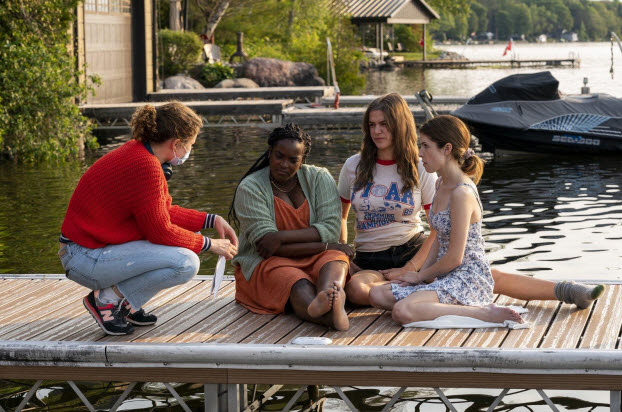
Since he drew my attention via “School of Rock” (2003) and “Before Sunset” (2004) when I was young and wild, Richard Linklater has seldom disappointed me during next 20 years, and that is why it is really depressing to see how he somehow failed in “Where’d You Go, Bernadette”. Even though several years have passed since it came out in 2019, the movie remains one of a few misfires in Linklater’s long and illustrious filmmaking career due to several bad reasons, and you will be relieved by the fact that he soon moved onto several next projects after this unfortunate failure of his.

The movie, which is based on the novel of the same name by Maria Semple, mainly revolves around a woman named Bernadette Fox (Cate Blanchett) and her husband and their adolescent daughter. As shown from a YouTube video clip appearing in the middle of the film, there was a time when Bernadette was destined to become another great American modern architecture to be admired, but, after some very unfortunate incident, she has led a rather reclusive life along with her family in some suburban area of Seattle, Oregon. Their house looks so shabby on the outside that it occasionally feels like a distant cousin to the house of the Addams Family, but she has been mostly content with being stuck there along with her family, though her computer engineer husband Elgie (Billy Crudup) is usually busy with his work involved with Microsoft.

Anyway, their daughter Bee (Emma Nelson) has somehow grown up well under her troubled mother and frequently busy father, and she is quite eager to go to a certain spot in the Antarctica before going to some expensive dormitory prep school. While she is not so enthusiastic about the trip to the Antarctica compared to her daughter and husband Bernadette agrees to go there along with their family, and then that somehow leads to some anxiety problem to her – especially as she comes to clash more with several other mothers in her suburban neighborhood including Audrey Griffin (Kristen Wiig), who happens to live right next to Bernadette’s house.

Via her growing conflict with Audrey, we come to see more of how antisocial Bernadette really is. All she needs to do is stepping back a bit for her neighbor, but she deliberately causes a series of annoyance for Audrey and other mothers in the neighborhood. Although Bee does not care that much about this ongoing conflict, she shows some concern like any good daughter would, and so does Elgie, who has patiently tolerated Bernadette whenever he is not busy with working outside.

However, we do not care that much about what is happening on and around Bernadette because the adapted screenplay by Linklater and his co-writers Holly Gent and Vince Palmo fails to present its heroine as a believable character to draw our interest. No matter how much it emphasizes her suppressed artistic skill and talent, we never get to any sense of life or personality from Bernadette, and she just remains to be an annoyingly capricious person who really needs a private intervention session. As a matter of fact, Elgin comes to hold a private intervention session for his wife later in the story, but that does not bring anything much to the story and characters except a ridiculous subplot involved with some federal investigation.

In the end, the movie arrives at the Antarctica along with its several main characters as expected, but we still observe them from the distance without much care or attention. Sure, our troubled heroine eventually comes to find how she can get herself back in element, but the movie curiously lacks any kind of dramatic impact even at that point, and the following ending feels middling at best and lackadaisical at worst.

For Cate Blanchett, the movie now looks like a sort of warming-up exercise for her subsequent Oscar-nominated turn in Todd Field’s “Tár” (2022), where she plays a different kind of talented but deeply problematic professional. However, while she has lots of things to handle in “Tár” (2022), “Where’d You Go, Bernadette” does not provide much to her from the beginning, and the result comes to feel increasingly one-note along the story despite her diligent effort.

Around Blanchett, several notable main cast members are criminally under-utilized while being stuck with their under-developed supporting parts. While Emma Nelson has a bit more things to do besides doing the narration of the film, Billy Crudup often seems lost in his thankless role, and the same thing can be said about Kristen Wiig, who can be very funny but only ends up hitting the same note again and again here without much nuance. The movie is sometimes brightened up by the brief appearances of David Paymer, Megan Mullally, Laurence Fishburne, Steve Zahn, and Judy Greer, but they simply come and go without leaving much impression on the whole, and Fishburne is particularly wasted in his redundant single scene with Blanchett.

In conclusion, “Where’d You Go Bernadette” did not impress or entertain me much mainly because of its bland and superficial handling of story and characters, and I am now considering revisiting Linklater’s subsequent work “Apollo 10 1⁄2: A Space Age Childhood” (2022), which has much more style, personality, and life in comparison besides being one of better works from Linklater. Believe me, you will have a much productive time with the latter, and you may thank me later for my inconsequential suggestion.

Posted in Movies | Tagged , , | Leave a comment

Fathom (2021) ☆☆1/2(2.5/4): Two scientific researches on whale sounds

Documentary film “Fathom”, which is available on Apple TV+ at present, alternates between two different researches on the sounds of humpback whales, but it somehow only ends up merely scratching the surface in both cases. Probably because both of these two researches are just two small steps toward whatever will be eventually discovered in the future, the documentary remains coolly and distantly philosophical about its main subject, and you may be disappointed if you expect it to be your typical nature documentary.
At first, we get to know a bit about two female scientists at the center of the documentary: Dr. Michelle Fournet and Dr. Ellen Garland. While Dr. Fournet has dedicated herself to recreating the communication sounds of humpback whales in Alaska, Dr. Garland has devoted herself to making a map of communication sounds shared and developed among those humpback whales inhabiting across the South Pacific Ocean, and both of them have been quite curious about the elusive aspects of the communication sounds of humpback whales. Although these two female scientists have recorded many different sounds from humpback whales, but these whale sounds remain rather unfathomable even at present, and now you may be reminded of “Star Trek IV: The Voyage Home” (1986), where the mysterious sonic language of humpback whales turns out to be the solution to an inexplicable global emergency on the Earth.

In case of Dr. Fournet, she and her colleagues have tried to imitate a number of communication sounds of humpback whales even though they do not know what exactly these sounds mean. At one point, Dr. Fournet jokes about how the result of their recent attempt sounded too silly, but now they have a better version to be tested in Alaska later, though nothing is certain in their ongoing project. When she later arrives at one remote spot in Alaska along with a colleague of hers and their graduate assistant, they all look hopeful at first, but things soon become monotonous as their field research seems to be going nowhere, and there also come a few big problems to deal with.

On the opposite, Dr. Garland’s research looks relatively less frustrating as she and her colleagues work under the warm and sunny weather of the French Polynesia, but they also come to face some obstacles despite the hopeful beginning of their field research. As the end of her field research is approaching, Dr. Garland wants to continue her field study a bit more, but she also misses her loving husband a lot, who has always understood and supported her academic passion for many years.

Just like Dr. Garland, Dr. Fournet cannot help but feel pressured at times as a female scientist who often has to prove herself more than many male peers around her. I am sure both of these two female scientists can tell a lot about how they have managed to balance themselves between their work and private life, but the documentary does not delve that deep into that aspect while maintaining its detached attitude as before, and that is a little disappointment for us.

In case of those humpback whales, I must tell you that they do not make much appearance throughout the documentary, while usually represented by the research data and samples associated with their communication sound. We never get to know anything about those humpback whales studied by Dr. Fournet and Dr. Garland, and the documentary only marvels at how much humpback whales and other kinds of whales have steadily evolved in their own way during last 40 million years. They are surely considerably intelligent creatures to be admired and respected, but the documentary detachedly reminds me of what W.G. Sebald once said: “Men and animals regard each other across a gulf of mutual incomprehension.”

Nevertheless, it is difficult not to be impressed by the considerable efforts shown from both Dr. Fournet and Dr. Garland in the documentary. Although there are still lots of stuffs to be elucidated in both of their scientific researches, they still can move forward bit by bit at least, and there is a touching moment when Dr. Garland happens to discover a new kind of communication sound she has never heard, and we can only hope that this will be another puzzle piece to help her current mapping process on the communication sounds among the humpback whales of the French Polynesia.
On the whole, “Fathom” is engaging to some degree, and director Drew Xanthopoulos, who also handled the cinematography of his documentary, did a fairly competent job of handling his main subjects with enough respect and interest, but it is also often limited by its dry and restrained approach. I understand that it is not intended to entertain or educate us from the beginning, but it fails to generate enough synergy between its two different narratives in my humble opinion, and I must confess that I found myself becoming impatient more than once during my viewing.

By the way, as watching the circular graphic presentation of a humpback whale sound shown in the middle of the documentary, I could not help but think of the similar one shown in recent SF film “Arrival” (2016), which memorably shows how decoding and then understanding an alien language can open the door to new possibilities out there for the humanity. I do not know whether decoding the whale sounds will make any difference on the humanity, and I am sure that will be a pretty awesome news to say the least.

Posted in Movies | Tagged , , , | Leave a comment

Fast X (2023) ☆☆1/2(2.5/4): Crash Crash Bang Bang as usual

I feel a bit conflicted about “Fast X”, the latest product from the Fast & Furious franchise. Being as dumb, silly, and preposterous as you can expect from the franchise, the movie has some enjoyable elements, but this is basically a 141-minute teaser for one or two flicks supposed to be the concluding part of the franchise, and, above all, it fails to distinguish itself enough compared to the better films of the franchise.

The opening scene of the movie happens to be the reprise of the climax sequence of “Fast Five” (2011), which was incidentally a major turning point for the franchise in terms of story and characters. Since “Fast Five”, the franchise has become gradually bloated and crowded more and more along with a stream of outrageously spectacular action sequences, and I still remember that hilariously extended action sequence around the end of “Fast and Furious 6” (2013), which features one of the longest airport runways in the movie history.

The main reason for showing that highlight part of “Fast Five” again is pretty simple. Besides showing a bit of late Paul Walker for those target audiences out there, it is for introducing the main villain of the story, who is the vengeful son of the main villain of “Fast Five”. Although he lost everything after his father’s death, this guy subsequently becomes another criminal mastermind to threaten Dominic Toretto (Vin Diesel) and his family and colleagues, and he even makes Cipher (Charlize Theron) almost overmatched at one point.

Although she has some bad history between herself and Toretto and his family and colleagues due to what happened in “The Fate of Furious” (2017) and “F9” (2021), Cipher notifies to Toretto about the latest menace to come to him, and Toretto and his wife Letty Ortiz (Michelle Rodriguez) soon fly to Rome, where his opponent has already set a deadly trap for his several colleagues including Roman Pearce (Tyrese Gibson) and Tej Parker (Ludacris). While they manage to save Rome from a big bomb to some degree, Toretto and his colleagues subsequently become fugitives to be chased around the world, and his resentful opponent is certainly going to enjoy that as reaching for his main goal: Destroying everything in Toretto’s life to the end.

I forgot to mention that this villain character is played by Jason Momoa, who has been much more notable since his breakout supporting turn in the first season of HBO TV drama series “Game of Thrones”. Although his character is basically another stock villain to be supplied along the line, Momoa eagerly chews every moment of his with amusing flamboyancy, and I actually wondered whether his character is actually flirting with Toretto in a way not so far from David Cronenberg’s “Crash” (1996). Come to think of it, I would gladly be ready to pay more if Vin Diesel, who seems to be on autopilot here as before, suddenly decides to remake that cult film along with Momoa and some other main cast members from the franchise such as Dwayne Johnson.

One of the recent tendencies of the franchise is its villain characters changing their sides later, and the movie is no exception. In the middle of the movie, Letty happens to be stuck with Cipher, and she has no choice but to work along with Cipher for their joint escape from a maximum-security prison, though she does not hesitate when she learns that there is some spare time for a catfight between them. Michelle Rodriguez and Charlize Theron demonstrate here that they are still not only believable but also electrifying as action movie performers, and that is more than enough for us to overlook how unnecessary the fight scene between them really is.

Meanwhile, John Cena, who previously played Toretto’s villainous brother in “F9”, returns to protect Toretto’s little son Brian (Leo Abelo Perry). What occurs between Cena’s character and Brian along their little road trip is a bit amusing for a while at first, but this part fizzles as eventually getting sucked into lots of actions as expected, and then we are left with a big cliffhanger moment which will be probably resolved in the next film to follow.

There are also many other characters coming and going throughout the film, but they do not leave much impression on the whole. Tyrese Gibson and Ludacris are occasionally funny in their characters’ humorous interactions in the previous films, but they only come to fill their respective spots merely, and the same thing can be said about Nathalie Emmanuel, Jordana Brewster, and Sung Kang. Although the movie has no less than three Oscar-winning actresses besides Theron, they are not particularly utilized well on the whole, and I must tell you that Brie Larson did a lot more acting when she handled a very rude and crass question at the press conference of the Cannes Film Festival of this year. In addition, I was quite disappointed about Rita Moreno not driving any kind of vehicle in the film. Being 91 at present, this living legend is 14 years older than Helen Mirren, but anything is virtually possible in a movie like this, isn’t it?

Although it is not the bottom of the franchise, “Fast X”, which is directed by Louis Leterrier instead of co-writer/co-producer Justin Lin, is not as good as “Fast Five” or “Furious 7” (2015), and I felt rather detached instead of excited about whatever may come next. Yes, I have been a bit willing to go along with all the outrageous fun and excitement in the franchise for years, and I am also getting quite tired of numerous crashes and bangs, and I think the franchise really needs some fresh fuel in the future.

Posted in Movies | Tagged | Leave a comment

The Wandering Earth II (2022) ☆☆1/2(2.5/4): Before they launched the Earth

Chinese film “The Wandering Earth II”, the prequel to “The Wandering Earth” (2019), attempts to provide an epic background story behind the previous film, and it accomplishes its ambitious mission to some degree. Throughout its 173-minute running time, the movie delivers one spectacular moment to another as you can expect from its futuristic setting, and that may be enough for you as long as you can overlook its sprawling narrative and bland characterization.

At the beginning, the movie quickly establishes how things become quite grim for the Earth as well as the humanity in the middle of the 21st century. For some unknown reason, the Sun starts to become an expanding red giant star which will engulf the Earth within at least 100 years, so every government around the world including the Chinese one sticks together as United Earth Government (UEG) for finding any possible solution for the survival of the humanity, and that eventually leads to the Moving Mountain Project. They embark on building huge rocket engines which will push the Earth away from its current orbit, and they hope that the success of this huge global project will eventually open the door for a much bigger project which will eventually enable the Earth and the humanity to escape from the solar system.

However, the Moving Mountain Project soon comes across several big setbacks right from the beginning. While it is surely hard and difficult to pull the joint efforts from many governments around the world, millions of people around the world become doubtful about the project while getting more interested in another big project which looks like a more tempting option for them. As shown from the opening scene in the film, there have been lots of research on transferring human consciousness to artificial intelligence computer, and there are even a group of terrorists ready to sabotage the Moving Mountain Project by any means necessary, just for swaying the public opinion more toward the “Digital Life Project”.

Nevertheless, the Chinese government, which is mainly represented by Zhou Zhezhi (Li Xuejian), remains unflappable as the main driving force behind the Moving Mountain Project – even after another devastating terror attack on the project. Zhou firmly believes that they must succeed at any cost within a short period of time, and, of course, his belief turns out to be right when the first trial of one of the prototype rocket engines shows enough success to generate more hope and support toward the project.

Meanwhile, we are also introduced to several other Chinese main characters in the story. We meet a young and confident UEG astronaut named Liu Peiqiang (Wu Jing), and the movie pays some attention to how he gets some respect and affection from one of his fellow UEG astronauts, who eventually becomes his wife later in the story. We are also introduced to a brilliant computer scientist named Tu Hengyu (Andy Lau), and this melancholic dude has lots of personal things to deal with after losing his family due to one tragic accident some time ago.

We already know how the story will end because of the previous film, but the screenplay by director Frant Gwo and co-producer Gong Ge’er keeps things rolling toward its predetermined ending at least. When the Moon becomes an unexpected big risk factor later in the story, the movie pulls all the stops for numerous visual spectacles as required, and we seldom get bored until the story eventually arrives at the climactic part where every main character in the story desperately races against the remaining time for saving the whole humanity from the total annihilation.

However, the movie often stumbles in case of character development just like its predecessor, and this weak aspect becomes all the more glaring during a number of heavy-handed melodramatic moments in the film. A subplot involved with Tu’s little daughter feels contrived to say the least, and the hidden intrigue surrounding Tu and his daughter is no more than a redundant footnote in the story in my inconsequential opinion. Furthermore, several other main Chinese main characters in the film are also not developed much on the whole as merely functioning as plot elements, and the same thing can be said about a bunch of of supporting characters including various foreign figures appearing here and there throughout the story.

Gwo is a competent filmmaker, and the diligent (and expensive) efforts from him and his crew members including cinematographer Michael Liu drew my attention from time to time when I watched the film early in the morning. For example, I enjoyed observing a bunch of huge elevator lines set between the Earth and the Moon, and I would not mind if the movie delved more into how this immense system works day by day. I must point out that the climactic part often feels quite overblown with lots of CGIs on the screen, but the result is fairly engaging and thrilling enough to hold your attention at least.

In conclusion, “The Wandering Earth II” has some impressive moments to be savored, but it is still less satisfying than the previous film as retaining many flaws instead of surpassing what is entertainingly presented in the previous film. Considering what is show at the end of “The Wandering Earth II, we will probably get the next film within a few years, and I sincerely hope that I will be more entertained in the next time.

Posted in Movies | Tagged , , | Leave a comment

Still: A Michael J. Fox Movie (2023) ☆☆☆(3/4): Still going on as before

Documentary film “Still: A Michael J. Fox Movie”, which is currently available on Apple TV+ now, is plain but undeniably touching for good reasons. While simply letting its main human subject talk in front of the camera, the documentary gives us a vivid and intimate presentation of his interesting life and career, and we cannot help but more moved to see how he is willing to go further during the rest of his later years.

The documentary mainly revolves around a series of interview sessions between director David Guggenheim and Michael J. Fox, who has always been remembered for not only his considerable success in TV and movie business but also his well-known struggle with Parkinson’s disease for more than 30 years. Although he completely retired from acting a few years ago because of his deteriorating physical condition, you can still feel that spirited charm from Fox’s casual appearance, and he is certainly ready to tell as much as requested by Guggenheim behind the camera.

In the beginning, Fox reminisces and reflects on the struggles during his early years. When he grew up in Canada, he was your typical hyperactive kid, and his extroverted personality certainly helped him a lot as he later came to participate in the drama club of his school. As recommended by his drama club teacher, he came to do the audition for a supporting role in a local TV sitcom series in the late 1970s, and his following little success eventually led him to Hollywood, though he had to struggle a lot even while he continued to get roles here and there during next several years.

Fox still remembers well how desperate things were for him during that time. He was certainly eager to grab any big opportunity, but that seemed to be out of his reach to his frustration as reflected by his unsuccessful audition for a certain crucial supporting role in Robert Redford’s debut feature film “Ordinary People” (1980). He really tried hard, but Redford and others did not show much interest from the beginning, and that role eventually went to Timothy Hutton, who subsequently won an Oscar for the movie.

Nevertheless, Fox kept trying despite running out of options, and then there came another chance he was quite willing to reach for. Although the producers of “Family Ties” were not so convinced about whether he was right for the role even when they were about to shoot its pilot episode, but, what do you know, Fox charmed and amused everyone on the set once the camera began to roll, and that was the beginning of his stardom during the 1980s.

While “Family Ties” eventually garnered him three consecutive Emmy awards as well as considerable popularity, Fox got a much bigger boost at the same time when he was cast for the lead role of “Back to the Future” (1985) at the last minute. At first, Steven Spielberg and his director Robert Zemeckis shot the film with Eric Stoltz instead because Fox was not available due to “Family Ties”, but they eventually decided that they really needed Fox, and Fox was quite ready for that even though he would not sleep that much during next several weeks as busily switching back and forth between the respective sets of “Family Ties” and “Back to the Future” every day.

As we all know, this professional dedication of his led him to a success beyond his imagination. Thanks to the immense popularity of “Back to the Future” and its following two sequels, Fox became one of the biggest stars in Hollywood, and he also came to marry Tracy Pollan, an actress with whom he instantly fell in love right from their first working day on the set of “Family Ties”. He certainly felt like being at the top of the world, and he frankly tells us about the positive and negative aspects of the rapid rise of his acting career, which also caused some strain in his relationship with his wife.

However, not long after his father’s death, Fox suddenly found that something was going wrong in his supposedly youthful body during one morning of 1990. At first, it seemed to be the consequence of another wild drinking night with his actor friend Woody Harrelson, but then, to his shock and surprise, his doctor notified to him that he was actually suffering the early onset of Parkinson’s disease.

While keeping this in secret to everyone except his wife, Fox tried to go on as much as possible, but he could not help but become morose and depressed while his career also seemed to reach to a sort of dead end, and he confided to us about how he often resorted to alcohol during that depressing period. Fortunately, with his wife standing by him as usual, he bounced back from the bottom, and then there came another successful TV sitcom series in his career.

Even during that time, he tried to hide his illness from others in one way or another, but he eventually revealed his ongoing struggle with Parkinson’s disease in public, and, to his surprise, his life and career became much better than before. While he kept working for more than 10 years, he became a good father and husband to his wife and their children, and he has also passionately devoted himself to more public awareness of Parkinson’s disease (He received the Jean Hersholt Humanitarian Award from the Academy Awards for that in last year, by the way).

Overall, “Still: A Michael J. Fox Movie” is an entertaining documentary mainly thanks to Fox’s likable presence, and Guggenheim did a commendable job of mixing Fox’s interview clips with various archival footage clips and some tasteful reenactment scenes. I must point out that it does not show anything particularly new here, but it is difficult not to be moved by Fox’s candid reflection on his life and career, and that is more than enough for recommendation.

Posted in Movies | Tagged , , , | Leave a comment

Crater (2023) ☆☆☆(3/4): Their little adventure on the Moon

“Crater”, which was released on Disney+ in last week, is a predictable but fairly enjoyable product which simply has some little fun with its young main characters on the Moon. I must point out that it is rather inconsequential compared to other recent notable space drama films ranging from “Gravity” (2013) to “Ad Astra” (2019), but the movie still works to some degree mainly thanks to the game efforts from its young main cast members, and it actually has some genuine poignancy when it eventually arrives at its expected ending.

At first, the movie succinctly establishes how much the humanity had advanced in the middle of the 23rd century. There was a time when the Moon was regarded as another new place to live besides the Earth, but now it is no more than a mere mining spot due to the discovery of a distant but inhabitable planet outside the Solar system, where many people are eager to live even though it takes no less than 75 years to go there.

However, going to that new planet for the humanity feels like a distant dream out of reach for many people working and living on the Moon. Most of them have been bound by the unfair longtime contract of their big mining company, and, to make matters worse, their children are usually destined to follow their footsteps as virtually being forced to be stuck in the Moon just like them.

In case of Caleb Channing (Isaiah Russell-Bailey), this adolescent kid happens to get an unexpected opportunity of going to that alien planet for free, but that comes with the price. His father Michael (Scott Mescudi, who brings a lot more than demanded by his rather thankless supporting role), who raised his son alone for seven years since his wife died, got himself killed due to some unspecified accident while working at a nearby mine, and Caleb’s ticket to that alien planet is no more than a little compensation from that big mining company.

Caleb is naturally not so happy or excited about this situation, and he is all the more saddened about being separated forever from his three close friends: Dylan (Billy Barratt), Borney (Orson Hong), and Marcus (Thomas Boyce). At least, his friends are happy for him getting a chance to leave the Moon, and they are ready to have a little adventure along with him area just because 1) Caleb’s father told his son to go to a certain place outside their colony not long before his unfortunate death and 2) both Caleb and they really want to have an experience to remember for the rest of their lives before Caleb’s departure.

However, Caleb and his friends need to hurry themselves a bit more because Caleb will be taken to that alien planet no less than 72 hours later due to some unexpected schedule change. What they need right now is someone who can quickly get them a password which is sort of a master key for the gates of the colony, and that person in question is none other than Addison Weaver (Mckenna Grace), a smart young girl who recently came to the Moon along with her divorced scientist father. Although she does not welcome Caleb and his friends that much at first, she quickly gets interested after coming to learn about their plan, because, well, she has been simply bored by how uneventful and monotonous the life on the Moon is for her.

Once Addison manages to obtain that password, everything goes fairly well for Caleb and his friends. Along with Addison, they sneak into the garage where they can steal one of those big Moon rovers, and then they soon get out of the colony to their delight and excitement. Now they only have to do some road trip to their final destination, and they certainly go through small and big episodic moments during their little journey on the Moon.

What they behold and experience along their journey will not particularly surprise or amaze you much especially if you are a seasoned moviegoer familiar with countless space drama flicks out there, but the screenplay by John Griffin diligently rolls its story and characters from one point to another for more story and character development, and we come to care more about Caleb and his friends as getting to know them and their strong friendship more. Yes, they sometime clash with each other just like any other kids around their age, but they still care a lot about each other, and that is why they willingly take some risk when one of them needs to be rescued as soon as possible at one point.

Although Caleb is the least developed character in the bunch, that is compensated by his more colorful friends to some degree, and it surely helps that the young main cast members in the film occupy each own spot well as required. While Isaiah Russell-Bailey dutifully holds the center, Billy Barratt, Orson Hong, and Thomas Boyce have each own moment to shine, and McKenna Grace, a wonderful young actress who has steadily advanced since her breakout performance in “Gifted” (2017), shows more of her considerable potential and talent here.

In conclusion, “Crater”, which is directed by Kyle Patrick Alvarez, does not bring anything particularly new or fresh to its genre territory, but it mostly works as an intimate adventure story about hope, dream, and friendship, and I was touched enough by its bittersweet ending waiting for its main characters from the very beginning. In short, this is one of those safe products mainly for young audiences out there, but it does its job as well as intended, so I will not complain for now.

Posted in Movies | Tagged , , , | Leave a comment

Trans (2021) ☆☆☆(3/4): A little but ambitious high school SF mystery drama

There were several times when I wondered whether I really understood everything in South Korean independent film “Trans”, a deliberately baffling high school SF mystery drama about an intriguing possibility of technological transcendence beyond singularity. I must confess that I am still not so sure about many things in the film after watching it at last night, but I appreciate how it deftly distinguishes itself via its own mood, style, and ideas, and the result is certainly one of more compelling South Korean films of last year.

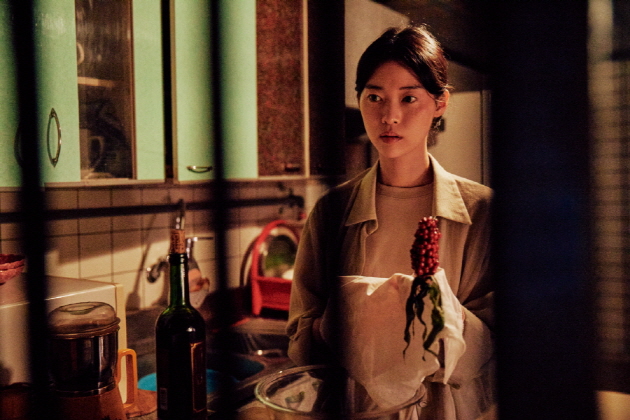
The story mainly revolves around a very strange circumstance of a female high school student named Min-yeong (Hwang Jeong-in). As the story initially jumps to here and there in a seemingly random fashion, we come to gather that Min-yeong has been bullied by several mean classmates of hers due to her current struggle with anorexia, and her only consolation comes from her routine online conversation with some questionable Christian counselor at her residence, which is usually devoid of her frequently absent parents.

In the opening scene, something quite shocking happens outside Min-yeong’s classroom. The body of one of her bullies is found, and the rather disturbing condition of the body clearly suggests that somebody must have had lots of spite and grudge against the victim. Because she called the victim at the previous night for no apparent reason, Min-yeong is soon questioned by a local detective assigned to the case, and everyone else naturally regards her with growing suspicion.

Meanwhile, we also get to know about two certain male students in Min-yeong’s class. In case of No-cheol (Kim Tae-yeong), he has been also frequently bullied because of a series of lightening accidents which he managed to survive, and we cannot help but notice his artificial right arm during his first scene in the film. Although he could show some support and solidarity to Min-yeong, he simply observes her latest incident of bullying from the distance, and that makes a big contrast with I-tae (Yoon Kyung-ho), a smart and ambitious boy who saves her via his special electronic gun at the last minute.

I-tae later takes Min-yeong to his little lair/laboratory, and he throws lots of fancy technical mumbo-jumbos involved with human neuroscience and computer science as your average young mad scientist. According to him, not only human brain but also human science and technology are almost close to the next breakthrough for human evolution, and it looks like he is about to reach to the point of, yes, singularity via his modest but very ambitious science project. Mainly using a special device based on the special electronic coil equipment invented by Nikola Tesla, and he wants to test his wild scientific theory as soon as possible, and his experiment subject turns out to be none other than No-cheol.

While she surely has some reservation on I-tae’s ethically problematic science experiment, Min-yeong lets herself get more involved with him as drawn more to the possibility of the Brave New World for them. If his experiment turns out to be as successful as he wishes, No-cheol will open the door to infinite possibilities out there for them, and that certainly looks like a better alternative to Min-yeong’s current miserable existence.

However, things get a lot weirder for Min-yeong after the big success of I-tae’s experiment. It seems that she is also somehow going through the transformation toward becoming a “transhuman”, and she soon finds herself stuck in a sort of time loop, probably because, as I-tae told her, time and space cease to matter when you finally become a transhuman. As she goes through a certain day again and again, she comes to sense that something important has been hidden from her, and she also comes to have some doubt on whether she can maintain her humanity after her transformation is completed.

Even though you get quite confused at times, the screenplay by director/writer Do Nae-ri, who made her feature film debut after her short film “Confession” (2005), holds your attention and interest as gradually getting us accustomed to its heroine’s warped state of mind, and I like how it is willing to get wilder and weirder along its increasingly complicated narrative. At one point, we get a big dramatic moment when I-tae and Min-yeong enter the final step of their experiment, and you may be amused a bit by several silly but funny artistic touches in this big scene. Although the special effects in the film surely look rather modest and simple due to its small production budget, Do and her crew members did a commendable job of incorporating them into the screen, and her three main cast members, who did not have much acting experience before getting cast for the movie, are convincing as playing their characters as straight as possible. While Go Min-yeong ably holds the center, Yoon Kyung-ho and Kim Tae-yeong are equally effective, and their solid acting is the main reason why the finale works with considerable dramatic impact.

In conclusion, “Trans” is surely not something we see everyday, and I am willing to watch it again someday just for appreciating its distinctive mood, storytelling, and performance. I cannot wholly explain well what is about, but I admire a lot how it is about, and I think you should give it a chance someday if you are looking for something different.

Posted in Movies | Tagged , , , , , | Leave a comment

Tori and Lokita (2022) ☆☆☆(3/4): A grim refugee thriller from the Dardenne brothers

The Dardenne brothers’ latest film “Tori and Lokita”, which received the special 75th Anniversary Award when it was premiered at the Cannes Film Festival early in last year, is another solid social drama to distinguish their long and admirable filmmaking career. Although I wish it could delve more into its two titular characters’ fragile and desperate social status, the movie firmly held my attention while also making me understand and empathize more with them along the story, and that is more than enough to compensate for several weak points including its rather abrupt finale.

During its early part, the movie, which is set in some unspecified city of Belgium, gradually lets us get to know the current situation of a young Beninese boy named Tori (Pablo Schils) and an older African girl named Lokita (Mbundu Joely). As mentioned later in the story, Tori is allowed to stay in Belgium while being recognized as a refugee orphan by the government, but Lokita, who has incidentally disguised herself as Tori’s older sister for some time, still struggles to get a work visa because she cannot convince those government officials that she is Tori’s older sister. She does get some support and help from Tori as well as several other people for her latest interview, but she is not so confident from the beginning, and, to make matters worse, she also often suffers chronic anxiety attack.

As observing how Lokita and Tori try to live day by day, we wonder whether her anxiety attack was resulted from their harsh condition of life at present. Both of them temporarily stay together at a local shelter, and Tori has attended a local elementary school for a while, but they also have gotten themselves into a local drug business mainly because Lokita needs to not only send some money to her family in Africa but also pay her debt to two brokers who brought her into Belgium. At one point, these two brokers unexpectedly come upon Lokita, and we soon see how mean and heartless they can be.

Nevertheless, Tori and Lokita still hope that things will get better for them in the end. Although she is not his older sister, Lokita really cares about Tori, and Tori has no problem at all with accepting her as his older sister. Although the movie does not tell or show that much about how they got themselves associated with each other, the emotional bond between them feels palpable whenever they are together, and there is a little cheerful moment when they joyously sing together a Sicilian song in front of the customers of a local restaurant where they have worked under some criminal chef.

Lokita and Tori have been mostly content with earning bit by bit while delivering drug here and there as demanded, but then that criminal chef dangles a supposedly better job opportunity in front of Lokita. All she will have to do is watching over a small illegal marijuana farm during one month, but, of course, there is a catch. During that period, she must be totally isolated inside that illegal marijuana farm for security reasons, and she will even not be allowed to contact with Tori. Naturally, she hesitates a bit, but she comes to accept this job offer anyway because, well, she really needs money right now while feeling more uncertain about what may happen next to her and Tori.

Tori does not have much problem with Lokita’s choice because he knows too well how desperate their financial circumstance is, and Lokita tries to adjust herself to the following period of isolation in that illegal marijuana farm, but both of them soon find themselves becoming more desperate than before. While Lokita misses Tori more and more, Tori also wants to see Lokita right now, and that eventually leads him to one little but risky adventure which eventually takes him to Lokita.

Not so surprisingly, Lokita and Tori later embark on a little scheme of theirs while not telling anything to their criminal associates, and that is where the movie starts to build up some tension on the screen. As the handheld camera of cinematographer Benoît Dervaux, who previously collaborated with the Dardenne brothers in “Young Ahmed” (2019), steadily and patiently follows our two main characters, we become more nervous about what may happen to them at any point, and the movie draws us more into their increasingly dangerous situation even though we can already discern what is waiting for them from the very beginning.

I must tell you that I have some reservation on the finale mainly because it is delivered in a way which feels a little too hurried and contrived in my inconsequential opinion. I am not so sure about whether it is right, and I also cannot help but wonder whether the Dardenne brothers should give a bit more dignity and compassion to their two titular main characters. Nonetheless, we all can agree that 1) the finale feels devastatingly inevitable at least and 2) the movie is still held together well by the excellent natural acting from Pablo Schils and Mbundu Joely, which reminds us of how the Dardenne brothers have dexterously drawn memorable performances from numerous first timers in many of their films.

In conclusion, “Tori and Lokita”, which was recently selected as the opening film for the Jeonju International Film Festival in South Korea, shows the Dardenne brothers back in their element after “Young Ahmed” (2019), which showed them trying to expand their usual territory of the young and dispossessed at the bottom of the society but unfortunately ended up being the least satisfying work in their whole career. In case of “Tori and Lokita”, they are a bit more successful in comparison, and I sincerely hope that they will improve further in their next film in the future.

Posted in Movies | Tagged , , | 1 Comment