South Korean independent film “Sua’s Home” dryly but closely observes one adolescent girl’s desperate struggle for stability and affection. Although she is not wholly sympathetic, we come to have some understanding on her struggle at least, and the movie engages us more as bringing more human complexity to its story and characters.
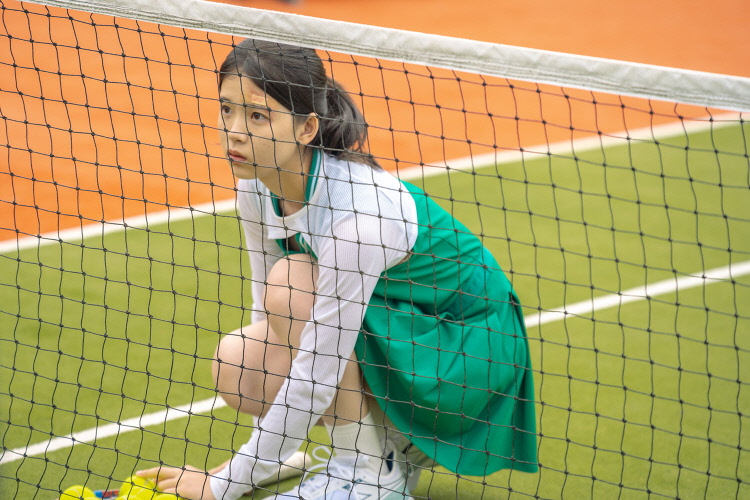
At first, the movie establishes how things have been not so good for Yeong-seon (Choi Myung-bin), a 15-year-old girl who has recently been in an orphanage due to some financial trouble of her currently absent foster parents. While quite feeling miserable about her current circumstance, she keeps sticking to playing tennis as before, and that is how she gets a part-time position as the training partner of Su-a (Moon Seung-ah), who is one of her schoolmates and has trained under the strict guidance of her father Seong-woo (Kim Tae-hoon). We come to learn later that Seong-woo was once a promising professional tennis player, and it is quite apparent that he is very determined to fulfill his unaccomplished goals via his daughter.
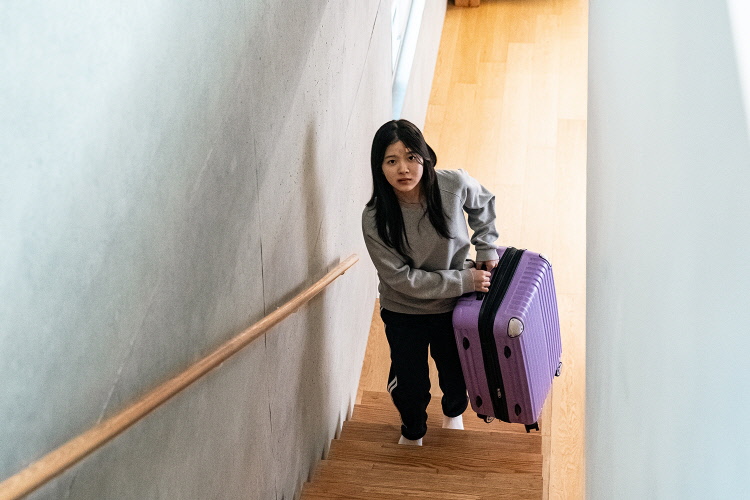
While playing tennis with Su-a, Yeong-seon naturally gets closer not only to Su-a but also her parents. When Yeong-seon later gets herself into a little trouble, Su-a’s mother Ji-yeong (Yoo Da-in) willingly steps forward for Yeong-seon, and she even lets Yeong-seon stay in her affluent family house, which looks as slick and posh as that big house in Bong Joon-ho’s Oscar-winning film “Parasite” (2019). Both Seong-woo and Su-a do not have much problem with this, and, once she packs her suitcase and then moves into the house, Yeong-seon feels more like being another family member in the house.
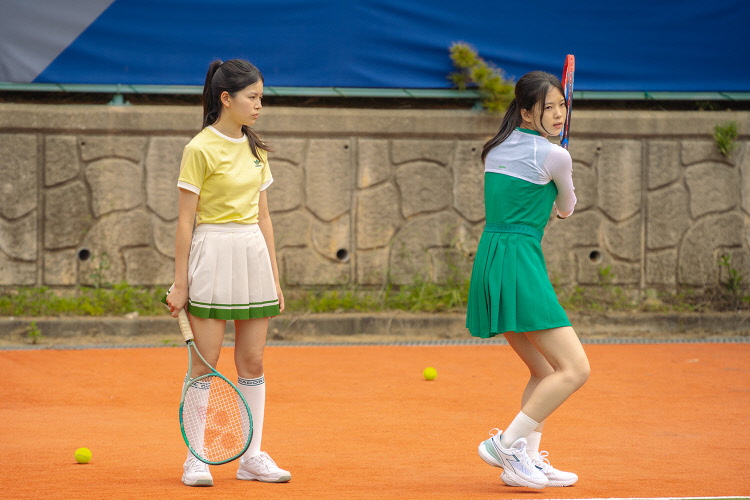
Needless to say, things become gradually tense as Yeong-seon’s growing desire for home and family clashes with the deep personal troubles behind Su-a and her parents. No matter how much she tries, Su-a is reminded again and again that she is still not good enough to get more affection and approval from her father, and she naturally becomes jealous and resentful as Yeong-seon often impresses her father during their training sessions. In case of Yeong-seon, she surely knows that she must ingratiate herself more with both Seong-woo and Ji-yeong just for staying longer in their house, and her active approach to them is soon noticed by Su-a.
Su-a consequently becomes very mean and cruel to Yeong-seon, but we also get to know more about how miserable she has been due to both of her parents. While her father, who still cannot get over what he could have achieved in the past, keeps pushing her without much consideration, her mother remains passive about this matter as silently nursing her own anxiety and discontent behind her back, and Su-a cannot help but become more agitated by Yeong-seon’s presence in the house.
The screenplay by director/writer Yun Sim-kyoung, who incidentally makes a feature film debut here, gets more interesting as delving more into the complex human conflicts among its four principal characters. The social gap between Yeong-seon and the other three main characters is certainly the most crucial element in the story, and that is particularly evident when Su-a and her parents go outside for attending the birthday party for the daughter of an old colleague of Su-a’s father but simply leave Yeong-seon alone in their house. Naturally, Yeong-seon later comes to show some defiance in front of them and others, but this only causes more conflict among her, Su-a, and her parents.
Around that narrative point, the story is heading toward the inevitable moment when Yeong-seon is reminded more of the inherent distance between her and the three other main characters in the story, but we remain engaged as before mainly thanks to Yun’s competent handling of story and characters. Although it may look a bit too symbolic at first, tennis gradually becomes an effective metaphor to reflect Yeong-seon’s constant struggle along the story, and that is the main reason why the last scene of the film is quietly poignant with a little but precious glimpse of hope.
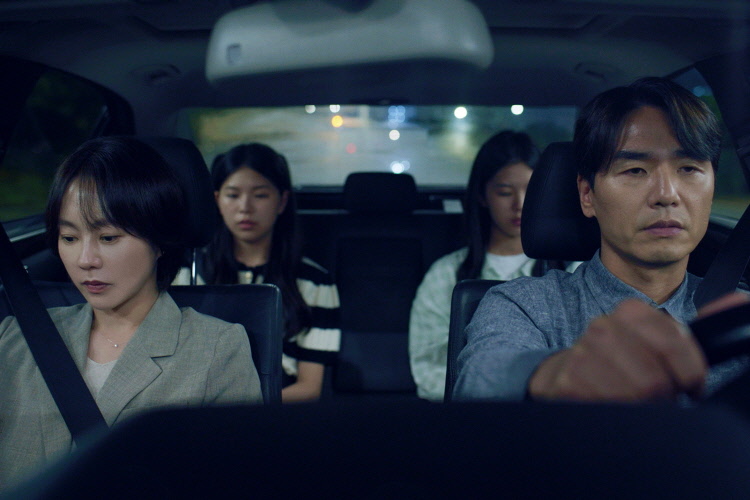
The movie depends a lot on the impressive lead performance by Choi Myung-bin. Although the movie does not tell or show much about her character’s background, Choi did a splendid job of embodying her character from the beginning to the end, and her compelling presence generates constant dramatic tension along the story. Although Yeong-seon is not so likable to say the least, she comes to us as a complicated human figure to observe and understand thanks to Choi’s stellar acting, and she surely deserves to be mentioned as one of the breakthrough performers of this year in South Korean cinema.
Around Choi, the other three main cast members are equally solid in each own way. While Moon Seung-ah holds her own place well during her several key scenes with Choi, Kim Tae-hoon and Yoo Da-in ably fill their respective supporting roles without overshadowing Choi and Moon at all, and Yoo, who was terrific in “Re-Encounter” (2010) and “I Don’t Fire Myself” (2020), is particularly good when her character copes with conflicting feelings on Yeong-seon later in the story.
In conclusion, “Sua’s Home”, whose original Korean title is incidentally “The Girl Who Is Carrying a Suitcase”, is another notable South Korean independent drama film of this year. Yun surely demonstrates considerable potential here as another promising new South Korean filmmaker to watch, and it will be interesting to see what may come next from her.