John Carney’s latest film “Power Ballad” does not disappoint you in case of music. Its original song is fairly good enough to leave some impression on you, and its two performers are convincing and effective during their musical performance scenes. However, the story could delve deeper into their little conflict on that song, and I was disappointed with how that is resolved in a rather contrived way in the end.
Paul Rudd plays Rick Power, a small-time American musician/songwriter who has lived in Dublin, Ireland for many years since he married there. There was a time when he dreamed big about his musician career, but, alas, he remains struggling while not going anywhere, and the opening scene shows him and his fellow band members doing another usual gig of theirs at a wedding party.
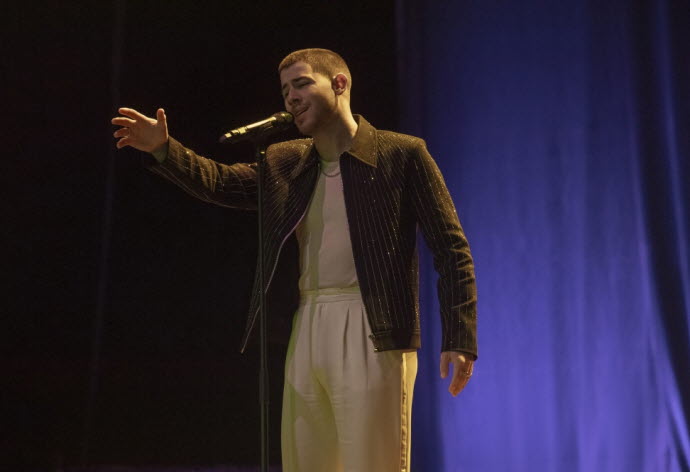
Nevertheless, Rick still hopes for any chance for breakthrough as trying to write more songs, and, what do you know, there comes an unexpected chance. When he and his fellow band members go to a manor outside Dublin for a wedding party to be held there, they happen to come across a former boy band member named Danny Wilson (Nick Jonas). Although he is relatively less prominent now, Danny is still capable of holding the guests’ attention when he is on the stage in front of Rick and his fellow band members, and he surely gives a good time for everyone with his impromptu musical performance.
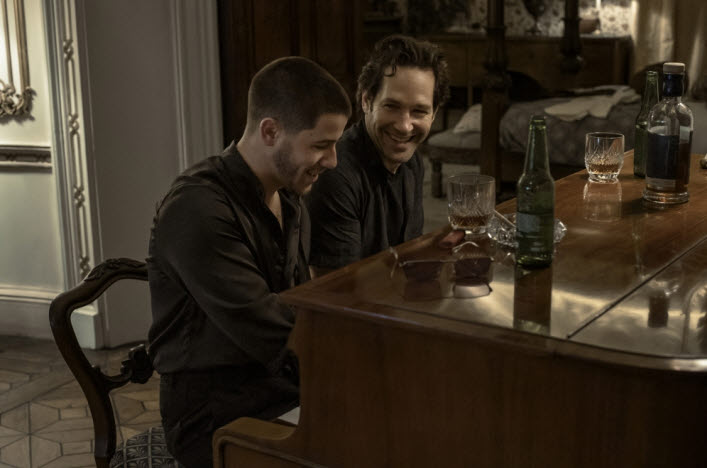
After the party is over, Rick encounters Danny again, and they soon find themselves spending some time together as two fellow musicians. As they talk and drink more in Danny’s big room, they come to work a bit on one of the old songs written by Rick, and we observe how they gradually improve it. As they modify the song here and there, they cannot help but become more enthusiastic, and the movie did a skillful job of presenting their work process with considerable spontaneity.
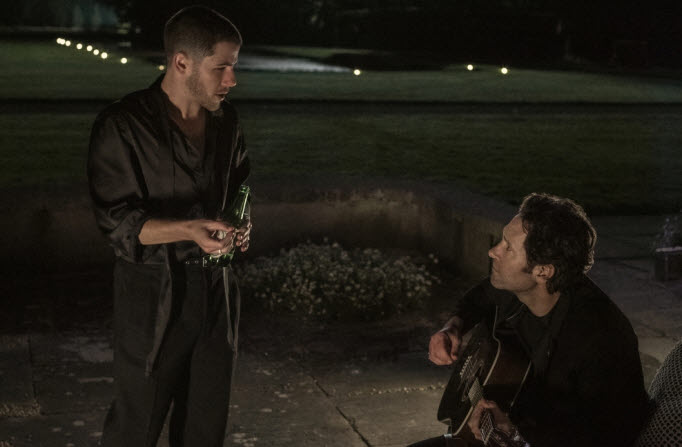
In the end, Danny shows some gratitude to Rick as giving him a nice gift, and then they part their ways, but, of course, that is not the end of their story. After returning to LA, Danny keeps trying to write his own songs as before, but then he tries what he and Rick worked on that day, and, surprise, this comes to boost his musical career a lot more than expected. However, he presents it as a song written by himself without recognizing Rick’s contribution at all, and Rick is certainly not so pleased when he learns about the huge success of the song several moments later.
Unfortunately, it seems that there is really nothing Rick can do about this problem for now. He does not have any hard evidence showing that he actually made most of the song, so he cannot possibly win if he ever tries to sue Danny and a recording company representing him. Eventually, he tries to contact Danny for himself, but, not so surprisingly, Danny is advised not to interact with Rick at any chance.
Now this looks like a typical story, but Carney’s screenplay adds some fresh changes on that. While he turns out to have a very personal reason to be angry about how Danny used his song for boosting his career, Rick cannot help but show more pettiness and resentment in front of others around him, and this surely affects his relationship with his supportive wife and their adolescent daughter. At the same time, he becomes more aware of how Danny contributes to the success of the song to a considerable degree, and that is reflected well by his brief dream scene in the middle of the story.
In case of Danny, it is undeniable that he was not honest about the song from the beginning, but he feels guilty when he comes to learn that Rick wants to talk with him, though he gladly enjoys his ongoing career rejuvenation. Eventually, there comes a moment of confrontation between them during the last act, but the movie hesitates to push their conflict further, and this moment consequently gets fizzled before being followed by the perfunctory ending.
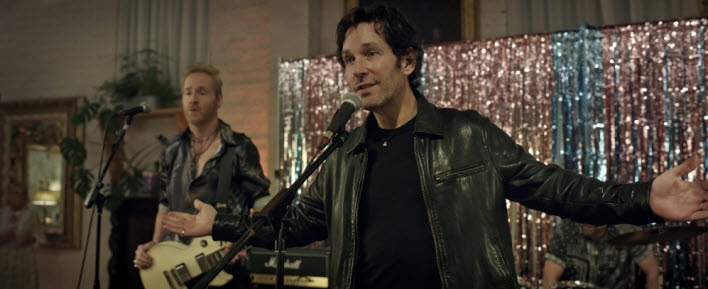
Anyway, the movie works to some degree because of its two solid lead performers. Rudd, who has been one of the dependable performers working in Hollywood since I happened to see him playing a supporting character in “The Cider House Rules” (1999), balances his performance well between humor and pathos, and he also competently handles several musical scenes in the film. On the opposite, Nick Jonas, who was a member of the pop rock band Jonas Brothers, certainly slips inside his musician character without much difficulty, and he and Rudd are effortless in their interactions during the aforementioned scene early in the story.
In contrast, several supporting cast members in the film are mostly stuck in their thankless roles. While Peter McDonald brings some humor as Rick’s loyal colleague, Marcella Plunkett and Beth Fallon, who play Rick’s wife and daughter, are limited by their under-developed characters, and Jack Reynor does not have much to do here compared to his scene-stealing supporting turn in Carney’s previous film “Sing Street” (2016).
Overall, “Power Ballad” is two or three steps down from what Carney wonderfully achieved in “Once” (2007) and “Sing Street”. Yes, its original song is pretty nice in addition to being effectively utilized on the screen more than once, but it could be more memorable if the movie were as good as that, and that is a shame in my trivial opinion.