Spoiler Alert (2022) ☆☆☆(3/4): Their real-life love story

“Spoiler Alert” is a familiar love story which turns out to be more enjoyable and poignant than expected. Mainly revolving around the ups and downs of one ordinary gay couple, the movie swings back and forth between comedy and drama as gradually building up the life and personality of its two main characters along the story, and that is why its expected finale is really sad and touching instead of feeling kitschy or schmaltzy at all.

The early part of the film shows how Michael Ausiello (Jim Parsons) happened to encounter a handsome guy named Kit Cowan (Ben Aldridge). Mostly content with how his life in New York City has been going with a job he is really passionate about, Michael is not particularly interested in getting hooked up with any dude at present, but then he goes to a local gay bar as urged by one of his close friends, and that is where he comes across Kit, who happens to be enjoying his own time along with his best heterosexual female friend.

As interacting more with Kit, Michael cannot help but feel awkward mainly because Kit is quite opposite to Michael in many aspects. While Michael is usually shy and insecure mostly due to being a chubby overweight kid in the past, Kit is very direct and confident to say the least although he is not exactly openly gay unlike Michael. Michael soon finds himself attracted more to Kit despite his initial reluctance, and he eventually gives Kit his calling card later, which becomes the starting point of their relationship. As they keep meeting each other during next several months, they get closer and closer to each other, and then Michael decides to let Kit enter his little private world for showing more of himself, which catches Kit off guard for a hilarious reason.

While they subsequently become more serious about their relationship, Michael and Kit come to face a little private matter involved with Kit’s parents, who incidentally do not know yet that their son is gay. When Kit happens to spend some time a hospital due to one serious health problem, his parents immediately come without hesitation, and they naturally come to wonder why Michael constantly hangs around their son even though he is just a “friend”. It is not much of a spoiler to tell you that there soon comes a rather difficult moment of confession, but you may appreciate how this predictable moment is handled fairly well with enough sensitivity and tactfulness.

During next several years, Michael and Kit become happier than before. They eventually move together into a new apartment, and they show more love and understanding to each other, but then they also come to struggle with serious relationship issues. Because they still love each other despite that, they do try a lot for solving these issues of theirs, but they later come to decide that it is the best for both of them to put some distance between them.

And then another big problem suddenly occurs. On one day, Kit turns out to be suffering a serious case of cancer which quickly gets worse than expected, and Michael is certainly willing to stand by Kit as much as possible. Despite lots of care and treatment, Kit’s medical condition only gets worsened more than before, and both Kit’s parents and Michael become more saddened as preparing themselves for what will happen sooner or later to Kit.

Around that point, you will be definitely reminded of a bunch of other films ranging from “Love story” (1970) to “Terms of Endearment” (1983), but the screenplay by David Marshall Grant and Dan Savage, which is based on Ausiello’s memoir “Spoiler Alert: The Hero Dies”, imbues the story with a considerable amount of wit, personality, and, above all, emotion. While a number of comic scenes which present Michael’s life as a TV sitcom series feel like a distracting overkill, the other parts of the film are handled with enough care and realism at least, and we actually get to know more about both Michael and Kit as touched more by how sincerely and desperately they stick together more in front of Kit’s impending death.

Above all, the movie works mainly thanks to the good chemistry between its two lead actors. Although he has been mainly known for his Emmy-winning comic performance in TV sitcom series “The Big Bang Theory”, Jim Parsons can be quite serious as already shown from Netflix film “The Boys in the Band” (2020), and he ably dials down his comic intensity while occasionally wielding some sense of humor as required. On the opposite, Ben Aldridge, a British actor who recently appeared in “Knock at the Cabin” (2023), complements his co-star well as they lovingly establish their characters’ personal relationship along the story, and they are also supported well by Sally Field and Bill Irwin, who provide some extra poignancy as Kit’s caring parents.

Considering that he previously directed “The Big Sick” (2017), which is partially based on the real-life love story between its two writers Emily V. Gordon and Kumail Nanjiani, “Spoiler Alert” is not exactly a new territory for director Michael Showalter, but the overall result is relatively more satisfying than his recent previous film “The Eyes of Tammy Faye” (2021), which is a little too flawed but garnered an overdue Oscar for its lead actress Jessica Chastain anyway. The movie exactly accomplishes what it intends to do via its solid heartfelt moments tinged with genuine emotions, and that is more than enough for compensating for its small weak points in my inconsequential opinion.

Posted in Movies | Tagged , , , , , | Leave a comment

The Fifth Thoracic Vertebra (2022) ☆☆☆(3/4): A tale of one infected mattress

My head goes blank for a while as mulling over how the hell I can describe or explain to you on South Korean film “The Fifth Thoracic Vertebra”, which is, in my inconsequential opinion, one of the most singular films from South Korean cinema during last several years. As far as I remember, I have never watched anything quite like this, and, to be frank with you, I am still scratching my head a little on what it is about or how it is about. Therefore, I will just simply scribble on whatever I thought and felt during its rather short running time (65 minutes) here in this trivial review, and then you will decide for yourself whether you are going to try it or not if you ever get an opportunity to watch this opaque but undeniably compelling cinematic experiment. 

The movie opens with the extreme close-up shot of a shabby mattress to be delivered to a little one-room apartment where a young couple has just moved on one winter day of 2000. While her boyfriend is virtually doing nothing at all, the girl moves their stuffs including that mattress one by one, and we are not so surprised when their relationship eventually becomes quite estranged during next several months.

However, the movie subsequently focuses more on a little strange happening inside the mattress. As indirectly announced to us at the very beginning, the mattress happens to be infected with a mysterious kind of fungus, and this fungus keeps growing inside the mattress while the couple somehow overlooks the hygienic condition of the mattress. Around the time when the couple inevitably comes to have a painful moment of separation, the fungus somehow comes to acquire a sort of intelligent consciousness, which incidentally happens to be influenced a lot by the girl’s angry and bitter feelings on the separation.   

After that, the movie dryly observes what this mysterious organism does as its little habitat is moved around here and there along the story. Whenever somebody happens to be very close to the mattress, it quickly snatches a vertebra from its unfortunate human target, and we accordingly wince a bit as getting some grisly moments of flesh and blood involved with how it gradually grows further via its snatched vertebrae. I am sure that this will instantly remind you a lot of those disturbing horror films of David Cronenberg – and a bit of Clive Barker’s “Hellrasier” (1987) for good reasons.

In addition, the movie can be compared with Jonathan’s Glazer’s underrated SF horror film “Under the Skin” (2013) to some degree. As its mysterious fungus character is developed more and more in terms of mind and body, the movie often throws striking visual moments which feel weirder with its atmospheric synthesizer score, and these bizarre scenes alternatively baffle and fascinate us – even though we are not so certain about what they actually mean or represent in the context of the film.

Nevertheless, director/writer Park Sye-yong, who also edited the film in addition to handling the cinematography and sound effects of the film, keeps holding our attention under his skillful direction. As we continue to follow its fungus character’s seemingly aimless journey amidst different locations and various human interactions, we also come to sense a sort of emotional growth behind that, and that accordingly functions as the main narrative line onto which we can hold to the end.   

At one point later in the story, the mattress happens to be put on the bed of a dying woman at a hospice, and that is the most poignant part in the film. The dying woman turns out to have a little personal wish, and that seems to touch the fungus character, which has already grown into a humanoid form around that point. It comes to show some compassion to the dying woman before she eventually dies, but, unfortunately, it does not succeed in fulfilling the dying woman’s wish due to some bad luck. 

Meanwhile, the mattress keeps getting moved from one spot to another spot just like that self-conscious plastic bag in Ramin Bahrani’s sublime short film “Plastic Bag” (2009). In the end, the mattress and its inhabitant find themselves abandoned at a remote spot in the middle of some wilderness, and then there comes a surprisingly moving moment which takes me back to all those wondrous moments of life in a little documentary film called “The Fantastic Fungi” (2018). Again, I cannot tell you on how to process and interpret this curious moment exactly, but I can say at least that I admire a lot how Park is willing to go further for his visual ideas.

In conclusion, “The Fifth Thoracic Vertebra”, which has steadily drawn attention since it was premiered at the Bucheon International Film Festival in last year, is one of more interesting South Korean films of this year, and Park surely demonstrates here that he is another new talented filmmaker to watch. In addition to already directing several short films, he has also distinguished himself a lot in photography and fashion promotional films, and these notable aspects of his considerable talent are quite evident from his dexterous handling of mood and style in the film. Yes, he certainly wants to present something quite new and different to audiences, and the result will leave indelible impressions on your mind regardless of whether you like it or not.

Posted in Movies | Tagged , , , , | 2 Comments

Greenhouse (2022) ☆☆☆(3/4): She has desperate issues…

South Korean film “Greenhouse” is mainly about one deeply troubled woman’s misery and despair – and how she comes to resort to some serious criminal measures because of that. While it is rather typical in terms of story and character, the movie is alternatively harrowing and disturbing as patiently building up its main character and the tension around her, and it is also anchored well by one of the most notable South Korean movie performances of this year.

At first, the movie dryly establishes how things have often been desperate and frustrating for Moon-jeong (Kim Seo-hyung), a middle-aged woman who has earned her meager living as a part-time caregiver. Due to some financial problem, she has been living alone in an abandoned greenhouse, and she can only hope that things will get a bitter in the end, once her adolescent son is released from a youth detention center and then she gets enough money for a small but fairly good apartment for them.

However, there are several matters Moon-jeong has to deal with in one way or another. While her son is not so particularly willing to live with her, she also has to pay some attention to her mother-in-law, who has been in a facility for old people due to her ongoing dementia. In addition, it turns out that Moon-jeong has a serious mental problem, and she sometime cannot help but slap or hit herself for no apparent reason.

Because she cannot afford to go to any good psychiatrist, Moon-jeong chooses to go to a support group where she can let out her feelings and thoughts a bit in front of others who are not so different from her as coping with each own mental issue. After listening to a young mentally troubled woman named Soon-nam (Ahn So-yo), Moon-jeong comes to befriend Soon-nam, but their counselor later warns to her about how unstable Soon-name can be at times.

Meanwhile, we get to know about Moon-jeong’s current main source of income. She has been hired to take care of an old blind man named Tae-kang (Yang Jae-sung) and his increasingly senile wife, and Tae-kang is actually willing to help Moon-jeong buy that apartment because he sincerely appreciates her patience and understanding in taking care of his wife. His wife is often quite hostile to Moon-jeong, but, probably because she had a fair share of difficulties as taking care of her mother-in-law, Moon-jeong keeps working without any complaint while becoming more like a family member in Tae-kang’s house day by day.

And then two very serious things occur. Tae-kang comes to learn on one day that he is actually going through the early onset of dementia, and, as a husband who still cares about her wife, he feels quite conflicted about what to do next. It goes without saying that both he and his wife will eventually be sent to a facility for old people someday, and that is the last thing he wants for both of them.

In the meantime, Moon-jeong inadvertently gets herself into a big trouble involved with Tae-kang’s wife. She naturally considers calling the police at first, but then she instantly changes her mind when her son calls her to tell her that he changes his mind and is willing to live with her now, and what follows next is a little act of deception for maintaining the status quo in her daily life as well as Tae-kang’s house.

Around that narrative point, the movie accordingly shifts onto thriller mode, and director/writer Lee Sol-hui, who won three minor awards when the movie was shown at the Busan International Film Festival in last year, provides a series of small suspenseful moments. While Tae-kang remains quite oblivious to her situation, Moon-jeong goes further with more lies and deception, and we come to wonder more what may eventually happen, even though we often observe her wrong choices and actions from the distance.

Lee’s screenplay does not give much detail on its heroine’s past, but it lets us understand her accumulating despair and frustration more, and Kim Seo-hyung is simply terrific in her nuanced performance. As steadily maintaining her detached façade without any excuse or compromise, Kim deftly embodies her character’s gradual implosion along the story, and that is the main reason why the inevitable finale works with utterly devastating dramatic effects.

Around Kim, Lee assembles several good performers to notice. As the most decent character in the story, Yang Jae-sung has a number of good scenes including the crucial one later in the film where his character comes to question what is really going on around him, and Shin Yun-sook is equally effective as Tae-kang’s senile wife. In case of Ahn So-yo, she is tasked with a rather tricky supporting role, but she did a commendable job of bringing some spirit and vulnerability to her part, and her character eventually comes to us another very desperate character in the movie.

Like many of recent South Korean independent drama films, “Greenhouse” is quite moody and despairing in its austere depiction of harsh reality, but it is still worthwhile to watch for its competent direction and good performances at least. This is certainly not something you can casually watch on Sunday afternoon, but you will not forget it that easily, and I also sincerely hope that the movie will be a major breakthrough point for the respective careers of its director and lead performer.

Posted in Movies | Tagged , , , | Leave a comment

The Moon (2023) ☆☆(2/4): A middling space drama with lots of squeezed tears

My mind instantly went back to several different space drama films as watching South Korean film “The Moon”, which is incidentally not a remake of Duncan Jones’ acclaimed 2009 SF drama film of the same name. While its first act reminds me a lot of Alfonso Cuarón’s “Gravity” (2013), its middle act sometimes feels like the lunar version of Ridley Scott’s “The Martian” (2015) peppered with bits of Ron Howard’s “Apollo 13” (1995), and its last act attempts to squeeze tears much more than Christopher Nolan’s “Interstellar” (2014). However, there is nothing in the film which surpasses or reaches to the considerable achievement levels of all these wonderful movies mentioned above, and this sheer mediocrity is unfortunately exacerbated more by its awful screenplay and middling performances.

At the beginning, the movie, which is probably set in the late 21st century, quickly summarizes how the South Korean government has tried to advance its little but ambitious space program. Although the first manned mission to the moon was quite disastrously devastating to say the least, those folks at the South Korean space center try again 5 years later, and things seem to be going pretty well during the first several days after the successful rocket launch.

However, due to an unexpected big solar flare, the spaceship comes to have a serious mechanical problem, and that leads to another big problem which consequently kills two astronauts of this mission. To make matters worse, the only surviving astronaut, Hwang Sun-woo (Doh Kyung-soo), does not know much about how to control the spaceship, and that makes those folks at the space center all the more nervous. At least, the spaceship is on the autopilot mode, but there can be any unexpected problem during the rest of the mission period, and everyone begins to fear for the worst.

In the end, the head of the South Korean space center hurriedly seeks for help from Kim Jae-guk, who was incidentally his predecessor before that disastrous incident. As one of the chief engineers behind the development of the spaceship, Jae-guk surely knows a lot about how the spaceship is operated, and he reluctantly agrees to provide some help and advice even though he is still haunted by what happened five years ago.

And it soon turns out that there is some past between Jae-guk and Sun-woo, who is revealed to be the son of one of Jae-guk’s close colleagues. Because of their personal connection, Jae-guk becomes more determined to find any possible way to guarantee Sun-woo’s safety and eventual return to the Earth, and Sun-woo is surely ready to go for any chance for survival.

However, there subsequently come small and big troubles along Sun-woo’s increasingly perilous course around the Moon. At one point, he decides to go down to the Moon as scheduled before, but, of course, the situation becomes much more dangerous than expected, and we accordingly get a big action sequence as he desperately tries to survive at least for now.

Meanwhile, Jae-guk often finds his attempts blocked in one way or another. There is an incompetent science and technology minister who seems to have nothing to do except shouting or behaving like a jerk, and there is also some bureaucratic blocking by NASA. Although Jae-guk’s ex-wife Moon-yong (Kim Hee-ae), who is currently the general director of the NASA space station, tries to help him as much as she can despite their estranged relationship, but then she is also blocked by a couple of unsympathetic NASA bureaucrats (The movie will certainly not be welcomed that much by NASA just like Peter Hyams’ “Capricorn One” (1978)).

Around that point, we are supposed to care more about its several main character’s tenacious efforts along the story, but the movie frequently falters as resorting to lots of plot contrivance and heavy-handed melodrama. While none of its main characters are particularly developed well, most of dialogues in the film are not so good even at my rather low standard, and, above all, its many shameless attempts to squeeze tears from us are often on the verge of parody instead of ringing true to us.

It is apparent that the main cast members of the film struggle a lot with their deficient dialogues, and the movie will surely not be the best moment in their respective acting careers. Sol Kyung-gu broods, shouts, and cries a lot over many key scenes in the film, but the result remains monotonous to our boredom, and the same thing can be said about Doh Kyung-soo, who reminds me again that he always needs some strong direction for giving an engaging performance to watch. Besides merely looking convincing amid lots of CGIs on the screen, he is rather stiff or bland even during those blatant tear-jerking moments in the film, and he eventually get wasted just like Sol and several other main cast members including Kim Hee-ae, Park Byung-eun, and Hong Seung-hee.

Overall, “The Moon” underwhelms me for many bad reasons, and I can only appreciate the considerable technical efforts from its director/writer/co-producer Kim Yong-hwa, who previously directed “Along with the Gods: The Two Worlds” (2017) and “Along with the Gods: The Last 49 Days” (2018), and his crew members. Sure, the movie shows that they can make a technically competent space drama flick, but, alas, Kim overlooks what really matters most in those films mentioned at the beginning of this review, and I am already having an urge to revisit any of them.

Posted in Movies | Tagged , , , | Leave a comment

Ransomed (2023) ☆☆1/2(2.5/4): A risky unofficial operation in Beirut

South Korean film “Ransomed” is a disappointment in more than one aspect. As a thriller, it is not particularly tense or engaging in my humble opinion, and I only came to discern more of many fictional embellishments on a real-life story behind the film. As a drama, it is often shallow and mediocre in terms of story and character, and I became more distant to it instead of really caring about its two main characters’ urgent situation.

The movie is mainly set in Beirut, Lebanon in 1987. Due to the ongoing civil war, the city became a dangerous war zone during that time, and even foreign diplomats were not so safe just like many people living in the city. As shown in the opening scene of the film, a South Korean diplomat was really kidnapped under broad daylight on one day of 1986, and he was actually gone missing for more than one year after that.

Here in this film, we get the fictional version of how this kidnapped diplomat was eventually found and then saved (Is this a spoiler?). He somehow called to the ministry of foreign affairs in the South Korean government, and his desperate coded message happens to be received by a young diplomat named Min-joon (Ha Jung-woo). Once Min-joon reports to his superiors, his superiors immediately try to find any possible way to get back the kidnapped diplomat, and they eventually conclude that they must authorize a little unofficial operation for saving him as soon as possible.

Thanks to a foreign broker introduced by a CIA agent working in South Korea, all they will have to do is 1) securing enough money for the ransom and 2) delivering the ransom to whoever is holding the kidnapped diplomat at present, but both of these two tasks turn out to be not so easy to say the least. In case of the ransom money, they need to get the permission from President Chun Doo-hwan and his right-hand guy, who has been a crucial figure in the president’s ongoing dictatorship as the chief of the Korean Central Intelligence Agency. Incidentally, the president and his government are more occupied with preparing for the upcoming presidential election and the Summer Olympics in the next year, and any unnecessary diplomatic trouble in public is the last thing they want right now.

Anyway, the ransom money is finally secured after some persuasion, but somebody must step forward for delivering it to Beirut, and that is how Min-joon enters the picture again. Just because he has been hoping to work in US instead of some other less important countries, he volunteers to deliver the ransom alone by himself for impressing his superiors, who agree to give him a position in US if he successfully accomplishes his mission.

Of course, right from when he arrives at the airport in Beirut, Min-joon realizes that he may come into a circumstance way over his head. Although he manages to evade the watchful eyes of the airport guards who are as treacherous as many militia soldiers and criminals out there, he soon finds himself in the middle of a sheer chaos shortly after managing to get out of the airport, and that is how he comes across a South Korean expatriate name Pan-soo (Ju Ji-Hoon), who has incidentally worked as a taxi driver.

After saving Min-joon at the last minute, Pan-soo naturally gets more involved with Min-joon’s unofficial operation along the story. He does not want to get himself into any kind of trouble, but he agrees to help Min-joon more after promised that he will get some reward for that later. Although it does not take much time for Min-joon to see how untrustworthy Pan-soo can be, Min-joon has no choice but to depend more on Pan-soo because, well, Pan-soo is probably the only one he can really trust right now.

The middle act of the film focuses more on their shaky alliance, but the screenplay by Kim Jung-yeon and Yeo Mi-jung often fails to develop Min-joon and Pan-soo into engaging figures onto whom we can hold till the eventual finale. Despite the solid efforts from Ha Jun-woo and Ju Ji-hoon, both Min-joon and Pan-soo do not have much human depth or personality beyond their contrasting appearance, and many of supporting characters in the film including Pan-soo’s local girlfriend are more or less than under-developed plot elements. Even in case of the kidnapped diplomat, the movie does not seem to know what to do with this unfortunate dude, and he simply remains in the background even during the climactic part, just like numerous local militia soldiers and criminals hunting for him as well as Min-joon and Pan-soo.

Anyway, the movie does not disappoint us in case of several action sequences, director Kim Sung-hoon did a fairly competent job on the whole. Although it does not reach to the level of what is intensely achieved in Ryu Seung-wan’s “Escape from Mogadishu” (2021), the climactic part is handled with enough skill and craft at least, and I wish the rest of the film were as good as this part at least.

In conclusion, “Ransomed” is not entirely without any strong point, but these few strong points in the film do not compensate much for its weak story and thin characterization, and the result is one or two steps down from Kim’s previous two films “A Hard Day” (2014) and “Tunnel” (2016). At least, it is relatively a little better than another recent South Korean hostage thriller drama “The Point Men” (2023), but that is the only good thing I can say for now, and I would rather recommend you “Escape from Mogadishu” instead.

Posted in Movies | Tagged , , , , | Leave a comment

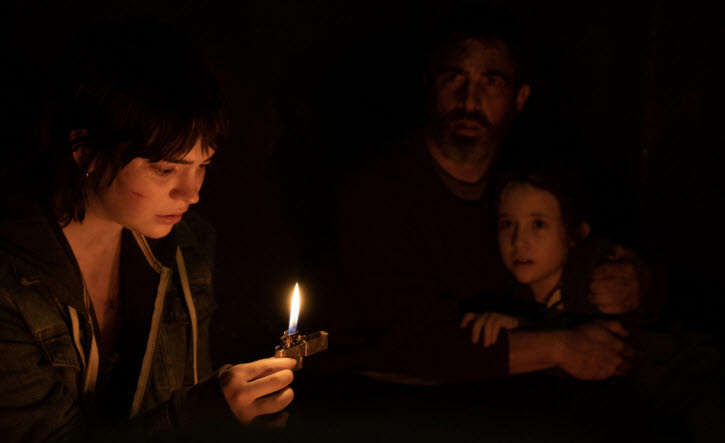
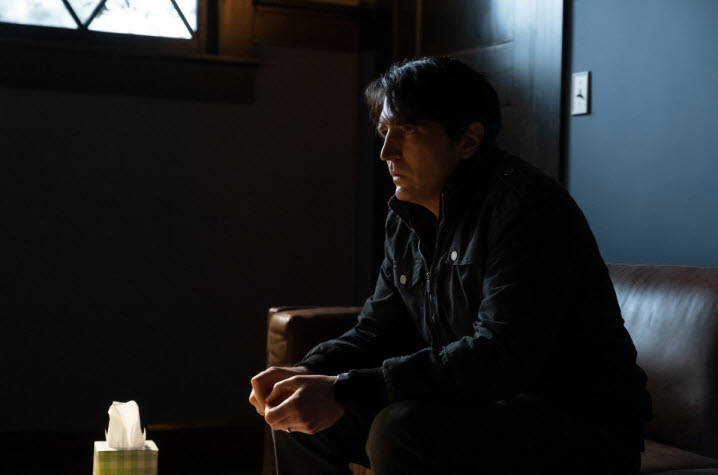
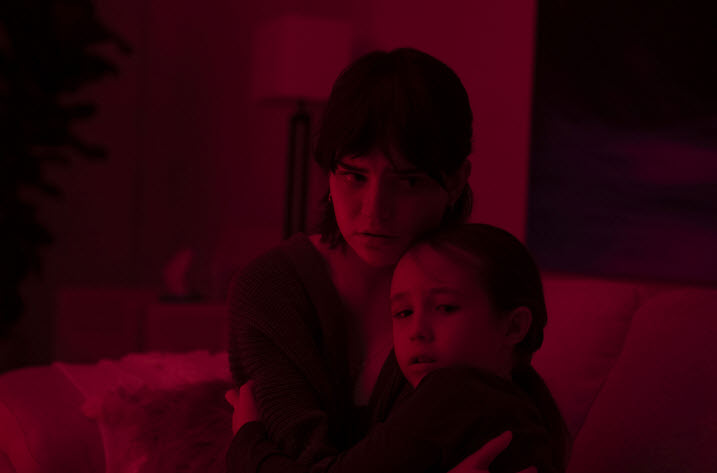
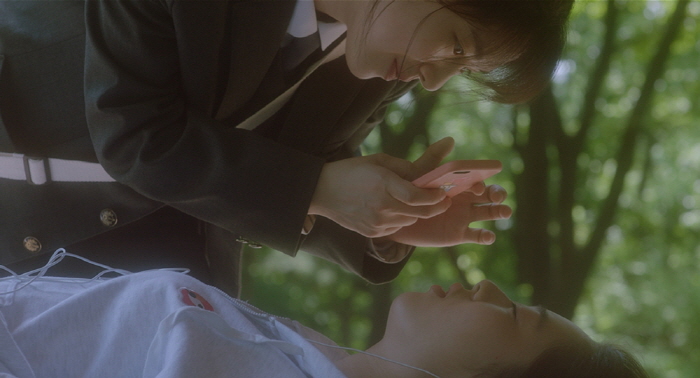
The Blackening (2022) ☆☆☆(3/4): Which one is more, uh, black?

As a South Korean audience who does not know that much about the African American culture, I may not be an ideal one for “The Blackening”, but it amused and entertained me enough as a humorously self-conscious genre exercise. Although I am not that sure about whether I get all the jokes and satiric jabs in the film, I still can appreciate it as a silly but entertaining mix of familiar genre elements and some acerbic sociocultural satire, and I actually got tickled more than once as observing some of the most outrageous moments in the film.

The main background of the movie is a cabin located in the middle of some remote forest area, which surely spells a trouble to you right from the start if you are quite familiar with many slasher horror films out there. An African American couple arrive there first before their friends come, and nothing looks troubling on the surface, but of course, they soon find themselves targeted by some insidious figure once they come across a little old board game in the basement game room of the cabin.

After this unfortunate couple is promptly dispatched for not playing that board game that well, the movie quickly moves onto the next part of the story as introducing their arriving friends one by one. Everyone is eager to have a good time together in that cabin, and, to our little amusement, one of them is not bothered at all even when she happens to encounter a very suspicious figure while stopping by an old store in the surrounding area of the cabin. Sure, “The Texas Chain Saw Massacre” (1974) is naturally mentioned, but everything seems to be going fine and well once they are all inside the cabin while ready for fun and games during the evening.

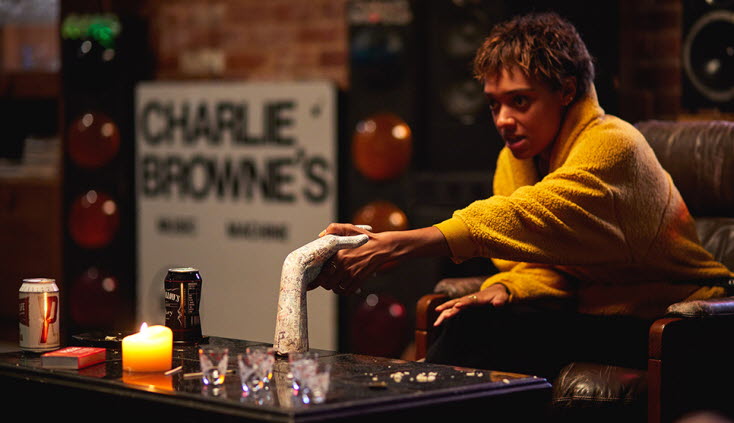
However, the mood becomes quite disturbing when they subsequently go inside that basement game room and then find that old board game in question, which is incidentally named, yes, “The Blackening”. Once they open and then touch the board game, they soon find themselves trapped inside the cabin by that mysterious figure behind the board game, who has a diabolical plan on everyone in the cabin. This unknown figure is going to force all of them to play the board game which will spring up one deadly question after another to answer, and their survival mainly depends on how knowledgeable they are about the African American culture as well as being a black.

Coming to realize how perilous their situation really is, the main characters of the movie desperately try to survive as much as possible, and that is where many of laughs in the film come from. It soon turns out that most of them are not, uh, black enough for answering all those lethal questions thrown at them step by step, and the movie cheerfully makes a fun of their increasingly absurd situation while also showing the considerable influence from a bunch of notable genre flicks such as “Scream” (1996) and, yes, “Get Out” (2017).

The movie is basically a one-joke comedy, but the screenplay by Tracy Oliver and Dewayne Perkins, which is based on the 2018 short film of the same name by the comedy troupe 3Peat, keeps things rolling as often throwing self-conscious jokes and gags associated with its genre clichés and conventions. Because nearly every main character in the film is black, any of them can be quickly eliminated as required by those genre rules, and there is even a tense but amusingly preposterous scene later in the film where several main characters must decide who is the “most black” in the bunch for avoiding not getting killed together in the end.

Around the narrative point where the identity of the menace surrounding its main characters is eventually revealed, the movie comes to lose some of its comic momentum as expected, but it continues to provide good laughs under the competent direction of director Tim Story. While you will be amused a bit when someone unwisely says “I’ll be right back”, you may also have some good laugh from a very typical but undeniably hysterical case of talking villain syndrome during the finale, and I must tell you that I particularly like a nice punchline moment at the end of the movie, which incidentally involves with why many African American people are usually reluctant to call the police.

The main cast members of the film play their archetype characters as straight as possible for enhancing their many comic moments throughout the film. While Jermaine Fowler and X Mayo are relatively showier as required by their exaggerated supporting roles, Grace Byers, Melvin Gregg, Dewayne Perkins, Antoinette Robertson, and Sinqua Walls are also effective in their respective parts, and Jay Pharoah and Yvonne Orji have a little fun during their brief appearance at the beginning of the film.

Overall, “The Blackening” is often funny for its smart and engaging juxtaposition of its genre elements and the African American cultural elements, and it surely deserves to be mentioned along with “Get Out” and many other recent African American genre exercises including “Sorry to Bother You” (2017) and “They Cloned Tyrone” (2023). Although it does not surpass the devious comic precision of “Get Out” or the no-holds-barred satire of “Sorry to Bother You”, it is still entertaining enough to recommend, and it is certainly something you cannot miss if you are looking for something different.

Posted in Movies | Tagged , , , , | Leave a comment

Bodies Bodies Bodies (2022) ☆☆☆(3/4): …And then it becomes deadly for all of them

“Bodies Bodies Bodies”, which is currently available on Netflix in South Korea, a nasty but humorous comedy thriller film which will amuse you in more than one way. On the surface, it looks like your average woman-in-danger flick, but it goes a bit deeper than expected as thoroughly and relentlessly satirizing its main characters’ banal relationships and shallow behaviors, and that is where most of its fun comes from.

The movie opens with a little private moment between two young women named Sophie (Amandla Stenberg) and Bee (Maria Bakalova), and we get to know a bit about them as they are going to a remote spot belonging to the father of one of Sophie’s rich friends. They have been in a romantic relationship for a while despite their apparent social difference, but Sophie is eager to introduce Bee to her friends, and Bee hopes that she will have a good time with others there.

However, things do not look particularly promising because Sophie and Bee turn out to be virtually uninvited when they arrive at a big house located at that remote spot in question. Although her three female friends, Jordan (Myha’la Herrold), Emma (Chase Sui Wonders), and Alice (Rachel Sennott), welcome Sophie and Bee at first, it is clear to us that they do not like their fun time with two guys interrupted by Sophie and Bee’s appearance.

The two guys in question are Greg (Lee Pace) and David (Pete Davidson), who is incidentally the son of the owner of that big house. David later expresses his displeasure during his private conversation with Sophie, and we also come to gather that they and their friends actually do not know anything about Greg, who is much older than them but comes there anywhere just because he recently happens to get involved with Alice via an online dating application.

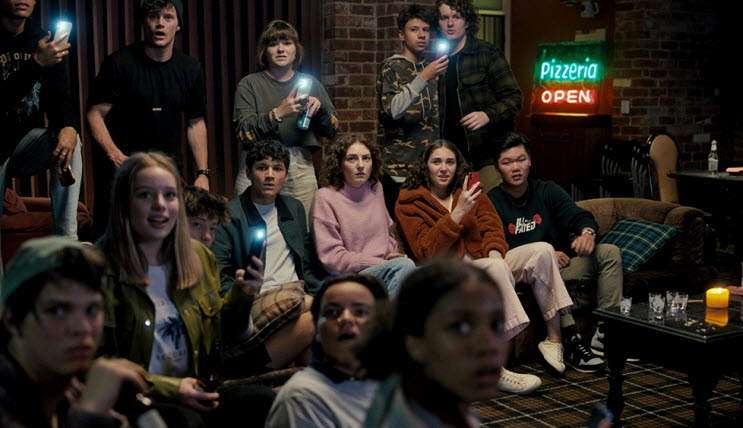
Anyway, they all expect to have a good time together inside the house while it gets dark and stormy outside due to a hurricane during the evening. While a friend of theirs happens to be absent for some reason, Bee is willing to fill the empty spot instead, and the mood soon become more casual and playful as they are about to play a little murder game called, yes, “Bodies Bodies Bodies”. Somebody among them will take the role of the killer, and, after some dark moment inside house, they will have to guess the identity of the killer once lights are turned on and then the “body” is found.

Of course, the situation subsequently becomes more tense than before when something suddenly occurs to the shock of everyone inside the house. To make matters worse, they also find themselves completely isolated from the outside for no apparent reason, and they become more terrified as it seems that someone among them is going to eliminate them one by one.

This is certainly a classic thriller setup exemplified by Agatha Christie’s chilling mystery thriller novel “And Then There Were None” and many other similar movies ranging from John Carpenter’s “The Thing” (1982) and Quentin Tarantino’s “The Hateful Eight” (2015) to those Friday the 13th movies. As the body count is naturally increased along the story, the movie deftly dials up a sense of dread and paranoia among its main characters, and that is further accentuated by the atmospheric score by Disasterpiece.

In the meantime, the screenplay Sarah DeLappe, which was developed from the story written by Kristen Roupenian, has a naughty fun with how superficial the relationships among the main characters really are. Mostly interacting with each other on the Internet instead of making any genuine human connections among them, they inevitably come to reveal each own deception and hypocrisy under their increasingly perilous circumstance, and the resulting conflicts among them only lead them to a series of unwise things you should not do if you are in a slasher horror film.

As a result, many of the main characters in the film become rather unlikable to us, but the movie keeps holding our attention before eventually arriving at its expectedly ironic finale, and its main cast members are effective as broad but colorful characters. While Maria Bakalova, who has been more well-known thanks to her hilarious Oscar-nominated turn in “Borat Subsequent Moviefilm: Delivery of Prodigious Bribe to American Regime for Make Benefit Once Glorious Nation of Kazakhstan” (2020), dutifully holds the center in a plainer appearance, Amandla Stenberg, who has been more notable since her powerful lead performance in “The Hate U Give” (2018), functions as a good counterpart for Bakalova, and My’hala Herrod, Chase Sui Wonders, and Rachel Sennott are also equally solid. In case of Lee Pace and Pete Davidson, they do not hesitate at all from the obnoxious sides of their respective supporting roles, and their solid comic performances provide extra humor to the film.

“Bodies Bodies Bodies” directed by Halina Reijn, a Dutch actress/filmmaker who previous made a feature film debut in “Instinct” (2019). I have not seen that movie yet, but “Bodies Bodies Bodies” shows that she is a good filmmaker who knows how to engage and entertain us, and I enjoyed how she balanced the film well between comedy and thriller. Yes, this is another typical genre exercise, but it has some wit and personality in addition to working well as a biting social satire, and I recommend you to give it a chance someday.

Posted in Movies | Tagged , , | Leave a comment

Stephen Curry: Underrated (2023) ☆☆☆(3/4): From an underdog to a legend

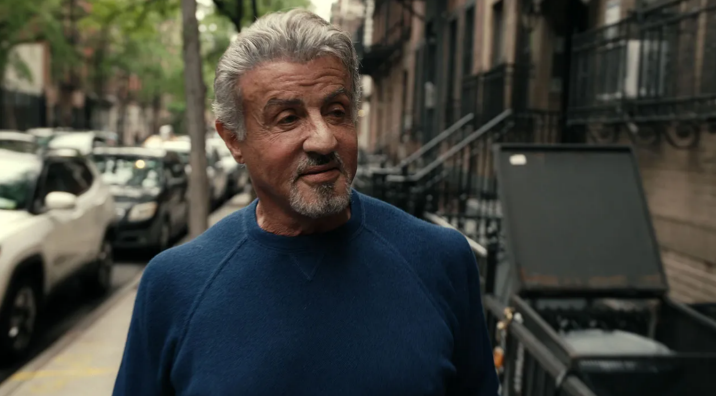
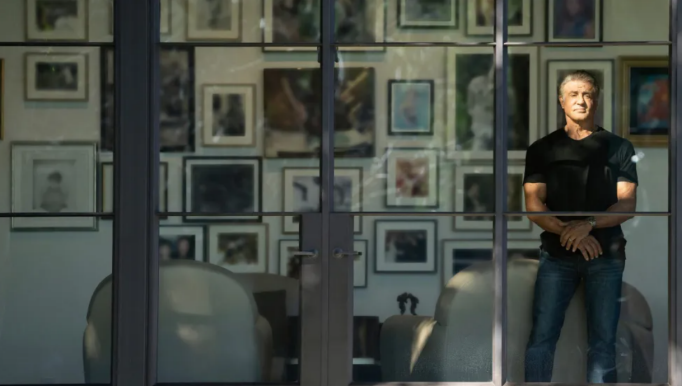
Documentary film “Stephen Curry: Underrated”, which was released on Apple TV+ in last week, looks into the past and present of the professional athletic career of Stephen Curry, one of the most prominent NBA players at present. As a guy not so interested in sports, I could only observe and assess what is presented in the documentary, and I can only tell you for now that it gives us a fairly engaging underdog narrative although it could show us more about Curry as a human being in my inconsequential opinion.

At the beginning, the documentary mainly focuses on how much Curry was underrated in his early years. Just like his father, Curry wanted to be an NBA basketball player, but he did not look that promising just because he was rather skinny in addition to being not so tall, and this actually came to motivate him a lot. As advised by his father, he trained himself more and more in addition to improving his athletic strength further, and this eventually helped him distinguish himself as a young nut promising basketball player.

However, Curry still did not receive much attention when he was about to enter the college basketball league in 2006. At first, he really wanted to go to Virginia Tech because it was where both of his parents studied and played, but then he could not go there to his disappointment, and then there came an unexpected offer from Davidson College of North Carolina. Bob McKillop, who was the coach of the Davidson Wildcats at that time, clearly recognized considerable potential from Curry, and he was quite willing to nurture and support Curry as much as possible even though nothing much was expected from Curry at that time.

Anyway, Curry’s first year at the Davidson Wildcats was rather disappointing in the beginning, but McKillop continued his support toward Curry nonetheless, and a series of archival footage clips show how Curry gradually got better in addition to becoming another substantial part of the team. There later came a big moment of defeat and frustration for not only Curry but also many of other team members, but McKillop did not give up at all, and Curry and his several ex-team members reminisce about how McKillop gave them some hard criticism while never losing his usual supportive stance at that daunting time.

What followed next is your typical underdog drama, and that is certainly the most engaging part of the documentary. After discerning that they really had to play together as perfectly as possible, Curry and other main team members tried hard to excel themselves besides building up more team spirit among them, and, what do you know, they became almost invincible once they eventually found a way to click well with each other on the court. At the Southern Conference, the Davidson Wildcats surprised everyone as winning the Championship three times during 2006-2008, and this significant achievement eventually led to its participation in the NCAA tournament in 2008. Because the Davidson Wildcats never entered the NCAA tournament for almost 40 years, everyone in the Davidson College went wild to say the least, and that was certainly another highlight in Curry’s years in the Davidson Wildcats.

I will not go into details on what happened next, but I can tell you instead that director/co-producer Peter Nicks, who previously impressed me with two very good documentaries “The Force” (2017) and “Homeroom” (2021). did a competent job of building up narrative momentum. Around the point where it the documentary eventually arrives at a big dramatic moment to remember for everyone at the court, you may brace yourself for a bit even though you are much more knowledgeable about Curry’s professional athletic carrier than me.

This narrative is often intercut with Curry’s current status as a prominent NBA player. As already told to us at the beginning of the documentary, Curry was underrated again around the time when he entered the NBA draft in 2009, and many people showed doubts as his rather disappointing records during first several years, but, of course, he was not so deterred by this as eventually becoming one of the most valuable players of the Golden State Warriors.

2021 was rather daunting for Curry despite a little historic moment for his professional athletic career, and the documentary attempts to look closer into his life, but I must say that this part feels relatively banal to the part focusing on his years in the Davidson Wildcats. The documentary surely interviews Curry’s several family members including his parents, but what they say in front of the camera is not particularly revealing in my humble opinion, and that is a shame considering that they might talk more about Curry’s life and personality. Things get a bit more interesting when the documentary shows us Curry’s sincere efforts on getting a college degree, but that still does not show much about him, while only leading to an eventual feel-good moment where he finally receives the college degree in front of his proud family members and numerous attendees.

In conclusion, “Stephen Curry: Underrated” is mostly informative and engaging on the whole, so I recommend it despite some reservation due to its relatively weak aspects. As far as I can see from the documentary, Curry is an interesting human figure to watch in addition to being a remarkable basketball player to remember, but his life and career are still going through their middle chapter even at this point, and now I wonder whether the documentary is a bit too early. As shown at the end of the documentary, he is already ready for whatever will come next to him, and we may get more interesting stories about him later in the future.

Posted in Movies | Tagged , , , , , , | Leave a comment

Ruby Gillman, Teenage Kraken (2023) ☆☆1/2(2.5/4): The tale of a Kraken girl

Animation feature film “Ruby Gillman, Teenage Kragen” might have felt a bit more refreshing if it came out a few years earlier at least. During my viewing, I was reminded of several other recent animation films including “Luca” (2020) and “Turning Red” (2022), and, despite some fun and entertainment, the film does not have much to distinguish itself in the bunch. I liked it to some degree without getting bored, but, folks, I also wished it to have a little more distinctive personality besides merely being a well-made product.

The story of the film mainly revolves around Ruby Gillman (voiced by Lana Condor), who is your average shy high school girl and turns out to have a good reason for her anxiety and insecurity. She and her family are actually sea creatures called, yes, Krakens, but they have hidden their true identity from others in their little seaside town while disguising themselves as “Canadians”. Although she has gone along with that well during last several years, Ruby has felt more awkward about hiding her true identity from her schoolmates than before as entering her adolescence years, and even hanging around with several misfit students in her school does not help her that much.

Nevertheless, Ruby is eager to experience and enjoy more things out there, and one of these things is incidentally the upcoming school prom to be held on a big boat, but there are two problems to deal with. First, she wants to ask a certain hunky boy in her school, but she is understandably hesitant about that because she is not so sure about whether he really likes her as much as she adores him. Second, her mother Agatha (voiced by Toni Collette) has firmly forbidden her from doing anything on or in the sea, and she is not so pleased when Ruby tries to persuade her to make an exception for the upcoming school prom.

Of course, Ruby soon comes to learn the reason why she has not been allowed to be on or in the sea throughout her whole life. When that hunky boy happens to fall into the sea by her little mistake, Ruby jumps into the sea despite her initial hesitation, and, what do you know, that causes her subsequent transformation into a big Kraken with shiny tentacles. Once she later manages to get smaller thanks to her mother’s timely intervention, she comes to learn more about her mother’s family via her jolly uncle Brill (voiced by Sam Richardson), and that eventually leads her to meeting her grandmother, the underwater queen who incidentally prefers to be called “Grandmamah”.

While Grandmamah is eager to show and teach her granddaughter more about her kingdom and the considerable power and ability of their family, Agatha still wants her daughter to stay outside the sea, and that certainly makes Ruby quite conflicted. She does not feel like being ready for succeeding her grandmother someday, but she also feels less comfortable with her current life outside the sea, and the only consolation comes from Chelsea (voiced by Annie Murphy), a pretty red-haired girl in the high school who turns out to have her own secret to hide just like Ruby and quickly befriends her because of that.

What follows next is predictable to say the least, but director Kirk DeMicco and his crew provides a number of visually wonderful underwater moments to engage us as Ruby explores more of her new world along the story. Although I must say that they do not look as amazing as the highlights of “Finding Nemo” (2003), they are still fairly gorgeous with lots of broad but colorful details to enjoy, and I especially like the splendid grandeur of Grandmamah’s big giant underwater palace.

In the end, the story culminates to an expected climactic part coupled with some action, and that is where I got a bit dissatisfied. Although it thankfully avoids being too rapid or flashy, the film could take some more time for building up its story and characters more in addition to letting us enjoy more of its mood and details before hurriedly heading to its big finale.

Anyway, the voice cast members of the film are solid in their respective parts. While Lana Condor, who has been mainly know for Netflix film “To All the Boys I’ve Loved Before” (2018) and its two following sequels, fills her archetype role with enough charm and pluck, and her good voice performance diligently carries the film to the end even while the film stumbles more than once later in the story. While ably supporting Condor, Toni Collette, Annie Murphy, Colman Domingo, Sam Richardson, Will Forte, and Jane Fonda have each own moment to shine, and Fonda certainly relishes every moment of hers as Ruby’s commanding but doting grandmother.

In conclusion, “Ruby Gillman, Teenage Kragen” is often deficient in terms of storytelling and characterization, but it is a mostly competent product which has some enjoyable elements to hold our attention for a while. Sure, “Turning Red”, which is about a girl who can be transformed into a big red panda as entering her own problematic adolescent period, did a better job of presenting the anguish and anxiety of female adolescence with more wit and imagination, and “Luca”, which is incidentally the coming-of-age tale of a sea creature boy, has more style and personality in comparison. Nevertheless, “Ruby Gillman, Teenage Kragen” is not entirely without fun and amusement at least, and I will not stop you from spending your spare time on it.

Posted in Movies | Tagged , , , , , , , | Leave a comment

The Son (2022) ☆☆(2/4): The disappointing second film by Florian Zeller

Florian Zeller’s second film “The Son” is disappointing for seeming to have all the right elements to give us a fairly good family drama on the surface. Again, Zeller adapted one of his acclaimed plays along with Christopher Hampton, but the overall result is curiously dull and lackluster compared to the powerful human moments of their previous Oscar-winning film “The Father” (2020), and we only come to observe its cast members struggling a lot with thin narrative and superficial characterization.

At the beginning, the movie depicts how the daily life of Peter Miller (Hugh Jackman), an affluent New York City lawyer currently living with his second wife, is unexpectedly disrupted when his ex-wife Kate (Laura Dern) comes to tell him about their son Nicholas (Zen McGrath). According to Kate, Nicholas has been quite problematic for rather unspecific reasons, and now he wants to live with his father instead of his mother. Although he is not eager to live with his son mainly because his second wife Beth (Vanessa Kirby) is raising her baby son at present, Nicholas eventually agrees to let Nicholas stay in his residence, and Nichoals seems to be grateful for that.

However, of course, the situation gradually becomes awkward between Peter and his son. While he seems to get a bit better than before after moving to a new school, Nicholas does not talk much about whatever he has been struggling with, and that certainly frustrates Peter a lot. As a father, Peter certainly tries his best to connect with his son, but Nicholas seems to be more withdrawn instead of answering to any serious question from his father, and things only get worse as he shows more erratic behaviors.

Because she usually stays in their residence along with her baby son, Beth often shows her understandable concern to Peter, and Peter feels more conflicted about what to do with his son. In addition, he happens to get a big opportunity which may boost his professional career a lot, and he wonders whether he should give up that chance for paying more attention to his son.

However, no matter how much Peter tries, Nicholas only becomes more distant to him with a number of clear signs of mental deterioration. He turns out to have a certain disturbing habit shown from many mentally unstable people, and he often says about how much he has been tired of everything in his life. He sometimes looks brightened up a bit as shown from an impromptu dance scene between him and his father, but he soon goes back to his usual moody mode, and that disturbs both Nicholas and Beth more.

However, the adapted screenplay by Zeller and Hampton unfortunately fails to convey us whatever Nicholas is struggling in his deeply troubled mind. Despite Zen McGrath’s earnest efforts, Nicholas is mostly defined by his frequent mood swings and inexplicable behavioral patterns instead of coming to us as a real human character, and Zeller and Hampton’s adapted screenplay gets worse as struggling to provide some explanation via a number of contrived dialogues scenes which belong more to stage than screen. Now I am reminded of late critic Pauline Kael once said; “Explaining madness is the most limiting and generally least convincing thing a movie can do.”

As a matter of fact, many of relatively better moments in the film are not directly involved with Nicholas. The private conversation scenes between Peter and his ex-wife are believable as we can sense their past from some underlying bitterness beneath the surface. Even though the movie does not show a lot about what is going on between Peter and his current wife, we can clearly observe some emotional wound when he apologizes to her for whatever happened between them when he was quite drunk at the previous night.

The best scene of the movie comes from a brief but crucial scene between Peter and his aging father Anthony (Anthony Hopkins). Peter still remembers how much he and his mother were mistreated by his father in the past, but Anthony does not show any regret or remorse at all, and it becomes quite apparent to us that their toxic father and son relationship is influencing Peter’s efforts for Nicholas in one way or another.

It is not much of a spoiler to tell you that Peter belatedly comes to realize what a crummy father he has been to Nicholas just like his father was to him, but the movie continues to disappoint us more as throwing more plot contrivance into the story. As a result, what is supposed to feel devastating do not strike us much, and the following epilogue scene do not ring true to us at all.

Anyway, the main cast members of the film try as much as they can do with their underwritten roles. While Hugh Jackman shows that he can be much more serious than he was in “The Greatest Showman” (2017), he is not demanded to do much except looking glum and conflicted, and Laura Dern and Vanessa Kirby are mostly limited by their thankless supporting parts. In case of Anthony Hopkins, who was absolutely magnificent in his Oscar-winning performance in “The Father”, he somehow leaves a lasting impression despite his short appearance, and that says a lot about his immense talent and presence.

In conclusion, “The Son” is a major letdown compared to the considerable achievement level of “The Father”, and it only makes me curious about watching its stage version someday. On sidenote, Zeller also wrote “The Mother” besides “The Son” and “The Father”, and I can only wish that he will have more luck when he is going to adapt “The Mother” later.

Posted in Movies | Tagged , , | Leave a comment