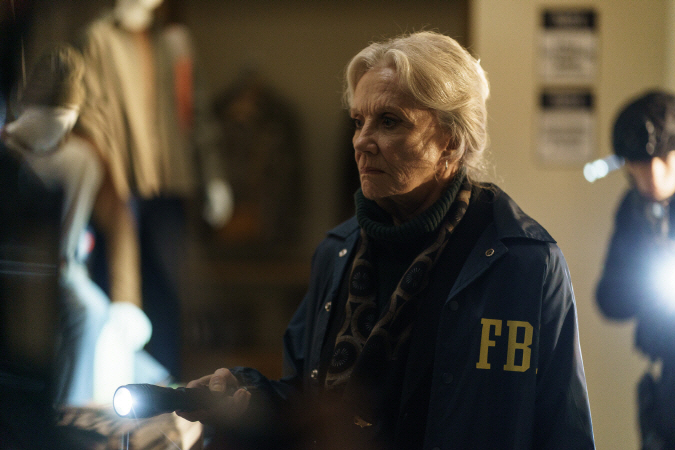
Kill Room (2023) ☆☆☆(3/4): A killing art business

I still remember when I looked around the Contemporary Art section of the Art Institute of Chicago in April 2010. Many of those artworks in that section looked pretty valuable as far as I could see, but I often wondered whether they were simply profound or profoundly simple, and this musing of mine still amuses me even at this point.

And that is why I was quite tickled when I watched “Kill Room”, which is now available on Netflix in South Korea. Although it does not fully push its absurd juxtaposition of crime and art to the end, the movie still provides a number of delicious comic moments making a big naughty fun on the world of art dealing business, and you will be more amused if you are familiar with how things can be pretty silly and outrageous in that business field.

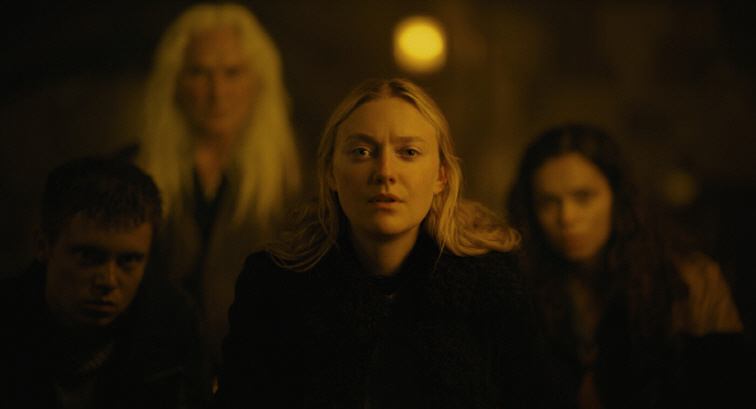
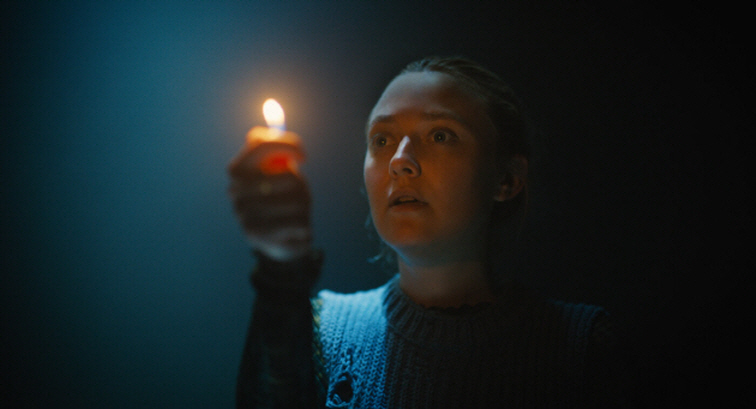
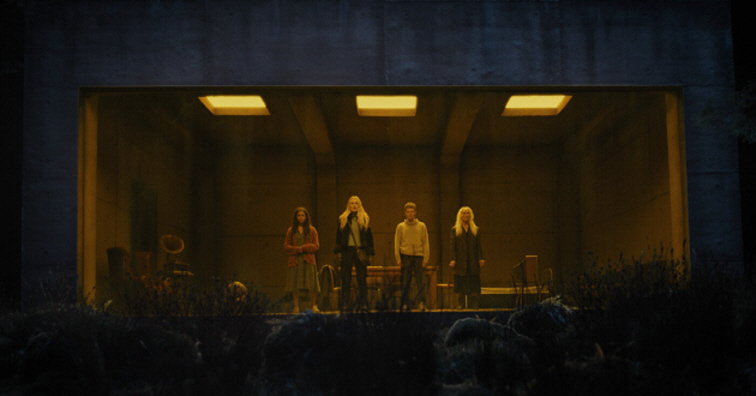
The early part of the movie establishes how things have been desperate for Patrice (Uma Thurman), the owner of a prominent art gallery in New York City. There was a time when her art gallery was one of the hottest ones in the city, but it has often been surpassed by many of its competitors, and she is also losing some of her biggest artists and clients just because she and her art gallery do not look that cool anymore.

Meanwhile, we also meet Reggie (Joe Manganiello), who has worked for years as a killer under a certain big criminal organization in the city. Although he does not like much his criminal occupation, he has no choice from the beginning because of a personal reason explained later in the story, and we see how he handles his latest job as instructed by Gordon (Samuel L. Jackson), his longtime handler who has incidentally run a little bakery shop as his front business.

On one day, Gordon suggests one supposedly good idea for the money-laundering process of their criminal organization. Considering how artworks are purchased at very high prices in the city everyday without drawing much attention from IRS, they can hide the transaction of their dirty money behind the frequent dealing process of an art gallery, and Patrice’s gallery comes handy to Gordon thanks to her drug dealer who happens to one of Gordon’s associates. While initially rejecting Gordon’s offer, Patrice is reminded again of how she and her gallery are on the verge of bankruptcy, so she eventually agrees to work along with him.  

It goes without saying that they need the artworks to cover their money-laundering business from the very beginning, and Reggie comes to take the job although he does not know anything about painting. Because the paintings do not have to be good at all, he can freely draw as inspired by whatever he thinks or feels, and both Gordon and Patrice have no problem with that as long as the money keep flowing around them.

However, Reggie’s paintings turn out to be much more successful than he and his associates can possibly imagine. Mainly because his first paintings are sold at very high prices, everyone in the town naturally pays more attention, and they are actually all the more interested and fascinated as Patrice understandably tries not to say much about her hot new artist.

As quite confounded by this unexpected fame and popularity, Reggie gradually finds his little artistic spirit growing further and further. While trying to provide more artworks, he also comes to express himself more into these artworks, and there is a darkly amusing moment when Patrice comes upon a sudden moment of horrible epiphany on what the latest artworks from him are actually about. After all, the main purpose of art is expression and communication, and she surely gets it in a rather unpleasant way.  

Around that narrative point, the screenplay by Jonathan Jacobson becomes conventional as Patrice and Reggie struggle to find to get out of their complicated situation, and that is where the movie comes to lose some of its comic momentum. The last act, which is unfolded at a big convention held in Miami, Florida, is a bit too neat and convenient, and the movie also does not utilize well several notable supporting performers such as Maya Hawke and Debi Mazar.

At least, the movie is buoyed by its three charismatic main performers. While Joe Manganiello dutifully holds the ground as a man who happens to get a chance for emotional ventilation via his, uh, primitive art, Uma Thurman and Samuel L. Jackson constantly bring a sense of humor to the film. Thurman, who also participated in the production of the film, somehow makes her neurotic character more sympathetic than expected, and Jackson, who incidentally appeared along with Thurman in Quentin Tarantino’s “Pulp Fiction” (1994) 30 years ago, is clearly enjoying his colorful role, and it is always engaging to see how smoothly he and Thurman handle several comic scenes between them.  

In conclusion, “Kill Room” is not without weak points, but its strong parts are good enough to compensate for that, and director Nicol Paone, who previously debuted with “Friendsgiving” (2020), did a good job of maintaining the lightweight mood for the story and characters. It could do more, but I got a fair share of fun and entertainment, so I will not grumble for now.
Posted in Movies | Tagged , , , , , | Leave a comment

Handsome Guys (2024) ☆☆1/2(2.5/4): Jae-Pil & Sang-goo vs. Evil

South Korean film “Handsome Guys”, a remake of “Tucker and Dale vs. Evil” (2010), attempts to transplant American horror elements to a new local background, and it succeeds to some degree in my inconsequential opinion. While mostly faithful to the original American version, the movie also tries to do several new stuffs to my little amusement, and the result often elicited laughs and chuckles from the audiences around me when I watched it at a local movie theater yesterday.

At the beginning, we are introduced to a couple of dudes who look rather unpleasant and suspicious on the surface. When these two guys happen to drop by a supermarket located in some country area, they come across a bunch of young people who come to the area for having a little rural vacation together, and they instantly give a bad impression to these young people.

However, these two dudes, Jae-pil (Lee Sung-min) and Sang-goo (Lee Hee-jun), are actually fairly nice guys who are sadly rather dim about how they often look to others. They simply come for buying a little house located in the middle of a nearby forest area, and, though it does not look exactly promising to say the least for many glaring reasons, they decide to buy it anyway because, as professional carpenters, they can fix here and there in the house while beginning to settle there.

Meanwhile, we also get to know a bit about those young people shown early in the story. As they have some fun during the following evening, their leader turns out to be quite an unpleasant lad, and Mi-na (Gong Seung-yeon), a young woman who happens to accompany him and his friends, becomes very angry and disappointed to know how she is actually disregarded by them. When she later comes to a nearby lake for letting out her feelings alone, Jae-pil and Sang-goo happen to be fishing right there, and, what do you know, they inadvertently causes a little unfortunate accident which leads to Mi-na becoming unconscious for a while.

Anyway, Sang-goo and Jae-pil take Mi-na to their house because any decent persons would do under this situation, and that is the beginning of a series of disastrous misunderstandings. Just because it looks like Jae-pil and Sang-soo kidnap her, the rest of her group attempt to ‘rescue’ Mi-na, and the leader is particularly concerned about his smartphone which happens to be in her possession. This smartphone contains some very sensitive materials which can ruin his life and career once for all if they ever get leaked in public, and he is already quite determined to retrieve it by any means necessary.

What follows next is not so far from the original American version, though the movie presents these expected moments with a bit of extra creativity. I did laugh as observing how a certain comic scene involved with a hidden hornet’s nest handled with a bit more shock and laugh, and I was not certainly disappointed at all in case of the hilariously gory moment involved with a woodchipper, which takes me back to that infamous scene in the Coen Brothers’ great film “Fargo” (1996) again.

Meanwhile, the movie gradually begins to take a different route during its second part. If “Tucker and Dale vs. Evil” lampoons “Friday the 13th” (1980) and its countless sequels and imitators, “Handsome Guys” goes for Sam Raimi’s little cult horror film “Evil Dead” (1981) and its many other variations out there. As already shown to us in advance, the house has the basement full of disturbing stuffs including what is clearly a portal to Hell, and a certain powerful dark force naturally starts to gather around the house once the portal gets activated step by step along the story.

Around the point where it pulls all the stops for more horror and laugh, the movie becomes rather shaky with low-budget special effects, but it continues to amuse us mainly thanks to the solid comic performances from its several main cast members. As the South Korean variation of hillbilly characters, Lee Sung-min and Lee Hee-jun look convincing in their deliberately shabby appearance, and their comic chemistry is as effective as Tyler Labine and Alan Tudyk in the original American version. Jae-pil and Sang-goo are sometimes silly and pathetic, but they somehow come to us as likable guys, even though we shake our head for their total obliviousness to how they do not look as handsome as they think.

Between her two co-stars, Gong Seung-yeon holds her own spot well in addition to playing her role as straight as possible, and Park Ji-hwan and Lee Kyu-hyung are well-cast as a couple of local policemen who gets deeply involved into Sang-goo and Jae-pil’s increasingly messy circumstance. The special mention goes to a dog which plays Sang-goo’s pet dog, and it always steals the show from the human performers in the film for its plain cuteness.

On the whole, “Handsome Guys”, which is directed and written by Nam Dong-hyub, is a fairly watchable remake mainly thanks to the good efforts from its main cast members. I give it 2.5 stars because 1) I gave “Tucker and Dale vs. Evil” 3 stars and 2) it is not as refreshing as that in addition to not being totally successful in its own variations in story and characters, but you may want to check it out someday if you enjoyed its original American version.

Posted in Movies | Tagged , , , | Leave a comment

Mean Girls (2024) ☆☆1/2(2.5/4): It’s a musical this time…

2024 film “Mean Girls” has a rather complex history just like the recent movie version of “The Color Purple” (1985). It is the movie adaptation of the acclaimed Broadway musical of the same name, which is inspired by the 2004 film of the same name which is based on Rosalind Wiseman’s book “Queen Bees and Wannabes”. Nevertheless, the movie is pretty much same as the 2004 film except some updated details and a bunch of musical numbers, and I enjoyed the overall result to some degree even though I often wondered about the necessity of its existence during my viewing.

As humorously told to us via its opening number, the story is a sort of cautionary tale about your average American high school life. Our young heroine, Cady Heron (Angourie Rice), feels insecure and anxious as beginning her first high school day, and we see how she cannot help but draw attention from many other students as a newly transferred student who has been incidentally homeschooled by her wildlife researcher mother in Africa for years. Not so surprisingly, she eventually befriends two distinguished loners in the school who are also defiantly queer in each own way, and Janis (Auliʻi Cravalho) and Damien (Jaquel Spivey) willingly take her under their wing as informing her a bit about a number of various groups (or tribes, shall we say) in their high school.  

Along with her, we come to learn that the most notable group in the school is a trio of sassy girls: Regina (Reneé Rapp) and the other two girls who have been more or less than her ladies-in-waiting. As the de facto queen bee of the school, Regina surely enjoys her power and influence over many other students, and we accordingly get an amusing musical scene as she sings about how much she enjoys her power and influence.  

Because of some old personal resentment toward Regina, Janis suggests a rather mean plan when Cady happens to draw the attention from Regina and Regina seems willing to make Cady into another underling of hers. While ingratiating herself more with Regina and her group, Cady is going to look for any opportunity to humiliate Reina in public, and Cady agrees to do that because she does not like Regina and her underlings from the beginning.

However, of course, things get become a bit more complicated for Cady due to two reasons. First, as getting closer to Regina and her underlings, she cannot help but feel seduced more and more by their supposedly cool appearance as well as their power. Second, she becomes attracted to a certain hunky student who happens to attend her mathematics class, but, what do you know, it turns out that he was once close to Regina, who will not definitely allow him to get closer to her latest underling.

Therefore, Cady becomes more determined to undermine Regina by any means necessary, and Janis and Damien have no problem with going along with that at all. One of the funniest things in the film is involved with a certain kind of nutrient bar which Cady deliberately recommends to Regina, and we surely get some laugh when the movie delivers an expected punchline moment later in the story. 

Not so surprisingly, things eventually get quite vicious when Regina belatedly comes to realize what Cady is doing behind her back. Reneé Rapp, who already played her character in the Broadway production during 2019-2020, delightfully commands every moment of hers with infectious gusto, and her delicious comic performance is certainly one of the best things in the film just like Rachel McAdams in the 2004 version.

In contrast, Angourie Rice is easily eclipsed by many of her fellow cast members including Rapp. Compared to Lindsay Lohan in the 2004 version (She makes a brief appearance around the end of the film, by the way), Rice is rather colorless in terms of presence and personality, but her earnest acting holds the center as required, and she also handles wells several musical numbers assigned to her character.

Around Rapp and Rice, the movie assembles a bunch of colorful performers who bring some extra humor and personality to the film in one way or another. Auliʻi Cravalho, who has been more notable since her wonderful voice performance in Oscar-nominated Disney animation film “Moana” (2016), fills her supporting character with enough pluck and defiance, and Jaquel Spivey, who has been mainly known for his Tony-nominated performance in Broadway musical “A Strange Loop”, complements Cravalho well as her character’s best friend. While Avantika Vandanapu and Bebe Wood have each own moment as Reina’s two underlings, Jenna Fischer, Tim Meadows, and Tina Fey, who also produced the film and wrote the screenplay as she did in the 2004 film, dutifully fill their respective supporting parts, and you will probably also enjoy the cameo appearance of some other recognizable performers.   

On the whole, “Mean Girls”, which is directed by Samantha Jayne and Arturo Perez Jr., is not totally necessary in my inconsequential opinion, though it is not entirely without fun and entertainment at least. Because I still would rather recommend the 2004 version first, I give the movie only 2.5 stars, but you may enjoy and appreciate its good parts more than I did, and I will not stop you at all if you simply want to spend some free time.

Posted in Movies | Tagged , , , | Leave a comment

A Quiet Place: Day One (2024) ☆☆☆(3/4): The First Days of the End

“A Quiet Place: Day One” is inherently redundant, but it is mostly competent enough to hold our attention at least. As the prequel to John Krasinski’s “A Quiet Place” (2018) and the following 2020 sequel, it does not have anything particularly new or fresh to surprise us, but it is supported well at least by the diligent efforts from its cast members, who try their best with their rather thin materials.

The opening part of the film, which is incidentally its best part, shows how things have not been that good for Samira (Lupita Nyong’o), a young female poet who has been spending her remaining days at a hospice outside New York City due to her terminal illness. Although her counselor and fellow terminal patients sincerely try to support her, Samira cannot help but feel bitter and angry about her impending mortality and worsening illness, and she is not so eager when she is asked to attend a little theater performance to be held in the middle of the downtown area of New York City.

It is not long after Samira and others saw the performance that something suddenly goes terribly wrong in the city. As she struggles to grasp what the hell is going around her after a sudden big explosion occurs, the movie deliberately evokes the aura of fear and confusion reminiscent of the aftermath of the 9/11 incident, and then she sees people swiftly attacked and then killed by those hideous alien creatures introduced in “A Quiet Place”. They do not have eyes, but they can hear pretty well in addition to moving quite fast, and they are ready to go for anything making noise.

Fortunately, Samira manages to hide inside the theater where a number of other lucky people including her counselor are hiding, and she instantly gets the rule for survival: Never make any loud noise which can instantly attract the alien creatures. While she and others around her stick to this golden rule hour by hour, things get more despairing as the city is totally isolated from the outside as all the big bridges in the city are destroyed because the alien creatures happen to be unable to swim, and their only chance for survival is a nearby port where several ships are ready for them and many other survivors.

Like the main cast members of “A Quiet Place” and its 2020 sequels, the performers of “A Quiet Place: Day One” are required to convey a lot to us without much dialogue, and they did a good job of silently embodying their fear and anxiety. Lupita Nyong’o, who is no stranger to genre films as shown from her masterful duo performance in Jordan Peele’s “Us” (2019), gradually establishes her character while looking believable in a series of suspenseful scenes in the film, and Djimon Hounsou, who previously appeared in the 2020 sequel film, and Alex Wolff are mostly solid although they are limited by their under-developed roles.

The screenplay by director/writer Michael Sarnoski, which was developed from the story written by him and Krasinski, trudges a bit during its middle part, but it patiently builds up more of the post-apocalyptic circumstance surrounding its heroine and several other characters. After becoming quite determined to do something personal before she eventually dies in one way or another, Samira embarks on a perilous journey for herself later in the story, and we observe more of the stark and barren background where the alien creatures can suddenly pop out for any unfortunate noise.

Not so surprisingly, the alien creatures are the weakest element in the story again. Although the movie attempts a bit to provide some biological details on these horrible creatures at one point, they are not particularly memorable in my humble opinion, and I must tell you that Samira’ pet cat has much more personality in comparison. While it does not seem to be particularly traumatized by what is going around it, this cute cat effortlessly steals the show as noiselessly following and comforting its owner, and we come to care about it as well as Samira. As reflecting more on their close emotional bond, I wonder whether the supporting character played by Joseph Quinn, who comes to accompany Samira just like her cat after getting some help from her, is actually necessary from the beginning.

The movie is the second feature film from Sarnoski, who previously impressed me and lot with his previous film “Pig” (2021). That movie looks simply conventional at first but then becomes quite sublime mainly thanks to Sarnoski’s thoughtful direction and one of the best performances in Nicolas Cage’s career. Compared to that, his second film is relatively more conventional without having much to distinguish itself from its predecessors, and that is two or three steps down from Sarnoski’s considerable achievement in “Pig”.

Nevertheless, “A Quiet Place: Day One” is not entirely without good things to enjoy even though it is not better than its two predecessors. I gave “A Quiet Place” 3.5 stars while handing 3 stars to its 2020 sequel, so I should give 2.5 or 3 stars to “a Quiet Place: Day One”. and I choose to rate it with 3 stars mainly because of another good performance from Nyong’o and that cute cat. Although she did not like cats much, she tried her best for interacting well with the cat on the set, and, what do you know, she eventually adapted it later. Regardless of whether you like the movie or not, we all can agree that is the best thing coming out of the movie, can’t we?

Posted in Movies | Tagged , , , | Leave a comment

Tucker & Dale vs. Evil (2010) ☆☆☆(3/4): Bloody hilarious

To be frank with you, I should have been a little more generous to “Tucker & Dale vs. Evil”, which is still a hilarious mix of horror and comedy although more than 10 years passed since it came out. When I watched it for the first time, I gave it 2.5 stars just because it begins to lose some of its comic momentum during its second half, but, what do you know, it remains in my mind much longer than expected, and the movie can still make me chuckle a lot more than once when I revisited it yesterday.

The movie is basically a one-joke comedy, but it is quite hilarious for how it puts some comic twist on many familiar genre elements. Around the beginning of the story, we are introduced to a bunch of young people going to some remote forest area by their vehicle, and there are surely several bad signs around them. First, they encounter a couple of hillbillies on the road, who look rather disturbing as passing by their vehicle. Second, they stop by a local gas station/store, whose name clearly signals something bad to happen sooner or later. Third, they encounter those two hillbillies again, who look all the more suspicious to them for an understandable reason.

However, to our big amusement, these two hillbillies, Tucker (Alan Tudyk) and Dale (Tyler Labine) are actually pretty nice dudes, though they are not so smart enough to present themselves well in front of these young strangers they happen to come across twice. They simply come for having a weekend vacation at an old and shabby cabin located in the middle of the forest area, and they really hope that they will have a pretty good time while fixing the cabin a bit.

Of course, that cabin in the question has full of ominous signs they should have noticed right from the very beginning. Besides its interior being decorated with old newspaper clippings associated with a certain infamous serial killing case, the cabin exudes a rather disturbing vibe here and there, and you may wonder whether it also has that diabolical ancient book from Sam Raimi’s little scary horror film “The Evil Dead” (1981).

Anyway, those young people happen to set up their tents at a spot not so far from the cabin, and one of them eagerly tells the others about that notorious serial killing case, but they do not mind at all just because, like the characters in “Friday the 13th” (1980) and its countless sequels and imitators, they simply want to have a fun weekend just like Dale and Tucker. During their first evening, they all go to a nearby river for skinny-dipping, and, what do you know, Tucker and Dale happen to be there for their little evening fishing.

Of course, there soon comes an unfortunate moment of misunderstanding between these two hillbilly dudes and one of the young people, who happens to be conveniently alone by herself. When she suddenly realizes that she is being spotted by Tucker and Dale, Allison (Katrina Bowden) comes to have a little accident which leaves her unconscious, and Dale and Tucker promptly take her unconscious body to their cabin like any decent person would do under this circumstance.

However, Allison’s friends completely misunderstand the situation when they happen to see Tucker and Dale taking her to their cabin. They think Dale and Tucker are kidnapping her, so they attempt to save her from Tucker and Dale, but that leads to more misunderstanding and conflict coupled with several hilariously bloody moments including the one involved with the woodchipper brought by Dale and Tucker. When the woodchipper appears early in the film, you may be reminded of that absurdly horrifying scene in the Coen Brothers’ great film “Fargo” (1996), and, yes, the movie does deliver its own humorously gory moment as expected. 

After many darkly uproarious moments during the first half, the screenplay by director Eli Craig and his co-writer Morgan Jurgenson becomes relatively less engaging as facing the inherent limits of its one-joke setup, but it still provides a fair share of amusement for us. Around the point where the true villain of the story eventually goes on a full-throttle mode, things get a bit more intense and outrageous than before, and you will certainly cheer for a nod to Tobe Hopper’s classic horror film “The Texas Chain Saw Massacre” (1974).

The success of the movie depends on a lot on its straight attitude to its story and characters, and its four main cast members accordingly stick to that while never being aware of being on the joke at all. Alan Tudyk and Tyler Labine ably complement each other as a mismatched duo to tickle us in one way or another, and their earnest comic acting makes us actually care more about their characters even though we frequently laugh for their characters’ increasingly absurd situation. While Katrina Bowden has her own moment when her character tries to set up a silly but undeniably refreshing moment for reconciliation between her saviors and her remaining friends, Jesse Moss gleefully chews every moment of his as the most aggressive character in the story, and that certainly brings more amusement for us.

Overall, “Tucker & Dale vs. Evil” is a solid genre product I regrettably undervalued at that time, and now I rectify my mistake via adding a half star to my initial rating. By the way, the main reason for revising this little funny film is the South Korean remake version which happens to be released here in South Korean in this week, and I sincerely hope that it will amuse and entertain me as much as the original version.

Posted in Movies | Tagged , , , | Leave a comment

Hijacking 1971 (2024) ☆☆☆(3/4): An intense South Korean hijacking drama

South Korean film “Hijacking 1971” almost made me forget that it is actually the heavily fictionalized version of one real-life incident. While I and many other audiences knew where it will eventually land, we all were gripped by its dramatic flight course thanks to its efficient and intense storytelling, and I would have fastened my seat belt if it had been on my seat.

The movie begins with a real-life hijacking incident about which I happened to learn when I was young and wild. On December 11th, 1969, Korean Air Lines YS-11 was hijacked in the middle of its flight to Seoul, and the hijackers forced its pilots to fly the plane to Pyongyang, North Korea. After the negotiation between North and South Korea, most of the flight crew members and passengers were eventually sent back to South Korea, but North Korean government held the remaining 11 persons, who are incidentally not returned to South Korea even at this point.

When this shocking incident is happening, a South Korean Air Force pilot named Tae-in (Ha Jung-woo) and his partner are doing their usual training session on the East Sea, and they instantly go after the hijacked airplane. When he is ordered to shot down the airplane before it crosses the border, Tae-in hesitates and then decides not to obey the order, and that ultimately leads to his discharge while he feels more guilt about the incident.

Around one year later, Tae-in is now working as one of the pilots of Korean Air, but he remains haunted by the incident while still not allowed to handle the landing for himself. As he prepares for another flight to Seoul along with his captain, we are also introduced to a number of passengers ready to get on the airplane, and you may be quite amused as watching the passengers hurrying themselves just for getting a better seat first (Yes, it was a time when one could not select a seat in advance).

Like any flight disaster movies, the movie briefly introduces some of many different passengers on the airplane. There are 1) a newly wedded young couple, 2) a young student who happens to sit right next to some sassy young lady, 3) a pompous businessman and his meek assistant, 4) a grouchy middle-aged man and his wife, 5) a deaf old lady and her son, and 6) another old lady who innocently brings a chicken onto the airplane, which is not incidentally her comfort animal (It is for some other purpose you can easily guess, by the way).

Of course, our attention is already drawn to one particular passenger. Just because he heard that those hijackers were rewarded a lot by the North Korean government, Yong-dae, a despaired young man who has been frequently harassed just because of his North Korean family background, decides to do the very same thing, and he instantly takes over the airplane once it takes off from the airport.

Mainly because the captain of the airplane happens to be seriously injured as a result, Tae-in has no choice but to take its control and then fly it toward North Korea as demanded by Yong-dae. As the airplane is being closer to the border second by second, Tae-in is trying to find any possibility for saving the passengers and flight crew members before it is too late, but Yong-dae is willing to achieve his goal by any means necessary, and that makes the situation all the more perilous.

Steadily and fully focusing on what is going on inside the airplane, the movie deftly dials up the level of tension along the story. While the battle of wills between its two conflicting main characters constantly swings back and forth between them, we get a series of tense scenes which add more intensity and suspense to the screen, and we come to pay more attention to what is being on stake for everyone on the airplane. When everything dramatically culminates to where our pilot hero must make a very bold decision at the eleventh hour (Is this a spoiler?), you may find this moment a bit too exaggerated, but there is enough tension for making you suspend your disbelief at least for a few minutes.

As the main center of the film, Ha Jung-woo is believable as a principled man struggling to handle the increasingly tricky circumstance for him and others on the airplane, and he is countered well by the intense performance by Yeo Jin-goo, who is alternatively frightening and tragic as a lad resorting to a very desperate measure. While we are often shocked by Yong-dae’s brutal acts of violence, we also understand his anger and desperation nonetheless, and you may pity him more around the end of the story.

The supporting performers surrounding Ha and Yeo dutifully fill their spots around Ha and Yeo. While Sung Dong-il has some good moments as his injured character tries his best for helping Ha’s character, Chae Soo-bin holds her small place well as a female flight attendant who turns out to be more resourceful than expected, and the performers playing the passengers also bring some personality to their archetype characters.

In conclusion, “Hijacking 1971”, which is directed by Kim Seong-han and written by Kim Kyung-chan, is a competent genre film which does its flight better compared to “Emergency Declaration” (2021), another recent South Korean flight disaster movie. While that movie ended up being as clichéd as “Airport” (1970) and many other similar flight disaster films, “Hijacking 1971” handles its familiar genre elements well enough to entertain the audiences from the beginning to the end, and it is surely one of better movie experiences for me and other South Korean audiences during this summer season.

Posted in Movies | Tagged , , , | Leave a comment

The Taste of Things (2023) ☆☆☆1/2(3.5/4): A gourmet and his cook

 Trần Anh Hùng’s latest film “The Taste of Things”, which was submitted as the French submission to Best International Film Oscar in last year instead of Justine Triet’s “Anatomy of a Fall” (2023), is as lovely and tasty as you can possibly expect. Mainly driven by its two different main characters’ longtime relationship based on their shared passion on food and cooking, the film often delights us with not only those delicious moments of cooking but also quiet but poignant emotional moments to cherish, and the result is surely one of more memorable movie experiences of this year.

Set in the late 19th century France, the movie opens with how a middle-aged woman named Eugénie (Juliette Binoche) prepares for another good meal for her employer Dodin Bouffant (Benoît Magimel) and his several fellow gourmets. As he helps her to some degree at her kitchen before eventually waiting along with his friends at his dining hall, we come to sense that he and Eugénie have been quite close to each other for years, and we are not so surprised to see them spending the following evening together as if they were a married couple.

As a matter of fact, Dodin has proposed to Eugénie more than once as he has come to respect and care about her a lot during all those years between them, though she is not so willing to accept his proposal simply because she prefers to maintain their current status as longtime companions. Sometimes he comes to her bedroom at night under her permission, but Eugénie is too independent to become a housewife, and Dodin understands that too well.

Nevertheless, both of them are still happy and content as sharing their passion on food and cooking as usual. While Dobin makes sure that Eugénie can get all the excellent ingredients for the meals to be served to him and his friends, Eugénie busily work on one dish after another, and this will remind you that it is always interesting to see experts doing their best on the screen. As cinematographer Jonathan Ricquebourg’s camera fluidly sticks and moves around Eugénie and a maid working under her, the movie vividly captures the small and big details on Eugénie’s cooking process, and the resulting verisimilitude is more than enough for you to get hungry within a few minutes. In fact, Pierre Gagnaire, a French chef who is quite famous for his high-class restaurant in Paris, served as the culinary director for the film, and he certainly deserves to be commended for his considerable contribution to many delicious moments in the film.

It surely helps that the two lead performers look quite natural and comfortable with all those culinary details on the screen in addition to embodying the shared past between their respective characters. Juliette Binoche, who has been one of the most luminous movie actresses in our time for nearly 40 years, does an impeccable job of filling her character with lots of life and charm, and we can clearly see what has attracted Dodin to Eugénie for years besides her top-notch cooking. She is your average free spirit who can sometimes baffle her admirer a bit, and Binoche dexterously fills her role with earthy elegance and tranquil dignity.

On the opposite, Benoît Magimel, who once had a romantic relationship with Binoche some time ago, effectively complements his co-star as palpably conveying to us his character’s deep affection and admiration toward Eugénie. At one point, Dodin becomes all the more determined to persuade her to accept his latest proposal, and Magimel looks quite committed as Dodin really tries his best for attaining his goal via cooking for his lover. Again, the camera closely focuses on every detail, and the result is electrifying to say the least – especially when one small but significant aural detail has us sense more of Dodin’s sincerity and dedication on his very special cooking.

 Hùng’s screenplay, which is loosely inspired by Swiss author Marcel Rouff’s 1924 novel “La Vie et la passion de Dodin-Bouffant, gourmet (The Passionate Epicure)”, also pays some attention to several other main characters besides Dodin and Eugénie. While Dodin’s fellow gourmets occasionally provide little humorous moments, the maid working under Eugénie and her little niece become more prominent later in the story, and there is a funny and touching moment when Dodin teaches the maid’s little niece on how to appreciate good dishes like he has for many years. 

  On the whole, “The Taste of Things”, whose original French title is incidentally “The Passion of Dodin Bouffant”, is a superlative human drama to be savored for many reasons besides all those terrific cooking scenes in the film, and Hùng, who received the Best Director Prize when the movie was premiered at the Cannes Film Festival early in last year, makes a glorious comeback here. Although I do not think I will ever forget how much I was annoyed and bored as watching his previous film “I Came with the Rain” (2009), I also fondly remember how much I was enchanted by his Oscar-nominated feature debut film “The Scent of Green Papaya” (1993), and “The Taste of Things” surely shows Hùng back in his good old element.

By the way, I must confess that my condition was not exactly ideal when I watched “The Taste of Things” at a local movie theater yesterday. I was rather depressed and tired before the movie began, but, what do you know, I soon found myself soothed and then energized by what is so gracefully shown on the screen, and I even did not mind several middle-aged ladies, who happened to sit right behind me, often talking a bit too loudly about whatever was being cooked on the screen. That is what a good movie usually can do, isn’t it?

Posted in Movies | Tagged , , , | 1 Comment

Sanctuary (2024) ☆☆☆(3/4): A sanctuary for wildlife animals

South Korean documentary film “Sanctuary” focuses on the activists of a bunch of people dedicated to providing a sanctuary for wildlife animals in South Korea. While they care a lot about saving and taking care of those unfortunate animals out there, they are also well aware of the limits of their diligent efforts, and it is touching to see how they keep going despite the frequent moments of considerable emotional toil during their work.

The documentary mainly revolves around Cheongju Zoo, which has been one of a very few wildlife animal sanctuaries in South Korea thanks to a lot of longtime efforts from its staff members including Kim Jeong-ho, who has worked there as one of its chief veterinarians. While they take care of a number of different animals in the zoo, they also handle numerous wildlife animals rescued for various reasons, and a small portion of these rescued animals are allowed to stay in the zoo because it was decided that they cannot possibly be released back into their wildlife.

We also see how several activists and experts work here and there in South Korea. The opening scene of the documentary shows the rescue of three water deer who happen to be stuck in a ditch of which they cannot get out for themselves, and, not so surprisingly, it turns out to be quite difficult to corner and then catch them all. At least, all of these water deer are eventually captured, and we later see them released into a safer place.

Via an activist named Choi Tae-goo, the documentary shows some grim moments you will not easily forget. As some of you know, there have been numerous bear farms in South Korea mainly for their gall which has incidentally been known as a precious oriental medicine, and I remember well when I saw a shocking TV news report on the mistreatment on those poor bears a long time ago. Sadly, this alarming trend has been continued even at this point, and we see a shabby shack where a couple of bears have miserably lived inside their dirty cages. It is really relieving for us to see that these two bears are eventually sent to the Cheongjoo Zoo for their protection and welfare, and they soon get much better than before thanks to the good care from its staff members.

And the documentary continues to show how vulnerable those wildlife animals often are due to human beings. At one point, the activists go to a wild field where they collect a heap of dead birds, and we come to learn later that this resulted from the deliberate poisoning by some mean dude. In addition, there is also a big vulture which becomes quite sick after eating some of these poisoned birds, and you will be saddened as watching this big bird going through a very difficult time before its eventual recovery.

And we see many other heartbreaking cases. In case of one eagle owl, its left wing is seriously damaged, and it is subsequently euthanized because it cannot be recovered and then released back to wildlife. We also see a heron who also gets severely injured in one of its wings due to some wire trap, and its rescuers have no choice but to end its immense pain as soon as possible.

Knowing well that they cannot possibly keep or save all those animals rescued by them, the staff members of the Cheongjoo Zoo try to be really considerate about making the important decisions of life and death on those rescued animals, and their decision-making process is always tricky for all of them. As treating those rescued animals for years, they cannot help but feel emotionally attached to them, so it is sometime difficult to be objective in making their decisions, and it goes without saying that some of their difficult decisions emotionally affect them from time to time. At one point, Dr. Kim flatly says in front of the camera that he has tried to stop caring as much as possible, but it only becomes more evident to us that he does care a lot nonetheless.

At least, things are not always depressing and demanding for him and others in the zoo because of the animals who have been lucky under their sincere care. In case of a female raccoon dog named Clara, it is particularly friendly to one of its staff members, and you may smile a bit as watching this little raccoon dog behaving like your average pet dog. When the zoo is opened for visitors, the mood becomes more cheerful than before, and we see Dr. Kim humorously introducing one of the Siberian tigers under his care.

We also see a little shrine dedicated to a number of animals who eventually passed away in the zoo. Regardless of how these animals felt about their lives in the zoo, it is clear that they did mean a lot to the staff members of the zoo. Yes, W.G. Sebald once said “Men and animals regard each other across a gulf of mutual incomprehension”, but it is still poignant to see the names of these deceased animals in the shrine nonetheless.

Overall, “Sanctuary” is an engaging documentary which handles its main subject with enough care and respect, and director Wang Min-cheol did a commendable job of presenting its sincere moments without any cheap sentimentality. To be frank with you, I do not like going to zoo much, but the documentary makes me appreciate some of its valuable aspects in the end, and I will certainly think of the documentary again if I ever happen to visit a zoo someday.

Posted in Movies | Tagged , , , , | Leave a comment

Under Paris (2024) ☆☆1/2(2.5/4): The Shark in Paris (no kidding)

French Netflix film “Under Paris” attempts to have and eat its cake, and that is sort of amusing to me. On one hand, it wants to be a serious shark flick like Steven Spielberg’s “Jaws” (1975), whose greatness still makes nearly all of subsequent shark flicks totally unnecessary to say the least. On the other hand, it also wants to be as preposterous as “Sharknado” (2013), and it is a bit shame that it does not go further with its utterly outrageous story premise during its second half.

The opening part of the film establishes the lasting personal trauma of its marine biologist heroine. When she is studying a certain big shark along with several colleagues including her husband in the middle of the Pacific Ocean, Sophia (Bérénice Bejo) does not worry that much despite some alarming signs just because she cares more about her research. Of course, this eventually leads to a devastating incident which kills nearly all of her colleagues including her husband, and she is still reeling from her immense trauma when she is working in Paris three years later.

On one day, Sophia is approached by a little underground environment protection organization which has been tracking down and monitoring that big shark in question during last several years. To her disbelief, the shark is actually somewhere inside the Seine River of Paris, and it seems to adapt itself somehow to the freshwater environment of the river, while quite ready for any prey to enter the river.

After confirming its existence in Paris, Sophia naturally approaches to the local police, but, not so surprisingly, nobody believes her words at first. As a matter of fact, they are more occupied with preparing for a big sports competition which will soon be held on the river, because this big public event may boost the chance for Paris to be selected for the upcoming Summer Olympics as its mayor has eagerly hoped.

At least, after some investigation into the river, Adil (Nassim Lyes) and his police colleagues come to realize that there is indeed the shark in the river. They and their boss naturally try to warn the mayor along with Sophia, but, of course, the mayor does not listen at all, while quite insistent about having the big day for her and her citizens as scheduled. As a result, Sophia and Adil must find any possible way to prevent a catastrophe to be caused by that big shark, which turns out to be more formidable than expected with some hidden surprises.

As Sophia and several other main characters look for where the shark is exactly hiding somewhere inside the Seine River, the movie becomes more preposterous while maintaining its serious attitude as before. At one point later in the film, we get a tense sequence unfolded in the middle of some old underground space below Paris, and director/co-writer Xavier Gens and his crew members generate enough amount of tension for us to suspend our accumulating disbelief about the plot for a while at least (How the hell such a big shark like that can swim freely along those narrow underwater tunnels?).

Like “Jaws”, the movie knows well that it is usually better to show its shark as little as possible. After the opening part, the shark is just briefly glimpsed here and there during a number of following key scenes, but that is fairly enough to keep us on the edge, and the frequently turbid quality of the Seine River brings more fear and anxiety to these scenes (How can possibly the shark overcome this heavily polluted environment?).

In addition, the movie gives a few characters we can care about. After getting to know more about Sophia and her trauma and guilt, Adil becomes more sympathetic to her as a guy who turns out to have his own trauma and guilt from the past, and they become a bit closer to each other as working together more for stopping the shark. Bérénice Bejo, who has been more prominent since her Oscar-nominated turn in Michel Hazanavicius’s “The Artist” (2011), provides some emotional gravitas to not only her character but also the story, and Nassim Lyes dutifully supports her as filling his archetype role with enough presence.

When it eventually goes all the way for shark attack, the movie does not disappoint us. I will not go into details on what is unexpectedly revealed during the last act, but I assure you that you will be quite amused by its outrageous aspects as well as the deliberate unrealistic qualities of its visual effects. Although the ending is a bit too anticlimactic compared to what has been so wildly presented right before that, it shows the possibility of a sequel, and the possible sequel may provide us more preposterous fun if it is really produced later.

Overall, “Under Paris” is not good enough for recommendation, but you will probably admire how it competently handles its outrageous story promise. According to my inconsequential 4-star rating standard, “Jaws” gets 4 stars, and a few fairly enjoyable shark flicks like “Deep Blue Sea” (1999) receive 3 stars at least while many others are placed way below them. Because “Under Paris” is somewhere between being these two groups, I give it 2.5 stars, but I will not deny that I had some fun and amusement at last night, so I will let you decide whether you will watch it or not during the upcoming weekend.

Posted in Movies | Tagged , , | Leave a comment

Inside Out 2 (2024) ☆☆☆1/2(3.5/4): More emotions to come

Pixar animation film “Inside Out 2”, which is the sequel to Oscar-winning animation film “Inside Out” (2015), shows us that Pixar still has it. While it is another fantasy adventure into the state of mind just like its predecessor, the film presents it well with enough charm, spirit, and imagination to be savored, and the result is alternatively funny and touching to the end.

The story begins with how things have been going fairly well since that little adventure of the five basic emotions inside the mind of a young girl in “Inside Out”, who is now 13 years old and naturally about to enter her adolescent period. As Riley (voiced by Kensington Tallman) and her two best female friends are excited about entering their high school period, Joy (voiced by Amy Poehler) and her fellow basic emotions, Sadness (voiced by Phyllis Smith), Anger (voiced by Lewis Black), Fear (voiced by Tony Hale), and Disgust (voiced by Liza Lparia), are certainly ready for more things to do inside Riley’s mind, but, alas, there come two unexpected problems. First, Riley belatedly comes to learn that her two best friends will go to some other high school, and she is quite disappointed about that. Second, not long after Riley goes through her first day of her adolescent physical/mental changes, the control center of Joy and her fellow basic emotions is drastically changed while a number of new emotions suddenly appear in front of them.

One of these new emotions is Anxiety (voiced by Maya Hawke), who instantly takes over the control room as Riley becomes more and more anxious about herself. She and her two close friends, who are all incidentally hockey players, are going to attend a three-day hockey training camp, and Riley is more conscious about herself when she comes across a popular senior hockey player to whom she has been looking up. She really wants to play hockey along with that senior player, and her following actions naturally make her distant to her close friends, who are certainly not so pleased about the change in their relationship with her.

As Riley lets herself driven more by Anxiety and other new feelings such as Envy (voiced by Ayo Edebiri) and Embarrassment (voiced by Paul Walter Hauser), Joy and her fellow basic emotions are sent away from the control center to somewhere quite far from it. Again, Joy sees that she and her fellow basic emotions must take care of this emergency as soon as possible, but things are changed a lot in the fantasy landscapes inside Riley’s mind, and even Joy finds herself feeling like being against the wall more than once.

While Joy and her fellow basic emotions go up and down along the story, the screenplay by Meg LeFauve and Dave Holstein provides a series of humorously imaginative moments which will remind you again that human mind is still a wondrous and interesting realm to explore and observe. You will be delighted again to see that vast labyrinth of various stored memories, and I particularly like a big stream which will be appreciated by anyone who has ever read the works of Virginia Woolf and James Joyce.

And these and other fantasy moments often resonate with what is going on outside Riley’s mind. Feeling quite more anxious than ever, Riley eventually tumbles down into the gloomy status of low self-esteem, which only exacerbates the troubled circumstance inside her mind. As a matter of fact, even Anxiety gets driven more and more by herself, and we eventually get an apt visual depiction of panic attack later in the story. Believe me, anyone who ever had a panic attack in adolescent years will instantly recognize that frenzied mental condition, and you will feel sorrier for Anxiety, who is as well-intentioned as Joy and other emotions but makes wrong judgments just like Joy did more than once.

What eventually follows next may not surprise you much, but you will admire how the people of Pixar Studios are still good at pulling our heartstrings. The lesson for Joy and the other emotions at the end of their adventure is not so different from what “Inside Out” movingly conveys to us, but that familiar lesson is delivered well with enough sincerity and sensitivity, and that was enough for me to become less cranky than usual and reflect more on how to be more honest with my emotions.

Again, Amy Poehler and Phyllis Smith hold the center well as surrounded by a number of notable performers who bring some colorful personality to their supporting characters. While Lewis Black, Kensington Tallman, Tony Hale, and Liza Lapria are effective in their respective roles, Maya Hawke is certainly a standout as her character often steals the show as expected, and my only complaint is that the film does not provide enough space for its other notable cast members including Ayo Edebiri, Paul Walter Hauser (He did a more impressive voice performance in recent Netflix animation film “Orion and the Dark” (2023), by the way), June Squibb, and Adèle Exarchopoulos, who is unfortunately stuck with her rather thankless role (But who could have imagined that she would perform in a Pixar animation film?).

In conclusion, “Inside Out 2”, directed by Kelsey Mann, does not go beyond what was awesomely achieved by its predecessor, which is still one of the best Pixar animations films during last two decades (and it also gives us a certain catchy commercial jingle which will be always around somewhere in our mind). Although its future is quite uncertain at present thanks to some unpleasant changes in Disney, Pixar has not lose its touch at least, and that is a comforting news for now.

Posted in Movies | Tagged , , , , , , | 4 Comments