The Land of Morning Calm (2024) ☆☆☆1/2(3.5/4): A fisherman’s insurance scam

You will not easily forget the old but tough hero of South Korean film “The Land of Morning Calm”, which won three awards including the Best Film Award at the New Currents section of the Busan International Film Festival a few months ago. Although he is not a nice or pleasant dude at all, he is presented as a complex human figure to observe as we get to know more about him and his nearly hopeless life environment along the story, and it is compelling to watch how bluntly but sincerely he struggles for what should be done for a few others around him.

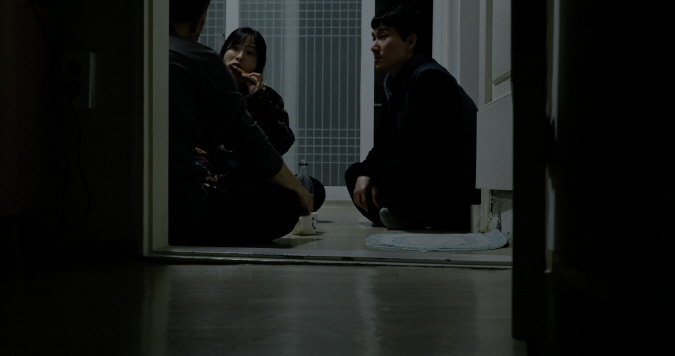
In the beginning, the movie slowly establishes the daily life of its hero in a little seaside village located somewhere on the east coast of South Korea. For many years, Yeong-gook (Yoon Joo-sang) has earned his meager living as a local fisherman in that village just like many other guys in the town, and the movie slowly lets us gather their desperate economic status. Many of them surely need some extra help due to their age, but there are not many young people in the village, and even foreign workers are usually not available to them. At least, Yeong-gook has a local lad named Yong-soo (Park Jong-hwan), but Yong-soo is not particularly dedicated to their work, and he actually has a little scheme for getting out of his hometown village.

We soon see Yeong-gook helping Yong-soo’s plan a bit. During one early morning, they go out to the sea as usual, but only Yeong-gook returns to the port, and then he flatly reports to the local police that Yong-soo fell into the sea. Naturally, the local police and several other local fishermen quickly embark on the search for Yong-soo, and both Yong-soo’s mother and his Vietnamese wife certainly become quite panic as fearing for the worst.

The plan of Yong-soo, who is actually alive and well in his hiding place, is pretty simple. Once his death becomes official on the record after the local police fails to find his body, his wife will accordingly receive a considerable amount of insurance money, and then they will go together to somewhere in Vietnam with that money, though his wife does not know anything at all just like his mother. As a matter of fact, she is so genuinely devastated by the growing possibility of his death that she is taken to a local hospital after having an unexpected medical emergency.

Because he really wants to help both Yong-soo and his wife, Yeong-gook tries to handle the situation as much as he can, but, of course, things do not go as well as he and Yong-soo hope. While nobody suspects them at all, the insurance company is actually quite ready to give the money to Yong-soo’s wife, but the official confirmation on his death is necessary for that. In addition, it turns out later that the search for Yong-soo’s body can actually be continued a lot longer than he and Yong-soo thought at first, regardless of whether the body can be really found or not in the end.

As Yeong-gook gets more frustrated and exasperated alone by himself, the movie observes more of how life has been quite despairing for him and many others in the village. As a local guy who gets hired by Yeong-gook shortly after his unwelcomed return bitterly admits to Yeong-gook at one point later in the story, the village has already been going down and down toward the bottom for many years without much hope or future, and Yeong-gook and many other local fisherman have no choice but to try to keep going anyway despite being constantly aware of their despairing status of life.

The movie also pays some attention to Yong-soo’s wife, who becomes quite desperate due to her husband’s absence. Without him, she finds herself all the more vulnerable to the racial prejudice of many villagers, and they casually gossip a lot about that insurance money right in front of her just because of their petty jealousy. Yong-soo’s mother, who still desperately hopes to see her son alive, is certainly willing to stand by her daughter-in-law as sharing their concern, but we sense that there has always been a considerable distance between them nonetheless.

While the situation becomes melodramatic as expected around the last act, the screenplay by director/writer Park Ri-woong keeps focusing on adding more detail and depth to its main characters, and his main cast performers are all effective in their respective parts. Yoon Joo-sang, a 75-year-old veteran actor who has steadily appeared here and there in numerous South Korean movies and TV dramas for more than 30 years, is often electrifying as flawlessly embodying the complicated human qualities of an aged but strong-willed man with a fair share of flaws including his hot temper, and it is definitely one of the best South Korean movie performances of this year. While Yang Hee-kyung, who also has a long and respectable acting career just like Yoon, is equally intense as Yong-soo’s devastated mother, Park Jong-hwan and Park Won-sang are solid in their key supporting roles, and the special mention goes to Vietnamese actress Khazsak Kramer, who does more than holding her own place well among the other main cast members.

On the whole, “The Land of Morning Calm” is the impressive second feature film from Park, who previously made a notable feature film debut in “The Girl on a Bulldozer” (2021). You may not like Yeong-gook that much even in the end, but you will come to have some understanding and empathy on him after the haunting last shot of the film, and that is what a really good movie can do for us in my inconsequential opinion.

Posted in Movies | Tagged , , | 1 Comment

The Seed of the Sacred Fig (2024) ☆☆☆1/2(3.5/4): A tense Iranian family/political drama

Iranian film “The Seed of the Sacred Fig”, which was recently selected as the German submission to Best International Film Oscar, is a masterful work which will hold your attention from the beginning to the end. Deftly balancing itself between political and family drama throughout its rather long running time (167 minutes), the movie often unnerves us as closely observing the toxic effect of patriarchy and theocracy on one plain family, and the result is one of the most interesting movies of this year.

The story behind the production of the movie has been known quite well to many of us since it was premiered at the Cannes Film Festival early in this year, where it received the special award from the jury of the festival. Director/writer/co-producer Mohammad Rasoulof, who previously won the Golden Bear for “There Is No Evil” (2020) at the 2020 Berlin Film Festival, and his crew and cast members had to make their film under absolute secrecy as Rasoulof got into more legal conflict with the Iranian government just like some of his fellow Iranian filmmakers including Jafar Panahi, and then the Iranian government sentenced him to 8 years in prison, shortly after he managed to escape and then attended its premiere at the Cannes Film Festival.

Despite many limits during its production and post-production period, Rasoulof’s film never looks rough or shabby at all in addition to being quite brave and ambitious. While it can be regarded as a chamber family drama in modest scale, the movie seldom feels stuffy or limited thanks to the splendid efforts from cinematographer Pooyan Aghababaei and editor Andrew Bird, and the main cast members of the film, who surely took a lot of risk as closely working with Rasoulof, are all believable as ordinary people you may come across in the middle of Tehran.

The story, which is set in Tehran around 2022, opens with the recent promotion of Iman (Missagh Zareh), who is the father in the family at the center of the story. For many years, he has worked in the Revolutionary Court in Tehran, and now he seems to get finally rewarded when he is newly appointed as an investigating judge. Although there are still a few more steps he has to go up for his career, this promotion will certainly benefit him as well as his family a lot, and his devoted wife Najmeh (Soheila Golestani) is naturally happy to hear this good news from him.

However, their two young daughters, Rezvan (Mahsa Rostami) and Sana (Setareh Maleki), are not so excited or impressed. After all, their parents have rarely told them about their father’s job throughout their whole life because of the secretive aspects of their father’s job, and they do not care that much even when their mother firmly emphasizes to them that they should be much more careful in their behavior and appearance for not causing any trouble to affect their father’s position.

We soon see the signs of the troubles to come into this family. As the Iranian society becomes agitated more and more due to the increasing number of riots and demonstrations outside, the mood in the family apartment gets gradually tense day by day as Najmeh and Iman come to conflict more with their daughters, who come to care more about the ongoing political situation in their country after a friend of theirs gets seriously injured and then unjustly arrested. No matter how much Iman and Najmeh try to get things under control, Rezvan and Sana come to show more defiance and disobedience instead, and that certainly frustrates and exasperates both of their parents.

While mostly sticking to what is happening inside the apartment of the family, the movie also shows us more of how things became more volatile in Tehran during that time. It occasionally presents a series of raw footage clips showing not only riots and demonstrations but also some police brutality, and this surely puts more dramatic tension on the ongoing personal drama among its main characters, especially when a certain important item given to Iman is disappeared at one point in the middle of the story. Because this incident can actually destroy his whole career, Iman becomes quite determined to get to the bottom of this troubling situation, and it goes without saying that both Najmeh and her daughters come to see how cruel and authoritative he can really be.

I will not go into details on how this family conflict eventually reaches to the inevitable breaking point, but I can tell you instead on how its main cast members ably carry the story and their characters to the dry but undeniably intense climax which somehow reminds me of Stanley Kubrick’s “The Shining” (1980). While Missagh Zareh is effective as a plain dude who lets himself driven further by the misogyny and theocracy of his system despite his initial compunction, Mahsa Rostami, Setareh Maleki, and Soheila Golestani, who all courageously ignored the certain oppressive rules on female Iranian actresses for the film (They were all supposed to wear a hijab in front of the camera, for example), are impressive in each own way as the heart and soul of the film, and Golestani is particularly devastating as Najmeh comes to have more doubt and frustration on her relationship with Iman later in the story.

In conclusion, “The Seed of the Sacred Fig” is another superlative Iranian film after Panahi’s equally acclaimed movie “No Bears” (2022), which I and South Korean audiences belatedly watched early in this year. Considering not only how that fierce public demand for social change in Iran was eventually ended in 2023 without much difference but also how fascism and totalitarianism have been raging all over the world during last several years, this defiant piece of work feels all the more bitter to say the least, but the allegorical aspects of its powerful human drama made me reflect a bit on how every totalitarian regime is bound for eventual collapse when it begins to regard its own people as the enemies of the state. The problem is, when will that ever happen to Iran and its people?

Posted in Movies | Tagged , , | 2 Comments

Moana 2 (2024) ☆☆1/2(2.5/4): A middling second chapter not sailing that far

Disney animation film “Moana 2” is a middling second chapter compared to its promising predecessor, and that is a big disappointment for all of us. Sure, it looks as terrific as you can expect from any decent Disney animation these days, but it feels relatively deficient due to its weak storytelling without much narrative development, and it only comes to function as a mere prelude for whatever may come next.

 At the beginning, we see how much things have been changed for Moana (voiced by Auli’i Cravalho) and her island people since she saved the island as well as her clan via her epic adventure depicted in “Moana” (2016). Becoming more confident than before, Moana is quite willing to sail further from her island for finding any other island and people out there, and her father, who is incidentally the chief of her clan, is certainly ready to support her more just like many other members of her clan.

However, Moana suddenly has a striking vision not long before she embarks on another exploration across the ocean. It turns out that there is a certain mythic island which has been hidden by some powerful entity for many years, and she must find that island for restoring the broken connection among many other people living across the ocean. Knowing that this exploration will be much more demanding than the previous ones, she recruits several other members of her clan, and most of them gladly join her as expecting to have a lot of fun and excitement together, though they are all quite inexperienced to say the least from the very beginning.

Meanwhile, the story also focuses a bit on Moana’s demigod friend Maui (voiced by Dwayne Johnson), who happens to be stuck in a big trouble due to that powerful entity and Matangi (voiced by Awhimai Fraser), a mysterious figure supposedly working under that powerful entity. Again, Johnson has some fun with his character’s irrepressible swagger, but, to our frustration, this subplot simply meanders with some silly gags before eventually joining the main narrative of the story (This is not a spoiler at all, folks). 

The film unfortunately spends too much of its running time before our plucky heroine joins her demigod friend, and, to makes matters worse, the story does not have enough personality and substance to justify that. While Moana’s pet pig and chicken are surely your average animal sidekicks as before, Moana’s three companions are no less than perfunctory plot elements despite their colorful attitudes and appearances, and the film sadly does not allow much character development as hurriedly rolling its main characters from one narrative point to another.

The film certainly serves us a series of visual spectacles as expected, but none of them are particularly inspired in my trivial opinion. Sure, they look crisp and colorful, and that was quite evident to me when I watched the film at the Dolby Cinema screening room of a local theater, but they are not impressive or original enough to linger on your mind. As watching the climax full of storm and thunder, I could not help but reminded of what I saw from “Twisters” (2024) several months ago. As observing those little coconut creatures appearing in the middle of the film, I could not help but think of “Minions” (2015). As beholding the huge and complex spaces inside a certain giant creature, my mind instantly went back to another recent Disney animation film “Strange World” (2022).

Moreover, a number of songs in the film are not very memorable even though they serve the story and characters fairly well on the whole. I will not deny that I smiled a bit as listening to Awhimai Fraser delightfully performing “Get Lost” with some gusto, but the soundtrack of “Moana 2” is mildly pleasant while being merely passable in the end, and you may come to miss more of those catchy songs in “Moana”. To be frank with you, I still fondly remember how powerfully Auli’i Cravalho performed Lin-Manuela Miranda’s Oscar-nominated song “How Far I’ll Go” in “Moana” and then at the following Academy Awards ceremony, and I have to tell you that the soundtrack of “Moana 2” does not have anything equal to that, though I appreciate how it respectfully utilizes the ethnic musical elements throughout the story.

While it is a shame that the film does not have enough space for their good chemistry, Cravalho and Johnson still click well together during their several key scenes later in the film, and I wish to see much more of that in the next film. In case of several other voice cast members of the film, Hualālai Chung, Rose Matafeo, David Fane, Temuera Morrison, and Rachel House dutifully fill their respective spots as required, and Morrison and House deserve some praise for doing a lot more than required despite their rather brief appearance.

In conclusion, “Moana 2”, directed by David Derrick Jr., Jason Hand, and Dana Ledoux Miller, is not a total waste of time at all, but it is dissatisfying for just warming up a bit for the next sequel instead of sailing further than what was promised at the end of its predecessor. It is surely well-made in technical aspects, but we all know well that Disney Animation Studios can do better than this, and we can only hope that it will really enchant and entertain us in our heroine’s next adventure.

Posted in Movies | Tagged , , | Leave a comment

Delivery (2023) ☆☆1/2(2.5/4): A comedy about unplanned pregnancy

South Korean comedy film “Delivery” wants to generate some laughs from unplanned pregnancy, and that was fine with me at the beginning. Sure, it is true that anything can be comic material, but the movie does not work as well as intended because it often seems hesitating between being funny and serious, and it is also frequently hampered by its weak story and thin characterization. 

The movie opens with the serious problem of one married dude. Although he is a fairly successful doctor running a woman’s clinic, his father-in-law expects him and his wife to have a baby as soon as possible, but they have somehow failed for a while. In the opening scene, the doctor is notified that he is actually the one having a serious infertility problem, but he lies to his wife that she is infertile, and, after some discussion, they decide to look for any unmarried pregnant woman willing to give away her baby to them.

And such a woman soon comes handy for them by coincidence. When she finds that she is pregnant thanks to her thoughtless loser boyfriend Dal-soo (Kang Taeu), Woo-hee (Kwon So-hyun) promptly decides to have an abortion without much hesitation, and she and her reluctant boyfriend subsequently go to the woman’s clinic of that aforementioned doctor. However, it later turns out that the doctor did not do his job well, so Woo-hee naturally becomes furious, but then the doctor gives an offer she and her boyfriend cannot possibly refuse as a financially struggling young couple. In exchange for giving away her baby, the doctor and his wife will provide Woo-hee and her boyfriend not only a new place to stay during next several months but also a considerable amount of money to be paid during and after that period, and Woo-hee and her boyfriend instantly see a golden opportunity to improve their miserable current status of life.

Once they accept the deal, Woo-hee and her boyfriend’s daily life is certainly changed a lot. They quickly move to a nice and comfortable apartment, and Woo-hee is quite delighted to have some economic freedom while Dal-soo must get a job for being a bit more responsible than before. In case of the doctor and his wife, they lie to his father-in-law that they are going to have a baby, and they hope that this impertinent lie of theirs will make them more favorable to his father-in-law, who is incidentally about to decide on how to divide his wealth among the family members.  

Not so surprisingly, there soon come several setbacks along the story, and we get some laughs from how selfish or opportunistic its main characters can be. The doctor’s wife, who is your average superficial online influencer, has no compunction about disguising herself as a pregnant woman to not only her friends but also her numerous followers out there, and she also attempts to control over almost everything involved with Woo-hee’s pregnancy. While her boyfriend remains obtuse about the ongoing situation, Woo-hee understandably becomes very annoyed about being constantly monitored by the doctor and his wife. Nevertheless, she demands more money for going along with the blatant fraud of the doctor’s wife, and that certainly brings more headache for the doctor and his wife, who have no choice but to accept Woo-hee’s demand.

Although it could push this absurd circumstance further for more satire, the screenplay by director/writer Jang Min-joon, who made a feature film debut here after making several short films, eventually becomes more serious during the last act where Woo-hee and several other main characters come to see more of how tricky the situation can be. While Woo-hee and her boyfriend’s relationship becomes more strained due to her growing concern over her baby, the doctor and his wife become more distant from each other after she belatedly comes to realize how untrustworthy her husband really is. 

In the end, the movie resorts to a melodramatic moment of confrontation, but we only come to observe that from the distance because its main characters remain broad caricatures we do not care that much about. In addition, I do not like how it hastily and clumsily moves onto the following sentimental epilogue, which feels rather jarring compared to the satiric aspects of the story. 

Anyway, the four principal main cast members of the movie try their best in filling their stereotype roles. While Kim Young-min and Kwon So-hyun, who previously appeared together in “Madonna” (2014), are well-cast as a rich but ultimately banal couple, Kwon so-hyun, whose name in Chinese character (權素賢) is a bit different from that of the aforementioned actress (權㕖賢), brings some pluck and spirit to her character, and Kang Taeu, who recently appeared in acclaimed South Korean film “House of the Seasons” (2023), somehow makes his pathetic character more sympathetic than expected. 

On the whole, “Delivery” is modestly amusing in the farcical handling of its serious subject, but I was constantly reminded of several better movies which handled unplanned pregnancy with more humor and depth. While Oscar-winning American film “Juno” (2007) naturally comes to my mind first, I still remember well South Korean film “Ten Month” (2021), which is often painfully funny and touching as how much unplanned pregnancy can affect the life and career of one promising South Korean woman. I incidentally chose it as one of the best South Korean films of 2022, and the rather disappointing result of “Delivery” reminds me that I made a right choice at that time. Believe me, you will have a better time with that film or “Juno”, and then you will be thankful for my little advice.

Posted in Movies | Tagged , , | Leave a comment

Blitz (2024) ☆☆☆(3/4): A boy and his mother under the Blitz

Steve McQueen’s latest film “Blitz”, which is currently available on Apple TV+, tries to bring some new and interesting elements into its familiar genre territory. Although it does not always work, the movie often distinguishes itself with a number of striking visual moments to behold, and we get to know and feel how dangerous and desperate things were for many people in London during that dark period in the middle of World War II.

The story, which is mainly set in London at the point not long after Nazi Germany began a massive air bombing on UK in September 1940, starts with the introduction of a young black boy and his devoted mother. As shown from a flashback scene shown later in the film, Rita (Saoirse Ronan) had a Jamaican boyfriend before the war began, but he got deported due to an unfortunate incident not long after she became pregnant, and Rita raised their son Geroge (Elliott Heffernan) for herself while living in her kind father’s house.

However, as London and its citizens get more threatened by the air bombing by Nazi Germany, which is incidentally known as “the Blitz”, Rita becomes quite concerned about George’s safety, especially after they and many others in their neighborhood go through another nervous time in an underground shelter. Although she does not want to be separated from her son at all, Rita eventually decides to send away her son to somewhere outside London, and George is naturally not so happy about that.

Not long after he is separated from his mother at a train station and then the train leaves for where he is supposed to stay, George impulsively decides to go back to his mother. He jumps off the train when nobody is paying attention to him, and that is the beginning of his bumpy journey to London, during which he comes across a number of various figures reminiscent of Charles Dickens novels. While there are the three young boys also running away for their own personal reason, there is also a compassionate black air raid warden who tries to help George as much as possible, and the movie certainly makes some point on racism during several key scenes of theirs in the middle of the story.

Meanwhile, Rita continues to work in a factory full of many other female workers as usual, and there is a lovely moment when she demonstrates a bit of her singing in front of many people as a part of the special event held inside the factory. Without her son, she can spend more time outside along with her co-workers, but she still misses her son nonetheless, and she certainly becomes furious when she is belatedly notified that her son is gone missing.

Frequently alternating between its two main characters’ respective journeys, the movie shows us more of the fear and devastation in London during that time. In one particularly impressive scene, the camera fluidly moves around lots of people having a fun and exciting night at a popular nightclub, and we soon find ourselves more immersed in this lively moment, but then something quite devastating happens (This did occur in London during early 1941, by the way). As trying to reach to his neighborhood in London, George comes to experience several air bombings, and there is a grandly horrific scene where he desperately tries to survive as running amid lots of bombings and burning buildings.

It is unfortunate that McQueen’s screenplay is sometimes heavy-handed during several obligatory dramatic moments, and it also falters at times in case of characterization. In contrast to Rita and George, many other characters in the story are more or less than broad caricatures without much human depth, and they simply come and then go as the movie busily pushes its two main characters along their respective narrative lines.

Nevertheless, the movie has enough strong elements to observe and appreciate thanks to the commendable efforts from McQueen and his crew members. The production design by Adam Stockhausen did a superb job of bringing vivid period details to the screen in addition to conveying to us the immense scale of destruction in London during that period, and cinematographer Yorick Le Saux provides a bunch of visceral scenes packed with a considerable amount intensity and verisimilitude. The score by Hans Zimmer is relatively more understated compared to his recent works including his Oscar-winning score for “Dune” (2021), and its overall grim mood is sometimes lightened up by the source music provided by Nicholas Britell.

Most of all, the movie is held together well by the two excellent performers at the center. While Saoirse Ronan is surely more prominent, she often steps aside for young performer Elliott Heffernan, and Heffernan gives one of the most impressive child performances of this year. Around these two good performers, McQueen assembles a number of notable performers including Harris Dickinson, Benjamin Clementine, Kathy Burke, Paul Weller, and Stephen Graham, and they fill their respective supporting parts as much as required.

Overall, “Blitz” feels like a lesser work compared to McQueen’s better one including Oscar-winning film “12 Years a Slave” (2013), but it is still an engaging World War II film with an interesting narrative perspective. In my humble opinion, it would serve its story and characters better if it were a TV miniseries, but it admirably succeeds to some degree, so I recommend you to give it a chance someday.

Posted in Movies | Tagged , , , , | 1 Comment

The Piano Lesson (2024) ☆☆☆(3/4): The family trouble with a piano

Netflix film “The Piano Lesson”, which was released on last Friday, is about a little but complex family issue surrounding one old piano. Although it feels rather contrived during its second half as veering off a bit from what has been carefully built up to that point, the movie still engages us with some powerful moments, and it is also supported well by a bunch of talented performers who often shine in each own moment.

Based on August Wilson’s Pulitzer-winning play of the same name, which is one of his ten plays collectively called “The Pittsburgh Cycle”, the story is mainly unfolded inside a house located in one African American neighborhood of Pittsburgh, Pennsylvania in 1936. In this house, a young widow named Bernice Charles (Danielle Deadwyler) lives along with her little daughter Maretha (Skylar Aleece Smith) and her old uncle Doaker (Samuel L. Jackson), and they are visited by an unexpected guest on one day. That person in question is Bernice’s brother Boy Willie (John David Washington), and he and his friend Lymon (Ray Fisher) come for a certain purpose besides selling a heap of watermelons in their truck.

That purpose of his is not so welcomed by Bernice at all. Boy Willie wants to sell an old piano in Bernice’s house for getting enough money for buying a valuable piece of land in their hometown in Mississippi, but Bernice is absolutely against that even though she seldom touches the piano. As already shown in the prologue scene, their father stole it from some rich white guy whose family was associated with their family via slavery, and we later come to learn more about how much it meant to him and his family as a record of their family history.

As Bernice and Boy Willie keep arguing with each other during next several days, we come to see more of how both of them have good points for their respective positions. While Bernice cares more about remembering and preserving the painful past of their family members, Boy Willie simply regards the piano as a mere means for going up further for more chances and possibilities in the future, and he is quite determined to take away the piano no matter how much he will clash with his sister for that.

As this personal clash of theirs is continued throughout the story, we also get to know about several other characters in the story. When their another uncle Wining Boy (Michael Potts) comes, the mood becomes lightened up a bit as he drinks along with Doaker, Lymon, and Boy Willie, and this culminates to one impromptu musical moment to remember. In case of Bernice’s suitor Avery (Corey Hawkins), who is soon going to be a pastor, it is clear that he wants to marry her as soon as possible, but Bernice still wants to wait more to his frustration, and then there comes an unexpected moment between her and Lymon, who turns out to be a lot more tender and sensitive than he seemed at first.        

Meanwhile, the possible existence of ghostly entities comes to hover around the story and characters. There are frequent conversations about whether that rich white guy was killed by some old local ghosts instead of just having an unfortunate accident, and then it seems that Bernice’s house is being haunted by the ghost of that rich white guy. Regardless of whether this is merely the imagination of Bernice and her daughter, this possibility becomes all the more palpable to everyone in the house – especially when Boy Willie comes to show more determination about taking away the piano.

 Around that narrative point, the screenplay by director Malcolm Washington and his co-writer Virgil Williams adds some modification to the final part of Wilson’s play for extra dramatic tension. Considering that the ending of Wilson’s play feels rather uncertain and ambiguous, that is an understandable choice, but I am not so sure about whether it works as well as intended, because it looks more like belonging to “The Conjuring” (2013) than Wilson’s play.  

Nevertheless, the movie remains anchored by the strong performances from its terrific main cast members. John David Washington, who has been a promising actor to watch during last several years, looks a little strained whenever his character tries to enforce his will in front of Bernice and others, but his performance gradually gets mixed well into the ensemble in the end, and the result is another solid turn in his advancing acting career. On the opposite, Danielle Deadwyler, who was magnificent in Chinonye Chukwu’s underrated film “Till” (2022), has a superb moment where she ably handles her character’s monologue at one point in the middle of the story, and she is certainly a formidable match for Washington. In case of several other main cast members, Samuel L. Jackson and Micheal Potts are reliable as usual, and Ray Fisher, Erykah Badu, Skylar Aleece Smith, Stephan James, and Corey Hawkins are well-cast in their respective supporting roles.     

In conclusion, “The Piano Lesson” is not wholly without weak aspects, and it is one or two steps below the achievements of “Fences” (2016) and “Ma Rainey’s Black Bottom” (2020), which are based on the two other notable works of “The Pittsburgh Cycle”. Anyway, Malcolm Washington, who is incidentally another son of co-producer Denzel Washington besides John David Washington, makes a commendable debut here, and he and his crew members including cinematographer Mike Gioulakis and editor Leslie Jones did a good job of presenting the story and characters well on the screen without feeling stagy at all. Despite some dissatisfaction, I recommend the movie mainly for its mostly competent storytelling and a number of good performances to watch, and it is surely something worthwhile to watch for you if you admired those two aforementioned movies.

Posted in Movies | Tagged , , , , , , | 1 Comment

Thanksgiving (2023) ☆☆☆(3/4): A gory Thanksgiving season

Eli Roth’s latest film “Thanksgiving”, which is currently available on Netflix in South Korea, is cheerfully gory and violent to our horror and amusement. While this is basically another typical slasher horror movie featuring a bunch of cardboard figures to be dispatched in one way or another, it is at least handled well with enough skill and some sense of truly twisted humor, and you may gladly go along with that even though you definitely wince more than once for good reasons.

The movie actually has a rather long history because it is based on Roth’s fictitious trailer of the same name in Robert Rodriguez and Quentin Tarantino’s “Grindhouse” (2007). While the two other fictitious trailers in “Grindhouse” were already developed into Rodriguez’s “Machete” (2010) and Jason Eisener’s “Hobo with a Shotgun” (2021), respectively, “Thanksgiving” somehow took some more time for its development, and it turns out to be the best one in the bunch in my inconsequential opinion.

The movie opens with one disastrous Thanksgiving Day evening in Plymouth, Massachusetts. The wealthy owner of a big local superstore decides to start the Black Friday sale a little earlier than expected, so hundreds of local people already gather in front of the superstore even before the planned opening time, and, not so surprisingly, things start to go out of control as the only two security guards are hired to handle this increasingly chaotic circumstance. In the end, mainly thanks to the rather thoughtless behavior of several local high school students including the adolescent daughter of the owner, all hell breaks loose, and the movie surely has some nasty fun with how several people get maimed or killed during the following pandemonium unleashed into the superstore.

The story soon moves forward to one year later. Although many people in the town still remember that horrible day, the owner of the superstore, who has cleaned and then covered up the infamy resulted from his unwise business decision as much as possible during last several months, prepares for the upcoming Black Friday sale as before, and this naturally causes some anger and controversy in the town. 

In case of his daughter and her several friends who were responsible for that horrible day to some degree, this controversy does not interest them that much, but then something strange is sent to them via an online application. It seems that someone is very, very, very angry about what they inadvertently caused on that day, and it soon becomes quite apparent to all of them that they are in a serious danger as this mysterious figure in question kills several other figures associated with the incident.

As the town are swept into panic and terror as a consequence, the local police quickly embark on investigation, but the killer keeps remaining one or two steps ahead of them while often shocking us a lot with a number of very unpleasant killing methods you can expect from your average Eli Roth flick. In case of one victim, the killer sadistically dispatches the target while the target happens to be hopping on a trampoline, and you will probably cringe enough to overlook the implausible aspects of this act of killing.

Needless to say, the killer’s remaining targets are terrified more and more as wondering who is actually the killer, and there are naturally two obvious suspects around the daughter of the owner of the superstore. Is her ex-boyfriend still angry about that serious physical injury of his which happened on that day and consequently ruined his promising athletic career? Is it possible that her current boyfriend is hiding something behind his supposedly (and blandly) likable appearance?

You may have already noticed that I did not mention the names of the main characters at all. To be frank with you, they are pretty forgettable without much life or personality to observe, and they only come to function as possible suspects or targets to be killed or tormented. Although there are several notable performers such as Patrick Dempsey and Gina Gershon, they simply fill their respective roles as required, and Gershon is particularly under-utilized during her very brief appearance.

Nevertheless, if you can go along with what Roth intends to do here, you will be alternatively amused and horrified by how willingly the movie goes way over the top along with the killer. Usually wearing the mask of a certain historical figure associated with Thanksgiving Day, the killer continues to go for more gruesome killings to behold, I must confess that I could not help but get tickled when the killer later prepares for the grand finale with something not so far from that shocking finale of Peter Greenaway’s “The Cook, the Thief, His Wife, & Her Lover” (1989).

In conclusion, “Thanksgiving” is a fairly effective genre piece which will certainly delight its target audiences. Yes, it is rather flat and predictable in terms of story and characters (I could easily guess the identity of the killer in advance, for example), but the movie is still a competent product to be enjoyed during the last weeks of cold November, and you may appreciate that even if you are not a fan of Roth’s previous works including “Hostel” (2005). To be frank with you, I considered giving it 2.5 stars at first, but I eventually decided to be a bit more generous this time, so I mildly recommend it with some caution.

Posted in Movies | Tagged , , , , , | Leave a comment

Mimang (2023) ☆☆1/2 (2.5/4): Three different meanings via three acts

South Korean independent film “Mimang” presents the three different meanings of its title via the three acts loosely connected together. Although I am not sure about whether it works as well as intended by its filmmaker, it is engaging to some degree whenever it subtly illustrates the emotional undercurrents between its main characters, and I wish the movie went further with that for bringing more dept and substance to the story and characters.

The first act, which explains the first meaning of the title (迷妄: “Being unable to make sense from ignorance”), begins with the accidental encounter between two unnamed figures in a neighborhood area located in the middle of Seoul. When “Man” (Ha Seong-guk) is searching for a location where he is going to meet his girlfriend, he is approached by “Woman” (Lee Myung-ha), who is incidentally an old friend of his. Both of them are glad to meet each other again after some time, and they decide to take a walk together for a while as he helps her a bit on going to a local arthouse movie theater.

While they continue to talk with each other, we get to know a bit about both of them. He has recently studied drawing for his civil engineering job, and she is going to attend the screening of a partially lost old South Korean film as the main organizer of the event. Both of them have been fairly fine with how their respective lives have been going during last several months, but it gradually becomes apparent to us that there are still some old feelings between them, though they do not admit that directly to each other.

After they eventually part ways, the movie enters its second act as explaining the second meaning of its title (未忘: “Being unable to forget what one wants to forget”). “Woman” successfully handles the following screening in the evening, and then she is approached by one of the male employees working in that arthouse theater shortly after she has an after-screening drinking party along with others. Again, she gets lost on her way, and the guy is willing to accompany and help her finding her way to where she can get on bus or subway.

While they walk and talk together, the movie slowly suggests the possibility of romance between them. It is apparent that the guy feels attracted to her, but she sticks to her reserved attitude even while they lightly push and pull each other during their ongoing conversation. At one point in the middle of the conversation, she says that she actually has a kid from some previous relationship of hers, but, mainly because of the rather playful mood between her and the guy, we cannot be totally sure about whether she is lying or not.

The second act of the movie moves along with these two characters in the same neighborhood area shown in its first act, and several recurring elements make the second act a bit amusing for us from time to time. For example, they talk a bit about a certain nearby big stature of one famous historical figure just like “Woman” and “Man” did in the first act, and the movie even does some visual repetition during several key shots.

During the third act which gives us the third meaning of the title (彌望: “Searching for far and Wide”), the mood becomes more serious as it begins with the funeral of a friend of “Man” and “Woman”, who subsequently spend some time with another friend of theirs who gladly drives them back to the same neighborhood area of Seoul by his taxi. As “Man” gets rather sleepy on the passenger’s seat, his friend comes to have a long conversation with “Woman”, and the camera steadily focuses on these three characters as the conversation becomes a bit more tense than expected.

In the end, these three characters arrive in that neighborhood area of Seoul, and “Man” and “Woman” go to a small local bar where they wait for their friend to join them later. As they talk with the bar owner, the mood becomes a bit more relaxed, and then there comes a little impromptu musical moment as “Man” performs a song in front of the others.

The melancholic mood of the third act does not fit that well with the lightweight atmosphere of the first two acts, and that is where my attention dwindled to some degree, though I still appreciate the effortlessly natural performances from several performers in the film, who did a good job of filling their rather thin characters with enough life and presence. As the elusive emotional center of the film, Lee Myung-ha carries well the film to the end, and she is particularly wonderful when her character shows more feelings during the last scene of the second act. In case of her co-stars, Ha Seong-guk, who has frequently appeared in Hong Sang-soo’s several recent works including “A Traveler’s Needs” (2024), Baek Seung-jin, Park Bong-joon are effective as the counterparts to Lee’s acting, and they all steadily support Lee during their demanding extended scenes in the film.

Frequently reminiscent of many other films ranging from Richard Linklater’s Before Trilogy to Celine Song’s “Past Lives” (2023), “Mimang” does not distinguish enough in terms of story and characters, but it has some vivid urban mood and solid performances thanks to the competent direction of director/writer Kim Tae-yang, who incidentally made a feature film debut here this film. I am still not satisfied enough for recommendation, but the movie shows some potential of its director, and I sincerely hope that he will soon move onto better things to come in the future.

Posted in Movies | Tagged , | Leave a comment

Wicked (2024) ☆☆☆(3/4): When they were friends…

“Wicked”, which is actually based on the first half of the popular Broadway musical of the same name, is as colorful and spirited as expected. While this is your average bloated musical film, it is thankfully buoyed by the good efforts shown and felt from the screen, and you may not mind waiting for a year to see how the story eventually ends.

The aforementioned Broadway musical is based on the novel of the same named by Gregory Maquire, which is a revisionist take on the 1900 fantasy novel “The Wonderful Wizard of Oz” by L. Frank Baum. Maquire’s book presents the Wicked Witch of the West as a sympathetic protagonist who was actually not evil at all in the beginning, and that is certainly interesting for anyone who enjoyed Baum’s book or the 1939 classic movie “The Wizard of Oz”, which immortalizes the Wicked Witch of the West as one of the greatest (and scariest) movie villains of all time.

After the opening part showing what happens not along after the news on the death of the Wicked Witch of the West is spread all around Oz, the story begins at a prestigious school where many different students including Galinda Upland (Ariana Grande), a young popular girl who sometimes looks like sort of a cross between Reese Witherspoon in “Legally Blonde” (2001) and Rachel McAdams in “Mean Girls” (2004), are about to begin their first day at the school. As you can easily guess, she is the one who will be subsequently known as Glinda the Good Witch of the North, and it goes without saying that she is quite eager to study magic under Madame Morrible (Michelle Yeoh), who is incidentally the Headmistress of the school.

However, Madame Morrible does not regard Galinda that highly, and she actually pays more attention to a green-skinned girl named Elphaba Thropp (Cynthia Erivo), who will be later known as, yes, the Wicked Witch of the West. Although Elphaba is not officially a student as simply accompanying her disabled younger sister as demanded by her father, she happens to show her very special ability in front of others in the school, and Madame Morrible willingly takes her under her tutelage for a purpose to be revealed later in the story.

Anyway, Galinda is instructed to share her big and pinky dormitory room with Elphaba, and she is surely not amused at all, but, what do you know, she and Elphaba become closer to each other as getting to know each other during next several months. While she is still your average popular schoolgirl usually more occupied with having all the fun and excitement, Galinda comes to care more about her lonely and unhappy roommate, and Elphaba appreciates more of Galinda’s friendship especially after Galinda willingly comes forward to take care of what is going to be another humiliating moment for her roommate.

As these two different young ladies befriend each other more along the story, the movie throws a series of the original songs from the Broadway musical, and most of them are presented well on the screen. Director Jon M. Chu, who is no stranger to musical film considering his previous movie “In the Heights” (2021), and his crew members including cinematographer Alice Brooks and editor Myron Kerstein did a good job of handling a number of big musical scenes with enough spirit and skill, and production designer Nathan Crowley and costume designer Paul Tazewell, both of whom may get Oscar-nominated early in next year, surely have a field day here as filling the screen with many lively colorful details to be appreciated.

Meanwhile, the movie also tries to generate more gravitas via the increasing discrimination against talking animal characters including the one voiced by Peter Dinklage. Although this more serious subplot is not totally mixed well with the cheery overall mood of the movie, it is still a crucial part resonating with Elphaba’s longtime experience of discrimination, and we are not so surprised when she becomes quite furious after learning of what has actually been perpetrated behind all the deceptions of that great wizard of Oz.

Around the last act, the movie feels a bit overlong with a lot of CGI spectacles, but it is still held together well thanks to not only Chu’s competent direction but also the two good musical performances by Cynthia Erivo and Ariana Grande. Because both of them are well-experienced singers, they deftly and effortlessly convey to us every emotional detail of their songs without any misstep, and they always click well with each other whenever they share the screen together. While Erivo surely pulls all the stops when she confidently sings “The Wizard and I” early in the film, Grande is equally terrific when she performs “Popular”, and they ably support the film together even when it feels rather lagging during the middle part.

In case of the supporting performers in the film, they dutifully fill the spot around Erivo and Grande. Michelle Yeoh and Jeff Goldblum are dependable as usual while demonstrating a bit of their respective singing skills, and Jonathan Bailey does more than being your typical Prince Charming in the story. In addition, there is also a witty cameo appearance by someone I will not reveal here for not spoiling any of your surprise fun.

On the whole, “Wicked” inherently feels incomplete as the first half of the story to be continued besides being rather overstuffed, but it is still a solid piece of entertainment to be enjoyed by many musical fans out there. Yes, it is not as great as “The Wizard of Oz” in my trivial opinion, but it has a fair share of charm and energy, so I will not grumble for now.

Posted in Movies | Tagged , , , , | 1 Comment

Occupied City (2023) ☆☆☆(3/4): The past and present of one European city

Steve McQueen’s documentary film “Occupied City” is an ambitious piece of work alternatively interesting and demanding. For more than 4 hours, the documentary simply shows and tells the old past of a heap of different spots in Amsterdam of the Netherlands, and this will surely demand some patience from you, but its big historical picture slowly emerges as the past of the city sometimes makes some contrast and resonance with its present.

The documentary is based on “Atlas of an Occupied City, Amsterdam 1940-1945” by McQueen’s wife Bianca Stigter, who incidentally participated in the production of the documentary along with McQueen. According to McQueen, he and his crew shot more than 30 hours of footage here and there in Amsterdam during the early 2020s, and they actually covered every spot mentioned in Stigter’s book during their shooting.

Without any archival footage clip or photograph, McQueen and his cinematographer Lennert Hillege just observe these numerous spots from their mostly static viewpoint. At the beginning, the documentary shows the inside of a building which once belonged to a Jewish publisher before World War II, and the narrator phlegmatically informs us on his and his family’s tragic story associated with the Holocaust – and how one of his Dutch associates helped several Jewish people hide from those Nazi German soldiers and police officers.

This will surely remind you of Anne Frank and her family members, and the documentary shows us that there were many other desperate Jewish people in the city when Nazi Germany invaded the Netherlands in 1940. Because the Dutch government stayed neutral just like it did during World War I, many German Jewish people moved to the Netherlands for safety, and they were certainly shocked and terrified when their biggest fear came true. As a matter of fact, many incidents of suicide happened shortly after the invasion and the subsequent surrender of the Dutch Army, and there is a particularly heartbreaking case where one big Jewish family killed themselves via gas asphyxiation, which was incidentally a common method in many other similar suicide cases during that dark time. 

After taking over Amsterdam, the Nazi German Army and police quickly embarked on isolating and then cornering thousands of Jewish people in the city by any means necessary. Besides forcing them to wear that infamous yellow star on their clothes, the Nazi German Army and police put many different social limits on them, and that included prohibiting Jewish people from entering numerous public spaces including theaters and restaurants except the ones in several Jewish neighborhood areas in the city.

The Nazi German Army and police also put a considerable amount of limits upon others in the city, and the documentary sometimes juxtaposes this historical fact with how things got bad in the city during the COVID-19 Pandemic during the early 2020s. For stopping more infections, the Dutch government came to consider several hard measures including night curfew, and many people in Amsterdam were not so pleased as shown from several signs of protests on the streets and alleys of the city. At one point in the middle of the documentary, a drone camera smoothly moves around the empty streets and places of the city, and the narrator tells us a bit about how harshly the curfew was imposed on the city and its people during World War II.   

Sticking to its calmly objective attitude, the documentary continues to present and explain one spot after another, and we get more informed about how the situation was quite bad for the city and its people especially around the end of World War II. As the defeat of Nazi Germany became more apparent day by day, the oppression on the city and its people became more severe, and many local people hiding from Nazi Germany surely became more desperate than ever. While there were brave good people willingly risking their lives for saving and helping others, and there were opportunistic bad people gladly betraying others for their benefit and safety, and the documentary often shows where they once lived during the war – and what happened to them during or after the war.       

Now Amsterdam surely looks quite different from how it was during the 1940s, and the past does not seem to hover over those numerous spots shown in the documentary, but we also see how the city and its people keep trying for not forgetting that dark past. The documentary looks at several monuments associated with the Holocaust, and there is a quiet but undeniably haunting moment when the camera slowly looks over the names of thousands of Jewish people who went through one of the main deportation centers in the city before eventually being sent to a number of different concentration camps and killing centers in Germany and Poland. Needless to say, most of these people were not lucky at all, and we get chilled when the documentary tells us how many Jewish people in Amsterdam actually died during the war.   

On the whole, “Occupied City” is a little too dry and glacial for holding your attention for more than 4 hours, but you may come to admire the respectable efforts of McQueen and his crew members, while observing how it eventually arrives at the finale where it shows a little sign of optimism and progress. Sure, it frequently feels like going through a very, very, very long tour around Amsterdam with the constant presence of a docent to explain one thing after another, but I assure you that you will come to learn of many other interesting things about Amsterdam during World War II besides Anne Frank.

Posted in Movies | Tagged , , , , | Leave a comment