Gladiator II (2024) ☆☆(2/4): A ponderous sequel without much fun

Ridley Scott’s latest film “Gladiator II”, a sequel to his Oscar-winning film “Gladiator” (2000), is a ponderous sequel which does not provide anything fun and new to enjoy. Sure, “Gladiator” is not exactly a great film, so it seems easy to follow the footsteps of that rather overrated movie (In my humble opinion, it is the worst Best Picture Oscar winner during last 25 years except “Green Book” (2018) – yes, I am much more generous to “Crash” (2004) or “American Beauty” (1999) than many of you), but the sequel keeps stumbling and plodding mainly due to its weak story and character, and I could only observe its few inspired elements from the distance without much care during my viewing.

Because, as many of you surely know, the titular character played by Russell Crowe in “Gladiator” dies in the end, “Gladiator II” begins with a new character destined to end up being in the middle of the Colosseum of Rome. He is played by Paul Mescal, and the opening part depicts how his fairly good life with his wife in a big free city in Northern Africa is suddenly disrupted by the invasion of the Roman Army led by Marcus Acacius (Pedro Pascal), a brave and respectful general who also does not like much what he and his soldiers will have to do for another vain glory for the twin emperors he is supposed to serve.

Anyway, after the city eventually falls despite the courageous resistance of our hero and many others in the city, he and many other men are sent to Rome as slaves. When he shows some potential during a rather outrageous action scene featuring a lot of angry CGI monkeys (I am not kidding), he is noticed by a rich dude named Macrinus (Denzel Washington), and he is soon taken to Macrinus’ training place for gladiators.

What follows next is pretty predictable to say the least. Still quite angry for the death of his loving wife, Mescal’s character is willing to go through anything for getting his revenge on General Acacius, and Macrinus is ready to exploit his new gladiator’s furious anger for a certain purpose to be revealed along the story. Right from when he enters the Colosseum for the first time, our hero quickly distinguishes himself in front of many audiences including the twin emperors, and he certainly notices his target sitting near the twin emperors.

Meanwhile, the movie also gradually reveals some background information of its hero. Around its middle act, it turns out that there is actually the hidden connection between its hero and a couple of the main characters in “Gladiator”, but I doubt whether this will surprise you a lot, mainly because the movie already implies a bit too much to us from the very beginning. Again, Connie Nielsen, who is incidentally still graceful as she was 24 years ago, is merely stuck in her rather thankless role, and she unfortunately has an unenviable job of handling several contrived melodramatic scenes handed to her.

In case of a number of duel scenes unfolded in the Colosseum, they are mostly well under Scott’s competent direction in addition to being as brutal and violent as required, but they often lose their way between seriousness and campiness. The movie surely wants to be as serious as its hero, but it also cannot help but go for some craziness just like the twin emperors in the story, and you may roll your eyes when the arena of the Colosseum is filled with water and a pack of big white sharks at one point later in the story (Again, I am not kidding at all).

Mescal valiantly tries to hold the center as much as possible, but, like many of his fellow cast members, he is frequently limited by glaring plot contrivance and bad dialogues. Sure, this young Irish actor can be quite interesting as shown from his recent Oscar-nominated performance in “Aftersun” (2022), and he can also be quite hot and charismatic in “All of Us Strangers” (2023). However, his character in “Gladiator II” is a rather bland figure from the very beginning, and we can only observe how much Mescal struggles to fill this blank spot as much as he can.

In case of the other cast members in the film besides Mescal and Nielsen, most of them do not have much fun with their respective parts either. While Pedro Pascal, who can also be very compelling just like Mescal, seems constantly depressed about not getting any juicy moment to chew, Joseph Quinn and Fred Hechinger, who play the twin emperors, frequently go over the top without much control or impact at all, and you may come to miss more of Joaquin Phoenix’s Oscar-nominated villain performance in the previous film. In contrast, Denzel Washington, who previously collaborated with Scott in “American Gangster” (2007), often elevates his materials with not only his own star presence but also some sense of humor and intelligence which the movie desperately needs, and we are reminded that he can still be as cunning and ruthless as he was in his gritty Oscar-winning performance in “Training Day” (2001).

In conclusion, “Gladiator II” is disappointing for not having enough fun and interest to hold our interest during its 148-minute running time, and its failure only reminds me more of how much things have changed since its predecessor came out. During last 24 years, we have had a fair share of brutally violent and realistic period drama films including Scott’s previous film “The Last Duel” (2021), and I must tell you that “Gladiator II” looks pretty inconsequential compared to them as well as its predecessor. Although he gave only 2 stars at that time, my late mentor/friend Roger Ebert later said that he should have been more generous to “Gladiator”, and now I also feel pretty much same now.

Posted in Movies | Tagged , , | 1 Comment

Work to Do (2023) ☆☆☆(3/4): What he has to do

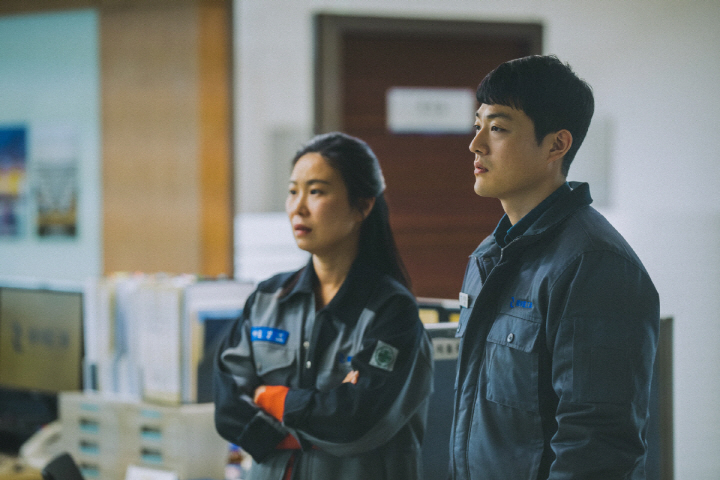
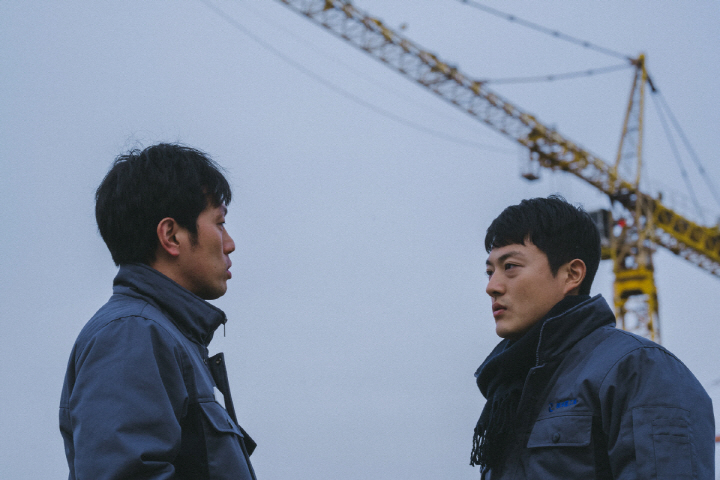
South Korean independent film “Work to Do” is about the moral dilemma of a young man tasked with one unenviable job to do. Phlegmatically observing how he and his colleagues do their rather unpleasant job step by step, the movie vividly and realistically depicts a certain very complicated circumstance for them and many others in their company, and its emerging big picture is certainly not pretty at all.

The movie, which is incidentally set around late 2016, opens with a little night drinking party to celebrate the recent employment of a lad named Kang Joon-hee (Jang Sung-bum). He has just got employed at some big shipbuilding company, and we soon see him hurriedly beginning his first day at the human resource department of that company. Although he understandably looks a bit awkward as being introduced to others at the department, he is certainly eager to do his best, and he soon gets more accustomed to his new work environment as showing more efficiency as required.

However, things have recently been not so good for the company and its numerous employees. Due to some serious financial problem, the company is demanded to lay off at least 150 employees, and Joon-hee and others at the human resource department are soon instructed to work on the upcoming process for sorting out a bunch of possible employees to be laid off. Once Joon-hee quickly sets a seemingly fair standard for this process, he and the other department members promptly make the list based on that, and all they will have to do next is making the following process as smoothly and painlessly as possible.

Needless to say, the representatives of the labor union of the company are not so pleased about this impending layoff. While Joon-hee’s direct supervisor manages to convince them that the layoff is the only survival option for the company as well as the employees, many employees in the company are naturally quite nervous about getting laid off at any point, and this inevitably leads to some serious conflicts inside the company.

Meanwhile, Joon-hee gradually finds himself getting more conflicted as watching how his and his colleagues’ ongoing task affects many others in the company in one way or another – especially after coming to realize that how willing the company is to fire many employees as swiftly and conveniently as possible. At one point later in the story, he must make a hard choice between the two employees particularly close to him, and he feels guiltier as painfully reminded again and again that there is really nothing he can do about the ongoing layoff process except doing whatever he is instructed to do. Although he does not say anything about this to his girlfriend yet, it does not take much time for her to notice that something is bothering him day by day, and their relationship becomes more strained as he still does not talk at all to her frustration.

Without particularly vilifying anyone in the story, the movie adds more realism and human complexity to the story. In case of Joon-hee’s direct supervisor, he remains mostly unflappable as ruthlessly handling the ongoing layoff process, but then there eventually comes a point where he runs out of his patience with the company. While they all are certainly quite disillusioned just like Joon-hee, most of Joon-hee’s colleagues are also concerned a lot about whether they will be included in the layoff list in the end, and they have no choice but to lay themselves as low as possible.

In case of several figures at the top of the company, they are not entirely bad people, and they simply follow whatever is necessary for the survival of the company in their viewpoint. Nevertheless, the movie also reminds us that these people are not exactly as desperate as their employees. For many of the employees in the company, strike and protest look more like a possible alternative as they get cornered more and more, and that certainly brings another headache to the company.

It helps that the main cast members of the film are believable human figures in their mundane appearances. As the center of the film, Jang Sung-bum is solid as subtly conveying to us his character’s growing inner conflict along the story, and he is especially terrific as Joon-hee silently conforms to his direct supervisor’s certain decision on the layoff process even though both of them know too well how wrong that is.

Jang is also supported well by a bunch of good performers, who all give well-rounded performances to be appreciated. Seo Suk-kyu, Kim Do-young, and Kim Young-woong are effectively cast in their respective supporting parts, and they bring each own human nuance to be observed. In case of Jang Liu, who incidentally plays the sole female employee in the human resource department, she has a brief but impressive moment when her character shows some little optimism despite her uncertain situation.

In conclusion, “Work to Do” is a modest but undeniably compelling piece of work to admire, and director/writer Park Hong-jun makes a commendable feature film debut here in this film. The overall result shows that he is a talented filmmaker who knows how to engage us via good story and character, and it will be interesting to see what may come next from him after this considerable achievement of his.

Posted in Movies | Tagged , , , , | 1 Comment

Heavy Snow (2023) ☆☆1/2(2.5/4): Between Two Girls

South Korean film “Heavy Snow” depends a lot on the presence of its two lead actresses. Whenever they are together on the screen, they click well with each other all the time in addition to ably filling their rather under-developed parts with each own star quality, and it is a shame that the movie does not provide enough ground for their fairly good performance.

The movie begins with a little performance act by Soo-an (Han Hae-in), a performing arts high school student living in some rural city on the east coast of South Korea. The early part of the story focuses on Soo-an’s accidental friendship with a newly transferred student named Yoon-seol (Han So-hee), and we come to gather that Yoon-seol is a young celebrity actress currently taking some break from her busy acting career.

When Yoon-seol later suggests that they should go to Seoul together on one evening, Soo-an initially hesitates, but she and Yoon-seol eventually go to Seoul by Soo-an’s car. Although it is after midnight when they arrive in Seoul and the streets are already quite empty, Yoon-seol and Soo-an are happy and excited to spend time with each other, and that is when they come to sense a certain mutual feeling between them.

However, Soo-an is not so willing to go further with Yoon-seol after they impulsively kiss, and then something unexpected occurs not long after that. With no particular reason, Yoon-seol leaves the school, and this certainly upsets Soo-an, who belatedly comes to realize that she was really attracted to Yoon-seol from the beginning.

The middle part of the story moves forward to several years later, and we see how Soo-an looks different now. She now becomes celebrity actress just like Yoon-seol once was, and she seems to be enjoying her advancing acting career, but it is soon apparent that she is not so happy behind her confident appearance. In the middle of one night, she spends some time at the residence of a male friend of hers, and she does not say no at all when he offers drugs to her, but then she gets a bit too high due to some very strong drug she instantly takes without any hesitation.

Anyway, Soo-an soon finds herself suddenly overwhelmed by the memory of a local beach visited by her and Yoon-seol. That prompts her to return to her hometown, and, what do you know, she discovers that Yoon-seol has actually lived there since she quit acting some time ago. Now mostly occupied with surfing on the beach, Yoon-seol does not show much attention to Soo-an when they come across each other at a local bar, and the mood between them becomes pretty awkward to say the least.

Nevertheless, Yoon-seol does not reject her friend at all, and Soo-an tries to get closer to Yoon-seol despite the estrangement between them. Just like her friend, she tries to get interested in surfing, and we later see her going to the beach along with Yoon-seol when lots of waves are coming upon the beach on one foggy day.

And then the screenplay by director/writer Yun Su-ik starts to baffle us in one way or another. Not long after Soo-an and Yoon-seol attempt a bit of surfing together, they suddenly find themselves stranded in the middle of the sea, and then they are swept to some remote spot on the coast. Having no idea on where the hell they actually are, they only find themselves getting lost in a nearby forest area covered with a lot of snow, though they eventually manage to find a small cabin where they can stay at least for a while.

As they are hopelessly stuck in that cabin, Soo-an and Yoon-seol gradually come to face the old feelings between them as opening themselves more to each other, and the movie becomes more like a stream of feelings in their unconsciousness. Sometimes they simply feel happy to be with each other despite their current isolated status, and we even get a little intimate private moment between them later in the story, though we are not so sure about whether they actually go further than that.

Unfortunately, the movie does not provide enough detail and substance to the story and characters. We never feel like getting to know them more even at the end of the story, and the finale is rather hollow without much emotional resonance. In the end, all we get is a random series of lovely scenes filled with dreamy qualities, and they sadly lack a coherent emotional line we can hold to the end.

Anyway, the movie is thankfully short in running time (87 minutes), and Han Hae-in and Han So-hee do their best for carrying the film together. Considering this is basically a two-hander, the movie could bring more flesh and personality to their characters in my inconsequential opinion, but these two beautiful young actresses are still engaging to watch nonetheless, and several young female audiences who happened to be around me during my viewing will probably agree to that.

On the whole, I am not so satisfied enough for recommendation, but “Heavy Snow” shows the considerable potential from both its two lead actresses and their director at least. Although observing their efforts from the distance, I appreciated their efforts to some degree, and I can only hope that they will soon do something more interesting than this trial.

Posted in Movies | Tagged , , , , , , , | Leave a comment

Lucky, Apartment (2024) ☆☆☆(3/4): That smell of fear and anxiety in their apartment

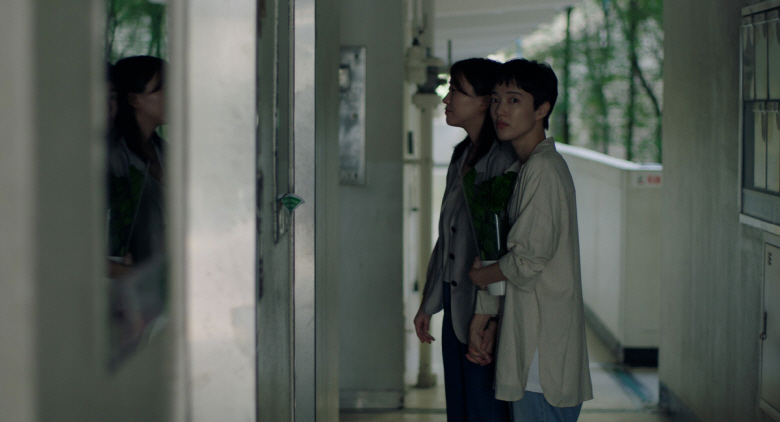
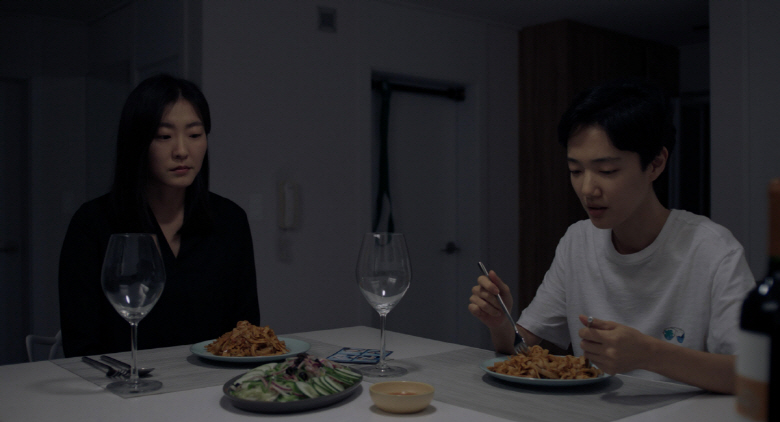
South Korean independent film “Lucky, Apartment” is a quiet but tense drama about one lesbian couple who happen to be under a lot of pressure and conflict. All they simply want is a stable living environment where they can happily live together, but then they come to face their harsh reality in one way or another as their supposedly cozy apartment gets saddled with one big problem, and the movie is sometimes realistically frightening for good reasons.

At the beginning, the movie quickly and succinctly establishes how things have been not that good for Seon-woo (Son Soo-hyun) and Hee-seo (Park Ga-young). Mainly thanks to some loan Hee-seo recently got, they could buy a little apartment for living together, but then they only find themselves struggling to pay the mortgage and interest. To make matters worse, their financial status becomes less stable as Seon-woo loses her job after getting seriously injured in her right leg, and Hee-seo, who works as a saleswoman for some big pharmaceutical company, certainly feels pressured a lot as she must earn more than before.

While trying to adjust herself to this changed circumstance, Seon-woo begins to notice something strange on one day. There is a very unpleasant smell somewhere inside the apartment, and it does not take much time for her to discern that this nasty smell in question is actually coming from the apartment right below theirs, which incidentally belongs to some old lady living alone by herself. Seon-woo immediately goes to the maintenance office, but the maintenance office is not so particularly willing to take care of this problem, and the smell in the apartment only gets worse and worse during next several days.

In the end, the local police eventually come, and it soon turns out that the old lady actually died in her apartment several days ago at least. While many of the neighbors in the apartment building are quite shocked to say the least, they are also quite concerned about whether this unfortunate incident may affect the current value of their apartments, and they all hope that everything will be handled as quietly as possible without drawing any attention from the outside.

However, though the local police quickly close the case after concluding that the old lady really died of a natural cause, her apartment has not been cleaned yet due to some complicated legal problem, and it also seems that the old lady does not have any close family or relative to take care of this legal matter. Naturally getting quite frustrated with this maddening situation, Seon-woo decides to take care of this matter for herself, but Hee-seo is understandably not pleased about how much her partner draws the attention from many others in the apartment building.

It gradually turns out that Heo-seo has a fair share of problems to deal with outside their apartment. Because she has presented herself as a single woman simply not so interested in marriage, she often faces the prejudices from others including her male boss and colleagues, and she is also often pressured a lot by her Christian parents, who still do not know anything at all about her private life with Seon-woo. She tries to assure herself and Seon-woo that everything is and will be okay as long as they stay as low as possible, but her anxiety and frustration are already quite evident to Seon-woo, and this puts another strain on their relationship besides the smell in their apartment and more prejudice from some of their neighbors.

Slowly dialing up the level of tension between its two main characters along the story, the screenplay by director/writer Kangyu Ga-ram adds more details to the story and characters. When she later enters the old lady’s apartment by a good chance, Seon-woo instinctively senses something common between her and the old lady, and that becomes more evident when she finally meets someone in the old lady’s past. Nothing much is said between them on the surface, but it is quite clear that the old lady was quite close to that figure in question, and Seon-woo cannot possibly say no when that figure asks her a little but important favor.

Around the last act, the movie expectedly becomes more melodramatic as Seon-woo and Heo-seo come to conflict more with each other while also experiencing more of their harsh reality out there, but it is still held well together by the strong performance from Son Soo-hyun and Park Ga-young. Right from the beginning, they look believable as effortlessly embodying the long history between their characters, and that is why it is devastating to watch their characters’ supposedly reliable relationship being driven almost up to the breaking point later in the story. Around these two good performers, several supporting performers including Lee Joo-young, Jung Ah-hwa, and Jeon So-hyeon are also solid in their respective parts, and Jung is particularly touching during her brief but crucial scene.

Overall, “Lucky, Apartment” is engaging for painfully and powerfully presenting the prejudices against many social issues in South Korea including aging and LGBTQ+ people, and it also makes some sharp point on how South Korean people can be quite selfish and superficial in case of their apartment. Although nothing much is certain for the two main characters of the film even in the end, there is also some glimmer of optimism via a little sign of solidarity and compassion shown from them, and that will probably make you reflect more on the main subjects of the film after it is over.

Posted in Movies | Tagged , , , , | 1 Comment

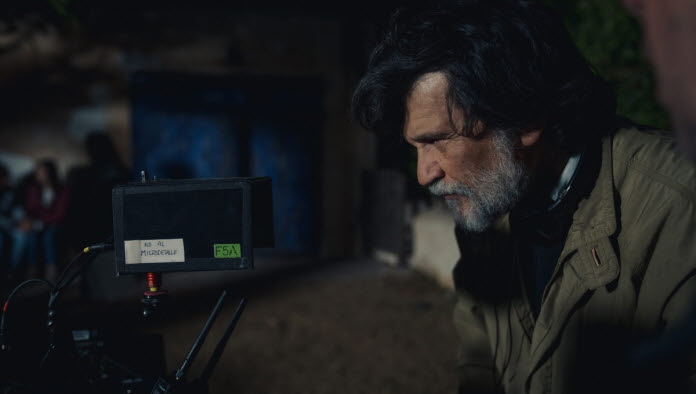
Close Your Eyes (2023) ☆☆☆1/2(3.5/4): Victor Erice returns

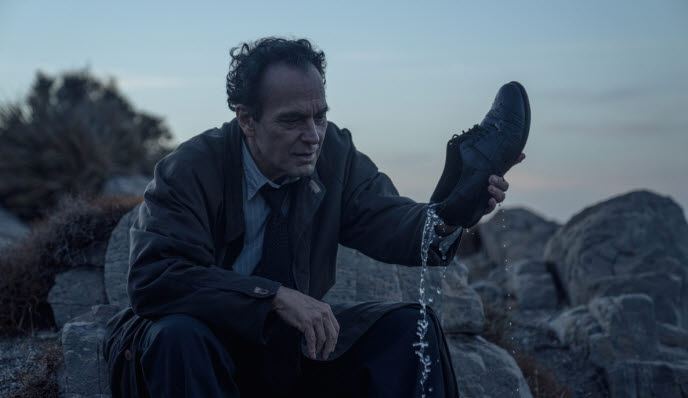
Victor Erice’s “Close Your Eyes”, which is incidentally his comeback work after “Dream of the Light” (1992), takes quite a time as slowly revealing what and how it is about. This surely requires some patience from you, but the movie is an undeniably rewarding experience on the whole. Looking back at its long journey as well as the final destination, you will appreciate how subtly it handles its story and characters to make a point on the power of cinema in the end, and you may also agree that the movie is one of the notable highlights of this year.

The movie opens with the prologue part which turns out to be one of the two completed scenes from an unfinished film in the story. The scene is set in somewhere outside Paris in 1947, and the hero of the movie comes to a big country manor, which is called Triste Del Rey (It means “the sadness of the king” in Spanish, by the way). He meets an old man in the manor, and then they come to have a long conversation as the old man requests the hero to find the old man’s lost daughter who ran away to Shanghai, China some time ago.

The hero of the movie was played by an actor named Julio Arenas (José Coronado), who was quite popular when he participated in the shooting of that unfinished film, which is incidentally called “The Farewell Gaze”. Not long after the two scenes of “The Farewell Gaze” were shot, Arenas was suddenly disappeared for no particular reason, and this certainly ruined not only the movie itself but also the filmmaking career of his novelist friend Miguel Garay (Manolo Solo).

After 22 years have passed since that disaster, Garay is approached by the female host of a popular TV program named “Unsolved Cases”, which is, as you can easily guess from its very title, one of those sensationalist TV programs focusing on many cold cases mired in mystery. Around that time of Arenas’ disappearance, everyone including Garay was quite baffled to say the least without having any idea on what exactly happened to Arenas, and Garay hopes that his collaboration with that TV program will bring some closure to the memories of his friend and their unfinished film at least.

The movie patiently follows Garay as he tries to gather a bit more possible clues from several people in the past before having an interview for that TV program. First, he goes to Max (Mario Pardo), an old friend of his who once worked as his editor and is currently running a little place where numerous films including Garay’s unfinished movie are stored under his care. As he and Garay talk a bit about how people are less interested in preserving movies in physical form as movies become more and more digitalized, you may sense some bitter feelings about the current trend of cinema from Erice himself, and that will probably remind you more of the importance of film preservation.

In case of Arenas’ daughter Ana (Ana Torrent), she does not have any hard feeling on her father’s disappearance, because, well, she hardly knew her father even before his disappearance. Although she believes that her father was dead at that time, there is some bitter wistfulness behind her phlegmatic façade while she talks with Garay about her father’s disappearance, and the movie lets us gather that she has been haunted by Arenas’ disappearance as much as Garay.

By sheer coincidence, Garay later comes to have a little private meeting with Lola (Soledad Villamil), a woman who was romantically involved with him and Arenas, respectively. As they talk more and more with each other, they come to reflect more on how many things in their lives have gone away into the past, and that makes Garay more obsessed with what really happened to Arenas at that time.

However, the screenplay by Erice and his co-writer Michel Gaztambide, which is developed from the story written by Erice, does not hurry itself at all before taking an unexpected plot turn during its second half. I will not go into details here, but I can tell you instead that I admire how the movie steadily and thoughtfully builds up its narrative momentum for its sublime finale, which incidentally reminded me of what Ingmar Bergman once said: “For me, the human face is the most important subject of the cinema.”

And the movie does depend a lot on the faces of its main cast members, which speak volumes even when they do not seem to signify much to us on the surface. While Manolo Solo diligently holds the center with his somber sincerity, José Coronado is equally terrific as often hovering around the screen just like his character does around the story, and I will let you behold for yourself how much his indelible presence in the first half of the film resonates during the finale. Soledad Villamil, Mario Pardo, Helena Miquel, and María León, and Ana Torrent are also effective in their respective supporting roles, and Torrent’s supporting performance willl feel quite poignant to you if you have seen Erice’s first feature film “The Spirit of the Beehive” (1973), where she gave one of the greatest child performances in the history of cinema.

In conclusion, “Close Your Eyes” may feel a bit ponderous to you considering its slow narrative pacing and rather long running time (169 minutes), but it is definitely worthwhile to watch if you have appreciated how cinema has entertained and touched us for many years. Maybe the end of cinema is near as many people have said these days, but the movie movingly reminds us that it is still a powerful tool for human emotions, and we surely need to remember that more, no matter what will happen to cinema in the future.

Posted in Movies | Tagged , , , | 1 Comment

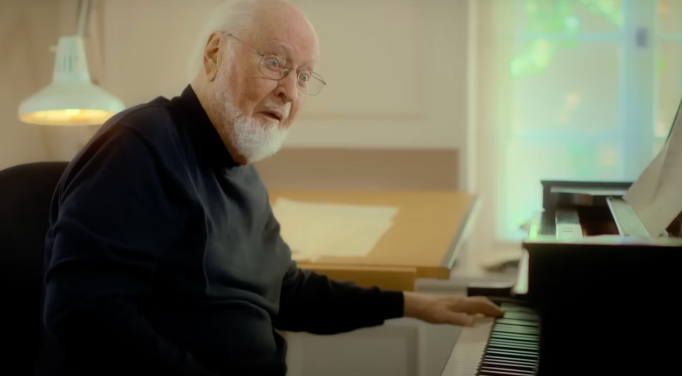
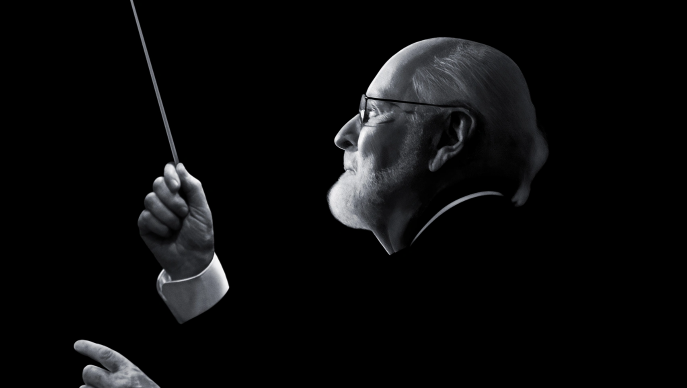
Music by John Williams (2024) ☆☆☆1/2(3.5/4): The title itself is already enough for us, you know

Documentary film “Music by John Williams”, which is currently available on Disney+, looks over the long, illustrated career of one of the best film composers of our time. Since he rose to prominence around the late 1960s, John Williams has steadily advanced as constantly impressing us with many different great film scores, and he is still working even though he is about to have his 93rd birthday early in the next year. Although it simply lets Williams and many other distinguished figures explain and talk about some of his famous works, the documentary is still quite entertaining as effectively presenting one stellar achievement of his after another, and that is more than enough for anyone interested in film music.

During its early part, the documentary gives us the brief summary on William’s early years. Thanks to the encouragement from his musician father and dancer mother, young Williams frequently practiced a lot on piano, and he soon came to show more talent and potential while becoming more passionate about music. Around the time when he joined the US Air Force in the early 1950s, he was already a skilled pianist/composer/arranger, and that was how he came to compose the music for a little military documentary. After leaving the US Air Force, he began to work here and there in Hollywood as a recording session pianist, and you will be surprised to see that he is the one who played the piano in Elmer Bernstein’s Oscar-nominated score for Robert Mulligan’s classic film “To Kill a Mockingbird” (1962) and Henry Mancini’s iconic theme for TV drama series “Peter Gunn”.

As he got hired more and more an arranger/composer in Hollywood, Williams, who was now listed as “John Williams” instead of “Johnny Williams”, eventually went all the way for composing film music around the late 1960s, and the rest was the history. He soon received his first several Oscar nominations within a few years, and one of them was for his score for Mark Rydell’s “The Reivers” (1969), which incidentally drew the attention of a very young filmmaker named Steven Spielberg. When he later made a feature film debut with “The Sugarland Express” (1974), Spielberg eagerly approached to Williams, and that was the beginning of their legendary collaboration which recently impressed us a lot again in “The Fabelmans” (2022). 

 When Spielberg showed the rough cut of his very next film “Jaws” (1975), Williams was rather horrified by how his Oscar-nominated score for Robert Altman’s “Images” (1972) were utilized in the temp track of the soundtrack, but he created one of the most recognizable movie themes of all time nonetheless. When he played that a bit for Spielberg, Spielberg thought Williams was just kidding, but, what do you know, that simple idea of Williams worked splendidly when it was played by the orchestra during the following recording session, and Spielberg saw how much Williams’ music, which deservedly garnered Williams’ second Oscar (He previously won an Oscar as an arranger for Norman Jewison’s “A Fiddler on the Roof” (1971), by the way), enhanced his film. 

After the enormous success of “Jaws”, Williams’s career got boosted much further thanks to another two ground-breaking scores to remember. When he was recommended to a certain close friend of Spielberg, Williams was initially not so sure about whether the movie directed by that friend in question, but then he became quite enthusiastic about that film. Yes, that friend in question was none other than George Lucas, and that movie, “Star Wars” (1977), inspired Williams to create one of the most recognizable works in his whole career which won him the third Oscar.

Meanwhile, Spielberg also worked on something equally special, and Williams quickly came onto the project right after having an amazing time with “Star Wars”. In “Close Encounters of the Third Kind” (1977), Williams was instructed to create an effective five-note motif as a crucial part of not only the whole score for the story itself, and, again, he did not disappoint Spielberg at all with his fabulous result, even though it took some time for him to find the right five-note motif for the movie. 

With more big successes thanks to a number of notable films including “Superman: The Movie” (1978), “Raiders of the Lost Ark” (1981), and “E.T. the Extra-Terrestrial” (1982), which won him the fourth Oscar, Williams became all the more popular than before, and then he was selected as the principal conductor of the Boston Pops Orchestra in 1980. His first several years with this orchestra were rather rough because many of the snobbish orchestra members did not regard him that highly, so he eventually quit four years later, but then, what do you know, he returned and then worked with the orchestra till 1993.      

And he kept working in Hollywood as usual. After delivering two equally stunning score for Spielberg’s “Jurassic Park” (1993) and “Schindler’s List” (1993), William showed more of the other sides of the immense talent, and it is a bit shame that the documentary does not delve that much into the period after he won his fifth Oscar for “Schindler’s List”. Sure, it is nice to see Chris Columbus’ “Harry Potter and the Philosopher’s Stone” (2001) getting mentioned as expected, but I wish the documentary focused on his rather overlooked gems including the one for Alan Parker’s “Angela’s Ashes” (1999), which was incidentally Oscar-nominated instead of Lucas’ “Star Wars: Episode I – The Phantom Menace” (1999) in that year.

On the whole, “Music by Williams” could show and tell more about its human subject, but the result is quite compelling enough for us thanks to the competent direction of director/co-producer Laurent Bouzereau, who recently gave us HBO documentary “Faye” (2024). After James Mangold’s “Indiana Jones and the Dial of Destiny” (2023), which brought him the latest Oscar nomination (He was nominated no less than 54 times, by the way), Williams suggested that he would soon retire, but then, to our relief, he later said that he will go on as long as possible. Considering his age, he may not live that long, but he is ready to sit and write his music on paper as before (He still does not use computer at all for his work, you know), and we will cherish whatever will come next from him.

Posted in Movies | Tagged , , , , , | Leave a comment

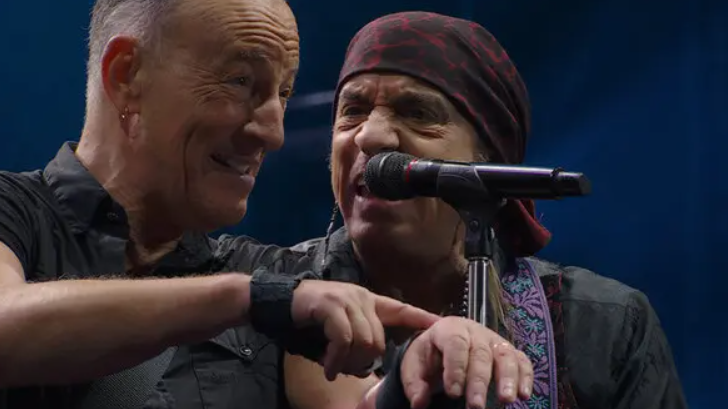
Road Diary: Bruce Springsteen and the E Street Band (2024) ☆☆☆(3/4): As he tours with his colleagues

Documentary film “Road Diary: Bruce Springsteen and the E Street Band”, which is currently available on Disney+ in South Korea, follows how Bruce Springsteen and his longtime colleagues prepared his world tour during 2023 ~ 2024. Although there is not anything particularly revealing about their career, it is still interesting to observe how they keep going even at this point, and the documentary did a fairly good job of presenting their admirable professional dedication.

At first, we see how Springsteen, who recently had his 75th birthday a few months ago, and a bunch of his colleagues and collaborators embarked on the rehearsal inside a recording studio. Because he and they had done any tour concert during several years, they were naturally concerned about whether they could pull it off well, but Springsteen looked casual and optimistic while selecting and arranging a number of songs to be performed at their concert.

As some of them frankly admit during occasional interviews, the beginning of their rehearsal was not so fantastic to say the least. When they performed one certain song first, the tempo was so slow that it almost sounded like a mellow ballad, and that certainly showed that Springsteen and his close colleagues including Steven Van Zandt were not young anymore compared to those old years of theirs.

Nevertheless, Springsteen and his colleagues and collaborators gradually got back into their element under his confident direction. Although he kept making changes and improvisations here and there, everyone was eager to join his creative process, and the mood among them became more enthusiastic as they performed together more and more.

Meanwhile, Springsteen and his old colleagues reminisce about how long they have worked together for more than 40 years. Around the time when Springsteen assembled the E Street Band, he and they were just young musicians who had just started their respective careers, and they still remember how much they struggled during that time. For example, they had to move from one distant place to another without much rest, and their performances were not always rewarding because they sometime had to perform in front of a very few audiences.

As many of his colleagues gladly recognize, Springsteen is not only talented but also very good at gathering talented fellow musicians around him, and he and many of them have stuck together during last several decades. Although some of them died or retired, the band has been consistent under Springsteen’s leadership, and this will be continued as long as he can perform on stage.

Around the time when he and his band members were about to perform in Tempa, Florida, the mood naturally became more serious, and we see how fastidious Springsteen are about the aural details of his concert. As making his band play again and again, he thoroughly checked how that sounded at the various spots inside their concert place, and that surely shows how much he cares about his audiences, though his band and Van Zandt, who happened to work as the music director of the tour, were not so pleased about playing the same tune again and again for several hours.

Once everything was ready to go, Springsteen and his band members delivered what their audiences were eagerly waiting for. They subsequently did more concerts here and there in US, and they were always quite exhausted whenever they finished another concert, but, as Springsteen jokingly said to one of his band members at one point, that was only the beginning, because they would also do many concerts outside US.

The second half of the documentary focuses on the concert held in Barcelona, Spain, and the documentary focuses on not only Springsteen and his band members but also a number of various European audiences willing to talk a lot about how Springsteen’s music means a lot to them. Knowing how much enthusiastic his audiences are, Springsteen sometimes had his audiences select a few songs to perform, and that understandably made his band members nervous at times.

And we see how his carefully selected song list effectively worked on the audiences. When two certain famous songs of his were performed one by one, they somehow came to resonate with each other with some emotional effects to be remembered, and you can clearly see that Springsteen has not lost any of his artistic touch despite his age.

In conclusion, “Road Diary: Bruce Springsteen and the E Street Band” simply provides what Springsteen’s fans exactly wants, but director/co-editor/co-producer Thom Zimny, who previously collaborated with Springsteen in “Bruce Springsteen’s Letter to You” (2020) and recently gave us “Sly” (2022) and “The Beach Boys” (2023), handles his main subject with enough skill and competence. Yes, I must confess that I still do not know that much about Springsteen’s career except a few songs including, yes, “Born in the U.S.A.”, but I was entertained enough during my viewing, and, in my inconsequential opinion, you will enjoy it more especially if you are one of his fans.

Posted in Movies | Tagged , , , , | Leave a comment

Faye (2024) ☆☆☆(3/4): Faye on Dunaway

HBO documentary film “Faye” looks into the life and career of Faye Dunaway, a legendary Hollywood actress who has had a fair share of fame and notoriety during last six decades. While she was indeed quite difficult to work with at times as many people said, the documentary presents a bit of her humanity as well as her professionalism as she frankly opens herself a bit in front of the documentary, and the result is fairly compelling on the whole.

After focusing on that famous photographer shot not long after she won an Oscar for Sidney Lumet’s “Network” (1976), the documentary and Dunaway give a brief summary of her early years. Growing up under her rather unhappy parents who frequently had to move from one place to another due to her father’s military career, young Dunaway found some solace and release from acting, and it did not take much time for her to get more serious about acting. She eventually moved to New York City during the early 1960s, and that was where her considerable talent was honed more by her two important mentors: Elia Kazan and William Alfred.

At first, Dunaway was only interested in her nascent stage career in the New York City, and she soon got her breakthrough moment thanks to appearing in the stage production of Alfred’s acclaimed play “Hogan’s Goat”. However, once her good performance in “Hogan’s Goat” drew attention from Hollywood, she moved onto Hollywood as appearing in her first movie “The Happening” (1967), and then there came, yes, Arthur Penn’s groundbreaking masterpiece “Bonnie and Clyde” (1967), for which she received her first Best Actress Oscar nomination.

As riding on the immense success of “Bonnie and Clyde”, Dunaway kept trying to advance more as a strong actress to watch, but that also led to her growing notoriety for being controlling and fastidious. After Norman Jewison’s “The Thomas Crown Affair” (1968), things seemed to be going down a bit for her career, and then she eventually rose again with her Oscar-nominated performance in Roman Polanski’s “Chinatown” (1974), but there were a lot of talks about how she and Polanski often clashed with each other on the set. As one interviewee in the documentary tells us, she and Polanski became quite hostile to each other due to a trivial hair problem, but she managed to keep going mainly thanks to her co-star Jack Nicholson, and Dunaway shows some admiration toward Polanski’s filmmaking talent, though she conveniently does not mention at all how his public image has recently been quite tarnished thanks to the #MeToo movement.

In case of her Oscar-winning performance in “Network”, Dunaway is still proud of her considerable contribution to that great film. Sure, her TV executive character can be regarded as a misogynistic caricature of female professional workers just like Louise Fletcher’s evil nurse character in Miloš Forman’s “The One Who Flew Over the Cuckoo’s Nest” (1975), but Dunaway and Lumet presented the character as an icy but seductive goddess of media, and she surely nailed every compelling detail of her ruthlessly ambitious character.

Unfortunately, after her well-deserved Oscar, everything went down for her career during next several decades due to a series of bad choices, and Dunaway is still not so comfortable with talking about her notoriously campy performance in Frank Perry’s “Mommie Dearest” (1981). While she was really serious about embodying Joan Crawford in front of the camera, Perry frequently let her go over the top without any restraint for making a campy melodrama, and her memorable overacting in this film, which deserves to be compared with Al Pacino’s in Brian De Palma’s “Scarface” (1983), has been often ridiculed or imitated since then.

Around that time, Dunaway became more aware of her personal problems. Just like her father, she showed signs of alcoholism, and she also came to see that her frequent mood swings were not just mild mental problems at all. As she frankly admits to us, she actually has a bipolar disorder problem, and her adoptive son Liam tells us that her bad days were not so far from some of the craziest scenes in “Mommie Dearest”.

After “Mommie Dearest”, Dunaway’s acting career was less impressive than before as being saddled with a series of awful films ranging from “Supergirl” (1984) to “Dunston Checks In” (1996), which is probably too humiliating for her to appear in the documentary even compared with “The Wicked Lady” (1983) or “The Temp” (1993). She also tried to return to stage more than once, but that led to more failures despite some successes, and she is still quite disappointed about how the production of what was supposed to be her first diretorial film was shut down due to the lack of budget.

Nevertheless, there were also several good things such as Barbet Schroeder’s “Barfly” (1987), and you may be amused a bit when Mickey Rourke, who also has a fairly bad reputation just like Dunaway, fondly remembers how he and Dunaway usually clicked well together in front of the camera. She also appeared along with James Caan and Ellen Burstyn in James Gray’s “The Yards” (2000), and she certainly brought some class to that film just like her two equally legendary co-stars.

On the whole, “Faye”, which is directed by Laurent Bouzereau, did a good job of presenting Dunaway’s life and career with enough care and respect, and I come to admire many of her performances as getting to know more about her professionalism. Yes, she is too great to be remembered only for that embarrassing moment around the end of the 2017 Oscar ceremony, and we should give some more respect to which she is definitely entitled.

Posted in Movies | Tagged , , , | Leave a comment

Martha (2024) ☆☆1/2(2.5/4): Martha presented by Stewart

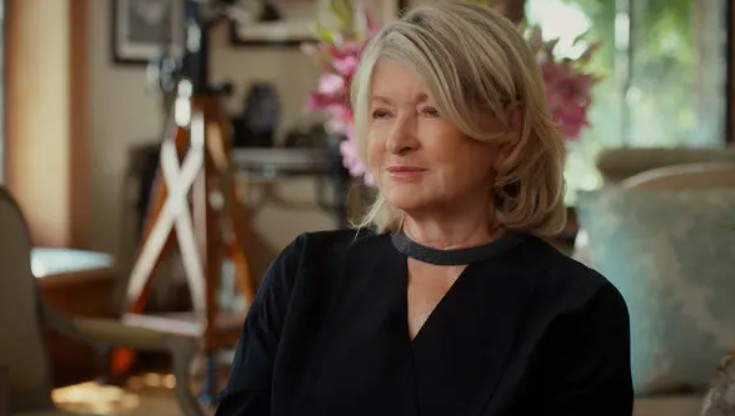
Netflix documentary film “Martha”, which was released in last week, tries to present some human sides of Martha Stewart. While she does not reveal anything particularly revealing about herself or her career, the documentary is mostly watchable as following the rise and fall of her fame in public, and you may wish that it threw harder questions at what was hidden behind her supposedly admirable achievement.

Now currently going through another chapter of her career and life, Stewart seems ready to tell all in front of the camera at the beginning. She reminisces about growing up under her rather problematic father and hard-working mother, and she also talks about how both of her parents influenced her in one way or another. Although he was not a very good father, she inherited his perfectionist attitude from him, and she also learned a lot from her mother’s constant diligence in their domestic environment.

After working as a young model for a while, young Stewart began to study at a college in New York City, and that was when she met and then fell in love with her husband Andrew Stewart. Despite her father’s strong objection, she eventually marries Andrew, and she was expected to become your typical housewife, but then she was not so happy as struggling to raise her only daughter, and that was why she got interested in getting a job once her daughter grew up enough.

Thanks to her father-in-law, Stewart tried on the stock trading at Wall Street, but then she gave up once she saw how the stock market is often beyond anyone’s control. Like any usual perfectionist, she wanted to run things under total control, so, after quitting her stock trading job, she came to focus on improving a new house for her family in the suburban area outside the city. The house was pretty shabby at first, but it soon got look much better thanks to Stewart’s efforts, and then she began the catering business as often throwing many lovely parties for her friends and neighbors.

Because her husband happened to be a prominent figure in the publishing business in New York City, Stewart was soon approached by a well-known publisher who suggested to her that she should publish a book on homemaking, and, what do you know, that was the first stepping-stone toward her immense fame during next two decades. Once her first book got sold pretty well, she published more and more books on homemaking, and she quickly rose further as expanding her business and public image.

However, things did not go well inside Stewart’s house in the meantime. She and her husband became more and more estranged from each other, and Stewart admits that she had at least one extramarital affair behind her back during that time, though she also points out that her husband had much more affairs behind his back (Director R.J. Cutler and his crew seemed to interview Stewart’s husband, but they do not go into details that much here).

Anyway, Stewart’s eventual divorce with her husband in 1990 did not affect much Stewart’s public image as No.1 American homemaker, and her business kept growing and growing during the 1990s. When her company officially entered the stock market of Wall Street, she earned a lot more money than before, and it looked like the sky was only the limit for her and her company.

Of course, as many of you know, there came an unexpected disaster for Stewart during the early 2000s. She was accused of an insider trading involved with one biotechnology company run by one of her close friends, and she insists that she did not do anything wrong except lying a bit somehow. Anyway, once she became the target of the federal investigation, her public image was tarnished more and more as there came more talks about her toxic behaviors to others working under her, and this negative publicity certainly affected a lot her business.

Stewart does not admit or regret much about those toxic behaviors of hers in the past. and many interviewers keep emphasizing that she would have easily gotten away if she were a male businessman, but I must say that I have some reservation on that. She might deserve some admiration as a trailblazer for many women out there, but, come on, wasn’t she as toxic as, say, Cate Blanchett’s equally problematic character in Todd Field’s “Tár” (2022)?

In the end, Stewart was sentenced to a five-month incarceration, and the excerpts from her personal diary give us a little glimpse into what might be the bottom of her life and career. While quite depressed and devastated at first, she subsequently found some will and strength to endure the next five months, and then she got a chance to re-charge her social status not long after she was released. She reluctantly agreed to appear in a TV show where a bunch of invited celebrities roasted a certain infamous public figure together, and, what do you know, she surprised everyone with much more laughs than expected, and the public came to embrace her again.

Overall, “Martha” does not delve that much into its human subject, but it is mildly enjoyable and informative if you are not that familiar with Stewart’s life and career like me (I only vaguely knew about her public image except that criminal record of hers, by the way). From the documentary, I could only see Martha the businesswoman instead of Martha the human being, but that will probably be enough for you.

Posted in Movies | Tagged , , , , , | Leave a comment

Anora (2024) ☆☆☆1/2(3.5/4): Getting married and then into a big trouble

Sean Baker’s latest film “Anora”, which won the Palme d’Or at the Cannes Film Festival early in this year, is an absurd but ultimately bitter comedy about one female sex worker who turns out to be a lot more naïve and desperate than she seems at first. As foolishly attempting to go all the way for more economic stability in her life, she thinks she can prevail over one increasingly messy circumstance, but there soon comes a harsh dose of reality to strike her, and we are reminded more of how fragile and unstable her social status really is.

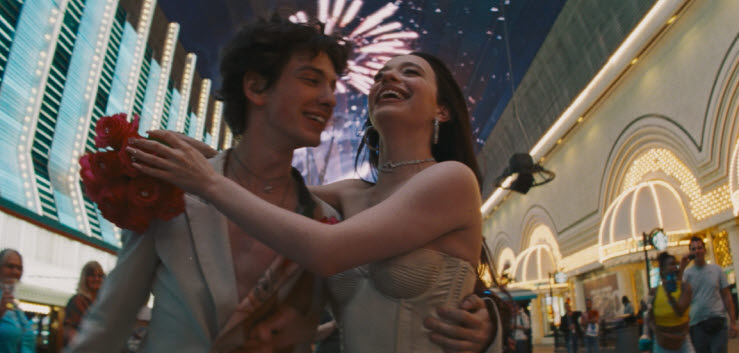
The early part of the film establishes the daily life of Anora “Ani” Mikheeva (Mikey Madison), a young and confident high-priced stripper working at some flashy strip club located somewhere in New York City. When she is going through another usual night of hers at the strip club, Ani meets a young Russian lad named Ivan “Vanya” Zakharov (Mark Eydelshteyn), and he soon becomes her No.1 client mainly because of being quite wealthy. Not so surprisingly, Vanya gets quite interested in spending more time with Ani outside the strip club, and Ani gladly goes along with that as long as she gets paid enough for that.

As they frequently spend time together, we get to know more about Vanya, who turns out to be your average spoiled rich kid. Living alone in a big house actually belonging to his parents in Russia, he simply needs someone ready to please him at any time whenever he is not having a party or playing a video game, but then he looks a bit more serious about his relationship with Ani. He eventually proposes to her while they happen to be spending a week in Las Vegas, Nevada, and Ani cannot possibly say no as being quite excited about this unbelievable opportunity for social rising.

Of course, she gets herself into a very big trouble not long after they quickly get married and then return to Vanya’s house in New York City. After coming to learn of their son’s sudden marriage, Vanya’s parents in Russia become quite furious to say the least, and they order several dudes working under them to take care of this serious trouble as soon as possible. Ani and Vanya are subsequently visited by these guys, and then Ani finds herself stuck with these guys after Vanya runs away from the scene instead of facing the consequence of his impulsive action.

The main source of comedy in the film comes from how the situation between Ani and the guys sent by Vanya’s parents becomes increasingly silly and pathetic. The guys turn out to be rather clumsy in their attempts to force Ani into a quick divorce, and Ani becomes more adamant about not having a divorce at any chance, after clearly showing them that she is not someone they can easily bend at all. As Vanya’s parents are already coming to New York City, the guys must search for Vanya while holding Ani all the time, and, to our little amusement, she and they frequently clash with each other as both sides stubbornly stick to their respective positions without stepping back at all.

Leisurely rolling this absurd circumstance, the screenplay by Baker, who also edited the film besides serving as one of its co-producers, steadily builds up the story and characters for more comedy and drama. There are a number of broad comic moments including the one involved with a tow truck driver, and then there are also some serious moments as Ani slowly comes to discern how things are hopeless for her from the beginning. Nevertheless, she tries to stick to her position as much as possible – until the eventual point where she comes to see that her resistance was futile from the very beginning.

While usually observing its heroine’s plight from the distance, the movie also indirectly shows some pity and compassion at times. Although they often get exasperated with Ani’s stubborn attitude, the guys sent by Vanya’s parents are merely the employees assigned to do one particularly thankless job for their employer, and the movie makes a brief but sharp point on how they are no better than many other employees including the cleaning staff members of Vanya’s house. As a matter of fact, one of these guys comes to show a bit of genuine kindness to Ani as being stuck with her much longer than expected, and the movie wisely lets us sense the unexpected emotional alliance between them without spelling that out too obviously.

Under Baker’s skillful direction, the main cast members are effective in their respective parts. Mikey Madison, who has been more notable since her minor supporting role in Quentin Tarantino’s “Once Upon a Time…in Hollywood” (2019), brings enough spirit and personality to her character, and her good performance here in this film may lead to more good things to come in her promising acting career. Around Madison, Yura Borisov, Karren Karagulian, and Vache Tovmasyan hold each own place well as the guys hired by Vanya’s parents, and Mark Eydelshteyn looks as pathetically coward and unreliable as required by his crucial supporting character.

Since he drew my attention with “Tangerine” (2015), Baker has steadily advanced as making “The Florida Project” (2017) and “Red Rocket” (2021), and, considering all the attention and buzz surrounding it during this ongoing award season, “Anora” will surely establish him more as one of the most interesting American filmmakers during last several years. To be frank with you, I am still not sure whether it is one of the best films of this year as many reviewers and critics have said, but it is still one of the most interesting films of this year nonetheless, and it is certainly worthwhile to check out just like many of Baker’s previous films.

Posted in Movies | Tagged , , | 2 Comments