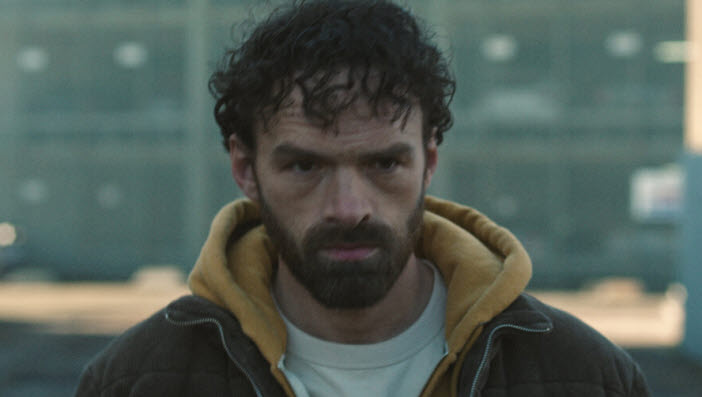
The Count of Monte Cristo (2024) ☆☆☆(3/4): He returns for revenge…

Alexandre Dumas’ classic novel “The Count of Monte Cristo” is actually a useful guidebook on how to execute a revenge on your mortal enemy as precisely and efficiently as possible. Besides patiently waiting for the right time and the right place for his cold-blooded vengeance upon his targets, its hero meticulously plans on how his targets can be truly punished and then destroyed to the end, and we get some nasty but cathartic fun from the effective execution of his devious revenge plan.

Its latest movie adaptation version of the same name, which came out in France in last year, knows and understands well what makes Dumas’ unabashedly pulpy novel so fun and thrilling, and its result is engaging enough to justify its almost 3-hour running time. While it is a bit strained at times as trying to press the epic melodrama of Dumas’ novel into the limited running time, the movie seldom bores us as busily juggling its plot and characters, and it surely serves its hero’s revenge pretty well on the whole.

The early part of the movie, which is mainly set in Marseille, France in 1815, establishes how its hero, Edmond Dantès (Pierry Niney), suddenly falls from one of the happiest days in his life to the bottom of hell. At the beginning of the story, he is a decent sailor lad who gets promoted to the position of captain because of one brave act of his in the middle of the latest voyage of his ship, and this unexpected change in fortune for him finally makes him propose to Mercédès Herrera (Anaïs Demoustier), a young beautiful women he has loved for years.

However, there are several people ready to destroy him for each own reason. His predecessor, Danglars (Patrick Mille), is not so pleased about getting fired, and he happens to have something quite useful for getting Dantès wrongfully accused of a serious act of treason associated with the exiled Napoleon. After Dantès is eventually arrested later, Fernand de Morcerf (Bastien Bouillon), who is Mercédès’ cousin and also Dantès’ best friend, tries to save his friend, but then he is subsequently persuaded to add more accusation on Dantès by the prosecutor assigned to Dantès’ case, who also wants to get rid of Dantès as much as Danglars and de Morcerf (Yes, he has also hoped to marry Mercédès).

Several years after he is sent to a remote island prison where he gets incarcerated in a solitary cell without any hope or consolation, Dantès happens to encounter someone who becomes his friend and mentor. That person is question is an old priest who turns out to be quite knowledgeable in many aspects, and Dantès and that old priest soon embark on their secret escape plan as Dantès becomes more determined about getting out of the prison someday.

The movie feels a bit clunky as hurriedly rolling the plot during its first hour, but it thankfully builds up more narrative momentum once its hero finally escapes from the prison shortly after his mentor’s death. After finding that everything in his life is gone, Dantès becomes more vengeful than before, and, fortunately, his mentor told him about the enormous amount of wealth hidden inside a little island located somewhere in the middle of the Mediterranean Sea (Do I have to tell you the name of the island, by the way?).

After getting to know more about how the targets of his revenge have been living pretty well since his arrest, Dantès carefully and patiently sets up the traps for each of them, and that is the main source of fun and entertainment in the film. He wisely waits until all of his targets feel like being at the top of the world thanks to more success and wealth for each of them, and then he slowly and insidiously shakes up their respective successful status in one way or another, while deftly insinuating himself into their world as a very wealthy aristocrat who may benefit them more.

As Dantès’ targets unwittingly get trapped more according to his plan, directors Matthieu Delaporte and Alexandre de La Patellière, who also adapted Dumas’ novel together, provides a series of effective moments to be appreciated. There is a darkly amusing scene where Dantès slyly toys with his targets as suggesting a certain terrible secret involved with one of this targets, and Pierre Niney, who previously appeared in Michel Gondry’s “The Book of Solutions” (2023), did a good job of balancing this scene between dramatic intensity and black humor.

Meanwhile, we also come to care more about a few other main characters besides Dantès. There are two certain figures willing to serve as the tools of his revenge, and there is some little poignancy in their respective subplots. In case of Mercédès, who is now married to de Morcerf, she instantly recognizes Dantès right from when they meet again, and we later get a bittersweet private scene where they are allowed to show a bit more of themselves while still not admitting anything to each other.

Because I have not seen every movie adaptation of Dumas’ novel (Full Disclosure: I have not even fully read Dumas’ novel yet), I cannot tell you whether “The Count of Monte Cristo” is the best one in the bunch, but the movie is entertaining enough for its skillful storytelling as well as its excellent production qualities. Sure, they say revenge is ultimately futile, but it is usually compelling to watch a revenge served quite well, and the movie presents well one of such fun cases in my trivial opinion.

Posted in Movies | Tagged , | Leave a comment

Problemista (2023) ☆☆☆(3/4): A quirky surreal immigration comedy

I must confess that “Problemista”, which is currently available on Netflix in South Korea, was an acquired taste for me. At first, I was baffled a lot by its colorfully quirky comic style coupled with a heap of surrealistic absurdity, but then the movie becomes sort of sincere and endearing while never dulling its distinctive style and humor, and I came to admire its odd comic concoction more as having a bit of good laugh.

Julio Torres, who also directed and wrote the film in addition to serving as one of its producers, plays Alejandro, a meek El Salvadoran lad who recently moved to New York City for realizing his little but precious dream. Even when he was very young, Alejandro’s artistic creativity was constantly nurtured by his artist mother, and he sincerely hopes that he will succeed as a toy maker in US someday.

However, not so surprisingly, Alejandro has struggled with a lot of harsh reality since he arrived in New York City. He applied for the employment at a certain prominent toy company with some original ideas for new toys, but there has not been any response yet. For maintaining a labor visa to allow him to stay in US at least for a while, he has to work in some cryogenic company instead, and all he has to do is simply maintaining a little room where the body of some unknown artist is being stored along with some personal stuffs.

On one day, his life gets turned upside down unexpectedly. Alejandro gets fired just because of a minor mistake, so he naturally becomes quite panicked about losing his labor visa sooner or later, but then there comes an unlikely opportunity via Elizabeth (Tilda Swinton), who is incidentally the wife of that unknown artist. She happens to need an assistant to help her gathering and then exhibiting the works of her husband, and Alejandro willingly offers himself to Elizabeth even though he does not know anything about how to work under her.

Needless to say, Elizabeth turns out to be quite demanding and confusing to say the least. Besides her constantly capricious temper, she frequently demands Alejandro to do one thing after another, and Alejandro manages to do the jobs despite his considerable lack of skills, but it becomes more apparent to him that his new boss is utterly impossible. She wants to gather all those works by her husband just because she needs to sell them all for getting enough money for maintaining his current status, but, alas, his works still do not draw much attention as before, even though she firmly believes that they are valuable artworks. Naturally, she becomes all the more desperate and neurotic than before.
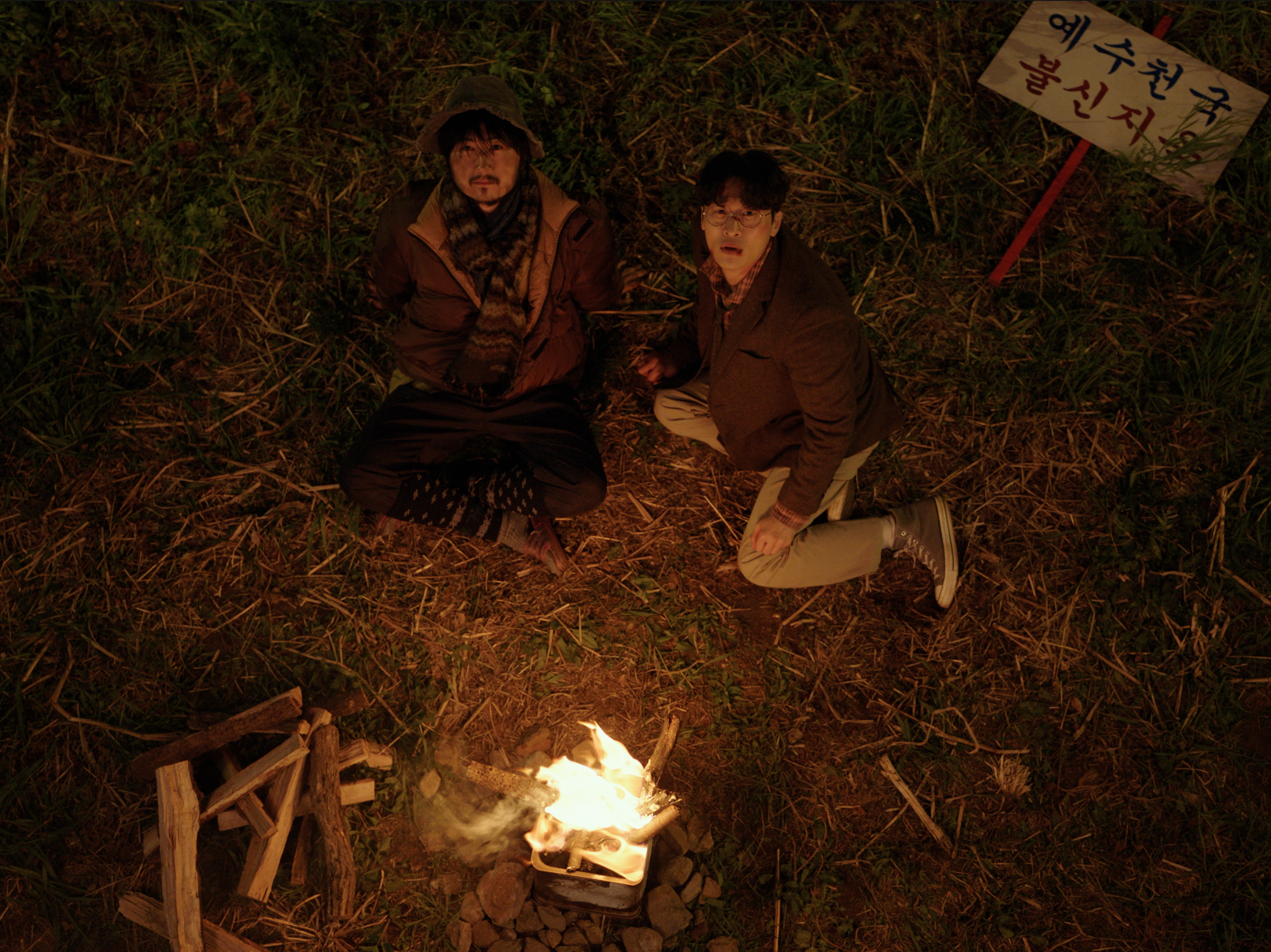
Nevertheless, Alejandro keeps trying to tolerate and support his new boss, even while his current situation becomes a lot more desperate than before. Till the deadline recently set upon him, he must have enough money for extending his labor visa in addition to persuading Elizabeth to become his American sponsor, and the movie has some naughty fun with how much he is tempted to bend himself lower for getting the money as soon as possible. At one point later in the story, he lets himself get hired as a “cleaning boy” via Craigslist, and that leads to one of the most absurd moments in the film.

Meanwhile, Alejandro’s creative mind cannot help but imagine one thing after another, and that is where the movie becomes quite surrealistic to our bafflement and amusement. We see how he conceives those funny ideas for new toys, and then we get a brief but striking fantasy moment showing the absurd aspects of a bureaucratic system which always puts one obstacle after another in front of him. As trying to deal with Elizabeth’s crazy demands every day, he often imagines himself as a knight to handle a dragon figure representing Elizabeth, and that certainly generates some extra amusement for us.

All these and many other comic moments in the film could be merely whimsical on the surface, but the movie gradually reveals surprisingly sincere sides behind its flamboyant comic style. Alejandro’s ideas for new toys in the film were actually from Torres himself and his mother, and we can clearly sense some personal aspects from them. In case of Elizabeth, she turns out to be a bit more than a wacky caricature as showing some heart to her struggling employee, and we come to accept her incorrigibly tempestuous nature as much as Alejandro does around the end of the story.

Torres’ earnest lead performance functions as a straight counterpoint to many surreal elements in the story including the delightfully hammy performance from Tilda Swinton, who gladly chews every moment of hers in the film as demanded. While Isabella Rossellini also has a lot of fun in her deadpan narration, Catalina Saavedra provides some warmth to the film as Alejandro’s caring mother, and several notable performers including RZA, Greta Lee, Kelly McCormack, and Larry Owens ably fill their respective spots around the story.

Overall, “Problemista” is decidedly offbeat from the beginning to the end, but it surely demonstrates the considerable talent of Torres, who has been known as one of the main writers for “Saturday Night Live”. To be frank with you, I am not so familiar with many of his works, but I can tell you instead that he makes a promising feature film debut here, and it will be interesting to see what may come next from him in the future.

Posted in Movies | Tagged , , , | Leave a comment

Joy (2024) ☆☆☆(3/4): A story behind IVF

Netflix film “Joy”, which was released several months ago, is a mild but sincere drama about the development of in vitro fertilization. Mainly via the viewpoint of a certain real-life female figure who surely deserves more attention, the movie touchingly depicts how much she and her two male colleagues struggled for their groundbreaking medical achievement, and you may reflect more on what most of us have taken for granted for many years.

That real-life female figure in question is Nurse Jean Purdy, who could have received much more recognition if she had not died too early not long before the first successful case of in vitro fertilization in 1978. At the beginning of the story, she was just a young nurse applying for a position under Dr. Robert Edwards at the University of Cambridge, 1968. Nevertheless, she immediately impresses Edwards with her forthright attitude right from their first encounter, and she soon finds herself assisting him in his ongoing research on in vitro fertilization.

Because of the very sensitive aspects of his medical research, Edwards has struggled to get the funding for his medical research, but he finds someone who can give considerable technical help for attaining the ultimate goal of his research. After a lot of tests on animals, Edwards becomes more confident about how in vitro fertilization may help many unfortunate medical cases of infertility out there, and Dr. Partick Steptoe (Bill Nighy) is willing to provide his innovative medical techniques for the upcoming clinical test on a bunch of female candidates.

However, not so surprisingly, Edwards and his two colleagues soon find themselves facing a lot of objection and controversy for understandable reasons. They still struggle to get enough funding, so they have no choice but to do their research at a hospital where Steptoe has worked for years, even though that hospital is quite far from Cambridge and is also not exactly ideal to say the least. In addition, they soon draw a lot of attention once their medical research is known more to the media and the public, and they are openly criticized by many figures including a certain famous Nobel Prize winner.

And Purdy cannot help but feel conflicted about her job as a devout Christian woman. While still believing that she is really doing the right thing for many unfortunate women out there, she soon gets estranged from her conservative mother and church people, and then she becomes all the more conflicted when she comes to learn more about what Steptoe has often done at his hospital.

However, she and her two colleagues keep going as before, and we observe their strenuous efforts for reaching their goal. They thoroughly test a group of female candidates one by one, and it looks like they can actually succeed several years later, but then there comes an unexpected setback to frustrate and exhaust them all.

The screenplay by Jack Thorne, which is developed from the story by Rachel Mason, Emma Gordon, and Shaun Topp, stumbles more than once during its middle part, but it has its heart in the right place at least. As the plot is unfolded more, we get to know a bit more about not only Purdy but also some of those female candidates for in vitro fertilization, and there is a little poignant moment when Purdy reveals a little personal secret of hers to her ailing mother.

When Purdy and her two male colleagues eventually work together on their research again later in the story, the movie gradually regains its narrative momentum, but it stays calm and restrained even when they are about to accomplish their ultimate goal in the summer of 1978 (Is this a spoiler?). While things go pretty well up to that point, they are still careful and discreet as before, and they must be absolutely sure that everything is all right for their test subjects in the end.

Although the ending is rather anti-climactic, the movie still holds our attention with enough care and sincerity under the good direction of director Ben Taylor, and it is also supported well by its three main cast members. Thomasin McKenzie, a promising young actress who has steadily advanced since her breakthrough performance in Debra Granik’s “Leave No Trace” (2018), dutifully holds the center as required, and she is particularly good when her character comes to form more emotional connection with some of those female candidates along the story. James Norton is relatively bland compared to McKenzie’s engaging acting at first, but his performance gets better as his character shows more care and dedication on not only his research but also its numerous female candidates. In case of Bill Nighy, he is surely dependable as usual while occasionally providing some dry wit to the story as expected, and he and his two co-stars always click well with each other whenever they are on the screen together.

On the whole, “Joy”, which is incidentally derived from the middle name given to the first baby conceived via in vitro fertilization, sometimes feels rather bland and conventional compared to its extraordinary medical research story, but it is still worthwhile to watch for bringing more attention to its hidden female figure at the center of the story. Just like Dr. Rosalind Franklin, who was unfairly neglected for many years despite her undeniably crucial role in the understanding of the molecular structures of DNA, and many other exceptional but unrecognized women of science and technology, Purdy surely deserves to be known and recognized more in my humble opinion, and you will never forget her after watching this fairly entertaining movie.

Posted in Movies | Tagged , , , , | Leave a comment

Don’t Die: The Man Who Wants to Live Forever (2025) ☆☆1/2(2.5/4): His extreme attempt on longevity

I observed Netflix documentary film “Don’t Die: The Man Who Wants to Live Forever” with some conflicted feelings. Here is a man extremely dedicated to staying young and healthy as long as possible, and the documentary closely and fascinatingly examines his unorthodox lifestyle, but it also shows some understandable skepticism at times. To be frank with you, I rolled my eyes more than once during my viewing, but I will not deny that I was also fairly amused and entertained as reflecting more on my rather unhealthy lifestyle.

That figure in question is Bryan Johnson, whom many of you have probably heard about as his lifestyle came to draw a lot of media attention several years ago. He was once a very successful businessman who founded a prominent Internet company, but, after selling his company, he has dedicated a lot of himself to his little health experiment project, where he has tested a lot of things on his body for slowing down its aging process.

The documentary shows us how thoroughly Johnson has controlled nearly every aspect of his daily life. Besides an extensive morning exercise routine and many different kinds of vitamin and supplement pills, he firmly sticks to his rigorous diet and daily schedule, and it looks like his entire life revolves only around aging as little as possible. Watching him systemically going through one stuff and another, I could not help but think of how the hero of “American Psycho” (2000) starts another day with a lot of obsessive care on his extremely fit body.

At least, Johnson looks a lot healthier compared to how he looked in the past. When he was the young son of a Mormon couple, he looked rather chubby, and he still looked a little overweight around the time when he finally became a successful millionaire businessman around the 2010s. However, as he candidly admits in the documentary, he was not so happy as constantly letting himself get driven by more work, and that was one of the main reasons why his married life eventually got crumbled. 

 After getting quite motivated to get things under control, Johnson became interested in health and longevity, and that was the beginning of his little private project. As he kept going on and on with his new lifestyle, he found himself getting better and healthier than before, and that made him more obsessed with living long while being literally young in his body. He has delved more into the scientific researches on longevity, and he is surely determined to try everything including a questionable gene therapy just for pushing the limits a bit more.

Now many of you may roll your eyes as much as I did, and the documentary clearly recognizes the absurd aspects of its hero’s journey toward health and longevity. In addition to the understandably critical comments on him, several experts sharply point out why Johnson’s project will likely amount to nothing in the end. After all, any reliable clinical experiment requires a lot of individuals from the start, and Johnson has only tried on himself, hasn’t he?

Furthermore, as promoting his project as well as his little health consulting company in public, Johnson virtually tries to sell his expensive lifestyle to many others out there, and he surely deserves all the criticism he has received as a result. After all, he could afford all those health stuffs because he is quite rich from the beginning, and that takes me back to an old classic Japanese TV animation series, where only rich people can live forever just because they can easily buy an option for immortality unlike many other poor people left out there to die sooner or later.

Meanwhile, director Chris Smith, who previously directed “Fyre” (2019), also tries to capture some human sides of his controversial subject. As living with one of his three children for a while, Johnson comes to have a precious opportunity for getting closer to his kid, who does not have much problem with his father’s odd lifestyle. Just like his father, he does not feel like belonging to their family’s religious background, and that certainly helps him bond more with his father.

When Johnson’s aging father later gets interested in his son’s ongoing project, Johnson has both his father and son join his another odd attempt on slowing down aging process further. I am sure that you will observe this with disbelief and skepticism like I did, but you may be also touched a bit by how these three different people come to make sort of connection among them in more than one aspect.

However, we are still not totally fine with Johnson, and neither is the documentary, even though it ends with a fairly uplifting moment as expected. Later in the documentary, we see him going to a little island near Honduras just for getting that aforementioned gene therapy without any legal trouble, and we naturally come to have more skepticism on his adamant belief on health and longevity.

In conclusion, “Don’t Die: The Man Who Wants to Live Forever” could go deeper into its human subject, but it has some thought-provoking moments for us to muse on. As being over 40 at present, I certainly care a lot more about my health than before, but now I am reminded of Alan Parker’s underrated black comedy film “The Road to Wellville” (1994), which makes a naughty satiric fun on forced health. Sometimes, being *too* healthy is not exactly as good as we think, is it?

Posted in Movies | Tagged , , , , | Leave a comment

Thunderbolts* (2025) ☆☆☆(3/4): A bunch of losers

“Thunderbolts*”, the latest product from Marvel Cinematic Universe (MCU), attempts to bring more fun and excitement to its franchise, and that succeeds to some degree. While this is basically a very familiar mix between “The Avengers” (2012) and “Suicide Squad” (2016), it is thankfully buoyed by the game efforts from the cast members, and I was entertained enough that despite being more aware of my growing numbness to superhero flicks.

At first, we meet Yelena Belova (Florence Pugh), a Russian superspy who was previously introduced in “Black Widow” (2021). While still depressed about the loss of her older sister, she keeps working as demanded by CIA director Valentina Allegra de Fontaine (Julia Louis-Dreyfus), and the opening scene shows how swiftly and efficiently she accomplishes her latest mission alone by herself in Malaysia.

Anyway, getting more tired about how her life and career have been going, Belova eventually decides to quit working for her employer, but de Fontaine has one last assignment to hand to Belova. There is a big storage place hidden from the world outside, and Belova must handle a possible security breach caused by a certain figure.

That figure turns out to be Ava Starr / Ghost (Hannah John-Kamen), who was previously introduced in “Ant-Man and the Wasp” (2018). It soon turns out that there are also several other figures in that secret facility, and, after a lot of physical clashes among everyone at the spot, it becomes quite clear to everyone that they are trapped and then will soon get eliminated as planned by de Fontaine.

Of course, Belova and the others except Antonia Dreykov / Taskmaster (Olga Kurylenko), who unfortunately got killed in the middle of the aforementioned fight, literally stick together for surviving together, though they turn out to be not so reliable as they continue to clash with each other in one way or another. In the end, they manage to get out of the facility, but then they get into a bigger problem thanks to Robert “Bob” Reynolds (Lewis Pullman). He does not have any idea on how he ends up in the facility, but what do you know, he turns out to be a very successful case of one of those top-secret human experiments behind de Fontaine’s back, and de Fontaine is quite determined to get Reynolds under her control as much as possible.

Meanwhile, she is also quite busy with handling a congress hearing on her impeachment, and that is how Bucky Barnes / Winter Soldier (Sebastian Stan) enters the picture. Although he left his superhero career for becoming a congressman, he eventually decides to be back in action for stopping de Fontaine, and then he finds himself getting involved with Belova and her fellow rogues.

While things get more serious as Reynolds is groomed as a new superhero to emerge under de Fontaine, the movie shows some sense of humor as Belova and several other main characters keep clashing with each other as before. Needless to say, they eventually learn how to stick and work together just like the main characters of “The Avengers” did, and they are certainly ready when the movie subsequently throws a lot of action into the screen as expected.

However, the climactic action sequence of the movie is rather deficient as feeling like a cheaper version of whatever we saw from “The Avengers”. Although I did not like “The Avengers” much, it spent its huge production budget enough on its climactic part at least, and I sort of appreciate that while still remembering a certain moment which takes me back to (*gasp*) “The Human Centipede (The First Sequence)” (2009). In case of “Thunderbolts*”, there is not anything particularly impressive or memorable for us in terms of scale and intensity, and that reminds me again of how much we get accustomed to the big spectacles of superhero flicks these days.

At least, the movie keeps focusing on its main characters even when it is mired in a lot of action during its climactic part, which eventually feels like a hybrid between “Being John Malkovich” (1999) and “Everything Everywhere All at Once” (2022). Rather than fighting more, Belova and her comrade try a bit of talk and solidarity for solving the big trouble in front of them, and there is a little poignancy in how Belova shows more heart after confronting her old childhood pain.

The main cast members are solid as often generating enough comic/dramatic chemistry among them. While Florence Pugh injects some genuine gravitas to the story as required, Wyatt Russell, Hannah John-Kamen, and Lewis Pullman have each own moment to stand out, and David Harbour, who plays Belova’s estranged father, surely has a lot of fun as he did in “Black Widow”. In contrast, Sebastian Stan seems to be rather bored with his familiar character, and Olga Kurylenko, Geraldine Viswanathan, and Julia Louis-Dreyfus are mostly limited by their thankless supporting parts.

On the whole, “Thunderbolts*”, directed by Jake Schreier is enjoyable enough for recommendation besides being much better than “Captain America: Brave New World” (2025). I am sort of glad that MCU is still capable of entertaining us enough even though it seems to pass its prime after “Avengers: Endgame” (2019), and I can only hope that its upcoming next products will actually excite and surprise me.

Posted in Movies | Tagged , , | Leave a comment

Happyend (2024) ☆☆☆(3/4): The defiance during their last high school year

Japanese film “Happyend” observes a group of high school kids showing some spirit and defiance during the last year at their school. While they try to go further for more fun and freedom day by day, they are also often reminded more of the looming uncertainty in their future, but they come to grow up in one way or another in the end, and there is a bit of hope and optimism from the bittersweet ending of their coming-of-age tale.

The story, which is set in Tokyo in a near-future period, opens with its several main characters trying to have another fun evening. At first, they are not allowed to go inside a place where some famous DJ is throwing a music dance party, but Yuta (Hayato Kurihara) and Kou (Yukito Hidaka) eventually find a backdoor entry, and they and their three friends soon get inside that place, though their fun time does not last very long due to the subsequent arrival of policemen.

Anyway, we get to know a bit more about Yuta, Kou, and their friends; Ata (Yuta Hayashi), Ming (Shina Peng) and Tomu (Arazi). Each of them is an outsider in each own reason, and Kou is particularly discriminated a lot due to his Korean heritage, which has incidentally prevented him and his family from getting officially recognized as Japanese citizens. In case of Ming and Tomu, both of them also have each own racial background issue as you can easily guess from their respective appearances, and we are not so surprised to learn later that Tomu already decided to go to US shortly after his high school graduation.

Nonetheless, these kids still stick together, and we see how they continue their rebellious night. After managing to get away from those policemen, they sneak into their club room in the school for simply enjoying themselves more, and then Yuta and Kou come to have a very naughty idea. They decide to commit a prank on a certain expansive property belonging to the principal of their school, and the consequence surely surprises everyone in the school on the very next morning.

Needless to say, the principal is not so amused, and he responds with a rather drastic measure in the name of safety and regulation. He has a high-tech surveillance system installed here and there in the school, and now every student in the school is constantly monitored mainly via facial recognition.

Naturally, Yuta and his close friends do not welcome this at all, and they soon come to show more defiance – especially when their club activity suddenly gets suppressed by the school after they are targeted as the prime suspects of the incident by the principal. There is an amusing scene where they fool the teachers for their little act of theft, and they certainly have some fun and excitement from that.

In the meantime, their graduation is approaching closer, and Kou becomes more serious about what to do for his future. As his mother has always hoped, he will go to a college someday, so he cannot help but become anxious and conflicted, but then he gets himself into another trouble via one of his female classmates, who has been incidentally more politically active than many other students. Along with her, he later joins a protest against the blatantly right-wing policy of the government, but then he hesitates as this can seriously jeopardize his ongoing application for college scholarship.

Compared to Kou, Yuta remains casual about his life and future, and that eventually leads to some estrangement between them, but the movie does not dramatize this too much. In the end, both of them come to get involved with a small protest against the principal, and there is some poignant irony when Yuta makes a big decision for both his friend and himself later in the story.

Except for a few futuristic elements shown in the background, the overall atmosphere of the film is quite plain and mundane, but director/writer Neo Sora, who is incidentally the son of Ryuichi Sakamoto, did a good job of engaging us more into the story and characters. As he and his crew members including cinematographer Bill Kirstein steadily maintain its phlegmatic overall tone, the movie effortlessly conveys to us a vivid and realistic sense of life felt from the daily life of its main characters, and we come to understand and care about them more even though the movie usually observes them from the distance.

The young main cast members of the film are all convincing in their solid natural performance. While Hayato Kurihara and Yukito Hidaka hold the center as required, Yuta Hayashi, Shina Pegn, and Arazi bring some colorful personality to their respective supporting role, and Shirō Sano is suitably obnoxious as demanded by his authoritative character.

In conclusion, “Happyend” is an engaging adolescent drama to be admired for its good mood, storytelling, and performance, and Sono, who previously impressed us a lot with his documentary film “Ryuichi Sakamoto: Opus” (2023), makes a solid feature film debut here. Although it surely requires some patience for its rather slow narrative pacing, you will appreciate how the movie subtly reveals its youthfully beating heart along the story, and it certainly deserves to be compared to its senior Japanese films including Shinji Sōmai’s “Typhoon Club” (1985). In my inconsequential opinion, Sono is indeed another promising new Japanese filmmaker to watch, and it will be interesting to watch what may come next from him during next several years.

Posted in Movies | Tagged , , , | 1 Comment

The Old Woman with the Knife (2025) ☆☆1/2(2.5/4): Old but lethal

South Korean film “The Old Woman with the Knife” looks promising at first but ends up being quite bland and middling to my disappointment. While it is carried to the end by the strong performance from its lead actress at least, the movie is also often hampered by a number of glaring flaws including blatant plot contrivance and clumsy melodrama, and I found myself caring less and less about the story and characters especially during its second half.

The story mainly revolves around an old but lethal lady called “Hornclaw” (Lee Hye-young), who has worked as a professional killer for one clandestine agency. Since she was saved and then trained by the founder of this agency around 50 years ago, she has killed a lot of bad people who deserved to be eliminated for good reasons in the viewpoint of her and her agency, and the opening scene shows how she deftly and quietly handles her latest job.

However, it also turns out that things have not been that good for Hornclaw. Although she has tried to keep her body fit and healthy as much as possible, she is frequently reminded of how her aging body becomes more fragile and unreliable day by day. While she is still respected as the godmother of the agency, she does not like how the current leader of the agency, who is incidentally her junior, has managed their agency, and he does not like her that much either.

As a matter of fact, he has been looking for any new employee willing to kill for the agency, and we are soon introduced to a lad nicknamed “Bullfight” (Kim Sung-cheol). After getting rid of a bunch of gangs involved with human organ trafficking. Bullfight is recruited by the agency for his considerable killing skills, but Hornclaw is not particularly impressed a lot, and she surely shows him that she is not someone he can easily mess with.

Meanwhile, Hornclaw is ordered to take care of the problematic aftermath of one simple task which became a bit messier than expected. At first, all she will have to do is killing a certain figure who was one of her colleagues, but she gets seriously injured in the end, and then she finds herself helped a lot by a kind local veterinarian she previously met for the matter of an injured stray dog. Even after learning more about who she is, this decent dude still wants to help her more, and, what do you know, she finds herself caring about him more than expected, even though she is supposed to eliminate him for avoiding any possible loose end.

It is not much of a spoiler to tell you that our killer lady subsequently finds herself in a very tricky situation due to her friendship with her unlikely friend. After watching over what is going on between them, Bullfight embarks on cornering Hornclaw in one way or another, and, despite her frequently failing physical status, she must fight against his nasty tactics for protecting her friend and his dear little daughter.

This surely looks like a familiar but solid ground for more thrill and action, but the movie often interrupts its narrative flow with unnecessary flashback scenes and several contrived plot turns. In case of a number of flashback scenes between Hornclaw and her mentor, they only add more melodrama to the story without much character development, and they also often disrupt the narrative momentum of the story. Furthermore, the movie becomes all the more melodramatic as the hidden personal connection between Hornclaw and Bullfight is revealed later in the story, but this does not work as well as intended mainly because of weak characterization. While he is supposed to be the antagonist in the story, Bullfight is merely unpleasant and vicious without much human depth or personality, and we accordingly do not care a lot about his personal motive.

In case of several action scenes in the film, they are fairly competent on the whole, but they did not engage me enough due to being mainly driven by plot necessity instead of characters. The climactic action sequence unfolded at a certain abandoned place is overlong and heavy-handed in my humble opinion, and it eventually becomes more tedious as mired in more melodrama without generating any emotional effect on us.

Nevertheless, I admire the committed acting of Lee Hye-young, who has been mainly known for her appearances in several recent works of Hong Sang-soo. Here in this movie, she looks and feels completely different as filling her role with steely will and determination, and she is also believable whenever she has to throw herself into a lot of action as demanded.

In contrast, several supporting performers around them are wasted due to their under-developed roles. While Shin Si-ah manages to shine as young Hornclaw during several flashback scenes, Kim Sung-cheol is unfortunately often pushed into Overacting 101, and Yeon Woo-jin does not have much to do except looking nice and generous. In fact, the best supporting performer in the movie is that rescued stray dog, which adorably steals the show whenever it appears on the screen.

Directed by Min Kyu-dong, who previously directed “Herstory” (2018), “The Old Woman with the Knife” is incidentally based on the novel of the same name by Gu Byeong-mo, whose English translation version has been already available in US. I have not read the novel yet, but now I wonder more whether the novel is better than its movie version, and I am certainly willing to check it out as soon as possible.

Posted in Movies | Tagged , , , | Leave a comment

On Becoming a Guinea Fowl (2024) ☆☆☆1/2(3.5/4): A family funeral

Runagno Nyoni’s second feature film “On Becoming a Guinea Fowl” is about a family funeral of one middle-class Zambian family. Mainly following one of the younger family members, the movie gradually reveals the secrets and traumas suppressed inside this family, and it is interesting to observe how it earns a glimmer of hope and determination as deftly balancing between drama and comedy.

The movie begins with the discovery of a body by its heroine. When she is returning to her home from some evening party by her car, Shula (Susan Chardy) spots that body on the road, and that turns out to be an uncle of hers. Naturally, she notifies this to her family and then the local police, but she only finds herself waiting there during next several hours along with one of her cousins, who also happens to pass by the spot.

Anyway, on the next morning, Shula returns to her home after seeing the police taking care of the body of the uncle. When the funeral is about to be begun, she instantly moves to a local hotel for taking care of some important work to handle, but then she is interrupted by several aunts of hers. It is apparent that she is not so willing to participate in the funeral, but the aunts firmly insist that she should help them handling the funeral, and she eventually follows their demand.

While Shula takes care of many things including picking up her mother at a local airport, the movie looks into how she and her many other family members go through the first several days of the funeral. Her aunts and many other older family members wail as much as possible for supposedly mourning for the death of the uncle, but it soon turns out that they are more occupied with how to handle the matters involved with his very young wife. They do not like her a lot to say the least, and they are already ready to blame her for her husband’s death just for taking away all the assets belonging to him later.

Meanwhile, Shula is frequently busy with whatever is demanded to do in the meantime. Along with several other family members, she has to prepare and then serve the meals to many different family members and visitors, but, not so surprisingly, her efforts are taken for granted without being appreciated much. At least, she gets some rest as occasionally spending time with several cousins of hers, but that does not last that long as there is always something to be handled by her.

We also get to know more about a certain deplorable family secret involved with her uncle. In fact, he sexually abused at least two cousins of hers, and one of them actually tries to kill herself not long after the beginning of the funeral. Needless to say, her mother and aunts have known everything for a long time, but they simply ignored that just for maintaining the patriarchy order of their family, and their hypocrisy becomes more evident when they actively repress Shula and one of her cousins in the name of family love.

As reflected by the occasional moments of hallucination, Shula turns out to have a fair share of secret and trauma behind her seemingly phlegmatic appearance. No matter how much she wants to look away from that, her mind cannot help but haunted by a few fragmented memories of her trauma, and her accumulating anger and frustration are often accentuated by the nervous score by Lucrecia Dalt.

Continuing to alternate between dark absurdity and harrowing personal pain, the movie immerses us more into its heroine’s increasingly conflicted circumstance. Although we do not get to know a lot about many of her family members, they are depicted with enough personality and presence, and their interactions throughout the film feel vivid and naturalistic enough to engage us more. As a result, we come to sense more of how suffocating her family can be to Shula, and we also pay more attention to how things are despairing for her uncle’s young wife, who was virtually groomed by him when she was just a little underage girl and is now quite scared and helpless as frequently harassed by Shula’s aunts.

Everything dramatically culminates to the finale where a big meeting is held not long after the funeral, but the movie wisely avoids unnecessary melodrama under Nyoni’s skillful direction, and then it powerfully ends the story at an exactly right moment. While recognizing a lot of uncertainty in front of Shula, the movie subtly conveys to us that she will not be silent anymore, and that is further accentuated by a little symbolic act of hers, which is incidentally associated with the very title of the film. Gradually taking the center of the movie with her earnest natural performance, Susan Chardy functions as the beating heart of the film, and she is also supported well by a bunch of good supporting performers including Elizabeth Chisela, who is poignant when her character later comes to reveal more of the old personal pain behind her carefree attitude.

On the whole, “On Becoming a Guinea Fowl”, which received the Best Director award when it was shown at the Un Certain Regard section of the Cannes Film Festival early in last year, is another compelling work from Nyoni, who previously made a wonderful feature film debut with “I Am Not a Witch” (2017). With these two impressive works, she demonstrates that she is another talented filmmaker to watch, and it will be interesting to see what may come next from her in the future.

Posted in Movies | Tagged , , | 1 Comment

Gondola (2023) ☆☆☆(3/4): A romance on gondola

“Gondola” is a simple but charming romantic comedy film to be cherished. While it often feels more like an extended short film especially during its second half, the movie thankfully has enough wit, style, and personality to fill its 82-minute running time at least, and you will be frequently tickled by its many humorous moments.

The movie is set in some rural mountain village in the Georgian mountains, and it begins with the return of a young woman named Iva (Mathilde Irrmann). Her father recently died, and there is no one to welcome her in the village, but she decides to settle in the house belonging to her father, and she eventually begins to work as a conductor of the cable car line in the village just like her father did for many years.

Set between the two mountain peaks, the cable car line is operated by a rather mean dude who does not pay that much to Iva and Nino (Nino Soselia), who is another female cable car conductor. Day by day, Iva and Nino handle their respective cable cars on the line, and we frequently see how their respective cable cars go back and forth in the opposite direction throughout the story.

As time goes by, it becomes apparent to us that Nino and Iva are quite attracted to each other, and the movie has some fun with the wordless depiction of the developing mutual attraction between them. As a matter of fact, the movie does not have any dialogue from the beginning to the end, and it almost feels like a silent film even though it frequently uses sound for dramatic or comic effects.

Once they come to sense more of the romantic feeling between them, Nino and Iva become more expressive about that. At first, they interact with each other via a chess game, but then they entertain each other more and more whenever their cable cars pass by each other. At one point, they do a little costume play just for showing more of their mutual affection to each other, and then they subsequently go further as they playfully decorate their cable cars (Don’t ask me how they can possibly do that for themselves within such a short time).

It goes without saying that these two ladies eventually arrive at the expected moment when they open themselves a lot more to each other than before, but, of course, there comes a couple of obstacles. As already shown to us during the early part of the film, Nino has aspired to get out of the village and then become a flight attendant someday, and she is certainly delighted when an opportunity finally comes to her on one day, but this inevitably causes a conflict between her and Iva later in the story.

And there is also that unpleasant boss of theirs. When his lecherous approach to Nino is failed, this despicable dude subsequently tries to get closer to Iva, and that is certainly the last thing Nino and Iva want. When he later discovers how playfully Iva and Nino have worked together, he is not so amused to say the least, and Nino and Iva come to dislike him more than before.

Nonetheless, the movie continues to maintain its cheerfully pleasant mood as before. Considering how conservative its main background looks, it is unlikely that two young women can enjoy their openly homosexual romance, but the movie mostly sidesteps this issue as never stopping amusing us more and more along the narrative. Besides Iva and Nino, we get to know a bit about several other town folks, and we get an extra chuckle from a little subplot involved with two young kids in the village.

The most entertaining moment in the film comes from when Nino and Iva show a little generosity to one disabled dude. Just because he is bound in his wheelchair, he is cruelly rejected by Iva and Nino’s boss, but Nino and Iva later find a clever way for having him enjoy a cable car ride, though I must say that this is not so recommendable for anyone despite some safety measures.

And there is also a lovely sequence where Iva and Nino come to have a little romantic evening together on one of their cable cars. Watching them having a good time up in the air, you may wince a bit if you have acrophobia like me, but you will also be tickled a lot for good reasons. For the music to accompany this romantic moment, several town folks gladly help bit by bit, and that is another fun moment in the film.

Above all, the movie is carried well by the solid chemistry between its two lead actresses. Although they do not say at all throughout the film, Mathilde Irrmann and Nino Soselia interact well with each other during their several key scenes, and it is engaging to observe how their acting flawlessly swings between comedy and drama along the story. As the villain of the story, Zuka Papuashvili is suitably obnoxious, and you will certainly cheer for how his character gets a deserving comeuppance in the end.

While it is occasionally a bit too thin as a feature film, “Gondola” always bounces up with more fun and amusement for us thanks to the competent direction of director/writer Veit Helmer, a German filmmaker who made several films since his feature debut film “Tuvalu” (1999). It is still pretty simple and modest on the whole, but I enjoyed it more than expected, and that is surely enough for recommendation.

Posted in Movies | Tagged , , | Leave a comment

The Other Way Around (2024) ☆☆☆(3/4): A separation comedy

Spanish film “The Other Way Around” is a lightweight comedy about one young couple who suddenly decides to have a “happy” separation for no apparent reason. As they prepare for their separation step by step, the movie provides a series of humorous moments to enjoy, and it even becomes cheerfully self-conscious just like its two main characters.

They are Ale (Itsaso Arana) and Alex (Vito Sanz), who are a filmmaker and an actor, respectively. For more than 10 years, they have happily lived together as a couple, but then Ale suggests that they should break up with each other during one night, even though they do not have any particular problem between them at present. Alex is a bit surprised, but he and Ale eventually agree on separation, because, well, both of them have been rather bored about their fairly happy status.

And they decide to make their separation as joyous and painlessly as possible. They embark on planning the celebration party for their separation, and that leads to a number of absurd scenes where they freely talk about their separation plan to others around them. Needless to say, their friends and acquaintances are quite baffled by Ale and Alex’s sudden separation, and they are all the more confused as they are cordially invited to Ale and Alex’s celebration party.

Ale and Alex get the idea of their celebration party from Ale’s aging father, who once casually said about how separation should be as happy as, say, marriage. However, even Ale’s father is caught off guard by what his daughter and her boyfriend is planning, though he is willing to provide his residence for their upcoming celebration party.

Meanwhile, Alex and Ale keep working on their joint movie project, which turns out to be about their ongoing separation process. More than once, the movie blurs the line between reality and fiction along the story, and we naturally come to wonder more about the real thoughts and feelings of Ale and Alex. Are they really serious about their ongoing separation process? Or, are they actually enjoying this change suddenly coming into their rather plainly stable private life?

Regardless of whatever Ale and Alex respectively feel and think about their upcoming separation, the movie keeps dancing as becoming more self-conscious about their circumstance along with them. With its considerable intimacy shown from their domestic life, the movie often evokes Ingmar Bergman’s great film “Scenes from a Marriage” (1973), and we are not so surprised when a friend of Ale shows a deck of tarot cards inspired by Bergman’s works. At one point later in the film, more than one famous classic Hollywood comedy film about divorce is mentioned, and that certainly brings some extra amusement to the story.

Needless to say, around the time their movie project is nearly completed, Alex and Ale become less certain about whether they can actually celebrate their separation as planned. As the time for their celebration party gets closer and closer, we sense the growing strain between them, and there is a brief private moment giving us a little glimpse into how Ale feels about the approaching official end of her relationship with Alex.

Nevertheless, the movie does not lose any of its bouncy comic momentum and lightweight sense of humor even at that narrative point. There is a funny scene where Ale and Alex’s friends and colleagues give some comments on the rough cut of Ales and Alex’s movie, and this works as a sly self-conscious wink from director Jonás Trueba, who incidentally developed the screenplay with his two lead performers. Around the point where Alex and Ale’s celebration party is finally started, we get more laughs as the movie goes back and forth between fiction and reality more than before, and you will gladly follow its free-flowing narrative line without much complaint.

It helps that the movie is constantly supported well by the good chemistry between its two lead performers. Although we do not know that much about the long past shared between their respective characters, Itsaso Arana and Vito Sanz click well with each other from the beginning to the end, and they did a good job of conveying to us the comfortable sense of intimacy between their characters while subtly shaping up their characters more along the narrative. While Arana imbues her role with a lot of charm and spirit, Sanz complements his co-star with his laid-back acting, and they are also surrounded by a number of good supporting performers including Fernando Trueba, who is Trueba’s father and is also known well as for directing several notable films including “Belle Epoque” (1992) and “They Shot the Piano Player” (2023).

In conclusion, “The Other Way Around”, whose Spanish title is “Volveréis” (It means “You Will Return” in English, by the way), is an enjoyable romantic comedy thanks to its witty storytelling and engaging performance to be savored. Although my condition was not exactly good when I watched the film yesterday, I soon found myself quite amused and entertained to the end, and its ending took me back to the last scene of “Scenes from a Marriage”. No matter what will happen to them next, Ale and Alex come to have a better understanding of themselves and their relationship in the end just like the couple in “Scenes from a Marriage”, and they will certainly appreciate that more in the future.

Posted in Movies | Tagged , , | Leave a comment