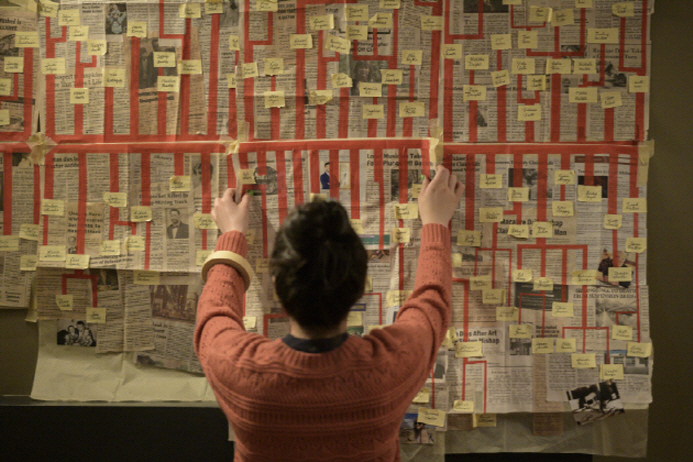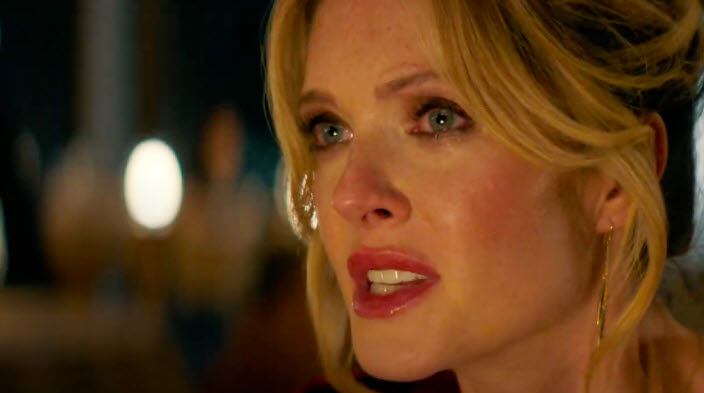
Drop (2025) ☆☆☆(3/4): A tough date, shall we say

“Drop” works best when it stays along with its heroine within its limited main background for a while. Although it is instantly reminiscent of many other similar thriller flicks ranging from “Nick of Time” (1995) to “Carry-On” (2024), the movie has a substantial amount of fun and thrill to support its first two acts at least, and you may forgive its rather weak last act even while observing how it inevitably loses its steam during that part.

The heroine of the movie is a young single mother named Violet Gates (Meghann Fahy), who has worked as a therapist specializing in domestic violence after the death of her abusive husband. While her life is mostly devoted to her work and her little son, she is now about to have the first date with some guy she encountered via a dating online application, and she understandably cannot help but become nervous even though her son will be taken care of by her younger sister in the meantime.

Violet and her date are going to have a dinner together at a posh restaurant located at the top of one of those skyscrapers in Chicago. Not long after her arrival, her date texts her that he will be a little late, so she wonders whether he will eventually show up or not. Fortunately, he arrives a few minutes later, and they soon find themselves talking more and more with each other as enjoying the view in front of them.
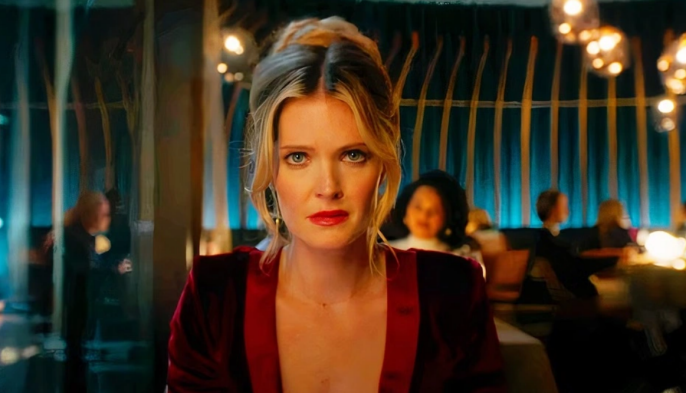
However, something begins to bother Violet around that point. Somebody keeps dropping messages on her smartphone via some other online application, and both she and her date think this is just a mere prank done by someone in the restaurant, but, what do you know, Violet soon comes to realize that this is not a prank at all, while her date is not looking. Someone behind those online messages demands her to steal and then destroy a certain object in her date’s possession, and Violet has no choice but to follow the demand after seeing that her son and younger sister will be killed if she refuses to do that.

Of course, she is subsequently demanded to do something much more serious, and that makes her all the more nervous and conflicted than before. Yes, she surely tries one thing after another for getting out of this nightmarish circumstance, but, not so surprisingly, her opponent seems to hear and see her as well as everything in the restaurant, and Violet is reminded again and again of how much she is trapped right from the beginning as time is running out for her minute by minute.

Once the stage is set after the first act, the movie frequently toys with our expectation via what was termed by my late mentor Roger Ebert as the law of character economy. Besides Violet and her date, there are many other people in the restaurant, and some of them are certainly prominent enough to draw the suspicion from us as well as Violet. For example, when a certain character appears for the first time, you will instantly see that this figure will be bound to be one of several prime suspects around Violet and her date, and you will also have a pretty good idea on how the movie will play with that later, if you are a seasoned moviegoer like me.

Despite its many predictable aspects, the movie did a competent job of generating enough suspense from several key scenes including the one where Violet must think and act fast for having more chance and time for saving her family. The situation becomes all the trickier as her date senses more of how she visibly looks distracted and uncomfortable, and she must assure him that everything is fine and well despite their increasingly awkward date.
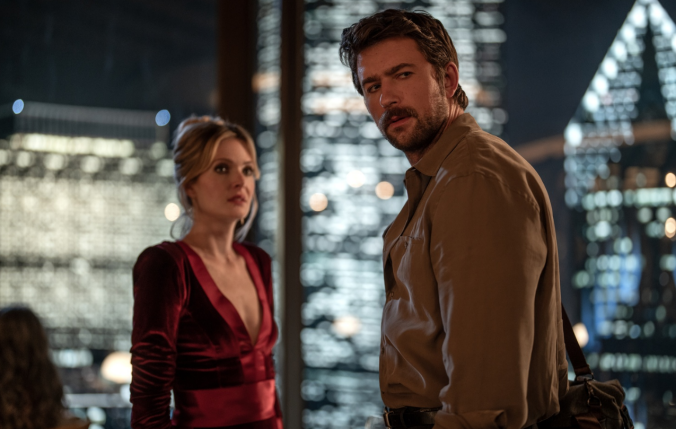
Meanwhile, the screenplay by Jillian Jacobs and Chris Roach adds more character details to the story at times. As getting cornered more and more by her opponent, Violet is reminded again of her painful personal experience of domestic violence, and we come to learn a bit more of how traumatic it has been for her. As a matter of fact, she is quite helpless and desperate just like she was in the past, and it looks dreadfully possible to her that there is no chance for escape for her in this time.

During its last act, the movie becomes less engaging as becoming much more preposterous than before, but that is expected from the start, and its lead actress’ solid performance compensates for that to some degree. Meghann Fahy, who has been mainly known for her Emmy-nominated supporting turn in HBO TV series “The White Lotus”, deftly goes up and down along the story without making any misstep, and we keep guessing whether her character can really survive this particularly tough date. Besides looking convincing in his character’s obliviousness to Violet’s ongoing plight, Brandon Sklenar clicks well with Fahy during several early scenes, and the other main cast members including Gabrielle Ryan, Reed Diamond, Violett Beane, and Jeffery Self dutifully fill their respective spots around Fahy and Sklenar as required.

Overall, “Drop” is a fairy enjoyable product, and director Christopher Landon, who previously directed “Happy Death Day” (2017) and “Freaky” (2020). gives us another nice genre variation added to his advancing career. I was not surprised that much, but I will not deny that I was entertained a bit more than expected, so I will not complain for now.

Posted in Movies | Tagged , , | Leave a comment

Deaf President Now! (2025) ☆☆☆1/2(3.5/4): The hidden story of defiant deaf students

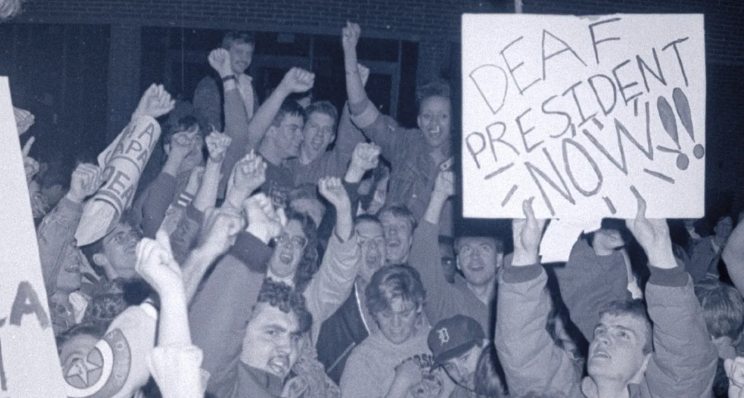
Documentary film “Deaf President Now!”, which was released on Apple TV+ a few weeks ago, presents a remarkable real-life story which will not only touch but also enlighten you a lot. During one week of March 1988, lots of students in Gallaudet University of Washington D.C. protested for more progress for themselves as well as their university, and their stubborn act of defiance actually led to a considerable social change for the people with disability in US.

Everything was started when the board of the Gallaudet University selected the new university president in March 1988. Although the university had been known as the only deaf university in US for more than 100 years, there had not been any deaf president yet, and the demand for a deaf president from the students became fiercer as two of the three final candidates happened to be deaf persons.

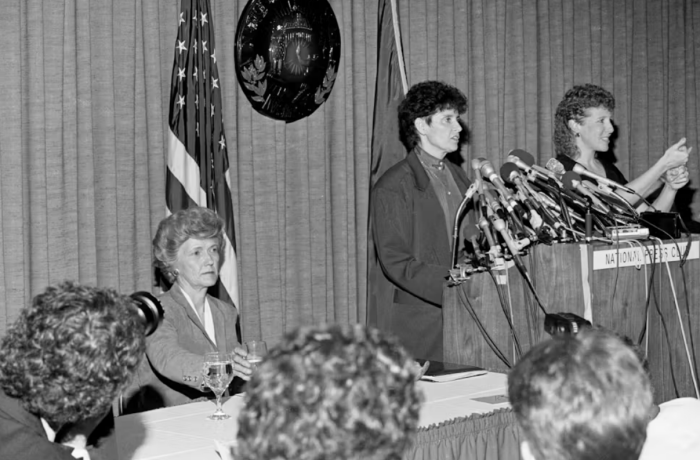
However, the board, which was led by Jane Bassett Spilman at that time and all of whose members were hearing persons, eventually decided to select Dr. Elizabeth Zinser instead, who was the only hearing candidate in the final list and, above all, did not have much knowledge or understanding on deaf people (She did not even know the sign language, for Christ’s sake). Understandably, hundreds of students in the university became quite furious, and they immediately went to a posh hotel in the city for confronting Spilman and several other board members. Once they saw that Spilman and the board would not step back at all, the students soon decided to become much more active, and that was the beginning of the Deaf President Now (DPN) protest.

On the very next day, the students locked all the gates of the university for preventing Dr. Zinser from entering the university, and they demanded the immediate resignation of Dr. Zinser as well as Spilman. As Spilman and the board only became more adamant, the students saw that they really needed to be organized more under strong leadership, and that was how several students stepped forward as the key members of the ongoing protest.

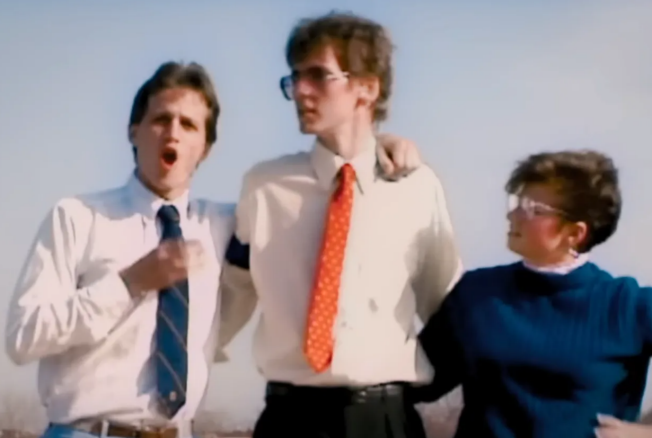
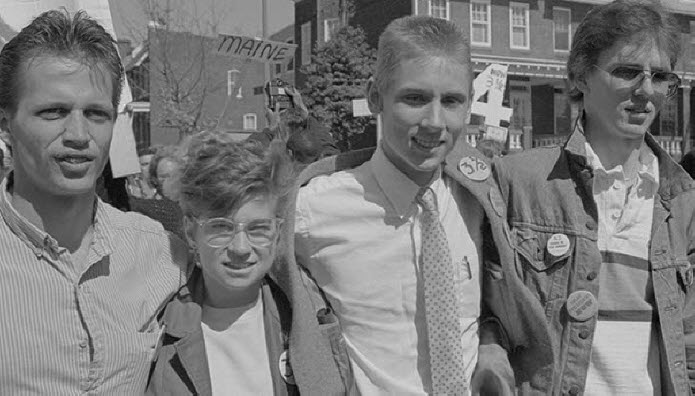
They are Bridgetta Bourne-Firl, Jerry Covell, Greg Hlibok, and Tim Rarus, who all incidentally participated in the production of the documentary besides being interviewed for the documentary. While Covell and Rarus were the ones who often galvanized the protest, Hlibok found himself becoming the unlikely representative of the protest because he just happened to be the president of the student body at that time, and Bourne-Firl also played a crucial part in the protest as a strong-willed liberal feminist who certainly made sure that the protest was inclusive for both female and male students.

As these four different figures talked about their story via sign language, the documentary let us have more understanding and empathy on their story. Thanks to its deft juxtaposition of archival footage clips and occasional reenactment shots, the documentary gradually immerses us more into what they and many other students went through during that time, and it also sometimes turns off or dials down the sound for conveying to us more of how they experienced the world surrounding them.

In addition, the documentary sharply points out that the discrimination against deaf people lies in how their disability has been regarded for many years as something to be fixed instead of being accepted. All of the deaf interviewees in the documentary had each own difficult and painful childhood struggle due to this misguided viewpoint, and that was still holding them back even in the middle of the protest.

Nevertheless, they and many other students persisted against the board of their university and its chairwoman, who is inarguably the main villain of the story along with Dr. Zinser. While Dr. Zinser was an incorrigibly misguided professional who still had no idea on how much her insensitive words hurt the feelings of the students, Spilman, who was your average rich and haughty white old lady, simply cared about showing who the boss was to the students, and she flatly and aloofly refused to step back as only showing more of her deplorably condescending attitude to the students.

As days went by, the students became more unsure about the protest, especially after a deaf candidate fully supported by them came to side with Spilman and Dr. Zinser later. Nevertheless, they stuck together more than before, and then there came a big opportunity when Hlibok was going to have a live TV debate with Dr. Zinser. I will not go into detail about what eventually happened, but I can tell you instead that 1) it is really moving to see Hlibok finding some courage and determination via simply being himself around the end of this debate and 2) I was also quite touched as observing what happened next after what can be described as a breakthrough for Hlibok and his fellow deaf students.

In conclusion, “Deaf President Now!” vividly illuminates a rather obscure but undeniably important part in the American civil rights history, and co-directors/co-producers Nyle DiMarco, an actor who has also been known as a Deaf activist, and Davis Guggenheim, who is mainly known for his Oscar-winning documentary “An Inconvenient Truth” (2006), present this exceptional human story with considerable care and respect. Along with Oscar-nominated Netflix documentary film “Crip Camp: A Disability Revolution” (2020), this is one of the most powerful documentaries about disability during last several years, and I sincerely urge you to check it out as soon as possible.

Posted in Movies | Tagged , , , , , , , | 1 Comment

Nonnas (2025) ☆☆☆(3/4): A restaurant with old Italian ladies

Netflix film “Nonnas”, which was released early in this week, is a predictable but undeniably likable comedy drama inspired by one real-life Italian restaurant in New York City. You can clearly see what it is going to serve from the very beginning, but that comes with enough wit and sincerity, and the movie surely earns its expected feel-good moments. 

The hero of the story is Joe Scaravella (Vince Vaughn), a plain working class dude living in a Brooklyn neighborhood of New York City. After the prologue scene showing one special day in his childhood period, the movie instantly moves forward to 40 years later, and we see him grieving over the recent death of his Italian American mother. Now left alone in his family house, he does not know what to do next for his life, and that makes him miss his deceased mother more.

At least, his mother left many of her special recipes to him, though he cannot find one certain important recipe. While doing some cooking based on these old recipes of his mother, Scaravella is reminded more of how important his mother and grandmother’s cooking was for him and his family and neighbors, and then he gets a rather unlikely idea when he visits a Staten Island neighborhood of New York City on one day. He comes across an old and shabby Italian restaurant put on sale due to the owner’s recent death, and he soon decides to buy it for turning it into a special place for himself as well as others, though he does not know anything about culinary business from the start.

Of course, he surely needs a chef right now, and that is where Scaravella wants to try something different. He is going to hire old Italian American ladies who can cook as well as his mother and grandmother, and he believes that they and their own cooking will bring the restaurant a special personal touch to be experienced and savored.

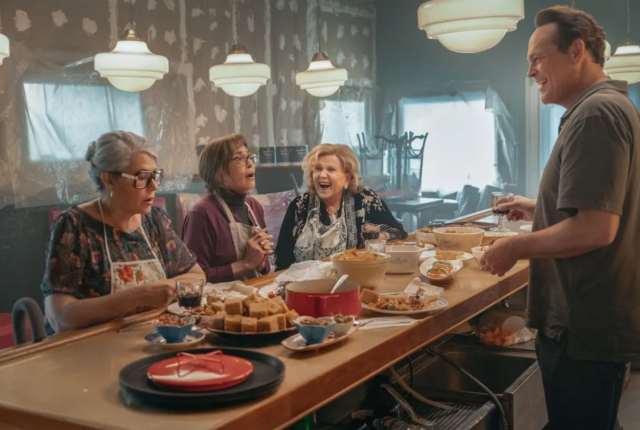
Not so surprisingly, not many old ladies come to his job interview, but he comes to hire four old ladies at least. First, he convinces his mother’s old friend Roberta (Lorraine Bracco) to work at his restaurant despite her initial reluctance. Thanks to Olivia (Linda Cardellini), who was incidentally a schoolmate of his during their adolescent period, he also hires Olivia’s old neighbor Antonella (Brenda Vaccaro), and then there comes Teresa (Talia Shire), a shy old lady who recently decided to do something different just like Scaravella. In addition, Scaravella persuades a local hairdresser named Gia (Susan Sarandon) to join his business because he knows well that she is quite good at making desserts.

What follows next is quite predictable to say the least. Scaravella has some money to be invested into his risky business, but then he must borrow more from his bank for renovating his restaurant with his best friend Bruno (Joe Manganiello) and Bruno’s wife Stella (Drea de Matteo). Furthermore, he must balance himself constantly between his little business and his current job, and he certainly needs some help from his several colleagues at his workplace.

Above all, Scaravella frequently needs to get things under control for his old employees. All of them are surely cooking experts in one way or another, but they do not get along well with each other at times, and that certainly causes some headache for their sincere employer. Nevertheless, the ladies gradually find some harmony as working together more, and they certainly appreciate how Scaravella gives them another chance to feel alive in their life.

However, his restaurant business does not look that promising on the opening day, and the situation becomes more daunting for him, but Scaravella keeps trying as much as possible. He continues to finance his restaurant as before, and he also tries to contact many food critics in the city, though none of them shows any willingness to visit his restaurant.

However, the movie keeps maintaining its lightweight tone as usual, and the screenplay by Liz Maccie engages us more as its main characters come to show more human depth along the story. There is a sweet and poignant scene where the four old ladies come to share their private feelings among themselves, and there is also some extra warmth from a low-key romantic subplot between Scaravella and Olivia, who get closer to each other as she helps him on a certain legal matter involved with his restaurant business.

Above all, the movie depends a lot on the enjoyable ensemble performance from its main cast members. While Vince Vaughn dutifully holds the center as demanded, Lorraine Bracco, Brenda Vaccaro, Talia Shire, and Susan Sarandon are always a pleasure to watch, and the movie becomes quite delightful whenever these wonderful actresses share the screen together. Linda Cardellini, Joe Manganiello, and Drea de Matteo, who once appeared with Bracco in acclaimed HBO drama series “The Sopranos”, are also solid in their substantial supporting roles, and Campbell Scott, who once co-directed “Big Night” (1996) with Stanley Tucci, makes a brief but crucial appearance later in the story.

On the whole, “Nonnas”, which means “Grandmothers” in Italian, is one of more entertaining products from Netflix, and director Stephen Chbosky, who previously directed “The Perks of Being a Wallflower” (2012) and “Wonder” (2017), did a competent job of handling the story and characters with enough care and sensitivity. The result surely looks and feels quite familiar, but it serves fairly well, and I do not see any reason to grumble.

Posted in Movies | Tagged , , | Leave a comment

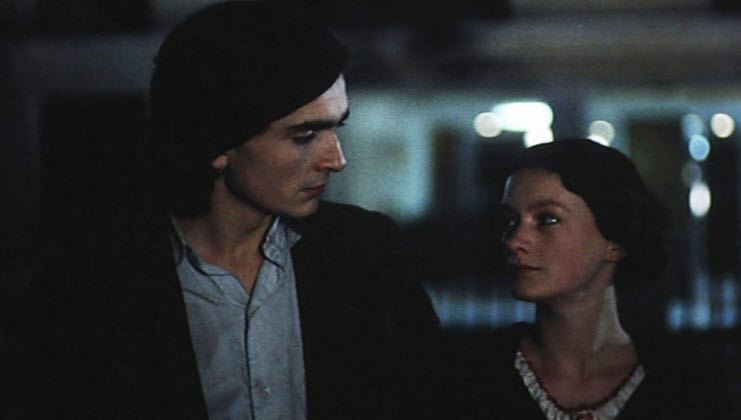
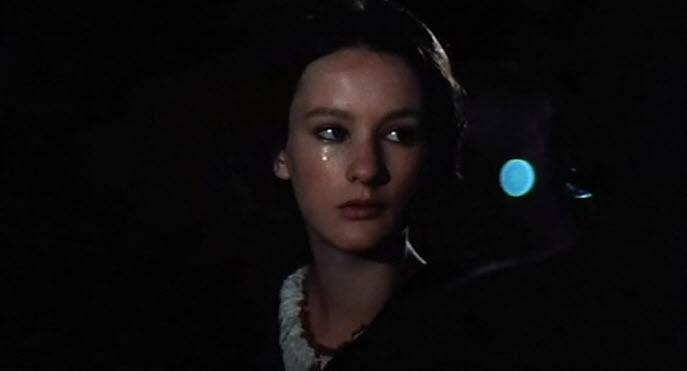
Four Nights of a Dreamer (1971) ☆☆☆(3/4): Bresson on a lightweight mode

Robert Bresson’s 1971 film “Four Nights of a Dreamer”, which was released in South Korean a few days ago, is interesting for its unexpectedly lightweight mood and attitude. Compared to many of Bresson’s notable works such as “Pickpocket” (1959) or “Au hasard Balthazar” (1966), the movie is less dry and austere in its occasionally amusing romantic drama, and it actually feels more like the works of Éric Rohmer at times even though you can still clearly observe Bresson’s own distinctive touches. 

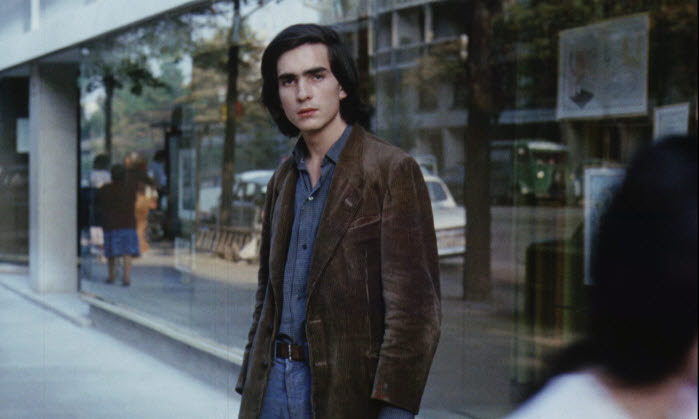
Consisting of several individual chapters, the movie revolves around the accidental relationship between two total strangers. At first, we are introduced to a young Parisian artist named Jacques (Guillaume des Forêts), and the movie simply observes how he aimlessly wanders around here and there before ending up being around one of the bridges in Paris in the middle of one night. He happens to notice a young woman on the bridge, and, what do you know, he comes to rescue her when she is about to jump off from the bridge.

Her name is Marthe (Isabelle Weingarten), and she and Jacques come to confine to each other about their respective miserable lives. Jacques has struggled for more recognition via his artistic activities, but he often finds himself getting more frustrated and alienated without any bright prospect in front of him. Furthermore, he also cannot help but yearn for somebody to love, but, as shown from one flashback scene, he only makes himself look rather creepy and suspicious to several women he encounters during his aimless wanderings.

In case of Marthe, she has been desperately in love with some young man who was once a tenant in her and her mother’s residence. Although she was not so interested in that lad at first, she later found herself attracted to him more and more, and she eventually had a very intimate private moment with him. However, he was soon going to leave for US for his study, and she promised him that she will wait, but, alas, he does not seem that interested in reuniting with her even after his subsequent return.

As spending more nights with Marthe, Jacques gradually finds himself drawn to her, but she flatly admits that she is still hopelessly in love with that dude, even though she sincerely appreciates Jacques’ care and attention. This certainly makes Jacques quite frustrated, but he continues to stand by Marthe simply because he comes to love and care about her more. As a matter of fact, he even willingly helps her ongoing romantic pursuit a bit.

The complicated matter of heart between these two different characters is certainly reminiscent of what is so amusingly presented in Rohmer’s many comedy films, but its comic aspects are illustrated as dryly and flatly as you can expect from Bresson. The dialogues in the film are phlegmatically and monotonously delivered by the lead performers even when their characters become more emotional, and this further accentuates the absurd circumstance of their characters.   

However, the movie sometimes throws several surprisingly tender moments to be admired and appreciated. Bresson and his cinematographer Pierre Lhomme vividly capture the nocturnal mood of the real locations in Paris, and there are also several lovely romantic moments accompanied with incidental music performance. During these wonderful scenes, everything seems fine and well for Jacques and Marthe at least for a while, and we come to sense more of the mutual attraction between them.

As they keep dancing around each other along the story, Bresson’s screenplay, which is loosely based on Fyodor Dostoyevsky’s 1848 short story “White Nights”, steadily maintains the gravitas beneath the romantic circumstance of its two main characters. I will not go into detail on what eventually occurs between them, but I can tell you instead that the movie remains true to what its two lead characters respectively want and desire, and its final scene will linger on your mind for a long time as you reflect more on how things can be tricky in case of the matter of heart.

The lead performers of the film, who incidentally had no previous experience of movie acting at that time, are well-cast in their respective parts. Isabelle Weingarten, who subsequently appeared in a number of notable films including Jean Eustache’s “The Mother and the Whore” (1973), effortlessly balances her character between humor and pathos with her deadpan performance, and she is ably complemented by Guillaume des Forêts, who brings some earnest quality to his youthful but disaffected character. Although they are understated as much as many other performers working under Bresson, their performances click well with each other on the screen, and we are alternatively amused and touched by how their characters pull or push each other throughout the story.

 Overall, “Four Nights of a Dreamer” may not be one of the best works from Bresson, but it deserves more attention because of demonstrating the lighter side of Bresson’s talent. Although it was unfortunately not widely available during last several decades due to some complex issues associated with its distribution rights, it became more available after going through 4K restoration in last year, and that is how I and other South Korean audiences can get a chance to see this rather obscure work in Bresson’s career. I did not expect that much at first because I really did not know anything about it at all, but I was surprised and impressed much, and, folks, that is more than enough for recommendation.

Posted in Movies | Tagged , | Leave a comment

Lilo & Stitch (2025) ☆☆1/2 (2.5/4): likable but unnecessary

“Lilo & Stitch”, the live action movie version of the 2002 Disney animation feature film, is a likable product packed with enough charm and spirit, but I also somehow found it rather unnecessary. This is probably because I belatedly watched the animation film version one week ago, which remains vividly in my memory and inevitably came to my mind again and again while I watched the live action movie version.

Incidentally, the animation film version is one of the better works from Disney Studios during the 2000s. Besides being full of personality and style to be appreciated, it was one of the last cell animation films from Disney Studios during that period, and it still demonstrates well how cell animation can be more stylish and spirited compared to digital animation. Although its story and characters are rather simple on the surface, it has a lot of heart and humor than expected, and it also distinguishes itself well with a considerable amount of distinctive mood, style, and charm.

In case of the live action movie version, it faithfully sticks to its original story while making some small changes here and there, but the result reminds us again that live action films can rarely surpass animation films in terms of style and mood. While it did a fairly good job on the whole, it still looks relatively less distinctive compared to the animation film version despite retaining a fair share of charm and personality from the animation film version, and that is the main reason why I just kept making comparisons throughout my viewing instead of getting really engaged and then entertained. 

Especially, I was quite distracted during the opening part of the movie, which often looks like the shot-by-shot digital animation remake of that of the animation film version. Somewhere in the universe, Dr. Jumba Jookiba (Zach Galifianakis), an alien who is your average mad scientist, is arrested along with his latest creature, but the creature, which looks small and cute but can be quite vicious and destructive, escapes not long before being sentenced to lifelong banishment by the council of the United Galactic Federation. It soon flies away to the Earth via a stolen spaceship, and Dr. Jookbia is ordered to retrieve the creature along with a meek alien official named Wendell Pleakley (Billy Magnussen).

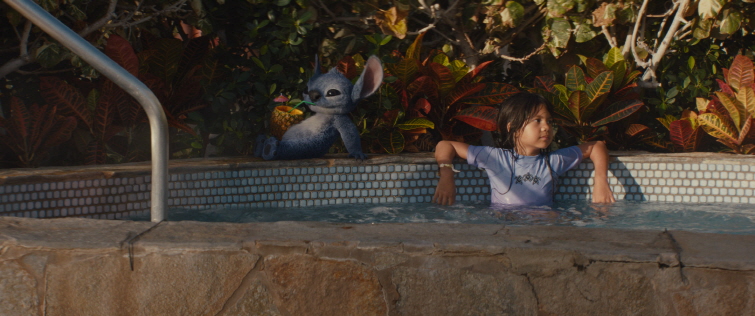
The spaceship stolen by the creature happens to crash onto one of the main islands of Hawaii, and then, after a series of destructive happenings, it ends up being in a local animal shelter. While looking for any possible way to evade its chasers, it happens to encounter a young local girl named Lilo (Maia Kealoha), and it is soon named “Stitch” shortly after getting adopted by Lilo.

While Lilo is quite excited about having a pet which can be her best friend, her older sister Nani (Sydney Elizebeth Agudong) is not so amused in contrast, because she has struggled a lot for supporting herself and her younger sister since their parents’ unfortunate death. If she fails to convince their social worker in the end, Lilo will be separated from her and then put under foster care, and that is certainly the last thing Nani wants, no matter how much she gets exasperated due to her rather unruly younger sister.  

As Lilo befriends Stitch more along the story, the movie provides a number of humorous moments while also using several classic pop songs performed by Elvis Presley. Again, these scenes are pretty much close to what was shown in the animation film version, but they are still effective mainly thanks to the solid lead performance of Maia Kealoha, who ably lifts her scenes with charming innocence and plucky presence in addition to being very effortless in her interactions with Stitch on the screen.

In case of Stitch, I still prefer the animation version more, but the CGI version in the film is also sort of endearing. While quite sneaky and mischievous like some of those Looney Tunes characters, it turns out to have a heart to be affected by the sincerity of his unexpected human friends, and they willingly and openly accept him as another member of their “ohana” (It is a Hawaiian term meaning “family”, by the way).

The supporting characters surrounding Lilo and her alien friend are less colorful compared to their counterparts in the animation film version, but the supporting performers in the film try to fill their respective parts as much as possible. Sydney Elizebeth Agudong brings some gravitas to the story as required, and Tia Carrere, who was incidentally the voice of Nina in the animation film version, Amy Hill, and Courtney B. Vance have a little fun with their characters. As Stitch’s two alien chasers, Zach Galifianakis and Billy Magnussen are frequently amusing as their characters try to adjust themselves to their respective human disguises, and Hannah Waddingham provides a bit of extra humor as the unflappable leader of the United Galactic Federation.

In conclusion, “Lilo & Stitch”, directed by Dean Fleischer Camp, is not bad at all, but it is merely competent without anything particularly new or fresh for the fans and admirers of the animation film version. The people behind it do not forget what makes the animation film version so special, but they simply try to replicate it here, and their result only mildly entertained me in the end. To be frank with you, I am already ready to revisit the animation film version sooner or later, and I assure you that you will have a better time if you watch that instead.

Posted in Movies | Tagged , , , , | Leave a comment

Still Walking (2008) ☆☆☆1/2(3.5/4): The distance among them

Hirokazu Kore-eda’s 2008 film “Still Walking”, which was re-released in South Korean theaters a few days ago, still shines in its tranquil family drama which comes to show more human complexity than it seems at first. While its gentle mood and attitude certainly evoke the works of Yasujirō Ozu, the movie also closely and soberingly observes the growing distance among the family members in the story, and the overall result is often bittersweet for a number of precious human moments to be appreciated.

The story, which is set in some seaside town, mainly revolves around one plain family meeting. 10 years ago, Kyohei (Yoshio Harada) and Toshiko (Kirin Kiki) lost their eldest son due to an unfortunate incident, and they are going to commemorate their dear son’s death along with their two other kids. Their daughter Chinami (You) has already come along with her husband and their two kids, and the movie opens with Chinami and Toshiko busily preparing some dishes in the kitchen of an old house belonging to Toshiko and her husband.

We subsequently see Ryota (Hiroshi Abe) coming along with his wife Yukari (Yui Natsukawa) and her little son from the previous marriage. Knowing well that his stern father does not approve much of his recent marriage just because he is your average old-fashioned guy, Ryota cannot help but feel awkward and uncomfortable even before arriving at his parents’ house, though his wife does not worry that much in contrast to her husband. 

Anyway, the mood becomes a bit brighter as everyone gathers inside the house, though we come to sense more of the tension between Ryota and his father. His father wanted him to become a doctor just like him and his eldest son, but Ryota chose to go for some other occupation instead of following his father’s expectation. As his father does not talk that much to him even under the cordial atmosphere surrounding them and the other family members, Ryota is reminded more of the distance between him and his parents, and that becomes more evident when he later reminds his father that his father does not correctly remember a certain amusing incident in their past.

Meanwhile, the movie gradually immerses us into the sweltering ambiance of summer days. While mostly hanging around the main characters inside the house, the movie occasionally provides some crisp outdoor shots, and I particularly like one particular shot simply showing the whole town from the distance. Observing a train passing by the town, I could not help but think of a similar moment around the end of Ozu’s great film “Tokyo Story” (1953).

Just like “Tokyo Story”, the movie slowly reveals the complex human feelings beneath the supposedly mild interactions among the family members in the story. Yes, Ryota surely has some resentment toward his father, but he still cares about both his father and mother’s welfare, though his professional career is not exactly fine at present. Yes, Chinami and her husband often pay more attention to whether they and their kids will move into her parents’ house someday, but she is sincere in her casual kitchen conversation with her mother. Yes, Kyohei and Toshiko have not been pleased with how their surviving kids are living their respective lives, but they still care about them nonetheless, though they cannot help but wonder how their eldest son would live if he had not died at that time.

While sharply observing the human flaws of the family members in the story, the movie also handles their quiet emotional moments with compassion and understanding. Around the time of the sunset, the family is visited by a young man who was rescued by Kyohei and Toshiko’s eldest son at that time, and this leads to one of the most memorable moments in the film. As the mood becomes a bit more awkward between that lad and the family, this lad looks more pathetic to Kyohei and Toshiko, and this makes them all the more resentful about their eldest son’s death. When Toshiko and Ryota happen to have a brief private conversation in the following evening, Toshiko phlegmatically reveals more of her bitter feeling, and that moment is both edgy and sorrowful for a good reason.

In the end, the family members in the story have another failure to connect despite the remaining affection and care among them, and then the movie adds a poignant finishing touch via the following epilogue scene. Again, the movie simply observes without particularly emphasizing anything at all, but we sense more the underlying emotions beneath the screen, and then we reflect more on those small human moments observed from the main characters along the story.

The main cast members in the film are solid in their well-rounded ensemble performance. While Hiroshi Abe, You, and Kirin Kiki are surely more familiar to you if you have diligently followed Kore-eda’s career during last 25 years, several other main cast members including Yui Natsukawa and Yoshio Harada have each own moment to shine, and you will also appreciate Kore-eda’s skillful handling of his child performers, whose unadorned natural performance surely adds some cheeriness to the movie.

On the whole, “Still Walking” is still one of the best works from Kore-eda, who has seldom disappointed us since his exceptional first feature film “Maborosi” (1995). While soothed and touched by the film again today, I also saw a lot of myself and my family from its family characters, and I am reminded again that I should try more to connect more with them at least even though we are still walking apart with the growing gaps and issues between them day by day. That may not be possible even at the end of their life, but I still must keep trying, right?

Posted in Movies | Tagged , | Leave a comment

Last Bullet (2025) ☆☆1/2(2.5/4): The last chapter with some improvement

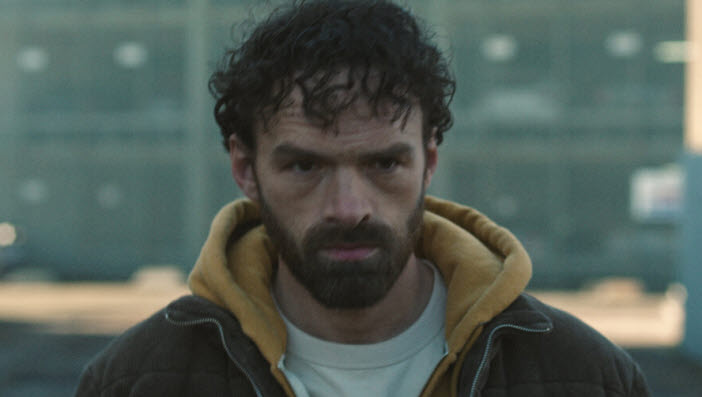
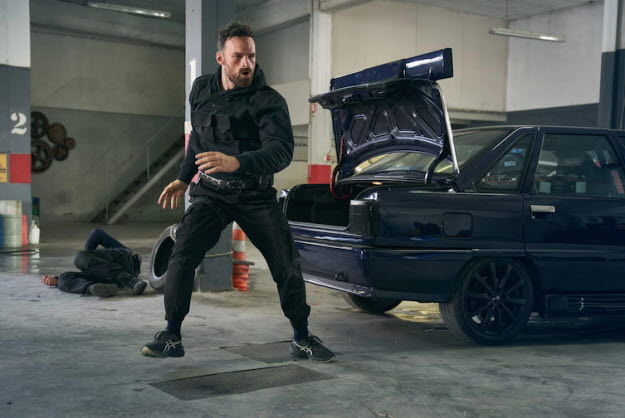
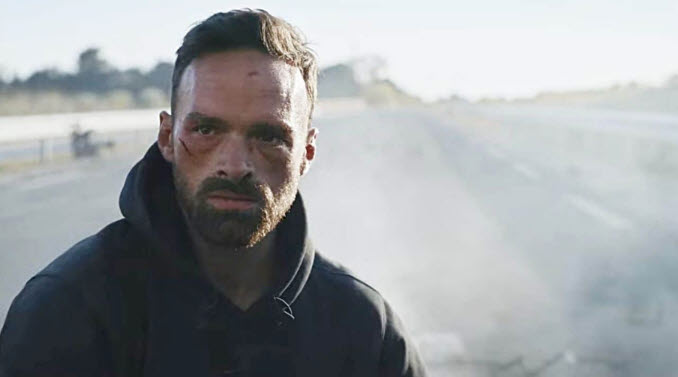
French Netflix film “Last Bullet”, which was released early in this month, shows welcoming improvement compared to its two predecessors. While it attempts to bring some extra depth to the story and characters, the movie also provides several well-made fast and furious actions scenes as expected, and it manages to reach its finish line fairly well.

The movie begins at the point around the finale of “Last Bullet 2” (2022). Its tough guy hero Lino (Alban Lenoir) was arrested by the Spanish police after making a lot of trouble around the border line between Spain and France as shown in the previous film, but he is eventually handed to a certain powerful but corrupt figure in the French police, who is already quite willing to cover up anything to incriminate him. While this figure leaves Lino alone, he and his men swiftly execute their cover-up, and Lino certainly feels bitter and helpless because he cannot do anything about that at all.

However, of course, there soon comes a small but possible opportunity via Areski (Nicolas Duvauchelle), who was the main villain of “Lost Bullet” (2020). After his dirty deeds including the murder of his direct boss were exposed, Areski quickly left France and then has been hiding somewhere in Germany for a while, but now he becomes the last one to be eliminated, because he is the only potential witness who can testify on the ongoing corruption of that powerful figure in question. When he finds that his mortal enemy has returned to France, Lino is not so pleased to say the least, but he and Julia (Stéfi Celma), a female cop who is also his ex-girlfriend, must protect Areski because Areski is their only chance to bring down their powerful opponent.

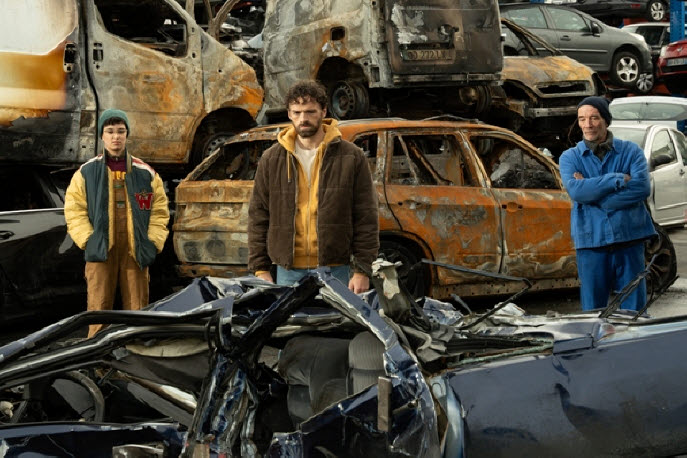
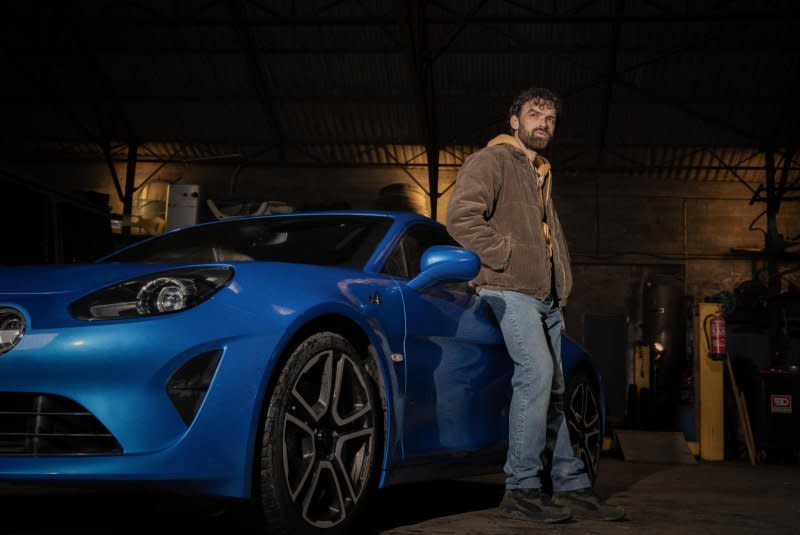
Once the story sets the ground during its first half, the movie goes all the way for more action and thrill. There is a busy physical action sequence where Lino and two other figures fight each other inside a moving tram, and you may be amused a little by a little humorous touch preceding their fight. In case of several vehicle action sequences, several modified vehicles are provided by a female mechanic introduced to Lino by Julia, and the movie effectively utilizes these vehicles during its action scenes. Yes, not only these vehicles but also countless cars are often smashed a lot throughout the film, and you may actually worry more about these cars than the human figures in the film.

Meanwhile, as being less hurried than its predecessors in comparison, the movie generates a little bit of gravitas as Lino and Julia struggle to do the right thing. It becomes more apparent that there is not anyone except themselves they can depend on, but they become all the more determined to beat their powerful opponent than before, and that is why they put aside their hate toward Areski at least for a while. One of the weak aspects of the movie is that it does not delve that much into how Areski and Lino feel about their respective relationships with Areski’s ex-wife, but I guess that would slow down the story to a considerable degree.

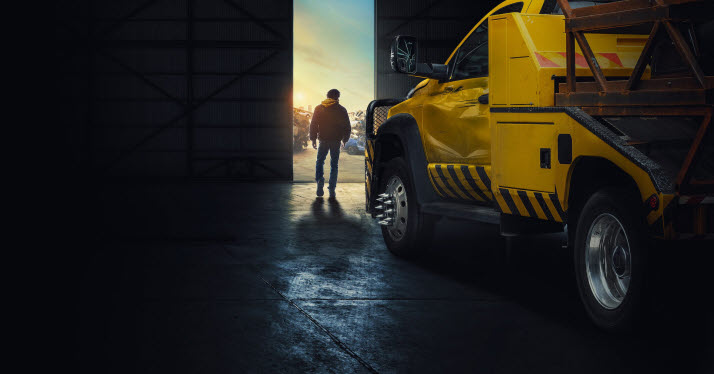
The story eventually culminates to the climactic sequence where lots of crashes and bangs happen on the screen. Although the result is relatively modest compared to whatever we saw from those Fast and Furious flicks, director/co-writer Guillaume Pierret, who directed and co-wrote the previous two films, and his crew members deftly handle this sequence enough to generate a substantial amount of thrill and momentum, and we gladly go along with a number of preposterous but enjoyable moments of vehicle actions including the ones involved with a yellow tow truck which is equipped with a certain special device on its back.

Nevertheless, the movie is still deficient in case of characterization. Lino sometimes looks like a tempestuous dude who does not think much about his actions and the following consequences, and it is rather relieving to see that he shows some restraint and consideration later in the film. In addition, several other main characters including Areski and Julia remain as flat archetype figures to be wielded in one way or another along the story, and those bland villain characters in the story remind me again of how much the effectiveness of action films depends on good villain characters.

Anyway, the main cast members of the film do as much as possible for filling their respective spots. Alban Lenoir demonstrates more potential as a future action movie star, and I can easily imagine him playing (or fighting) against Jason Statham someday. While Nicolas Duvauchelle provides some tension to the story as required, Stéfi Celma and Pascale Arbillot dutifully slip into their familiar roles, and the special mention goes to Julie Tedesco, who manages to imbue her supporting character with humor and personality.

In conclusion, “Last Bullet” is the mildly successful last chapter for its trilogy, and it is certainly the best one in the bunch. Maybe you should watch the previous two movies for some more understanding of its story and characters, but, in my inconsequential opinion, that may not be that necessary because 1) all of these three movies are pretty much same as being mainly about action rather than story and character and 2) Netflix thankfully provides a brief summary of the previous two films before the movie begins. Should I have watched the summary instead of watching the previous two films and then saved a few precious hours? You tell me, folks.

Posted in Movies | Tagged , , , | 1 Comment

Lost Bullet 2 (2022) ☆☆(2/4): A bit more warm-up – with some bangs and crashes

French Netflix film “Lost Bullet 2”, the sequel to “Lost Bullet” (2020), wants to drive further than its predecessor, but it ends up doing a bit more warm-up with some bangs and crashes while mostly sticking to its previously establishes plot formula. Again, its tough guy hero gets himself into a big trouble, and, yes, we are accordingly served with a lot of action as before while he tries to reach his goal by any means necessary.

The opening part of the film begins from the point around where the story of “Lost Bullet” ends. After managing to clear his name in the end, Lino (Alban Lenoir) becomes determined about the revenge for the death of someone who was like a brother to him, but the situation becomes more complicated for him and others around him. While one of the two dirty cops responsible for Lino’s previous plight ran away, the other one, Marco (Sébastien Lalanne), goes into a witness protection program in exchange for his testimony against some bigger dirty cop, but Julia (Stéfi Celma) and her direct boss Moss (Pascale Arbillot) choose to hide this from Lino.

Meanwhile, Lino focuses on finding that corrupt cop who ran away, but, no matter how much he tries, it only becomes clear to him and others that his target remains beyond their reach at least for now. As advised by Julia, Lino comes to work more for their special police squad, and, what do you know, he eventually becomes one of the top members of the squad one year later, in addition to being married to the wife of that corrupt cop. 

Of course, this relatively stable life of his does not last that long thanks to those powerful dirty cops Julia and Moss have tried to arrest in the meantime. For getting rid of Marco as soon as possible, they decide to use Lino because he is still angry about Marco did, and Lino soon finds himself led to a certain remote spot where Marco has been hiding for a while.

After belatedly realizing that Julia and Moss lied to him, Lino is not so pleased to say the least. Despite his remaining anger, he chooses to bring Marco to the headquarters of his squad, but, not so surprisingly, those powerful dirty cops are already ready to take away their target, and Lino naturally comes to clash with not only them but also several colleagues of his including Julia, who is ordered to stop Lino by any means necessary for retrieving Marco. 

What follows next is pretty predictable. First, there is a long and intense physical action sequence where Lino fights against a bunch of cops and policemen as he previously did in “Lost Bullet”. Second, we get several vehicle action sequences as he furiously drives his modified vehicle recently equipped with a certain special device, and we accordingly see lots of police cars getting crashed and damaged.

Because he already did sort of test run in the previous film, director/co-writer Guillaume Pierret, who also wrote the screenplay along with his lead actor, is surely ready to go for more action and thrill. The action scenes in the film are mostly slick and competent under his skillful direction, and you will particularly enjoy how that certain device of Lino’s modified vehicle is utilized later in the story. Although lots of things happen hurriedly along the story, the movie is usually clear about where it is heading along with its hero, and you may overlook a bunch of plot contrivance strewn along its narrative course at least for a while.

However, just like its predecessor, the movie is still superficial and mediocre in terms of narrative and characterization. While it tries to bring a bit of gravitas via the complicated relationship between Lino and Juila, that is soon put aside as it pays more attention to all those clashes and bangs on the screen, and the same thing can be said about Lino’s rather ironic marital relationship, which, considering the very last scene of the film, may be explored further in the next sequel. The villains in the story surely look threatening with all those firearms and vehicles ready to be used against Lino, but they remain as bland and uninteresting figures to be eliminated sooner or later, and the movie also fails to flesh out several other substantial supporting figures including Marco, who simply functions as a mere wild card in the growing conflict between Lino and Marco.

At least, Alban Lenoir and his fellow returning cast members fill their respective parts without much difficulty. Besides believable in his character’s steely determination, Lenoir looks more natural here while demonstrating more potential as an action movie lead performer. Again, Stéfi Celma and Julia Pascale Arbillot are stuck with their thankless supporting roles, but they smoothly slip into their characters without much difficulty. Sébastien Lalanne and Diego Martín, who plays another crucial supporting character in the story, manage to leave some impression despite their under-developed parts, and Martín is effective when his character comes to take some considerable risk for Lino later in the story.    

Overall, “Lost Bullet 2” does not surpass its predecessor much, but it leaves some expectation as it is immediately followed by the next sequel, which was incidentally released on Netflix a few weeks ago. Now I watched “Last Bullet” and “Last Bullet 2”, so I guess I have done my homework, and I sincerely hope that I will be more entertained in case of that next sequel in question.

Posted in Movies | Tagged , , | Leave a comment

Lost Bullet (2020) ☆☆(2/4): A warm-up before the next sequels

French Netflix film “Lost Bullet” is so typical and predictable in many aspects that you can easily guess everything even before watching it. First, we have a criminal hero who is pretty good in his profession, and you surely know that he will get himself into a big trouble sooner or later. Second, the movie is mostly about how he desperately tries to clear his name after getting framed for a murder he did not commit, and you definitely know that you will get several big action scenes. Third, he is a man with a particular set of skills, and you will certainly sense that his skills will eventually come handy

The movie opens with how Lino (Alban Lenoir) gets caught by the police. Along with a younger guy who has been like a little brother to him, he attempts to rob a shop with his modified vehicle in the middle of one night, but it turns out that his modified vehicle is a bit too fast and furious for getting their job done. While his partner luckily escapes at the last minute, Lino is less fortunate, and he soon ends up being incarcerated in a prison.

However, there later comes an unexpected opportunity for him. A detective named Charas (Ramzy Bedia) visits Lino on one day, and he has an offer Lino cannot easily refuse. Knowing well how skilled Lino is as a mechanic/driver, Charas wants to recruit Lino as an unofficial staff member of his drug raid team, and Lino eventually accepts Charas’ offer mainly because he wants to get out of the prison as soon as possible.

And he does not disappoint Charas at all during next several months. Thanks to those patrol cars modified by Lino, Charas and his men have swiftly caught almost every drug delivery vehicle in their area, no matter how fast those drug delivery vehicle can go. Quite impressed by how much Lino has helped him and his fellow cops, Charas decides to give Lino some little help besides giving Lino an earlier parole than expected, and Lino certainly appreciates this act of generosity from Charas.

However, of course, things soon go quite wrong for Lino. Charas takes Lino to a certain shady garage where Lino’s partner is currently working, but it is soon revealed that Lino’s partner has been involved with some dangerous people he should not mess with. Not so surprisingly, one of these dangerous figures turns out to be one of the cops for whom Lino has worked, and this corrupt cop is already willing to cover up his dirty deeds by any means necessary.

Thanks to this corrupt cop, Lino soon finds himself on the run from the police, who immediately search for him right after he gets framed for a murder. The only person on whom he may depend is a female cop named Julia (Stéfi Celma), but she does not believe his words much even though they have been close to each other for a while.

Coming to see that he has to depend only on himself, Lino becomes more determined to clear his name, and that leads to a couple of big action sequences unfolded along the story. There is an intense physical action sequence where he must fight against a bunch of cops for his escape, and the movie does not disappoint us when Lino comes to demonstrate more of his professional skill later in the story.

However, the movie is frequently bland and superficial in terms of storytelling, and that is the main reason why we merely follow its plot without much care. For example, its hero is just a run-of-the-mill criminal hero whose stoic toughness is not so far from those countless action movie heroes played by Jason Statham, and the movie also fails to flesh out several substantial supporting characters in the story more. For example, it does not delve that much into his cop girlfriend’s conflict over the ongoing situation, and it is unfortunate that Alban Lenoir, who can be a French answer to Statham if he ever gets a really good action flick to support him better, and Stéfi Celma do not have much chemistry between them during their few key scenes in the film.

Anyway, the movie surely shifts its gear to a full-throttle mode during the last act, which is incidentally involved with a certain vehicle containing a crucial evidence to incriminate that corrupt cop (You can instantly guess what it is from the very title of the film, by the way). Although it may look rather modest compared to many Hollywood action blockbuster films out there, director Guillaume Pierret, who wrote the screenplay along with Lenoir and their co-writer Kamel Guemra, handles the climatic sequence with enough skill and competence, and the overall result compensates for the flawed aspects of the film to some degree.

On the whole, “Lost Bullet” is often underwhelming as just functioning as a little warm-up process for the next two sequels to follow. I simply checked it out for watching its two sequels later, and, despite keeping my expectation as low as possible, the movie did not engage me enough without leaving much impression in the end. No, I have no objection against those rather simple action movies you can casually watch on Sunday afternoon, but the movie is too rote and mediocre to make me care about whatever is happening on the screen. It is not boring at all, but its memory is already being vaporized inside my mind, and I am quite ready to move onto its two sequels while hoping that they will be more entertaining in comparison.
Posted in Movies | Tagged , , , | Leave a comment

Final Destination Bloodlines (2025) ☆☆☆(3/4): It runs in the family…

“Final Destination Bloodlines”, the latest sequel of the Final Destination series, is actually better than expected. Just like its several predecessors including “Final Destination” (2000), the movie surely and firmly sticks to its diabolical rule on how to eliminate its main characters one by one along the story, but it did the job pretty well while also showing some morbid sense of fun, and you may gladly go along with its naughty thrill.

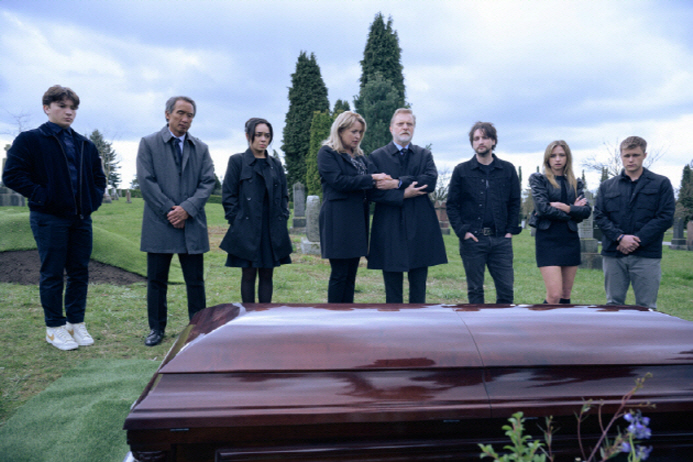
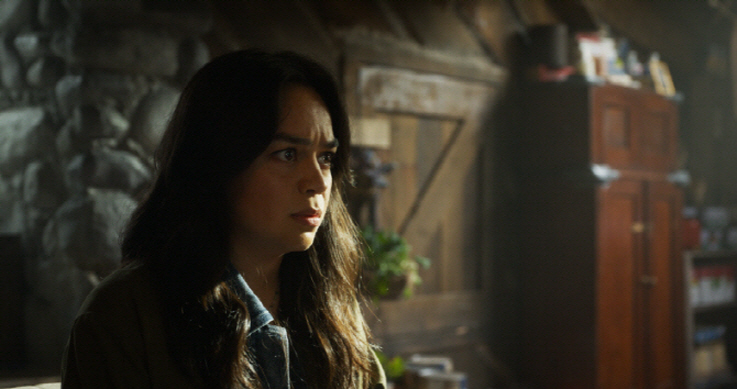
Just like “Final Destination”, the movie starts with a spectacularly striking disaster sequence which turns out to be, yes, a very bad dream. For some unknown reason, the young heroine of the story keeps having this bad dream at every night, and she comes to sense that this bad dream is somehow connected to some old hidden past of her family. She naturally asks about that to her older family members later, but, not so surprisingly, they are not so willing to talk about that for understandable reasons.

Of course, she becomes more determined to get to the bottom of her strange situation, and that leads her to a certain family member who willingly tells her about a horrible secret beneath their family. That horrible disaster shown in the dream could have happened to this family member and many others in 1968, but they all survived because this family member had a premonition via her bad dream in the previous night. However, almost all of them and their descendants eventually got killed one by one during next 47 years, and now our heroine and her family are marked by some malevolent presence which can be regarded as Death itself.

Needless to say, our heroine’s family do not believe her much at first, but it does not take much time for them to realize that they are indeed in a very, very, very serious trouble. As getting more and more aware of their doomed status, they naturally try to search for any possible option for survival, but they are only reminded again and again of how helpless they are in front of their approaching doom, and Death continues to execute its ruthless and devious plan step by step as usual.

Now this sounds rather grim and solemn, but the movie alternatively jolts and amuses us as skillfully toying with our dread and expectation. For example, there is a gradually suspenseful sequence which deliberately shows many different stuffs potentially lethal, and we accordingly brace ourselves more while trying to guess which one will trigger the expected payoff moment in the end. As shown a bit during its trailer, the movie does not disappoint us at all when somebody eventually gets killed in quite a gruesome fashion.

While watching this and several other nasty moments of death, I wondered why Death does not eliminate its predestined targets in simpler ways with less pain and cruelty. I guess Death, which is exact and eventual just like tax, is not so pleased with anyone sidestepping the fate and is accordingly quite determined to punish the target as painfully, horribly, and playfully as possible. This may explain why each incident of death in the film always occurs due to an elaborate series of seemingly inconsequential happenings not so far from those Rube Goldberg machines (I particularly enjoyed how a small coin plays a crucial part more than once in the film, by the way).

Meanwhile, the screenplay by Guy Busick and Lori Evans Taylor, which was developed from the story written by them and co-producer Jon Watts, brings a bit of human depth to its main characters. They are inherently more or less than mere targets to be eliminated along the story, but the movie pays some attention to their dread and desperation, and we come to root for them to some degree even though we all know too well that they are doomed from the very beginning.

During the last act, the movie expectedly accelerates the plot a lot more than before, and you will be entertained by how it pulls all the stops for more gruesome fun and thrill. There is an outrageously horrifying sequence involved with a certain big medical device suddenly going haywire, and you may even chuckle a bit when there comes the inevitable final blow in the end. In case of the climactic sequence unfolded in a certain remote place which looks more like a death trap even though it is supposed to be a shelter, the movie goes all the way for its fiendish spectacles, and then you will be satisfied with how neatly it delivers the ending.

The main cast members of the film are well-cast on the whole. While Kaitlyn Santa Juana diligently carries the movie as its heroine, she is also supported well by several other main cast members including Teo Briones, Richard Harmon, Rya Kihlstedt, and Gabrielle Rose, and the special mention goes to Tony Todd, who has played a recurring character throughout the series and sadly died several months ago. Looking more fragile and gaunter here than before, Todd is apparently well aware of his impending death just like his character, and that brings a substantial amount of poignancy to his brief but memorable appearance in the film.

In conclusion, “Final Destination Bloodlines” is fairly engaging and thrilling as occasionally showing some surprising human depth, and directors Zach Lipovsky and Adam Stein deserve to be commended for their competent direction. Considering that the movie has already been quite successful in the box office, there will probably be another Final Destination flick sooner or later, but I will not complain as long as it will be as enjoyable as this unexpectedly entertaining sequel.

Posted in Movies | Tagged , , , | 1 Comment