The Current War (2017) ☆☆1/2(2.5/4): AC vs. DC

“The Current War”, which was premiered at the Toronto International Film Festival in late 2017 but only got released in US around two years later due to several reasons including Harvey Weinstein’s involvement in its production, does not have enough power to hold our attention. Although its historical subject and figures have lots of potentials for a dramatic story to be told, the movie is often hampered by its deficient storytelling and thin characterization, and it eventually comes to leave us unsatisfied without much impression.

As reflected by its very title, the movie is mainly about a famous technological competition between Thomas Edison (Benedict Cumberbatch) and George Westinghouse (Michael Shannon) during the 1880-90s. During the opening scene set in 1880, Edison demonstrates his latest invention to a bunch of curious investors, and that is none other than an electric light bulb. After his modest but awesome demonstration, Edison moves onto the next step for a far bigger one, and then we see him turning on numerous light bulbs in New York City in front of a huge crowd thanks to enough financial support from his main backer J.P. Morgan (Matthew Macfadyen), who was one of the wealthiest men in US during that period.

As a fellow inventor who has incidentally earned lots of money thanks to his ingenious invention on train break system, Westinghouse is quite interested in learning a bit more from Edison, and he even invites Edison to a private dinner, but Edison casually ignores Westinghouse as regarding him as another potential competitor. This snub certainly makes Westinghouse angry and humiliated, and he becomes quite determined to beat Edison in the growing electricity market over the American continent.

And they soon find themselves opposing each other not only in business approach but also technical approach. While Edison sticks to Direct Current (DC) as before, Westinghouse goes for Alternating Current (AC) instead, and his company quickly becomes a very serious competitor to Edison’s company due to a number of technical advantages from AC. With AC, one can supply electricity in a wider area on a cheaper price, and this significant advantageous aspect enables Westinghouse’s company to spread its market all over the American continent within a short period.

Of course, Edison is not so pleased about this at all, but he remains adamant in his opinion on AC and DC. Even when a new promising employee named Nikola Tesla (Nicholas Hoult) instantly points out the advantage of AC over DC, Edison does not listen at all, and his other employees including his dutiful right-hand guy Samuel Insull (Tom Holland) have no choice but to obey to their boss’ stubborn position.

And then there comes a rather disturbing idea to Edison. For emphasizing that AC is more dangerous than DC, he begins to show animals being electrocuted by AC in front of many people, and that certainly generates some negative publicity on AC and Westinghouse’s company, but then he is approached by a government official who is quite interested in using AC for execution. As a man personally against execution, Edison naturally becomes conflicted, but then he chooses to accept the offer when his company keep getting cornered by Westinghouse’s, and that questionable decision of his is followed by a legal debate on whether electric chair has any ethical problem.

Westinghouse initially chooses to take the high road in front of the negative publicity generated by Edison, but then he also becomes quite more desperate in the end, and the circumstance between him and Edison accordingly becomes uglier than before. When the 1893 World’s Columbian Exposition in Chicago is approaching, they certainly become all the more competitive than before as respectively trying to be the one who is going to illuminate the exposition with light bulbs.

As two intense and ambitious heroes opposing each other, Benedict Cumberbatch and Michael Shannon are well-cast to say the least, and they did a fairly good job of conveying to us their characters’ sheer competitiveness, but the screenplay by Michael Mitnick does not provide much depth to their characters as hurriedly hopping from one key moment to another. As a matter of fact, the movie often feels like an clumsily abridged version of TV miniseries, and its scattershot narrative is further exacerbated by the choppy editing and unnecessary busy camera work throughout the film.

In case of the other main cast members of the film, they are also wasted as much as Shannon and Cumberbatch. While Tom Holland and Nicholas Hoult are stuck with their bland supporting roles, Katherine Waterston, Tuppence Middleton, Stanley Townsend, and Matthew Macfadyen bring some dramatic weight to the story despite being under-utilized on the whole, and Waterston manages to elevate her thankless role a bit during her few small scenes with Shannon.

“The Current War” is directed by Alfonso Gomez-Rejon, who previously directed “Me and Earl and the Dying Girl” (2015). Although it is less annoying and obnoxious than “Me and Earl and the Dying Girl”, “The Current War” is still a seriously flawed work in many aspects, and it is a shame that it does not generate much electricity despite the considerable potentials glimpsed from its story and main cast members.

Posted in Movies | Tagged , , , | Leave a comment

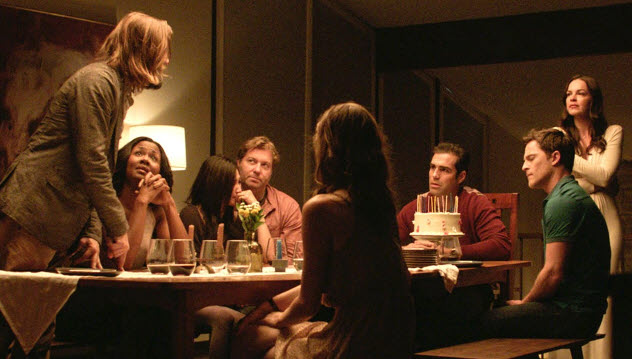
Chemical Hearts (2020) ☆☆☆(3/4): His new partner at his school newspaper

“Chemical Hearts”, which was recently released on Amazon Prime, looks plain and predictable at first but then comes to engage us more than expected. Yes, this is another case of troubled adolescent romance, but it distinguishes itself a bit via considerable sensitivity and personality, and it is also supported well by the good chemistry between its two lead performers.

Austin Abrams, who feels quite different from his vicious supporting role in “Scary Stories to Tell in the Dark” (2019) here, plays Henry Page, a senior high school student who is about to apply for the position of the editor-in-chief of his high school newspaper. At the beginning, this shy but smart kid confides to us on how plain and uneventful his life has been since his birth, and he also laments on how he has been unlucky in case of adolescent romance, but he is not particularly interested in pursuing love because, so far, writing has always come first for him.

However, there comes a change to him via a girl who also applies for that position in his high school newspaper shortly after being transferred to the school. Her name is Grace Town (Lili Reinhart), and she and Henry come to work together under the guidance of their supervising teacher, but she is not so particularly interested in getting to know her partner more even though they are going to work along with a number of other schoolmates during next several months.

When Henry happens to miss his school bus after their school time is over, Grace suggests that he should use her car instead, and he gladly accepts her offer. While they walk together to where her car is, something mutual seems to be developed between them, but she still does not talk much about herself, and he naturally becomes more interested in her – especially while reading a poetry book he borrows from her.

After he imparts her some thoughts on a certain poem written by Pablo Neruda, Grace lets Henry come into her private life a little more than before. At one point, she takes her to an abandoned factory which has been her own small private place and even has a pond full of colorful kois. As talking more with her, Henry comes to notice a certain Latin phrase on the wall, but she does not tell him its meaning while still being quite reticent about her family and her life before being transferred to his school.

It does not take much time for Henry to come to learn of an incident which seriously damaged Grace physically and mentally, but he chooses to keep quiet about that because remembering the incident again may hurt her feeling, and they continue to work on several upcoming issues of their high school newspaper. At one point, Grace happens to discover a common theme among several literature works chosen for their class, and she and Henry instantly agrees that it will be a good starting point for developing separate themes for each of these upcoming issues.

As they and their colleagues work together day by day, Henry and Grace come to feel more of their developing mutual feeling, and Henry eventually decides to come a bit closer to Grace, but, of course, she turns out to be quite a mess. As reflected by a bold gesture of hers, she is really attracted to him, but it is also apparent that she still remains quite confused and agonized over what happened to her during that incident, and that certainly makes Henry baffled and frustrated.

As tenderly following the dynamic interactions between its two lead characters, the screenplay by director/writer/co-producer Richard Tanne, which is adapted from young adult novel “Our Chemical Hearts” written by Krystal Sutherland, is often a bit too symbolic at times as shown from Henry’s certain private hobby, but it handles its lead characters with compassion and understanding at least. As frequently pointed out to us throughout the film, adolescence often feels like a limbo full of big emotions driven by its turbulent biochemical condition, and we come to emphasize more with Henry and Grace – especially when they come to learn something important as respectively struggling with their emotional issues.

In addition, the two lead performers are engaging in their nuanced performance tinged with small human touches. While Abrams steadily holds the center as required, Lili Reinhart, who has been mostly known for Netflix TV series “Riverdale”, gives a relatively showier performance as ably handling the complex sides of her character, and they are convincing as their characters pull or push each other along the story.

However, the movie falters in case of the depiction of several supporting characters surrounding Abrams and Reinhart. While Kara Young and C.J. Hoff provide some humor as Henry’s two best friends, a romantic subplot involved with Young’s character is rather underdeveloped, and the same thing can be said about a number of scenes involved with Henry’s loving family played by Bruce Altman, Meg Gibson, and Sarah Jones.

On the whole, “Chemical Hearts” is one of better teenage romance films during recent years, and I must say that some of its best parts took me back to the memories of those turbulent moments in my adolescent period. I was surely young, wild, and reckless during that time, but I survived those moments at least while getting to know myself more, and I am glad to be reminded again that I am not the only one who got often confused and frustrated a lot in front of that overwhelming volatility of adolescent feelings.

Posted in Movies | Tagged , , , , | Leave a comment

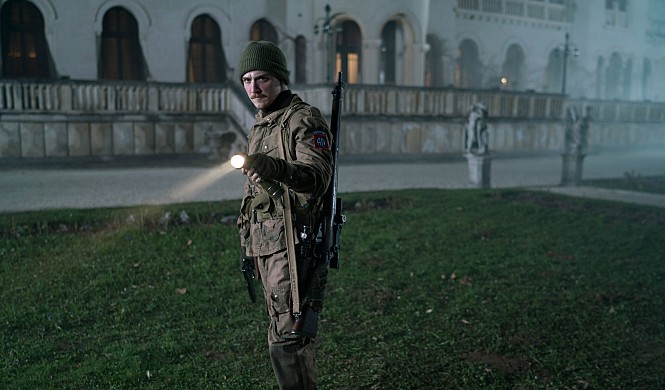
Tenet (2020) ☆☆1/2(2.5/4): An ambitiously confusing misfire from Christopher Nolan

I often felt impatient and baffled as watching Christopher Nolan’s new film “Tenet”, whose theatrical release was delayed for a while due to the ongoing COVID-19 pandemic before it is eventually set to be released in several countries including UK and South Korea on August 26th. While there are a number of superlative action sequences to be admired for good reasons, the movie ultimately left me cold and dissatisfied as being mired too much in its increasingly convoluted plot which I observed from the distance without much care, and I still feel conflicted while simultaneously recognizing its strong and weak points at this point.

The movie opens with a spectacular action sequence set at a concert hall in Kiev, Ukraine. Shortly after many audiences waiting for a symphony concert are suddenly held as hostages by a group of armed guys, several special police units surround the hall, but it soon turns out that there is a plot behind this hostage situation, and that is why an unnamed CIA agent played John David Washington has already infiltrated into the scene.

It initially seems that his mission has been accomplished despite a few setbacks, but our agent hero subsequently faces a serious matter of life and death, which actually turns out to be a sort of test for him. Now an officially dead person, he is assigned to a mysterious agency called, yes, Tenet, and then he comes to learn a bit more about what his new organization has been doing while maintaining its clandestine status. As he already witnessed during his previous operation, many different objects apparently defying the laws of physics in terms of time and entropy have recently appeared, and he comes to learn from a scientist played by Clémence Poésy that they are associated with a certain futuristic technology called Inversion.

There are certain dangerous people who are going to use this technology for causing the total annihilation of time and space in our world, so our agent hero soon finds himself hopping around many different spots around the world along with a fellow agent named Neil (Robert Pattison). At first, they attempt to meet an elusive Indian arms dealer played by Dimple Kapadia because this arms dealer has a crucial piece of information which may lead to someone at the center of the ongoing conspiracy, and that leads to another breathtaking action sequence where Washington and Pattinson look like really hurling themselves into the air.

The story soon moves onto London, and what Nolan tries to emulate on the screen becomes clearer to us as our agent hero assumes a little more dapper appearance as advised by a minor supporting character played by Michael Caine. With a slick three-piece suit which comfortably contains his character’s dashing attitude and steely toughness, Washington is clearly having a fun with channeling James Bond, and I bet he will be a good alternative to Idris Elba if they ever happen to need a black male James Bond.

The major villain in question is a Russian oligarch named Andrei Sator (Kenneth Branagh), and he surely shows our agent his sheer ruthlessness via often tormenting his long-suffering wife Kat (Elizabeth Debicki), who, of course, comes to function as your average damsel-in-distress to be saved by our agent hero right after their encounter. For rescuing her from her ongoing predicament, our agent hero comes to plan a heist of epic scale at a certain facility, and we accordingly get another awesome action sequence as expected.

Around that narrative point, the aforementioned futuristic technique begins to appear more prominently than before, and Nolan and his crew members advance or reverse all the way while providing a series of unbelievable visual moments which will definitely make you wonder how the hell they pull them off on the screen. While the score by Ludwig Göransson keeps bombarding us with those loud notes, cinematographer Hoyte van Hoytema, who previously collaborated with Nolan in “Interstellar” (2014) and “Dunkirk” (2017), vividly and dexterously captures numerous big moments in the film on 70mm IMAX film, and I was certainly glad to see the movie at a huge IMAX screening room, though, like many other audiences in the screening, I was constantly aware of the ongoing pandemic as wearing a mask as demanded.

However, I must say that it was somehow rather difficult for me to follow what is really going on around our agent hero. Maybe I should have just let myself swayed along with its terrific individual moments, but I felt a lot more confused and frustrated especially during its second half, and I was disoriented a lot particularly during a climactic part where lots of things are busily happening in one direction or another. Although Nolan’s screenplay did lots of explanation just like “Inception” (2010), it unfortunately does not have a single-minded narrative focus which helps “Inception” a lot, and, without getting emotionally or intellectually engrossed much, we come to care less about whatever is exactly happening in the story – or whatever is being actually at stake for its main characters.

On the whole, “Tenet” is an ambitiously confusing misfire which is probably the biggest disappointment in Nolan’s career since “The Prestige” (2006), but, like that flawed film, it has several good elements to be appreciated at least. While Washington demonstrates here again that he can be quite charismatic just like his father, Pattinson often brings some juicy humor to the story as well as his character, and the technical aspects of the movie are as admirable as you can expect from Nolan’s work. Maybe I should watch it again for re-evaluation someday, but, for now, my mind wants to have some mental rest after being exhausted and frustrated with its byzantine logic which seems to be beyond my trivial intelligence.
Posted in Movies | Tagged , , , | 1 Comment

Moving On (2019) ☆☆☆1/2(3.5/4): Summer days at their grandpa’s house

South Korean independent film “Moving On” often made me smile during my viewing, and that is quite an achievement considering what a grumpy guy I usually am. Slowly and tenderly doling out one precious human moment after another, the movie depicts its few main characters with loving care and attention, and you will come to like and care about them a lot more than expected around the time when it eventually arrives at its haunting finale shot along with them.

The movie mainly revolves around the viewpoint of a young adolescent girl named Ok-joo (Choi Jung-woon) and her little younger brother Dong-joo (Park Seung-joo), and the opening scene shows them moving out from their shabby apartment building along with their divorced father on one summer day. Because their current financial situation is quite poor, the father decided to stay at their grandfather’s house for a while, and the grandfather does not have any problem with that, though he remains mostly silent and unresponsive even while seeing his grandchildren again.

Anyway, Ok-joo and Dong-joo gradually get accustomed to their new environment as beginning to spend their free summer days there. During their first night at the house, Ok-joo makes one of upstairs rooms into her own private place, and then we get a small amusing moment when Dong-joo tries to sleep along with her but then only ends up sleeping with his father and grandfather in a downstairs room belonging to his grandfather.

The mood in the house becomes merrier when their aunt comes to the house. As enjoying spending time with her brother and his children, the aunt, who has incidentally stayed in her close friend’s residence since she left her husband, decides to move into her father’s house in the end, and Ok-joo is certainly pleased to have someone to talk with her in private.

And we get to know a bit more about the current economic hardships of Ok-joo and her family. Since a serious business failure of his which happened not so long ago, her father has tried to study hard for passing a certain certification examination, and he has also been quite busy with selling cheap imitation sneakers on streets. At one point later in the film, Ok-joo tries to earn some extra money for herself via selling one of her father’s imitation sneakers without his knowledge, but, not so surprisingly, that eventually puts her into a little trouble with the police, and that leads to a rather humiliating moment for her and her father, who is not angry at all about her misdemeanor but feels hurt by his daughter’s dishonesty.

While there is not much progress for Ok-joo and her family, summer days keep passing as usual, and they often have pleasant moments together in her grandfather’s house. On his birthday, everyone else in the house sincerely congratulates him, and the grandfather looks a little more brightened than before – especially when his grandson actively entertains him and others with his silly dance.

Although he does not speak and act much except taking care of his small green garden full of vegetable and fruit plants, the grandfather seems to like being surrounded by his family members, and his grandchildren get to know him bit by bit as looking here and there around his house, which is always filled with a sense of long history because of many old stuffs including an antique sewing machine on the second floor. Leisurely observing the mood and details shown from the house in the film, I could not help think of the house of one of my deceased uncles, which was also quite old while being full of old memories.

After vividly establishing its main background and characters under the soothing summer atmosphere during its first half, the movie slowly shifts itself onto a little more serious mode during its second half. As the grandfather’s physical condition becomes more deteriorated than before, Ok-joo’s father and aunt come to discuss a lot about what they should do with their father – and what they will have to do with his house if he is sent to a facility for old people. Having been more emotionally attached to her grandfather and his house than before, Ok-joo is not so pleased about what her father and aunt may decide to do, and her resulting emotional conflict also affects her fairly cordial relationship with her younger brother.

While the situation eventually becomes more dramatic as expected, the movie keeps maintaining its low-key tone as usual, and director/writer Yoon Dan-bi continues to handle her story and characters with humane touches. As a matter of fact, you will become so immersed in Ok-joo and her family members’ emotional circumstance that you may get caught off guard when a certain key sequence suddenly ends with a surprise.

As the heart and soul of the film, young performer Choi Jung-woon is simply superb in her unadorned natural performance, and she is also supported well by the other four main cast members surrounding her. As Ok-joo’s loving father and spirited aunt, Yang Heung-joo and Park Hyun-young are particularly touching during a small private scene where their characters happen to let out a bit of their personal feelings to each other, and young performer Park Seung-joon is irrepressible in his plucky acting while Kim Sang-dong often speaks volumes in his mostly wordless acting.

Apparently influenced a lot by the works of Edward Yang and Hirokazu Kore-eda, “Moving On” is a very charming piece of work to be appreciated for many reasons, and I think Yoon, who previously made short film “Firework” (2014) before making her feature film debut here, is another promising South Korean female filmmaker to watch. Like Kim Bo-ra recently did in “House of Hummingbird” (2018), she brings another whiff of fresh air into South Korean cinema, and I will certainly look forward to watching her next feature film.

Posted in Movies | Tagged , , | 1 Comment

An Old Lady (2019) ☆☆☆(3/4): She is not silent anymore

South Korean independent film “An Old Lady” calmly observes and then gradually empathizes with its old heroine’s infuriating situation. While we do not know that much about her even in the end, we are also reminded of how she is unfairly denied of justice she deserves, and it is moving to see her finally expressing herself without any ounce of shame at the end of the story.

After the disturbing opening scene which is thankfully presented on the screen with thoughtful restraint, we get to know the situation surrounding Hyo-jeong (Yo Soo-jung), a 69-year-old woman who has lived with Dong-in (Ki Joo-bong), an old retired poet who has run a small local bookstore. She was recently hospitalized for physical therapy, and she mostly looks fine as being with Dong-in again, but then she reveals to him later that there was some serious trouble during her hospitalization period.

Hyo-jeong and Dong-in go to a local police station for reporting what happened to her, but she cannot help but feel confused and nervous when she attempts to write a report to be submitted to the police. As clearly conveyed to us during the opening scene, she was raped by a young male nursing assistant while they happened to be alone during a night physical therapy session, and she has remained quite traumatized while still trying to process her dreadful memories of that incident.

Anyway, Hyo-jeong manages to write the report in the end, and she and Dong-in subsequently meet a cop assigned to the case, but the cop is not particularly helpful while being insensitive to her and Dong-in at times. Although Hyo-jeong has been more or less than a longtime companion to Dong-in after his wife died, Dong-in is regarded simply as a close friend of hers, so there is nothing much he is allowed to do except standing by her and then notified of whatever will be done for her.

The man who raped Hyo-jeong is eventually taken to the local police station, but, of course, he denies everything while insisting that he and she had a consensual sexual intercourse, and there is not anything to disprove his claim. Although Hyo-jeong managed to keep her hospital clothes tainted with his semen, that is unfortunately not enough to get him indicted for sex crime, and the cop becomes skeptical due to the glaring discrepancies in her testament. For example, she testified that a nurse friend of hers recommended her to go to that hospital in question, but, for some unknown reason, the cop cannot locate that nurse, and then he comes to wonder whether Hyo-jeong incorrectly remembers what happened due to dementia, though she is apparently quite healthy and even goes to a local swimming pool everyday.

As watching his dear companion’s silent suffering, Dong-in becomes more frustrated and exasperated, so he decides to take some action after coming to learn a bit about the man who raped her, but he is reminded of how helpless he and Hyo-jeong are in their ongoing circumstance – especially when he confronts that man in private. He even considers doing something quite drastic, but then he accidentally gets himself injured instead, and Hyo-jeong eventually leaves him as he is being taken care of by his lawyer son now.

During its second act, the screenplay by director/writer Lim Seon-ae stumbles more than once, and that is where I could sense the movie trying a little too hard for drawing from us more sympathy toward Hyo-jeong as well as Dong-in. While a subplot between Dong-in and his son feels rather contrived, a part involved with Hyo-jeong’s new job remains underdeveloped, and the movie only comes to feel like spinning its wheels at times.

Nevertheless, the movie slowly regains its narrative momentum during the third act as firmly held together by Ye Soo-jung, a 65-year-old veteran actress who has appeared in various South Korean films including “Train to Busan” (2016) and “HerStory’ (2017). Even when she does not say anything, we can clearly sense the thoughts and feelings churning behind her character’s phlegmatic attitude, and that is why several key scenes in the film where her character becomes relatively more expressive are effective with some sharp points for us. Regardless of how she looks and wears, Hyo-jeong is a damaged person who definitely deserves more consideration and understanding for her trauma and pain, and Ye presents her character’s mental suffering with considerable sensitivity and dignity.

In case of the other main cast members in the film, most of them dutifully hold each own small spot around Ye. Although I think the film pays a little too much attention to his character, Ki Joo-bong is fine as one of a few characters in the story who genuinely care about Hyo-jeong’s plight, and he and Ye are effortless during the cordial moments between their characters while also implying a long history between them. Kim Joong-ki is solid as a cop who comes to care about his case a bit more than expected, and Kim Joon-kyung is as impertinent as required by his detestable role.

On the whole, “An Old Lady” is imperfect for several reasons including its overwrought finale, but it is still worthwhile to watch thanks to Ye’s splendid performance, and its strong moments certainly resonate a lot with the ongoing #MeToo era. Things are still uncertain for Hyo-jeong even in the end, but she is not silent anymore – and she will continue to speak out on her own terms.

Posted in Movies | Tagged , | 1 Comment

Mississippi Burning (1988) ☆☆☆1/2(3.5/4): Flawed but incendiary

One of my friends often mentions the last places he wants to visit in US, which are usually the ones reported on the media for infuriating cases of blatant racism. I felt same about Mississippi when I revisited Alan Parker’s “Mississippi Burning”, an inherently flawed but undeniably compelling in its vivid and incendiary depiction of the Southern racism during the 1960s. While there are a number of problematic aspects which definitely need to be mentioned and then criticized, the movie is still a first-rate crime thriller which grips and shakes us hard as skillfully thrusting into that violent and dangerous period, and its many unforgettable moments resonate with an inconvenient fact that racism and its long, deplorable history are still alive and well in the American society yet even in 2020.

The story is told mainly through the viewpoint of two FBI agents sent to a fictional county in Mississippi for investigating the disappearance of three young civil rights activists in June 1964. Although their names are never mentioned throughout the film and they are merely named as “Goatee”, “Passenger”, and “Black Passenger” in the end credits, these activists in the film are clearly based on three real-life civil rights activists James Chaney, Andrew Goodman, and Michael Schwerner, whose sudden disappearance in Mississippi did lead to an extensive search and investigation led by FBI at that time.

When Agent Alan Ward (Willem Dafoe) and Agent Rupert Anderson (Gene Hackman) arrive in the county, they instantly sense that they are not so welcomed by many of local white people in the town, and they are not surprised at all when they do not get much cooperation from the local sheriff and his deputies. The sheriff, who is your average sleazy Southern dude, insists that he and his deputies do not know anything, and he even suggests that the case is nothing more than a hoax perpetrated by the activists and their liberal associates who dare to meddle with the way of life in the South.

The activists came to the county for helping local black people on voter registration, and it goes without saying that they were targeted by a local racist group right from the very beginning, but nobody in the county wants to tell anything to Anderson and Ward. While many local white people are uncooperative and hostile to say the least, most of local black people are all the more silent because even a few seconds with the agents can lead to getting themselves lynched or murdered. This is a small town after all, and whatever they might say to the agents can be quickly spread around in the county.

As a guy who was once the sheriff of another small county of Mississippi, Anderson knows better, so he advises Ward not to cause too much disruption, but Ward sticks to the procedures while pushing harder in their ongoing investigation. More agents are brought into the town, and, after the car belonging to the missing activists is finally found somewhere outside the county, he brings in far more people for the following search all over the county.

Of course, the tension surrounding the county is consequently escalated day by day, as reflected by one heart-pounding montage sequence alternating between the search process and a series of hate crimes happening here and there in the county. Thanks to the dexterous editing by Gerald Hambling and the pulsating electronic score by Trevor Jones, we becomes more unnerved by the accumulating conflict in the story, and cinematographer Peter Biziou, who deservedly won an Oscar for his work here in this film, gives us strikingly fiery moments dripping with the raging evil of racism on the screen. As shown from many of his notable films such as “Midnight Express” (1978), “Pink Floyd – The Wall” (1982), “Birdy” (1984), and “Angel Heart” (1987), Parker is a master filmmaker who knows how to engross us with mood and details, and many locations appearing in the film are packed with that distinctive Southern atmosphere and texture while occasionally making us uneasy for the menace and hostility lurking behind their shabby façade.

In the meantime, the screenplay by Chris Gerolmo gives some insight into the source of the racial hatred which often shook up the American society during that period. As reflected by a personal story told by Anderson at one point, many of racist white folks in the South including his own father let themselves blinded and driven by hate just because for looking away from their miserable life status, and that aspect is exemplified well by many racist bullies shown in the film. No matter how much they get away with their vicious hate crimes, they remain to be nothing but pathetic hateful losers, and a bunch of notable characters actors including Brad Dourif, Stephen Tobolowsky, Pruitt Taylor Vince, and Michael Rooker did an effective job of embodying that loathsome aspect. While clearly recognizing the banality of evil observed from their racist characters, the movie often throws to us the gut-chilling moments of violence as required, and I assure you that these moments will make whatever you saw from “The Help” (2011) and “Green Book” (2018) look like Sunday afternoon picnic.

However, despite its good intentions, the movie lacks the perspectives from its black characters, who are, except one outspoken boy who helps Ward and Anderson a bit, more or less than background details unless they are victimized by those racist villains in the film. Sure, the movie shows how much they are afraid or angry about what is happening to them, but it does not delve that deep into their anger, pain, and frustration which certainly have existed for more than 100 years, and it also seriously marginalizes the significant efforts of many civil right activists during that era as mostly focusing on its FBI agent heroes. As a matter of fact, J. Edgar Hoover and his men were more interested in the private life of Martin Luther King Jr. than finding those missing activists, and it is undeniable that Gerolmo’s screenplay fictionalizes its real-life story too much as following genre conventions for maximum dramatic effects.

Nevertheless, the story itself, which can be regarded as your typical buddy cop tale, is captivating because of the strong personalities of its two main characters. Respectively taking very different approaches to their investigation, Anderson and Ward frequently clash with each other, but they eventually come to find a common ground between them as recognizing each other’s determination toward justice, and we accordingly gets moments of dramatic catharsis as they come to go all the way together for their investigation. Although their resulting tactics are morally and ethically questionable, they are fairly acceptable at least in the genre territory of the movie, and the electrifying dynamics between the two lead performers firmly hold the story to the very end. While Gene Hackman effortlessly swings back and forth between his character’s laid-back amiability and unforgivingly righteous wrath, Willem Dafoe somehow succeeds in burying himself completely into his character’s unflappable clean-cut appearance, and he effectively functions as a solid ground for his co-star’s showier acting.

The movie was also one of the early career highpoints for France McDormand, who is poignant as Mrs. Pell, a local hairdresser who may give Anderson a tip on the whereabouts of the missing activists. Unlike her racist husband and many other people around her, she apparently feels wrong about the ongoing injustice in her town, and Anderson deliberately tries to appeal to her conscience step by step, but then he hesitates as he and she come to feel something mutual between them. While facing the hard consequence from her subsequent choice, she comes to reveal a surprising amount of will and strength behind her seemingly timid attitude, and McDormand and Hackman have a quietly touching scene where their characters indirectly recognize how much they are changed by the unexpected emotional development between them.

In spite of its inherent weak aspects including its glaring deficiency in African American perspective, “Mississippi Burning” is a powerful visual presentation of racial hatred and its virulent terror, and it has recurred to me more than once during last decade. When I heard about those racist riots which happened right after the re-election of President Barak Obama in late 2012, I could not help but think of those burning images in the film, and they have been disturbingly amplified in my mind during next several years for the good reasons both I and you know too well. Racism is indeed not through with the American society at all, and things look gloomy and despairing at present, but, despite my growing skepticism, I hope that there is still a chance for the American society and its people to overcome.

Posted in Movies | Tagged , , , , | 1 Comment

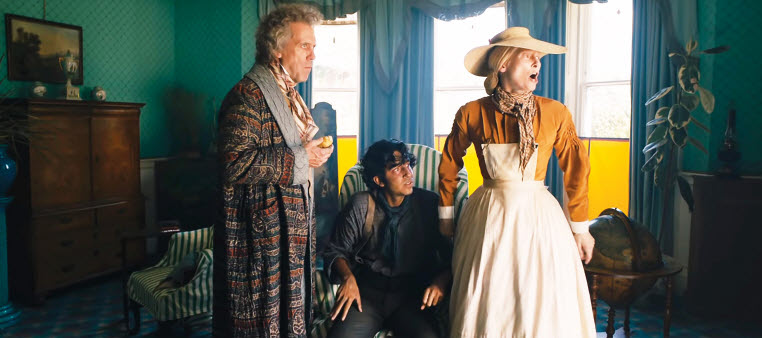
The Secret Garden (2020) ☆☆1/2(2.5/4): An adaptation without enough magic

Frances Hodgson Burnett’s 1911 novel “The Secret Garden” is one of many memorable books in my childhood years. At that time, I simply absorbed its story and characters without much reflection, but then the novel came to grow on me as I reflected on it from time to time, and that was the main reason why I was quite touched when I belatedly watched the 1993 movie version directed by Agnieszka Holland, who did a splendid job of filling the screen with the palpable sense of magic. I had a pretty good idea of what I was going to see, but then I found myself emotionally involved in the story and characters more than expected, and I could really believe the magical healing power of that garden on the main characters of the film.

In contrast, the latest adaptation of Burnett’s novel, which was shot in 2018 but got released in US a few weeks ago, somehow does not have enough magic. While it is competent in technical aspects, I could not help but notice many artificial elements here and there in the film, and I also do not think the considerable modification of the final part of the novel works as well as intended by Jack Thorne’s adapted screenplay.

The movie, which is set in 1947 instead of the early 20th century which is the original period background of Burnett’s novel, opens with the prologue sequence showing the small world of its plucky young heroine Mary Lennox (Dixie Egerickx) in India is suddenly turned upside down due to her parents’ sudden death. Because there is not any close family member to look after her in India, this little girl is promptly sent to England, and then she goes to a big rural manor which belongs to her mother’s brother-in-law Archibald Craven (Colin Firth).

Having been quite depressed for many years since his wife’s death, Mary’s uncle does not give a damn about taking care of his niece at all, so Mary is handed to Mrs. Medlock (Julie Walters), a stern housekeeper who will certainly not tolerate any insolence from Mary. While she has her own room somewhere in the manor, Mary is not allowed to enter certain other rooms, and that makes her quite frustrated and exasperated, though she gets some consolation from a kind housemaid named Martha (Isis Davis)

Nevertheless, the life in the manor still feels dreary and stuffy for Mary. After it was occupied by the British Army during the World War II, the manor does not get repaired or renovated at all due to the lack of any interest from Mary’s uncle, and it certainly feels spooky to Mary whenever she hears strange sounds which seem to be coming from somewhere inside the manor.

Meanwhile, Mary frequently wanders around in the wide estate surrounding the manor, and then she encounters a stray dog which she comes to befriend. Thanks to this dog, she later comes upon a certain secluded spot hidden behind a big wall, and that is how she comes to discover the garden which has been shut down from the outside since her aunt’s death. Full of many different plants and flowers which will make many conservatories look small and plain, the garden surely looks beautiful on the screen, but I must point out that, despite some ruins here and there in it, it looks rather neat although having supposedly been abandoned for around 10 years at least.

Anyway, the garden becomes a special place for not only Mary but also Dickon (Amir Wilson), a wild country boy who is Martha’s younger brother. When Mary meets him for the first time on a foggy field, he looks as if he has just returned from the Wild West, but Mary does not mind that at all because, well, she needs someone to hang around with in the garden.

And there is also Colin (Edan Hayhurst), who is the young son of Mary’s uncle and is also the one who often makes noises at night in the manor. Having been physically weak since his birth, he is quite neurotic to say the least, but he does not mind Mary’s active approach to him for friendship due to his growing loneliness, and it is not much a spoiler to tell you that Mary and Dickon eventually take Colin to the garden for bringing more life to him.

However, the garden in the film does not look that magical enough to convince me on its healing power on Colin. Usually decorated a lot with CGI images, the garden does not feel that realistic or enchanting on the whole, and that accordingly takes me back to how the garden in the 1993 version vividly evokes magic while also firmly grounded in plain realism. I could believe miracle without any doubt while watching the 1993 version, but I could only observe plot manipulations while watching the new version, which did not engage me much even when it resorts to a forced climax later in the story.

At least, the young main performers in the film are solid on the whole. While Dixie Egerickx brings some spirit to her character, Edan Hayhurst and Amir Wilson acquit themselves well, and these three young performers are supported well by several adult performers placed around them including Julie Walters, Isis Davis, and Colin Firth, who looks as shabby and desolate as required by his rather thankless supporting role.

I appreciate that the movie, which is directed Marc Munden, attempts to distinguish itself from the 1993 version and a few other notable predecessors in the past including the 1919 silent film version, but it fails to engross and enchant me, and now I miss the 1993 version more than before. The movie is not a total waste of time, but, believe me, you will have a more productive and enchanting time with the 1993 version.

Posted in Movies | Tagged , | Leave a comment

Project Power (2020) ☆☆(2/4): A flat genre piece without much power

Netflix film “Project Power” does not have much power and imagination to boost its supposedly intriguing story premise, and that is a big letdown to say the least. While initially beginning with considerable potentials, the movie eventually gets devolved into a mediocre crime action drama which will not surprise you much especially if you are quite familiar with its genre territory, and I was also disappointed to see the good efforts from its main cast members being wasted a lot in this pedestrian misfire.

During the opening part, the movie quickly establishes its story promise. A new kind of illegal drug is suddenly distributed around in New Orleans, and this drug, which is incidentally called Power, makes its users have individually different superpowers for five minutes. Although it is relatively more expensive compare to other kinds of illegal drugs, many criminals willingly come to use Power for their crimes, and that certainly generates lots of headaches for the New Orleans Police Department.

In case of a local cop named Frank Shaver (Joseph Gordon-Levitt), he is willing to use Power to stop those unruly criminals powered by it, but, of course, that does not look good at all to his direct boss. Not long after using Power for catching a bank robber equipped with the power of invisibility, he is forced to give up his badge and gun, and his case is taken over by some special agents.

In the meantime, we also get to know Robin Reilly (Dominique Fishback), a young drug dealer who has been associated with Shaver. She hopes that she will get enough money for the medical treatment of her ill mother someday, but it is often difficult for a young adolescent girl like her to sell Power on streets, and Shaver has kindly protected her as well aware of the personal motive behind her little criminal business.

And then the situation becomes quite complicated for Reilly when a guy named Art (Jamie Foxx) enters the picture. For some personal reason, this guy has been looking for a certain figure at the top of the Power distribution in New Orleans, and he approaches to Reilly because she may give him any information which can lead him to that figure in question. Although their first encounter is not pleasant at all, Reilly comes to assist Art because she has no choice from the beginning, and it is not much of a spoiler to tell you that Shaver also gets involved more in this situation while trying to figure out what is really going on in the city.

As its three main characters moving from one narrative point to another, the movie serves us the many different kinds of superpowers generated by the drug in the story. For example, one big bearded guy can smash steel doors only with his bare fists, and we also see a young woman getting a superpower not so different from the one shown in “Frozen” (2013), though that turns out to be not as cool as you might imagine.

However, these and other superpowers demonstrated in the movie are more or less than disposable plot elements to be used and then discarded, and the screenplay by Mattson Tomlin fails to develop any of them into something really interesting. While it is rather amusing when the story tries a bit of scientific explanation on Power, the movie does not delve that deep into how the world may be changed a lot by Power, and then it simply resorts to throwing lots of actions into the screen during its last act.

Thanks to the fairly competent direction by Henry Joost and Ariel Shulman, the action scenes in the movie are adequate in technical aspects, but they are not particularly exciting or entertaining, and we only become more aware of numerous plot holes in the story. While the depiction of the uneasy partnership among its three main characters often feels artificial, the movie frequently makes the situation a little too convenient for them, and you may also roll your eyes as observing how incompetent the bad guys in the film are at times. They surely know what Art really wants, but, to my exasperation, they thoughtlessly waste their human resource instead of strategically using that.

The main performers in the movie try as much as they can despite often being under-utilized. While Joseph Gordon-Levitt is woefully wasted in his functional role which is mainly defined by his sports shirt, Dominique Fishback manages to imbue her underdeveloped character with some life and personality, and it is a shame that the movie does not utilize more of her plucky presence. Jamie Foxx, who previously demonstrated in “Just Mercy” (2019) that he has not lost any of his talent and charisma yet, brings an adequate amount of gravitas to his character, and he also has a brief humorous moment when his character makes a sort of bluff to a bad guy watching over him later in the story. In case of the other notable main cast members, Rodrigo Santoro and Amy Landecker are unfortunately stuck with a thankless job of playing one-dimensional villains, and Courtney B. Vance does not have many things to do either during his very brief appearance.

Although it is not terribly awful, “Project Power” is a pretty forgettable dud due to its glaring lack of personality and creativity to boost its story promise, and I must confess that it is already being evaporated from my mind as I struggle to think of anything memorable in the film. In short, this is one of the biggest disappointments from Netflix during last several years, and I sincerely recommend you to skip it for watching better films on Netflix instead.

Posted in Movies | Tagged , , | Leave a comment

Detention (2019) ☆☆☆(3/4): A historical horror based on video game

Taiwanese film “Detention” is an interesting piece of historical horror which is incidentally based on a popular video game of the same name. Although I do not have any particular experience or knowledge on the eponymous video game, I was entertained by its mood and style nonetheless during my viewing, and I appreciated how a number of creepy moments in the film come to resonate more with the chilling terror of its historical background.

The story is mainly set in one high school located somewhere in Taiwan, 1962, when the country and many of its citizens trembled under the martial law imposed upon them by the Taiwanese government. During this dangerous period, the government was willing to target anyone deemed to be possibly subversive, and its ruthless political purge, which is called the White Terror, resulted in the imprisonment of around 140,000 citizens and the execution of 3,000 ~ 4,000 people among them.

At the beginning, we observe how another day begins in the school as usual. While every female student wears the same neat shirts and skirt, all of male students wear the same brown uniform and hat which make them look like young military recruits, and we see male and female students separately passing the front gate of the school as being monitored one by one by an inspector assigned to the school.

While everyone in the school seems to go along with the constant control and monitoring over them, it turns outs that there is a small group of dissidents inside the school, who have surreptitiously resisted against the government via reading or copying many different books banned by the government just for being left-wing or liberal. Under the guidance of two young teachers, several students including Wei Chung-ting (Tseng Ching-hua) busily copy the banned books in an abandoned storage room inside the school, and they are sometimes a little playful even though they all aware of what will happen to them if they ever get caught by the police. Just like many arrested people including one of their teachers, they will get tortured a lot for extracting confessions from them, and they may be also executed if that suits the police.

The movie subsequently shifts its focus to the viewpoint of Fang Ray-shin (Gingle Wang), a female student who has attracted the attention of Chung-ting. Early in the movie, she finds herself suddenly being left in the school during one late evening, and she is flabbergasted to see how the school is suddenly turned into your average haunted place. While every classroom is empty and barren with no trace of teachers and students, it looks like electricity is cut off the school, so she has no choice but to walk along the dim and creepy corridors only with a lighted candle in her hand.

As she remains quite uncertain about how the hell she ends up being there, Ray-shin encounters a couple of disturbing apparitions, and then she comes across Chung-ting, who also somehow happens to left alone in the school. Sensing that something is quite wrong, they try to get away from the school, but, alas, the road in front the school is flooded due to heavy rain, and they have no choice but to go back inside the school.

Not so surprisingly, strange things keep happening around Ray-shin and Chung-ting, and they naturally become more scared and confused while occasionally experiencing a series of lucid hallucinations. It seems a really bad incident happened in the school, and Ray-shin and Chung-ting come to encounter several spooky entities including a monstrous creature which can be interpreted as the emblem of the White Terror in Taiwan.

While diligently serving one disturbing moment after another during its first half, the movie becomes rather monotonous at times, but then it shifts onto a more realistic mood during the second part, where it finally shows us what really happened in the school as well as what is exactly going on around its two main characters. I will not go into details here for avoiding spoilers, but I can tell you instead that we come to sense more of the growing guilt hovering around the story, and the story eventually arrives at a surprisingly poignant moment of forgiveness and redemption during its finale.

Although the screenplay by director/co-writer John Hsu and his co-writers Fu Kai-ling and Chien Shi-keng is occasionally flat in terms of story and characters, the main cast members fill their spots as much as they can, and their characters come to us as believable human figures to engage us. While Gingle Wang and Tseng Ching-hua carry the first half well together, they are also supported well by the other main performers including Fu Meng-po and Cecilia Choi, and the special mention goes to Hung Chang Chu, who is effectively menacing as required by his crucial supporting role.

On the whole, “Detention” is not wholly without weak aspects, but the overall result is better than expected, and Hsu and his crew members did a competent job of filling the screen with genuinely creepy mood and details while avoiding cheap moments of shock and awe. Although I still have some reservation on whether video games really deserve to be regarded as art, I agree at least that some of them can actually be the basis for entertaining movies, and “Detention” is one of good examples in my inconsequential opinion.

Posted in Movies | Tagged , , , | Leave a comment

Driveways (2019) ☆☆☆1/2(3.5/4): The Old Man, The Boy, His Mother and Her House

Andrew Ahn’s second feature film “Driveways” touches me a lot with its deceptively simple but ultimately sublime presentation of ordinary good people. At first, nothing much seems to happen on the surface as it slowly rolls its modest promise, but then it gradually pulls out genuine emotional moments as closely and tentatively observing more of its main characters, and we find ourselves getting to know them and their lives more than expected.

At the beginning, we are introduced to Kathy (Hong Chau) and her little young son Cody (Lucas Jaye), who are going to the house belonging to Kathy’s recently diseased older sister. Although this Asian American woman has been estranged from her older sister for many years since Cody was born, Kathy has to take care of the house as the only living close family member of her older sister, and she is planning to sell it once the house gets cleaned enough by her.

However, her older sister’s house, which is located in a suburban area of New York state, turns out to be a bigger problem than Kathy expected. While the house looks mostly fine on the outside, water and electricity have been cut off from the house, and, above all, it is full of small and big stuffs bought and then kept by her older sister, who was clearly a textbook case of reclusion. Discerning that she needs lots of time for sorting out those numerous stuffs and then cleaning the house, Kathy decides to stay in the house for next several days, and Cody is not particularly angry about his mother’s decision because that means he will not be sent to a summer camp at least.

As her mother is usually occupied with cleaning the house or doing her main job (She earns her living from the transcription of medical voice records while also hoping to be a certified nurse someday, by the way), Cody often spends time alone. While he has a tablet computer to play with, he sometimes pays attention to the surrounding environment, and he comes to get himself acquainted with Del (Brian Dennehy), a gruff old man who lives in the house right next to the one belonging to Kathy’s older sister. Although nothing much is exchanged between Del and Cody at first, they slowly become accustomed to each other’s presence, and Kathy gladly helps Del at one point when he needs someone to take him to a spot where he plays a bingo along with his old friends.

Now you may have a pretty good idea about what will happen next in the story, but the screenplay by Hannah Bos and Paul Thurteen earnestly avoids clichés as taking time in its character development process instead. While Cody is not your average plucky precocious kid but just a nice and sensitive boy with a certain physical weakness, Del is not your typical wrinkled curmudgeon but just a gentle and thoughtful old man who has simply been whiling away his remaining living years. In case of Kathy, we can infer from her exhausted face that she has struggled a lot during recent years, but we come to gather that is just one aspect of her complex life.

Once these three main characters are fully established along its plot, the movie calmly depicts what is generated from their mutual interactions. As Cody gets closer to Del, Del responds to Cody’s innocent good will through coming to his 9th birthday party, and then he later takes Cody and Cathy to his bingo place, where they come to have lots of fun along with Del’s friends.

The movie also pays some attention to several individual moments of its main characters. While Del is reminded again of the fragility of his current life status during a sad but poignant moment between him and one of his old friends, Cody comes to have a little interest in Japanese manga thanks to two kids in the neighborhood, and Kathy comes to reflect more on how distant she was to her older sister. As handling many different stuffs put here and there in the house, she is often reminded that she does not know much about her older sister’s last years, but she has to move on anyway as continuing to live for herself and Cody.

Around the last act, the mood becomes a little tense as Cody finds that his friendship with Del may not last that long, but the movie sticks to its calm and thoughtful attitude as before, and Ahn wisely lets his main cast members carry the following key scenes. While Brian Dennehy, who sadly died shortly before the movie was released in US, is absolutely spellbinding in his effortless delivery of a plain but touching monologue on life, Hong Chau, an wonderful actress who was the saving grace of Alexander Payne’s unfortunate flop “Downsizing” (2017), demonstrates here that she is indeed a talented performer to watch, and young performer Lucas Jaye is also fine in his unadorned natural performance in addition to holding his own place well between his two older co-stars.

After he drew my attention via his short film “Dol” (2012), Ahn impressed me further with his debut feature film “Spa Night” (2016), a restrained but haunting character drama about a Korean American lad struggling with his homosexuality. After delving into his autobiographical areas in these two interesting works of his, he reaches out to a different territory in “Driveways”, and its many precious moments surely confirm to me again that he is a humane filmmaker who can present story and characters with considerable sensitivity and thoughtfulness. As many of you know, it is usually a lot more difficult to make a film about good ordinary people than making the one about merely bad people, and I am glad to report that Ahn accomplishes that task better than expected.

Posted in Movies | Tagged , | 1 Comment