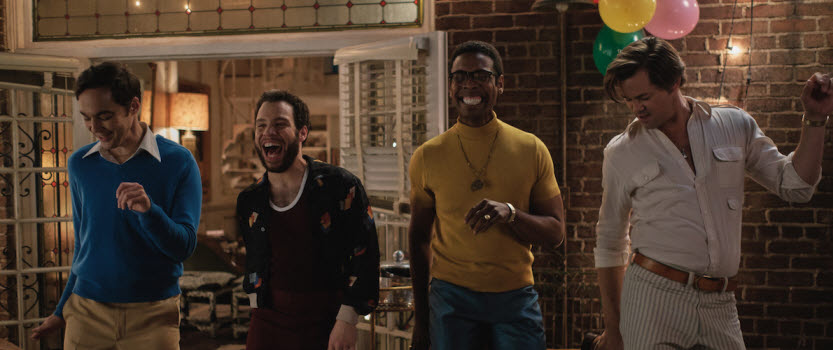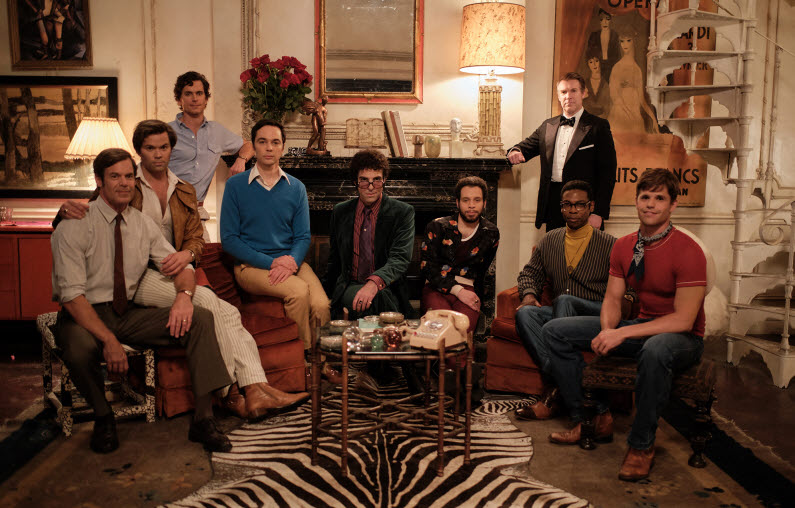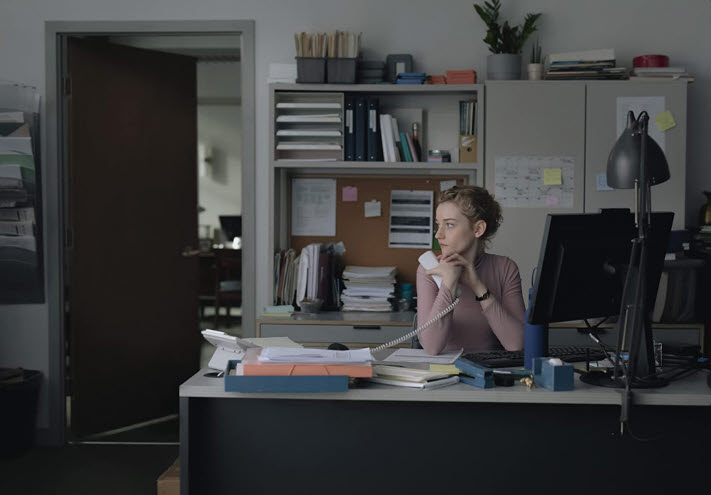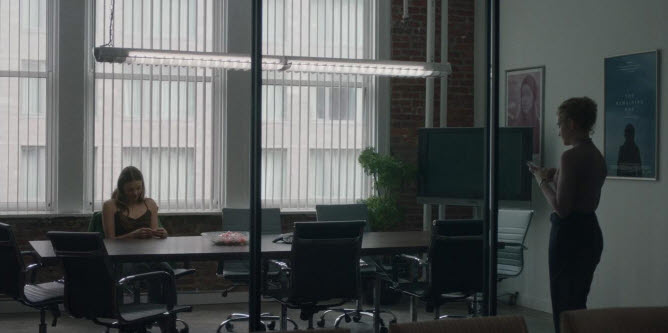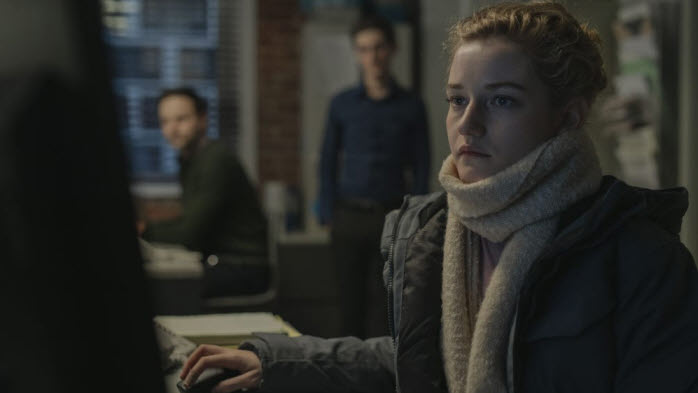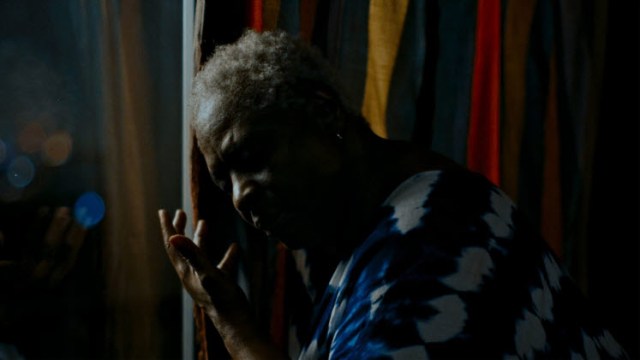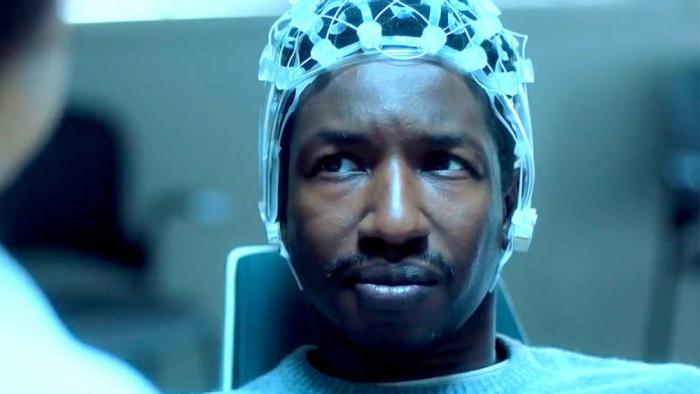
The Social Dilemma (2020) ☆☆☆(3/4): We’re already in a Brave New World now

You may think twice about using the digital applications in your smartphone after watching Netflix documentary film “The Social Dilemma”, which was released in last week. Although I was not particularly surprised by what is presented in the documentary, I was still alarmed a lot by its urgent message on the ongoing social ramifications resulted from the rapid development of digital technology in our time, and it surely made me muse a lot on how much of my daily life has been spent on those social media tools.

Director/co-writer Jeff Orlowski, who is mainly known for “Chasing Ice” (2012) and “Chasing Coral” (2017), approached to a bunch of various experts and technicians for his documentary, and what they respectively tell us is pretty unnerving to say the least. Having failed to control and regulate that amazingly exponential growth and development in digital technology during last several decades, we and our society have been seriously exposed to the dark sides of the resulting Brave New World, and, as many of you know, we are paying a huge price for that at present.

Tristan Harris, a former design ethicist of Google who is currently representing Center for Humane Society, and a number of executives and technicians who once worked in major digital technology corporations such as Google and Facebook, give us detailed accounts on how those major digital technology corporations have manipulated us and our society as amorally maximizing their profits. On the surface, they simply provide us useful communication services without demanding too much from us, but they also gather lots of personal data on us as we casually use their digital applications everyday, and they use those heaps of personal data for holding more attention from us by any means necessary. For example, if you seem to be more interested in a certain subject, they will detect that and then lead you to more stuffs associated with that subject in question, and this is basically how you get daily recommendation on many different digital applications including YouTube.

You may feel fine with that, but there are serious dangers in these seemingly harmless digital algorithms behind YouTube and other numerous digital applications. From the beginning, they are designed to hold your attention as much as possible, and it is pretty easy for you to become addictive to them. Although I managed to avoid Facebook, I have used Twitter for more than 10 years, and I must confess that I used it more than 10 times everyday just for checking any latest news or corresponding with several online friends I came to befriend and trust as we shared our common passion and interest on books and movies. Although I usually do not give a damn about my twits getting ‘Liked’ or ‘Retweeted’, I will not deny that I automatically feel excited and delighted whenever I get recognized by my online friends or some prominent users who will spread my words and opinions to more users out there.

It is certainly awesome to feel like being connected with more people out there, but you must keep in mind that being ‘liked’ on the Internet does not mean much in the end considering how fragile and meaningless that digital status really is. Sadly, we have not educated our younger generation enough on social media tools, and one of the most disturbing moments in the documentary is the one which presents a strong correlation between the rise of social media tools and the increasing number of self-inflicted harm and suicide cases among the minors in US during recent years. Usually craving for recognition and affection, many of young boys and girls are quite susceptible to the negative psychological effects from social media tools, and several psychological experts in the documentary explain to us on how social media tools have been the major source of self-hate and low self-esteem among young boys and girls.

And this is just a tip of the growing negative effects from social media tools and digital technologies behind them. Relentlessly processing and analyzing heaps of personal data they have gathered without any control or regulation, those digital technology companies can actually affect our minds and behaviors, and that is definitely something to be exploited in many ways. For example, that vast amount of personal data will provide their advertisers a sure-fire way to find and then attract numerous potential customers out there, and we have already been going thorough that significant business change at present. When I searched for the certain products of one prominent pharmaceutical company a few weeks ago, Google soon showed the online advertisements of that company to me, and I was amused a little while also chilled by how constantly my online activities are monitored and analyzed everyday.

Above all, social media tools can be used for spreading misinformation to cause more social instability and polarization. As attested by one statistical report, fake news can be spread far faster than real news on the Internet because social media tools are inherently designed to go for more attention and sensation, but those digital technology corporations running them have done almost nothing about that as single-mindedly focusing on more profit and influence. As a result, more and more people are pushed toward the opposite ends on the Internet while also becoming quite disconnected from each other, and that is the main cause behind the fearful rise of right-wing political groups around world including those deplorable folks supporting Donald J. Trump, who has surely benefited a lot from that as shown from his shocking victory in the 2016 US Presidential Election.

Soberingly recognizing how much our civilization has been threatened by the ongoing digital technology development, the documentary suggests that there is still some hope for us. Yes, we will not be totally free from digital technology at all as having already passed the point of no return, but we still can do lots of things about the growing problems with social media tools, and the documentary strongly argues for how necessary legal regulations on social media tools are, though I am still skeptical about whether our society will get that necessary change within this decade.

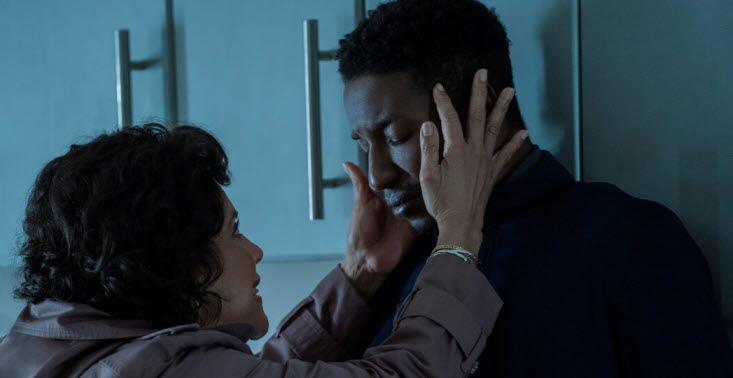
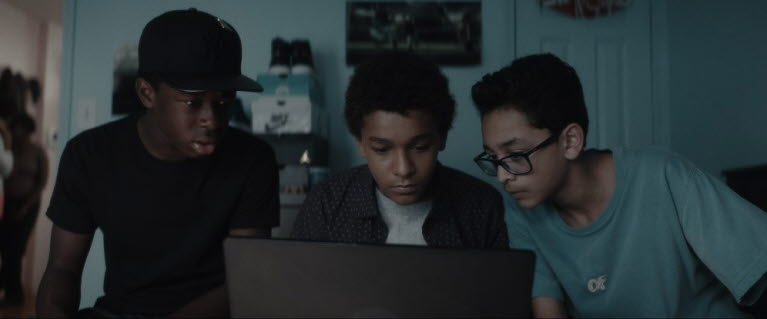
I must point out that it feels rather heavy-handed especially in case of a fictional narrative featuring a bunch of performers including Kara Hayward, Skyler Gisondo, and Vincent Kartheiser, but “The Social Dilemma” did its job as well as intended, and it will linger on your mind for a while after you watch it. Yes, I will post this review on my personal blog and then notify it to my many Twitter followers, but I have already promised to myself that I am going to try to minimize the amount of time I spend on social media tools, and you will soon see my following efforts – for a while at least.

Posted in Movies | Tagged , | Leave a comment

Cuties (2020) ☆☆☆1/2(3.5/4): A wild and vibrant coming-of-age drama to admire

French film “Cuties”, which has unjustly faced lots of controversy on the Internet due to misguided promotion since it was released on Netflix a few days ago, deserves to be admired for a number of good reasons. While it is surely uncomfortable to watch at times because of its raw and forthright juxtaposition of adolescent sexuality and sexualized female physicality, the movie eventually comes to us a wild and vibrant coming-of-age drama packed with lots of energy and sensitivity, and this uncompromising piece of work will continue to challenge your mind even after it is over.

The story is mainly told through the viewpoint of Amy (Fathia Youssouf), an 11-year-old Senegalese French girl who recently moves to an apartment building located in a poor neighborhood area of Paris along with her mother and two younger brothers. Although their new residence is rather shabby, Amy and one of her two younger brothers are already clashing over having each own private place, and she wants to use one particular room, but her mother decided in advance that the room will be left empty for Amy’s father, who is currently in Senegal but will probably return some time later.

As following its heroine’s daily life, the movie gradually lets us get to know more the conservative religious environment surrounding her. Along with many other African Muslim women in their neighborhood, she and her mother often attend a prayer meeting supervised by Amy’s old aunt, who often emphasizes on how they should behave well as good and faithful Muslim women. Not so surprisingly, Amy usually gets bored and suffocated in this isolated environment, and it goes without saying that her mind is drifted away to somewhere without paying any attention to her aunt’s summon.

Meanwhile, something starts to draw Amy’s attention. On one day, she happens to encounter a girl of the same age in the apartment building, and she cannot help but impressed by how much this girl looks free and confident. She later meets this girl again in a local school to which she is transferred, and she comes to have more curiosity and envy as watching from the distance how this girl and three other girls around her look cool and pretty in their appearance.

Eventually, Amy clumsily approaches to these four girls, who let her join the group although they do not regard her that highly from the beginning. Compared to them, Amy looks quite plain in many aspects, so she is willing to do anything for being accepted by them, and the aforementioned girl, Angelica (Médina El Aidi-Azouni), does not mind helping Amy a bit as they come to spend more time together than expected.

Angelica and three other girls’ current agenda is getting accepted into an upcoming adolescent dance competition, and I must tell you in advance that their dancing is not that innocent and wholesome at all. Although still far from adulthood, the girls usually wear gaudy clothes and heavy make-ups, and they do not mind fully exhibiting their developing sexuality just for beating their possible competitors, most of whom are incidentally a little older compared to them.

Regardless of whether she is really comfortable with this or not, Amy finds herself more drawn into the very tricky status of her new friends because she feels less suffocated and frustrated whenever she spends time with them outside. At her home, there comes a significant domestic change involved with her father, and there is a restrained but painful scene where she happens to witness how much her mother will have to sacrifice because of that. While her mother keeps her appearance firm and steady as usual, Amy understandably becomes more exasperated and confused, and we are not so surprised as she commits a number of misdemeanors she probably never imagined before.

Maintaining its non-judgmental attitude as before, the movie stays close to its heroine’s confused state of mind which is further agitated by her burgeoning womanhood as well as her repressive life condition, and director/writer Maïmouna Doucouré, who received the Directing Award when the movie was shown in the World Cinema Dramatic Competition section of the Sundance Film Festival early in this year, adds a few unexpected moments of magic realism into this increasingly intense mix. I was amused a bit by a little key moment preceded by a sudden hallucinogenic sight, and I also appreciate a magical moment effortlessly delivered during the final shot of the film.

As its heroine goes wilder for her emotional ventilation, the movie gives us several deeply uncomfortable scenes including the one where she unwisely attempts to seduce a minor supporting character, but these scenes work in the context of her bumpy and turbulent emotional journey, and they never look exploitative even while certainly unnerving us a lot. As watching the climactic part involved with the aforementioned dance competition, I frequently winced and cringed, but I could not help but watch as sensing our heroine’s emotional struggle which is as harrowing as that of Rinko Kikuchi’s adolescent character in “Babel” (2006), and what happens next is totally understandable to say the least.

Doucouré also handles well her main cast members led by Fathia Youssouf, who is simply astounding in her nuanced natural performance which functions as the beating heart and soul of the film. While Maïmouna Gueye and Mbissine Therese Diop are solid as two different adult women in Amy’s daily life, Médina El Aidi-Azouni is also effective in her substantial supporting role, and Demba Diaw steals the show as Amy’s plucky younger brother (Note: For handling her child performers with enough caution and consideration on the set, Doucouré consulted with a child psychologist during filming).

On the whole, “Cuties” is definitely not something you can casually watch on Sunday afternoon, but it is still worthwhile to watch for its considerable emotional power, and it deserves to be compared with other notable female coming-of-age drama films such as Catherine Hardwicke’s “Thirteen” (2003) and Céline Sciamma’s “Girlhood” (2014). With this remarkable debut film of hers, Doucouré demonstrates here that she is another promising female filmmaker to watch, and it will be interesting to see how much she will advance during next several years.

Posted in Movies | Tagged , , , | 1 Comment

Critical Thinking (2020) ☆☆☆(3/4): Predictable but exemplary

“Critical Thinking” is another inspirational sports drama film based on a real-life story, but it distinguishes itself to some degrees compared to other similar films out there. While it is rather predictable and contrived at times, it still holds our attention as a sincere and thoughtful tale about a group of inner city high school chess players who come to excel themselves under the guidance of their passionate educator, and its several flaws are mostly compensated by a number of exemplary moves along the narrative.

Set in Miami, Florida in 1998, the movie quickly introduces to us several high school students learning chess from a teacher named Mario Martinez (John Leguizamo). Although these and most of other students were sent to his class just for causing troubles in the school, Martinez has tried to instill the interest in chess in them nonetheless because he believes that playing chess not only stimulates their intelligence but also improves their self-esteem as a ‘great equalizer’. As a result, some of his students, who turn out to be much smarter than they seemed on the surface, have been his favourite students, while others remain to be more or less than, well, bystanders simply spending time there.

While mainly revolving around Martinez’s chess class, the movie gradually establishes the harsh reality surrounding his three favourite students: Sedrick (Corwin Tuggles), Ito (Jorge Lendeborg Jr.), and Rodelay (Angel Bismark Curiel). Their Latino-Black neighborhood in Miami is constantly riddled with crime, violence, poverty, and there is a sudden shocking moment involved with a new student of Martinez’s class. Everyone in the class is certainly shocked by the incident, but that is something happening around them from time to time, and they keep moving on as before.

In addition, things have recently been quite difficult for Ito and Sedrick. While Ito is often late for his class as struggling to earn his living alone via nighttime work, Sedrick has been quite distant to his father as his father is still full of grief and anger due to the unfortunate death of his wife, and his father also constantly ridicules him because, as reflected by a brief bitter moment between them, he thinks his son is not that good enough for playing chess.

Meanwhile, Martinez decides to boost his students’ talent further. He needs four very good chess player students for a small local chess tournament, so Sedrick volunteers to persuade Gil (Will Hochman) to return to their chess class and fill the remaining fourth spot, though there was a rather unpleasant incident between them which led to Gil quitting the class.

Once Gil agrees to join the class again, everything goes well for Martinez and his four students, and then they win the first prize at the local chess tournament, but, alas, there comes an obstacle when they are about to prepare for a bigger local tournament to attend next. Although the principal of the high school understands well Martinez’s passion, the board of the school refuses to provide the expense for that as being more interested in other sports activities, and Martinez eventually decides to take care of all the expense for himself.

After obtaining another victory, the mood becomes more spirited among Martinez’s students, but, of course, there come a few conflicts as expected. After getting fired from his nighttime job, Ito becomes more desperate than before while also having lots of self-doubt, and that eventually leads him to the association of a certain notorious criminal figure in his neighborhood. After clashing hard with his father at one point, Sedrick finds himself living outside his residence for a while, and that surely affects the ongoing relationship with his girlfriend.

Occasionally stumbling at times, Dito Montiel’s screenplay steadily accumulates narrative momentum as usual, and director John Leguizamo and his crew members did a good job of filling those key chess play scenes in the film with enough interest and excitement. When Rodelay, who has been quite confident as a seasoned street chess player kid, and his classmates happen to encounter a Cuban boy who turns out to be more than a match for him, they subsequently recruit this Cuban boy, and there is a wonderful scene where he demonstrates his exceptional talent and skill in front of Martinez and his students.

When the story eventually arrives at the climactic part, we can clearly see the outcome in advance, but we are still rooting a lot for the young heroes of the movie, and Leguizamo wisely lets his young co-performers take the stage as humbly holding the center. While Jorge Lendeborg Jr. and Corwin Tuggles are relatively more prominent due to their characters’ dramatic arcs, Angel Bismark Curiel, Will Hochman, and Jeffry Batista are also solid on the whole, and Rachel Bay Jones and Michael K. Williams bring some human touches to their functional roles.

Although it does not surpass other notable chess drama films such as “Searching for Bobby Fischer” (1993) or “Fresh” (1994), “Critical Thinking” is a well-made chess drama film which has enough personality and substance, and I particularly appreciated its vivid urban atmosphere accompanied with cultural/ethnical details. As pointed out in the middle of the film, there is indeed the need for more positive representations of colored people out there in the American society, and I think Leguizamo accomplishes his mission as well as intended.

Posted in Movies | Tagged , , , , , | Leave a comment

Calm with Horses (2019) ☆☆☆(3/4): A fatalistic Irish crime drama about one ex-boxer

“Calm with Horses”, which was released in US as “The Shadow of Violence”, is a fatalistic crime drama which virtually announces its ill-fated hero’s doom to us right from the beginning. No matter how much he tries, he is bound to be mired more in a mean and dirty world of crime and violence, and he somehow senses that to some degree as reflected by his phlegmatic narration during the opening scene, where he commits another brutal act of violence as ordered.

As following his recent trouble, the movie lets us get to know more about Douglas “Arm” Armstrong (Cosmo Jarvis), an ex-boxer who has worked as the chief enforcer of a crime family in his rural Irish town. There was a time when he had a promising professional boxer career, but he subsequently quit due to some unfortunate incident, and that was how he came to work under his close friend Dymphna (Barry Keoghan), a cocky lad who is one of the main members of the aforementioned criminal organization.

The trouble in question was caused by a very unpleasant incident which happened during one night when Dymphna and other members of the criminal organization had a drinking party together. While almost everyone got asleep thanks to lots of alcohol and drug, one of the members happened to enter the bedroom belonging to Dymphna’s adolescent sister, and it seemed that this guy did something quite wrong to her. Dymphna’s two bosses, who are also his uncles, are certainly angry about this incident, but they also see that they must take care of it as soon as possible for protecting their criminal business, so they order Dymphna to do the job on behalf of them.

However, Dymphna, who turns out to be quite weak-willed behind all these casual swaggers of his, hesitates as facing how serious the situation really is. What his uncles demand him to do looks beyond his ability and guts, but his uncles keep pressuring on him day by day, so he has no choice but to force Arm to do the job instead of him, while also emphasizing to him that their survival comes first above all else.

In case of Arm, this quiet and reticent dude also becomes quite conflicted as being pressured by his criminal organization. While he has not had much compunction about beating people as ordered by his friend, what he is demanded to do is a very different thing to say the least, and he comes to agonize over what he should do under this difficult circumstance, where he will face a serious consequence in one way or another no matter what he chooses to do in the end.

Meanwhile, the movie also focuses on Arm’s estranged relationship with his ex-girlfriend Ursula (Niamh Algar), who has raised their young autistic son with her mother since she left him. Ursula and her son are probably the only persons Arm really cares about besides Dymphna, but Ursula is considering leaving the town for providing a better environment for her son, and Arm is not so pleased to learn of that. He tries to be a good father for their son, but he is pretty clumsy as your average inarticulate macho guy, and, most of all, he does not understand their son’s autism at all from the start.

At least, there comes a little unexpected sensitive moment for him later in the story. At a local horse training farm where Ursula and her son often visit, a horse trainer, who has incidentally been quite close to Ursula. suggests a bit of horse ride to Arm, and Arm’s mood gets brightened up a little as riding a horse for a while in front of Ursula and their son.

However, Arm soon finds himself getting himself into a bigger trouble as the screenplay by Joseph Murtagh, which is based on Colin Barrett’s short story of the same name, takes an expected plot turn, and director Nick Rowland accordingly increases the level of tension as required. For example, there is a gut-wrenching moment when Arm and Dymphna belatedly come to realize what can possibly happen to either of them, and that naturally puts lots of strain onto their supposedly strong friendship.

While what follows next is predictable to the core, Rowland’s competent direction keeps things rolling toward the inevitable narrative point, and the movie is also supported well by its main cast members. Cosmo Jarvis, who has been mainly known for his musician career and previously drew our attention for playing a crucial supporting role in “Lady Macbeth” (2016), is impressive in his effective embodiment of his character’s brutality and vulnerability, and the other main cast members around him hold each own place well around him. While Barry Keoghan, who has been more prominent since his chilling breakout turn in “The Killing of a Sacred Deer” (2017), balances his character well between arrogance and cowardice, Niamh Algar brings some warmth as one of a few bright spots in the story, and David Wilmot and Ned Dennehy are well-cast as two crime bosses who are very different from each other but will do anything for protecting their business.

Overall, “Calm with Horses” is a pretty familiar genre piece, but it is fairly engaging thanks to Rowland’s competent direction. As a seasoned moviegoer, I just observed its story and characters from the distance as knowing well where it is going, but its good elements including Jarvis’ strong performance still held my attention nonetheless, so I recommend it with some reservation.

Posted in Movies | Tagged , , | Leave a comment

I’m Thinking of Ending Things (2020) ☆☆☆1/2(3.5/4): I’m Thinking of Many Things

I am thinking of many things as reflecting on Charlie Kaufman’s new film “I’m Thinking of Ending Things”, which was released on Netflix two days ago. Because I happened to be dizzy and sleepy when I watched it for the first time this morning, I was not so sure about whether I really understood what it is about or how it is about, so I re-examined it again several hours later, and I came to appreciate more of many baffling but sublime moments in the film. While they often do not make sense together at first, they somehow are developed together into a singular presentation of melancholic and desperate human conditions, and the overall result feels all the more poignant to me as I reflect more on what I observed from the movie.

Like many of Kaufman’s notable works such as “Synecdoche, New York” (2008), the movie, which is based on the novel of the same by Iain Reid, begins with a deeply melancholic state of mind, and that state of mind belongs to a young woman played by Jessie Buckley. During the opening scene, she says to herself that she is thinking of ending things, but she does not specify what she exactly wants to end, and the only thing we can be sure about at this point is that she has not been so happy about the current status of her life.

Anyway, she tries to look fine when she is about to join her boyfriend Jake (Jesse Plemons) for visiting together Jake’s parents, who have lived in a remote farmhouse located somewhere in a rural region of Oklahoma. Because she has some work to be done till the next day, she wants to return as soon as possible, and Jake assures to her that there will not be any problem with that, though it is apparent that a big snowstorm is coming.

The following extended sequence solely focuses on what is exchanged between these two main characters as Jake drives his car to his parents’ farmhouse. As watching the bleak wintry landscapes which they are passing by, she cannot help but talk about a number of things with Jake, and Jake is willing to interact amiably with her, but it gradually becomes clearer to us that how disconnected they actually are. We naturally come to wonder: does the title of the movie reflect her desire to end her relationship with Jake?

Anyway, our two main characters eventually arrive in the farmhouse of Jake’s parents, which somehow feels quite barren even though Jake’s parents seem to prepare to greet Jake and his girlfriend. As spending a little time outside with his girlfriend, Jake shows her a couple of rather unpleasant things inside the farm, and she cannot help but reflect on the inevitability of death – and the fact that human beings are possibly the only biological entities on the Earth constantly aware of the existential dread of death.

When they later enter the house, Jake and his girlfriend are perplexed by the silent emptiness of its interior space, which feels more like a museum of personal memories rather than a lived-in residence. Although Jesse’s parents, played by Toni Collette and David Thewlis, eventually appear, they look rather strained with their exaggerated attitudes, and, ironically, Jake becomes more uncomfortable than his girlfriend as they spend more time with his parents.

Of course, as it gets darker with more snow from the sky outside, his girlfriend wants to leave more than before, but weird moments start to pop up here and there around her. For example, Jake and his parents suddenly disappear from her sight more than once, and then it is followed by an odd sequence where she seems to behold a jumbled mix of different temporal states of Jake’s parents.

In addition, we also become more uncertain about who she really is. Her name and occupation keep being changed whenever they happen to be mentioned by Jake, and she comes to look more like an amalgam of a number of different persons in the life of somebody else – especially after a brief but crucial moment involved with what she accidentally discovers in the basement of the house.

Anyway, she and Jake eventually leave, and we get another extended sequence unfolded between them in the car, which feels more intense than the previous one. Their conversation jumps from one thing to another until Jake decides to stop by a certain unexpected spot, and you may be amused by a rather heated discussion on John Cassavetes’ great film “A Woman Under the Influence” (1974).

I will not go details on what is presented during the rest of the film, but I can tell you instead that I came to admire more Kaufman’s bold attempt to baffle and intrigue us. During one unforgettable poetic moment, the soundtrack is dramatically brightened up as cinematographer Łukasz Żal’s camera, which has intensely focused on the characters within the deliberately limited screen ratio of 1.33:1, becomes a bit more fluid than before for vividly capturing the dramatic impact during this moment, and what follows next is a sad and poignant final touch to what has been steadily mixed and built up for that under Kaufman’s dexterous direction.

Kaufman also draws richly nuanced performances from his main performers, who bring lots of human qualities to their respective roles. As Jesse Plemons, who has been one of the most promising new talents in Hollywood since his substantial supporting turn in Paul Thomas Anderson’s “The Master” (2012), ably holds the ground as demanded, Jessie Buckley, who was absolutely terrific in “Wild Rose” (2018), shows more of her versatility while deftly containing multitudes as required by her role, and Toni Collette and David Thewlis have a lot of fun as effortlessly swinging around the different modes of their characters.

Since he drew our attention for the first time with his Oscar-nominated screenplay for “Being John Malkovich” (1999), Kaufman has kept impressing and entertaining us with his playful but ultimately intense and serious exploration on human life and mind, and “I’m Thinking of Ending Things” is another superlative outcome from his ongoing artistic progress. While “Synecdoche, New York” remains to be his magnum opus in my humble opinion, this film is surely as haunting and thought-provoking as we can expect from Kaufman, and I am already eager to see whatever will come next from his undeniably creative artistic mind.

Posted in Movies | Tagged | 1 Comment

The Invitation (2015) ☆☆☆(3/4): One suspicious dinner party

“The Invitation” is a little but solid piece of work which deftly toys with sinister possibilities. Right from the beginning, we feel rather uneasy and uncomfortable about what is being unfolded in front of us, and we come to wonder what is really going on around its troubled hero and several other persons who happen to be invited to a seemingly cordial dinner party.

During the opening scene, we are introduced to Will (Logan Marshall-Green) and his second wife Kira (Emayatzy Corinealdi), who are going to a dinner party to be held by his ex-wife Eden (Tammy Blanchard) and her new husband David (Michiel Huisman). Around two years ago, something quite terrible happened to Will and Eden, and that eventually led to their divorce, but now Eden and David invite not only Will and Kira but also several other close friends of Will and Eden.

Because Eden has not contacted Will or any of their close friends during last two years, Will wonders why she suddenly invites him and their close friends, and he also cannot help but become uncomfortable as Eden and David currently live in a slick modern house where Eden and Will once lived before their tragedy and the following divorce. He does not mind at all that Eden found someone else to lean on just like he did, but, as reflected by one brief flashback shot, the house instantly evokes old memories which still feel painful to him, and that accordingly makes him more awkward.

However, Eden does not seem to be as troubled as her ex-husband. She looks calm, happy, and peaceful in her appearance, and she and David are gladly serving an expensive type of wine to other guests who already arrived before Will and Kira. Although one of the guests has not come yet, the mood soon becomes more cheerful as everyone drinks and talks, but Will continues to wonder about Eden and David’s intention.

Not so surprisingly, he soon comes to sense something odd about Eden and David. It seems they are planning something more than a mere dinner party, and Will’s suspicion is more increased due to two unexpected guests who are simply introduced as people close to Eden and David. In case of a young woman named Sadie (Lindsay Burdge), it is quite apparent that there is something wrong about her, and her rather neurotic appearance certainly makes a big contrast with an imposing man named Pruitt (John Carroll Lynch), who does not say much but constantly feels like the elephant in the room even though he just stays in the corner as others keep talking and drinking.

Now I should be more careful about describing the plot for not spoiling your entertainment at all, but I guess it is not much of a spoiler to tell you that Eden and David turn out to have something to show to Will and other guests. After a little presentation of what recently saved from their respective pain and grief, they eagerly explain to others on how much they have felt good since then, and that does not particularly click well with Will, who turns out to be still grieving over what happened to him and Eden at that time despite having accepted what was lost forever from them.

Anyway, Kira and other guests subsequently try to brighten up the mood before the dinner is served, and they find themselves playing a little private game as suggested by Eden and David. All they have to do is simply expressing what they want or wish, but then the mood becomes awkward again when Pruitt suddenly says something quite serious in front of others. Although the camera is simply watching him, John Carroll Lynch, who can be quite amiable as shown from “Fargo” (1996) but also can be very sinister as demonstrated in “Zodiac” (2007), firmly holds our attention during that moment, and we accordingly become quite unnerved just like others around him on the screen.

Especially after that moment, Will comes to have more suspicion on Eden, David, and their two strange associates, but he is not so sure about what to do with that. After all, everyone around him still seems to be having a fun time despite those awkward moments, and the atmosphere is more brightened up around the time when the dinner is finally served to them, though his mind is often immersed in the memories of Will and Eden’s past. Are his growing uncomfortable feelings simply caused by the remaining grief and pain inside him? Are David and Eden just a well-intentioned couple who want to share their spiritual experience with others? Or….

Dexterously holding the cards behind its back via a series of effective plot turns, the screenplay by Phil Hay and Matt Manfredi keeps us guessing until it reaches to the inevitable arrival point, and director Karyn Kusama, who has been mainly known for “Girlfight” (2000) and “Destroyer” (2018), did a competent job of dialing up and down the level of suspense along the plot in addition to handling well a small group of performers in the film. Like Lynch, Tammy Blanchard, Michiel Huisman, and Lindsay Burdge often look shady as required, and Logan Marshall-Green and Emayatzy Corinealdi are also effective in their low-key acting.

On the whole, “The Invitation” may not surprise you that much if you are a seasoned moviegoer like me, but it will still engage you via its taut storytelling and good mood, and I personally think it is better than “Destroyer”, which is not good enough in my trivial opinion despite Nicole Kidman’s admirably committed performance. It surely looks modest on the surface, but the movie works better than expected, and you will probably find yourself thinking twice about being invited to a dinner party after watching it.

Posted in Movies | Tagged | Leave a comment

The Personal History of David Copperfield (2019) ☆☆☆(3/4): Broad but spirited

Some of those classic Victorian novels written by Charles Dickens delighted me a lot when I read them during my adolescent and college years. Sure, many of the characters in his novels are essentially stereotypes, but they are strikingly and humorously depicted with colorful personalities and recognizable human qualities, and they will surely stay in your mind for a long time after you read Dickens’ books.

As watching “The Personal History of David Copperfield”, the latest adaptation of Dickens’ 1850 novel “David Copperfield”, I was instantly reminded of how much I loved the novel for a bunch of variously colorful supporting characters swirling around its titular hero. I still wince whenever I think of the sadistic firmness of Mr. Murdstone and his equally cruel sister, I still frown whenever I think of the hypocritical humbleness of Uriah Heep, and I still smile whenever I think of the amiable eccentricity of Betsey Trotwood, Mr. Dick, and Mr. Micawber, to whom I will gladly give some few pounds with no condition from time to time even though I am well aware of his utter unreliability and irresponsibility.

The screenplay by director/co-writer/co-producer Armando Iannucci, who has been mainly known for “In the Loop” (2009) and “The Death of Stalin” (2017), and his co-writer Simon Blackwell manages to condense the novel into a 2-hour film with some necessary omissions and modifications. For example, it emphasizes its titular hero’s presence more as introducing him as a writer who is about to present the story based on, yes, his real life in front of many audiences, and we come to regard his personal history along with him while occasionally amused by several modern touches in the film including its apparent color-blind casting.

After the prologue scene, the movie swiftly goes back to the time of the birth of its titular hero. When his mother Clara (Morfydd Clark) is about to give birth to him, her sister-in-law Betsey Trotwood (Tilda Swinton) unexpectedly appears, and she eagerly expects to have a little niece to adore, but then she promptly leaves once her growing hope is eventually dashed.

Anyway, the next several years are pretty good for young David Copperfield, who is played by Jairaj Varsani during this part. Under the loving care of his mother and a devoted nanny named Peggotty (Daisy May Cooper), he grows up to be a bright plucky boy, and we see him spending some nice vacation time with Peggotty and her family living in a beach town, but, alas, his happiness is evaporated when it turns out that his mother is going to marry Mr. Murdstone (Darren Boyd), who instantly and firmly dominates over their household along his stern, humorless sister Miss Murdstone (Gwendoline Christie).

Of course, it does not take much time for young Copperfield to see more of the monstrous sides of Mr. Murdstone and his sister. While his mother becomes hopeless and helpless as your typical gaslighted wife, young Copperfield is brutally abused by Mr. Murdstone and his sister, and they eventually send him to a glass bottle factory in London, which is incidentally owned by Mr. Murdstone.

After quickly moving forward to several years later, the movie introduces more characters to swirl around Copperfield, who is now played by Dev Patel from this narrative point. He has stayed in a small and shabby residence along with Mr. Micawber (Peter Capaldi) and his poor family, and some of the most amusing moments in the film come from how Mr. Micawber tries to avoid his latest debt problems as much as he can until he and his family are finally sent to a prison. Not long after that, Copperfield comes to decide that enough is enough, so he walks out of the glass bottle factory and then seeks help from his aunt, who hesitates at first but eventually comes to let him stay in her house. She has lived with Mr. Dick (Hugh Laurie), and Copperfield and Mr. Dick, who is as eccentric as Copperfield’s aunt, later come to have a moment of liberation together as Copperfield helps Mr. Dick dealing with a rather silly matter of obsession.

Because he needs to be educated for becoming a proper gentleman, Copperfield is subsequently sent to a progressive school recommended by his aunt’s lawyer Mr. Wickfield (Benedict Wong), and we are introduced to other several crucial supporting characters including James Steerforth (Aneurin Barnard) and Uriah Heep (Ben Whishaw), both of whom turn out to be quite deceitful and harmful in each own way. When Copperfield later meets a pretty young woman by accident, he is instantly attracted to her probably because of a Freudian reason (She is also played by Morfydd Clark, by the way), but we can clearly see that he actually cares more about Agnes Wickfield (Rosalind Eleazar), who has been more or less than a sister to him since their first encounter via her lawyer father.

As briskly and efficiently hopping from one narrative point to another, the movie is mostly faithful to Dickens’ novel on the whole, though the final part of the novel is considerably altered in the film. For bringing more energy and spirit into the story, Iannucci adds extra style and technique to the movie, and the overall result is often compelling while never losing the colorful charm of Dickens’s novel.

The main cast members are suitably cast in their respective parts. While Dev Patel earnestly holds the center, Tilda Swinton, Peter Capaldi, Daisy May Cooper, Benedict Wong, and Hugh Laurie have lots of fun with their oddball characters, and Darren Boyd, Gwendoline Christie, Ben Whishaw, and Aneurin Barnard are as deplorable as required by their supporting roles. In case of Morfydd Clark and Rosalind Eleazar, they are well-cast as two contrasting young women coming into Copperfield’s adult life, and Clark is particularly good during a brief moment revealing some human depth from her supposedly shallow character.

In conclusion, “The Personal History of David Copperfield” is a charming and spirited adaptation which stays true to Dickens’ novel while also bringing some fresh air to its story and characters, and it is surely another successful case of classic literature novel adaptation to be compared with Autumn de Wilde’s “Emma.” (2020). Sure, it is not the definite movie adaptation version of Dickens’ novel, but, like “Emma.”, it tries something different with its familiar story and characters, and it succeeds enough to delight and entertain us.

Posted in Movies | Tagged , | Leave a comment

The One and Only Ivan (2020) ☆☆1/2(2.5/4): A tale of one painting gorilla

“The One and Only Ivan”, which was released on Disney+ a few weeks ago, is a safe and sappy product which does not overcome its several glaring shortcomings much. While I was quite distracted by those talking animals in the film from the beginning, I was also dissatisfied with its weak narrative and flat characterization, and that made me feel more distant to whatever is happening to its animal hero about whom I was supposed to care.

The story is mainly told via the viewpoint of Ivan (voiced by Sam Rockwell), a big Western lowland gorilla who has spent most of his life in the enclosure of some big shopping mall building. As he comes to remember later in the movie, he initially lived somewhere in a mountain jungle area of East Africa when he was very young, but he was sent to US after being captured by poachers, and that was how he came to live with Mack (Ramón Rodríguez), who raised Ivan as a pet but then eventually came to use Ivan as one of various attractions in his daily circus show in the shopping mall building.

As trained by Mack for a long time, Ivan is always ready to look angry and aggressive in front of his audiences, but things have not been so good to Ivan and his animal friends because the number of the audiences has been decreasing during recent years. While he seems to care about Ivan and other animals to some degree, Mack also has to find any possible way for stimulating his circus business, and then he comes to buy a little baby African bush elephant called Ruby (voiced by Brooklynn Prince) because Ruby may attract more audiences than before.

Not so surprisingly, it turns out that Mack is correct in his business intuition. Although she is still shy and insecure, Ruby quickly draws more audiences as being guided by Stella (voiced by Angelina Jolie), an old, gentle African bush elephant who has been a lifelong friend to Ivan. Right from their first encounter, Stella tenderly regards Ruby as a little daughter to be taken care of, and Ruby willingly accepts Stella’s affection while also befriending not only Ivan but also other animals around them.

One of them is Bob (voiced by Danny DeVito), a stray dog who has virtually resided in Ivan’s cage for a while although Mack does not approve of this at all. Although he often says that he prefers to enjoy freedom outside, Bob spends most of his daily life with Ivan, and he also finds himself attracted to Snickers (voiced by Helen Mirren), a white poodle dog which is a current pet belonging to Mack.

And there is Julia (Ariana Greenblatt), a little plucky girl whose father works for Mack as a janitor. She likes hanging around Ivan and other animals, and she is the one who notices Ivan’s certain artistic talent for the first time. As a matter of fact, he can draw pictures with those crayons given to him at one point, and Julia is certainly excited about that. When she later shows his latest works to Mack, Mack is merely amused at times, but then he comes to see another business opportunity, and, of course, that leads to another big success for him and his circus.

Now some of you may think this is too unrealistic, but the screenplay by Mike White is based on K.A. Applegate’s acclaimed children’s novel of the same name, which was loosely inspired by the true story of a Western Lowland gorilla who really could draw pictures. As depicted in the movie, that gorilla drew lots of attention in public for his artistic talent in real life, and that accordingly led to the protests demanding his animal rights.

This is surely a fascinating story subject, but White’s screenplay never delves that deep into how Ivan and his animals have been exploited by Mack. While it is rather murky about how Mack actually feels about Ivan and other animals, the movie also feels a bit too lightweight in the depiction of its animal characters’ living condition, and I often wondered how the hell Mack’s workplace looks so neat and clean even though it has been managed only by him and his very few employees including Julia’s father.

In addition, the movie generates a sort of uncanny valley effect, which is not so far from what I observed from the trailer of “The Lion King” (2019). I did not mind the talking CGI animal figures in “The Jungle Book” (2016) probably because I could easily accept it a fantasy, but the ones in “The One and Only Ivan” felt artificial and distracting to me in contrast, probably because I was constantly aware of the gap between human characters and animal characters throughout the story. Now I am reminded again of a quote from W.G. Sebald, which my late friend/mentor Roger Ebert often used in his reviews: “Men and animals regard each other across a gulf of mutual incomprehension.”

You may be able to overlook this inherent flaw of the film, but it still stumbles due to its weak story and characters. Despite the solid voice performances by its various cast members including Sam Rockwell, Danny DeVito, Angelina Jolie, Helen Mirren, and Brooklynn Prince, most of animal characters in the film are more or less than broad caricature figures to be used for gags and jokes at times, and the same thing can be said about the human characters in the story, though Bryan Cranston and Ariana Greenblatt try as much as they can do with their respective functional roles.

On the whole, “The One and Only Ivan” is not as singular as its very title suggests, and I would rather recommend several better animal films such as “Togo” (2019), which is currently available on Disney+. Even its canine hero cannot talk at all, I found myself rooting for him more than expected, and I also admired the considerable technical efforts put into the screen. In case of “The One and Only Ivan”, I did not care much as recognizing its numerous artificial aspects, and I only became mildly interested in what actually happened to that real-life gorilla. That is not a good sign at all, you know.

Posted in Movies | Tagged , | 1 Comment

Ghosts of War (2020) ☆☆(2/4): Soldiers stuck in a predictable haunted spot

“Ghosts of War” looks like an interesting hybrid of two different genres at first, but it ultimately lets us down a lot. While you may be entertained a bit by how different genre elements clash with each other for a while, the movie is often hampered by its thin narrative and shallow characterization, and then it comes to disappoint us more during its last act as clumsily turning upside down whatever has been established and then developed during its first two acts.

After a grim quote at the beginning, the movie thrusts us into the ongoing situation of five American soldiers at the center of its story. It is around late 1944, and the World War II is approaching to its last chapter after the Normandy Landings, but the situation is still volatile in France as the Allied Forces clash against the final defiance of Nazi Germany, and these American soldiers certainly should be careful as they move around in some rural region of France.

They are ordered to go to a countryside mansion which was once occupied by those high-ranking military officers of Nazi Germany, and they certainly look forward to getting some good rest there while occupying the mansion for a while as ordered, but, needless to say, it turns out that there is something fishy about the mansion. A small group of other American soldiers are already there as waiting for our main characters’ arrival, and they seem quite relieved to leave the mansion, though they do not tell much about why they look rather weary of the mansion.

As the main characters begin to stay in the mansion, its dark secrets are slowly unfolded to them. The mansion belonged to some wealthy local family before the war, but they were all killed when Nazi German soldiers came to the mansion, and the mansion certainly feels like having been haunted as our main characters look here and there around in the mansion. There is a shady and stuffy basement where the old photograph of that dead family is found, and there is also a big library with a strange trace on the floor, which clearly suggests that something terrible happened not so long ago.

As time goes by, more strange things happen to the main characters. While frequently having hallucinogenic moments, they often feel like they are not the only ones living in the mansion, and they cannot help but feel nervous, and that makes them reflect more on some of their war experiences, which are not so pleasant to say the least. They believe without any doubt that the war is being over, but, as reflected by a small personal conversation among some of them at one point, the war still remains inside their mind, and it may never go away for the rest of their lives.

When something quite more terrifying happens, it is subsequently decided that they should leave the mansion no matter what will happen to them because of disobeying the order, but that only leads to more confusion and dread. When they are supposedly going away from the mansion, they discover that they have been already stuck in the mansion and its surrounding area in more than one way, and they have no choice but to go back to the mansion for facing whatever is lurking inside there.

Around that narrative point, the screenplay by director/writer Eric Bress, who previously wrote and directed “The Butterfly Effect” (2004), throws more moments of bafflement and dread as required. As its main characters attempt to delve more into their supernatural matter, we come to notice a number of odd things which do not make sense together at all, and their viewpoint becomes increasingly unreliable when they try to solve their urgent problem once for all.

It is not much of a spoiler to tell you that the movie subsequently shows more of the ghosts of those dead family members, but they are merely disturbing with a series of obligatory moments for cheap shock. These elements are supposed to resonate with whatever our main characters experienced during the war, but then the movie suddenly takes a left turn as blatantly announced to us more than once. I cannot go into details here, but I can tell you at least that this virtually evaporates what has been built up in the story before that narrative point, and that is another major disappointment in the film.

The main cast members of the movie acquit themselves well on the whole, but there are not many things they can do from the beginning, while being stuck with their bland war movie characters. As you have probably noticed, I have simply referred to the main characters as ‘they’ without conveying to you any sense of individuality, and they are merely defined by their appearance and attitude without much personality to engage us. While Brenton Thwaites is the most prominent cast member in the bunch, he does not have enough presence to hold the center, and Theo Rossi, Skylar Astin, Kyle Gallner, and Alan Ritchson are mostly limited by their functional supporting roles.

In conclusion, “Ghosts of War” is a colorless dud which fails to generate any synergy from its genre hybridization. If you want a good recent war movie, I recommend you “The Outpost” (2020); if you want a good recent haunted house flick, I recommend you “Relic” (2020). Believe me, you will have a more productive time with either of these two very different films.

Posted in Movies | Tagged , , , | Leave a comment

The Rental (2020) ☆☆1/2(2.5/4): A competent test run by Dave Franco

Dave Franco’s debut feature film “The Rental” is a modest test run for his nascent filmmaking career. Although it will not surprise you much especially if you are familiar with its genre territory, it is mostly competent on the whole in technical aspects, and you may be more lenient than me to its several shortcomings including its predictable narrative trajectory.

At the beginning, everything looks fine and well for Charlie (Dan Stevens) and his close co-worker Mina (Sheila Vand). They have searched on the Internet for finding any suitable place where they can spend the upcoming weekend along with Charlie’s wife Michelle (Alison Brie) and Charlie’s brother Josh (Jeremy Allen White), and then they happen to come across a seemingly nice beach house which can be rented for two days. Although Mina somehow fails to rent it at first, Charlie subsequently succeeds without much sweat, and Mina, who is incidentally an American woman of Arab descent, wonders whether the owner of the beach house has a racial prejudice against her.

Nevertheless, she still expects to have a fun and pleasant time with Charlie, Michelle, and Josh, who has been in a serious relationship with Mina for a while. It is revealed that Josh’s life has been quite messy and problematic due to his serious anger management problem, but he really wants to make a fresh start along with Mina, and Mina willingly stands by her man as shown from their brief private scene.

When these four people go to the beach house, we can clearly see a trouble right from the start. For example, Mina and Josh decide to bring their little pet dog even though that is not allowed by the owner of the beach house at all, though they manage to hide the dog from a gruff maintenance man who happens to drop by the beach house not long after the arrival of our four main characters. As talking with the maintenance man, who claims to be the brother of the owner of the beach house, Mina eventually lets out her growing doubt on the possible racial prejudice of the owner of the beach house, and that certainly leads to a very awkward moment for everyone around her.

Anyway, the mood among our four main characters subsequently becomes a bit more spirited than before. As watching his brother and his girlfriend being a little closer to each other, Josh wonders whether they are really no more than close work colleagues, but Michelle has accepted her husband’s close relationship with Mina because she has no doubt on her marital relationship with Charlie.

During the following evening, it turns out that Michelle brought a packet of recreational drug. Although she is not going to use it for now because she wants to wake up early and go hiking in the morning, everyone else agrees to use it together, and we soon come to sense something being developed between Mina and Charlie. After Josh and Michelle get asleep, Mina and Charlie come to talk more with each other, and then….

Meanwhile, the screenplay by Franco and his co-producer/co-writer Joe Swanberg, which is developed from the story written by them and Mike Demski, also establishes a sinister undertone around its four main characters. For example, it often looks like somebody is watching them from the distance, and there is also a rather suspicious room hidden in the basement area of the house. In addition, Mina and Josh’s dog is disappeared later in the story (Is this a spoiler?), and that certainly adds more nervousness to our four characters’ increasingly tricky circumstance.

The four main cast members in the film did a solid job of bringing some human quality to their respective roles. Dan Stevens, who looks quite more serious and intense compared to his flamboyant supporting turn in “Eurovision Song Contest: The Story of Fire Saga” (2020), and Sheila Vand, who has been more prominent since her breakthrough performance in “A Girl Walks Home Alone at Night” (2014), are convincing in their characters’ accumulating panic and dread, and Alison Brie, who has been mainly known for Netflix comedy series “GLOW”, demonstrates more of the serious side of her talent while Jeremy Allen White, who is mainly known for his supporting turn in TV comedy series “Shameless”, is also effective as another crucial part of the story.

It was disappointing for me to see that what has been established well during the first two acts of the movie gets crumbled as the movie inevitably enters a certain familiar genre area during its last 20 minutes. At least, there are still several things to be admired on the screen thanks to the good efforts from Franco and his crew members including cinematographer Christian Sprenger, and Sprenger did a commendable job of imbuing several key scenes in the film with a growing sense of uneasiness and menace.

Overall, “The Rental” works as well as intended, and Franco, who was recently wonderful in his brief supporting performance in “If Beale Street Could Talk” (2018), shows here another side of his talent to watch, but the final result does not distinguish itself that much from many other similar genre flicks out there. It surely attempts to add some style and substance to its rather barebone story and characters, but that is not enough for me, and I sincerely wish that Franco will soon move onto better things in his supposedly promising filmmaking career.

Posted in Movies | Tagged , , | Leave a comment