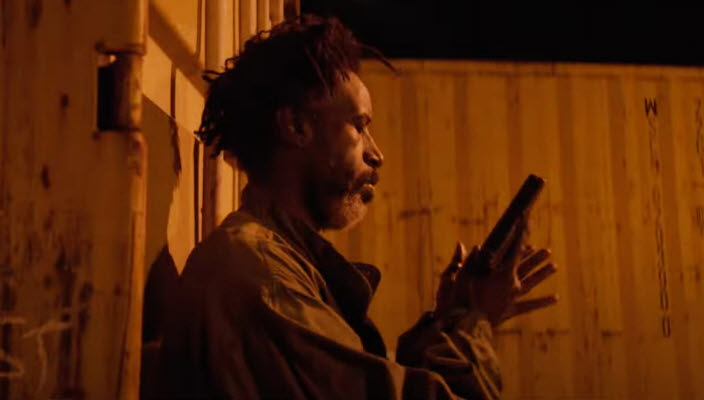
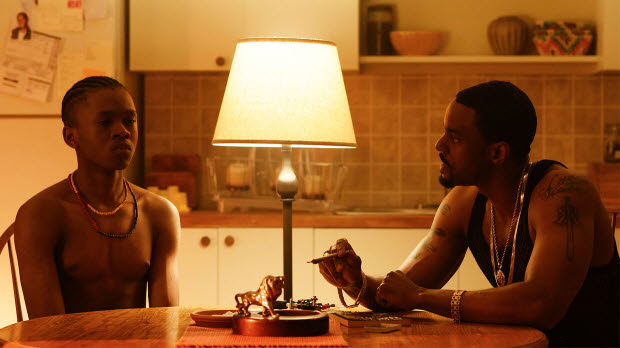
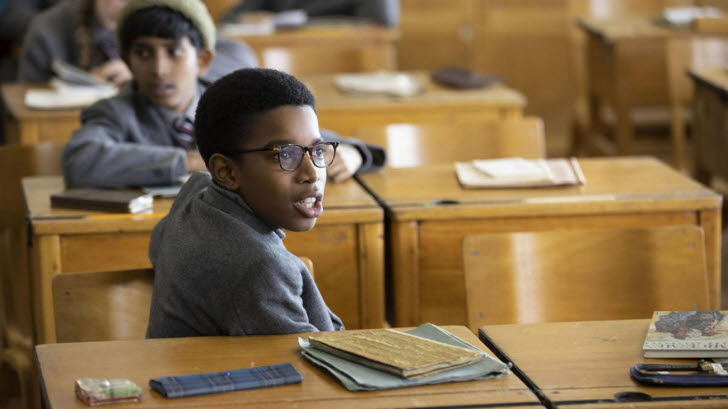
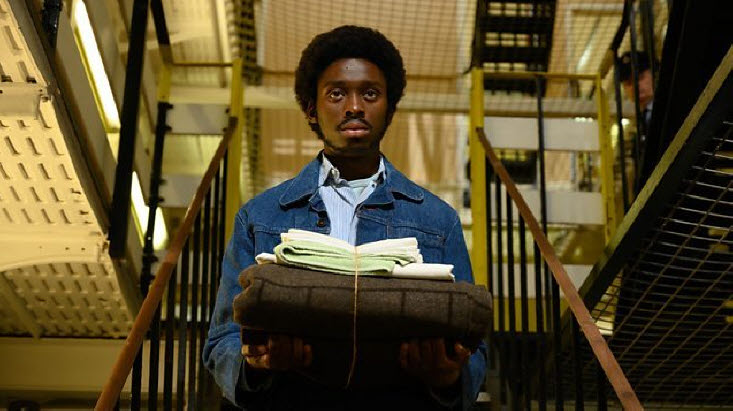
Synchronic (2019) ☆☆☆: A little intriguing SF flick set in New Orleans

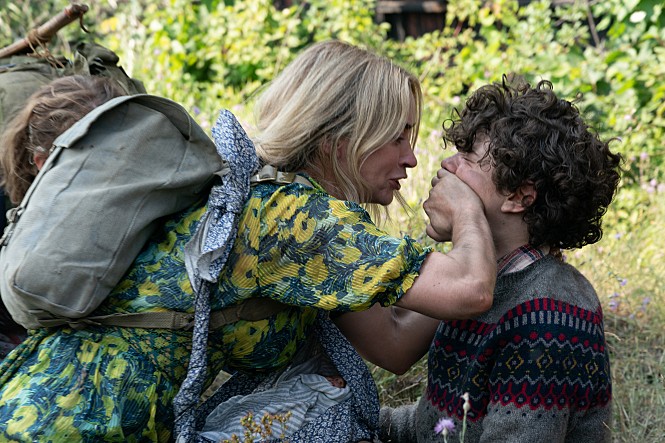
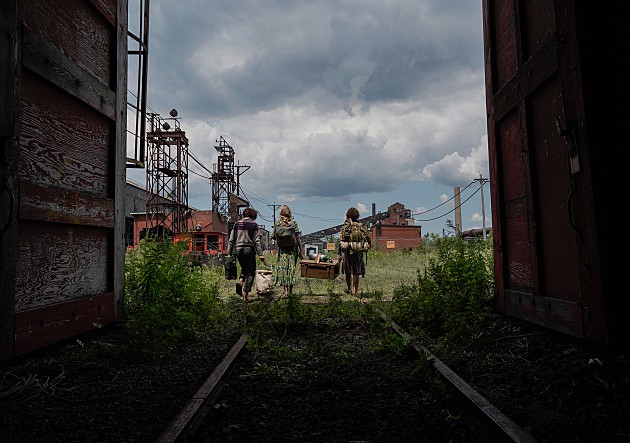
Justin Benson and Aaron Moorhead’s latest film “Synchronic” puts some interesting ideas on a familiar type of science fiction tale. Although I was a little disappointed that it does not fully develop its intriguing story promise, the movie still fairly works well mainly thanks to its several distinctive elements including its authentic local atmosphere, and it is surely another interesting work from Benson and Moorhead.

After the opening scene which clearly shows us what it is going to be about, the movie introduces us to Steve (Anthony Mackie) and Dennis (James Dornan), two paramedics working in New Orleans. While Steve is your typical ladies’ man, Dennis is an average married guy, but they have been close friends for years, and we observe how their different personalities complement each other as they work together every night.

As two seasoned professionals, Steve and Dennis have seen a lot as dealing with various cases of medical emergency, but then they come across a series of mysterious incidents of drug abuse which baffle not only them but also the local cops handling these weird incidents. While it is quite apparent that the people in these incidents took some special type of synthetic drug, many of them are seriously injured for no apparent reason, and one of these cases is particularly strange. The woman in this case is clearly bitten by a certain kind of snake, but that snake in question is supposed to have been extinct for many years.

While handling these baffling incidents along with his friend, Steve finds a clue to that synthetic drug in question, which is named, yes, Synchronic, and he soon begins to track down where Synchronic can be purchased. That turns out to be easier than expected, and it does not take much time for him to realize how risky using Synchronic is. As already shown to us at the beginning, Synchronic is capable of transporting its users to anywhere in the past for a while, and we get some scientific explanation on that from a guy who later approaches to Steve for an urgent motive.

Meanwhile, Benson’s screenplay also focuses on what is going on in Steve and Dennis’ respective private lives. After due to a minor accident involved with possibly contaminated syringe needle, Steve promptly gets himself examined, and then there comes a devastating news which makes him reflect on how his life has been going. Besides Dennis and his family, there is no other people particularly close to him, and he has lived only with a pet dog whose name will amuse you a little for a good reason.

In case of Dennis, he often finds himself feeling rather distant to his dear wife and their adolescent daughter. During one early scene in the film, his daughter and Steve have a little casual conversation as looking at Dennis from the distance, and we come to sense more of the growing gap between her and her father, who is often more occupied with his job and friend while usually taking his family for granted.

The movie sometimes trudges as trying to balance itself between its science fiction plot and its two character’s personal dramas, but it steadily accumulates its narrative momentum at least, and it subsequently delivers a number of nice visual moments while never losing its focus on what is being at stake for Steve and the other main characters in the film. As becoming a man who has nothing to lose with lots of uncertainty in front of him, Steve subsequently embarks on a little personal mission via Synchronic, and we get some amusement as he goes through several trials where he comes to learn some important rules. As time and resource are running out for him, he becomes more obsessive and desperate, and that accordingly causes a considerable rift between him and Dennis.

What follows next is rather predictable, but Moorhead and Benson, who also edited and produced the film, keeps holding our attention via their competent handling of story and mood. In addition to conveying to us well a vivid local sense of people and locations in New Orleans, Moorhead’s cinematography often gives us impressive shots to be admired, and I especially like a long-take shot which fluidly moves around the characters within a small space.

Anthony Mackie and Jamie Dornan give engaging performances as diligently carrying the film together. While Mackie, who has been mainly known for his notable appearances in several recent Marvel Cinematic Universe movies, is relatively more prominent along his character’s dramatic arc in the story, Dornan, who has shown that he is indeed too good to be known only for “Fifty Shades of Grey” (2015) and its two following sequels, holds his own place well besides his co-star, and Ally Ioannides and Katie Aselton are also fine in their rather functional supporting roles.

On the whole, “Synchronic” will not surprise you much if you are a seasoned moviegoer like me, and I was a bit dissatisfied with its several underdeveloped aspects, but the overall result confirms to me that Benson and Moorhead are a talented pair to watch. Although it does not knock me down hard like their previous film “The Endless” (2017) did, it is still a smart and economical genre piece to be appreciated for mood, storytelling, and performance, and I think you should give it a chance someday if you are looking for something different.

Posted in Movies | Tagged , , | Leave a comment

Introduction (2020) ☆☆☆(3/4): A usual exercise by Hong Sang-Soo

South Korean filmmaker Hong Sang-soo’s latest film “Introduction”, which received the Best Screenplay award when it was shown at the Berlin International Film Festival early in this year, is a usual exercise you can expect from Hong. Like many of his films, it is pretty dry and simple in terms of story and characters, but we get some amusement anyway as the camera phlegmatically observes the characters, and the result is another fun work to be added to Hong’s long and steady filmmaking career.

The movie is divided into three acts, and the first act is mainly unfolded at a small clinic in Seoul, which is run by some middle-aged oriental medicine doctor. After the comical opening scene showing this doctor praying to God alone in his office, the movie promptly introduces us to his young son Yeong-ho (Shin Suk-ho), and the movie generates a series of amusing moments of dry humor while Yeong-ho keeps waiting for his father at the clinic. Because his father is occupied with one thing after another, Yeong-ho continues to be stuck in the waiting room, but he has no choice but to wait more because his father wants to meet and talk with him for an unspecified important personal reason.

At least, the situation is not that frustrating for Yeong-ho thanks to the clinic nurse, who has apparently worked there long enough to know him well. When Yeong-ho subesequently goes outside for a little moment of smoking, the clinic nurse soon comes to him, and the mood becomes a little warmer as he and the clinic nurse have some cordial private conversation.

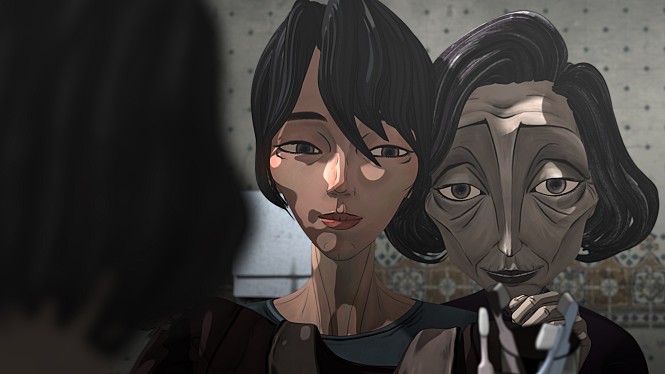
After that moment, the movie moves onto the second act, which mainly revolves around Yeong-ho’s girlfriend Joo-won (Park Mi-so). She and her mother have just arrived in Germany because Joo-won recently decided to study art there, and, fortunately, her mother happens to have a painter friend who can provide Joo-won a place to stay. When they enter the apartment belonging to that painter, Joo-won cannot help but impressed by how beautiful and confident that painter is, and then she comes to have some doubt on whether she will be all right as trying to studying in an environment quite alien to her in many aspects.

Anyway, Joo-won later receives an unexpected message from Yeong-ho, who impulsively decided to come there just for spending some more time with his girlfriend. They agree to meet each other at a spot not so far from that painter’s residence, and the camera patiently observes their following conversation, which seems to be casual on the surface but reveals to us more about their mutual concern on whether they will be able to maintain their relationship even though they will be separated from each other for several years at least.

As subsequently entering the third act, the movie moves back to South Korea, and this part is mainly unfolded in a quiet rural beach town during one cold day. Yeong-ho’s mother is meeting some old veteran stage actor at a small seafood restaurant, and the actor, who incidentally appears briefly as one of the doctor’s patients during the first act, is considerably drunk after drinking several glasses of soju, a cheap Korean alcoholic beverage which has always been a common story element among many of Hong’s works.

Anyway, Yeong-ho’s mother has her son come to this meeting because she has been really concerned about his future. He aspired to be an actor for years, but he was recently discouraged by a rather trivial private conflict, and Yeong-ho’s mother wants the actor to give some pep talk to Yeong-ho as a wise and experienced senior.

However, right from when Yeong-ho arrives along with his close friend, we can easily sense what is bound to happen next. The actor has Yeong-ho and his friend drink along with him just for making the mood more cordial and casual, and we consequently get a cring-inducing moment of social embarrassment when the actor attempts to give some meaningful advice to Yeong-ho but then only comes to end up embarrassing himself as well as others around him.

While sticking to its dry and plain storytelling approach as before, Hong’s screenplay later slips into an unexpected moment around its finale. I will not go into details here, but I can tell you instead that this moment reflects a lot about how much Yeong-ho feels uncertain about himself and his life. Yes, there is still lots of time and life in front of this lad, but he remains not so sure about what to do next as another chapter of his life is about to begin.

Like Hong’s other films, the movie depends a lot on its performers, and they are fairly good in their unadorned acting while occasionally demonstrating precise comic timing. While Shin Suk-ho gradually comes to hold the center, Park Mi-so, Ye Ji-won, Seo Yeong-hwa, Jo Yoon-hee, and Kim Min-hee are engaging in each own way, and Ki Joo-bong, who previously collaborated with Hong with “Hotel by the River” (2018), is fun to watch in his certain highlight moment.

On the whole, “Introduction” is another notable work from Hong, though it is rather superficial compared to his recent films such as “Hotel by the River” and “The Woman Who Ran” (2019). At least, I enjoyed it to some degree, and its rather short running time (66 minutes) quickly passed by when I watched it at a local arthouse movie theater today, so I will not grumble for now.

Posted in Movies | Tagged , | Leave a comment

Apples (2020) ☆☆☆(3/4): Another dry absurd drama film from Greece

“Apples”, which was selected as the Greek entry for Best International Film Oscar in last year, is a dry absurd drama film which is decidedly peculiar right from its very beginning. Although it is not wholly successful in its offbeat exploration of human identity and condition, the movie is still fascinating to watch on the whole nonetheless, and I observed those odd and interesting moments in the film with considerable curiosity and admiration even while frequently feeling distant to its deliberately opaque storytelling during my viewing.

At the beginning, the movie lets us gather slowly what has been going on in the world surrounding its anonymous hero. There has been a strange pandemic which inexplicably causes complete amnesia, and our hero does not seem to mind that much as going through another day, but, what do you know, he is subsequently taken to a local hospital after showing the typical symptoms of that disease in question.

Because there is not anything to show his identity or his residence address, the doctors of the hospital have him stay along with other pandemic patients for a while, and he subsequently goes through a series of simple tests to check his memory ability. Although he still can speak well, his mind seems to be completely blank without any personal memory or knowledge, and there is a little amusing scene where he keeps giving wrong answers during a music association test. Things look pretty hopeless for him, but he seems to remember at least that he likes apples, and we often see him eating apples throughout the film.

On one day, the doctor assigned to him suggests that he should go through a certain rehabilitation program from pandemic patients like him. Despite some reluctance, he agrees to participate in the program, and we soon see him beginning the first day outside the hospital. Now he lives in a small modest apartment, and all he has to do is following the recommendation from a tape delivered to him everyday. In addition, he is also instructed to record that everytime via a Polaroid camera given to him.

Although he is not so particularly enthusiastic at first, he slowly gets accustomed to doing new things day by day. At first, he tries to ride a small bicycle borrowed from a kid he meets at a nearby park, and then he goes to a nightclub party as wearing a showy costume just like many others attending that party. While reminded of his current status from time to time, he becomes more willing to experience one new activity after another, and he always records everything via his Polaroid camera.

In the meantime, something unexpected happens to him. He comes across a woman who is also going through the rehabilitation program, and she makes him join her latest new life experience. As time goes by, it is apparent to us that he is attracted to this woman, and it looks like she is also interested in getting a bit closer to her, as shown from a brief scene where she does something daring along with him inside a public bathroom.

And then there comes a little surprising moment from him at one point later in the film. I will not go into details here, but I can tell you that you will instantly look back at what has been presented on the screen before that narrative point, and you will probably be more interested in what will happen next in the story. Although its eventual arriving point is not exactly satisfying, the movie adamantly sticks to its detached attitude as before, and we come to muse more on whatever is churning beneath its phlegmatic narrative.

This is the first feature film by director/co-writer/co-producer Christos Nikou, who worked as the second assistant director in Yorgos Lanthimos’ Oscar-nominated film “Dogtooth” (2009). Like that memorably strange film about one very nutty family who goes quite extreme within their isolated environment, the movie is cold, distant, and baffling as often intriguing us with peculiar touches and details, and you may chuckle a bit while watching the two main characters in the film talk about an unnamed movie which may sound quite familiar to you for good reasons.

I must confess that I am still wondering how I should interpret the story, but I admire how Nikou and his crew members keep holding our attention as skillfully maintaining the offbeat mood on the screen. Shot in the 1.33:1 ratio, the cinematography by Bartosz Świniarski constantly emphasizes the hero’s isolated status, and the soundtrack of the movie is effective in its utilization of several recognizable pieces of music. In case of the main performers in the film, they all look as serious as possible in their plain appearance, and that certainly accentuates more the dry but odd tone of the film.

Overall, “Apples” will surely require some patience as your typical arthouse film, but it is worthwhile to watch mainly for its distinctive qualities, and Nikou demonstrates here that he is another good filmmaker to watch. Although his movie is not exactly fresh as often reminiscent of “Dogtooth” and Lanthimos’ other works, he will probably come to find and then explore his own territory after this competent staring point, and I guess I can have some expectation on whatever will come next from this promising artist.

Posted in Movies | Tagged , | Leave a comment

Cruella (2021) ☆☆1/2(2.5/4): She is actually not that cruel…

“Cruella” is often uneven and schizophrenic in its mixed result. On one hand, it seems to aspire to be mean and nasty, and there are some deliciously vicious moments to be savored mainly thanks to the entertaining works from its two main performers. On the other hand, it is also limited by its apparent need of box office appeal as another major blockbuster film from Disney, and that unfortunately dulls many of its edgier moments in addition to preventing it from something truly memorable.

As many of you know, the movie is supposed to be the origin story of Cruella de Vil, who is one of the most unforgettable villains in the history of Disney animation. While “One Hundred and One Dalmatians” (1961) is not exactly excellent in my humble opinion, Cruella, who is voiced by Betty Lou Gerson, is quite funny and striking in the sheer grandiosity of her evil, and she is inarguably the main reason why that film is still remembered by me and many others despite being 50 years old at present.

Cruella was already played on the screen by Glenn Close in the 1996 live action film, and, considering that even Close’s over-the-top performance could not surpass the 1961 animation film version, it must have been a hefty job for Emma Stone from the very beginning. Fortunately, Stone, who can be charming as shown from her Oscar-winning performance in “La La Land” (2016) while also capable of being bold and edgy as shown from “The Favourite” (2018), manages to hold the center at least. Although her performance is often limited and hampered by many plot contrivances in the film, Stone is certainly having a ball here, and it is a shame that the movie does not go all the way along with her for more naughty fun.

Accompanied with Stone’s sardonic narration, the first act of the movie depicts Cruella’s early years. While she was raised fairy well under her mother Catherine (Emily Beecham), young Cruella (Tipper Seifert-Cleveland ), who was named Estella at the time of her birth, could not help but driven by her wild and impulsive side from time to time, and that accordingly led to a number of incidents including the unfortunate death of her mother. Consequently becoming a helpless orphan, young Cruella goes to London by herself, and, though the story is set in the late 20th century, we get a little Dickensian moment as she comes to befriend two little orphan criminals who kindly let her live in their little shabby residence.

Anyway, several years later, Cruella, who is now played by Stone, is still living with Jasper (Joel Fry) and Horace (Paul Walter Hauser), and they all grow up to be thriving street criminals earning their modest living via stealing anything good enough for them. As she frequently designs various disguises for her and her loyal accomplices, Cruella comes to yearn more for entering the fashion business in London someday, and, what do you know, she comes to get an opportunity for that thanks to a little help from Jasper and Horace, who have her get employed at one of the most luxurious department stores in the city.

However, Cruella soon finds herself becoming as miserable as Cinderella while being stuck with menial jobs at the near bottom of the system, so she eventually decides to go wild again, and the following artistic result of hers happens to draw the attention of Baroness von Hellman (Emma Thompson), an infamous fashion designer who is the head of the most prestigious fashion house in London. Because her fashion house really needs some fresh talent and creativity right now, the Baroness promptly hires Cruella, and Cruella learns one thing after another as observing how fiercely and ruthlessly her new boss manages her business everyday.

Now you may be reminded of, yes, “The Devil Wears Prada” (2006), whose adapted screenplay was incidentally written by Aline Brosh McKenna, one of the co-writers of “Cruella”. Like Meryl Streep in that film, Emma Thompson looks imperious and demanding as expected, and she has several juicy moments as the Baroness comes to show more of her dark sides later in the story due to her eventual conflict with Cruella.

While maintaining her disguise as thin as Clark Kent’s under the Baroness, Cruella decides to reach for the top of the field by any means necessary, and her two accomplices and a gay fashion shop owner are ready to help her following daring fashion stunts against the Baroness in public. Costume designer Jenny Beavan, who recently won her second Oscar for “Mad Max: Fury Road” (2015), surely has a field day during this part, and I must say that I was particularly amused by the moment involved with a trash truck.

However, the movie subsequently hesitates on the threshold before becoming really mean and nasty, and then it stumbles more during its last act although Stone and Thompson dutifully carry the film to the end. In case of the other main cast members including Emily Beecham, Joel Fry, Paul Walter Hauser, Jon McCrea, Kirby Howell-Baptiste, and Mark Strong, they are merely required to fill their spots around Thompson and Stone, though Fry and Hauser provide some cheerful sense of humor to the story at least.

Directed by Craig Gillespie, who previously gave us “I, Tonya” (2017), “Cruella” is not entirely without entertaining elements, but it is ultimately marred by its glaring incoherence in terms of story and characters, and I felt rather dissatisfied as walking out of the screening room along with many audiences. Although we all wore mask as demanded, I could not help but become more conscious of the lack of social distancing at times during my viewing, and that will probably be what I will remember most from the movie.

Posted in Movies | Tagged , , | 1 Comment

Aloners (2021) ☆☆☆(3/4): She prefers to be alone…

South Korean independent film “Aloners” revolves around the daily life of one young woman who simply prefers to be alone. While she is not exactly a likable person, the movie takes patience in observing not only her loneliness but also what is quietly churning behind that, and we come to understand her to some degree while also touched by how she eventually takes a few active steps for herself around the end of the story.

At first, the movie slowly establishes its heroine’s rather drab lifestyle. As a call center employee of some credit card company, Jin-ah (Gong Seung-yeon) has been pretty efficient and exemplary, but she is not particularly social to say the least. For example, she prefers to have lunch alone in contrast to many of her fellow call center employees, and she only talks with her supervisor sometimes when they smoke together outside.

In case of her private life, Jin-ah lives alone in a cheap apartment where she simply spends some time alone before her sleeping time, and she does not interact much with other residences in the apartment building. Whenever she leaves or returns, she often comes across some lad living right next to her apartment, but she is not interested at all in getting to know him, and it gradually becomes clear to us that this young man really needs someone to talk with.

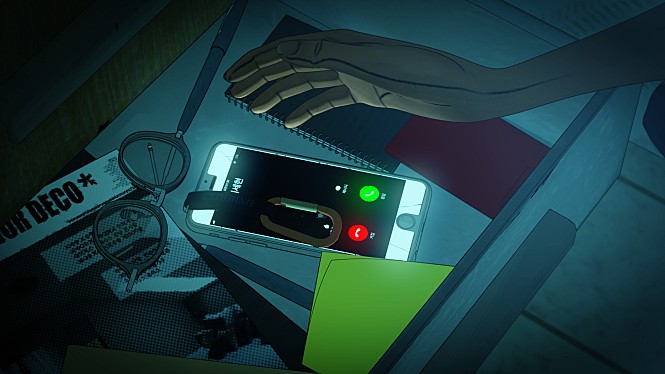
Meanwhile, we slowly get to know a bit about something which has bothered Jin-ah for a while. A few months ago, her mother, who came to live with her father again several years ago despite their divorce resulted from his infidelity, suddenly died, and Jin-ah is not so pleased about how her father is handling the aftermath. He does not look that devastated, and he is already ready to move onto whatever will come next during the remaining years of his life. Having secretly been monitoring his domestic life via a hidden online camera, Jin-ah comes to resent her father more than before, and she is more displeased when he often calls her via her mother’s smartphone.

Nevertheless, Jin-ah keeps her appearance as impeccable as possible at her workplace, and then there comes an unexpected assignment for her. A new employee named Soo-jin (Jung Da-eun) is about to begin her first working day, and Jin-ah’s director supervisor assigns Jin-ah to training Soo-jin during next several days. Jin-ah reluctantly begins the training session with Soo-jin, and Soo-jin is quite ready to be nice to those callers as well as Jin-ah.

Of course, Soo-jin comes to stumble more than during the following train sessions where she has to handle many different kinds of callers. There is a crazy man who frequently calls for a loony question involved with time machine, and that is a merely mild case compared to a number of nasty callers appearing in the film, who are, I assure you, not so different from what millions of call center employees have to handle everyday in reality. In case of one particular caller, this obnoxious person demands Jin-ah to read every detail of her monthly credit card bill just for checking whether there is anything wrong, and I must tell you that this caller also annoyed me a lot during my viewing.

It looks like Soo-jin should consider seriously about looking for some other job, but she tries her best anyway, and she also attempts to befriend Jin-ah, though that is the last thing Jin-ah wants for now due to her increasing emotional turmoil. She keeps watching her father while not telling anything to him about her secret online camera, and there is a somber but emotionally tense scene where she phlegmatically but bitterly watches him having a cheerful meeting with his recent church members in his residence.

As Jin-ah’s mind becomes more troubled, something quite unexpected happens in her apartment building. More withdrawn than before, she cannot help but become more annoyed by Soo-jin, and Soo-jin also seems to sense that she is not welcomed much by Jin-ah or others as their workplace. During one calm but painful scene, she comes to have sort of mental breakdown while handling one of those usual problematic callers, and that is when Jin-ah belatedly comes to realize that Soo-jin is not so different from her despite their personality difference.

The screenplay by director/writer Hong Sung-eun, who made a feature film debut here, does not explain much what makes its heroine tick, but it is still interesting as an observational character study, and Gong Seung-yeon did a stellar job of suggesting a lot while not directly signifying anything on the surface. While steadily maintaining her character’s frigid appearance and composure, Gong ably conveys to us her character’s gradual mental implosion, and we are not so surprised when her character suddenly reaches her breaking point later in the story.

Gong is also supported well by several other good cast members in the movie. While Jung Da-eun holds her own place well besides Gong during their several keys scenes in the film, Kim Hae-na is solid as Jin-ah’s demanding supervisor, and Seo Hyun-woo brings some warmth to the story as a new neighbor who does not mind interacting more with Jin-ah and other residents in the apartment building.

Overall, “Aloners” will demand some patience from you due to its dry mood and slow narrative, but it is still worthwhile to watch as a modest but engaging character drama, and you may reflect on yourself a bit if you have lived alone like I have during last several years. I do not have much problem with my current status of life, and I do become lonely from time to time in my one-room residence, and I guess I should say something nice to the other residents in the building whenever I come across any of them.

Posted in Movies | Tagged , | 3 Comments

The Army of the Dead (2021) ☆☆(2/4): Zack Snyder back in zombieland

Zack Snyder’s new film “The Army of the Dead”, which was released on Netflix two days ago, is excessive and self-indulgent. Although you will be not disappointed at all if you simply want to see lots of zombies swiftly eliminated on the screen, the movie is often hampered by its plodding narrative and weak characterization, and I only found myself mildly entertained by some amusing elements to notice, while not paying much attention to whatever was happening on the screen.

After the predictable prologue part showing an unfortunate vehicle incident which inevitably leads to the massive zombie outbreak in Las Vegas, the first act of the movie spends some time on building up its story promise. While Las Vegas have been completely and safely sealed from the outside world for next several years, there are still thousands of zombies inside the city, so the US government eventually decides to destroy the city with a small atomic bomb, and this decision leads to lots of public controversies as shown from a TV discussion featuring a certain deplorable real-life public figure associated with Donald J. Trump.

While many people around the country are focusing on the upcoming bombing of Las Vegas, that is not much of a concern to Scott Ward (Dave Bautista), a mercenary who killed lots of zombies in Las Vegas during that chaotic time as saving himself and many other people including his own daughter Kate (Ella Purnell) and some important government official. He has been fairly content with working as a diner cook while leaving behind his bloody past now, but, of course, somebody soon approaches to him for a job to do in Las Vegas, and that is a Japanese billionaire named Bly Tanaka (Hiroyuki Sanada). Tanaka wants Ward to assemble a special team to infiltrate into the city and then retrieve heaps of cash stored in the high-security basement safe of a certain casino building, and he promises that Ward and his team will receive enough reward for that if they successfully accomplish the mission in the end.

Despite his initial reluctance, Ward subsequently embarks on assembling the team, and we are introduced to his team members one by one. Besides two fellow mercenaries he can trust, there are also a German safecracker, a helicopter pilot, and a sharpshooter who really enjoys killing zombies, and Ward also recruits a French woman who knows a lot about how to infiltrate into Las Vegas – and how to handle a certain type of zombies which are far more dangerous than slow-walking zombies.

Around the time when Ward and his team members are about to infiltrate into Las Vegas, they happen to be accompanied with two other persons, and Ward is not so pleased about that. While he can tolerate Tanaka’s rather obnoxious right-hand guy, he objects to the participation of his daughter as a concerned father, but he possibly cannot stop her because, as a caring volunteer working in a nearby refugee camp, she is quite determined to go inside the city and then rescue a desperate mother of two kids who recently sneaked into the city for getting any money left there.

Once Ward and the other team members go inside the city, we get lots of apocalyptic sights to behold. Besides those crumbling buildings, we see lots of dried barebone bodies piled here and there, and then there come zombies as expected with some surprises. Compared to those usual slow-walking zombies, the aforementioned type of zombies is much quicker and faster in addition to having some intelligence, and we are not so surprised when it turns out later that these zombies have been led by a figure which is the very origin of the outbreak.

Later in the story, the time for their mission is shortened a lot, so Ward and his team members become much more hurried than before, and we are soon served with lots of zombie killing as expected. As those zombies keep coming, they relentlessly shoot or maim those zombies, and we accordingly get of lots of bloody and gruesome moments including the one involved with the graphic decapitation of a certain zombie figure.

However, while going all the way for excessive blood and violence, the screenplay by Snyder and his co-writers Shay Hatten and Joby Harold unfortunately slouches for more than 2 hours without generating much narrative momentum to hold our attention, and its many weak aspects become more glaring to us. Those zombies in the film may look scary at first, but they soon come to bore us a lot without much fun or horror, though I must admit that I was a bit amused by the two kinds of zombie animals in the movie. In case of the human characters in the film, they are mostly superficial cardboard figures we do not care about that much, and you can even easily guess in advance on who will be fresh meat to be served to zombies.

Anyway, the main cast members dutifully fill their respective spots as demanded. While Dave Bautista holds the center with his formidable appearance, Omari Hardwick, Ana de la Reguera, Matthias Schweighöfer, Garret Dillahunt, Tig Notaro, and Raúl Castillo bring some colorfulness to their archetype supporting roles, and Hiroyuki Sanada, Nora Arnezeder, Theo Rossi, and Ella Purnell acquit themselves fairly well despite their thankless roles.

In conclusion, “The Army of the Dead” is disappointing especially compared to Snyder’s previous zombie horror film “Dawn of the Dead” (2004), which has its own fun and horror enough compared to George A. Romero’s original 1978 film. The movie is not a total dud, but there are many other better zombie films out there, and I assure you that you will have a more productive time if you watch them instead of this bloated misfire.

Posted in Movies | Tagged , , , | Leave a comment

Oxygen (2021) ☆☆☆(3/4): A taut claustrophobic SF thriller starring Mélanie Laurent

Netflix film “Oxygen”, which was released in last week, is a taut claustrophobic science fiction thriller which is solely driven by one simple premise. While you may notice some plot holes and contrivances after it is over, the movie will grab your attention from the beginning to the end, and it is also supported well by the terrific lead performance at its center.

At the beginning, the movie quickly establishes an urgent mysterious circumstance surrounding its heroine played by Mélanie Laurent, a wonderful French actress who has been more prominent since her notable supporting turn in Quentin Tarantino’s “Inglourious Basterds” (2009). When she is suddenly awakened, she is baffled to find herself inside some state-of-the-art cryogenic unit, and she has no idea on how the hell she came to end up being there, while also not being able to remember much about her life and identity.

She naturally tries to get out of the unit, but it soon becomes quite evident to her that the unit is heavily locked and sealed, and M.I.L.O. (voiced by Mathieu Amalric), an artificial intelligence controlling everything inside the unit, is not so helpful to say the least. While clearly notifying to her that the unit is under emergency due to the decreasing level of oxygen caused by an unspecified factor, M.I.L.O keeps preventing her from getting any chance of unsealing the unit because, well, it simply follows its programmed protocols.

At least, M.I.L.O. allows her to contact with the outside world. When she calls a police station, an officer who receives her call does not believe her at first, but it does not much time for this officer to realize how desperate she is, and she gives him any piece of information she can get from her very tight place right now. For example, she quickly finds the serial number of the unit, and that may help the officer and others to locate where she is trapped at present.

In addition, she gradually gathers several pieces of information on her life and identity, which she still vaguely remembers without much conviction. According to the database search assisted by M.I.L.O., she discovers that she was associated with some highly advanced cryogenic technology project, and it becomes quite apparent to her that she must remember more as much as she can for getting more clues for her survival.

While it surely reminds me of several other similar thriller flicks including “Buried” (2010), the movie deftly rolls its story promise from one tense moment to another as firmly sticking to its setup. Except a series of brief scenes showing her memories, the movie mostly stays close to its heroine, and we come to care more about her ongoing plight while wondering about its several questionable aspects. As the oxygen level is decreased bit by bit, she becomes more desperate, but that officer still seems to be searching for her location without much progress, and she soon comes to suspect that there is something important which has been hidden from her from the very beginning.

While constantly making us focus more on the growing mysteries surrounding its heroine’s increasingly perilous circumstance, the screenplay by Christie LeBlanc also slowly builds some human poignancy along the plot. As she tries to remember more and more, the memories of her life somehow come back to her piece by piece, and she later becomes emotionally overwhelmed by the sad memories involved with a certain figure in her life.

Although the movie loses its narrative momentum to some degree during those brief flashback scenes, it still remains tense and suspenseful thanks to the skillful direction of director Alexandre Aja, who previously thrilled and entertained me enough with those big lethal alligators in “Crawl” (2019). Like that little but competent horror thriller film, “Oxygen” is also willing to go along with many preposterous story elements as much as it can, and Aja and his crew members including cinematographer Maxime Alexandre and editor Hervé Schneid did a commendable job of maintaining the level of tension on the screen. It is not much of a spoiler to tell you that our heroine eventually comes to learn the truth behind her plight, but that crucial moment is delivered with considerable dramatic impact, and we accordingly come to look back on the whole plot and a number of small foreshadowings sprinkled throughout it.

Most of all, the movie depends a lot on its lead performer’s presence and talent, and Laurent’ strong performance is absolutely compelling to say the least. While quite convincing in her character’s trapped status, Laurent never makes any misstep in her character’s dynamic emotional development along the plot, and she is also complemented well by a small group of voice performers in the film including Mathieu Amalric, whose plainly officious voice performance is alternatively assuring and threatening as certainly taking us back to HAL 9000 in Stanley Kubrick’s “2001: A Space Odyssey” (1968).

Overall, “Oxygen” may not bring fresh air into its genre territory, but it is well-executed enough to hold my interest during its 100-minute running time, and it surely reminds me again of my longtime dread on being stuck inside tight place. I exactly knew what I was going to get, but it impressed me much even while not exceeding my expectation, and that is enough for my recommendation.

Posted in Movies | Tagged , | Leave a comment

Better Luck Tomorrow (2002) ☆☆☆1/2(3.5/4): A disturbing suburban crime drama of Asian American teenagers

To be frank with you, my high school life during the late 1990s was mostly kept on the straight and narrow. Every day and night during that intense period, I was constantly driven and pressured for getting higher test scores, which would be the important stepping-stones for going to a certain prestigious college where I eventually studied later during 2000s. As long as I gave results satisfying enough for me as well as my parents, I was totally free without any interference or supervision, and my mind could often go all the way for movies and books as getting less bored and pressured than usual.

While revisiting “Better Luck Tomorrow”, I noticed again some of myself from its Asian American high school characters. While their world is very different from mine in many aspects, these kids are as smart, competitive, and pressured as I was during my high school years, and I understand their ennui and suffocation to some degree, though I would not have even dreamed of committing those serious transgressions and misdemeanors at their age.

After the opening scene which gradually reveals something quite alarming, the first act of the movie establishes the mundane daily suburban life of Ben Manibag (Parry Shen), whose phlegmatic narration looks back on how things went very wrong for him and his friends. While being your average overachieving Asian American high school student, Ben has also participated in several extracurricular activities to decorate his resumé for college admission, and we observe how he busily juggles many other things to do besides doing homeworks and studying for upcoming exams. During one brief scene, the movie shows him doing a part-time job for earning some money, and he sardonically muses a bit on how easy it is for him to work there. All he has to do is remembering well the manuals for the employees, and he surely excels there just like he has always done at his school.

As a member of the school basketball team, Ben has been quite determined to be chosen for the upcoming season, and we see his punctilious efforts for honing his athletic skills. When he is included in the list of the members to play during the upcoming season, he feels some fulfillment, but then he only finds himself mostly stuck on the bench during the following games. When Daric Loo (Roger Fan), one of his Asian American schoolmates who is also the editor of the school newspaper, later tells him that he was selected just because of his race instead of his athletic skills, Ben is not so pleased at all, and Daric’s subsequent article on him makes him all the more frustrated and exasperated. Getting the sympathy and support from others just because of being a token Asian team player is the last thing he wants, and that eventually leads to his withdrawal from the team.

Not long after that, Daric approaches to Ben again, and he has an offer which may interest Ben. Daric wants Ben to join his cheat sheet operation, and Ben does not refuse Daric’s offer at all because, as already shown to us, he has often done petty criminal activities along with his best friend Virgil Hu (Jason Tobin) and Virgil’s cousin Han Lue (Sung Kang), who also soon join Daric’s criminal operation without any hesitation. They are all eager to go wild behind their supposedly exemplary appearance, and that exciting sense of power and freedom from their growing criminal enterprise is irresistible to them to say the least.

The movie is often disturbing and uncomfortable in its objective depiction of Ben and his accomplices’ casual amorality. They come to sell not only cheat sheets but also drugs in their high school, and they do not have any problem with that because they get much more money than before. When they later become quite notorious due to one reckless incident involved with a gun, they do not mind enjoying their infamy, though they are still immature boys nonetheless as shown from their momentary encounter with real street thugs.

Although it does not directly explain to us what exactly makes Ben and his friends tick, the screenplay by director/editor Justin Lin and his co-writers Ernesto Foronda and Fabian Marquez lets us gather it for ourselves little by little via mood and details. These kids do not seem to have any serious trouble at their affluent suburban homes, but they are simply bored and suffocated as frequently driven toward academic excellence, and escaping to any college prestigious enough for them still feels like a distant end point, even though they are not that far from graduation.

Steadily maintaining its detached attitude, the movie firmly sticks to these kids’ focused viewpoint while seldom looking outside. You may wonder what the hell their parents are doing, but their parents are virtually non-existent in the film, and the same thing can be said about most of those adult figures in their school. As long as they seem to be doing well on the surface, nobody particularly interferes with these kids, and we come to gather that is the main reason why they can get away with many misdeeds of theirs.

However, no matter how much they hurl themselves into their clandestine rebellion, Ben and his friends are still stuck in their suffocating environment, and he becomes more aware of the toll of his increasingly precarious lifestyle – especially after a serious sign which makes him reflect more on how relentlessly he has exhausted his body and mind. He surely had lots of fun from his small-time crimes, but he remains unhappy and discontent as before, and he is already pretty tired of being naughty behind his back (“It’s literally a full-time job just making people believe who you’re supposed to be,” he admits to us at one point).

In the meantime, Ben gets closer to a popular Asian girl named Stephanie Vandergosh (Karin Anna Cheung), who is also very interested in getting to know him more. As they come to spend more time with each other, Ben considers being more serious about her, but she has been dating Steve Choe (John Cho), a rich Asian kid who studies at a prestigious high school in their neighborhood. Probably because he cares more about himself than her, Steve lets his girlfriend attend a school event along with Ben instead of him, but he makes it quite clear to Ben that she is still his girlfriend, and Ben cannot help but feel inferior to Steve, though Steve turns out to have felt pretty unhappy and trapped just like him.

As announced to us from the start, the story becomes more disturbing during its eventual third act, where Ben and his accomplices face the devastating consequence of their latest criminal action. During that gut-wrenching moment, cinematographer Patrice Lucien’s camera swiftly swirls around the center for accentuating their panic and disorientation, and the resulting dramatic impact is palpable to say the least.

We accordingly become more distant to its main characters than before, but the movie keeps holding our attention via its considerable style and verisimilitude, and the overall result is all the more remarkable because the production budget was no more than $250,000. Lin and his production team really tried hard to secure that small production budget, and their production could have actually been aborted at one point if it had not been for MC Hammer, who liked Lin’s script enough to hand over $10,000 to Lin without any hesitation. As far as I can see, the movie does not feel old or shabby at all even though it was made almost 20 years ago, and I guess Lin and his crew members used their budget quite efficiently without wasting any of it.

Lin also stuck to his vision to the end – especially in case of the characters and the performers to play them. According to his New York Times interview in February 2016, there was a potential investor willing to provide one million dollar for the production, but Lin said no because that potential investor demanded that white performers should be cast instead of Asian ones, and he was right in his decision. The racial background of the main characters in the film is indeed crucial in making its story specific and distinctive, and the movie consequently comes to us as an interesting slice of Asian American life in addition to working well as a cautionary adolescent crime tale.

When it had a premiere at the Sundance Film Festival in early 2002, the movie naturally drew lots of attention. As some of you remember well, it also received the strong public approval of Roger Ebert, who passionately defended the film after one of the audiences asked a rather rude question to the filmmakers during the Q&A after the Sundance screening. Some people like that audience thought the movie was irresponsible in its negative portrayals of Asian Americans, but, as Ebert shrewdly pointed out, Asian American filmmakers should be as free as white American filmmakers in their choice of story and character. They are surely entitled to do whatever they want without any obligation to represent their people, and Lin simply exerts his artistic freedom here while also boldly confronting and then subverting Asian American stereotypes.

Although it took more than one year for the movie to get eventually released in US theaters, the modest but significant achievement of the movie boosted the careers of Lin and his main cast members, who have respectively led each own solid acting career since the movie came out. While Perry Shen’s earnest performance holds the center, Jason Tobin, Roger Fan, and Sung Kang embody well their characters’ vivid and colorful personalities, and John Cho, who later had another big career boost via “Harold & Kumar Go to White Castle” (2004), and Karin Anna Cheung are also engaging as two other substantial supporting characters in the story.

On the whole, “Better Luck Tomorrow” has held up its own place well among a number of other notable Asian American films ranging from “The Joy Luck Club” (1994) to “Minari” (2020), and it remains to be the pinnacle in Lin’s filmmaking career, which has been mainly associated with those Fast and Furious flicks. I will not deny that I was amused and entertained by some of his outputs in that humongous Hollywood blockbuster franchise, and I duly recognize that Lin has every right to do whatever he wants, but, folks, I cannot help but hope that he will make something as impressive as “Better Luck Tomorrow” someday.

Posted in Movies | Tagged , , , | Leave a comment

The Woman in the Window (2021) ☆☆(2/4): A disappointingly unreliable thriller

“The Woman in the Window”, which was released on Netflix in last week, is not as bad as I feared, but what a letdown it is. While I was not entirely bored, the movie never exceeded my expectation or surpassed several possible answers I could think from its mystery thriller premise during my viewing (Full disclosure: One of them turned out to be very correct), and the overall result is pretty unimpressive despite a number of considerable talents assembled together for its production.

Right from the beginning, the movie emphasizes to us how troubled its unstable heroine has been for a while. Due to her agoraphobia which is implied to be originated from some traumatic incident in the past, Dr. Anna Fox (Amy Adams) has been isolated in her house located in New York City while never getting out of the house at all. It is clear from the latest private session with her psychiatrist that she needs to be more active in dealing with her ongoing mental problem, but, as a former professional psychiatrist, she is not so pleased about being routinely evaluated, and she frequently depends on pills and alcohol as trying to look away from whatever is hurting her inside.

When she does not spend time on watching movies or taking care of her pet cat, Anna often observes what is going on outside her house, and she recently becomes quite interested in a family who has just moved into a house across the street. As far as she learns from a local real estate agent, the new owner of that house is a middle-aged banker who came from Boston along with his wife and adolescent son, and Anna is subsequently visited by his son, who instantly attracts her sympathy due to his nervously awkward attitude.

Not long after that boy’s visit, Anna is unexpectedly approached by a woman she has never seen before. Because of the little kindness from this woman, Anna does not mind having this woman in her house for some time, and it does not take much time for Anna to infer that this woman is her new neighbor’s wife. As they drink more with each other, Anna is more relaxed than usual, and, as they talk more with each other as two mothers, it looks like they can be more than merely good neighbors.

However, there soon come several ominous signs shortly after this seemingly cordial encounter. Her new neighbor suddenly appears at the front door of Anna’s house, and he asks whether his wife dropped by her house. Because of an understandable reason besides his rather menacing attitude, Anna lies to him, and she is more disturbed later as surreptitiously watching what is going on inside his house. As far as she can see via the windows of his house, it seems to her that there is something quite wrong about this dude and his family, and his son refuses to tell anything to her when she happens to meet him again after a small but suspicious incident during one night.

As focusing more on her new neighbor and his family, Anna becomes more disturbed than before, and then she happens to witness a shocking incident occurring in her neighbor’s house. She sees her new friend stabbed by someone, so she hurriedly calls 911 and then attempts to go to her neighbor’s house, but, of course, she finds herself quite overwhelmed by her agoraphobia before eventually losing her consciousness.

When she subsequently regains her consciousness, Anna is caught off guard by a very confusing circumstance. The police did arrive shortly after her phone call to 911, but they did not find anything suspicious in her neighbor’s house, and, to Anna’s shock and bafflement, her neighbor’s wife is very much alive while also not being the woman with whom she met and talked a few days ago.

This is surely a classic mystery setup, and director Joe Wright and his crew members including cinematographer Bruno Delbonnel and composer Danny Elfman try really hard for amplifying Anna’s growing fear and confusion along the plot, which expectedly throws lots of suspicious signs here and there around its increasingly unstable heroine. While Anna’s new neighbor looks all the more insidious as firmly preventing Anna from meeting his son again, the boy remains frustratingly elusive while not saying much to her as before, and a guy who has lived in the basement of Anna’s house while occasionally working as its handyman looks like hiding something important from Anna. In addition, Anna’s ex-husband, who has been currently with their daughter somewhere, still does not come to her house even though she has often interacted with him on the phone, and he simply expresses some care and concern from the other end of the line.

However, the screenplay by Tracy Letts (he also briefly appears as Anna’s psychiatrist, by the way), which is based on the novel of the same name by A.J. Finn, often suffers from plot contrivance and incoherent characterization, and it is depressing to see how Amy Adams and the other main cast members of the film try to overcome many artificial moments in the screenplay. Adams is ready to hurl herself into her character’s questionable state of mind, but her commendable efforts are undermined by deficient storytelling packed with rote clichés including the talking villain syndrome, and the other notable cast members in the film including Gary Oldman, Anthony Mackie, Wyatt Russell, Brian Tyree Henry, Jennifer Jason Leigh, and Julianne Moore are thoroughly wasted in their thankless supporting roles, which are no more than plot elements to be manipulated in one way or another.

In conclusion, “The Woman in the Window” is not a total disaster at least, but it is passable at best and mediocre at worst, and I can only wish that Adams, who is still one of best American actresses working in Hollywood at present, and many other talented persons involved with this plain dud will soon move onto better things. As a seasoned moviegoer, I have seen far worse thriller movies, but I have also watched much better ones including Alfred Hitchcock’s “Rear Window” (1954), and you really should check out that great thriller film instead if you have never seen it before.

Posted in Movies | Tagged , , , | Leave a comment

Fast & Furious 9 (2021) ☆☆1/2(2.5/4): Another family problem….

My mind kept going somewhere while watching “Fast & Furious 9”, whose theatrical release was unfortunately delayed more than once due to several reasons including the ongoing COVID-19 pandemic before eventually released in South Korean theaters today. Yes, there are a number of ridiculously overblown vehicle action sequences as expected, the movie sadly fails to generate enough sense of fun while often trudging in its overlong plot peppered with those tiring emphases on, yes, family, and my mind naturally came to miss those entertaining occasions when the franchise drove all the way for dumb fun and action without so much baggage in its back.

The plot, which is pretty outrageous as usual, starts at the point which is probably several years after the laughably bloated finale of “The Fate of the Furious” (2017). As some of you still remember, Dominic Toretto (Vin Diesel) saved his young son and also got himself rescued by his good old colleagues at that time, and he has subsequently led a quite peaceful time along with his young son and his wife Letty Ortiz (Michelle Rodriguez), but, of course, there soon comes another matter to be taken care of by him and his gangs including Letty. One of their former associates died due to a plane crash, and that figure in question happened to be carrying something quite dangerous, which must be retrieved as soon as possible before someone else snatches it.

Not so surprisingly, their following operation turns out to be much more perilous than expected, and Toretto and his gangs come to learn of the identity of their latest opponent, who turns out to be none other than Toretto’s banished younger brother Jakob (John Cena). Many years ago, these two brothers once worked happily together under their dear racer father as shown from the opening scene, but, sadly, their father got himself killed during a car racing competiton, and their subsequent personal clash eventually led to Toretto’s disownment with his younger brother, who became your average super mercenary after leaving their LA neighborhood once for all.

After Jakob manages to snatch that dangerous object in question, Toretto and his gangs try to track down Jakob and his dangerous associates and then stop those bad guys, and there are a number of different figures willing to help them. For example, we are introduced to a trio of nerdy engineers who have worked on a special car equipped with a very powerful engine right above it, and that vehicle in question is later shot into the space with two of Toretto’s team members inside it. To be frank with you, I once mused on when the franchise would go into the space in the end after doing so many outrageous vehicle actions on the Earth, so I could not help but amused a bit as watching this unbelievably over-the-top moment. In fact, I dare to predict that the franchise, which has consistently defied every law of physics, will even try an interstellar drive along wormhole track someday.

Another brief moment of fun in the film comes from Helen Mirren, who has a little more fun compared to her rather wasted appearance in “The Fate of the Furious”. Looking as sassy and elegant as usual, Mirren finally gets an opportunity of being behind the wheel with some necessary assistance, and it is clear that she is savoring every moment of this relatively modest but undeniably humorous vehicle action scene before gliding away from the scene with class and dignity.

Anyway, most of the audiences of the movie are eager to get heaps of crashes and bangs from the screen, and director/co-writer Justin Lin, who previously directed no less than four entries in the franchise including “Fast Five” (2011), and his crew members deliver as much as we can expect from them. While the vehicle action sequence early in the story is quite frantic as bouncing from one spot to another, the other one unfolded in the middle of Edinburgh, Scotland is pretty ridiculous for many things including an equipment capable of generating a very strong magnetic force, and it is not much of a spoiler to tell you that this equipment is utilized again during the climactic part set in Tbilisi, Georgia.

However, I only observed these and other action scenes from the distance without much care or entertainment because the movie is so predictable and contrived from the beginning to the end. I was not so surprised by what Toretto belatedly came to learn from his younger brother, and I was also distracted by a series of plot turns which push these two opposing main characters to realizing that they are still, yep, family after all those physical damages and destructions between them. Vin Diesel, whom I still fondly remember for his early works in “Saving Private Ryan” (1998) and “Boiler Room” (2000), is forceful as usual, but he often seems to be on autopilot this time, and John Cena is not particularly effective as his opponent despite looking tough and formidable as required – especially compared to that palpable macho tension between Diesel and Dwayne Johnson in “Fast Five”.

The other routine cast members fill their spots as much as possible around Diesel and Cena. Michelle Rodriguez, Sung Kang, Jordana Brewster, Tyrese Gibson, Nathalie Emmanuel, and Chris “Ludacris” Bridges comfortably handle their respective roles as before, and it is a shame that a self-conscious touch involved with Gibson’s character is not developed into any kind of surprise. In case of Charlize Theron, she unfortunately does not get any chance of grabbing the wheel again, and this disappointment surely makes me want to see “Mad Max: Fury Road” (2015) again.

On the whole, “Fast and Furious 9” is a passable entry with some entertaining moments, but it is on the level of “The Fate of the Furious” and other several lesser entries in the franchise. I have no idea on what Toretto and his gangs will do in the next two sequels to come, but they and their movies really need some extra boost right now. As a guy who begrudgingly came to accept the franchise for what it has been during last two decades, I sincerely hope that this matter will be rectified for better or worse.

Posted in Movies | Tagged | Leave a comment