Sound of Falling (2025) ☆☆☆(3/4): Sound of female despairing

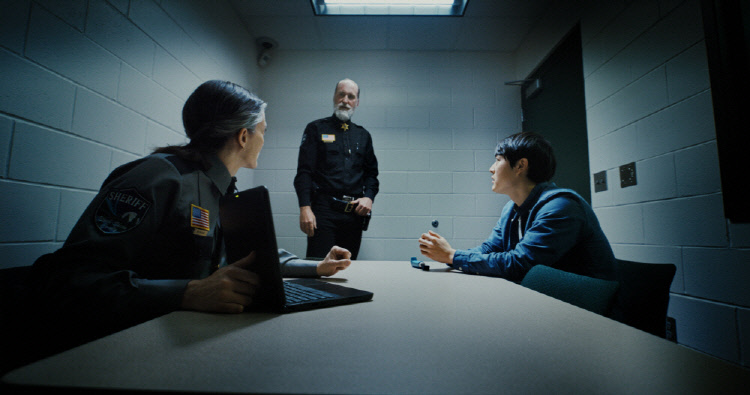
“Sound of Falling”, which was selected as the German submission to Best International Film Oscar in this year and then was included in the shortlist several days ago, is quite subtle and elusive about what it is about. This may baffle and frustrate you a lot throughout its first hour, but then you may gradually come to behold its indirectly disturbing presentation of female repression, and this may linger on your mind for a while once it is over.

The main background of the film is a farm in some rural region of Germany, and the movie shuffles several different female perspectives along the story. At the beginning, we are introduced to a young woman named Erika (Lea Drinda), and the opening scene shows a bit of her rather morbid behavior involved with her older brother. The movie subsequently shows how she and her big family lived around the late 1910s, and this is mainly presented via the innocently limited viewpoint of Erika’s younger sister Alma (Hanna Hekct).

Through the viewpoints of these two different young girls, we gradually get to know how things can be pretty oppressive for women during their respective periods. Although the movie does not emphasize anything at all, many females around them including their mother and maids are apparently repressed by their patriarchy system in many aspects, and this is exemplified well by their mother’s rather alarming medical symptom.

Meanwhile, the movie also adds two other different perspectives from different periods. One belongs to an adolescent girl named Angelika (Lena Urzendowsky), who is incidentally one of the descendants of Alma and Erika’s family. We gradually gather that her era is around the 1980s, and we also come to see how problematic her situation is. Like many other young boys and girls around her, she wants more freedom, but that seems virtually impossible mainly because she and her family are living in East Germany, and then we come to sense that she has actually been sexually exploited by one of her adult relatives.

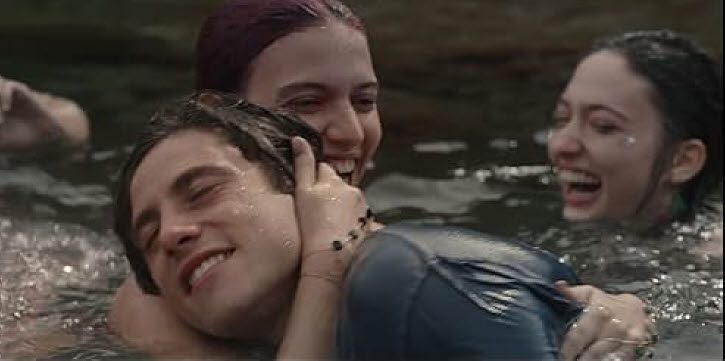
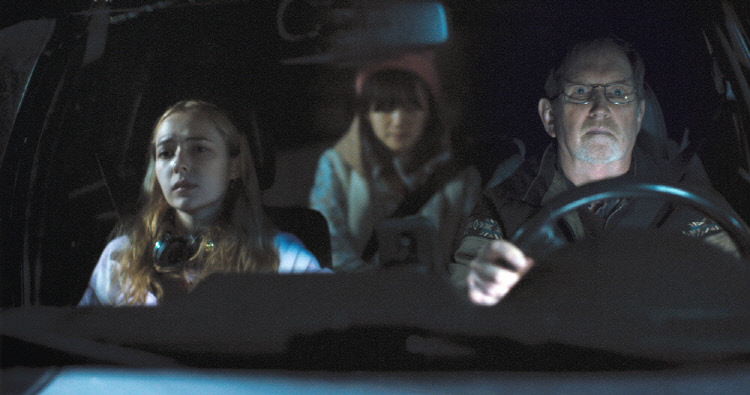
The other perspective belongs to a young girl named Lenka (Laeni Geiseler), who is entering her adolescent period around the 2010s. Under her fairly open-minded parents, she and her several siblings seem to live a fairly good life in the farm, but she often feels unhappy and disaffected, and, to her frustration, nobody pays any particular attention to her growing discontent.

As freely juggling these four different perspectives along its free-flowing narrative, the movie slowly makes its point via small individual moments to notice and observe. While she does not know or understand whatever she happens to observe or witness, Alma’s rather innocent viewpoint often sharply conveys to us the toxic influence of the patriarchy system surrounding her and many other females around her, and this often resonates with all the systemic repressions Erika and many other women around her have to cope with in one way or another. In case Angelika and Lenka, things may look relatively better for them, but they also have to deal with each own female issues because of that lasting influence from the patriarchy system.
Never underlining its points at all, the movie frequently unnerves and then engages us via its exquisite sound design. As the sound effects of the movie are often dialed up or down throughout the film, we come to pay more attention to whatever is going on beneath or outside the screen, and the remarkable overall aural effect of the movie is sometimes reminiscent of Jonathan Glazer’s exceptional Oscar-winning film “The Zone of Interest” (2023), which frighteningly conveys to us the banality of evil right next to Auschwitz via a similar aural approach. Although the presentation of evil in “Sound of Falling” is more subtle in comparison, we gradually come to sense it thanks to the competent direction of director/co-writer Mascha Schilinski, who incidentally won the Jury Prize when the movie was premiered at the Cannes Film Festival early in this year (The movie won the award with Oliver Laxe’s “Sirāt” (2025), by the way).

While firmly sticking to its clinical attitude from the beginning to the end, the movie shows a bit of poignancy from time to time. There is a distant but undeniably harrowing moment involved with one of Alma’s older sisters, who is cruelly victimized by her patriarchy system. When Angelika comes to join her many other family members including her sexual abuser for a group photograph, she becomes all the more tormented than before, and that leads to one of the most haunting visual moments in the film.

I must confess that I felt rather impatient with its glacial non-linear narrative more than once when I watched the movie during this afternoon. I am still not so sure about whether I understood everything in the film, but I also admire what is so strikingly achieved by Schilinski and her crew members including cinematographer Fabian Gamper and editor Evelyn Rack. They try to create a unique presentation of the persistent female repression under the patriarchy system, and I think they succeed fairly well even though the overall result is a bit too cold and distant for us at times.

Anyway, I recommend “Sound of Falling” mainly for its distinctive mood and style, and I am willing to revisit it soon for more understanding and appreciation. To be frank with you, I was not so surprised to see several audiences walking out of the screening room during my viewing, but the movie is much more interesting than that new Avatar flick at least, and, in my inconsequential opinion, you should give it a chance if you are open to any new cinematic possibility out there.

Posted in Movies | Tagged , , , | Leave a comment

This Is Spinal Tap (1984) ☆☆☆1/2(3.5/4): Still endearingly outrageous and hilarious

Rob Reiner’s 1984 comedy film “This Is Spinal Tap” still amuses me a lot for many good reasons. While keeping its attitude as straight as possible via its ground-breaking mockumentary style, the movie has a lot of fun with many absurd moments generated among its clownish but somehow endearing main characters, and many of its funniest moments do not look aged at all even after more than 40 years since it came out.

The movie is presented as a fictional documentary following a British heavy metal band named, yes, Spinal Tap. As shown from several “archival footage clips”, Spinal Tap was initially a skiffle band called the Originals in the early 1960s, but they had to change the name of the band more than once for a rather silly reason, and then they became more famous thanks to their rather ridiculous song, which is titled “Listen to the Flower People”. Not long after that, the band moved onto heavy metal, and we later see them performing one of their recent songs, which is fairly passable but sounds very absurd with its preposterous lyrics.

Anyway, the main focus of the documentary in the film is the 1982 US concert tour of the band, which is mainly for promoting their latest album “Smell the Glove”. Although the album is quite problematic for many reasons including its blatantly sexist album cover design, the three main members of the band and their manager are still confident that the album will be successful enough to boost their rather underwhelming status at present. There was a time when they were popular enough to draw more than 10,000 fans to their concert, but, alas, now they can attract around 1,000 ~ 1,500 audiences now if they are lucky.

The director of the documentary in the film, played by Reiner himself, throws some serious questions to the main members of Spinal Tap during his occasional interview sessions. They all try to present themselves as musicians both talented and passionate, but they usually end up making themselves look all the sillier than before. In fact, you may actually feel a bit sorry for the director, who must tolerate the sheer ego and idiocy of his incorrigible human subjects.

Nevertheless, we often cannot help but chuckle and giggle thanks to a lot of amusement from many of the memorable moments in the film. The main reason of their absolute hilarity comes from how utterly serious the members of Spinal Tap and several figures around them are, and that is exemplified well by one very funny moment when Nigel (Christopher Guest) eagerly shows us a heap of electric guitars and then his own special amplifier, which can be dialed up to the level of, yes, 11. When the director seriously asks the reason for that, Nigel only finds himself pathetically failing to give any good answer, and it only reminds us more of how ludicrous he and his two fellow main members are as mired in their petty ego and pride.

Not so surprisingly, it has been said that the movie is not so far from reality in many aspects. After all, even if you are not so interested in rock music (FULL DISCOSURE: I am one of such dull persons), you have probably heard about some of the truly ridiculous stories about those real-life rock bands such as, say, the Rolling Stones, and you may smile a bit when one of the main members of Spinal Tap complains about a rather trivial issue with the ham and bread served to him.

As the members of the band keep going down in their increasingly inconsequential career, the movie adds more absurdity and hilarity to be savored. Besides that stupefyingly comic moment involved with a little model of Stonehenge, there is some comic tension involved with their latest drummer, who may die under a mysterious circumstance just like all of his predecessors (One of them was choked to death due to the vomit which was incidentally not his, for instance). When the girlfriend of David (Michael McKean) gets involved more into their career and business as becoming their manager, things only get all the worse among them, and it seems that they all are reaching the end of their career – especially when they have no choice but to start their next concert tour in Japan.

Nevertheless, the movie also regards its main characters with some admiration and affection. Yes, they are still quite silly and ridiculous to the bone, but you can also sense their remaining passion and dedication whenever they try to go through another concert. Around the end of the film, Nigel and David come to have a touching moment of reconciliation as sincerely performing together on the stage, and they and their fellow band members come to look a bit less ridiculous than before.

It has been well-known that Reiner encouraged his cast members to do a lot of improvisation in front of the camera, and the overall result is quite fluid and effortless to say the least. Christopher Guest, Michael McKean, and Harry Shearer, who did contribute a lot to the screenplay along with Reiner as reflected by their names on the screenplay, always click well with each other whenever they are on the screen together, and they are also pretty believable as your typical sub-par rock band musicians. In fact, they did their job so well that their fictional band became gradually popular along with the movie itself, and they actually did concerts under the name of their fictional band in real life.

In conclusion, “This is Spinal Tap” is still one of the most hilarious movies even though it was followed by a lot of junior mockumentaries during last several decades, and it is also one of the most notable achievements of the long and illustrious career of Reiner, who was tragically murdered along with his wife not long after his last film “Spinal Tap II: The End Continues” (2025) came out a few months ago. While he may not be a great director, he was at least an undeniably skillful filmmaker who gave us a number of excellent films to remember including “This is Spinal Tap”, and we will surely miss him more as admiring and appreciating his considerable cinematic contribution more.

Posted in Movies | Tagged , , , | Leave a comment

Between the Two of Us (2024) ☆☆1/2(2.5/4): Disability and pregnancy

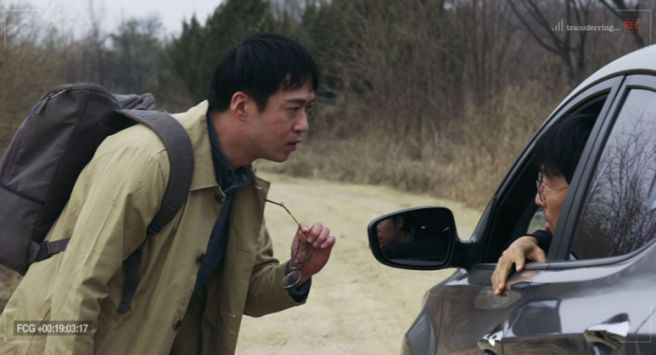
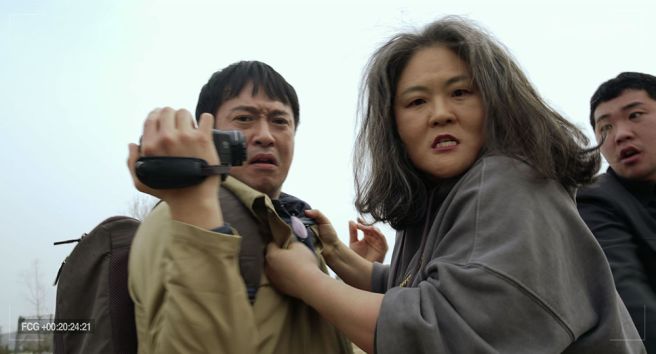
South Korean film “Between the Two of Us” is a sincere but flawed drama about one young pregnant woman with a disability. While it is fairly engaging to observe how much she is anxious and pressured due to her increasingly difficult circumstance, the movie becomes rather contrived for some melodramatic effect during its last act, and that is where I became rather distracted during my viewing.

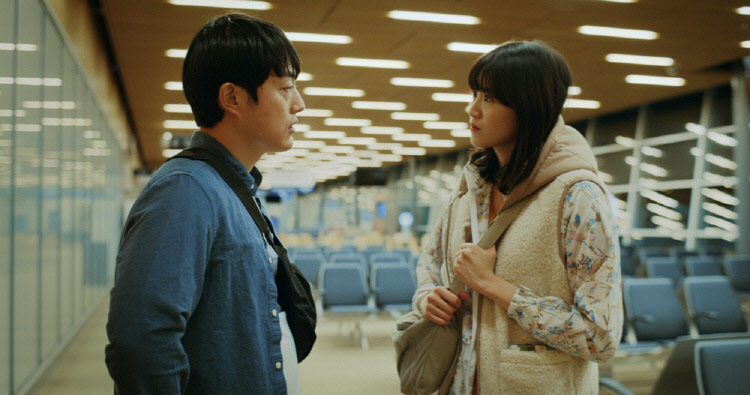
At first, the movie establishes the loving relationship between Eun-jin (Kim Si-eun) and her husband Ho-seon (Seol Jung-hwan). Around when she was 18 years old, Eun-jin became wheelchair-bound due to some unspecified disability, and she has been quite accustomed to this changed life condition of hers, but she has to deal with many different obstacles in her daily life day by day. Nevertheless, Ho-seon has always stood by her for more than 10 years, and it is touching to see how caring he is to his wife during the opening part.

And then there comes an unexpected change. On one day, Eun-jin is notified that she has been actually pregnant for several weeks, and she becomes conflicted about whether she can go through her ongoing pregnancy and then give birth to her baby. For example, because of her disability, she always takes several different drugs day by day, and she is naturally concerned about whether this will jeopardize the growth and development of her baby.

Eun-jin eventually tells everything to her husband, and Ho-seon tells her that he will respect whatever she decides to do, but this only makes Eun-jin more burdened and conflicted. As watching her baby growing in her womb week by week, she seriously begins to consider giving birth to her baby, but she is also worried about many issues she must confront during her pregnancy period. She may have to stop taking some of her routine drugs, and, above all, she will definitely need some medical assistance during her delivery. 

 In the end, Eun-jin chooses to have a baby instead of having an abortion, and she and her husband become optimistic about having a new family member in their house, but there soon come a series of complications and difficulties. For instance, she frequently wets their bed once she stops using a drug preventing that, and then she also comes to suffer a mild case of urinary tract infection. Although she knew well from the beginning that she is bound to have these and many other problems to cope with, she still cannot help but become more uncertain and anxious about having a baby, but her baby has already grown up to a considerable degree, and this makes her all the more hesitating.

In addition, we see how this increasingly burdening situation of hers affects not only Eun-jin but also her relationship with her husband more and more. Eun-jin has recently been trying to write some important article for some public association for the disabled, but she finds herself against writer’s block as her mind is often more occupied with her ongoing pregnancy. In case of her husband, he is ready to support his wife as much as possible as before, but then he becomes quite busy as trying to earn more money for paying all those medical bills involved with her pregnancy.

At least, there later comes some unexpected support and consolation for Eun-jin. Early in the story, she happened to share a hospital room with some young pregnant woman around her age, and they came to befriend each other a bit before this young pregnant lady eventually left. Not long after this accidental encounter, Eun-jin meets her again, and, what do you know, she and Eun-jin become closer to each other as sharing their respective difficulties from pregnancy.

Around that narrative point, we are supposed to care more about the story and characters, but the screenplay by director/writer Sung Ji-hye, who incidentally made a feature film debut here in this movie, does not bring enough life and personality to its two main characters. While they are pretty nice and decent people, its two lead characters are a bit too flat to hold our attention at times, and that is the main reason why a rather blatant plot contrivance during the last act does not work that well. You may be surprised a bit, but this sudden plot turn only exists for accentuating Eun-jin’s amounting conflict and anxiety without providing any more depth to the story and characters.

Nevertheless, we can still admire the diligent efforts of its two lead performers. Kim Si-eun and Seol Jung-hwan have a solid low-key chemistry between them right from their very first scene, and they are believable as two different people who have loved and respected each other for years. In case of a few substantial supporting performers surrounding them in the film, Oh Ji-hoo, Kang Mal-geum, and Choi Ji-Youn are well-cast in their respective roles, and Choi is particularly good when her character lets out a bit of her old personal feelings in front of Eun-jin later in the story.

Overall, “Between the Two of Us” is surely well-intentioned as attempting to make us have more human understanding and empathy on its main subject, but the result is not as successful as intended in my trivial opinion. Nevertheless, considering how harsh and insensitive how the South Korean society has been to the disabled for many years, there should be more South Korean films about disability, and I sincerely hope that the movie will be soon followed by better ones.

Posted in Movies | Tagged , , , | Leave a comment

Avatar: Fire and Ash (2025) ☆☆1/2 (2.5/4): Mostly in the same water again

James Cameron’s new film “Avatar: Fire and Ash” is a rare letdown from the filmmaker who has not disappointed us for more than 40 years. Again, we are surely served with a lot of spectacular visual elements and thrilling actions, but I do not care that much about the story and characters in this time. As a result, my mind just became more exhausted instead of getting galvanized after more than 3 hours.

The story starts from the point not so long after what happened during the finale of “Avatar: The Way of Water” (2022). After the victory in another battle for his new Na’vi tribe and many other Na’vi tribes on an alien planet called Pandora, Jake Sully (Sam Worthington) prepares again for another possible threat from those greedy and pesky human beings, but things are not particularly good among his dear family members. Sully and his wife Neytiri (Zoe Saldaña) lost their first son in that battle, and Neytiri has been struggling to cope with her immense grief while Sully simply focuses on his battle preparation.

In case of their remaining kids, they surely miss their big older brother. While Lo’ak (Britain Dalton) particularly feels guilty about how his action inadvertently caused his older brother’s death, Kiri (Sigourney Weaver), who is actually the daughter of the Na’vi avatar of Weaver’s human character in “Avatar” (2009) is still trying to grasp the meaning of her odd existence, and Miles “Spider” Socorro (Jack Champion), the adopted human son of Jake and Neytiri, often finds himself vulnerable as his human body cannot survive on the planet without a special mask to protect it from the toxic substance in the atmosphere of Pandora.

Mainly for Spider’s safety, Sully decides to take him to a shelter where Spider can be taken care of by the few human beings helping his tribe, though that is the last thing Spider and his other children want right now. Although he does not change his mind at all, Sully allows his family to leave for that shelter along with him, and we get one of the best visual moments in the film as they get on a big and beautiful airship belonging to a local trader.

Of course, there soon comes a big trouble not long after their departure. The airship is attacked by a bunch of aggressive Na’vi tribe members led by Varang (Oona Chaplin), and Sully and Neytiri get separated from their children during this sudden attack. In addition, there is also Colonel Miles Quaritch (Stephen Lang), Sully’s old opponent who is still quite obsessed with settling his old score even after being defeated twice by Sully.

As trying to expand its background further than before, the story written by Cameron and his five co-writers seem ready for bring a bit more character complexity – especially when Colonel Quaritch comes to ally with Varang for their mutual benefit later in the movie. Even though knowing well that what Colonel Quaritch and many other human beings will do to many other Na’vi tribes and Pandora, Varang and her Na’vi tribe are still willing to make a deal with Colonel Quaritch just because of the anger and resentment from their longtime hardship. In case of Colonel Quaritch, he subsequently finds himself seduced by Varang, and he does not mind that at all while not forgetting who the boss is in their rather uneasy partnership.

However, the plot only ends up plodding more than once as attempting to handle too many elements together, and we become more aware of its rather thin characterization. Many of the main characters in the film are more or less than mere plot elements, and that is true especially in case of the subplots involved with Kiri and Spider, respectively. We are not so surprised when Kiri eventually learns the truth about her birth – or when she finally demonstrates more of her special ability during the last act of the story (Is this a spoiler?). In case of Spider, he is woefully underwritten just like many other supporting characters around him, and the movie still does not delve that deep into his rather complicated relationship with Colonel Quaritch.

Anyway, Cameron gives us exactly what we expect from him in case of action. There are several well-made action sequences including the one which is pretty much like a bigger version of the climactic part of “Avatar: The Way of Water”. It is really disappointing that Cameron repeats himself here without much surprise for us, but he knows how to generate enough thrill and tension to hold our attention at least for a while.

The special effects in the film are top-notch as usual, and I will not be surprised at all if it wins a Special Effects Oscar just like its two predecessors. Many different locations in Pandora look quite real and convincing, and that may make you wish that Cameron focused more on mood and details instead of clumsily following the sprawling narrative of his movie. Although their efforts are often limited or wasted by the rather weak screenplay, the main cast members of the film manage to bring some personality and presence to their respective parts, and that reminds you that the special effects in movies still need some human touch regardless of whether they are analogue or digital.  

In conclusion, “Avatar: Fire and Ash” does not have much fire and ash as serving us more of the familiar stuffs from its two predecessors. I saw the 3D HFR (High Frame Rate 3D) version at a local movie theater yesterday, and its technical qualities are commendable on the whole, but the overall result still did not impress me enough for recommendation. By the way, I heard that Cameron is planning to make two more Avatar films at least, and now I sincerely want to recommend him to take a long vacation for more imagination and better storytelling.

Posted in Movies | Tagged , , , | 1 Comment

10 movies of 2025 – and more: Part 3

Now here are 11 South Korean films of this year.

Continue reading
Posted in Movies | Tagged | Leave a comment

10 movies of 2025 – and more: Part 2

And here are the other 5 movies in my list – with other films good enough to be mentioned.

Continue reading
Posted in Movies | Tagged | Leave a comment

10 movies of 2025 – and more: Part 1

So here are the first five films of my annual list.

Continue reading
Posted in Movies | Tagged | Leave a comment

10 movies of 2025 – and more: Introduction

Again, we are at the end of one year as looking forward to another one to come, but things seem to get worse and worse during this year. While my country is still struggling to recover from a social/political disaster caused by that deplorable predecessor of the current president, many other countries have been threatened more and more by the ongoing rise of fascism. As a matter of fact, I often considered taking a long break from the Internet for avoiding more anger and anxiety, though I also know well that I must keep following how the world and its people keep going day by day.

Nevertheless, I kept watching movies and writing reviews as usual, because that is how I have gotten connected with more people out there. Good movies always make me feel and think more actively while also reminding that I am just a plain audience and human being who is also your average amateur reviewer, and I really like to share my rather inconsequential thoughts and feelings with you, regardless of whether we agree or disagree. In my humble opinion, any disagreement between you and me can actually lead to a fun and interesting discussion, just like any agreement between us can lead to an equally meaningful conversation.

Early in this year, I promised to myself that I would watch less movies than before just for reading more books and reaching for more human connection, but I found that I miserably failed again, as looking back at all those reviews of mine written during this year. Again, I wrote more than 300 reviews during one year, and I do not regret watching most of them, but, folks, the Penguin Books edition of Mary Shelley’s “Frankenstein” remains mostly untouched in my bag even though I planned to read it before watching the recent movie adaptation by Guillermo del Toro.

Anyway, here is the list of many interesting films which I think are the highlights of this year. You will notice that I do not include several notable movies of this year such as “Hamnet”, “Marty Supreme”, “Rental Family”, “The Secret Agent”, “Sentimental Value”, and “Sound of Falling”, and they cannot be included because I could not watch them before making my list in last week. If they are as good as I heard from others, they will surely be included in the annual list of the very next year.

Posted in Movies | Tagged | Leave a comment

Eephus (2024) ☆☆☆(3/4): Their last baseball game

“Eephus” interests us for what is about and then touches us for how it is about. This is a very plain and simple story about a bunch of amateur baseball players trying to play their last game to the end, but it is alternatively amusing and moving to observe their little struggles along the game, and its eventual bittersweet ending will linger on your mind for a while.    

The movie is about one particular day at Soldiers Field, a little baseball field located in Douglas, Massachusetts. At the beginning, a local radio program tells us a bit about what is soon going to happen to this small place, and we slowly gather how important this day will be to the members of two local amateur baseball teams. It will be their last day at the field before it is demolished for building an art school, but they are ready to keep things going to the end, even though there are not many audiences from the very start.

As they prepare for their last game, the movie observes two old men who come for monitoring the game as they did many times for years. Both of them are not that enthusiastic, but they are willing to witness the last day of the field and its players as long as possible, and the movie often brings some nice details on how they record the scores of those two baseball teams, respectively.

Of course, things do not go very well right from the first inning. For example, one of the two baseball teams has a little problem due to one of its key members being quite late, and that leads to a little serious discussion on the possibility of their game getting forfeited according to the rule. In addition, many of the baseball players are not particularly enthusiastic as knowing too well that nothing will change in the end.

Nevertheless, the mood gradually becomes lightened up as the players continue their little game. Sure, their talent and physical condition do not reach to the level of Major League Baseball (MLB), but they cannot help but feel happy to have a bit more fun and excitement on their field. In addition, there are also several bystanders coming and then watching their game for a while, and these minor characters bring some extra humor to the story.

The screenplay by director/writer/co-producer/editor/co-composer Carson Lund, who made several short films before making a feature film debut here in this movie, does not delve that deep into its numerous main characters, but it subtly lets us get more accustomed to their humanity and personality along the story. I must admit that I cannot remember every baseball player in the film, but I remember well a number of small but colorful individual moments among their different personalities. For example, I am still amused by a scene where several baseball players deliberately tease one particular member of their opponent team who is supposed to be on a diet, and I also chuckled a bit when both of the two baseball teams come to run out of balls later in their game.  

And we also observe how serious they really are about their game. Although they do not talk that much about their respective lives outside the field, it is clear that baseball has been something to cheer them up in one way or another for many years, and the melancholic mood of resignation is all the more palpable as some of them become a little philosophic about their lives and baseball.

While adamantly focusing on what is happening inside and around the field, the movie indirectly reminds us of how the world keeps going as usual outside the field, and Lund, who also worked as the sound designer for his film, did a commendable job of utilizing various sounds for subtle dramatic effects to be appreciated. Whenever we hear the distant sound of a church bell along with the main characters of the film, we cannot help but become more conscious of that unstoppable current of time, and we also become more aware of how much they struggle to play against it more. Around the later innings of their game, some of them become too exhausted or disinterested to keep playing along with others, and that certainly makes the field all the emptier and more melancholic than before.

In the end, there eventually comes the end of the day, but the remaining players become quite resourceful just for playing to the end of the last inning of their game. It is quite apparent to everyone on the field that the time for the end of their inconsequential baseball career has come, but they do not give up at all, and that is the main reason why the finale feels so poignant under its mournfully somber atmosphere.    

The main cast members of the film, most of whom are not so recognizable to many of us, are effortless in their modest but well-rounded ensemble performance. As they have each own small moment along the story without being showy at all, we come to focus more on their characters instead of themselves, and their characters come to leave an indelible impression on us as a distinctive human group. 

I must confess that it does not come that close to me as a foreign guy who does not have much interest in baseball or any other sports, but “Eephus”, whose very title is incidentally a term for a certain type of curve ball, still engaged and then moved me enough on the whole. In short, this is one of the more interesting films of this year, and I think you should give it a chance especially if you are interested in baseball more than me.

Posted in Movies | Tagged , , | 1 Comment

Eddington (2025) ☆☆(2/4): A nihilistic ideological mess

Ari Aster’s latest film “Eddington” is a superficial genre exercise which did not amuse or engage me at all. Yes, I understand that the movie is supposed to function as a distorted mirror to the confusion and frustration in the American society during the COVID-19 pandemic era, but the movie only ends up being a nihilistic ideological mess, and I come to detest its ideas and attitudes more as I reflect more on its story and characters.

The main background is a small New Mexico town named Eddington during late May 2020, which was the peak period of the COVID-19 pandemic. When Ted Garcia (Pedro Pascal), the mayor of the town, not only implements a lockdown but also enforces mask mandates for preventing more infection, some people in the town are not so pleased to say the least, and Sheriff Joe Cross (Joaquine Phoenix) is one of such people. Just because the town has not had any COVID-19 patient yet, he believes that the mayor is just overacting, and, not so surprisingly, he often watches and listens to numerous conspiracy theory stuffs on the Internet, which were incidentally increased a lot more during the COVID-19 pandemic era.

And a number of people around Sheriff Cross do not help or correct him much. While his two deputy sheriffs are not so competent to say the least, his wife Louise (Emma Stone) has been stuck in her own delusion, and the same can be said about his mother-in-law Dawn (Deirdre O’Connell). Dawn often talks about how petty and inconsequential he is compared to his father who also worked as the town sheriff before his death, and this certainly prompts him to do more willful defiance against Mayor Garcia, who is rather annoyed as preparing for the upcoming mayoral election in the town. 

In the end, Sheriff Cross decides to run for the election, and the movie surely generates a bit of amusement how woefully unprepared he is from the very beginning. First, he does not know much about how to register himself as an eligible candidate, and neither do his deputies, who also cannot think of any simple or effective slogan for his election campaign. Nevertheless, he manages to draw more attention and support from others in the town, and Mayor Garcia becomes more watchful about this possible competitor of his. Besides his election business, Mayor Garcia also must work on how to get a rather questionable business project approved, and Sheriff Cross is willing to make him look corrupt for that.

In addition, we come to learn later that there is a complicated history between these two opposing figures. Some years ago, Louise was Mayor Garcia’s girlfriend, but he eventually left her not long before she married Sheriff Cross. Just because of really believing that Mayor Garcia hurt his wife at that time, Sheriff Cross is willing to expose more of whatever happened between his wife and Mayor Garcia, but that is the last thing wanted by Louise.

Meanwhile, things keep getting more complicated in the town. After that tragic real-life incident involved with a black man named George Floyd, many young people become politically active to a considerable degree, and this certainly leads to more headache for Sheriff Cross. In addition, there is an anonymous vagrant who is clearly not that well in his mind, and we instantly sense a trouble right from his first appearance at the beginning of the story.

All these and many other elements including a radical cult leader who draws Louise’s attention are supposed to gel together for creating a big picture of the confusion and frustration in the American society during the COVID-19 pandemic era, but Astor’s screenplay merely juggles its clashing plot elements without generating much narrative momentum to hold them together. At one point in the middle of the story, there is a big protest sequence clearly intended to reflect and symbolize how confusingly disharmonious the American society was during that time, but you can only see Astor throwing a lot of different stuffs in the air without any clear direction at all.

Well, you might say this is actually the point of the movie, but it still feels quite aimless and confused about what and how it is about. As making almost all of the characters in the film unlikable in one way or another, the movie seems to take that typical stance of criticizing, yes, *both sides*, and I cannot help but think of how such a mindlessly irresponsible stance has led to the rise of fascism around our world during last several years. To make matters worse, the story only exacerbates this glaring ideological flaw during its second half with more viciousness and nihilism, and that makes the film more like tolerating a very confused and disagreeable dude for more than 2.5 hours. 

Joaquin Phoenix, who previously collaborated with Aster in “Beau Is Afraid” (2023), is certainly no stranger to playing a deeply troubled anti-hero, and he does his best for carrying the movie to the end, but it regrettably fails to support his efforts just like Todd Phillips’ equally hollow film “Joker” (2019). In case of many other notable performers in the film such as Pedro Pascal, Emma Stone, Deirdre O’Connell, Micheal Ward, Clifton Collins Jr., and Austen Butler, they are simply required to do no more than filling their respective spots, but Butler manages to bring some twisted humor to his few scenes in the film at least. 

In conclusion, “Eddington” is another disappointment from Aster after “Beau Is Afraid”, which is interesting to some degree but ends up becoming quite self-indulgent to my growing annoyance. Nevertheless, I still admire Aster’s two feature films “Hereditary” (2018) and “Midsommar” (2019), and I can only hope that Aster will be back in his element as soon as possible.

Posted in Movies | Tagged , , | Leave a comment