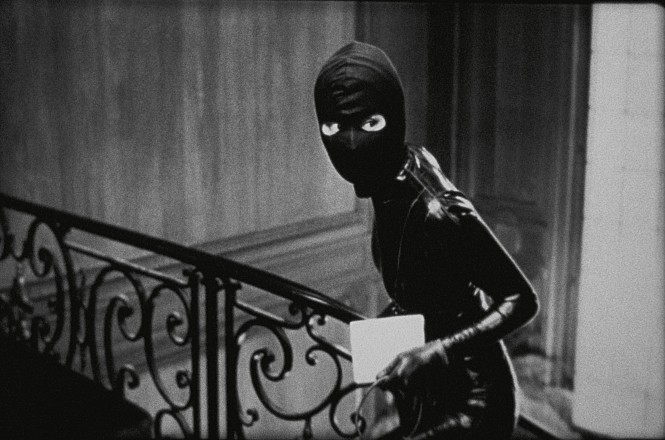
Barbarian (2022) ☆☆☆(3/4): This is a bad place indeed…

“Barbarian”, which is currently available on Disney+ in South Korea, is a darkly amusing horror thriller which skillfully toys with our expectations on its genre from the beginning to the end. I thought I knew where it was going during its first act, but, like many of good genre flicks, it actually surprises me as changing its direction more than once, and the result is often entertaining with some naughty amusement.

The movie begins with the arrival of a young woman named Tess (Georgia Campbell) in one seemingly plain rental house located in the rundown Detroit neighborhood of Brightmoor. For her important job interview, she is going to stay there for a few days, but, alas, she cannot go inside the house due to a little problem with the lock of the front door of the house, and she cannot even contact with a rental agency which provided her this house.

Fortunately, there is someone in the house, and Tess is perplexed because she is supposed to be the only person to stay in the house, and the same thing can be said about that person in the house, who is a young man named Keith (Bill Skarsgård). It is apparent that the house is somehow double-booked, and Tess considers going to any other suitable place to stay, but, alas, as Keith belatedly tells her, most of local hotels are already booked fully due to some big convention to be held in the area.

Because it is already quite dark outside, Tess has no choice but to accept a little kindness from Keith, who generously suggests that she should stay with him in the house at least for one day. As a matter of fact, he is willing to give up his bedroom for her, and Tess appreciates his generosity as interacting more with him, but she also cannot help but feel nervous mainly because he is still a total stranger to him. He does not seem to lie about himself or their current situation, but, as a young woman, Tess remains rather guarded even during their following casual conversation.

Mainly because Bill Skarsgård, who serves as one of the executive producers of the film, previously played that murderous clown figure in “It” (2017) and its following sequel, we also wonder whether there is anything hidden behind Keith. On the surface, he is just an overtly nice guy, but I must say that he looks like a fairly good candidate for the Norman Bates award, and we are not so surprised when Tess comes to have a rather unnerving moment in the middle of the night.

Now I should be more discreet about describing what follows next for avoiding any potential spoiler. As already announced to us by the ominous music on the soundtrack in the opening scene, there is indeed something wrong with the house, and Tessa subsequently comes to see more of what a bad place it really is. For example, its neighborhood is full of numerous abandoned houses, and there is even a mysterious figure who frantically warns her about the house. Georgina Campbell, a young British actress mainly known for appearing in several notable TV drama series including “Broadchurch”, is believable as her character is disturbed more and more along the story, and we certainly brace ourselves when her character eventually goes down to the basement of the house later in the story despite numerous bad signs around her.

Once Tess comes to face the unspeakable sides of the house, the movie promptly shifts onto the other narrative line like Alfred Hitchcock’s “Psycho” (1960). We are introduced to another main character in the story, and this figure, played by Justin Long, also does not have any idea on how dangerous the house really is, even though he is the owner of the house. Because the house is supposed to be empty, Long’s character is naturally perplexed by a number of personal stuffs left in the house, but then he gets intrigued when he discovers something hidden inside the house. Because he is in a big legal trouble involved with his alleged sexual assault, he is willing to go further for any chance for getting more money, and we soon see him virtually following the footsteps of Tess.

In contrast to Tess, Long’s character is not someone we can easily care about or fear for, but the movie keeps holding our attention as we behold more of what is being hidden right below the house. Steadily maintaining the level of tension and spookiness along the story, the movie gives us a series of morbid scenes as Long’s character discovers more and more of the unspeakable secret of his property, and Long willingly throws himself into more horror and twisted amusement for us. We are surely scared at times, but we are sort of amused because what happens to his character can be interpreted as a punishmenhe richly deserves, considering how impertinent he is just like many real-life celebrities accused of sexual assault during last several years.

In conclusion, “Barbarian” is a modest but effective genre piece which does its job better than expected, and I appreciate the competent handling of story, character, and atmosphere by director/writer Zach Cregger, who is incidentally the founding member of the New York City-based comedy troupe The Whitest Kids U’ Know and also co-directed two feature films before making a solo directorial debut with this film. As far as I can see from the film, he is a good genre film director who does know one or two things about how to play against our expectation, and it will be interesting for us to see what he will do next after this successful starting point.

Posted in Movies | Tagged , , | Leave a comment

Someone I Used to Know (2023) ☆☆☆(3/4): Before her ex-boyfriend’s wedding

“Someone I Used to Know”, which was released on Amazon Prime in last week, does not break any new ground in its genre territory, but it is smart and witty enough to engage us at least during its running time. Right from the beginning, we can clearly see where it is heading, but the movie is driven mainly by its broad but colorful characters instead of merely resorting to its genre conventions, and we come to care about the ending a bit more than expected.

During the opening part of the film, we get to know how things have been disappointing for its heroine. There was once a time when she was a young and ambitious documentary filmmaker who aspired to make some good documentaries, but Ally (Allison Brie) is now stuck with a superficial reality TV show just for earning her living in Hollywood, and she gets only cynical consolation from how slyly she can draw emotional responses from the participants of her reality TV show for more rating.

However, her supposedly good days are soon ended because her reality TV show is abruptly canceled due to its considerably low current rating. Maybe she can go on with another reality TV show not so different from the previous one, but Ally is not so eager to do that, and she eventually decides to have some rest in her hometown in Washington, not long after she receives a casual phone call from her mother.

When Ally unexpected comes to her family house along with her pet cat, Ally’s mother Libby (Julie Hagerty, whom you may remember for her memorable comic performance in “Airplane!” (1980)) surely welcomes her daughter, though she is doing something which embarrasses Ally for good reasons. When she later goes to a local bar just for staying away from her mother’s active private life, Ally happens to come across her ex-boyfriend Sean (Jay Ellis), and she cannot help but attracted to him again as they spend more time together.

However, Sean becomes defensive when Ally eventually attempts to get closer to him, and there is an understandable reason for that. When she subsequently shows up at his family house, she belatedly comes to learn that he has been engaged to a woman named Cassidy (Kiersey Clemons), and Ally soon finds herself getting herself involved with the preparation for Sean and Cassidy’s upcoming wedding just because Sean’s parents are still fond of her even though they were separated around 10 years ago. When Sean’s indomitably persuasive mother Jojo (Olga Merediz) asks Ally to shoot the wedding video for Sean and Cassidy, Ally cannot possibly say no, and she comes to spend more time around Sean and many others around them.

One of them is Benny (Danny Pudi, who previously worked with Brie in TV sitcom series “Community”), who incidentally was one of Ally’s close friends before Ally left Sean and her hometown for pursuing her nascent filmmaking career. As your average no-nonsense friend, Benny instantly senses something going on between Ally and Sean, so he sincerely advises her that she really should be careful about whatever she really feels, but then Ally cannot help but wonder whether she can start over with Sean.

The situation becomes more complicated as Ally gets to know Cassidy more. Although she instinctively sees a potential trouble from Ally as soon as they are introduced to each other, Cassidy tries to be nice to Ally at least, and, what do you know, she eventually shows a lot more of herself to Ally than expected. Coming to learn that Cassidy is quite conflicted about Sean expecting her to give up her musician career, Ally comes to have more doubt on Cassidy and Sean’s wedding, but then she also questions whether her view is biased by her old feelings toward Sean.

The screenplay by Brie and director/co-writer Dave Franco, who has been married to Brie since 2017, is often predictable, but it still holds our attention as it handles its main characters with care and respect. While both Ally and Cassidy are depicted as flawed but likable human characters, Sean turns out to be much more than a mere plot element stuck between them, and a bunch of supporting characters are also crucial in generating the warm and breezy comic mood of the story. For example, Sean’s goofy younger brother Jeremy (Haley Joel Osment, who reminds us again that, as a seasoned adult actor, he has been far and far away from his Oscar-nominated breakthrough turn in “The Sixth Sense” (1999)) is surely the main source of comic relief in the film with all those exaggerated behaviors of his, but we still can sense the sincere affection behind his silly appearance, and we come to smile along with others around him.

In case of the eventual climactic part, it surprises us as being a little more complex than expected as not only Ally but also Sean and Cassidy come to reflect on themselves and what they really care about. Along with Brie, Jay Ellis and Kiersey Clemons ably handle this tricky part with some integrity to their respective characters, and that is why the result is accompanied with genuine poignancy. Around these three good performers, Franco assembles a bunch of distinctive performers including Danny Pudi, Haley Joel Osment, and Julie Hagerty, and the special mention goes to Olga Merediz, who steals every moment of her appearance despite her seemingly thankless role.

On the whole, “Someone I Used to Know” is not particularly fresh compared to many senior romantic comedy films such as, yes, “My Best Friend’s Wedding” (1997), but it is still entertaining enough for recommendation at least. Compared to Franco’s debut feature film “The Rental” (2020), this is a lightweight genre stuff in comparison, but it shows that Franco is a competent filmmaker who can easily switch from one genre to another, and it will be interesting to see what he will try next.

Posted in Movies | Tagged , , | Leave a comment

Close (2022) ☆☆☆(3/4): A friendship shattered

I know it is a clichéd expression, but I sincerely advise you not to read the following paragraphs if you want to be fully impacted by Lukas Dhont’s latest film “Close”, which won the Grand Prix at the Cannes Film Festival early in last year and then was Oscar-nominated for Best International Film in last month. I will surely try not to reveal too much in my review, and I will simply focus on how much I admire the movie tactfully and sensitively builds and develops the story and characters up to a certain narrative point, but I really think you should stop reading my trivial review right now if you are already planning to watch it.

During its first half, the movie mainly revolves around Léo (Eden Dambrine) and Rémi (Gustav De Waele), two 13-year-old boys who have been quite close to each other since they were very young. At first, we see these two young boys spending some good time together, and then we observe more of their strong friendship as they hang around with Rémi’s mother, who apparently regards Léo as another son for her.

While they spend another night together in Rémi’s house, Léo and Rémi come to have a little tender night talk, and we slowly come to gather that Rémi has been quite emotionally attached to Léo. When Léo tells Rémi a little story which can be regarded as a metaphorical reflection of their longtime friendship, Rémi listens to his friend with quiet but intense attention, and Léo does not mind this at all as tenderly looking at his friend.

However, things gradually begin to change as another school year of theirs is started not long after that. On the first day of their new school year, Léo and Rémi enthusiastically go to their school together, and they remain close to each other inside and outside their classroom, but then Léo cannot help but become more conscious of how they look to other students around them. At one point, they are innocently asked about whether they are more than close friends, and Léo insists that he and Rémi are just friends, but then he begins to distance himself from Rémi bit by bit.

This tendency of his becomes more prominent when he later joins the ice hockey team in the school along with several classmates of his. As he and his classmates are demanded to be tougher and stronger for playing ice hockey, Léo feels more uncomfortable with Rémi’s emotional attachment on him, and there eventually comes a point where they come to clash over their growing emotional issue between them.

The movie is rather ambiguous about how much Léo and Rémi’s relationship is actually close to homosexuality, but I guess that is the right choice considering how both of them are not so well aware of how exactly they feel about their increasingly complicated relationship. While it is possible that Rémi simply does not want his best friend to be estranged from him, it is also conceivable that Léo rejects Rémi’s desperate reach just because he does not look, uh, weak to his schoolmates, though, as far as I observe, nobody around him is particularly homophobic.

And then something quite unexpected happens around the middle point of the film. Rather than showing the incident itself, the movie wisely pays more attention to its devastating aftermath, and I especially appreciate how it skillfully handles one crucial scene where Léo and other students slowly come to learn of the incident not long after having a little fun field trip together.

The second half of the film focuses on Léo’s growing guilt and grief involved with the incident. Still reluctant to confide to anyone about how much he was responsible for the incident, he becomes more tormented in addition to being angrier about himself, and this often baffles his parents, who are understandably perplexed but try to understand and comfort him nonetheless.

Of course, there eventually comes a point where Léo tells everything to a certain main character in the story, and that is where the screenplay by Dhont and his co-writer Angelo Tijssens becomes quite contrived for pulling our heartstrings. To be frank with you, the result is rather manipulative in my humble opinion, but it still works because of what has been so carefully developed during the rest of the movie, and I was not so surprised by the emotional responses shown from several audiences around me.

The considerable emotional power of the movie lies in the two remarkable performances from its two young lead actors. Although they do not have any previous movie acting experience before this film, Eden Dambrine and Gustav De Waele effortlessly convey their characters’ complex emotional bond to us, and they are also supported well by several adult cast members including Léa Drucker and Émilie Dequenne, who is terrific during a couple of key scenes between her and Dambrine later in the story.

In conclusion, “Close” is another interesting queer drama from Dhont after his notable debut feature film “Girl” (2018), which is about the intense emotional struggles of a young female transgender ballet student. Although it is not entirely without flaws as shown from its rather artificial finale, the movie confirms again that Dhont is indeed a major talent to watch, and I will certainly keep watching on his advancing filmmaking career.

Posted in Movies | Tagged , , , | 2 Comments

More Than Ever (2022) ☆☆☆(3/4): Her matter of life and death

“More Than Ever” is a little character drama which calmly observes its heroine’s quiet emotional struggles over her impending mortality. While it becomes occasionally melodramatic as you can expect from its main subject, the movie is still thoughtful and sensitive enough for the gravitas of her difficult situation, and it certainly earns its somber bittersweet ending with considerable emotional effects on us.  

In the beginning, we are introduced to Hélène (Vicky Krieps) and Matthieu (Gaspard Ulliel), a young couple who have been trying to deal with a gloomy fact which may end their close relationship sooner or later. Hélène happens to be recently diagnosed to have a rare incurable lung disease which will end her life within a short time unless she receives a lung transplant, and their close friends around them cannot help but feel awkward when they come to Hélène and Matthieu’s residence for one private evening meeting. Even though everyone tries to be cheerful on the surface, Hélène’s terminal illness soon becomes the elephant in the room, and that makes the mood among them quite uncomfortable to say the least.

As her medical condition gets worse day by day, Hélène feels more frustrated about how negatively her relationship with Matthieu has been affected by her medical condition. Because there is still a chance for her survival via lung transplant, Matthieu does not want to give up at all, but Hélène becomes skeptical because 1) she will have to wait for any suitable donor for an indefinite period and 2) she may have to struggle more even after she finally gets a lung transplant. Not so surprisingly, they eventually come to argue on whether they should give up or not, and they become estranged from each other despite their respective efforts for mending their relationship.

Meanwhile, Hélène gets interested in how the terminal like her deal with their gloomy circumstances. While doing some online search, she comes across an anonymous blogger who is quite frank about his serious illness with some morbid sense of self-deprecating humor, and she becomes more interested in this blogger as checking out a number of pictures and photographs posted on his blog site. Although their first online interaction is not exactly pleasant, she and this blogger soon come to interact more with each other during next several days, and she begins to consider going to where this blogger lives. Instead of being stuck in her residence for days without much hope for her survival, she really wants to do something different before it is too late for her, and Matthieu, who incidentally does not know anything about this blogger yet, does not stop her even though he has understandable reservation on her traveling alone by herself. 

Shortly after she arrives in some remote fjord area in Norway, Hélène meets the blogger, who turns out to be a lot different than she thought at first. He is a taciturn middle-aged man named Bent (Bjørn Floberg), and Hélène comes to stay in a cabin outside his little house. Although the mood between them is awkward to say the least, it does not take much time for them to interact more with each other, and Hélène subsequently finds herself unexpectedly becoming much more relaxed and peaceful than before, though her first days are rather rough for her due to the new environment surrounding her.

However, she still does not tell everything to Matthieu, and the situation between them become more complicated when she notifies an important decision of hers to him later in the story. When he eventually comes, it does not take much time for him to notice how friendly Hélène is to Bent, and that consequently leads to a sudden plot turn which causes more tension between her and Matthieu.

I will not go into details on how the screenplay by director Emily Atef and her co-writer Lars Hubrich pulls out a series of poignant moments during its last act, but I can tell you that I admire how thoughtfully the movie handles a key emotional scene between its two main characters with lots of care and intimacy. Although nothing much is said during this scene, that is more than enough for us to understand what is exchanged between them on the emotional level, and this effectively sets up the following finale. 

The movie depends a lot on the solid performances from its three main cast members. While Vicky Krieps, a wonderful Luxembourgish-German who had another productive time in last year thanks to this film and “Corsage” (2022), vividly illustrates her character’s dynamic emotional drama along the story, Gaspard UIliel, a notable French actor who unfortunately died too early in last year (This is his penultimate film, by the way), did a commendable job of complementing his co-star, and veteran Norwegian actor Bjørn Floberg holds his own small spot well around Krieps and Ulliel.

Overall, “More Than Ever” works thanks to its main cast members’ good acting as well as Atef’s competent direction. Probably because I am passing what will be probably the middle point of my inconsequential life, its thoughtful approach on matters of life and death comes close to me as I reflect more on its story and characters, and now my mind goes back to that memorable quote in Errol Morris’ great documentary film “Gates of Heaven” (1978): “Death is for the living and not for the dead so much.”

Posted in Movies | Tagged , , | Leave a comment

Next Sohee (2022) ☆☆☆1/2(3.5/4): She won’t be the last one…  

I got chilled and then saddened as watching South Korean film “Next Sohee”. If you are horrified and infuriated by what is so painfully presented during its first half, I guarantee you that you will be more exasperated and disgusted as watching the second half, which presents a bigger picture surrounding the sad personal tale of systemic ignorance and exploitation during its first half. I must tell you that what is depicted in the film is a mere reflection of what is happening to those numerous disadvantaged young people out there in the South Korean society even at this point, and you will reflect more on this serious social issue once the movie is over.

The first half of the movie mainly revolves around Sohee (Kim Si-eun), an adolescent girl who is about to graduate from her vocational high school in my hometown Jeonju. Because she cannot afford to go to college, Sohee is expected to do some field job for more experience before graduating, and she is certainly ready when her supervisor teacher notifies her that she is going to work in a local call center as an apprentice. Once she signs those several contract papers, she instantly starts her first day at the call center, and it looks like everything will go pretty well for her during next several months before her graduation.

However, it does not take much time for Sohee to see how demanding and exploitative the work environment surrounding her and many other employees can be. Because I have heard a lot about those creepy callers who verbally abuse call center employees in one nasty way or another, I braced myself whenever I watched Sohee handling her latest call, and, as I already feared, many of those callers in the film are not so nice to say the least.

At least, Sohee and her colleagues have a decent manager who really cares about their work environment, but their manager is also in a very difficult position just like them. Because their department has shown less result than several other departments, the head of their department is quite displeased, and this prick frequently pressures not only the manager but also Sohee and her colleagues in humiliating ways. Sohee and her colleagues have no choice but to work overtime again and again, and their manager naturally becomes more morose about that as days go by.

In the end, there comes a sudden bad incident which shakes the whole department, but the head of the department demands Sohee and colleagues that they should keep working as usual without paying any attention to that incident in question. As a matter of fact, the company has already sent the new manager for them, in addition to forcing all of them to sign a non-disclosure agreement.

Despite being quite conflicted about what she has seen during last several weeks, Sohee tries to move on as much as possible, but she is reminded again and again of how she and her colleagues are unfairly treated by their company. The company surely promised to pay them some incentive at the beginning, but they always have excuses for not paying the incentive, and Sohee and her colleagues are still demanded to work more and more without any appreciation or reward.

After Sohee inevitably and tragically reaches to the breaking point around its first half, the movie shifts onto another main character during its second half. She is a female detective named Yoo-jin (Bae Doona), and she is not that particularly interested when the case involved with Sohee is handed to her, but then she comes to sense that there is something hidden behind the case. Although her direct supervisor prefers to close the case as soon as possible, Yoo-jin persistently delves into the case, and she comes to discover a number of very unpleasant things in addition to a little connection between her and Sohee.

Via Yoo-jin’s steady investigation along the plot, the movie gradually shows us how Sohee and many other young people are bound to be exploited from the very start. Their vocational schools are supposed to help them getting good jobs, but their teachers and supervisors only care about raising employment rates more for getting more fund from the Ministry of Education. They naturally throw their students into any menial job just for making their employment records good, and those companies closely connected with them have no problem with exploiting these young people who have many disadvantages besides their inexperience and poor economic status. To make matters worse, those officials in the Ministry of Education have willingly overlooked this unfair situation just because of their own benefits, and, not so surprisingly, Yoo-jin becomes all the more exasperated as coming to realize how rotten the system has been from the bottom to the top.

The screenplay by July Jung, who previously made a stunning feature debut with “A Girl at My Door”, sometimes falters a bit, but it mostly remains calm and sober on the whole, while also held well together by the strong performances from its two lead actresses. Kim Si-eun is simply devastating during many key scenes of hers, and her haunting performance effectively hovers around the film even after her character steps back from the center later in the story. On the opposite, Bae Doona, who already collaborated with Jung in “A Girl at My Door”, humbly carries the second half of the film without overshadowing Kim’s presence at all, and she deftly conveys to us her character’s muted but palpable anger and disgust toward those figures responsible for Sohee’s tragedy. In case of a number of substantial supporting performers in the movie, Jung Hoe-rin, Kang Hyeon-oh, Bahk Woo-young and Lee In-yeong are solid as Sohee’s close friends, and Park Hee-eun, Kim Yong-joon, Hwang Jung-min, Shim Hee-sub, and Choi Hee-Jin are also well-cast as several adult figures surrounding Sohee.

Overall, “Next Sohee” is another compelling work from Jung. While it is less complex and more straightforward than “A Girl at My Door” in terms of story and characters, the movie powerfully delivers its urgent social messages to audiences, and its sadly poignant last scene will linger on your mind for a long time along with the very title of the movie. Yes, there will be more young people to be exploited like Sohee, but we should not look away from them at all, regardless of whether we can actually change that deeply problematic system or not.

Posted in Movies | Tagged , , , , | 1 Comment

Empire of Light (2022) ☆☆(2/4): Sincere but muddled

Sam Mendes’s new film “Empire of Light” is rather indecisive and muddled in its sincere love letter to movie theaters. On one hand, it attempts to emphasize the wonder of cinema, but nothing much sticks on the wall even though a bunch of movies pop around here and there throughout the film. On the other hand, it also tries to present a sensitive character drama coupled with one unlikely romance, but it often does not work due to occasional glaring plot contrivance, and we only come to observe it from the distance without much emotional involvement.

The story, which is set in 1980, mainly revolves around Hilary Small (Olivia Colman), a plain middle-aged single woman who works in a big old movie theater located on the north coast of Kent, England. As shown from the opening part of the film, her daily life is monotonously melancholic without much joy or excitement, and she does not even care that much about watching movies unlike her fellow employees.

On one day, there comes a new employee, a handsome black lad named Stephen (Micheal Ward). Although their first day is not exactly pleasant, Hilary comes to befriend Stephen as she shows him some abandoned spaces at the upstairs of the theaters, and she cannot help but drawn more to him while getting to know him more. When they happen to be together on the rooftop of the theater right before another year begins, she eventually comes closer to Stephen, and she naturally feels embarrassed, but it turns out that Stephen also feels attracted to her.

After that, Hilary and Stephen come to meet each other more without revealing their relationship to anyone in the theater. Feeling a lot happier than usual, Hilary decides to end her joyless sexual relationship with her married boss, who is not so pleased about that to say the least. In case of Stephen, he comes to show more of himself during their private meetings, and Hilary is touched by how much he has tried for a better future for himself.

In addition, Hilary becomes more aware of what Stephen has to struggle with day by day due to his race. At one point, she happens to witness him harassed by several skinhead thugs, and then she comes to learn more about his disadvantaged social status as a black man. She wants to bring more comfort and consolation to him, and he does not mind that at all because, well, he really loves and cares about her.

However, the story suddenly changes its direction when Hilary turns out to have a very serious mental problem behind her back, and that is where the movie stumbles more than once. It is rather distracting to see its heroine going up and down as demanded by the plot, and that reminds me of what critic Pauline Kael once wrote: “Explaining madness is the most limiting and generally least convincing thing a movie can do.”

Olivia Colman, who has been one of the most interesting actresses of our time especially since her stellar Oscar-winning turn in “The Favourite” (2018), is reliable as usual, but even the steady handling of her character is often hindered by Mendes’ flawed screenplay. While she does a good job of filling her character with enough sense of life and personality, her good efforts are frequently stretched to the extremes during the second half of the film. In case of one key scene involved with the screening of “Chariots of Fire” (1981), it is supposed to be a dramatic highpoint, but it is merely embarrassing to watch instead, and her character comes to feel more like a case study instead of someone we can care about.

On the opposite, Micheal Ward, a promising actor who was electrifying in his breakout turn in “Blue Story” (2018), is limited a lot by his rather superficial character, and that is a nearly fatal weakness in the story. Although Ward clicks well with Colman during several intimate scenes between their characters, his character feels more like a plot element even when the movie comes to focus more on him later in the story. We observe a bit of Stephen’s private life via his nurse mother and his ex-girlfriend, but he is mostly defined by the racial prejudices against him, and this aspect becomes more blatant via another contrived moment in the film.

In case of the theater in the movie, it surely looks fabulous thanks to cinematographer Roger Deakins, who recently received an Oscar nomination for this film. With all those numerous posters and photographs on the walls of the projection booth, the movie surely evokes some nostalgia from us, but that is all we can get, and the following scene involved with the little private screening of “Being There” (1979) feels clumsy and manipulative in my trivial opinion.

Overall, “Empire of Light” is a big disappointment from Mendes, who has seldom bored me since his Oscar-winning debut film “American Beauty” (2000). It is nice to see him trying something more modest compared to his recent previous works such as “Skyfall” (2012) and “1917” (2019), but the result is underwhelming to say the least, and I was left with lots of hollow impression in the end. Sure, it is always fun and entertaining for me to go to movie theater, but, folks, the movie somehow fails to remind me of that.

Posted in Movies | Tagged , , , | 1 Comment

See How They Run (2022) ☆☆☆(3/4): See how they spoof Agatha Christie mystery

“See How They Run”, which is currently available on Disney+ in South Korea, is an amusing spoof on Agatha Christie mystery novels. Although it does not surpass its main source of inspiration, the movie is fairly entertaining mainly thanks to the game efforts from its good cast members, and I enjoyed a number of various goodies to be appreciated by the fans of Christie’s mystery novels (Full disclosure: I have been one of them).

The movie, set in London during early 1953, opens with the sardonic narration of a person who is about to be murdered. He is an American movie director named Leo Köpernick (Adrien Brody), and he is recently hired for directing the film adaptation of “The Mousetrap”, a very successful London theater play based on one of short stories written by Christie. However, besides having a conflict with several people involved in the adaptation of “The Mousetrap”, he is also rather impolite and insufferable to others around him, and that surely makes him an ideal victim to be killed sooner or later.

Shortly after he is eventually murdered by someone, Köpernick’s dead body is found right on the set of “The Mousetrap” in the Ambassador Theater where the play was recently celebrated for its 100th performance. Naturally, everyone involved with Köpernick is a prime suspect to watch, and Inspector Stoppard (Sam Rockwell), who is accompanied with Constable Stalker (Saoirse Ronan), wants to shut down the production at least for a while, though that turns out to be impossible due to the increasing popularity of the play as well as Christie herself, who has been very fierce about protecting anything involved with her works for good reasons.

Like any other good Christie mystery, the movie has a fair share of broad but colorful suspects. There are 1) the movie producer who hired Köpernick and his private secretary who has been dreaming of becoming his second wife, 2) a prominent writer who has often clashed with Köpernick for their artistic difference, 3) the producer of the original play and her rather senile old mother, and 4) the lead actor of “The Mousetrap” and his wife who happened to be insulted by Köpernick not long before he got murdered.

The lead actor of “The Mousetrap” is incidentally Richard Attenborough (Harris Dickinson), and that is just one of numerous references sprinkled throughout the film. For example, a certain real-life serial killing case is mentioned more than once in movie, and you may remember than Attenborough actually played that infamous serial killer in “10 Rillington Place” (1971). Furthermore, the movie producer in the film is a real-life figure who produced a number of notable Hollywood films such as “The African Queen” (1951), so several famous Hollywood figures are naturally mentioned in the story.

Above all, the story, written by Mark Chappell, cheerfully follows many genre conventions of Christie mysteries. Although he may not be as eccentric as Hercules Poirot or Jane Marple, Inspector Stoppard, who has no connection with Tom Stoppard as far as I can see, has his own little eccentricity, and his glum appearance is complemented well by the cheerful enthusiasm of Constable Stalker, who is not as threatening as her surname suggests. As advised by her superior, she tries not to make conclusions too hastily, but she cannot help it as more hidden facts pop out here and there around them along the story, and even her superior does not seem to tell everything to her.

I certainly do not dare to reveal the identity of the killer in the story here in my review, though I can tell you instead that some of major clues lie in “The Mousetrap”, which is still being performed in London’s West End even at this point (Believe or not, it had run continuously there till the production had to be shut down to the COVID-19 pandemic in 2020 March). Although I have not seen it on stage yet, I read Christie’s short story at least, and I was certainly amused as observing how the movie itself becomes a sly send-up version of “The Mousetrap” via a series of “life-imitates-art” moments later in the story.

The cast members of the movie, some of whom are clearly color-blinding casting, are solid in their droll comic acting. While Sam Rockwell, who can be quite showy as shown from his recent Oscar-winning supporting turn in “Three Billboards Outside Ebbing, Missouri” (2017), dials down his presence for some deadpan comedy, Saoirse Ronan brings considerable pluck and wit to her character, and they are supported well by a bunch of notable performers including Adrien Brody, Ruth Wilson, Reece Shearsmith, Harris Dickinson, Charlie Cooper, Shirley Henderson, Lucian Msamati, and David Oyelowo, who is overtly flamboyant for demonstrating the more humorous sides of his talent.

By the way, my late mentor/friend Roger Ebert once complained that Christie mysteries mostly felt too dry and bloodless for him, and I agree to his opinion even though I love revisiting some of the best works from Christie. Sure, they are usually more or less than intellectual puzzles to be solved without much emotional resonance, but they are still fun and delicious in my humble opinion, and “See How They Run” reminds me again of how much Christie’s mystery novels mean to me. I wish it could have more fun with its source material, but I had enough entertainment on the whole, so I will not grumble for now.

Posted in Movies | Tagged , , , , | Leave a comment

Holy Spider (2022) ☆☆☆1/2(3.5/4): Based on one real-life Iranian serial killing case

Ali Abbasi’s third feature film “Holy Spider”, which was selected as the Danish submission to Best International Film Oscar in last year and then included in the finalist in this category, is a calm but angry crime thriller film loosely based on one shocking real-life Iranian serial killing case between 2000 and 2001. While it is compelling to watch how its fictional journalist heroine doggedly continues her investigation, it is also quite chilling to observe how the killer could kill no less than 16 women under social ignorance and prejudice, and the movie eventually makes a sharply urgent point on how he is just a mere tip of the deeply misogynistic aspects of the Iranian society.

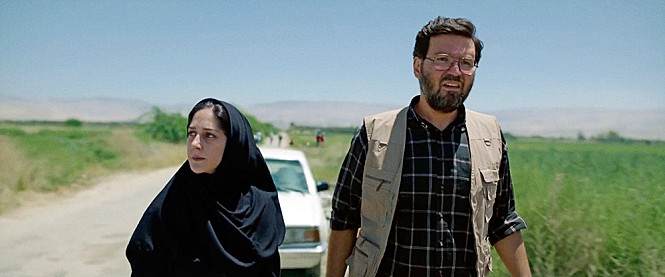
After the gut-wrenching opening sequence showing the last night of the killer’s latest victim, the movie introduces us to a young female journalist named Arezoo Rahimi (Zar Amir Ebrahimi), who comes to Mashhad, Iran for reporting on the ongoing serial case which has already been terrorizing the whole city. The killer has already killed 9 women, but the local police still have no clue for tracking down any possible suspect, and they certainly do not welcome Rahimi much when she begins to look into the case with some help from Sharifi (Arash Ashtiani), a generous local male newspaper reporter who always receives a call from the killer whenever the killer did his latest killing.

It is clear from the recording of one phone call from the killer that he is driven by his religiously fanatic motive. All of those murdered women are prostitutes working on night streets, and the killer believes that he is simply cleaning the streets for the god as getting rid of those “faithless” women one by one. After all, Mashhad has been regarded as a major holy place for years, and those prostitutes are a big affront to the city in his twisted viewpoint.

On the surface, everyone in the city seems to want to see the end of this serial killing case, but Rahimi cannot help but notice how the local police and other influential officials do not have much interest in solving the case. They do not have much pity and sympathy toward those murdered prostitutes due to their prejudice and misogyny, and they certainly show lots of condescension to Rahimi when she tactfully approaches to them for getting more information about the case. As a matter of fact, one of them blatantly attempts to get closer to her at when they happen to be in the same room without anyone else, and that is certainly one of the most disturbing moments in the film.

Nevertheless, Rahimi is not deterred at all as feeling more concern and sympathy toward those many prostitutes out there, most of whom have no choice to go outside as usual due to their poor economic condition. With some help from Sharifi, she finds a usual area where the killer looks for his latest victim, and there eventually comes a point where she may get closer to the killer at last.

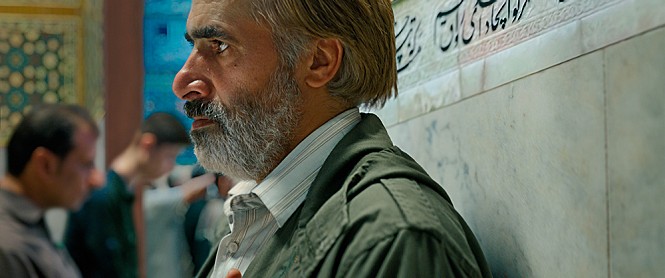
In the meantime, the screenplay by Abbasi and his co-writer Kamran Bahrami also pays considerable attention to the killer’s daily life. He is merely a struggling construction worker named Saeed Hanaei (Mehdi Bajestani), and we are chilled more as he casually alternates between his banal family life and his unspeakable nocturnal activity. He usually tries to remain fine and all right, but the people around him including his wife sense something wrong from him at times, while still having no idea on what he has been doing behind his back. It is implied that he has some post-traumatic stress disorder issue as a war veteran, and we come to gather that has fueled his murderous impulse along with the deep discontent with his current status of life.

The movie does not flinch that much in case of the depiction of his several killings. These horrific scenes in the film are quite unpleasant and grueling to watch to say the least, but the movie thankfully avoids being sensational or exploitative as presenting them with enough restraint and skill, and it also handles those victim characters in the film with a bit of care and compassion, even though they just briefly appear in the movie.

In addition, Abbasi and his crew members including cinematographer Nadmi Carlsen did a splendid job of immersing us into the unnerving atmosphere surrounding the heroine of the film. Although the movie was mainly shot in Jordan, the locations used in the film look fairly authentic on the screen as far as I heard from other reviewers, and that surely brings considerable realism and verisimilitude to the film.

The movie also depends a lot on the effectiveness of its two lead performers. Zar Amir Ebrahimi, who deservedly won the Best Actress award when the movie was shown at the Cannes Film Festival in last year, gives an unadorned but strong performance which comes to function as the human anchor of the story, and she is particularly terrific when her character silently observes more hypocrisy and misogyny from the local legal system later in the story. On the opposite, Mehdi Bajestani ably embodies the banality of evil observed from his deplorable character, and he also handles well a few darkly absurd scenes showing how his character is as banal and insignificant as many other real-life serial killers out there.

On the whole, “Holy Spider” is definitely not something you can casually watch on Sunday afternoon, but it is still worthwhile to watch thanks to Abbasi’s skillful direction and the admirable efforts from his two lead performers. Considering the current political situation in the Iranian society at present, the main subject of the film feels quite timely to say the least, and its deeply disturbing final scene will linger on your mind for a while.

Posted in Movies | Tagged , , | Leave a comment

Mother Land (2023) ☆☆☆(3/4): A modest South Korean stop-motion animation film

South Korean animation film “Mother Land” is a precious work to be cherished. As a stop-motion animation film, it is rather modest compared to, say, “Guillermo del Toro’s Pinocchio” (2022) or many of the recent acclaimed works from Laika Studios, but it is equipped with its own style and personality at least, and its simple but sincere fairy tale will engage you more than expected once you give it a chance.

The story is set in a remote tundra area of Siberia around the late 20th century, and the opening part introduces us to one local nomad tribe family who has been going through one particularly harsh winter season. As their parents are mostly occupied with their daily work on a bunch of reindeers, Krisha (voiced by Lee Yun-ji) and her younger brother Ggolrya (voiced by Kim Seo-yeong) also try to help their parents in one way or another, but then Krisha’s mother unfortunately gets injured due to Krisha’s little regretful mistake, and Krisha certainly feels guilty about that while hoping that her mother will soon get recovered.

However, Krisha’s mother does not show any sign of recovery during next several days, so Krisha’s father eventually decides to go to a nearby city for getting the medicine for his wife, but Krisha has some other idea. Having often seen a certain mythical creature in her dream, she comes to believe that this mythical creature can cure her mother, but her father does not believe that much, while emphasizing to her that she should stay along with her mother and younger brother during his temporary absence.

Of course, our plucky heroine eventually decides to take care of the situation for herself not long after her father goes to the city. Without telling anyone, she goes out along with her trustworthy reindeer which will pull her sled, but then she discovers that Ggolrya is hiding inside her sled. She is not so pleased about this, but, mainly because they have already gone too far from their home, she eventually lets her brother accompany her despite the considerable risk they are going to face along their long journey.

While heading to a certain isolated spot where that mythical creature is supposedly living, they surely come across a number of serious troubles besides the increasingly cold and harsh weather. At one point, they will have to cross a perilous swampy area as depending only on their reindeer’s instinct, and then there come several nasty wolves which steadily go after them and their reindeer till a certain point.

However, the biggest menace in the story comes from an obnoxious Russian military officer named Vladimir (voiced by Lee Gwan-mok). As assisted and guided by a local hunter who knows a lot about the tundra area and its animals, Vladimir is quite eager to hunt that mythical creature by any means necessary, and it is not much of a spoiler to tell you that Vladimir and his guide eventually encounter Krisha and Ggolrya later in the story.

Without hurrying itself, the screenplay by director/writer Park Jae-beom, who previously made several short animation films before making a feature film debut here, steadily rolls its story and characters toward its expected finale, and then it brings out some surprising moments of poignancy. While its main characters are pretty simple to the core, the story brings enough gravitas to their situation for engaging us, and we come to care more about what is being at stake for them. For Krisha, saving her mother seems the most important thing to her for a while, but then there comes a task more important than that, and she becomes quite willing to make a defiant stand against her opponents even though there is not much chance for her from the beginning.

Furthermore, the film is commendable in its technical aspects. Although it is clear that they were often limited by their small production budget, Park and his crew members put lots of painstaking efforts onto the screen, and their overall result is charming in its simple but effective aesthetical qualities. The main characters in the film mostly look broad and coarse in their appearance, but they look and feel more alive as the film gradually builds its own fantasy world around them, and we are also served with a little dose of realism as shown from a brief bloody scene involved with one reindeer butchered for meat and blood.

The voice cast members are also crucial in bringing more life and personality to the main characters in the film. As the center of the story, Lee Yun-ji gives a likable voice performance, and she is complemented well by Kim Seo-young. In case of several other voice cast members, Lee Yong-nyeo, Kim Ye-eun, and Kang Gil-woo are also well-cast in their respective supporting parts, and Lee Gwan-mok is suitably mean and haughty for his villainous role.

On the whole, “Mother Land” is another notable South Korean animation film to watch, and it is all the more valuable considering that there have been a very few stop-motion animation films in South Korean during last 70 years. This is surely something to be appreciated by not only young audiences but also adult ones, and I can only hope that it will help its apparently talented director moving onto more artistic accomplishment during next several years.

Posted in Movies | Tagged , , , , , | Leave a comment

Irma Vep (1996) ☆☆☆(3/4): One troubled movie production

Olivier Assayas’ 1996 film “Irma Vep”, which happens to be released in South Korean theaters in this week, baffles me in enjoyable ways. Mainly revolving around one very troubled movie production, its story freely and unpredictably flows from one interesting moment to another, and you may come to accept the avant-garde aspects of its finale once you go along with its free-wheeling storytelling approach.

At the beginning, the movie throws us right into the busy process of one movie production. As the first shooting day of their movie is approaching, everyone in its production team is hurriedly preparing for that, but their director is not available at present, and that makes them more nervous about their upcoming shooting period. After all, lots of things may go wrong at any point, and they are not even so sure about whether they can actually finish their shooting in the end.

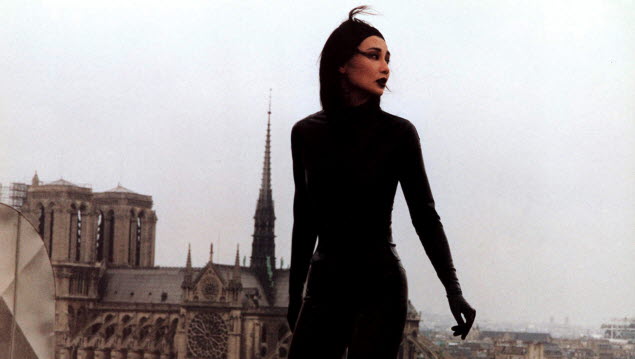
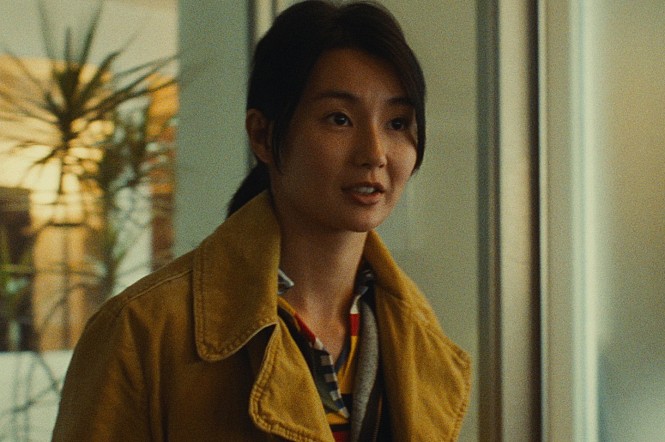
When Maggie Cheung, who incidentally plays herself in the film, arrives, she is ready to do as much as possible as the lead actress, but she is as confused as many others around her. Their movie, which is the remake of Louis Feuillade’s classic silent film serial “Les Vampires” (1915–16), does not seem to fit to her that well, but the director, played by Jean-Pierre Léaud, believes that she will bring some fresh modern touches to his movie. Although she still does not understand well what exactly her director wants her to do, Cheung starts to prepare for her role anyway, and we subsequently get a little amusing scene where she tries on a black latex suit for her character.

What follows next is a series of absurd moments as the production team struggles to shoot their film in one way or another. In case of shooting one particular key scene, they have to shoot it again and again without much success, and everyone on the set becomes more frustrated as time goes by. To make matters worse, the director seems to be lost in his own confusion, and, not so surprisingly, he eventually comes to lash out at his crew and cast members after they watch the rough cut of what they shot.

His cast and crew members are understandably not so amused to say the least. They naturally begin to worry whether their production will be soon shut down, but the mood becomes a bit brighter when many of them later have a little evening drinking party of their own. Cheung is also invited to this party, and she has some good time along with others although there is the considerable language barrier between her and others. Both they and she can speak English, but the conversations are mostly French, so she often seems isolated despite the vivacious atmosphere surrounding her.

The production takes another downturn as the director comes to have a big nervous breakdown. Without their director, the cast and crew members try to do as much as they can do for themselves, but there eventually comes a point where the production should be halted for a while, and then there comes some other director as a replacement. He is not much of a fan of Cheung, and, despite his reluctance, he already has his own artistic vision for this deeply problematic movie production.
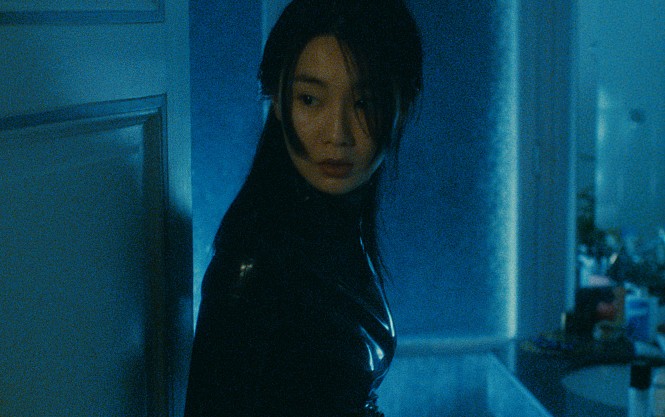
Meanwhile, the movie has some little naughty fun with Cheung. At one point in the movie, she seems to lose herself into her character in private for no apparent reason, and that leads to a weird but amusing scene where she wears that black latex suit and then attempts a little heist of her own in a hotel she is staying. In addition, the movie also has her interviewed by a rather rude French journalist, and we get some laughs as she tries to respond to the journalist’s insensitive questions as politely as possible.

The movie eventually arrives at the finale which caught me off guard when I watched the film for the first time in last year. I am still scratching my head on how I should process and interpret what is presented during this daring moment, but it still leaves a striking impression on me at least, and I admire more whatever Assayas attempts to achieve here.

Furthermore, I also appreciate the game efforts from the main cast members of the film. Although she does not wear that black latex suit as much as I hoped, Cheung is interesting to watch thanks to her natural presence, and so are several main cast members around her. While Léaud, who has been always remembered for his frequent collaboration with François Truffaut, embodies well his character’s neurotic sides, Nathalie Richard has several moments to shine as the costume designer who happens to be quite interested in getting closer to Cheung, and I was also delighted by the brief appearances of Alex Descas and Arsinée Khanjian in the film (This is actually not so surprising, considering that Assayas worked on the initial story idea of his film with Claire Denis and Atom Egoyan).

In conclusion, “Irma Vep”, which was incidentally remade into the HBO miniseries by Assayas himself in last year, is an admirable piece of work, but I am not very enthusiastic about it unlike many others because I observed its creative moments from the distance instead of being ecstatic about them. Personally, I prefer Assayas’ subsequent films such as “Clouds of Sils Maria” (2014) and “Personal Shopper” (2016), but “Irma Vep” is still recommendable for its distinctive qualities, and I think you should check it out someday – especially if you are ready for something challenging and interesting.

Posted in Movies | Tagged , , | Leave a comment