The Shining (1980) ☆☆☆☆(4/4): A Madness Odyssey

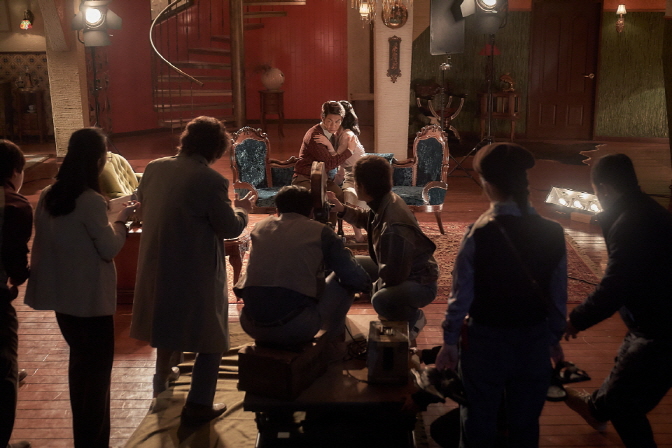
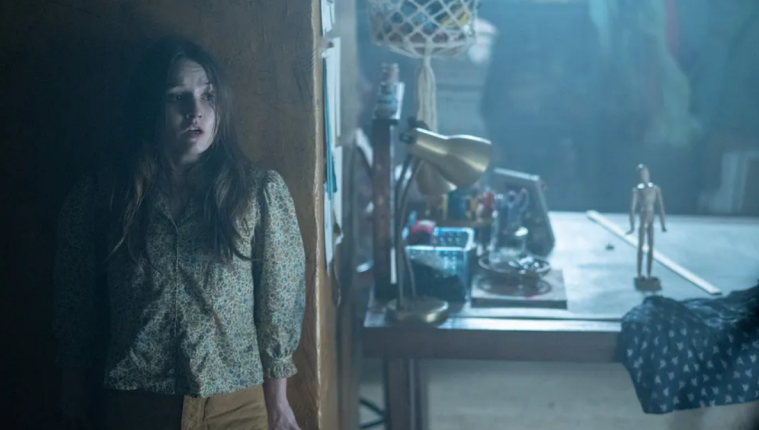
Stanley Kubrick’s “The Shining”, whose 4k remastered version was recently released by a local movie theater chain in South Korea, is utterly eerie for its baroque uncertainty. As its three main characters are hopelessly isolated inside its vast and ominous background, the movie constantly unnerves us with the increasing unreliability of their respective viewpoints, and the result is alternatively baffling and terrifying to the very end.

Noticing again how cold and distant the movie is to the madness and confusion of its main characters, I could not help but think of the last act of Kubrick’s another great film “2001: A Space Odyssey” (1968). In that part, the astronaut hero finds himself isolated inside a coldly decorated room after his fantastic journey across space and time, and his following transformation process in that room looks like being observed by something beyond his (and our) perception. In case of “The Shining”, its three main characters are stuck inside a big hotel located in some remote mountainous area of Colorado, and they sometimes feel like mere test subjects ready to be manipulated by whatever is hovering over the hotel.

Kubrick does not hide his intention at all right from the opening scene. Shrouded in palpable insidiousness with the synthesizer performance of “Dies irea” on the soundtrack, this spooky opening scene steadily looks over a small car driving toward the hotel. It is followed by a dryly banal meeting between the hotel manager and Jack Torrance (Jack Nicholson), a writer who happens to be hired as the caretaker of the hotel during its upcoming closing period. The hotel manager tentatively warns to Jack that the hotel can be completely isolated from the outside world during snowy winter days, and he even mentions a terrible incident involved with a former caretaker of the hotel. Jack assures to the hotel manager that he and his family will be all right: “And as far as my wife is concerned, I’m sure she’ll be absolutely fascinated when l tell her. She’s a confirmed ghost story and horror film addict.”

Meanwhile, we also get to know about Jack’s wife Wendy (Shelley Duvall) and their young son Danny (Danny Lloyd). Danny happens to have a sort of psychic power, and his imaginary friend shows him a series of disturbing moments implying what may happen in the hotel. During her following conversation with a doctor who checks on Danny, Wendy casually reveals Jack’s alcoholism – and how this serious human flaw of his led to one traumatic incident for both her and Danny some time ago.

Once Jack and his family come into the hotel, the movie frequently emphasizes how big and wide the hotel looks inside – especially when they are the only people inside the hotel after its closing day. As the camera steadily follows its main characters moving around here and there in the hotel, their surrounding environment often feels as vast as the space background of “2001: A Space Odyssey”. In fact, there seems to be no possible way out for them at times, as reflected by when the camera ominously looks down upon Wendy and Danny wandering inside a big hedge maze right next to the hotel building.

Around that point, Jack is already tumbling down toward madness, so we come to depend more on Danny and Wendy’s viewpoint, but neither of them is very reliable because they become psychologically isolated in each own way just like Jack. After experiencing something scary in a certain room in the hotel, Danny’s mind is much more unsettled than before, and those horrific visions of his soon come quite true to his petrified horror. In case of Wendy, she desperately tries to get things under her meager control, but there inevitably comes a point where she finds herself swept into her own terror and confusion.

Kubrick keeps everything cold and distant just like he did in many of his films, and that makes the movie all the more terrifying. While its three main characters are basically broad caricatures, their descent into madness and confusion is still quite arresting because of the overwhelming sense of claustrophobia surrounding them. Seemingly trapped forever in their isolated status, they come to lose more human qualities along the story, and that was probably why Kubrick deliberately had his two lead performers go over the top in their forthright acting. While Jack Nicholson dials up his familiar manic mode as much as demanded, Shelley Duvall amplifies her own neurotic quality to the extreme, and I must say that her strenuous efforts here in this film deserve to be appreciated more, considering how she was harshly treated by Kubrick during the shooting.

In the meantime, we are also baffled by the ambiguity surrounding the main characters’ feverishly warped viewpoints. Are there actually some supernatural entities in the hotel? Or, are Jack and his family merely experiencing a series of hallucinations fueled by Danny’s psychic power? A key scene later in the story, which is incidentally unfolded inside a storage room, strongly suggests that there are indeed ghosts in the hotel. However, the movie remains ambiguous about their actual existence to the end, with its very last shot raising more doubts and questions.

The movie actually provides a bit of objective viewpoint via Dick Halloran (Scatman Crothers), the chief chef of the hotel who happens to have the same psychic ability Danny has. During his conversation with Danny early in the film, he indirectly recognizes that there is something not so good inside the hotel, and he later comes to the rescue after receiving a psychic SOS from Danny. However, to put it mildly, the movie does not let him clarify the ongoing situation surrounding Danny and his parents.

I forgot to mention that “The Shining” is based on the novel of the same name by Stephen King, who disliked the movie for understandable reasons. To King’s dismay, Kubrick erased most of human depth in the original story while adapting it along with his co-writer Diane Johnson. Instead, he distilled the claustrophobic qualities of King’s story for his single-minded artistic vision, and his achievement has considerably influenced a bunch of subsequent arthouse horror films such as Ari Astor’s debut feature film “Hereditary” (2017), which definitely owes a lot to Kubrick’s movie in more than one way.

By the way, King later attempted to distance his novel further from Kubrick’s film via writing its sequel novel “Doctor Sleep”. However, to our little amusement, the following movie adaptation directed by Mike Flanagan was not free from Kubrick’s film at all – even when it is faithful to King’s sequel novel. That says a lot about the inescapable cinematic power of Kubrick’s film, isn’t it?

Posted in Movies | Tagged , , , | Leave a comment

World’s Best (2023) ☆☆☆(3/4): A little but likable Disney rap musical

“World’s Best”, which is released on Disney+ in last week, is a little but likable Disney rap musical about a smart middle school kid who boldly takes a chance with rap music. Although its story and characters are actually pretty conventional to say the least, the movie is often buoyed by enough personality and spirit at least, and we come to root for its little hero a lot while occasionally amused and touched by his innocent exploration of rap music.

The movie opens with the amusing dream sequence where its little hero excels himself with his natural intellectual talent. Although he is just a 7th grade student, Prem Patel (Manny Magnus) has distinguished himself a lot as your average mathematical wiz kid, and he is even good enough to take some high school mathematical classes along with one of the fellow mathematical wiz kids in his middle school. His mother Priya (Puman Patel), who has raised Prem alone since her husband died several years ago, is certainly proud of him, and she is always ready to support him whenever she is not busy with her hospital work.

On one day, Prem becomes more interested in his late father when he is assigned to write an essay about himself. Because his mother has rarely talked about his late father, Prem does not know or remember that much about his late father except his late father’s untimely death. When he later asks his mother about his late father, Priya tells him that his late father, Suresh (Utkarsh Ambudkar), was a pretty popular rap musician who often performed in a local bar before encountering her by accident and then marrying her, and that makes Prem all the more curious about his late father.

In the end, Prem decides to delve into a box containing a number of old stuffs belonging to his father. Incidentally, one of these old stuffs is a certain recognizable digital music player from the 2000s, and that will surely make you feel old if you lived through the 2000s like I did, though that is nothing compared to much older stuffs such as, say, cassette tapes and VHS tapes from the late 20th century.

Anyway, Prem is excited to discover an old notebook where his late father wrote a series of different rap lyrics, and that is where Suresh enters the picture as a sort of his imaginary friend. Although his character is basically a story device, Utkarsh Ambudkar, who also co-wrote the screenplay in addition to participating in the production of the film, effortlessly grabs our attention right from the start with his natural charm and charisma, and he and young newcomer Manny Magnus click well together during a number of comic moments besides several imaginary musical scenes in the film.

With his late father’s support and encouragement thrown into his mind, Prem decides to give himself a shot via the upcoming talent show at his middle school. Although he does not know that much about rap music, he is willing to absorb and learn as much as possible, and, fortunately, he gets some help from two older kids he happens to befriend at the high school where he often studies.

However, there is also a local mathematics competition soon to be held at that high school, and Priya certainly expects a lot from her son, so Prem becomes more conflicted as driven more by his growing interest in rap music. Furthermore, he must cope with some bullying from certain two schoolmates of his, and he certainly feels hurt when a boy who is supposed to his best friend/colleague begins to hang around those two mean kids just because he wants to be cool.

What follows next will not surprise you much, but the movie keeps holding our attention as showing more wit and care along the story. Yes, Prem and his mother eventually come to conflict with each other over their personal issues, but they come to understand each other more than before, especially when Priya becomes more honest about herself and her dear late husband later in the story. Yes, Prem surely comes to learn some painful truth about his late father, and the following moment of disillusionment and disappointment is followed by a touching moment of acceptance and emotional maturation.

Above all, the movie is fairly solid in case of music. Although nothing goes beyond PG-rating as you can expect from your typical wholesome Disney family movie, the original songs in the film, written by Ambudkar and his several co-writers, are effectively utilized on the soundtrack, and they often energize the story and characters to our little amusement and entertainment. While Magnus ably holds the center with the good support work from Ambudkar, several other substantial cast members including Punam Patel, Max Malas, Jake Choi, Dorian Giordano, Piper Wallace, Kayla Njeri, and Christopher Jackson provide little extra life and personality to the film, and I particularly enjoyed the colorful supporting performances from Njeri and Wallace, who are engaging as two different young girls who have each own dream and talent.

In conclusion, “World’s Best” is a predictable but enjoyable Disney product, and director Roshan Sethi, who previously made a feature directorial debut with “7 Days” (2021), did a competent job on the whole. To be frank with you, I am not interested that much in rap music, but the movie got me engaged a bit more than expected, and that is enough for recommendation in my inconsequential opinion.

Posted in Movies | Tagged , , , , , | Leave a comment

Indiana Jones and the Dial of Destiny (2023) ☆☆1/2(2.5/4): The lackluster closing chapter for Dr. Jones

Although I did not watch any of the first three Indiana Jones movies at movie theater, I remember well how I felt both entertained and nostalgic as watching that rather passable fourth film in 2008. Sure, it did not surpass the level of fun and excitement I had when I watched any of the first three films on TV during my childhood years, but it was fairly engaging mainly because Steven Spielberg and his cast and crew had some old fun with that. As a matter of fact, I have never regretted giving it 3 stars while giving “Iron Man” (2008) 2.5 stars, and I will likely stand by my preference for the rest of my life.

In case of “Indiana Jones and the Dial of Destiny”, it certainly made me feel nostalgic again as expected, but I am sad to report here that there is not much fun and excitement for you here. It surely tries its best for following the footsteps of its three predecessors besides attempting several new things, but the result is often lackluster without generating enough interest and thrill to hold our attention, and that is a shame considering some game efforts from some of its notable cast and crew members.

The story is mainly set in 1969, and the early part of the film shows us how things have been quite depressing for Professor Henry Jones Jr. (Harrison Ford), who is also known as, yes, Indiana Jones. He has been separated from his wife since their certain personal loss, and now he is living alone in a shabby apartment in New York City while trying to continue to teach despite the apparent lack of enthusiasm from his students.

And then he is approached by a young British woman named Helena Shaw (Phoebe Waller-Bridge), who is incidentally Jones’ goddaughter. As shown in the prologue set around the end of the World War II, Jones once worked along with Helena’s father Basil (Toby Jones) while trying to retrieve those valuable artifacts stolen by Nazi soldiers, and Helena is particularly interested in a certain special artifact invented by a well-known Greek scientist around two thousand years ago. Although he seems disinterested at first, Jones eventually comes to show Helena that he actually has a little secret behind his back, and that is how he inadvertently gets himself into her problematic current situation.

Helena has actually been chased by Jürgen Voller (Mads Mikkelsen), an evil former Nazi scientist who has been involved with the US government for its space program. He has also been quite interested in obtaining that special artifact, and he and his several nasty henchmen are certainly ready to do anything for their final goal to be fulfilled via that special artifact.

Naturally, Jones and Helena try to get ahead of Voller and his Nazi cronies as much as possible, and we see them hopping from one spot to another around the world while sometimes assisted by several associates of theirs. While Jones have Sallah (John Rhys-Davies) and Renaldo (Antonio Banderas), Helena has a street-smart urchin named Teddy Kumar (Ethann Isidore), which surely reminds you of Ke Huy Quan’s similar supporting character in “Indiana Jones and the Temple of Doom” (1984).

In the meantime, the movie expectedly serves us a number of big action sequences along the story, but, despite the fairly competent efforts form director/co-writer James Mangold and his crew members including cinematographer Phedon Papamichael, these action sequences do not impress us that much on the whole. They are certainly fast and quick on the surface, but they also somehow feel rather pedestrian without having any sense of unadulterated fun we had from the previous four films. To be frank with you, even John Williams’ score seems less spirited and exciting this time, though, as usual, he reminds us again that we are very lucky considering he is still working despite being over 90 at present.

In case of Harrison Ford, he is surely glad to play one of his famous roles again just like he was in “Star Wars: The Force Awakens” (2015) and “Blade Runner 2049” (2017). Although he is going to have his 81st birthday in this year, he still shows his undeniable presence which has endured for more than 45 years, and he mostly looks believable in those key action sequences in the film, though he is indubitably aided by lots of CGI and stunt men due to his age and safety.

The supporting cast members in the film are rather wasted in contrast. While Antonio Banderas, John Rhys-Davies, and Toby Jones simply come and then go, Mads Mikkelsen is unfortunately limited by his villain role which looks much less colorful than those memorable Nazi villains in “Raiders of the Lost Ark” (1981), and young performer Ethann Isidore sadly struggles with his mediocre supporting part. At least, Phoebe Waller-Bridge, who has been known for her acclaimed TV comedy series “Fleebag”, often brings some spirit and energy into the screen, and she is certainly the best part of the film besides Williams’ excellent score.

Overall, “Indiana Hones and the Dial of Destiny” is not as terrible as I and others feared, but I observed its story, character, and action from the distance throughout its overlong running time (154 minutes), and that was a dissatisfying experience to say the least. While its last scene is a bit poignant for good sentimental reasons, that comes too late in my humble opinion, and now I am hoping to see any of the first three Indiana Jones films at movie theater.

Posted in Movies | Tagged , , , | 1 Comment

Spider-Man: Across the Spider-Verse (2023) ☆☆☆1/2(3.5/4): Expanded with more style and substance

Animation film “Spider-Man: Across the Spider-Verse”, the sequel to its Oscar-winning predecessor “Spider-Man: Into the Spider-Verse”, is a busily rich experience I am willing to revisit for more fun and appreciation. Yes, as many of you already know, this is essentially a 140-minute warmup process for whatever we will get in the next year, but it is steadily pulsating with a tremendous amount of style and substance from the beginning to the end. Around the time when it eventually arrives at its expected cliffhanger ending, you will come to have some expectation after having so much fun and excitement, though you may also wonder how the next film can possibly top all the wonder and energy presented during more than 2 hours.

After the extended opening part set in the world of Gwen Stacy / Spider-Woman (voiced by Haileee Steinfeld), the film shows how things have been rather complicated in the world of Miles Morale / Spider-Man (voiced by Shameik Moore). Because his parents still do not know about his secret identity, there has been some conflict between him and his parents, and he even considers revealing his secret to them, though that is not easy at all considering that his policeman father will soon get promoted in his precinct.

Meanwhile, there comes another problem in his city via Dr. Jonathan Ohnn / The Spot (voiced by Jason Schwartzman), who may look ridiculous but turns out to be more dangerous than expected. Because of what happened during the climax of the previous film, this guy comes to have the power to create holes in the dimension of time and space, and we accordingly get a frantic but undeniably entertaining scene where Miles tries to stop and catch this guy.

Anyway, this latest trouble of Miles leads to the unexpected return of Gwen, who is now a part of the team operating over numerous alternative worlds out there. Under the command of Miguel O’Hara / Spider-Man 2099 (voiced by Oscar Isaac), she has worked with a number of different versions of Spider-Man, and I will let you behold one by one for yourself without spoiling anything, though I must say that several notable voice cast members of the film are having a juicy fun with their respective parts.

Along with these new characters, the film freely expands its fantasy background with more imagination and creativity, and the result has much more surprise and entertainment than most of those superhero flicks during last several years. As an animation film, it can afford to have a lot more style and atmosphere than live-action films, and you will savor its various visual details even when it briskly hops from one moment to another like flipping through comic book pages. For instance, I particularly like an unabashedly exotic version of New York City associated with one certain version of Spider-Man, and I was also amused by another unexpected version of Spider-Man who is as anti-establishment as he looks.

While so frantically juggling lots of stuffs in the air, the screenplay by Phil Lord, Christopher Miller, and Dave Callaham also generates enough depth and gravitas to hold us amidst its swirling mix of mood, style, and humor. While the conflict between Gwen and her policeman father turns out to be more than a mere subplot, Miles’ increasingly strained relationship with his parents also functions as a crucial part of the story, and the film occasionally becomes poignant as paying some attention to how Miles and Gwen tentatively respond to their mutual feelings as two loners who really know and understand each other.

Above all, the main plot of the film is compelling as working as a sort of meta-critique on the current status of its genre. While occasionally peppering the screen with bits of intellectual properties, the film throws an interesting question involved with the very existence of its main background, and that eventually becomes a serious issue of conflict between Miles and Spider-Man 2099, who is quite determined to correct any problem in the vast network of the Spider-Verse by any means necessary. I will not go into details about their dynamic conflict here, but I can tell you instead that what the film achieves through this definitely surpasses whatever “Doctor Strange in the Multiverse of Madness” (2022) or “The Flash” (2023) attempted to do.

In addition, the voice cast members of the film are simply fantastic. While Shameik Moore ably balances humor and drama as you can expect from a Spider-Man, Hailee Steinfeld holds her own place well as her character comes to show more of her spirit and vulnerability along the story, and Jake Johnson, who reprises his role in the previous film, is solid in his droll voice performance. In case of several other substantial voice members, Oscar Issac, Jason Schwartzman, Issa Rae, Brian Tyree Henry, Luna Lauren Vélez, Shea Whigham, Karan Soni, and Daniel Kaluuya are terrific in their colorful voice acting, and it will be interesting to see how the next film will utilize more of this various bunch of talented performers.

On the whole, “Spider-Man: Across the Spider-Verse”, directed by Joaquim Dos Santos, Kemp Powers, and Justin K. Thompson, frequently surpasses its predecessor’s achievement level as jumping and leaping as high as possible, but I still give it 3.5 stars instead of 4 stars due to my inconsequential reservation. It is surely ambitious besides wildly entertaining to say the least, but will the next film meet or exceed our expectations from that? Well, we will see.

Posted in Movies | Tagged , , , | 2 Comments

Missing (2021) ☆☆☆(3/4): Gone Father

It is rather difficult to describe the plot of “Missing”, a dark and disturbing Japanese mystery thriller film which pulls some surprises for us as unexpectedly shifting from one narrative point to another. I will be discreet here as much as possible, but I recommend you to stop reading this inconsequential review of mine and then check out the movie first, especially if you fully enjoy how deftly it manipulates your expectation as phlegmatically doling out a number of surprising things for you.

At the beginning, the movie succinctly establishes the relationship between its two main characters: a shabby loser dude named Santoshi Harada (Jirô Satô) and his adolescent daughter Kaeda (Aoi Itô). Since his wife died some time ago, Santoshi has been quite depressed in addition to having a serious financial problem, but he usually procrastinates or drinks whenever he is doing menial jobs, and he certainly frustrates Kaeda a lot when he causes another trouble to be handled by her.

On one day, Kaeda is baffled to find her father unexpectedly gone early in the morning without any explanation, and she becomes more worried as not being able to locate her father during next several days. At one point, she manages to locate where he has recently worked, but “Santoshi Harada” she meets at that spot is someone else, and then there comes a text message which suggests that her father abandoned her and then ran away to somewhere.

While understandably quite confused and exasperated, Kaeda comes to pay more attention to what her father told her not long before his inexplicable disappearance. He said he spotted a certain figure wanted by the police for a shocking serial killing case, and, what do you know, this wanted figure, Terumi Yamauchi (Hiroya Shimizu), turns out to be the very person she met at her father’s recent workplace. It is quite possible that her father attempted to track down this wanted figure for the considerable promised reward, and Kaeda naturally begins to wonder whether this guy is responsible for her father’s disappearance.

Kaeda eventually decides to delve more into the matter, but then the situation becomes trickier than expected when she subsequently confronts Terumi, who turns out to be quite nearer to her than she thought at first. It seems that Terumi does know something about her father’s disappearance, but he still does not reveal anything while cruelly teasing Kaeda, though she manages to get a few clues for her private investigation. It later turns out Terumi was in a nearby island for some reason, and Kaeda is certainly willing to go there for getting any more clue about her father’s whereabouts.

Around that narrative point, the screenplay by director Shinzô Katayama and his co-writers Kazuhisa Kotera and Ryô Takada takes several plot turns mainly for showing more of how twisted Terumi really is. He usually finds his targets via his several anonymous Twitter accounts, and his targets, who incidentally have each own death wish, are willing to be killed by him, though many of them only come to exemplify that old saying: “Be careful of what you wish – you might get it”.

I will let you to see for yourself how this part is connected with Kaeda’s narrative a lot more than expected, but I can tell you instead that I admire how the screenplay dexterously plays with our expectation with some morbid sense of black humor. In case of a scene between Terumi and one minor supporting character who turns out to be quite naughty in his own way, the movie decidedly makes us more uncomfortable as Terumi is reminded of what really makes him tick, and this depravity of his makes a big contrast with his banal appearance on the surface.

However, the movie eventually comes to pay more attention to Kaeda and her relationship with her father, which eventually becomes the emotional center of the story. In case of a little poignantly bittersweet moment involved with a seemingly simple ping pong match, you may scratch your head a bit about what is exactly happening on the screen, but this moment feels devastating nonetheless with an indelible impression on us.

The three main cast members of the film are solid in their respective parts. While Aoi Itô holds the center as the most sympathetic character in the bunch, Jirô Satô effortlessly clicks well with Itô during several key scenes in the film, and we can instantly sense a long history between their characters even though their characters do not tell that much about their shared past. As another crucial part of the story, Hiroya Shimizu did a good job of embodying his character’s diabolical sides without showing them off at all, and the movie thankfully does not overplay his character’s vile and nihilistic depravity even during its most unnerving moments.

On the whole, “Missing” is another recent notable Japanese film to watch, and I appreciated its skillful handling of plot and characters even though I became rather distant to it at times. Although it may be a little too dark and disturbing for you, it will engage and then surprise you more than expected, and it is certainly nice to see that Japanese cinema still can provide something other than the works of Hirokazu Kore-eda and Ryusuke Hamaguchi.

Posted in Movies | Tagged , , , , | Leave a comment

Chevalier (2022) ☆☆☆(3/4): The story of a black musician in the 18th century France

“Chevalier”, which is currently available on Disney+ in South Korea, is the story about one fascinating real-life black musician who deserves to be known more for good reasons. Although it is basically a conventional period drama, the movie still engages us via its solid storytelling, and it is also often galvanized by the energetic presence of its talented lead actor.

Kelvin Harrison Jr., who has steadily advanced since I noticed him for the first time via his good supporting turn in Trey Edward Shults’s “It Comes at Night” (2017), plays Joseph Bologne, Chevalier de Saint-Georges (1745-1799), a French-Caribbean musician who was the illegitimate son of a wealthy plantation owner and his African slave mistress. Because of his exceptional musical talent, young Joseph was sent to a prestigious boarding school in France by his father after being separated from his mother, and he was certainly discriminated a lot due to his racial background right from his first day, but he subsequently distinguishes himself in not only music but also many other things including poetry and swordsmanship. After winning in one big fencing match held in front of many noblemen and noblewomen besides the king and queen of France, he deservedly becomes a man of noble title, and that certainly boosts his considerable reputation in public.

As becoming one of notable figures favored by Queen Marie Antoinette (Lucy Boynton), Bologne surely feels like being at the top of the world, but then there comes a big reminder of his race background. After he is notified of his father’s death, his African mother, who is now officially free after his father’s death, comes to Paris, but she is not so impressed by her son’s affluent lifestyle full of hedonistic extravagance, and Bologne is not so comfortable to be around his mother either.

Meanwhile, there comes another big chance to elevate Bologne’s social status further. The Paris Opera happens to need a new principal conductor, and it looks like Bologne can step into that prestigious position via his undeniable talent and popularity as well as his close connection with the queen, though there is a prominent Austrian composer who emerges as his main competitor (No, he is not Wolfgang Amadeus Mozart, who incidentally appears in the opening scene). Bologne and his competitor are ordered to compose and produce each own original opera production, and the board of the Paris Opera will then decide who is the winner and then will become its new conductor.

Naturally quite confident about this competition, Bologne instantly works on his opera production, and he has already decided who will be his lead female performer. He previously noticed the considerable singing talent of Marie-Josephine de Montalembert (Samara Weaving), and, thanks to a close associate of his, he soon visits the manor belonging to her and her powerful nobleman husband. Right from when they meet, something sparks between them, and Marie-Josephine is quite willing to join his opera production even though her rather possessive husband does not approve of that at all.

Anyway, Marie-Josephine and Bologne soon work together while her husband is conveniently absent, and that inevitably leads to a risky liaison between them. Even while knowing well that there is not any future for their romantic relationship, Bologne comes to love Marie-Josephine than expected, but he is also often reminded of the wide gap between them in terms of class and race. In case of Marie-Josephine, she surely appreciates him for bringing more fun and freedom to her boring daily life, but she has to be quite discreet as often being limited a lot by her social position.

In the meantime, things gradually get volatile in the outside world as the French Revolution is about to be started. After reminded again that he will be never fully accepted by the world he has tried to enter for years, Bologne decides to become truer to his racial identity as reflected by one musical scene where he joins his fellow Caribbean people along with his mother. Sincerely supported by a progressive nobleman friend of his, he also prepares himself for doing something bold and defiant in public, and, not so surprisingly, the queen is not amused by this.

The screenplay by Stefani Robinson, who also participated in the production of the film, stumbles more than once during its last act, but the story is still held together well thanks to Harrison’s intense performance. Besides looking believable in several musical performance scenes, he fills his character with a considerable amount of life and personality, and it certainly helps that he and Samara Weaving generate enough romantic heat during their several key scenes. In case of several other main cast members, Lucy Boynton, Marton Csokas, Alex Fitzalan, Sian Clifford, and Minnie Driver are well-cast in their respective supporting parts, and the special mention goes to Ronke Adekoluejo, who holds her own small place well around Harrison as Bologne’s mother.

In conclusion, “Chevalier” is an earnest but engaging period drama to be appreciated for several good things including Harrison’s solid performance, and director Stephen Williams, who won an Emmy for acclaimed HBO TV miniseries “Watchmen”, did a competent job on the whole. I think the movie could delve more into Bologne’s life and career, but the overall result is fairly satisfying at least, so I will not grumble for now.

Posted in Movies | Tagged , , , | Leave a comment

Flamin’ Hot (2023) ☆☆1/2(2.5/4): Not hot enough in my humble opinion

“Flamin’ Hot”, which was released in Disney+ a few days ago in South Korea, is unfortunately not hot enough for us. While it is supposed to be a colorfully spicy and interesting story behind Flamin’ Hot Cheetos, the movie is rather plain and superficial in terms of story and characters, and, unlike its famous main subject itself, it does not make you to grab and savor it again.

The story, which spans the period between the 1960s and the 1990s in US, mainly revolves around Richard Montañez (Jesse Garcia), the eldest son of a poor Mexican immigrant in California. Although he did not even go to high school, Richard is a smart guy determined to make any kind of success, but he is still unemployed despite his persistent job searching, and that does not make him look that good to his disapproving father or his dear wife.

At one point, Montañez considers going back to his old criminal way for supporting his family, but then there comes an unexpected chance via one of his old friends who works at a local factory belonging to Frito-Lay. Thanks to that friend of his, Montañez gets employed as a janitor at that factory, but he is not merely content with this meager job at all. He is eager to know more about how the production system of the factory works day by day, and he soon becomes quite interested in the whole production process of various snacks including, yes, Cheetos.

And he happens to have the right guy to teach him almost everything. There is a seasoned black engineer who has been stuck in his job for many years despite his considerable knowledge and experience, and Montañez does not hesitate to approach to this black engineer even though he is not welcomed that much from the beginning. Once he enjoys a Mexican sauce brought by Montañez, Clarence C. Baker (Dennis Haysbert, who seems to be channeling someone who is somewhere between Clark Peters and Morgan Freeman) agrees to show and teach Montañez everything, and Montañez eagerly absorb lots of skills and knowledge from Baker during next several years.

Meanwhile, things get pretty hard for everyone in the factory after 1980. Besides the growing economic problems of poor working-class people like Montañez and his family, Frito-Lay comes to face a serious business problem as the sales of most of their prominent products are going down quarter by quarter, and Roger Enrico (Tony Shalhoub with a very smooth wig on his head), the CEO of Frito-Lay, is not so amused by this. Knowing well that his company really needs any kind of breakthrough to save itself from its current economic depression, he even attempts a sort of motivation speech for his numerous employees.

After learning that his big boss is looking for any good idea for energizing the company, Montañez begins to look for anything interesting enough to pitch to Enrico, and, what do you know, he soon comes to realize that the answer has been much closer to him than expect. After watching one of his two young sons enjoying the spicy flavor of Mexican street corn, he quickly discerns the considerable market potential of spicy snacks, and he and his family subsequently embark on concocting a special spicy flavor for the snacks of Frito-Lay during next several weeks.

Once they eventually find the right combination between spiciness and tastefulness, all Montañez has to do next is contacting with his big boss, and that turns out to be much easier than expected because Enrico is really serious about getting any good idea for his company business. Although he is rather reluctant at first, Enrico decides to take a shot with Montañez’s new flavor, and it does not take much time for him to put more faith on Montañez, though those executives working under him are not so enthusiastic in contrast.

Around that narrative point, the screenplay by Linda Yvette and Chávez Lewis Colick, which is mostly based on Montañez’s book “a Burrito and a Cookie: From Janitor to Executive”, adds more dramatic elements into the story, but the result is just flat and predictable without bringing much depth or insight to its hero and his cultural/ethnic background. In case of a subplot involved with Montañez’s personal conflict with his father, it is so clichéd to the bone that the eventual moment of resolution between them feels rather contrived instead of touching or poignant.

The movie is at least buoyed by the engaging presence of its several main cast members. While Jesse Garcia’s diligent efforts often prevent his character from becoming an ethnic caricature figure, Annie Gonzalez complements him well as Montañez’s no-nonsense wife, and Dennis Haysbert and Tony Shalhoub manage to dig up some human nuances from their functional supporting roles even though their appearance sometimes looks rather strained due to their glaringly artificial hairstyle.

“Flamin’ Hot” is the first feature film directed by Eva Longoria, who has been mainly known as one of the lead actresses of TV comedy series “Desperate Housewives” but has also steadily built up her own filmmaking career as directing the episodes of several notable TV drama and comedy series during last several years. As far as I can see from the final result, she is a competent filmmaker, and I can only hope that she will keep advancing more in her filmmaking career in the future.

By the way, as it slyly recognizes more than once to us, the movie is a heavily fictionalized version of the real-life story of Flamin’ Hot Cheetos, and that did not bother me much during my viewing, and I cannot help but think of that famous line from John Ford’s classic film “The Man Who Shot Liberty Valance” (1962): “ When the legend becomes fact, print the legend.” In my trivial opinion, the movie is not tasty enough to be enjoyed as a fiction, and I doubt whether it will be remembered long enough to become a legend.

Posted in Movies | Tagged , , , | 1 Comment

The Biggest Little Farm (2018) ☆☆☆(3/4): They bought a farm…

Documentary film “The Biggest Little Farm”, which happens to be released in South Korean theaters in this week, is a vivid and intimate chronicle of one ordinary couple who took a considerable risk with one big barren farm for their little shared dream. While this surely often feels like your average feel-good nature documentary, it also recognizes all those difficulties and hardships of running and managing a farm every year, and we certainly come to cheer for that couple more as observing how they dealt with one obstacle after another during their first several years at the farm.

How director/co-writer/co-producer/co-cinematographer John Chester and his wife Molly started their little farm project was sort of fateful. As a culinary expert, Molly had hoped to have a little diverse farm which can supply a various number of fresh food ingredients for her cooking, and John was certainly supportive about that, but their shared dream seemed to be out of their reach mainly because they did not know that much about farming in addition to not having enough money for buying any decent farm out there.

And then there came an unexpected change in their life which motivated them much more than before. In 2010, John and Molly came to adopt a dog which could have been euthanized instead, and they were certainly delighted about that, but, to the annoyance of many neighbors of theirs, this dog barked too much whenever they were absent in their little apartment. Eventually, they had no choice but to move to somewhere, and that was when they became more serious about following their shared dream. First, they became more active about anyone to finance their little farm project, and they also looked for any suitable rural place for that.

Fortunately, John and Molly soon succeeded in getting the financial support from an investor really interested in their farm project, and then they purchased an abandoned farm near Moorpark in neighboring Ventura County, California. Although the farm looked pretty dire to say the least in many aspects, John and Molly were willing to try their luck on bringing life back to this dry and stark area, and they even hired an eccentric consultant named Alan York. York was quite serious about restoring the ecosystem of the farm area, and John and Molly and several other hired workers willingly followed York’s ambitious plan even though they were not wholly certain about whether the nature environment of the farm would really be restored in the end.

What follows next is a series of ups and downs for John and Molly and others in the farm. We see them working on the bio-friendly production of compost via worms and bacteria, and then we see them pack the land with various kinds of animals and plants besides several common livestock animals and orchard trees. According to York’s view, the whole restoration of the ecosystem in the farm is crucial for its nature environment as well as its productivity, and Molly was certainly delighted to fill the orchard area of the farm with many different fruit trees (She even nicknamed it “Fruit Basket”, by the way).

However, though they were already told that it would be very hard for them and others in the farm during next several years, John and Molly frequently found themselves quite frustrated and exasperated with many different problems. While their strategy on compost fairly worked well, they subsequently faced several fest problems in the orchard area. While they had a considerable financial success from their little egg farm, they constantly had to protect those chickens at the egg farm from those meddling wild coyotes out there. In addition, they also had to deal with several unexpected nature disasters including a record-breaking drought.

Nevertheless, John and Molly did not give up at all as trying to handle one impending matter after another, and their small and big struggles eventually led to some valuable lessons and experiences about nature. For example, they came to learn how the fully restored ecosystem can actually take care of many of their problems in the farm, and even those supposedly annoying coyotes later became rather useful once their attention was diverted from those chickens to something else in the farm. When another big nature disaster came in 2017, they were certainly worried a lot, but they were relatively more assured because they knew about their land a lot more than before.

As a professional wildlife cinematographer, Chester surely knows how to capture the vivid beauty of the nature environment of the farm on his camera, and he and the other four cinematographers of the documentary certainly did a commendable job here. Although their result occasionally feels a little too slick and smooth, it is difficult for us not to be warmed and touched by those lovely moments of nature shown in the documentary, and the documentary also recognizes some harsh facts in the daily life at John and Molly’s farm. As dedicating themselves to the farm during several years, they came to care a lot about many livestock animals in their farm, but John phlegmatically reflects at one point that these livestock animals of theirs are simply allowed to live until they are not useful anymore for him and his wife.

Overall, “The Biggest Little Farm” may occasionally be a bit too mild and soft for you, but it never overlooks all those strenuous efforts behind John and Molly’s special farm at least, and it will certainly make you muse more on the importance of preserving and maintaining nature environment. After all, we all really need to live more harmoniously with nature these days, don’t we?

Sidenote: Short documentary film “The Biggest Little Farm: The Return” (2022), which is the little epilogue to the documentary, is currently available on Disney+.

Posted in Movies | Tagged , , , , | Leave a comment

Crown Heights (2017) ☆☆☆(3/4): A harrowing real-life drama of legal injustice

“Crown Heights”, which is currently available on Amazon Prime, presents a harrowing drama based on one infuriating real-life case of legal injustice. Alternating between one wrongfully incarcerated man and his best friend willing to help him as much as possible for many years, the movie often strikes us hard as calmly depicting their respective struggles, and that is more than enough for its several notable narrative flaws.

At first, the movie depicts how everything suddenly turned upside down for Colin Warner (Lakeith Stanfield) on one day of 1980. At that time, he was an 18-year-old West Indian immigrant lad who had struggled to get a better life in the Crown Heights neighborhood of the New York City borough of Brooklyn, but then he was unexpectedly arrested by two cops just because he happened to be marked as the prime suspect of a recent murder case in his neighborhood. Although he had some criminal record, he was not associated with the victim of the case at all, but the cops and the prosecutor were already ready to get him charged for the case, and that was the beginning of his long and grueling plight.

During the first half of the film, we see how things get worse and worse for Warner despite the sincere efforts from his sympathetic lawyer and his best friend Carl “KC” King (Nnamdi Asomugha), who instantly comes to help Warner once he hears that his best friend is in jail. While the prosecutor only has several questionable witnesses without any concrete evidence against Warner, the man who really killed the victim is subsequently arrested and then put on the trial along with Warner, but the jury eventually conclude that both Warner and this guy are guilty as charged, and the judge presiding over the case decides to punish Warner more even though showing his reservation on the case.

Warner is subsequently sent to a maximum-security prison outside New York City, and he surely struggles a lot as trying to adjust himself to his grim circumstance. Although he does not want to get himself into any kind of trouble, he soon gets punished by not only those guards but also some of his fellow prisoners, and he does not even get paroled 15 years later just because he still insists that he was wrongfully accused.

In the meantime, King keeps trying his best for his friend. He often raises the money for assisting Warner’s appeal to the court, and he also delves more into the details of the case, but he gets frustrated again and again as the system is not particularly willing to help him or Warner. Nevertheless, along with Warner’s devoted girlfriend Antoinette (Natalie Paul), King continues to provide emotional support to Warner even when Warner is at the bottom of his despair and frustration, though his increasing devotion to his best friend consequently causes some strain in his relationship with his wife. She is understandably not so pleased about how her husband often pays more attention to his best friend than their family matters, and that eventually leads to more estrangement between them.

Later in the story, there comes a good chance via a lawyer named William Robedee (Bill Camp), who happens to hire King as his process server. After hearing about Warner’s case from King, Robedee agrees to look into the case, and he and King soon find how sloppy the conviction process on Warner really was. All they will have to do is locating and then persuading several unreliable witnesses who testified at the court at that time, though that turns out to be a bit more difficult than expected.

Slowly but steadily rolling its story and characters to the expected resolution, the screenplay by writer/director Matt Ruskin, which is based on a podcast episode of “This is American Life”, wisely does not overplay many exasperating aspects of Warner’s story. Although the movie feels a bit too dragged during its second half, its earnest but engaging narrative keeps holding our attention, and we come to care more about Warner’s extending plight while also reminded that there are lots of unfortunate people like Warner out there.

Above all, the movie is supported well by the strong performances from its two main cast members. Lakeith Stanfield, who would be a lot more prominent thanks to his scene-stealing supporting turn in TV sitcom series “Atlanta” and the following Oscar nomination via “Judas and the Black Messiah” (2021), did a solid job of embodying his character’s longtime desperation and frustration, and Nnamdi Asomugha, who also participated in the production of the film, is reliable as quietly conveying to us his character’s diligent devotion to Warner’s case.

I must point out that several substantial supporting characters in the story are rather underdeveloped in comparison. At least, Natalie Paul and Bill Camp, who became more recognizable thanks to his Emmy-nominated supporting turn in acclaimed HBO TV miniseries “The Night Of”, bring some life and personality to their respective roles, and Brian Tyler Henry, an ever-dependable actor who was incidentally appeared along with Stanfield in “Atlanta”, leaves a considerable impression on us despite his very brief appearance in the movie.

Although it has been more than 5 years since it was released in 2017, “Crown Heights” is still worthwhile to watch for not only its competent direction and good performances but also its serious social issues which remain quite relevant in the American society even at present. Yes, justice was eventually delivered to Warner, but the system which irreversibly ruined his life is still quite flawed as before, and the movie certainly does not let us forget that at all.

Posted in Movies | Tagged , , , | Leave a comment

Asteroid City (2023) ☆☆☆(3/4): Usual and more dolls to play for Wes Anderson

Wes Anderson’s latest film “Asteroid City” impresses us mainly because of how many notable performers he has in his pockets at present as various human dolls to play. As usual, the movie is highly stylized in terms of mood and details while also filled with lots of Anderson’s own whimsical sense of deadpan humor, and he and his cast and crew members are clearly having a fun with that, though the movie may feel a little too dry and offbeat for you.

In the beginning, the artificial aspects of the film are directly emphasized to us via a TV host played by Bryan Cranston, and he flatly presents a televised theatrical production of a famous play written by a fictional playwright played by Edward Norton. Almost every detail of this televised theatrical production is enumerated at first, but the movie soon comes to widen its background much more as delving further into the story and characters of that fictional play, and cinematographer Robert Yeoman’s camera smoothly establishes the widened main background as precisely panning from one point to another.

The main story is set in a little remote desert town called, yes, Asteroid City. Although its population is less than 100, it has been known well for not only its big meteor crater but also a big government facility associated with space research, and the town and its residents and visitors are about to have its own special day of commemoration.

On that day, several prodigious adolescents will be recognized for their little but distinguished scientific works. When a war photographer named Augie Steenbeck (Jason Schwartzman) comes along with his four kids, it looks like they simply drop by the town due to some mechanic problem of their car, but it turns out later that his adolescent son is one of those bright kids to be awarded, though both he and his son are mostly phlegmatic about this upcoming moment of commendation as your typical Wes Anderson movie characters.

Meanwhile, a group of many other characters arrive in the town for each own reason. When a famous Hollywood actress named Midge Campbell (Scarlett Johansson) arrives along with her adolescent daughter, she certainly draws some attention, but the main reason of her unexpected visit is her daughter who will be awarded along with Augie’s son and other two kids. Later in the story, a bunch of elementary school kids arrive under the guidance of their young female teacher, and she is not so pleased when one of her students commits a little act of transgression thanks to a bunch of cowboy musicians who happen to stay in the town for a while.

They and many other main characters stay in the local motel, and its manager, played by Steve Carell, often cheerfully presents what his motel can provide to its guests. For example, there are a series of different vending machines which look as colorful as you can expect from a Wes Anderson film, and one of them is so preposterous that we are reminded more of the artificial qualities of the movie.

Anyway, things get a little more interesting when everyone in the story gathers at the center of the meteor crater as scheduled. Something not so far from Steven Spielberg’s “Close Encounters of the Third Kind” (1977) suddenly happens right in front of their eyes, and the town is quickly quarantined by General Grif Gibson (Jeffrey Wright) as ordered by the US president and his government.

Even at that point, the film maintains its detached attitude as before, and that is more accentuated by the formal narrative structure of the main story. Consisting of the three acts and the epilogue, the main story is sometimes intercut with the background tales involved with the original theatrical production of that fictional play, and the screenplay by Anderson and his co-writer Roman Coppola willingly adds additional narrative layers on the main story for more complexity and amusement. I do not think their attempt is wholly successful as jamming a bit too many materials into the rather short running time (105 minutes), but the movie is still a pleasure to watch for numerous distinctive artistic touches from Anderson, and he also utilizes well several old songs, which are fairly mixed well with the score by Alexandre Desplat.

Above all, it is difficult not to be entertained by the presence of all those performers assembled here for the film. Besides several notable performers mentioned above, we have Tilda Swinton, Adrien Brody, Liev Schreiber, Hope Davis, Stephen Park, Rupert Friend, Maya Hawke, Matt Dillon, Hong Chau, Willem Dafoe, Margot Robbie, Tony Revolori, Jeff Goldblum, Rita Wilson, Bob Balaban, and Tom Hanks, and I must say that Hanks’ understated comic performance here in this film is much better than his recent awkward acting in “Elvis” (2022) and “A Man Called Otto” (2022).

Being rather self-repetitive at times, “Asteroid City” is not that satisfying compared to Anderson’s recent works such as “The Grand Hotel Budapest” (2015) or “The French Dispatch” (2021), but I still appreciate Anderson’s deft handling of style and mood as well as his impressive big cast. Yes, I wish he shared more artistic fun and excitement of his cinematic dollhouse play with us here, but it is interesting enough at least, and I certainly recommend you to check it out if you enjoyed his previous films.

Posted in Movies | Tagged , | 1 Comment