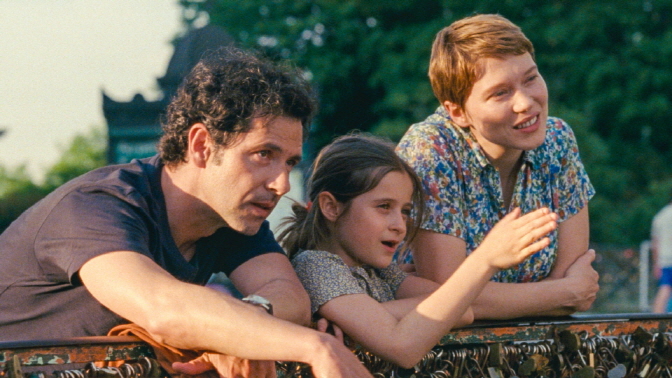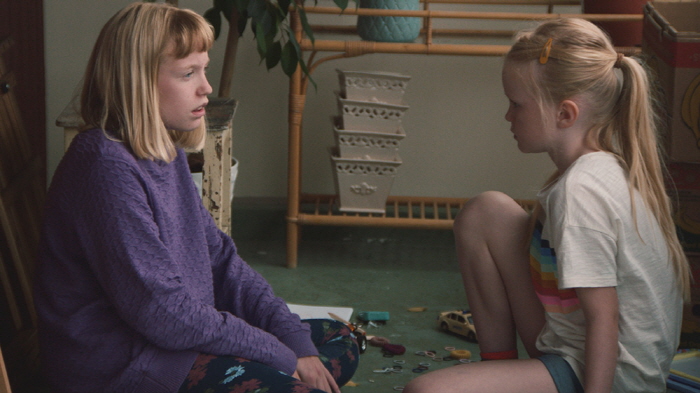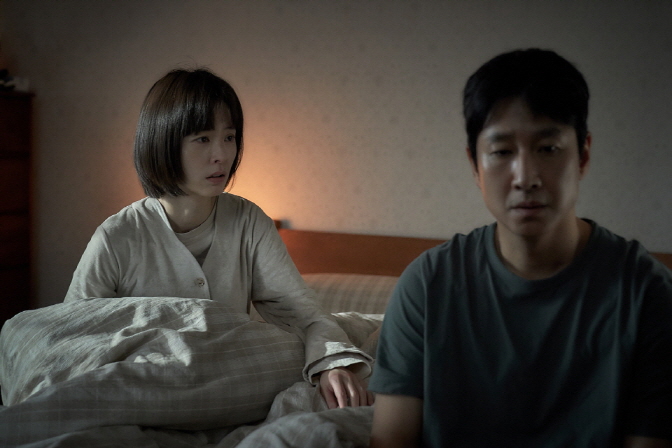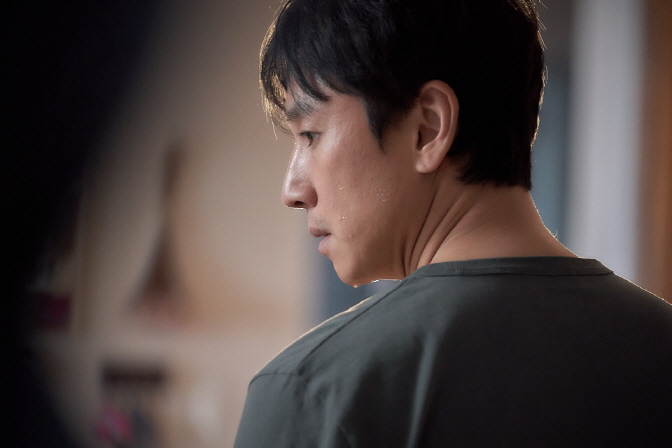
The Summer (2023) ☆☆☆(3/4): After that summer romance of theirs

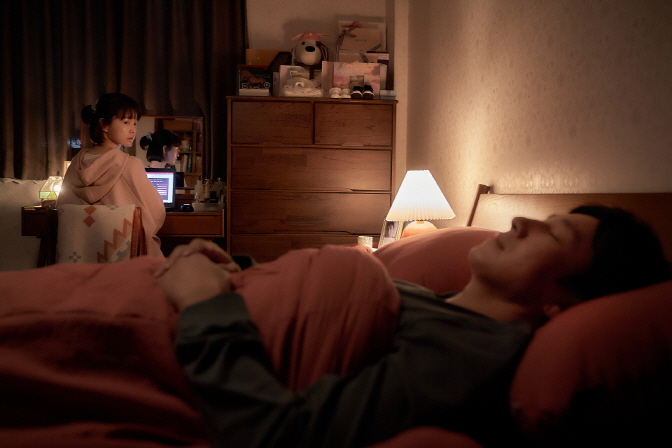
South Korean queer animation film “The Summer” gives us a simple but bittersweet presentation of one summer romance and its aftermath. As tenderly and sensitively observing the start, development, and end of romantic relationship between its two different lead characters, the movie often gives us some lovely visual moments to enjoy and appreciate, and it is all the more precious to me and other moviegoers in South Korea, considering how we rarely come across something like that.

The story is mainly unfolded via the viewpoint of Lee-kyeong (voiced by Yoon Ah-young), and the early part of the film shows us how she came to befriend Soo-i (voiced by Song Ha-rim) during their last high school year. On one hot and bright summer day, Lee-kyeong happens to be struck by a ball Soo-i tries to catch during her soccer practice on the school playground. After promptly apologizing to Lee-kyeong, Soo-i shows a bit more consideration to Lee-kyeong during next several days, and Lee-kyeong soon finds herself quite attracted to Soo-i, though she understandably hesitates to show her growing feelings toward this confident girl.

Anyway, these two young girls come to spend more time together, and it gradually becomes apparent that Soo-i has also been attracted to Lee-kyeong. Eventually, they recognize the mutual feeling between them in private, and they cannot help but delighted and excited as they fall more in love with each other, though they also must hide their homosexual relationship from others around them. Both of them know too well how much they can be ridiculed or ostracized if their relationship gets ever exposed to others, and, despite her confident attitude, Soo-i is particularly sensitive about showing affection outside.

It looks like they will be happier with more freedom after their subsequent graduation, but their situation becomes more complicated. Both of them go to Seoul, but Lee-kyeong gets enrolled in a college for more study while Soo-i chooses to prepare herself for becoming a car mechanic after her hope of becoming a soccer player is unfortunately dashed in the end. Although both of them try to spend time with each other as much as possible, the gap between them comes to grow day by day – even after Lee-kyeong moves into Soo-i’s new residence.

In addition, their personality difference becomes all the more evident to both of them. While Soo-i is not that social to say the least, Lee-kyeong is often eager to meet others like them, and she even comes to work as a part-time employee at a small lesbian bar just because she wants to hang around with other lesbians. Usually busier than Lee-kyeong, Soo-i is not so much interested in hanging around with Lee-kyeong’s new friends, and there is a very awkward moment between Soo-i and others when she casually tells others at one point that she does not study in college unlike Lee-yeong.

Meanwhile, frustrated more and more with her communication problem with Soo-i, Lee-kyeong finds her eyes drawn toward one of the frequent customers of that lesbian bar. When she comes across this young lady at some other place, this young lady seems interested in getting closer to Lee-kyeong at first, but her attitude is quickly changed later when Lee-kyeong talks a bit about her current relationship with Soo-i.

Around that narrative point, we clearly see where the story is heading as noticing more nuance in Lee-kyeong’s seemingly phlegmatic narration. What inevitably follows next is depicted with genuine emotions to engage us to the end, and the finale is poignant as Lee-kyeong comes to reflect more on how much her life is shaped by that summer romance with Soo-i – and how much her mind is still haunted by that.

Under director Han Ji-won’s competent direction, the film is an earnest visual pleasure mainly thanks to its good cell animation. While it is evidently influenced by the style and mood of recent Japanese animation films such as “Suzume” (2022), it still distinguishes itself enough via small and big local details to cherish, and the resulting mix is fairly enjoyable for on the whole. Like superhero stories, romance stories usually fit much better to animation in my humble opinion because animation allows more artistic freedom in not only action but also emotion, and several intimate scenes in the film certainly exemplify that well. Although their characters are basically more or less than archetypes, Yoon Ah-young and Song Ha-rim are wonderful in their good voice acting as effortlessly generating enough romantic chemistry between their characters, and that is another reason why the movie works well on the emotional level.

Overall, “The Summer” is rather modest within its short running time (61 minutes), but it is surely another interesting South Korean animation film of this year after “Mother Land” (2022). While “Mother Land” distinguishes itself as one of a very few stop-motion animation films in South Korea during last several decades, the sensitive and charming queer romance of “The Summer” adds another new fresh air of diversity to South Korean animation film, and I sincerely hope that the critical success of these two animation films may lead to more good stuffs for me and others in South Korea.

Posted in Movies | Tagged , , , | Leave a comment

Extraction 2 (2023) ☆☆☆(3/4): Another risky extraction job for him

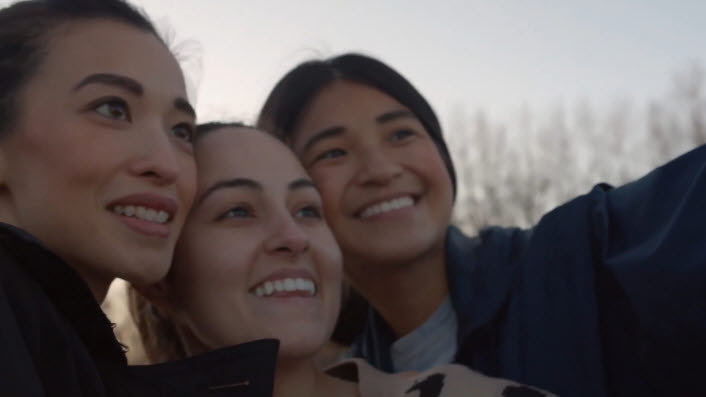
Netflix film “Extraction 2”, which was released yesterday, does exactly what it is expected to do as the sequel to “Extraction” (2020). Yes, the story and characters usually stand back for its intense and relentless serving of various actions, and I became rather distant to that at times, but I think you may be satisfied if you just want to admire and enjoy its top-notch action scenes.

As briefly implied by the last shot of “Extraction”, Tyler Rake (Chris Hemsworth), a former Australian SAS operator who later worked as a mercenary not long after losing his dear little son, manages to survive despite his serious physical injuries, and the early part of the film takes some time as he goes through a recuperation process in Dubai. Once he is almost recovered, he moves to a remote place in Austria, and it looks like he will just have a plain normal life there with his several pet animals.

Of course, Rake soon finds himself approached by a mysterious figure played by Idris Elba, who brings some welcoming sense of humor during his brief appearance in the film. There is another risky extraction task which absolutely requires Rake’s particular set of skills, and Rake cannot say no because it is requested by his estranged ex-wife. It turns out that his ex-wife has a younger sister who has been married to a notorious Georgian criminal for several years, and Rake is asked to extract his ex-wife’s sister and her two kids from a certain Georgian prison where they have been incarcerated with her nasty criminal husband.

Having been forced to be stuck with her cruel husband by his powerful local criminal organization, Ketevan (Tinatin Dalakishvili) is certainly worried about his ongoing toxic influence on her two kids, and she really wants to get out of the prison along with them as soon as possible – especially after her husband is going to serve another 10 years in the prison. Her brother-in-law Zurab (Tornike Gogrichiani), who is incidentally the leader of that local criminal organization, is surely not so amused by his younger brother’s extended imprisonment, and we accordingly see how brutal and ruthless he can be at one point.

While knowing well that he is going to mess with very dangerous people, Rake embarks on preparing himself within a short period time, and you will be amazed by how quickly he is back in element. At first, he seems to be in the need of more physical therapy, but, what do you know, we soon see him swiftly throwing a hatchet at a tree without much difficulty, and then he goes to Georgia along with several other mercenaries including Nik Kahn (Golshifteh Farahani), a longtime professional partner of his who is surely ready to assist him as before.

What follows next is an impressive extended action sequence which fluidly and seamlessly bounces from one spot to another during more than 20 minutes. As the cinematographer Greg Baldi’s camera smoothly moves around our hero and several other characters, the movie skillfully and impactfully immerses us into the violently chaotic situation surrounding them, and director Sam Hargrave, who worked as a stunt performer before making his directorial debut with “Extraction”, and his crew never get us lost despite lots of bangs and crashes here and there on the screen. Like recent notable action films such as “The Raid: Redemption” (2012) or “John Wick” (2014), the movie seldom flinches from violence and blood, and I must tell you that there are a number of striking moments of remorseless violence which will certainly make you wince more than once.

However, the movie is rather weak in terms of story and characters just like its predecessor. A subplot involved with Ketevan’s adolescent son’s conflict between his uncle and his mother is predictable to say the least while only functioning as a convenient plot device for another big action sequence to come along the story. While the screenplay by co-producer Joe Rosso tries to bring some depth to its hero later in the film, Rake remains to be your average bitter tough guy who does not say or express much, and I doubt whether he will be remembered as much as Jason Bourne or John Wick.

Anyway, Chris Hemsworth, who has been showing that he can do much more than playing Thor in Marvel Cinematic Universe flicks, carries the film as much as required, and several other main cast members of the film hold each own place well around him. As Rake’s dependable partner, Golshifteh Farahani willingly throws herself into lots of actions as demanded, and Adam Bessa is also solid as another colleague of Rake. While she is limited by her thankless supporting role, Tinatin Dalakishvili manages to distinguish herself a bit as her character goes through lots of actions along with Rake at one point in the middle of the first action sequence in the movie, and Tornike Gogrichiani exudes enough menace as the main villain of the film.

On the whole, “Extraction 2” achieves as much as its predecessor, so I gave it 3 stars for that despite some reservation. Sure, I appreciate the considerable efforts and skills behind the screen to some degree, but I have to say that it is relatively less impressive than what I recently saw from “John Wick: Chapter 4” (2023), which handled its hardcore action scenes with much more style and gusto. Considering what is shown at the end of the film, I guess there will be another sequel to follow, and I sincerely wish that the next sequel has more style besides having enough substance.

Posted in Movies | Tagged , | Leave a comment

The Flash (2023) ☆☆1/2(2.5/4): Flashy but superficial

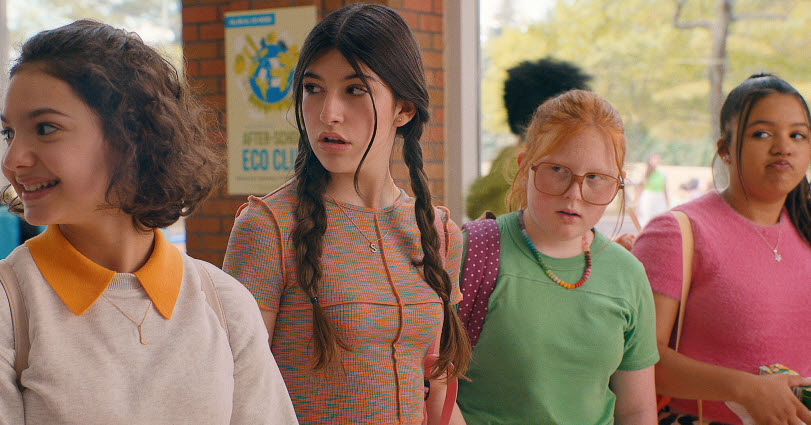
“The Flash”, the latest product from DC Extended Universe (DCEU), turns out to be saddled with several other problems besides its very problematic lead actor, who has been quite notorious for what he allegedly committed outside the screen. Even if you can put aside all those alleged crimes and misdemeanors of this actor for a while, the movie is still a glaringly bloated and superficial fan service despite some inspired moments, and it will not add up much to whatever DCEU will try next after the extensive recent reboot of its many different intellectual properties.

During the opening scene, we see how Barry Allen / The Flash (Ezra Miller) has been pretty much like the lapdog of Bruce Wayne / Batmen (Ben Affleck) just like Tom Holland’s Spider-Man was to Robert Downey Jr.’s Iron Man in recent Marvel Cinematic Universe (MCU) flicks. Just because several other members of Justice League happen to be unavailable, Barry has to assist Wayne in Gotham City on one day even though he is late for his work, and we accordingly get the first major action sequence of the film. Incidentally, this sequence looks and feels so phony with lots of mediocre CGI pasted on the screen that we do not brace for ourselves that much – even when a bunch of babies are falling down from the top of a crumbling building along with a poor unfortunate nurse and one therapy dog.

Anyway, as he is back on his usual daily routine after saving the day again, Barry becomes frustrated again as reminded that there is still not any chance of release for his incarcerated father. It is clear that his father is wrongfully accused of the murder of Barry’s mother, but his father’s alibi is not proven yet despite some generous help from Wayne, and Barry’s subsequent encounter with an old friend of his makes him feel more bitter about his personal loss as well as his father’s misery.

And then there comes what may look like a possible solution to Barry when he speeds up himself much more than before. When he is consequently running beyond the speed of light, he enters a spectacularly peculiar zone of time and space where he can go back to the past as much as he wants, and he naturally wonders whether he can actually change the course of that traumatic incident which has defined his life for many years, though Wayne wisely reminds Barry that he should stop considering that tempting possibility.

Of course, Barry eventually tries his luck on time traveling, and all he has to do is making sure that his mother buys a can of tomato at a local supermarket not long before the day of that traumatic incident. However, not so surprisingly, things somehow go pretty wrong once he succeeds in changing the following history, and he suddenly finds himself thrown into a resulting alternative universe quite different from his in many ways. For example, this alternative universe does not have most of Justice League members, and the movie has some naughty fun via several wry references on well-known Hollywood films including “Back to the Future” (1985), which does not have Michael J. Fox in this alternative universe but has the other actor initially chosen for that film instead.

Moreover, Barry also comes across his alternative universe version, who has had a much better childhood time but becomes your typical college slacker instead. As frequently alternating between Barry and his alternative version along the story, Ezra Miller embodies well the strained relationship between these two roles, but, like me, some of you will be more uncomfortable about dealing with more than one Miller on the screen, and you may cringe at some of broad comic scenes which will probably remind you more of all those disturbing allegations against this actor.

When the Earth is later threatened by the arrival of General Zod (Michael Shannon, who simply seems to be content with getting his paycheck here) and his cronies from Planet Krypton, Barry and his alter ego must find any possible way to save the Earth and the humanity from the impending total destruction, and, fortunately, they can get some help from Wayne in this alternative universe. Michael Keaton, who is about to have the 72nd birthday in this year, is surely glad to play Batman again despite his age (After all, if Harrison Ford can still play Indiana Jones, why not?), and it is certainly nice to hear Danny Elfman’s classic theme for Tim Burton’s “Batman” (1989) on the soundtrack, though composer Benjamin Wallfisch quotes it a little too many times throughout the film.

Thanks to Wayne, Barry and his alter ago come to a certain figure who has been imprisoned for years somewhere in Siberia, though that figure turns out to be quite different from what they expected. As already shown from the trailer of the movie, that figure in question is a young Kryptonian woman named Kara Zor-El (Sasha Calle), and she is not so eager to save the Earth and the humanity for a good reason. Because her character’s development is quickly pushed aside when the movie is drenched in lots of crashes and bangs during its expected big climactic part, Calle is merely stuck in her thankless functional role just like a few other substantial supporting actresses in the film, and that is a big letdown to say the least.
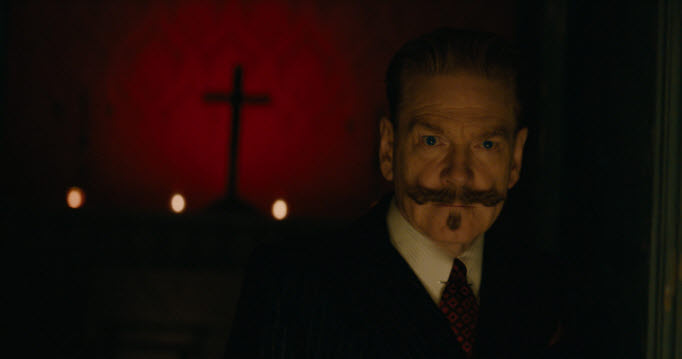
Around this big climactic part, the movie reaches for more and more while also sucking lots of the intellectual properties associated with DCEU, and that is where I got more disinterested instead of becoming really entertained. While the movie remains rather schizophrenic in its mix of comedy and drama, the following narrative resolution is too convenient as not carrying much dramatic weight compared to the ending of “Spider-Man: No Way Home” (2021), and I only came to muse more on how much Holland’s Spider-Man in that film sacrificed while really coming to learn a painful lesson from his unwise attempt to change the timeline of his universe.

On the whole, “The Flash”, directed by Andy Muschietti. is merely passable while dutifully cleaning up whatever was done by DCEU during last several years. As a seasoned moviegoer who has been pretty tired of superhero flicks these days, I do not expect much from what may come next from DCEU, and I can only hope that I will be a bit more entertained in next time.

Posted in Movies | Tagged , , | Leave a comment

Elemental (2023) ☆☆☆(3/4): An elemental romance of fire and water

Latest Pixar Animation Studios film “Elemental” is an elemental but engaging romance story with enough fun and charming stuffs to enjoy. I wish the film had some more time to explore more of the mood and details of its amusing fantasy world, but it still distinguishes itself to some degree in terms of story and characters, and the result is fairly entertaining on the whole despite being several steps below recent better offerings from Pixar Animation Studios such as “Soul” (2020).

The main background of the story is Elemental City, a big fantasy city whose population consists of the anthropological versions of four different elements of nature: Water, Earth, Air, and Fire. The opening scene shows a young Fire couple arriving at the city as two new immigrants, and the following sequence shows how they have settled in a neighborhood for Fire people during next several years as raising their dear daughter Ember (voiced by Leah Lewis).

Ember’s parents have run a little convenient store which shows some notable Indian cultural influence, and her father has expected her to run this store instead of him someday, though she is not that good at being behind the counter due to her occasional, yes, fiery temper. Nevertheless, she tries to meet her parents’ expectation because she knows well how much her parents have worked hard for giving her a better life, so she tries her best as much as possible anyway.

When her father later allows her to handle the day for a big discount alone, Amber initially thought she is ready for that, but, of course, things soon get out of control for her during the first few minutes of the opening hour. To make matters worse, the old building which has been the place for their home and store comes to have an unexpected plumbing problem, though water is certainly the last thing her and her family and other Fire people need.

As she hurriedly attempts to fix this problem in the basement of the building, Amber happens to encounter a young Water guy named Wade (voiced by Mamoudou Athie), who is literally swept into the basement via its leaky water pipe. This is surely your average awkward Meet Cute moment, but Wade happens to be a city inspector, so he feels obliged to report a number of serious problems besides that leakage problem to his bureau as soon as possible. As he quickly goes back to his bureau for that, Amber naturally follows after him because getting her parents’ shop shut down is the last thing she wants, and, what do you know, she soon finds herself being outside her familiar neighborhood.

During this sequence, the film bounces here and there along with its two very different main characters, and we come to admire more of numerous colorful details of Elemental City. We see a bunch of Air, Water, and Earth people besides some Fire people, and then we observe how these four groups of citizens live along with each other as harmoniously as, say, those animal characters in Oscar-winning animation film “Zootopia” (2016).

Although Wade eventually submits his report despite some interference from Amber, Wade eventually comes to feel sorry for her situation, so he subsequently tries to help her as much as he can. It later turns out that leakage problem is caused by a little crack in the local levee, and it seems that all they will have to do is fixing this crack enough to get the agreement from Wade’s boss.

Meanwhile, as spending more time together, Amber and Wade start to feel some mutual feelings between them, though they still hesitate to touch each other for good reasons. After all, Amber’s parents do not like Water people for understandable reasons, and Amber also becomes quite conflicted when she gets an unexpected opportunity for her artistic talent via Wade’s affluent family, who wholeheartedly welcome her when Wade later takes her to a little evening family meeting of theirs.

If you have seen many other romantic comedy films about supposedly mismatched pairs, you will surely know how the story will end from the beginning, but the film continues to hold our attention via enough style and substance. Besides steadily providing one wonderful visual moment after another (I especially like the underwater sequence involved with a certain special flower), the film also works as a fable version of immigrant story, and that aspect is frequently accentuated by Thomas Newman’s score, which freely peppers the soundtrack with several different Asian touches.

Most of the voice cast members are relatively unknown to many of us, but they are all solid as having a fun with their respective roles. While Leah Lewis, who was the lead actress of Netflix film “The Half of It” (2020), brings lots of spirit and charm into her character, Mamoudou Athie, who has steadily shown more potential since I noticed him in other Netflix film “Uncorked” (2020), flexibly balances his character between comedy and drama, and their good chemistry is one of several reasons why the movie works despite often being generic and conventional. In case of several other substantial voice cast members in the film, Ronnie del Carmen and Shila Ommi are effective as Amber’s parents, and Wendi McLendon-Covey and Catherine O’Hara provide some good laughs via their respective colorful supporting characters.

“Elemental” is directed by Peter Sohn, who previously made “The Good Dinosaur” (2015). Compared to that rather flawed Pixar Animation Studios film, “Elemental” is certainly a better work with some sincerity and creativity to be appreciated, and, though it does not reach to the greatness of “Wall-E” (2008) or “Inside Out” (2015), I will watch it again instead of enduring “The Super Mario Bros. Movie” (2023) again. Yes, the folks of Pixar Animation Studios could do better, but the film shows that they still can entertain us even at the most element level.

Sidenote: The movie preceded by short animation film “Carl’s Date”, a little comic tale involved with the old hero of “Up” (2009).

Posted in Movies | Tagged , , , | 2 Comments

Eyes Wide Shut (1999) ☆☆☆1/2(3.5/4): A comedy of foreplay

Stanley Kubrick’s last film “Eyes Wide Shut” is one naughty comedy of foreplay. Along the story, its plain ordinary hero is tempted by a series of tantalizing possibilities of sexual pleasure and transgression popping up here and there around him, but he always remains to stay in line somehow to our little amusement. Later in the story, these seductive opportunities are just gone beyond his reach, and he is quite baffled as wondering what exactly happened around him, while also coming to doubt his relationship with his wife who has her own sexual desire and discontent.

The opening part, which is memorably accompanied with Dmitri Shostakovich’s Waltz No. 2 from “Suite for Variety Stage Orchestra”, is more or less than a prelude to what Dr. William Bill Harford (Tom Cruise) and his wife Alice (Nicole Kidman) will go through during next few days of the Christmas season. Dr. Harford is a successful doctor residing in the West Central Park neighborhood of New York City along with his wife and their little daughter, and they happen to be invited to a big party held in the residence of one of his wealthy patients. Once they dress themselves up for the party, we soon see them greeted by Victor Ziegler (Sydney Pollack) and his wife, and the mood feels fairly good as they begin to enjoy the party together.

However, there comes a moment of seduction for both Dr. Harford and his wife when they happen to be separated for a while. While watching her husband casually talking with two young ladies, Alice is approached by some suave Hungarian gentlemen, and she finds herself slyly flirting with this dude as they courteously dance together during next several minutes – until she flatly reminds him again that she is married. Meanwhile, sandwiched by those two young ladies, Dr. Harford also receives a little naughty sexual suggestion just like his wife does from that Hungarian guy, but then, what a coincidence, the mood is interrupted by a sudden little emergency where he is needed right now.

On the next day, everything seems to be back to normal for Dr. Harford and his wife, but the mood becomes quite awkward at the following night when they become a little more honest to each other after smoking marijuana a bit in their bedroom. As talking about what happened at the party, they come to see more of how they do not know or understand each other that much, and the situation eventually becomes quite tense when Alice reveals how much she was once tempted to throw away everything just for one night of sexual pleasure with a total stranger.

Again, a little moment of pure coincidence comes right after that, and this begins Dr. Harford’s long night’s journey not so far from Leopold Bloom’s long day’s journey in James Joyce’s great novel “Ulysses”. Just like Bloom is often conscious of his wife Molly’s infidelity throughout his long journey in Dublin, Ireland, Dr. Harford cannot help but think about his wife’s possible infidelity as bouncing from one spot to another in Manhattan, and his current vulnerable state of mind becomes quite susceptible to a string of seductive opportunities coming along his way. For example, when he visits the residence of one of his patients who has just died, he tries to console the patient’s daughter as a good doctor, but, what do you know, she turns out to be quite emotionally vulnerable just like him, and he certainly feels tempted to cross the line along with her.

The situation takes a weird turn later when Dr. Harford drops by a nightclub where his old medical school friend, who now works as a freelancing pianist, currently works. This friend of his tells a bit about a rather strange private meeting held among some wealthy people, and Dr. Harford becomes quite willing to sneak into that clandestine meeting just because, well, he is intrigued and excited about whatever he will experience there.

What follows next is a spooky example of that old saying: “Be careful of what you wish – you might get it”. Once he is fully prepared thanks to a bit of help from some shady owner of a local costume shop, Dr. Harford subsequently goes inside that secret meeting which happens to be held in some big manor outside New York City, but, of course, his heedless attempt soon gets exposed with the big possibility of a dire consequence for him.

This sensational part drew lots of attention due to its forthright presentation of sex and nudity, and Warner Brothers Company, which handled the theatrical release of the film at that time, received lots of criticism for digitally altering several shots of nudity just for getting an R rating. As far as I can see, everything in this part feels as cold and detached as you can expect from a Kubrick film, and we simply come to observe this part from the distance just like Dr. Harford, who, again, simply lets himself tempted while still not daring to cross the line as before.

And things actually get more interesting and amusing during the second half of the film. Once he manages to save himself due to another lucky coincidence, Dr. Harford tries to process and understand what happened during the previous night, but his following attempt only leads him to more bafflement and surprise. For instance, his accidental encounter with one young prostitute turns out to be quite riskier than expected for a good reason, and that shady costume shop owner is revealed to be not entirely honest to him from the beginning. Above all, he is totally blocked from getting to know anything more about that secret meeting, and that makes him quite helpless and confused to say the least.
When it looks like Alice had her own sexual adventure in a subconscious way during the previous night, we naturally come to question Dr. Harford’s supposedly solid viewpoint. As a matter of fact, his dramatic nocturnal drama is so full of coincidences and accidental opportunities that it often feels like driven by some dream logic, and this dreamy aspect is further accentuated by the frequent placing of colorful Christmas season lightings on the screen.

I guess we are not supposed to expect any kind of realism from the beginning because the movie is based on Arthur Schnitzler’s 1926 novella “Traumnovelle”, whose title means “Dream Novel” in German. Besides, Kubrick chose to shot most of his film in England as he did in “The Shining” (1980) and “Full Metal Jacket” (1987), and New York City in the film surely looks artificial at times even though Kubrick and his crew members including cinematographer Larry Smith try their best to recreate those NYC streets on the screen.

Because Kubrick happened to pass away shortly before submitting his final cut to the Warner Brothers Company, we are not entirely sure about whether what we have now was exactly what Kubrick really intended, but the movie still distinguishes itself enough while often showing his distinctive touches. As usual, every shot in the film is carefully and precisely composed for his overall artistic vision, and it also shows some wry sense of black humor – especially as Dr. Harford is seduced in one way or another along the story.

Tom Cruise, who had to spend more than one year in England along with Nicole Kidman for the shooting of the film, is rather flat in his neutral performance, but he is effective as a plain canvass for several other main cast members, and the movie has lots of naughty fun with how his usual confident screen persona is shaken or threatened here and there. While Kidman is particularly terrific during her several big scenes with Cruise, a number of other notable performers including Sydney Pollack, Todd Field, Marie Richardson, Rade Šerbedžija, Vinessa Shaw, and Alan Cumming also have each own fun around Cruise, and Pollack ably exudes his character’s avuncular insidiousness during a certain key scene with Cruise around the end of the film.

In conclusion, “Eyes Wide Shut” is one or two steps from the greatness of Kubrick’s best works such as “2001: A Space Odyssey” (1968), but it is still quite a fascinating psychological drama about seduction and transgression. It is not wholly without flaws, and the ending feels rather contrived in my humble opinion, but now I am musing a bit more on the last line of the film. Well, who could have guessed that would be the very last word of Kubrick’s long and illustrious filmmaking career?

Posted in Movies | Tagged , , | Leave a comment

Magnolia (1999) ☆☆☆☆(4/4): One Day in the Valley

Paul Thomas Anderson’s “Magnolia” still knocks me down although it has been almost 25 years since it came out in 1999. Masterfully and electrifyingly juggling many different narratives unfolded in the San Fernando Valley, California during one particularly eventful day, this ambitious cinematic symphony boldly attempts to give us a vivid and palpable human tapestry of misery, resentment, compassion, and forgiveness, and this will overpower you and then touch you a lot for many good reasons. To be frank with you, it is often amazing to see how everything in this epic piece of work mostly remains under full control even when the movie seems to be pushing itself too far with all those broad dramatic strokes – and how it somehow pulls off a truly elevating moment of catharsis and consolation for everyone in the story in the end.

Like many other similar films ranging from Robert Altman’s “Short Cuts” (1993) to Paul Haggis’ “Crash” (2004), the movie focuses on a number of various characters who happen to be in a complex web of connection and relationship of which only we and the movie are fully aware. As each of their stories interconnects or resonates in one way or another, we naturally come to muse more on coincidence and inevitability in our life, and the movie even presents several odd cases of coincidence at the very beginning. In case of a very bizarre incident somehow between suicide and manslaughter, we are initially amused by how everything came to click together precisely in this horrific but absurd tragicomedy, but then, as observing its devastating aftermath, we cannot help but wonder: Is this just a mere coincidence or actually a macabre joke of fate?

The central story element holding every main character in the story is a fictional popular TV quiz show, and the first act of the film details their respective connections with that TV quiz show. We meet the longtime host of the TV quiz show, and then we come to gather how things have been messy in both of his professional and private life. We meet a dying man who is the producer of the TV quiz show, and then we get to know how two family members of his have been tormented in each own way. We meet a smart little kid who has been the rising star of the TV quiz show, and then we observe the bitter parallels between this deeply unhappy boy and one pathetic loser who was once not so different from him many years ago. In addition, we also meet a good-hearted but lonely police officer who has been longing for love and connection for some time, and then we watch him tentatively approaching to a very troubled young woman after their accidental encounter.

As the movie briskly shuffles among its numerous main characters, we come to notice how miserable many of them are as desperately struggling with each own guilt or torment. For instance, after learning that he has only a few months to live due to his terminal illness, Jimmy Gator (Philip Baker Hall), the aging host of the TV quiz show, attempts to have any kind of reconciliation with his estranged daughter, but Claudia (Melora Walters), who is incidentally the aforementioned troubled young woman, is still angry and resentful due to his sexual abuse in the past. His unexpected visit only comes to make her quite furious and hysterical, while his wife Rose (Melinda Dillan) wonders more about what really happened between them.

In case of Earl Partridge (Jason Robards), another guilt-ridden dying figure involved with the TV quiz show, time is virtually running out for him second by second as he is on his deathbed. While his wife Linda (Julianne Moore) is coping with her growing guilt about neglecting her older husband for years, Earl really wants to see his only son he abandoned a long time ago, and his caring nurse Phil (Philip Seymour Hoffman) is quite willing to help as much as he can. However, locating and then contacting with Earl’s son turns out to be rather difficult, even though he has been pretty well-known in the area under his changed name.

Right from his very first scene, Earl’s son, Frank T.J. Mackey (Tom Cruise), shows us what an ironic case study he is. As a sleazy but charismatic motivation speaker who “educates” his male clients on how to “seduce and conquer” women, he proudly embodies every toxic male influence from his father even though he still hates his father, and we are simultaneously fascinated and repelled by every misogynistic aspect of his, which incidentally feels all the more glaring at present thanks to the #MeToo era. After all, we all have seen many cases of how the abused become abusers later as starting another cycle of abuse, haven’t we?

For that kid star of the TV quiz show, Stanley Spector (Jeremy Blackman), parental abuse is a serious present matter to him right now. Constantly pushed by not only his greedy father but also several others around him, he is expected to give a right answer everytime at the TV quiz show, but he is now more tired and confused than ever as feeling more misery and loneliness than before. Stanley’s situation comes to function as a sort of mirror image to Donnie Smith (William H. Macy), who still clings onto his glory days at the TV quiz show in the past although that does not mean anything at all now. Donnie has a painfully sad scene when he clumsily confesses his longtime crush on the bartender of his frequent bar, and that is followed by the recurring quote of the movie: “We might be through with the past, but the past ain’t through with us.”

How the movie gradually builds up the level of emotional intensity around these and other main characters during the middle of the story is utterly spellbinding. While the fluidly dynamic camera work by cinematographer Robert Elswit immerses us more into the ongoing individual dramas of the main characters, the efficient editing by Dylan Tichenor never gets us lost despite its busy shuffling of characters, and the movie eventually culminates to the powerful dramatic point where many of its main characters go through each own excruciating emotional meltdown.

Not long after that point, the movie throws a relatively subdued sequence where its main characters sing Aimee Mann’s “Wise Up” one by one. This initially looks like an overkill, but it is another sublime moment showing how Anderson skillfully conducts every main character of his story under his confident artistic control, and we come to feel for them more than before.

Furthermore, a diverse array of performers in the film effectively gel together as Anderson’s dependable orchestra members. While Tom Cruise, who was deservedly Oscar-nominated for his fearless performance here in this film, is surely the most prominent cast member in the bunch, he is also smoothly mixed into the ensemble, and so are other notable cast members including Julianne Moore, Philip Seymour Hoffman, William H. Macy, Philip Baker Hall, and John C. Reilly, whose cop character, along with Hoffman’s nurse character, slowly emerges as the voice of kindness and compassion along the story.

In case of that famous climactic moment which I will not discuss here in details, it feels so unexpected that you may find it quite jarring compared to what has been realistically built up to that point. Nevertheless, I think this moment works as an apt resolution after the overwhelmingly aching presentation of human pain and guilt during more than 2 hours. After all, every part of the story desperately and harrowingly cries for any kind of absolution or closure, and such an unbelievably biblical happening like that is probably the only possible way to ventilate and resolve everything in the story, just like that odd ending of Anderson’s subsequent film “There Will Be Blood” (2007) seems to be the only logical narrative exit for its relentless story and lead character.

It is really astonishing that “Magnolia” was only Anderson’s third feature film after “Hard Eight” (1996) and “Boogie Nights” (1997). With these two previous films, Anderson quickly established himself as a new exciting talent to watch, and then, as we all know, he has risen much further as becoming one of the most interesting filmmakers of our time after “Magnolia”, which is still one of his best works to date. He was only 29 at that time, but the movie is not only quite youthful and energetic in style but also remarkably matured and insightful in substance, and you may come to have more understanding and compassion on others around you after watching it.

By the way, “Magnolia” is one of a few precious movies which really sensitized me in many aspects. Like “Short Cuts” or “Crash”, the movie really made me feel something strong, and I am still grateful to it for providing a valuable emotional breakthrough for me in not only assessing movies but also empathizing with other people around me. Yes, as a guy who has a mild case of autism spectrum, I am not usually that good at interacting with people, but I learned a bit about people via “Magnolia”, and the compassionate message behind its story and characters reminds me that I still has to learn more.

Posted in Movies | Tagged , , | Leave a comment

Gleason (2016) ☆☆☆1/2(3.5/4): His life with ALS

Amazon Prime documentary film “Gleason” gives us an honest and intimate look into one former professional athlete’s daily life with his serious illness and the following complications. While never overlooking all those difficulties and frustrations experienced by him and several others standing by him, the documentary shows a number of powerful human moments to be appreciated, and it surely earns all the emotional responses from its audiences.

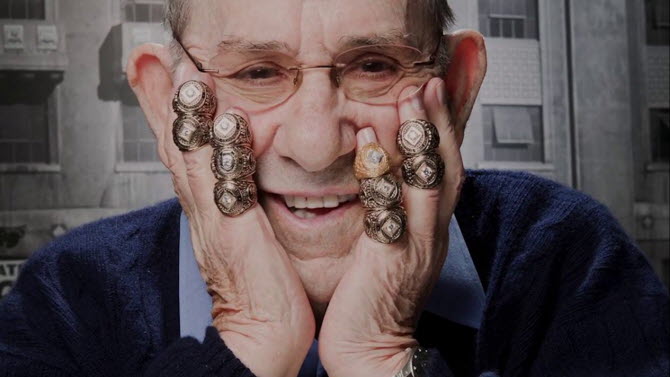
In the beginning, we get a brief but succinct summary on how things went quite well for Steve Gleason in the 2000s. Although he is not that tall or bigger, Gleason tried his best as a promising American football player to watch, and his diligent efforts subsequently paid off. Several years after joining the New Orleans Saints in 2000, he had a big moment to remember for not only himself but his team and many people in New Orleans, Louisiana, and then he happily retired in 2008 while looking forward to enjoying life more with his dear wife Michel.

However, Gleason noticed something wrong with his body in 2011, and then there came a devastating news for him and Michel. Although he was only 34, he turned out to be going through the early stage of amyotrophic lateral sclerosis (ALS or Lou Gehrig’s disease), and he and his wife were also told that he might die within less than 10 years.

Naturally upset and scared by this bad news, Gleason and his wife embarked on preparing for what they would go through during next ten years at least. When it later turned out that Michel got pregnant, Gleason decided to record his remaining life for his child as much as possible, and that subsequently led to his collaboration with Sean Pamphilon, Ty Minton-Small, and David Lee, who served as the cinematographers of the documentary (Although Pamphilon also worked as the director at first, he was later replaced by Clay Tweel because of his serious professional conflict with Gleeson in 2012).

While Gleason and his wife were waiting for their child’s birth during next several months, Gleason’s physical condition were deteriorated further, and that is really heartbreaking to watch. Sure, he got all the supports he could get from not only Michel but also several others including his father, but he came to lose his ability to move and speak bit by bit, and Michel tells us about how much she is disheartened by the rapid progress of her husband’s illness. Only one year after his diagnosis, he found his body much less mobile than before, and his speech also became a lot more slurred than before.

Nevertheless, Gleason and his wife still tried their best even though they knew well that they will lose their battle with ALS in the end. We see him testing a wheelchair to carry him, and then we also watch him making his voice recordings to be used for a voice-generating software when he could not speak well anymore. In addition, he and his family established a non-profit organization for the support of ALS patients, and there is a little emotional moment when he and his wife talk a bit with one ALS patient who receives some substantial help from Gleason’s non-profit organization.

Meanwhile, Gleason’s child was eventually born, and Gleason was certainly excited and delighted, but he also recognizes how things will be much difficult for Michel. Besides taking care of her husband, she also has to pay a lot of attention to their young son, and Gleason feels saddened because he cannot help her that much due to his worsening physical condition.

At least, they hire several professional caregivers to help and assist them, but their daily life is frequently riddled with many different obstacles, and the documentary does not hesitate at all to show almost everything to us. At one point, we see Gleason suffering from an unexpected side effect from trying a stem cell therapy, and his following enema process will surely make you wince more than once even though the camera does not look closely into that.

In addition, the documentary looks directly into how much Gleason and his wife often became angry and frustrated with his incurable illness, and I admire how they let the camera observe those difficult moments of theirs without any pretension. Their love and relationship were certainly tested a lot from time to time, and it is poignant to see when they later make a very important decision which will affect his life as well as hers. He feels guilty because that would demand a lot more from her than before, but she is ready to stand by him as much as possible, and their life is brightened a bit more as they come to have more time to see their son grow day by day. In addition, he also comes to have some honest moments with his father, and there is a touching moment when Gleason’s father frankly admits his shortcomings and then sincerely commends Gleason for being a better father than him.

Overall, “Gleason” is worthwhile to watch for the unadorned human qualities observed from Gleason and his wife and several others around him. Not long after the documentary came out, Michel gave birth to another child of his, and she and her husband keep going as before along with their two kids even at this point. Yes, their journey will eventually be over someday, but they have surely lived fully, haven’t they?

Posted in Movies | Tagged , , , , , , , | Leave a comment

Transformers: Rise of the Beasts (2023) ☆☆☆(3/4): Better than most of its predecessors

I still remember how much I winced and cringed as enduring what followed after Michael Bay’s “Transformers” (2007). While the first film was fairly watchable, all of the next four sequels were utterly atrocious in many aspects thanks to Bay’s grossly brainless maximalism, and I must confess that “Transformers: Revenge of the Fallen” (2009) actually drove me to drink at least four hard cocktails right after the screening because, my late mentor/friend Roger Ebert said at that time, it was inarguably “a horrible experience of unbearable length.” At least, we were consoled by “Bumblebee” (2018) not long after “Transformers: The Last Knight” (2017) came as a sort of the final insult, but that was a bit too late although the movie itself was a considerable improvement compared to its predecessors.

Naturally, I felt instant dread when I came upon the trailer of “Transformers: Rise of the Beasts” a few months ago, and I did not expect much with growing fear and concern as walking into the screening room in this early morning. What do you know, the film itself turns out to be not so bad even though still retaining a number of main weak points of the franchise, and it actually entertained and surprised me enough for recommendation.

In my opinion, the main reason why the movie works better than expected is providing more drama and substance to the story and characters in comparison. Yes, again, the two main human characters in the film, respectively played by Anthony Ramos and Dominique Fishback, are frequently required to run here and there amid lots of bangs and crashes made by those big alien robots, but, surprise, the movie actually takes some time to develop these characters before eventually bombarding us with lots of sound and fury as demanded by its story formula. As a result, we come to care about their personal dramas as willingly following their bumpy adventures with those big alien robots, and it looks like the filmmakers behind the film did learn from what made “Bumblebee” relatively more memorable compared to other Transformers flicks.

In case of the alien robot characters in the story, I already gave up distinguishing one alien robot from another before watching the movie itself due to my previous predicaments with Bay’s Transformers movies, but they actually show a bit of extra personality this time. Although the villain alien robots of the story are pretty monotonous as usual, some of those good alien robots working along with Optimus Prime (voiced by Peter Cullen as usual) are fairly distinctive on the whole, and I must tell you that Michelle Yeoh, another Oscar winner to be added to the franchise after Frances McDormand and Anthony Hopkins, maintains her dignity intact despite the mandatory metallization of her recognizable voice.

In addition, several action sequences in the film are relatively more effective compared to whatever we had to endure as watching “Transformers: Revenge of the Fallen” and the following three sequels. Under the good direction of director Steven Caple Jr., who previously directed “Creed II” (2018), each of these action sequences in the film is packed with enough fun and thrill without getting us confused at all, and even the expected big climactic part, which is unfolded in a certain famous spot in South America, works better than expected even when it is drenched in lots of CGI on the screen.

On the other hand, the movie occasionally did some silly comic stuffs mainly via the alien robot character voiced by Pete Davidson. I did roll my eyes during these broad comic moments, but, folks, I have been able to forgive and tolerate a lot of things after suffering that annoying robot dog humping on Megan Fox’s leg in “Transformers: Revenge of the Fallen”, and I think many of you will agree with me.

I was also surprised by how Ramos and Fishback’s earnest efforts could still engage me even when the movie pulled all the stops for more action and, yes, robots. I personally thought these two wonderful performers were too good and talented to appear in the film (Just watch “In the Heights” (2021) and “Judas and the Black Messiah” (2021), and you will see what I mean), but they actually did more than whatever is required by their respective paychecks from the movie, and it certainly helps that their characters come to function as more active parts of the story than we thought at first. While Fishback brings some wit and pluck to her character, Ramos does not lose any sense of fun at all when his character later happens to be tasked with something not so far from what Robert Downey Jr. did for more than 10 years in those Marvel Cinematic Universe products.

In conclusion, “Transformers: Rise of the Beasts” is not as bad as I feared, and that was a big relief for me to say the least. I will probably not remember much of it around the time when they release another Transformers movie, but I must not deny that I was entertained enough during my viewing, though I will probably be on the side of minority opinion this time. After all, it is more engaging and less cumbersome than “Fast X” (2023), and I am actually a bit interested in what may come next instead of dreading about that.

So, I will now do some calculation on my final rating. I gave “Transformers” 2.5 stars while giving “Bumblebee” 3 stars, and “Transformers: Rise of the Beasts” lies somewhere between them. Mainly because I liked it more than I predicted, I give “Transformers: Rise of the Beasts” an extra half star, but I think you may just rent or skip it instead, and I will respect your choice anyway.

Posted in Movies | Tagged , , , | Leave a comment

Wolf (2021) ☆☆(2/4): A murky and confused psychological drama

It is really hard for us to discern what kind of point “Wolf” is actually trying to make. Mainly in set in a special psychiatric facility for mental patients who think they are animals trapped inside human body, the movie merely presents one disturbing moment after another from both sides, and we become more aware of its superficial aspects in terms of story and characters.

At the beginning, we are introduced to a lad named Jacob (George MacKay), who, as reflected by the opening scene where he moves alone inside a forest while being completely naked, thinks he is a wolf. Knowing well that he has a “problem”, he subsequently lets his parents accompany him to a mental hospital for patients who are suffering “species dysphoria” just like him, and we soon him beginning his first day at this mental hospital and then getting introduced to several other patients.

Under the benevolent but occasionally strict care from Dr. Mann (Paddy Considine) and his staff members, Jacob and other patients in the mental hospital are often forced to face each own delusion in one way or another. In case of a girl who believes she is a parrot, she has been allowed to wear a bird attire as desired, but we later see how cruelly she is reminded of the undeniable fact that she cannot fly at all as a, well, human being.

It looks like all Jacob will have to do is obeying to whatever is expected from him while often admitting that he is not a wolf at all, but, not so surprisingly, that is not so easy for him from the very beginning. He sometimes cannot help but behave like a wolf whenever nobody is watching, and then he later gets himself closely associated with a young woman named Cecile, who incidentally thinks she is a wildcat. After having an accidental nocturnal encounter between them, Jacob and Cecile get to know each other more as spending more time together, and we come to gather how things have been desperate for Cecile. While most of the patients in the mental hospital can leave anytime once they get cured, Cecile does not have anyone to take her out of the mental hospital, and it later turns out that she has been stuck there for years due to one of the staff members, who has been virtually a controlling mother figure to her.

And we continue to observe what Jacob and other patients have to endure everyday. They frequently watch the video clips emphasizing how human being is superior to animals in many aspects, and some of them actually seem to show some progress as behaving more like human beings instead of animals. As a matter of fact, the mental hospital even has a “graduation” ceremony for those cured patients to leave.

Of course, Jacob gradually comes to see more of what a cruel and harsh place the mental hospital to him and other patients. Dr. Mann, who is naturally nicknamed “Zookeeper”, does not hesitate to use a number of extreme tactics if that is deemed necessary in his viewpoint, and there is a hurtful moment when he sadistically demands one of his patients to climb a tree like a real squirrel before that patient gets some serious injury as a consequence.

Around that narrative point, the story feels more like a metaphor on those toxic facilities for “curing” LGBTQ people, and it looks like we are supposed to side more with Jacob and other patient characters, but the screenplay by director/writer Nathalie Biancheri adamantly sticks to its detached position without giving much substance to the story and characters. Yes, we are certainly repulsed by those “therapeutic” methods of Dr. Mann and his staff at times, but we are also distant to the “madness” of Jacob and other patient characters. Sure, it may be better to let them be themselves outside, but their behaviors sometimes look quite pathological, and we come to have more doubt on their mental conditions while not caring that much about them.

At least, we can appreciate the considerable professional commitment observed from George MacKay, Lily-Rose Depp, and several other main cast members in the film. MacKay is particularly good whenever he embodies the deeply troubled aspects of his character, and he and Depp are fearless during a key scene where their characters shoe more of their animalistic sides to each other. On the opposite, Paddy Considine is quietly intense behind his unflappable façade, and he has a very unnerving moment later in the film when his character must show his patients who the boss is.

On the whole, “Wolf”, which is currently available in Netflix in South Korea, has an intriguing story promise to draw our attention, but the result is too murky and confused to our dissatisfaction. Under Bicnaheri’s competent direction, the main cast members surely did their best, but the movie still feels tediously solemn and shallow without leaving much impression, and you may wonder whether it needed some extra humor and substance for reaching to the level of Yorgos Lanthimos’ notable psychological drama film “Dogtooth” (2009), which did a much engaging job of pushing the weird madness of its main characters to the end without any compromise. Although I was not quite enthusiastic about “Dogtooth” at that time, I still vividly remember many of its truly twisted moments even after more than 10 years, so you should probably check out that deeply uncomfortable but oddly fascinating movie instead.

Posted in Movies | Tagged , | Leave a comment

The Ivory Game (2016) ☆☆☆(3/4): Save elephants

You may be a little relieved after watching Netflix documentary film “The Ivory Game”. Yes, it is really alarming to see how thousands of elephants in Africa were brutally slaughtered just because of their precious ivory tusks during last several decades, but, thanks to some global efforts glimpsed from the documentary, ivory trade has been more prohibited around the world than before, and we can only hope that those surviving elephants in Africa can prosper a lot via more protection and consideration in the future.

The documentary illuminates its important global issues via several different narratives respectively showing how complex and problematic the global ivory trade have been during last several decades. Although ivory trade is supposed to be strictly prohibited or regulated in many of African countries, many poachers and ivory merchants do not hesitate at all to get elephant tusks by means any necessary, especially after China recently emerged as a huge market for ivory trade. As a matter of fact, many of ivory merchants actually want elephants to get extinct in the end just because that will make their product all the more expensive than before.

We see how many local government officials and environmental preservationists, have certainly tried really hard to stop those poachers and ivory merchants – and how they often get quite frustrated in one way or another. While it is not so easy to monitor those surviving elephants constantly, it is also quite difficult to track down those poachers and their vast network of illegal ivory transaction, and there is even an elusive local criminal figure who has been quite notorious as occupying the top of his criminal business for some time.

Nevertheless, many local government officials and environmental preservationists keep working as hard as possible because most of them really care about protecting those surviving elephants. In case of Elisifa Ngowi, the head of intelligence for the Task Force of the Tanzanian government, he has diligently worked on locating and then arresting that notorious criminal figure in question, there are several intense moments not so far from the climactic part of “Zero Dark Thirty” (2012). In case of Craig Millar, the head of security at the Big Life Foundation in Kenya, we see how he and his staff members tirelessly work in their preservation area, and we get to know how complicated their jobs can be. Besides always watchful of those poachers, they also occasionally have to deal with local people who do not like elephants much for understandable reasons, and there is a tense nocturnal scene where they manage to persuade some local people not to kill elephants just for ruining vegetable fields.

Meanwhile, the documentary also pays some attention to the illegal ivory trade in China via Andrea Crosta, the head of investigation for Wildleaks (Don’t confuse it with Wikileaks, please). Via his safe online network for informers and whistle-blowers, Crosta has tried to expose more of the illegal ivory trade in China, and he is helped a lot by a local investigative journalist named Huang Hongxiang. Although well aware of the considerable risks he is going to take, Huang is willing to do the right thing for those surviving elephants in Africa, and we subsequently see how he does some undercover works while disguising himself as a potential ivory buyer. At one point, he sneaks into a small local city in Vietnam which is virtually a port for the illegal ivory trade in China, and it is often chilling to see those ivory products openly displayed here and there throughout the city.

But that is nothing compared to the huge stacks of ivory stored in the government storage building in Kenya. After being thoroughly sorted out and then recorded, these stacks of ivory are now going to be destroyed forever, but we cannot help but reminded of the unjust death of countless innocent elephants in the past, and that resulting bitter impression does not go away at all even when these stacks of ivory are incinerated later.

For persuading the Chinese government more on banning ivory trade completely, Crosta and Huang delve further into the local illegal ivory trade, and the mood becomes more suspenseful when Crosta later gets some valuable help from one of his key local informers. Thanks to that informer, Crosta comes to behold some horrendous sights he will probably never forget, and I assure you that these sights, including a fur blanket supposedly made from the leg skins of at least 100 wild wolves, will even make Cruella de Vil look rather tame in comparison.

Things certainly looked quite dire as elephants in Africa were pushed more toward to extinction around 2015, but, fortunately, there came some considerable progresses later. Around the end of the documentary, Ngowi arrives at the closure for his longtime manhunt, and Crosta and Huang are certainly happy and excited when their investigative journalistic works actually leads to a significant global change. The Chinese government subsequently agrees to be much more restrictive about ivory trade, and this may become a big turning point for those surviving elephants in Africa.

Overall, “The Ivory Game” is effective in delivering its urgent environmental messages, and directors Richard Ladkani and Kief Davidson skillfully juggle its several plot lines without losing its narrative momentum. The human race may be the only species on the Earth which deserves to be annihilated, but we still have time and opportunity for doing the right things for many other species on our planet at least, and the documentary certainly makes a good point on that.

Posted in Movies | Tagged , , , , | Leave a comment