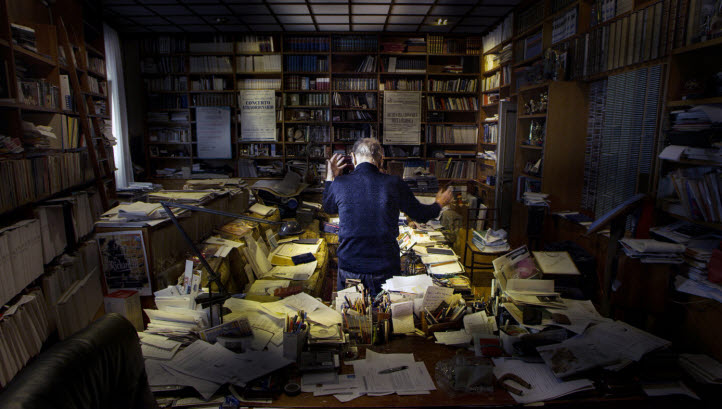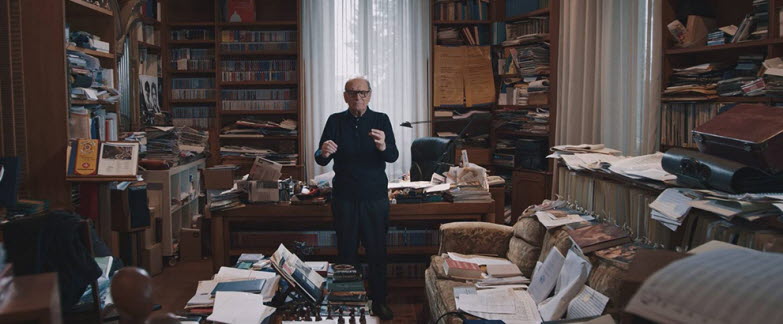
If you are a seasoned moviegoer like me, Ennio Morricone, who passed away in 2020 at the age of 91, is surely quite a familiar figure to you. After all, he was one of the greatest film music composers of our time, and his immense contribution and influence on film music are significant to say the least. After all, who can possibly not be impressed by many of his awesome works such as “The Good, the Bad and the Ugly” (1966)?
Documentary film “Ennio”, which is also known as “The Glance of Music”, looks over Morricone’s long and illustrious career, and its main strength comes from Morricone himself, who did lots of interviews for the documentary not long before his death. As a composer who worked on around 500 films during last six decades, he surely has lots of various interesting experiences to talk about, and, above all, he vividly recollects how he got inspired and then worked on some of his best works.
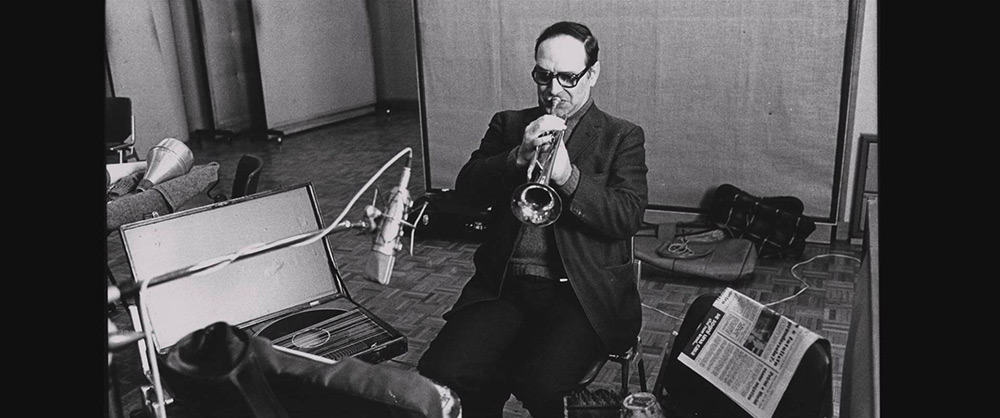
To our little amusement, Morricone actually did not want to be a musician when he was very young. He wanted to be a doctor instead, but his trumpeter father actively pushed him toward playing trumpet, and, what do you know, he gradually came to show his considerable musical talent. Around the time when he was approaching 20, he was quite willing to try his luck on being a composer, and he was certainly eager to learn a lot from his mentor Goffredo Petrassi, who was incidentally one of notable modern classic composers in the 20th century.
However, things did not go particularly well for Morricone during his early career period, and he had no choice but to work as an arranger for numerous pop songs because he needed to support him and his dear family. While this led to some inferiority complex for him, Morricone always tried best with many thankless jobs given to him, and he even occasionally mixed some musical experiments into those pop songs. He never gave up his education background, and he even tried on avant-garde music along with his contemporary colleagues.
This certainly provided some ground for him when he subsequently entered the realm of film music in the early 1960s. After quite impressed by what Morricone did for a couple of inconsequential Italian western films, Sergio Leone approached to Morricone, and, what do you know, they instantly clicked together after coming to realize that they were actually in the same elementary school. For Leone’s certain little western film whose lead performer was incidentally a young unknown American actor named Clint Eastwood, Morricone decided to try on some bold and refreshing stylistic touches, and, as all of us know, that led to an immense revolutionary change in western film music.
After the immense success of “A Fistful of Dollars” (1964), Morricone worked on many other Italian western films besides its two sequels, but he was also ready for trying other things, and that led to his collaborations with a bunch of many different Italian filmmakers ranging from Gillo Pontecorvo and Bernardo Bertolucci to Pier Paolo Pasolini and Dario Argento. He was so busy and prolific during that time, and there is an amusing episode on when Pontecorvo tried to snatch a certain piece of music Morricone had just recorded for Liliana Cavani’s latest film “The Cannibals” (1970) just because that fit so well to his new film “Burn!” (1969) (Morricone eventually composed a very similar one for Pontecorvo instead, by the way).
Meanwhile, Morricone began to test the waters with American films. In case of Terrence Malick’s great film “Days of Heaven” (1978), he got lots of artistic freedom thanks to Malick, and he eventually let Malick use his music freely while insisting that his music for the fire sequence should remain intact instead. As a result, he received his first Oscar nomination, but, alas, the award went to fellow Italian musician Giorgio Moroder’s electronic score “Midnight Express” (1978). To be frank with you, how the hell did Moroder’s effective but dated score beat Morricone’s sublime score as well as John Williams’ immortal score for “Superman: The Movie” (1978)?
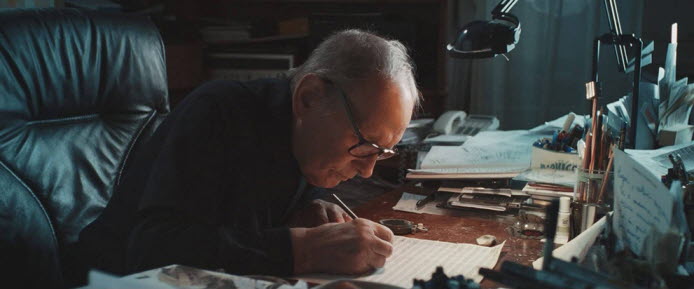
The more infuriating case came when Morricone was later Oscar-nominated again for Roland Joffé’s “The Mission” (1986). Although the movie itself is rather deficient (But it somehow received several Oscar nominations including the one for Best Picture in addition to getting the Palme d’Or at the Cannes Film Festival(!) anyway), Morricone’s awe-inspiring mix of three vastly different music elements enhances many key moments in the film a lot, and almost everyone expected him to win an Oscar for that. However, the award eventually went to Herbie Hancock’s far less substantial score for “’Round Midnight” (1986), and Morricone still feels sore about his defeat at that time. In my humble opinion, he or Jerry Goldsmith, who was also nominated for his electrifying hybrid score for “Hoosiers” (1986), should have won, and Hancock’s controversial win is another reminder that many Academy voters do not care that much about film music from the beginning. After all, they gave an Oscar to Vangelis’ “Chariots of Fire” (1981) instead of John Williams’ unforgettable score for “Raiders of the Lost Ark” just because Vangelis wrote a merely fancy hit theme, didn’t they?
That is why Morricone was not particularly excited about his next three nominations, and he did not win as expected, but, thankfully, the Academy voters rectified their gross error in the 21st century. First, Morricone received an Honorary Award for his entire career in early 2007, and his acceptance moment was surely one of the highlights of the Academy Awards ceremony of that year. Second, Morricone was later nominated again for Quentin Tarantino’s “The Hateful Eight” (2015), and the time had indeed come for him to the delight of everyone including him.
In the meantime, Morricone kept working as before. We see him doing many concerts around the world, and there is a particularly memorable moment when the documentary shows him presenting a memorial piece for the 9/11 incident. Besides those numerous film music works of his, he certainly did lots of other things, and he also belatedly received recognition and admiration from those haughty contemporary classic composers in his country.
On the whole, “Ennio” is a solid and informative summary of Morricone’s career, and director/writer Guiseppe Tornatore, who collaborated with Morricone in several films including Oscar-winning film “Cinema Paradiso” (1988), surely brings lots of affection and respect into the documentary. I wish the documentary delved a bit more into Morricone’s personal life (Despite having lots of various interviewees ranging from to Lina Wertmüller and Oliver Stone to Quincy Jones and Hans Zimmer, the documentary curiously does not pay much attention to his wife and their children including Andrea Morricone, who incidentally has his own solid musician career), but I did not get bored throughout its 156-minute running minute thanks to Morricone at least, so I will not grumble for now.