Catherine Called Birdy (2022) ☆☆☆(3/4): This plucky medieval girl

Lena Dunham’s latest film “Catherine Called Birdy”, which is currently available on Amazon Prime, is a delightful comic coming-of-age tale about one plucky young medieval girl. As its heroine cheerfully bounces from one funny episodic moment to another, the movie attempts to mix some modern sensibility into its period background, and that is often amusing to observe even though we also often notice its artificial aspects.

Mainly set in some rural feudal territory in England around the 13th century, the movie quickly establishes a little comfortable world surrounding Lady Catherine (Bella Ramsey), a 14-year-old noblewoman who has enjoyed her life and freedom as much as possible as your average plucky girl. At the beginning, we see her engaged in a big mud fight along with other kids in the area, and she does not mind at all about getting quite muddy just like others.

Catherine is also a smart girl who becomes more aware of how she will be limited more by her gender role, and, not so surprisingly, she is not particularly interested in getting married, but the situation becomes more serious for her due to a couple of reasons. First, her father, Lord Rollo (Andrew Scott), has been facing a considerable financial difficulty due to his thoughtless handling of the family fortune, and it looks like the only option for him is getting Catherine married to any suitor with enough money as soon as possible. Second, Catherine happens to have her first period experience, and that certainly makes her more eligible as a bride to marry.

Naturally, Catherine defiantly tries to distance herself from a series of possible suitors, all of whom are not so desirable to her in one way or another. Her father is understandably not so pleased about his daughter’s disobedience, but there is nothing much he can do except slapping her palm several times with a stick, and she remains stubborn as before.

At least, Catherine finds some comfort from several friends around her. There is a young goatherd who has been her best male friend, and we are not so surprised when he later tells her about why he has been content with being a merely good friend to her. In case of Aelis (Isis Hainsworth), the young noblewoman of a neighboring feudal territory, she is Catherine’s best female friend, and Catherine is delighted when it looks like Aelis seems to be drawn to her handsome uncle George (Joe Alwyn). He also happens to be looking for anyone suitable enough for him to marry after returning from the Crusade, but, what do you know, he turns out to be more practical than he seems on the surface.

In the meantime, the circumstance becomes a bit more serious when Catherine finds herself introduced to an utterly vulgar older man as her latest suitor. This time, her father is determined to push his daughter all the way to her eventual marriage even though he does not like tha filthy rich guy at all, and Catherine begins to wonder whether she should be his dutiful daughter instead of pursuing more life and freedom instead.

While never losing its lightweight tone, Dunham’s screenplay, which is based on the novel of the same name by Karen Cushham, keeps things rolling as bringing some depth to its broad but colorful characters. While Catherine comes to show more vulnerability behind her supposedly feisty appearance, several main characters in the story also come to show each own matter of heart along the story, and it is often touching to observe how Lord Rollo and his wife have maintained their loving marital relationship despite many problems including his incorrigible human foibles.

The movie sometimes loses its comic momentum as juggling a little too many elements around its heroine, but Catherine’s irrepressible spirit and personality holds its center well. Bella Ramsey, who drew our attention for her notable supporting role in HBO drama series “Game of Thrones” and then recently moves onto another HBO drama series “The Last of Us”, gives a likable performance which constantly sparks with vibrant charm and pluck, and it will be interesting to watch what this undeniably talented performer will do next in the future.

Dunham also assembles a bunch of good performers around Ramsey. While Andrew Scott effortlessly steals the show as Catherine’s flawed but amiable father, Billie Piper provides some gravitas as Catherine’s ever-patient mother, and Lesley Sharp has several good moments of sharp wit as Catherine’s caring nanny. In case of several other main cast members in the film including Joe Alwyn, Sophie Okonedo, Isis Hainsworth, Ralph Ineson, and David Bradley, they also have each own moment to shine, and Okonedo brings thoughtful warmth to a little nice scene where her character suggests the possibility of more life and freedom to Catherine.

On the whole, “Catherine Called Birdy” is enjoyable for its considerable wit and humor in addition to the game efforts from its cast member, and I enjoyed it more than Dunham’s previous film “Tiny Furniture” (2010), which was interesting to some degree but somehow did not impress me that much. At least, I agreed with others that Dunham is a new talent to watch at that time, and, though she was absent for a while mainly due to her acclaimed HBO comedy series “Girls” while also unwisely causing one controversy after another in public, she is still a good filmmaker as shown from “Catherine Called Birdy”, so I recommend you to check it out during your spare time.

Posted in Movies | Tagged , , | Leave a comment

The Phantom of the Open (2021) ☆☆☆(3/4): The World’s Worst Golfer

“The Phantom of the Open” is another typical comedy film about eccentric British figure. Although I wish it were more biting and acerbic considering its truly outrageous real-life story, it still amused me enough when I watched it during this morning, and it also made me appreciate again the considerable presence and talent of its exceptional lead actor.

Mark Rylance, who has been more prominent thanks to his Oscar-winning breakthrough turn in Steven Spielberg’s “Bridge of Spies” (2015), plays a plain working-class guy named Maurice Flitcroft, and the movie opens with Flitcroft casually talking about his life background in front of an amused TV interviewer. As your average dreamer, Maurice did not want to work at a local shipyard just like his father and grandfather, but life eventually led him to the shipyard, and then he willingly put aside his dream when he married Jean (Sally Hawkins), a single mother who also worked at the shipyard as a secretary.

Anyway, Maurice has had a fairly happy life with Jean and their children, but then there comes a sudden change. On one day, his oldest kid, who has incidentally worked in the management department of the shipyard, notifies to him that there will be a considerable dismissal due to the upcoming nationalization of the shipyard, and it goes without saying that Maurice and some of his colleagues will be the first ones to let go.

Nevertheless, Maurice is not daunted that much while seeing this bad news as an opportunity for pursuing whatever he wants to do at last, and, what do you know, he soon sets his goal right after seeing a golf game on TV. Although he does not know anything about golf at all, he acquires several items needed for playing golf, and he even becomes determined to play at the Open Championship just because he thinks he can simply try after some practice.

Of course, things do not go that well for Maurice from the beginning. First, he tries to practice a bit at a prestigious local golf club, but, not so surprisingly, he is promptly rejected by the management. He has no choice but to practice golf at some other spots including a local beach, but he does not have anybody to train him while only depending on several guidebooks.

Nevertheless, Maurice still wants to play at the Open Championship, and he innocently tries to apply for the tournament even though he does not know that much about how to fill out the application form. To our little amusement, his rather sketchy application is accepted without much problem mainly due to a little negligence, and Maurice is certainly delighted by this unexpected opportunity.

Right from the first round, Maurice surely makes a big expression on everyone at the tournament, and we get a series of silly but funny moments as Maurice frequently baffles or amuses others for his numerous disastrous plays. As a matter of fact, he ends up becoming the worst golfer in the history of the Open Championship, and everyone naturally wonders about who he is as he becomes a celebrity nicknamed, yes, “The Phantom of the Open”.

The second half of the screenplay by Simon Farnaby, which is based on the biography written by him and Scott Murray, follows the long conflict between its unflappable hero and those folks managing the Open Championship, mainly represented by a dude named Keith Mackenzie (Rhys Ifans). When Mackenzie subsequently blocks Maurice from participating in the tournament again, Maurice is not daunted at all, and, to Mackenzie’s annoyance, he manages to sneak into the tournament as disguising himself as a French golfer who looks as ridiculous as Inspector Clouseau.

The movie is rather vague about what exactly its hero thinks and feels about his Quixotic pursuit, but Rylance’s deadpan comic performance keeps us engaged even when his character is often distant and detached from what is going on around him. We have no idea on how much Maurice is actually oblivious to his inarguably lousy plays, but Rylance subtly conveys to us his character’s eccentric passion, and you will come to find his character as endearing as, say, the titular hero of Tim Burton’s “Ed Wood” (1994).

Several other main cast members of the film are under-utilized due to their relatively flat characters, which are the main weak aspect of the movie. Sally Hawkins, who has been always reliable since I came to notice via Mike Leigh’s “Happy-Go-Lucky” (2008), is too good to play your average supportive wife, but she manages to bring some life and personality to her thankless role at least. In case of Rhys Ifans, he is wasted while only required to look as exasperated or annoyed as demanded, though he is a fairly good counterpoint to Rylance’s low-key acting.

“The Phantom of the Open” is directed by Craig Roberts, who is known for his lead performance in Richard Ayoade’s “Submarine” (2010) and also made a feature film debut as a filmmaker in “Just Jim” (2015). Although it is not without flaws, the movie has enough charm and humor to entertain me, and now I wonder how my parents will respond to the film. Considering how they have often enjoyed playing golf these days, I am sure that they will be amused to see that they are not that amateurish compared to Maurice.

Posted in Movies | Tagged , , , | Leave a comment

The Duke (2020) ☆☆☆(3/4): The Trouble with The Duke

“The Duke”, which is recently available on Netflix in South Korea, presents a dryly amusing comedy based on one unlikely real-life story. As cheerfully observing the absurdities surrounding the theft of one certain valuable artwork in the National Gallery of London in 1961, the movie often tickles us along the story, and it is also held together well by another entertaining performance from its ever-dependable lead actor.

Jim Broadbent, a wonderful British actor who has steadily moved on since his Oscar-winning supporting turn in “Iris” (2001), plays Kempton Bunton, a middle-aged working-class man living in Newcastle. While doing one menial job after another for supporting his family, Kempton has tried to get some recognition as a self-educated writer, but his several teleplays are already rejected by BBC, and his wife Dorothy (Helen Mirren) is not so amused because one of his teleplays is based on their dear daughter who died due to an unfortunate accident some time ago.

Whenever he is not working or writing, Kempton usually focuses on his anti-establishment activities. For example, he finds a clever loophole for avoiding paying the license fee for TV, and he defiantly argues for that in front of two government officials coming into his house, but then he gets eventually incarcerated for 13 days for his little legal transgression. After he is released, he promptly protests against old pensioners having to pay the license fee for TV, but, despite some help from one of his two sons, he fails to draw a lot of attention in public.

Meanwhile, the public is paying much more attention to the Portrait of the Duke of Wellington, one of more notable works by Spanish painter Francisco de Goya. When this valuable portrait is bought at the price of no less than 140,000 pounds by the UK government and then exhibited in the National Gallery, Kempton cannot help but become displeased about this. In his opinion, the government should have spent the money instead on helping millions of common working-class people like him, and that certainly makes him complain more about the government and the society.

And then something quite unexpected happens not long after Kempton goes to London for trying to convince BBC to accept his teleplays. The portrait is stolen at one night, and we later see the portrait hidden in a wardrobe by Kempton and his son. While still not telling anything to his wife, Kempton writes a series of ransom notes to the UK government, which, besides showing that he does have the portrait, demands the money to be spent for public charity and welfare.

The most amusing part of the film comes from how the UK government and the police overestimate Kempton. Despite the precise profiling job on the ransom notes by a female expert, the police simply ignore her analysis just because of gender bias, and, to Kempton’s little amusement, almost everyone believes that this is a case of professional theft.

In the meantime, things get a bit more complicated in Kempton’s life. After getting fired from the previous job, he manages to get hired at a local bakery factory, but, not so surprisingly, he comes to cause troubles just like he did in his previous job. Furthermore, his house becomes more crowded when his other son comes with his girlfriend, and there eventually comes a point where Kempton comes to see that he cannot hide the portrait anymore.

As already announced to us in the opening scene, Kempton is eventually arrested and then appears in the court for the theft of the portrait, but he is not so particularly concerned about whatever will happen next to him. While his lawyer, played by Matthew Goode with detached amusement, tries his best for making his client punished as little as possible, Kempton adamantly refuses to plead guilty to those several charges upon him, and the trial gradually becomes a big public show thanks to his defiant but humorous stand against the establishment.

The screenplay by Richard Bean and Clive Coleman simply lets the story and characters roll from one narrative point to another while occasionally throwing fun moments of absurdity in the story, and everything in the film is steadily supported by Broadbent’s solid acting. After all, he is no stranger to playing old eccentric British characters, and Broadbent certainly shines whenever his character shows considerable wit and intelligence behind his plain appearance. Although she is mostly stuck in a rather thankless role, Helen Mirren is still fun to watch as Kempton’s no-nonsense wife, and I wish the movie had more scenes between her and Broadbent, who effortlessly click well with each other whenever they are on the screen together.

On the whole, “The Duke” is a modest but engaging film mainly due to Broadbent and several other main cast members in the film, and director Roger Michell, who sadly died several months before the movie was belatedly released in UK in last year, did a competent job as he did in many of his notable movies such as “Notting Hill” (1999) and “Venus” (2006). Although I do not think “The Duke” is one of Michell’s better works, it simply accomplishes as much as intended from the start, so I will not grumble for now.

Posted in Movies | Tagged , , , | Leave a comment

Bros (2022) ☆☆☆(3/4): A raunchy but sweet R-rated gay romantic comedy

“Bros”, which is currently available on Netflix in South Korea, amuses me in more than one way. Here is a raunchy but ultimately sweet R-rated romantic comedy unabashedly wielding lots of gay stuffs and a bit of other sexual minority elements on the screen, and a number of frank and humorous moments in the film, which are often accompanied with considerable nudity and carnality, compensate for its apparent genre conventions and clichés.

At the beginning, we are introduced to Bobby Lieber (Billy Eichner), a proud and confident gay podcaster living in New York City. The opening scene shows him doing another episode of his popular podcast series, and we can see how passionate he is about not only being gay but also the human history of LGBTQ+ people. As a matter of fact, he also works in a LGBTQ+ human history museum, and the movie goes for some broad laughs as he argues and discusses a lot with his several different colleagues, who clearly represent various groups of LGBTQ+ people.

While he is 40 now, Bobby is not particularly interested in having any kind of serious relationship. After all, as your average successful cis-gender male professional in New York City, he has almost all at present, and, if he needs sex, all he has to do is checking an online dating application for gay people, which I have incidentally used during last 7 years since I came out of the closet in late 2016. His body is not exactly a type to draw many users within a few minutes, but his body surely looks better than my chubby body, and, above all, there are a lot more chances for hookups in New York City than a local South Korean city I have lived for 6 years (No, it is not Seoul).

On one day, Bobby happens to attend a big and loud nightclub party which celebrates the release of some another online dating application for gay people, and that is how he comes across a handsome lawyer dude named Aaron (Luke Macfarlane). While this guy does not look like someone he can hang around with, Bobby cannot help but attracted more and more to him, even though he gets separated from him more than once. In the end, he finds himself joining a little private moment along Aaron and two other guys with whom Aaron is supposed to have a sex. As observing how Bobby feels awkward and uncomfortable during this scene, I came to muse a bit on my sole threesome attempt with two other dudes. You may have some fun, but you may eventually find it cumbersome and boring especially if you are not really into it, and, to be frank with you, even one sex partner is quite a challenging task for my feeble brain and clumsy body.

At that point, Aaron seems to be just another guy for sex to Bobby, but, what do you know, they subsequently correspond more with each other, and they feel more of the mutual attraction between them despite their many differences. While Bobby is more forthright about his thoughts and feelings, Aaron is more reserved in comparison, and he is still not so comfortable about his homosexuality even though his family already knows about that.

Nevertheless, they become more attracted to each other as spending more time together, and that makes Bobby consider more about having his first serious romantic relationship, though he and Aaron do not know what to do with their developing relationship. Can they actually be devoted a lot to each other? And can they handle well a number of problems from their considerable personality differences?

Now this is a very familiar setup borrowed from countless romantic heterosexual romantic comedy films out there, and the screenplay by Bill Eichner and his co-writer/director Nicholas Stoller, who has been known for several notable comedy films including “Forgetting Sarah Marshall” (2008) and “Neighbors” (2014), is certainly well aware of its conventions and clichés from the beginning. While it surely follows the conventional story formula as expected during its last act, the movie also tries hard to distinguish itself above those conventions and clichés, and it does not pull any punch in case of sex just like many of Judd Apatow’s R-rated comedy films (Apatow also participated in its production, by the way).

It helps that the movie is supported well by the good comic chemistry between its two main cast members. Eichner, a wonderful comedian who has mostly been known for appearing in a number of different TV drama and comedy series, effortlessly embodies his character’s neurotic insecurity behind the supposedly forthright appearance, and that is complemented well by Luke Macfarlane’s plain but stable presence. In case of many other notable cast members in the film, most of whom openly belong to the LGBTQ+ community, they are mostly under-utilized due to their under-developed supporting roles, but a few of them including Jim Rash, Bowen Yang, and Harvey Fierstein has a little juicy fun during their brief appearance.

In conclusion, “Bros” is a conventional but fairly enjoyable queer romantic comedy, though I wish it could go further for more laughs and insights. In my inconsequential opinion, another recent gay comedy film “Fire Island” has more life and personality, but “Bros” has enough fun stuffs to enjoy nonetheless, so I recommend you to check it out someday.

Posted in Movies | Tagged , , , | Leave a comment

My Sailor, My Love (2022) ☆☆1/2(2.5/4): One winter romance coupled with a family issue

“My Sailor, My Love” tries two different things together, but the resulting mix is often clunky and unconvincing. On one hand, we have a supposedly intimate romance drama between two aging people, and the movie did a fairly good job of decorating it with enough mood and sensitivity, but we still do not get to know that much about either of them. On the other hand, we also have a gloomy personal drama focusing on a toxic family relationship, and we are naturally served with painful and harrowing emotional moments, but these intense moments frequently feel jarring in the resulting mix.

Set in some rural Irish beach town, the film initially shows us how things have been not that good in a house belonging to Howard (James Cosmo), an old, retired captain who has lived alone since his wife died and then his children left for each own life. When his daughter Grace (Catherine Walker) comes first for his upcoming birthday party, she immediately notices how messy the house is, but Howard is not concerned much about that, and that eventually prompts Grace to look for a housekeeper to look after his house.

Fortunately, her public notice is soon answered by Annie (Brid Brennan), an aging local widow who has simply looked for some other job besides cleaning a bar belonging to one of her children. Although Grace warns to her in advance that her presence will not be welcomed by Howard, Annie soon finds herself quite disregarded and insulted by Howard right from her first day in his house. She does try, but Howard remains very callous to her without showing any appreciation to her cleaning work on the house at all.

Of course, there eventually comes a point where Annie becomes really exasperated and then Howard belatedly comes to appreciate her domestic service more. He subsequently visits her for apologizing for his rudeness, and she eventually agrees to work again in his house. The mood becomes much milder than before as they get more accustomed to each other during next several days, and, what do you know, they eventually find themselves quite attracted to each other.

To my little distraction, the movie does not give much detail on Annie and Howard’s mutual attraction, except that they are your average two lonely old people. Howard later suggests to Annie that she should live with him, and, despite some initial hesitation, Annie accepts his suggestion just because she has been happy with this unexpected new possibility of romance for her.

While Annie’s kids fully support her decision to move into Howard’s house, Grace is not so pleased at all when she belatedly comes to learn of what is going on between her father and Annie. Although she does not like her father much for understandable reasons, she still finds herself bound to the duty of taking care of her father unlike several siblings of hers, and we also come to gather that this has caused lots of strains on not only her mind but also her relationship with her husband. Her husband tries his best for avoiding more estrangement between him and his wife, but, to his growing frustration, Grace only becomes more occupied with other things including her issues with her father.

Meanwhile, Howard turns out to have a serious health problem, and this leads to more conflict between Annie and Grace. Grace is ready to send her father to a facility for old people as soon as possible, but Annie is willing to stand by Howard just because she loves him, and this only exacerbates Grace’ old anger and resentment toward her father. Although Howard already admitted to Annie that he was not a good father or husband at all as spending most of his life on the sea, Annie comes to see more of what a lousy and horrible father he has been to Grace, and Grace bitterly confirms that to Annie later in the story.

Unfortunately, the screenplay by Jimmy Karlsson and Kirsi Vikman resorts to superficial sentimentality instead of fully delving into the emotionally complex situation among its three main characters, and its two different story elements end up merely clashing with each other without any dramatic effect on us. In my humble opinion, the movie is a bit too easy on Howard despite how much he has emotionally damaged his daughter for years, and his private scene with Annie around the end of the story feels is quite contrived to say the least. In case of Grace’s psychological problems with her father, the movie just scratches the surface while only dangling her in constant neurosis, and that is why the last scene of the movie is not particularly convincing.

At least, the three main cast members acquit themselves well. While James Cosmo and Brid Brennan have some little tender scenes together along the story, Catherine Walker manages to bring some life and personality to her frequently neurotic character, and I wonder whether the movie could be better if it focused more on her character’s emotional struggles.

“My Salior, My Love”, which is simply released as “My Dear Love” in South Korean theaters in this week, is directed by Klaus Härö, a Finnish filmmaker who previously directed “The Fencer” (2015). He and his crew members including cinematographer Robert Nordström did a competent job of establishing enough local atmosphere on the screen, but the movie is rather deficient in terms of story and character, and I only came to observe it from the distance without much emotional involvement. That is usually a problem in case of any kind of character drama, you know.

Posted in Movies | Tagged , , | Leave a comment

The Hill of Secrets (2022) ☆☆☆1/2 (3.5/4): A little young girl’s secrets and lies

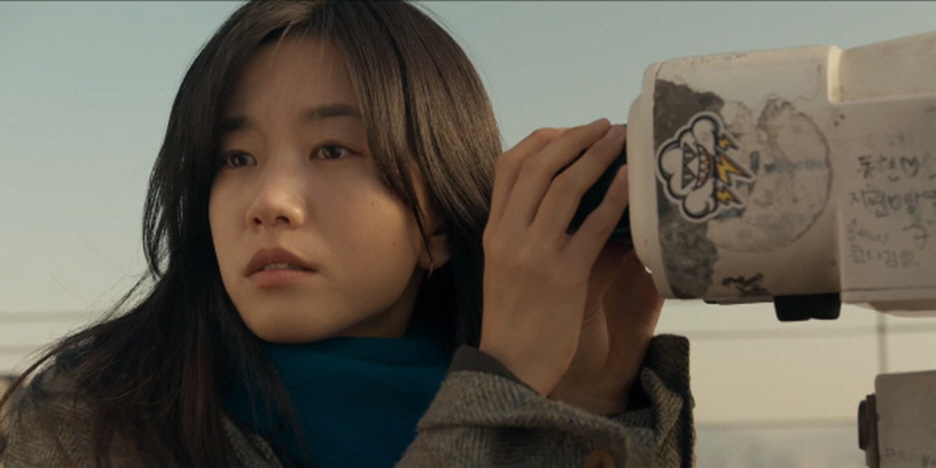
South Korean film “The Hill of Secrets” is a seemingly simple coming-of-age tale which turns out to be much more complex than expected. As calmly and sensitively observing its little young heroine’s secrets and lies along the story, the movie is quite amusing or suspenseful at times, and we come to understand and empathize more with her ongoing emotional struggles with not only herself but also her family.

The movie, which is incidentally set in 1996, mainly revolves around Myeong-eun (Lee Ji-eun), a 11-year-old elementary school girl who is quite sensitive about how she is regarded by her schoolmates and their classroom teacher. During the opening scene, we see her trying to choose anything good enough as a gift to her classroom teacher, and we are amused a bit as she becomes rather capricious about a little packaging detail of her gift at the last minute.

At the classroom, Myeong-eun presents herself as best as she can when she later runs for the prefect. She makes a direct and forthright speech with an actually possible promise for her classmates, and she eventually wins the election to her delight, but her parents are not so impressed by this at all because they are mostly occupied with each own business. While her father Seong-ho (Kang Gil-woo) is nothing but a pathetic unemployed loser who usually kills his free time at his wife’s little shop located in a local marketplace, her mother Kyeong-hee (Jang Sun) is usually busy with her work, and their attention is often drawn more to Myeong-eun’s older brother Min-gyoo (Choi Hyeon-jin).

Just like Kyeong-hee is sick of her family, Myeong-eun is tired of her family, and that is the main reason why she has lied about her family to her classroom teacher and classmates. She often says that her father works in some company while her mother is just a plain housewife, but, unfortunately, she must stick to her lies more when she begins to serve as the class prefect. While she is pretty helpful to her classroom teacher via providing a number of good ideas for education and enlightenment, she also has to evade any question about her family more than before, and she even goes for bigger lies when one of her classmates shows some doubt about what she has been saying about her family.

Meanwhile, her classroom teacher encourages Myeong-eun to participate in an essay contest to be held in the school. What she writes is not exactly as truthful as demanded, but she comes to show considerable potentials in writing, and her classroom teacher gladly keeps encouraging her, though Myeong-eun’s mother is not so impressed in contrast to her husband.

As we wonder more about how much our little young heroine can contain her lies and secrets, there comes a little change into her classroom on one day. A girl named Hye-jin (Jang Jae-hee) is transferred to the school along with her “biovular twin sister”, and this girl does not mince any word about her rather shabby family background right from her first day in Myeong-eun’s classroom. In addition, she and her sister can also write several personal essays which appeal to others more than the ones written by Myeong-eun, and Myeong-eun cannot help but envy these two sisters in more than one way. When her classroom teacher instructs her to participate in a big local essay contest for elementary students, she surely tries her best, but it looks like she cannot possibly beat whatever is written by these two sisters.

To Myeong-eun’s surprise, Hye-jin and her sister do not hesitate to befriend Myeong-eun, and they indirectly give her an advice pretty useful for any aspiring young writer out there. While their essays may not be that terrific, their brutal honesty on their messy family and school life always draws attention as they sardonically admit at one point, and that is where the undeniable emotional power of their writing lies.

Impressed by how Hye-jin and her sister cope with their harsh reality via outright honesty instead of lies and secrets, Myeong-eun decides to be much more truthful than before in another essay to be sent out to that local essay contest, and the mood becomes lyrically pensive as she comes to reflect more on her life and family via her more truthful writing. She still does not like her family much, but they are an undeniable fact of her life nonetheless, and she actually feels better as letting out all the confusion and frustration inside her.

However, when that essay comes to receive much more attention than expected, Myeong-eun finds herself suddenly stuck in a very difficult situation, and that is where the movie becomes a bit more tense than before. As Myeong-eun comes to tremble and implode under the consequence of her secrets and lies, young performer Moon Seung-ah is superlative as palpably conveying to us her character’s growing inner conflict, and there is an intense but ultimately poignant conversation scene where Myeong-eun desperately tries to get some help from her classroom teacher, who turns out to be more patient and thoughtful than she seems on the surface.

Director/writer Lee Ji-eun, who makes a feature film debut here, also places a number of good performers around her young lead actress. While Lim Sun-woo is terrific as Myeong-eun’s flawed but well-intentioned class teacher, Jang Sun and Kang Gil-woo bring some human complexity to Myeong eun’s parents, Jang Jae-hee, Kwak Jin-moo, Moon Seo-hyeon, Choi Hyeon-jin, and Lee Dong-chan are also solid in their respective supporting roles.

Overall, “The Hill of Secrets” leaves indelible impressions on us via its sensitive handling of story and characters, and it is certainly one of the best South Korean films of this year. When it eventually arrives at the end of her emotional journey along the story, I came to care about its little young heroine a lot more than I expected, and that is surely an achievement to say the least.

Posted in Movies | Tagged , , , , , | 1 Comment

Evil Dead Rise (2023) ☆☆1/2(2.5/4): Another case of demonic possession

“Evil Dead Rise”, the latest installment from the Evil Dead series, did not impress me enough. While I appreciated how it tries to bring some fresh air to its very familiar genre premise, I was only mildly entertained by all those gory and disturbing scenes of demonic possession as your average seasoned moviegoer, and I came to miss all the loony enthusiastic entertainment of the first three films directed by Sam Raimi, who incidentally participated in the production as one of the executive producers.

After the opening scene which will definitely bring back to you some old memories of “The Evil Dead” (1981) and “Evil Dead II” (1987), the movie immediately establishes its small, limited background and several main characters. When her younger sister Ellie (Alyssa Sutherland) drops by the apartment where she has lived with her three kids, Beth (Lily Sullivan) is not exactly pleased for understandable reasons, but her three kids are glad to see their aunt again, and the mood is mostly pleasant among them for a while before a little family issue of Beth and her kids come out.

While Beth and Ellie come to talk a bit more about that family issue, Beth’s three children go outside for buying some pizza outside, and we are reminded again of what an old and shabby place their apartment building really is. There are numerous shady corners here and there inside the building, and the parking lot at the basement level of the building certainly feels gloomy and spooky without enough light in the space.

Around the time when Beth’s kids come back to the apartment building, a sudden earthquake occurs, and that leads to considerable internal damages including a big hole on the ground in the parking lot. Because the apartment building was a bank many years ago, one of Beth’s kids cannot help but feel curious about what is inside that big hole, and what do you know, the kid soon comes across an abandoned storage place which once belonged to that defunct bank.

It is not much of a spoiler to tell you that the kid eventually comes across some old items which look ominous to say the least. Besides several old recordings made in the early 20th century, there is also an ancient book whose contents turn out to be more disturbing than its cover suggests. Needlessly to say, that book in question is a tool which can summon a powerful demon via a forbidden invocation, and, of course, that dangerous invocation is recorded in one of those old recordings in question.

What follows next is pretty familiar to anyone who has seen “The Evil Dead” or “Evil Dead II”. As soon as the recording containing that deadly invocation is played, that powerful demon literally swoops into the apartment building, and Beth, who happens to be alone outside the apartment right at that moment, accordingly experiences a wicked variation of that infamous wood scene in “The Evil Dead”. When she later returns, she surely shows lots of disturbing behaviors in front of others, who belatedly come to realize what is going on while experiencing more disturbing stuffs along the story.

As its several main characters are terrorized more and more, director/writer Lee Cronin and his crew members is willing to throw lots of gory moments into the screen, and the movie occasionally shows a morbid sense of humor in addition to paying homage to Raimi’s first two films at times. For example, a deliberately disgusting scene involved with an eyeball in the middle of the film is clearly influenced by the similar scene in “Evil Dead II”, and some of you will be certainly delighted when a chainsaw eventually makes an appearance later in the story. In case of a certain shocking moment with one particular kitchen tool, it surely made me wince, and it is a bit shame that the movie does not utilize that kitchen toll in question more.

However, the overall result does not have much of that nasty fun and enthusiasm of Raimi’s first two films, and this weak aspect only makes us more aware of the rather superficial storytelling and thin characterization of Cronin’s screenplay. Despite the game efforts from the main cast members, most of the main characters in the film are more or less than plain figures to be scared or maimed or possessed, and the movie also fails to bring them enough human qualities to make us care about their infernal plight. As the movie ends up simply following its old familiar playbook page by page, we come to observe it from the distance, and we just keep waiting for the eventual finale, which is incidentally soaked in blood and guts as much as required.

On the whole, “Evil Dead Rise” is an improvement compared to the grim disappointment of “Evil Dead” (2013), but it still feels deficient even compared to “Army of Darkness” (1992), which is a bit too flawed but fairly enjoyable for good reasons. It surely tries to do its own stuffs at times, and I was entertained to some degree during my viewing, but it does not feel particularly new or fresh to me while only reminding me more of many other horror films about demonic possession out there. To be frank with you, I now feel some urge to revisit “Evil Dead II” just for having much more fun and scare, and I think you may have a more productive time if you watch it instead.

Posted in Movies | Tagged , , , , | Leave a comment

Guy Ritchie’s The Covenant (2023) ☆☆1/2(2.5/4): Another very serious work from Guy Ritchie

“Guy Ritchie’s The Covenant” is something I have expected to come sooner or later after the fall of Kabul in Afghanistan in 2021, though I did not expect it to come from its director. While he deserves to be recognized for doing something different than his usual works, the movie itself merely does what exactly it is expected to do without showing anything particularly new or insightful at all, and that is a shame considering the committee efforts from its two charismatic lead performers.

The first act of the film gradually establishes the professional relationship between its US Army soldier hero and his new local translator around the end of the War in Afghanistan. After the previous local translator got killed due to an unfortunate incident, Master Sergeant John Kinley (Jake Gyllenhaal) and several soldiers under his command get an Afghan guy named Ahmed (Dar Salim) as their new local translator. Although he is not exactly a friendly guy, it does not take much time for Ahmed to get the trust and respect of Kinley and other soldiers as he comes to help them in one way or another, and Kinley also get to know a bit about a certain personal fact of Ahmed, which is the main reason why he came to work for the US Army despite considerable risks from that.

Anyway, thanks to the resourcefulness of both Kinley and Ahmed, Kinley and his soldiers eventually come to locate where those Taliban soldiers are making bombs, but, not so surprisingly, the situation turns out to be much more perilous than they thought at first. Once they are attacked by a bunch of incoming Taliban soldiers, everyone except Kinley and Ahmed are killed, and Kinley and Ahmed must depend on each other as they try to evade those Taliban soldiers during the highly risky journey to their military base.

If you have seen several other similar films associated with the War in Afghanistan such as “Lone Survivor” (2013), you will probably not be that impressed by what follows next during the middle act of the film. Yes, there are a series of small and big suspenseful moments as our two main characters desperately struggle for their survival, and things become more serious later when Kinley comes to depend totally on Ahmed, who turns out to be as tough and strong-willed as Kinley. Yes, his main motive for saving and then taking Kinley to their military base is getting the US visa promised to him and his family as soon as possible, but he tries to do his best nonetheless in front of many different dangers in front of them, and the movie works best as focusing on how he cope with those big dangers one by one as he and Kinley get closer and closer to their destination.

I wonder whether the movie could be better if it simply stayed focused on its two main characters’ grueling journey across Afghanistan instead of moving onto the third act, which often feels like something between “The Killing Fields” (1984) and “Uncommon Valor” (1983). After he and Ahmed are eventually rescued (Is this a spoiler?), Kinley is sent back to US, but, as he recovers day by day, he cannot help but concerned more about Ahmed. As a matter of fact, Ahmed becomes one of the most wanted men in Afghanistan due to what he bravely did for Kinley, and that makes Kinley feel more guilty than before.

Kinley subsequently tries to do anything for helping Ahmed get the US visa for him and his family, but, of course, he only gets frustrated more and more due to lots of bureaucratic incompetence, so he decides to handle the matter for himself in the end. He hires a bunch of military contractors, and he also prepares to go back to Afghanistan for locating Ahmed, who has been hiding along with his family somewhere in Afghanistan.

What follows next is pretty predictable and quite contradictory to say the least. Yes, Kinley eventually succeeds in locating Ahmed and his family. Yes, the movie soon moves onto a big action sequence where our two main characters shoot a lot of Taliban soldiers before an expected dramatic moment of reversal. Yes, the movie later recognizes how much the US government and military let down thousands of local translators and their families during the complete evacuation from Afghanistan in 2021, but, in my humble opinion, that bitter fact inevitably clashes with its supposedly cathartic ending. Yes, they say that he who saves one life saves the world entire, but that is not enough in this case.

What ultimately remains in my mind is the commendable performance from Jake Gyllenhaal and Dar Salim. While Gyllenhaal reminds us again that he is one of the most dedicated actors working in Hollywood at present, Dar Salim, an Iraqi Danish actor I came to notice after watching two acclaimed Danish films “A Hijacking” (2012) and “A War” (2015), ably carries the middle act of the film as Gyllenhaal steps back for his co-star, and they are often engaging to watch as their characters come to show more respect and responsibility to each other along the story without any cheap sentimentality.

In conclusion, “Guy Ritchie’s The Covenant” is a fairly competent war drama movie, and director/co-writer/co-producer Guy Ritchie demonstrates again that he can be quite serious as he did in his previous film “Wrath of Man” (2021), but the overall result does not surpass its genre conventions and clichés that much. By the way, there is a little but undeniably harrowing documentary film called “Retrograde” (2022), and, if you want to observe and know more about the War in Afghanistan and those numerous Afghan people associated with the US Army during that messy period, I sincerely recommend you to check out that solid documentary first instead of watching this very conventional product.

Posted in Movies | Tagged , , | Leave a comment

Mission: Impossible – Dead Reckoning Part One (2023) ☆☆☆(3/4): You will gladly wait

I come to have some admiration on Tom Cruise and his recent outputs in the Mission Impossible series. I often wondered whether the recent installments of the series were more or less driven by a sort of middle-life crisis or whatever makes him tick these days, but I also admired a lot how much he was committed inside and outside the screen. Yes, he was really on the top of the Burj Mohammed bin Rashid building in Abu Dhabi as shown in “Mission: Impossible – Ghost Protocol” (2011). Yes, he indeed held himself onto a flying airplane as shown in “Mission: Impossible – Rogue Nation” (2015). Yes, he certainly jumped from the sky in “Mission: Impossible – Fallout” (2018), and then he actually put himself in a real fighter plane in “Top Gun: Maverick” (2022).

In case of “Mission: Impossible – Dead Reckoning Part One”, it seems that Cruise is still itching for giving us more authentic cinematic thrill and entertainment in addition to topping whatever has been achieved during the last several installments of the series, and I am happy to report that his another attempt is fairly successful again. While its mixing formula for story, character, and action is pretty familiar to the core, the movie keeps us engaged in terms of story and character as diligently providing top-notch action sequences, and it also provides extra intrigue and seriousness without jeopardizing its non-stop narrative flow at all.

I often noted on how the villains of the Mission Impossible movies are so simple that they can be established within a minute, but the main villain of “Mission: Impossible – Dead Reckoning Part One” is quite an abstract one to my little amusement. As shown from the opening scene, a very sophisticated artificial intelligence program has gone out of control, and this dangerous entity, which is just called “the Entity”, is ready to take over the world and the humanity, but it really needs a certain item which is very important for its total control and freedom.

During its early part, the movie quickly establishes how Cruise’s character, named Ethan Hunt, gets himself into the situation which may be much trickier than whatever he and his associates went through before. That certain item in question is divided into two pieces, and one of them happened to be acquired by an associate of his, and it looks like all he and his colleagues need to do is getting the second piece via using the first piece as a bait and tracking tool.

Of course, things do not go that well for Hunt and his colleagues because the item has been pursued by everyone else in their shady world of espionage. Not only NSA and CIA but also many other government intelligence agencies around the world are quite eager to get that item because whoever gets it in the end will have the absolute power over the Entity – and then the whole wide world. As he refused to hand over the first piece of that time to his agency, Hunt and his colleagues are actually being pursued by his agency, and there is also a mysterious figure working under the Entity, who later turns out to be associated with, surprise, Hunt’s old past.

I will not go into details more on how the movie bounces from one spot to another along with Hunt and several other main characters, but I can tell you instead that director/co-producer/co-writer Christopher McQuarrie, who wrote the screenplay along with Erik Jendresen, and his crew members including cinematographer Fraser Taggart and editor Eddie Hamilton, who got recently Oscar-nominated for his superb editing job in “Top Gun: Maverick”, constantly dazzle and electrify us with a series of superlative moments to be admired for their sheer intensity and verisimilitude. In case of one particular vehicle action sequence unfolded along the streets and alleys of Rome, it easily puts the similar one in “Fast X” (2023) to deep shame right from its very first few minutes, and you will be more amused as observing how it goes as far as that memorable vehicle action scene in “John Wick: Chapter 4” (2023).

Among this and other key action sequences in the film, Cruise steadily holds the center as bringing a bit more depth to his archetype character. While desperately trying to hold onto his unflappable moral belief as much as possible in front of the growing threats from the Entity, Hunt naturally has to make hard choices under impossible situations, and he also feels conflicted about putting his colleagues into more dangers, though all of them are determined to follow him to the end. The movie sometimes allows Hunt to have little moments of personal reflection, and we later get a small but poignant moment between him and Ilsa Faust (Rebecca Ferguson), a rogue British agent willing to take lots of risks for Hunt as having been a bit more than a dependable colleague to him.

Cruise also lets many of the cast members of the film have each own moment around him. While Rebecca Ferguson, Ving Rhames, and Simon Pegg are dependable as usual, Vanessa Kirby, Henry Czerny, Esai Morales, Pom Klementieff, Cary Elwes, and Shea Whigham are also solid in their respective supporting roles, and the special mention goes to Hayley Atwell, who seems to be enjoying every moment of hers as a wily small-time criminal who inadvertently gets herself involved with Hunt.

On the whole, “Mission: Impossible – Dead Reckoning Part One” is basically a long warm-up part for the next one to be released in next June, but it is entertaining enough to justify its rather long running time (163 minute), and I assure you that you will gladly wait for the next film in the end. This is indubitably another highlight of this summer season, and Cruise, who incidentally had his 61st birthday a few days ago, successfully demonstrates again how productively he has been handling his middle-life crisis or whatsoever.

Posted in Movies | Tagged , , | 2 Comments

Wham! (2023) ☆☆☆(3/4): That gloriously youthful period of theirs

Netflix documentary film “Wham!”, which was released a few days ago, looks into one interesting English pop duo during the 1980s. Seriously, I have never been aware of their music or popularity before watching the documentary, but, what do you know, I actually remember well some of their hit songs such as, yes, “Last Christmas” without knowing anything about them, and that says a lot about how iconic their band has been for more than 30 years since they eventually came to part ways at the end of their glorious peak era.

The documentary presents the story of this duo band, which was incidentally named “Wham!”, via the words from the two principal members of the band. While George Michael’s words are mostly from archival sources because he passed away in 2016, both he and Andrew Ridgeley, who is very much alive even at this point, occupy each own equal spot in the documentary nonetheless, and it is really fun to observe how their respective recollections fluidly complement each other from the beginning to the end with considerable wit and insight.

At the beginning, we get a brief summary on how Michael and Ridgeley became each other’s best friend during their childhood years. During that time, Michael, who was actually born as Georgios Kyriacos Panayiotou, was a shy and introverted kid of a Greek immigrant family who had just been transferred to Ridgeley’s school, and he surely felt pretty awkward right from the first day at his new school. Fortunately, Ridgeley willingly volunteered to give some help but support to his new classmate, and then they soon came to spend lots of time together once they befriended each other.

Because of their mutual passion on music, Michael and Ridgeley subsequently formed a band of their own, and then they became more serious about their musical activity as they entered adulthood during the 1980s. While still quite young, both of them were also pretty ambitious, and they reminisce a lot about how much they struggled during those early years of their band. They actively passed their several demo tapes around those record company folks out there, and none of those folks showed much interest, and that was really frustrating for both Michael and Ridgeley.

And then there came an unexpected opportunity via one of their neighborhood friends, who happened to be a record company employee and actually gave some push to Michael and Ridgeley’s band. Once a simple contract for their band was signed, Michael and Ridgeley tried their best for making a hit song to impress potential fans and customers out there, but, sadly, their initial several songs did not make much impression, and that made them more desperate and frustrated than before.

However, there subsequently came another surprise chance for them. On one day, Michael and Ridgeley happened to get a chance to appear on TV, and, what do you know, that led to a big breakthrough moment for their band. Their previous songs became much more popular than before, and they were certainly glad to write more songs to distinguish themselves and their band more.

Both Michael and Ridgeley remember well how everything went pretty high for them during next several years – how often they struggled with their sudden big fame and popularity. Although they did get much recognition from local music critics, young people in UK willingly embraced their distinctive mix of disco and punk with a little dash of pop music, and it surely helped that, despite their very different personality difference, both Michael and Ridgeley were good-looking lads who could exude enough presence and charisma on the stage.

The documentary becomes more interesting as Michael and Ridgeley detail on how the dynamics of their professional relationship was gradually changed during that period. While Ridgeley was more outgoing and confident than Michael, Michael came to grow his own artistic ego with increasing confidence, and Ridgeley let his friend become the more prominent and substantial part of their band as an understanding friend who also recognized his friend’s considerable potential. He knew that his friend would move onto the next things to come later, but he still stood by Michael as his best friend nonetheless, and he certainly provided a bit of emotional support when Michael revealed his homosexuality to Ridgeley in private. Mainly thanks to Ridgeley’s party boy image, the public and media did not pay much attention to whatever Michael was doing in private, and both of them gladly went along with that while not saying anything at all.

Deftly juxtaposing Michael and Ridgeley’s words with heaps of archival records and footage clips, director/co-producer Chris Smith, who has been mainly known for “American Movie” (1999) and recently directed “Fyre: The Greatest Party That Never Happened” (2019), did a commendable job of presenting several highlight moments of their band including their participation in the Live Aid concert in 1985. Although I wish it showed more about Michael and Ridgeley, the documentary still works as a vivid and fascinating look into their band and the background era surrounding it, and its rather short running time (92 minutes) quickly passed by during my viewing.

Overall, “Wham!” is the engaging presentation of its main subject and two different human figures behind that, and it is surely one of more enjoyable documentaries from Netflix during this year. The pop music of the 1980s is a rather distant subject to me, but the documentary intrigued and then fascinated me, and that is more than enough for recommendation.

Posted in Movies | Tagged , , , , | Leave a comment