Humanist Vampire Seeking Consenting Suicidal Person (2023) ☆☆☆(3/4): A vampire girl and her suicidal human boyfriend

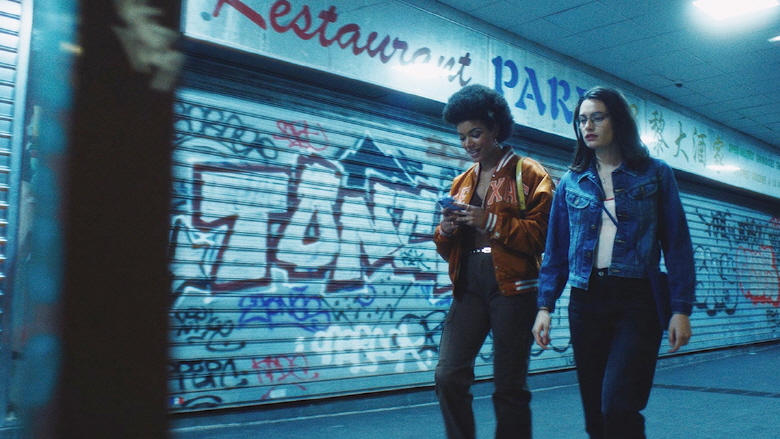
“Humanist Vampire Seeking Consenting Suicidal Person”, a Canadian French language film which was released as “I’ll Be a Very Creative Humanist Vampire” in South Korea a few weeks ago, is as amusing as suggested by its absurd title while also being surprisingly sweet at times. Mainly revolving around one young vampire girl’s personal struggle and following accidental romance, the movie dryly swings back and forth between humor and sincerity, and you will not probably mind several dark obligatory moments of sucking some human blood.

The early part of the film establishes how its heroine became a bit more sensitive than her vampire family members. Probably because of the personal trauma from what happened at her private birthday party many years ago, Sasha (Sara Montpetit) is not so willing to kill people for blood in contrast to her vampire families, and that naturally makes her into a big burden for them during next several decades. Despite hungry for blood as usual, she still refuses to kill even after growing old enough for trying to suck blood for herself, and that surely causes more headache for her parents.

However, Sasha comes to find a possible solution at one night not long after her cousin tries to push her more toward killing and then sucking blood. She comes across a notice on the support group for the depressed or suicidal, and she instantly goes to their meeting because she may feel less guilty about killing someone already inclined to kill oneself.

And that is where she comes across Paul (Félix-Antoine Bénard), a high school boy who previously encountered Sasha when he tried to commit suicide a few days ago. As frequently bullied by his schoolmates, Paul sees no reason to go on even though he has a caring mother who is unfortunately unavailable at times due to her busy hospital work, and he is not so afraid at all even when Sasha later tells more about her and her plan to kill him for blood.

Ironically, Sasha only comes to care more about Paul as he gets to know her. He remains suicidal as usual, but her vampire fangs still cannot come out due to her growing affection and compassion toward him, so she ends up spending more time with him as helping him feel a bit better. He wants to have some payback moments before his planned death, and she gladly assists him while still feeling conflicted about whether she can actually kill him in the end.

What follows next is a series of humorous scenes where Sasha and Paul come to bond more with each other via their little nocturnal adventure. As getting his revenge on several people who harassed him in one way or another, Paul finds himself becoming a bit livelier than before, and he and Sasha come to recognize more of how lonely they are. While Paul remains ready for getting bitten by her, Sasha hesitates more than before, and that surely makes their situation more complicated.

Of course, this is quite familiar to anyone who watched a number of vampire romance films including those Twilight flicks or more sophisticated ones such as “Let the Right One In” (2008) or “A Girl Walks Home Alone at Night” (2014), but the screenplay by director Ariane Louis-Seize and her co-writer Christine Doyon does its own things while taking its time for more humor and character development. Despite her inherent dark nature, Sasha’s private space is filled with a number of colorful stuffs, and there is a lovely scene where the camera simply observes how she connects more with Paul as showing more of herself to him. At one point, she even tries a bit of music for expressing more of her feelings in front of him, and that is one of the sweetest moments in the film.

It surely helps that the two lead performers of the film carry their movie with nice low-key chemistry. Sara Montpetit and Félix-Antoine Bénard ably complement each other via their characters’ contrasting personalities, and Montpetit does a solid job of balancing her vampire character well around comedy, horror, and pathos. On the opposite, Bénard is equally engaging as filling his role with enough sympathy and sensitivity, and we come to care more about him just like his accidental vampire girlfriend.

The movie could take more time on developing several supporting characters around the story, but the supporting performers fill their rather thin roles with enough personality at least. As Sasha’s more active cousin, Noémie O’Farrell has some fun with her character’s ruthless aspects, and that is why it is a bit surprising to see when her character shows some compassion to Sasha later in the story. As several other family members of Sasha, Steve Laplante, Sophie Cadieux, and Marie Brassard are also effective, and their characters come to us as rather likable persons despite their unspeakable nature. Yes, these vampires do kill people for blood, but they are also fairly nice and decent in addition to being very principled about their vampirism at least.

On the whole, “Humanist Vampire Seeking Consenting Suicidal Person”, which is also known as “Humanist Vampire Too Sensitive to Kill”, is a little but charming genre piece to cherish, and Louis-Seize makes a commendable feature film debut here after making several short films. Although this is essentially one-joke comedy movie, it has enough mood, style, and personality to justify its rather short running time (91 minutes), and it will be interesting to see what may come next from its director in the future.

Posted in Movies | Tagged , , , | Leave a comment

The Imaginary (2023) ☆☆☆(3/4): The adventure of one imaginary boy

Japanese animation film “The Imaginary”, which was released on Netflix in last week, will delight anyone who has enjoyed and admired those fabulous animation films from Studio Ghibli. While it does not surpass the better works of Studio Ghibli, the film is still filled with visual goodies to charm and impress you, and you will gladly go along with that while occasionally touched by its earnest storytelling.

At first, we get to know the relationship between a young girl named Amanda (voiced by Rio Suzuki) and her imaginary friend Rudger (voiced by Kokoro Terada), who is well aware of his existence as a piece of his dear friend’s boundless imagination. As Amanda imagines one thing after another in their little fantasy world, she and Rudger have one adventure after another, and it looks like nothing can possibly separate them, though Rudger knows well that their time will not last forever as Amanda grows up day by day.

Amanda is willing to share her imaginary friend with her recently widowed mother Lizzy (voiced by Sakura Ando), but Lizzy’s attention is mostly drawn to how to begin again after her husband’s death. Just like many adults, Lizzy does not believe much in imaginary friend although she did once have such an entity a long time ago as her mother tells her at one point. Nevertheless, she lets her daughter keep playing with her imaginary friend at least, while expecting that she will grow out of that someday.

Meanwhile, something unexpected occurs. Amanda and Lizzy are visited by a stranger who introduces himself as “Mr. Bunting” (voiced by Issey Ogata), and Amanda and Ludger are instantly alarmed because they see a shady ghost figure accompanying Mr. Bunting. It soon turns out that Mr. Bunting has a horrible purpose behind his back, and Amanda and Ludger consequently find themselves in a very dangerous situation.

Around that narrative point, the screenplay by writer/producer Yoshiaki Nishimura, which is based on the children’s book of the same name by A.F. Harrold, takes a sudden plot turn to our little surprise. After getting separated from Amanda due to an unfortunate incident, Ludger comes across a mysterious cat, and Jinzan (voiced by Takayuki Yamada) leads him to a secret place for numerous imaginary figures, which incidentally turns out to be a big public library. Led by a plucky girl figure named Emily (voiced by Riisa Naka), they happily exist and play together whenever they can, and they are certainly looking for any chance to be a temporary imaginary friend to any of those imaginative kids out there.

Needless to say, the film fills the screen with a heap of colorfully wondrous stuffs and details as Ludger gets to know more about his new world and its rules via Emily and his other new friends including a big pink hippopotamus named Snowflake (voiced by Mitsuaki Kanuka). Whenever the library is silent and empty at night, Emily and her fellow imaginary figures make a little fantasy town of their own, and it looks like nothing bad can happen as long as they stay together in this little haven of theirs. 

However, Ludger still misses Amanda, and he becomes all the determined to reunite with her even though their time is limited as before. As he goes out to the world outside, he is soon noticed by Mr. Bunting and his ghost associate, and the situation becomes more dangerous as Ludger and his fellow imaginary friends confront the dark imaginary power of Mr. Bunting.

Although the story becomes a bit shaky during its last act, the film continues to engage us with not only its lovely hand-drawn animation style but also the genuine emotions coming from its main characters. While there is undeniable poignancy in Ludger’s attempt to meet Amanda again, we are also moved as getting to know about how Amanda came to have Ludger after her dear father’s death, and there is a modest but powerfully emotional moment when her mother comes to understand her daughter’s grief more while also dealing with her own grief. When the story eventually reaches to the climax part, a lot of things are busily unfolded across the screen, but we still stay focused on the main characters and their drama, and the film also shows some sense of humor to brighten up the mood a bit, as shown from when Ludger comes into the imagination of a friend of Amanda at one point later in the film.   

The Japanese voice cast members are solid in their respective parts (Netflix has the other options including the American dubbing, of course). While Kokoro Terada and Rio Suzuki function well as the heart and soul of the story, they are supported well by several other voice cast members including Sakura Ando, Riisa Naka, Takayuki Yamada, Mitsuaki Kanuka, and Issey Ogata, who has a lot of naughty fun with his diabolical villain character.

“The Imaginary” is directed by Yoshiyuki Momose, who also previously worked in several works of Studio Ghibli just like his producer/writer. While it sometimes emulates the works of Studio Ghibli a bit too much, it has its heart in in the right place as doing its own things, and I sincerely hope that more animations films like this will come to remind us that the legacy of Studio Ghibli will continue to live even after its closing time.

Posted in Movies | Tagged , , , | Leave a comment

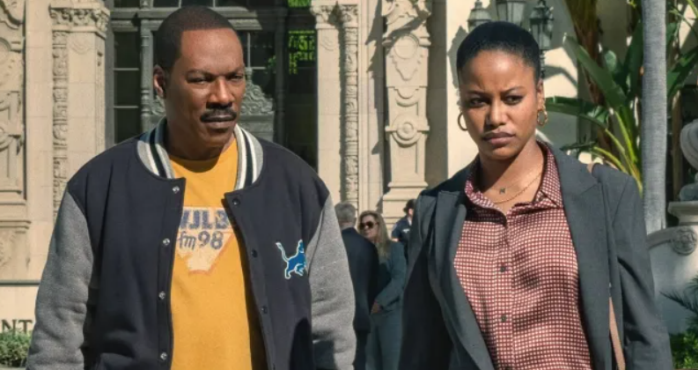
Beverly Hills Cop: Axel F (2024) ☆☆☆(3/4): Eddie Murphy still has it

Netflix film “Beverly Hills Cop: Axel F”, which was released in last week, shows that Eddie Murphy still has it, and I am glad about that. As the belated third sequel to “Beverly Hills Cop” (1984), the movie feels redundant to some degree, but it is actually better than the two preceding sequels in addition to simply letting Murphy demonstrate more of his enduring star quality, and the overall result is one of more entertaining Netflix products during last several months.

The screenplay by Will Beall, which is developed from the story by Beal and his co-writers Tom Gormican and Kevin Etten, mostly sticks to the story formula already established in the 1984 film. Not long after getting into another big messy incident in his hometown Detroit, Michigan, Murphy’s street-smart police character, Axel Foley, is notified that his estranged daughter Jane (Taylour Paige), who has worked as a successful lawyer in LA, is in a serious trouble due to her latest case, which is involved with some powerful Mexican drug cartel. In addition, his old friend Billy Rosewood (Judge Reinhold), who has worked as a private detective since leaving LAPD some time ago, is also involved in this situation, so Axel quickly comes to LA for some help, and then things turn out to be a bit more complicated than he thought at first.

Right from when he arrives in LA, Axel is not so welcomed by the local police or his daughter, who still remembers well how problematic their relationship was when they lived in Detroit. Because her current client must be proven innocent of the murder of a corrupt police officer who was delivering some drug with him at that time, she has no choice but to let her father help her a bit, and, what do you know, they turn out to work pretty well together as shown from one humorous scene where they must slip into a highly exclusive place for getting more information.

Meanwhile, the local police, which is now headed by Billy’s old partner John Taggart (John Ashton), is not so willing to delve more into the case, though Bobby Abbott (Joseph Gordon-Levitt), a young detective who was once very close to Jane, begins to sense something fishy as a number of suspicious things come out thanks to Axel. He is willing to know more from Axel, but Axel is not so sure about Abbott because he comes to find that there are a bunch of corrupt cops behind the case.

It is not much of a spoiler to tell you who the main villain of the story is, because it is so transparent to us right from when Kevin Bacon enters the screen. As virtually doing everything except having a mustache to twirl during his first scene, Bacon chews every juicy moment of his with gusto, and that surely brings some extra personality to the film.

Once it establishes Axel’s main opponents, the movie provides a series of well-made action sequences peppered with some sense of humor. There is an intense shootout scene where Axel surely shows that he is still not too old for his sh*t, and then there is a thrilling action sequence where Axel must depend on Abbott’s certain particular set of skills for getting away from those bad guys together.

Frequently predictable in terms of story and characters, the movie does not have much surprise for us, especially during the last act where lots of bangs and crashes happen occur across the screen. Nonetheless, it is constantly buoyed by Murphy’s considerable personality and talent. Because he recently had the 63rd birthday, you may wonder whether he is a bit too aged to play such a hyper-active cop like Axel, but your doubt will be instantly disappeared right from his very first scene in the film, and you will come to root for his character more even if you cannot help but think of all those collateral damages caused by Axel (How the hell did he manage not to lose his job despite causing so many troubles throughout all those years, I wonder?).

Several other main cast members in the film dutifully fill their respective spots around Murphy. Joseph Gordon-Levitt imbues his supposedly thankless supporting role with some wit and intelligence, and he also did a good job of functioning as a sensible counterpart to Murphy’s character. Although her character feels under-written in comparison, Taylour Paige, who has been more prominent thanks to her breakout performance in “Zola” (2020), is also solid, and she and Murphy ably convey well to us the long history of estrangement between their characters. In case of Judge Reinhold, John Ashton, Paul Reiser, and Bronson Pinchot, they gladly fill their respective familiar roles, and the movie certainly doles out a bit of nostalgia for its target audiences whenever their characters happen to be on the screen with Murphy.

In conclusion, “Beverly Hills Cop: Axel F” may be a little too late in its arrival, but it did its job fairly well under the competent direction of director Mark Molloy, who incidentally made a feature film debut here after making several commercials. I must tell you that another Netflix movie “Dolemite Is My Name” (2019) utilizes Murphy’s presence and talent more effectively, but “Beverly Hills Cop: Axel F” is still one of more enjoyable films in his rather uneven acting career, and it is certainly nice to see that he still can energize the screen as much as he did 40 years ago.

Posted in Movies | Tagged , , , , | Leave a comment

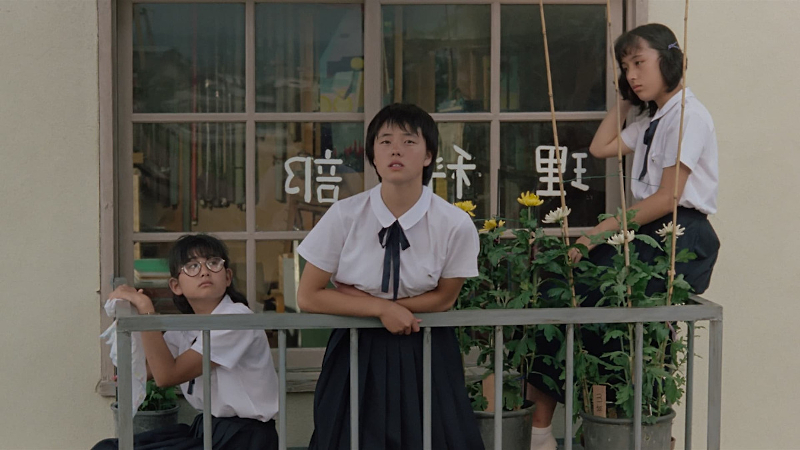
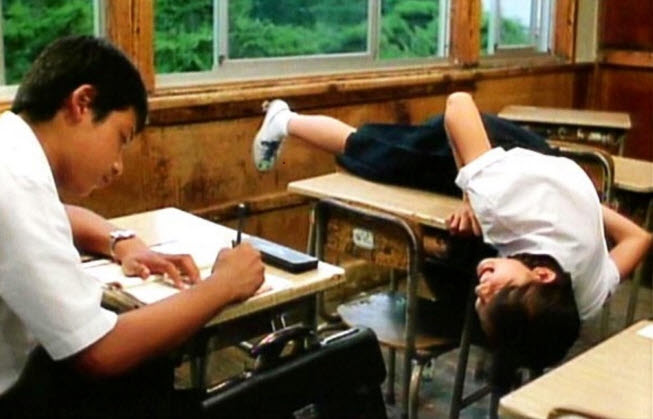
Typhoon Club (1985) ☆☆☆(3/4): As a storm is coming

Shinji Sōmai’s 1985 film “Typhoon Club”, which happened to come out around the time when John Hughes’ “The Breakfast Club” (1985), is an adolescent drama which turns out to be darker and more disturbing than expected. Watching some of its main adolescent characters being stuck inside their school later in the story, you may be reminded a bit of “The Breakfast Club”, but the movie goes for something far less cheery, and its haunting moments of anxiety and frustrations will linger on your mind for a while.

Mainly set in some rural town outside Tokyo, the movie opens with a group of middle school girls trying to have a little fun nighttime at the swimming pool of their school. As they freely dance together around the swimming pool, it soon turns out that there is a boy in the swimming pool, and the girls’ following thoughtless prank on this boy leads to an unfortunate incident which actually could kill him.

As the next day begins, we get to know more about the girls, the boy, and his two male classmates. It is clear to us that one of the girls, Rie (Youki Kudoh), likes one of the boy’s two friends, but Mikami (Yuichi Mikami) is not particularly interested in being more than a close friend to Rie, mainly because he is more occupied with studying more for going to a good high school later.

However, Mikami does not know what to do with his life except doing whatever he is expected to do by his parents, and his two male friends have no idea either as being more aware of being hopelessly stuck in their town just like many others in the school. At one point, we see one of them showing a rather disturbing behavior when he enters his shabby family home, and we later come to have a fairly good idea on what has been going on between him and his father, who is clearly your typical alcoholic loser.

Meanwhile, the girls turn out to be as anxious and frustrated as the boys. They try some transgression to distance themselves from their growing daily ennui, and we are not so surprised when two of them try a bit on their burgeoning curiosity on sexuality. In case of Rie, we observe more of how much she is troubled behind her perky façade, but Mikami remains oblivious to that as usual while being mired in his own ennui, and that eventually prompts her to do something quite drastic later in the story.

As these main adolescent characters aimlessly sway in one way or another, we become more aware of the absence of any good adult to guide or support them. We seldom see their parents throughout the film, and their schoolteachers are not particularly interested in them except shepherding them to the next level of their education process. In case of their mathematical teacher, we get an absurd scene where his students come to learn more about how pathetic he really is, and they surely come to respect him much less than before.

While leisurely doling out one episodic moment after another along the narrative, Yuji Kato’s screenplay slowly dials up the level of emotional tension with a big typhoon approaching to the town hour by hour. Around the point where the eventual storm warning is announced, things get a lot more intense, and then there comes a very disconcerting sequence where one of the girls is terrorized and then physically violated to some degree by one of the boys.

Even at that point, the movie firmly maintains its phlegmatically sobering attitude while refusing to allow any easy way out for its adolescent main characters. When Mikami and his several classmates get themselves trapped inside the school as the typhoon is raging more and more outside, they feel more frustrated than ever, but their following attempts for any emotional ventilation do not give them much catharsis at all, and their drab reality is about to return on the very next day.

Their desperate emotional struggles are not so pleasant to watch to say the least, but they are handled with enough care and sensitivity under Sōmai’s skillful direction, and the same thing can be said about the subplot involved with Rie’s misadventure outside the town. There is an uncomfortable indoor scene between her and one adult guy, but it is presented with considerable tactfulness at least while unnerving us a lot for good reasons. I also appreciate how Sōmai and his crew members including cinematographer Akihiro Itô shows some restraint in case of a striking scene involved featuring full frontal nudity and lots of rains, and you will be relieved to know that they really took some caution in advance for shooting this highly risky scene.

Overall, “Typhoon Club” will catch you off guard as a sort of antithesis to “The Breakfast Club”, so you probably should know in advance what and how it is about. I must confess that I felt a bit impatient during my viewing, but I eventually came to accept its thoughtful approach to story and characters, and I become more interested in checking out several other works of Sōmai, who surely deserves more attention considering how he has been cited as a major influence to many different current Japanese filmmakers such as Hamaguchi Ryûsuke and Kuorsawa Kiyoshi. It does feel like an acquired taste, but the movie is still worthwhile to watch for its mood and storytelling, and it will certainly surprise you especially if you are looking for something different.

Posted in Movies | Tagged , | Leave a comment

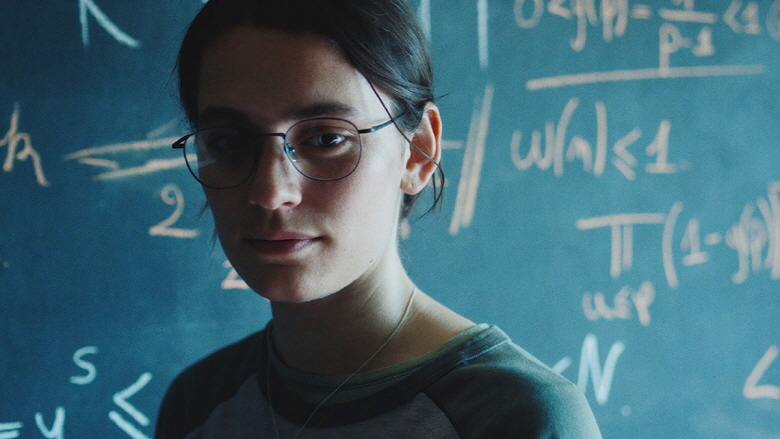
Marguerite’s Theorem (2023) ☆☆☆(3/4): A young mathematician rising from the bottom.

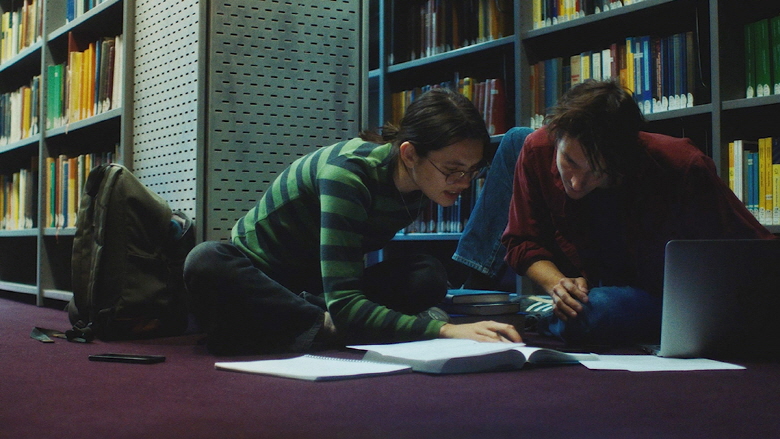
“Marguerite’s Theorem” engaged me more than expected even though I did not know that much about Goldbach’s conjecture, which has been one of the most challenging mathematical matters for more than 250 years. As closely and intimately sticking to its brilliant but vulnerable heroine’s state of mind, the movie lets us understand and emphasize more with what makes her tick, and we accordingly care more about her and her immensely demanding academic project.

 At the beginning, the movie observes its math prodigy heroine, Marguerite Hoffmann (Ella Rumpf), preparing for what may be a big breakthrough for her academic career, and she is alternatively confident and anxious about what she has been strenuously working on during last several years under her thesis director’s guidance. While she is almost sure about the success of her upcoming thesis presentation on Goldbach’s conjecture, she is also well aware of any possibility of error, but then she hesitates to get some help from Lucas (Julien Frison), a hunky male student who recently moves to her graduate school for studying under her thesis director.

When her thesis presentation eventually begins, Marguerite tries her best for presenting the result of her mathematical study, but, alas, it soon turns out that there is a big error she should have noticed from the very beginning. Quite overwhelmed by this glaring error of hers, Marguerite walks away from her academic audiences, and then she decides to quit her study and then leave her graduate school after her thesis director, who is clearly not so pleased about her academic breakdown, recommends her to study under some other professor in the department instead.   

Although she does not know what to do next for her future, Marguerite gradually comes to find a way to climb up from the bottom for now. First, she gets a cheap place to stay thanks to Noa (Sonia Bonny), a young dancer she happens to befriend later. Second, she becomes quite interested in a Chinese poker game named Mahjong via the Chinese landlord of her current staying place, and, what do you know, she soon discovers that she is pretty good enough to earn some cash as playing Mahjong on behalf of her Chinese landlord. 

Not so surprisingly, as her brain is frequently working on the probabilities associated with Mahjong games, Marguerite slowly finds her mathematical groover back. Once she gets a small but compelling idea on proving Goldbach’s conjecture in the middle of one Mahjong game, her mind is instantly driven by the tantalizing possibilities coming from that idea, and she is all the more motivated when she comes to learn later about what her former thesis director and Lucas have been working on at present.

Meanwhile, just like many other smart but socially awkward people, Marguerite comes to learn more about how to interact more with others around her, who remind her in one way or another that there is more to life than mathematics. Noa gladly shows Marguerite how to have more fun outside whenever she is not working on her new academic project, and there is a little amusing scene where Marguerite comes to have her first moment of sexual orgasm via the impulsive encounter with a total stranger. After having a moment of reconciliation with Lucas, Marguerite suggests that he should join her ongoing academic project, and she surely comes to learn the value of academic collaboration while working with him more and more.

Now you probably have a good idea on where its story and characters are going, but the screenplay by director Anna Novion and her co-writers Mathieu Robin, Marie-Stéphane Imbert, and Agnès Feuvre does not hurry itself as leisurely adding more details to its story and characters. Later in the story, we get to know more about Marguerite’s rather strained relationship with her mother Suzanne (Clotilde Courau), and it is poignant to see how they come to find a way to reconnect with each other later in the story. In case of Marguerite’s former thesis director, he was inarguably not so considerate to her when she hit the bottom at that time, but he still respects her academic talent and passion at least, and he simply steps aside when Lucas needs more time for working with Marguerite. 

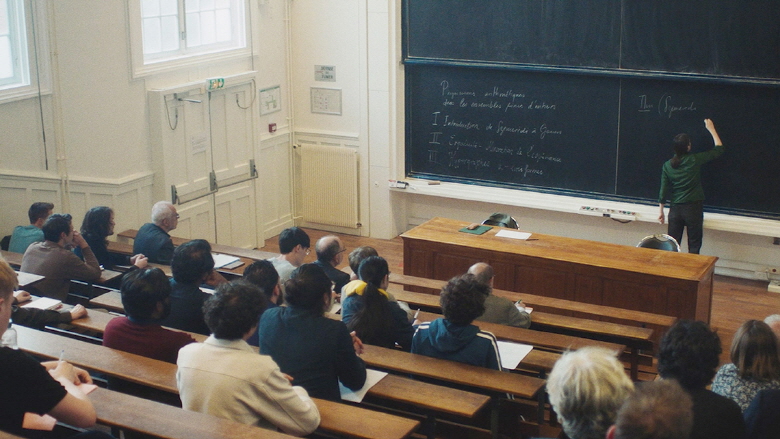
Although the finale is a bit too convenient in my humble opinion, it still works under Novion’s competent direction. Unless you studied mathematics at university or graduate school, you will probably do not understand much of whatever our heroine is passionately writing on several big blackboards, but you will come to pay more attention to the joy and excitement felt by her, and Ella Rumpf, who previously appeared in Swiss film “The Divine Order” (2017), is believable in her character’s intense academic process unfolded across those big blackboards. As a matter of fact, Novion consulted with French mathematician Ariane Mézard for the more realistic depiction of mathematical works in the film, and Mézard actually made some real academic progress on Goldbach’s conjecture while collaborating with Novion. 

In conclusion, “Marguerite’s Theorem” is a modest but touching human drama which balances itself well between the matters of heart and mind, and you may get some understanding on why those challenging mathematical problems such as Goldbach’s conjecture have always fascinated and excited those smart and intelligent people like its heroine. While these problems may not be solved all even at the end of the human civilization, they will keep trying to the end as many others did before, won’t they?

Posted in Movies | Tagged , | Leave a comment

Ultraman Rising (2024) ☆☆☆(3/4): Bringing up baby

Netflix animation film “Ultraman Rising”, which was released a few weeks ago, is as silly and serious as it can be. Based on a famous Japanese superhero franchise, the film tries a cheerful mix of comedy, action, and drama, and the result is engaging enough for us to get amused and then care about the unexpected relationship at the center of the story.

 At first, the movie establishes its hero’s rather demanding circumstance. On the surface, Kenji Sato (voiced by Christopher Sean) is just a popular baseball player who suddenly decides to move back to Tokyo, Japan despite his promising Major League career in US, but he has a little secret personal reason behind his back. His aging father, Professor Sato (voiced by Gedde Watanabe), wanted Kenji to succeed him as the next Ultraman, and, in spite of a long time of estrangement between them, Kenji agrees to come to Tokyo and defend the city from those big monsters just like his father did for many years.

 It seems that he can easily go back and forth between his two occupations without much difficulty, but then there comes another unexpected work for him. Not long after he fights with the latest monster coming upon Tokyo, Kenji happens to acquire an egg belonging to that monster, and, what do you know, a little cute baby monster soon comes out that egg. Mainly because of its hyper-cuteness, Kenji has no choice but to bring this baby monster to his secret lair, and, after discussing with his AI assistant, he decides to take care of the baby monster for a while at least. 

What follows next is a series of comic moments involved with Kenji’s clumsy attempt to raise the baby monster while keeping going with his two big jobs. Despite the considerable help and support from Mina, it is often quite exhausting for Kenji to handle the baby monster day by day, and I am sure that my younger brother and his wife, who recently had a baby girl, will sympathize with Kenji a lot for good reasons. Just like my little niece, the baby monster frequently needs lots of care everyday (My favorite part is involved with its gooey excrement, by the way), and raising this little monster is surely a more daunting task for Kenji compared to playing baseball or fighting against those big monsters.

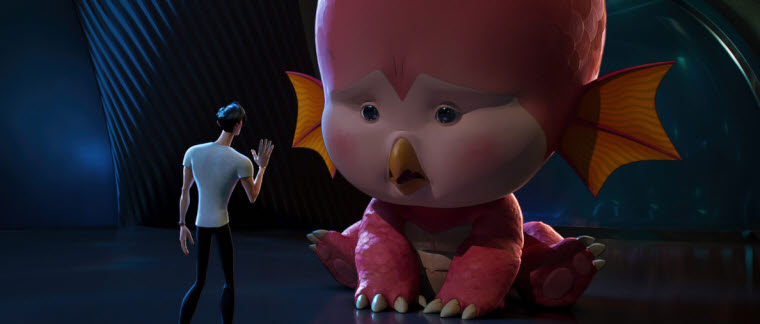
Meanwhile, it is gradually revealed that the baby monster is in a serious danger. The local military organization led by a vengeful doctor is looking for the baby monster because it can lead them to a certain hidden spot where those big monsters inhabit, so Kenji must protect the baby monster more than ever, though, like any babies, the baby monster becomes more difficult to handle as it grows day by day. Although it is pretty much smaller than its mother, it soon becomes able to fly for itself, and it also begins to show its natural abilities including sputtering a destructive ray.

As he tries his best as the baby monster’s surrogate parent, Kenji, who has been your average cocky lad, comes to learn more about being a real adult, and that eventually makes him reconnect with his father, who is willing to help his son as much as possible despite his weakening physical condition. Furthermore, Kenji comes to befriend a young female sports journalist who is incidentally a single mother who has tried to raise her little adorable daughter (This little girl is a big fan of Ultraman, by the way), and they come to make some connection between them as he gets more advice from her, though he cannot possibly tell her anything about what he has been struggling to do as Ultraman.

Around the third act, the screenplay by director Shannon Tindle, who previously adapted William Joyce’s “Ollie’s Odyssey” into Netflix animation miniseries “Lost Ollie”, and Marc Haimes, goes for more action as expected. While apparently influenced by several recent monster movies such as “Pacific Rim” (2013) and “Godzilla vs. Kong” (2021), the action sequences in “Ultraman Rising” are also colorfully stylish in addition to being intense and exciting enough for us, and it does not even hesitate to use a bit of comic book style for more dramatic impact.

Nevertheless, the film stays focused on its story and characters as usual. How Kenji’s ongoing daddy issues are eventually resolved is rather predictable, but it is handled well with enough sincerity at least, and the same thing can be said about his relationship with the baby monster. Besides brightening up the mood whenever it appears on the screen, the baby monster becomes more endearing to us along the story, and we can see how much Kenji grows up as trying to raise this big baby. In case of the main villain of the story, this character turns out to be driven by an understandable personal motive, and you may come to feel a bit sorry around the end of the story.  

 Although it is more or less than your typical superhero origin story on the whole as reflected by what is briefly shown during its end credits, “Ultraman Rising” is a fairly good one at least. I must confess that I am vaguely familiar with that Japanese superhero franchise, but I was entertained enough thanks to its competent handling of style, action, and story, and I also appreciated the good efforts from its main voice cast members including Christopher Sean and Gedde Watanabe. In short, this is one of the more enjoyable offerings from Netflix during this year, and I am willing to watch whatever may come next after this solid beginning.

Posted in Movies | Tagged , , , , , | Leave a comment

Kill Room (2023) ☆☆☆(3/4): A killing art business

I still remember when I looked around the Contemporary Art section of the Art Institute of Chicago in April 2010. Many of those artworks in that section looked pretty valuable as far as I could see, but I often wondered whether they were simply profound or profoundly simple, and this musing of mine still amuses me even at this point.

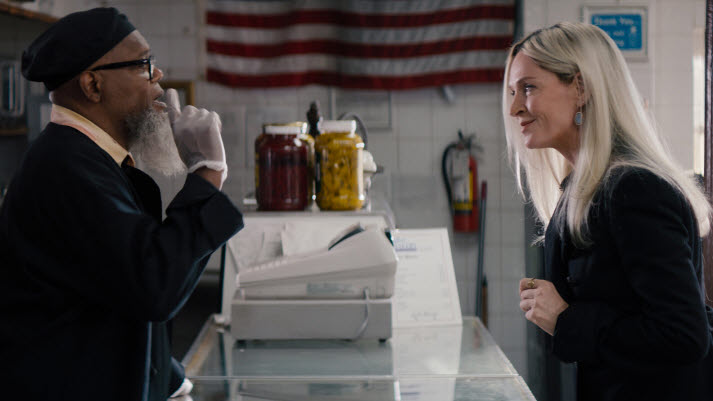
And that is why I was quite tickled when I watched “Kill Room”, which is now available on Netflix in South Korea. Although it does not fully push its absurd juxtaposition of crime and art to the end, the movie still provides a number of delicious comic moments making a big naughty fun on the world of art dealing business, and you will be more amused if you are familiar with how things can be pretty silly and outrageous in that business field.

The early part of the movie establishes how things have been desperate for Patrice (Uma Thurman), the owner of a prominent art gallery in New York City. There was a time when her art gallery was one of the hottest ones in the city, but it has often been surpassed by many of its competitors, and she is also losing some of her biggest artists and clients just because she and her art gallery do not look that cool anymore.

Meanwhile, we also meet Reggie (Joe Manganiello), who has worked for years as a killer under a certain big criminal organization in the city. Although he does not like much his criminal occupation, he has no choice from the beginning because of a personal reason explained later in the story, and we see how he handles his latest job as instructed by Gordon (Samuel L. Jackson), his longtime handler who has incidentally run a little bakery shop as his front business.

On one day, Gordon suggests one supposedly good idea for the money-laundering process of their criminal organization. Considering how artworks are purchased at very high prices in the city everyday without drawing much attention from IRS, they can hide the transaction of their dirty money behind the frequent dealing process of an art gallery, and Patrice’s gallery comes handy to Gordon thanks to her drug dealer who happens to one of Gordon’s associates. While initially rejecting Gordon’s offer, Patrice is reminded again of how she and her gallery are on the verge of bankruptcy, so she eventually agrees to work along with him.  

It goes without saying that they need the artworks to cover their money-laundering business from the very beginning, and Reggie comes to take the job although he does not know anything about painting. Because the paintings do not have to be good at all, he can freely draw as inspired by whatever he thinks or feels, and both Gordon and Patrice have no problem with that as long as the money keep flowing around them.

However, Reggie’s paintings turn out to be much more successful than he and his associates can possibly imagine. Mainly because his first paintings are sold at very high prices, everyone in the town naturally pays more attention, and they are actually all the more interested and fascinated as Patrice understandably tries not to say much about her hot new artist.

As quite confounded by this unexpected fame and popularity, Reggie gradually finds his little artistic spirit growing further and further. While trying to provide more artworks, he also comes to express himself more into these artworks, and there is a darkly amusing moment when Patrice comes upon a sudden moment of horrible epiphany on what the latest artworks from him are actually about. After all, the main purpose of art is expression and communication, and she surely gets it in a rather unpleasant way.  

Around that narrative point, the screenplay by Jonathan Jacobson becomes conventional as Patrice and Reggie struggle to find to get out of their complicated situation, and that is where the movie comes to lose some of its comic momentum. The last act, which is unfolded at a big convention held in Miami, Florida, is a bit too neat and convenient, and the movie also does not utilize well several notable supporting performers such as Maya Hawke and Debi Mazar.

At least, the movie is buoyed by its three charismatic main performers. While Joe Manganiello dutifully holds the ground as a man who happens to get a chance for emotional ventilation via his, uh, primitive art, Uma Thurman and Samuel L. Jackson constantly bring a sense of humor to the film. Thurman, who also participated in the production of the film, somehow makes her neurotic character more sympathetic than expected, and Jackson, who incidentally appeared along with Thurman in Quentin Tarantino’s “Pulp Fiction” (1994) 30 years ago, is clearly enjoying his colorful role, and it is always engaging to see how smoothly he and Thurman handle several comic scenes between them.  

In conclusion, “Kill Room” is not without weak points, but its strong parts are good enough to compensate for that, and director Nicol Paone, who previously debuted with “Friendsgiving” (2020), did a good job of maintaining the lightweight mood for the story and characters. It could do more, but I got a fair share of fun and entertainment, so I will not grumble for now.

Posted in Movies | Tagged , , , , , | Leave a comment

Handsome Guys (2024) ☆☆1/2(2.5/4): Jae-Pil & Sang-goo vs. Evil

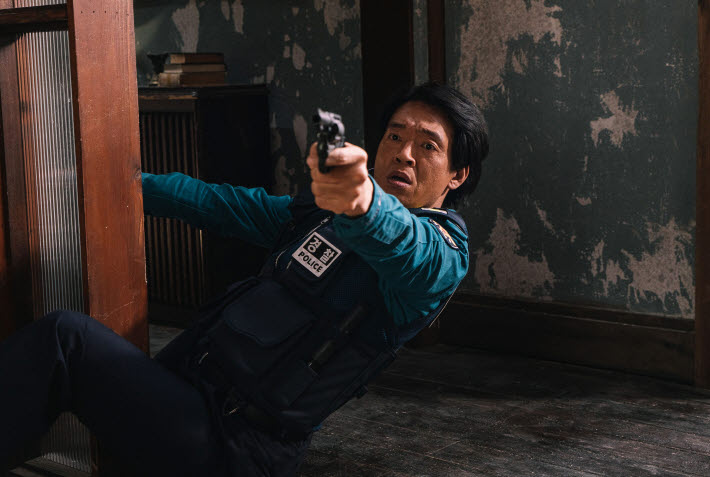
South Korean film “Handsome Guys”, a remake of “Tucker and Dale vs. Evil” (2010), attempts to transplant American horror elements to a new local background, and it succeeds to some degree in my inconsequential opinion. While mostly faithful to the original American version, the movie also tries to do several new stuffs to my little amusement, and the result often elicited laughs and chuckles from the audiences around me when I watched it at a local movie theater yesterday.

At the beginning, we are introduced to a couple of dudes who look rather unpleasant and suspicious on the surface. When these two guys happen to drop by a supermarket located in some country area, they come across a bunch of young people who come to the area for having a little rural vacation together, and they instantly give a bad impression to these young people.

However, these two dudes, Jae-pil (Lee Sung-min) and Sang-goo (Lee Hee-jun), are actually fairly nice guys who are sadly rather dim about how they often look to others. They simply come for buying a little house located in the middle of a nearby forest area, and, though it does not look exactly promising to say the least for many glaring reasons, they decide to buy it anyway because, as professional carpenters, they can fix here and there in the house while beginning to settle there.

Meanwhile, we also get to know a bit about those young people shown early in the story. As they have some fun during the following evening, their leader turns out to be quite an unpleasant lad, and Mi-na (Gong Seung-yeon), a young woman who happens to accompany him and his friends, becomes very angry and disappointed to know how she is actually disregarded by them. When she later comes to a nearby lake for letting out her feelings alone, Jae-pil and Sang-goo happen to be fishing right there, and, what do you know, they inadvertently causes a little unfortunate accident which leads to Mi-na becoming unconscious for a while.

Anyway, Sang-goo and Jae-pil take Mi-na to their house because any decent persons would do under this situation, and that is the beginning of a series of disastrous misunderstandings. Just because it looks like Jae-pil and Sang-soo kidnap her, the rest of her group attempt to ‘rescue’ Mi-na, and the leader is particularly concerned about his smartphone which happens to be in her possession. This smartphone contains some very sensitive materials which can ruin his life and career once for all if they ever get leaked in public, and he is already quite determined to retrieve it by any means necessary.

What follows next is not so far from the original American version, though the movie presents these expected moments with a bit of extra creativity. I did laugh as observing how a certain comic scene involved with a hidden hornet’s nest handled with a bit more shock and laugh, and I was not certainly disappointed at all in case of the hilariously gory moment involved with a woodchipper, which takes me back to that infamous scene in the Coen Brothers’ great film “Fargo” (1996) again.

Meanwhile, the movie gradually begins to take a different route during its second part. If “Tucker and Dale vs. Evil” lampoons “Friday the 13th” (1980) and its countless sequels and imitators, “Handsome Guys” goes for Sam Raimi’s little cult horror film “Evil Dead” (1981) and its many other variations out there. As already shown to us in advance, the house has the basement full of disturbing stuffs including what is clearly a portal to Hell, and a certain powerful dark force naturally starts to gather around the house once the portal gets activated step by step along the story.

Around the point where it pulls all the stops for more horror and laugh, the movie becomes rather shaky with low-budget special effects, but it continues to amuse us mainly thanks to the solid comic performances from its several main cast members. As the South Korean variation of hillbilly characters, Lee Sung-min and Lee Hee-jun look convincing in their deliberately shabby appearance, and their comic chemistry is as effective as Tyler Labine and Alan Tudyk in the original American version. Jae-pil and Sang-goo are sometimes silly and pathetic, but they somehow come to us as likable guys, even though we shake our head for their total obliviousness to how they do not look as handsome as they think.

Between her two co-stars, Gong Seung-yeon holds her own spot well in addition to playing her role as straight as possible, and Park Ji-hwan and Lee Kyu-hyung are well-cast as a couple of local policemen who gets deeply involved into Sang-goo and Jae-pil’s increasingly messy circumstance. The special mention goes to a dog which plays Sang-goo’s pet dog, and it always steals the show from the human performers in the film for its plain cuteness.

On the whole, “Handsome Guys”, which is directed and written by Nam Dong-hyub, is a fairly watchable remake mainly thanks to the good efforts from its main cast members. I give it 2.5 stars because 1) I gave “Tucker and Dale vs. Evil” 3 stars and 2) it is not as refreshing as that in addition to not being totally successful in its own variations in story and characters, but you may want to check it out someday if you enjoyed its original American version.

Posted in Movies | Tagged , , , | Leave a comment

Mean Girls (2024) ☆☆1/2(2.5/4): It’s a musical this time…

2024 film “Mean Girls” has a rather complex history just like the recent movie version of “The Color Purple” (1985). It is the movie adaptation of the acclaimed Broadway musical of the same name, which is inspired by the 2004 film of the same name which is based on Rosalind Wiseman’s book “Queen Bees and Wannabes”. Nevertheless, the movie is pretty much same as the 2004 film except some updated details and a bunch of musical numbers, and I enjoyed the overall result to some degree even though I often wondered about the necessity of its existence during my viewing.

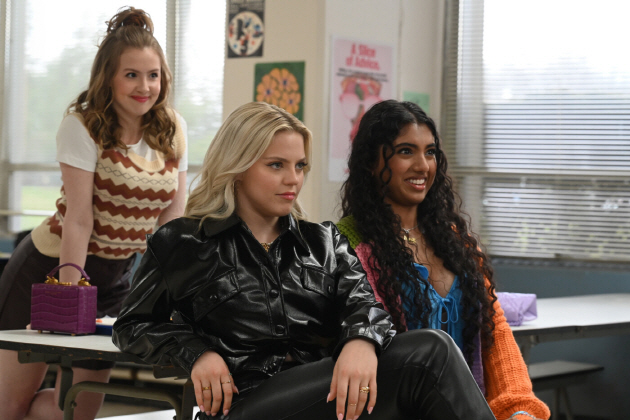
As humorously told to us via its opening number, the story is a sort of cautionary tale about your average American high school life. Our young heroine, Cady Heron (Angourie Rice), feels insecure and anxious as beginning her first high school day, and we see how she cannot help but draw attention from many other students as a newly transferred student who has been incidentally homeschooled by her wildlife researcher mother in Africa for years. Not so surprisingly, she eventually befriends two distinguished loners in the school who are also defiantly queer in each own way, and Janis (Auliʻi Cravalho) and Damien (Jaquel Spivey) willingly take her under their wing as informing her a bit about a number of various groups (or tribes, shall we say) in their high school.  

Along with her, we come to learn that the most notable group in the school is a trio of sassy girls: Regina (Reneé Rapp) and the other two girls who have been more or less than her ladies-in-waiting. As the de facto queen bee of the school, Regina surely enjoys her power and influence over many other students, and we accordingly get an amusing musical scene as she sings about how much she enjoys her power and influence.  

Because of some old personal resentment toward Regina, Janis suggests a rather mean plan when Cady happens to draw the attention from Regina and Regina seems willing to make Cady into another underling of hers. While ingratiating herself more with Regina and her group, Cady is going to look for any opportunity to humiliate Reina in public, and Cady agrees to do that because she does not like Regina and her underlings from the beginning.

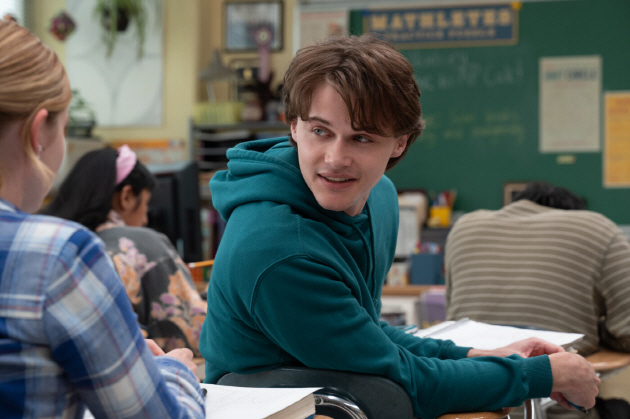
However, of course, things get become a bit more complicated for Cady due to two reasons. First, as getting closer to Regina and her underlings, she cannot help but feel seduced more and more by their supposedly cool appearance as well as their power. Second, she becomes attracted to a certain hunky student who happens to attend her mathematics class, but, what do you know, it turns out that he was once close to Regina, who will not definitely allow him to get closer to her latest underling.

Therefore, Cady becomes more determined to undermine Regina by any means necessary, and Janis and Damien have no problem with going along with that at all. One of the funniest things in the film is involved with a certain kind of nutrient bar which Cady deliberately recommends to Regina, and we surely get some laugh when the movie delivers an expected punchline moment later in the story. 

Not so surprisingly, things eventually get quite vicious when Regina belatedly comes to realize what Cady is doing behind her back. Reneé Rapp, who already played her character in the Broadway production during 2019-2020, delightfully commands every moment of hers with infectious gusto, and her delicious comic performance is certainly one of the best things in the film just like Rachel McAdams in the 2004 version.

In contrast, Angourie Rice is easily eclipsed by many of her fellow cast members including Rapp. Compared to Lindsay Lohan in the 2004 version (She makes a brief appearance around the end of the film, by the way), Rice is rather colorless in terms of presence and personality, but her earnest acting holds the center as required, and she also handles wells several musical numbers assigned to her character.

Around Rapp and Rice, the movie assembles a bunch of colorful performers who bring some extra humor and personality to the film in one way or another. Auliʻi Cravalho, who has been more notable since her wonderful voice performance in Oscar-nominated Disney animation film “Moana” (2016), fills her supporting character with enough pluck and defiance, and Jaquel Spivey, who has been mainly known for his Tony-nominated performance in Broadway musical “A Strange Loop”, complements Cravalho well as her character’s best friend. While Avantika Vandanapu and Bebe Wood have each own moment as Reina’s two underlings, Jenna Fischer, Tim Meadows, and Tina Fey, who also produced the film and wrote the screenplay as she did in the 2004 film, dutifully fill their respective supporting parts, and you will probably also enjoy the cameo appearance of some other recognizable performers.   

On the whole, “Mean Girls”, which is directed by Samantha Jayne and Arturo Perez Jr., is not totally necessary in my inconsequential opinion, though it is not entirely without fun and entertainment at least. Because I still would rather recommend the 2004 version first, I give the movie only 2.5 stars, but you may enjoy and appreciate its good parts more than I did, and I will not stop you at all if you simply want to spend some free time.

Posted in Movies | Tagged , , , | Leave a comment

A Quiet Place: Day One (2024) ☆☆☆(3/4): The First Days of the End

“A Quiet Place: Day One” is inherently redundant, but it is mostly competent enough to hold our attention at least. As the prequel to John Krasinski’s “A Quiet Place” (2018) and the following 2020 sequel, it does not have anything particularly new or fresh to surprise us, but it is supported well at least by the diligent efforts from its cast members, who try their best with their rather thin materials.

The opening part of the film, which is incidentally its best part, shows how things have not been that good for Samira (Lupita Nyong’o), a young female poet who has been spending her remaining days at a hospice outside New York City due to her terminal illness. Although her counselor and fellow terminal patients sincerely try to support her, Samira cannot help but feel bitter and angry about her impending mortality and worsening illness, and she is not so eager when she is asked to attend a little theater performance to be held in the middle of the downtown area of New York City.

It is not long after Samira and others saw the performance that something suddenly goes terribly wrong in the city. As she struggles to grasp what the hell is going around her after a sudden big explosion occurs, the movie deliberately evokes the aura of fear and confusion reminiscent of the aftermath of the 9/11 incident, and then she sees people swiftly attacked and then killed by those hideous alien creatures introduced in “A Quiet Place”. They do not have eyes, but they can hear pretty well in addition to moving quite fast, and they are ready to go for anything making noise.

Fortunately, Samira manages to hide inside the theater where a number of other lucky people including her counselor are hiding, and she instantly gets the rule for survival: Never make any loud noise which can instantly attract the alien creatures. While she and others around her stick to this golden rule hour by hour, things get more despairing as the city is totally isolated from the outside as all the big bridges in the city are destroyed because the alien creatures happen to be unable to swim, and their only chance for survival is a nearby port where several ships are ready for them and many other survivors.

Like the main cast members of “A Quiet Place” and its 2020 sequels, the performers of “A Quiet Place: Day One” are required to convey a lot to us without much dialogue, and they did a good job of silently embodying their fear and anxiety. Lupita Nyong’o, who is no stranger to genre films as shown from her masterful duo performance in Jordan Peele’s “Us” (2019), gradually establishes her character while looking believable in a series of suspenseful scenes in the film, and Djimon Hounsou, who previously appeared in the 2020 sequel film, and Alex Wolff are mostly solid although they are limited by their under-developed roles.

The screenplay by director/writer Michael Sarnoski, which was developed from the story written by him and Krasinski, trudges a bit during its middle part, but it patiently builds up more of the post-apocalyptic circumstance surrounding its heroine and several other characters. After becoming quite determined to do something personal before she eventually dies in one way or another, Samira embarks on a perilous journey for herself later in the story, and we observe more of the stark and barren background where the alien creatures can suddenly pop out for any unfortunate noise.

Not so surprisingly, the alien creatures are the weakest element in the story again. Although the movie attempts a bit to provide some biological details on these horrible creatures at one point, they are not particularly memorable in my humble opinion, and I must tell you that Samira’ pet cat has much more personality in comparison. While it does not seem to be particularly traumatized by what is going around it, this cute cat effortlessly steals the show as noiselessly following and comforting its owner, and we come to care about it as well as Samira. As reflecting more on their close emotional bond, I wonder whether the supporting character played by Joseph Quinn, who comes to accompany Samira just like her cat after getting some help from her, is actually necessary from the beginning.

The movie is the second feature film from Sarnoski, who previously impressed me and lot with his previous film “Pig” (2021). That movie looks simply conventional at first but then becomes quite sublime mainly thanks to Sarnoski’s thoughtful direction and one of the best performances in Nicolas Cage’s career. Compared to that, his second film is relatively more conventional without having much to distinguish itself from its predecessors, and that is two or three steps down from Sarnoski’s considerable achievement in “Pig”.

Nevertheless, “A Quiet Place: Day One” is not entirely without good things to enjoy even though it is not better than its two predecessors. I gave “A Quiet Place” 3.5 stars while handing 3 stars to its 2020 sequel, so I should give 2.5 or 3 stars to “a Quiet Place: Day One”. and I choose to rate it with 3 stars mainly because of another good performance from Nyong’o and that cute cat. Although she did not like cats much, she tried her best for interacting well with the cat on the set, and, what do you know, she eventually adapted it later. Regardless of whether you like the movie or not, we all can agree that is the best thing coming out of the movie, can’t we?

Posted in Movies | Tagged , , , | Leave a comment