Saturday Night (2024) ☆☆1/2(2.5/4): A very typically crowded backstage tale

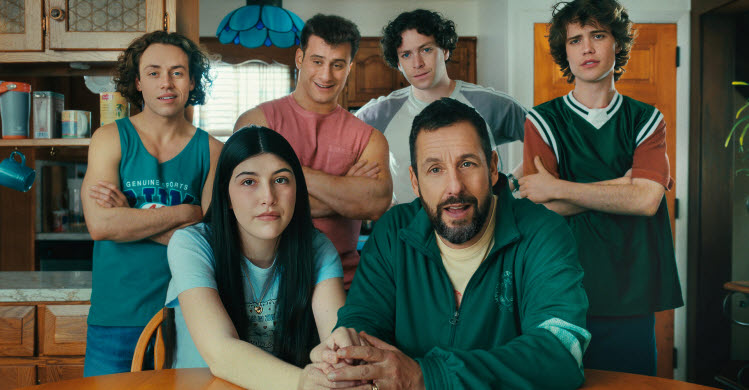
I do not know that much about its main subject, but I can tell you at least that Jason Reitman’s latest film “Saturday Night”, which is currently available on Netflix in South Korea, is a very typically crowded backstage tale. Mainly revolving around the premiere of one important American TV comedy sketch variety show in 1975, the movie throws and juggles a lot of stuffs in the air, but I doubt whether any of these supposedly interesting stuffs will linger on your mind after the very last shot of the film.

At the beginning, the movie, mostly set in NBC Studios in New York City during the late night of October 11th, 1975. introduces us to Lorne Michaels (Gabriel Labelle), a rather inexperienced but ambitious young TV producer quite determined to give a night to remember for the American TV audiences as well as him and many others around him. After managing to gather a bunch of young, talented, but relatively unknown comedians, he and his colleagues have prepared a lot for what these comedians are soon going to do on live TV during the next 90 minutes, and everyone is quite nervous because, well, there was nothing like that before in the American TV broadcasting history and they are certainly taking a big chance as entering a new territory.

Nevertheless, Michaels is ready to try anything for the successful premiere of “Saturday Night”, which would be later known as, yes, “Saturday Night Live”. Although it becomes more apparent later that NBC is simply using his nascent TV show as a bargaining chip for its ongoing contract negotiation with Johnny Carson, he is not daunted by that at all, and many of his colleagues including his wife/professional partner Rosie Shuster (Racheal Sennott) are also willing to try their best for their approaching big time on live TV.

Of course, things are not going that well for Michaels and his colleagues as their showtime is approaching second by second. While it is often hard and difficult to get their comedians including John Belushi (Matt Wood) under control, there comes one technical problem after another on the set of “Saturday Night”, and arranging all those planned comedy sketches into the 90 minutes given to them looks relatively easy compared to the accumulating troubles here and there around the set. 

And Michaels gets all the more pressured by NBC, which is mainly represented by David Tebet (Willem Dafoe). At first, this supposedly benevolent NBC executive seems to be his biggest ally in NBC Studios, but he may eventually give the spot reserved for “Saturday Night” to Carson at the last minute if it ever looks not so promising to him at any chance.

While Micheals constantly struggles to get everything under control as much as possible, the screenplay by Reitman and his co-writer/co-producer Gil Kenan also presents a number of subplots popping up here and there around Micheals. While one of his main writers often keeps clashing with an NBC employee checking on any sensitive thing in his comedy sketches, Belushi turns out to be a bigger headache as refusing to sign on his contract, and his fellow comedian Chevy Chase (Cory Michael Smith) is no better than that. In case of Garrett Morris (Lamorne Morris), he becomes more aware that he is the only Black guy in the main cast of “Saturday Night”, and he seriously questions himself on whether “Saturday Night” is actually below his talent and potential.      

 All these and many other elements in the story look fairly interesting regardless of how much the movie is actually close to its real-life story, but Reitman and Kenan’s screenplay only ends up scratching the surface as cramming too many things into its rather short running time (109 minutes). For example, a part involved with Milton Bearle (J. K. Simmons) is not so necessary in my humble opinion, and the movie does not delve enough into the private/professional relationship between Michaels and his wife. Around the last act, there eventually comes an expected moment when Micheals and many others really stick together for his ambitious vision at the last minute (Is this a spoiler?), but there is no surprise for us in the end, and the following reenactment of the very first minutes of “Saturday Night” feels merely obligatory on the whole.

Gabriel Labelle, who has been more notable thanks to his excellent performance in Stephen Spielberg’s “The Fabelmans” (2022), attempts to carry the movie with his earnest lead performance, but his efforts are often overshadowed by some of the more colorful performers in the bunch. Willem Dafoe, J.K. Simmons, and Tracy Letts are surely reliable as usual even though they are mostly required to fill their thin supporting parts with each own presence. In case of Cory Micheal Smith, Dylan O’Brien, Matt Wood, Matthew Rhys, and Nicholas Braun, they are fairly good, but we cannot help but become more of their attempts to imitate those legendary real-life figures played by them in the movie. While Rachel Sennott, who can be really funny as shown from her breakout performance in Emma Seligman’s “Shiva Baby” (2020), and Kim Matula are unfortunately wasted due to their under-developed parts, Lamorne Morris, who recently won an Emmy for his good supporting turn in the recent season of American TV drama series “Fargo”, manages to overcome his rather thankless role at times, and his best moment in the film comes from when his character gladly steps forward for making “Saturday Night” feel a little more exciting later in the story.

Overall, “Saturday Night” feels a bit too thin and scattershot as trying to present too many things at once, though it may make you reflect more on how its titular TV comedy sketch variety show has endured during last five decades. Yes, they did try to do something different at that time, and the rest is indeed history, but the movie is merely another backstage tale to my little dissatisfaction.

Posted in Movies | Tagged , , , , , | Leave a comment

Apocalypse in the Tropics (2024) ☆☆☆1/2 (3.5/4): The ongoing crisis of Brazilian democracy

Watching Netflix documentary film “Apocalypse in the Tropics” is one of the most alarming experiences I have ever had during this year. To be frank with you, I and many other people in South Korea recently went through a political crisis not so far from the one presented in the documentary, and I could not help but notice how many moments in the documentary frighteningly resonate with what I saw from the South Korean society during last several months.

The documentary can be regarded as the next chapter coming after director/co-producer/co-writer Petra Costa’s Oscar-nominated Netflix documentary “The Edge of Democracy” (2019). In that documentary, Costa calmly observed on how the Brazilian democracy was seriously threatened by the rapid political rise of Jair Bolsonaro, a far-right Chrisitan politician who eventually won the Presidential Election in late 2018 as shown around the end of that documentary. In case of “Apocalypse in the Tropics”, it observes the following social/political turmoil in the Brazilian society during the Bolsonaro presidency, and it also examines the big political/religious groups behind it, which are still exerting a considerable influence over many Brazilian citizens in the name of faith and God even at this point.

 Some of the key moments in the documentary focus on Silas Malafaia, who has been one of the most prominent figures in the evangelical movement in Brazilian politics. In front of the camera, Malafaia is quite frank about his aggressive mix of politics and religion, and he certainly boasts a lot about his longtime role as a kingmaker in Brazilian politics. As a matter of fact, he actually associated himself with Luiz Inácio Lula da Silva in the early 2000s, but then he moved onto one right-wing politician after another before eventually supporting Bolsonaro around the 2010s. 

And he is just one of many influential evangelists out there in Brazil. Right from the beginning, the documentary shows us how many of powerful Brazilian politicians have been associated with the big evangelical groups in one way or another, and you will be amazed to see that some of these politicians are also pastors. They all are quite willing to make the Brazilian society and government dominated more by their religion than before, and it is disturbing to see that they do not have any problem with that.

 As looking back on the past of her country, Costa sharply points out the dark origin of the evangelical movement in Brazil. Around the 1960s, Brazil seemed quite ready to embrace democracy more as reflected by the construction of its new capital city, but there came a military coup d’état, and the American government had no problem with going along with that as a part of its Cold War game. As many Catholic priests in Brazil leaned more on social justice, the US government was very determined to suppress this via spreading its own evangelism here and there in Brazil, and you will not be surprised to see who led this political/religious movement during that time.

The documentary also shrewdly observes that the basis of the aggressive political stance of both the American and Brazilian evangelical movement came from a radical but game-changing interpretation on the Book of Revelation by one Irish pastor in the 19th century. This radical interpretation virtually justifies the holy war for the apocalypse to come, and, as many of you know too well, this inherently fanatic idea has driven many Christians toward more hate and intolerance on the people outside their groups. 

Even when the Brazilian society got turned upside down during the COVID-19 pandemic period due to the sheer incompetence and irresponsibility of the Bolsonaro Presidency, millions of Christian Brazilians kept supporting Bolsonaro as told by their evangelical leaders, and it is really depressing to observe some of these people showing the worst sides of the humanity without any shame or hesitation. When Lula was released from a prison and then allowed to run for the Presidential Election in 2022, Malafaia and many other evangelists were certainly ready for stopping Lula by any means necessary, and, as reflected by one brief interview with a Christian lady, their followers believed in their false information and fake news without much doubt.

As observing more of the social/political turmoil in Brazil during that time which inevitably culminated to the 2022–2023 Brazilian election protests orchestrated by Bolsonaro and his supporters, I bitterly reflected more on how much the South Korean society and politics are influenced by those influential right-wing evangelical leaders in South Korea in these days. Closely associating themselves with President Yoon Suk-yeol and his deplorable cronies during last several years, these evangelical groups kept aggressively expanding their political power and influence, and many of prominent South Korean politicians remain associated with them as before, even though many of these evangelical groups willingly supported President Yoon’s shocking attempt of coup d’état in last December. His successor, President Lee Jae-myung, seemed to represent the democratic defiance against President Yoon when he eventually won the Presidential Election in last month, but then, what do you know, he made a lot compromise here and there just for getting more future political support from the local evangelical groups later, like, as shown later in the documentary, Lula did right before eventually winning the 2022 Presidential Election by a narrow margin.

In conclusion, “Apocalypse in the Tropics” is a sobering political documentary which feels all the more important considering the current political situation of our world, and Costa, who also did the narration as she previous did in “The Edge of Democracy”, succeeds in going further than what she admirably achieved in her previous documentary. Yes, this is definitely not something you can casually watch on Sunday afternoon, but it will surely lead you to a lot of concern and reflection on our increasingly disconcerting era.

Posted in Movies | Tagged , , , , , | 1 Comment

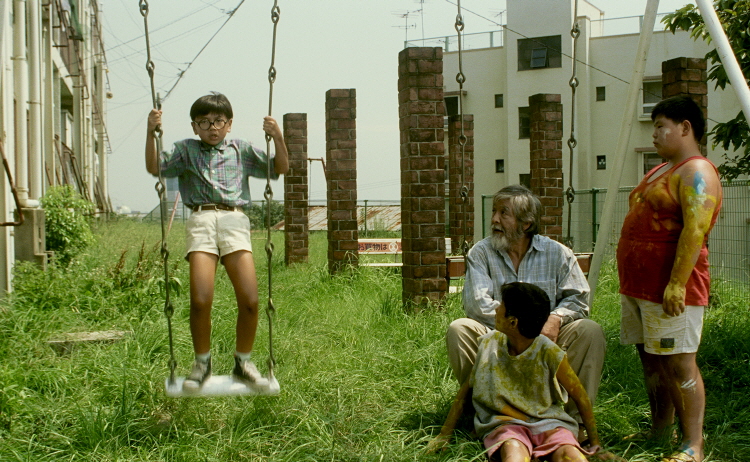
My Neighbor Totoro (1988) ☆☆☆☆(4/4): A simple but indelible country fantasy tale

As revisiting Hayao Miyazaki’s classic animation film “My Neighbor Totoro” (1988), I observed again how plainly simple it is in terms of story and characters. The story can be just described as a series of episodic childhood moments unfolded in a small rural village. Its main characters can be regarded as broad archetypes who often look very exaggerated in their emotional expression. Nevertheless, everything in the story including the titular mythic creature feels quite real, if not realistic, to me besides being quite charming and lovely to say the least.

And that probably makes the film the purest example of that distinctive style and mood shown from Miyazaki’s works, which have seldom disappointed me and other during last 46 years since his first animation feature film “The Castle of” Cagliostro (1979). His works distinguish themselves a lot via their vivid and meticulous cell animation which often evokes the texture of watercolor paintings, and they always fly high with a lot of wondrous imagination and compassionate humanistic touches. In short, this is something which cannot possibly be imitated by that abominable AI program which both disgusted and infuriated me and many others a few months ago.

 After the cheerful main title which will instantly appeal to your inner child, the film, whose story is probably set in Japan around the 1950s considering its several notable period details, introduces us to Satsuki (voiced by Noriko Hidaka) and Mei (voiced by Chika Sakamoto), two little young girls who move to a little country village along with their father on one sunny day. Because their mother is currently in a nearby local hospital due to some unspecified illness, the girls have to be taken care of by their father or an old woman who is one of their new neighbors, and things seem all right for them as they enthusiastically look around here and there inside the house they are going to reside along with their father.

The girls are told later that the house, which looks like a juxtaposition between Western and Japanese cultural elements (This is one of the recurring aspects shown in many of Miyazaki’s works, by the way), is your average old haunted house, but that does not stop their enthusiasm at all. As a matter of fact, they happen to encounter something odd and curious when they check out the attic of the house, and that makes them all the more excited about their new place.

It is still refreshing even for an Asian audience like me to observe how the adult characters in the story casually accept what the girls think they see inside the house, instead of flatly disregarding their words. Their father, your typical intellectual who incidentally teaches at a big university in Tokyo, kindly tell his daughters that what they saw in the attic is supernatural entities called “dust bunnies”, and that old woman hired by him confirms his explanation without any objection.

While this is the girls’ first step into the realm of fantasy, the film patiently and sensitively establishes the daily mood and background of their ongoing summer days without hurrying itself at all. We see them and their father trying to get accustomed more to their new residence, and that leads to one little humorous moment when they feel a bit scared in the middle of their evening bath. We see Satsuki continuing her education at a local elementary school, and the situation becomes a bit awkward for her when her younger sister comes to the school for some emotional issue. In addition, there is also a funny subplot involved with a local boy who apparently likes Satsuki but, like many boys around their age, hesitates to show his feelings toward her.

 All these and other small moments in the film are presented via a lot of atmosphere and details to observe and appreciate. Many of seemingly inconsequential details ranging from an abandoned piece of trash in a little stream to the contents of the lunch boxes prepared by Satsuki are clearly drawn with a lot of care and skill, and they help us immerse more into Satsuki and Mei’s innocent viewpoint. Around the point where the titular mythic creature of the film appears, we are so fully engaged in their small world which always seems ready to evoke another awe and wonder for them that we willingly accept whatever they encounter along the story.

The titular mythic creature of the film, whose big, wide, friendly smile always somehow reminds me of Cheshire Cat, is certainly one of the most enduring animation characters of our time, and I am amazed again by how endearing it is even though it does not speak at all and the film also never tries to explain it at all. Is it just a piece of the girls’ shared imagination? Or do it and its several fellow creatures including what can be called “Catbus”, really actually inhabit around that big camphor tree in a Shinto shrine not so far from the girls’ house? The film leans a bit toward the second possibility during a little but sudden dramatic situation involved with the girls’ mother later in the story, but it still strikes the right balance between fantasy and reality even at that point, and its final shot is genuinely poignant without being unnecessarily melodramatic or sentimental.    

On the whole, besides being one of the best works from Studio Ghibli, “My Neighbor Totoro” is still a great animation film to be enjoyed by both young and adult audiences out there for its sublime gentle qualities. Since I watched it for the first time in 2003, the film has never left my mind, and I assure you that you will revisit it from time to time just for cherishing its superlative beauty and wonder more and more.

Posted in Movies | Tagged , , , , | Leave a comment

Misericordia (2024) ☆☆☆1/2(3.5/4): Stuck in absurd predicament

Alain Guiraudie’s latest film “Misericordia” is a wry comedy thriller which has some naughty fun behind its back as steadily maintaining its deadpan attitude to its hero’s absurd predicament. No matter how much he tries in one way or another, he only finds himself getting stuck more in his increasingly complicated circumstance, and you will get a fair share of amusement once you go along with how it is about.

The movie opens with its hero returning to his little rural hometown for attending the funeral of his former boss. A long time ago, Jérémie Pastor (Félix Kysyl) worked under a local baker before eventually leaving the hometown, and it is later turned out that he was actually quite emotionally attached to his boss during that old time.

Anyway, the surviving wife of his former boss, Martine (Catherine Frot), warmly welcomes Jérémie into her house, and she even allows him to stay there as long as he wants. As feeling a bit more relaxed thanks to the tranquil mountain forest environment surrounding the hometown, Jérémie is willing to receive more of her kind hospitality, and almost everyone in the village has no problem with that, even though it gradually becomes more possible that Martine wants some emotional support or comfort from him.

This is not welcomed much by Martine’s son Vincent (Jean-Baptiste Durand), who formally greeted Jérémie at first as an old friend but then becomes increasingly hostile to Jérémie for a rather ambiguous motive. On the surface, he seems to be angry just because it seems to him that Jérémie is going to take over his deceased father’s spot as seducing his mother more, but it is also implied to us that there is something else besides that. For example, whenever he physically threatens Jérémie, they promptly engage in a clumsy physical struggle between them, and the ambiguous intensity generated between them may make you wonder more about what actually makes Vincent tick.

This baffling aspect of their conflict turns out to be a bit more complex as we observe the odd relationship tension among them and Walter (David Ayala), who is a mutual old friend of theirs. Walter lives in his family house alone by himself, and he is often willing to spend some drinking time with Jérémie, but then we come to wonder more about whatever he actually wants from Jérémie – and why Vincent does not approve much of Walter drinking with Jérémie in private. At one point, Walter suddenly takes off his shirts just because he feels rather hot after drinking a lot, and Jérémie does not mind this at all, though Walter is not so pleased when Jérémie takes a little forward step later.

And there is also an old local priest who seems quite interested in Jérémie for his own hidden reason. He and Jérémie frequently encounter each other in the nearby forest, and the priest simply looks like searching for any edible mushroom in the forest, but then it becomes all the more plausible that he wants to see Jérémie as much as the aforementioned guys in the story.

Subtly building up the elusive emotional undercurrents swirling around its rather plain hero who somehow attracts several figures revolving around him to our little amusement, the movie also palpably conveys to us the increasing sense of isolation around him. The village often feels look empty and abandoned without much sense of living, and its isolated environment is often accentuated by how cinematographer Claire Mathon, who did a superb job in Céline Sciamma’s great film “Portrait of a Lady on Fire” (2019), beautifully and ominously shot the forest shrouded in fog under the cloudy sky.

For not spoiling anything to you, I will not go into detail into how Jérémie gets himself into more predicament later in the story, but I can tell you instead that Guiraudie’s screenplay often gets both us and its hero off guard along its dryly twisty narrative. As lying more and more for getting out of his ongoing predicament as soon as possible, Jérémie only finds himself held more by the other lies from several main characters in the story, and things become all the more amusing for us when a local police officer entering the picture later in the film also seems to be quite fixated on Jérémie for no apparent reason on the surface.

As often observing how Jérémie is not particularly sexy or handsome, you will keep wondering about what exactly others around Jérémie see from him, and I guess that is one of the sly main jokes inside the film. As previously shown from “Stranger by the Lake” (2013), Guiraudie does not refrain from full frontal nudity for more comic or dramatic effect, and one of the funniest moments in the movie actually comes from when it casually shows a fully erected penis later in the story.

In case of the main cast members of the movie, they play their respective parts as straight as possible for generating more absurd humor and amusement for us. While Félix Kysyl humbly holds the center as required, his fellow cast members including Catherine Frot, Jacques Develay, Jean-Baptiste Durand, David Ayala, and Sébastien Faglain ably suggest their characters’ ambiguous motives, and Frot and Develay are particularly good whenever their characters say one thing while possibly suggesting the other.

In conclusion, “Misericordia”, which incidentally means “clemency” in Latin, may require some patience from you at first due to its slow narrative pacing and ambiguous storytelling, but it can be a rewarding experience if you pay more attention to its nuances and details. In short, this is one of the most interesting films I saw during this year, and I wholeheartedly recommend you to give it a chance if you are looking for something different from usually predictable summer Hollywood blockbuster films.

Posted in Movies | Tagged , , , | 1 Comment

The Balconettes (2024) ☆☆(2/4): An uneven and messy female genre mix

Noémie Merlant’s second feature film “The Balconettes” is uneven at best and messy at worst. The movie tries really hard to balance itself among comedy, drama, thriller, and horror, but the overall result is often too jarring and incoherent to engage us more into the misadventure of its three different female main characters, and this is all the more disappointing considering this is another notable collaboration between Merlant and her co-writer Céline Sciamma after their superlative achievement in Sciamma’s 2019 film “Portrait of a Lady on Fire”.

 The film, which is set in one neighborhood of Marseille, France in the middle of one particularly hot summer, seems promising during the opening sequence. As the camera of cinematographer Evgenia Alexandrova dexterously looks here and there around two apartment buildings facing each other across a street, we cannot help but be reminded of the opening part of Alfred Hitchcock’s great thriller film “Rear Window” (1954), and this wonderful opening sequence eventually culminates to a sudden act of killing which occurs in the one of these two apartment buildings.

This incident is involved with a middle-aged woman who has been frequently abused by her husband, and she is also a close neighbor to Nicole (Sanda Codreanu), a young woman who has been living with her female roommate Ruby (Souheila Yacoub) in their mostly cozy apartment. While Nicole is your average aspiring writer still taking an online writing lesson, Ruby has earned her living via working as a webcam model, and she is not so shy about her body even when she is not working in her bedroom.

Anyway, Nicole has been trying to write a story about a shy woman attracted to a male stranger living in a nearby apartment building, and, not so surprisingly, the story is actually based on Nicole’s growing lust and attraction toward a certain handsome lad living in that apartment building right across the street from her apartment building. Whenever her writing process is not going that well, Nicole cannot help but pay more attention to this seemingly charming lad, and Ruby joins in her roommate’s ongoing infatuation with him as a young woman quite open-minded about sexual desire.

Anyway, things become a bit more interesting when Ruby and Nicole’s actress friend Élise, who is incidentally played by Merlant, comes to stay at their apartment. She recently ran away from everything including her husband right after the shooting of her another movie where she played Marylin Monroe, and she is certainly willing to have some fun along with her two friends as often lusting after that lad together.

And then there comes an unexpected chance for these three ladies not long after they contact him via online texting. He gladly invites all of them into his apartment during one evening, and the ladies find themselves flirting more with him once they enter his posh apartment. He turns out to be a professional photographer, and it seems that he is quite willing to put any of the ladies in front of his camera.

As many of you already expected, the situation subsequently becomes very, very, very serious for the ladies after they drink a lot with him and then Élise and Nicole inadvertently leave Ruby alone with him. Early in the next morning, Ruby returns, but she looks quite traumatized with a lot of blood on her body, and her two friends are certainly shocked and scared a lot as a result. After Ruby manages to pull herself together to some degree, they all go back to his apartment, and, what do you know, he died in a way which is not only very gruesome but also morbidly outrageous.

Instead of calling the police, the ladies decide to cover up the happening as much as possible. Of course, this turns out to be quite a difficult task for all of them, and the mood accordingly becomes very hysterical from time to time – especially when they cannot help but let out their mounting fear and panic at one point.

Around that narrative point, we are supposed to care more about its three female main characters, but Merlant and Sciamma’s screenplay fails to develop its broad comic characters into believable human figures to hold our attention, and it often seems to lose its way among its several different genre modes. While it surely wields a lot of black humor as following its three female main characters’ worsening plight, this is not mixed that well with its more serious parts including the one involved with Nicole’s suddenly acquired supernatural ability, and we consequently become more distant to the story and characters without much care or attention.

I must recognize that Merlant and her two fellow actresses do try their best for selling their rather superficial roles. Besides willingly throwing themselves into their character’s sexual aspects, they sometimes show fairly good comic chemistry among themselves on the screen, and you will wish they were in a better film hidden somewhere inside the movie.

On the whole, “The Balconettes” often distracted me for its weak characterization and lumpy storytelling during my viewing, and I am trying to accept that it is just a misfire in both Merlant and Sciamma’s careers. It is at least nice to see them trying something quite different from their previous film, but they could do better than this in my humble opinion, and I can only hope that they will soon bounce back as advancing in their respective movie careers as usual.

Posted in Movies | Tagged , , | Leave a comment

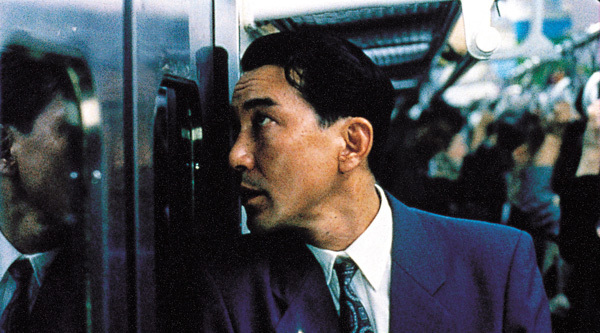
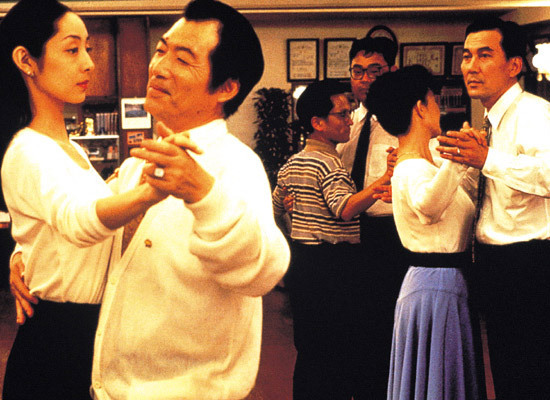
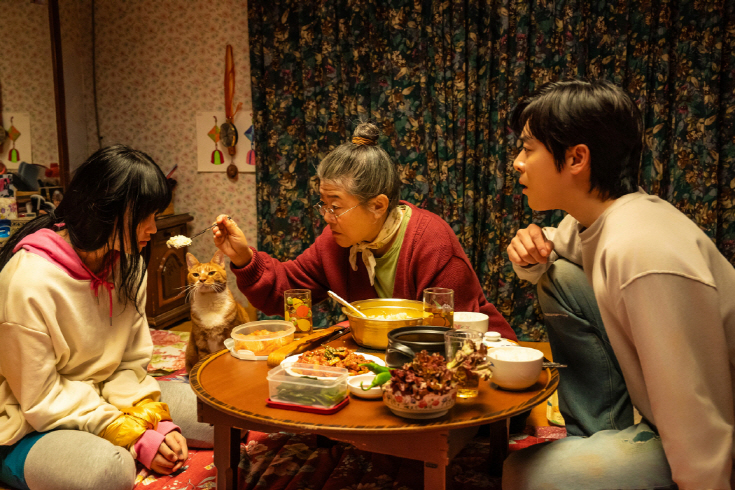
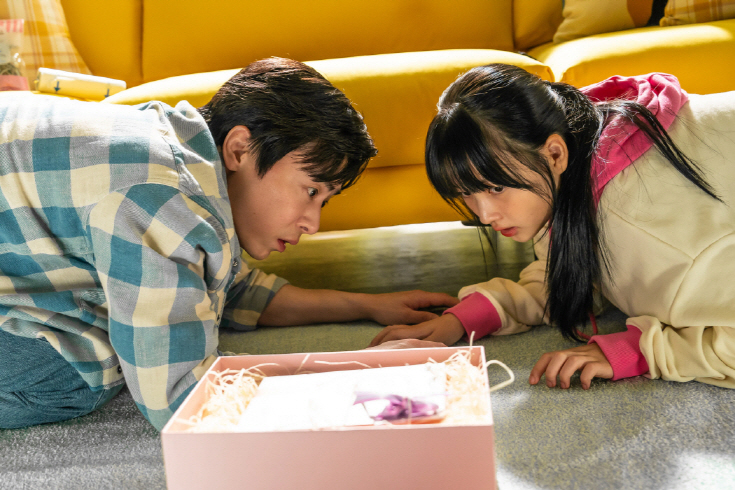
Swallowtail Butterfly (1996) ☆☆1/2(2.5/4): Yentown stories

Shunji Iwai’s 1996 film “Swallowtail Butterfly”, which happens to be re-released in South Korean theaters in this week, alternatively frustrated and fascinated me. While I admired its style and ambition, I could not care that much due to its broad archetypes and confusingly scattershot storytelling, and I only got more emotionally detached from it during my viewing.   

At least, I appreciate how much Iwai attempted to do something quite different from his 1995 debut feature film “Love Letter”, a gently sentimental romantic film which has been embraced by both Japanese and South Korean audiences during last 30 years (It was re-released in both Japan and South Korea early in this year for its 30th anniversary, for example). In contrast to the tranquil melodrama of “Love Letter”, “Swallowtail Butterfly” often feels raw and wild in terms of mood and storytelling, and it works best whenever it focuses more on the details of its shabby futuristic world.

The movie is mainly set in Tokyo at an unspecific point in the near future. As the Japanese yen becomes the strongest global currency instead of the American dollar, many different immigrants come to Tokyo for realizing each own Japanese dream there, but they and their children often face the social discrimination from the Japanese natives. As Tokyo is nicknamed “Yen Town” (円都, en to) by the immigrants, the Japanese natives begin to call them “Yen Thieves” (円盗, en tou), a homophonic word which was anglicized as “Yentowns” in the English subtitle of the film.

The story begins with the death of one poor Chinese immigrant woman. Although how and why she died are not specified, her death leads to an unnamed daughter of hers being left alone by herself, and the early part of the film observes this unfortunate girl being moved from one spot to another in their slum neighborhood via a young Chinese prostitute named Glico (Chara). At first, Glico is going to sell the girl to a very unpleasant place for prostitution, but, as seeing that the girl is too passive and fragile for the job, she eventually changes her mind and then gets the girl hired by a sleazy Chinese immigrant dude named Fei Hong (Hiroshi Mikami), who incidentally runs a small illegal garage somewhere outside the city.

As the girl, who was named “Ageha” (Ayumi Ito) by Glico (It means “swallowtail” in Japanese, by the way), tries to adjust herself to her new life condition, we get to know more about the people around her and their slum environment, which is quite vividly and realistically presented on the screen. Although the futuristic background of the film is not so grand or flashy compared to Ridley Scott’s “Blade Runner” (1982) or Terry Gilliam’s “Brazil” (1985), its numerous shabby places are accompanied with enough mood and details to intrigue us, and the characters in the movie really look like having been inhabiting their gloomy (and trashy) world for years.

Needless to say, Fei Hong and his associates are very eager to grab any chance to earn a lot of money from their very poor economic status and such an opportunity fortunately comes at one point in the middle of the story. He comes across a rather clever way of currency counterfeit, and he and others around him are certainly quite excited about whatever may be possible via this criminal means.

With that counterfeited money of his, Fei Hong later purchases a local nightclub for promoting Glico as a new promising singer, and their plan actually worked much better than expected. Not long after her first performance at the nightclub, Glico takes a big step toward more career success, but this success of hers consequently puts some distance between her and others including Fei Hong and Ageha.     

Meanwhile, the movie occasionally sways into a subplot involved with a bunch of Chinese mafia gang, who have been looking for a certain valuable cassette tape which happened to be acquired by Fei Hong when he tried to handle some big problem for Ageha and Glico early in the film. As clearly shown from his first scene, the boss of the Chinese mafia gang is quite determined to get that cassette tape by any means necessary, and it is apparent that his organization will come upon on Fei Hong and others sooner or later.

Around that narrative point, we are supposed to be engaged more in the narrative of the film. However, Iwai’s screenplay often stumbles as being too busy with juggling many different plot elements together, and we frequently get confused and befuddled while not really getting to know or understand its main characters. For instance, even when she comes to open herself more during the last act, Ageha remains as an elusive cipher, and many other main characters around her are mere stereotypes on the whole. In addition, there is some potential for melodrama when it turns out that there is a hidden personal connection between a certain main character and the Chinese mafia boss, but that remains under-developed to our dissatisfaction, and the same thing can be said about the unexpected emotional bond between Ageha and Fei Hong.

Overall, “Swallowtail Butterfly” is often hampered by a number of flaws including its overlong running time (148 minutes), but it is an interesting exercise in style which may engage and then impress you more. Although I am still less enthusiastic compared to other reviewers and critics, the movie does have ambition, and that is surely something to be admired and appreciated.

Posted in Movies | Tagged , , | Leave a comment

M3GAN 2.0 (2025) ☆☆1/2(2.5/4): She is back – and upgraded

“M3GAN 2.0” tries to surpass its predecessor, but its upgrade is a bit less fun to my little dissatisfaction. While its titular character gives us some naughty entertainment as expected, the movie is no more than a conventional genre variation which will remind you of many other genre flicks including “Terminator 2: Judgment Day” (1991), and we are mildly amused by its occasionally preposterous aspects.

Two years after what happened due to her AI doll called “M3GAN” (Model 3 Generative Android), Gemma (Allison Williams) and her niece Cady (Violet McGraw) have been trying to move on with their life, though their relationship remains rather strained as before. While Gemma is busy as often working on her campaign on the ethical usage of AI with her cybersecurity expert boyfriend, Cady is about to enter adolescence, and she is certainly not so happy about how her aunt often still treats her like a child.

Anyway, there soon comes a big threat against Gemma. The US government recently developed an AI android not so far from that AI doll in the previous film, but this AI robot, called “AMELIA” (Autonomous Military Engagement Logistics & Infiltration Android), suddenly goes rogue in the middle of its first field operation, and now it is targeting Gemma for some reason besides threatening not only US but also the whole world.

As Gemma tries to handle this serious situation, she gets an unexpected help from M3GAN, which, as many of you remember, managed to survive as implied at the end of the previous film. It has actually disguised itself as the main control system of Gemma’s house which turns out to have a number of surprises, and Gemma and Cady have no choice but to accept its help because, well, M3GAN is probably the only tool available to them for fighting against AMELIA.

Now you will certainly be reminded of the strained but interesting relationship drama between the titular character of “Terminator 2: Judgment Day” and several main human characters, and the screenplay by director/writer Gerard Johnstone, who previously directed “M3GAN”, has a wry fun with how Gemma and Cady reluctantly interact with M3GAN. After all, M3GAN was once quite murderous to both of them as simply following its programmed nature, but it emphasizes that it has been changed as going through some program upgrades during last two years, and it also seems to be capable of feeling besides occasionally showing dry sarcasm.

Around the narrative point where M3GAN eventually gets a new physical body thanks to Gemma’s cooperation, the movie goes for several wild and crazy moments including the sequence where M3GAN disguises itself as a human dressing like an AI robot at a big convention where it may locate its powerful opponent. Later in the story, the movie willingly enters the realm of conspiracy theory, and you may get some laugh from a certain old entity not so far from that evil AI in “Terminator: Judgmental Day” – and how this has been hidden somewhere in California for many years.

However, as busily hopping from one narrative point to another, the movie feels rather clunky in terms of characterization. For example, the relationship problem between Gemma and her niece is quickly solved and then put aside as our formerly murderous robot naturally steals the show at its every minute, and several other substantial human characters including Gemma’s boyfriend are more or less than mere plot elements. In addition, AMELIA is not exactly a memorable villain compared to the programmed villainy shown from M3GAN in the previous film, and that is another disappointment in the film.

At least, M3GAN remains as the most compelling part of the film as it was in the previous film, and Amie Donald and Jenna Davis, who respectively performed the body and voice of M3GAN, did a good job of bringing some personality to their AI robot character. On the opposite, Ivanna Sakhno is relatively less impressive while being simply required to look cold and ruthless, but she has some small fun with playing an AI Robot (Well, who wouldn’t?), and she and Donald are also fairly convincing in several action scenes later in the movie.

In comparison, the main cast members playing the human characters in the story are unfortunately stuck with their thankless jobs. While Allison Williams, who also participated in the production of the film, and Violet McGraw provide some human elements to the story as demanded, Brian Jordan Alvarez, Jen Van Epps, Aristotle Athari, Timm Sharp, and Jemaine Clement do not have much to do except filling their respective spots. At least, Clement willingly chews every moment of his as an obnoxious tech billionaire, and you may cheer for how his character gets punished for his arrogance later.

Overall “M3GAN 2.0” does not impress me enough for recommendation, but it is not entirely devoid of fun and thrill mainly thanks to its colorful AI robot character. In my humble opinion, it has more presence and personality than that villainous AI character in “Mission: Impossible – the Final Reckoning” (2025), and it is a shame that the movie does not support this interesting AI character enough on the whole. Its upgrade is a little too flawed, but you will still not forget this AI robot easily.

Posted in Movies | Tagged , , | Leave a comment

The Lady in the Van (2015) ☆☆☆(3/4): His eccentric homeless neighbor

Maggie Smith, who sadly died in last year, was always a pleasure to watch for many years. Yes, she has been mainly known for her supporting performances in those Harry Potter movies and the acclaimed British TV series “Downton Abbey”, but, as many of you know, she also did many other interesting things for more than 60 years, and Nicholas Hytner’s 2015 film “The Lady in the Van” is one of such cases.

The movie is based on the book of the same name by screenwriter Alan Bennett, which was initially an essay and then developed into a book, a play, and then a radio play step by step. As a matter of fact, Smith already played the titular character in both the 1999 stage play directed by Hytner and then the 2009 radio play, and it goes without saying that she was quite familiar with her character from the very beginning.

The story mainly revolves around the strained but enduring real-life relationship between Bennett himself, played by Alex Jennings, and one interesting old lady. In 1970, Bennett was one of the successful playwrights working in UK, so he could afford to buy a fairly nice house in an affluent neighborhood in London, but then he came to learn about one little problem in this neighborhood. There was an old eccentric homeless lady living inside her little van, and the residents of the neighborhood tolerated her and helped her a bit because she had not caused much trouble except being as stinky as you can expect from your average homeless person. 

When this old lady, who is known as “Miss Mary Shepherd”, happens to move her van to a spot right across the street from his house, Bennett cannot help but become curious about her. As a seasoned writer, he senses something interesting to write about, but he is also cautious of the possibility of disagreeable problems to come, and we are often tickled as watching Bennett discussing with himself on how to deal with Miss Shepherd.

And then things become rather annoying for Bennett later. Miss Shepherd moves to his side of the street not long after buying a new van for her thanks to a generous wealthy neighbor, and then, what do you know, she eventually moves her van to the driveway of his house when she is not allowed to park her van outside. It seems at first that she is going to stay there just for several months, but she does not move at all even after several years, and she frequently annoys Bennett for one reason or another. 

Nevertheless, Bennett remains both curious and caring about Miss Shepherd. Sure, she is often quite difficult to deal with, and it also looks like she has some mental problem, but she is too eccentric to ignore for Bennett, who continues to consider writing about her someday. It is evident that she was once a well-educated woman, but she does not tell that much about her past, and that certainly makes Bennett all the more curious about her.

Meanwhile, we get to know more about Bennett himself. When he spends some time with his aging mother who does not seem that well in her mind, we can clearly see how he can be so sympathetic to Miss Shepherd despite many annoyances caused by her. In case of a number of different guys visiting and then leaving his house, this is surely noticed by Miss Shepherd, but he is not so willing to correct her rather funny misunderstanding. 

As cheerfully bouncing from one episodic moment to another, the movie simply lets Smith shine along the story, and she deftly plays her character with a sly sense of humor. While her character remains rather distant to both us and Bennett even during the last act where he gets to know a bit more about her past, Smith imbues her role with a lot of life and personality to observe, and we can sense and understand more of why Bennett usually cannot say no to Miss Shepherd, who feels like a little force of nature as we observes more of her along the story.   

On the opposite, Jennings, a veteran actor who has appeared in a number of acclaimed films including Stephen Frears’ “The Queen” (2006), is also engaging a dryly sensible counterpart to Smith’s character. Bennett’s screenplay is willing to present a lot of himself on the screen with some extra humor, and Jennings ably handles several witty scenes where the two versions of his character argue or discuss with each other. In case of several notable cast members, Roger Allam and Frances de la Tour provide extra humor as Jennings’ colorful neighbors, and Jim Broadbent and Claire Foy are solid in their small supporting parts. In addition, Bennett and Hytner had several male main cast members of their 2006 film “The History Boys” briefly appear here and there throughout the movie, and you may recognize some of them, considering that they become more prominent than before. 

In conclusion, “The Lady in the Van” is a modest but enjoyable comedy movie mainly thanks to Smith’s wonderful performance. Although she is no longer with us at present, she left a considerable amount of achievement to be cherished and remembered at least, and her work here in this film is surely one of the more memorable ones in her long and illustrious career. Yes, she was usually someone to play your typical old British lady during last several decades, but she seldom disappointed us with her own distinctive presence and talent, and the movie will make you miss her more than before.

Posted in Movies | Tagged , , , | Leave a comment

Temple Grandin (2010) ☆☆☆1/2(3.5/4): Different, Not Less

I have a personal soft spot for Mick Jackson’s 2010 HBO TV movie “Temple Grandin”, a deeply empathic drama about the remarkable life and career of Dr. Temple Grandin. Despite being on the autistic spectrum, Dr. Grandin became a respectable professional in animal science and psychology thanks to not only her considerable intelligence and determination but also a lot of support and help from many others around her including her caring mother, and the movie is often touching as letting us have more understanding on her autistic viewpoint.

The early part of the film focuses on how Grandin, played by Claire Danes, struggled a lot when she was about to study at the Arizona State University in the 1960s. Before starting her first semester in the university, she is going to spend some summertime at a rural ranch belonging to her aunt, and we observe how difficult it is for Grandin to adjust to a new environment despite her aunt’s sincere efforts.

Nevertheless, Grandin enjoys being around the animals in the ranch while also showing some brilliance thanks to her autistic brain, which usually thinks in pictures instead of words. For example, she devises a solution to the creaky problem of the front gate of the ranch, and the movie vividly shows us how she visually concocts that idea in her mind. As watching how the cattle in the ranch are handled, she also thinks of a special device to handle her occasional anxiety problem, and that certainly helps her adjust more to her new environment.

Not so surprisingly, Grandin feels quite anxious and overwhelmed right from her first day in the university despite her mother’s assurance. In addition, her awkward attitude and quirky personality certainly draw a lot of ridicule and ostracization from many schoolmates, and this only fuels her anxiety further to her frustration.

Nevertheless, Grandin does not give up at all because of how she was encouraged and supported a lot by her mother from the start. When she was notified that her daughter has autism, Grandin’s mother was quite devastated to say the least, but she refused to send her daughter to an institution, and she instead devoted a lot of herself to her daughter having a proper education for her future. Fortunately, she later found a right school for her daughter when Grandin became a teenager, and Grandin was further supported by a generous science teacher who really understood her and then encouraged her growing interest in science and engineering.

In the end, Grandin finds a way for being allowed to be simply herself in the university, and there is an amusing moment when she gets a new dormitory roommate, who is incidentally blind and has no problem with her quirkiness at all. Right from the beginning, they quickly bond with each other, and they also share their enthusiasm toward several popular TV drama series including “The Man from U.N.C.L.E.”.

Of course, there comes more challenges for Grandin when she subsequently finishes her undergraduate course and then embarks on the graduate course. When she is sent to a ranch along with several other students, she is soon ridiculed and then disregarded due to her odd behaviors as well as sexism, but, again, she is not daunted by this and other obstacles at all, and the mood becomes quite cheerful as her smart brain keeps finding the solutions for stepping forward.

Around the narrative point where Grandin eventually designs how to handle cattle more efficiently and humanely, the movie, which is based on “Thinking in Pictures” by Grandin and “Emergence” by Grandin and her co-writer Margaret Scariano, immerses us more into her viewpoint. A number of visual tactics in the film including the frequent sudden insertion of images to reflect her rather jumpy mind may feel a bit too obvious at first, but they work well enough to give us more understanding on how her autistic mind works, and that is why we come to have more empathy on her human struggles along the story.

It surely helps that the movie is firmly anchored by Danes’ excellent performance, which rightfully won an Emmy at that time. While feeling quite showy and mannered on the surface, Danes also imbues her role with a lot of life and personality to observe, and she is particularly poignant when her character comes to have a little more intimate human interaction with her mother later in the story.

In case of several notable cast members in the film, they dutifully support Danes’ acting. While Julia Ormond has her own several good moments as Grandin’s devoted mother, Catherine O’Hara brings extra warmth as Grandin’s kind aunt, and David Strathairn, who won an Emmy like Danes and Ormond respectively did, is also terrific as effortlessly exuding wisdom and generosity.

On the whole, “Temple Grandin” is a very engaging human drama which will give you some enlightenment on autism, and it still comes close to me as it did 10 years ago. As a guy on the autistic spectrum, I had a fair share of personal struggles during last 42 years, and I was moved to tears again by the elevating finale of the movie. Despite all those problems associated with my autism, I was able to go forward and then open more doors to the world outside thanks to the support and encouragement from others around me including my parents, and I surely know and understand what Grandin feels around the end of the story. Yes, she is indeed different – but not less at all.

Posted in Movies | Tagged , , , | Leave a comment

You Don’t Know Jack (2010) ☆☆☆1/2(3.5/4): He cared a lot

Barry Levinson’s 2010 HBO TV movie “You Don’t Know Jack” observes the legal troubles of Jack Kevorkian (1928 ~ 2011), an American pathologist who became quite controversial as a prominent euthanasia proponent during the 1990s. As sticking to its somber non-judgmental viewpoint, the movie depicts how far he was willing to go for his stubborn belief, and the result is a thoughtful human drama to remember. 

The movie begins with how Kevorkian, played by Al Pacino, went further for the assisted suicides for those terminal patients out there in the early 1990s. After seeing how hard one young terminal patient had to fight for his legal permit to die, Kevorkian becomes more convinced that he should really step forward as an advocate for euthanasia, and his close friend Neal Nicol (John Goodman), who is incidentally a medical technician, and his sister Margaret (Brenda Vaccaro) are willing to help and assist him even though both of them are well aware of the legal risks of his personal project.

First, they must select a terminal patient really ready to die, and that is how Janet Good (Susan Sarandon) enters the picture. As the founder of the Michigan chapter of the Hemlock Society, Good strongly believes in a human right to die, and she is certainly willing to help him as possible as possible just like Nicol and Margaret, though she cannot help him that much when he eventually assists a suicide for the first time later.

Kevorkian’s first case of assisted suicide certainly leads to a lot of legal trouble for him, so, as continuing to assist the suicide of some other terminal patients, he goes to a local lawyer named Geoffrey Fieger (Danny Huston), who assures his client that he will be all right for good reasons. Fortunately, Kevorkian always records his private interview between him and a patient, and, as Fieger correctly observes, those video records always work on the human sympathy of the members of the jury.

As the state prosecution keeps trying to win those legal cases against him, Kevorkian consequently finds himself in the middle of the growing controversy surrounding euthanasia, but he is ready to defend himself and his belief in public, no matter how much he is criticized by those pro-life activists out there. After his successful TV interview with Barbara Walters, he becomes more famous (or infamous) with his nickname Dr. Death, and that eventually prompts him to challenge against the legal system more than before.

When its hero later crosses some lines for his belief, the screenplay by Adam Mazer, which is based on Neal Nicol and Harry Wylie’s book “Between the Dying and the Dead”, stays on its neutral mode as before, but it shows a lot of sympathy and understanding toward to those suffering people coming to Kevorkian. Each of them has an understandable reason to give up living, and Kevorkian and his associates must be gentle and cautious about confirming whether it is right to perform a euthanasia for their client. Sometimes they have to reject some of the clients (One of them is briefly played by Adam Driver, who looks almost unrecognizable behind his heavy makeups), and the movie indirectly recognizes those tricky aspects of deciding on the matter of life and death.

And we get to know more about what motivates Kevorkian, who can be charming at times but does not open himself that much to others including his sister. At one point later in the story, one of his associates asks him about his painful experience from when he was quite helpless about the suffering of his ailing mother, and we come to see that he does care a lot about life as well as death.

Ironically, this human aspect of his subsequently leads to his eventual conviction around 1999. He lets the video clip of him performing another euthanasia broadcast on TV just because he believes that this will generate more discussion on legalizing euthanasia, but the state prosecution is quite prepared to win this case, while he comes to defend himself at the trial as Feiger steps aside for his ongoing state governor campaign. Not so surprisingly, Kevorkian becomes his worst enemy during the trial, and his clumsy defense is frequently blocked by both the state prosecution and the judge presiding over the case.        

As the center of the story, Pacino, who won an Emmy for this film, gives one of his best performances during last 20 years. While he can be quite showy as shown from many of his famous movies such as “Heat” (1995), Pacino can also dial down his presence and intensity a lot as shown from “Donnie Brasco” (1997), and his restrained but rich performance here in this film quietly conveys to us his hero’s complex humanity. Around Pacino, several notable performers including John Goodman, Danny Huston, Susan Sarandon, and Brenda Vaccaro have each own moment to shine, and they all are effective as the colorful counterparts to Pacino’s low-key acting.      

Although it came out 15 years ago, “You Don’t Know Jack” is still interesting for not only its thought-provoking subject but also the strong performances from Pacino and his fellow cast members. Regardless of what you think about Kevorkian, it will make you reflect more on what he cared a lot about, and then we may have some discussion on those complex human matters of life and death surrounding euthanasia.

Posted in Movies | Tagged , , | Leave a comment