The Happiest Day in the Life of Olli Mäki (2016) ☆☆☆(3/4): Before his big match

Finnish film “The Happiest Day in the Life of Olli Mäki”, which was belatedly released in South Korean theaters on this Thursday, is a modest drama film revolving around one real-life professional boxer who attempted on the World Boxing Association featherweight championship on one day of August 1962. While it actually focuses more on mood and character instead of that big match, the movie still engages us via its earnest storytelling coupled with lightweight charm, and it certainly earns its somber but solid feel-good ending.

After the brief opening showing its hero going to somewhere by train, the movie quickly establishes the romantic relationship between Olli Mäki (Jarkko Lahti) and his girlfriend Raija Jänkä (Oona Airola). When he comes to Raija’s house for attending the wedding of a family member of hers along with her and several other family members, we can instantly sense how much they are close to each other, and they come to consider being more serious about their relationship as attending that wedding together.

However, there is a very important thing in Olli’s life right now. While he works as a baker in his hometown, he has also been a promising new boxer in the country, and his coach Elis Ask (Eero Milonoff) already arranged a big international match which will be the definite highlight of Olli’s professional boxing career in one way or another. His opponent is none other than the current World Boxing Association featherweight champion, so Olli has already been getting lots of attention from not only his wealthy local sponsors but also the local media.

Besides losing enough weight for the upcoming match, Olli must focus a lot on honing his boxing skills more, but he cannot help but feel uncomfortable as being frequently on spotlight along with Elis. While attending a number of evening social events for those sponsors of his, he also must get accustomed to his training process shot by a documentary filmmaker, and the only consolation comes from Raija’s constant presence around him.

However, Olli finds himself more distracted because of his growing love toward Raija. When he participates in a press conference along with Elis, his eyes cannot help but attracted to Raija, who happens to be right behind a bunch of reporters asking him one question after another. During his training time, he becomes more aware of her presence, and it does not take much time for both Elis and Raija to realize what is going on inside Olli’s mind, which is helplessly in love to say the least.

The mood of the movie becomes a little more serious when Raija decides to do what is the best for her dear boyfriend, but the screenplay by Juho Kuosmanen and his co-writer Mikko Myllylahti steadily maintains its lightweight approach as lightly rolling from one small character moment to another. I was particularly amused by Olli’s rather drastic measure for losing more weight before the day of the match, and I also enjoyed an episodic scene where Elis goes to a meeting of those wealthy sponsors along with his children and Olli for getting more money as soon as possible.

It is not much of a spoiler to tell you that Olli follows what his heart wants in the end, and the movie does not surprise you much in case of the eventual match between him and his opponent, but it surprises you as deftly balancing its hero between Elis and Raija. While she is surely glad to see Olli again, Raija is also well aware of how important the match is for him regardless of its result. While he is certainly annoyed when Olli does not follow his plan, Elis comes to respect Olli’s personal feelings, and they agree upon an alternative as confirming their strong friendship to each other.

I will let you appreciate how the movie pulls off its humble but touching finale, so I will focus more on the good chemistry between Jarkko Lahti and Oona Airola, who instantly click with each other right from their first scene in the film. Lahti, who actually began the preparation for his role even before the production of the film just because Kuosmanen told him that he might play the leading role, looks convincing during his character’s several training scenes in the film, and his likable performance makes us care about his character more along the story. In case of Airola, she is effortlessly charming as letting us discern what Olli sees from her character, and she and Lahti are also supported well by Eero Milonoff, who brings some life and personality to what could have been a thankless supporting role.

On the whole, “The Happiest Day in the Life of Olli Mäki”, which won the Prize Un Certain Regard when it was shown at the Certain Regard section of the 2016 Cannes Film Festival (It was also selected as Finland’s submission to Best International Film Oscar in that year, by the way,) may require some patience due to its low-key mood and storytelling, but it is worthwhile to watch for the amiable performances from its main cast members as well as its several admirable aspects including the black and white cinematography by Jani-Petteri Passi. As I told you already, this is a lot milder than “Rocky” (1976) or “Raging Bull” (1980), but I assure you that it will win your heart in the end, and, considering its original Finnish title (“Hymyilevä mies” means “Smiling Man”), you may end up smiling at its very last shot.

Posted in Movies | Tagged , , , | Leave a comment

Sister J (2020) ☆☆☆(3/4): As he and others endure for more than 10 years

South Korean documentary film “Sister J” gives a dry but sensitive glimpse into the longtime struggle of one ordinary man who fought along with his colleagues for more than 10 years. As shown in the documentary, they really tried hard to get their justice despite many moments of desperation and frustration, and the documentary is often poignant as closely observing how they struggled to endure one day after another via solidarity and some occasional moments of joy.

At first, the documentary simply introduces its plain but unforgettable hero. His name is Lee Jae-choon, and he worked at a guitar factory for around 30 years, but he and many other workers were suddenly laid off in 2007 by their employer without any compensation, and that was the beginning of their fight which turned out to be much longer than expected. No matter how much they protested outside, they were callously ignored by their employer, and their following court trials only led to more frustration and exasperation for them as those judges kept siding with the employer.

Nonetheless, Lee, who is affectionately called “Sister Jae-choon” by director Lee Soo-jung at times, and his fellow strikers continue to fight even after their appeal is rejected by the supreme court. They often sleep in their tent on a street, and we become more aware of the growing desperation among them. There is still some possibility for their reinstatement, but the employer is still adamant about not listening to them at all, and they all have lots of doubt on whether they can actually win in the end.

As he goes through one hard day after another, Lee causally reveals more of himself in front of the camera. As he frankly admits to us via his written words shown during the opening scene, he was just a petty employee who was timid and introverted during all those years at the factory, but the ongoing struggle made him much more active and courageous than before. Although he surely looks mild and unremarkable on the surface, he has been actually one of the leading members in his group, and he is also willing to express more of his thoughts and feelings to others via various activities including an amateur theater production, where he plays Ophelia of William Shakespeare’s “Hamlet”.

The mood becomes a bit more cheerful as the documentary observes him preparing to play Ophelia in front of a small group of audiences. While he and his fellow main cast members are understandably amateurish, they all do their best for making their humble production work, and Lee certainly has some fun as earnestly playing his female character.

We later seem him participating in another theater production which is rather abstract but quite straightforward about what he and his colleagues are going through. Although we just look at him from his behind as he stands in the aisle and then delivers one simple line toward the stage, the dramatic effect from that is palpable to us as we reflect more on how the legal system denied any justice for them during all those years.

Things get more desperate for Lee and his colleagues in the late 2010s, but the documentary, which is mostly shot in black and white film of 1.33:1 ratio, steadily maintains its calm attitude as before. At one point, we see Lee entering a small apartment where he has lived with his two daughters, but the daughters happen to be absent, and Lee tells us how much he has been conflicted between his ongoing fight and his daughters’ welfare. As he frankly admits to us, his daughters have suffered a lot due to his frequent absence, and that makes him have more doubt on whether it is really right to continue what he and his colleagues have been doing for more than 10 years.

Not long after that, it seems that there finally comes a possible moment of breakthrough for them, though they remain against the wall as usual. Lee and several colleagues of his come to confront their employer at last, and they surely have lots of things to say, but they are constantly blocked by one of those company guys working under the employer, who remains silent without saying anything at all until he comes to have a little private meeting with Lee and other protesters in his office.

Regardless of whatever happened in the room, Lee and his colleagues continue to fight. For bringing more public awareness on their ongoing struggle, they hold a big public demonstration to show more of their will and determination, and then Lee and several colleagues of his begin a hunger strike. Again, the situation looks pretty hopeless, but Lee and his colleagues are determined to go all the way, and we later see them getting some public support from Buddhist monks praying outside their tent.

I will not go into details into what follows next, but I can tell you instead that I admire how the documentary delivers a moment of little poignancy with thoughtful restraint. Things are not changed much for Lee even after he and his colleagues finally came to achieve their goal, but he feels much better than before, and we come to sense that he will keep going as he always did for no less than 4464 days.

Overall, “Sister J” requires some patience from you due to its rather dry approach, but it will gradually engage you once you accept how it is about its main subject. To be frank with you, I wish the documentary gave more background information, but, after watching it, I wanted to know more about what Lee and his colleagues went through, and I guess I will have to do some homework after writing this review.

Posted in Movies | Tagged , , , , , | Leave a comment

Unboxing Girl (2021) ☆☆☆(3/4): The trouble with her crummy boss

South Korean independent film “Unboxing Girl” is often difficult to watch in many of its absurdly exasperating moments. Mainly revolving around its heroine’s very unlucky office romance, the movie has a lot to show and tell about sexism and gender inequality, and it made me wince more as I came to reflect more on what many working women in the South Korean society have to endure everyday even at present.

At first, the movie succinctly establishes its heroin’s busy daily life. Although she has been stuck in the same position for many years in some designing company, Yeong-jin (Lee Tae-kyoung) keeps trying hard for getting things done nonetheless, and one brief scene at a factory shows us how much she is dedicated to her work. She wants to confirm on the production process one more time just in case, and, despite the opposition from the annoyed foreman, she soon checks the process alone by herself.

However, Yeong-jin does not receive much appreciation at her workplace. For example, her superior simply disregards her design for a new product without care or attention, and he does not even consider her promotion. In her department, she is not particularly close to several other employees, and the only consolation in her daily life comes from her best friend Ha-na (Lee Bom), who has worked as a part-time teacher since quitting her designing career some years ago.

Anyway, there comes a change into Yeong-jin’s life via Joon-seol (Lee Han-ju), a young man who is recently employed as the new manager of her department. As everyone quickly notices on his very first day, Joon-seol is not particularly smart or competent, and we soon come to gather than he got employed just because of his affluent and influential family background. After meeting him, Yeong-jin becomes more frustrated because she should have been the manager instead considering all those good efforts and results from her, but her following protest is casually ignored by her superior.

As a result, Yeong-jin has no choice but to assist Joon-seol along with her colleagues as expected, and the movie gives us a series of small comic moments while Joon-seol frequently bumbles day by day. Yeong-jin’s colleagues have already expected him to quit his job sooner or later, and Yeong-jin cannot help but feel a bit sorry about him even though she still resents him for taking what should have been hers. When they meet each other outside their workplace, Yeong-jin gives Joon-seol a few tips, and then, what do you know, they come to spend more time together.

Now this looks like a typical setup for office romance, but the screenplay by director/writer Kim Soo-jung focuses more on the glaring gender inequality between its two main characters. When Joon-seol unwisely tries to do the proposal for a new product, Yeong-jin comes to help him a lot just because of her growing attraction to him, but, not so surprisingly, he gets all the credits from the following success without showing any appreciation to her.

Yeong-jin naturally becomes quite angry about this, but, to her exasperation, there is no one to help around her. Again, her direct superior does not listen to whatever she says, and it also turns out that the company is not so interested in handing ethical problems like hers. Yeong-jin tries to be more patient with Joon-seol instead, but, not so surprisingly, there eventually comes a point where she cannot tolerate his growing insolence anymore.

At least, Yeong-jin can still get some comfort and consolation from her best friend, and the mood becomes a bit more relaxed when they happen to have a little vacation at one point. When they arrive at some rural area, they meet a middle-aged woman who has worked as a taxi driver after quitting her office job, and Yeong-jin comes to reflect more on the current status of her life and career as listening to this old lady’s life story.

However, the movie does not soften its edgy sides at all as its heroine faces more frustration and exasperation, while being held together well by the strong lead performance from Lee Tae-kyung. Although Yeong-jin is not particularly amiable, Lee ably imbues her character with enough life and personality, and we certainly root for her character a lot when she becomes a little more active about her life and career around the end of the story.

In case of several main cast members of the film, they deftly support or complement her. While Lee Bom is also solid as Yeong-jin’s best friend, Seo Kab-sook simply steals the show during her brief appearance, and Lee Han-ju is effective as bringing some human complexity to his increasingly unlikable character. Like the movie itself, he does not make any excuse on his character at all as focusing on many realistic details of his character, and his good performance will make many female audiences cringe for understandable reasons (FULL DISCLOSURE: As an office manager who often simply occupies his position all day long, I saw a bit of myself from Joon-seol, and I felt ashamed to say the least).

Overall, “Unboxing Girl” delivers sharp points on its main subjects well thanks to its biting comic moments, and Kim, who previously made a feature film debut with “A Blue Mouthed Face” (2015), shows here that she is another interesting South Korean female director to watch. While amused a lot during my viewing, I became more conscious of its painfully relevant issues during my viewing, and that is surely an achievement.

Posted in Movies | Tagged , , , | 1 Comment

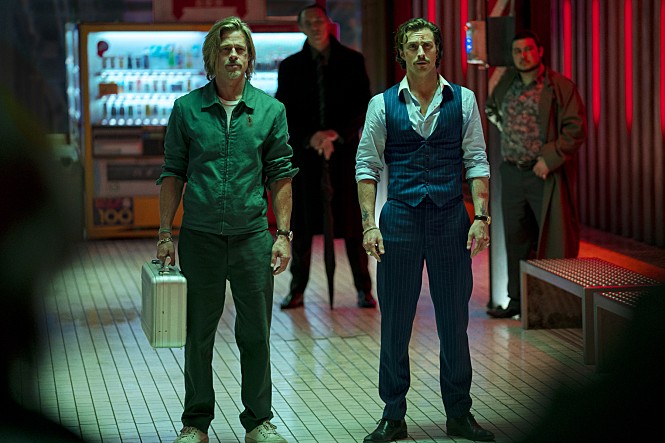
Broker (2022) ☆☆☆(3/4): Bringing Up Baby

Hirokazu Kore-eda’s latest film “Broker” is an interesting trial to admire. Like his previous film “The Truth” (2019), the movie attempts to transplant his own style and storytelling to a country outside Japan, and it is mildly engaging to observe how the movie does not lose any of his distinctively humane touch in its foreign background, though it is not one of his best works despite the good efforts from Kore-eda and his cast members.

Set in South Korea, the movie opens with a young woman named So-young (Lee Ji-eun) coming to a local church with her little baby at one night. The church has a facility taking care of abandoned babies, and she simply puts her baby into the baby box installed outside the church, but she does not know that she is actually being watched by two people inside the church: Dong-soo (Gang Dong-won) and Sang-hyeon (Song Gang-ho). On the surface, Dong-soo is a mere part-time employee who happens to be monitoring the baby box alone at this night, but he is actually an accomplice of Sang-hyeon, who takes away those babies put into the baby box and then sells them on the adoption black market.

At first, everything goes well for Sang-hyeon and Dong-soo as they subsequently bring their latest baby to an old launderette belonging to Sang-hyeon. Sang-hyeon is going to take care of the baby for a while before he and Dong-soo eventually find a good buyer willing to pay them around 10 million won at least (It is about $8,000, by the way), and Dong-soo will hide the existence of the baby from others in the church.

Unfortunately, there soon comes a little problem for them. After changing her mind, So-young comes to the church again for retrieving her baby, and Sang-hyeon and Dong-soo try to handle this unexpected trouble as quickly as possible. When they tell her what they are going to do, So-young initially opposes to them, but she is eventually persuaded once they promise her a significant portion of what they will get in exchange of her baby, and that is the beginning of the rather uneasy alliance between her and them.

As these three main characters later prepare for taking the baby to their buyer, we also get to know more of what is happening around them without their knowledge. Right from the very beginning, they have been all watched by two female police detectives, and these two female police detectives are patiently waiting for a moment when they can arrest Sang-hyeon and his two accomplices with sufficient evidence. While Soo-jin (Bae Doona), the older one of this duo, regards Sang-hyeon and his two accomplices with bitter contempt, Soo-jin’s younger partner shows some compassion in contrast, and we sense the growing tension between them as they continue their stakeout.

However, the movie rolls its story and characters a lot more leisurely than expected. While it gradually turns out that the circumstance surrounding the main characters in the story is much more serious than it seemed at first, Kore-eda’s screenplay simply takes its time as they slowly move from one spot to another, and we get to know more about them bit by bit. It goes without saying that Sang-hyeon and Dong-soo are criminals, but they are also fairly decent persons at least, and they and So-young gradually look like a sort of family along with her baby as they continue to take care of her baby as much as they can.

When they later drop by a little rural orphanage where Dong-soo grew up, the movie seems to be stalling a bit, but then it is enlivened by the following small moments among them and several other characters including one plucky orphan boy. Like many of Kore-eda’s works, the movie is filled with soothing ambience as the camera frequently looks at beach, and we gladly go along with that as coming to care more about its main characters, who are flawed indeed but palpably human nonetheless.

The movie becomes a bit more tense during its last act, but its overall tranquil mood is steadily maintained even as it eventually heads toward the expected finale, and Kore-eda also did a goob job of drawing excellent performances from his South Korean cast members. While Song Kang-ho received the Best Actor award when the movie was premiered at the Cannes Film Festival in last month (The movie also received the Ecumenical Jury Award, by the way), the other main cast members including Gang Don-won, who incidentally appeared along with Song before in “Secret Reunion” (2010), Lee Ji-eun, Lee Joo-young, and Bae Doona, who already collaborated with Kore-eda in “Air Doll” (2009), are equally wonderful in their respective roles, and I also enjoyed the brief appearances of several notable South Korean performers Song Sae-byeok, Kim Sae-byuk, and Park Hae-joon. In case of child actor Im Seung-soo, his disarmingly unadulterated acting in the film reminds me again that not many filmmakers can surpass Kore-eda in handling child performers, and I am happy to report to you that this special skill of his is not impeded at all by the language barrier between him and Im.

On the whole, “Broker” does not reach to the level of Kore-eda’s recent better works such as “Like Father, Like Son” (2013) and “Shoplifters” (2018), but it does not disappoint me at least as exploring his usual main themes to generate a number gentle human moments to be appreciated. I must point out that he seems to be autopilot here from time to time, but, folks, Kore-eda on autopilot is still better than many of movies I watched during this year, and I will not grumble for now.

Posted in Movies | Tagged , , , | 1 Comment

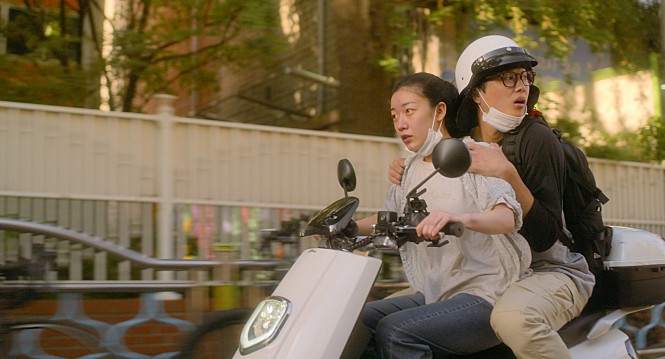
Missing Yoon (2021) ☆☆☆(3/4): Imitation of Life

Here is a little South Korean film which somehow made me care much more than expected. I must confess that I initially observed its two different main characters with mere pity and annoyance, but “Missing Yoon” gradually let me understand and empathize with them as they frequently pulled and pushed each other along the story, and then it surprised me more with an unexpected touching moment you have to see for yourself.

At the beginning, we are introduced to Soon-yi (Oh Min-ae), a middle-aged woman who has worked as a veteran imitation singer of legendary real-life South Korean singer Yoon Si-nae. As “Yeon Si-nae”, Soon-yi is about to do the opening act for Yoon’s farewell concert, and she is certainly excited about finally meeting the singer she has passionately imitated for many years, but, alas, Yoon is suddenly disappeared right before her concert to everyone’s bafflement.

In case of Soon-yi’s daughter Ha-da (Lee Joo-young), Yoon’s disappearance does not matter that much to her at first, but then she sees an golden opportunity from her mother. As your average YouTuber, Ha-da is willing to draw more viewers by any means necessary, and, once her mother happens to attract lots of attention from those online viewers out there, she soon begins to show more of her mother to them without her mother’s consent.

Meanwhile, Yoon is still missing during next several days, so, after doing some soul-searching, Soon-yi decides that she should search for Yoon for herself. Although she was not particularly close to Yoon, she knows about some connection between Yoon and several prominent imitation singers of hers, and this connection may help her locating Yoon’s whereabouts at present. When she subsequently comes to learn of her mother’s decision, Ha-da is naturally more excited, and she soon accompanies her mother while not still telling her mother anything about what she has been doing behind her back.

As Soon-yi and her daughter bounce from one point to another during their bumpy journey, the movie gives us a loving glimpse into the small world of imitation singers. At a small training academy for imitation singers, Ha-da regards those imitation singers without much care, but then she finds herself swept into their enthusiastic party time, and what follows next is both amusing and touching. Yes, many of them lack originality from the beginning, but they simply follow their passion without any shame or hesitation, and I am sure that they can sing a lot better than me (Compared to me, Pierce Brosnan in “Momma Mia!” (2008) will look like an accomplished professional singer, by the way).

Soon-yi and Ha-da later get associated with Joon-ok (Roh Jae-won), a male imitation singer who has worked as “Woon Sin-ae”. As he later comes to accompany Soon-yi and Ha-da, Joon-ok becomes a sort of buffer between Soon-yi and Ha-da, but Soon-yi and her daughter still clash with each other at times, and their conflict becomes more intense when Soon-yi belatedly discovers what her daughter is doing behind her back.

Around that narrative point, both Soon-yi and Ha-da come to reflect more on not only themselves but also their messy mother-daughter relationship, and the screenplay by director/writer Kim Jin-hwa accordingly shifts itself on a more introspective mode. While Soon-yi comes to question whether it was worthwhile to throw herself into her little career for many years, Ha-da comes to confront how superficial her online activity has been. While both of them have desperately wanted attention and recognition from others, they have not gotten much satisfaction as only getting disappointed again and again, and their rocky journey prompts them to ask themselves on what is really the most important in the real life behind their imitation of life.

Soon-yi and Ha-da are not exactly likable characters, and I still prefer to stay away from them as much as possible, but they are engaging to observe nonetheless thanks to the strong acting from Lee Joo-young and Oh Min-ae. Besides ably complementing each other throughout the film, Lee and Oh frequently energize the screen as embodying their characters’ complex human aspects, and that is the main reason why it is moving to see how their characters makes a little but significant forward step together in the end.

Around Lee and Oh, Kim assembles several colorful performers, each of whom has each own moment to shine. Although his supporting role seems rather thankless at first, Roh Jae-won holds his small place well between Lee and Oh, and he is especially good when his character diligently performs at a nearly empty night club as a last-minute replacement. As another imitation singer character in the story, Kim Jae-hwa has a little funny moment as her character tries to perform a bit in front of her few audiences, and I also appreciate how the movie skillfully incorporates a brief but crucial guest appearance into the finale.

In conclusion, “Missing Yoon” is alternatively funny and poignant thanks to its solid mix of comedy and drama, and Kim, who previously made several acclaimed short films, makes a commendable feature debut here on the whole. You can see what you will get right from the beginning, but the movie surely earns all the emotions during its finale, and it is certainly one of the better South Korean films of this year.

Posted in Movies | Tagged , , | Leave a comment

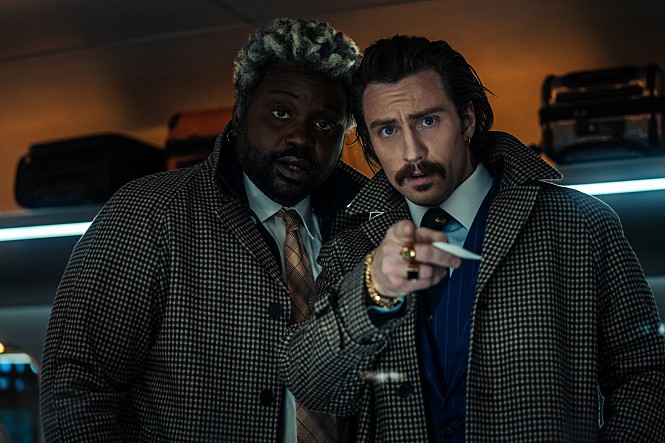
Fire Island (2022) ☆☆☆(3/4): Pride and Prejudice on a gay village

“Fire Island” initially made me feel awkward for good reasons. Here is a little but funny and exuberant gay romance comedy film which is also quite frank and proud about the irrepressible homosexuality of many of its main characters, and, as your average nerdy gay dude, I will not deny that I flinched more than once during its 20 minutes even though I came to embrace its unapologetically flamboyant aspects with some smile in the end.

The main background of the movie is Fire Island, the famous gay village off the South Shore of Long Island. As another summer starts, a young Asian American gay man named Noah (Joel Kim Booster) is certainly looking forward to having lots of fun there along with his several close friends including Howie (Bowen Yang) during next several days, and we soon see them and many other gay people becoming quite excited as the ship carrying them eventually arrives at Fire Island.

However, their holiday week of this year turns out to be quite bittersweet. For several years, they could always stay at a big house owned by a middle-aged lesbian named Erin (Margaret Cho), and Erin has been more or less than a saucy mother figure for the boys, but, alas, she now has to sell her house due to her growing financial difficulty. Discerning that this year may be the last time when he and his friends can really enjoy themselves together, Noah becomes all the more determined to make Howie matched with someone good enough for him, and Howie reluctantly goes along with that although he is not that willing to be more active about romance for understandable reasons.

When Noah and his friends happen to be invited to a certain big house in Fire Island on their first day, things seem to be going pretty well for all them. While enjoying looking around all those attractive (and shirtless) guys, they also have some fun with free booze, and Howie happens to get involved with a nice handsome dude named Charlie (James Scully) during that wild night, though he suffers a lot from a severe hangover in the next morning.

As watching Howie and Charlie getting closer to each other, Noah is ready to encourage their possible romance as much as he can, but then he comes to face the opposing influence from Will (Conrad Ricamora), a taciturn lawyer who happens to be one of Charlie’s close friends. As he subsequently clashes more with Will, Noah comes to dislike Will more than before, but, to his bafflement, he also finds himself gradually attracted to Will, and, what do you know, it seems that Will also likes Noah more than he admits on the surface.

Now many of you will be surely reminded of Jane Austen’s immortal classic novel “Pride and Prejudice”, and the movie does not hide its source of inspiration at all as reflected by its opening scene. Although many of its main characters often do not wear clothes much compared to those delightfully restrained characters of Austen’s novel, the movie is still as witty, sharp, and, sophisticated as we can expect from a good variation of “Pride and Prejudice”, and its several funniest moments remind us that we human beings are still clumsy about emotions even when we are nakedly honest in terms of attitude and appearance.

Above all, you may see yourself from its main characters if you are one of its target audiences. Yes, many of them are more or less than archetypes, but most of them are imbued with the palpable sense of life and personality, and I wish Joel Kim Booster’s screenplay provided a bit more space for several substantial supporting characters including Max (Torian Miller), who feels like your typical token black supporting character as often merely occupying his small space in the background.

I guess Booster decided to stick to what he knows best as an Asian American gay man from the start, and, as far as I can see, he succeeds in that aspect more than once. Several key scenes between his character and Howie ring true as balanced well between comedy and drama, and, as a gay man who has been quite uncertain about any opportunity for good relationship in his life, I was particularly touched by when Howie comes to show more of his thoughts and feelings later in the story. Usually looking as stiff and reserved as Will on the surface, I have also been as insecure and desperate as Howie due to approaching to 40 day by day, and I can only hope that there is still a chance for me despite many obstacles including the prevalent social bias against sexual minority people in the South Korean society.

As they function as the emotional center of the film, Booster and his co-star Bowen Yang, who has been mainly known for his contributions to “Saturday Night Live”, are also supported well by a number of various talented performers. While Conrad Ricamora and James Scully dutifully occupy the opposite position, Matt Rogers, Tomás Matos, Torian Miller, and Margaret Cho are also solid on the whole, and Cho enjoyably steals every second of her appearance.

“Fire Island” is the third feature film of Andrew Ahn, one of the recent notable Korean American filmmakers who drew my attention via his debut feature film “Spa Night” (2016). Compared to the hauntingly somber qualities of “Spa Night” and his next film “Driveways” (2019), the movie is certainly an unexpected change of direction, and it surely demonstrates another side of his considerable talent. Come to think of it, I should thank him for showing me a bit of Fire Island, but, because I usually prefer peace to fun, I would rather visit there during a less crowded season. Can I go there on a cold and quiet winter day without any humiliation, I wonder?

Posted in Movies | Tagged , , , | 1 Comment

American Underdog (2021) ☆☆1/2(2.5/4): A standard underdog story – and that is all

“American Underdog” is a standard underdog story which neither overachieves nor underachieves. While I appreciate its earnest handling of story and characters to some degree, the movie does not have enough life or personality to distinguish itself from those countless feel-good sports drama films ranging from “Rudy” (1993) to “The Blind Side” (2009), and that is a bit disappointing considering some nice efforts from its several main cast members.

Like many of its seniors, the movie is based on an unlikely real-life underdog story which is supposed to touch and inspire us a lot, and its rather heavy-handed opening scene conveys to us how much its real-life hero, Kurt Warner (Zachary Levi), has aspired to be on the top of the National Football League of US since he was very young. Although things do not look that promising to him during his subsequent college football career, Warner keeps trying nonetheless, and he certainly expects a lot when the annual NFL draft is finally started.

Unfortunately, it turns out that nobody in NFL is particularly interested in Warner, and it seems that he may have to get some other job once his time in the college is over, but he still does not give up at all. Although he eventually decides to earn his living a bit via working as a local supermarket employee, his mind and body are still driven toward NFL, and his aspiration is fully supported by Brenda (Anna Paquin), a young struggling single mother with two kids who becomes much closer to him than expected after their accidental encounter at a local bar. Like him, she has her own lifelong aspiration, and they sincerely promise to each other that they will support each other’s aspiration, though they are still tentative about whether they can actually marry.

What follows next is a series of personal hardships they manage to endure. While they are still not married, Warner tries to support Brenda and her two kids as much as he can whenever he is not working or pursuing his dream, and Brenda surely appreciates that, but then there comes a very desperate moment on one particularly cold winter day. Discerning that the woman he dearly loves and her two kids really need more financial support, Warner eventually agrees to join a local minor league football team, and we get some amusement as he tries to get himself accustomed to his new environment. Yes, he surely looks clumsy as entering a field again after so many years, but, what do you know, thanks to his brusque but no-nonsense coach, it does not take much time for him to be back in his element.

Because he frequently has to be separated from Brenda and her kids due to his job, Warner finds himself rather estranged from them as time goes by, but then he and Brenda find themselves consoling each other over a sudden personal loss. I do not go into details here, but I can tell you instead that I was rather baffled by how the movie hesitates to delve deeper into the consequent crisis in their shared religious belief. In fact, it even steps away from what could be very emotionally intense for both of them as hurriedly moving onto its last act, and that is rather odd considering how it often emphasizes their faith in God’s will as well as themselves throughout the story.

The last act mainly revolves around Warner’s unexpected big opportunity via a prominent NFL team led by Dick Vermeil (Dennis Quaid), who insists on recruiting Warner despite a lot of objections from inside and outside his team. Just because he believes in Warner’s hidden potentials, Vermeil firmly stands by him, and Warner is certainly happy to ready himself against many odds and pressures to come upon him.

It is not much of a spoiler to tell you that Warner does not disappoint Vermeil and many others in the team at all when he suddenly becomes the quarterback of the team right after a rather nasty accident on the field, but directors/producers Andrew and Jon Erwin (While the former serves as one of the co-editors of the film, the latter participates in the adaptation of Warner and his co-writer Michael Silver’s book “All Things Possible”, by the way ), keep things rolling under their competent direction. While the movie blatantly tries to pull our heartstrings as almost everyone in the story is watching Warner playing on the field, John Debney’s score sounds as dramatic as required, and the eventual uplifting moment is naturally followed by the obligatory epilogue reminding us again of how remarkable Warner’s life and career are.

However, Warner in the film often feels too flat and plain outside his goodwill and determination, and that sometimes undermines the diligent acting of Zachary Levi, who shows here a more serious side of his talent in contrast to his cheerfully goofy comic performance in “Shazam!” (2019). In case of several notable cast members in the film, Anna Paquin manages to bring some spirit to her rather thankless roles, and Bruce McGill and Dennis Quaid comfortably fill their respective spots although they do not have many things to do besides motivating Levi’s characters whenever it seems necessary.

Overall, “American Underdog” plays its story and characters too safe at times, and that made my mind instantly go back to a number of better football drama films such as “Rudy”, which, in my inconsequential opinion, has more spirit and personality besides being feel-good as demanded. I will not stop you if you just want to kill your spare time, but I still think it could aim a bit higher with less convention and more honesty, and that is all.

Posted in Movies | Tagged , , , | Leave a comment

Eiffel (2021) ☆☆(2/4): Shouldn’t it focus more on the tower itself?

French film “Eiffel” is supposed to be about the story behind that historical steel tower in Paris, but it turns out to focus more on a rather plain and uninteresting romance tale which is entirely fictional in fact. No, I do not mind at all mixing some fictional elements into its real-life story, but the result is not particularly engaging without giving us any insight or emotional truth about its real-life hero, and it only works whenever its attention is swayed toward the numerous technical difficulties of his tower.

Although that tower has been one of the irreplaceable emblems of Paris for more than 100 years, things were not so easy for Gustave Eiffel (Romain Duris) right from the beginning, and the early part of the film shows us a number of obstacles on his way to what would eventually become the crowning achievement of his professional career. While he and his construction company have been well-respected for years thanks to his ambition as well a bunch of workers and engineers working under him, his proposal of building the 300-meter (around 984 feet) steel tower right in the middle of Paris for the upcoming exposition does not look exactly charming to many Parisians, and he has to fight much more for his tower even after his proposal is accepted in the end.

Besides persuading those skeptical financiers, Eiffel also needs some good publicity for his tower, and that is where Antoine de Restac (Pierre Deladonchamps) enters. As a considerably influential journalist in Paris, de Restac may change the current public opinion on Eiffel’s tower, and it surely helps that he also has some strings to pulled from the French government.

At a dinner party where he attends along with de Restac, Eiffel comes across de Restac’s wife Adrienne (Emma Mackey), who, as gradually revealed to us via a series of flashback scenes, was once very close to Eiffel. Although Eiffel tries to ignore her as much as possible, it soon turns out that Adrienne still has some feelings toward him, and, what do you know, Eiffel finds himself trembled by those old feelings between them as they meet again later.

Frequently alternating between their present and past, the movie tries to present Eiffel and Adrienne as your average star-crossed lovers, but it fails to generate enough passion and interest due to many predictable aspects. Right from when Eiffel and Adrienne meet each other for the first time, we know well that their young romance is doomed due to their considerable class difference, and we are not so surprised by how they end up being separated from each other due to her stern conservative father. In case of Adrienne’s husband, it soon becomes pretty evident to us that this petty prick will be another big obstacle for Eiffel in one way or another, and we are not so shocked when he later pushes both Eiffel and Adrienne into a moment of impossible choice.

Above all, Roman Duris and Emma Mackey somehow fail to generate enough romantic chemistry between their characters. While they are surely good performers equipped with each own presence, they often struggle with rather rote dialogues handed to them, and I must point out that Duris actually generates more interest and energy with Armande Boulanger, who plays Eiffel’s eldest daughter Claire. As a smart and independent young woman who willingly assists her father as much as she can, Claire does not step back at all in case of choosing a man to live with for the rest of her life, and Eiffel cannot say no because 1) he knows too well that she cannot be stopped and 2) he trusts her judgment even though he cannot discern what she sees from a lad who looks rather unremarkable to him.

In case of Eiffel’s tower, the movie surely gives us glimpses into how carefully and thoroughly Eiffel and his engineers and workers prepared and then worked right from their very first step, and that is actually the most interesting part in the film. I like a brief scene where Eiffel demonstrates several safety measures for his tower, and I also enjoyed the scene where Eiffel enthusiastically shows a government official how he and his engineers and workers can prepare the firm base ground for the tower.

The last act of the movie has some dramatic tension as the negative public opinion against Eiffel’s tower is increased day by day, but, sadly, the screenplay by Caroline Bongrand resolves the story too quickly and conveniently. While Duris has a mandatory moment for big speech around that point, this moment feels merely perfunctory, and then the movie hurries itself toward its expected ending without enough dramatic effect. Yes, we surely behold the emotions barely suppressed between our two main characters, but we do not see enough good reason for why we should feel sorry for them, and our eyes accordingly pay more attention to the tower, whose challenging construction process could be the source of a much more interesting story in my humble opinion.

On the whole, “Eiffle” is technically competent under the good direction of director Marin Bourboulon, and I appreciate its several good technical aspects including the score by ever-reliable Alexandre Desplat, but I remain mostly cold and distant to its story and characters without much interest. To be frank with you, the movie only reminds me that I have never been to Eiffel’s tower, let alone Paris. I guess that should be rectified sooner or later once I can afford to travel to Paris without any worry on COVID-19 virus or any other problematic pathogen in the near future.

Posted in Movies | Tagged , , | Leave a comment

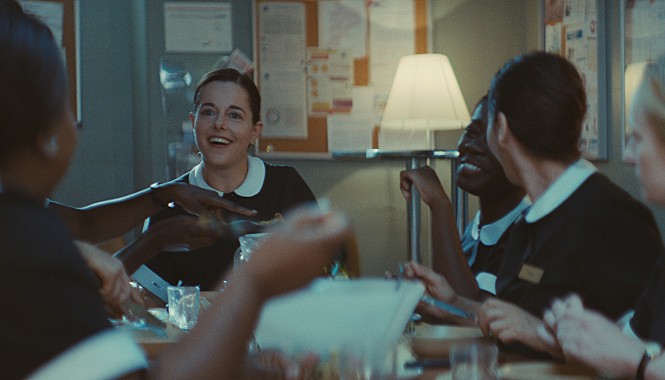
Playground (2021) ☆☆☆1/2 (3.5/4) : Her little struggle at the school

“Playground”, which was selected the Belgian entry for the Best International Film Oscar in last year, is often quite difficult to watch. As firmly sticking to its little young heroine’s limited perspective, the movie closely and vividly observes her conflicts involved with cruel acts of abuse and ostracization at her school, and you may wince more than once while still paying attention to her painful plight to the end.

When we are introduced to Nora (Maya Vanderbeque), this little young girl is about to begin the first day at her school, and she is apparently quite nervous about that even though her dear father assures that everything will be fine for her. She wants to be near her older brother Abel (Günter Duret), but she is soon separated from him as he has to go to his class, and we later see her making an awkward introduction to her classroom teacher and other students in the classroom.

At least, things do not look that bad for Nora as she slowly gets accustomed to her new environment. While she still cannot help but feel awkward especially during her physical education class, she eventually comes to befriend several female students around her during their lunchtime, and she also gets considerable attention and support from her classroom teacher, who turns out to be more generous and caring than expected.

However, there is actually a big problem which Nora comes to notice right from the very first day at her school. It turns out that her older brother has been bullied by several classmates of his, and Nora is certainly shocked as watching Abel helplessly abused by those cruel bullies. Naturally, she wants to tell their father about that, but Abel prevents her from saying anything to their father at all, and he keeps getting abused everyday whenever schoolteachers happen to be absent around him and his bullies.

As Nora becomes more conflicted about what is happening to her older brother, the movie gets us more immersed in her limited viewpoint. With the frequent close-up shots of Nora, cinematographer Frédéric Noirhomme’s camera generates a suffocating sense of isolation around her, and we come to empathize more with her growing inner conflict. Yes, Nora really wants to help her older brother as much as she can, but Abel continues to reject any help from her, and the situation becomes all the more complicated when she eventually tells her father about what is happening to Abel.

What follows next is a series of chilling moments which show us how mean and cruel kids can be. At one point, Nora witnesses her older brother tormented again by his bullies, and then she faces a dilemma without any easy solution for her. She manages to tell a bit to her classroom teacher, and her classroom teacher tries to do the right thing just like Nora, but she actually cannot do that much in the end.

As Nora and Abel conflict more with each other over their complex issue, Nora also comes to find herself gradually ostracized by other female students just because she is his younger sister. When Abel is later instructed to sit right next to her during the lunchtime, Nora soon becomes a target of vicious ridicules, and she surely feels angry and miserable. As a result, she tries to distance herself from her older brother, and that inadvertently leads to another heartbreaking moment in the film.

Only focusing on what Nora and Abel have to endure at their school, the screenplay by director/writer Laura Wandel, who received the FIPRESCI Prize when the movie was shown in the Un Certain Regard section of the Cannes Film Festival in last year, wisely lets us fill some blanks outside their little world. For instance, we do not know that much about their father except his currently unemployed status, but we can clearly sense his love toward his kids whenever he is on the screen, and that is the main reason why a certain key scene between him and Nora hits hard on emotional levels.

The last act of the film is packed with sheer emotional intensity, but everything remains held together pretty well under Wandel’s calm and austere handling of story and characters, which is often reminiscent of several memorable works of the Dardenne brothers including “The Son” (2002). Like many of the lead characters of the Dardenne brothers movies, our little heroine comes to face a difficult moral circumstance where she must make a choice, and I can only tell you that I admire how the film succinctly pulls off the powerful finale which feels not only dramatically urgent but also undeniably moving.

As the little precious heart of the film, young performer Maya Vanderbeque is simply astounding in her flawless natural acting, and she and her young co-star Günter Duret are effortless as their characters’ supposedly simple relationship is dynamically shifted from one point to another along the story. In case of a few main adult cast members in the film, Karim Leklou and Laura Verlinden dutifully fill their respective spots around Vanderbeque and Duret, and Verlinden is particularly wonderful when her character comes to have a little poignant moment with Nora.

On the whole, “Playground” is another superlative work of this year which deserves more attention in my trivial opinion, and Wandel made a commendable feature film debut here after making several short films. Although its running time is only 72 minutes, the movie is still impactful enough for us, and I think it will make you reflect more on how you managed to survive a jungle called school.

Posted in Movies | Tagged , , , | 1 Comment

Cassiopeia (2022) ☆☆(2/4): A disappointingly sappy Alzheimer drama

I do not mind those “disease of the week” flicks as long as they are engaging enough for me, but South Korean film “Cassiopeia” does not do its job that well as your average disease of the week movie. While I was distracted a lot by numerous plot contrivances throughout the film, it was also difficult for me to accept its main characters because they are more or less than tools to squeeze lots of tears from us, and I only came to observe its story and characters from the distance without much care or attention.

At first, the movie deliberately disorients us as showing its heroine’s increasingly confusing daily life. Soo-jin (Seo Hyun-jin) is a divorced female lawyer who has lived with her only daughter Ji-na (Joo Ye-rim) for a while since her divorce, and she really needs someone else to take care of her daughter as recently becoming quite busy with her works. Her father In-woo (Ahn Sung-ki) willingly comes forward to take care of his dear granddaughter, and Ji-na does not mind this at all, but both of them often find themselves baffled and frustrated with how Soo-jin becomes rather erratic at times. Sometimes she is quite nice to them, but then she becomes rather edgy and harsh, and, above all, her mind often seems alarmingly forgettable.

Anyway, Ji-na will soon be sent to her father currently living in US, and Soo-jin tries to prepare her daughter as much as she can, but then she belatedly comes to learn of what is really happening to her after one very confusing incident. When she is subsequently examined at a hospital, it turns out that her brain is actually going through the early onset of Alzheimer’s disease, and this bad news certainly devastates both her and her father.

After her daughter leaves for US, Soo-jin tries to maintain her status quo as helped by her father, but, as already warned by her doctor, her medical status only gets worsen day by day. She becomes much more forgetful than before, and there eventually comes a point where she has no choice but to admit to her boss and colleagues that she cannot work anymore due to her illness. While her father still stands by her as before, she tries to get accustomed to her situation, but, not so surprisingly, she cannot help but feel angry and scared as frequently reminded of what will inevitably happen to her.

Around that point, we are supposed to care more about this grim situation of hers, but the movie fails to develop Soo-jin as a real human figure to hold our attention. While Seo Hyun-jin surely tries a lot for conveying to us her character’s increasing fear and confusion along the story, Soo-jin remains merely defined by her illness without much human detail, and a subplot involved with her problematic law firm is heavy-handed at best and manipulative at worst as pushing her into more panic and anger.

On the opposite, Ahn Sung-ki, a legendary South Korean actor who has steadily continued his long acting career during last several decades, is supposed to function as a stable counterpart to his co-star, but, unfortunately, he does not have many things to do except looking sad or concerned. While frequently emphasizing his unwavering dedication to his daughter, the movie does not delve that deep into In-woo’s rather estranged relationship with her daughter in the past, and we never feel like getting to know more him or his daughter even in the end.

In case of several substantial supporting characters in the story, they are also rather flat and underdeveloped on the whole. While In-woo’s best friend and his wife are no more than background elements, Ji-na is just your typical precocious little girl, and the movie becomes all the sappier as Soo-jin and In-woo try to hide Soo-jin’s illness from Ji-na as much as possible. In case of a part involved with a facility for Alzheimer patients and their caretakers, the movie brings a bit of realism as expected, but this part only comes to set the ground for another blatant moment of emotional manipulation later in the story, and that is followed by a series of plot contrivances for giving us a big tearjerker moment.

I must say that I was rather flabbergasted by many glaring failures of the movie because it is directed by Shin Yeon-shick, who wrote the screenplay for Lee Jook-ik’s “DongJu: The Portrait of a Poet” (2015) and later directed “Roman 8:37” (2017). While the former was a humble but undeniably poignant biographical drama film about one well-known South Korean poet, the latter was a small religious drama movie which engaged me more than expected, and both of them were often interesting in terms of story and characters. In contrast, “Cassiopeia” frequently annoyed and bored me as failing to bring any genuine feeling or insight to its story and characters, and several key scenes associated with the very title of the movie only made me more aware of its artificial aspects.

In conclusion, “Cassiopeia” is inferior to a bunch of better films out there, and my mind has already been rummaging out the best moments of these good movies. While I was touched by the calm but aching sadness felt from “Away from Her” (2006), I remain haunted by a number of devastating scenes in “The Father” (2020), and I also appreciate several poignant moments in “Iris” (2001), “The Notebook” (2004), “Memories of Tomorrow” (2006), and “Still Alice” (2014), which are rather sappy in each own way but are still much better than “Cassiopeia” nonetheless. All of these films really impressed me a lot with their respective human qualities, and I sincerely recommend you to watch any of them instead.

Posted in Movies | Tagged , , , | Leave a comment