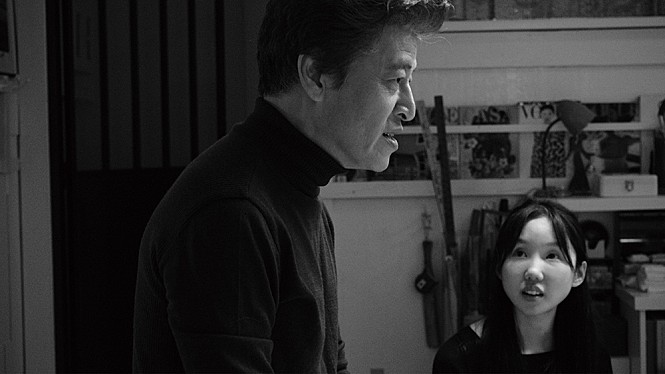
Confession (2022) ☆☆1/2(2.5/4): It’s competent, if not better

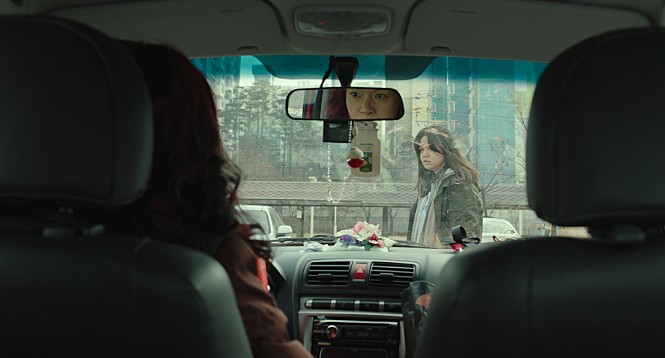
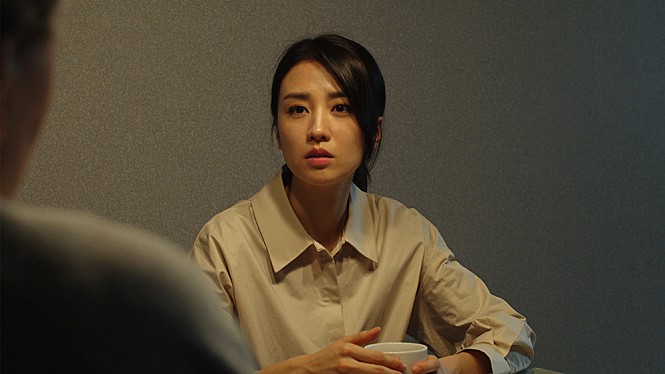
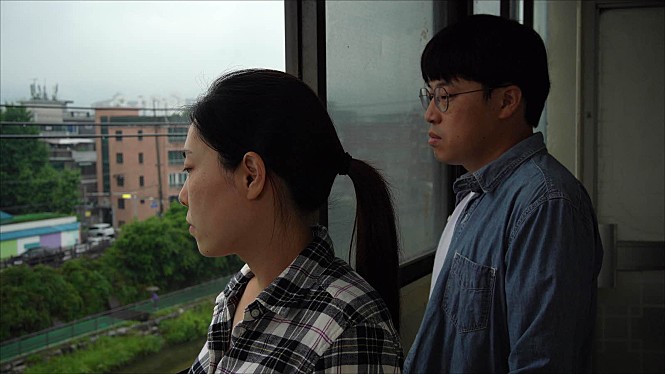
South Korean film “Confession”, which is the remake of Spanish film “The Invisible Guest” (2016), is fairly competent on the whole. Mainly because I belatedly checked out the original Spanish version on this Tuesday, I did not expect much when I was about to watch “Confession” at last night along with a few audiences, but it came to hold my attention to some degree with several nice new surprises behind its back, though I still am not sure whether it is better than the original Spanish version.

The movie does not waste its time in establishing the tricky circumstance surrounding Min-ho (So Ji-sub), a wealthy entrepreneur who was recently arrested for the murder of his mistress Se-hee (Nana). Although he is subsequently released after paying a big amount of bail, he is still regarded as the prime suspect of the murder case by the police and the prosecution, and that is the main reason why he really needs the legal service from one prominent female lawyer who has been quite invincible throughout her professional career.

When Min-ho happens to be at a little private cabin located somewhere in a rural mountain area on one cold and snowy day, the aforementioned lawyer suddenly comes for a very important change in the case. According to her, the prosecution gets a witness who may testify against Min-ho during the following trial, and she strongly demands that Min-ho should tell her whatever he has not been hiding before she officially agrees to defend him at the court.

Although Min-ho is quite reluctant to tell all to her, the lawyer gradually pushes and goads him as sharply pointing out how easily his claim of innocent can crumble here and there. For example, he claims that there was someone else in a hotel room where he and his mistress met at that time, but there is not any evidence to prove the presence of this unknown figure in the room, and, above all, it seemed that there was no possibility of escape at that time. When the police came to the room around the time of the murder, its sole entrance door was locked inside, and so were its windows.

This is indeed a classic example of closed room mystery, and it is fun to watch how the lawyer methodically delves into that as slowly cornering Min-ho for getting more truth from him. Not so surprisingly, he is indeed hiding something from her from the very beginning, and we accordingly get a series of flashback scenes showing how things got quite wrong for him and Se-hee around two months ago. Shortly after leaving the cabin together, they conflicted with each other a bit in Min-ho’s car, and that is when a certain serious incident occurred. Because they happened to be at a remote spot, they quickly attempted to cover up everything as much as possible, and it looked like they managed to get away with that – for a while.

Now I should be more discreet about describing the plot. There is a certain guy who may be that surprise witness for the prosecution because he happened to pass by where that incident occurred, and then there is also a middle-aged couple who turns out to have a motive as well as an opportunity for framing the murder on Min-ho. It looks like the lawyer clearly sees through almost everything from the start, but she still needs some piece of information from Min-ho, and Min-ho is still not so willing to bend to the lawyer’s demand.

While the screenplay by director/writer Yoon Jong-seok is mostly faithful to the original version during its first two acts, it also puts some extra twists on the original story during the last act for our entertainment. Regardless of whether this considerable modification is actually an improvement or not, it prevents the film at least from becoming a mere retread of what was presented in the original Spanish version, which has already been remade more than once in several other countries.

The movie depends a lot on the uneasy interactions between its two lead performers on the screen. So Ji-sub, who seems to be more interested in distributing good foreign films such as “Petite Maman” (2021) in South Korea these days, often feels rather wooden in my inconsequential opinion, but that somehow fits well with his character’s ambiguous attitude, and he also dutifully holds the ground for Kim Yun-jin, who surely has some good moments to savor as her character is looking for any weak spot from Min-ho and his claim of innocence. Although we are reminded again and again of how unreliable their characters are in one way or another, Kim and So keep us engaged via their good joint efforts, and they are also supported well by several other main cast members including Choi Kwang-il and Nana, a popular South Korean singer who demonstrates here a bit of her potential as a good actress.
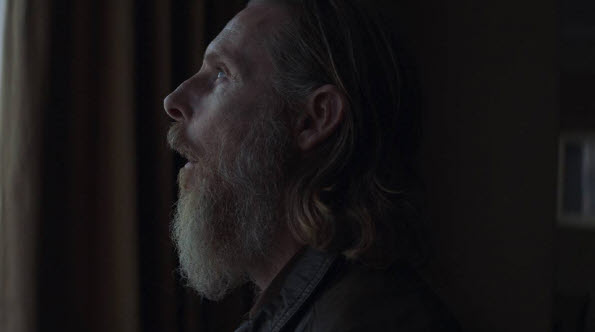
Overall, “Confession” is a solid genre piece which does not surpass its original Spanish version much despite a number of enjoyable technical elements besides the nice acting match between its two lead performers. I particularly liked the chilly wintry atmosphere generated from the cinematography by Kim Seong-jin, and the constantly anxious score by Mowg certainly brings more chilliness to the overall picture. Because I gave “The Invisible Guest” 2.5 stars, I should also give “Confession” 2.5 stars, but I must say that it is not a total waste of time at all, and I think you may enjoy more than me especially if you have not watched the original Spanish version yet.

Posted in Movies | Tagged , , , | Leave a comment

Remember (2022) ☆☆1/2(2.5/4): Isn’t he too old for this?

When I watched South Korean action thriller film “Remember” at last night, my mind was often more occupied with wondering how old its hero actually is, instead of being engaged in the film itself. As far as I could see from the occasional flashback scenes in the movie, its hero was clearly an adolescent during the 1940s, so he is around 85 at least if we assume that the movie is set around the 2010s, but this old dude does not look that old or weary as going through one action scene after another in the film.

As a matter of fact, the actor playing him, Lee Sung-min, is actually 53 at present, and I guess the movie cannot possibly hide his relatively younger status despite all the makeup on his face. No matter how much he tries to look as frail and aged as possible, Lee still looks as young as, say, Liam Neeson or Keanu Reeves, and that is probably the main reason why I kept trying to guess his character’s real age, just like I did as watching a supporting character played by late Christopher Plummer in Spike Lee’s “Inside Man” (2006)

Speaking of Plummer, the movie is actually a remake of the 2015 Canadian film of the same name where he played an aging dude going after some hidden Nazi criminal. Because the original version was directed by none other than Atom Egoyan, I am sure that it is quite different from the South Korean version, though I somehow missed it when it came out in 2015. After all, it is rather hard to imagine Egoyan going for something equivalent to all those gritty violence and blatant melodrama presented in the South Korean version, isn’t it?

During its opening part, the movie quickly establishes its hero’s current status. Despite being a bit too old to work, he gladly works as a part-time employee at a local TGI Fridays restaurant (Did its manager ever take a look at his identification card?), and we see how close he is to a young fellow employee named In-gyu (Nam Joo-hyuk). When he sees In-gyu being bullied and humiliated by a very rude customer at one point, he remains silent at first, but, what do you know, he already concocts a little clever plan for payback, and In-gyu certainly appreciates that as enjoying that sweet taste of payback along with him.

And then something happens to our old hero. His children notify that his wife, who was incidentally the main reason of his life, is about to die after several years of illness, and he naturally grieves for that a lot as going through her subsequent funeral, but then he embarks on executing something he has secretly planned for many years. As gradually revealed along the plot, there are five certain figures responsible for his family’s painful tragedy during the Japanese Occupation period, and he is quite determined to eliminate them all before his eventual death, though, as his concerned doctor friend points out, he may not succeed at all as he has been suffering the early stage of Alzheimer’s disease.

While his targets are as old as he is, most of them are pretty despicable to say the least as enjoying each own wealth and social prominence without any ounce of remorse. For example, one of them is a retired but very powerful general, and there is a brief scene where he shamelessly justifies what he did during the Japanese Occupation period. As a matter fact, numerous traitorous South Korean people like him were left unpunished in real life even after the end of the World War II just because they quickly allied themselves with the US military, and these vile opportunists and their descendants still have power and wealth around here and there in the South Korean society, while never apologizing for their immense crimes against their country and its people.

Because he needs some assistance for executing his longtime revenge plan, our old hero gives In-gyu an offer he cannot possibly refuse. All In-gyu needs to do in exchange for a considerable amount of cash is driving his old friend to here and there as requested during next several days, and he does not hesitate due to a desperate personal reason of his. He really needs to pay his debt to some local loan shark right now, and his old friend’s offer certainly feels like an opportunity too good to reject.

Of course, like Jamie Foxx’s character in Michael Mann’s “Collateral” (2004), In-gyu soon comes to realize that he gets himself involved into a big trouble, but he lets himself persuaded and pushed by his old friend, who does not stop at all even though his illness gets worse day by day. He surely made some preparation for that in advance, but, not so surprisingly, there eventually comes an inevitable moment when he even cannot remember well where he is going, and that surely puts some extra suspense on the story.

As he and his reluctant accomplice move from one point to another, the movie also pays some attention to several characters on the opposite side. Besides the aforementioned retired general and his hired goons, there is also a detective who comes to sense something fishy about his latest case, and the movie accordingly gives us several action scenes including the one where our old hero attempts to evade two chasing policemen along with In-gyu. Although he is not Jason Bourne or John Wick at all, he turns out to be pretty smart and resourceful despite his increasingly fragile medical condition, and he is certainly indomitable when he is almost close to the final step of his plan later in the story (Is this a spoiler?)

Directed by Lee Il-hyung, “Remember” feels rather disjointed as not only trying to be serious about its main subject but also attempting to be a cathartic action film, and it stumbles more than once especially during the expected climatic finale which is a little too melodramatic in my humble opinion. Yes, I have seen old dudes doing big action scenes on the screen during last several years (Remember how Christopher Lloyd, who is 84 at present, recently had his own brief but juicy fun in “Nobody” (2021)?), but “Remember” made me keep wondering about its hero’s age throughout its 2-hour running time, and that was a big distraction for me to say the least.

Posted in Movies | Tagged , , , | Leave a comment

The Invisible Guest (2016) ☆☆1/2(2.5/4): An intense defense preparation

Spanish film “The Invisible Guest”, which is currently available on Netflix in South Korea, is one of those typical mystery thriller flicks which constantly suggest to us that they are holding some cards held behind their back for surprising us. Naturally expecting to be surprised from the beginning, I observed its increasingly tricky narrative from the distance, and I was rather disappointed to see that there is nothing particularly new to impress any seasoned moviegoer like me despite a few effective surprises served along the plot.

The mystery presented at the beginning of the film feels rather simple but intriguing nonetheless. A prominent photographer named Laura Vidal (Bárbara Lennie) was found dead in a room of some snowy rural hotel, and her married lover Adrián Doria (Mario Casas), who is also incidentally a very successful business, is arrested once the police broke into the room and then found her lifeless body, but he still claims that he is innocent. According to him, someone unknown was in the room before eventually attacking him and then murdering Laura, but there is not any evidence to prove the presence of this mysterious figure at that time. Furthermore, it also seems that there is no possible way to escape the room before the police came into the room; the room has one only entrance, and its windows, which were already shut down and then locked by the hotel staff due to cold winter weather, remained untouched without any suspicious trace.

This is surely your average closed room mystery, and we wonder what really happened as watching how a middle-aged female lawyer recommended by Adrián’s lawyer questions him step by step. As a defense lawyer, she has never lost any case throughout her long career, and it looks like she decided to handle Adrián’s case mainly because it seemed pretty challenging to her in many aspects. Besides the mystery surrounding the hotel room, there has not been any plausible suspect besides Adrián from the beginning, and Adrián keeps insisting that he is really innocent despite that.

 However, right from entering Adrián’s posh apartment where he is waiting for her, the lawyer instantly makes it very, very, very clear to him that he must tell everything to her before it is too late. It turns out that the prosecution recently happens to get a surprise witness at the last minute, so Adrián and the lawyer must come to the court exactly three hours later although they still do not know who that witness really is, and the lawyer asks him again on whether he has not told everything yet.

This can be an interesting setup for a simple but tense two-hander, but then the movie gives us a series of long flashback scenes as Adrián reluctantly tells the lawyer about what happened between him and Laura. They were indeed lovers, but neither of them was particularly willing to leave their respective spouses just because their affair was pretty much like a care-free vacation away from their respective daily lives, and then something quite bad happened when they were returning from their latest rendezvous.    

I will not go into details here, but I guess I can tell you a bit about what happened next. While Adrián and Laura subsequently try to cover up their unfortunate incident as much as possible, the situation become more complicated due to more than one reason. There is some dude who happened to pass by the spot shortly after the incident, and there is also a middle-aged couple with whom Laura gets involved after Adrián left for hiding certain incriminating evidences somewhere. 

As Adrián tells more about what he and Laura did for saving their respective careers and reputations, his lawyer remains tactful and watchful as before while thoroughly examining what he said. From time to time, she shrewdly senses what he may be still hiding even at present, and it is often engaging to watch how these main characters frequently push and pull each other till the expected climax where all cards of theirs are on the table.

However, the screenplay by director/writer Oriol Paulo often loses its narrative pacing as relying too much on flashbacks and narrative reversals. As the movie continues to become so twisty, we become rather distant to its story and characters, and you may notice numerous plot holes and contrivances here and there even before the film arrives at its ending.

At least, the main cast members of the movie sell their materials fairly well under Paulo’s competent direction. I enjoyed the tense interactions between Mario Casas and Blanca Martínez, and I wish the movie just simply trusted its two main performers and went all the way along with them in more straightforward ways. In case of several supporting performers surrounding them, Bárbara Lennie, Francesc Orella, Blanca Martínez, José Coronado, and Ana Wagener are well-cast in their respective parts, and José Coronado and Ana Wagener ably handle their supporting characters as they become more substantial along the story.

By the way, the main reason why I watched and reviewed “The Invisible Guest” is pretty simple: there have actually been several foreign remakes during last several years, and one of them is a South Korean version which will be released in South Korea today. Considering what I saw from the original version, I have no idea how the South Korean version can possibly do more except bringing some local changes as required, but I will not grumble if it entertains me as much as the original version did.

Posted in Movies | Tagged , , , | Leave a comment

Descendant (2022) ☆☆☆1/2(3.5/4): The last slave ship – and those descendants

Netflix documentary film “Descendant”, which was released on this Friday, is about one relatively unknown black American historical fact which deserves to be known more widely for good reasons. While it is surely informative to anyone unfamiliar with its main subject (Yes, I am one of such persons), the documentary also thoughtfully examines the long and persistent connections between the past and the present, and it is surely one of the most enlightening documentaries of this year in my humble opinion.

The main subject of the documentary is a slave ship named the Clotilda, which has been known as one of the last American slave ships in the late 19th century. Although slavery already became illegal in US even before the American Civil War was started, slave trade was still thriving especially in the South during that period, and many local businessmen like Timothy Meaher, who was the owner of the Clotilda, amassed their big fortune via this heinous trade business of theirs.

The last voyage of the Clotilda, which was incidentally prompted by a little casual bet between Meaher and his business associates in 1860, brought 110 African slaves sent from an African kingdom named Dahomey, which is Benin at present. Once these slaves got off from the ship in the port of Moblie, Alabama, the ship was subsequently destroyed and then sunk somewhere for covering up its criminal activities, and these slaves were quickly sold to here and there while Meaher got all the profit from that.

At least, these slaves got freed around 5 years later as the war was ended with the victory of the North, though they still could not go back to Africa. Their leader, Cudjo Kazoola Lewis, and his fellow slaves eventually decided to buy and then settle in a certain area in Mobile, and that was the beginning of Africatown, which is also known as Plateau.

Although their slave ship was something they could not possibly talk about in public due to those rich white people with power, Lewis and his fellow slaves told their painful history to their sons and daughters, and then their oral history was handed to one generation after another during next several decades. As a matter of fact, Lewis was also subsequently interviewed by a prominent African American folklorist named Zora Neale Hurston, who has been also incidentally known as the first black female American filmmaker in the history. The documentary shows us an old silent film clip shot by Hurston at that time, and Lewis comes to look and feel a bit more vivid to us as we become more curious about what kind of a person he really was.

Hurston later wrote a book titled “Barracoon: The Story of the Last “Black Cargo””, but, alas, her book was not published until 2018. When the book was eventually published, Africatown came to draw more attention than before, and that consequently boosted the longtime search for the Clotilda. Despite many failed attempts, those community activists never gave up their hope, and they came to have a bit more expectation than before when several experts from the National Geographic came to their town for exactly locating where the ship was buried.

Meanwhile, director/co-writer/co-producer Margaret Brown also focuses on how the past of Africatown is still alive well while exerting its negative influence over Africatown and its people. At one point we look at a local cemetery where Lewis and many other slaves were buried, and we can only guess how much of their hurtful histories have been forgotten and overlooked for decades. In addition, the documentary makes a sharp point on how the long environmental problem of Africatown and its people have been connected with the considerable wealth of the descendants of Meaher, and, not so surprisingly, the descendants of Meaher declined to be interviewed for the documentary.

In the end, the remains of the Clotilda were discovered thanks to a little detective work by a local reporter named Ben Raines (He also wrote his own book about the ship, by the way), and the residents of Africatown were excited to see their local oral history finally confirmed and recognized, but several community activists express some doubt and reservation in front of the camera. While they surely are happy for the discovery of the remains of the Clotilda, they are also cautious about the next steps to follow, and they are sincerely concerned about whether the history of Africatown can be respectfully presented and preserved instead of ending up becoming another Southern historical tourist attraction.

Nevertheless, things look fairly optimistic thanks to the ongoing efforts of those local community leaders and activists, and the documentary gives us a nice example showing how Africatown and its long history can be presented and remembered well with considerable respect and enlightment. At the Smithsonian National Museum in Washington D.C., there is a wonderful section devoted to African American history and culture, and we can only hope that whatever will be installed in Africatown can be as exemplary as that.

On the whole, “Descendant” did a commendable job of illuminating the past, the present, and the future surrounding a hidden story of American slavery, and you may want to delve more into its main subject after watching it. To be frank with you, I already put both Hurston’s book and Raines’ book on my reading list, and that is an achievement to say the least.

Posted in Movies | Tagged , , , | 1 Comment

The Cave (2021) ☆☆☆(3/4): His wife and his first love

I could not help but chuckle a bit at times while watching South Korean film “The Cave”. At first, it comes to us as a calm and intimate story about loss and healing, but it also can be quite amusing and melodramatic as its two main characters try to cope with their complicated emotional circumstance, and you may appreciate how the movie pulls off its warm and tender ending after frequently going up and down along with its main characters.

At the beginning, the movie succinctly establishes how much Min-hee (Yoo Da-in) has been devastated by her husband’s unexpected death during his routine visit to his hometown in Jeju Island. Regardless of whether it was actually a suicide or an accident, her husband’s death makes Min-hee reflect more on how much they were estranged from each other before his death, and that only leads to more sorrow and grief for her. Without him, her daily life becomes empty and barren with no one to lean on, and, above all, she does not know what to do next for her life.

While rummaging the stuffs belonging to her husband later, Min-hee comes to learn about his longtime wish to live at a certain place in his hometown. It is just one of several houses in one neighborhood, but Min-hee becomes curious about why her husband wanted to live there, and her curiosity is increased more after she sees several photographs he never showed her, which are apparently shot by somebody else.

Eventually, Min-hee moves into that house several months later, and that is how she encounters Mok-ha (Jo Eun-ji), who incidentally lives right next to Min-hee’s house. Besides running a little nearby cafe, Mok-ha also teaches yoga to some of her neighbors, and we get a little amusing moment as she gladly provides a bit of yoga practice to Min-hee during their first encounter.

As drawn to Mok-ha’s gentle and vivacious personality, Min-hee gets to know a bit about Mok-ha’s personal life. Whenever she is not paying attention to yoga and cafe, Mok-ha usually spends her time on taking care of many different plants filling her cozy house, and she also has a little private spot where she has a small but nice garden of her own. That spot also has a tiny cave, and it does not take much time for Min-hee to notice that the cave is identical to the one shown in one of her husband’s photographs. Talking more and more with Mok-ha, she comes to realize that Mok-ha was actually the first love in her husband’s life, and she also comes to notice a significant resemblance between her husband and Mok-ha’s young adult son.

Gradually discerning what her husband was hiding from her during all those years, Min-hee become more furious and confused than before, but she does not know what she should do with this fact, and neither does Mok-ha, who instinctively guesses what her new neighbor is hiding from her but does not say anything yet. No, she and Min-hee’s husband were not that close to each other for years after being separated from each other a long time ago, and letting his wife into her life is the last thing she wants now, but she still does not know what to do with Min-hee – especially when Min-hee begins to approach closer to her son later in the story.

Even when the conflict between these two ladies grows step by step, the movie sticks to its usual calm attitude. The circumstance becomes quite tricky as Min-hee looks like being willing to do more than encouraging the artistic aspiration of Mok-ha’s son, and we accordingly get a series of blatantly melodramatic moments including the one where our two ladies attempt a sort of catfight between them, but the movie still shows lots of care and understanding toward them. While Min-hee is basically an annoying intruder coming into Mok-ha and her son’s fairly good life, we understand her grief and confusion, and we come to brace ourselves when she may cross some lines a bit. In case of Mok-ha, we come to sense how much she has endured and prevailed for years as raising her son alone, and we are not so surprised when she shows some bitter feelings toward her first love, who was never there for her or her dear son.

Although the screenplay by director/writer Lee Young-ha stumbles a bit during the last act, her two lead actresses steadily carry the movie to the end, and they surely demonstrate here that they are two of the most interesting South Korean actresses at present. While Yoo Da-in, who has steadily advanced since her unforgettable breakthrough turn in “Re-encounter” (2010), deftly handles her character’s emotional turmoil along the story, Jo Eun-ji, who has been endearing to me since her delightful scene-stealing supporting turn in “My Scary Girl” (2006), ably holds the ground for her co-star, and they are also supported well by a few main cast members including Jung Yong-sub and Ha Kyung, a young promising actor who holds his own small place well as Mok-ha’s son.

Overall, “The Cave”, which is released in South Korean theaters as “Day and Moon” in this week, is an engaging character drama equipped with good mood and thoughtful storytelling in addition to solid performances. Besides its two lead actresses’ stellar acting, I also enjoyed the serene winterly atmosphere of Jeju Island, and I admire how the movie builds and then develops its main characters via small and big details under its palpable local ambience. Although this is only her first feature film, Lee surely shows that she is another talented South Korean filmmaker to watch, and it will be interesting to see what she will give us in the future.

Posted in Movies | Tagged , | Leave a comment

Black Adam (2022) ☆☆(2/4): Dwayne Johnson is just being there…

I still remember how inconsequential Dwayne Johnson’s brief appearance in “The Mummy Returns” (2001) was. While the trailer emphasized this hulking star wrestler’s participation in the film to considerable degree, whatever he did for the film did not amount to much on the whole, and he did not often seem to be on the screen at all as mired in lots of special effects.

Strange to say, I got a similar impression when I watched Johnson’s new film “Black Adam” at last, the latest product from the DC Extended Universe. Since “The Mummy Returns”, Johnson has risen as a major Hollywood star actor during next two decades, and I came to appreciate his star quality to some degree while really enjoying some of his films, but he simply occupies the screen here without generating much sense of fun and entertainment. As a result, his character often feels like being no more than a floating wooden CGI, and his monotonously gloomy seriousness frequently clashes with occasional clumsy self-conscious attempts for some amusement in the film.

Because the movie is your average superhero origin story, its opening part naturally presents the background story for Johnson’s superhero character Teth-Adam, who was originally a plain common person in an ancient kingdom named Kahndaq. Thanks to a certain powerful local mineral and some interventions from several powerful magicians, Teth-Adam came to acquire his superpower and then fought against an evil king who had exploited and oppressed the people of his kingdom, but his big showdown with that evil king led to a long, long, and long imprisonment in one big stony tomb because of a reason to be explained later in the movie.

Anyway, Teth-Adam happens to be released at last thanks to a young local woman named Adrianna Tomaz (Sarah Shahi), who has been looking for where he has been buried for a desperate reason of hers. Kahndaq has recently been occupied by some powerful international criminal/military organization, and she sincerely believes that the return of Teth-Adam, who has still been regarded as a legendary local hero, will bring a new hope to those oppressed people of Kahndaq just like that old ancient time.

However, Adrianna soon comes to find that Teth-Adam is not as heroic or righteous as she and many others in Kahndaq believed. He turns out to be a mighty killing machine full of anger and fury, and we are accordingly served with a big sequence of mass destruction a la Zack Snyder as Teth-Adam casually and brutally kills a bunch of mercenary soldiers unwisely standing on his way.

When Teth-Adam is later brought to Adrianna’s apartment, Adrianna’s young son Amon (Bodhi Sabongui) cannot possibly be more excited about that as your average superhero fan. We see lots of DC superhero stuffs in his bedroom, and we are not so surprised as observing how eagerly this plucky boy attempts to give Teth-Adam some advices on being a cool superhero.

Meanwhile, the movie also brings several other superhero characters into the story. Once the presence of Teth-Adam is detected, the four members of the Justice Society are swiftly sent to Kahndaq for handling and then containing him, and what we get next is a more violent version of what we already saw from “The Avengers” (2012). As these four Justice Society members try to suppress their mighty opponent in the middle of Kahndaq, lots of things are destroyed here and there, but all these actions do not feel that impactful as drenched in lots of bland and uninspired CGI. To be frank with you, I am now missing when a certain climactic moment of “The Avengers” unintentionally took me back to “The Human Centipede” (2009).

It is not much of a spoiler to tell you that the superhero characters in the movie eventually band together in front of a certain big threat against not only Kahndaq but also the whole world, but the movie does not give us much reason to care about that due to its deficient storytelling and characterization. While Teth-Adam remains quite uninteresting even after he reveals a painful personal story behind his glum attitude, the other superhero characters in the film are mostly defined by their respective superpowers rather than each own personality, and they sometimes look like the cheap imitations of many other superhero characters ranging from Professor Xavier to Deadpool. In case of the villains of the film, they are all the more colorless, and that is the main reason why the climactic part of the film feels quite hollow and redundant to say the least.

To make matters worse, many of the cast members in the film are wasted as often looking like simply waiting there for getting their respective paychecks. Although he can be a bit more serious and intense as shown from “Faster” (2010), Johnson is curiously stiff and lifeless here in this film, and it is rather distracting to see how he seems to emulate Arnold Schwarzenegger’s robotic acting in “The Terminator” (1984) at times. While Sarah Shahi and Bodhi Sabongui manage to acquit themselves well, Aldis Hodge, Noah Centineo, Quintessa Swindell, and Pierce Brosnan are criminally under-utilized without many things to do, and Brosnan frequently seems to be content with merely filling his spot and then getting paid later.

Overall, “Black Adam” is utterly disappointing compared to other recent successful superhero flicks or director Jaume Collet-Serra’s more enjoyable works such as “The Shallows” (2016). Seriously devoid of fun and personality, the movie is just a bloated teaser for whatever will come next, and, folks, I do not give a damn for now.

Posted in Movies | Tagged , , | Leave a comment

Ticket to Paradise (2022) ☆☆1/2(2.5/4): Clooney and Roberts still have it, though

“Ticket to Paradise” made me a bit nostalgic during my viewing due to its two charismatic lead performers. Although more than 20 years have passed since they rose as major Hollywood star performers, George Clooney and Julia Roberts still shine with each own charm and presence as before, and my mind occasionally went back to when they appeared together in Steve Soderbergh’s “Ocean’s Eleven” (2001) and two following sequels. It is a shame that “Ticket to Paradise” ends up being merely passable and predictable compared to that jolly time, but it is occasionally buoyed by their fairly commendable efforts nonetheless, so it was not a total waste of time for me at least.

Clooney and Roberts play David and Georgia Cotton, a longtime divorced couple who still cannot stand each other despite many years of separation between them. Being with each other is certainly the last thing they want to do, but they agree to put aside their old mutual resentment for a while because of their dear daughter Lily (Katilyn Dever), who is going to work at a prominent law firm in Chicago after her upcoming law school graduation. Knowing too well that how much her parents still resent each other, Lily tries her best for making the situation as amiable as possible, and her parents also do try, but, not so surprisingly, they cannot help but clash with each other right from when they happen to sit right next to each other during the graduation ceremony.

Once Lily leaves for Bali, Indonesia for a little respite along with her best friend Wren (Billie Lourd) before eventually beginning her career at a prominent Chicago law firm, it looks like David and Georgia will not have to meet again at least for some time, but, alas, something quite unexpected happens. Not long after arriving in Bali, Lily meets a handsome local lad named Gede (Maxime Bouttier), and they quickly fall in love with each other during next several weeks. When they subsequently announce their upcoming wedding to David and Georgia, both David and Georgia are certainly caught off guard, and they become all the more concerned because their daughter is going to give up her promising future just for love.

As they subsequently go together to Bali, David and Georgia agree that they must try to stop the wedding by any means necessary, so they embark together on working together against their daughter’s marriage, though that turns out to be not easy at all. While receiving the warm hospitality of their future in-laws, they also see how happy their daughter really is, and their future son-in-law turns out to be a lot more than his good-looking appearance. After all, he has been running a fairly successful seaweed farm for years, and, as far as I could observe, his family seems very affluent considering how much they prepare for the upcoming wedding.

Now you have already discerned where the story is going, and The screenplay by director Ol Parker, who previously directed “Momma Mia! Here We Go Again” (2018), and his co-writer Daniel Pipski does not surprise us much on the whole, but Clooney and Roberts have some juicy fun together from time to time. There is an amusing scene where their characters deliberately sabotage the official engagement ceremony for Lily and Gede, and I also enjoyed the sequence where David and Georgia willingly throw themselves into sheer silliness as having an evening drinking match with Lily and Gede.

Of course, the mood becomes more serious when David and Georgia come to wonder what is really the best for their daughter’s happiness, and that is where the movie becomes more predictable than before. Yes, there comes an inevitable moment when Lily comes to learn of what her parents have been doing behind their back. Yes, there comes a reflective moment when David and Georgia begin to look upon what has been lying beneath their longtime mutual resentment. Yes, there comes an expected moment of big speech in the middle of the wedding ceremony when David and Georgia must be really supportive of their daughter as well as their future son-in-law.

Fortunately, Clooney and Roberts handle these and several other very predictable moments well. Although his career has been going down mainly due to the critical/commercial failures of his recent directorial works, Clooney is still capable of exuding his usual charming screen persona, and I wish the movie utilized more of his wily comic sides. On the opposite, Roberts skillfully alternates between sunny likability and barbed wit, and she surely demonstrates here that she can still be funny as she was in many romantic comedy films including “Pretty Woman” (1990).

In case of several other cast members in the film, they are mostly stuck in their respective thankless supporting roles. While Kaitlyn Denver and Maxime Bouttier are often limited by their blandly wholesome roles, Billie Lourd and Lucas Bravo do not have much to do except providing occasional comic relief, but Lourd is allowed to throw a few funny one-liners for our amusement at least.

Overall, “Ticket to Paradise” will not impress you much especially if you are a seasoned moviegoer like me, but it is nice to see Clooney and Roberts bringing some breeziness to those numerous conventional moments in the film. They deserve better in my inconsequential opinion, but they try their best with their materials anyway, and that is sort of admirable.

Posted in Movies | Tagged , , , , | Leave a comment

Anaïs in Love (2021) ☆☆☆(3/4): In her irrepressible pursuit of romance

French film “Anaïs in Love” is a wryly delightful comedy about one irrepressible young woman who cannot help but drawn to more possibility of romance. You may roll your eyes as observing how headless she can be, but you will also see how she can get away with many things thanks to her undeniable natural charm, and you will certainly get some good laughs as she bounces from one amusing moment to another throughout the film.

When we are introduced to Anaïs (Anaïs Demoustier) at the beginning of the film, she is around the end of the relationship with her boyfriend, who recently moved out of her apartment. Although she is currently behind several months in case of paying the rent to her landlady, she is so vivacious and excited about a little private party she is soon going to attend, and her landlady cannot possibly say anything bad to her while flatly reminding Anaïs of her ongoing rent problem and then giving a fire alarm for her apartment.

At some other apartment building where that party is being held, Anaïs comes across a middle-aged guy named Daniel (Denis Podalydès), who also happens to be about to attend that party just like her. When they subsequently interact more with each other at the party, both of them cannot help but attracted to each other, and, what do you know, they soon begin a little affair between them even though Daniel has actually lived with a prominent female novelist for more than 10 years since he left his first wife.

Meanwhile, we get to know a bit more about Anaïs’ personal life. When she reveals to her boyfriend that she has been actually pregnant for several weeks, they come to argue a lot with each other, and that is the official end of their relationship. For taking care of that little matter of hers, Anaïs visits her hometown, and that is when she comes to learn that her mother may not live that long due to the recurrence of her cancer. As she struggles to sort out her complicated feelings alone, the score by Nicola Piovani swells as required, but it does not take much time for her to get back to her usual carefree mode before having an abortion as planned.

However, there comes another trouble for her when Anaïs is reminded again of how Daniel is not as committed about their relationship as she is. He says he loves her, but he is still not so willing to leave his current partner just because he does not want to disrupt the status quo between them at all, and that eventually becomes a deal-breaker for Anaïs, who promptly ends her relationship with him without any hesitation.

After that, Anaïs decides to be more serious about completing her graduate course, but then she finds herself gradually fascinated with Daniel’s partner Emilie (Valeria Bruni Tedeschi) after reading one of Emilie’s novels. Even though she has some big tasks to handle right now, she goes down to a small rural hotel where Emilie is attending a little meeting for writers, and then she actively approaches to Emilie, who gladly receives her unadorned adoration while also becoming quite curious about her.

What eventually happens next between these two ladies does not surprise us much, but the screenplay by director/writer Charline Bourgeois-Tacquet often tickles us as they playfully swirl around each other step by step. When they have to come across a little hidden room which is incidentally full of erotic and kinky stuffs, Anaïs becomes all the more attractive to Emilie than before, and Emilie does not reject her at all as having some fun with her, though, like any other thoughtful matured women, she remains tentative and reserved while keeping her feelings and thoughts to herself.

In the meantime, Anaïs continues to charm several people around her besides Emilie. In exchange of paying less for her staying at the hotel, she agrees to do some menial works along with a young temporary employee named Yoann (Jean-Charles Clichet), and Yoann seems to be interested in getting closer to her, but it does not take much time for him to see that she has the other fish to fry. When Daniel later enters the picture again (Is this a spoiler?), he is not so amused at all to say the least, but he still does not know what to do with Anaïs, and she does not give a damn at all about whatever he is going to do.

In the end, the story culminates to a point where Anaïs and Emilie become much more honest about their rather complicated situation, and the movie alternatively amuses and touches us when Emilie subsequently gives a calm and sensible analysis on not only their relationship but also themselves. Both of them are smart and intelligent enough to discern what may be the best for both of them, but they are still helpless in front of their matter of heart, and that is why the last scene between them comes with a bit of naughty humor. Besides generating an effortless romantic heat between their characters, Anaïs Demoustier and Valeria Bruni Tedeschi ably complement each other throughout the film, and they are also supported well by several other main cast members including Denis Podalydès and Jean-Charles Clichet.

In conclusion, “Anaïs in Love” is your average witty French romantic comedy film packed with enough intelligence and amusement, and I must confess that I chuckled more than once as observing what a force of nature its endearingly flawed heroine really is. Regardless of whatever will happen next after the ending of the film, she will always move forward for joie de vivre, won’t she?

Posted in Movies | Tagged , | Leave a comment

Sunday League (2020) ☆☆(2/4): A tedious league of their own

South Korean independent film “Sunday League” tries a lot, but it did not amuse or move me much on the whole. As a sports comedy drama, it may intrigue you a bit with its sport of choice, but it handles its story and characters so predictably and tediously that its short running time (83 minutes) actually felt much longer to me, and I remember more of how frequently I checked the time throughout the screening.

The first act of the film shows us what a pathetic loser its hero is. As shown from the opening scene, Joon-il (Lee Sung-wook) was a promising soccer player during his college period, but his aspiration was soon broken due to an unexpected physical injury, and now he works as a coach at a local soccer academy for kids without much hope or prospect. Besides being a lousy coach barely tolerated by his boss who is incidentally former colleague, he is also about to get divorced, and his house has been pretty messy since his wife left along with their young son.

After Joon-il makes another mess at his workplace, Joon-il’s boss gives him an offer he cannot refuse. He recently begins an amateur futsal club for adults, and he already has two guys willing to join the club. When he asks Joon-il to work as the coach for these two guys, Joon-il is not so eager to do that, but he has no choice from the beginning because he will get eventually fired if he refuses this offer.

Joon-il’s very first day with his two team players does not look that promising to say the least. Both of them show genuine enthusiasm, but their athletic skills are pretty hopeless in addition to not having any sense of teamwork, and this does not change much even after some other guy, who needs to play more outside due to his manic depression, joins the team as its third member. Although they quickly form the friendship among themselves, Joon-il’s team members remain quite amateurish, and Joon-il becomes all the more disinterested while drinking a lot as usual.

Of course, things gradually come to change as the team members keep trying day by day. At one point, they come to devise their own way of practicing a certain movement for their upcoming first game, and that is one of a few moments in the film which actually feel amusing to me. In case of their first game which is a part of a local amateur futsal tournament, this part does not work that well in contrast because it lacks comic momentum from the beginning, and the movie also fails to generate enough excitement as simply observing how crummy Joon-il’s team members are on the field. Okay, as a mini-version of soccer which only requires three team members, futsal may be inherently less exciting than soccer, but how this part is executed on the screen feels as clumsy as Joon-il’s bumbling team members.

Above all, none of Joon-il’s team members are not particularly developed well in each case. In case of the aforementioned team member who has a manic depression problem, he is usually defined by his glaring introverted appearance, and the movie does not delve much into whatever he has been actually struggling with. In case of the two other team members, they are no more than broad caricature figures to be used for cheap laughs, so we come to observe them from the distance without much care even when they become a bit more active later in the story.

Furthermore, Joon-il is not an interesting figure to watch. To be frank with you, this guy is pretty unlikable as often mired in self-pity and irresponsibility, and that is the main reason why a series of melodramatic moments during the second half of the movie does not work at all. We are supposed to feel sorry for him, but we only see him behaving like a big jerk, so his expected moment of penance and redemption does not ring that true to us at all.

In the end, the movie ends up being a typical drama of male midlife crisis without much to distinguish itself, and you may also its notable lack of substantial female characters. As a matter of fact, there is only one female character in the story besides Joon-il’s wife, and she only comes and then goes in one single scene without leaving much impression. In case of Joon-il’s wife, she only functions to remind us of how lousy he has been to his wife and their son, and a subplot involved with their son is trite and contrived without conveying to us the real sense of father and son relationship.

Anyway, the main cast members of the film do try as much as possible with their broad characters. While mostly limited by his flat character, Lee Sung-wook dutifully carries the movie as required, and several supporting performers surrounding him, Shim Woo-sung, Lee Soon-won, Oh Chi-woon, and Kang Young-gu, occasionally show some comic potential which is unfortunately not so utilized well in the film.

Overall, “Sunday League”, written and directed by Lee Sung-il, is disappointing in terms of storytelling and characterization, and my mind is already thinking of several similar but better South Korean films out there. I particularly want to recommend “The King of Jokgu” (2013), and, believe me, you will have a lot more entertaining time with that little but enjoyable sports comedy drama movie.

Posted in Movies | Tagged , , , | Leave a comment

Smile (2022) ☆☆☆(3/4): It Smiles

“Smile” is a little spooky horror film which has some nasty fun with its heroine’s very unfortunate supernatural situation. Although it is reminiscent of many other horror films ranging from “Ring” (1998) to “It Follows” (2015), the movie did its job fairly well as effectively unsettling us more than once along its story, and it is also supported well by the strong acting by its talented lead actress.

Sosie Bacon, who is the daughter of Kevin Bacon and Kyra Sedgwick, plays Dr. Rose Carter, a young psychiatrist who has been devoting herself a little too much to her work. Tirelessly working at the psychiatry department of a big local hospital, she often cares too much about her emergency patients’ welfare and health, and that sometimes leads to occasional conflicts between her and her direct supervisor, who is sincerely concerned about how selflessly she has overworked since she came there.

Not long after handling a very problematic patient, Rose is assigned to an equally troubled young woman named Laura Weaver (Caitlin Stasey), who has just been sent to Rose’s ward due to her extremely hysterical status. During Rose’s private interview with her, Laura frantically confides to her that something unknown has been tormenting and stalking her for years, but, just like others, Rose does not believe that much while trying to be reasonable with Laura.

In the end, something terrible happens right in front of Rose’s eyes as Laura already warned her. After suddenly going through some weird physical convulsion, Laura comes to commit a gruesome suicide with a very disturbing smile on her face, and that certainly shocks and devastates Rose a lot. When two detectives, one of whom later turns out to be her ex-boyfriend, come later, there is really nothing she can reveal to them, and her mind remains shaken by the incident even when she returns to her residence where she lives with her fiancé.

Anyway, Rose tries to go on with her life and work as usual, but, of course, she soon comes to sense that something is going wrong around her. Just like Laura told her right before her suicide, she feels like being watched by someone from somewhere, and a series of odd things happen around her. For example, somebody seems to break into her residence at one night, but the police do not find anything suspicious inside and outside the residence, and things become more unnerving as Rose often sees the hallucination of Laura with that hideous smile on her face.

Around that point where her life and career begin to crumble because of this eerily inexplicable circumstance, Rose naturally become convinced that what Laura told her was indeed true, but, of course, nobody around her believes what she desperately tries to tell. While her relationship with her fiancé becomes more strained than before, her older sister becomes quite angry due to one horrific incident between them, and her psychiatrist tries to be more reasonable with her just like Rose did with Laura.

As Rose becomes more vulnerable and unnerved as days go by, the screenplay by director/writer Parker Finn, which is based on his 2020 short film “Laura Hasn’t Slept”, begins to show more of an old trauma from which she has been trying to look away for many years. Haunted by the dark memories of her mentally disturbed mother who happened to die when she was very young, Rose wonders whether she is actually going crazy, but whatever is menacing her with that scary smile feels quite real nonetheless, and she eventually attempts to get any clue to what is really tormenting her.

What she gradually comes to discover thanks to some reluctant unofficial help from her ex-boyfriend is not so pleasant to say the least. It seems that there is a way to escape from her ongoing plight, but that requires a big cost from her, and she becomes all the more conflicted than before – until she comes to think of another possible option later in the story.

If you are a seasoned moviegoer like me, you can easily see where the story is heading, but Finn and his crew members do as much as they can for holding our attention before the movie eventually arrive at its inevitable finale. While cinematographer Charlie Sarroff provides a number of unsettling shots shrouded in unnerving tension beneath the surface, the cacophonic score by Cristobal Tapia de Veer brings extra nervousness to that as constantly making us uneasy from the beginning to the end.

Above all, the movie depends a lot on Bacon’s talent and presence. While Rose is another usual horror movie heroine in grim danger, Bacon’s intense performance gives flesh and blood to her archetype role, and that is the main reason why we come to fear more for her character along the story. In case of several substantial supporting performers, Kyle Gallner and Caitlin Stasey are well-cast in their respective roles, and Rob Morgan is dependable as usual even though he only appears in a single scene later in the film.

In conclusion, “Smile” may not surprise you much if you are familiar with its many other senior horror films, but it is a competent genre piece on the whole, and I was not so surprised as occasionally observing how several audiences around me actively responded to its several key moments at last night. Sure, it does not break any new ground in its genre field, but it did its homework enough to scare us, so I will not grumble for now.

Posted in Movies | Tagged , , | Leave a comment