Vestige (2020) ☆☆☆(3/4): Two short films set in Muju

South Korean independent film “Vestige” alternatively intrigued and baffled me for good reasons. While this is actually two different short films packaged together as a feature film, these two short films are connected with each other in more than one aspect besides their common rural background, and I admire both of them in terms of mood and storytelling. To be frank with you, I am still struggling on how to describe what exactly they are about, so I will instead focus more on how they are about, and I hope that will help you decide on whether you will take a chance with it or not.

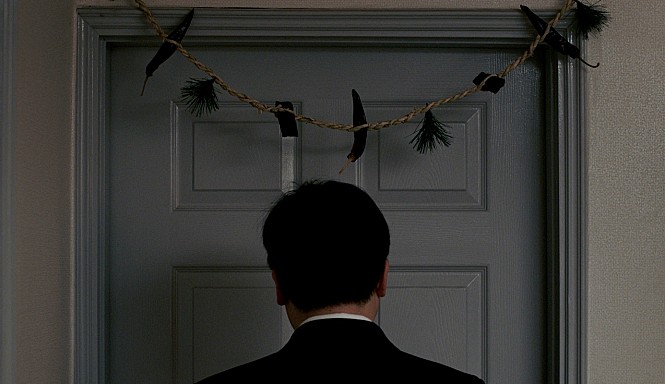
The first short film begins with the introduction of a middle-aged woman played by Kim Geum-soon. At first, we see her going to somewhere in a rural region called Muju on one cold winter day, and we gradually come to gather that she is returning to a little village where she once lived some time ago. After arriving in that village, she goes to a nearby mountain where she buried some personal stuffs, and, after retrieving these personal stuffs of hers, she goes to a shabby abandoned house where she resided during that time.

It turns out that the woman was a local shaman, and we soon watch her doing some ritualistic invocations inside her former residence. Regardless of whether it is imagined by her or not, we are chilled as some ghostly figure slowly appears, and then we get some glimpse of her past involved with her daughter. It becomes apparent to us that she was not that close to her daughter for understandable reasons, and then the film slowly shifts its focus from her to what is assumed to be her daughter’s ghost. The film never specifies what actually happened to her daughter, but we begin to sense that the woman has grieved a lot about her daughter’s premature death, and everything in the film eventually culminates to the haunting final scene where the woman comes to find some solace and comfort in the end.

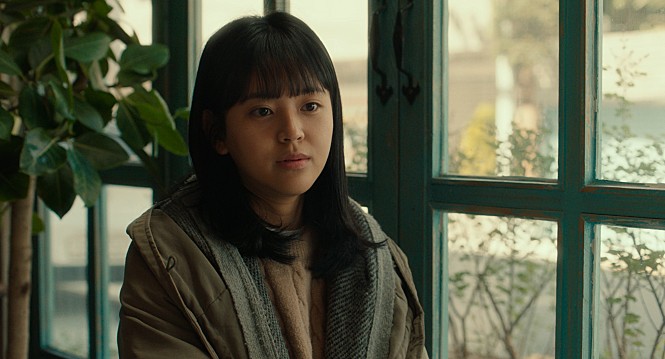
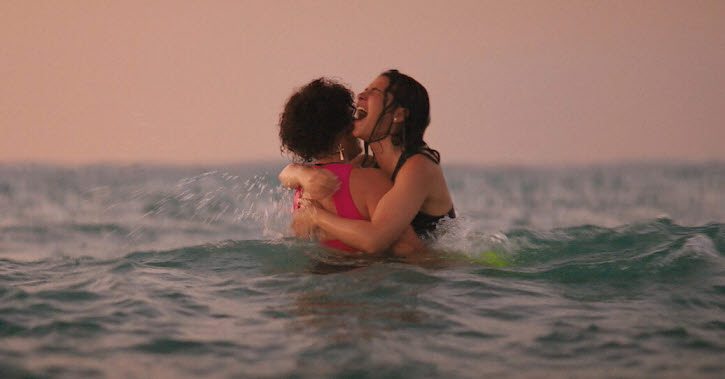
In contrast to the cold and elusive qualities of the first short film, the second short film is more straightforward under its vibrant summer atmosphere. Its main center is a young woman named Min-jae (Kang Jin-ah), and we come to learn about her current status of life bit by bit via a series of episodic moments between her and several other characters in the story. Although she left her family in Muju for studying in Seoul several years ago, she eventually came back to her hometown, and she is currently working as a public servant while living with her widow mother in their cozy family house.

Her first scene in the film shows her having a drinking night at a local bar along with an old female friend of hers who comes to Muju for visiting her. The mood between them is casual and pleasant, but things begin to feel rather odd when they later go outside. Min-jae somehow gets separated from her friend, and the mood becomes rather spooky as she is looking for her friend who is gone for no apparent reason.

Without explaining anything about this baffling happening, the film comes to focus more on its heroine’s personal relationships with two other main characters in the story. Although she is quite disappointed that her daughter chose to be back in Muju, Min-jae’s mother respects her daughter’s choice nonetheless, and we sense how much she and Min-jae care about each other even when they happen to bicker a bit with each other at one point. In case of Min-jae’s boyfriend, he is a pleasant lad glad to spend more time with her, and we later see them spending some free time together in a house belonging to his grandmother, who has recently been in a local hospital due to her illness.

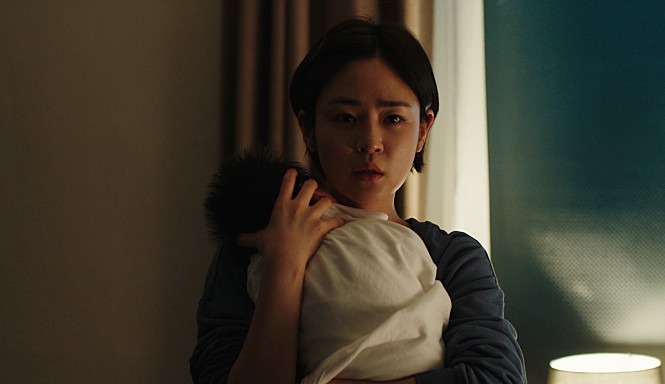
When they are sleeping together in that house, Min-jae’s boyfriend tells her about what his grandmother experienced not long before she became ill. According to him, his grandmother came to sense the ghostly presence of her dead husband at one night, and Min-jae cannot help but feel some creepiness as reflecting more on what her boyfriend told her. Not so surprisingly, she also comes to experience something strange later in the story, and that is followed by a somber but undeniably sublime moment you must see for yourself. As the camera quietly pulls back, we come to see more of what is going on the screen, and the resulting final shot will linger on your mind for a while just like the final shot of the first short film.

It goes without saying that both of two short films will demand some patience from you, but they are worthwhile to watch for atmosphere and details to be appreciated, and their respective writers/directors, Jang Kun-jae and Kim Jong-kwan, deserve to be commended for their competent direction. They also draw good actings from their performers, and Kim Geum-soon and Kang Jin-ah are convincing in each own way while supported well by several other performers including Lee Tae-gyoo and Ahn So-hee.

On the whole, “Vestige” is rather challenging as your average arthouse film, and I still do not think I understand everything in its two stories, but I was often impressed by a number of hauntingly poetic moments in the film. Like several other recent South Korean independent films such as “Chorokbam” (2021), this is surely something different from what we usually encounter at movie theaters, and I am already willing to revisit the film for appreciating more of its interesting aspects.

Posted in Movies | Tagged , | Leave a comment

Sisters on the Road (2009) ☆☆☆(3/4): Two different sisters on a journey

South Korean film “Sisters on the Road”, whose remastered version happens to be re-released in South Korean theaters in this week, engaged me more than expected. At first, it begins as a simple but intimate drama revolving around two very different family members, and then it takes a sudden unexpected plot turn during its third act. Although the movie came out in 2009, I did not know anything about it because it somehow eluded me at that time, so I was really caught off guard during my viewing, and I also appreciated how it generates some genuine poignancy among its main characters after that crucial narrative point.

At the beginning, the movie introduces us to its two main characters: Myeong-joo (Gong Hyo-jin) and Myeong-eun (Shin Min-a). As shown from a series of flashback scenes in the film, there was a time when they grew up closely together as half-sisters in their hometown in Jeju Island, but they have been estranged from each other as respectively leading each own life, and the opening scene shows how much they are different from each other in many aspects. While Myeong-joo is a single mother who has raised her little daughter along with her mother and aunt, Myeong-eun has lived in Seoul since leaving their hometown some time ago, and we see how she busily works in some company while her half-sister is diligently working at a local fish market as usual.

Both of these two half-sisters are not particularly willing to contact with each other, but then there comes a sad news. Their dear mother has died, so Myeong-eun has to come back to her hometown, and then she dutifully accompanies Myeong-joo and their aunt. Their aunt is clearly devastated a lot by the death of their mother, but she is still pleased to see Myeong-eun again, and there is a little tender moment as she and her nieces share some old memories while rummaging those old stuffs belonging to their dead mother.

One of those old items is a letter from the biological father of Myeong-eun, who suddenly left Myeong-eun’s mother not long before Myeong-eun’s birth. While still resentful about that, Myeong-eun wants to know where her biological father is, and she asks Myeong-joo to join her search for him mainly because Myeong-joo was quite close to him during that time. Myeong-joo is initially reluctant, but her aunt persuades her to do that, mainly because she thinks her nieces really need to spend some time together for bonding with each other again.

Of course, things do not go well between Myeong-joo and Myeong-eun right from the beginning. Due to Myeong-joo’s acrophobia, Myeong-eun has no choice but to travel back to the mainland by ship instead of airplane, and she also cannot help but annoyed with her half-sister’s rather thoughtless behaviors. While she does feel sad about the loss of her mother, Myeong-joo cannot resist having some fun and drink nonetheless, and that certainly exasperates her half-sister a lot.

Meanwhile, their journey turns out to be more complicated than expected. While there comes a big setback later, Myeong-eun is also pressured a lot by her company manager, who frequently demands that she should come back as soon as possible for some important project. When she and Myeong-joo finally arrive at a city where her biological father supposedly resides (This city is incidentally my hometown, by the way), Myeong-joo wants to spend more time with her half-sister instead of helping her finding him, and Myeong-eun comes to wonder whether Myeong-joo is hiding something important from her.

Of course, a moment of epiphany inevitably comes upon Myeong-eun later, and the mood naturally becomes quite melodramatic as she and her half-sister try to deal with a certain fact in their life, but the screenplay by director/writer/co-producer Boo Ji-young, who would draw more attention from us with her subsequent work “Cart” (2014), does not lose its calm and thoughtful focus on story and characters. For example, a subplot involved with Myeong-joo’s daughter feels rather redundant at first, but it comes to resonate with the main plot more than expected, and there is a little touching moment when Myeong-joo’s daughter comes to spend some quality time with a certain supporting figure in the story thanks her great aunt.

Above all, the movie is held together well by the solid performances from its two wonderful lead actresses, who have steadily advanced for years since the film came out. While Shin Min-a ably holds the ground as the soul of the movie, Gong Hyo-jin brings some humor and spirit to the film as its heart, and they are effortless as their contrasting characters pull and push each other throughout the story. In case of several other main cast members, Chu Kwi-jung, Kim Sang-hyeon, Moon Jae-won, and Bea Eun-jin are well-cast in their respective supporting roles, and Chu Kwi-jung and Kim Sang-hyeon are especially terrific as two different women who raised Myeong-joo and Myeong-eun with sincere care and love.

Although more than 10 years have passed since its original theatrical release, “Sisters on the Road” still feels fresh as a female drama film which handles its relevant main subjects with enough sensitivity and thoughtfulness. It surely reminds me that good movies usually do not get old regardless of how much time passes, and I am glad that this little gem comes to get another chance to approach to audiences out there.

Posted in Movies | Tagged , , | Leave a comment

Beast (2022) ☆☆1/2(2.5/4): Idris Elba vs. Lion

Baltasar Kormákur’s new film “Beast” is a simple but fairly competent survival thriller drama. Although I wish it had a bit more fun and excitement besides having more substance in terms of story and character, the movie has some tense moments to be appreciated, and it is also held well together by the strong presence of its charismatic lead actor.

Idris Elba, a British actor who has steadily been reliable and interesting since his breakout turn in HBO TV series in “The Wire”, plays Dr. Nate Samuels, who recently became a widower and has tried to handle his rather estranged relationship with his two young daughters. For getting closer to them again, Samuels brings his daughters to a rural area of South Africa, and they are soon greeted by Samuels’ old friend Martin Battles (Sharlto Copley), who was also close to Samuels’ wife and gladly shows her photographs to Samuel’s daughters.

As Samuel and his daughters spend their first night in Battles’ place, we get to know a bit more about the ongoing estrangement between him and his daughters. Although they love their father, Samuels’ daughters still feel hurt by their mother’s sudden illness and her following death, and, in addition to missing her a lot, Samuels feels quite guilty because he happened to be separated from his wife right before she became ill.

On the next morning, Battles, who is incidentally the manager of a nearby wild animal reserve, takes the Samuels inside the reserve, and the mood becomes more brightened as they enjoy the sights of a number of different wild animals living there. At one point, Battles shows the Samuels a lion pride which has been under his care and protection for years, and we see how much he has been close to those pack of lions.

However, the pleasant mood surrounding them is soon disrupted when they go to a nearby village, where Samuels and Battles discover something quite alarming. As already shown to us from the very first scene, there is a very dangerous rogue lion somewhere in the reserve, and we later come to gather that this lion becomes quite angry and ruthless about human beings for a good reason.

Once they discern how dangerous the situation is, Samuels and Battles quickly leave along with Samuels’ daughters, but, of course, they soon find themselves in a big trouble. With their vehicle unfortunately stuck in a tree, they are virtually trapped on the spot, and they naturally become the latest targets of that murderous lion.

I must point out that the lion in the film does not look that real like those lions in “The Lion King” (2019), but Kormákur and his crew members including Oscar-winning cinematographer Philippe Rousselot try their best for making the urgent circumstance surrounding the main characters of the film look as realistic as possible. The camera fluidly moves even when it is inside the vehicle along with the main characters, and Kormákur and editor Jay Rabinowitz thankfully do not resort to choppy editing during several intense scenes including the one where Samuels must evade the lion while hiding under the vehicle.

As he fights for his and his dear daughters’ survival, Samuels comes to bond more with them, but the screenplay by Ryan Engle, which is based on a story by Jaime Primak Sullivan, does not develop their personal drama enough to engage us. While Samuels is mostly defined by the grief from the loss of his dead wife, his two daughters are more or less than plot elements, and some of their actions along the story feel contrived just for generating more danger and suspense as required.

The last act of the story comes to lose some of what the movie has diligently built up before that point, and that is where our level of our interest is decreased. While it surely gives us what is promised to us via its trailer and promotional poster (You will probably know what I mean), the movie eventually comes to fizzle during its rather convenient finale, and that is one of the main disappointments in the film.

Anyway, Elba dutifully carries the film, and he looks as committed as demanded. Besides ably conveying to us the urgency surrounding his character, he is believable as his plain ordinary character comes to show more courage and strength for saving himself as well as others around him, and I will not be surprised if he subsequently follows the footsteps of Liam Neeson. After all, if he can stand against a big lion, he is surely able to fight against a pack of wolves as Neeson did in “The Grey” (2011), can’t he?

In case of the three main cast members around Elba, they are limited by their thankless roles, but they manage to acquit themselves well. Iyana Halley and Leah Sava Jeffries do a little more than being daughters in danger, and Sharlto Copley also has a few good moments including the one where his character must do something drastic for treating a very serious wound.

Overall, “Beast” does not reach to the level of “The Grey” and other entertaining survival drama thriller flicks, but it is not entirely without thrill and entertainment. I am not satisfied enough because it could go further along with its leading actor who deserves better in my humble opinion, but this is something you can casually watch during your spare time, and I will not stop you from doing that.

Posted in Movies | Tagged , , , , | Leave a comment

Do Revenges (2022) ☆☆☆(3/4): Two Vengeful Girls

Netflix film “Do Revenges”, which was released on last Friday, is a high school comedy film which willingly and proudly follows the footsteps of its seniors. While clearly influenced by a number of notable high school flicks such as “Clueless” (1995), “Cruel Intentions” (1999), and, yes, “Mean Girls” (2004), the movie also distinguishes itself enough in terms of story and characters, and it is surely one of better offerings from Netflix during this year.

At first, the movie tells the story via the viewpoint of Drea (Camila Mendes), a very promising female student of one prestigious high school in Florida. Although she is not that affluent compared to many of her schoolmates, she has steadily established herself as the queen of her school as having herself closely associated with many rich and popular girls in the school, and the movie opens with another event to solidify her prominent status in the school.

However, her carefully established public image is ruined by one unfortunate incident not long after that. When her boyfriend Max (Austin Abrams), who is incidentally the student president of the school, requests a little sex video clip of hers, Drea instantly gives him what he wants without any hesitation, but it turns out to be a big mistake. On the very next day, her sex video clip is spread around many of her schoolmates, and, feeling quite humiliated and exasperated, she comes to make another mistake right in front of her friends and many other schoolmates. As a consequence, she becomes more humiliated and disgraced, and that also subsequently causes a serious trouble in her ambitious plan for her future.

Anyway, Drea tries to endure as much as possible while she and her schoolmates begin their senior year, but there are two things which makes her enraged more than before. After leaving her, Max becomes the boyfriend of one of her ‘best friends’, and he also proudly presents himself as a feminist in front of many others as announcing a new association of his which supposedly promotes and supports feminism. Because she is sure that Max is the one who spread her sex video clip, Drea understandably becomes all the more furious, but she cannot do anything about that because any act of revenge from her may get her expelled from the school.

When she is trying to calm herself down, Drea is approached by a newly transferred female student named Eleanor (Maya Hawke). They actually met each other before the beginning of their senior year, and Eleanor shows some sympathy to Drea because she already knows about what happened to Drea in addition to also having someone who totally ruined her school life. According to her, she once approached to some other girl as feeling attracted to her, but, after coming to learn about Eleanor’s sexual attraction to her, this girl not only exposed and humiliated Eleanor in public, and Eleanor is still seething with anger and resentment behind her seemingly docile façade.

As they come to talk more each other about their respective issues, Drea comes to have one bright idea actually derived from Alfred Hitchcock’s classic film “Strangers on a Train” (1951). While Drea will work on Eleanor’s revenge, Eleanor is going to work on Drea’s revenge in the meantime, and that seems to be a perfect plan for both of them to get away with having what they respectively want right now.

Once Eleanor agrees to work with Drea, the screenplay by director Jennifer Kaytin Robinson and Celeste Ballard cheerfully bounces back and forth between its two heroines as they embark on their respective targets. Because that girl mentioned by Eleanor also happens to be in their school, it is not so difficult for Drea to approach to that girl, and she soon finds out something bad behind that girl. Although she needs extra preparation in advance, it does not take much time for Eleanor to attract the attention of Max and his inner circle members, and Eleanor soon comes upon something dirty behind him.

It is not much of a spoiler to tell you that our two heroines come upon a series of setbacks later in the story, but the movie steadily doles out expected things along with some nice surprises for us. While Drea finds herself attracted to some nice boy who is incidentally a friend of her target, Eleanor cannot help but feel empowered by her dramatically changed status, and then she feels a bit conflicted when she comes to befriend Max’s younger sister, who sincerely wants to get really closer to Eleanor.

Even when the story is heading to its expected finale, the main cast members of the film dutifully hold our attention, and their game efforts on the screen is often delightful to watch. While Camila Mendes holds the ground first, Maya Hawke, who is the daughter of Ethan Hawke and Uma Thurman, is also effective as the other half of the film, and several other performers in the film including Austin Abrams, Rish Shah, Talia Ryder, and Sarah Michelle Gellar, whom you may remember for her deliciously nasty performance in “Cruel Intentions”, are also solid in their respective supporting roles.

On the whole, “Do Revenge”, which is Robison’s second feature film after “Someone Great” (2019) (This film is also available on Netflix, by the way), is an entertaining genre piece packed with enough wit and personality, and I enjoyed the effortless comic chemistry between its two lead actresses. Yes, girls can be pretty mean, and it is sometimes fun to watch how nasty they can be, isn’t it?

Posted in Movies | Tagged , , , | Leave a comment

Drifting Home (2022) ☆☆1/2(2.5/4): A drifting apartment building

Japanese animation feature film “Drifting Home”, which was released on Netflix a few days ago, begins with an intriguing story idea to hold your attention for a while, but it only comes to disappoint us due to several flaws in terms of story and characters. While there are a number of wonderful visual moments to savor, the film is often hampered by rote melodrama and flat characterization, and we simply come to observe its drift from the distance without much care.

At first, the story mainly revolves around the strained relationship between two school kids who were once very close to each other. When her parents had a divorce, Natsume (voiced by Asami Seto) was under the care of a benevolent old neighbor for some time, and she and that neighbor’s grandson Kōsuke (voiced by Mutsumi Tamura) become each other’s best friend as spending a lot of time together, though she was eventually taken back to her divorced mother not long after the death of Kōsuke’s grandfather.

While they are still going to the same school in addition to being the members of its soccer club, Kōsuke has been hesitating to get closer to Natsume again, and Natsume also hesitates a lot due to her own personal reason. Besides, there is a popular girl in their school quite interested in getting some attention from Kōsuke, and her presence certainly makes Natsume and Kōsuke more awkward to each other.

Meanwhile, the summer vacation is soon started, and Kōsuke and his two close friends, Taishi (voiced by Yumiko Kobayashi) and Yuzuru (voiced by Daiki Yamashita) sneak into an old apartment complex which was once their neighborhood but is now waiting for demolition and subsequent redevelopment. There has been a rumor about a ghost living in one of the apartment buildings, and they are eager to confirm whether there is actually a ghost living there.

Incidentally, that apartment building in question is the one where Kōsuke’s grandfather resided, and Kōsuke and his friends soon come across Natsume, who turns out to know something about the apartment building. According to her, there is some boy living in the apartment building, but Kōsuke and his friends do not believe her much, and things become more complicated when popular schoolgirl, Reina (voiced by Inori Minase), and her best friend Juri (voiced by Kana Hanazawa) come after noticing Kōsuke and others on the rooftop of the apartment building.

And then something suddenly happens to their befuddlement. Lots of rain is poured onto them and the apartment building, and, what do you know, Kōsuke and other kids are shocked and surprised to find that the apartment building is now drifting alone in the middle of some vast sea for no apparent reason. Furthermore, it turns out that there is indeed a ghost in the apartment, and the ghost, who appears as an older boy called Noppo (voiced by Ayumu Murase), seems to be connected with this inexplicable circumstance surrounding Kōsuke and other kids.

Once they come to realize that they are stuck in the apartment building with no apparent chance for escape, Kōsuke and other kids try to survive day by day as much as they can, and we accordingly get a montage sequence briefly showing how they stick together during next several days. Fortunately, Natsume stored some food and snack in the apartment just in case, and it also turns out later in the story that there are some good opportunities for Kōsuke and other kids to get some extra food for their survival.

Meanwhile, the story by director Hiroyasu Ishida and his co-writers Hayashi Mori and Minaka Sakamoto attempts to go into more details on what is exactly happening around its young main characters, but what follows next is not particularly interesting on the whole. While it becomes clear to us that our young main characters are stuck in some kind of alternative universe, the film often fails to amaze or enchant us as merely drifting from one point to another, and the sudden inclusion of on substantial supporting character during its last act is rather distracting instead of being surprising or inspiring.

Above all, the main characters of the story are not particularly developed well enough to engage us, and most of them remain to be no more than bland plot elements. While the strained relationship between Kōsuke and Natsume is supposed to be the heart and soul of the story, it is not that interesting enough as often stuck in contrived melodramatic moments, and their relationships with Noppo do not have much gravitas as this ghost character often feels non-existent in its airy passive appearance. As a result, we do not care that much about the melodramatic situation among these three main characters during the last act of the film, and that is the main reason why the finale seriously lacks dramatic impact.

In conclusion, “Drifting Home” is dissatisfying for not generating enough wonder and interest from its story and characters. It is not a total waste of time at least due to its competent cell animation style and some good visual moments including the one involved with some other drifting place, but I also must point out that it is still substandard compared to many better Japanese animation films out there such as those sublime works from Studio Ghibli such as “Ponyo” (2008), which incidentally came to my mind for a good reason when I watched “Drifting Home” yesterday. I will let you decide on whether you will watch “Drifting Home”, but I really think you will have a more entertaining time with “Ponyo”.

Posted in Movies | Tagged , , , | Leave a comment

A Clockwork Orange (1971) ☆☆☆1/2(3.5/4): It is ticking well to disturb us

Whenever I have to rank the 13 feature films of Stanley Kubrick, “A Clockwork Orange” is always a major headache for me. Along with “Dr. Strangelove” (1964) and “2001: A Space Odyssey” (1968), it shows Kubrick at the peak of his great filmmaker career, but it also remains to be one of the most violent and disturbing movies even at this point, and I usually become conflicted about where I should put it in the list. Yes, it is certainly a very important work from one of the greatest filmmakers in the 20th century, but I also do not think I really like it even while recognizing its undeniably iconic status, which has been steadily solidified along with its lasting notoriety.

Some of you may say that the movie, which is based on the novel of the same name by Anthony Burgess, is worthwhile to watch for its thought-provoking themes and many visually striking moments. I agree to that to some degree, but, seriously, you may think twice before recommending it to others around you. To be frank with you, I still remember well when I showed it to my parents in 2006. My mother was so horrified by what is shown during its first 20 minutes that she eventually walked out, and I came to take a more cautious view on the film as reflecting more on her immediate negative response to it.

Nevertheless, I revisited the movie more than once since that, and I was alternatively impressed and disturbed when I recently watched it again via its new 4K UHD edition. Right from its very first shot, it powerfully challenges you with its young criminal hero’s coldly glaring stare, and then it effectively pulls you into his violent dystopian society during the next two hours. This is not so pleasant to say the least, but our eyes cannot possibly look away as often struck by its gut-wrenching presentation of violence, and that is not so far from what its hero suffers later in the story.

The first act of the film feels like a sort of endurance test for audiences. As its hero, Alex DeLarge (Malcolm McDowell), and his three gang members bounce from one barbaric moment to another, the movie casually wields its vicious mix of black humor and brutal violence across the screen, and that is further accentuated by the terribly brilliant utilization of several classic works of Gioachino Rossini and Ludwig van Beethoven. During the fight scene between Alex’s gangs and a group of some other thugs, the Overture from Rossini’s “The Thieving Magpie” is cheerfully played on the soundtrack, and Kubrick’s precise mix of music and visual makes this scene look like an absurdly violent avant-garde ballet.

And there is that infamous scene where Alex sings the titular song from a certain well-known Hollywood musical movie as he and his gangs savagely attack a middle-aged writer and his wife. Kubrick presents Alex and his gangs’ sheer atrocities with his own cold and detached attitude, and that makes this scene all the more chilling – especially when Alex gleefully stares at the writer (and us) right before raping the writer’s wife. The movie thankfully does not show everything, but the horror of what will soon happen to that poor woman is quite visceral to us, and we come to feel more repulsion than before.

However, as reflected by its first-person narration, the movie also seems to be forcing us into Alex’s sociopathic viewpoint, and that is its another troubling aspect. Usually aligning itself with whatever he heedlessly and sadistically revels in, the movie often finds itself on the verge of embracing his repellent nastiness, and it accordingly feels dangerously exciting at times. After all, violence in films is inherently stimulating in one way or another, and even a cold chamber called Kubrick cannot entirely contain that artistic danger in my humble opinion.

During its middle act, the movie attempts to argue that Alex’s individual violence is nothing compared to the systemic violence of his dystopian society. Not long after he is eventually arrested and then incarcerated, he happens to be selected for an experimental rehabilitation project promoted by the government, and then there comes another iconic moment of the film. Through a very twisted Pavlovian procedure, he is deprived of his free will in exchange of becoming virtually incapable of any kind of violence, and then he finds himself victimized a lot once he is released from the prison.

Are we supposed to be sorry for Alex around that point? What is inflicted onto him is cruel indeed, but we are also reminded of what a horrible criminal he is. When his “cured” status is presented in front of a bunch of important figures, he looks pitiful and helpless on the surface, but he does not deceive us at all. We can clearly sense that his violent nature still exists behind his seemingly passive face despite being artificially repressed for now, and we come to observe his following plight from the distance without much pity or care.

The story feels all the more ideologically muddled when Alex encounters that writer character again during its last act. As a hardcore liberal guy quite critical of the current government, the writer is excited to have Alex at his home, but then he becomes quite vengeful once he comes to realize Alex’s identity. He ultimately ends up being as broad and grotesque as many other supporting characters in the film including a certain prison warden, who is so stiff and petulant that he seems to belong more to a Monty Python sketch.

As the movie has no middle ground between its two extreme kinds of violence, we have no choice but to become stuck more with Alex despite his many loathsome aspects, and we accordingly have to deal with the deeply cynical finale which can be compared to that sublime final moment of “2001: A Space Odyssey”. Instead of that mysterious monolith, we get a couple of big and tall audio speakers in front of Alex’s bed, and the eventual reversion to his old self, which is accompanied with the final minutes of Beethoven’s 9th symphony, certainly makes an ironic contrast to the transcendent emergence of the Star Child at the end of “2001: A Space Odyssey”.

Should we laugh about that? Or should we wince about that? I do not have answers for these and other questions provoked by the movie, but we all can agree that the movie is a distinctive reminder of how many notable films such as “Dirty Harry” (1971) “The French Connection” (1971), “Straw Dogs” (1971), and “The Devils” (1971) were quite willing to push boundaries during that time after “Bonny and Clyde” (1967) came out. They are all violent and controversial in each own daring way, and, just like “A Clockwork Orange”, they will not go away easily once you watch them, regardless of whether you like them or not.

Furthermore, we also have seen how much influential the movie has been during last 51 years. Its uncompromisingly villainous hero, who is injected with lots of life and personality thanks to Malcolm McDowell’s boldly brash performance, has influenced many different juniors ranging from Bart Simpson to Tyler Durden of “Fight Club” (1999). Many key moments of the film have already entered our cultural consciousness, and a recent Gucci campaign, which pays a humorous homage to not only “A Clockwork Orange” but also several other Kubrick films, reminds me again of its considerable timeless qualities.

On the whole, “A Clockwork Orange” is still ticking well enough to disturb us even at present, and I am still trying to sort out my ambivalent feelings and thoughts about it. When I watched it for the first time in late 2000, it was something I had to watch as a young movie fan by any means necessary, and I was glad to watch it at last after hearing so much about it for years. During my recent viewing, I was more alarmed due to acquiring more sensitivity on the depiction of violence on women in movies during last several years, and I became more inclined to put it below several other Kubrick films I personally prefer more. As admiring it from the distance with more caution than before, I am now reminded of what Roger Ebert once said about it in his review on “Butcher Boy” (1998): “Rationalize as I will, revisit the film as I have, I cannot feel the emotional shift that would involve me in the material: It remains for me an exercise, not an experience.”

Posted in Movies | Tagged , , , , , | 4 Comments

Everything Went Fine (2021) ☆☆☆1/2(3.5/4): A restrained but poignant drama by François Ozon

French film “Everything Went Fine” is restrained but poignant as simply observing a very serious family matter. While never overlooking its main characters’ emotional struggles over that matter, the movie thoughtfully lets us get to know more about them and their life along the story, and we come to reflect more on its sensitive main subject as they finally come to reach to the end of their hard and difficult human experience.

The movie begins with a sudden illness of André (André Dussollier), who is the father of Emmanuèle (Sophie Marceau) and Pascale (Géraldine Pailhas). Shortly after having a stroke, he is promptly sent to a hospital while his two daughters are around him, but, though he still speaks fairly well, it turns out that his stroke seriously affects his physical state on the whole, and both he and his daughters are certainly devastated for that.

He can recover from this to some degree, and he is also affluent enough to receive a very good treatment and rehabilitation process, but André comes to feel rather miserable about his current medical status. While he willingly goes along with the following recuperation period, he often tells Emmanuèle about how he does not feel like himself anymore, and then he requests something his daughter does not accept that well at first. He wants to die as soon as possible, and he is going to need some assistance from her and her younger sister for that.

Of course, Emmanuèle is upset by this grim request from her father. As shown from several brief flachback scenes, André was not exactly someone to win the Father of the Year award, but both she and Pascale still love and care about their father nonetheless, and that certainly makes them feel quite conflicted about his request. Yes, they may follow that as his dear daughters, but, needless to say, there are surely lots of legal and ethical matters surrounding euthanasia, which happens to illegal in France.

Nevertheless, as watching how her father becomes more miserable and helpless due to his illness, Emmanuèle eventually decides to give what her father wants, and Pascale reluctantly joins her later. After doing some online search, Emmanuèle comes upon a Swiss institution for euthanasia, and the information from its website reminds her again of what a tricky matter euthanasia really is. While euthanasia is legalized in Switzerland, it is still a matter to be handled with uttermost caution and consideration, and that aspect is evident when Emmanuèle meets a middle-aged woman coming from that institution. It is apparent that this old lady has seen a lot as meeting people like André and Emmanuèle, and she dutifully informs Emmanuèle on how discreet the institution is from the beginning to the end. Besides not leaving any possibility for legal trouble, they are also going to make sure about André’s wish to die – even right before the point of no return.

Because there is still some possibility for dissuading her father from killing himself, Emmanuèle holds onto some hope while continuing to prepare for his death. As everything is ready for his death step by step, André actually feels better than before, and he is even willing to live a bit more just because he wants to attend a little private concert where one of Pascale’s kids will perform.

Meanwhile, we get to know more about some old problems in André’s family. While feeling a little sorry for him, his frigid ex-wife Claude (Charlotte Rampling) does not particularly want to spend more time with him, and the main reason for that is gradually revealed via a certain supporting character who is not so welcomed by his daughters. They are ready to stop this figure from approaching to André, but then it turns out that, despite his fear and worry, André still has some feeling toward this figure. As watching them in one brief scene, we can only guess how complicated their relationship is, and the movie wisely does not try to explain more.

In the end, there comes a point where André is supposedly ready for his euthanasia, and the situation becomes a bit tense as he and his daughters come upon another trouble on their way, but the screenplay by director/writer François Ozon, which is based on Emmanuèle Bernheim’s autobiographical novel of the same name, maintains its restrained attitude as usual. I have no idea on how much the movie is actually close to Bernheim’s novel or her real-life experience, but I can tell you instead that the movie did a deft balancing act between humor and drama, and its eventual arrival point is quietly touching as a result.

Under Ozon’s thoughtful direction, the main cast members are believable in their characters’ recognizable human behaviors. While Sophie Marceau demonstrates here that she is still a good actress, André Dussollier ably swings back and forth among different harrowing emotions, and Géraldine Pailhas and Charlotte Rampling are also solid as two other substantial characters in the story.

On the whole, “Everything Went Fine” is another fine work from Ozon, who recently impressed me a lot with “By the Grace of God” (2019) but then disappointed me a lot with “Summer of 85” (2020). After “Everything Went Fine”, he soon moved onto “Peter von Kant” (2022), and, considering how he bounces back here, I guess I can have some expectation on that next film of his.

Posted in Movies | Tagged , , , , | 2 Comments

Jazz on a Summer’s Day (1959) ☆☆☆1/2(3.5/4): Jazz on the seaside

“Jazz on a Summer’s Day”, whose recent 4K remastered version was somehow released in South Korean theaters a few days ago, is an interesting time capsule which attempts to bring us into one day of the 1958 Newport Jazz Festival in Rhode Island. Although it feels rather tame and limited in many aspects, this famous 1959 concert film is still worthwhile to watch for a number of well-known musicians at the height of their careers, and I assure you that these musicians surely do not disappoint us via their sheer talent and presence.

At the beginning, the directors Bert Stern and Aram Avakian (Stern also served as the main cinematographer of the film while Avakin served as its chief editor, by the way) establishes the main tone of the film via a series of leisurely moments captured on the camera. While we see many cars arriving in Newport, the film gives us a brief audio interview with one of those festival attendants, and it also observes how some of local people are rather annoyed by the resulting festive mood surrounding their seaside town, which also happened to hold the 1958 America’s Cup yacht races during that time.

Frequently showing those competing yachts as well as the sea, the film slowly starts with Jimmy Guiffre as the first musician to perform on that day. Although he is relatively less well-known to many of us compared to other more prominent jazz musicians in the film, Guiffre and his band members did a fairy good job as the opening part, and then the film begins to roll further as other guest performers appear one by one. In case of Thelonious Monk, it is a bit shame that the film does not show more of his excellent performance on the stage, and I must tell you that I was quite impressed by the following performance of Anita O’Day, though I later learned via the IMDB Trivia that she was not exactly in her best condition at that time due to her longtime drug addiction problem.

Meanwhile, I also noticed how the audiences at the festival were rather mild in their reactions and responses. To be frank with you, most of them look like mere spectators instead of really interested audiences, and the film also seems to be bored a bit as occasionally shifting its focus onto what is going on outside the festival. At one point, we see a musician practicing a bit with his instrument, and that is surely more interesting moment to watch compared to those plain sights of frequently distracted festival audiences under the broad daylight.

Anyway, the mood of the festival thankfully continues to go up and up as before, and things get more interesting when the night is about to begin. After a terrific performance by Dinah Washington, we are treated with a special appearance by Chuck Berry. Though I must point out that this is not exactly one of the highpoints in his career, Berry’s performance galvanizes those festival audiences enough, and it was rather amusing for me to observe how they become much more responsive and enthusiastic compared to what I observed from them during the daytime.

Later in the film, Louis Armstrong finally appears, and it is noteworthy that this is one of very rare film appearances in his legendary career. According to the IMDB Trivia, Stern had to pay Armstrong no less than $ 25,000 for that, and Armstrong surely gave a moment to remember along with Jack Teagarden, though I must point out that the camera often focuses on their faces a bit too much instead of trying to immerse us more into what they generated along with other musicians on the stage.

After Armstrong and Teagarden’s duo performance, there comes Mahalia Jackson, and she certainly gives another highlight via her gracefully powerful performance of “The Lord’s Prayer”, which was incidentally the one to close the concert of that day. My eyes were initially focused more on the Korean subtitle, but I came to pay more attention more on how skillfully she delivered the intense emotions inside her performance, and it is no wonder that she has been remembered as one of the most influential American gospel singers for more than 50 years since her death in 1972.

While enjoying these and other highlights in the film to considerable degree, I must tell you that I also could not help but observe a number of weak aspects in the film. While it is indeed one of the notable concert films from the 1950s, Stern and Avakin’s rather earnest approach to their materials sometimes prevents the film becoming truly vivid and visceral, and you may need to get some extra background information in advance, because the film mostly presents its raw footage clips without much explanation.

Nevertheless, “Jazz on a Summer’s Day” is still highly recommendable for not only its cultural importance (It was already selected for preservation in the US National Film Registry by the Library of Congress in 1999, by the way) but also its entertaining musical moments to savor. As a concert film, it feels technically less impressive compared to many of its juniors such as “Woodstock” (1970), but it is indubitably an important piece of work to be cherished and remembered, and I am happy to report that its 4K remastered version today, which, as far I could see, looks fairly clean and sharp on the big screen. In short, this is a little nice surprise treat for me and many other audiences in South Korea, and I do appreciate that despite some grumble.

Posted in Movies | Tagged , , , , , | Leave a comment

Kim Min-young of the Report Card (2021) ☆☆☆1/2(3.5/4): As they are drifted apart from each other

South Korean independent film “Kim Min-young of the Report Card” is a calm but intimate observation on the slow dissolution of the friendship among its three young female characters. As they try to live their respective lives in each own way after one certain turning point, they also find themselves getting drifted away from each other bit by bit, and there are several quiet but achingly bittersweet moments which will linger on your mind for a while after the movie is over.

During the opening scene, we are introduced to three female senior high school students: Yoo Jeong-hee (Kim Joo-ah), Kim Min-yeong (Yoon Ah-jung), and Choi Soosanna (Son Da-hyun). Although they have been pretty close to each other via their little creative writing circle (It seems that they are its only members, by the way), they all will have to prepare more for the upcoming college entrance examination which will incidentally be held exactly 100 days later, so they are holding a little private ceremony for closing down their creative writing circle for a while at least.

After that, we see what happens next to each of them after the college entrance examination. While Soosanna eventually goes abroad for studying at a certain Ivy League college in US, Min-yeong manages to be accepted to a university in Daegu, and Jeong-hee fails to get into any suitable college mainly because she was not particularly interested in going for higher education from the beginning. She does care about what she is going to do for her life, but she does not feel like being ready for that yet, and her parents do not seem to mind that much about her current status while sincerely hoping for the best for her.

We later see Min-yeong casually applying for a rather menial part-time job at a local private tennis court, and the movie draws a number of little humorous moments as she shows more diligence than expected. At one point, she decides to utilize a bit of her considerable drawing talent for more promotion for the tennis court, and she also gets a bit closer to the young son of her boss, whom she accidentally encountered and then helped a bit some time ago.

Meanwhile, Min-yeong and her two friends try to communicate with each other as much as before, but that becomes more difficult for them as time goes by. Because of not only the time difference between US and South Korea but also being often occupied with some matters in her current college life, Soosanna comes to feel quite burdened and annoyed, and we are not so surprised when she subsequently decides that enough is enough.

With Soosanna’s following absence, Jeong-hee naturally attempts to spend more time with Min-yeong, but Min-yeong has also been occupied with her own matters behind her back. As befriending some other friends at her university, she does not feel much need to spend time with her supposedly best friend, and, above all, her mind is mostly focused on how to get herself transferred to some better university in Seoul.

After leisurely strolling from one episodic moment to another during its first half, the screenplay by directors/writers Lee Jae-eun/Lim Ji-sun, who incidentally make their feature debut here, comes to build more narrative momentum when Jeong-hee visits a little apartment in Seoul where Min-yeong is staying during her summer vacation. Right from when Jeong-hee arrives, we can clearly sense considerable awkwardness between her and Min-yeong, and that becomes all the more palpable as they come to spend some time together during next several days.

While the story later reaches to a sort of breaking point as expected, the movie seldom raises its tone as Jeong-hee and Min-yeong’s relationship fluctuates between estrangement and affection along the narrative. As reflected by a little cheerful scene where they ride bicycles together, Jeong-hee’s presence brightens up Min-yeong’s daily life a bit, but they also come to feel more of the growing distance between them, and it becomes more apparent to Jeong-hee that she is not so welcomed by her friend as before – especially when Min-yeong comes to let out some of her negative feelings toward Jeong-hee later in the story.

These and other substantial moments in the film are handled well with subtle emotional intensity and sensitivity thanks to the directors’ excellent direction, and their main cast members are believable in their respective characters’ eventual growth and change along the story. While Kim Joo-ah’s unadorned but engaging performance conveys well to us her character’s rather offbeat qualities, Yoon Ah-jung complements her co-star well with her character’s practical cynicism, and Son Da-hyun is also fine as another crucial part of the story. These three wonderful actresses click so well with each other during the opening scene, and that is the main reason why the somber but undeniably haunting key scene around the end of the film works with considerable emotional resonance below the surface.

Overall, “Kim Min-young of the Report Card”, which won the Grand Prize when it was shown in the Jeonju International Film Festival early in last year, is a modest but commendable debut work by Lee and Lim, who are another new interesting South Korean filmmakers to watch in my humble opinion. Like many of recent South Korean independent films such as “Rolling” (2021), the movie reminds me again of how much South Korean cinema needs more female films these days, and I sincerely hope that Lee and Lim will keep advancing after this little but significant achievement of theirs.

Posted in Movies | Tagged , , , , | 1 Comment

The Black Phone (2022) ☆☆☆(3/4): A familiar but solid genre mix

“The Black Phone” did not surprise me much, but I was entertained nonetheless. As your average seasoned moviegoer, I clearly discerned what I was going to get from this effective genre piece, and it did not exceed my expectation much on the whole, but it still could engage me enough thanks to its creepy mood and solid storytelling. Yes, it did not take much time for me to guess where the story and characters are going, but the movie did a skillful job of making me care about what it is being at stake in the story, and I do appreciate that.

The movie is based on the short story of the same name by Joe Hill, who is incidentally the son of Stephen King. Although I have not read Hill’s short story yet, I have to point out that the movie is often reminiscent of his father’s several novels such as “It”, and it even has a very twisted villain who terrorizes a neighborhood as frequently kidnapping boys. This evil dude usually uses black balloons whenever he strikes down upon his target, and you may wonder whether he is related to Pennywise the Dancing Clown.  

Anyway, the story, which is set in Denver, Colorado in 1978, is mainly about Finney (Mason Thames), a young adolescent boy who has been often bullied inside and outside his home. Inside his home, he and his younger sister Gwen (Madeleine McGraw) have to be very cautious due to their alcoholic widower father who can be quite abusive to them, and he is also frequently tormented by several mean kids at his school. Compared to these two terrible issues of his, a series of kidnapping incidents in his neighborhood do not look that grim to him, though he worries about what actually happened to those vanished boys just like many others in the neighborhood.          

 It is clear that there is a serial kidnapper on the loose, and he is even nicknamed “the Grabber”, but, unfortunately, the local police do not still have any substantial clue to help tracking down this diabolical criminal. As a matter of fact, a couple of detectives later approach to Gwen just because she happened to dream about the Grabber at times, and that says a lot about how desperate their situation really is.

Meanwhile, the Grabber continues his reign of terror over the neighborhood. Not long after the Grabber took away one of his close friends, Finney comes upon a stranger while he is going to back to his home alone by himself, and, what do you know, this stranger turns out to be the Grabber, who swiftly kidnaps Finney while no one is around them. When Finney subsequently wakes up, he finds himself trapped inside a basement cell belonging to the Grabber, and the Grabber soon comes down to the basement for having some morbidly sadistic fun.

Once he is left alone in the basement cell again, Finney tries his best for finding any chance for escape, but there comes a little surprise as he becomes more frustrated and depressed after failing to find anything helpful in the basement cell. There is a little black phone which is supposed to be disconnected, and it suddenly rings to his surprise more than once. He hesitantly answers the phone later, and then he finds himself talking with one of those boys kidnapped and then murdered by the Grabber.

After that, one dead boy after another approaches to Finney via the black phone, and the story becomes more interesting as Finney gradually gets some chances for escape via these dead boys. Some of them tell him about certain things hidden here and there in the room, and one of them even warns him about how cruelly the Grabber is going to punish him for being, well, bad.

While our young hero keeps trying with more caution, the movie also focuses on Gwen, whose dreams turn out to be sort of clairvoyant and may actually help her finding where her brother is. As her father does not want to hear anything about her dreams for understandable personal reasons, Gwen decides to be more active than before, but, to her frustration, she still cannot have her exceptional talent under control.

In the meantime, the movie attempts to jolt us more than once via sudden shock and awe as expected, but they are effectively delivered without disrupting mood or narrative pacing at least. Director/co-writer/co-producer Scott Derrickson, who has mainly been known for several horror films including “The Exorcism of Emily Rose” (2005) and “Sinister” (2012), did a competent job of accumulating a palpably creepy sense of dread and suspense on the screen, and I particularly like a tense scene where our young hero must be really, really, really quiet in front of another possible chance for escape.

The main cast members of the movie are convincing in their respective parts. While Mason Thames diligently carries the film, Ethan Hawke effortlessly exudes menacing creepiness although his face is usually masked throughout the film, and Madeleine McGraw, Jeremy Davies, and James Ransone are also fine as several other crucial characters in the story.

In conclusion, “The Black Phone” is a standard genre mix which does not transcend its genre elements but ably generates some dark fun from combining them. It is indeed familiar in many aspects, but it is done fairly well with enough skill and personality at least, and that is surely enough for recommendation in my trivial opinion.

Posted in Movies | Tagged , , | Leave a comment