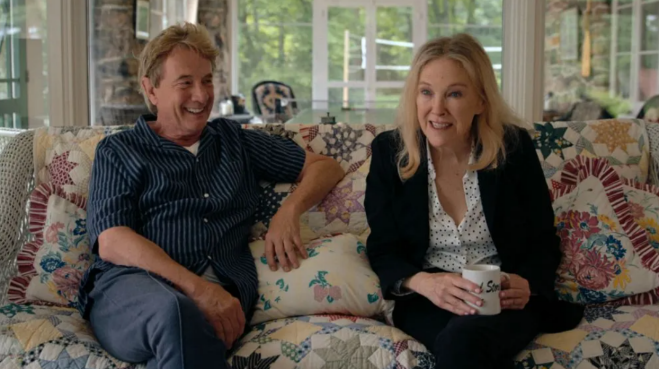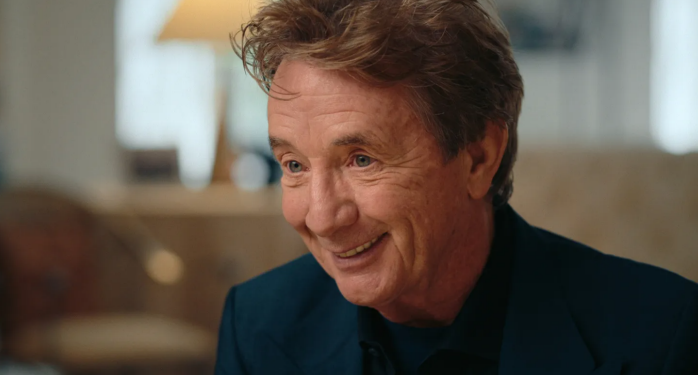
Netflix documentary film “Marty, Life Is Short”, which was released a few weeks ago, looks around the life and career of Martin Short, a prominent Canadian entertainer who has steadily advanced for our laugh and entertainment during last several decades. Although the overall result is as mild as you can expect from your average Netflix celebrity documentary, it is still fairly fun and engaging to watch Short and a bunch of well-known interviewees gladly talking about his life and career, and you will come to admire his talent and spirit a bit more than before.
At first, the documentary gives us a brief overview on Short’s early life, and Short willingly talks about how much he was supported and encouraged by his parents and siblings as the youngest member of the family. He already showed his potential as a natural comedian even when he was very young, and his family, who all had a fair share of sense of humor, was always there for him as often playing along with him.
Not long after he got enrolled in a local university in Ontario, Canada, Short decided to go to Toronto along with his best friend Eugene Levy for pursuing their acting career, and they eventually got cast for a new production of a Broadway hit musical named “Godspell”. Among many other cast members, there was an actress named Gilda Radner, and she and Short came to have an on-and-off relationship between them for a while, but then he eventually began a long-term relationship with Radner’s understudy Nancy Dolman, who subsequently married him in 1980.
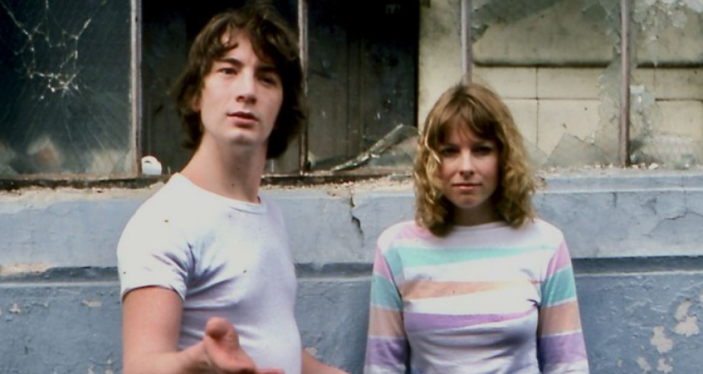
Meanwhile, Short’s career gradually gained momentum. When Chicago’s Second City improv comedy theatre established a sister company in Toronto, Levy and many of his colleagues immediately joined that sister company, Short hesistated at first, but, after several years of struggle and frustration, he eventually joined them, and there came a big career breakthrough for him when the Toronto Second City group produced a show named “Second City Television” (SCTV). Right from his first SCTV appearance, Short drew a lot of attention as effortlessly shining with his irrepressible comic energy, and that is quite evident from a number of archival video clips from that time. While he often played very broad caricatures, he illustrated them with considerable personality and spirit, and that certainly left indelible impressions on his audiences.
Thanks to his growing popularity via SCTV, Short subsequently joined the cast of “Saturday Night Lives” in 1984. Although he soon found his work environment rather demanding at first, Short kept going for a while, and then he got a chance to appear along with Steve Martin and Chevy Chase in a little comedy film named “Three Amigo” (1986). Although the movie sadly turned out to be a big critical/commercial failure, it led to the beginning of a longtime friendship between Short and Martin at least, who have recently been enjoying together the big success of their delightful Hulu comedy series “Only Murders in the Building”.
Although he did not make much success in cast of movies except a few shining spots including “Innerspace” (1987) and “The Father of the Bride” (1991), Short made a considerable success here and there at least. He demonstrated the other wonderful sides of his talent via several successful Broadway musicals during the 1990-2000s, and he actually won a Tony for one of them. In addition, he also showed that he is quite capable of drama performance as shown from his Emmy-nominated turn in TV drama series “Damages”, and I particularly have a soft spot on his humorous but ultimately poignant supporting turn in 1998 TV miniseries “Merlin”.
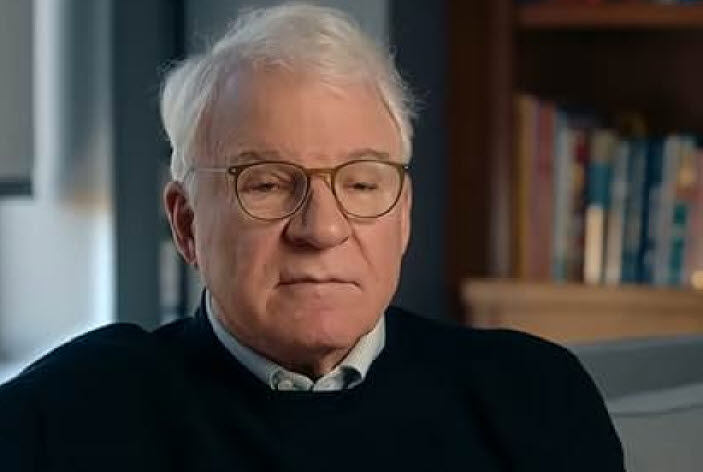
Eventually, the documentary comes to revolve around the routine private meetings for not only Short and his family but also his and his wife’s close friends. They usually gathered at the summerhouse for Short’s family, and you will be amazed a bit by the casual appearance of some of the biggest figures working in Hollywood. Thanks to Short’s amiable charm and energy and his wife’s equally strong personality to complement to him, the guests were never bored at all, and we later get a little amusing video clip of Short and Tom Hanks parodying a certain famous scene from “Butch Cassidy and the Sundance Kid” (1969), which was incidentally shot by none other than Steven Spielberg.
The documentary also focuses on several moments of sadness in Short’s life. While one of his brothers died early in his life, he lost both of his parents before he became 20, and both of these personal losses certainly devastated him a lot. In 2010, his wife died not long after being diagnosed to have a terminal cancer, and one of his three adopted children sadly committed suicide early in this year (The documentary is dedicated to her and Catherine O’Hara, who was one of Short and his wife’s close friends and was naturally interviewed for the documentary not long before she unfortunately passed away early in this year). Nevertheless, Short kept focusing on work, and that helped him a lot in processing his immense personal grief.
On the whole, “Marty, Life Is Short” may not be that revealing, but it is supported well by the strong presence and personality of Short, and director/co-producer Lawrence Kasdan, who has been less prominent during last 20 years compared to his peak period in the 1980s, did an admirable job of presenting Short’s life and career with enough care and respect. As another close friend of Short, he was probably not able to be totally objective to his main subject from the beginning, but the documentary may be his best work since “Grand Canyon” (1991), and that is surely something nice to watch.