Cover-up (2025) ☆☆☆1/2(3.5/4): A journalist still fighting for truth and transparency

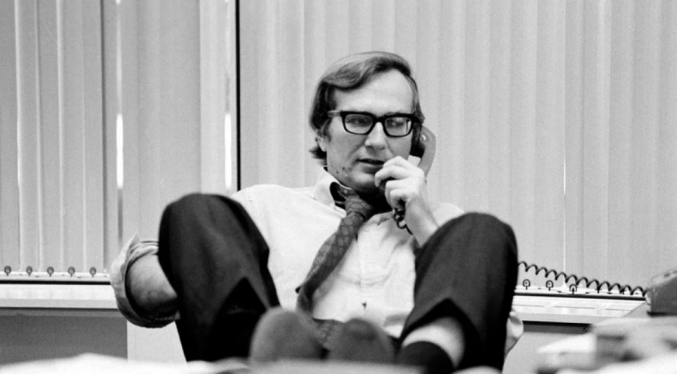
Laura Poitras and Mark Obenhaus’ Netflix documentary film “Cover-up”, which was released around the end of the last year, gives an overview on the career of Seymore Hersh, a Pulitzer-winning American investigative journalist who deserves to be known more in my humble opinion. As following his several big scoops in the past, the documentary presents well his long and tenacious fight for truth and transparency, and that is why it is touching to see how he keeps going as before even at present.  

The early part of the documentary mainly revolves around an infamous incident in Vietnam which was a big breakthrough in Hersh’s career. In the late 1960s, Hersh was just a plain journalist who got tired of how he and his fellow journalists simply wrote down whatever the US government told them, but then he came across an opportunity for big scoop not long after he became an independent journalist. He happened to learn a bit about a massive civilian massacre which occurred in some rural region of Vietnam, and he became all the motivated as investigating more on how the US government had been trying to cover up this horrible incident which would eventually be known as My Lai Massacre. 

It goes without saying that his eventual article on My Lai Massare was disregarded by many major newspapers in US, but, once it got printed on Chicago Sun-Times in 1969, all the American newspapers became quite interested in this incident. Needless to say, Hersh virtually became a persona non grata to the US government. Although he later got hired in New York Times as he accordingly became more prominent, the US government kept watching for him – especially when he reported on a covert CIA operation against the left-wing student organizations in US. 
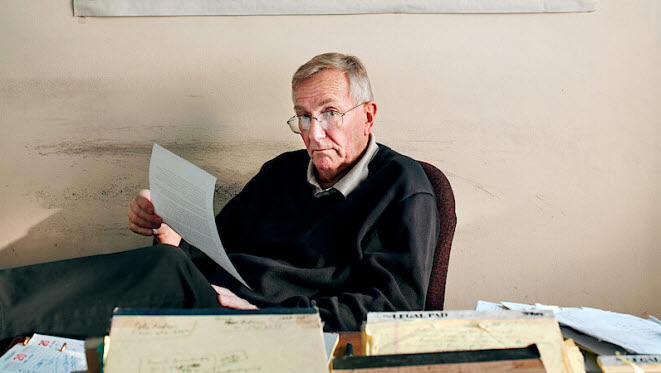
In case of the Watergate scandal, Hersh actually could have delved more into it from the very beginning, but New York Times was not so willing to allow that just for not ruining its good relationship with the US government, and, as many of you know, the ball was eventually handled to that famous duo of the Washington Post. Nevertheless, once the Washington Post reported more and more on the Watergate scandal, Hersh indirectly supported his competitors at the Washington Post via a series of crucial articles on that scandal, which ultimately led to more public interest in that scandal and then the eventual political downfall of President Richard Nixon.  

During next several decades, Hersh kept working steadily. After getting more disillusioned about how New York Times has been willing to bend itself to the US government as well as those wealthy corporations in US, he eventually left and then became an independent journalist again. Nonetheless, many people still approached to him as insiders with important information or secret as usual, and he even published a number of books which certainly did not please many people out there. 

Nevertheless, Hersh has always stuck to his professional integrity for many years without any compromise. Unless his informant is dead for a long time or agrees to come out, he refuses to reveal many of his numerous informants, and that occasionally causes frequent conflicts between him and the directors. As a matter of fact, Poitras actually tried to make a documentary about him around 20 years ago, but he did not accept her proposal at that time, and he agreed to be interviewed only after Poitras decided to make a documentary along with Obenhaus, who had also tried to delve into Hersh’s career for years just like Poitras.

Moreover, Hersh is also rather guarded about his personal life. He is quite willing to tell about his rather unhappy childhood and adolescent period as well as how he got a very fortunate opportunity to become a newspaper reporter in his hometown Chicago, but that is all he can openly talk about in front of the camera. At one point, he talks a bit about how supportive his wife has been to her for many years, but that is all we can learn about his family life here in this documentary.

Nevertheless, we come to admire Hersh more as observing more of his professional diligence. During the 2000s, he drew public attention again for his sobering article on what was committed in the name of War on Terror in Iraq, and that certainly made him less welcomed by the US government than before. At this point, he works on the investigative reporting on the ongoing human tragedy in Palestine, and, not so surprisingly, he tries to cover his sources as much as possible even when he generously lets us get some glimpse on his ongoing journalistic project. Although he is approaching to 90 at present, he remains as active as before, and you will be touched by how much he is still driven by his strong professionalism as before.   

 In conclusion, “Cove-up” is a compelling documentary which presents well its human subject with enough care and interest, and Poitras, who has steadily impressed us with several excellent documentaries including “Citizenfour” (2015) and “All the Beauty and the Bloodshed” (2022), and Obenhaus surely deserve all the praises they have received during this award seasons. Although the documentary does not point out how much American journalism has hit the bottom more than once during last several years, its engaging presentation of Hersh’s intrepid professionalism during last several decades is more than enough to make many of us reflect more on that serious issue in the American society, and you will surely come to think more about that undeniable value of good journalism in democracy.
Posted in Movies | Tagged , , , , | Leave a comment

The Straight Story (1999) ☆☆☆1/2(3.5/4): Lynch at his most sincerely heartfelt

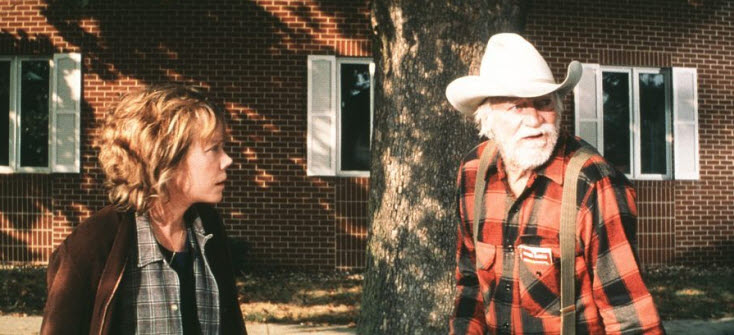
David Lynch’s 1999 film “The Straight Story”, which happened to be shown in selected South Korean theaters along with his several other works in last week, shows Lynch at his most sincerely heartfelt. While many of his works are filled with dark, strange, and disturbing surrealistic elements, there is also a considerable amount of sincerity which sometimes seems to you as corny and clichéd as a piece of cheery pie and a cup of black coffee as shown from “Blue Velvet” (1986) or his cult TV series “Twin Peak”. With the gently sincere and haunting sensibility of “The Straight Story”, he demonstrates here that there has indeed been heart behind his darkly wild style and imagination from the very beginning of his filmmaking career, and this modest but special film can be regarded as an important artistic breakthrough as much as his subsequent film “Mulholland Drive” (2001).

The movie, which is based on the true story of an old man named Alvin Straight, begins with the opening scene which evokes a bit of “The Elephant Man” (1980) and “Blue Velvet”. At first, we see the big and wide sky full of shining stars which will surely take you back to the ending of “The Elephant Man”, and then the movie looks over and around a small little town in Iowa which looks and feels not so different from that suburban world in “Blue Velvet”. However, nothing serious or ironic or disturbing happens on the screen in this time, except a sudden little medical problem for Straight, played by Richard Farnsworth.

Once his daughter Rose (Sissy Spacek) and his neighbors find him collapsed on the floor, Alvin is subsequently taken to a local hospital. His doctor advises that he should pay more attention to his aging body which may stop functioning at any time, but he does not follow the doctor’s advice at all while continuing his usual lifestyle as before. He keeps doing his daily stuffs, and Rose, who incidentally has some mild mental retardation, is always around him whenever she is not working on birdhouses.

And then there comes an unexpected news from Wisconsin. Alvin’s estranged brother Lyle (Harry Dean Stanton) had a serious case of stroke, and Alvin comes to decide that he should really go to see Lyle, though they have never talked with each other for around 10 years due to some personal clash between them. Because of his weak eyesight and fragile legs, driving is out of question for him from the beginning, and there is no direct bus going to where Lyle lives, so Alvin eventually decides to use his old lawn mower for his long journey from Iowa to Wisconsin.

Although there is some amusement during the first days of Alvin’s journey, the screenplay by editor/co-producer Mary Sweeney and her co-writer John Roach sticks to its plain sincere attitude as before. When his lawn mower turns out to be not so reliable not long after he leaves his town, Alvin simply buys another lawn mower and then starts the journey again. The lawn mower can only move at a maximum speed of 5 miles per hour (8.0 km per hour), and he will have to cross over the distance of 240 miles (390 km), but he is not daunted at all as patiently driving along the road to his brother’s place.

Just like many other road movies out there, the movie doles out a series of episodic moments as he meets a number of different people one by one along his journey, and Lynch presents them with a considerable amount of restrained sensitivity. For example, when Alvin comes across a young female hitchhiker, we are not so surprised that they eventually spend a night together, but we are later touched by how sensitively the movie handles the brief but meaningful conversation between them. In case of a scene involved with one particularly unlucky woman who seems to come from a usual Lynch film, the movie surprises us as thoughtfully and empathically regarding her anger and pain along with Alvin, and then we get a little genuine laugh from how he takes care of the mess from her another unfortunate accident.

And we get to know more about Alvin and his past. It is revealed later in the story that he fought in World War II, and there is a quiet but powerful moment when he reveals a bit of his personal demon as talking with an old man who understands him well as a fellow World War II veteran. The camera simply focuses on his rough and wrinkled face during this moment, but we become more engaged, while sensing more of his old personal pain from the past.

Leisurely rolling the story and its hero along its mildly eventful narrative course, Lynch and his crew fill the screen with the warm and gentle rural atmosphere you can expect from the midwestern American background of their movie. While cinematographer Freddie Francis, who previously collaborated with Lynch in “The Elephant Man” and “Dune” (1984), did a splendid job of presenting wide and beautiful landscapes with unadorned realism and poetic beauty, and the score by Angelo Badalamenti, who was also one of Lynch’s main collaborators, is appropriately folksy at times as subtly capturing the emotional line of the story.

Above all, the movie depends a lot on the wonderful lead performance from Farnsworth, who was Oscar-nominated not long after his death. Thanks to his nuanced acting, we come to sense more of his character’s humanity along the story, and he is especially terrific during a mildly amusing scene where his character tells something important to the two brothers working on his broken lawn mower. He does not sound preachy or condescending to them at all as simply talking a bit about his relationship with his estranged brother, and those two brothers clearly get the point even though they say nothing at all.

Around Farnsworth, a number of various supporting performers simply come and then go along the story, but they are quite believable as the real people you may encounter while you travel across the midwestern American regions. In case of Sissy Spacek and Harry Dean Stanton, they are reliable as usual while functioning as the crucial parts of the story, and Stanton, who is virtually Colonel Kurts of the story, is effortlessly poignant with Farnworth during the expected finale.

Overall, “The Straight Story” is surely quite an abnormally plain, humane, and normal work in Lynch’s idiosyncratic filmmaking career, but it is much more than that. Just like the Coen brothers in “Fargo” (1996), Lynch came to show more heart than before here in this little but exceptional movie, and I believe that was really vital for the critical success of “Mulholland Drive”, where he finally hit the right balance between his nightmarish genre exercise and the sincere aspects of his distinctive artistic sensibility. In my humble opinion, the movie deserves to be admired and cherished as much as many of Lynch’s other works, and I assure you that you will not forget its aging human hero after watching it.

Posted in Movies | Tagged , , , , | Leave a comment

Inland Empire (2006) ☆☆☆1/2(3.5/4): An actress under Lynchian influence

David Lynch’s 2006 film “Inland Empire”, which is being shown along with his several works at selected South Korean theaters, is still capable of alternatively baffling and dazzling me. Although I already watched it a couple of times, I am still not so sure about what it is exactly about, but my eyes and mind somehow got engaged in how it is about during my recent viewing despite its rather long running time (179 minutes).

As many of you know well, the movie was a little experimental filmmaking project from Lynch. After the considerable critical success of his Oscar-nominated film “Mulholland Drive” (2001), Lynch was ready for anything new and different, and then he became interested in shooting a film via digital camera mainly because it might allow him more creative freedom. Although he did not have a finished screenplay from the start, he began to shoot the film anyway, and most of the movie was actually developed on scene-by-scene basis during the rather long and loose shooting period during next three years.

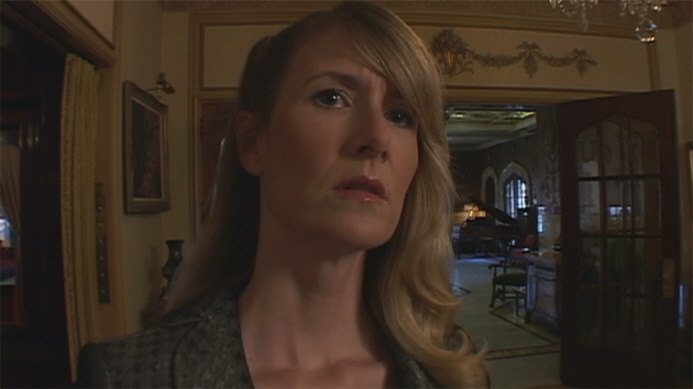
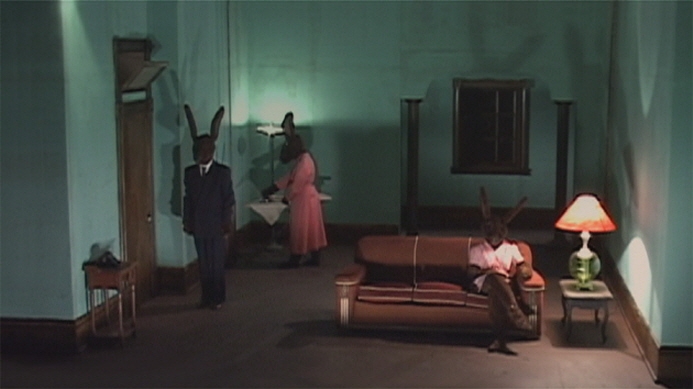
The story initially seems to be about the making of the latest movie of a Hollywood actress named Nikki Grace (Laura Dern). Not long after she is introduced to us after the elusively surreal opening part featuring a trio of talking rabbit figures, she gets cast as the lead actress of a movie titled “On High in Blue Tomorrows”, and she is quite excited for working with the prominent lead actor and director of that movie, both of whom are also eager to work along with her.

However, of course, there was already a bad sign for Grace. Early in the film, she was visited by a weird middle-aged lady, and this strange lady, who is incidentally played by Grace Zabriskie from Lynch’s iconic TV drama series “Twin Peaks”, baffled her a lot as saying a series of incomprehensible things and then eventually leaving.

In addition, the movie gives several more ominous signs to notice along the narrative. Grace is married to a wealthy and influential man who looks rather menacing to say the least, and he does not seem that pleased about whom she is going to play with, mainly because the lead actor of “On High in Blue Tomorrows” is your average ladies’ man. Although her co-star, played by Justin Theroux from “Mulholland Drive”, assures that nothing will happen between him and Grace, but, what do you know, they soon find themselves attracted to each other as trying to channeling their respective roles as much as possible in front of the camera and their director.

On one day, something odd occurs when Grace and her co-star prepare a bit along with their director on the set, and the director, who is flatly played by Jeremy Irons, confides to them about a hidden fact behind their movie. According to him, their movie is in fact a remake of some unfinished German film based on a cursed Polish folktale, and the production of that German film was halted after its two lead performers were found murdered under a very mysterious circumstance.

After coming to learn about this disturbing background of her movie, Grace gets gradually disturbed in one way or another. While trying to keep acting as before, she somehow finds herself quite confused between reality and fiction, and her viewpoint becomes all the more unreliable when she later gets tumbled into what can be described as your typical Lynchian dreamland. As she becomes more stuck in this nightmarish labyrinth, many seemingly random moments pop up here and there, and we naturally become more and more confused just like our heroine.

While Lynch might not have any clear idea on his big picture from the very beginning, we come to sense a sort of dream logic beneath the increasingly baffling narrative flow of the film thanks to his casual but confident direction. Just like “Mulholland Drive”, the movie feels quite confusing and incoherent at times, but it keeps engaging and then intriguing us with its sheer style and mood nonetheless. Its visual quality is rather rough as Lynch, who also served as the editor and cinematographer of the movie, shot it on low-resolution digital video, but that somehow fits with its the overall dreamy atmosphere, and Lynch occasionally adds extra digital effects for more surrealistic mood, as shown from a truly frightening moment later in the movie which can be regarded as one of the scariest cinematic moments during last several decades.

Above all, the movie is steadily anchored by the strong performance from Laura Dern, who was no stranger to Lynch’s singular artistic vision considering her appearances in “Blue Velvet” (1986) and “Wild at Heart” (1990). Regardless of whether her character is real or just a mere projection of some very unhappy young woman’s state of mind, Dern always holds the emotional center of the film, and it can be said that her rather overlooked performance here in this movie led her to another chapter of her impressive acting career, which is filled with a series of equally stellar performances including her Oscar-winning supporting turn in Noah Baumbach’s “Marriage Story” (2019).

Just like Zabriskie, Irons, and Theroux, many of the main cast members in the film simply come and go as dutifully supporting Dern. Despite their brief appearances, William H. Macy, Laura Harring, Julia Ormond, Nastassja Kinski, Mary Steenburgen, Terry Crews, Harry Dean Stanton, and Diane Ladd, who is Dern’s mother and sadly passed away a few months ago, leave some impression on us, and Naomi Watts, who was the heart and soul of “Mulholland Drive” along with Harring, provides the voice for one of those recurring rabbit figures in the movie.

In conclusion, “Inland Empire” is relatively less accessible compared to what Lynch achieved so fantastically in “Mulholland Drive”, but it remains as another important work in Lynch’s long and illustrious career. Yes, this turned out to be his final feature film, but he kept entertaining us with a number of various stuffs ranging from the long-awaited third season of “Twin Peaks” to the enjoyable cameo appearance at the end of Steven Spielberg’s “The Fabelmans” (2022), before he sadly died early in last year. He will be missed more and more, but we will continue to admire and cherish many of this great American filmmaker’s interesting works at least.

Posted in Movies | Tagged , , , | Leave a comment

The Rip (2026) ☆☆1/2(2.5/4): The trouble with the rip

Netflix film “The Rip”, which was released on this Friday, is a typical crime action thriller film which will not surprise you much if you are familiar with its genre clichés and conventions. While it is relatively more competent than many of average Netflix products, the movie does not bring anything particularly new or fresh to its genre territory, and it is a bit disappointing to see a number of prominent performers merely filling their respective roles as much as they can.

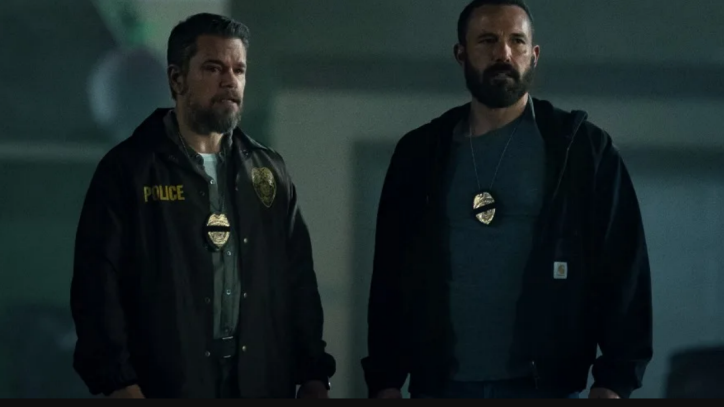
The movie opens with what we have seen from countless police movies out there. Captain Jackie Valez (Lina Esco), the key member of the Miami-Dade Police Department, is murdered when she is investigating on something quite serious, and the members of her specialized unit are immediately investigated by FBI right after that. Needless to say, everyone in the unit including Valez’s second-in-command Lieutenant Dane Dumars (Matt Damon) becomes a possible suspect, and even their chief, Major Thom Vallejo (Néstor Carbonell), is not so willing to help or support them.

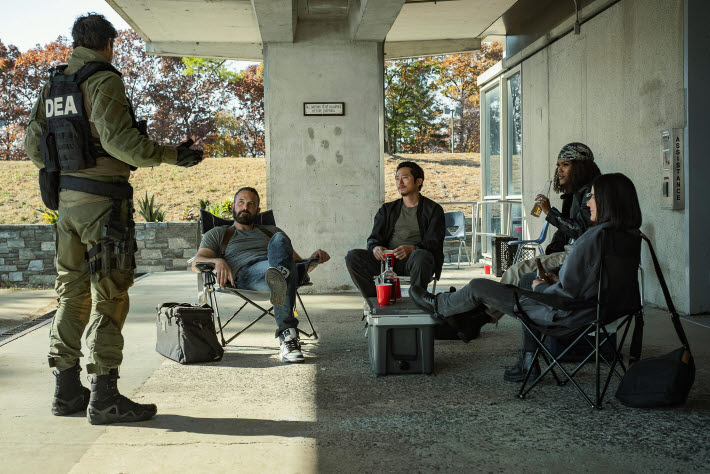
Meanwhile, Dumars suddenly brings another task to handle despite this tricky situation of theirs. According to him, he recently received a tip on a certain drug house located in some neighborhood of Hialeah, and his four fellow detectives, JD Byrne (Ben Affleck), Miko Ro (Steven Yeun), Numa Baptiste (Teyana Taylor), and Lolo Salazar (Catalina Sandino Moreno), go along with him to that place despite their reluctance.

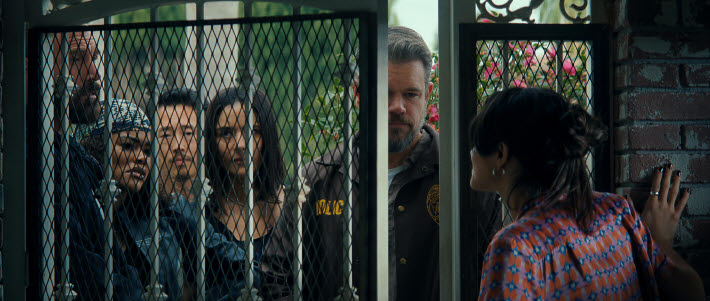
Of course, it soon turns out that Dumars and his fellow detectives get themselves into a very serious situation. When they knock on the front of the door of that place, a young woman named Desiree “Desi” Molina (Sasha Calle) comes out, and it is apparent to them that this young lady seems to be hiding something behind back. After thoroughly searching here and there inside Molina’s house, they eventually discover a hidden space, and, what do you know, there is a lot of drug money inside this secret space.

As they check on how much the money actually is, Dumars comes to look more untrustworthy to everyone around him. For example, he still does not tell the others more about how he received that tip in question, though we already had a pretty good idea even before the movie reveals that early in the story. In addition, he told each member of his a different figure when asked about how much money they would find, and that makes him look all the more suspicious.

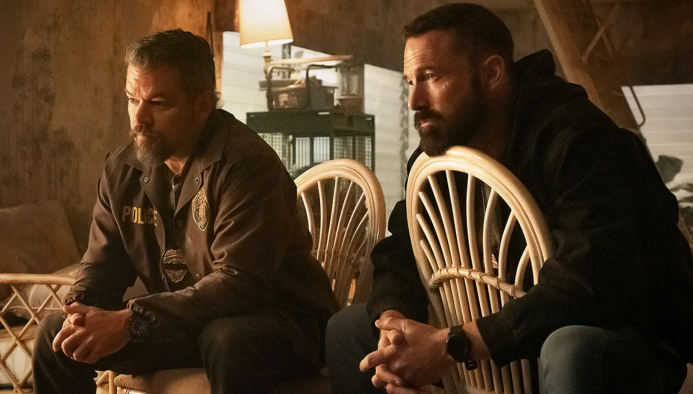
Anyway, Ro, Baptiste, and Salazar just follow Dumars’ instructions as expected, but Byrne comes to regard Dumars with more reservation and suspicion. Mainly because he was quite close and loyal to Captain Velez, Bryne has been determined to find whoever is responsible for her death, and it looks increasingly possible to him that Dumars is the one he is looking for.

Meanwhile, the situation expectedly becomes more complicated than before, and the movie did a good job of dialing up the level of tension on the screen. It seems that not only Dumars but also several other main characters in the story are not so reliable, and Dumars and his fellow detectives feel more pressured and cornered after it turns out that there is also someone else targeting on the money they are checking on.

Around that narrative point, you may easily guess the real villain if you are familiar with the law of Law of the Character Economy, though the movie does a fairly good job of distracting us from that. Around Matt Damon and Ben Affleck, the movie assembles a bunch of notable performers such as Steven Yeun, Teyana Taylor, Catalina Sandino Moreno, Sasha Calle, Scott Adkins, Kyle Chanlder, Lina Esco, and Néstor Carbonell, so it is a bit difficult for you to get the answer at first, but then you will see that the answer is pretty obvious right from one of these main cast members appears on the screen for the first time.

Nevertheless, director/screenplay writer Joe Carnahan, who wrote the story with Michael McGrale, keeps thing rolling before the movie eventually arrives at the expected finale where everything is fully explained as required. Steadily maintaining its level of suspense during its second half, the movie serves us with a couple of intense action sequences, and Carnahan, who previously gave us “Narc” (2002) and “The Grey” (2011), demonstrates that he is a dependable action movie director as usual.

In case of Damon and Affleck, who also serve as the producers of the film, they ably carry the film together as clicking with each other as well as they once did in their Oscar-winning film “Good Will Hunting” (1997), and their solid chemistry compensates for the clichéd aspects of the story from time to time. In contrast, many of the main cast members in the film are sadly under-utilized, but Taylor, Calle, and Moreno manage to hold each own small place well despite their thankless supporting roles.  

Overall, “The Rip”, whose title incidentally comes from a slang meaning police seizure, is a passable genre product with some entertaining moments thanks to the diligent professional efforts from its overqualified cast and crew members. To be frank with you, I do not think I will remember it much around the end of the year, but I will not stop you from spending your spare time on it.

Posted in Movies | Tagged , , , , | Leave a comment

Little Amélie or the Character of Rain (2025) ☆☆☆(3/4): Through a child’s viewpoint

Animation feature film “Little Amélie or the Character of Rain”, which recently won the Best Animation Film Award from the LA Film Critics Association, is colorfully charming as steadily sticking to its little heroine’s viewpoint. As she tries to process and understand the world surrounding her, we are often amused by some whimsical details popping around here and there, and we also come to sense more of whatever is beyond her limited sight.

The opening part of the film is inspired by an old Japanese belief. The Japanese believe that children are born as gods before eventually becoming humans at the age of 3, and the opening sequence shows us how Amélie (voiced by Loïse Charpentier and Emmylou Homs) becomes conscious of her existence even when she is still in her mother’s womb. To our little amusement, she regards herself as a god, and we see how she decidedly stays inside her own little world even after she is born later.

Needless to say, her Belgian parents, who have lived in Japan for years because of Amélie’s father’s diplomatic job, are rather worried at first, but they have been already quite busy with taking care of Amélie’s two elder siblings, so Amélie are mostly left in her “vegetative” state during next two years before something eventually happens. A little earthquake occurs on one day, and this somehow bursts Amélie’s little world. As a result, she becomes much more active and communicative than before to her parents’ delight, but she soon turns into a little terror to them due to her hyperactive behaviors.

Fortunately, there comes some help from two unexpected figures. One is Amélie’s grandmother who has just come from Belgium for visiting her son and his family, and she instinctively knows how to calm down her little dear granddaughter. The other one is a local nanny recommended by the landlady of the house where Amélie and her family reside, and she instantly befriends Amélie right from their first encounter and then becomes someone to lean on for Amélie when Amélie’s grandmother eventually returns to Belgium later.

Leisurely moving from one episodic moment to another along with its heroine, the film doles out a series of lovely visual moments worthwhile to watch from big screen. As she grows up day by day, Amélie becomes more conscious of the world surrounding her, and she often explores more of whatever exists in the surrounding environment of her family house. The film cheerfully wields a lot of stylish touches to be savored, and we come to feel more of her daily joy and excitement.

In the meantime, more serious story elements come to linger around the main narrative. At one point, Amélie sees her father becoming quite emotional, and that is how she comes to know a bit about a certain inevitable part of life. We also come to sense that Amélie’s nanny has some painful past behind her gentle appearance, and we are not so surprised when she reveals that to Amélie later in the story, though Amélie cannot fully grasp how much her nanny still feels hurt because of that. In case of the landlady, she seems quite harsh and frigid at first, but then she turns out to have her own deep sadness behind her back.

Simply letting us gather whatever is going on at the fringe of the story, the film continues to focus more on the gradual emotional maturation inside Amélie’s unadorned state of mind. When she comes to learn that there will soon be a big change for her as well as her family, she certainly resists, but, of course, there is nothing she can do about that, and this leads to a big emotional turmoil for her in the end.

The screenplay by directors Maïlys Vallade and Liane-Cho Han and their co-writers Aude Py and Eddine Noël, which is based on Belgian novelist Amélie Nothomb’s autobiographical novel “The Character of Rain” (The meaning of the title is explained by one key scene in the film, by the way), is sometimes a bit too thin in terms of plot and characterization, but this weak aspect are mostly compensated by a lot of mood and details generated from its charming animation style. Although the animation style of the film initially looks quite simple and broad, it often dazzles our eyes with the deft utilization of vibrant colors, and that is particularly evident in case of the amusingly grotesque presentation of Japanese carps during one particular scene. While we can clearly see how much our little heroine is repulsed by them gobbling up their feed, we can also appreciate the stunning technical aspects of this striking scene, and you will admire more of the efforts of Vallade and Han and their crew. Although this is their first feature animation film, you can clearly recognize their considerable skill and talent, and it will be interesting to see what may come next from these two promising animation film directors.

In conclusion, “Little Amélie or the Character of Rain” lightly passed by my eyes during its rather short running time (77 minutes) at first, but its distinctive style and mood grow on me after that. While many of Hollywood animation films were not particularly new or fresh during last year except, perhaps, “KPop Demon Hunters” (2025), there were fortunately a number of good animation films outside Hollywood such as “Chainsaw Man – The Movie: Reze Arc” (2025) and “Demon Slayer: Kimetsu No Yaiba Infinity Castle” (2025), and I can assure you that “Little Amélie or the Character of Rain” is one of such enjoyable works from last year.

Posted in Movies | Tagged , | 1 Comment

The Square (2025) ☆☆☆(3/4): A star-crossed romance in North Korea

South Korean independent animation film “The Square” is an earnest melodrama about two very different people who cannot help but love each other despite an oppressive society surrounding them. While it is another typical tale of star-crossed lovers, the film draws our attention with its interesting specific background first, and then we come to care more about the couple at the center of the story as observing more of their desperate love.

At first, we get to know Isaac Bori (voiced by Lee Chan-yong), a young Swedish diplomat who has worked in the Swedish embassy in Pyeongyang, North Korea for a fairly long time. Because his grandmother is a Korean immigrant, Bori speaks Korean mostly well, but his foreign appearance still stands out whenever he goes outside, and that is the main reason why he has to be very careful about meeting Bok-joo (voiced by Lee Ga-yeong), a pretty young traffic officer he has been secretly dating for some time.

Not long after another clandestine date with Bok-joo, Bori requests the extension of his stay in the embassy, just because he simply wants to be with Bok-joo as long as possible. After all, most of his fellow young diplomats are not particularly willing to work in North Korea, so it seems that he can continue to occupy his position in the embassy as before.

However, his request is unexpectedly denied, and now Bori has to leave North Korean within a few days. Naturally, he protests, but there is nothing he can do about this changed circumstance. Besides, marrying Bok-joo or taking her out of the country is impossible to say the least, and Bok-joo, who has been more clear-eyed on their romance, is willing to accept their upcoming separation even though it will be very painful for both of them.

Meanwhile, not so surprisingly, their relationship is closely monitored by Myeong-joon (voiced by Jeong Woon-jong), who works as a local translator at the embassy. Having been around Bori for a long time, Myeong-joon knows a lot about what Bori and Bok-joo have been doing in private, and he also comes to care about Bori a lot behind his flatly phlegmatic attitude. Nevertheless, he must routinely report to his direct superior about whatever is going on between Bori and Bok-joo, and he becomes all the more conflicted when his direct superior considers investigating more on Bok-joo.

Although there is not much surprise for us as the story becomes expectedly melodramatic, the movie keeps engaging us via its modest but haunting presentation of Pyeongyang on icy winter days. The streets and alleys of the city often feel barren and oppressive with all those drab buildings and aggressive slogans, and the resulting stark atmosphere is often accentuated by the occasional electricity shortage in the city.

In such a cold and bleak world like that, Bori and Bok-joo’s romance comes to feel more desperate and poignant to us. Although he is unbelievably naïve in handling his increasingly problematic circumstance, it is touching to observe how Bori keeps trying just for his love, and the movie does earn its weepy finale along with him. The finale is rather contrived at first, but it still works due to the earnest emotions beneath it, and we are moved more by the following last scene, which feels somber and restrained but will linger on your mind for a while.

This is the first animation feature film by director/writer Kim Bo-sol, who demonstrates here that she is a good animation director with considerable talent and potential. Although the story and characters are pretty simple to say the least, the film is filled with enough mood and personality on the whole, and it does not waste any second of its rather short running time (73 minutes). In case of one intense chase sequence unfolded inside a subway station, Kim and her crew did a commendable job of generating some thrill and suspense on the screen, and I particularly enjoyed how this compelling sequence evokes the similar scene in William Friedkin’s “The French Connection” (1971).

The main voice cast members of the film are solid, though I must point out that it is a bit awkward for me to see both of the Swedish and North Korean characters in the film speaking in Korean. While Lee Chan-yong and Lee Ga-yeong generate a little but precious chemistry between their lead characters, Jeon Woon-jong holds his own small place as his character comes to show more heart and conscience along the story, and Lee Yoo-joon is also effective as Myeong-joon’s direct superior.

In conclusion, “The Square” is a promising start for its director’s burgeoning career, and it also reminds me of how South Korean animation made a small but significant leap during last year via a number of notable works. Although I did not like “Exorcism Chronicles: The Beginning” (2024) and “Mr. Robot” (2024) enough for recommendation, their technical qualities impressed me to a considerable degree nonetheless, and then there came “Your Letter” (2025), which is the best in the bunch in my humble opinion. Just like these three recent South Korean animation films, “The Square” gives another good sign of the ongoing progress in South Korean animation, and I sincerely hope that they will lead to the production of more local animation feature films to come in the future.

Posted in Movies | Tagged , , | Leave a comment

The Passengers of the Night (2022) ☆☆☆(3/4): As she starts over

Mikhaël Hers’ 2022 film “The Passengers of the Night”, which was belatedly released in South Korea around the end of the last year, is a mild but engaging drama mainly driven by mood and emotion. Simply rolling with its several main characters along its rather loose narrative, the movie generates a series of small but touching human moments, and we get more involved in their emotional journeys along the story.

The movie, which is set in Paris during the 1980s, begins with the prologue set in 1981, and then we see how things become difficult for a plain ordinary woman named Élisabeth (Charlotte Gainsbourg) in 1984, She recently divorced after her husband left her and her two adolescent kids for some unspecified reason, and now she has to find any job to support her and her two children. Because she has been a housewife for many years, she understandably feels uncertain and confused, and she becomes daunted as she fails more than once in her attempt to get employed.

Nevertheless, the situation is not that bad for Élisabeth. Her ex-husband, who is incidentally never shown in the film, allows her to stay with their two children in their apartment technically belonging to him, though he does not pay his alimony that well. In addition, her daughter Judith (Megan Northam) will soon leave for her college education, so Élisabeth can pay more attention to her younger son Matthias (Quito Rayon-Richter), who still seems indecisive about his future while getting more interested in poetry.

Above all, Élisabeth finally gets stably employed. She applies for a rather menial job in some night radio program, and she is instantly hired after her brief interview with Vanda Dorval (Emmanuelle Béart), the host of that night radio program. She is not so sure about whether she can do the job well at first, but all she has to do is tactfully handling those numerous callers for her boss, and she soon gets accustomed to that, though she also has to work as a librarian during daytime for earning more for supporting herself and her son.

Vanda sometimes invites a random guest to be interviewed for her night radio program. On one day, a young woman named Talulah (Noée Abita) comes to the studio of the night radio program, and Élisabeth comes to care about her as Talulah talks a bit about how she became homeless after having a lot of difficulty due to her parents. In the end, Élisabeth approaches to Talulah later, and she suggests that Talulah should stay in her apartment for a while at least. After all, there is a spare room in Élisabeth’s apartment, and Talulah does not mind accepting the kindness of a stranger.

While Matthias also does not mind this sudden change at all, we gradually sense that he becomes interested in getting closer to Talulah. He comes to spend more time with her, and we are not so surprised when they eventually get quite intimate with each other at one point, but then she makes a sudden decision to his bafflement on the very next day.

And then the movie moves forward to four years later. While she still has to do two jobs, Élisabeth’s daily life has been more stable than before, and she even comes to have another chance for love via a handsome guy who has often visited her library just because of her. In addition, she has become the more crucial part of that night radio program, and we observe how confident she is now compared to her first days at the studio.

When Talulah comes back into her life, Élisabeth is naturally surprised, but she lets Talulah stay in the apartment again, though her ex-husband is now going to sell it sooner or later. Not so surprisingly, Matthias, who has struggled to start his artistic career for a while, finds himself drawn to Talulah again, but we come to sense that she prefers to remain as a friend to him.

Instead of pushing its main characters into unnecessary conflicts, the screenplay by Hers and his co-writers Maude Aeline and Mariette Désert lets them follow common sense and decency. When Talulah turns out to be more troubled than she seemed at first, Élisabeth shows more concern and compassion to her, and that leads to one of the most moving moments in the film. After that, Talulah becomes more decisive about what should be done about her rather complicated relationship with Matthias, who understands and respects her decision without any bad feeling at all.

I personally wish the movie delved a bit deeper into the story and characters, but I also enjoyed its casual mood and free-flowing narrative at least, and I also appreciated its solid main cast members. As showing a lighter side of her acting talents compared to her intense performances in several works of Lars von Trier such as “Antichrist” (2009), Charlotte Gainsbourg duly holds the center as required, and several other cast members including Quito Rayon-Richter, Noée Abita, Megan Northam, Thibault Vinçon, and Emmanuelle Béart have each own moment to shine around her.

Overall, “The Passengers of the Night” compensates for its rather thin narrative via its enjoyable mood, storytelling, and performance. You may feel a bit impatient with its leisurely narrative pacing at first, but it will be a fairly rewarding experience on the whole once you give it a chance, and you will come to care about its main characters more than expected.

Posted in Movies | Tagged , | Leave a comment

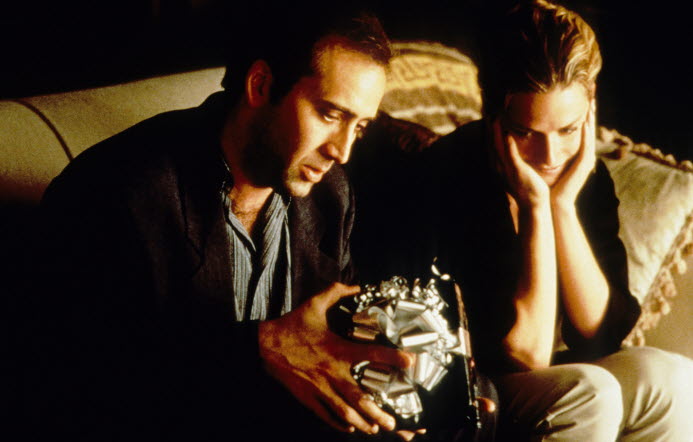
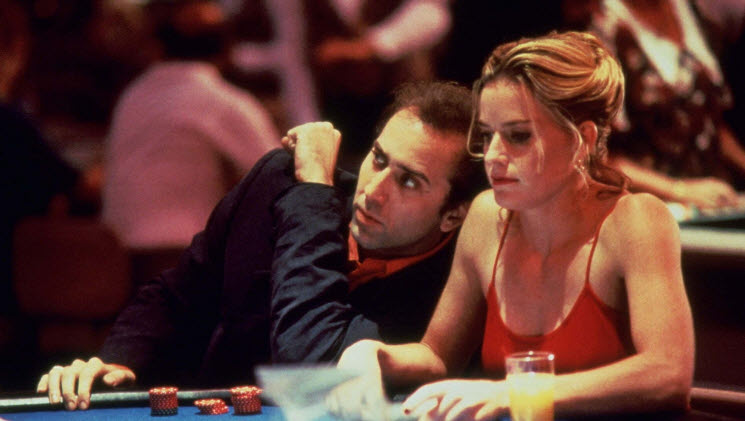
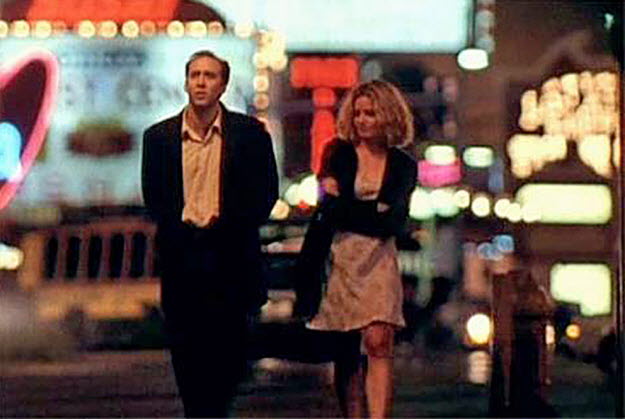
Leaving Las Vegas (1995) ☆☆☆1/2(3.5/4): A harrowing alcoholic love story in Las Vegas

Mike Figgis’ 1995 film “Leaving Las Vegas”, which was recently released in selected South Korean theaters, is still superlative for many good reasons. At first, its two lead characters seem to be more or less than familiar archetypes, but the movie elevates them as depicting their love story with a lot of human qualities to engage and then move us. In the end, you will not forget them at all after they eventually reach the inevitable ending of their love story.

At the beginning, the movie shows us how serious the alcoholic condition of its hero really is. Ben Sanderson (Nicholas Cage) once had a fairly successful screenplay writer working in Hollywood, but both of his life and career have crumbled a lot as he tumbles down toward the bottom of his alcoholism. In the end, he gets fired, and he soon goes to Las Vegas simply for drinking to death as quickly as possible.

The movie does not explain much about what has actually made him driven to alcoholism and those frequent self-destructive behaviors associated with it, but that does not matter much to us as we observe more of his worsening alcoholism. As he recognizes in a self-deprecating manner at one point early in the film, he has been so deeply mired in his alcoholism that he does not seem to know or remember whether his alcoholism came before losing his dear family or vice versa.

Around the point where Ben arrives in Las Vegas, the movie shifts its focus toward Sera (Elisabeth Shue), a young female prostitute who has worked in Las Vegas for years. Not long after she and Ben come across each other, they happen to meet each other again, and Ben manages to convince her to spend some night with him besides having a sexual encounter in his motel room.

While Ben looks like a creep to her at first, Sera does not say no when they are in his motel room. Although she has sometimes been pretty miserable as working under a Latvian pimp who is thankfully gone later in the story, she is a seasoned professional expert who knows what and how she will do before getting paid. There is a scene where she talks about how deftly she handles those seedy clients of hers as a well-experienced sex worker. She is willing to be whatever her clients desire in exchange for money, but she is not so eager to get emotionally involved with them more.

However, Ben surprises Sera, because she comes to care more about him than expected. She senses something sad about Ben, and then she lets him stay inside her residence. While not being persuaded to stop his suicidal plan at all, Ben asks her to let him stuck with bottles as before, and Sera does not mind this despairing request of his.

Not so surprisingly, both Ben and Sera come to love and care about each other a lot more than they can admit. Getting more and more frustrated with Ben’s worsening alcoholism, Sera cannot help but try to persuade him to get any good chance for recovery, but Ben does not listen to her at all while always thinking about another glass of drink – and what should be done for her before he eventually becomes too burdensome for her.

Although often being well-aware of his incorrigible alcoholic condition, Ben cannot help but follow his alcoholic impulses just like many other alcoholics out there. As many people say, one cannot love others without loving oneself first, and Ben cannot possibly be liberated from deep self-loathing, which comes with the territory in case of alcoholism. In the end, he comes to hurt Sera’s feelings a lot, and that accordingly leads him to another bottom to hit.

As the harrowing soul of the film, Nicholas Cage, who deservedly received a Best Actor Oscar for this movie, gives one of the best performances in his rather bumpy career. While he can be pretty bad if he is seriously miscast, Cage has usually showed considerable professional commitment during last several decades, and that is why he is often fantastic in demanding roles requiring a lot of efforts. As a part of his preparation, he studied Albert Finney’s Oscar-nominated alcoholic performance in John Huston’s “Under the Volcano” (1984), and, just like Finney, he gives a compelling performance both subtle and intense. While there are several striking moments emphasizing Ben’s worsening alcoholism, Cage aptly handles these scenes with human nuances to notice and observe, and we come to have more understanding of what Sera sees from Ben as they genuinely fall in love with each other.

On the opposite, Elizabeth Shue, who was also Oscar-nominated, functions as the precious heart of the movie. As the story advances, we get to know more about Sera’s feelings and thoughts during several personal scenes of hers where she reflects on her relationship with Ben. As Sera struggles to process her experience with Ben along the story, she comes to us as an engaging human figure to care about as much as Ben, and Shue, whose career has not sadly been boosted as much as Cage’s after this movie, is simply unforgettable when her character says something quite simple but very poignant at the end of the story.

On the whole, “Leaving Las Vegas”, which is based on the semi-autobiographical novel of John O’Brien (He killed himself shortly before the shooting of the movie began, by the way), is a powerful human drama about not only alcoholism but also love and compassion. This is surely one of the best works in Figgis’ filmmaking career, and I am glad that South Korean audiences can get a chance to see this little masterwork again in movie theaters.

Posted in Movies | Tagged , , | Leave a comment

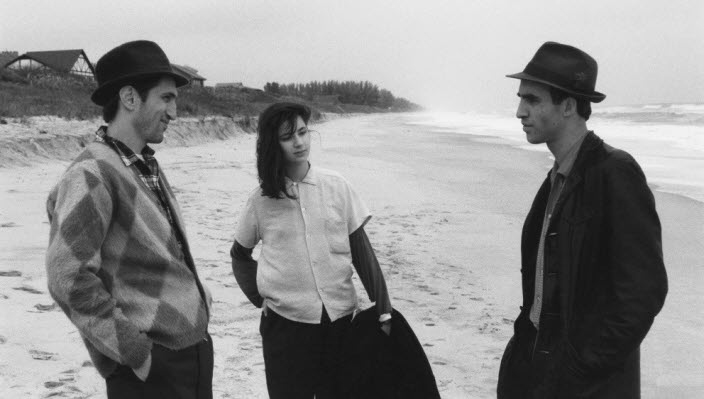
Stranger Than Paradise (1984) ☆☆☆1/2(3.5/4): The early breakthrough work in Jim Jarmusch’s career

Jim Jarmusch’s 1984 film “Stranger Than Paradise”, which happens to be shown in selected South Korean theaters along with several other works of his as his latest film “Father Mother Sister Brother” (2025) arrives here, is quite dry to say the least. On the surface, nothing much seems to be happening among its main characters, and the movie simply seems to be leisurely rolling along with its deliberately shabby minimalistic mood, but it is also somehow funny and poignant thanks to its offbeat low-key humor and sensitivity.

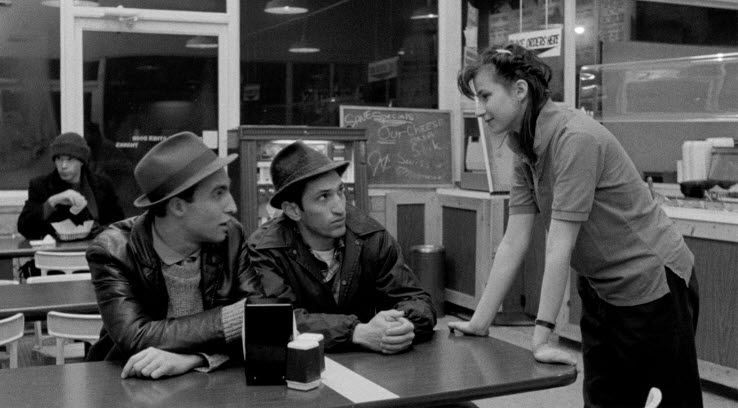
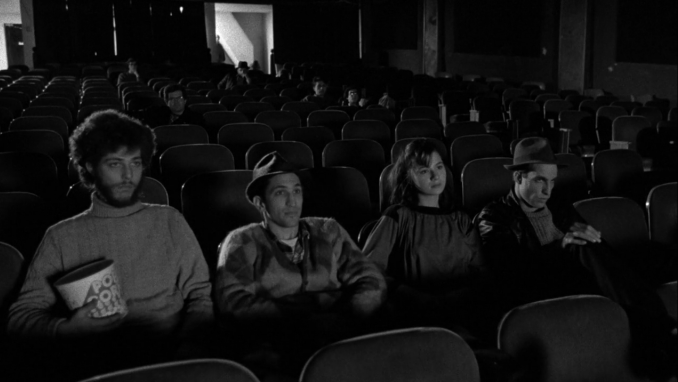
The story consists of three acts, and the first act establishes its three main characters one by one. Bella “Willie” Molnar (John Lurie) is a small-time Hungarian gambler who has lived in a Brooklyn neighborhood of New York City, and the first scene shows him being rather annoyed by a sudden news. His cousin Eva (Eszter Balint) will soon come from Hungary for visiting their old aunt living in Cleveland, Ohio, but their aunt has to be in a hospital due to some illness during next several days, so he has to let Eva stay in his little shabby apartment before she will eventually go to Cleveland later.

The main source of humor during the first act comes from the strained relationship development between Willie and Eva. Right from her first day in his apartment, Willie is not very friendly to Eva, and we observe some friction between them during their first several days. Nevertheless, he gradually becomes a bit protective as he comes to spend more time with her, and he also introduces her to his close friend Eddie (Richard Edson), who wholeheartedly welcomes her from the beginning.

Doling out one dryly humorous moment after another along its slow narrative flow, the movie gradually engages us via its own style and sensibility. While it was shot in grainy black and white film, the resulting shabby visual qualities fit well with the deadpan attitude of the movie. Although its three main characters are more or less than broad archetypes, they have each own personality to distinguish in one way or another, and we are all the amused as observing some low-key comic moments generated among them (My favorite moment is the one involved with a vacuum cleaner, by the way).

 Around its middle point, the story moves to Cleveland. Not long after Eva goes to Cleveland to see and then stay with their aunt, Willie decides to go to Cleveland along with Eddie just because they happen to get enough money for going there. Although they are initially welcomed by Eva and Aunt Lotte (Cecillia Stark), it becomes apparent that Aunt Lotte does not like Willie much, and we get tickled a bit whenever she grumbles in Hungarian. I do not know how authentic her Hungarian speaking actually is compared to the AI-corrected Hungarian speaking in Brady Corbet’s “The Brutalist” (2024), but I can tell you instead at least that that Stark’s colorful supporting performance effortlessly steals the show from the beginning to the end.

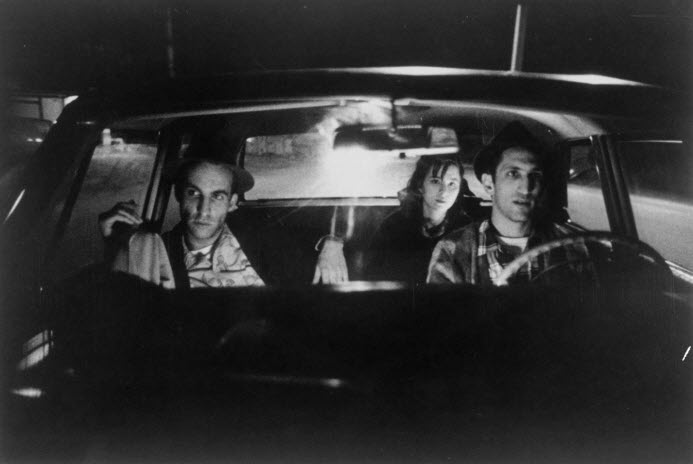
Anyway, it turns out that Eva has been pretty bored and frustrated with living in Cleveland, and that eventually prompts Willie and Eddie to take her to Florida later in the story. Not so surprisingly, there comes a big trouble not long before they arrive in Miami, and the movie accordingly becomes a bit more tense and serious than before.   

Nevertheless, the movie does not lose any of its humor and sensitivity even at that point. There is a melancholic but lovely moment when Eva and Willie simply spend some time along with Eddie at a nearby beach, and we come to sense more of the relationship development between them even though they do not signify much on the surface. Around the end of the story, we are caught off guard by a little unexpected plot turn, and this rather jarring plot turn eventually leads the story and characters to the haunting finale to remember.

Although the movie is Jarmusch’s second feature film after “Permanent Vacation” (1980), it clearly shows that Jarmusch already established and then developed his own idiosyncratic style and mood even at that point. Every scene in the film was shot in single long takes with no standard coverage, and their beginnings and ends are always punctuated by blackouts or chapter titles. This storytelling approach may look quite simple and plain to you at first, but Jarmusch’s confident direction is evident from how he subtly builds up mood and humor on the screen, and he also draws good comic performances from his main cast members, who are often as amusingly deadpan as the performers of Wes Anderson movies. John Lurie, who also wrote the screenplay a bit with Jarmusch besides composing the score for the movie, and Eszter Balint complement well each other throughout the film, and they and Richard Edson ably generate genuine comic chemistry among them whenever they are together on the screen.

Overall, “Stranger Than Fiction” remains one of the highpoints in Jarmusch’s long and illustrious filmmaking career, and I must tell you that I enjoyed it more than when I watched it for the first time around 20 years ago. At that time, many works of his works were a sort of acquired taste to me, but then he interested and then impressed me more with his several subsequent acclaimed works such as “Broken Flowers” (2005) and “Patterson” (2016), and his latest film “Father Mother Sister Brother” demonstrates again that he is still one of the most interesting filmmakers in our time. Sure, you may be initially baffled by “Stranger Than Paradise” and many of his dryly idiosyncratic works out there, but they will probably grow on you more, and you may come to want to savor their distinctive nuances and details more.

Posted in Movies | Tagged | Leave a comment

Baka’s Identity (2025) ☆☆☆(3/4): Three lads struggling in a criminal underworld

Japanese film “Baka’s Identity” is a grim but engaging crime drama about three different lads struggling in their criminal underworld in one way or another. As smoothly moving from one perspective from another one along its non-linear narrative, the movie gradually reveals more of how harsh and ruthless their criminal underworld can be, and we come to understand and care about them more than before.

The story, which consists of three acts, initially focuses on how Takuya Matsumoto (Takumi Kitamura) and Mamoru (Yuta Hayashi) operate in the criminal underworld in Tokyo. Working under some big criminal organization, they often lure men with their fake female online identities. With some help from their young female associate, they later trick these unfortunate targets into selling their identity papers, which will then be resold at a much higher price to whoever seeking a new identity for a new life.

So far, things have been fairly good for both Takuya and Mamoru, but we begin to sense trouble when they meet their direct boss at one point. When Takuya happens to be absent for a while, their direct boss instructs Mamoru not to contact Takuya at any chance on the next day, but he does not tell Mamoru the reason for that at all. Though quite baffled about this odd instruction, Mamoru subsequently comes to witness something suspicious from Takuya, but he still does not tell anything – even to Kenshi Kajitani (Go Ayano), another member of the criminal organization who has been like a big brother to both Mamoru and Takuya.

Needless to say, the situation soon becomes quite dangerous for both Takuya and Mamoru, but then the screenplay by Kosuke Mukai, which is based on the novel by Jun Nishio, steps back and then fleshes out the relationships among its three main characters more. We see how Takuya generously took Mamoru under his wing not long after their accidental first encounter, and this touchingly resonates with how much Kenshi comes to care about Takuya more later in the story. At one point, Kenshi must make a choice as getting involved with Takuya more than he wanted at first, and their circumstance certainly becomes all the trickier as a consequence.

While thankfully sticking to its calm, restrained attitude as before, the movie unnerves us with several chilling moments of brutal violence. Although initially looking pretty jolly on the surface, Takuya and Mamoru’s direct boss is not certainly a nice man at all, and neither is a dude at the top of their criminal organization. Besides that illegal trading of identity papers, their criminal organization turns out to be involved with several other nasty criminal businesses, and the casual attitude of these two very unpleasant figures to their deplorable criminal activities will chill or disgust you at times.

While quite uncompromising in the depiction of the gloomy despair and horror surrounding its main characters, the movie still holds our attention as an effective crime noir thriller. It is gradually revealed that Takuya gets himself involved in a very risky criminal scheme involved with a lot of dirty money to steal, and the movie trusts us enough to let us gather what is going on around Takuya and several other main characters. Even when it eventually arrives at the expected finale, the movie does not hurry itself at all, and it manages to pull out a little bit of hope and optimism even though many things remain quite uncertain for its three main characters.

The three main cast members of the film are solid as the human centers of the story. Right from the beginning, Takumi Kitamura and Yuta Hayashi click well with each other as two lads who have depended on each other a lot as close friends and colleagues, and Kitamura is particularly good when Takuya must not hint or reveal anything to Mamoru at all for Mamoru’s safety. As another important part of the story, Go Ayano is convincing as a man who turns out to have more compassion and conscience than his meek and shabby appearance suggests, and we do not need any explanation at all when his character decides to take a lot of risk for himself as well as Takuya.

In case of several substantial supporting performers in the film, their characters are rather broad on the whole, but they are well-cast in their respective roles at least. Kazuya Tanabe and Goichi Mine are as menacing and despicable as expected from their villainous characters, and they surely bring extra tension whenever their characters appear on the screen. Although their supporting roles are mostly under-developed, Mizuki Yamashita and Yuma Yamoto hold each own small spot well around the fringe of the story, and they also contribute a bit of sensitivity to the movie.

In conclusion, “Baka’s Identity”, which was released as “Who Is a Fool?” in South Korea on last Wednesday (“Baka” is a rather strong Japanese pejorative meaning “Fool”, by the way), did a fairly good job of mixing familiar genre elements into its dark social drama under the competent direction of director Koto Nagata, who previously directed “Little DJ” (2007). When I walked into the screening room during this afternoon, I did not have much knowledge or expectation on what or how it is about, so the movie surprised me as engaging and then touching me more than expected, and now I recommend you to give it a chance someday.

Posted in Movies | Tagged , | Leave a comment