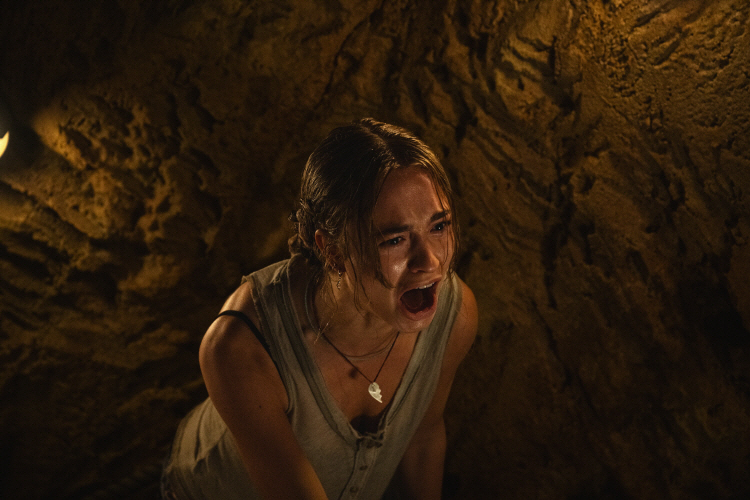
Primate (2025) ☆☆1/2(2.5/4): Menaced by a mad chimpanzee (no kidding)

“Primate” is your typical mad killer movie with a rather amusing twist on its story premise. This time, we get a murderously raging ape at the center of the story, and the movie surely has a lot of vicious but skillful fun from eliminating its several cardboard characters one by one before eventually culminating to its very, very, very violent climax.

The main background of the story is a nice big house located in the middle of some remote region of Hawaii. It belongs to a deaf writer named Adam Pinborough (Troy Kutsur) and his two daughters Lucy (Johnny Sequoyah) and Erin (Gia Hunter), and they also have a male chimpanzee named Ben, who has been another family member for many years since he was adopted by Adam’s recently diseased linguist professor wife.

After its disturbing prologue scene, the story begins with the arrival of Lucy and her two close female friends Kate (Victoria Wyant) and Hannah (Jessica Alexander) in Hawaii. They are warmly greeted by Kate’s older brother Nick (Benjamin Cheng) at the airport, and these four young people are all going to spend a good time along with Erin in the house while Adam is absent to due to some business deal involved with his pulpy but popular genre novels.

While everything looks fine and well when they arrive at Adam’s house, we come to sense some awkwardness among him and his daughters. While they still love and care about each other as before, his wife’s recent death remains to hover around them as an uncomfortable fact, and Erin has been a bit resentful about her older sister’s absence shortly after their mother’s death.
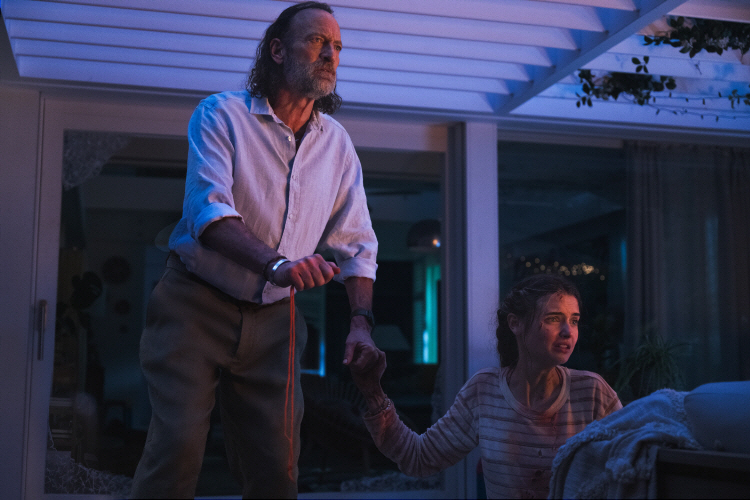
And we also notice a few alarming signs from Ben, who looks fairly friendly but then unnerves us as well as Lucy’s friends for no apparent reason. When Adam later discovers a certain dead animal inside Ben’s big cage outside the house, we instantly discern a big trouble to come, and, because of what was already presented to us at the beginning of the movie, we are not so surprised by what is revealed later in the story. Yes, that dead animal had rabies, and it certainly bit Ben before meeting its demise.

While he subsequently sends the carcass of that dead animal to a local veterinary clinic just in case, Adam is not concerned much before leaving for his work, and her daughters are certainly excited to have their own private time along with Lucy’s friends. The house, which is incidentally on a big cliff facing the ocean, has a nice swimming pool in front of it, and they cheerfully enjoy themselves there as having no idea on what is happening to Ben right now – even when he looks a lot more scared of water than before (This is one of those telling signs of rabies, you know).

Although it drags a bit during its first part just like many of those mad killer movies such as, yes, “Friday the 13th” (1980), the movie gradually builds up the sense of uneasiness as occasionally focusing on Ben’s increasingly alarming status. Even while succumbing to his dangerous disease step by step, Ben, who is convincingly presented on the screen thanks to the solid motion capture performance by Miguel Torres Umba, also seems to be aware of how his mind is helplessly going crazy, and that gives a little tragic side to what is going to happen sooner or later.

Once it goes for the expected killing mode along with its crazed ape hero, the movie becomes a sort of cross between “Cujo” (1983), “Monkey Shines” (1988), and “Halloween” (1978). Although he is relatively smaller and shorter than the human characters in the film, Ben can be quite lethal and menacing as driven by his sick rage, and that makes him a fairly effective horror movie monster. As a matter of fact, there are several truly gruesome moments filled with blood and violence, and I assure you that these moments will make you wince more than once.
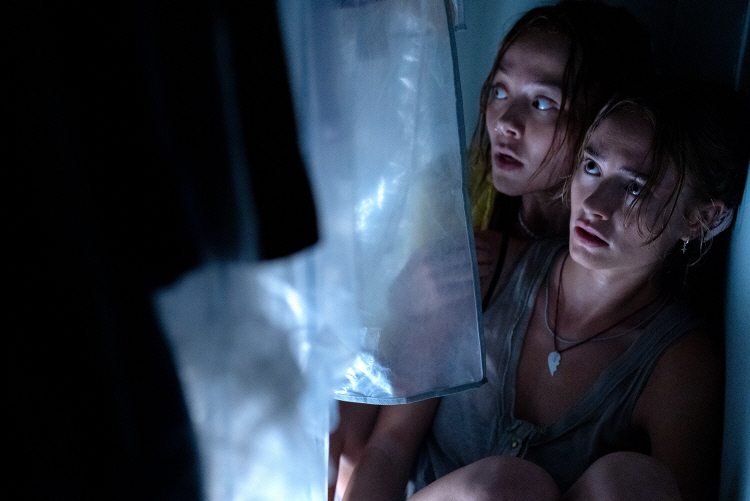
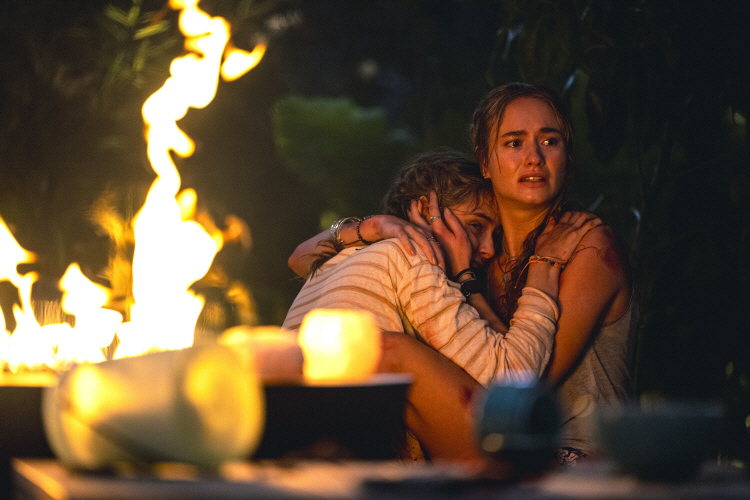
As relentlessly cornered and menaced by Ben along the story, Lucy and several other main characters are certainly thrown into more panic and fear, but they also try to find any possible way for their survival as much as possible. What follows next is a series of generic scenes where some of them must move silently and carefully in the unlit spaces inside the house, but director/co-writer Johannes Roberts, who is no stranger to horror movies considering his several previous films such as “47 Meters Down” (2017) and “The Strangers: Prey at Night” (2018), and his crew members including cinematographer Stephen Murphy and composer Adrian Johnston, whose electronic score is clearly attempting to emulate John Carpenter’s iconic synthesizer score in “Halloween”, did a competent job of handling these conventional moments with enough sense of dread to hold our attention for a while at least (I particularly like how Ben expresses his raging feelings via his little communication tool, by the way).

The main flaw of the film is its rather superficial main characters, who are mostly as flat and colorless as many of those numerous victims of Jason Voorhees or Michael Myers. Johnny Sequoyah and several other main cast members in the film acquit themselves well on the whole, but they are often limited by their thin roles, and Troy Kotsur, a wonderful deaf actor who won an Oscar for “CODA” (2021), manages to bring a little touch of class despite his thankless role.

In conclusion, “Primate” works to some degree during its short running time (89 minutes) even though it ends up being a bit too typical to recommend despite its fun story setting. Yes, it does have that clichéd moment of last-minute surprise you can expect from many mad killer flicks, and this is effectively delivered, but the movie could do more than that in my humble opinion.
Posted in Movies | Tagged , , | Leave a comment

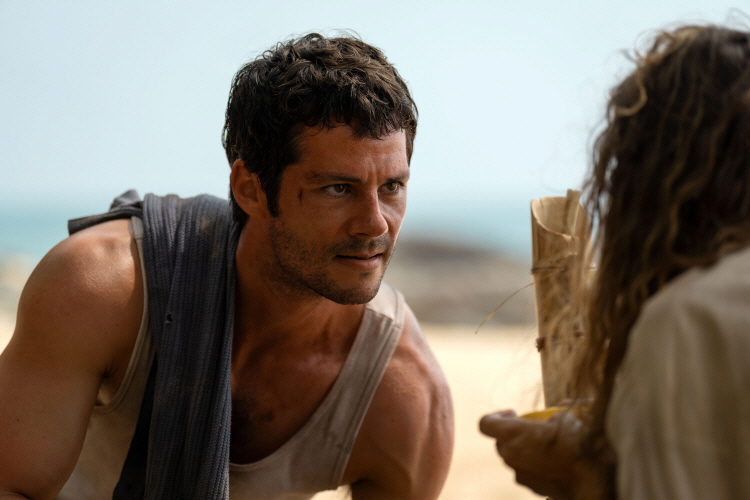
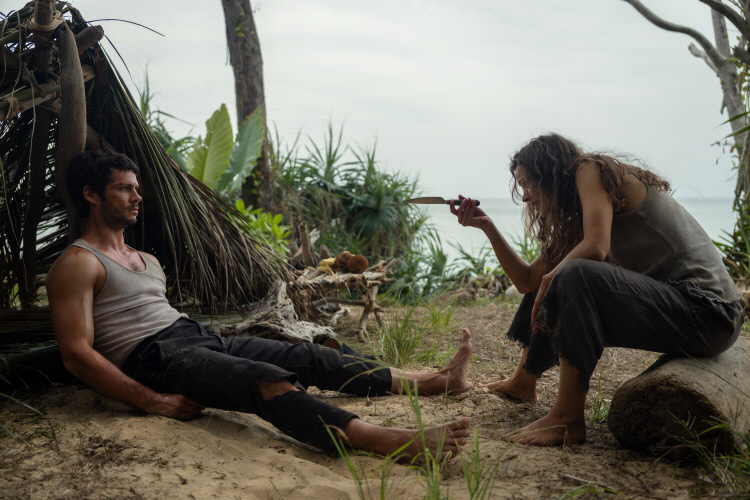
Send Help (2026) ☆☆☆(3/4): The Taming of the Boss

Sam Raimi’s latest film “Send Help” is a little naughty genre film you can exactly expect from its director. While you can clearly see how the story will end in one way or another, the movie has some vicious fun from the increasingly tricky power dynamics between its two main characters, and you may chuckle more than once just like I did during my viewing.

The early part of the film establishes how things have been quite frustrating for Linda Liddle (Rachel McAdams), who has worked as a mere employee of the Planning and Strategy Department of some prominent consulting company. She hopes to get some promotion as promised by the former CEO of the company before his recent death, but, alas, Bradley Preston (Dylan O’Brien), the new CEO who is also incidentally the son of his predecessor, casually disregards her and then promotes her direct supervisor instead just because he is an old college friend of Bradley.

Mainly because Linda impresses him in a rather negative way, Bradley soon considers firing her sooner or later. However, she happens to be really necessary for the latest big deal of the company right now, so he decides to let her join his business trip to Thailand along with his several executives before eventually firing her later, and we come to wince more as these obnoxious dudes cruelly laugh at her behind their back.

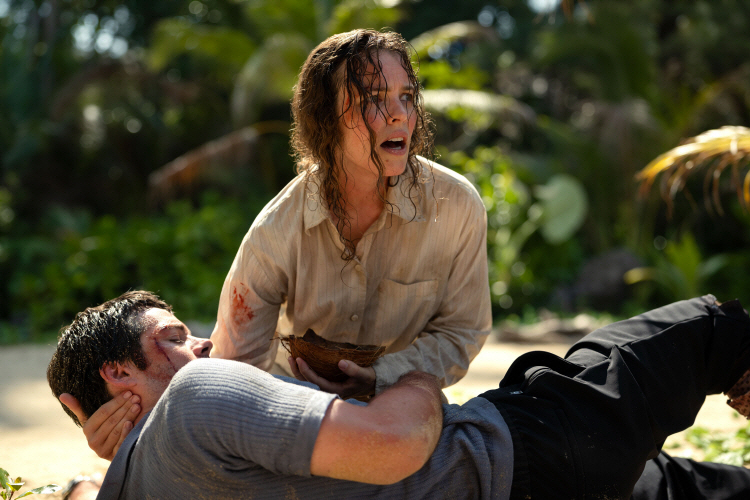
And then something unexpected happens. Their private jet airplane crashes into the ocean not long before arriving in Thailand, and we get a nasty moment of fun and thrill as everyone on the airplane gets killed except Linda and Bradley, who are subsequently swept onto the shore of a nearby tropical island. Although the situation looks quite daunting to say the least, Linda is not despaired at all because, well, she knows about a lot of survival skills as an avid fan of American TV reality show “Survivor”. Because Bradley cannot move that well now due to getting injured in one of his legs, Linda has to do all those things including securing fresh water for their survival, and Bradley has no choice but to depend on her at least for a while.

Needless to say, Bradley is reminded again and again that he does not have any power over Linda anymore in contrast to when he did in their company. While he gradually gets recovered from his leg injury, he remains disadvantaged in more than one aspect, and Linda is usually one or two steps ahead of him in their following power game.

As these two main characters push and pull each other along the story, the movie doles out a series of darkly amusing moments to make you laugh or cringe. In case of a humorously tense scene which will surely take you back to Raimi’s classic horror film “The Evil Dead” (1981), you will be tickled by how this scene becomes much gorier than expected in the end, and you will also appreciate how deftly it swings back and forth between broad comedy and bloody horror under Raimi’s skillful direction.

Above all, the movie steadily generates constant tension between its two main characters. As Bradley comes to assist and cooperate more with Linda, the movie naturally toys with how long their reversed relationship can be maintained, and the mood remains ambiguous even when they supposedly open themselves a bit more to each other at one point later in the story.

After a certain plot turn during its last act, the screenplay by Damian Shannon and Mark Swift becomes rather predictable. Nevertheless, the movie keeps rolling toward its inevitable ending at least, and Raimi ably dials up and down the level of suspense and comedy along the narrative with ample amount of dark amusement for us.

It surely helps that the movie is supported well by the talent and presence of its two good lead performers. Rachel McAdams, who can be quite serious as shown from Tom McCarthy’s Oscar-winning film “Spotlight” (2015) but is also capable of being very hilarious as shown from John Francis Daley and Jonathan Goldstein’s “Game Night” (2018), shows considerable commitment as dexterously balancing her acting between comedy and suspense, and she is particularly effective when her Linda comes to show how far she can go for showing Bradley who the boss really is during one disturbingly funny scene, which is reminiscent of that chilling scene in David Slade’s “Hard Candy” (2005).

On the opposite, Dylan O’Brien, who has steadily been matured since he drew our attention in Wes Ball’s “The Maze Runner” (2014), functions as a solid counterpart for his co-star. While Bradely is your average obnoxious jerk at first, O’Brien brings some life and personality to his role besides being quite convincing during several key scenes in the film, and that is the main reason why the movie works to the very end of the story.

In conclusion, “Send Help” is a modest but effective genre film which shows that Raimi has not lost any of his touch yet. Although he seemed to be on autopilot in his two recent previous films “Oz the Great and Powerful” (2013) and “Doctor Strange in the Multiverse of Madness” (2022), “Send Help” demonstrates that he is still a talented (and naughty) filmmaker who gave us “A Simple Plan” (1998) and “Drag Me to Hell” (2009), and I sincerely hope that he will continue to entertain us as he successfully did several times.

Posted in Movies | Tagged , , | Leave a comment

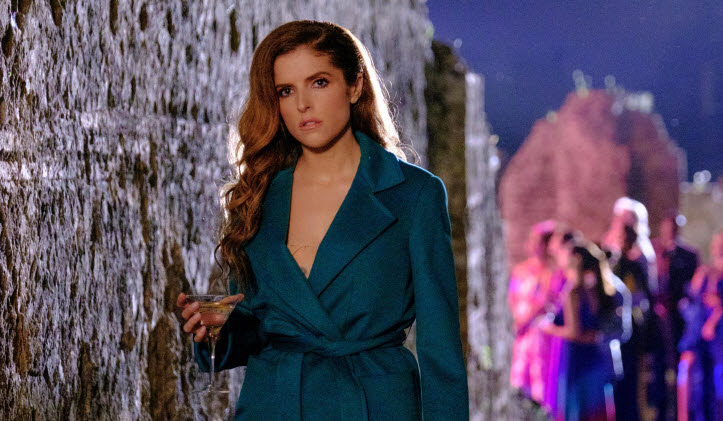
Another Simple Favor (2025) ☆☆1/2(2.5/4): A less charming sequel

“Another Simple Favor”, which was released on Amazon Prime several months ago, mildly dissatisfied me. While it is still fun to watch its two engaging lead actresses pushing and pulling each other from the beginning to the end, the movie is hampered by blatant plot contrivance and thin characterization, and the result is less charming than its predecessor.

The movie, which is a sequel to “A Simple Favor” (2018), begins with how things have been rather uneventful for Stephanie Smothers (Anna Kendrick) during last five years since what happened in the previous film. Thanks to her little investigation adventure involved with her former friend Emily Nelson (Blake Lively), she became quite famous in public, and she even published a book about that, but she does not know what to do next except paying too much attention to her son as your average suburban single mother.

However, there soon comes a big surprise when she attends a little local book signing event. Emily, who has been in prison thanks to Stephanie’s investigation, suddenly appears right in front of Stephanie, and, of course, she wants Stephanie to do a supposedly harmless favor for her. Naturally, Stephanie does not want to get involved with Emily again, but then she changes her mind because, well, she cannot help but become curious about whatever Emily may be planning behind her back.

It turns out that Emily somehow got released thanks to some powerful (and shady) figure in Italy, who was once her boyfriend a long time ago and is now willing to marry her as soon as possible. Thanks to this dude, Emily and Stephanie quickly go to Italy along with several other wedding guests via his big private airplane, and Stephanie is going to be the bridesmaid for her at the upcoming wedding held in Capri. 

Needless to say, Stephanie remains suspicious of Emily, and, not so surprisingly, there soon come a series of unexpected happenings before Emily’s wedding day. To Stephanie’s little surprise, Emily also invites her ex-husband just because she wants to see their son currently under his custody, and Stephanie feels quite awkward to be with him because of their rather embarrassing past.

In addition, the groom’s mother is not so pleased about his wedding to say the least, and she is determined to hurt her future daughter-in-law’s feelings by any means necessary. She deliberately invites the two certain family members of Emily, and Emily is surely not amused at all because they are the last people she wants to see right now.

Nevertheless, Emily and her future husband still want to marry, and Emily remains quite nice to Stephanie, who finds herself beckoned more by Emily’s seemingly good-willed gestures. At one point, they have a pretty good time alone by themselves outside a big hotel where they are staying with others, and Stephanie comes to wonder more whether Emily is really sincere to her.

As already shown to us at the beginning of the film, the situation subsequently becomes quite serious for both of them. After getting framed for a couple of crimes she definitely did not commit, Stephanie discovers that there is actually another secret behind Emily (Is this a spoiler?), and that naturally leads to another risky adventure for her.

As following Stephanie’s increasingly bumpy adventure, director/co-producer Paul Feig, who previously directed “A Simple Favor”, and his crew members including cinematographer John Schwartzman fill the screen with a lot of mood and style. While the movie feels as bright and sunny as you can expect from its main background, costume designer Renee Ehrlich Kalfus has a lot of fun with Emily’s several striking clothes including her gorgeous wedding dress, which will surely leave a big impression on you along with the excerpt from Ennio Morricone’s famous score for “Once Upon a Time in the West” (1968).

However, the story stumbles more than once as getting pretty predictable with artificial plot turns. I will not go into detail here, but what is revealed around its last act is a little too preposterous, and the movie also fails to bring more depth or interest to Stephanie and Emily’s complicated relationship before eventually giving a resolution which feels too convenient in my inconsequential opinion.

Anyway, the movie works to some degree mainly thanks to the good comic chemistry between Anna Kendrick and Blake Lively. While Kendrick holds the ground with her plucky presence, Lively has some juicy fun with her role later in the story, and they effortlessly click well with each other during several key scenes in the film. In contrast, several notable performers in the film including Andrew Rannells, Henry Golding, Elizabeth Perkins, and Allison Janney are under-utilized to my disappointment, and that is another main flaw of the film.

Overall, “Another Simple Favor” does not work well enough because of its many glaring weak aspects, but it is not entirely without fun at least mainly thanks to its two good lead actresses who certainly deserve better than this. I do not know whether there will be another sequel as implied by the very last scene of the film, but I can only hope that I will be more entertained if that really happens.

Posted in Movies | Tagged , , | Leave a comment

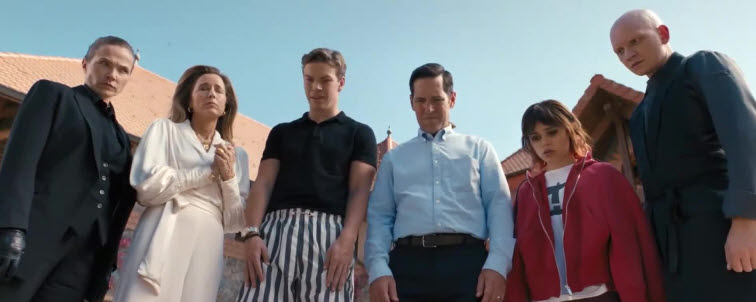
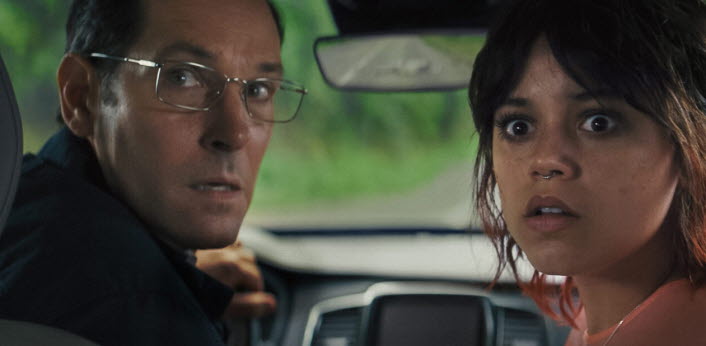
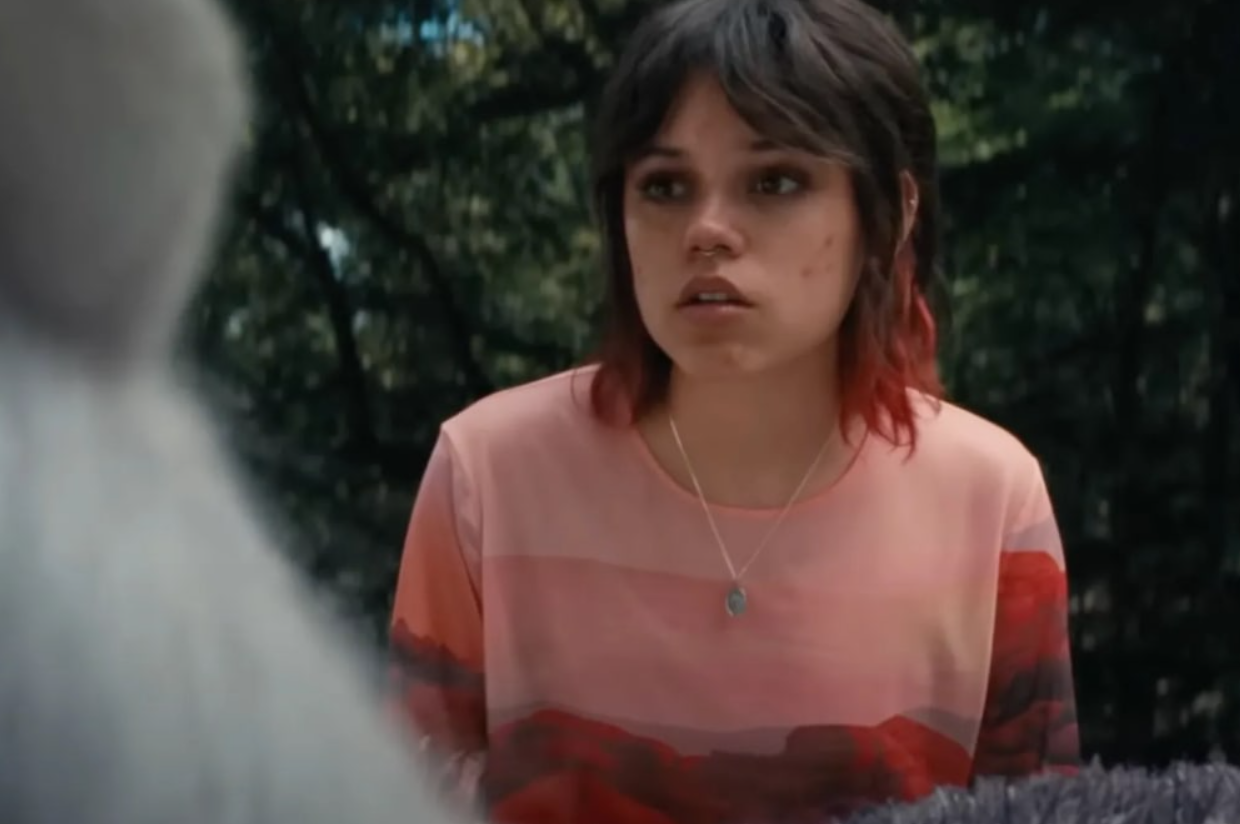
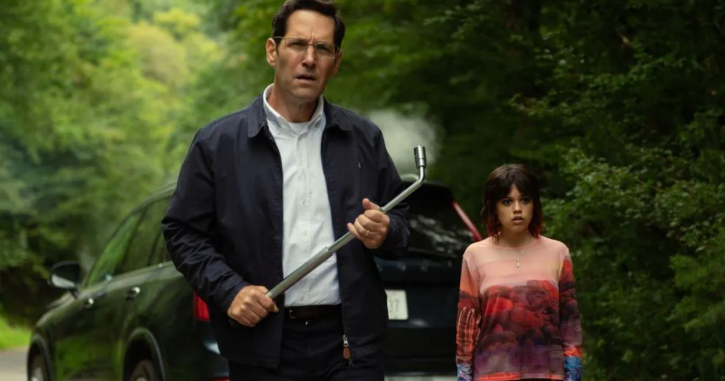
Death of a Unicorn (2025) ☆☆1/2(2.5/4): They have an accident… with a unicorn

“Death of a Unicorn” begins with an utterly outrageous story premise which will instantly draw your attention: what if a certain mythical creature actually exist? I was a bit disappointed to see that the overall result is rather uneven and clumsy as trying to balance itself between drama, horror, and satire, but I was entertained to some degree even though I observed the story and characters from the distance instead of embracing its wacky aspects.  

The movie begins with the arrival of a recently widowed lawyer named Elliot Kintner (Paul Rudd) and his teenaged-daughter Ridley (Jenna Ortega) in some remote rural region. They are going to spend a weekend with Elliot’s employer, but Elliot is so occupied with how to present himself well that he does not seem to notice how unenthusiastic his daughter is about spending their supposedly special weekend.

And Elliot’s employer turns out to be extremely wealthy to say the least. Although he is quite ill at present, Odell (Richard E. Grant) and his family are the owners of some big pharmaceutical company, and they reside in a big, luxurious house located in the middle of a vast private wildlife reservation area incidentally owned by them.

Not long after Elliot drives his car into this wildlife reservation area, something quite unexpected occurs. His car hits some big animal by accident while he drives along the road to Odell’s house, and both he and Ridley are caught off guard by what seems to be dying on the road right in front of them. Mainly because he really needs to see his boss right now, Elliot decides to take care of this messy situation as quickly as possible, and Ridley certainly does not feel good about that.

Needless to say, they soon get themselves into more trouble after they eventually arrive at Odell’s house. While Elliot wants to leave as soon as possible, Odell adamantly insists that Elliot should stay longer, just because he wants to know whether Elliot is really dependable enough to represent Odell’s company. Needless to say, this makes both Elliot and Ridley all the more uncomfortable, but Elliot cannot possibly say no to his rich boss to his daughter’s growing frustration.

It is not much of a spoiler to tell you that Odell and his family eventually find out what Elliot is frantically trying to hide from them, but I will let you see for yourself how greedy and selfish they can be once they come across another opportunity for more power and wealth. Just like many of recent comedy films out there, the screenplay by director/writer/co-producer Alex Scarfman, who incidentally makes a feature film debut here in this film, does not pull any punch in its broadly comic depiction of Odell and his very superficial family members, and you will certainly despise them more while having some dark amusement from their sheer banality.

As her father has no choice but to follow whatever his employer orders, Ridley tries to understand what is really going on around her and others, and what she discovers via a bit of online search is not a good news at all. It looks like there is the only one way to prevent an imminent peril to come, but, of course, her dire warning is dismissed by Odell and his family as well as her father, and the mood becomes more tense with several ominous signs to notice.

Yes, what Ridley and her father encountered at the beginning of the story is a unicorn, but those unicorns in the film are not so cute and graceful at all. As a matter of fact, their teeth are as sharp as their horns, and they can be pretty nasty and aggressive as shown from several violently gruesome moments during the second half of the movie.  

As its several main characters are helplessly stuck inside Odell’s house, the movie naturally follows the footsteps of many other monster flicks such as “Jurassic Park” (1993). While it is quite apparent to us that which character will be killed or maimed by those unicorns in the end, the movie has some naughty fun from how some of its main characters are eliminated in one way or another, and I will not deny that I was amused a bit when one certain character comes to have a rather gory demise at one point later in the story.

However, I also did not care that much about the story and characters. Besides Elliot and Ridley, many of the other main characters in the movie remain more or less than caricatures to be skewered, and the drama between Elliot and Ridley is mostly half-baked, instead of functioning as an emotional anchor we can hold onto amidst a lot of carnage surrounding them.      

Nevertheless, the game efforts of the main cast members support the film to some degree. While Paul Rudd and Jenny Ortega are believable in the frequent miscommunication between their characters, Will Poulter, Téa Leoni, and Richard E. Grant are suitably obnoxious as required by their detestable characters, and Poulter is particularly effective when he willingly throws himself into the sheer folly and madness of his character.      

In conclusion, “The Death of a Unicorn” is not entirely successful in its wild genre mix. I still think it could handle its story premise with more coherence and competence, but I was not that bored during my viewing, so I will not stop you from watching it if you have some spare time and simply want to have some dumb fun.

Posted in Movies | Leave a comment

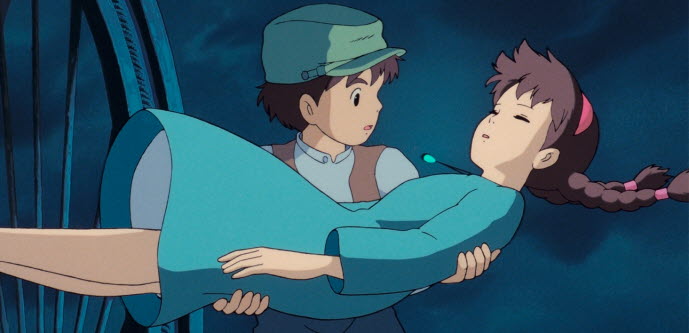
Castle in the Sky (1986) ☆☆☆1/2(3.5/4): The first official Ghibli work from Miyazaki

Hayao Miyazaki’s 1986 animation feature film “Castle in the Sky”, which was re-released in South Korean theaters in last week, still soars high even after 40 years. When I walked into the screening room on last evening, I did not expect much because I already saw it in 2010, and I was actually rather tired at that time, but my mind soon became quite energized as appreciating its vivid animation style full of charm, spirit, and imagination.

The film is actually the first official animation film from Studio Ghibli, which was founded by Miyazaki and producer Isao Takahata, who also would be known for his several notable Ghibli animation films such as “Grave of the Fireflies” (1988), not long after the considerable commercial success of Miyazaki’s previous animation film “Nausicaä of the Valley of the Wind” (1984). As a matter of fact, you can recognize a lot of common elements shared between “Nausicaä of the Valley of the Wind” and “Castle in the Sky” such as aviation, retro-futuristic style, and ecological philosophy, and you can also see how Miyazaki advanced further with his own style in “Castle in the Sky”.

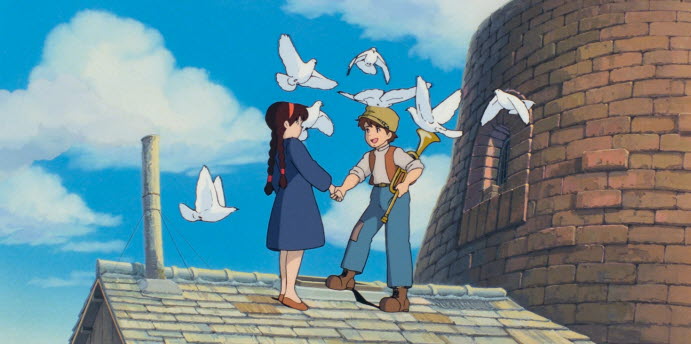
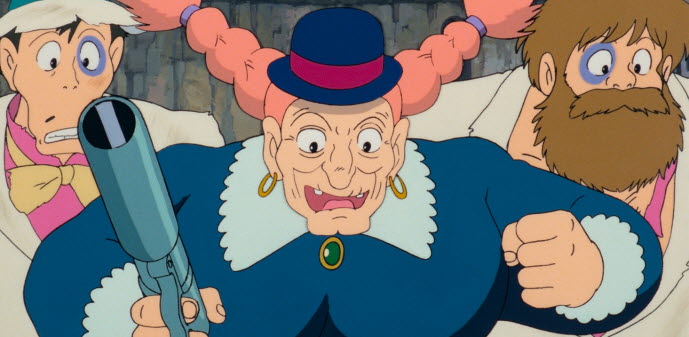
The film, which is mainly set in what can be regarded as a fantasy version of European country around the early 20th century, opens with a thrilling action scene in which a little orphan girl named Shita (voiced by Keiko Yokozawa) escapes from shady government agents when their airship is suddenly attacked by the pirates led by an old lady named Dola (voiced by Kotoe Hatsui). Thanks to a mysterious stone in her possession, Shita manages to survive even though she falls from the sky, but she becomes unconscious, and then her unconscious body happens to fall right in front of Pazu (voiced by Mayumi Tanaka), a young orphan boy working in a shabby mining village.

Not long after Pazu takes her to his little residence, Shita regains her consciousness, and they instantly befriend each other as two orphan kids, but, of course, the situation soon becomes quite perilous for both of them. Not only those government agents but also the pirates are already searching for Shita, and Pazu, who comes to like her a lot, willingly tries to protect her from anyone trying to take her away. What follows next is the action sequence which is as exciting as that memorable chase sequence in Miyazaki’s first feature film “The Castle of Cagliostro” (1979), and you will also get some good laughs from how this sequence can be as funny and daring as those Buster Keaton films. At one point, our two orphan kids hurriedly try to get away from their two opponents via a little steam locomotive along a very tricky railway, and we come to brace ourselves more as Miyazaki gleefully adds more wit and action into this impressive action sequence.

Meanwhile, we come to know more about why the government agents keep pursuing after Shita. She turns out to be the last member of a kingdom named Laputa, which was once quite powerful for its highly advanced technology but now seems to be lost forever along with its floating castle (Yes, this will definitely remind you of that famous classic novel by Jonathan Swift). That mysterious stone of hers can actually show where Luputa is, and the government agents are very interested in getting something quite valuable in Laputa.

Because his father told him about his accidental encounter with Laputa, Pazu gets himself more involved into Shita’s ongoing circumstance, even after Shita tries to distance herself from him for protecting him from any danger. Fortunately, he and Shita subsequently get unexpected help from Dora and her merry band of pirates most of whom are actually her sons, and they all certainly encounter a lot of danger and adventure along the story.

The last act of the story eventually culminates to the point where its main characters finally arrive in Laputa, but the film takes its time as letting us behold a heap of enchanting details observed here and there from the screen. While still fully functional due to its advanced technology, the floating castle of Laputa is also covered with a lot of greenery and flower, and there is also a big robot reminiscent of not only that giant robot in “Nausicaä of the Valley of the Wind” but also the robot characters in Brad Bird’s “The Iron Giant” (1999) and Chris Sanders’ “The Wild Robot” (2024).

Of course, when it shifts itself onto action mode during its expected climactic part, the film does not disappoint us at all as deftly balancing itself between humor and thrill. While Dora and her pirates provide some comic relief, Pazu comes to take a lot more risk than expected for saving his dear friend, and you will be alternatively amused and thrilled by how he goes through a series of very risky actions which may even impress Tom Cruise. In addition, there is some real precious poignancy from when Pazu and Shita stick together as making a big decision for not only themselves but also many others out there, and the ecological message of the film surely feels all the more relevant, considering how many of us have let ourselves detached from the world and the nature due to the rapidly advancing technology during last several decades.

On the whole, “Castle in the Sky” remains quite charming and entertaining thanks to Miyazaki’s skillful handling of style and substance. While it does not reach to the greatness of his next work “My Neighbor Totoro” (1988), the film is still a quintessential work from Miyazaki nonetheless, and that is more than enough for recommendation in in my inconsequential opinion.

Posted in Movies | Tagged , , | Leave a comment

Videodrome (1983) ☆☆☆(3/4): A grotesquely prophetic nightmare from Cronenberg

David Cronenberg’s 1983 film “Videodrome” is a grotesquely prophetic nightmare I still observe from the distance. There are a number of striking visual moments which have lingered on somewhere in my mind for more than 30 years, and they chillingly serve and amplify the interesting ideas and themes in the movie which become all the more relevant in our ongoing era of digital media. That is the main reason why I find the movie more fascinating than before, even while recognizing its several limits and flaws again.

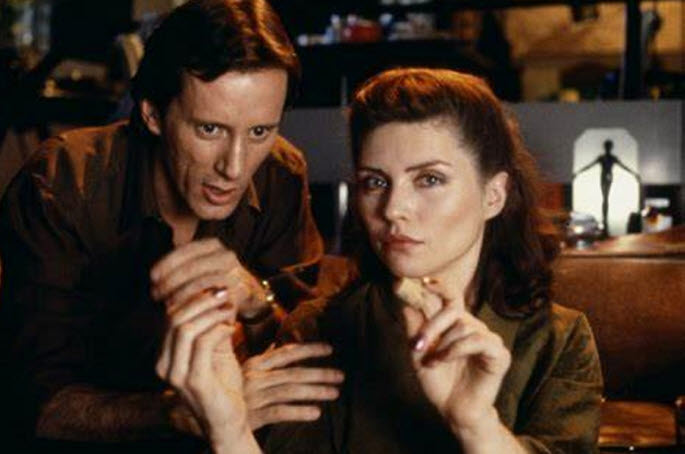
At the beginning, we are introduced to Max Renn (James Woods), who runs a small UHF (Ultra-high Frequency) television station in Toronto, Canada. His company has mainly broadcast sleazy and sensational stuffs like Japanese softcore flicks, and he has always looked for anything more shocking just for drawing more viewers out there.

On one day, Max comes across something unusual via one of his main employees, who can search and then record anything via his pirate satellite dish. It is called “Videodrome”, and Max instantly gets intrigued because its raw presentation of sex and violence looks so real to him. When it later turns out that Videodrome has been produced somewhere in Pittsburgh, Pennsylvania, he becomes more interested in obtaining and then broadcasting it someday.

Needless to say, he is soon warned about how dangerous Videodrome is. Max’s frequent supplier Masha (Lynn Gorman) is reluctant to tell much about it after doing her own search, but she eventually suggests that he should go to Dr. Brian O’Blivion (Jack Creley), who has been known as a “media prophet” in public. Although he cannot meet Dr. O’Blivion for some reason, Max meets his daughter Bianca (Sonja Smits) instead, and she gives something supposed to help him learn more about Videodrome.

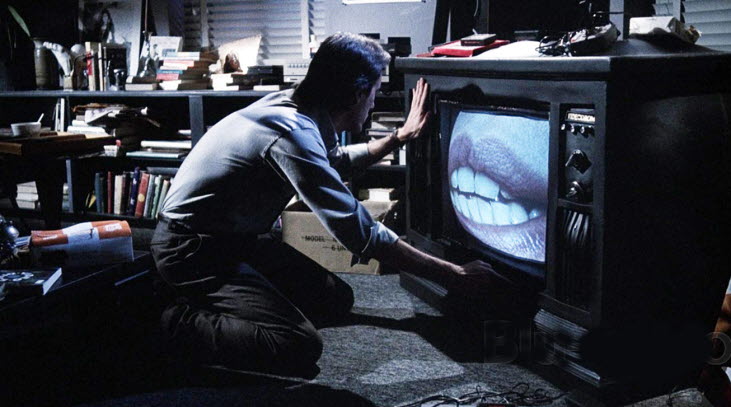
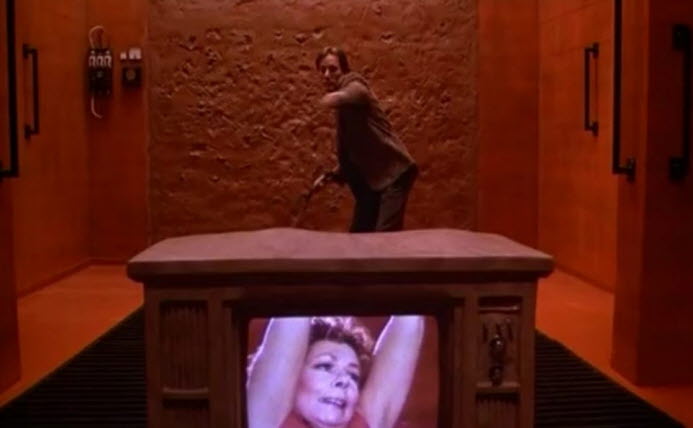
Around that point, the story becomes more confusing due to its hero’s gradually unreliable viewpoint, which is emphasized by a series of weird and grotesque moments including that unforgettable scene where he puts his head into the bulging television screen. The more he searches for the answer on who is really behind Videodrome, the more confused he becomes with the increasing sense of paranoia and doom. As a consequence, it is apparent that there is the only way out for him at the end of this nightmarish plight of his, though we are not so sure about whether that is really chosen by his free will or not.

However, I still feel quite distant to the story and characters. The story sometimes feels like a mere ground for its many unpleasant and freakish moments, and I also find that it does not have much depth in terms of characterization. James Woods and several other main cast members including Debbie Harry, Sonja Smits, Peter Dvorsky, Leslie Carlson, Jack Creley, and Lynne Gorman play their materials as serious and straight as possible, but I must point out that they are often limited by their superficial roles and clumsy dialogues full of mumbo-jumbo about Videodrome and the upcoming brave new world it represents.

Did Cronenberg have a clear vision on what he was going to present on the screen? I am not that sure, but the ideas and themes in his movie feel much more alarming and interesting than before. Like Sidney Lumet’s great media satire “Network” (1976), the movie shrewdly recognizes not only our insatiable thirst for shock and sensationalism but also how media can manipulate and then engulf us as providing whatever we want. As a matter of fact, we have seen such cases too often during last two decades thanks to the rapid rise of social media service, and the movie becomes a bit more ironic as Woods, who was supposed to be one of the most intelligent actors working in Hollywood, became one of those pathetic cases as spending too much time on a certain social media application and then being transformed into your average hateful right-wing weirdo.

In case of technical aspects, the movie is impressive for the special effects by Rick Baker, who was already at the top of his field after winning his first Oscar for John Landis’ “An American Werewolf in London” (1981). Needless to say, many of the special effects in the film are not CGI at all, and their deliberately fleshy texture certainly generates more sticky and unpleasant feelings to the film just like Rob Bottin’s equally memorable special effects in John Carpenter’s “The Thing” (1982). Besides that bulging TV screen, you will never forget that grotesque cleavage suddenly appearing on Max’s belly, and you may be a bit amused by when Baker and Cronenberg seem to attempt to surpass Bottin and Carpenter’s achievement around the end of the movie.

In conclusion, “Videodrome” is everything to be recognized as a distinctive Cronenberg film, but I regard is as one of his early test runs just like “The Brood” (1979) and “Scanners” (1981), which are also interesting in each own way but not very successful in my trivial opinion. Not long after “Videodrome” came out, Cronenberg returned with “The Dead Zone” (1983), and that is more engaging besides being another stepping stone for his fascinating filmmaking career, which subsequently gave us “The Fly” (1986), “Dead Ringers” (1988), “Naked Lunch” (1991), “Crash” (1996), “A History of Violence” (2005), “Eastern Promises” (2007), “A Dangerous Method” (2011), and “Crimes of the Future” (2022). As shown from his latest work “The Shroud” (2025), he is still working as usual, and I sincerely hope that he will continue to disturb and fascinate us at least for a while.

Posted in Movies | Tagged , , , | Leave a comment

The Secret Agent (2025) ☆☆☆1/2(3.5/4): A look into that dangerous period in Brazil

 Kleber Mendonça Filho’s latest film “The Secret Agent”, which won the Best Director Award at the Cannes Films Festival early in last year and then garnered 4 Oscar nominations including the ones for Best Picture and Best International Film, is another ambitious work from its director. While it initially seems to be a bit too sprawling, the movie gradually immerses us into that dangerous period surrounding its hero and a bunch of other characters in the story, and that is something you will not easily forget after it is over.

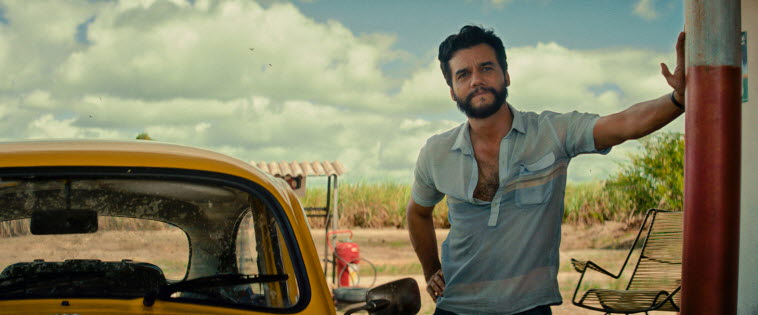
The opening scene succinctly establishes the overall tone of the story, which is mainly set in early 1977, when the Brazilian society was being oppressed by the military dictatorship. The mood is initially cheerful with some radio music on the soundtrack, but then we get disturbed by what is shown next on the screen. A little yellow Volkswagen arrives in a gas station located at some remote rural spot, but the owner of the gas station does not care much about what has been right in front of his gas station, and neither are the two highway police officers who subsequently arrive there. As a matter of fact, the officers are more occupied with how to get any kind of bribe from the driver of Volkswagen, who is not so pleased but tries to be tactful with them as much as possible.

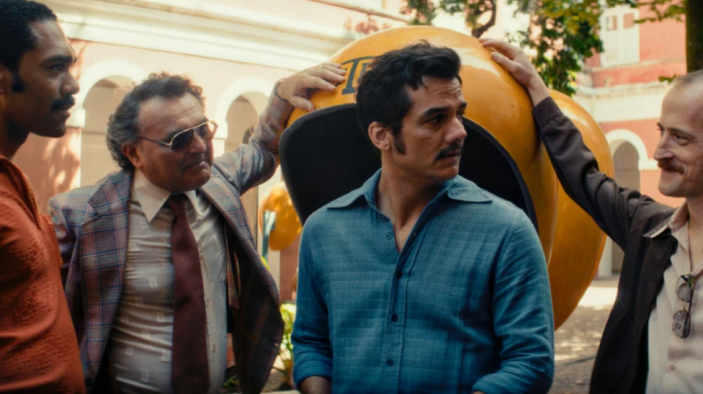
This driver in question presents himself as Marcelo Alves (Wagner Moura) when he arrives in Recife and then goes to where he is going to stay. He is wholeheartedly welcomed by the old landlady of his staying place, and he is also introduced to a number of various people staying there under his landlady’s protection. 

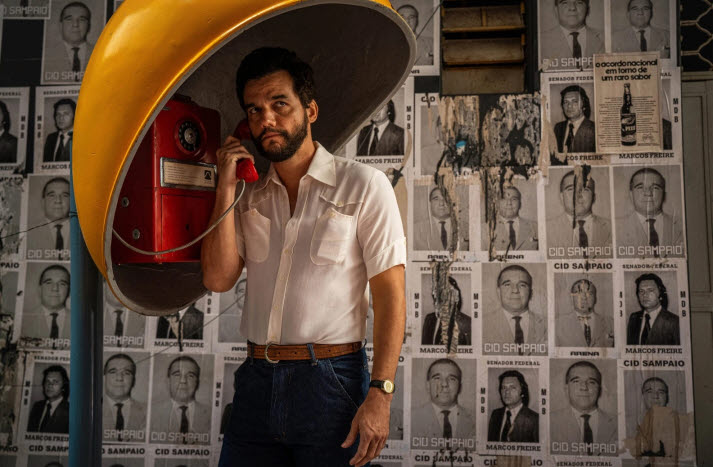
Now you sense something fishy about Marcelo and his current situation, and the movie slowly reveals who he is and why he comes to Recife along the story. He subsequently gets hired at a local identification card office, whose archival room is full of countless identification cards. He is particularly interested in finding the identification card of a certain female figure, and the supervisor of the identification card office is willing to help him as one of a few persons who knows who he actually is.

And it also turns out that Marcelo has a young son, who has been taken care of by his parents-in-law in Recife shortly after his wife’s death. When he visits his parents-in-law at one point early in the story, it is apparent that he really cares about his son’s welfare, but he must be careful about his ongoing circumstance, which turns out to be riskier than it seemed at first. Someone rich and influential is very angry at him, and this figure in question already hired two guys willing to eliminate Marcelo.

Even at this narrative point, the screenplay by Mendonça Filho takes its time for building up the story and its hero with more detail and mood. Thanks to cinematographer Evgenia Alexandrova, everything looks plain and fine under bright sunlight on the surface, but we also often observe the sleazy and dangerous sides of dictatorship and corruption mainly via a trio of local dirty cops. Ironically, these dudes show Marcelo a bit of hospitality, and that certainly makes him all the more nervous behind his back.

The movie also tries a gruesome but amusingly offbeat subplot which is clearly inspired by a certain brief but horrific moment in Steven Spielberg’s “Jaws” (1975), which Marcelo’s young son is obsessed with even though he has not watched it yet. You will be tickled by how this subplot culminates to an unexpectedly surreal moment later in the story, and you may be also often delighted by the occasional small references on several recognizable movies such as Richard Donner’s classic horror film “The Omen” (1976).

On the top of all and many other things in the story, the movie adds an extra perspective from our contemporary period. This feels rather redundant at first, but it slowly sets the ground for the eventual finale, which may surprise you for being deliberately anti-climactic but will linger on your mind for a while as reminding more of how many people like its hero struggled during that dark time in Brazil – and how their gloomy past has been fading away due to that inevitable passage of time.

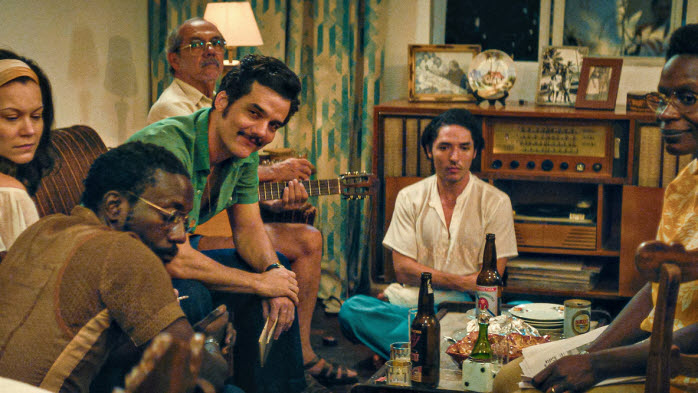
As the strong human anchor of the movie, Wagner Moura, who deservedly received the Best Actor award at the Cannes Film Festival and then got recently Oscar-nominated for this film, gives a subtly multi-layered performance as steadily carrying the story to the end. At first, we often wonder about his character’s true identity and whatever he is hiding behind his back, but we come to care about Marcelo as the movie reveals more of his past and humanity along the story, and there is a poignant scene where he and his temporary neighbors open themselves a bit to each other while not revealing that much on the surface. Around Moura’s quietly powerful lead performance, Mendonça Filho assembles a bunch of colorfully diverse performers who contribute more personality to the film, and the special mention goes to Carlos Francisco, Tânia Maria, and Udo Kier, who sadly passed away not long after the movie came out.

Overall, “The Secret Agent” is another interesting work from Mendonça Filho, who previously gave us “Aquarius” (2016) and “Bacurau” (2019). I must confess that I underrated “Bacurau” just because I simply thought it could have been wilder and quirkier, but then it somehow grew on me during next several months, and the following second viewing made me realize that I was wrong in my 2.5-star review. Just like “Bacurau”, “The Secret Agent” is an equally rich cinematic experience to be savored and appreciated, and it is certainly another commendable addition to the current Brazilian cinema in my humble opinion.
Posted in Movies | Tagged , | 1 Comment

Sentimental Value (2025) ☆☆☆1/2(3.5/4): Can she work with her filmmaker dad?

Joachim Trier’s new film “Sentimental Value”, which won the Grand Prix award at the Cannes Film Festival early in last year and then recently received no less than 8 Oscar nominations including the ones for Best Picture, Best Director, and Best International Film, is a somber but deeply sensitive family drama to remember. As freely and leisurely rolling its several main characters, the movie deftly captures and illustrates achingly human moments along the story, and we come to care more about its main characters while gradually getting to know and understand them in one way or another.

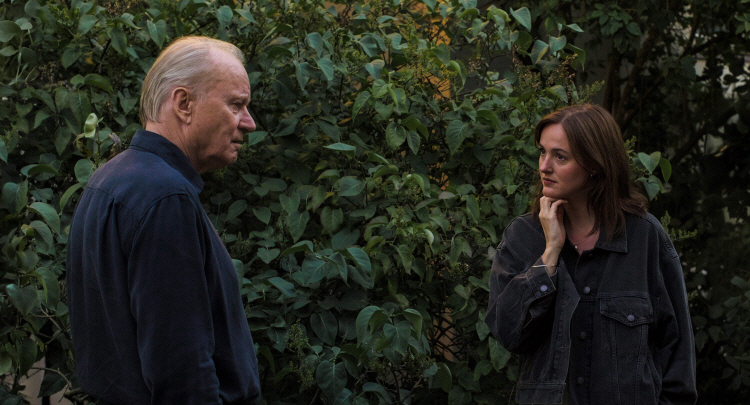
The story, which is mostly set in Oslo, Norway, mainly revolves around the troubled personal relationship between an actress named Nora Borg (Renete Reinsve) and her filmmaker father Gustav (Stellan Skarsgård). Although he has been a fairly well-respected filmmaker throughout his filmmaking career, Gustav has not been a very good dad to Nora and her younger sister Agnes (Inga Ibsdotter Lilleaas) as shown from the prologue scene of the movie, and Nora is understandably not so pleased when her father comes to her recently deceased mother’s funeral.

Not long after that, Gustav approached to Nora again, and he turns out to have something to offer for her. Although he has not been active for more than 10 years, he is planning to make another movie, and he has already written the screenplay, which turns out to be loosely inspired by his family history. He hopes that the heroine of this screenplay of his, who happens to be based on his mother to some degree, will be played Nora, but Nora flatly refuses to do that even without taking any look into her father’s screenplay.

Nevertheless, Nora is gradually reminded again of how her life cannot be totally separated from her father due to a lot of unresolved emotional issues between them. While her younger sister, who incidentally works as an academic historian although she once acted for one of her father’s notable works many years ago, has calmly accepted how flawed their father has really is, Nora comes to feel more anger and confusion in contrast, and that also begins to affect her life and career, no matter how much she struggles to keep things under control.  

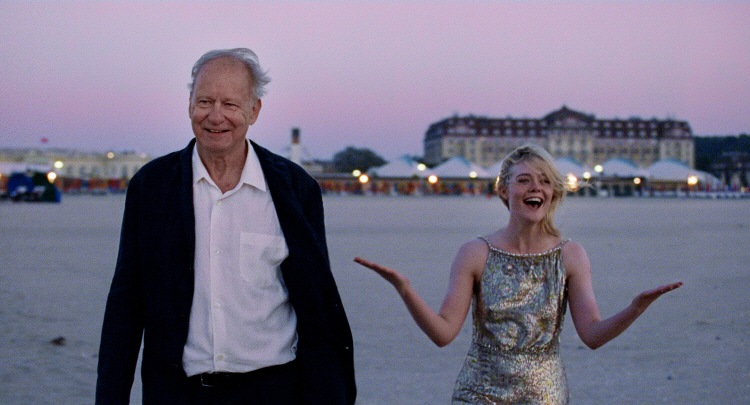
Meanwhile, shortly after he got rejected by Nora, there comes a possible idea for Gustav. At another retrospective event for those old movies of his, he comes across Rachel Kemp (Elle Fanning), a famous American actress who becomes quite excited to spend some time with him. Although she cannot speak Norwegian at all, Kemp looks like a fairly good alternative to Gustav, who is certainly willing to translate his original screenplay in English for her once she agrees to join his movie project. 

As Kemp and Gustav begin their pre-production process for his movie project, we see more of how personal the movie is to Gustav – and his two daughters. He is going to shoot many of the key scenes of the movie inside their old family house in Oslo, which is currently resided by Agnes and her family but still technically belongs to Gustav. He gladly shows Kemp here and there in the house as a part of her character study, and we get a little amusing moment involved with a certain small room inside the house.

Nora and Agnes do not mind this that much at first, but, what do you know, both of them come to feel more uncomfortable as their father enters their life more and more. While Trier and his co-writer Eskil Vogt’s smart and considerate screenplay seldom underlines anything at all, we come to sense more of the accumulating emotional turmoil surrounding them and their father, and the plot thickens a bit more when Agnes delves into the dark and disturbing past of Gustav’s mother via some old archival documents. She comes to feel more of how her father’s movie project is not going in the right direction at all, and she also has to confront her own old emotional issues with him just like her older sister – especially when he attempts to get herself more involved into his movie project later in the story.

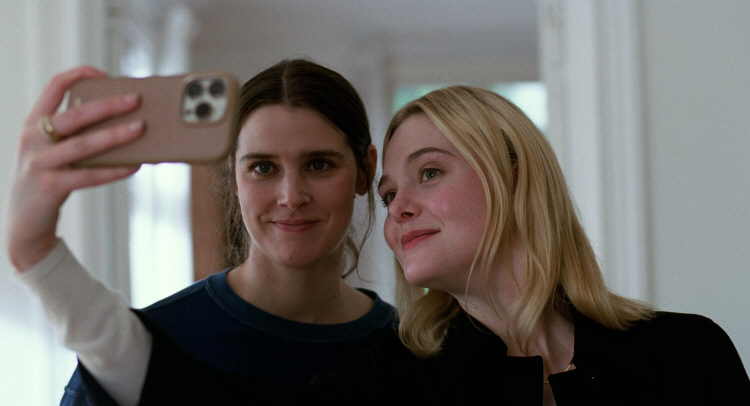
Under Trier’s sensitive and thoughtful direction, the four main cast members of the film give one of the most impressive ensemble performances of last year, and they all richly deserve their respective Oscar nominations. Renate Reinsve, who was absolutely memorable in Trier’s Oscar-nominated film “The Worst Person in the World” (2021), gives another strong performance to admire, and she is especially wonderful when Nora subsequently goes through a sort of healing process via opening herself more to her complex feelings toward his father. On the opposite, Stellan Skarsgård, who has been always reliable in many various films for more than 30 years (I still fondly remember his crucial supporting turn in Gus Van Sant’s Oscar-winning film “Good Will Hunting” (1997), by the way), is fabulous as a flawed old man who knows well that filmmaking is his main way of making genuine human connection with others around him, and his masterful performance is full of small nuances and details to be noticed here and there from the beginning to the end. Inga Ibsdotter Lilleaas is equally compelling in her low-key acting which comes to function as the solid ground for Reinsve and Skarsgård, and Elle Fanning, who had a really productive time thanks to this film and Dan Trachtenberg’s “Predator: Badlands” (2025), has her own moment to shine as her seemingly superficial character comes to show a lot more care and intelligence than expected.  

On the whole, “Sentimental Value” is another knockout work from Trier. Although his first feature film “Reprise” (2006) did not impress me much, he steadily advanced with a series of stellar works including “Oslo, August 31st” (2011) and “The Worst Person in the World” during last 20 years to the big delight of me and many others, and I am really glad to report to you that he achieves a lot again. This is indeed one of the major highlights of last year, and, considering its little wry wink on Netflix, you should not miss it when you can see it at movie theater.

Posted in Movies | Tagged , , , | 1 Comment

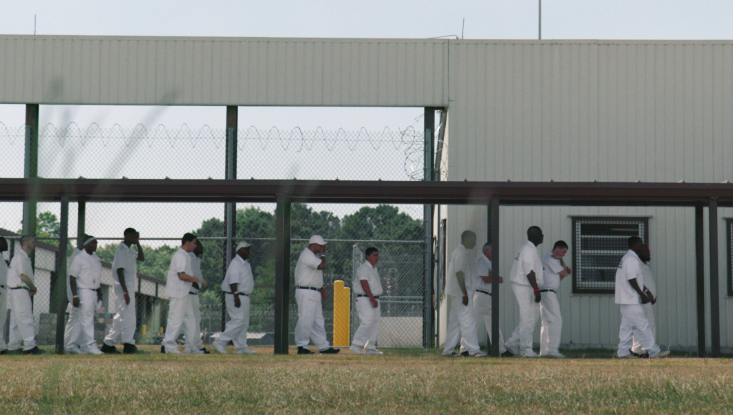
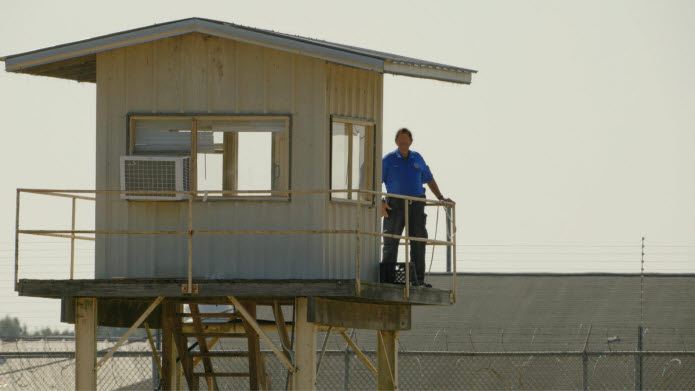
The Alabama Solution (2025) ☆☆☆1/2(3.5/4): The systemic failures of Alabama prisons

HBO documentary film “The Alabama Solution” is often sobering as presenting the alarming failures of the prison system of the state of Alabama in US. It may not surprise you much if you have ever heard about how problematic the American prison system has been for many years, but the documentary is still captivating on the whole, and we come to care more about the stories of several defiant inmates still struggling under their oppressive system even at this point. 

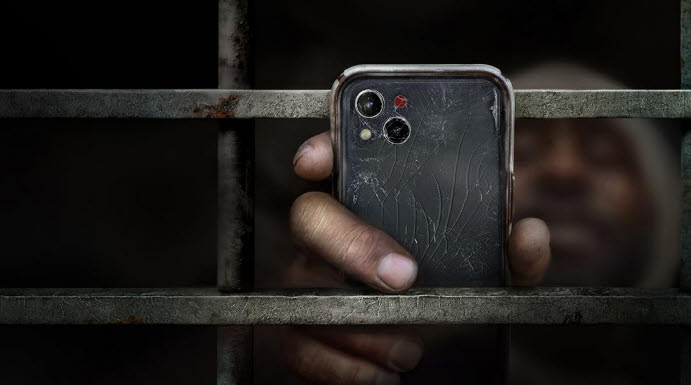
The documentary begins with when directors/co-writers/producers Andrew Jarecki, who has been mainly known for his Oscar-nominated HBO documentary film “Capturing the Friedmans” (2003), and Charlotte Kaufman came to Easterling Correctional Facility in Alabama in 2019. The purpose of theirs was simply shooting a religious revival meeting among a bunch of inmates in the prison, but then a number of inmates approached them off-camera in the middle of the shooting, and what these inmates told them led them to more investigation during next several years. Via contraband cellular phones, Jareki and Kaufman could subsequently correspond with several prison inmates, who surely had a lot of things to show and tell them.

Among these prison inmates willing to step forward for the human rights of theirs and many other fellow inmates, the documentary comes to pay more attention to two of them: Robert Earl Council and Melvin Ray. Both of them are smart and articulate dudes who have learned and experienced a lot as being stuck in prison for many years, and they are certainly very determined to get the stories of them and their fellow inmates known more in public, though they may never be free for the rest of their life.

As they and some other inmates show and talk about many serious problems of their prison system, the documentary presents more facts on why their system really needs to be changed from the top to the bottom. For example, many of the state prisons in Alabama have dreadfully understaffed while the number of inmates has been way beyond their maximum capacity, and it is often horrifying to see how poor the life conditions inside these state prisons really are. Not so surprisingly, things can often become very stressful for many of those inmates incarcerated there, and violence has naturally become a usual part of their daily prison life, but those authorities in the state department of correction have ignored this and many other problems in their prison system.

In addition, there have also been countless incidents of abuse committed by prison guards and wardens. In case of a lad named Steven Davis, he was beaten by his several prison guards so severely that he was quickly taken to a local hospital, but he died a few days later, and this certainly devastated his family a lot. Still grieving over her son’s unjust death, Davis’s mother tried to find what exactly happened to her son, but the state department of correction was more occupied with covering up everything as much as possible, and that certainly exasperated and frustrated her.

At least, her son’s cellmate could be a possible witness to testify, but Davis’s mother and her lawyer were only reminded again that how things were disadvantageous for their possible lawsuit. While the state of correction kept blocking them from getting more information as before, Davis’s cellmate understandably declined to tell more mainly because he could be released within a few months, though, as he saw almost everything at that time, he promised to see and talk with her once he felt safe enough outside.

 Meanwhile, we also see more of how Council and Ray kept struggling day by day. As a little human rights movement of theirs got known more on the Internet, the systemic failures of the Alabama state prison eventually got a lot more attention than before, but, again, the state government led by Governor Kay Ivey, who is still occupying her position even at this point, was determined to block any reformation or progress. When the federal government attempted to intervene, Ivey, who is your average conservative Southern politician, insisted that it was just a state problem to be handled and then solved by her state government itself, but, of course, her state government only came to start building three bigger prisons to replace the old ones.

And we see more of what has motivated Governor Ivey and many other powerful political figures in Alabama: money and profit. As already shown from Ava Duvernay’s Oscar-nominated Netflix documentary “13th” (2016), the American prison system has virtually a modern slavery exploiting the labor force of millions of inmates for almost free, and the prison system of Alabama is no exception at all. Council and Ray eventually organized a massive statewide strike along with many inmates of the state prisons, and that surely caused a headache for the state government as well as its department of correction, though they were soon cruelly and systemically punished for their brave act of defiance.    

In conclusion, “The Alabama Solution”, which was recently included in the shortlist for Best Documentary Oscar, handles its main subject with enough care and thoughtfulness. Vividly presenting the long history of human damage and devastation caused by a very flawed system, the documentary will leave you a lot of things to muse on after you watch it, and it is definitely one of the better documentaries of last year in my trivial opinion.

Posted in Movies | Tagged , , , , | 1 Comment

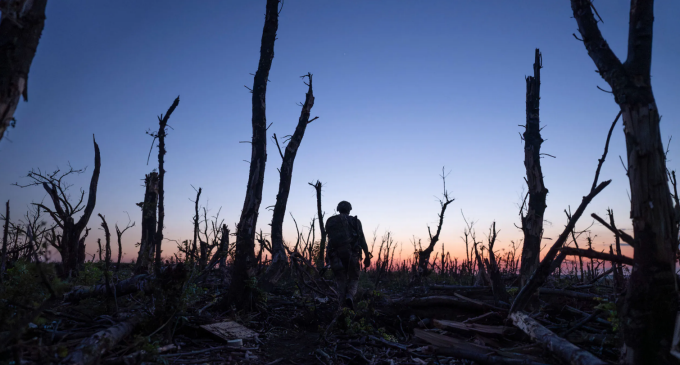
2000 Meters to Andriivka (2025) ☆☆☆(3/4): In the middle of a battle over one Ukrainian village

Ukrainian documentary filmmaker Mstyslav Chernov’ latest documentary film “2000 Meters to Andriivka”, which won the Directing Award when it was premiered at the World Cinema Documentary section of the Sundance Film Festival early in last year, is a pretty grim experience to say the least. Closely following a battle over one Ukrainian village in 2023, the documentary gives us a vivid and close look into the horror and devastation of the ongoing Russo-Ukrainian War, and it feels all the more depressing considering how things are still getting worse in Ukraine even at this point.

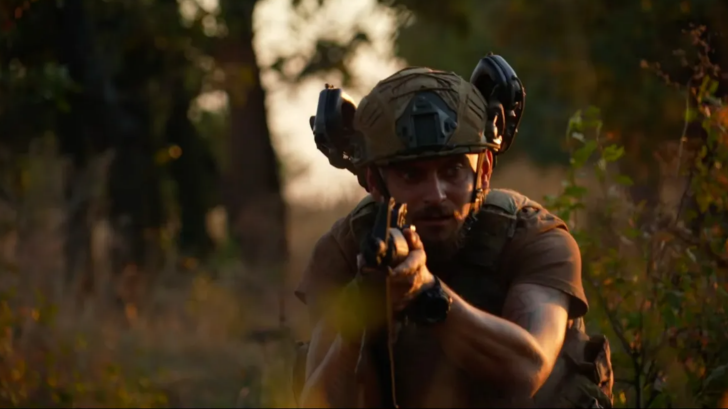
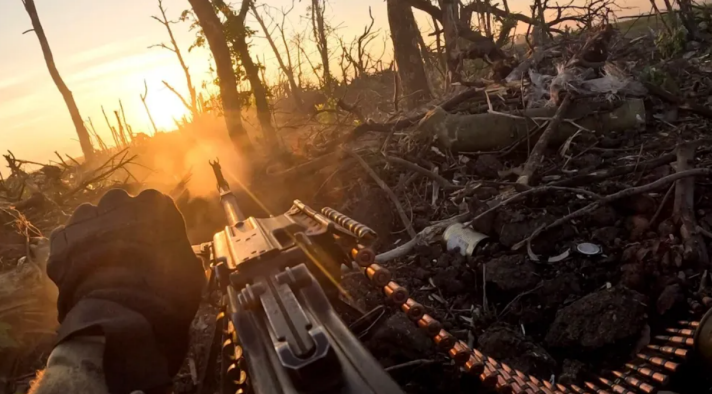
The documentary mainly consists of not only what Chernov and his fellow journalist Alex Babenko recorded with their camera but also a bunch of body-cam footage clips recorded by a number of Ukrainian soldiers on the battlefield near a village named Andriivka during that time. Thanks to the latter, we are thrown into one perilous situation right from the beginning of the documentary, and this effectively sets the overall tone of the documentary before it begins its main narrative.

As reflected by the very title of the documentary, the Ukrainian army was fairly close to liberating Andriivka during that time, but, as Chernov’s phlegmatic narration explains to us, the Russian army was surely ready to stop its opponent by any means necessary. There was only one possible route which was a very narrow forest area surrounded by minefields and trenches, and those Ukrainian soldiers had to advance bit by bit along this route even though they could be heavily attacked at any point.

Considering how much it has been devastated by the ongoing battle, liberating Andriivka seemed rather meaningless, but most of those Ukrainian soldiers accompanied by Chernov were willing to fight more for their country nonetheless. From time to time, Chernov talked a bit with some of them, and their impromptu interview scenes feel poignant when Chernov tells us how many of them died in one way or another. We are amused a bit when one young solider and Chernov come to find some common area between them, but then we come to learn that this young soldier was unfortunately killed on another battlefield several months later.

As the Ukrainian soldiers continued to get closer to Andriivka, the opposing Russian soldiers attacked them more, and the documentary gives us several strikingly intense moments to remember. I must point out that those body-cam footage clips often look like the live-action version of video game demonstration, but this impression quickly goes away as we become more aware of the imminent peril faced by those Ukrainian soldiers. No matter how quickly they think and act, they can get themselves killed at any point, and their increasingly grim circumstance comes to overwhelm us more than expected.

The documentary occasionally provides bits of background information, and we get more understanding of how despairing things are really in many aspects. While the Ukrainian army was confident in its ongoing counterattack operation against its enemies, but the Russian army remained as a formidable opponent despite many setbacks in their invasion plan, and the battle over Andriivka eventually became stuck in stalemate even though the Ukrainian army managed to advance toward the village bit by bit.

Needless to say, the documentary does not overlook the human toils behind this battle. At one point later in the documentary, a soldier becomes seriously shell-shocked after another dangerous moment on the battlefield, and it is harrowing to observe how his face looks hard and numb even while a lot of things are happening around him. As following the funeral of one particular soldier who was once a truck driver before the war was begun, the documentary shows how many people in his village including his mother grieved over his death, and there is a somber but powerful moment when the camera simply looks over a cemetery filled with a lot of newly added graves.

Around the point where the battle over Andriivka finally came to end, there came some relief as expected, but Chernov expresses weary skepticism in his narration. As many of us know too well, there is still no end in sight for the Russo-Ukrainian war, and now it is the matter of which one will endure longer in the end. It goes without saying that Russia will stagnate Ukraine by any means necessary, and that will certainly corner Ukraine more than before.
On the whole, “2000 Meters to Andriivka”, which was selected as the Ukrainian submission to Best International Film Oscar (It was also included in the shortlist for Best Documentary Oscar, by the way) is another solid work from Chernov, who won an Oscar for his previous documentary “20 Days in Mariupol” (2023). Although it is relatively less engaging compared to “20 Days in Mariupol” because of the rather distant attitude, it is still worthwhile to watch as another important documentary to be added the growing list of the Russo-Ukrainian war documentaries, and I appreciate its visceral qualities while admiring Chernov and his crew’s dedicated efforts. As far as I can see from his two documentaries, he is quite determined to follow and then record the war to the end, and I can only hope that his possible next Russo-Ukrainian war documentary will be a bit less grim at least.

Posted in Movies | Tagged , , , | Leave a comment