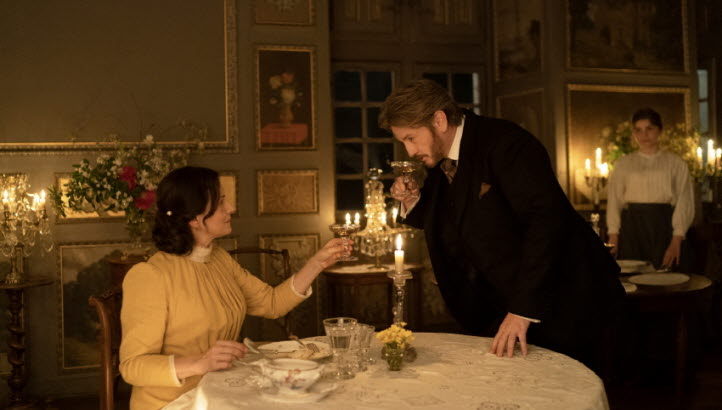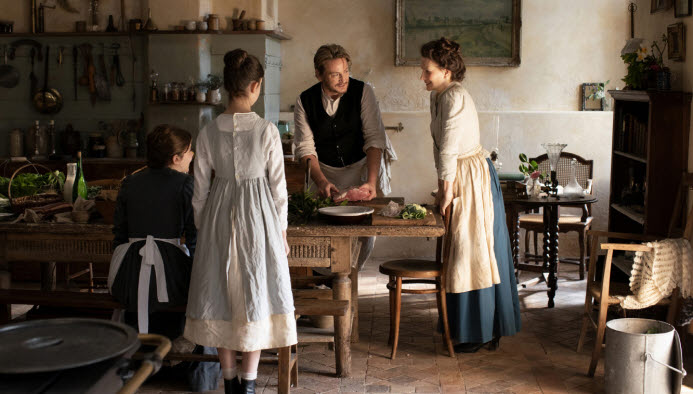
Leave the World Behind (2023) ☆☆1/2(2.5/4): Is this the end?

Netflix film “Leave the World Behind”, which was released a few week ago, is a very familiar type of thriller which does not bring anything new or fresh into its genre territory. This is a fairly competent product on the whole while supported well by its several prominent main cast members, but it only reminds us of a number of similar films including M. Night Shyamalan’s latest film “Knock at the Cabin” (2023), and you may be all the more disappointed due to its rather fizzling finale.

The movie begins with Amanda Sandford (Julia Roberts) and her husband Clay (Ethan Hawke) leaving their residence in New York City along with their kids Rose (Farrah Mackenzie) and Archie (Charlie Evans). For a rather misanthropic reason, Amanda suddenly decides to have a family vacation in some town of Long Island, and her husband and their kids have no problem with that as looking forward to having a little fun private time at a big and slick modern house rented to them, though Rose is more occupied with finishing watching all the episodes of a certain famous TV comedy series from the 1990s.

Things seem to be going well on the first day of their vacation, but then odd things begin to happen around them. When they are later spending some time at a nearby beach, something quite unexpected occurs the shock and surprise of everyone at the beach. When they return to the house while quite baffled about what they witnessed at the beach, they find that all the communication lines including Wi-Fi are cut off for an unknown reason, and this certainly frustrates all of them as being disconnected from the world outside.

And then another unexpected thing happens in the middle of the following night. A black man who introduces himself as G.H. Scott (Mahershala Ali) comes along with his daughter Ruth (Myha’la), and G.H. tells Amanda and Clay that he is actually the owner of the house who rented the house to Amanda. According to G.H., there is a massive blackout in New York City and its surrounding area, and he and his daughter, who have supposedly stayed in the city during Amanda and Clay’s vacation in their house, come to the house just for being safe and comfortable.

Because she only communicated with the owner of the house via e-mails, Amanda becomes quite suspicious about who these two unexpected visitors really are in contrast to Clay, who suggests that they should let these two visitors stay inside the house at least for a while. After all, G.H. really looks like what he claims to be, though Amanda still has doubt and suspicion on the identity of G.H. and his daughter.

Meanwhile, things keep getting more odd and ominous around the main characters. Every TV channel only shows the sign of some serious incident of national emergency, and all the phone lines remains cut off as before, though water and electricity are somehow still supplied to the house. For finding out what is really going on outside the house, Clay drives his car to a nearby town, but he only witnesses a very disturbing moment in the middle of his drive to the town.

Amanda and Clay try to tell their kids as little as possible for protecting them, but it does not take much for Rose and Archie to realize that something really weird is happening around them. At one point, Rose spots more deer around the house, and then there comes a little spooky moment when she and her older brother enters a little place outside the house at one point later in the story.

The screenplay by director/co-producer Sam Esmail, which is based on the novel of the same name by Rumaan Alam, keeps things rolling via throwing a number of more strange things into the story. There is a frightening moment involved with a bunch of vehicles on the road, and we later get a tense scene as G.H. and Clay visit the house of a certain figure who may tell them what is really going on besides giving them a bit of medical help.

We never get bored during its rather long running time (141 minutes), but the movie unfortunately comes to spin its wheels during its last act without bringing much depth to its story and characters. While it often stumbles in case of character development, the movie merely gets us more baffled and confused along the story, and that is the main reason why its finale feels like a big letdown even though it answers most of the questions in the story.

Anyway, the main cast members of the film try as much as possible with their respective archetype roles. While Julia Roberts, who also participated in the production of the film, does not hesitate to be unlikable as required by her part, Ethan Hawke, Mahershala Ali, and Myha’la dutifully feel their respective spots as required, and Farrah Mackenzie, Charlie Evans, and Kevin Bacon did leave some impression despite their rather thankless jobs.

In conclusion, “Leave the World Behind” is not a total waste of time mainly thanks to its solid cast members, but I still think it could be more tightened for more tension and suspense while bringing more depth to its story and characters. Esmail, who previously made his first feature film “Comet” (2014) and then made the acclaimed TV drama series “Mr. Robot”, is a fairly good director as far as I can see, but the movie does not impress me much as failing to reach to its goal, and I am already ready move onto whatever I will watch next from Netflix.

Posted in Movies | Tagged , , , | Leave a comment

Joyland (2022) ☆☆☆(3/4): A queer drama from Pakistan

Pakistani film “Joyland”, which was selected as the Pakistani submission to Best International Film Oscar in last year (It was subsequently included in the shortlist, by the way), is a sensitive mix between family drama and queer story. Although the overall result is rather modest and restrained, it is fairly engaging thanks to its competent direction and a number of good performances, and it surely works an empathic window to human beings different from us in many aspects.

At first, the story revolves around a young man named Haider (Ali Junejo) and his poor family. While his wife Mumtaz (Rasti Farooq) is the one who has earned some money instead of him, he usually takes care of domestic stuffs including taking care of several daughters of his older brother Saleem (Sohail Sameer) just because he is currently unemployed, and this does not look that good to his ailing but stern father, who has been disappointed for not getting a grandson from Mumtaz or Saleem’s wife Nucchi (Sarwat Gilani) yet.

On one day, Haider goes to a local erotic dance theater because a friend of his told him that there may be a good job opportunity for him, but he is caught off guard to learn that it is actually an audition for the backup dancers for a transgender dancer named Biba (Alina Khan), who incidentally came across Haider at a local hospital early in the story. Because he is not so good at dancing from the beginning, Haider feels rather humiliated to say the least, but he is eventually persuaded to get himself hired because, well, he really needs to earn some extra money for his family.

Without telling his family anything about what he will exactly do for money, Haider tries really hard for being as good as his fellow backup dancers. Although he surely needs lots of teaching and coaching right from the first day of the rehearsal, he gets some help and support from Biba, and then he slowly becomes interested and fascinated with her. After all, he never saw transgender people like Biba before, and Biba does not mind getting some attention from Haider at all as a confident lady not ashamed of her sexual identity at all.

In the end, Haider and Biba come to sense more of the mutual attraction being developed between them – especially after Haider helps Biba get a big breakout moment for her via a little brilliant idea he got from his wife. Although he hesitates at first when they are about to show more affection to each other, Haider soon finds himself more attracted to Biba than before, and Biba willingly shows more of herself and her life as they come to spend more time together night by night.

Of course, Haider does not dare to tell anything about this to his wife or his family, though he reveals to his wife on his real occupation. Moreover, he even finds himself quite confused about his sexuality as well as Biba’s sexual identity. Not knowing that much about how fluid sexuality can be, he is also not so sure about how he should regard Biba despite his growing affection toward her, and we are not so surprised when he inadvertently angers Biba when they try to have sex later in the story.

Meanwhile, the screenplay by director/co-editor Saim Sadiq, who incidentally made a feature film debut here, and his co-writer Maggie Briggs also pays attention to the growing frustration inside Mumtaz, who has her own issues to deal with. When she suddenly becomes pregnant, she understandably has mixed feelings about this as a woman who has been quite happy with her little professional career, and then she becomes more miserable as gradually being crushed by the patriarchy of Haider’s family. Because she is going to have a son, Haider’s father certainly comes to have more expectation, and she is eventually pressured to give up her job while getting no support or consolation from her husband.

The movie also pays some attention to how unhappy several other characters around Haider and Mumtaz are in one way or another. As a woman who once had her own hope and dream before marrying her husband and then being stuck him and their several kids, Nucchi provides some support and understanding to Mumtaz, and we can only guess how much she has been discontent and frustrated for years. In case of Haider’s father, he feels ashamed as reminded again of his vulnerable physical condition, and his only comfort comes from an old widow who is clearly interested in getting a bit closer to him.

As the movie steadily maintains its low-key tone even during its melodramatic last act, the main cast members stay true to their respective roles. While Ali Junejo earnestly holds the center of the story, transgender performer Alina Khan brings a fierce sense of emotional integrity to her character, and Rasti Farooq is equally impressive as palpably conveying to us her character’s accumulating desperation and frustration along the story. In case of several supporting cast members, Salmaan Peerzada, Sohail Sameer, and Sania Saeed are also fine in their respective parts, and Sarwat Gilani is especially wonderful when her character becomes brutally honest to Haider and several other family members during a certain key scene.

On the whole, “Joyland”, which won the Jury Prize when it was premiered at the Un Certain Regard section of the Cannes Film Festival early in last year (It also won the Queer Palm award, by the way), may feel a bit too tame on the surface, but it is still a well-made work which is worthwhile to watch for several good reasons besides its groundbreaking qualities. In my inconsequential opinion, its considerable critical success may open the door for more films like this, and I will certainly look forward to that.

Posted in Movies | Tagged , , , | Leave a comment

Batman (1989) ☆☆☆(3/4): That indelible darkness

The most timeless part of Tim Burton’s “Batman” is that indelible darkness of its superlative Oscar-winning production design by late Anton Furst. Burton and Furst created one of the most visually striking cities in the movie history which deserves to be mentioned along with the ones in Fritz Lang’s “Metropolis” (1927) and Ridley Scott’s “Blade Runner” (1982), and that is almost enough for compensating for several notable weak aspects of the film including its deficient storytelling.

One of the rather curious problems in the film is how its superhero character is often overshadowed by his main opponent, who actually comes to show much more life and personality in comparison. While both of these two contrasting characters surely represent Burton’s neurotic artistic sensibility, Burton seems to be drawn more to the more flamboyant one at times, considering many of the most entertaining moments in the film belong more to that one. What the movie is supposed to be on the surface is your typical superhero origin story, but, let’s face it, it is sometimes more like a villain origin story.

As a criminal who will become, yes, Joker, Jack Nicholson is ready to have a fun right from his very first scene in the film, and he surely goes over the top as required when his character eventually comes to have that fearsome grin on the face mainly thanks to Bruce Wayne / Batman (Micheal Keaton). Once he gets rid of the boss of a big local criminal organization played by Jack Palance, Joker embarks on throwing a series of twisted terrors upon the citizens of Gotham City, and his deranged criminal masterplan eventually culminates to a massive parade along the main street of the city, which is clearly inspired by that annual Thanksgiving Day parade in the New York City.

Of course, the only man who can stop Joker is none other than Batman. The story becomes more interesting as his traumatic childhood past turns out to be connected with Joker, but Batman remains as a mere counterpart to his main opponent – even when he is not acting as Batman. Considering his wacky performance in Burton’s previous film “Beetlejuice” (1988), Michael Keaton was an effective case of against-the-type casting, and he did a good job of embodying his character’s hidden darkness and morbidity, but I must point out that his version of Bruce Wayne / Batman is still relatively less compelling compared to what Christian Bale embodied so intensely in Christopher Nolan’s monumental Batman trilogy,

Another problem in the film is a subplot involved with Wayne’s problematic romance with a pretty photographer named Vicky Vale (Kim Basinger). Yes, she surely notices right from their first encounter that there is something odd about him, but I think she should be a bit more surprised when she finally comes to learn about his dual identity later in the story. Stuck with her thankless supporting role, Basinger, who happened to be the last-minute replacement right before the shooting of the film, tries as much as she can, but she and Keaton do not generate much heat or chemistry between them, and that is all the more evident considering how Keaton is a lot more interesting with Michelle Pfeiffer in “Batman Returns” (1992), which is also directed by Burton.

Anyway, the movie is still a visual treat for any moviegoer, and I was glad to absorb every detail of its splendid production design when I revisited it at a local movie theater at last night. In contrast to the hyper-realistic version of Gotham City in Nolan’s Batman trilogy, the Gotham City in “Batman” is a delightfully anachronistic mix of old and new stuffs peppered with lots of gothic/film noir touches to be savored, and it still looks quite impressive with all those tall and dark buildings rising toward the dark night sky.

In addition, the movie is often driven a lot by the great score by Burton’s frequent collaborator Danny Elfman, who became one of the most prominent film music composers working in Hollywood after the immense success of his score. While several original songs by Prince are effectively used in several key scenes including the one where Joker and his goons gleefully vandalize many different artworks in a big museum, Elfman’s score leaves more lasting impressions us on the whole as the emotional center of the film, and it also makes the action scenes in the film feel more thrilling and exciting than they actually are (If you think Nolan is not so good at shooting action scenes, just watch how flatly Burton handle the action scenes here in this film). It is no wonder that his Batman theme has been as famous as John Williams’ Superman theme, which is virtually the yang to the yin of his Batman theme.

Mainly due to what was achieved so well by Nolan’s Batman trilogy, “Batman” is sometimes eclipsed along with “Batman Returns”, which is incidentally much darker and more interesting because Burton pushes his own artistic sensibility further in that film. However, it should be recognized that “Batman” is significant for opening the door for more dark possibilities inside its moody superhero character, and many of subsequent Batman films including Nolan’s Batman trilogy certainly owe a lot to it.

Overall, the movie has much more style and personality than many of recent superhero flicks, and that is why I found it fairly engaging even at present despite those glaring flaws I noticed again during my recent viewing. It could have been better in my humble opinion, but it was indeed one of the major turning points for its genre at least, and, above all, its Gotham City is still pretty awesome to watch on big screen.

Posted in Movies | Tagged , , | Leave a comment

Ikiru (1952) ☆☆☆☆(4/4): To live for the rest of his life

Not long after I watched Akira Kurosawa’s great film “Ikiru” for the first time around 20 years ago, I read a review written by one anonymous but prominent South Korean critic who argued that “Ikiru” is the funniest film ever made by Kurosawa. This argument felt truer to me as I revisited the movie around the beginning and then the end of this year. As a matter of fact, it is quite painfully funny especially during its first act, but then it surprises us as generating a lot more pathos and poignancy than expected while never losing its sense of black humor. And then there comes one of the best narrative leaps I have ever watched, as it becomes all the more amusing and touching around the point where the story arrives at a somber but undeniably powerful moment of little human triumph.

Right from its very first shot, the movie does not pull any punch at all on how its meek and ordinary public servant hero, Kanji Watanabe (Takashi Shimura), will not live that long due to his terminal illness – and how most of his whole life has been quite inconsequential to say the least. For nearly 30 years, he has simply worked and worked at one of the many departments of the city hall, and the sardonic narration in the early part of the film further accentuates how pathetic his existence really is. At his workplace, he merely occupies his desk as the chief of the department without doing much at all just like others working under him, and the most active moment of his job is stamping those incoming documents with his authorization seal. At his house, he resides with his only son and the son’s wife, but he is not particularly close to them even though he has worked and lived for his son’s welfare since his wife died many years ago.

And there comes a grim and devastating news for Watanabe as already announced to us in advance. Feeling not so right about his stomach, he takes a unprecedented day off to the surprise of everyone at his workplace, and we get a darkly humorous moment as Watanabe is waiting at a local clinic along with several other patients. One of these patients cynically explains in detail to him about how the doctor will say if his patient happens to be dying due to stomach cancer, and, what do you know, the doctor subsequently tells Watanabe exactly what that patient warned to Watanabe.

While facing his imminent mortality, Watanabe is naturally scared, confused, and, above all, despaired. As he looks back on his whole life via a series of brief flashbacks, he belatedly comes to realize how meaningless his life has been for years, and that makes him all the more morose and regretful than before. His son and his son’s wife sense something wrong about him, but they are more occupied with the financial matters of their own life, and there is a heartbreaking moment as Watanabe finds himself lonelier than ever for failing to connect with his son again.

What follows next is Watanabe’s hilariously clumsy attempts for fully living at least while he is still alive (“Ikiru” means “To Live” in Japanese, by the way). He drinks a lot even though that is the last thing he should do as a stomach cancer patient. He comes to have a wild night along with a jaded novelist who takes a pity on him after listening to his story. When a young pretty woman working under him later approaches to him for her resignation, he becomes interested in spending more time with her, and she does not mind this at all as lightening him up at times with her plucky cheerfulness.

However, not so surprisingly, none of these new experiences of his does not help Watanabe much. Maybe he could feel a lot better if he were just going through a mid-life crisis, but Watanabe’s approaching death remains an undeniable fact to face. During one particularly haunting scene, he flatly but sorrowfully sings an old song at a nightclub, everyone around him becomes silent as sensing more melancholy and sorrow from him. In one brief but striking visual moment, we see Watanabe’s face filled with more darkness and despair, and the mood between him and that generous novelist becomes far less than joyful than before.

In case of that young woman, she does not have any answer to Watanabe’s urgent life issue either, though she comes to feel more pity and compassion after learning about Watanabe’s terminal illness. However, he eventually gets a small but possible idea as he struggles to understand why he became interested in her from the beginning, and then we are served with a memorably dramatic moment which effectively utilizes a certain well-known song sung in the background. This may look a bit too symbolic on the surface, but Kurosawa skillfully builds up this big moment of personal realization, and you may cheer when Watanabe is virtually congratulated for a sort of rebirth as leaving the scene with a lot of spirit and excitement.

Around that point, the screenplay by Kurosawa and his co-writers Shinobu Hashimoto and Hideo Oguni, which was partially inspired by Leo Tolstoy’s 1886 novella The Death of Ivan Ilyich, does something quite unexpected. Because I still remember how much I was surprised by that, I strongly suggest you that you stop reading this now if you have not watched it yet.

The last act of the movie immediately makes no bone about Watanabe’s eventual death, which happens several months later. At his following funeral, his colleagues gather for showing some condolence and then drinking a lot together, and their gradually drunken conversation comes to focus on how Watanabe suddenly became much more active and determined than before to everyone’s confusion and surprise. It is often hilarious to observe how they try to ignore what has been so obvious to them from the very beginning – and how they end up becoming more aware of that instead while reminded more of how pathetic they have been just like Watanabe once was. They seem to learn something from that, but, to our bitter amusement, things go back to usual business for them on the very next day.

However, this part is also very poignant via a series of flashback scenes showing what Watanabe did during his last several months. While he remains timid and humble as usual on the surface, the sheer patience and determination behind his plain appearance make him into a sort of force to reckon with. He steadily and constantly persists for his goal, and he is not even stopped by those top-ranking figures at the city hall or some criminal people who do not welcome his little project at all.

Throughout the film, Takashi Shimura, who was one of frequent actors in many of Kurosawa’s works including “Seven Samurai” (1954), gives a subtly expressive performance to remember. His usually static face conveys to us his character’s deep sadness and desperation without signifying too much, and it is both compelling and touching to observe how his sensitive low-key acting illustrates his character’s gradual inner change along the story. Around the end of the film, Watanabe does not seem that changed much on the surface, but Shimura’s serene façade is more than enough for us to sense that Watanabe is much more alive than ever as feeling truly happy and satisfied, and the result is definitely one of the greatest moments in the history of cinema.

Kurosawa directed a bunch of great works to remember, and “Ikiru” has firmly stayed around the top of the list. When I watched it for the first time, I was just a little more than 20, the movie reminded me that I should be really serious about how I should live. I become 40 in this year now, and the movie made me reflect more on how I have lived during last two decades. Yes, my life has been occasionally quite messy and trivial to say the least, but I was fortunate enough to have some good people encouraging and supporting me in one way or another. While my current job is sometimes challenging, it is never boring or soul-sucking at least, and I also become more passionate and serious about movies and books in addition to being much more honest about my sexuality. So, am I now as happy as Watanabe is at the end of the movie? I am not so sure even at this point, but I will keep trying for that.

Sidenote: As many of you know, “Ikiru” was recently adapted into British film “Living” (2022), which incidentally garnered Bill Nighy a well-deserved Oscar nomination. This remake version is also worthwhile to watch, and Nighy’s excellent performance will remind you that, as Roger Ebert once said, great actors don’t follow rules but illustrate them.

Posted in Movies | Tagged , | Leave a comment

Home Ground (2022) ☆☆☆(3/4): Welcome to Lesvos (No, not that island)

South Korean documentary film “Home Ground” introduces us to one extraordinary figure who deserves to be known more to not only thousands of LGBTQ+ people out there in the South Korean society but also many other South Korean citizens. Here is a person who has steadily and defiantly been open and frank about his sexuality for quite a long time, and it is poignant to observe how willing he still is to keep going even at present while never being ashamed of her sexual identity.

He is Yoon-Kim Myeong-woo, who has run the first lesbian bar in South Korea which was opened in 1996. Aptly named “Lesvos” (You surely know where its name comes from, if you know anything about a certain famous lesbian Greek poet), this bar has been a shelter and haven for numerous lesbian women for many years, and Myeong-woo, who took over the bar around 20 years ago, is certainly proud of the old history of Lesvos.

Early in the documentary, we observe how things became quite hard and difficult for Lesbos and its owner during the early 2020s, which will be forever remembered for the COVID-19 pandemic. As many people were infected here and there in the country, numerous public places including bars and restaurants had to be restricted a lot, and Lesvos and many other LGBTQ+ bars in the Itaewon-dong neighborhood were no exception. When the media made a sensational fuss about how some people got infected in one of those gay nightclubs, the situation became all the harder for the LGBTQ+ bars in the Itaewon-dong neighborhood, and we are not so surprised when the documentary later shows Myeong-woo doing an extra job for making ends meet day by day.

As a person who has been quite comfortable with her sexuality for more than 20 years, Myeong-woo is surely a living witness of the rather obscure part of South Korean LGBTQ+ history during the late 20th century. Even during his adolescent period in the 1970s, he clearly knew that he was different from many other girls around him, and that eventually led him to a certain famous woman-only coffee shop located in the middle of Seoul. Via a series of reenactment and interview clips, the documentary shows us what a liberating place that little but special coffee shop was for Myeong-woo and many other young lesbians, and Myeong-woo and several other interviewees certainly have some affectionate memories associated with that place.

Of course, they often could not possibly be open about their sexuality outside during that time. As shown from several old newspapers and magazine articles, that coffee shop was eventually raided by the police for its “sexual decadence”, and that looked like the end of their good time, but Myeong-woo and many other lesbians kept going nonetheless, and their spirit was trickled down to the next generations who could be more outgoing as things changed to some degree along the passage of time. Several younger interviewees in the documentary tell us about how they and other young lesbians often gathered at a certain public park in Seoul in the early 2000s, and they all fondly remember how they felt free and happy together via their little but precious solidarity.

Meanwhile, we also meet some of Myeong-woo’s old lesbian friends, who are also straightforward about their sexual identity as much as him. There is a little sweet moment as Myeong-woo and one of his friends have a little lunch meeting together, and they cannot help but reminisce about their good old times just like your average old people. In case of two other friends of him, one of them willingly recollects about her little encounter with a fellow lesbian in the past, and we can only imagine how glad and excited she really was at that time for meeting someone just like her.

As his bar business was affected more and more by the COVID-19 pandemic, Myeong-woo often found himself becoming desperate and frustrated in addition to suffering some medical problem, and there is a memorable scene where he lets out some of his negative feelings in front of the camera. Having been the de facto godfather of the LGBTQ+ community in South Korea, he cannot easily show her anxiety and frustration to others around him as remaining unflappable as before, and that became a bigger toil for him while the bar looked like being sunk more and more by the COVID-19 pandemic.

Nevertheless, he keeps going as usual. While finding a way to keep things afloat for his bar, he remains active for the human rights of the LGBTQ+ people in South Korea, and that aspect of hers is clearly exemplified by the scene where he participates in a demonstration for the human rights of transgender people. As he frankly admits at one point later in the documentary, he also had some bias and prejudice against some of LGBTQ+ people at first, but he eventually came to embrace many different members of the LGBTQ+ community in South Korea, and I must say that he is certainly a much better person that those hateful politicians and other public figures shamelessly promoting hate and bigotry every day in South Korea.

In conclusion, “Home Ground” is a modest but touching documentary which deserves more audiences in my humble opinion, and director/co-writer Kwon Aram handles the main human subject of her documentary with enough care and respect. When it was over, I felt the need to know and learn more, and that is what a good documentary can usually do, you know.

Posted in Movies | Tagged , , , , , , | Leave a comment

A Letter from Kyoto (2022) ☆☆☆(3/4): Three sisters and their aging mother

South Korean film “A Letter from Kyoto” is a little family drama revolving around the relationships among three sisters and their aging mother. As these four different women cope with each own daily matters along the story, the movie slowly and earnestly develops each of its main characters, and the result is engaging enough to earn the emotions of its sentimental finale.

The movie, which is mainly set in Busan, opens with the homecoming of Hye-yeong (Han Sunhwa), who returns after having some unspecified problems in her professional career. While she is warmly welcomed by her mother Hwa-ja (Cha Mi-kyung), she does not tell her mother much about why she comes to Busan, and she does not even confide anything to her two siblings Hye-jin (Han Chae-ah) and Hye-joo (Song Ji-hyun).

As Hye-yeong stays at her family home, we get to know more about how her mother and sisters live day by day. While Hwa-ja, who has been a widow for many years ago, works in a little catering factory along with her best friend, Hye-jin works in a small local boutique shop, and Hye-joo, who is still a high school student as the youngest one in the family, has been quite enthusiastic about joining a dance group while hiding that from her family.

And then Hye-yeong belatedly comes to learn something serious about her mother. Hwa-ja turns out to be in the early stage of dementia, and things will certainly get worse for her even though she gets some medical help for slowing down the progress of this illness of hers. While Hye-yeong is naturally concerned about her mother, there is nothing much she can do for her at present except providing some help and support, and Hye-joo is already considering sending their mother to a facility for old people if her mother’s medical condition gets much worse than now.

Meanwhile, Hye-yeong becomes more curious about her mother’s old past as sorting out all those old stuffs her mother has kept for years. Hwa-ja was actually born in Japan, but she and her Korean father left her Japanese mother for some personal reason not long after that, and it surely took some time for young Hwa-ja to get accustomed to this considerable environmental change. Although her mother sent a letter from Japan from time to time, her mother’s letter eventually stopped coming at some point, and it is still a sad and painful memory which has been silently kept in Hwa-ja’s mind during several decades.

After discovering several old letters from Hwa-ja’s Japanese mother, Hye-yeong does some online research for gathering more information about her unknown grandmother. It seems that Hwa-ja’s mother was in some hospital outside Kyoto after Hwa-ja and her father went to Busan, and that certainly makes Hye-yeong all the more curious about her hidden family history.

Meanwhile, the screenplay by director/writer Kim Min-ju leisurely rolls the individual narratives of its main characters for more character development. Through Hwa-ja and her best friend, we get to know a bit more about many years of their friendship, and the sense of old history becomes more real to us when Hwa-ja happens to have a little private conversation with an old lady who has been incidentally one of the frequent customers of the catering factory. While Hye-joo finds herself attracted to a certain male member of her dance group, Hye-jin accidentally comes to befriend a Russian sailor, and this foreign dude turns out to be more generous and likable despite their rather awkward first encounter.

In the end, the movie arrives at the final act where its main characters go to Kyoto as expected from its very title, and it thankfully avoids any unnecessary sappiness as calmly following its main characters as before. What they eventually discover around the end of their little journey outside Kyoto will not surprise you that much, but you will be touched as Hwa-ja and her three daughters confirm to each other on how much they love and care about each other despite those occasional strains and conflicts among them.

The four main cast members dutifully fill their archetype roles with enough life and personality to hold our attention. While Han Sunhwa earnestly leads the story, Cha Mi-kyung gradually takes the center as the three other performers come to surround her more along the story, Han Chae-ah and Song Ji-hyun are also solid in each own moment to shine. As these four good actresses interact with each other in one way another, we can always sense a long history among their characters, and that is the main reason why the movie engages us despite its rather familiar plot and characters.

On the whole, “A Letter from Kyoto” is another typical family drama about mother and daughter relationship, but it mostly works thanks to its competent direction and the diligent efforts from its four main performers. Right from its first shot, I knew what I was going to get from it, and the movie simply does as much as intended, but it did a good job of handling its story and characters at least. Yes, the overall result is a little too mild for me at times, but I came to care more about its main characters along the story nonetheless, so I recommend you to give it a chance someday.

Posted in Movies | Tagged , , , | Leave a comment

10 movies of 2023 – and more: Part 3

Now here are 11 South Korean films of this year.

Continue reading
Posted in Movies | Tagged | Leave a comment

10 movies of 2023 – and more: Part 2

And here are the other 5 movies in my list – with other films good enough to be mentioned.

Continue reading
Posted in Movies | Tagged | Leave a comment

10 movies of 2023 – and more: Part 1

So here are the first five films of my annual list

Continue reading
Posted in Movies | Tagged | Leave a comment

10 movies of 2023 – and more: Introduction

Again, we are approaching to the end of another year. Compared to last year, 2023 has been less burdensome in comparison after the eventual end of the COVID-19 pandemic period, and wearing a mask in public spaces already seems like an old past these days. Although people are less likely to go to movie theaters now mainly thanks to the rise of streaming services, new movies keep coming to theaters coming nonetheless, and we have surely had another fruitful year full of good or excellent films to remember and cherish.

While hurriedly watching a bunch of wonderful films I happened to miss during last year, I also diligently watched numerous interesting films which came out during this year, and I must tell you that they were like priceless healing medicines to me as I coped with small and big problems in my private life. As a matter of fact, it was fairly easy for me to fill out my annual list of this year, and my additional list for new South Korean movies to recommend was actually a more difficult task than expected because there are several good ones which cannot be included in the list despite being fairly good in each own way.

However, that is nothing compared to my little headache from arranging those 10 films at the top of my annual list. To be frank with you, I cannot surely say right now that “The Holdovers” is really better than “Monster” or “Afire” – or that “Killers of the Flower Moon” is a little greater than “Oppenheimer” or “Barbie”. Someday, I may give up this rather inconsequential task, but I will not deny that I had some fun as confirming more on my personal preference on these 10 movies.

Anyway, my annual list, which is more or less than the outcome from reviewing more than 300 films during this year without getting paid at all (I will go to hell for this, you know), does not incidentally include a number of recent acclaimed films such as “American Fiction”, “Fallen Leaves”, “Poor Things”, and “The Zone of Interest” because, well, I and my fellow South Korean audiences will have to wait more at present (“Fallen Leaves” will arrive here in the next week, for example). If these films are really as good as many of critics and audiences have said, I will certainly mention them around the end of the next year.

Posted in Movies | Tagged | Leave a comment