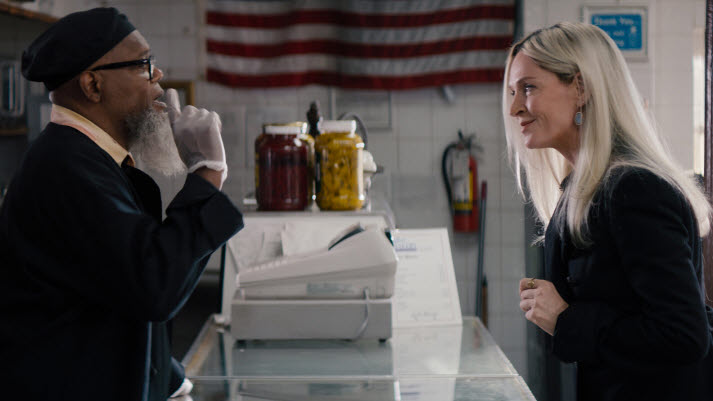
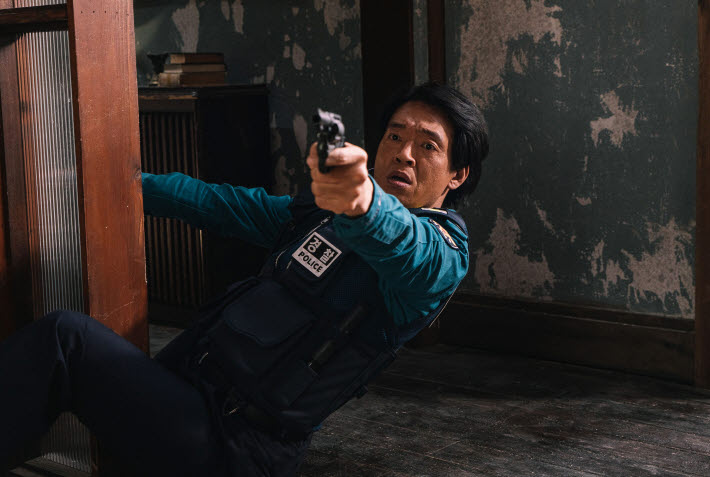
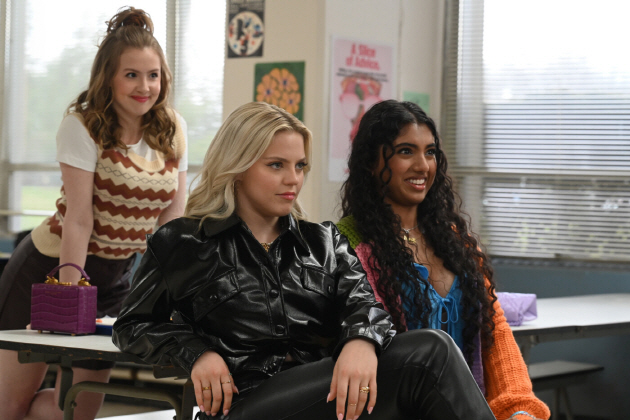
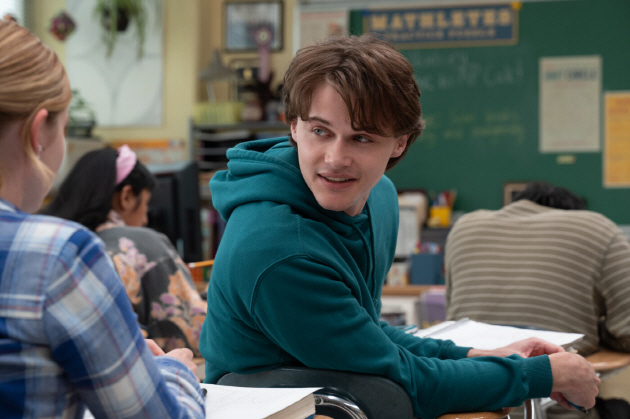
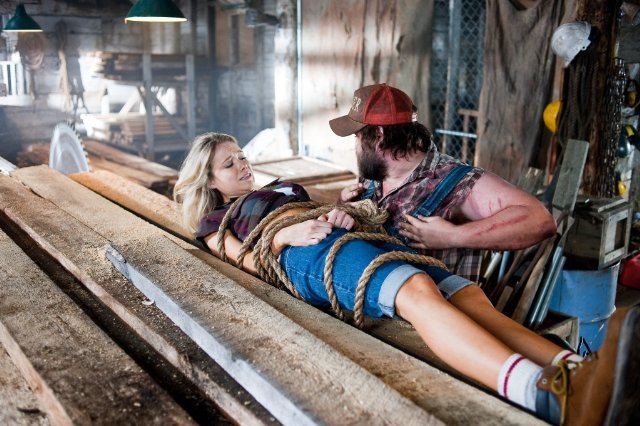
Theater Camp (2023) ☆☆1/2(2.5/4): Another season of their summer theater camp

“Theater Camp”, which is currently available on Disney+ in South Korea, is a familiar type of comedy which could be improved here and there in my trivial opinion. While it is apparent that the main cast members of the film are apparently having a fun together on the screen, the story and characters could go further for more humor and insanity, and we can only get the glimpses of that possibility from time to time without entertained enough on the whole.

At the beginning, we are introduced to a little summer theater camp named “AdirondActs”. As its another camp season is coming, Joan Rubinsky (Amy Sedaris), who has run the camp for many years despite its considerable financial difficulties, is eager to have another good and productive time with those enthusiastic kids willing to take more chance with acting and singing, but, alas, she unfortunately becomes comatose due when she is watching a little school musical production, and the management of her camp is subsequently handed to her son Troy (Jimmy Tatro), an entrepreneur wannabe who is apparently quite incompetent from his very first appearance.

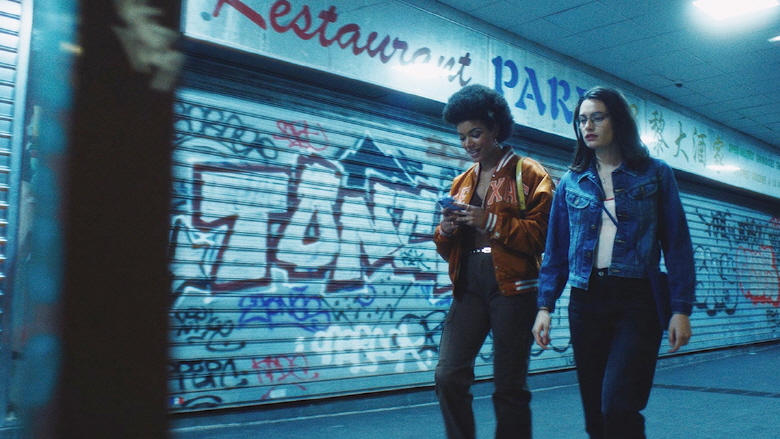
Anyway, the teaching staff members of the camp, who have irresponsibly been downsized by Troy, try to do their best as before despite the glaring absence of their dear leader. Amos Klobuchar (Ben Platt) and his longtime professional partner Rebecca-Diane (Molly Gordon) continue to work on their latest musical production for those kids to come to the camp, but, alas, they still do not have any story or song yet even when the first day of the summer season begins. While Glenn Winthrop (Noah Galvin), who is a stage technician, is ready to teach anything to the kids under his charge, Janet Walch (Ayo Edebiri), who has just been hired by Troy, actually does not know anything about teaching how to act, but she manages to get away with that while supposedly encouraging her students in one way or another.

Not so surprisingly, things gradually get out of control day by day. In addition to Troy’s frequent incidents of mismanagement, the camp is threatened more by a local bank ready for the foreclosure of the camp at any point, and Troy is later approached by a representative from some well-known financial company which has already acquired a more successful theater camp near to AdirondACTS. In case of the teaching staff members of AdirondACTS, they often stumble a lot while their students actually turn out to be more talented and knowledgeable, and we are not so surprised to know that most of these teachers have been stuck with the camp for a long time since they came there as students.

Now this looks like a fairly solid setup with rich comic possibility, but, the screenplay by directors Molly Gordon and Nick Lieberman and their co-writers/co-producers Noah Galvin and Ben Platt, which is based on the 2020 short film of the same name, feels rather flat and half-faked in case of story and character development at times. While there are a number of little amusing moments to be appreciated by theatergoers, they do not gel together enough together to generate constant comic momentum to hold our attention, and the mockumentary storytelling approach of the film also feels unnecessary and distracting without contributing that much to the story or the characters.

The biggest flaw of the movie is the under-development of many of its main characters, and that is quite evident especially in case of Amos and Rebecca-Dine, who are incidentally the least interesting characters in the story. Although Platt, who looks much less awkward compared to what I saw from the trailer of “Dear Evan Hansen” (2021) mainly because he is old enough to play a dead-end teacher, and Gordon, who recently played a supporting character in acclaimed TV comedy series “The Bear”, are a fairly competent comic duo, they should have brought more humor and depth to their characters and the subplot between their characters, and they are frequently overshadowed by the more colorful main cast members of the film as a result.

The other main cast members are also mostly stuck with their broad caricature roles, but they diligently fill their respective spots as much they can. While Galvin has his own moment to shine during the expected big musical finale decorated with lots of deliberately crummy songs, Jimmy Tatro, Caroline Aaron, Nathan Lee Graham, and Owen Thiele leave some impression despite their thankless supporting parts, and Ayo Edebiri, who incidentally appeared along with Gordon in “The Bears”, is unfortunately under-utilized here compared to her more interesting comic performance in Emma Seligman’s “Bottoms” (2023).

It can be said that the real stars of the film are a bunch of young performers including Alan Kim of “Minari” (2020), and they all never hit any false note throughout the film while freely wielding their natural talent across the screen. As a matter of fact, the movie could delve more into their amusingly intense dedication to their artistic passion, and that brings me back to what Ebert once said about the ever-amazing acting of many child performers out there: “Maybe we are all born as great actors, but after a certain age, most of us morph into bad ones.”

In conclusion, “Theater Camp” is not a total waste of time at least, but I just felt mildly amused during my viewing without having enough laugh for recommendation. I surely recognize the considerable efforts put on and behind the screen, but I still think it could be better for richer laughs for us, and I am already ready to search for something funnier than this.

Posted in Movies | Tagged , , , , , | Leave a comment

Saltburn (2023) ☆☆☆(3/4): Which one is more horrible?

Emerald Fennell’s second feature film “Saltburn”, which is currently available on Amazon Prime, is as disturbing and vicious as its very title suggests. Following one young man’s insidious journey into the isolated world of wealth, ennui, and decadence, the movie often wields its nasty wit upon its story and characters, and we observe this with morbid fascination from the distance.

The story, which is initially set in 2006, begins with how its hero Oliver Quick (Barry Keoghan) happens to befriend a rich upper-class boy named Felix Catton (Jacob Elordi) during their final year at the Oxford campus. As a nobody who has been depending on a scholarship, Oliver has been eager and desperate to get any popular friend, but Felix and his rich buddies seem to be out of his reach while Oliver only finds himself stuck with some nerdy lad who is as unpopular as him.

Anyway, Oliver later comes to draw the attention of Felix via one small lucky incident, and it does not take much time for Oliver to draw more attention from Felix, who becomes more curious about Oliver during their subsequent encounter. As Oliver eagerly presents more of himself to Felix, Felix gladly lets Oliver get along with him and his inner circle members including his American cousin Farleigh Start (Archie Madekwe), who understandably regards Oliver with subtle hostility and contempt because he has already seen through what is going on between Oliver and Felix.

Not long after their final year at the Oxford Campus is over, Felix suggests that Oliver should stay some time at his family manor, and Oliver has no problem with that, but he soon comes to see how awkward he will be among Felix and his family members. Right from when he arrives their family manor, Oliver is coldly handled and served by their stern butler (Paul Rhys is very good while implying a lot via his mostly unflappable attitude and appearance, by the way), and he feels all the more uncomfortable as having the following formal dinner along with Felix and his family members.

Felix’s family is certainly your average snobbish rich British people. While Felix’s father, Sir James (Richard E. Grant), is pretty haughty to say the least, Felix’s mother, Lady Elspeth (Rosamund Pike), is quite a self-absorbed woman living in her own world who occasionally shows some superficial care to others around her, and Felix’s younger sister, Venetia (Alison Oliver), is apparently tired of being stuck with her family although, just like his family, she does not know how she can possibly live outside their cozy isolated world.

And there is Farleigh, who has to depend on the family’s generosity as long as possible just like Oliver. He does not hesitate to point out how fragile and facile Oliver’s status is in the Catton manor, and we come to sense more of tension him and Oliver as bright hot summer days languidly pass by around them and others in the manor.

Meanwhile, the situation becomes weirder and darker as Oliver gradually comes to show his true colors to us along the story, and Fennell’s story consequently becomes a deranged cross between Evelyn Waugh’s “Brideshead Revisited” and Patricia Highsmith’s “Talented Mr. Ripley”. As Oliver gets himself deeper into the daily life of the Cattons, he begins to manipulate many of them in one way or another, and he even seems to be emotionally attracted toward some of them including Felix. At one point, we get a truly perverted (and disgusting) moment showing whatever he is feeling toward Felix, and that is just the beginning of a parade of moments filled with sexual perversion and debauchery.

Even around that narrative point, the movie sticks to its cold and distant attitude without giving us anyone to care about, but it steadily holds our attention thanks to Fennell’s competent handling of humor and morbidity. The result feels a little overlong and sprawling at times in my consequential opinion, and her screenplay stumbles more than once during its third act, but Fennell and her crew members including cinematographer Linus Sandgren, who won an Oscar for Damien Chazelle’s “The La-La Land” (2016), diligently serve us striking visual moments to remember. We find ourselves more immersed into its main background just like its increasingly unnerving hero, and we become more disturbed as discerning more of how he is as horrible as those rich people surrounding him.

The performances in the film are the main reason why the movie is worthwhile to watch. Barry Keoghan, who has been always good at playing odd or disturbing characters as shown from his recent Oscar-nominated supporting turn in Martin McDonagh’s “The Banshees of Inisherin” (2022), boldly goes all the way for showing more of his own distinctive presence and talent, and he is also supported well by several good performers surrounding him. While Jacob Elordi, Alison Oliver, and Archie Madekwe hurl themselves into their youthful but ultimately superficial supporting characters, Richard E. Grant and Rosamund Pike savor every snobbish moment of theirs in the film, and Carey Mulligan, who previously collaborated with Fennell in “Promising Young Woman” (2020), effortlessly steals the show during her brief appearance.

On the whole, “Saltburn” is Fennell’s another interesting work after her first feature film “Promising Young Woman”, which incidentally garnered her a Best Screenplay Oscar. To be frank with you, I do not think “Saltburn” is better than “Promising Young Woman”, but both of them show Fennell as a distinctive filmmaker to watch, and I am already waiting for whatever will come next from her.

Posted in Movies | Tagged , , | Leave a comment

Nam June Paik: Moon Is the Oldest TV (2023) ☆☆☆(3/4): The Father of Video Art

I remember an old local TV commercial featuring Nam June Paik and one of his artworks. Although I was just a little boy when I came across it in the early 1990s, what was shown from that local TV commercial impressed me a lot for the striking appearance of that artwork of his, and that is the main reason why I was often fascinated as observing what is interestingly presented in documentary film “Nam June Paik: Moon Is the Oldest TV”. Although I knew a bit about his artistic career, the documentary shows a lot more than I knew, and I certainly had a fair share of enlightenment during my viewing.

The early part of the documentary focuses on how much Paik struggled during the early years of his artistic career. Born to a very affluent family in South Korea, young Paik was expected to follow his rich businessman father’s footsteps someday, but he defiantly chose to pursue his growing interest in art instead, and he eventually left South Korea for studying in Munich, Germany in 1956. While studying music and philosophy there, he had some difficult times as trying to find his own artistic style, and the excerpts of his old writings, narrated by co-executive producer Steven Yeun, give us more details on that hard time of his.

And then there came an unexpected moment of inspiration when he went to see a little concert by famous American avant-garde composer John Cage on one day. As beholding how freely daring Cage was in breaking many rules and conventions, Paik became quite inspired to do his own things without any hesitation, and he soon came to draw considerable attention as he valiantly threw himself into a series of acts of performance art including destroying a piano on the stage. I must confess that I still do not totally get the meaning of this performance art of his, but I can tell you at least that it did leave some indelible impression on me for his youthful boldness.

While pushing himself further, Paik later got interested in the artistic possibility in TV, and he began some early artistic experiments with a bunch of TVs before eventually moving to New York City for more artistic exploration in 1964. As he created a number of artworks made from TVs and other electronic stuffs, he surely drew a lot of attention from his fellow artists in the city as well as local critics and curators, but his artworks were mostly not appreciated much on the whole. As a matter of fact, many of his artistic outputs including the one associated with the very title of the documentary were not received that well by many major critics, and we get some nasty amusement from several scathing reviews on his artistic outputs during that period.

Not so surprisingly, Paik found himself struggling more in one way or another during next several years, and we hear a bit about how he and his Japanese spouse managed to live day by day without any stable source of income. He often had to depend on the generosity of his friends and supporters, and there is an amusing letter on how he could take care of his daily meal with only 10 dollars during next few weeks.

Nevertheless, Paik did not give up at all, especially after being encouraged and supported more by Cage, who had always been a close friend/colleague of his since they met each other after that little concert in Munich. He tried harder and harder for acquiring any kind of grant, and there is a rich irony in how one of his prominent detractors during that time came to help him in the end.

Once he got the grant at last, Paik went on full throttle mode, and that eventually led to his first major experiment with video art in public. Again, the reviews on this artistic experiment of his were mostly negative to his disappointment, but Paik became more confident about his artistic vision, and the documentary makes a strong point on how Paik’s artistic experiment came to influence a number of famous music videos during the 1980s such as the one for Talking Heads’ “Once in Lifetime”.

In the early 1970s, there came a purely coincidental breakthrough for Paik. Not long after having his 41st birthday in 1973, he happened to buy a Buddha statue just for amusement, and, what do you know, this led to the creation of “TV Buddha”, one of the most famous and successful works in his career. Thanks to its big critical success, he rapidly rose as the leading pioneer of video art, and that was followed by a number of major projects including the global satellite broadcast of “Good Morning, Mr. Orwell” in 1984. Although this project was technically pretty disastrous from the beginning to the end, it further solidified Paik’s prominence in public, and now he was welcomed everywhere including South Korea, though he was reluctant to visit his home country for understandable reasons.

Around the 1990s, Paik became less active due to his declining health, but he kept going as a dedicated artist, and he also saw how communication technology advanced as much as he envisioned in his artworks. As a matter of fact, he already imagined how our world would feel much smaller via what he called “Electronic Superhighway” at that time – and how much we would often feel lost and confused during our current digital era. If he were still alive now, he would not be surprised that much by what is happening on the Internet everyday.

While it does not delve that much into Paik as a human being, “Nam June Paik: Moon Is the Oldest TV”, directed by Amanda Kim, gives us an engaging presentation on Paik as an innovative artist, and it did a commendable job of mixing heaps of informative archival materials with a bunch of various interview clips. The technology behind many of his artworks may look quite dated at present, but his artistic ideas remain fresh as before, and the documentary will probably make you more interested in exploring his fascinating artworks out there.

Posted in Movies | Tagged , , , , | Leave a comment

Ryuichi Sakamoto: Opus (2023) ☆☆☆1/2(3.5/4): His last performance

Documentary film “Ryuichi Sakamoto: Opus”, which was premiered in the Venice International Film Festival several months ago and then will be released in South Korean theaters in the last week of this year, is quite simple in its presentation setting. At first, it seems to observe merely what turned out to be the last performance in the long and illustrious career of Ryuichi Sakamoto (1952 ~ 2023), but it did a commendable job of vividly capturing a number of undeniably powerful artistic moments to linger on our minds, and the overall result is often very poignant to say the least.

As many of you remember, around the time when Stephen Nomura Schible’s documentary “Ryuichi Sakamoto: Coda” (2017) came out, it seemed that Sakamoto was on the way to recover after getting the medical treatment on a serious case of throat cancer. Unfortunately, he was diagnosed to have another kind of cancer a few years later, and he had to go through another medical treatment, but he eventually died early in this year to our sadness.

Several months before his death, Sakamoto embarked on his last project along with director Neo Sora, who is incidentally Sakamoto’s son. After selecting and then arranging 20 pieces from his vast body of works, he did a solo piano performance all by himself during a series of sessions at his favorite recording studio in Tokyo, and he could actually watch the final cut version of his son’s documentary not long before he passed away.

Without any introduction or explanation, the documentary just shows Sakamoto performing a Yamaha piano in the middle of the studio from the beginning to the end, but Sakamoto’s solo piano performance slowly draws our attention in the middle of the quietly isolated environment of the studio, which is further accentuated by the strikingly stark black and white cinematography by Bill Kirstein. Whenever the camera closely observes Sakamoto’s performance, we cannot help but feel some melancholy from his rather weary appearance, and, though he does not signify much on the surface, it seems that he knew well that the end of his life was quite imminent. In fact, we are reminded more of his impending death whenever the documentary looks at his face immersed in lights and shadows generated by a few lighting equipments inside the studio.

His considerable physical vulnerability during these recording sessions is particularly evident when he is performing “Bibo No Aozora”, which was powerfully utilized in the heartfelt final scene of Alejandro González Iñárritu’s great film “Babel” (2006). In the middle of the performance, he unexpectedly makes a glaring error to our surprise, and I found myself bracing myself at times while observing his following struggle to regain the control on his performance. He wanted to do it again, but his son chose to include this flawed take in the documentary, and that is the right choice considering that Sakamoto was ready and willing to present himself in front of the camera with no ego or pretension at all.

Although most of the works performed by Sakamoto in the documentary are unfamiliar to me, I could easily recognize the main themes of his several notable film scores at least. While the Oscar-winning score for “The Last Emperor” (1987) surely gives us one of the highlight moments in the documentary, the score for “Merry Christmas Mr. Lawrence” (1983) lightens up the mood a bit around the end of the documentary, and the score for “The Sheltering Sky” (1990) provides another enjoyable moment in the documentary.

There are also a number of brief interludes during which Sakamoto occasionally says a few words or silently prepares for whatever he is going to perform next. Many of these moments feel rather inconsequential on the surface, but there is one short but interesting moment to remember. At one point, we see how he puts some devices onto the piano strings for a bit of sound manipulation, and the following sonic result is deliberately jarring but interesting for our ears nonetheless.

Meanwhile, we come to admire more of his considerable artistic dedication as the camera frequently shows Sakamoto’s aged hands and fingers. After that glaring moment of error, we observe more of how his performance feels a little shaky and unstable from time to time, but he is not daunted by that at all as far as I can see from his mostly calm and phlegmatic face. The mood naturally becomes more bitter and gloomier as his showtime is being over, but he keeps going as before, and the documentary closes with a sublime moment which reminds us that his artistic achievement will remain as long as we remember and cherish what he created during last several decades.

On the whole, “Ryuichi Sakamoto: Opus” is worthwhile to watch for not only the gracefully humble qualities of Sakamoto’s last performance but also how it is sensitively and thoughtfully presented on the screen with lots of care and respect. To be frank with you, I am not a very big fan of his films scores, but I came to admire him all the more than before after observing more of his artistry and humanity via “Ryuichi Sakamoto: Coda”, which I sincerely recommend you to check out before watching “Ryuichi Sakamoto: Opus”. I assure you that these two good documentaries will make an interesting double feature show for you, and you may also want to check out more of his works after watching them.

Posted in Movies | Tagged , , , , | 1 Comment

Trolls Band Together (2023) ☆☆1/2(2.5/4): Shiny and colorful again with lots of songs

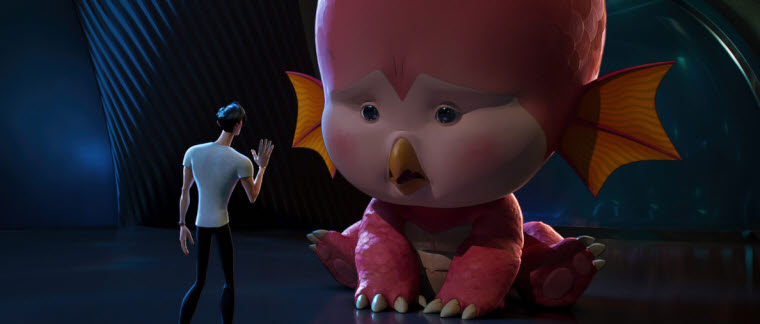
Animation film “Trolls Band Together” is shiny and colorful just like its two predecessors. I was not particularly excited about “Trolls” (2016) and “Trolls World Tour” (2020), but they were fairly watchable mainly thanks to its bright optimistic energy mainly fueled by its cute animation style and spirited musical numbers, and the same thing can be said about “Trolls Band Together”.

After the prologue scene showing a hidden past of Branch (voiced by Justin Timberlake), the story begins with he and many other cute Trolls including Poppy (voiced by Anna Kendrick) cheerfully preparing for the wedding of Poppy’s best Bergen friend Bridget (voiced by Zooey Deschanel) while singing a lot as expected. Poppy is quite excited to assist Bridget and her groom along with Branch, but then there comes an unexpected intrusion in the middle of the wedding of ceremony via John Dory (voiced by Eric André), one of several older brothers in Branch’s past. As shown from the prologue scene, Branch and his several older brothers were the members of a hot band called “BroZone”, and John Dory needs Branch’s help right night for rescuing one of their brothers as soon as possible.

That brother in question is Floyd (voiced by Troye Sivan), who was incidentally the closest brother to Branch during that good old time of theirs. He is currently captured by two Mount Rageon siblings Velvet (voiced by Amy Schumer) and Veneer (voiced by Andrew Rannells), and these two siblings, who incidentally cannot sing that well, have cruelly sucked Floyd’s singing energy for making them into the most popular pop stars in their land. Not so surprisingly, Floyd is getting weaker as being more and more exploited by Velvet and Veneer, and he certainly needs to be rescued before it eventually becomes too late for him.  

Despite a long period of estrangement between him and his older brothers, Branch is willing to help his oldest brother as much as possible, but there are two problems to handle for them. First, they need to locate two other brothers, and, above all, they all should be able to generate together a certain joint spirit absolutely necessary for saving Floyd from where he is being imprisoned at present.

What follows next is a bumpy journey outside Poppy and Branch’s area. As they ride a big (and colorful, of course) living vehicle belonging to John Dory, it does not take much time for them to locate Branch’s two other brothers, but, as many of you already guessed, they have to persuade these two brothers to accompany John Dory and Branch in spite of these two brothers’ understandable reluctance. Although the four brothers eventually work and prepare together, they soon come to clash with each other as before, even while knowing well that they must band together right now for saving Floyd.

In addition, the film serves us two small subplots respectively associated with Bridget and Poppy. While it shows how Bridget enjoys her honeymoon on the road along with her dear husband, it also focuses on Poppy’s unexpected encounter with a certain Troll character who has led a little community of Trolls which turns out to be more aggressive than expected. When she comes to discover that this Troll character was actually quite close to her a long time ago, Poppy is surprised but delighted for that, though there soon comes a little personal conflict between them later in the story.

Meanwhile, we also get a series of big musical numbers as expected, and I must say that “Trolls Band Together” is often entertaining as your typical jukebox musical film. The parts of several recognizable songs are seamlessly incorporated into some of the musical sequences in the film, and I was particularly delighted by a joyful moment featuring that classic Oscar-nominated song by Dolly Parton. In case of two original songs, one of them is performed by NSYNC for its old connection with Justin Timberlake, and there is even a little joke associated with the name of this band around the end of the film.

Furthermore, director Walt Dohrn and his crew members make sure that their overall result looks shiny and colorful as much as possible. As your typical eye-candy, “Trolls World Tour” will certainly be quite a sweet fun for many young audiences out there, and I am sure that the two little daughters of a colleague of mine will savor its every bright and colorful moment.

The voice cast members of the film are effective in their voice acting. Timberlake complements well Anna Kendrick’s irrepressibly plucky spirit, and they are supported well by a bunch of notable cast members such as Kenan Thompson, Eric André, Daveed Diggs, Kid Cudi, Troye Sivan, Camila Cabello, and Zooey Deschanel. As the villains of the story, Amy Schumer and Andrew Rannells often go over the top to our little amusement, and Zosia Mamet has her own small moment to shine as Velvet and Veneer’s long-suffering assistant.

On the whole, “Trolls Band Together” simply follows the formula set by its two predecessors without advancing further from that, but you will not probably complain at all if you were charmed by its predecessors more than I was. Considering that it does not surpass its two predecessors much, I give it only 2.5 stars just like I did in case of its two predecessors, but I will not deny that I enjoyed it at times, so I will let you decide where you will spend your spare time on this mostly solid product.

Posted in Movies | Tagged , , , | Leave a comment

Beyond the Visible: Hilma af Klint (2019) ☆☆☆(3/4): A hidden female artistic pioneer

Documentary film “Beyond the Visible: Hilma af Klint” focuses on one exceptional female artist who definitely deserves a lot of attention and appreciation for her pioneering artistic achievement. Although it has been almost 80 years since she died, many of her numerous artworks were fortunately preserved and then re-discovered at last, and these artworks of hers are worthwhile to observe and appreciate as the hidden but important parts of the Western art history during the 19-20th century.

She is a Swedish artist named Hilma af Klint, and the early part of the documentary shows and tells us a bit about the considerable historical value of some of her artworks, which are now regarded as the earlier abstract works than the ones from many prominent abstraction artists such as, yes, Wassily Kandinsky. As a matter of fact, the documentary even argues that a painting of hers might have inspired Kandinsky to some degree when he happened to encounter it via a mutual acquaintance of theirs, though there is not any definite evidence to prove that yet.

Klint was born to an affluent military family in 1862, and that was one of the crucial factors in her growth and maturation as an artist. Like many other young women during that time, she was expected to become a wife and mother from the very beginning, but her father often encouraged her toward more education and knowledge, and that was how she came to study a lot of things including math and science, which turned out to be the main source of inspiration for her besides her subsequent interest in the spiritual world.

During the early years of her artistic career, Klint usually drew the vivid and realistic paintings clearly influenced by naturalism, but she was not satisfied at all as pursuing her growing artistic vision and ambition, and she happened to be at the right time for the inspiration to boost her artistic sensibility. She knew well about all those exciting academic advances made by those famous scientists such as, yes, Albert Einstein and Max Plank, and that made her reach more for something beyond the visible on the surface.

Eventually, Klint came to have her own artistic vision which still looks quite fresh and modern even at present, and the documentary gives us a number of examples showing how she often preceded many other notable artists ranging from Kandinsky to, surprise, Warhol. As a matter of fact, she already had an early idea of what would be defined as Pop Art, and this is quite evident to us when one of her artworks is shown right next to one of the most famous ones created by Warhol.

The reason why Klint was criminally overlooked throughout not only her artistic career but also next several decades after her death was pretty simple: her gender. She was often limited by that no matter how much she tried to keep going further, and she was quickly ignored and then forgotten by art dealers, critics, and curators, nearly all of whom were incidentally, yes, male. In addition, she was not willing to show or sell many of her abstract paintings because she knew from the beginning that she was far ahead of the time to come, though she did have several exhibitions inside and outside Sweden.

Although she had to stop for a while when she had to take care of her ailing mother in the early 1910s, Klint subsequently painted again while getting some economic support from her best friend, who happened to be a member of one very wealthy family. Thanks to her best friend, she could have a little studio where she could freely wield her creative power, but, sadly, this studio was demolished not long after her death.

During the last years of her life, Klint was more occupied with preserving her artworks. Right before she died, she left all of those artworks and daily records of hers to her nephew because she trusted him a lot. Although her nephew did not regard highly of his aunt’s artworks, he kept them all in a storage place anyway, and it is rather amazing that nearly all of them remained pretty intact during next several decades despite the rather poor environment of that storage place.

Anyway, Klint’s artworks gradually drew attention after they belatedly got discovered. Around the 2010s, she became known more around the world especially after several major articles on her artworks were published, and, as shown around the end of the documentary, a big exhibition was held in Stockholm several years ago for making her artworks more accessible to many people out there.

On the whole, “Beyond the Visible: Hilma af Klint” is an engaging guide for anyone not so familiar with Klint’s artworks. It is clear that director Halina Dyrschka is very passionate about the main subject of her documentary, and she did a competent job of presenting Klint’s artistic personality with care and respect. Although the documentary does not show that much on Klint’s life, her intelligence and artistic spirit are evident whenever the documentary focuses on her artworks, and I was certainly glad to see them on the big screen. To be frank with you, I still do not know whether these abstract works of hers are profoundly simple or simply profound, but I can tell you at least that they did interest and fascinate me in one way or another during my viewing, and I will surely not forget her considerable artistic contribution for the rest of my life.

Posted in Movies | Tagged , , , , , | Leave a comment

Fallen Leaves (2023) ☆☆☆1/2(3.5/4): A deadpan romantic comedy from Aki Kaurismäki

Aki Kaurismäki’s latest work “Fallen Leaves”, which was chosen as the Finnish entry for Best International Film Oscar in this year and then was recently included in the shortlist, is a seemingly bleak but ultimately heartwarming romantic comedy to remember. Just like many of Kaurismäki’s previous works such as “The Match Factory Girl” (1990), it will demand some patience from you due to its very dry sense of humor as well as its languid narrative pacing, but its alternatively amusing and poignant romantic story will surprise you as showing more heart and care than you thought at first.

During the early part of the film, we are introduced to the daily lives of two different working-class people living in Helsinki, which incidentally looks as cold, stark, and drab as you can expect from the background of a Kaurismäki film. Although the occasional radio news about the Russian invasion in Ukraine suggests that the story is set in the early 2020s, an urban neighborhood surrounding the two main characters of the film seems to be stuck in the late 20th century at times, and that is surely one of more amusing aspects of the film.

One of these two persons is a single woman named Ansa (Alma Pöysti). She works at a local supermarket as one of its zero-hour contract employees, and you may get a small laugh as noticing how she and several other employees are constantly watched by a rather aggressive guard who looks like being too serious about his job. After her work time, Ansa usually spends her spare time alone at her little shabby residence, and her silent but palpably melancholic loneliness feels all the more evident to us.

On the other side, we also get to know a guy whose name is not mentioned until the middle point of the story. He is a metalworker who also happens to be a high-functioning alcoholic, and there is some tension from how he manages to hide this serious problem of his at his workplace. He often drinks whenever nobody is watching, and a close colleague of his knows that too well, but the colleague does not stop him much while going outside along with him for drinking from time to time.

As these two dudes are spending another drinking night at a local karaoke bar, they happen to encounter Ansa and her friend. This encounter is rather brief as the metalworker’s friend hilariously fails to attract the attention of Ansa’ friend, but Ansa happens to encounter the metalworker again not long after that, though their second encounter is not very pleasant because he is quite drunk to say the least.

Meanwhile, things become gloomier for both Ansa and him. While Ansa gets fired for just being compassionate to some homeless guy in the need of some food, the metalworker eventually comes to lose his current job when his drunken status is exposed to everyone at his workplace by accident. Ansa later gets employed at a local pub, but its owner turns out to be involved with drug dealing, and, not so surprisingly, Ansa soon has to search for a new job.

Around that point, Ansa meets the metalworker again. They slowly find themselves more attracted to each other, so they decide to have a movie date at a local arthouse movie theater which will delight any serious movie fan for a good reason. After having a fun with a certain recent movie by Jim Jarmusch, Ansa gives him a note on which she wrote her phone number, but, alas, he happens to lose that note by coincidence.

It is not much of a spoiler to tell you that these two main characters will eventually come across each other again later, but the movie takes its time as rolling them along its slow narrative, and Kaurismäki steadily serves us a series of small deadpan moments deftly balanced well between humor and misery. The characters in the film usually look and feel quite detached, but they are also somehow pretty funny and engaging to observe under Kaurismäki’s effortlessly witty direction, and we come to like and care about them while frequently tickled by their dryly humorous interactions.

The movie certainly depends a lot on the low-key chemistry between its two lead performers, whose effective comic performances come to us as the heart and soul of the story. While Alma Pöysti, who deservedly received a Golden Globe nomination for this film, is somberly endearing even when she does not signify much on the surface, Jussi Vatanen ably complements his co-star as a flawed man who may actually be changed by an unexpected possibility of love, and Janne Hyytiäinen and Nuppu Koivu are also solid as the two crucial supporting characters in the story.

In conclusion, “Fallen Leaves”, which won the Jury Prize when it was premiered at the Cannes Film Festival early in this year, is another impressive achievement from Kaurismäki. Although I belatedly watched some of his early works after encountering “Le Havre” (2011), I soon came to admire and ennoy that distinctive mood, wit, and style of his films, and I am certainly delighted to see that he still can impress us a lot even though it has been 40 years since he made his first feature film “Crime and Punishment” (1983). In short, this is another highlight of this year, and you may come to have a bit of belief in the power of love after watching this little charming piece of work.

Posted in Movies | Tagged , | 1 Comment

Noryang: Deadly Sea (2023) ☆☆☆(3/4): Driven into the last battle

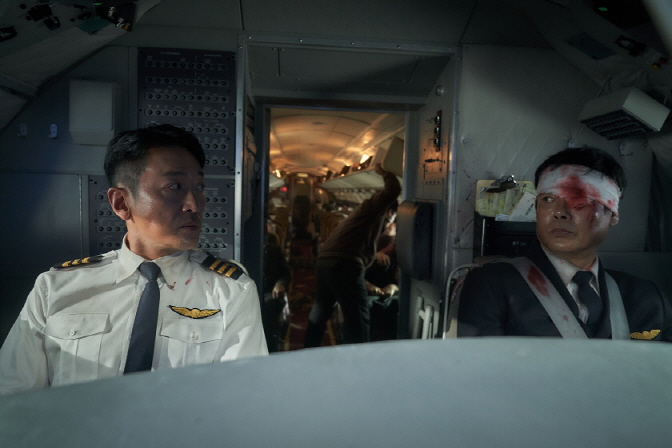
South Korean film “Noryang: Deadly Sea”, the third and (definitely) final film of the trilogy after “The Admiral: Roaring Currents” (2014) and “Hansan: Rising Dragon” (2022), is often relentlessly epic and loud in what it is expected to present on the screen. Again, everything is pretty broad and simple in terms of story and characters, and that made me rather distant to a series of spectacles at times, but I admired how it kept going till the predestined ending without seldom boring me and other audiences around me.

The early part of the film establishes how the Japanese invasions of Korea (1592 ~ 1598) entered its final chapter due to the sudden death of Toyotomi Hideyoshi, the de facto leader of Japan who ordered his army to withdraw from Korea shortly before he died in 1598. As a result, every Japanese troop in Korea embarked on leaving Korean while also getting cornered more and more by the allied forces of Korea and China, who were certainly more determined to end the war as soon as possible.

As getting surrounded by the naval troops of Admiral Yi Soon-sin (Kim Yoon-seok) and his Chinese ally Admiral Chen Lin (Jung Jae-young), General Konishi Yukinaga (Lee Moo-saeng) and other Japanese generals must make a choice between their only two options: total surrender or outright battle. Time is running out for them day by day, and they are reminded again and again that Admiral Yi will not allow them to go away easily at any chance, and General Konishi comes to see that Admiral Yi must be held by any means necessary.

Fortunately for General Konishi, there is someone who can distract Admiral Yi at least for a while, and that is Admiral Shimazu Yoshihiro (Baek Yoon-sik), who is the commander of the Japanese naval force. Although he is not willing to save General Konishi from the ongoing trouble, Admiral Shimazu eventually changes his mind after persuaded by a messenger of General Konishi, and he and his naval troops soon begin to leave for where General Konishi and his troops have been stuck for several months.

Meanwhile, General Yi is clearly aware of what is going to happen sooner or later, but he has several problems on his side to deal with. Besides still being haunted by the tragic death of one of his sons, he has to persuade his Chinese ally to support him to the end of the impending battle to come, but Admiral Chen is not so willing to do that as considering a more convenient solution for him as well as their enemies. In addition, General Yi comes to learn that his king and several other high-ranking officials are already preparing for the aftermath of the war, and it is possible that he may be purged just because of being too famous and popular in the country once the war is officially ended.

Nevertheless, this growing trouble makes General Yi all the more determined to end the war on his own terms. Things will certainly be quite risky for him and his naval troops considering how desperate his enemies are, but he is going to give all the hell to his opponents for invading his country, and, again, he has a smart strategy to corner his enemies in one way or another.

Once everything in the story is set and ready for what would be known as the Battle of Noryang, the movie immediately goes for its full-throttle action mode, and, except during a few brief quieter parts, it goes on and on with lots of actions for more than one and half hours. You may feel numb from time to time, but the movie never get us lost amid numerous crashes and bangs thanks to director Kim Han-min’s competent direction, and Kim, who also directed the previous two films of the trilogy after impressing me and other South Korean audiences a lot with “War of the Arrows” (2011), shows again that he is a good action movie director who knows how to engage and thrill us.

However, just like its two predecessors, the movie sometimes feels rather flat in case of characters. Kim Yoon-seok, whom you may remember for his electrifying performance in “The Chaser” (2008), is as charismatic and forceful as Choi Min-sik in “The Admiral: Roaring Currents” and Park Hae-il in “Hansan: Rising Dragon”, but, again, General Yi remains as a merely commanding and honorable leader without much human complexity. General Yi was certainly an exceptional man in many aspects, and Korea was really lucky to have such a brave and clever man like him, but we never get to know or understand him much here except his sheer will and determination, and that is why the eventual ending, which will incidentally not surprise or shock any average South Korean audience at all, feels perfunctory instead of being really impactful on the emotional level.

Around Kim, several notable cast members of the film dutifully fill the spot as required. While Baek Yoon-sik looks firm and authoritative enough as General Yi’s main opponent, Jung Jae-young, Huh Joon-ho, Kim Seong-gyu, and Lee Moo-saeng are also well-cast in their crucial supporting parts, though I wonder how awkwardly their foreign language dialogues in the film sound to Japanese or Chinese audiences out there.

Overall, “Noryang: Deadly Sea” does not show anything particularly new about what I know about General Yi or the Battle of Noryang, but it mostly works despite its rather overlong running time (155 minutes). If you enjoyed its two predecessors, you will certainly not be disappointed, but I would rather recommend “War of the Arrows” first if you have not seen it yet. Even after more than 10 years have passed since it came out, I still remember that exhilarating action movie, but will I remember “Noryang: Deadly Sea” and its two predecessors for, at least, next several years? We will see.

Posted in Movies | Tagged , , , , , , , | Leave a comment

Strange Way of Life (2023) ☆☆☆(3/4): A little western tale by Pedro Almodóvar

Pedro Almodóvar’s short film “Strange Way of Life”, which is incidentally his second English-language work after his previous short film “The Human Voice” (2020), is a little gay western as colorful and melodramatic as you can expect from its genre and Almodóvar. Although the story and characters are rather thin in my humble opinion, it is clear that Almodóvar has a small and simple fun along with his two leading actors, and that is mostly enough for me at least for now.

The story premise is pretty familiar except that the homoerotic subtext of many western films is fully unclothed here. The two heroes of the film, Jake (Ethan Hawke) and Silva (Pedro Pascal), were actually lovers when they were young and wild many years ago, but things have changed a lot since they came to part their ways not long after those two months of their passionate romance. While both of them do not work as hired guns anymore, Jake is now working as the sheriff of some small desert town, and Silva works as a plain worker of some horse ranch located somewhere far from Jake’s town.

During the opening scene, we see Silva silently arriving at the town while a singer performs a rather melancholic song on the main street, and the mood becomes less moody when he subsequently meets Jake. Despite all those years of separation, both of them still cannot help but feel love and attraction as they talk with each other, though they do not dare to show their hidden feelings in front of others outside. Once they have a dinner together at Jake’s house, the mood between them becomes a bit more relaxed between them, and it does not take much time for them to be driven by that old passion palpitating inside their hearts.

However, there is another reason for why Silva comes to Jake besides his deep desire and affection toward Jake. As shown from an earlier scene between Jake and one of those town people, somebody was killed in the town, and the victim was none other than the wife of Jake’s older brother. Because he promised to his old brother that he would take care of his older brother’s wife after his older brother’s death, Jake is quite determined to find and arrest who was responsible for her death, and the prime suspect turns out to be Silva’s estranged rogue son. Knowing that his son is in a big trouble now, Silva is going to ask Jake to let his son get away from the town, but that makes Jake all the more determined to stick to his code of honor, and the situation consequently becomes much more tense between them than before.

While this is surely an interesting narrative setup which could be expanded into a feature film along with more story and character development, Almodóvar keeps everything in his story simple and succinct. We get a brief flashback scene which shows a bit of Jake and Silva’s past romance, and we observe how both Jake and Silva are still haunted by the old memories their good old romantic time as they go each own way for dealing with their impending issue. Although they are going to clash with each other in one way or another, they still care much about each other, and that is the main reason why the following climax works on the emotional level.

While the overall result is less flamboyant compared to many of his works, the film often shows Almodóvar’s distinctive artistic touches. He occasionally uses bright colors in the production design and costumes of the film, and that surely brings some style and personality to your average dry western atmosphere. In addition, the score by his longtime collaborator Alberto Iglesias, which sometimes evokes the more tender sensibility of Ennio Morricone’s western scores, subtly and constantly underlines the emotional undercurrents below the screen, and it is definitely another highlight to be added to many fruitful collaborations between him and Almodóvar.

Above all, the movie is anchored well by the strong presence of two charismatic actors. Ethan Hawke, who has been one of the most interesting American actors to watch for more than 30 years, effectively embodies his character’s growing emotional conflicts along the story, and his low-key performance is complemented well by the more expressive acting by Pedro Pascal, a wonderful actor who has shown more of his talent during last several years since his crucial supporting part in the fourth season of HBO drama series “Game of Thrones”. Right from their first scene, we can instantly sense a long history between their characters, and Hawke and Pascal never miss a beat as their characters tentatively revolve around each other before eventually arriving at the inevitable point where they have to confront their matters of heart again.

In the end, the movie comes to us as a mild test run on its genre by Almodóvar, who was incidentally offered to direct “Brokeback Mountain” (2005). Considering how unadorned and restrained that classic queer western drama is, he was wise to decide that it was not exactly a right stuff for him, and “Strange Way or Life” may give you a glimpse on how he would have made “Brokeback Mountain”.

On the whole, “Strange Way of Life” is less impressive and interesting compared to “The Human Voice” or Almodóvar’s recent acclaimed works such as “Pain and Glory” (2019) or “Parallel Mothers” (2021), but it is still worthwhile to watch as another distinctive work of his. It is not very good, but it interested and engaged me to some degree at least, so I will not grumble for a while.

Posted in Movies | Tagged , , , | Leave a comment

Chicken Run: Dawn of the Nuggets (2023) ☆☆☆(3/4): The chickens are back…

Netflix animation film “Chicken Run: Dawn of the Nuggets”, which was released a few days ago, is the latest work from Aardman Animations, which has given us a series of charming and entertaining animation films ranging from “Wallace & Gromit: The Curse of the Were-Rabbit” (2005) to “Shaun the Sheep” (2015). Although it sadly does not reach to the level of its predecessor “Chicken Run” (2000), the film still has a fair share of wit and charm for us, and that may be enough for you if you simply want to kill your spare time.

As some of you remember, nearly all of the chicken characters in “Chicken Run” gloriously succeed in escaping together from their evil owner at the end of that film, and the early part of the “Chicken Run: Dawn of the Nuggets” shows how they have freely lived on an isolated island during next several years. For example, Ginger (voiced by Thandiwe Newton) and Rocky (voiced by Zachary Levi) officially become a couple, and they subsequently have a little daughter named Molly (voiced by Bella Ramsey), who soon causes some headache for both Ginger and Rocky as she becomes quite eager to explore the outside world. Ginger naturally tries to hold Molly as much as possible, but, of course, that makes Molly all the more determined about getting out of the island than before.

On one day, Molly happens to learn about some big place which looks like a really special place for chickens, and she certainly becomes curious about this supposedly special place in question. In the end, she manages to sneak out of the island, and Rocky and Molly certainly become quite worried about that. In the end, they and several other chickens form a rescue team, and then they quickly go after Molly despite being well aware of the possible risks in front of them.

Meanwhile, Molly happens to encounter a little young chicken around her age, and these two young chickens soon find themselves taken to that supposedly special place for chickens along with a bunch of other chickens. The place looks pretty nice to them at first, but, not so surprisingly, it turns out that there is a truly diabolical plan behind this place, and Molly and her new friend belatedly come to realize that after noticing something quite odd and strange about those chickens living there.

When Ginger and her fellow chickens later arrive at that place, it does not take much time for them to discern that Molly gets herself into a really big trouble, but their main opponent, who is eventually revealed around the middle of the story, turns out to be pretty nasty and formidable to say the least. Quite determined to settle some old score in the past, this figure in question is already ready to go all the way for the ambitious plan involved with the massive production of, yes, chicken nuggets, and it goes without saying that Molly and many other chickens will be slaughtered sooner or later for that.

As Ginger and her fellow chickens try to save the day for Molly and those unfortunate chickens, the film steadily provides a series of various comic moments to tickle and amuse us. Although these comic moments are relatively less inspired compared to many hilarious highlights of “Chicken Run”, the technical efforts from director Sam Fell and his technical crew members including cinematographer Charles Copping are still commendable at least, and this surely distinguishes the film a bit from many of rather bland Hollywood animation films during several recent years.

In addition, the film is often lightened up by the spirited voice performances from its cast members. Thandiwe Newton, who incidentally substitutes Julia Sawalha in the previous film, and Zachary Levi, who replaces Mel Gibson without much complain from us (We all know the reason, don’t we?), effortlessly click together, and it is a shame that the film does not utilize more of the nice chemistry between their voice performances. In case of several other notable cast members in the film including Bella Ramsey, Imelda Staunton, David Bradley, Jane Horrocks, and Nick Mohammed, it is evident that they have a lot of tun with their colorful supporting characters, and Miranda Richardson shows us again that she has always been so good at playing nasty and vicious villain characters.

Overall, “Chicken Run: Dawn of the Nuggets” is amusing enough to hold my attention at least during its running time, but I must point out that this is a relatively less impressive work from Aardman Animation besides being one or two steps from its excellent predecessor. To be frank with you, the film made me a bit nostalgic whenever Harry Gregson-Williams’s bouncy score quotes the original main theme from “Chicken Run”. While it has been more than 20 years since I watched the Korean dubbing version of “Chicken Run” at a little movie theater, I still remember well how much that lovely animation film, which could have won an Oscar if the Academy Awards had made the category for animation feature films a little earlier, excited and tickled me a lot in one way or another, and I think “Chicken Run: Dawn of the Nuggets” will be probably remembered as a mere minor footnote to its predecessor.

Anyway, considering that 2023 has been a curiously weak year in case of animation films, “Chicken Run: Dawn of the Nuggets” are fairly recommendable for now, but I will not deny that I would rather recommend “Chicken Run” and several other better works from Aarman Animations first. We all know Aardman Animations can do much better than this, and I can only hope that I and other audiences will be more entertained and satisfied in the next time.

Posted in Movies | Tagged , , , , | Leave a comment