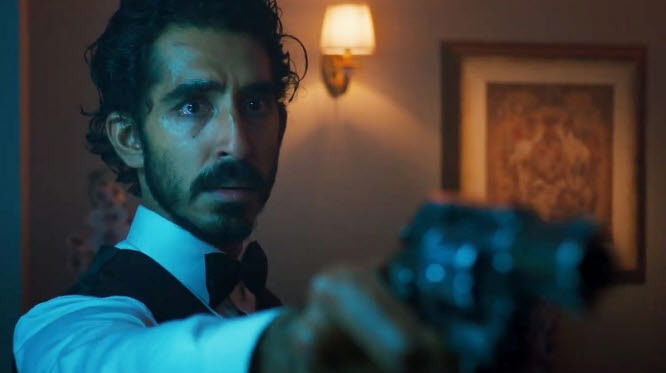
10 movies of 2023 – and more: Introduction

Again, we are approaching to the end of another year. Compared to last year, 2023 has been less burdensome in comparison after the eventual end of the COVID-19 pandemic period, and wearing a mask in public spaces already seems like an old past these days. Although people are less likely to go to movie theaters now mainly thanks to the rise of streaming services, new movies keep coming to theaters coming nonetheless, and we have surely had another fruitful year full of good or excellent films to remember and cherish.

While hurriedly watching a bunch of wonderful films I happened to miss during last year, I also diligently watched numerous interesting films which came out during this year, and I must tell you that they were like priceless healing medicines to me as I coped with small and big problems in my private life. As a matter of fact, it was fairly easy for me to fill out my annual list of this year, and my additional list for new South Korean movies to recommend was actually a more difficult task than expected because there are several good ones which cannot be included in the list despite being fairly good in each own way.

However, that is nothing compared to my little headache from arranging those 10 films at the top of my annual list. To be frank with you, I cannot surely say right now that “The Holdovers” is really better than “Monster” or “Afire” – or that “Killers of the Flower Moon” is a little greater than “Oppenheimer” or “Barbie”. Someday, I may give up this rather inconsequential task, but I will not deny that I had some fun as confirming more on my personal preference on these 10 movies.

Anyway, my annual list, which is more or less than the outcome from reviewing more than 300 films during this year without getting paid at all (I will go to hell for this, you know), does not incidentally include a number of recent acclaimed films such as “American Fiction”, “Fallen Leaves”, “Poor Things”, and “The Zone of Interest” because, well, I and my fellow South Korean audiences will have to wait more at present (“Fallen Leaves” will arrive here in the next week, for example). If these films are really as good as many of critics and audiences have said, I will certainly mention them around the end of the next year.

Posted in Movies | Tagged | Leave a comment

Showing Up (2023) ☆☆☆1/2(3.5/4): The daily life of an artist

From time to time, I drop by a local gallery located not so far from my workplace, and I usually observe those exhibited works with some curiosity and fascination. Many of them look rather simple on the surface, but I often cannot help but wonder how much efforts and skills were actually put into these artworks by their creators, and that thought slowly came to my mind as I was watching Kelly Reichardt’s latest film “Showing Up” yesterday. While simply following the daily life of one artist, the movie gradually lets us pay more attention to the small and big details on how she lives and works day by day, and it will leave some lingering impression on you after it eventually arrives at the end of another phase of her life and career.

At first, the movie establishes how things have been going for its artist heroine. Lizzy (Michelle Williams) is a sculptor who works as an assistant for her mother who is incidentally an administrator at the Oregon College of Art and Craft, and she has been recently preparing for the upcoming exhibition for her latest artworks. Although she is relatively less prominent than her best friend/colleague/landlady Jo (Hong Chau), we come to gather that she has built up a fairly solid career of her own, and she is certainly willing to push herself more for more advancement in her career.

However, she often finds herself distracted by small and big things happening here and there around her. Although her current residence is pretty cozy with her cute cat, she cannot take a hot shower due to some heater problem, so she asks Jo to take care of this annoying problem as her landlady, but, to Lizzy’s frustration, Jo seems more occupied with preparing for her two upcoming exhibitions. As watching how Jo looks like doing much better than her as an artist, Lizzy cannot help but envy that, and this envy of hers only exacerbates her continuing annoyance with that hot water problem.

We also get to know how problematic Lizzy’s family life is at times. While her no-nonsense mother is mostly supportive, she is often unavailable as being busy with her college administration work. While her eccentric father, who is also an artist, always welcomes her at his residence, he allows himself to be exploited by a rather suspicious hippie couple who has willfully stayed in his residence, probably because he is too lonely to live alone by himself. In case of her brother, it is evident right from his first scene that he has been struggling with some serious mental problem, but it looks like no one in his family is paying any attention to his welfare except Lizzy.

And there is a little problem with one particular pigeon which comes into Lizzy’s residence at one night. This pigeon happens to be seriously injured due to Lizzy’s cat, and Lizzy soon finds herself taking care of this unfortunate pigeon for a while even though that is the last thing she wants to do right now. She keeps trying to work on her new artworks as before, but the pigeon turns out to need more care and attention than expected, and this certainly adds more annoyance to her daily life.

We would not be surprised if Lizzy came to a sort of breaking point at any moment, but the screenplay by Reichardt and her co-writer Jon Raymond thankfully does not resort to any shrill melodramatic tactic as its heroine steadily holds herself to her ongoing work. While Reichhardt’s usual cinematographer Christopher Blauvelt patiently observes the heroine’s steady work process, we get to learn more about her mundane but undeniably realistic artistic struggle, and you will see how art often depends a lot on patience and diligence than inspiration. As shown from one accidental moment involved with a kiln, things can go quite wrong despite lots of efforts, and it is a bit amusing to observe how Lizzy later comes to make the best of this unexpected setback of hers.

And the movie intentionally swerves a bit from its main narrative at times for showing a number of artistic work processes happening around Lizzy’s workplace. While observing some of those college students honing their artistic skill in one way or another, we come to sense that Lizzy was probably not so different from them when she was studying at the college in the past, and it goes without saying that they will experience a fair share of anxiety and frustration just like Lizzy once they take the first steps of their careers after the graduation.

The laid-back storytelling of the movie is anchored well by another solid performance from Michelle Williams, who has been one of Reichardt’s frequent collaborators since “Wendy and Lucy” (2008), Although she is much more prominent with no less than five Oscar nominations at present, Williams effortlessly slips into her plain human character nonetheless, and the same thing can be said about several other notable cast members including Hong Chau, John Magaro, Maryann Plunkett, André Benjamin, Amanda Plummer, James Le Gros, and Judd Hirsch, who recently appeared along with Williams in Steven Spielberg’s “The Fabelmans” (2022).

In conclusion, “Showing Up” is another wonderful work from Reichhardt, who has seldom disappointed me since I fortunately encountered “Wendy and Lucy” 15 years ago. I was not very enthusiastic about “Certain Women” (2016) at first, but that movie has grown on me a lot during last several years, and I am actually planning to revisit it sooner or later. In case of “First Cow” (2019), I chose it as the best film of 2020 without any hesitation, and it will probably remain as one of my favorite films of the 2020s. Although “Showing Up” is a relatively lighter stuff compared to these two small but impressive masterworks, it is still worthwhile to watch for many reasons, and it is certainly one of the better films of this year you should check out as soon as possible.

Posted in Movies | Tagged | 1 Comment

A Thousand and One (2023) ☆☆☆1/2(3.5/4): Living on empty with her son

“A Thousand and One” is a small but intimate character drama on one African American woman struggling to give the chance for a better life to a boy raised by her in their slum neighborhood of New York City. This story premise is pretty familiar to the core, the movie distinguishes itself via its considerable realism as well as its strong characterization, and that is more than enough for compensating for its several notable shortcomings including a possibly distracting plot turn during the last act.

The story opens with its heroine being released from the Rikers Island prison in 1994. Although her status as an African American female ex-con is pretty daunting to say the least, Inez de la Paz (Teyana Taylor) is quite determined about not getting sent back to jail again, and the early part of the film shows how she struggles to earn her meager living as a freelance hairdresser on the streets and alleys of the Brooklyn neighborhood.

When she is not working, Inez usually meets and sees a little 6-year-old boy named Terry (Aaron Kingsley Adetola), and we get to know more about the rather strained personal relationship between them. Terry has been under a foster care for a while, and he does not like this at all, but there is nothing Inez can do for him at present because she is understandably not so eligible on the record for raising him.

And then there comes a moment which changes the lives of both Inez and Terry. After he gets injured due to his clumsy attempt to run away from his current foster home, Inez comes to a local hospital where he is being treated for his minor injury, and she becomes quite conflicted as coming to learn that they may not see each other again due to this incident of his. As a woman who knows too well how soul-crushing foster care can be for kids like Terry, she cannot simply turn away from him, and that is how she comes to make a choice which is going to seriously affect both of them. Without telling anyone, she takes Terry away from the hospital, and then they run away together to her old neighborhood in the Harlem area.

This legally serious act of hers is surely reported a lot in media at first, but, as already expected by Inez, there is not much trouble for her and Terry as they fortunately settle down at one apartment building belonging to a generous old African American lady. After all, nobody is particularly interested in finding one missing black kid, and all Inez will have to do is shielding him from the outside world for some time in addition to acquiring some fake documents for his new identity used for his education.

Fortunately for them, things seem to be going fairly all right for Inez and Terry. Once she gets a menial job at a nursing home in the Queens area, Inez can provide a more stable domestic environment for Terry, and she also becomes more serious about her relationship with her ex-boyfriend Lucky (Will Catlett), who has also tried to have a decent ordinary life after being released from the Rikers Island prison. Although he has some reservation about what she did for Terry, Lucky agrees to be a father for Terry in the end, and he also marries Inez not long after that.

While these three main characters continue to live together, the movie vividly captures the following passage of time during next several years. During the middle of the story, which is set in 2001, the movie gradually lets us sense the imminent social change to come into Harlem, and we also observe how things have been rather cold between Inez and Lucky. While they still care about each other, there are some issues to face between them, and Terry, who is now entering adolescence as played by Aven Courtney, is naturally nervous about that at times, though he grows up to become a promising student with lots of potential thanks to his parents.

Because both of them care about Terry’s future, Inez and Lucky try to make Terry do the right thing about his future as Terry often gets conflicted and confused about what to do with his life. While Inez struggles at times in her communication with her son mainly due to that hidden secret between them, Lucky can connect more easily with Terry in comparison, and there is a brief but poignant moment when he tenderly advises his son not to waste his precious opportunity for better education and future.

During the final act, which feels like a variation on Sidney Lumet’s “Running on Empty” (1988) with Josiah Cross playing Terry who is about to become 18 years old at that narrative point, the movie becomes quite melodramatic with what will surely make you reflect more on what was presented during its first act. I am not sure whether that is really necessary considering what has been built up so well during the rest of the film, and the screenplay by director/writer A.V. Rockwell feels rather contrived after a sudden moment of revelation, but Teyana Taylor’s uncompromising performance keeps holding everything in the movie together to the end. Without any excuse or hesitation, Taylor vividly embodies both of her character’s better and worse sides, and Will Catlett and three young performers playing Terry in the film are the effective counterparts for her strong acting.

Overall, “A Thousand and One”, which won the Grand Jury Prize at the Sundance Film Festival early in this year, is realistic and powerful in its intimate character drama. and Rockwell made a commendable feature film debut here after directing a couple of short films (The movie also recently received the Breakthrough Director Award at the Gotham Independent Film Awards, by the way). This is surely one of impressive debut works of this year, and it will be interesting to see whatever may come next from this promising filmmaker to watch.

Posted in Movies | Tagged , , | 1 Comment

The Fabric of the Human Body (2023) ☆☆☆1/2(3.5/4): A visceral presentation of medical cares and treatments on the human body

Documentary film “The Fabric of the Human Body” is simply unforgettable for its utterly vivid and visceral presentation of medical cares and treatments on the human body. You will definitely wince more than once for many graphic moments of flesh and blood on the screen, but you may also come to appreciate more the ever-diligent efforts of millions of people working inside the medical system of your country, and it will certainly make you reflect more on how invaluable medical care and treatment are for all of us at every moment of our life.

The documentary, which was incidentally shot in five different hospitals in Paris, simply consists of a series of various scenes which mostly show how doctors, nurses, and many other different hospital workers doing their respective jobs. Without any background explanation for us, it just throws us into the moments to follow and observe, but these moments are quite absorbing for not only being frequently striking but also showing aching human elements from time to time. In case of one of the earlier scenes, the documentary observes a female nurse talking and working with a colleague of hers, but we come to pay more attention to her even though the camera is watching her from the distance. She merely talks about one difficult case after another at the intensive care unit of her hospital, but we begin to sense more of her exhaustion and frustration as listening to her with more empathy and understanding.

In case of a ward full of aging people struggling with the gradual deterioration of their brain, we see a senile old lady who cannot help but repeat the same words as accompanied by one of the ward nurses. As the camera steadily follows them, her worsening medical condition is more apparent to us, and we are more saddened as observing that she even does not know where she is going now at all while gently led by her nurse along a ward corridor.

We also observe many different kinds of medical procedures, and I have to warn you that the documentary does not pull any punch at all from the beginning. During one particularly memorable scene, we are thrown in the middle of a colonoscopy, and you will surely cringe as every detail of the inner surface of colon is vividly captured by the colonoscopy camera – especially if you have ever experienced a colonoscopy.

We also get a couple of brain surgery scenes, and what you are going to behold is not a pretty sight at all. In one of these two scenes, a doctor is carefully working on the brain of his patient who is incidentally conscious during the surgery, and the mood is rather tense even though the doctor calmly and casually handles the procedure step by step.

If your stomach is already churning, I have to tell you that there will be more graphic stuffs to behold. As a guy who has been quite sensitive about my poor eyesight, I surely squirmed a lot while watching the procedure of a delicate eye surgery, and I certainly hope that I will never need such a surgery like that for the rest of my life. In one particular scene involved with the medical treatment on the urinary organs, its very graphic details may be often discomforting to many of you, and you will probably be more unnerved as a doctor and others around him are having a casual conversation in the middle of this rather grisly medical procedure just like those military doctor characters in Robert Altman’s “MAS*H” (1970).

One of the main highlights in the documentary belongs to an interesting case of spinal cord correction. At first, we see the X-ray photograph clearly showing why the patient needs that surgery, and then the documentary gives us all the bloody details of the following surgery, which surely takes lots of efforts from the doctors and nurses participating in the story. When the surgery is eventually over, we see its fairly satisfying result via another X-ray photograph, and we come to admire more the skills and techniques behind that.

In the meantime, the documentary does not overlook how things can be quite exhausting and frustrating for many hospital workers out there. Often working much more than expected, they sometimes express their growing discontent and frustration with their workplace, and that reminds us of how fragile our medical care system can be. After all, the system is depending a lot on human efforts and skills as it always has throughout the human history, and many of us often overlook that aspect as taking the system and its people for granted. Sure, there will be a day when AI robots and computers can effectively do a lot of hospital works instead, but our medical system still needs a lot of millions of medical workers for now, and we certainly should show more care and appreciation to their daily efforts.

As calmly maintaining its non-judgmental objective attitude, the documentary eventually arrives at the final scene which will linger on your mind as much as many other striking moments in the documentary. We see a bunch of hospital workers having a little night party together, and the mood becomes jovial as they joke a bit about themselves and then dance together to the music played in the background. Rather than showing these people, the camera simply looks over the grotesque murals on the walls, and these murals surely make an interesting contrast to what we have observed throughout the documentary.

“The Fabric of the Human Body”, whose title comes from 16th-century book series “De Humani Corporis Fabrica Libri Septem” written by Andreas Vesalius (1514-1564), is directed by Lucien Castaing-Taylor and Véréna Parave, who also handled the editing and cinematography of their documentary. Just like their previous work “Leviathan” (2012) struck me hard for the uncompromising approach to its main subject, the documentary shook me hard for its unhesitatingly close exploration of medical care and treatment, and I assure you that you will never forget it once it is over. In short, this is one of the best documentaries of this year, and you should check it out as soon as possible even though you must brace for yourself from the very start.

Posted in Movies | Tagged , , , , | 1 Comment

Maestro (2023) ☆☆☆(3/4): More about his wife, actually

Netflix film “Maestro”, which was released in South Korean theaters a few days ago and then will be available on Netflix a few weeks later, is supposed to be about the life and career of Leonard Bernstein, but he is not exactly the emotional center of the film in fact. It is actually more about his wife, and this may disappoint you, but the movie still holds our attention thanks to not only its competent direction but also the fine performances from its two charismatic lead performers.

After the prologue part showing a bit of Bernstein’s later years, the movie goes back to when young Bernstein got a big breakthrough for his burgeoning career in New York City, 1943. When the principal conductor of the New York Philharmonic becomes suddenly ill, Bernstein, played by director/co-producer/co-writer Bradley Cooper, has to replace him at the very last minute, and, despite not being prepared that much from the beginning, he gives a moment to remember for everyone in Carnegie Hall. From that point, he becomes a rising new musician to watch in the town, and that certainly excites him as well as his notable colleagues such as Jerome Robbins (Michael Urie) and Aaron Copland (Brian Klugman).

When he later attends an evening party along with his friends and colleagues, Bernstein comes across a young actress named Felicia Montealegre (Carey Mulligan), and something seems to click between them as they come to spend more time together. She later shows him a little special place where she has often pursued her own artistic dream, and Bernstein certainly understands her hope and ambition as a fellow artist.

Eventually, Felicia becomes Mrs. Bernstein, and then she and Bernstein come to have several kids between them, but then we sense more of the constant tension between them. As already shown to us from the beginning, Bernstein was a closeted bisexual, and Felicia knew and accepted this even before marrying him, but she cannot help but annoyed by the remaining emotional gap between them – especially whenever her husband is driven by his sexual desire. During one evening party held at their apartment in New York City, she happens to spot him getting too close with some lad, but she does not make a fuss about that at all, though she coldly reminds her husband that she is not a fool at all (“Fix your hair. You’re getting sloppy.”).

In the meantime, the movie presents a number of high points in Bernstein’s career, and Cooper and his crew members including cinematographer Matthew Libatique put tremendous efforts on the screen for taking us into those moments of artistic ecstasy. While resembling Bernstein enough on the surface via that visible makeup which happened to generate lots of public controversy a few months ago, Cooper is nearly flawless as ably channeling Bernstein’s artistic spirit and mannerism, and he is particularly superlative during one big concert scene unfolded inside a big cathedral. As Libatique’s camera effortlessly moves around in the space for more verisimilitude and excitement, the music dramatically swells to our delight while Cooper drives himself toward full commitment, and the result is certainly one of the highlights of the film.

However, the screenplay by Cooper and his co-writer Josh Singer curiously distances itself from its hero at times, and this ultimately limits Cooper’s fairly competent acting. We never get to know that much about Bernstein except his numerous artistic achievements and his frequently troubled relationship with Felicia, and the movie does not even go that deep into his romantic relationships with several men in his life. They simply come and then go around Bernstein without much impact or impression, and that is all we can get from the movie.

In contrast, Felicia gradually becomes the quiet but strong emotional center along the story as we observe more of the inner struggles with her inherently flawed relationship with her husband. Carey Mulligan, who may get Oscar-nominated along with Cooper early in the next year, did a splendid job of embodying her character’s dynamic emotional journey along the story, and she is especially wonderful whenever Felicia must hold her feelings and thoughts to herself.

Cooper and Singer’s screenplay also often stumbles in its superficial depiction of a number of supporting characters around Bernstein and Fellicia, and one of the weak points of the film is the glaring under-utilization of its several supporting performers. While Matt Bomer, Micheal Urie, Brian Klugman, and Gideon Glick do not have much to do besides filling their respective spots, Maya Hawke is seriously wasted as one of Bernstein’s’ children, and Sarah Silverman, who plays Bernstein’s acerbic sister, slips into her role more effectively than you may expect.

In conclusion, “Maestro” is one or two steps down from Cooper’s acclaimed directorial debut film “A Star Is Born” (2018), but it is still an admirable piece of work which confirms to us again on his considerable ability as a filmmaker. Just like he previously did with Lady Gaga in “A Star Is Born”, he lets Mulligan shine while dutifully doing his job beside her, and he also demonstrates some technical prowess as filling the screen with enough period mood and details. Although I am still not very enthusiastic about it, the movie is still interesting for several good reasons, so I recommend you to give it a chance at movie theater or your home.

Posted in Movies | Tagged , , , , , , , | 2 Comments

Napoleon (2023) ☆☆(2/4): Napoleon dully in love and war

Ridley Scott’s new film “Napoleon” is surprisingly flat and bland despite its ambitious intentions. While it tries to be an epic historical drama revolving around one of the most prominent figures in the 19th century Europe, the movie curiously lacks narrative focus and momentum even during its obligatory moments of visual spectacles, and we simply go through a series of big happenings in its real-life hero without getting much understanding on what made him tick.

At first, the movie looks promising as throwing us right into a grim period of fear and chaos right after the French Revolution in 1789. As the country is being shaken inside and outside, Napoleon Bonaparte (Joaquin Phoenix), who was just a mere officer from Corsica at that time, sees an opportunity for his big ambition, and then he quickly rises to prominence when he and his soldiers successfully defeat the British Navy in a local port city of France thanks to his clever strategy.

Around that time, Napoleon happens to encounter a widowed woman named Joséphine (Vanessa Kirby). When she later sends one of her kids to Napoleon for a little personal favor, he visits her rather shabby residence for himself, and it does not take much time for them to sense more of the mutual attraction between them. They eventually get married, and things seem to go swell for both of them for a while, but, alas, there come two big problems in their private life. While they keep failing to have any child between them, Joséphine turns out to be not so faithful to her husband, and Napoleon is certainly angry and frustrated about his wife’s infidelity.

Meanwhile, lots of things happen to Napoleon outside. We see him doing some battles in Egypt. We see how there comes more power on his way as he becomes one of the most popular generals in France. We see how he subsequently becomes the Emperor of France, and, yes, we surely get that famous moment when he put the crown on his head for himself without any hesitation.

However, do these and other things in the story actually give any insight on what kind of a man he is? Although Scott and his screenplay writer David Scarpa seem quite willing to present all the human flaws of Napoleon, and the movie becomes a bit amusing whenever it illustrates Napoleon’s pathetic pettiness about his troubled marital relationship with Joséphine, but Scarpa’s screenplay only comes to scratch the surface instead of really delving deep into its hero’s mind or personality. In the end, we only behold how often Napoleon is sour and miserable, and we do not even get to know that much about him as a skillful military leader.

Joaquin Phoenix, who incidentally played a petty Roman emperor when he appeared in Scott’s Oscar-winning film “Gladiator” (2000) more than two decades ago, is also rather disappointing in my humble opinion. While he is surely as intense as required, his acting unfortunately does not convey that much to us as regrettably being stuck in growing monotony, and that may remind you more how he was more compelling in Ari Astor’s flawed but curious horror comedy film “Beau Is Afraid” (2023). Compared to his increasingly unhinged performance in that film, he seems hopelessly straight-jacketed here, and even several supposedly dramatic moments of his in the film feel weirdly lackadaisical as a result.

On the opposite, Vanessa Kirby, who has been more prominent since her Oscar-nominated turn in “Pieces of a Woman” (2020), has a bit more things to do as her character comes to show some will and strength as often clashing with Napoleon, but there is not much heat or chemistry between Kirby and her Phoenix from the beginning. We do not see or feel much of whatever makes their characters attracted to each other to the end, and it is all the more disappointing to see how feebly the movie ends the drama between their characters with an anti-climactic whimper.

In case of a number of battle sequences, the technical efforts of Scott and his crew members including cinematographer Dariuz Wolski do not disappoint us as giving us some big visual moments to remember, but these moments somehow feel cold and distant while only functioning as the mere plot points of the film. As a matter of fact, this took me back to the detached battle sequence of Stanley Kubrick’s “Barry Lyndon” (1975), and I was also reminded that Kubrick once attempted to make a Napoleon film before making “Barry Lyndon” instead. Is it possible that Scott is trying on “Barry Lyndon” or that unrealized project of Kubrick here?

However, I must tell you that Scott already attempted to emulate “Barry Lyndon” many years ago. In his first feature film “The Duelists” (1977), which incidentally shares the same period background with “Napoleon”, he did a much better job of getting us engaged via not only good mood and visual but also solid story and character, and the tedious failure of “Napoleon” actually makes me want to revisit that modest but fascinating period drama film which has been often eclipsed by Scott’s next film “Alien” (1979).

Overall, “Napoleon” is not a total dud at all, but it feels quite tedious from time to time. I heard that Scott is planning to release the 4-hour version later, but I doubt whether the movie will be improved by a longer running time, considering how I got bored and impatient during my viewing. I am certainly glad to see that Scott is still working despite being over 80 at present, but we all know he can do much better than this, and I sincerely hope that he will soon get back in his usual element.

Posted in Movies | Tagged , , , , | 1 Comment

Bottoms (2023) ☆☆☆(3/4): Figthting Girls

Emma Seligman’s second feature film “Bottoms” is decidedly outrageous for laughs, and I enjoyed that. As a high school comedy movie, it is often blatantly artificial in terms of mood and details, but it literally does not pull any punch or kick for its broad but barbed comic situations coupled with some violence, and you will not wince that much even when it gleefully throws extra blood and violence during its climatic parts.

Rachel Sennot, who previously collaborated with Seligman in Seligman’s impressive first film “Shiva Baby” (2020), and Ayo Edebiri, a promising actress who recently received an Emmy nomination for her solid supporting turn in acclaimed TV comedy series “The Bear”, play PJ and Josie, two different lesbian high school girls who have been each other’s best friend. Both of them want to have their first sex before their upcoming graduation, but, alas, neither of them has any luck in attracting any female student in the school, and PJ is particularly frustrated as carrying a torch for a pretty cheerleader girl named Brittany (Kaia Gerber).

Anyway, PJ and Josie later get themselves in a little trouble in another cheerleader girl named Isabel (Havana Rose Liu) and her current boyfriend Jeff (Nicholas Galitzine), who is incidentally one of the more popular football players in their high school. He and several other football players are quite arrogant and confident to say the least, and they always wear their uniform even when they are not training or playing.

For avoiding getting pushed for their trouble, PJ and Josie tell a little lie to the school principal, and that is the beginning of their little fight club for female students. On the surface, they are supposed to teach her fellow female students on how to not only defend themselves but also fight against those dangerous male students from the arch-rival school of theirs, but they do not know anything about that from the beginning, so there comes another little lie from them for making their club members believe that they had a fair share of experience with fighting.

The main reason why Josie and PJ keep going along with their lies is getting more attention from those pretty cheerleaders including Brittany and Isabel. During the first several days of their club, there only come a bunch of girls as unpopular as them, but, what do you know, Brittany and Isabel soon come to show interest in joining the club, and it goes without saying that PJ loves every moment when she happens to have a fight with Brittany on the gym floor, though Brittany still does not have any idea on how PJ comes to yearn more for her.

Meanwhile, PJ and Josie need an adult to support and supervise their little fight club, and that person in question is a teacher nicknamed Mr. G (Marshawn Lynch), who has no idea on what PJ and Josie are doing along with other girls in the club. He simply agrees to be the adult supervisor of the club without much thought, and he also does not show much concern at all even when he comes to the club for his perfunctory supervision. Nevertheless, he gradually becomes a fixture in the club as time goes by, and he has one short but hilarious moment when he joins a support meeting for PJ and Josie and several other club members.

Of course, it does not take much time for the girls to come to have a big conflict with Jeff and other football players in the high school, who do not welcome much the changes brought by PJ and Josie especially after Isabel breaks up with Jeff due to his very inappropriate relationship with a certain adult woman in his neighborhood. In addition, the mood in the school becomes more tense as a big football match with the football team of that arch-rival school is getting closer, and we are not so surprised when it turns out later that there has been a long bad history between these two high school football teams.

The screenplay by Seligman and Sennott cheerfully bounces from one funny moment to another while also showing some affection toward some of its main characters. When Josie subsequently finds herself really falling in love with one of the cheerleader girls, the movie handles their little private moment with enough care and sensitivity, and Josie becomes more conflicted about what she and PJ have been doing. In case of Josie and PJ’s rather flawed relationship with a tomboy girl named Hazel (Ruby Cruz), Josie and PJ come to realize how valuable Hazel’s friendship has been to them, and it is both funny and poignant when these three girls band together along with several other girls for saving the day during the climax sequence of the film.

While Sennott and Edebiri steadily function as the main source of humor and drama, several other cast members of the film have each own moment to shine. While Ruby Cruz, Havana Rose Liu, and Kaia Gerber are well-cast in their respective supporting roles, Nicholas Galitzine and Miles Fowler are effective as the mean boy characters of the story, and Marshawn Lynch, who has been mostly known for his professional athletic career, simply occupies the screen as much as required.

Overall, “Bottoms” confirms to us that Seligman is a talented filmmaker to watch as shown from her previous film. Although it is less sharp and acerbic compared to the hilariously nightmarish black comedy of “Shiva Baby”, the movie has enough funny moments to be savored, so I recommend you to give it a chance someday.

Posted in Movies | Tagged , , , , , , | 1 Comment

20 Days in Mariupol (2023) ☆☆☆1/2(3.5/4): A close look into one Ukrainian city under siege

Ukrainian documentary “20 Days in Mariupol”, which received the Audience Award at the World Cinema Documentary Competition of the Sundance Film Festival early in this year, is a vivid and disturbing presentation of the first 20 days of one Ukrainian city under siege around the beginning of Russian Invasion of Ukraine in last year. As closely observing many palpable moments of fear and desperation, it gives us a very close look into the ongoing war, and, as said at one point early in the documentary, it will be probably remembered more as an important record of one of the darkest historical moments of Ukraine and its people.

Right from the beginning, director/producer Mstylave Chernov, who also shot his documentary with Evgeniy Maloetka, puts us right into the middle of that grim situation surrounding Mariupol in February 2022. As Russia and its despicable dictator begin the invasion into the Eastern part of Ukraine, Mariupol became one of the primary targets to attack, and the city and its citizens soon found themselves nearly isolated from the world outside as the Russian Army surrounded the city step by step.

Nevertheless, Chernov and a number of colleagues of his kept recording and reporting on what was going in Mariupol as the city was thrown into more dread and confusion. While not only electricity but also heat and communication were cut off, the city was frequently attacked by the Russian Air Force, and those disturbing sounds of the approaching front lines became louder day by day while millions of citizens were thrown into more and more danger.

As a consequence, a number of hospitals in the city were quite busy with handling the civilian casualties of the war everyday, and the documentary strikes us hard with a series of devastating moments you will not easily forget. We see those valiant emergency workers and hospital employees diligently working everyday even though their strenuous efforts are often limited by the war as well as the resulting lack of resources such as painkillers. We see many different injured people taken to hospital, some of them sadly could not be saved no matter how much doctors and nurses tried. At one point, one of the doctors cannot help but become quite emotional about the war and those people responsible for it, and that is heartbreaking to watch to say the least.

The documentary wisely limits itself within its relatively small background. As what was shot by Chernov and his colleagues is occasionally shown on the American TV news channels, we get some background information on what was happening during the first several days of the war, and that is more enough for us to sense and understand how is getting for Mariupol and its citizen. As the documentary continues to show more of the close observation of the city and its citizens under attack, we become more immersed into their utterly dreadful circumstance, and we reflect more on how they desperately hoped for the eventual end of the siege on the city.

And the documentary becomes gloomier as showing the growing number of civilian casualties caused by the increasing attacks from the Russian Army. Right after one of the big hospitals in the city was heavily attacked, Chernov and his colleagues immediately went there, and what was captured on their cameras is another devastating moment in the documentary. In case of one certain injured pregnant woman, her condition looked quite serious, so Chernov subsequently tried to track down her, but he only faced another sad consequence of the war.

We also look at several volunteers handling a bunch of dead bodies containing in individual bags, and one of these volunteers is understandably reluctant to express his feelings and thoughts in front of the camera. While looking phlegmatic on the surface, he is barely holding himself after witnessing so much from his grim job, and we come to reflect more on the cruelty of war.

In the meantime, the city became invaded much more by the Russian Army, and that was when Chernov and his colleagues began to consider leaving the city for their safety. As they were about to leave the city, they saw more soldiers around them, and they even found themselves seriously threatened by those Russian snipers and tanks at one point later in the documentary. It was clear to everyone in the city that the end was near, and Chernov and his colleagues eventually left the city along with their video records and their families when they were allowed to evacuate a few days later.

On the whole, “20 Days in Mariupol”, which was recently selected as the Ukrainian submission to Best International Film Oscar, is surely a tough and difficult stuff which will often chill and horrify you for the sheer horror and despair inside it, but it is worthwhile to watch for many powerful moments delivered via its unflinching approach to its main subject. While mostly staying behind the cameras and occasionally providing some musing of his via his calm and restrained narration, Chernov, who deservedly received the Pulitzer Prize for Public Service for his reporting on the siege early in this year, wisely lets the rough but undeniably visceral images of the documentary speak for themselves, and your mind will be haunted by these images more and more after watching it. In short, this is one of the more impressive documentaries of this year, and I think you should check it out as soon as possible.

Posted in Movies | Tagged , , , , | 3 Comments

How to Blow Up a Pipeline (2022) ☆☆☆(3/4): A bunch of radical environmentalists

“How to Blow Up a Pipeline” is as disturbing and alarming as its very title suggests. Here are a group of young radicals willing to go a lot further for their common sociopolitical belief, and the movie is alternatively compelling and unnerving to watch as closely following how they gather and work together for a serious act of property destruction. Regardless of what do you think about that, the movie holds our attention to the end at least thanks to its competent handling of story and character, and the result is often quite thought-provoking to say the least.

After the opening part introducing its several main characters one by one, the movie succinctly conveys to us what they are going to do sooner or later in the middle of some remote area of Texas. They have been planning to detonate a couple of handmade bombs on a massive pipeline belonging to some big oil company, and they all strongly believe that the success of their mission will eventually bring more public awareness of the ongoing environment pollution problems around the world.

Detachedly sticking to its rather non-judgmental attitude to its main characters, the film illustrates the last steps of their disturbing mission bit by bit. They already secured an abandoned spot where they are going to stay for a while making their handmade bombs, and they also acquired a number of various materials necessary for the quick production of their homemade bombs. The mood among them is mostly casual and playful at first, but it becomes more solemn and serious as time goes by, and things get pretty tense later in the story when one of them has to be very, very, very careful about handling the trickiest element in their handmade bomb.

As they proceed despite a few setbacks, the screenplay by director Daniel Goldhaber and his co-writers Ariela Barer and Jordan Sjol, which is inspired by Andreas Malm’s nonfiction book of the same name, doles out a series of flashback scenes showing the different motives behind each of its main characters. Most of them have been quite angry about those oil companies for each own personal reason, and they all think that they really should do something quite drastic for stopping those oil companies in addition to highlighting the environmental problems a lot more than before. Sure, they could simply choose to do more moderate things such as non-violent public demonstrations, but they firmly believe that it is an urgent time in the need of much more radical activities, and they all seem ready for dedicating themselves all the way to their common cause.

Around the time where they are about to execute the very last step of their mission, we naturally feel more unnerved and uncomfortable than before. While they actually try to reduce its possible collectible damage as much as possible, what they are going to do is basically an act of terror, and it will definitely get them incarcerated for many years if they ever get arrested. Although they are supposedly bonded together in their supposedly noble cause, they cannot help but feel thrilled due to that undeniably inherent excitement of violence and destruction, and some of them are not actually as serious as others in comparison.

Nevertheless, the movie continues to keep us on the edge as skillfully building up more tension on the screen. As it mostly sticks to the limited viewpoint of its main characters, we often brace ourselves for whatever may happen next even while usually observing them from the distance. Its main characters are more or less than broad archetypes, but the main cast members including Sasha Lane and Forrest Goodluck are believable in their respective parts, and their convincing performances never let us overlook what is being at stake for their characters minute by minute.

In the end, everything in the story culminates to the moment the main characters have been waiting for, but the movie firmly holds itself in its restrained attitude even at that narrative point. There is some unexpected suspense from a certain hidden fact involved with one of its main characters, but the movie keeps focusing on the drama unfolded among its main characters as before, and the eventual finale is effective on the whole despite a little plot contrivance, while also provoking more thoughts from us in its very last scene.

The movie is the second feature film from Goldhaber, who previously made a feature debut in “Cam” (2018), a little but chilling online horror film set in the world of webcam pornography. Although “How to Blow Up a Pipeline” looks very different from “Cam” in many ways as a more realistic piece of work, both of them show that Goldhaber is a talented filmmaker who knows how to engage us via good mood and storytelling, and it will be interesting to watch what may come next from him after these two interesting genre films.

In conclusion, “How to Blow Up a Pipeline” is often uneasy and uncomfortable to watch at times, but it is worthwhile to watch for its intense storytelling coupled with socially provocative ideas to discuss and talk about, and I admired its commendable technical aspects even while observing it with growing reservation during my viewing. Some of you may be quite bothered at times by its coldly objective attitude to its story materials, but I do not think it actually condones violence and extremism, and I assure you that you will have lots of things to think about after watching this troubling but interesting thriller film.

Posted in Movies | Tagged , , , , | 1 Comment

May December (2023) ☆☆☆1/2(3.5/4): A tricky character study

Todd Haynes’ latest film “May December” is elusive but fascinating in its tricky psychological drama between a famous actress and a notorious woman she is supposed to play. While mostly cold and dispassionate in terms of mood and storytelling, the movie intrigues us as slowly and subtly revealing the dark and disturbing emotional undercurrents under the surface, and it is also sometimes unexpectedly sad and harrowing as we come to sense more of where its little but precious emotional center lies.

The story begins from the viewpoint of Elizabeth Berry (Natalie Portman), a well-known Hollywood actress who has been preparing for a movie based on a certain infamous case which happened 23 years ago in a little neighborhood of Savannah, Georgia. She is going to play a woman who got arrested and then incarcerated for being sexually involved with a 13-year-old Korean American kid in her neighborhood, and she will soon spend some time with this notorious woman in question as a part of her ongoing character study.

The most bizarre and curious things about Gracie Atherton-Yoo (Julianne Moore), who is clearly inspired by Mary Kay Letourneau, are that 1) she has continued to live in her neighborhood since she was released a few years later and 2) she has also been married to that Korean American kid since that. She and Joe (Charles Melton) are now residing together in a big and comfortable house with their several kids, and we later come to learn that they are even on fairly good terms with Gracie’s, uh, ex-family, who also incidentally live in the very same neighborhood.

Anyway, Elizabeth is welcomed by Gracie and Joe when she meets them for the first time at their house, and Gracie and Joe look, well, pretty content with how their life has been going during last several years. As all of their kids, who are all over 17 now, will leave their home sooner or later for leading each own life out there, and this will certainly lead to the next chapter of Joe and Gracie’s married life.

Gradually becoming more fascinated with Gracie, Elizabeth comes to see how casual and unapologetic Gracie is about what happened between her and Joe at that time. It goes without saying that she was guilty of abusing and exploiting young Joe, but Gracie looks like more occupied with her present and future while looking back at her past at all, and we cannot help but discern that there is something rather elusive and unnerving about her supposedly open and cheery appearance on the outside. She seems ready to share anything with Elizabeth on the surface, but it also looks like she is always keeping something to herself, and this surely tantalizes Elizabeth more.

Just for getting to know her character more, Elizabeth later approaches to a number of people associated with Graice in one way or another, and that is where the story becomes more interesting. She meets not only Gracie’s ex-husband but also her lawyer at that time, and both of these two guys certainly have something to tell about Gracie while not having much hard feeling about her now. In case of one of Gracie’s kids from her previous marriage, it is apparent that he is still reeling from his personal pain from the incident even after many years, and we can only imagine how shocking and devastating it was for him at that time.

However, his miserable status may be relatively a little better than whatever Joe has been silently going through for years. Right from his first appearance in the film, we instantly discern an emotionally stunted boy trapped inside his aged body, and then we become more aware of how often he looks more like a kid to be taken care of by Gracie than her spouse. There is something which has been repressed and forgotten behind his mild and passive attitude, and now he is sort of being awakened as his life with Gracie is examined more by Elizabeth.

Without spelling out anything loud, the screenplay by Samy Burch, which was developed from the story by Burch and his co-writer Alex Mechanik, deftly and steadily maintains its subtle storytelling approach, and this is further enhanced by Haynes and his crew members including cinematographer Christopher Blauvelt, who has been mainly known for his frequent collaborations with Kelly Reichardt. At first, everything on the screen feels cozy and buoyant due to the soft and grainy visual quality of Blauvelt’s cinematography, but the mood slowly become tense and sobering with more visual clarity on the screen, and the score by Marcelo Zarvos, which is based on Michel Legrand’s score for Joseph Losey’s “The Go-Between” (1971), often accentuates that throughout the film.

The three main cast members are pitch-perfect in their respective acting. While Natalie Portman is fabulous as her banal character is more driven to make her work more “real”, Julianne Moore, who previously collaborated with Haynes in “Safe” (1995) and “Far from Heaven” (2002), has a nasty fun as her elusive character looks more disturbing to us along the story, and she and Portman are terrific whenever illustrating the subtle tension behind their characters’ increasingly uncomfortable interactions. As another crucial part of the story, Charles Melton, a promising actor who has been mainly known for his supporting role in TV drama series “Riverdale”, does more than holding his own place well between Moore and Portman, and his excellent supporting turn here in this film is surely one of major discoveries of this year.

In conclusion, “May December”, which was released on Netflix in US and Canada a few days ago, handles well its understandable sensational story materials under Haynes’ calm and confident direction, and the result is another highlight in Haynes’ long and illustrious career packed with a number of interesting films such as “I’m Not There” (2007) and “Carol” (2015). Sure, this is not something you can casually watch on Sunday afternoon, but you will not easily forget what is presented so well on the screen by mood, performance, and storytelling, and it is inarguably one of the most fascinating movies of this year.

Posted in Movies | Tagged , | 2 Comments