Concerning My Daughter (2023) ☆☆☆(3/4): Facing her daughter’s girlfriend

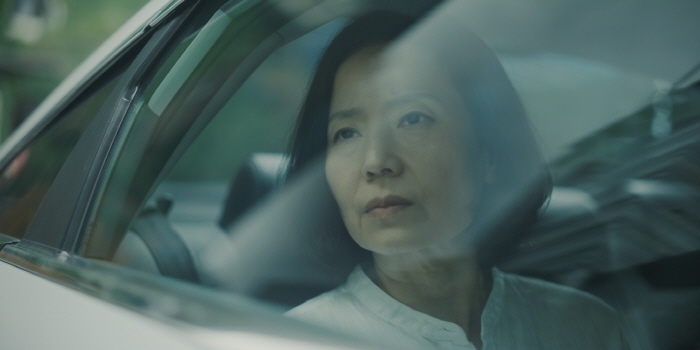
South Korean independent film “Concerning My Daughter” tries two different things together. On one side, it is a typical queer drama about one mother trying to deal with her lesbian daughter who suddenly comes with her lover. On the other side, it is also a harrowing story about aging and death as closely observing the mother’s struggle to do the right thing for a senile old lady under her care. Although these two stories seem to be simply rolling in parallel without much interaction between them, the movie handles both of its two stories with equal care and sensitivity, and it is moving to observe how these two stories eventually converge around the end of the movie.

In the beginning, we see how things have often been difficult for its unnamed heroine, who is simply listed as “Mom” in the end credits. She is a plain ordinary middle-aged widow who has earned her small living via working as one of the caregivers at a local facility for old people, and we see her paying a lot of attention to one particular old lady. While she was once a prominent public figure for founding some well-known charity foundation, this old lady has been going through the later stage of Alzheimer’s disease, and our heroine cares a lot about her mainly because there has not been anyone to visit her except the occasional visits from a few folks from that charity foundation.

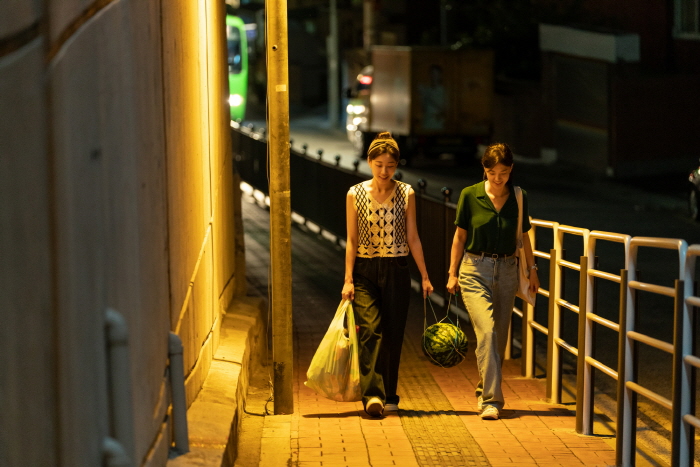
And then there comes an unexpected change into our heroine’s daily life. When her daughter, who has taught at some local college, soon has to leave her current residence due to some financial problem, she suggests to her daughter that she should move back into their family residence where she has lived alone for years since her husband’s death, but she is caught off guard to see that the daughter brings in a young woman who has been her lover for 7 years.

Because she has been well aware of her daughter’s homosexuality, the mother is not shocked or enraged at all, but we soon begin to sense the considerable awkwardness among the three people in the house. Still believing that her daughter’s homosexuality is a temporary thing, the mother prefers to face her daughter’s lover as less as possible, but her daughter’s lover tries her best for being nice and courteous to her lover’s mother, though there is always a cold sense of disapproval whenever the mother comes across her daughter’s lover inside or outside the house.

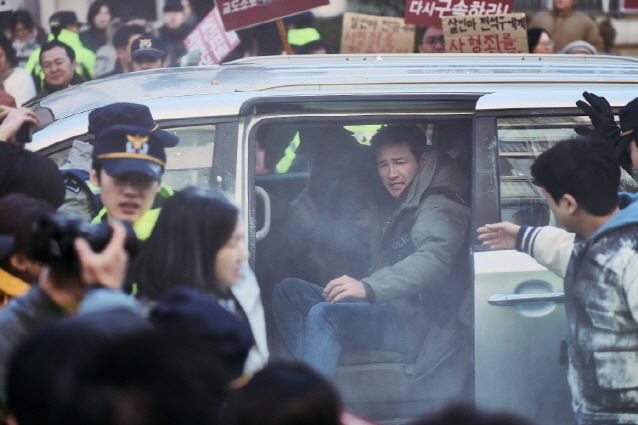
However, as a woman who still cares a lot about her daughter’s welfare, the mother comes to know more about what her daughter and her daughter’s lover have to deal with everyday, and we accordingly get some glimpses on how homophobic the South Korean society can possibly be. When a fellow professor of the daughter was fired by their college just for being a lesbian, the daughter boldly comes forward to protest along with a number of supporters, and the mother happens to witness her daughter’s latest struggle at one point.

However, this does not change much the mother’s prejudice against homosexuality. Having watched how her favorite patient and many other old ladies miserably spend the remaining few days of their lives alone without no one to be around them, the mother has been afraid of her daughter tumbling into such a dire circumstance someday, but she still cannot accept that her daughter’s lover will be the one who may stand by her daughter, even after she comes to have a bit of honest conversation with her daughter’s lover.

Never overlooking the irony of its heroine’s refusal to give her daughter and her daughter’s lover the same compassion and empathy she has given to her favorite patient, the screenplay by director/writer Lee Mi-rang, which is based on the novel of the same name by Kim Hye-jin, patiently builds up the story and characters via a series of small episodic moments, which let us get to know more about the mother and several other main characters around her. In case of our heroine’s favorite patient, she is a rather distant figure due to her worsening medical condition, but we also come to understand more of why our heroine’s tries to do a lot more for this helpless old lady than she is supposed to do as a mere employee, and we naturally come to care more about her following efforts along the story.

Although it feels a bit contrived as heading to the eventual resolution of its narrative, the movie is still carried well by another good performance from Oh Min-ae. While looking much more restrained here compared to her flamboyant turn in “Missing Yoon” (2022), Oh did a good job of presenting her character’s complex human sides, and it is poignant to see how her character is changed a bit around the end of the story while readying to move forward for whatever may come next for her life.

The three other main cast members in the film are effective in their respective parts. While Heo Jin brings a bit of life and personality to her increasingly senile character, Lim Se-mi and Ha Yoon-kyung flawlessly embody the strong romantic relationship between their characters right from their first scene in the movie, and you may come to root for them more as watching they struggle along the story in one way or another.

On the whole, “Concerning My Daughter” is an engaging queer drama film to be appreciated for its strong points, Considering how the South Korean society has been quite callous and ignorant about the civil rights of sexual minority people for many years (My city government actually defunded a local film festival just for trying to screen it in public, for example), it surely deserves some more attention in public, and I hope it can actually give a moment of empathy and understanding to many parents of LGBTQ kids out there.
Posted in Movies | Tagged , , , | Leave a comment

House of the Seasons (2023) ☆☆☆1/2(3.5/4): An ordinary family story

South Korean independent film “House of the Seasons” clicked so well with me right from the beginning, and I was all the more amazed by how it never lost its grip on me after that. At first, it looks like another typical Korean family drama, but then it carefully establishes its main characters with big and small details to be observed during its first act, and I found myself much more engaged than expected during the rest of the movie.

The first act of the film mainly revolves around an ancestral rite of one big family led by an old man named Seung-pil (Woo Sang-jeon) and his wife Mal-nyeo (Son Sook). For many years, they and their family have run a modest but fairly successful tofu factory in a little country town outside Daegu, and the opening scene shows how several family members of theirs including Seung-pil and Mal-nyeo’s daughter-in-law Hye-sook (Cha Mi-kyung) work along with their employees at the factory.

We subsequently see Mal-nyeo and several other female family members preparing the dishes to be presented during the ancestral rite, and this certainly made me a bit nostalgic. Yes, I still remember well how my mother often did the same thing along with her family members including my grandmother, and I also have some regret on not being that helpful to them except setting up tables and wiping out a heap of tableware as clean as possible.

And then we see the arrival of some other family members including Hye-sook’s eldest son Seong-jin (Kang Seung-ho), who has incidentally been struggling in his acting career for a while. Although his grandparents have expected him to join the family business someday just like his parents did around the time of their wedding, Seong-jin still wants to pursue his acting career as much as possible, and that certainly causes some personal friction between him and her mother later, who still often regards him as a little boy who needs to grow up more.

Nevertheless, the mood among the family members feels mostly pleasant as they ready themselves for the ancestral rite. Under Seung-pil’s solemn supervision, everyone in the house gathers to honor and remember Seung-pil’s dead parents who incidentally passed away around the beginning of the Korean War in 1950, but there comes a brief humorous moment among Hye-sook and several other female family members, and the mood gets more lightened up when the family later has a big dinner together.

However, we gradually come to sense old bitter feelings among the family members, especially when Hye-sook’s husband Tae-geun (Oh Man-seok), the eldest son of Seung-pil and Mal-nyeo, becomes quite petty and pathetic as he drinks more or more. He eventually clashes with his father, so the mood naturally becomes quite nervous around everyone, and then Seong-jin tells everyone that he does not want to join the family business at all.

Now this looks like your average dysfunctional family story, but the screenplay by director/writer/co-producer Oh Jung-min, who made a feature film debut here after making several short films, surprises us as regarding its main characters with more insight and empathy along the story. For example, we later get to know a bit about the past of Seung-pil and Tae-guen, who respectively turn out to be the victims of the darkest times of the South Korean history during the 20th century. We also come to see more of how Mal-nyeo has been the one holding the family together, and there is a brief but quietly touching moment between her and her grandson, who still cares about his grandmother despite being much less close to her than before.

After fully establishing its main characters, the movie simply observes what happens among them as time goes by along with seasonal changes, and Oh and his crew members did a splendid job of filling the screen with a calm and reflective mood coupled with some lovely landscape shots. Although the camera usually observes the main characters from the distance, several key scenes of theirs in the film are presented with palpable emotional intensity, and we are often saddened as they become more distant to each other for understandable human reasons despite being quite devastated by their common personal loss in the middle of the story.

Oh also draws the solid ensemble performance from its main cast members, who are all believable in their respective roles in addition to ably conveying to us the old history among their characters. While Kang Seung-ho dutifully occupies the center, the other cast members in the film including Woo Sang-jeon, Cha Mi-kyung, and Oh Man-seok have each own moment to shine one by one along the story, and the special mention must go to Son Sook, who constantly hovers around the story even during her absence.

Overall, “House of the Seasons”, which is incidentally released in South Korea as “Jang-son” on this Wednesday (It means the eldest grandson by the first-born son in Korean, by the way), is a small but sublime family drama to be cherished for many good reasons including its effortlessly engaging mood and narrative, and I particularly appreciate how it subtly pulls out an almost perfect poetic moment around the end of the story. Yes, many things remain unresolved for its main characters, but life will still go on for them anyway, before their respective closing times eventually come, of course.

Posted in Movies | Tagged , | 1 Comment

I, the Executioner (2024) ☆☆1/2(2.5/4): Same as before

South Korean film “I, the Executioner”, which is the sequel to director/co-writer Ryoo Seung-wan’s 2015 film “Veteran” (It is simply released as “Veteran 2” today in South Korean theaters, by the way), attempts to excite and entertain audiences as much as its predecessor did, and it succeeds to some degree even though it was often difficult for me to get engaged in whatever is going on the screen. Like its predecessor, the movie provides a number of competent action scenes, but I still could not care that much about its rather superficial story and characters, and there is also a certain glaring issue which kept distracting me throughout my viewing.

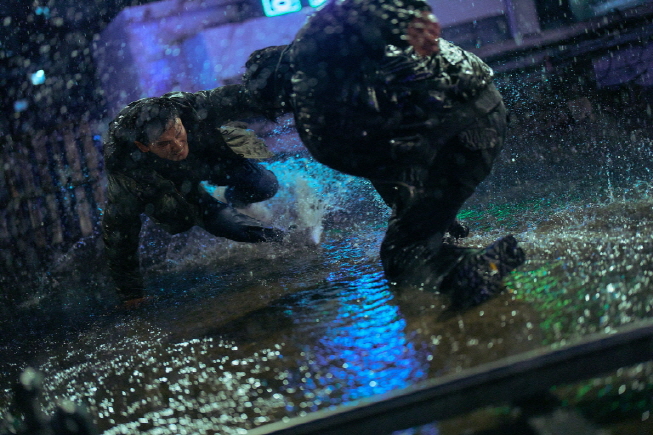
Hwang Jung-min, who previously chewed every moment of his with gusto as the fictional version of an infamous real-life South Korean dictator in “12.12: The Day” (2023), is back as Seo Do-cheol, your average tough cop who will stop at nothing for getting his job done. During the opening sequence, he and his fellow cops deftly raid on an illegal gambling site somewhere in the middle of Seoul, and the movie soon provides its first action scene as Do-cheol and several other cops corner and then clash with their main target.

Anyway, Do-cheol and his colleagues’ next case turns out to be much trickier than that simple criminal case. A certain prominent professor was killed, and, what do you know, this murder is revealed to be the latest one committed by a mysterious vigilante figure who has already done several other killings in the name of justice. All of the victims targeted by this vigilante figure were criminals who managed to get unpunished or less punished than they actually deserved, and these acts of killing have already drawn lot of attention in public thanks to one trashy online news channel which gladly reports on these killings for more viewership.

When this vigilante figure subsequently targets one particular criminal who is going to be released, Do-cheol is assigned to protecting that criminal in question, and he is naturally not so pleased about that. Nevertheless, he tries to do his job anyway regardless of his personal feelings on the situation, and he is also helped a bit by a young cop named Sun-woo (Jung Hae-in), who shows his considerable grit and toughness when Do-cheol and his colleagues struggle to protect that criminal from an angry mob.

As Do-cheol and other cop characters try to capture their very wily and dangerous opponent, the movie accordingly provides several good action sequences including the one busily unfolded around the Namsan Tower. Again, Ryoo demonstrates here that he is a skillful filmmaker in case of physical action, and Hwang and several other cast members really look like throwing themselves into actions, though I am sure that lots of stunt performers were hired for the movie.

However, the movie still failed to engage me in terms of story and characters. Although Hwang is a good actor, his character is not particularly interesting enough to hold my attention, and he only comes to show more of his usual mannerism without bringing more life and personality to his character. In case of several other cop characters in the story, they are merely broad characters just like Do-choel, and Jung Hae-in, Oh Dae-hwan, Jang Yoon-ju, and Kim Shi-hoo are simply required to fill their respective spots around Hwang.

I also do not like a subplot involved with his wife and their adolescent son, which is perfunctory at best and contrived at worst in my humble opinion. How it is later connected with the main plot is pretty predictable to say the least, and Jin Kyung is under-utilized again as Do-cheol’s ever-suffering wife, who is incidentally one of a very few substantial female characters in the story besides Kim’s female cop character.

In addition, the movie could be more interesting if it were willing to delve more into the moral and ethical issues associated with the vigilante figure in the story, but it eventually resorts to a simple cat-and-mouse game between Do-cheol and his opponent, and that is not even compelling at all. To be frank with you, you will easily guess the identity of the vigilante figure before the first half of the movie is over, because it will show and tell a bit too much from the beginning.

And there is a serious matter involved with one of the main cast members. I guess Ryoo wanted to use Oh Dal-soo simply as one of the returning cast members, but I and many other local audiences still remember that Oh was accused of sexual violence not long after the #MeToo movement was started in South Korea. After being “silent” during next few years, Oh recently began to appear here and there, and “I, the Executioner” is certainly another major stepping-stone in his “comeback”. Considering that one of the vigilante figure’s targets in the story happens to be involved with a #MeToo scandal, I cannot help but notice the hypocritical aspect of the movie and the people behind it, and this negative impression of mine on the film is further exacerbated by Oh’s substantial appearance in the film.

In conclusion, “I, the Executioner” does not surpass its predecessor much for having same weak and strong points, but it will probably satisfy you enough if you like “Veteran” more than I did. Because it is released here right before the Chinese Thanksgiving holiday week, it will probably earn enough money to guarantee the next sequel, but, folks, I have already lost more interest after watching how it just tries to sell same old stuffs.

Posted in Movies | Tagged , , , , , , | Leave a comment

Didi (2024) ☆☆☆(3/4): His suburban summer in 2008

“Didi” is a coming-of-age tale which feels both specific and universal. While its adolescent hero and his family background are quite specific, but his emotional struggles with not only his family but also himself are universal to say the least, and the movie closely observes him and several other figures around him with a lot of care and empathy.

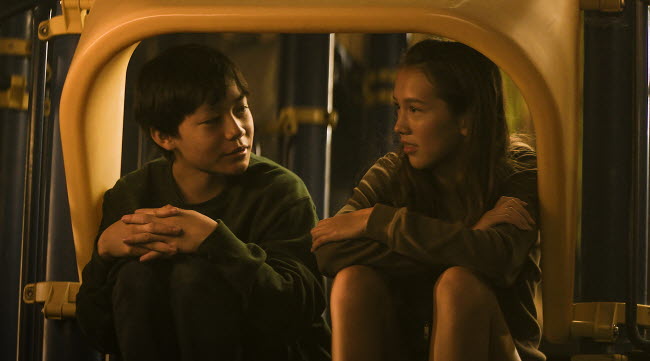
The titular character of the film is Chris Wang (Izaac Wang), a 13-year-old Taiwanese American boy who is often called “Didi” in his family (It means “younger brother” in Chinese, by the way). His father has been absent for years due to his job in Taiwan, but he has earned enough at least for his wife Chungsing (Joan Chen) to live in a nice Californian suburban neighborhood along with their two kids and his aging mother, and Chungsing is naturally the one who has to take care of all those domestic things for her two kids and mother-in-law.

The story is incidentally set during the summer of 2008, and we see how Chris and his older sister Vivian (Shirley Chen) frequently clash with each other in their house. Although she is soon going to leave the house for her college education, Chris often irritates his older sister, and Vivian does not tolerate her willful younger brother at all. No matter how much Chungsing tries, Chris and Vivian still do not get along with each other well, and that certainly frustrates their mother as well as their grandmother, who often criticizes her daughter-in-law everyday.

Like many other kids around his age, Chris usually go outside for more fun and freedom to have before his upcoming middle school graduation, and we see him hanging around with his several neighborhood friends. At one point, they are invited to a pool party held at the house belonging to one of their schoolmates, and that is how he comes to befriend a pretty girl. They come to interact more with each other via Facebook, and some of you may be amused by some little period details, which will definitely remind you of how much digital technology has been advanced during last 16 years.

In the end, Chris comes to have a sort of date with her during one evening, He tries to make himself look cool as much as possible, but it eventually turns out that she is actually more matured and experienced than him, and that leads to a rather amusing moment when he becomes quite nervous and embarrassed due to a little active action of hers.

He also gets more interested in making video clips after encountering a trio of older boys who happen to need someone to shoot their skateboarding. Although he does not know that much about how to handle a video camera, Chris attempts to teach himself bit by bit, and it looks like he seems to make some progress as shooting his new friends in one way or another.

Meanwhile, there comes more conflict between Chris and his mother, who turns out to have a fair share of discontent and disappointment behind her usually calm façade. As her kids have grown up nearly enough, Chungsing tries to go for her old artistic passion, but her efforts are not recognized much by others including Chris, who simply regards her latest painting without much care.

Although this expectedly leads to a big melodramatic moment later in the story, the screenplay by Sean Wang, who was Oscar-nominated for his deeply personal short film “Nǎi Nai & Wài Pó” (2023) before making a feature film debut here, sticks to its somberly observant attitude as showing more compassion and understanding to Chris and several other characters. While Chris is sometimes quite annoying as your average rebellious teenager, we can sense his confusion and frustration nonetheless, and we also come to care about his family members, who gradually come to as understandable human characters with each own issue to deal with.

Under Wang’s competent direction, the main cast members are solid in their respective parts. Although his character is more or less than a plain ground for more colorful characters in the story, young performer Izaac Wang diligently carries the film with his earnest performance, and Shirley Chen has a surprisingly heartfelt moment when Vivian shows some real care to her older brother in one particular scene. While Chang Li Hua is also solid as Chris and Vivian’s grandmother, Joan Chen, a Chinese American actress who has steadily worked for more than 35 years since her breakout performance in Bernardo Bertolucci’s Oscar-winning film “The Last Emperor” (1987), gives one of the best performances in her long acting career, and she is particularly excellent when her character comes to show more of her feelings and thoughts to Chris around the end of the story.

Overall “Didi”, which won not only the Audience Award but also the Special Jury Award for its ensemble cast when it was premiered at the Sundance Film Festival early in this year, is a small but likable film which distinguishes itself enough in terms of story and characters. Although I think it could be improvised a bit more (A subplot involved with Chris’ several friends feels rather underdeveloped, for example), the movie is still fairly engaging on the whole, and Wang surely makes a good start for whatever may come from him next in the future. In short, this is another interesting debut feature film of this year, and I think you should give it a chance someday.

Posted in Movies | Tagged , , | 1 Comment

We Grown Now (2023) ☆☆☆(3/4): Their childhood in Cabrini-Green, 1992

“We Grown Now” is a little but intimate coming-of-age drama about growing up in the Cabrini-Green neighborhood of Chicago in 1992. Mostly sticking to the viewpoint of two young African American boys living there during that time, the movie often glimpses on the grim reality of their small world, but it also shows some warmth and sensitivity via not only their friendship but also their parents who really care about them.

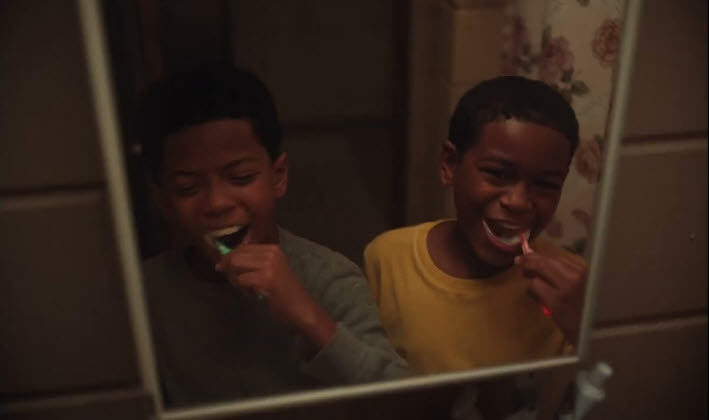
At the beginning, we are introduced to the two young heroes of the movie: Malik (Blake Cameron James) and Eric (Gian Knight Ramirez). Their respective families have been close neighbors for years as living together in one of the apartment buildings in Cabrini-Green, and the opening scene shows them having another usual fun with several other kids at a nearby playground.

As they go through their daily life, we get to know a bit about their respective families. While Malik has been raised along with his younger sister by their single mother Dolores (Jurnee Smollett) and their grandmother Anita (S. Epatha Merkerson), Eric has lived with his older sister under the care of his single father Jason (Lil Rel Howery), and the movie sometimes observes how much their parents struggle to make ends meet for themselves and their respective families day by day.

To Malik and Eric, it seems nothing will possibly separate them as they cheerfully spend time together in one way or another, but then, of course, they are reminded of how dangerous their neighborhood can be. Not long after the tragic death of a young kid around their age, the police and the authorities put more restriction on their neighborhood in the name of law and order, and Dolores as well as Jason become more concerned about their kids’ safety and welfare, even though there is really nothing they can do about protecting their kids from the harsh reality of the outside world.

However, Malik and Eric remain rather innocent about what is happening around them. At one point, they decide to go outside their elementary school just because they are just bored, and we accordingly get a lovely scene where they go to the downtown area of Chicago for visiting the Art Institute of Chicago, where they cannot help but marveled by lots of impressive artworks. As looking at several paintings involved with American slavery and racism, Malik is reminded of those old personal stories told by his grandmother, and this stimulates his young receptive mind more to our little fascination.

Of course, Dolores is not so pleased about what her son did with his best friend, and neither is Jason, who scolds his son as punishing him a bit. While she understands well how close her son has been to his best friend, Dolores does not want her son to hang around with Eric more, and that naturally causes some conflict between them, though she is still nice to Eric because, after all, he is not a bad kid at all.

Meanwhile, there later comes the unexpected opportunity for a better job to Dolores, and she naturally becomes quite conflicted. Mainly because she has spent her whole life in the middle of Chicago, moving to somewhere outside the city for that job in question seems impossible to her at first, but she comes to consider this possibly good option more as her neighborhood becomes a more hostile place than before.

This situation eventually leads to the conflict between Malik and Eric later in the story, but director/writer Minhal Baig, who previously made a feature film debut with “I Night” (2016), maintains the calm and sensitive mood of the film as before. While the overall mood is sometimes interrupted by the harsh reality surrounding its main characters, the movie also provides a number of gentle personal moments tinged with poetic qualities reminiscent of the works of Terrence Malick, and Baig and her cinematographer Pat Scola did a terrific job of filling the screen with enough period atmosphere and details to be appreciated.

As the movie gradually immerse us into its vivid mood and background, we come to understand and care about its two young heroes, and young performers Blake Cameron James and Gian Knight Ramirez are believable in their unadorned natural performance. Ably conveying to us their characters’ close friendship, they never hit any false note during several key scenes between them in the film, and the bond between their characters is palpable even when their characters come to conflict a lot with each other later in the story.

In case of a few notable adult performers around James and Ramirez, they fill their respective spots well without overshadowing James and Ramirez at all. While Jurnee Smollett, who also participated in the production of the film as an executive producer, and S. Epatha Merkerson have each own moment to shine, Lil Rel Howery, who will be always remembered for his scene-stealing supporting turn in Jordan Peele’s Oscar-winning film “Get Out” (2017), feels rather under-utilized in comparison, but it is nice to see more of the serious side of his considerable acting talent at least.

In conclusion, “We Grown Now”, which won the Changemaker Award when it was shown at the Toronto International Film Festival in last year, is a solid piece of work to be admired for its mood, storytelling, and performance. Yes, Cabrini-Green will always be associated with Bernard Rose’s horror film “Candyman” (1992) in my mind, but “We Grown Now” showed me a bit gentler presentation of this notorious neighborhood, and I surely appreciate that.

Posted in Movies | Tagged , , | Leave a comment

My First Film (2024) ☆☆☆1/2(3.5/4): Memories of her abandoned first film

As watching Zia Anger’s fascinating feature film “My First Film”, I frequently wondered how much it actually reflects Anger’s life and career in real life. Yes, she did make her little first feature film “Always All Way, Anne Marie” between 2010 and 2012. Yes, she got really frustrated a lot as this micro-budget feature film of hers got rejected by one film festival after another. Yes, it was really “abandoned” as shown from her filmography on Internet Movie Database (IMDB) at present. Yes, she subsequently made a “live-interactive film” based on her experiences associated with “Always All Way, Anne Marie”, and that was the starting point where “My First Film” was developed by her and her co-writer Billy Feldman during the COVID-19 pandemic period.

Now your head may get a bit dizzy, but “My First Film” can still amuse and touch you a lot with its casual but ultimately poignant mix of fact and fiction. Mainly revolving around her fictional counterpart’s many struggles to make the first feature film, the movie provides a series of vivid and intimate moments to observe and admire, and you also appreciate how it humorously and thoughtfully juxtaposes filmmaking with female issues.

When Vita (Odessa Young) embarks on making her first feature film which is quite personal to herself in many aspects, she is quite hopeful and confident as fully supported by the small cast and crew members of hers, most of whom were incidentally her close friends. Although their production budget is pretty small to say the least, her crew members are all willing to take a big forward leap along with her, and we soon see them shooting their first scene together outside.

As Vita looks back on their following progress several years later, we come to gather what Vita’s first feature film, which is also “Always All Way, Anna Marie”, is about. It is inspired a bit by her rather complex childhood years, when she was raised by her two lesbian mothers who lived along with several others including her biological father in their little commune. Both Vita’s mothers and father gladly helped her when she tried to make one of her short films some time ago, and they seemed to have a really fun time together, but the result somehow failed to draw the attention of the folks at MUBI when she submitted it to them later (Ironically, “My First Film” is released on MUBI).

Once they shot their first scene, Vita and her colleagues become a bit more confident, but, not so surprisingly, things soon do not go that well for them. While they frequently have one trouble after another in shooting several other key scenes in the film, Vita sometimes feels like being at a loss about what and how her movie is about. Her colleagues try to help her as much as possible, but then they also get quite frustrated just like her, and you may be amused a bit when she frankly admits to us that she does not remember all of their names well (One of them is just called “Sound Guy”, by the way).

And there is also a little personal trouble involved with Vita’s boyfriend, who lets down her in more than one way. At one point, he interrupts her filmmaking process just because of his different opinion on a certain scene to be shot as soon as possible, and Vita has no choice but to have a brief private conversation with him later. It soon turns out that she is pregnant, and she already decides on having an abortion sooner or later, regardless of whether her boyfriend will accept that or not.

Nevertheless, Vita does not feel totally helpless as keeping going on along with her colleagues, and her lead actress Dina (Devon Ross) eventually comes to function as her enabler who really believes in Vita’s film. As shown from several amusing moments including the one where she has to be almost naked and covered with cheap fake blood, Dina, who also turns out to be quite knowledgeable about film history as shown from one brief scene, is ready for whatever is requested by her director, and we are not so surprised when they come to feel some attraction between them later in the story.

In the meantime, Vita’s filmmaking process is struck by an unexpected serious accident, and she is certainly devastated, but she continues to make her film as incorporating more personal elements into it. We are subsequently introduced her aging father, and their filmmaking scenes are as touching as those intimate father and daughter moments in Kirsten Johnson’s Netflix documentary film “Dick Johnson Is Dead” (2020).

It goes without saying that the ending of Vita’s filmmaking adventure is already determined from the beginning, but Anger develops something very sublime and uplifting from this predestined ending. I will not go into details here for your surprise, but you will be moved more by how powerfully the movie works as a female coming-of-age story of Vita’s life as well as her filmmaking career, and you may come to hope for better things to come into her (and Anger’s) life and career.

On the whole, “My First Film” is a little but precious gem which deserves more attention in my trivial opinion, and it will resonate more with you if you have ever had any experience with micro-budget filmmaking like a few acquaintances of mine. As a matter of fact, I would like to introduce the film to them as soon as possible, and I would love to hear their individual opinions.

Posted in Movies | Tagged , , | 1 Comment

Rebel Ridge (2024) ☆☆☆1/2(3.5/4): A guy rides into a town…

Netflix film “Rebel Ridge”, which was released on last Friday, is a rare thriller film which actually captivated me from the beginning to the end. While it seems a rather typical genre piece at first, the movie slowly but masterfully builds up tension and interest along the narrative while showing more style and personality to be cherished, and I admire it more now as reflecting more on how patient and dexterous it is in the handling of mood, story, and character.

The movie does not waste time at all in its economic setup stage. When we are introduced to an African American guy named Terry Richmond (Aaron Pierre), he is riding a bike to a small rural town in Alabama where his cousin is being held by the local police for a little legal trouble. For getting his cousin released and then buying a boat for their little business, Richmond prepared a considerable amount of cash, but, alas, he happens to be stopped by two local police officers when he is about to enter the town, just because, well, he looks like an easy target for them.

Anyway, Richmond is willing to cooperate with these two police officers without causing any trouble as he must come to the courthouse in the town and then pay the bail for his cousin within a few hours. However, once they find the cash belonging to him, the police officers willfully confiscate it before eventually releasing him, and, to his exasperation, he soon comes to learn that he is already quite disadvantaged in one way or another. A young sympathetic woman who works as a courthouse clerk war tells him that what those police officers did to him is actually not against the law at all, and it seems there is really nothing he can do about this utterly unjust incident.

However, it soon turns out that Richmond is not someone who will not easily step back at all. First, he embarks on finding reasonable alternatives, and that is how he comes to face the sheriff of the town, who turns out to be quite corrupted as expected but may be able to reason with him to some degree. Meanwhile, he also seeks a bit more help from that courthouse clerk, who comes to find something fishy about the local legal system as trying to help him more. 

Now I should be more careful about describing the film. No, there is not any big twist to come along the story, but it is really absorbing to watch how the screenplay by director/writer/editor Jeremy Saulnier skillfully dials the level of tension up and down along the story, which often evokes the qualities of western films here and there throughout the film. Because his main opponent is fairly reasonable on the whole, Richmond is willing to step back a bit for his dear cousin, but a number of unexpected things occur along the story, and this only come to escalate the tension between Richmond and his main opponent, who will surely clash with each other more and more till the inevitable finale. 

It is not much of a spoiler to tell you that Richmond is actually a man with a particular set of skills like John Rambo of “First Blood” (1982) or the titular character of John Wick movies, but the movie does not hurry itself at all when he finally shows his opponents that they should not have messed with him from the beginning. There is an amusing moment where his opponents belatedly come to learn more about his background, and the movie also has a little wry fun with several certain acronyms uttered by him.

As Richmond becomes more determined to take care of the trouble for himself, the movie accordingly provides a number of quiet but suspenseful scenes to be appreciated for how Saulnier and his crew members including cinematographer David Gallego execute them with considerable efficiency. While Gellego’s cinematography fills the typical Southern background with subtle tension, Saulnier’s editing is taut and succinct without drawing too much attention, and he also did a commendable job in case of a few vehicle action sequences in the film, all of which are dramatically impactful in one way or another without being excessive at all.

Most of all, the movie is firmly anchored by the strong performance from Aaron Pierre, a promising actor who drew our attention for the first time via his memorable supporting turn in Barry Jenkins’ Amazon Prime miniseries “The Underground Railroad” and was also terrific in Canadian film “Brother” (2022). Although he was a last-minute replacement after John Boyega suddenly left in the middle of the production due to some allegedly personal issues, Pierre did a flawless job of embodying his character’s quiet will and determination, and he is also convincing in several physical action scenes in the film where he has to throw himself into some demanding physical stunts.          

Around Pierre, Saulnier assembles several good performers who effortlessly fill their respective spots as required. While Don Johnson has a lot of naughty fun with his arrogant villain character, AnnaSophia Robb, David Denman, Emory Cohen, and Steve Zissis, and Zsané Jhé are also well-cast in their supporting parts, and James Cromwell is dependable as usual during a brief but crucial scene of his later in the film.

In conclusion, “Rebel Ridge” is one of the more impressive movies from Netflix during this year, and it is certainly another impressive work from Saulnier, who previously impressed me a lot with his second feature film “Blue Ruin” (2013). Although he seemed to go down a bit in his previous Netflix film “Hold the Dark” (2018), Saulnier is back in element here in this movie, and I sincerely hope that he will keep impressing me and other audiences more like this.

Posted in Movies | Tagged , | 1 Comment

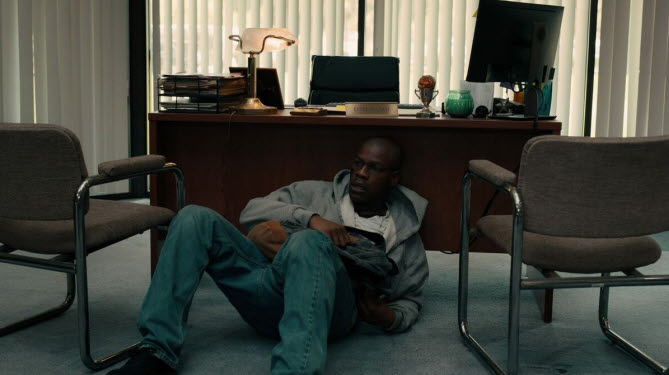
Breaking (2022) ☆☆☆(3/4): A desperate man driven to the breaking point

“Breaking” is a small but tense drama about one desperate man who resorts to a drastic measure as driven to the breaking point. Inspired by a tragic real-life incident which did happen in Marietta, Atlanta in 2017, the movie patiently builds up the story and characters with increasing suspense and despair, and we come to care more even while the eventual outcome becomes more apparent to us minute by minute. 

The early point of the film succinctly establishes how things have been very despairing for an ex-marine named Brian Brown-Easley (John Boyega). Shortly after divorcing his ex-wife, Brown-Easley has tried to support himself as well as his dear little daughter who is currently under his ex-wife’s care, but, unfortunately, he has been on the verge of becoming homeless at any point, and he cannot even receive the disability check from the Department of Veterans Affairs due to some absurd bureaucratic reason. 

Becoming more despaired and frustrated than ever, Brown-Easley eventually gets quite determined to take care of his situation by any means necessary. On one day, he goes inside a local bank, and then he writes to one of the bank clerks that he has a bomb ready to be detonated at any point. While shocked a lot by this sudden emergency, the clerk and her supervisor tactfully handle the circumstance. Once they quietly get the others in the bank leave as soon as possible, they are held by Brown-Easley as his hostages, and then they try to reason with him as much as possible.

However, while he simply wants to receive a rather modest amount of money from the Department of Veterans Affairs, Brown-Easley also tries to draw more attention from the public. While the police have already come along with a bunch of local TV reporters outside the bank building, he wants to get his desperate story known more to many people out there, and he seems quite ready for the worst situation.    

Around that narrative point, the screenplay by director Abi Damaris Corbin and his co-writer Kwame Kwei-Armah, which is based on the 2018 Task & Purpose article “They Didn’t Have to Kill Him” by Aaron Gell, also focuses on what is going on outside the bank building. As Brown-Easley demands, a negotiator comes, but there are also a bunch of snipers ready to pull the trigger at any chance, and the negotiator does not approve of that much, though he knows well how dangerous Brown-Easley can be as a man cornered more and more with a very few options remaining to him.

What follows next is how the negotiator carefully tries to deescalate the tension between his police team and Brown-Easley. As being also an ex-marine, he can easily talk with Brown-Easley within the first few minutes, but he is also reminded that how volatile Brown-Easley can be due to his occasional temper problem, which is probably associated with the post-traumatic stress disorder from his military tour in Iraq. As the circumstance becomes more desperate for him, he cannot help but lose his temper, and that certainly scares his two unfortunate hostages, who come to sympathize a bit with him as getting to know him more but are still trying to find any possible way out for them.

The movie loses some of its narrative momentum as occasionally interrupted by several flashback scenes. While one scene later in the film tells us how Brown-Easley was not allowed to receive the disability check, it does not delve more into how its hero is driven toward such an extreme action, and then it becomes a bit too mellow after the story reaches to its inevitable conclusion. 

Nevertheless, the movie keeps holding our attention mainly thanks to the intense lead performance by John Boyega, who has shown more of his considerable talent since his electrifying breakthrough turn in “Attack the Block” (2011). Deftly conveying to us his increasingly unstable character’s tragic implosion along the story, Boyega is captivating at every minute of his in the film, and we come to have more understanding and empathy on his character’s accumulating desperation and frustration.

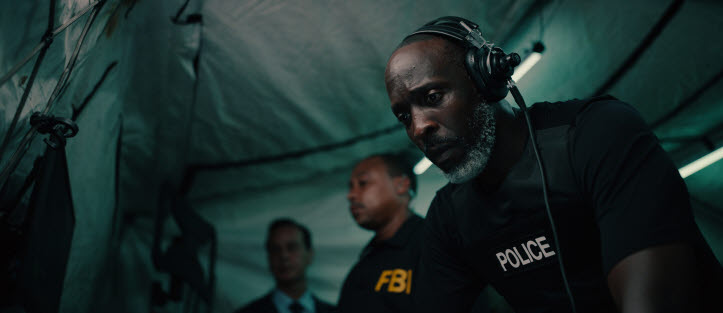
Around Boyega, a numbe of main cast members of the film hold each own place while coming to us believable human characters. Selena Leyva, who was one of the main characters in Netflix TV series “Orange Is the New Black”, and Nicole Beharie, who was previously memorable in “Miss Juneteenth” (2020), have a few moments to shine as their characters nervously try to deal with their dangerous circumstance in one way or other, and Connie Britton is also fine as a local TV news producer who happens to interact with Brown-Easley on the phone for a while. As the no-nonsense negotiator in the story, Michael K. Williams, who sadly passed away not long before the movie came out in 2022, reminds us again that he was one of the most dependable character actors in our time, and his calm presence complements well Boyega’s acting during their several key scenes in the movie.   

On the whole, “Breaking” may feel rather plain compared to many other similar films such as “Dog Day Afternoon” (1975), but it is fairly tense and engaging due to its good direction and several solid performances to watch. I wonder whether it could be tauter and more economic, but the result is recommendable enough at least, so I will not grumble for now.

Posted in Movies | Tagged , , , , | Leave a comment

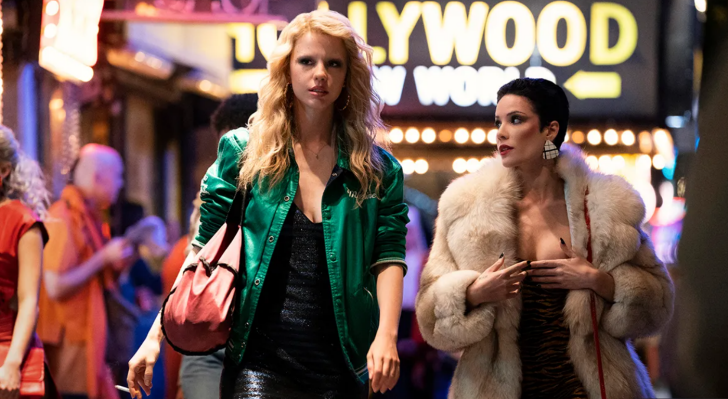
MaXXXine (2024) ☆☆1/2(2.5/4): Maxine goes to Hollywood…

Ti West’s latest film “MaXXXine”, the third installment of West’s X film series after “X” (2022) and “Pearl” (2022), is willing to go further from what was modestly but impressively achieved in its two predecessors. It surely has a lot of ambition from the very beginning, but, alas, the movie often fails to surprise me despite having some naughty (and bloody) fun, and the result only ends up being another typical horror film about the dark side of Hollywood.

The story is mainly set in Hollywood in 1985. After surviving what happened to her in “X” several years ago, Maxine Minx (Mia Goth) moved to Hollywood and then became a fairly successful porn movie star, but that is not enough for this ambitious girl at all. As a matter of fact, she wants to be a legitimate Hollywood movie star someday, and the opening scene shows her having an audition for getting the lead role of the upcoming sequel of a certain successful horror flick. While never hiding her porn movie career at all, she shows some confidence and talent during the audition, and she eventually succeeds in impressing the director, who decides to take a chance with Maxine despite some reservation.

When she hears that news from her seedy agent, Maxine cannot possibly be more excited, though she still gets haunted by what happened to her in “X”. When she prepares for her role along with one crew member at one point, she suddenly finds herself overwhelmed by her traumatic memories, and her growing anxiety is soon noticed by the director, who generously shows some encouragement and support but also reminds Maxine that she can be replaced at any point.

Meanwhile, the people of California are terrorized by a certain infamous real-life serial killer, but that is not much of a concern for Maxine at all. When she happens to be cornered by a guy ready to rape her, she surely shows him that he messes with a wrong girl, and you may wince a lot for a good reason if you are male like me. 

However, it soon turns out that there is some other dangerous figure lurking around somewhere in Hollywood. Wearing black leather gloves just like many killer figures of those Italian giallo films, this murderous figure seems to be quite obsessed with Maxine, and Maxine is naturally alarmed as several persons around her are brutally murdered, though she cannot tell anything helpful to the two detectives assigned to this serial murder case.

And then she is approached by John Labat (Kevin Bacon), a sleazy private investigator who is clearly representing that mysterious figure in question. Although Maxine surely shows him that she is not someone he can mess with at all, she certainly needs some extra help, and, what do you know, her agent turns out to be more sympathetic and resourceful than expected.

As its heroine tries to get things under control, West’s screenplay sprinkles a number of goodies to be appreciate by many genre fans out there. In the middle of the story, we see that famous set of Alfred Hitchcock’s “Psycho” (1960), and the movie even presents a shot which is clearly a homage to the aftermath shot of that notorious killing scene in “Psycho”. As filling the screen with lots of period mood and style, the movie is often reminiscent of several naughty but stylish thriller films of Brian De Palma, and there is an extended sequence which may take you back to a certain amusing moment in “Body Double” (1984).
However, the movie is somehow less bold and bloody compared to its predecessors, and we become more aware of its lack of substance behind its glitzy surface. Mainly because Maxine has already completed her character arc in “X”, there is not much character development for her in this film, and the hidden connection between her and her mysterious stalker is also not particularly interesting. In the end, we only come to observe her plight from the distance without much care, in addition to noticing how the movie frequently repeats a number of genre clichés and conventions without any fresh variation at all. 

Anyway, Mia Goth, who stunned us with a pair of very different performances in “X” and “Pearl”, is fearless as before, and her distinctive star presence steadily carries the film to the end. Although it does not have something quite memorable like the last scene of “Pearl”, the movie does provide its lead actress lots of juicy elements to play, and Goth is always engaging even when the story stumbles a lot during its last act.

In contrast, many of other cast members of the film are wasted compared to Goth. While Bobby Cannavale and Michelle Monaghan are stuck in their thankless supporting roles, Lily Collins, Giancarlo Esposito, and Elizabeth Debicki manage to leave some impression at least, and Kevin Bacon has a little nasty fun with his villainous supporting character as he recently did in “Beverly Hills Cop: Axel F” (2024).

Overall, “MaXXXine” is one or two steps down from its two predecessors in addition to being less wild and enjoyable than many other trashy show business movies such as Russ Meyer’s immortal trash “Beyond the Valley of the Dolls” (1970). Although I am your average nerdy dude, I can also appreciate those trashy stuffs to some degree, but, sadly, the movie does not tickle or entertain me much on the whole, and that is all, folks.

Posted in Movies | Tagged , , , , , | Leave a comment

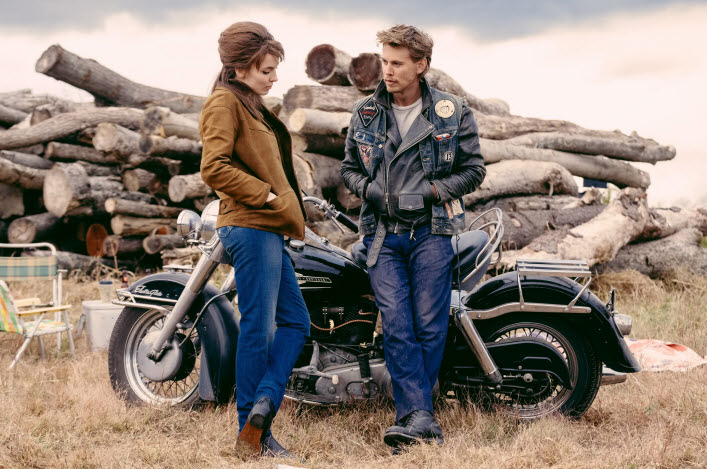
The Bikeriders (2023) ☆☆(2/4): They simply ride and ride…

Jeff Nichols’ new film “The Bikeriders” could provide a fascinating anthropological presentation of one particular social group in the American society during the 1960-70s. While it attempts a fresh perspective via its sole substantial female character, many of its main characters are too thin and superficial to hold our attention, and we never feel like really getting to know any of them, while merely following the story of their rise and fall.

The story, which is inspired by the nonfiction book of the same name by Danny Lyon, is mainly driven by a series of interviews between Lyon (Mike Faist) and a woman named Kathy (Jodie Comer), who has a lot of things to tell as someone who was quite close to many members of a midwestern motorcycle club named “the Vandals”. As a matter of fact, she actually married one of them, and a flashback scene shows how she happened to draw the attention of Benny (Austin Butler) during one evening, when she simply dropped by their frequent site for doing a little favor for one of her friends.

After his silent but persistent courtship, Kathy eventually allows him into her life, and she is soon introduced to many different figures of the Vandals including Johnny (Tom Hardy), who has been their de facto leader for years without any challenge. While he was a plain family man who worked as a trucker at first, Johnny decided to live more wildly after watching Marlon Brando in “The Wild One” (1953) on one day, and, what do you know, he soon found himself hanging around with many other similar guys as forming their own motorcycle club.

Of course, Johnny and his club members are not welcomed that much by many of local people, and they also find themselves clashing with the members of some other motorcycle clubs. At one point, we see Johnny and his gangs confronting several members of a separate motorcycle club, and you may be a bit amused by how silly and immature they look as clashing with each other over a rather trivial matter. They are more or less than boys who still need to grow up more, and you will not be so surprised when the mood becomes far less aggressive after a brief physical fight among them.

While Johnny tries to avoid any trouble as much as possible, Benny is your average natural troublemaker who always causes a new trouble as driven by his supposedly defiant spirit. In the opening scene, we see him sitting at a local bar alone, and then he soon confronts two big guys who do not approve much of his presence. Although he simply could leave, he adamantly refuses, and that leads to another big trouble, which incidentally results in a serious physical injury which might end his wild lifestyle once for all.

While certainly concerned a lot about Benny, Kathy is reminded again and again that there is nothing she can do about his wild lifestyle – even after she eventually marries him some time later. In fact, she also finds herself getting more associated more with the club just like the wives and girlfriends of its members, and it is really disappointing that Nichols’ screenplay does not delve much into this interesting aspect. There are several other female characters in the movie besides Kathy, but they all simply come and go without leaving much impression, and that is the main reason why its attempt on female perspective is inherently flawed from the beginning.

Meanwhile, things get changed a lot for Johnny and his club members as the American society enters the 1970s. Their club becomes a lot more expanded with many new members, but most of their new members, who are incidentally the Vietnam War veterans, are too volatile to be under their control, and Johnny comes to discern that he is losing the control over the club – especially when he is confronted by a young aggressive punk who may replace him someday.

Around that point, we are supposed to care more about Johnny and his gangs, but they are merely pathetic figures without much interesting human qualities to observe. Both Tom Hardy and Austin Butler are undeniably talented performers, but they are unfortunately limited by one-dimensional characterization, and Butler often looks too detached to be really engaged in whatever is happening around his character. In case of Jody Comer, she feels a bit strained with her midwestern accent, and her scenes with Mike Faist are quite perfunctory without generating enough interest for us.

In case of a number of notable performers playing the fellow motorcycle riders of Johnny and Benny, they look fairly believable as the persons who have hung around with each other for a long time, but the movie simply looks around them instead of going deeper into their characters’ life and personality. While Michael Shannon, who previously collaborated with Nichols in several films including “Take Shelter” (2011), is criminally wasted to say the least, Toby Wallace, Boyd Holbrook, and Emory Cohen are merely required to fill their respective spots, and this is surely another disappointing aspect of the film.

On the whole, “The Bikeriders” is not entirely without interest mainly thanks to its competent technical aspects including the cinematography by Adam Stone, but it is quite dissatisfying compared to a series of stellar achievements by Nichols, who has never disappointed me since his stunning debut film “Shotgun Stories” (2007). Because I am your average nerdy guy who prefers to stay at my little apartment, I might have regarded its main characters with some detached disapproval during my viewing, but, folks, I would be really more interested if they were actually interesting human figures to observe from the start.

Posted in Movies | Tagged , | Leave a comment