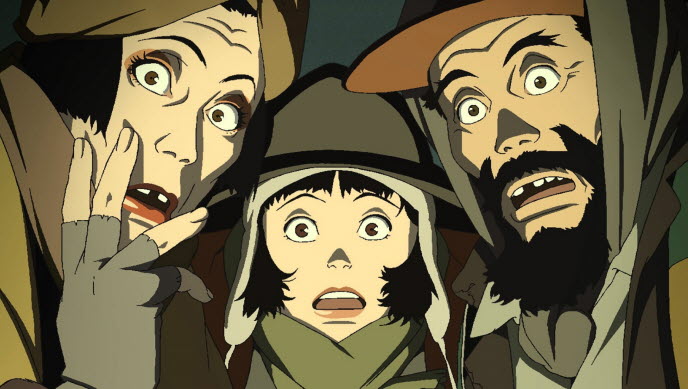
Tokyo Godfathers (2003) ☆☆☆1/2(3.5/4): Three homeless people and a baby

It did not take much time for me to get engaged and then entertained more in Satoshi Kon’s animation feature film “Tokyo Godfathers”, which is still a charmingly quirky holiday genre mix even after more than 20 years. Mainly revolving around the three differently colorful homeless figures, the film freely and cheerfully swings back and forth between comedy and melodrama, and the result is alternatively funny and poignant from the beginning to the end.

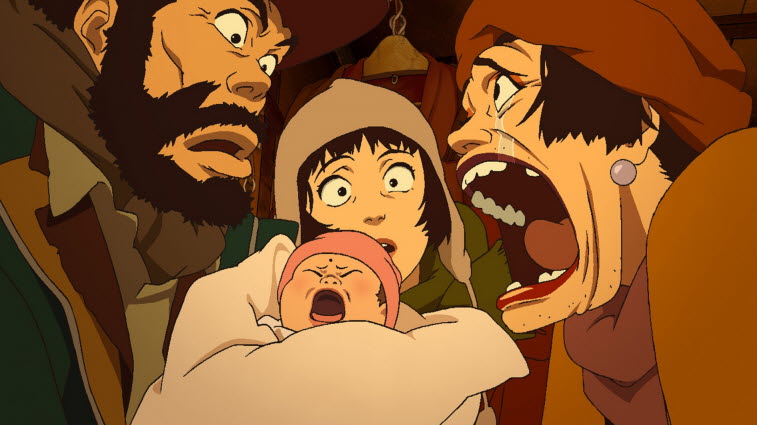
As reflected by the very title of the movie, the story premise is clearly influenced by John Ford’s classic western film “3 Godfathers” (1948). On one cold Christmas Day in Tokyo, the three different homeless figures, who have lived together as a sort of alternative family in their little makeshift place, come upon an abandoned baby while rummaging a pile of trash. They decide to take care of this little baby for themselves for a while, but they eventually try to search for whoever abandoned the baby, though this task turns out to be more difficult than expected despite several discovered items which may lead them to the mother of the baby.

As these three main figures go through their little bumpy journey along with the baby, the screenplay by Kon and his co-writer Keiko Nobumoto deftly balances itself between comedy and melodrama. While the unpleasant odor of its three homeless characters often functions as a sort or running gag, the story gradually brings some depth and pathos to each of them as they come to reveal more of their past and humanity, and we come to care about them as well as the baby, who fortunately does not seem to be aware that much of what is going on even in the end.
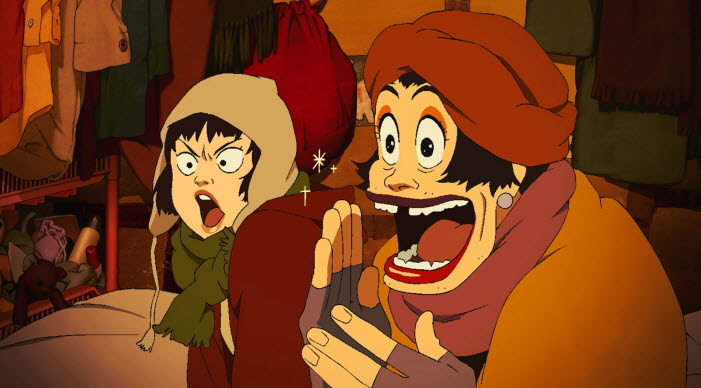
Of these three homeless characters, Hana (voiced by Yoshiaki Umegaki) is certainly the most memorable as your average aging gay drag queen. While she surely cannot help but neurotic and self-pitying at times, she is also a proud lady not ashamed at all of who she is, and there is an uproarious flashback scene where she becomes very, very, very angry due to a certain rude dude at a drag queen bar where she once worked.

In case of Gin (voiced by Tooru Emori), this gruff middle-aged guy turns out to have a shameful past he is still not totally honest about even in front of the two people who have been pretty much like a family to him for years. As taking care of the baby, he is reminded more of what a crummy man he was to both of his wife and daughter, and his anger and guilt are more intensified when he and his two fellow homeless figures happen to encounter someone responsible for his downfall in the past at one point early in the story.

As the third member of the group, Miyuki (voiced by Aya Okamoto) does not tell much about her background, but this young woman also has been running away from a painful past as shown from the brief but violent flashback scene involved with her father. During one scene where she happens to receive the unexpected kindness of a stranger, she comes to miss her home more than ever, but it looks like there is no possible way of going back for her to her bitter sadness.

While never overlooking the respective sadness and despair of its three main characters, the film, which was incidentally introduced to South Korean audiences as “The Chance of Encountering a Miracle on Christmas”, is often filled with a cold but lovely holiday atmosphere while occasionally throwing unbelievable moments of luck and coincidence along the story. There are actually more than one chance encounters in the story, and there is a particularly poignant moment when Gin makes some peace with the past via one of these chance encounters.

In case of the mystery surrounding the baby, the film keeps us more intrigued as our three homeless figures get to know more about a certain person who abandoned the baby. This person in question later turns out to be quite unhappy and desperate just like our three homeless figures, and that eventually leads to a wild chase sequence which culminates to what can be regarded as a Christmas season miracle.

The film was the third animation feature films of Kon, who made a feature film debut with “Perfect Blue” (1997) and then made “Millennium Actress” (2001). Although I merely admire “Millennium Actress” because I still think it is no more than an exercise in style, that animation film and “Perfect Blue” successfully established Gon as another prominent Japanese animation film director to come after Hayao Miyazaki and Isao Takahata, and he could have been known more to us just like Makoto Shinkai or Mamoru Hosoda, if he had not died too early not long after his fourth animation feature film “Paprika” (2006).

In conclusion, “Tokyo Godfathers”, whose recent 4k remastered version happens to be released in selected South Korean theaters on this Wednesday, is still a lovely piece of work to be admired and appreciated for its mood, style, and storytelling, and I must tell you that its deft and stylish mix of 2D and 3D animation feels much more vivid and striking than whatever I saw from many of recent Hollywood blockbuster animation films. While digital animation surely has its own advantages, they still cannot surpass cell animation much in my inconsequential opinion, and you will see that I am right, once you watch “Tokyo Godfathers”.
Posted in Movies | Tagged , , , , | Leave a comment

Hidden Face (2024) ☆☆☆(3/4): A twisted erotic triangle

South Korean film “Hidden Face”, which is the remake of the 2011 Colombian film “The Hidden Face”, an erotic mystery thriller which turns out to be naughtier than it seems at first. Like many thriller films, the movie surely depends a lot on a number of surprises and twists along the story, so I recommend you not to read more of my review, especially if you do not know anything about the movie or the original version.

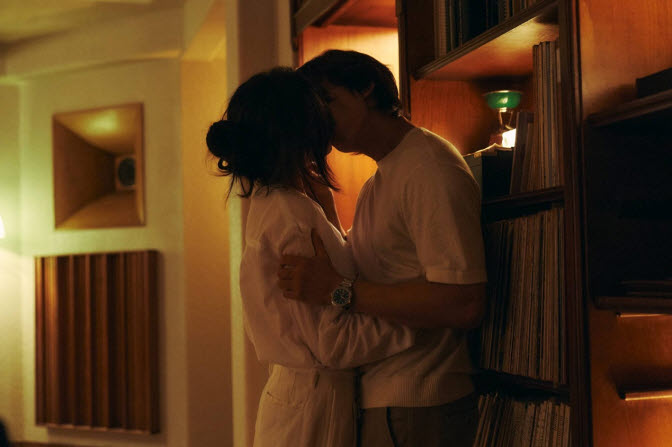
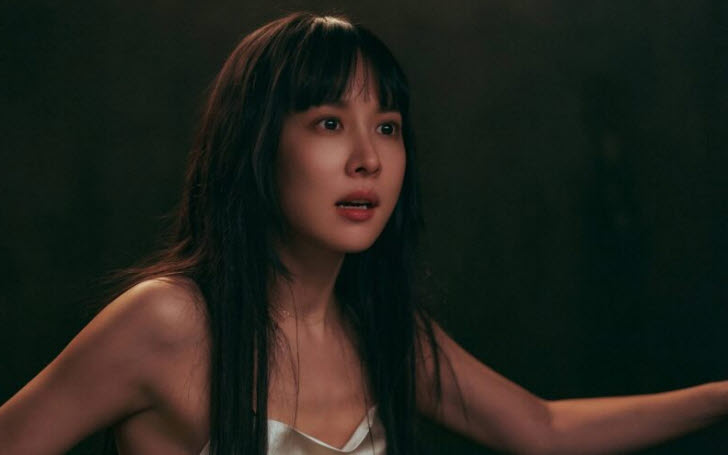
The movie opens with a sudden breakup between Seong-jin (Song Seung-heon) and his fiancée Soo-yeon (Cho Yeo-jeong), who is suddenly gone after only leaving a video message for him on one day. Because he is incidentally the principal conductor of some prestigious orchestra owned by Soo-yeon’s wealthy mother, Seong-jin is naturally nervous about what may happen to his promising career due to this sudden breakup, but Soo-yeon’s mother assures to him that everything will be the same as before between them, because it seems to her that her rather spoiled daughter will probably return sooner or later.

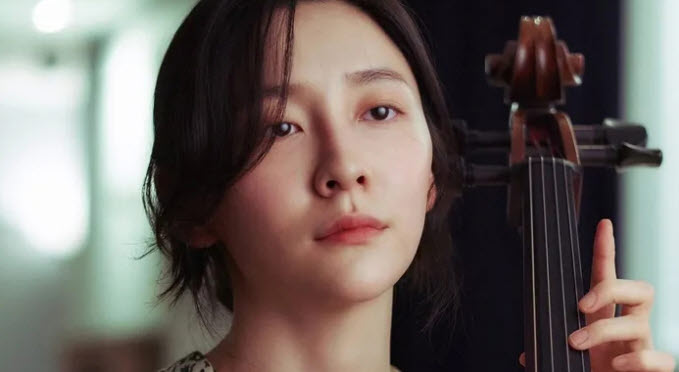
However, Soo-yeon still does not return after several days, and that causes a headache for both Seong-jin and the orchestra manager. After all, Soo-yeon has been one of the principal players of the orchestra, so they must consider hiring a replacement at least for a while, and there soon comes a suitable candidate for that. That person in question is a woman named Mi-joo (Park Ji-hyun), and she is also an old friend of Soo-yeon, though Seong-jin does not know that much about this young lady.

Anyway, Mi-joo turns out to be a fairly competent substitute player, and, what do you know, Seong-jin soon finds himself attracted to her. When he later approaches to her a bit closer, Mi-joo does not mind this at all to his surprise, and they eventually find themselves spending some private time together in a house into which Seong-jin and Soo-yeon recently moved shortly after returning to South Korean a few months ago.

Meanwhile, Soo-yeon remains vanished as before, and this surely makes both Seong-jin and her mother all the more nervous. It looks quite possible now that something bad happened to Soo-yeon, and it goes without saying that her mother comes to have some suspicion on her future son-in-law even though she does not signify anything on the surface.

Around that narrative point, the movie begins to reveal what it is actually about via a series of flashback scenes. One of these flashback scenes shows how Seong-jin and Soo-yeon became quite estranged from each other since they moved into their new residence, which is incidentally where she and her old friend once studied music together under their private teacher. In addition, it subsequently turns out that Mi-joo was not totally honest to Seong-jin from the very beginning, though you may not be that surprised by what she is actually hiding behind her back.

Now, this looks like a familiar setup for more thrill and suspense, and the movie does not disappoint us while providing a couple of supposedly erotic moments as expected, but then it surprises with its cheerfully naughty aspects. I will not go into details here, but I can tell you instead that I was frequently quite amused even while observing the story and characters from the distance during my viewing. Although its main characters are rather unlikable in one way or another, the movie still makes us curious about whatever may happen next along the story, and we keep getting tickled by its wryly dark sense of humor.

Under the competent direction of director Kim Dae-woo, who has been mainly known for his first two feature films “Forbidden Quest” (2006) and “The Servant” (2010), the movie steadily rolls its story and characters to the expected finale, and its three principal cast members keep holding everything together even though the story stumbles a bit more than once during its last act. There are several plot holes here and there, but the movie compensates for this weakness via its enough supply of tension and intrigue, and you may appreciate how the movie viciously and humorously implies more horror and madness to come after its very last shot.

While Song Seung-heon’s neutral acting dutifully holds the ground as required, Cho Yeo-jeong and Park Ji-hyun are relatively more engaging in each own way. Cho, who has been known more to the audiences outside South Korea thanks to her excellent performance in Bong Joon-ho’s Oscar-winning film “Parasite” (2019), has a lot of juicy fun with her superficially self-absorbed character, and she is particularly good when we later come to learn more of how her character can be much more unpleasant. On the opposite, Park, who has been more notable since “Gonjiam: Haunted Asylum” (2018), is equally effective as casually illustrating her character’s darker sides along the story, and she and Cho surely make an interesting contrast throughout the film.

On the whole, “Hidden Face” is a fairly solid genre product to be appreciated for its dark thrill and amusement. Because I have not watched the original version yet, I cannot tell you whether this is better or not, but I enjoyed it more than expected as having some morbid amusement, and that is enough for recommendation in my humble opinion.

Posted in Movies | Tagged , , | Leave a comment

Exhibiting Forgiveness (2024) ☆☆☆1/2(3.5/4): Facing his old trauma and abuser again

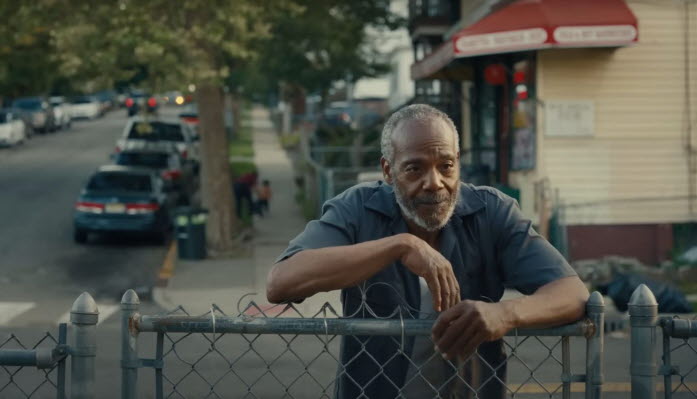
“Exhibiting Forgiveness” looks into the deep trauma of a man still haunted and tormented by his abused childhood. When that painful past of his suddenly returns to him, he has no choice but to face and deal with those old emotional issues with his abuser, and the movie lets us empathize more with his inner struggles as handling his intimate family drama with a lot of sensitivity and thoughtfulness.

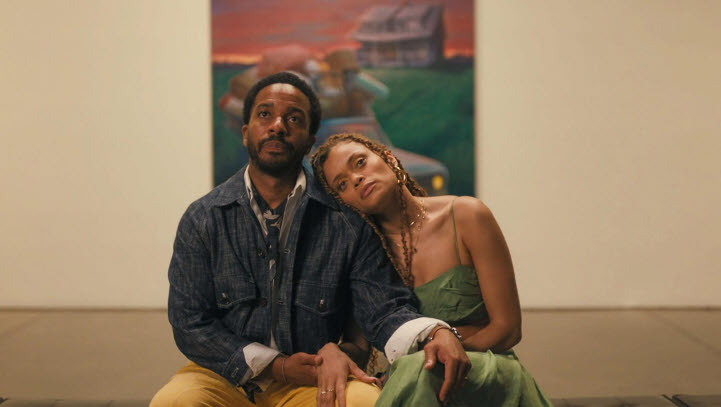
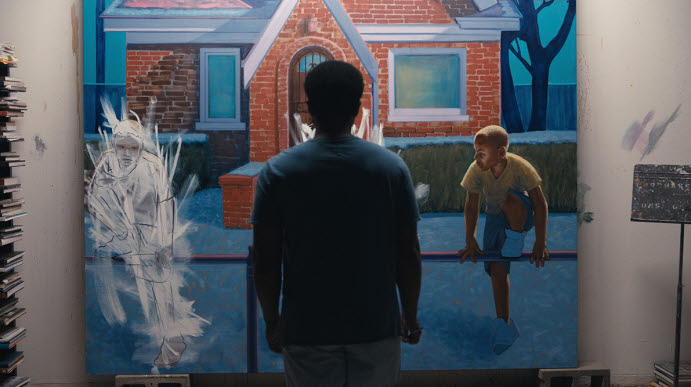
The early part of the film succinctly establishes how Tarrell (André Holland) has had a fairly good life on the whole. While he has made a considerable professional success as a rising African American artist, he and his musician wife Aisha (Andra Day) have lived pretty well with their little son, and his mother Joyce (Aunjanue Ellis-Taylor) will soon move to a better neighborhood from her old one, though she is rather reluctant about that.

And then there comes an unexpected thing when Tarrell visits his mother’s neighborhood along with his family for helping her a bit before her upcoming moving day. His drug addict father La’Ron (John Earl Jelks) returned some time ago, and he seems really changed in this time after hitting another bottom of his misery as shown from the opening scene. Still reeling from all those painful memories associated with his father, Tarrell understandably does not want to see his father again at all, but Joyce insists nonetheless that he should try to talk with his father at least, and he eventually decides to do that as advised by his concerned wife.

Of course, things do not go that well between Tarrell and his father when they later meet and then begin a little private conversation between them. While La’Ron sincerely wants to be forgiven by his son, he is often inclined to evade what he did to his son during that grim period, and this only exacerbates Tarrell’s old pain and anger, no matter how much he tries to understand and forgive his father. As already shown to us early in the story, his mind still violently reacts to his old childhood trauma, and this certainly scares both his wife and their son.

Around its middle act, the movie delves more into Tarrell’s childhood trauma via a series of flashback scenes. We see how much La’Ron cruelly abused young Tarrell (Ian Foreman) just like his father did to him a long time ago, and it is really heartbreaking to observe how much this abuse of his damaged his son’s heart and soul. As a guy still remembering well a number of hurtful moments of physical/emotional punishment committed by my parents and several other adults around me during my childhood and adolescent years, I understand Tarrell’s resulting trauma to some degree, and I must tell you that I often distance myself from my parents no matter how much they emphasize these days that they really love me.

Meanwhile, the screenplay by director/writer/co-producer Titus Kaphar, who has been mostly known for his acclaimed artworks before making a feature film debut here in this movie, shows some care to Tarrell’s family members. In case of a crucial scene between La’Ron and Joyce early in the film, we come to sense a long history of pain and love between them behind their casual conversation, and it becomes more apparent that Joyce still does not forget his worst moments in the past even while actively pushing her ex-husband toward their son. When Tarrell and Joyce become more honest about their respective feelings about La’Ronlater in the film, they are only reminded more of how differently they feel about him, and that leads to another conflict in the story.

While the story eventually arrives at a moment of closure for everyone in the story, the movie wisely avoids getting too sentimental as powerfully reminding us that some emotional scars cannot possibly be erased or healed at all. During the last scene of the film, we get a rather symbolic moment showing how our hero finds a way to make some peace with his childhood trauma at last, but the following small glimpse of hope and optimism is accompanied with a lingering sense of bitterness.

As the center of the story, André Holland, who has been one of the most dependable actors working in Hollywood since his memorable supporting performance in Barry Jenkins’ Oscar-winning film “Moonlight” (2016), gives an engaging performance filled with vivid human nuances and details. While mostly looking calm, gentle, and sensitive throughout the film, Holland is also very convincing in how Tarrell’s mind often gets triggered by his childhood trauma beyond his control, and we come to understand more of how difficult it really is for him to confront his father.

Around Holland, several main cast members have each own moment. While Andra Day does much more than performing the original song for the film, Aunjanue Ellis-Taylor is poignant during her key scene with Holland later in the film, and John Earl Jelks is also excellent as a broken man still struggling to recognize and repent for what he did to his ex-wife and their son. In case of young performer Ian Foreman, he holds his own small place well during his several scenes with Jelks, and his good performance is also connected well with Holland’s without any awkwardness.

In conclusion, “Exhibiting Forgiveness” is a modest but poignant drama about the personal struggles with childhood trauma, and I admire a lot its mood, storytelling, and performance. This is surely a promising start for Kaphar’s filmmaking career, and it will be interesting to see what may come next from him after this commendable debut work.

Posted in Movies | Tagged , , , , , | 1 Comment

Do Not Expect Too Much from the End of the World (2023) ☆☆☆(3/4): Another barbed satire from Radu Jude

Radu Jude’s new movie “Do Not Expect Too Much from the End of the World” is a dry but undeniably sharp black comedy which patiently takes its time for building up its comic momentum. Although you may be daunted by its rather long running time (165 minutes) at first, the movie keeps holding our attention as steadily doling out one humorous moment after another for more than 2 hours, and it becomes all the more painfully funny when the story eventually reaches a comic climax you have to see for yourself.

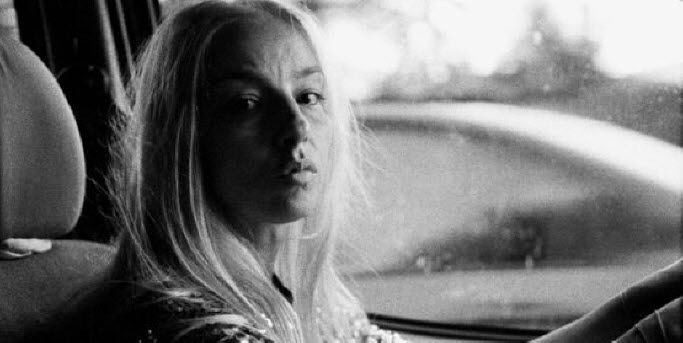
The story is mainly about one long and difficult day of Angela (Ilinca Manolache), a weary female assistant working in the production of a little education film produced by some big company in Austria. Her current task is recording the audition video clips of a number of various people who were seriously injured while working for the company, and that means she has to driver her car here and there in Bucharest, Romania during next several hours for visiting those unfortunate people one by one.

Mainly because she does not get paid enough for her rather thankless main job, Angela also often works as an anonymous online media creator hiding behind the image of a certain real-life male figure which will definitely disgust most of you for good reasons. While keeping her real identity secret as much as possible, she frequently throws a lot of vile and hateful words in front of her smartphone, and we gradually gather that she has actually been pretty popular for that on the Internet.

Closely observing how Angela struggles to get her jobs done within one day, the movie lets us understand that this virulently superficial online activity of hers is one of her own ways of dealing with the constant stress and frustration from her main job. She surely feels like having some power and control whenever wielding her toxic online persona on the Internet, and she is not even ashamed of that at all as shown to us later in the film (“I’m like Charlie Hebdo, sucker!”).

In case of some other people working with Angela, they are no better than her with their cynically callous attitude toward whatever they are going to make in the end. All they really care about is doing the job and then getting paid enough, and that is evident when Angela and they subsequently have a video conference meeting with a company executive who will soon come to Bucharest for the supervision of the production (Nina Hoss, who has mostly known for her notable collaborations with Christian Petzold, demonstrates the unexpected side of her considerable talent here in this film). Casually looking over their candidates, they eliminate one candidate after another without much thought, and we get some little laugh when Angela later commits a little act of contempt behind her back.

This absurd sequence feels quite painful to us at times because we observed the misery and desperation of those candidates before that. Unable to get re-employed after getting injured and then fired without much compensation, these unfortunate people are all quite desperate for any chance for the money to support themselves and their families, and we naturally feel uncomfortable about how Angela handles these people without much care or attention, even while tickled by some unexpected moments of absurdity observed from their individual scenes with Angela.

Meanwhile, the movie sometimes inserts the excerpts from the 1981 Romania film “Angela Moves On” (1981), which is about the daily life of one female taxi driver. The Romania society glimpsed from in that old movie certainly makes an interesting contrast with how the current Romania society is starkly presented in black and white film in the movie. Yes, the Romania society during the 1980s was inarguably bleak and terrible under the communist dictatorship of Nicolae Ceaușescu, but the current Romania society does not look exactly better although its people surely have much more freedom and right than before, and the movie eventually comes to reveal more of its indirect contempt toward the inherent amorality and heartlessness of capitalism along the story.

Around a certain point where it switches from black and white film to color film, the movie goes for more satire and amusement, and the resulting extended sequence is quite compelling to watch. While the camera simply observed from its static position, one absurd moment after another happens across the screen, and we are alternatively amused and repulsed as Angela and several figures insensitively push the chosen candidate and his family toward more and more compromise. Ilinca Manolache, who certainly leaves a strong comic impression here in this film, and several other main cast members during this sequence are flawless in their natural comic timing, and everything on the screen eventually culminates to what can be regarded as a bitter punchline for us.

In conclusion, “Do No Expect Too Much from the End of the World” is another interesting work from Jude, who previously drew my attention for his previous film “Bad Luck Banging or Loony Porn” (2021). Like “Bad Luck Banging or Loony Porn”, the movie is willing to go as far as possible for dark laughs, and I particularly like the brief appearance of a certain notorious German filmmaker in the middle of the movie. Yes, both of these two comedy films remain a rather acquired taste to me, but they surely solidify Jude’s status as another interesting Romanian filmmaker to watch, and he will probably impress me more with whatever will come next from him.

Posted in Movies | Tagged , , | 1 Comment

The Beast (2023) ☆☆☆(3/4): Her anxiety across the time

Bertrand Bonello’s latest film “The Beast” is an odd but intriguing work mainly driven by a growing sense of anxiety surrounding its multiple narratives. In each narrative, the heroine cannot help but become more nervous over whether something terrible may happen as she gets attracted to a certain figure, and, boy, the movie does not disappoint us at all after deftly juggling its multiple plot lines for our interest and entertainment.

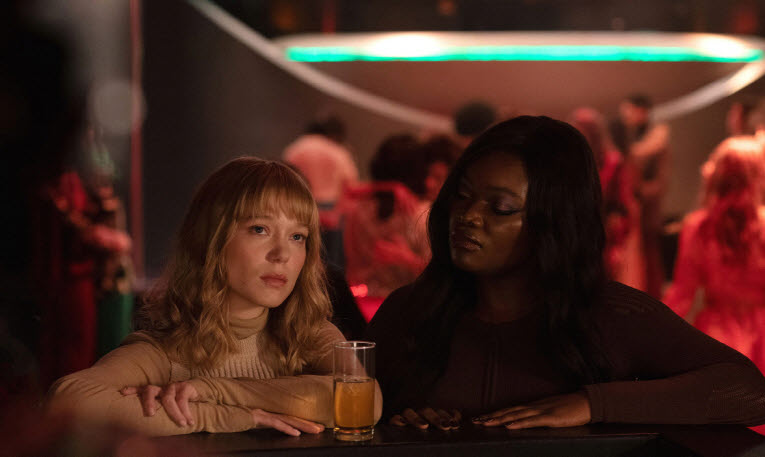
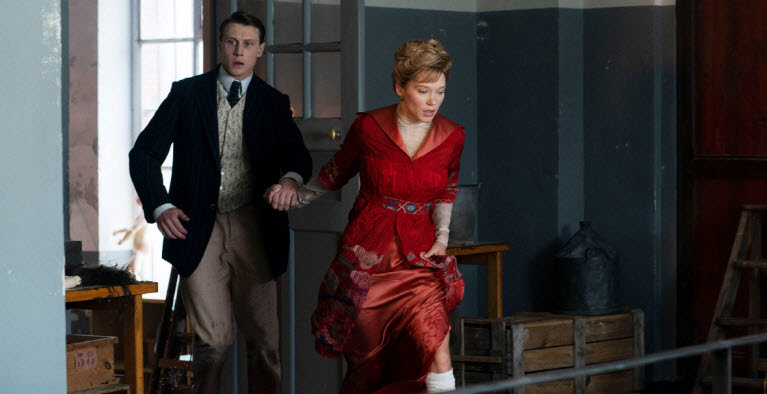
The main frame of the story is set in Paris in the middle of the 21st century. In this near-future world, every human being has been under the strict management of some powerful artificial intelligence, and a young woman named Gabrielle (Léa Seydoux) is going to have a “DNA purification” surgery, which will purge any emotional memories from her past lives for making her less emotional than before. Although she is rather reluctant to say the least, she is still willing to subject herself for better job opportunities, and a series of the following surgeries are supposed to have her face and then get over whatever has been remembered on her unconsciousness.

One of Gabrielle’s past lives to face happened in Paris, 1910. In this past live of hers, she is a well-known musician incidentally married to a successful dollmaker, and her supposedly satisfying life gets unsettled by an accidental encounter with Louis (George MacKay), a young British gentleman who happens to be at an evening party attended by her and her husband. As they talk more with each other in private, something seems to click between them, but Gabrielle hesitates to get closer to this handsome dude because, well, she has been quite afraid that something really bad is going to occur while they continue their little affair. She does not even know what, when, how, and why that will happen, but she has somehow felt that somewhere in her mind, and that makes her all the more nervous.

Nevertheless, Gabrielle only finds herself getting more attracted to Louis – even after she receives what may be the last warning on whatever will happen in the end. She comes to spend more time with Louis, and we are not so surprised when she later shows him around her husband’s big factory filled with lots of materials for dolls to be produced.

Meanwhile, the movie also observes what is happening around Gabrielle in her 21st century life. She comes across Louis again, and they soon get interested in each other, but, again, she does not feel that right about what is going on between them. She continues her surgery process, and this leads her mind to the memories of another past life of hers besides the previous one.

This past life of hers, which is incidentally set in LA, 2014, is not romantic at all compared to the previous one. Louis in this case is now your average incel lad who has been very, very, very angry about failing to have any romantic or sexual relationship, and the mood becomes more disturbing as he becomes increasingly fixated on Gabrielle, who is an aspiring young actress currently staying alone in a big modern house as its temporary tenant/caretaker.

Gabrielle has already had that disturbing feeling she cannot articulate well, and the movie goes for more disturbance as her mind is somehow thrown into more anxiety and confusion. At one point in the middle of the film, the image gets distorted a bit for accentuating a sense of shock and disorientation upon the heroine, and then we get an unnerving scene where Gabrielle receives the identical warning via the Internet by some unlikely coincidence.

Before eventually reaching to a certain narrative point, the screenplay by Bonello, which is loosely based on Henry James’ short story “The Beast in the Jungle”, is rather vague about whatever may happen in the end of each narrative in the story. This can be rather frustrating for some of you, but the movie keeps us interested while never losing its way among the multiple narratives, and the following moments of payoff are unexpectedly striking in each own way thanks to the skillful handling by Bonello and his crew members including cinematographer Josée Deshaies and editor Anita Roth.

Above all, the movie is constantly held well together by the good performances from its two lead performers, who effortlessly move among several different versions of their respective roles. Léa Seydoux, who has been one of the most interesting actresses to watch for more than 10 years, is simply masterful in the subtle presentation of the accumulating dread and worry behind her character’s detached appearance, and she and George MacKay, who has been steadily advanced since his breakout performance in Sam Mendes’ Oscar-winning film “1917” (2019), complement well each other as their characters tentatively and nervously revolve around each other along the story.

On the whole, “The Beast” is another engaging work from Bonello, who drew my attention for the first time with “House of Tolerance” (2011). While I did not watch his several subsequent films including “Saint Laurent” (2014) and “Nocturama” (2016), “The Beast” impressed and intrigued me as much as “House of Tolerance” even though I needed to be a bit more patience at first, so I recommend you to take a chance with this rather baffling but undeniably interesting arthouse film.

Posted in Movies | Tagged , | 1 Comment

Made in England: The Films of Powell and Pressburger (2024) ☆☆☆1/2(3.5/4): Scorsese on Powell and Pressburger

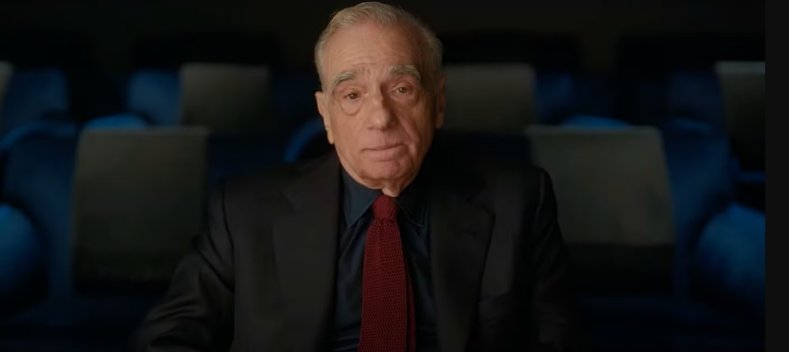
In my trivial opinion, you must stop and then listen if you ever encounter Martin Scorsese lecturing on movies. While he is surely one of the greatest filmmakers of our time, he is also one of the most knowledgeable movie scholars, and that is why you should check out documentary film “Made in England: The Films of Powell and Pressburger”, where he gives a 2-hour lecture on the exceptional career of two prominent figures of the British Cinema during the 1940-1950s.

They are Michael Powell and Emeric Pressburger, and it is still amazing to see how much their movies have inspired Scorsese’s works, most of which surely feel quite different from the works of Powell and Pressburger on the surface. While many of Powell and Pressburger’s works are refined studio films, most of Scorsese’s works are quite gritty and realistic in contrast, but Powell and Pressburger’s works have actually exerted a steady influence over Scorsese’s artistic style and sensibility for many years, and Scorsese is glad to show more of his longtime fascination and admiration toward many of their masterpieces.

 When Powell and Pressburger came across each other around the late 1930s via legendary movie producer/director Alexander Korda, they could not be possibly more different from each other. While Powell was your average British dude who had established his directing career during last several years at that time, Pressburger was a Hungarian Jewish screenplay writer who had to move to UK due to the rise of Nazi Germany, but they instantly clicked well with each other in their first collaboration, and that was the beginning of many productive years between them.

When the country went into the war with Nazi Germany in 1939, Powell and Pressburger were driven to make propaganda films including “49th Parallel” (1941), which incidentally won a Best Story Oscar for Pressburger. Thanks to the critical and commercial success of that classic film, they could form their own production company together, and that allowed them to have the total artistic freedom over their next several films including “The Life and Death of Colonel Blimp” (1943), which incidentally give me my first exposure to the artistry of Powell and Pressburger. When I watched it in 2003, I was only 20, but the movie reminded me that I should have some more understanding and compassion on those stiff old people who were once as youthful as I was at that time. As watching the excerpts from that great film shown in the documentary, I felt more need to revisit it sooner or later, because, after all, I am now as old as its hopelessly romantic but ultimately reserved hero in the middle of the story.

As a guy who has known and lived with movies much more than many of us, Scorsese enthusiastically explains to us the greatness of Powell and Pressburger’s works – and why they have been so special to him for many years. Even when he watched their works via a small black and white TV during his childhood period, the sheer artistry of their works impressed and enthralled young Scorsese, and he kept watching their works even while becoming one of the most promising young American filmmakers in the early 1970s.

Around that time, Powell was nearly forgotten along with his collaborator after he got unjustly lambasted for his exceptionally disturbing thriller film “Peeping Tom” (1960), but Scorsese eventually met him for asking many questions about what he made along with Pressburger, and Powell subsequently became a lifelong mentor to Scorsese in addition to going through the belated period of re-discovery and re-appreciation. Besides, Scorsese also introduced Powell to his longtime editor Thelma Schoonmaker, who eventually became Powell’s last wife before his death in 1990.

While introducing Powell and Pressburger’s works one by one, Scorsese sometimes acknowledges how their works actually influenced some of his notable works. So impressed by how Powell and Pressburger used red color in many of their works such as, yes, “The Red Shoes” (1948), Scorsese used a lot of red lighting in “Mean Streets” (1973), though Powell found it rather excessive. In case of the boxing sequences in “Raging Bull” (1980), Scorsese was actually inspired a lot by how Powell and Pressburger went for more style and emotion during that famous ballet sequence in “The Red Shoes”, and that aspect is quite evident to us when the documentary makes a comparison between these totally different works.

“The Red Shoes” was surely one of the highest points of Powell and Pressburger’s joint career, but, sadly, the following later years were a downhill for both of them as frankly pointed out by Scorsese in the documentary. While there were some high points like “The Tales of Hoffmann” (1951), Powell and Pressburger eventually reached to the point where they could not work with each other anymore, and that was the sad ending of their prime period, though, as shown from their archival interview footage clips, they remained friendly to each other for the rest of their life despite that.     

In conclusion, “Made In England: The Films of Powell and Pressburger”, directed by David Hinton, is highly recommendable for anyone interested in movies, and it is still an entertaining guide even if you are quite familiar with the works of Powell and Pressburger like me. Seriously, you can never go wrong with Scorsese or Powell and Pressburger, and I assure you that the documentary will not disappoint you at all.

Posted in Movies | Tagged , , , | 1 Comment

The Tenants (2023) ☆☆1/2(2.5/4): His problematic tenants

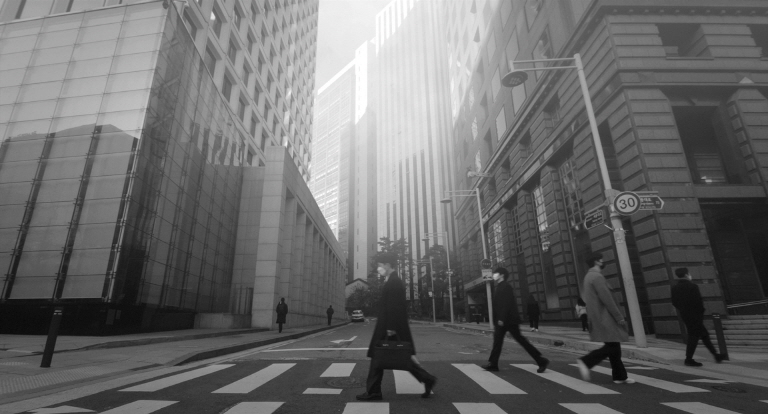
South Korean independent film “The Tenants” tries to be a quirky mix of SF, comedy, and a bit of horror. The overall result is amusing as sort of a satiric allegory on the current economic struggle of many people out there in the South Korean society, but it is unfortunately hampered at times by its thin plot and broad characterization, and I wonder whether it would be more effective if it were a short film instead.

 Mostly set in some neighborhood area of a dystopian version of Seoul, the story mainly revolves around Sin-dong (Kim Dae-gun), a young man who works in some big company known for a certain groundbreaking food technology. Because the condition of life in the city has not been that good to say the least because of the severe environmental pollution, Sin-dong has hoped to move to a cleaner place somewhere out there just like many others in the city, but that possibility seems beyond his reach – even when the company later announces that it is going to select a few employees to be transferred to that good place. 

Meanwhile, Sin-dong has been struggling to pay the rent for his little residence, and then there comes an unexpected problem due to his very young landlord, who wants him to leave his current residence within a few weeks just because of some renovation. Fortunately, one of his online friends informs Sing-dong about a rather preposterous scheme which may stop the landlord. All he will have to do is subletting his toilet to somebody else, and, according to his online friend, there are actually many people out there who are willing to live in toilet just because, well, that is far cheaper.

Despite some skepticism, Sin-dong eventually decides to sublet the toilet, and what do you know, he is soon visited by a rather odd couple quite ready to live in the toilet. Once this couple start to live in the toilet, Sin-dong succeeds in preventing himself from getting evicted by his landlord, and it looks like everything will go fairly well for him at least for a while, but, not so surprisingly, it does not take much time for Sin-dong to realize how strange his tenants are in many aspects. Whenever they cause disturbance in his residence in one way or another, the tenants always apologize for that, but Sin-dong cannot help but get disturbed more and more by their unnerving presence as experiencing a number of bizarre moments at night.         

Meanwhile, there comes a bit of hope for him as it seems that he may actually be selected as one of the employees to be sent to that good place – if he works harder than before. Although many of his co-workers are rather skeptical, he becomes more determined about attaining his goal, and he does not even hesitate to do some unfair things just for going ahead of others.

However, he keeps getting disturbed by his tenants as usual, so he decides to evict them as soon as possible, but then, to our little amusement, he comes to learn that his tenants actually sublet a certain part of their residence to some other person. As his online friend told him early in the film, that has been actually promoted and supported by the government for solving housing problems, and Sin-dong’s situation becomes all the more absurd when he really needs to meet that mysterious “sub-tenant” in question as soon as possible later in the story.

Even when the story becomes weirder than before, the movie steadily maintains its deadpan attitude under the gloomy surreal atmosphere generated by its black and white cinematography, and you may come to accept that anything can happen around its unfortunate hero. No matter how much he tries, Sin-dong finds himself stuck more inside his residence along with his strange tenants, and you may not be surprised much when the movie takes a sudden left turn before its eventual finale.

However, the screenplay by director/writer Yoon Eun-kyung, who previously made a feature film debut with “Hotel Lake” (2018) and will soon give us “Sisterhood” (2024) around the next year, stumbles more than once in terms of narrative and characterization. While its one-joke plot comes to lose its comic momentum later in the film, its main characters are more or less than caricature figures, so we come to observe the story and characters from the distance without much care in the end.

At least, the principal cast members of the movie try their best in filling their broad caricature parts, and they did a good job of playing their respective roles as straight as possible. While Kim Dae-geon dutifully holds the center as required with his earnest performance, Heo Dong-won and Park So-hyun have some juicy fun with their more colorful characters, and their deliberately mannered performances always keep us on alert whenever either of them appears on the screen.

On the whole, “The Tenants” is not recommendable enough mainly due to its narrative deficiency and superficial characterization, but its absurd satire works to some degree as morbidly reflecting what many South Korean people struggle with day by day, and Yoon demonstrates some potential here in this film. I have not seen “Hotel Lake” yet, but, as far as I can see from this film, she is a good filmmaker who knows one or two things about how to engage the audiences via mood and details, and I sincerely hope that her upcoming next film will be more entertaining for me.

Posted in Movies | Tagged , , , , | Leave a comment

Sister Yoojung (2023) ☆☆☆(3/4): The truth about her younger sister

South Korean film “Sister Yoojung” is about a young woman who comes to realize that she has not been that close to a family member she should have supported and comforted more. While its story begins with a rather alarming incident, the movie calmly and sensitively observes its heroine’s emotional struggles along the story, and it surely earns the quiet tear and poignancy of its finale.

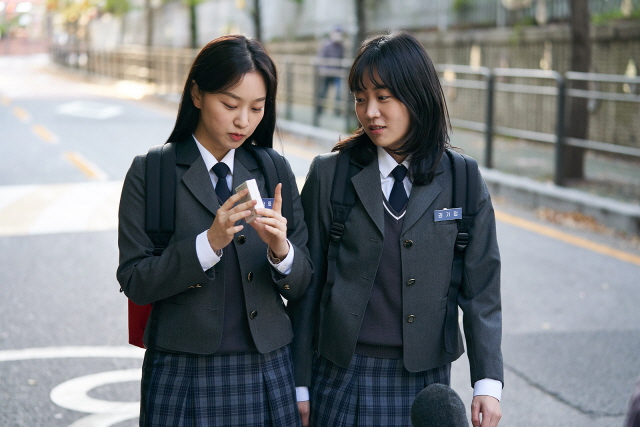
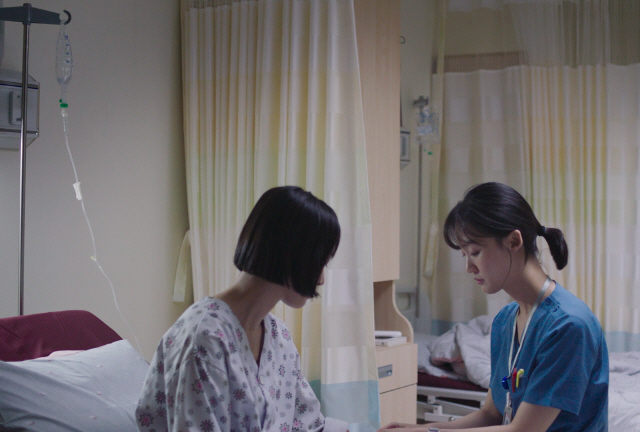
At first, we observe how things have been busy for Yoo-jung (Park Ye-young), who works as a night shift nurse at the cardiology department of some big general hospital. Mainly due to the demanding aspects of her occupation, she is always quite tired whenever she returns to an apartment where she lives along with her younger sister Gi-jung (Lee Ha-eun) and their aunt, and she is already asleep when her younger sister is about to go to her high school as usual early in the morning.

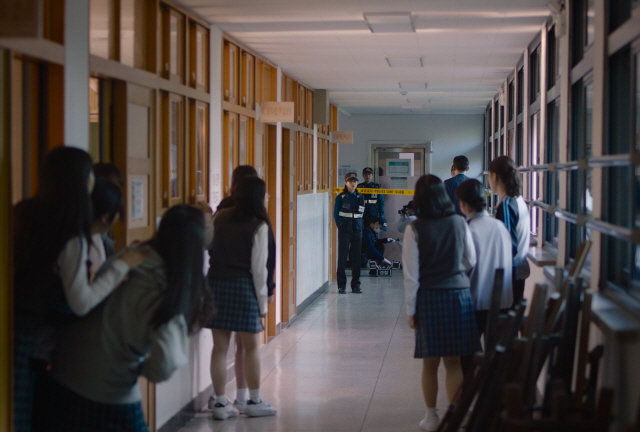
On one day, Yoo-jung receives an unexpected call from the local police, who notify to her that Gi-jung is arrested as the prime suspect of one disturbing incident at her school. After a dead infant, who was apparently abandoned not long after the birth, was found in one of the bathrooms in the school, the local police quickly embark on questioning a number of female students, and then Gi-jung confesses that she is the one responsible for the incident, though she is not even on the suspect list from the beginning.

Because both she and her aunt have not suspected anything from Gi-jung, Yoo-jung is shocked as much as her aunt, and that reminds her more of how she has not given much attention to her younger sister due to her busy work. Because their mother died not long after Gi-jung was born, Yoo-jung is supposed to be the one who should stand close to Gi-jung, but, as her aunt points out early in the story, nothing much has been exchanged between her and Gi-jung during last several months, so Yoo-jung feels more guilty about what happened to her younger sister.

However, to Yoo-jung’s frustration, Gi-jung remains silent and distant even when she is allowed to meet her older sister under the supervision of a detective assigned to her case. For being less punished for what she is accused of, she must tell more about how she became pregnant or what really happened on that horrible day, but she does not say anything except admitting her guilt, and Yoo-jung is surely at a loss about what to do for her younger sister. In the worst case, Gi-jung can be severely sentenced for infanticide, and the impending possibility of getting expelled from her school looks nothing compared to that.

Yoo-jung eventually searches for anyone who can tell anything to help her younger sister, and that person in question is Hee-jin (Kim Yi-kyeong), who has been Gi-jung’s best friend as shown from the occasional flashback scenes. It looks like Hee-jin knows something about what happened on that day, but she is also reluctant to tell anything to Yoo-jung, and that only makes Yoo-jung all the more frustrated.

Now this sounds like a typical mystery drama, but the movie takes its time as focusing more on the emotional conflicts among its three main characters, and it also pays some attention to a subplot involved with one of the patients handled by Yoo-jung at her workplace. This patient has been under a very risky circumstance due to her pregnancy, and her fragile emotional/physical condition leads to Yoo-jung realizing more of how emotionally vulnerable her younger sister has been due to her unwanted pregnancy and its devastating aftermath.

Although it eventually goes for some melodrama during its last act, the movie steadily sticks to its restrained storytelling approach as letting us have more understanding and empathy on both Yoo-jung and Gi-jung. At one point later in the story, Yoo-jung comes to learn that she must open her heart more to her younger sister as well as Hee-jin with some patience and consideration, and there is a touching moment when Yoo-jung becomes more honest to her younger sister on how much she has cared about her younger sister since they became orphaned since their mother’s death.

The movie certainly depends a lot on the good performances from its three main cast members, who are all believable in their respective characters’ inner struggles along the story. Park Ye-young did a subtle job of conveying to us the accumulating frustration and exasperation behind her character’s weary appearance, and that makes a dramatic contrast with when Yoo-jung comes to show more of herself to not only Gi-jung but also a few other characters around her. Lee Ha-eun ably suggests whatever is churning behind her character’s frustratingly elusive attitude, and Kim Yi-kyeong also holds her own place well between her two fellow cast members.

Overall, “Sister Yoojung” is a modest but engaging character drama which handles its sensitive main subject with enough care and consideration, and director/writer Chung Hae-il made a solid feature film debut here in this film. Even when the movie eventually arrives at its very last shot, there is still a lot of uncertainty around its main characters, but we get to know and understand them more besides observing a glimmer of hope and healing in the end, and that is more than enough in my inconsequential opinion.

Posted in Movies | Tagged , , , , , | Leave a comment

The Substance (2024) ☆☆☆1/2(3.5/4): The wildest movie of this year

Coralie Fargeat’s second feature film “The Substance” is probably the wildest movie of this year in my trivial opinion. Deliberately shocking and excessive in many aspects, the movie pushes its weird and grotesque promise all the way for its dark horror and amusement, and you may gladly go along with that if you are really ready for wincing more than once during its rather long running time (141 minutes).

The early part of the film establishes how things have been quite desperate for an aging Hollywood actress named Elizabeth Sparkle (Demi Moore). As cynically reflected by the extended opening sequence, there was a time when she was on the top of the Hollywood movie industry with many glories including her star on that famous spot in Hollywood, but, alas, her stardom has been going down into the past since that prime period of hers, and now she is desperately holding onto an aerobic TV show where she has worked as its host during last several years.

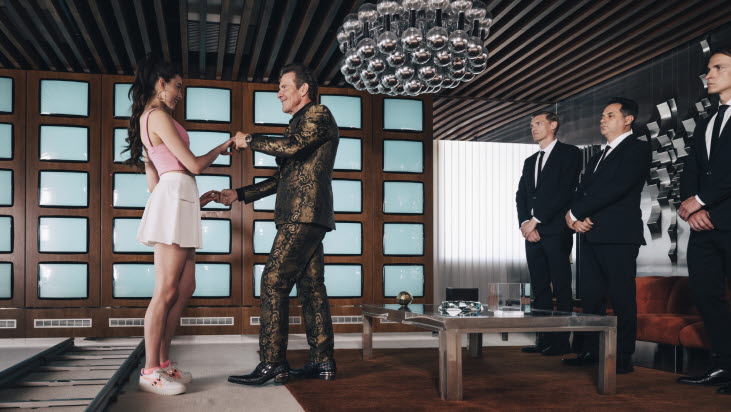
However, by coincidence, Elizabeth comes to learn that the producer of the show thinks she is too old for the show and is already considering replacing her with someone younger and prettier. She tries to persuade this sleazy bastard as much as possible (Dennis Quaid did a good job of chewing every scene of his in the film besides those shrimps, by the way), but it only becomes more apparent that there is no way for her to maintain her position, and she accordingly becomes all the more devastated.

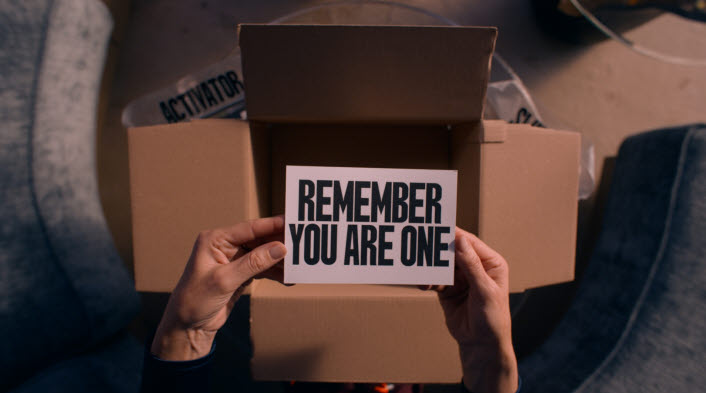
And then there comes an unexpected opportunity. Not long after an unfortunate incident, she is approached by some young guy who gives her a sort of commercial video clip file for something called “the Substance”. At first, Elizabeth does not believe much what is promised to her, but then, as reminded again of how she will irreversibly get aged day by day, she eventually attempts to contact with whoever will provide her this mysterious drug.     

What follows next is the graphic depiction of how that drug works on Elizabeth. Once she injects it into her body in her bathroom, we get an intensely gross moment of body horror to be appreciated by any fan of David Cronenberg movies, and I must tell you that this is just the beginning of what the movie will show us along its increasingly disturbing story.

In the end, there eventually comes a new younger self out of Elizabeth’s old body, but, not so surprisingly, there is a big catch as warned to Elizabeth in advance. She and her younger self, who calls herself “Sue” (Margaret Qualley), must switch consciousness every 7 days, and one will also have to make sure that the other’s unconscious body is sustained by some special nutrient pack. In addition, Sue must be supplied with the “Stabilizer” day by day, which can incidentally be obtained from Elizabeth’s unconscious but living body.

For a while, everything goes pretty well for both Elizabeth and Sue. Sue is selected as the new host of Elizabeth’s TV show right from when she does the audition, and the producer cannot possibly be happier as the rating of the show goes up and up thanks to the youthful beauty of his new star. Although switching consciousness remains difficult for both Sue and Elizabeth, Sue later comes upon a rather clever idea, and we get a cheerfully preposterous moment as she embarks on her little project for both her and Elizabeth’s body.

Of course, as Sue becomes more and more prominent inside and outside her life, Elizabeth becomes more and more miserable while mostly being stuck in the apartment, but she cannot possibly give up her younger self, even when her younger self begins to cross the line more and more despite the warning from the supplier of that drug. The result of this continuing transgression turns out to be much more than Elizabeth ever imagined, and this consequently drives her into more despair and madness.

Although it spins its wheels to some degree as getting mired in more fleshy grotesque during the last act, the movie keeps pushing its outrageous story idea as before, and the result is one of the most insane moments I have ever watched during last several months. Somewhere between “Carrie” (1976), “The Fly” (1986), and “Dead Alive” (1992) with some possible influence from that hilariously bloody scene from “The Addams Family” (1991), this feels quite excessive to say the least, but it actually works in the context of story and character thanks to the skillful direction of Fargeat, who also served as the co-editor besides writing and co-producing the film.        

 As Fargeat and her cinematographer Benjamin Kračun fill the screen with a striking sense of warped reality from the beginning to the end, the movie is anchored well by the strong presence of its two lead actresses. Demi Moore, who was once one of the most prominent Hollywood star actresses many years ago, willingly throws herself into her character’s gradually deteriorating condition along the story, and her committed performance here in this film is certainly one of the highlights of this year. On the opposite, Margaret Qualley, who has been gradually advanced during last several years since her supporting turn in “Once Upon a Time…in Hollywood” (2019), is equally effective as doing more than being the counterpart to her co-star, and she also has a fair share of intense moments as her character goes to the extreme just like Demi’s character. 

On the whole, “The Substance”, which won the Best Screenplay award when it was shown at the Cannes Film Festival early in this year, is another impressive work after Fargeat’s first feature film “Revenge” (2017). With these two unforgettable movies under her belt, she establishes herself as a major talent to watch, and I will certainly look forward to watching how she can provoke and then impress us more in the next time.

Posted in Movies | Tagged , , | 2 Comments

Good One (2024) ☆☆☆1/2(3.5/4): Camping with her dad and his friend

“Good One” is one of those subtle character drama films where you need to focus more on mood and nuance with some patience. On the surface, nothing particularly dramatic happens among its three main characters, but the movie slowly and sensitively lets us discern the relationship dynamics among them. Around the point where it eventually arrives at the ending along with them, we come to reflect more on what has actually happened during their journey, and we also wonder how much things will be changed for them. 

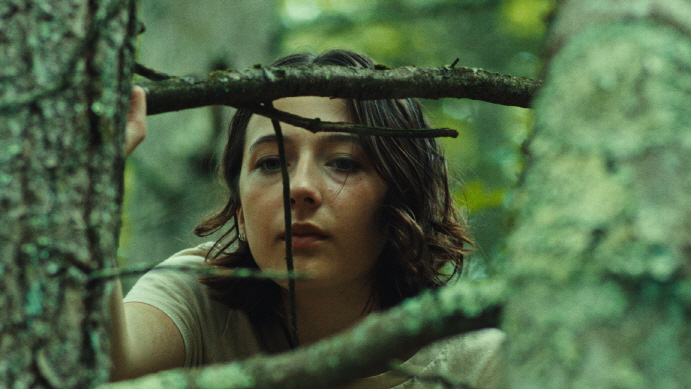
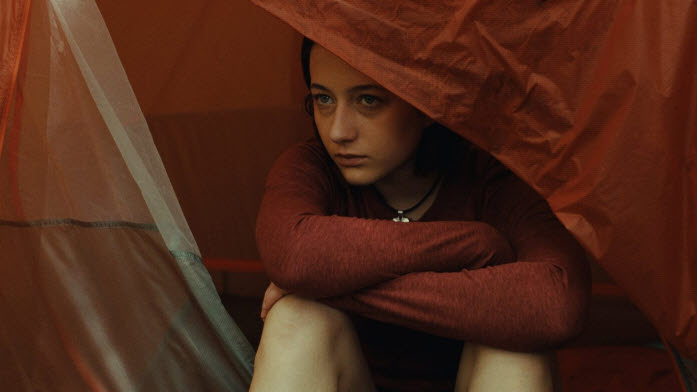
At the beginning, we are introduced to an adolescent girl named Sam (Lily Collias). Along with her father Chris (James Le Gros), she will go on a weekend-long camping trip in the Catskills, and they are supposed to be accompanied with Chris’ best friend Matt (Danny McCarthy) and his adolescent son, but there comes a setback when Chris and Sam come to pick up Matt and Matt’s son. Probably due to some bad feelings between him and his father, Matt’s son refuses to go along with them at the last minute, and Sam is not so pleased to find herself stuck alone between her father and his best friend.

After staying at a local hotel for one night, these three people embark on the camping trip in the next morning, and we are amused a bit as observing how inexperienced Matt is compared to Chris and Sam. While his attire is not so suitable for the camping trip, his backpack is filled with rather unnecessary stuffs which will surely be quite burdensome for him to say the least, and, above all, we cannot help but notice how his physical condition does not look that good in contrast to his two companions.

Anyway, their camping trip mostly goes well as they walk across some forest area of the Catskills during next several hours. While he shows more clumsiness when they are about to set up their respective tents, Matt soon gets more accustomed to their camping trip, and the mood becomes more relaxed when Sam prepares an evening meal she is going to have along with her father and Matt. As watching her preparing three bowls of ramen, I could not help but become a bit nostalgic about the occasional weekend-long mountain-climbing trips I took along with my father many years ago, though our hiking trips did not require that much in comparison.

In the meantime, we get to know Sam and her two adult companions bit by bit. While Chris is usually quite fastidious as your average perfectionist, Matt is often casual in his laid-back attitude, and we come to gather that their longtime friendship is based on how they have complemented each other in one way or another. Both of them divorced once, and, as shown during the opening part of the film, Chris has been currently married to some younger woman who recently gave birth to their baby. 

Sam tries to enjoy the camping trip as much as she can, but we gradually sense some discontent behind her mostly phlegmatic appearance. Sandwiched between her two adult companions, she is sometimes expected to nurse their fragile male egos, and that is how she starts to observe more of the human flaws of her father and his best friend – especially when she and they go through the last night of their camping trip. As Chris and Matt come to show more of their personal feelings and thoughts while incidentally becoming quite drunk, Sam becomes more observant while occasionally giving some emotional support to either of them, and then there comes a little uncomfortable moment when Matt blurts out something rather inappropriate when they have some talk during Chris’ absence.

Firmly sticking to its restrained storytelling approach even at that narrative point, the movie continues to build up a subtle sense of discomfort and conflict without spelling out anything too much to us. When Sam makes a sudden spiteful decision later in the story, we are not that surprised because we have already sensed what has been accumulated behind her reserved attitude, and the following finale is accompanied with some tension even though nothing much seems to be happening on the screen.

Like any good character drama films, the movie depends a lot on the efforts from its main performers, who did a splendid job of filling their respective roles with details and nuances to be observed. Although she only appeared in a few films including “Palm Trees and Power Lines” (2022) before this film, Lily Collias ably holds the center as vividly illustrating her character’s emotional journey along the story, and we may see more of her considerable talent during next several years. In case of James Le Gros and Danny McCarthy, they are equally engaging in their respective parts while never overshadowing their co-star at all, and we come to regard their characters as flawed human beings who often fail to recognize the thoughts and feelings of the girl they have known for years.       

As a quiet but haunting coming-of-age tale which, “The Good One” distinguishes itself a lot with not only its crisp ambiance and images of nature courtesy of cinematographer Wilson Cameron but also a number of subtle emotional moments to be appreciated. This is surely one of more interesting films of this year, and director/writer/co-producer India Donaldson makes a solid feature film debut here in this film. As far as I can see, she is a talented filmmaker to watch, and I will certainly have some expectation on her next film to come.

Posted in Movies | Tagged , , | 1 Comment