Stars in the Ordinary Universe (2023) ☆☆(2/4): Three plain acts

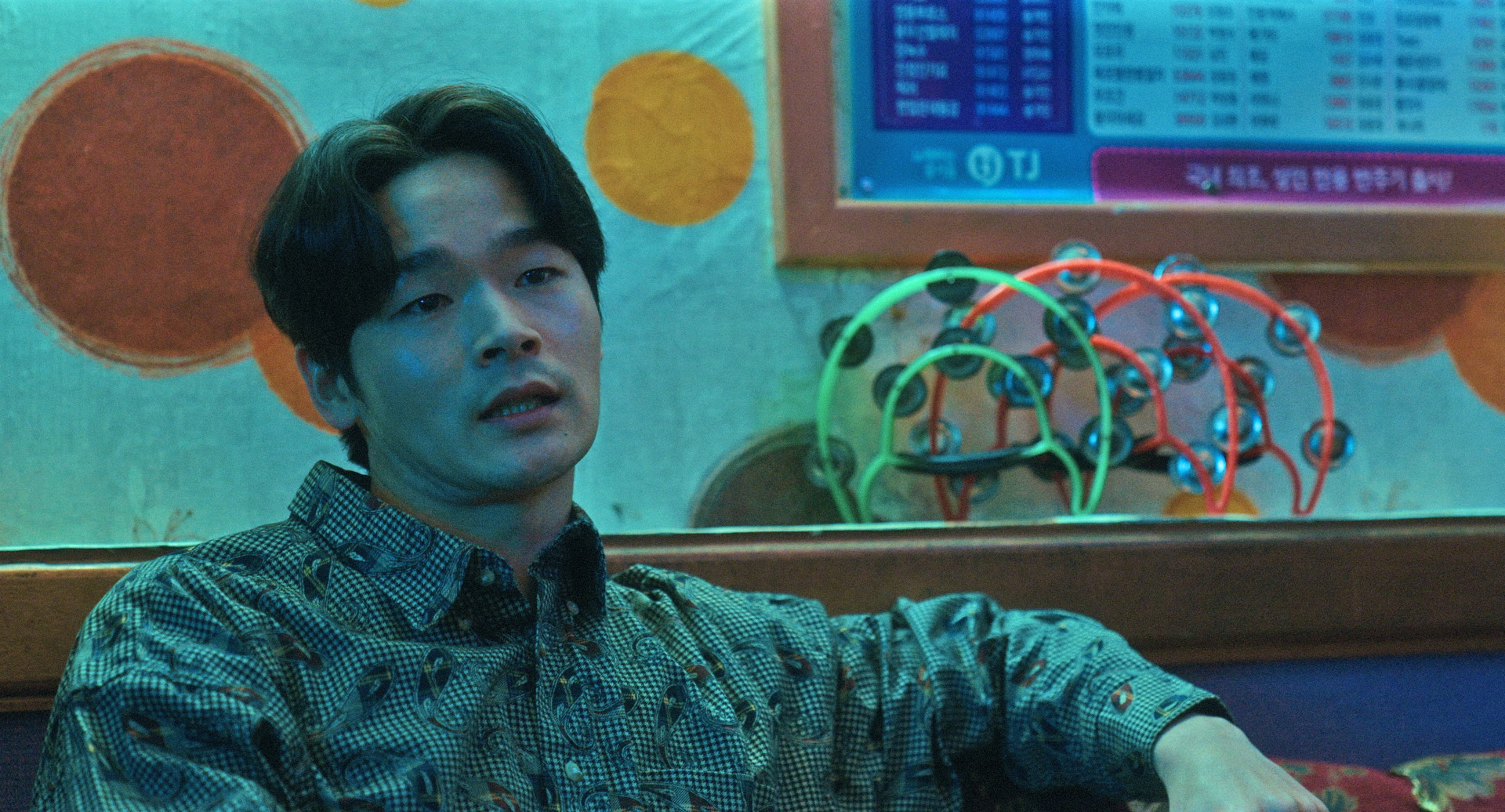
South Korean film “Stars in the Ordinary Universe” attempts to be absurd and funny, but the result is mediocre and middling in my humble opinion. Consisting of three individual acts connected with each other to some degree, the movie reaches for any meaning in our life and existence, but, not so surprisingly, there is not any answer even at the end, and, sadly, we do not get enough laugh from that.   

The first act is about one high school girl’s rather silly quest for finding the answer on the meaning of her meager existence. After watching a YouTube video clip made by some questionable dude talking a lot about his ludicrous genetic theory, she decides to go outside her school for just finding the meaning of her inconsequential life, and she even visits that dude just for listening more to whatever he says in front of her and the camera.

Nevertheless, she only finds herself wandering more and more without any clear answer in front of her, and the movie dryly follows her quest without much direction. Several absurd things happen to her, but none of them gives any clear answer for her, and that makes her more confused and frustrated before she eventually arrives at her own conclusion.   

The first act is the weakest part in the movie because it feels like a barebone one-joke comedy still in the need of more narrative development, but its overall mood is buoyed by the likable performance from Park Seo-yoon. She did a good job of handling a couple of deadpan moments reminiscent of the early works of Wes Anderson, and she will probably move onto better things to come after this film.  

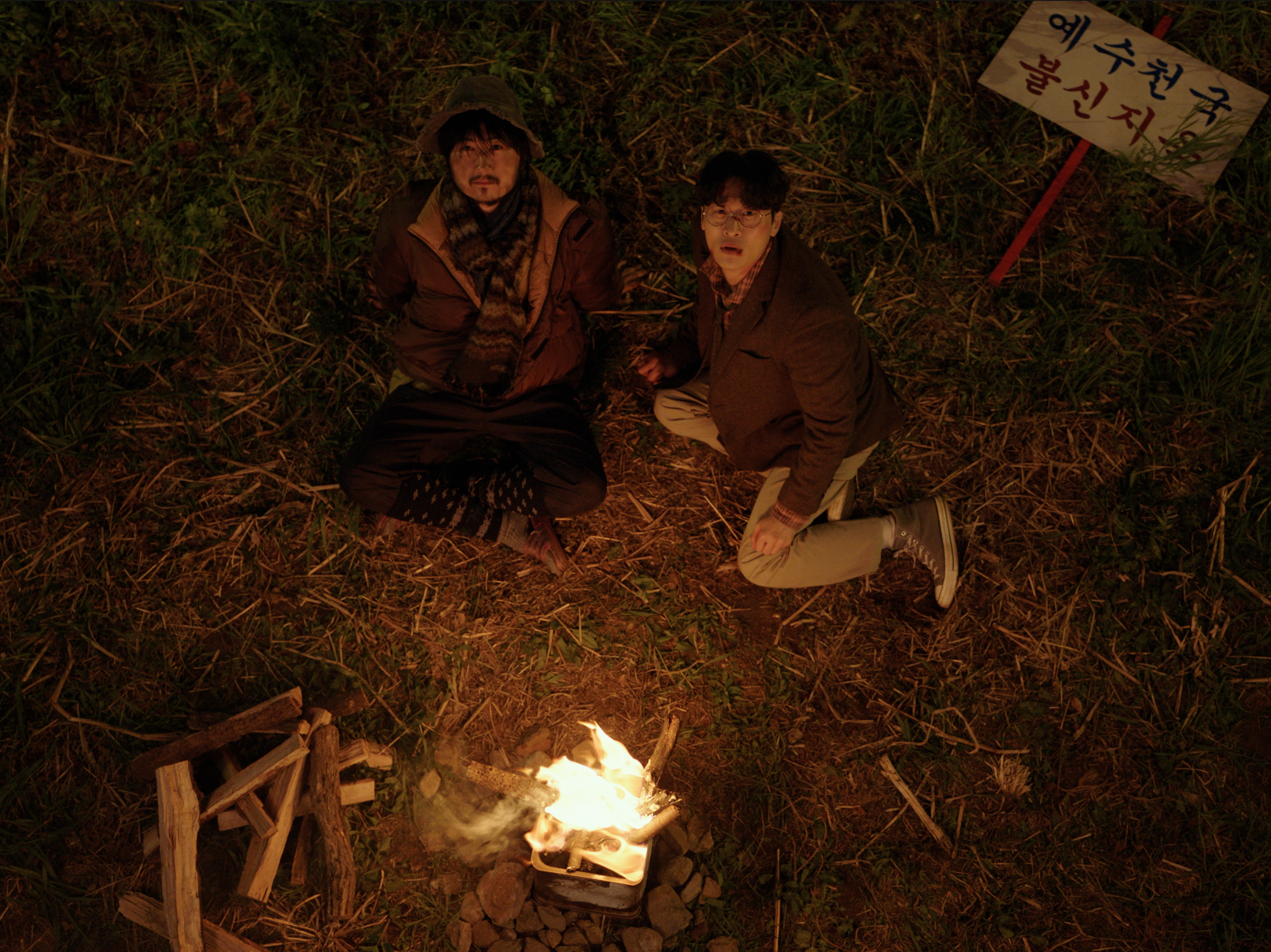
The second act is about a beggar who briefly appears in the previous act. He talks about how ambitious he was even when he was a little boy, and we get a series of absurd moments showing how he clumsily tried to accomplish his goal in one way or another. For example, he tried to be the prefect of his classroom when he was young, but his attempt was quickly crushed, and this pattern went on and on throughout his life.

Nevertheless, he was not deterred at all, and then he met a woman who had been always special to me since their childhood. As they got closer to each other, she wanted him to be more serious about their relationship, but, of course, he was too occupied with his ambitious goal from the start, and that eventually led to the end of their relationship.

And we see more of how he failed again and again no matter how much he tried to reach for his goal. At one point, he tries to establish his own political party for running for the upcoming presidential election later, but he only ends up getting ridiculed a lot by others, and then he becomes all the more frustrated when he has to take care of the huge debt caused by the failure of his father’s business.

Just like the previous act, the second act feels like being stretched a bit too thin, but it is not entirely devoid of amusement at least. Sim Kyu-ho is effective in his low-key acting, and his deliberately monotonous monologues could be more amusing if it were accompanied with more comic development from the screenplay by director/writer Kim Bo-won, who also did the editing besides serving as one of the co-producers of the film.

The third act, which is incidentally the funniest part of the movie, is about a guy who cannot help but tell hard truths to others around them. Just like any other truth teller, he is not so welcomed by others to say the least, and that is evident when he rambles on and on about the universe and human existence before his girlfriend comes to realize that he wants to break up with her.

After that, we get a series of moments which feel rather repetitive but occasionally hilarious at least. The guy keeps telling a truth to one person after another, and he always has to deal with the consequences of his incorrigible compulsion. Nevertheless, he keeps going no matter how often he gets beaten or slapped, and he eventually ends up spending some time with the aforementioned beggar, who does not mind hearing any hard truth from his new company because, well, he does not get easily upset as a man with nothing to lose.

Around that narrative point, the third act begins to spin its wheel, and the following ending is not that satisfying, but Oh Dong-min and several other performers stick to their deadpan acting style to the end. In fact, Oh is actually much funnier compared to when he was hopelessly stuck in “Next Door” (2022), which I vehemently detested for many reasons.    

In conclusion, “Stars in the Ordinary Universe” is mildly amusing at times, but all of its three acts unfortunately come to wear out their welcome within 10 minutes. While I have to admit that I did laugh more than once during my viewing, I also became impatient from time to time despite its rather short running time (70 minutes), and the overall result feels like a mere test run for whatever may come next in the director’s career. Although this is his first feature film, he still looks like being in the middle of the transition between short and feature film, and I can only hope that he will soon move onto the next steps and then impress me a lot more in the future.
Posted in Movies | Tagged , | Leave a comment

Helpless (2023) ☆1/2(1.5/4): Those pathetic YouTubers

As far as I have learned from many various comedy films, anything can be used for good laughs, and that is why I do not mind comedies delving into unpleasant subjects at all. However, South Korean film “Helpless” is merely unpleasant without any fun or interest for me, and I must confess that there are actually several very unpleasant moments which made me quite disgusted or annoyed during my viewing.

The story mainly revolves around a lad named Guen-seong (Heo Ji-won). There was once a time when he was expected to become a successful entertainer, but he struggles to earn his meager living as a salesman at present. Although he has tried to earn a bit more money as a part-time YouTuber, nobody on the Internet pays much attention to his YouTube channel, and that makes him more frustrated with his pathetic current life.

In contrast, Jong-man (Nam Yeon-woo), one of his old classmates, has been quite famous as a YouTube comedian. When Geun-seong and several other classmates gather for a drinking evening, Jong-man flaunts his success in front of his classmates a bit, and Geun-seong naturally becomes more envious of Jong-man’s ongoing success, though he is already too drunk to talk anything to interest Jong-man.

On the next day, Geun-seong belatedly comes to realize that he made a serious mistake in the middle of the previous night. Still quite inebriated, he started another live streaming on his YouTube channel, and then he claimed that Jong-man frequently bullied him during their old school days. Although there is no evidence to support that, Geun-seong’s YouTube video soon becomes quite popular on the Internet, and Geun-seong cannot help but excited to get more attention at last, even while knowing well that whatever he is going to say will hurt Jong-man’s success more.

It goes without saying that Geun-seong becomes more and more obsessed with drawing all the more attention from thousands of online viewers out there, and what we see next is not so pretty to say the least. At one point, one of those online viewers demands Geun-seong to do something too disgusting to be described here, and Geun-seong finds himself willingly following the demand because, well, he needs money more than ever after getting fired from his salesman job. Yes, I have heard a lot about how many YouTubers are willing to do anything for more fame and success, but this particularly repulsive moment merely disgusted me without any laugh at all.

Meanwhile, Geun-seong is approached by Mi-jeong (Go Won-hee), a woman who once got involved with Jong-man some time ago. She also wants to say something negative about Jong-man, and, what do you know, their joint live streaming on his YouTube channel becomes all the more successful as they accuse Jong-man of one thing after another. In addition, as working more with her, Geun-seong considers getting a bit closer to Mi-jeong, and she does not seem to mind this at all to his surprise.

Needless to say, Jong-man, who has been not so pleased about his decreasing popularity, has something to offer for Geun-seong, and that is where the situation becomes a lot uglier than before. We see more of how pathetic and clueless Geun-seong is in his pursuit of more success, and we are not so surprised by the dark consequence of his following actions.

Around that narrative point, we are supposed to be more engaged in the story and characters, but the screenplay by director/writer Jeon Seung-pyo fails to provide any depth or personality to observe. Besides being pretty unlikable at times, Geun-seong is quite a superficial character from the beginning, and that is why we observe his eventual fall from the distance without much care. In case of several other substantial characters in the story, they are more or less than mere plot elements too shallow to hold our attention, and most of them are as banal and unpleasant as Geun-seong.

The movie eventually attempts to generate some tension during its last act, but its execution is clumsy and tedious as only leaving more unpleasant impressions on us. Yes, its hero is bound to go lower as expected, but the movie ends up spinning its wheels again, and it even does not seem to know when and how to end the story.       

 The main cast members in the film try to fill their respective roles as much as they can, but, alas, they do not have enough material for that from the very beginning. While Heo Ji-won is only demanded to look petty and pathetic unless he is required to go through more humiliation along the story, Nam Yeon-woo is helplessly stuck with his thankless supporting role, and the same thing can be said about Go Won-hee, whose presence lightens up the mood a bit for a while despite being quite under-utilized.

Overall, “Helpless” is one of the most unpleasant South Korean films I have ever seen during last several months. I watched it just because I had to evaluate it and several other South Korean independent films for an upcoming local film award ceremony, and, needless to say, it is already at the bottom of my ranking to submit. I am now ready to move onto anything better, and I sincerely hope that I will forget this terrible film as soon as possible.

Posted in Movies | Tagged , , | Leave a comment

Can We Get Married? (2024) ☆☆1/2(2.5/4): Between his family and his girlfriend

South Korean film “Can We Get Married?” starts as a comedy and then becomes something more serious and painful. Although I am not so sure about whether its mix between broad comedy and sentimental drama works as well as intended, the movie engages us to some degree as observing its hero’s realistic financial problem along the story, and it will probably make you reflect more on the importance of health insurance once it is over.

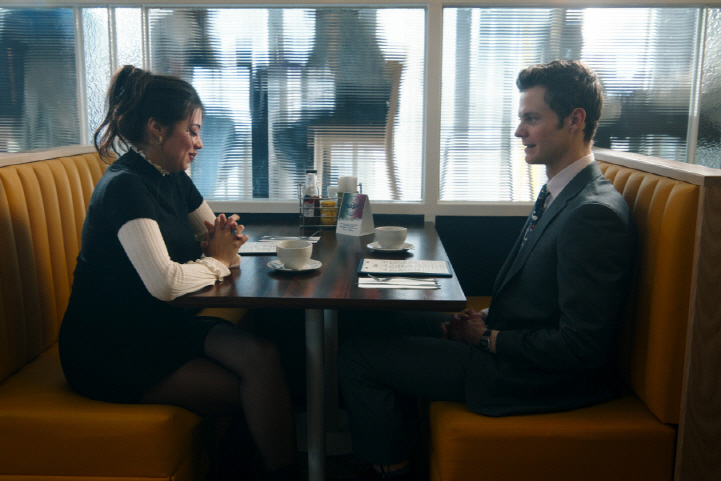
At first, the movie observes how things have been good for Seon-woo (Lee Dong-hwi) and Woo-jeong (Han Ji-eun). They have been lovers during last several years, and Woo-jeong is eager to get married and then live along with her boyfriend, but Seon-woo still hesitates for a good reason. While he is teaching architecture at a local university, he has not been officially hired as a professor yet, and he also has to do a part-time job at a construction site for earning more for him as well as his future life with Woo-jeong.

In case of his family, they do not have much problem with Woo-jeong at all, but they turn out to be rather problematic. Seon-woo’s father is a loser who has lived with his senile mother since his divorce, and he cannot help but become petty when his younger brother, who is incidentally much more affluent in comparison, comes to his residence. Seon-woo’s mother does not want to get involved with her ex-husband anymore, but she agrees to meet Woo-jeong’s mother along with him just for her dear son.

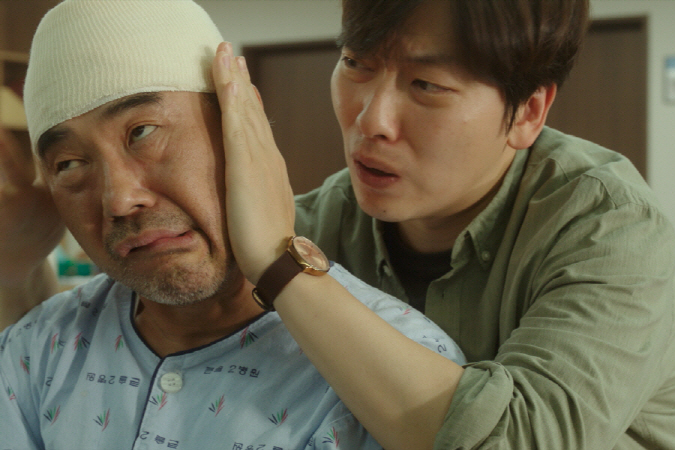
However, there comes an unexpected happening right before that meeting. Seon-woo’s father is suddenly sent to a big hospital due to cerebral hemorrhage, and he subsequently comes to have a couple of brain surgeries due to his serious illness. Needless to say, his hospital bill is quite expensive to say the least, but, alas, Seon-woo belatedly comes to learn that his father does not have any medical insurance to cover his hospital bill. As the closest family member of his father, he will have to take care of this alone by himself in the worst case, and that certainly throws him into more panic.

What follows next is a series of painfully absurd scenes where Seon-woo tries one thing after another for handling this financial emergency. He manages to get his father insured within a short time, but his father needs to be a basic pension recipient. Unfortunately, it soon turns out that his father did not register his current address just because of his serious debt problem. This is just one of many obstacles Seon-woo will have to deal with, and he only becomes more frustrated and exasperated, no matter how much he tries as a dutiful son.

To make matters worse, there is no one to help him around Seon-woo. While Seon-woo’s mother does not have much money from the beginning, Seon-woo’s grandmother is not so reliable due to her current senile status, and Seon-woo’s affluent uncle is not that willing to help his nephew even though showing some concern on his older brother.

At least, Woo-jeong tries to stand by Seon-woo as before, but she only finds herself estranged more and more from him as he is frequently occupied with how to solve his father’s medical bill problem. As she comes to spend more time at a nice coffee shop where she has worked, it turns out that the owner of the coffee shop, who seems like a nice dude, shows her some genuine interest and care, and that makes Woo-jeong more conflicted than before.

Around that point, the screenplay by director/writer Kim Jin-tae becomes more sentimental and melodramatic as expected, but this often clashes with the lighter aspects of the story. On the one hand, we get a number of harrowing moments showing how hard it really is for Seon-woo to take care of his ill father. On the other hand, we are also served with more absurdity as Seon-woo tries to take care of his father’s medical bill. Instead of generating any narrative synergy between them, these two contrasting parts feel rather disjointed together, and that is the main reason why the ending is glaringly artificial in my inconsequential opinion.

Nevertheless, the movie is equipped with some sincerity and care thanks to the good efforts from its main cast members. In addition to having enough chemistry between them throughout the film, Lee Dong-hwi and Han Ji-eun are convincing as illustrating the gradual change in their characters’ relationship along the story, and there is a poignant moment when Seon-woo and Woo-jeong become more aware of how much their relationship has been strained due to Seon-woo’s ongoing personal matters. In case of several substantial supporting performers in the story, Cha Mi-kyung is effective as her character shows more care than expected, and Kang Shin-il holds his own small place well despite his thankless role.

In conclusion, “Can We Get Married?” did not engage me enough for recommendation due to its rather flawed storytelling, but it makes some good points on its main subject at least. To be frank with you, after watching the movie, I came to think about how my parents can still take care of their health matters with pension and medical insurance despite being over 70 at present, and now I wish more that they will remain like this till the end. Sure, their time will eventually come someday, but, folks, I really hope that my parents will suffer as little as possible without causing too much financial burden for me and my younger brother.

Posted in Movies | Tagged , , | Leave a comment

Drive (2024) ☆☆1/2(2.5/4): A kidnapping on live 

South Korean film “Drive” drives along a rather predictable course without surprising me that much. While reminiscent of many other similar thriller films out there, the movie is frequently hampered by thin characterization and contrived plot, and I can only appreciate the considerable efforts from its lead actress, who did her best for carrying the film to the end.

Park Ju-hyun, who become more notable as appearing in three films including this movie during last year, plays Han Yoo-na, a young woman who has been a successful YouTube Influencer. The opening part shows how clumsy she was during her first several YouTube clips, but, once she gets to learn how to draw more viewers out there, her popularity gradually increased, and now she even has her personal producer to assist him.

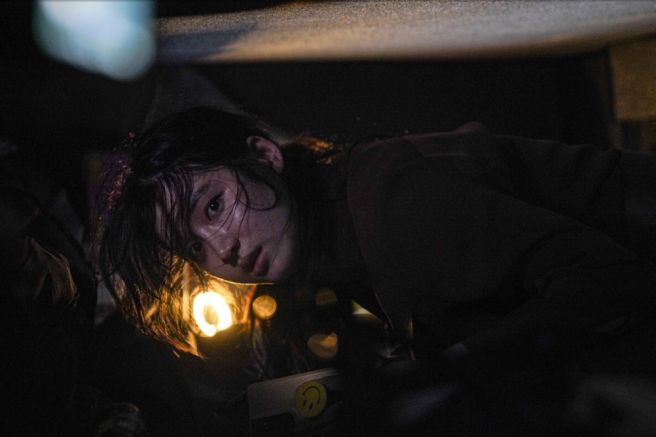
However, things recently do not go that well for her. Besides competing against many other popular YouTube influencers out there, Yoo-na also has to deal with the boss of a big agency company who turns out to have a deplorable motive behind his back. Quite exhausted around the end of the day, she falls asleep in her car, but, to her shock and bafflement, she later finds herself trapped inside the trunk of her car.

A call soon comes from an old cellular phone near her, and whoever is on the other side of the line demands Yoo-na something almost impossible. The kidnapper wants no less than one billion won from her, and this figure is quite adamant even though she only has 350 million won for now. She must collect the rest of the ransom by any means necessary within one hour before the kidnapper will eliminate the car along with her, and, needless to say, the only option for her for that is the live streaming of her YouTube channel.

Of course, Yoo-na calls the police first, but it only becomes apparent to her that she cannot get much help from the police right now. As she reluctantly starts her YouTube live streaming, many viewers out there do not believe at all what is happening to her right now – until the kidnapper shows that this is indeed real and Yoo-na might end up getting killed.

Anyway, as the clock is ticking second by second, Yoo-na tries to find any possible way out for her, though her kidnapper seems to predict every desperate move of hers in advance. There is a brief amusing moment involved with one certain YouTube clip showing how to unlock a car trunk from the inside, and you may also find that helpful if you ever get yourself trapped inside your car trunk.

If the movie steadily sticks to its heroine’s increasingly perilous plight, the movie could be more tense and suspenseful, but, alas, the screenplay by director/writer Park Dong-hee, who incidentally made a feature film debut here, only becomes less focused as unnecessarily showing whatever is going outside the car trunk. There are a couple of competent action scenes, but, instead of providing more thrill and excitement, these only dissipate the claustrophobic tension surrounding its heroine while adding more plot contrivance to the film.

In addition, the movie also fails to delve into the ironic circumstance of its heroine, who comes to need others’ attention a lot more than before. Not so surprisingly, she turns out to have a fair share of deception and hypocrisy behind her back, and the kidnapper naturally corners in one way or another just for humiliating her in front of millions of viewers out there. Unfortunately, the expected melodrama generated from this extreme situation is rote and superficial, and we come to observe its rather unlikable heroine’s ongoing plight without much care or attention.

Furthermore, the movie also stumbles more than once in case of handling several substantial supporting characters in the story, most of whom could be a bit more convincing if they were off the screen. They are more or less than mere plot elements, and we come to sense more of the manipulative aspects of the plot when the movie shows a certain supporting figure too early in the story.  

 Anyway, Park’s lead performance holds the center as much as possible. Especially during the middle part of the film, she is convincing in her character’s growing panic and terror, it is a shame that the movie does not trust her talent enough. As far as I can observe from her good efforts, she could actually support the whole film alone by herself, and that would make the film much more interesting in my humble opinion. 

Around Park, several notable performers are only stuck in their thankless supporting parts with nothing much to do, and that is another disappointment for us. Kim Do-yoon, Kim Yeo-jin, Jun Suk-ho, and Ha Do-kwon are surely good performers, but there is no fun or surprise from their bland cardboard roles – especially if you remember the law of Economy of Characters.

Overall, “Drive” is not a total waste of time despite its several glaring flaws, and I enjoyed it to some degree. Nonetheless, I can instantly think of a number of better thriller films such as Rodrigo Cortés’s “Buried” (2010), which still chills me a lot whenever I think of its several terrifying moments. To be frank with you, you should check that little but effective thriller film instead, and you may thank me for that later.

Posted in Movies | Tagged , , , | Leave a comment

Novocaine (2025) ☆☆1/2(2.5/4): Numb and painless, shall we say

“Novocaine” is a one-joke comedy action film which goes too long and violent in my humble opinion. While it generates some funny moments from its exaggerated comic story premise, the movie is also often blatantly violent as its hero endures a lot of brutal actions via a certain disability of his, and its rather uneven mix of comedy and violence becomes tiresome especially during its last act.

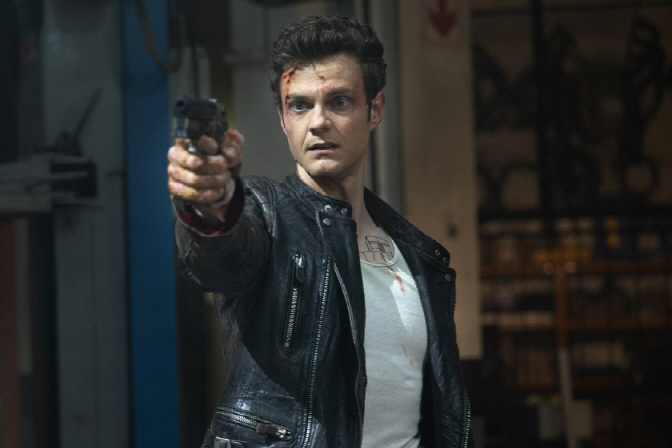
First, let me explain a bit about the medical condition of its hero. Due to his congenital neurological disorder, Nathan Caine (Jack Quaid) cannot feel physical pain at all, and that has been a big obstacle in his daily life. Although he has earned his living for himself while working as a bank employee, he must always be careful about any possible physical damage he is unable to sense, and we observe how much he is constantly careful about his disorder at the beginning of the story.

Except one online friend with whom he has often played a video game, Caine, whose nickname is incidentally “Novocaine”, understandably does not have much social life outside his work, but he has actually paid some attention a young female employee in his workplace. She is Sherry Margrave (Amber Midthunder), and he finally gets sort of Meet Cute moment between them, but this moment is not exactly pleasant due to the latest injury inflicted on him.

Anyway, Sherry later suggests that they should have a lunch together outside, and Caine cannot possibly say no, though he has to be careful about his eating. He is not allowed to eat anything solid because he might chew or cut his tongue without sensing that at all, but, what do you know, he finds himself taking a bit of risk when Sherry recommends a bit of delicious cherry pie to him. Even after he fully reveals his medical condition, she is still quite willing to spend more time with him, and that surely makes Caine feel all the happier.

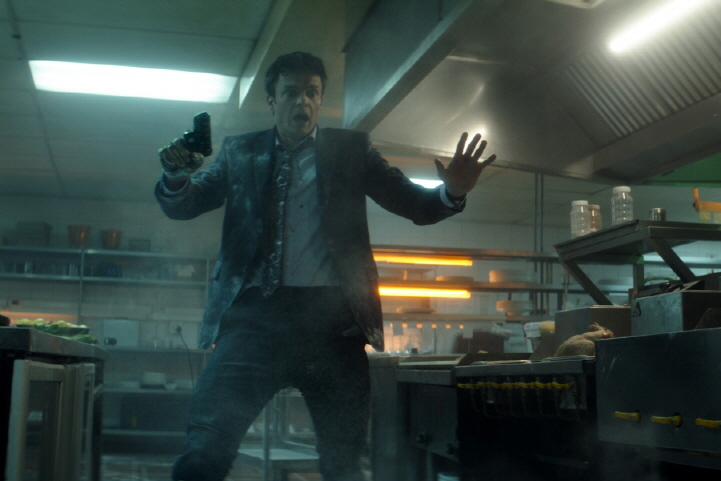
However, there subsequently comes a very unexpected situation. In the middle of their working hour, a trio of gunmen disguised as Santa Clauses suddenly break into the bank, and, after killing the bank manager, they take away a lot of cash in the bank safe. In the middle of this emergency, these bank robbers also kidnap Sherry, and it seems to Caine that he is the only one who can chase after the bank robbers right now.

Needless to say, Caine soon comes to realize that his medical condition can actually be an advantage in this situation, and the movie uses his disability as a good excuse for a series of intense action scenes decorated with many different physical damages. As sustaining more and more physical damage without any pain at all, our meek hero surely feels invincible to say the least, and he sometimes takes a shot of adrenaline just for keeping himself boosted to the end.

Later in the story, the situation gets more complicated for him. As the bank robbers come to learn more about their unexpected opponent, the police also go after Caine as another prime suspect in the case, and Caine has to depend a bit on several other people including that online friend of his, who comes to help him more than expected even though they have never met each other in person.

And the movie continues to serve us with more action scenes, which will make you wince at times for good reasons. During the action scene involved with a hulking neo-Nazi tattooist, Caine willingly uses some pieces of shattered glass for fighting against this big dude, and you will be alternatively amused and horrified by how he does that. In case of another action sequence unfolded inside a certain shabby place full of booby traps, we get a hilarious moment when Caine must feign to feel pain just for holding one of the bank robbers longer for his possible survival.

However, the movie eventually spins its wheel during the last act as reminding us more of how superficial it is in terms of story and character. While a certain big plot turn in the middle of the story is not particularly surprising, the movie also becomes more excessive during its obligatory climax action sequence, which sometimes feels like being tacked on the story just for more running time.

At least, we can all appreciate the game efforts from the main cast members. Jack Quaid, who has been more notable during last several years, gives a likable comic performance as diligently carrying the film to the end, though I must point out that he was more impressive in “Companion” (2025). He and Amber Midthunder have a nice chemistry during their several scenes early in the film, and we can clearly sense why Caine is willing to risk a lot for the woman he only gets to know a bit. In case of several other notable performers including Ray Nicholson, Jacob Batalon, Betty Gabriel, and Matt Walsh, they are mostly under-utilized due to their colorless supporting parts, and I must point out that Nicholson, who is incidentally the son of Jack Nicholson, was much more menacing when he briefly appeared in “Smile 2” (2024).

“Novocaine” is directed by Dan Berk and Robert Olson, who previously made “Villains” (2019). Here in this film, they did a competent job of handling the action scenes in the film, but the result is less funny and engaging then “Villains” for its weak narrative and thin characterization. While it is sometimes too violent to be funny, it is also too superficial to be really funny, and I was only left with numb and mixed feelings in the movie. I was not bored at least, but folks, they could do better than this.

Posted in Movies | Tagged , , , , | Leave a comment

The Count of Monte Cristo (2024) ☆☆☆(3/4): He returns for revenge…

Alexandre Dumas’ classic novel “The Count of Monte Cristo” is actually a useful guidebook on how to execute a revenge on your mortal enemy as precisely and efficiently as possible. Besides patiently waiting for the right time and the right place for his cold-blooded vengeance upon his targets, its hero meticulously plans on how his targets can be truly punished and then destroyed to the end, and we get some nasty but cathartic fun from the effective execution of his devious revenge plan.

Its latest movie adaptation version of the same name, which came out in France in last year, knows and understands well what makes Dumas’ unabashedly pulpy novel so fun and thrilling, and its result is engaging enough to justify its almost 3-hour running time. While it is a bit strained at times as trying to press the epic melodrama of Dumas’ novel into the limited running time, the movie seldom bores us as busily juggling its plot and characters, and it surely serves its hero’s revenge pretty well on the whole.

The early part of the movie, which is mainly set in Marseille, France in 1815, establishes how its hero, Edmond Dantès (Pierry Niney), suddenly falls from one of the happiest days in his life to the bottom of hell. At the beginning of the story, he is a decent sailor lad who gets promoted to the position of captain because of one brave act of his in the middle of the latest voyage of his ship, and this unexpected change in fortune for him finally makes him propose to Mercédès Herrera (Anaïs Demoustier), a young beautiful women he has loved for years.

However, there are several people ready to destroy him for each own reason. His predecessor, Danglars (Patrick Mille), is not so pleased about getting fired, and he happens to have something quite useful for getting Dantès wrongfully accused of a serious act of treason associated with the exiled Napoleon. After Dantès is eventually arrested later, Fernand de Morcerf (Bastien Bouillon), who is Mercédès’ cousin and also Dantès’ best friend, tries to save his friend, but then he is subsequently persuaded to add more accusation on Dantès by the prosecutor assigned to Dantès’ case, who also wants to get rid of Dantès as much as Danglars and de Morcerf (Yes, he has also hoped to marry Mercédès).

Several years after he is sent to a remote island prison where he gets incarcerated in a solitary cell without any hope or consolation, Dantès happens to encounter someone who becomes his friend and mentor. That person is question is an old priest who turns out to be quite knowledgeable in many aspects, and Dantès and that old priest soon embark on their secret escape plan as Dantès becomes more determined about getting out of the prison someday.

The movie feels a bit clunky as hurriedly rolling the plot during its first hour, but it thankfully builds up more narrative momentum once its hero finally escapes from the prison shortly after his mentor’s death. After finding that everything in his life is gone, Dantès becomes more vengeful than before, and, fortunately, his mentor told him about the enormous amount of wealth hidden inside a little island located somewhere in the middle of the Mediterranean Sea (Do I have to tell you the name of the island, by the way?).

After getting to know more about how the targets of his revenge have been living pretty well since his arrest, Dantès carefully and patiently sets up the traps for each of them, and that is the main source of fun and entertainment in the film. He wisely waits until all of his targets feel like being at the top of the world thanks to more success and wealth for each of them, and then he slowly and insidiously shakes up their respective successful status in one way or another, while deftly insinuating himself into their world as a very wealthy aristocrat who may benefit them more.

As Dantès’ targets unwittingly get trapped more according to his plan, directors Matthieu Delaporte and Alexandre de La Patellière, who also adapted Dumas’ novel together, provides a series of effective moments to be appreciated. There is a darkly amusing scene where Dantès slyly toys with his targets as suggesting a certain terrible secret involved with one of this targets, and Pierre Niney, who previously appeared in Michel Gondry’s “The Book of Solutions” (2023), did a good job of balancing this scene between dramatic intensity and black humor.

Meanwhile, we also come to care more about a few other main characters besides Dantès. There are two certain figures willing to serve as the tools of his revenge, and there is some little poignancy in their respective subplots. In case of Mercédès, who is now married to de Morcerf, she instantly recognizes Dantès right from when they meet again, and we later get a bittersweet private scene where they are allowed to show a bit more of themselves while still not admitting anything to each other.

Because I have not seen every movie adaptation of Dumas’ novel (Full Disclosure: I have not even fully read Dumas’ novel yet), I cannot tell you whether “The Count of Monte Cristo” is the best one in the bunch, but the movie is entertaining enough for its skillful storytelling as well as its excellent production qualities. Sure, they say revenge is ultimately futile, but it is usually compelling to watch a revenge served quite well, and the movie presents well one of such fun cases in my trivial opinion.

Posted in Movies | Tagged , | Leave a comment

Problemista (2023) ☆☆☆(3/4): A quirky surreal immigration comedy

I must confess that “Problemista”, which is currently available on Netflix in South Korea, was an acquired taste for me. At first, I was baffled a lot by its colorfully quirky comic style coupled with a heap of surrealistic absurdity, but then the movie becomes sort of sincere and endearing while never dulling its distinctive style and humor, and I came to admire its odd comic concoction more as having a bit of good laugh.

Julio Torres, who also directed and wrote the film in addition to serving as one of its producers, plays Alejandro, a meek El Salvadoran lad who recently moved to New York City for realizing his little but precious dream. Even when he was very young, Alejandro’s artistic creativity was constantly nurtured by his artist mother, and he sincerely hopes that he will succeed as a toy maker in US someday.

However, not so surprisingly, Alejandro has struggled with a lot of harsh reality since he arrived in New York City. He applied for the employment at a certain prominent toy company with some original ideas for new toys, but there has not been any response yet. For maintaining a labor visa to allow him to stay in US at least for a while, he has to work in some cryogenic company instead, and all he has to do is simply maintaining a little room where the body of some unknown artist is being stored along with some personal stuffs.

On one day, his life gets turned upside down unexpectedly. Alejandro gets fired just because of a minor mistake, so he naturally becomes quite panicked about losing his labor visa sooner or later, but then there comes an unlikely opportunity via Elizabeth (Tilda Swinton), who is incidentally the wife of that unknown artist. She happens to need an assistant to help her gathering and then exhibiting the works of her husband, and Alejandro willingly offers himself to Elizabeth even though he does not know anything about how to work under her.

Needless to say, Elizabeth turns out to be quite demanding and confusing to say the least. Besides her constantly capricious temper, she frequently demands Alejandro to do one thing after another, and Alejandro manages to do the jobs despite his considerable lack of skills, but it becomes more apparent to him that his new boss is utterly impossible. She wants to gather all those works by her husband just because she needs to sell them all for getting enough money for maintaining his current status, but, alas, his works still do not draw much attention as before, even though she firmly believes that they are valuable artworks. Naturally, she becomes all the more desperate and neurotic than before.

Nevertheless, Alejandro keeps trying to tolerate and support his new boss, even while his current situation becomes a lot more desperate than before. Till the deadline recently set upon him, he must have enough money for extending his labor visa in addition to persuading Elizabeth to become his American sponsor, and the movie has some naughty fun with how much he is tempted to bend himself lower for getting the money as soon as possible. At one point later in the story, he lets himself get hired as a “cleaning boy” via Craigslist, and that leads to one of the most absurd moments in the film.

Meanwhile, Alejandro’s creative mind cannot help but imagine one thing after another, and that is where the movie becomes quite surrealistic to our bafflement and amusement. We see how he conceives those funny ideas for new toys, and then we get a brief but striking fantasy moment showing the absurd aspects of a bureaucratic system which always puts one obstacle after another in front of him. As trying to deal with Elizabeth’s crazy demands every day, he often imagines himself as a knight to handle a dragon figure representing Elizabeth, and that certainly generates some extra amusement for us.

All these and many other comic moments in the film could be merely whimsical on the surface, but the movie gradually reveals surprisingly sincere sides behind its flamboyant comic style. Alejandro’s ideas for new toys in the film were actually from Torres himself and his mother, and we can clearly sense some personal aspects from them. In case of Elizabeth, she turns out to be a bit more than a wacky caricature as showing some heart to her struggling employee, and we come to accept her incorrigibly tempestuous nature as much as Alejandro does around the end of the story.

Torres’ earnest lead performance functions as a straight counterpoint to many surreal elements in the story including the delightfully hammy performance from Tilda Swinton, who gladly chews every moment of hers in the film as demanded. While Isabella Rossellini also has a lot of fun in her deadpan narration, Catalina Saavedra provides some warmth to the film as Alejandro’s caring mother, and several notable performers including RZA, Greta Lee, Kelly McCormack, and Larry Owens ably fill their respective spots around the story.

Overall, “Problemista” is decidedly offbeat from the beginning to the end, but it surely demonstrates the considerable talent of Torres, who has been known as one of the main writers for “Saturday Night Live”. To be frank with you, I am not so familiar with many of his works, but I can tell you instead that he makes a promising feature film debut here, and it will be interesting to see what may come next from him in the future.

Posted in Movies | Tagged , , , | Leave a comment

Joy (2024) ☆☆☆(3/4): A story behind IVF

Netflix film “Joy”, which was released several months ago, is a mild but sincere drama about the development of in vitro fertilization. Mainly via the viewpoint of a certain real-life female figure who surely deserves more attention, the movie touchingly depicts how much she and her two male colleagues struggled for their groundbreaking medical achievement, and you may reflect more on what most of us have taken for granted for many years.

That real-life female figure in question is Nurse Jean Purdy, who could have received much more recognition if she had not died too early not long before the first successful case of in vitro fertilization in 1978. At the beginning of the story, she was just a young nurse applying for a position under Dr. Robert Edwards at the University of Cambridge, 1968. Nevertheless, she immediately impresses Edwards with her forthright attitude right from their first encounter, and she soon finds herself assisting him in his ongoing research on in vitro fertilization.

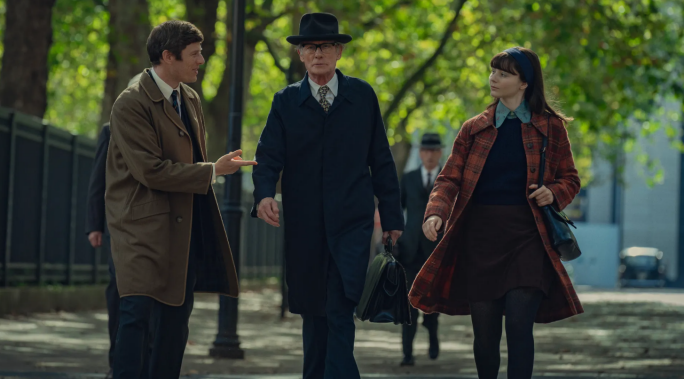
Because of the very sensitive aspects of his medical research, Edwards has struggled to get the funding for his medical research, but he finds someone who can give considerable technical help for attaining the ultimate goal of his research. After a lot of tests on animals, Edwards becomes more confident about how in vitro fertilization may help many unfortunate medical cases of infertility out there, and Dr. Partick Steptoe (Bill Nighy) is willing to provide his innovative medical techniques for the upcoming clinical test on a bunch of female candidates.

However, not so surprisingly, Edwards and his two colleagues soon find themselves facing a lot of objection and controversy for understandable reasons. They still struggle to get enough funding, so they have no choice but to do their research at a hospital where Steptoe has worked for years, even though that hospital is quite far from Cambridge and is also not exactly ideal to say the least. In addition, they soon draw a lot of attention once their medical research is known more to the media and the public, and they are openly criticized by many figures including a certain famous Nobel Prize winner.

And Purdy cannot help but feel conflicted about her job as a devout Christian woman. While still believing that she is really doing the right thing for many unfortunate women out there, she soon gets estranged from her conservative mother and church people, and then she becomes all the more conflicted when she comes to learn more about what Steptoe has often done at his hospital.

However, she and her two colleagues keep going as before, and we observe their strenuous efforts for reaching their goal. They thoroughly test a group of female candidates one by one, and it looks like they can actually succeed several years later, but then there comes an unexpected setback to frustrate and exhaust them all.

The screenplay by Jack Thorne, which is developed from the story by Rachel Mason, Emma Gordon, and Shaun Topp, stumbles more than once during its middle part, but it has its heart in the right place at least. As the plot is unfolded more, we get to know a bit more about not only Purdy but also some of those female candidates for in vitro fertilization, and there is a little poignant moment when Purdy reveals a little personal secret of hers to her ailing mother.

When Purdy and her two male colleagues eventually work together on their research again later in the story, the movie gradually regains its narrative momentum, but it stays calm and restrained even when they are about to accomplish their ultimate goal in the summer of 1978 (Is this a spoiler?). While things go pretty well up to that point, they are still careful and discreet as before, and they must be absolutely sure that everything is all right for their test subjects in the end.

Although the ending is rather anti-climactic, the movie still holds our attention with enough care and sincerity under the good direction of director Ben Taylor, and it is also supported well by its three main cast members. Thomasin McKenzie, a promising young actress who has steadily advanced since her breakthrough performance in Debra Granik’s “Leave No Trace” (2018), dutifully holds the center as required, and she is particularly good when her character comes to form more emotional connection with some of those female candidates along the story. James Norton is relatively bland compared to McKenzie’s engaging acting at first, but his performance gets better as his character shows more care and dedication on not only his research but also its numerous female candidates. In case of Bill Nighy, he is surely dependable as usual while occasionally providing some dry wit to the story as expected, and he and his two co-stars always click well with each other whenever they are on the screen together.

On the whole, “Joy”, which is incidentally derived from the middle name given to the first baby conceived via in vitro fertilization, sometimes feels rather bland and conventional compared to its extraordinary medical research story, but it is still worthwhile to watch for bringing more attention to its hidden female figure at the center of the story. Just like Dr. Rosalind Franklin, who was unfairly neglected for many years despite her undeniably crucial role in the understanding of the molecular structures of DNA, and many other exceptional but unrecognized women of science and technology, Purdy surely deserves to be known and recognized more in my humble opinion, and you will never forget her after watching this fairly entertaining movie.

Posted in Movies | Tagged , , , , | Leave a comment

Don’t Die: The Man Who Wants to Live Forever (2025) ☆☆1/2(2.5/4): His extreme attempt on longevity

I observed Netflix documentary film “Don’t Die: The Man Who Wants to Live Forever” with some conflicted feelings. Here is a man extremely dedicated to staying young and healthy as long as possible, and the documentary closely and fascinatingly examines his unorthodox lifestyle, but it also shows some understandable skepticism at times. To be frank with you, I rolled my eyes more than once during my viewing, but I will not deny that I was also fairly amused and entertained as reflecting more on my rather unhealthy lifestyle.

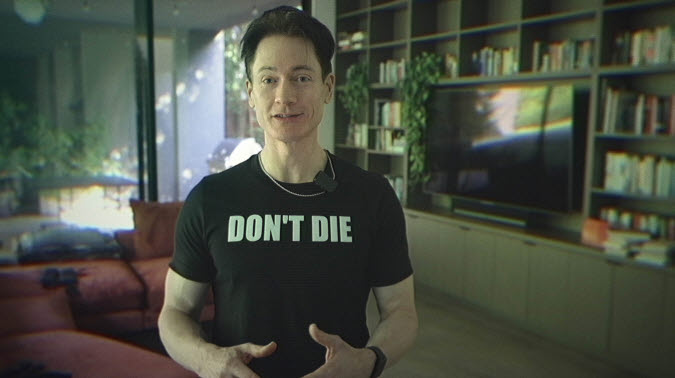
That figure in question is Bryan Johnson, whom many of you have probably heard about as his lifestyle came to draw a lot of media attention several years ago. He was once a very successful businessman who founded a prominent Internet company, but, after selling his company, he has dedicated a lot of himself to his little health experiment project, where he has tested a lot of things on his body for slowing down its aging process.

The documentary shows us how thoroughly Johnson has controlled nearly every aspect of his daily life. Besides an extensive morning exercise routine and many different kinds of vitamin and supplement pills, he firmly sticks to his rigorous diet and daily schedule, and it looks like his entire life revolves only around aging as little as possible. Watching him systemically going through one stuff and another, I could not help but think of how the hero of “American Psycho” (2000) starts another day with a lot of obsessive care on his extremely fit body.

At least, Johnson looks a lot healthier compared to how he looked in the past. When he was the young son of a Mormon couple, he looked rather chubby, and he still looked a little overweight around the time when he finally became a successful millionaire businessman around the 2010s. However, as he candidly admits in the documentary, he was not so happy as constantly letting himself get driven by more work, and that was one of the main reasons why his married life eventually got crumbled. 

 After getting quite motivated to get things under control, Johnson became interested in health and longevity, and that was the beginning of his little private project. As he kept going on and on with his new lifestyle, he found himself getting better and healthier than before, and that made him more obsessed with living long while being literally young in his body. He has delved more into the scientific researches on longevity, and he is surely determined to try everything including a questionable gene therapy just for pushing the limits a bit more.

Now many of you may roll your eyes as much as I did, and the documentary clearly recognizes the absurd aspects of its hero’s journey toward health and longevity. In addition to the understandably critical comments on him, several experts sharply point out why Johnson’s project will likely amount to nothing in the end. After all, any reliable clinical experiment requires a lot of individuals from the start, and Johnson has only tried on himself, hasn’t he?

Furthermore, as promoting his project as well as his little health consulting company in public, Johnson virtually tries to sell his expensive lifestyle to many others out there, and he surely deserves all the criticism he has received as a result. After all, he could afford all those health stuffs because he is quite rich from the beginning, and that takes me back to an old classic Japanese TV animation series, where only rich people can live forever just because they can easily buy an option for immortality unlike many other poor people left out there to die sooner or later.

Meanwhile, director Chris Smith, who previously directed “Fyre” (2019), also tries to capture some human sides of his controversial subject. As living with one of his three children for a while, Johnson comes to have a precious opportunity for getting closer to his kid, who does not have much problem with his father’s odd lifestyle. Just like his father, he does not feel like belonging to their family’s religious background, and that certainly helps him bond more with his father.

When Johnson’s aging father later gets interested in his son’s ongoing project, Johnson has both his father and son join his another odd attempt on slowing down aging process further. I am sure that you will observe this with disbelief and skepticism like I did, but you may be also touched a bit by how these three different people come to make sort of connection among them in more than one aspect.

However, we are still not totally fine with Johnson, and neither is the documentary, even though it ends with a fairly uplifting moment as expected. Later in the documentary, we see him going to a little island near Honduras just for getting that aforementioned gene therapy without any legal trouble, and we naturally come to have more skepticism on his adamant belief on health and longevity.

In conclusion, “Don’t Die: The Man Who Wants to Live Forever” could go deeper into its human subject, but it has some thought-provoking moments for us to muse on. As being over 40 at present, I certainly care a lot more about my health than before, but now I am reminded of Alan Parker’s underrated black comedy film “The Road to Wellville” (1994), which makes a naughty satiric fun on forced health. Sometimes, being *too* healthy is not exactly as good as we think, is it?

Posted in Movies | Tagged , , , , | Leave a comment

Thunderbolts* (2025) ☆☆☆(3/4): A bunch of losers

“Thunderbolts*”, the latest product from Marvel Cinematic Universe (MCU), attempts to bring more fun and excitement to its franchise, and that succeeds to some degree. While this is basically a very familiar mix between “The Avengers” (2012) and “Suicide Squad” (2016), it is thankfully buoyed by the game efforts from the cast members, and I was entertained enough that despite being more aware of my growing numbness to superhero flicks.

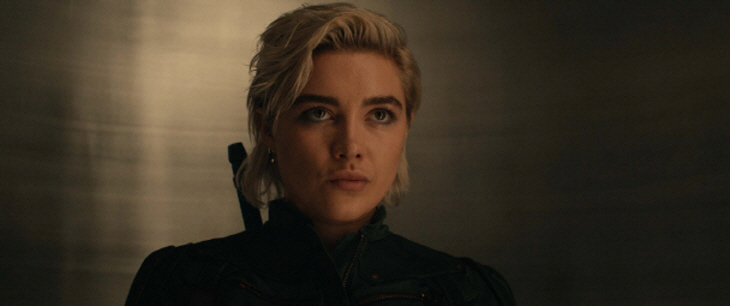
At first, we meet Yelena Belova (Florence Pugh), a Russian superspy who was previously introduced in “Black Widow” (2021). While still depressed about the loss of her older sister, she keeps working as demanded by CIA director Valentina Allegra de Fontaine (Julia Louis-Dreyfus), and the opening scene shows how swiftly and efficiently she accomplishes her latest mission alone by herself in Malaysia.

Anyway, getting more tired about how her life and career have been going, Belova eventually decides to quit working for her employer, but de Fontaine has one last assignment to hand to Belova. There is a big storage place hidden from the world outside, and Belova must handle a possible security breach caused by a certain figure.

That figure turns out to be Ava Starr / Ghost (Hannah John-Kamen), who was previously introduced in “Ant-Man and the Wasp” (2018). It soon turns out that there are also several other figures in that secret facility, and, after a lot of physical clashes among everyone at the spot, it becomes quite clear to everyone that they are trapped and then will soon get eliminated as planned by de Fontaine.

Of course, Belova and the others except Antonia Dreykov / Taskmaster (Olga Kurylenko), who unfortunately got killed in the middle of the aforementioned fight, literally stick together for surviving together, though they turn out to be not so reliable as they continue to clash with each other in one way or another. In the end, they manage to get out of the facility, but then they get into a bigger problem thanks to Robert “Bob” Reynolds (Lewis Pullman). He does not have any idea on how he ends up in the facility, but what do you know, he turns out to be a very successful case of one of those top-secret human experiments behind de Fontaine’s back, and de Fontaine is quite determined to get Reynolds under her control as much as possible.

Meanwhile, she is also quite busy with handling a congress hearing on her impeachment, and that is how Bucky Barnes / Winter Soldier (Sebastian Stan) enters the picture. Although he left his superhero career for becoming a congressman, he eventually decides to be back in action for stopping de Fontaine, and then he finds himself getting involved with Belova and her fellow rogues.

While things get more serious as Reynolds is groomed as a new superhero to emerge under de Fontaine, the movie shows some sense of humor as Belova and several other main characters keep clashing with each other as before. Needless to say, they eventually learn how to stick and work together just like the main characters of “The Avengers” did, and they are certainly ready when the movie subsequently throws a lot of action into the screen as expected.
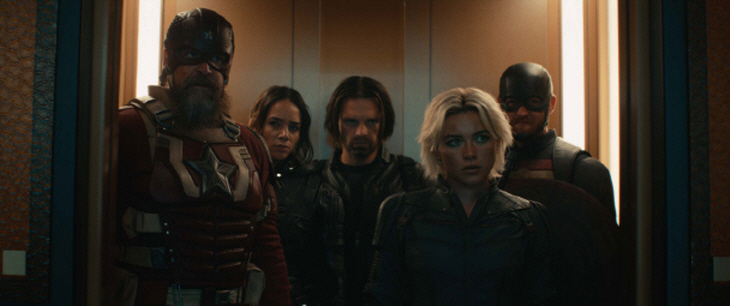
However, the climactic action sequence of the movie is rather deficient as feeling like a cheaper version of whatever we saw from “The Avengers”. Although I did not like “The Avengers” much, it spent its huge production budget enough on its climactic part at least, and I sort of appreciate that while still remembering a certain moment which takes me back to (*gasp*) “The Human Centipede (The First Sequence)” (2009). In case of “Thunderbolts*”, there is not anything particularly impressive or memorable for us in terms of scale and intensity, and that reminds me again of how much we get accustomed to the big spectacles of superhero flicks these days.

At least, the movie keeps focusing on its main characters even when it is mired in a lot of action during its climactic part, which eventually feels like a hybrid between “Being John Malkovich” (1999) and “Everything Everywhere All at Once” (2022). Rather than fighting more, Belova and her comrade try a bit of talk and solidarity for solving the big trouble in front of them, and there is a little poignancy in how Belova shows more heart after confronting her old childhood pain.

The main cast members are solid as often generating enough comic/dramatic chemistry among them. While Florence Pugh injects some genuine gravitas to the story as required, Wyatt Russell, Hannah John-Kamen, and Lewis Pullman have each own moment to stand out, and David Harbour, who plays Belova’s estranged father, surely has a lot of fun as he did in “Black Widow”. In contrast, Sebastian Stan seems to be rather bored with his familiar character, and Olga Kurylenko, Geraldine Viswanathan, and Julia Louis-Dreyfus are mostly limited by their thankless supporting parts.

On the whole, “Thunderbolts*”, directed by Jake Schreier is enjoyable enough for recommendation besides being much better than “Captain America: Brave New World” (2025). I am sort of glad that MCU is still capable of entertaining us enough even though it seems to pass its prime after “Avengers: Endgame” (2019), and I can only hope that its upcoming next products will actually excite and surprise me.

Posted in Movies | Tagged , , | Leave a comment