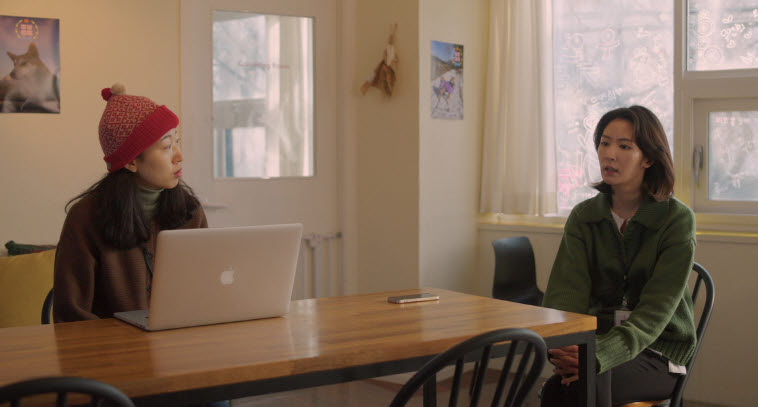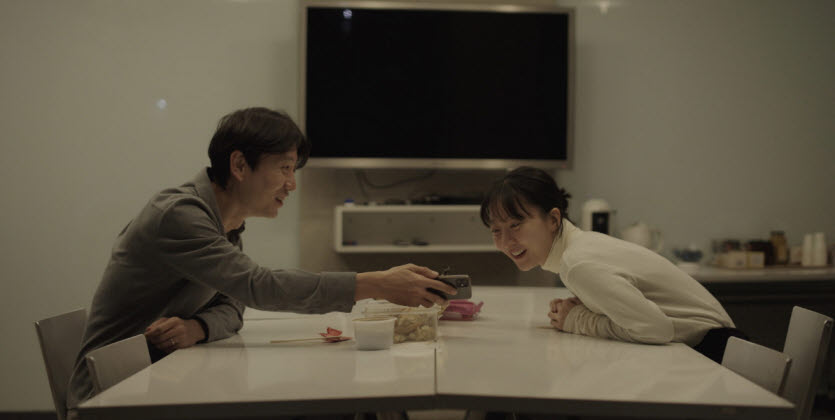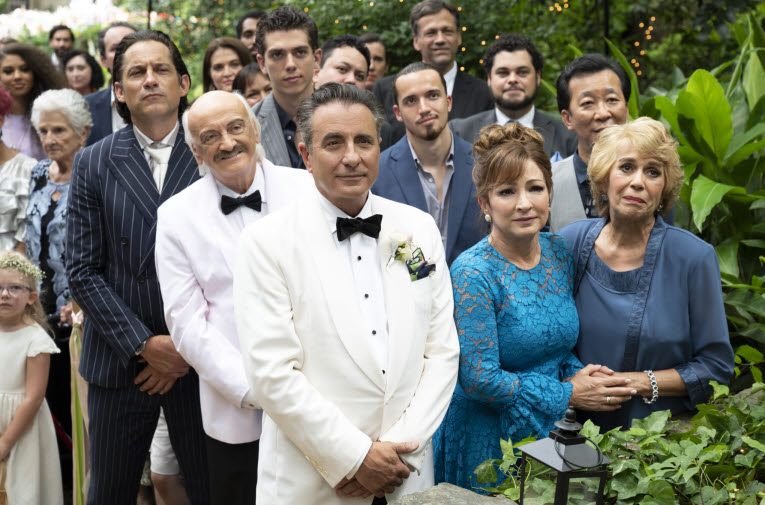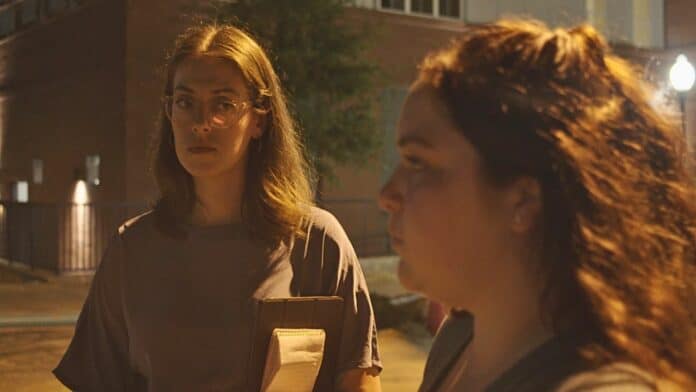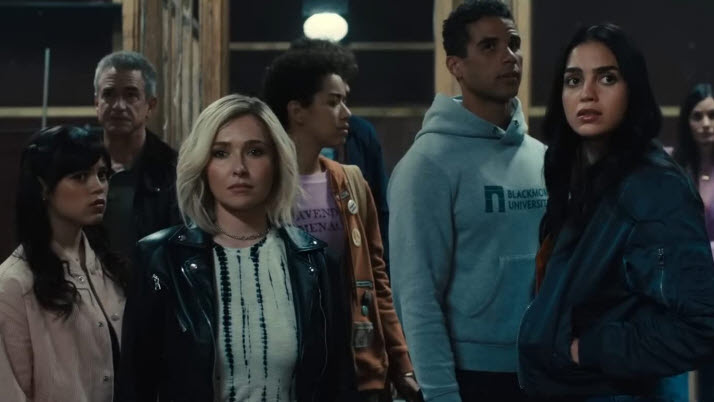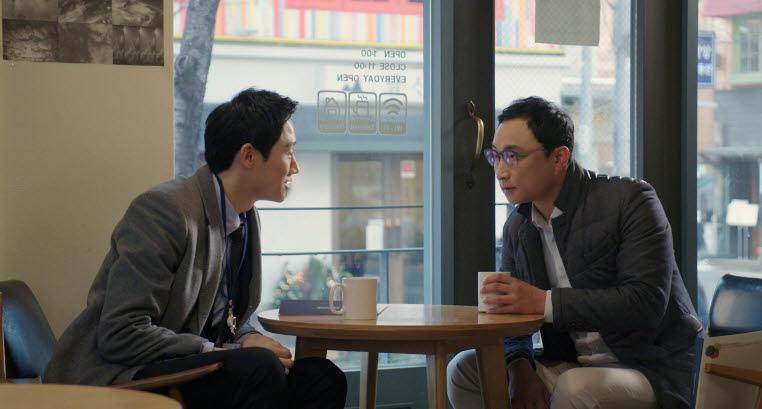
The Whale (2022) ☆☆(2/4): A hollow exercise in misery and obesity

Darren Aronofsky’s new film “The Whale” is a hollow exercise in misery and obesity. It surely draws our attention with the miserable life condition of its pitiful hero right from the beginning, but the movie simply dwells inside his small, isolated world while going all the way for being gross and grotesque without much human quality to observe, and that is a shame considering the committed efforts from its small but solid cast.

Brendan Fraser, who has been rather inactive during last several years but then embarked on his comeback via a small but impressive supporting turn in Steven Soderbergh’s “No Sudden Move” (2021), plays Charlie, an extremely obese recluse who has earned his meager living via online college class. Since one certain personal tragedy to be revealed along the story, he has gained lots of weight as struggling with his guilt and grief, and we come to gather that this is sort of punishing himself before he eventually dies due to his serious medical condition at present.

At the beginning, Charlie has a mild heart attack while engaged in a rather seedy private activity, but, fortunately, he is helped by an unexpected stranger coming into his small residence. That figures in question is a young man named Thomas (Ty Simpkins), and, though he does appreciate Thomas’ little act of compassion, Charlie is not so amused when it later turns out that Thomas is interested in how to save Charlie in a spiritual way as your average Christian missionary, and neither is Liz (Hong Chau), a weary nurse who has been quite devoted to Charlie as his only friend.

Not long after this happening, there comes another unexpected figure into Charlie’s life, and that is Charlie’s estranged adolescent daughter Ellie (Sadie Sink). When she was a little girl, Charlie left her and his wife just because of a new love, and Ellie has been quite angry and spiteful about this. As they talk a bit about her current high school problems, Ellie shows more of her anger and resentment toward her father, but Charlie desperately tries to have some reconciliation between them, while trying to look at his daughter’s better sides.

He becomes all the more desperate after coming to learn that death comes quite nearer to him than before due to his rapidly deteriorating medical condition. Considering his current blood pressure and heart condition, he may die right now, and Liz really wants him to go to hospital as soon as possible, but he adamantly refuses to do that as if his sheer obesity were his cross to carry to the end of his life.

Mostly hovering around its hero in his small residence, the movie does not hesitate to show more of how grotesque he usually looks. Whenever he manages to move around in his residence, we cannot help but notice his enormously fat body, and the screenplay by Samuel D. Hunter, which is based on his play of the same name, often makes a blatant connection between its hero and that famous American classic novel by Herman Melville. For example, Charlie has particularly been fixated on a certain old essay on that novel which was written some time ago, and reading that old assay somehow brings some hope and comfort to him even though he is quite familiar with every word on it.

Sadly, Hunter’s screenplay fails to develop its hero into an engaging human figure to observe. As we get to know a bit more about Charlie’s past along the story, the mood becomes more melodramatic later in the story as expected, but he and his grim human condition remain to be as symbolic as, yes, that big white whale in Melville’s novel, and Hunter’s screenplay also fails to bring more flesh and blood to a few supporting characters surrounding them.

This failure is often exasperating because the movie contains the commendable acting efforts from Fraser, who looks quite convincing in the Oscar-nominated make-up throughout the film. He is poignant at times as willingly throwing himself into his utterly demanding role, and he surely deserves some praises for bringing some sincerity and gravitas to a number of key scenes in the film. Many of these scenes are manipulative in their outright attempt to pull our heartstrings, but Fraser’s diligent performance, which recently received an Oscar nomination, grounds them in realism at least.

In case of several performers surrounding Fraser, they mostly acquit themselves well despite being frequently limited by thin characterization. While Hong Chau, a wonderful actress who belatedly received an Oscar nomination for this film, is commendable for elevating her thankless role to some degree, Samantha Morton manages to convey to us her small but crucial supporting character’s complex feelings toward Fraser’s character, and Sadie Sink and Ty Simpkins are unfortunately wasted in contrast as being more or less than mere plot elements.

On the whole, “The Whale” is a big misfire in Aronofsky’s fascinating filmmaking career, which has often impressed us with several striking drama films of extreme human conditions. Most of these works, which range from “Requiem for a Dream” (2000) to “Black Swan” (2010), are not so pleasant to say the least, but they are also quite powerful with some insight on human nature, and that is what “The Whale” boldly attempts but miserably fails to do. To be frank with you, all I can see from the film is the really decent acting efforts which surely deserve something a lot better than this, and, folks, that is not a good sign at all.

Posted in Movies | Tagged , , | 2 Comments

The Inspection (2022) ☆☆☆(3/4): A gay marine trainee’s story

“The Inspection” is a fascinating coming-of-age drama which often swings back and forth between conventional and unconventional elements. As a queer film mainly set in the US Marine boot camp, the movie surely distinguishes itself to some degree in terms of story and character, but it also follows a rather conventional narrative we can expect from its main background, and that makes an interesting contrast with its ambivalent attitude toward what its young gay trainee hero has to endure for becoming a man and, yes, good marine.

At the beginning, the movie, which is set in the late 2000s, succinctly establishes how things have been hard and difficult for its young gay hero. Since he was kicked out of his home by his stern mother, Ellis French (Jeremy Pope) has struggled a lot to live on streets without much hope, and he eventually comes to make a big decision which may get him out of his current miserable status. He is going to join the Marine Corps just because he wants to have a more stable life at least for a while, and that leads to his awkward reunion with his mother, who is still not glad to see him at all but gives him a necessary piece of document for his upcoming enlistment as requested.

We soon see Ellis and a bunch of other recruits going to the boot camp on Parris Island, South Carolina, and what follows next is not so far from Stanley Kubrick’s “Full Metal Jacket” (1987) and other similar military drama films. Right from their arrival in the boot camp, their drill instructor and his two assistant instructors are ready to break and then harden them by any means necessary, and we surely get a series of sweaty moments as Ellis and his fellow trainees endure one difficult training after another.

Certainly well aware of the hostility toward LGBTQ+ people in the army, Ellis tries to stay low as much as possible, but, as a virile young man, he cannot help but stimulated by all those able-bodied men around him including one of the assistant instructors. At one point, he happens to let himself loose in a naughty gay fantasy while having a shower along with other trainees, and the following consequence leads him to a very unpleasant moment.

Once his homosexuality is exposed to everyone around him, Ellis soon finds himself frequently ostracized and bullied day by day. Some of his fellow trainees regard him with disgust and contempt, and that is nothing compared to how he is cruelly mistreated by their drill instructor, who does not hide his homophobia at all in front of Ellis and other trainees.

Of course, Ellis becomes more conflicted about whether he really wants to be a marine, but there comes an unexpected support from one of the assistant drill instructors, who is also incidentally the one to whom Ellis is secretly attracted from the beginning. Thanks to this guy’s compassionate support, Ellis keeps trying to harden himself under more pressure, and, what do you know, he subsequently comes to earn some respect from his fellow trainees.

Around that point, the screenplay by director/writer Elegance Bratton, who made a feature film debut here in this movie, hesitates to explore more of the dramatic tension between its hero’s homosexuality and the oppressive environment surrounding him. While it never clarifies what is exactly going on between its hero and his unexpected supporter, the screenplay also comes to lose its focus a bit as paying some attention to several other fellow trainees at times. In case of one Muslim trainee, he seems to have his own conflict and pressure to deal with, but his subplot is resolved a little too hurriedly via one poignant emotional moment between him and Ellis, and he is eventually put aside along with other trainee characters around the end of the story.

Above all, the movie does not specify much about how its hero feels about his military experience. What he has to endure along the story is often infuriating, and the movie seems angry about that at first, but it also wants to recognize that the Marine Corps gives him a direction for his life in addition to teaching him how to be a man. That contradictory aspect is evident when Ellis makes a clear and strong stand against his mother later in the story, who still expects her son to give up his, uh, lifestyle.

Anyway, the movie still holds our attention as a deeply personal story with a considerable amount of sincerity and honesty. Just like the hero of the film, Bratton had a pretty hard time due to his homophobic mother before eventually enlisting in the Marine Corps, and I guess making this film was a sort of healing process for him, though, as far as I can observe from a number of imperfect aspects of his screenplay, he still seems indecisive about his feelings and thoughts about that difficult period in his life.

Bratton draws good performances from his main cast members. While Jeremy Pope is believable in his character’s gradual growth along the story, Raúl Castillo and Bokeem Woodbine are effective as two very different drill instructors in the story, and Gabrielle Union, whom you may remember for her colorful comic supporting turn in “Bring It On” (2000), shows a more serious side of her talent as bringing some human complexity to her seemingly thankless supporting part.

In conclusion, “The Inspection” may not pass any close inspection, but its weak aspects are mostly compensated by its good parts including the solid acting from Pope and other notable performers in the film. Bratton mostly succeeds here in presenting his own personal story to tell, and it will be interesting to see what other stories he will present next.

Posted in Movies | Tagged , , , | Leave a comment

Peter von Kant (2022) ☆☆☆(3/4): Fassbinder via Ozon

François Ozon’s new film “Peter von Kant” is often amusing to watch if you are familiar with not only its original version but also the legendary German filmmaker behind that version. The movie, based on Reiner Werner Fassbinder’s “The Bitter Tears of Petra von Kant” (1972), is mostly faithful to the original version except a few things to notice, and this relatively more direct remake version will probably entertain you more as often resonating with Fassbinder’s messy and tumultuous personal life.

Like the 1972 film, the movie is mainly set in the residence/workplace of its central character, but there are some significant differences in terms of character. In contrast to the titular lesbian fashion designer heroine of the 1972 film, Ozon’s screenplay has a gay filmmaker named Peter von Kant (Denis Ménochet) as its central character, and, not so surprisingly, von Kant’s appearance and attire in the film evoke a lot of Fassbinder’s public images right from the beginning.

Nonetheless, the basic narrative of the film is not so far from the original version on the whole. During the opening part of the film, we observe what an incorrigibly self-absorbed guy von Kant is – and how callous he is often to his mostly silent secretary Karl (Stéfan Crépon), who is always ready to serve his frequently abusive employer mainly because of some loyalty or affection toward him. When his former leading actress/best heterosexual female friend Sidonie (Isabelle Adjani) visits his residence later, von Kant rambles a lot about his latest failed romantic relationship, and Sidonie patiently listens to him for a while before introducing him to a young handsome lad named Amir (Khalil Gharbia).

Because he is eager to start his movie acting career, Amir actively approaches to von Kant, and von Kant does not mind this at all as quickly getting himself infatuated with Amir. Several months later, they are now living together as lovers, and everything seems to be going fairly well for both of them on the surface, but, of course, we soon see the rapid deterioration of their relationship due to not only von Kant’s possessive aspects but also Amir’s selfishness. While von Kant frequently craves for more of affection from Amir, Amir looks more occupied with himself, and this aspect of his becomes more apparent when he demands more benefit and freedom in their relationship.

I happened to see the 1972 film not long after watching “Peter von Kant”, and I wondered how much Fassbinder actually saw himself from the heroine of his movie. Like his heroine, he was often emotionally unstable and volatile in real life, and many of his personal relationships were pretty problematic to say the least. While Fassbinder was certainly not a nice dude at all, many of male lovers in his life were quite crummy guys who usually broke his heart, and that aspect looks much more evident in Ozon’s version. For incident, Amir’s surname is ben Salem, and that is surely a nod to El Hedi ben Salem, who was one of Fassbinder’s more notorious lovers and also appeared in Fassbinder’s several works including “Ali: Fear Eats the Soul” (1974).

As observing how von Kant lets Amir willfully exploit his romantic obsession toward Amir, you may also be reminded of how Fassbinder was hopelessly in love with a hunky black German actor named Günther Kaufmann not long before he made the 1972 film. Like Amir did to von Kant, Kaufmann, who was incidentally married during that time, did not hesitate to exploit and toy with Fassbinder’s romantic fixation on him throughout their brief but tempestuous relationship, which became another infamous episode to be added to Fassbinder’s deeply troubled personal life.

While maintaining some lightweight mood, Ozon’s film becomes more distant during its last act where its hero indulges in lots of anger and self-pity in front of a few persons who really care about him despite his serious human flaws. The more he lashes out at them, the more we see of what a pathetic narcissist he is, and, needless to say, he richly deserves a small but significant punishment around the end of the story.

Like the 1972 version, the movie is more or less than a chamber drama with some stylish touches to be appreciated, and its main cast members are well-cast in their respective roles. While Denis Ménochet, who previously collaborated with Ozon in “By the Grace of God” (2018), effortlessly embodies his character’s constantly neurotic aspects, Isabelle Adjani, who remains agelessly beautiful even though it has been more than 45 years since her unforgettable Oscar-nominated breakout turn in François Truffaut’s “The Story of Adele H” (1975), has a number of showy moments to shine, and several other main cast members including Khalil Gharbia, Stéfan Crépon, Aminthe Audiard, and Hanna Schygulla (She incidentally played one of the main characters in the 1972 film, by the way) also hold each own small place well around Ménochet.

In conclusion, “Peter von Kant” looks less significant compared to Ozon’s recent notable works including “By the Grace of God” and “Everything Went Fine” (2021), but it is still worthwhile to watch especially if you have watched Fassbinder’s original version. I must point out that Olivier Assayas’ “Clouds of Sils Maria” (2014) did a better variation on the 1972 film in comparison, but “Peter von Kant” is fairly engaging in its own way, and that is enough for recommendation in my trivial opinion.

Posted in Movies | Tagged , | Leave a comment

All That Breathes (2022) ☆☆☆1/2(3.5/4): Of Nature and Human Life in Delhi

Documentary film “All That Breathes”, which won the Grand Jury Prize in the World Cinema Documentary Competition at the Sundance Film Festival early in last year and then received an Oscar nomination in last month, is an extraordinary piece of work you should not miss. Mainly via two brothers who have cared for thousands of black kites in their big city for many years, the documentary gives us a vivid and meditative look into nature and human life, and we are reminded of how inseparable they are from each other.

At the beginning, the documentary effectively sets the tone with its impressive opening scene. While the camera slowly and pensively pans across on the ground level, we see lots of wild rodents scurrying around here and there for their dinner at one trashy spot in Delhi, India at one night, and then this fascinating moment is suddenly punctuated by a blinding sign of urban human life passing right next to the spot.

And that is just one of many moments showing how nature keeps trying to thrive even in the middle of a huge city like Delhi, which has been infamous for its serious environment pollution problems. While the sky is often dim and cloudy, the water is not so clean to say the least, but the animals and plants in the city continue their circle of life despite that, and there is a sublime scene when the camera looks at a shabby apartment building at first and then shifts onto a nearby stream where several different wild animals are spending their evening.

One of the most notable wild animals in the city is black kites, local predatory birds which often fly around in the sky above the city, and these birds have been always important to Nadeem Shehzad and Mohammad Saud since their childhood years. During that time, these two brothers usually looked at the sky filled with countless black kites ready to be fed by the Muslim citizens in the city who believe that feeding black kites would expel troubles, and these flying birds was an intimate symbol of dream and freedom to them.

Although they remain stuck in their old neighborhood as before, Nadeem and Saud have dedicated themselves a lot to caring for those sick or injured black kites. After they happened to take care of one injured black kite around 20 years ago, they came to found their little private bird clinic in one shabby building, and that eventually became the main center of their life. While Nadeem usually handles those financial matters, Saud takes care of many black kites in their bird clinic along with their volunteer employee Salik, who cares about black kites as much as his employers.

As these three figures go through one day after another, we gradually come to gather how difficult it has been for them and their precious bird clinic. Despite Nadeem’s diligent efforts, the bird clinic frequently lacks enough fund, and he and Saud become more concerned about whether they can really go on during next several years at least. Yes, they did get some attention via a recent New York Times article, but they are still struggling to get any substantial fund, and they and Salik are often frustrated with how poor their work environment is. At one point, their old meat grinder has some annoying mechanical problem, and that leads to a little conflict between Nadeem and Saud.

Meanwhile, we also get glimpses into how life goes on around them. We see them spending time with their family members, and one particular scene ably conveys to us their shabby domestic condition as the camera patiently looks around their residence. We come to gather that Nadeem’s wife wants her husband to pay more attention to other things besides the bird clinic, but he is still determined to maintain it – even when things get tough for him and many other Muslims out there due to the recent surge of Islamophobia in the Indian society.

Although it is mostly restrained about the ongoing political situation in India, the documentary does not look away at all from the troubles and concerns surrounding its human subjects. When the circumstance becomes much more alarming than before, Nadeem has no choice but to guard the bird clinic at one night, and he comes to express more of the concern and frustration behind his usually phlegmatic façade.

Nevertheless, there is some progress for the bird clinic at least. We see Nadeem and Saud visiting a new place for their bird clinic, and they become a bit more hopeful than before. In addition, Nadeem happens to get an opportunity for more professional education in US, and both of him and his brother are pleased about that, but that also means they will be separated from each other for a while.

And we continue to get mesmerized by a series of remarkable moments of nature observed from here and there in the city. Some of them, including the one involved with a flock of mosquitoes on a puddle, may not look that pretty on the surface, but all of them are filled with a vivid sense of life besides considerable verisimilitude, and you will admire several spontaneous moments such as the one when Salik suddenly gets his glasses snatched by one naughty black kite.

In conclusion, “All That Breathes” is a slow but profound experience to be cherished, and director/co-producer Shaunak Sen, who received the Golden Eye award when the documentary was shown at the Cannes Film Festival early in last year, did a commendable job of presenting many different slices of life and nature on the screen. This is indeed one of the best documentaries of last year, and I think you should check it out as soon as possible.

Posted in Movies | Tagged , , , , , | 2 Comments

Mr. Malcolm’s List (2022) ☆☆☆(3/4): A little romantic scheme against his list

“Mr. Malcolm’s List” is a witty and charming variation of Jane Austen novels with some modern touches a la recent Netflix TV series “Bridgerton”. While often reminiscent of Austen’s several novels including, yes, “Pride and Prejudice”, the movie has a number of various colored performers playing the 19th British upper-class characters, and that certainly brings some fresh qualities to its familiar story and characters.

Everything in the story begins from when Julia Thistlewaite (Zawe Ashton) attempts to win the heart of Mr. Jeremy Malcolm (Sope Dirisu), who has been as one of the most eligible bachelors in London, 1818 thanks to his considerable social status and wealth. She and Mr. Malcolm come to attend an opera performance together for one evening, and she tries her best for drawing more attention and affection from him, but, alas, she does not look good enough to him, and, to make the matters worse, she later becomes a laughingstock in the town due to his casual rejection.

Quite furious and humiliated, Julia comes to develop a little naughty scheme when her cousin Lord Cassidy (Oliver Jackson-Cohen) later tells her that Mr. Malcolm has a certain personal list which has been the lofty standard for his future spouse. She enlists in her best friend Selina Dalton (Frieda Pinto), and Selina agrees to help Julia getting her revenge even though she is not quite sure about whether she can actually look good enough for Mr. Malcolm and his haughty standard.

Of course, after some preparation in advance, Selina looks a bit more charming, elegant, and sophisticated than usual, and she soon comes to draw Mr. Malcolm’s attention when they come across each other by a little ‘coincidence’. As she seems to pass all of requirements of his list one by one, he becomes attracted to her more than ever, and she finds herself becoming more conflicted as she is also fallen in love with him.

Meanwhile, the screenplay by Suzanne Allain, which is based on her novel of the same name, juggles several colorful supporting characters around Mr. Malcolm and Selina. Julia and Lord Cassidy frequently amuse us as they continue to work on their little scheme, and we also get extra amusement when Selina’s family friend, who is incidentally your average merry widow, makes a brief but boisterous appearance later in the story. Although she already lost two husbands, this ebullient lady is ready for her third husband, and she is certainly delighted to meet Mr. Malcolm via Selina.

My personal favourite character is Lady Kilbourne (Dona Croll), the no-nonsense mother of Mr. Malcolm. Right from when Selina is introduced to her via her son, she immediately discerns that Selina is the right one for her dear son, and she indirectly supports the courtship between Selina and her son without saying anything direct in her dignified appearance.

In the end, there eventually comes a point where Julia and Selina’s scheme is revealed in front of Mr. Malcolm (Is this a spoiler?). The movie naturally comes to stumble a little as losing its lightweight sense of fun to some degree after that, but it is still buoyed by its likable main characters who come to show more of their feelings along the story. While Mr. Malcolm certainly comes to realize how much he has been afraid of true feelings, both Celina and Julia also become more honest about their respective emotions, and there is a little poignant moment when Julia comes to see that she is not actually as vengeful as she thought at first.

Above all, the movie is supported well by the good chemistry between Frieda Pinto and Sope Dirisu. Although it has been 15 years since she drew our attention for the first time via her breakthrough supporting turn in “Slumdog Millionaire” (2008), Pinto remains plucky and beautiful as before, and she effortlessly slips into the period background of the movie as bringing enough spirit and personality to her archetype character. On the opposite, Dirisu, who has rose to considerable prominence since his memorable performance in acclaimed Netflix film “His House” (2020), is more reserved and passive in comparison, but he steadily builds up his character’s drama to the point where his character finally becomes more active than before.

Around Pinto and Dirisu, director/co-producer Emma Holly Jones assembles a bunch of good performers, most of whom incidentally draw our attention for their color-blind casting first and then delight us more with their fine comic performances. While Oliver Jackson-Cohen and Zawe Ashton have the most fun in the bunch, several other cast members including Theo James, Divian Ladwa, Naoko Mori, and Dona Croll are also solid in their respective supporting parts, and the special mention goes to Ashley Park, who virtually steals the show despite appearing just for a few minutes.

On the whole, “Mr. Malcolm’s List” works thanks to its good storytelling and entertaining performances, and it is certainly more engaging than recent Netflix film “Persuasion” (2022), which was also notable for its color-blind casting but was quite a disappointing adaptation of Austen’s novel of the same of name in many aspects. Unlike that underwhelming film, “Mr. Malcolm’s List” has enough wit and charm to be appreciated by anyone familiar with Austen’s novels, and I certainly recommend you to check it out instead.

Posted in Movies | Tagged , , , | Leave a comment

Ant-Man and the Wasp: Quantumania (2023) ☆☆1/2(2.5/4): A colorful but passable teaser

“Ant-Man and the Wasp: Quantumania” is a colorful but passable teaser for whatever we will get from Marvel Cinematic Universe (MCU) during next several years – and I do not have much expectation on that, by the way. While there are a number of mildly amusing stuffs for building up its new background, the movie merely exists for leading us to next MCU products in my humble opinion, and that made me far less enthusiastic during my viewing.

At the beginning, the movie summarizes how things have been not so satisfactory for Scott Lang / Ant-Man (Paul Rudd) during several years after what happened in “Avengers: Endgame” (2019). Thanks to his participation in that big, bloated battle in “Avengers: Endgame”, Scott now becomes a recognizable local celebrity in San Francisco, but he is still not so satisfied mainly because he remains not that close to his daughter Cassie (Kathryn Newton). She now grows up to be a rebellious adolescent girl who is also quite interested in what Scott’s mentor Dr. Hank Pym (Michael Douglas) has studied for years, and she recently develops a special device which may help their research on the Quantum Realm, where Dr. Pym’s wife Janet (Michelle Pfeiffer) was once trapped for no less than three decades.

For some hidden reason, Janet has avoided to talk about her past in the Quantum Realm even though she is now with her husband and their dear daughter Hope / The Wasp (Evangeline Lilly), and she is not so pleased when Cassie proudly tests that device in front of others. Shortly after the device is activated, everyone is sucked into the Quantum Realm, and Scott and Cassie soon find themselves separated from Hope and her parents in this very alien world.

While they try to find Scott and Cassie, Hope and her parents behold many unexpected wonders of the Quantum Realm with Janet functioning as their guide, and the movie has some fun with that for a while. For example, there are a lot of various creatures which usually look pretty gooey and gelatinous to say the least, and my personal favorite is the one who look like a humongous version of Paramecium aurelia.

In addition, the movie also borrows bits of “Star Wars” (1977) as Hope and her parents enter a busily populated area packed with many different humanoid figures here and there. The mood becomes a bit more humorous with the brief but droll cameo appearance of a certain well-known actor, but then the movie hurries itself mainly because someone is also looking for Scott and Cassie just like Hope and her parents.

Around that narrative point, Janet certainly comes to reveal a lot to her husband and daughter. As already shown to us in the prologue scene, she happened to be closely associated with a very dangerous figure while they were stuck in the Quantum Realm together in the past, and now this figure is going to embark on his big diabolical plan a la “Tron: Legacy” (2010) once he gets what he wants via some assistance from Scott.

He is Kang the Conqueror, who is incidentally played by Jonathan Majors on an uncharacteristically detached mode. Probably because his mind was more occupied with his two upcoming films of this year, “Creed III” (2023) and “Magazine Dreams” (2023), Majors flatly occupies the screen in many of his key scenes in the film without much presence, and this curiously odd acting choice of his makes his villain character even less interesting than that big purple alien villain played by Josh Brolin in “Avengers: Endgame” and several other MCU flicks.

Meanwhile, Scott and Cassie go through lots of things together as they bounce from one point to another. While Cassie comes to show her father that she can be as brave and adventurous as her father or his girlfriend, Scott remains quite protective of his daughter as usual, and he surely comes to show later in the story that he is ready to do anything for protecting her. Their storyline is rather predictable, but Paul Rudd and Kathryn Newton are engaging in their characters’ rocky interactions throughout the film, and Michael Douglas, Michelle Pfeiffer, and Evangeline Lilly dutifully occupy their respective spots as usual, though Lily is relatively under-utilized despite her titular role.

In the end, the movie culminates to a big climactic sequence drenched in lots of CGI, and that is where it comes to lose more of my interest. Let’s face it, we have seen countless different versions of that via a heap of MCU products during last 15 years, and, to be frank with you, all of them look and feel pretty much same to me without much distinctive quality. Director Peyton Reed, who directed the two previous Ant-Man films, certainly knows what he is handling here, but the overall result is rather deficient in terms of style and personality, and that is one or two steps down from the considerable fun and charm of the previous Ant-Man films.

In conclusion, “Ant-Man and the Wasp Quantumania” is below the average achievement level of the MCU flicks, and it only reminds me more of how I have been rather numb to recent superhero movies. Like “Shang-Chi and the Legend of the Ten Rings” (2021), some of them were satisfying with a bit of fresh air, but many of them are forgettable, and “Ant-Man and the Wasp Quantumania” will probably be soon forgotten as more MCU products come one by one as planned in advance.

Posted in Movies | Tagged , , | Leave a comment

Barbarian (2022) ☆☆☆(3/4): This is a bad place indeed…

“Barbarian”, which is currently available on Disney+ in South Korea, is a darkly amusing horror thriller which skillfully toys with our expectations on its genre from the beginning to the end. I thought I knew where it was going during its first act, but, like many of good genre flicks, it actually surprises me as changing its direction more than once, and the result is often entertaining with some naughty amusement.

The movie begins with the arrival of a young woman named Tess (Georgia Campbell) in one seemingly plain rental house located in the rundown Detroit neighborhood of Brightmoor. For her important job interview, she is going to stay there for a few days, but, alas, she cannot go inside the house due to a little problem with the lock of the front door of the house, and she cannot even contact with a rental agency which provided her this house.

Fortunately, there is someone in the house, and Tess is perplexed because she is supposed to be the only person to stay in the house, and the same thing can be said about that person in the house, who is a young man named Keith (Bill Skarsgård). It is apparent that the house is somehow double-booked, and Tess considers going to any other suitable place to stay, but, alas, as Keith belatedly tells her, most of local hotels are already booked fully due to some big convention to be held in the area.

Because it is already quite dark outside, Tess has no choice but to accept a little kindness from Keith, who generously suggests that she should stay with him in the house at least for one day. As a matter of fact, he is willing to give up his bedroom for her, and Tess appreciates his generosity as interacting more with him, but she also cannot help but feel nervous mainly because he is still a total stranger to him. He does not seem to lie about himself or their current situation, but, as a young woman, Tess remains rather guarded even during their following casual conversation.

Mainly because Bill Skarsgård, who serves as one of the executive producers of the film, previously played that murderous clown figure in “It” (2017) and its following sequel, we also wonder whether there is anything hidden behind Keith. On the surface, he is just an overtly nice guy, but I must say that he looks like a fairly good candidate for the Norman Bates award, and we are not so surprised when Tess comes to have a rather unnerving moment in the middle of the night.

Now I should be more discreet about describing what follows next for avoiding any potential spoiler. As already announced to us by the ominous music on the soundtrack in the opening scene, there is indeed something wrong with the house, and Tessa subsequently comes to see more of what a bad place it really is. For example, its neighborhood is full of numerous abandoned houses, and there is even a mysterious figure who frantically warns her about the house. Georgina Campbell, a young British actress mainly known for appearing in several notable TV drama series including “Broadchurch”, is believable as her character is disturbed more and more along the story, and we certainly brace ourselves when her character eventually goes down to the basement of the house later in the story despite numerous bad signs around her.

Once Tess comes to face the unspeakable sides of the house, the movie promptly shifts onto the other narrative line like Alfred Hitchcock’s “Psycho” (1960). We are introduced to another main character in the story, and this figure, played by Justin Long, also does not have any idea on how dangerous the house really is, even though he is the owner of the house. Because the house is supposed to be empty, Long’s character is naturally perplexed by a number of personal stuffs left in the house, but then he gets intrigued when he discovers something hidden inside the house. Because he is in a big legal trouble involved with his alleged sexual assault, he is willing to go further for any chance for getting more money, and we soon see him virtually following the footsteps of Tess.

In contrast to Tess, Long’s character is not someone we can easily care about or fear for, but the movie keeps holding our attention as we behold more of what is being hidden right below the house. Steadily maintaining the level of tension and spookiness along the story, the movie gives us a series of morbid scenes as Long’s character discovers more and more of the unspeakable secret of his property, and Long willingly throws himself into more horror and twisted amusement for us. We are surely scared at times, but we are sort of amused because what happens to his character can be interpreted as a punishmenhe richly deserves, considering how impertinent he is just like many real-life celebrities accused of sexual assault during last several years.

In conclusion, “Barbarian” is a modest but effective genre piece which does its job better than expected, and I appreciate the competent handling of story, character, and atmosphere by director/writer Zach Cregger, who is incidentally the founding member of the New York City-based comedy troupe The Whitest Kids U’ Know and also co-directed two feature films before making a solo directorial debut with this film. As far as I can see from the film, he is a good genre film director who does know one or two things about how to play against our expectation, and it will be interesting for us to see what he will do next after this successful starting point.

Posted in Movies | Tagged , , | Leave a comment

Someone I Used to Know (2023) ☆☆☆(3/4): Before her ex-boyfriend’s wedding

“Someone I Used to Know”, which was released on Amazon Prime in last week, does not break any new ground in its genre territory, but it is smart and witty enough to engage us at least during its running time. Right from the beginning, we can clearly see where it is heading, but the movie is driven mainly by its broad but colorful characters instead of merely resorting to its genre conventions, and we come to care about the ending a bit more than expected.

During the opening part of the film, we get to know how things have been disappointing for its heroine. There was once a time when she was a young and ambitious documentary filmmaker who aspired to make some good documentaries, but Ally (Allison Brie) is now stuck with a superficial reality TV show just for earning her living in Hollywood, and she gets only cynical consolation from how slyly she can draw emotional responses from the participants of her reality TV show for more rating.

However, her supposedly good days are soon ended because her reality TV show is abruptly canceled due to its considerably low current rating. Maybe she can go on with another reality TV show not so different from the previous one, but Ally is not so eager to do that, and she eventually decides to have some rest in her hometown in Washington, not long after she receives a casual phone call from her mother.

When Ally unexpected comes to her family house along with her pet cat, Ally’s mother Libby (Julie Hagerty, whom you may remember for her memorable comic performance in “Airplane!” (1980)) surely welcomes her daughter, though she is doing something which embarrasses Ally for good reasons. When she later goes to a local bar just for staying away from her mother’s active private life, Ally happens to come across her ex-boyfriend Sean (Jay Ellis), and she cannot help but attracted to him again as they spend more time together.
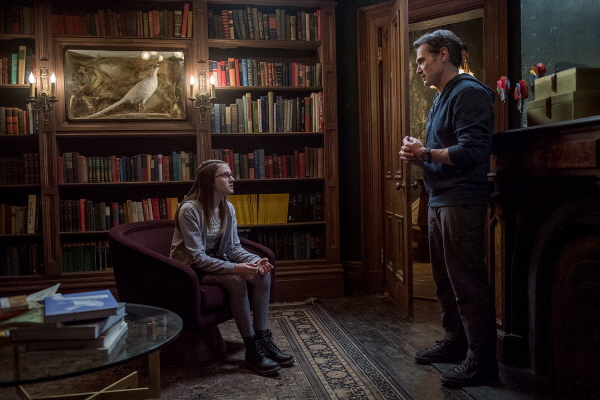
However, Sean becomes defensive when Ally eventually attempts to get closer to him, and there is an understandable reason for that. When she subsequently shows up at his family house, she belatedly comes to learn that he has been engaged to a woman named Cassidy (Kiersey Clemons), and Ally soon finds herself getting herself involved with the preparation for Sean and Cassidy’s upcoming wedding just because Sean’s parents are still fond of her even though they were separated around 10 years ago. When Sean’s indomitably persuasive mother Jojo (Olga Merediz) asks Ally to shoot the wedding video for Sean and Cassidy, Ally cannot possibly say no, and she comes to spend more time around Sean and many others around them.

One of them is Benny (Danny Pudi, who previously worked with Brie in TV sitcom series “Community”), who incidentally was one of Ally’s close friends before Ally left Sean and her hometown for pursuing her nascent filmmaking career. As your average no-nonsense friend, Benny instantly senses something going on between Ally and Sean, so he sincerely advises her that she really should be careful about whatever she really feels, but then Ally cannot help but wonder whether she can start over with Sean.

The situation becomes more complicated as Ally gets to know Cassidy more. Although she instinctively sees a potential trouble from Ally as soon as they are introduced to each other, Cassidy tries to be nice to Ally at least, and, what do you know, she eventually shows a lot more of herself to Ally than expected. Coming to learn that Cassidy is quite conflicted about Sean expecting her to give up her musician career, Ally comes to have more doubt on Cassidy and Sean’s wedding, but then she also questions whether her view is biased by her old feelings toward Sean.

The screenplay by Brie and director/co-writer Dave Franco, who has been married to Brie since 2017, is often predictable, but it still holds our attention as it handles its main characters with care and respect. While both Ally and Cassidy are depicted as flawed but likable human characters, Sean turns out to be much more than a mere plot element stuck between them, and a bunch of supporting characters are also crucial in generating the warm and breezy comic mood of the story. For example, Sean’s goofy younger brother Jeremy (Haley Joel Osment, who reminds us again that, as a seasoned adult actor, he has been far and far away from his Oscar-nominated breakthrough turn in “The Sixth Sense” (1999)) is surely the main source of comic relief in the film with all those exaggerated behaviors of his, but we still can sense the sincere affection behind his silly appearance, and we come to smile along with others around him.

In case of the eventual climactic part, it surprises us as being a little more complex than expected as not only Ally but also Sean and Cassidy come to reflect on themselves and what they really care about. Along with Brie, Jay Ellis and Kiersey Clemons ably handle this tricky part with some integrity to their respective characters, and that is why the result is accompanied with genuine poignancy. Around these three good performers, Franco assembles a bunch of distinctive performers including Danny Pudi, Haley Joel Osment, and Julie Hagerty, and the special mention goes to Olga Merediz, who steals every moment of her appearance despite her seemingly thankless role.

On the whole, “Someone I Used to Know” is not particularly fresh compared to many senior romantic comedy films such as, yes, “My Best Friend’s Wedding” (1997), but it is still entertaining enough for recommendation at least. Compared to Franco’s debut feature film “The Rental” (2020), this is a lightweight genre stuff in comparison, but it shows that Franco is a competent filmmaker who can easily switch from one genre to another, and it will be interesting to see what he will try next.

Posted in Movies | Tagged , , | Leave a comment

Close (2022) ☆☆☆(3/4): A friendship shattered

I know it is a clichéd expression, but I sincerely advise you not to read the following paragraphs if you want to be fully impacted by Lukas Dhont’s latest film “Close”, which won the Grand Prix at the Cannes Film Festival early in last year and then was Oscar-nominated for Best International Film in last month. I will surely try not to reveal too much in my review, and I will simply focus on how much I admire the movie tactfully and sensitively builds and develops the story and characters up to a certain narrative point, but I really think you should stop reading my trivial review right now if you are already planning to watch it.

During its first half, the movie mainly revolves around Léo (Eden Dambrine) and Rémi (Gustav De Waele), two 13-year-old boys who have been quite close to each other since they were very young. At first, we see these two young boys spending some good time together, and then we observe more of their strong friendship as they hang around with Rémi’s mother, who apparently regards Léo as another son for her.

While they spend another night together in Rémi’s house, Léo and Rémi come to have a little tender night talk, and we slowly come to gather that Rémi has been quite emotionally attached to Léo. When Léo tells Rémi a little story which can be regarded as a metaphorical reflection of their longtime friendship, Rémi listens to his friend with quiet but intense attention, and Léo does not mind this at all as tenderly looking at his friend.

However, things gradually begin to change as another school year of theirs is started not long after that. On the first day of their new school year, Léo and Rémi enthusiastically go to their school together, and they remain close to each other inside and outside their classroom, but then Léo cannot help but become more conscious of how they look to other students around them. At one point, they are innocently asked about whether they are more than close friends, and Léo insists that he and Rémi are just friends, but then he begins to distance himself from Rémi bit by bit.

This tendency of his becomes more prominent when he later joins the ice hockey team in the school along with several classmates of his. As he and his classmates are demanded to be tougher and stronger for playing ice hockey, Léo feels more uncomfortable with Rémi’s emotional attachment on him, and there eventually comes a point where they come to clash over their growing emotional issue between them.

The movie is rather ambiguous about how much Léo and Rémi’s relationship is actually close to homosexuality, but I guess that is the right choice considering how both of them are not so well aware of how exactly they feel about their increasingly complicated relationship. While it is possible that Rémi simply does not want his best friend to be estranged from him, it is also conceivable that Léo rejects Rémi’s desperate reach just because he does not look, uh, weak to his schoolmates, though, as far as I observe, nobody around him is particularly homophobic.

And then something quite unexpected happens around the middle point of the film. Rather than showing the incident itself, the movie wisely pays more attention to its devastating aftermath, and I especially appreciate how it skillfully handles one crucial scene where Léo and other students slowly come to learn of the incident not long after having a little fun field trip together.

The second half of the film focuses on Léo’s growing guilt and grief involved with the incident. Still reluctant to confide to anyone about how much he was responsible for the incident, he becomes more tormented in addition to being angrier about himself, and this often baffles his parents, who are understandably perplexed but try to understand and comfort him nonetheless.

Of course, there eventually comes a point where Léo tells everything to a certain main character in the story, and that is where the screenplay by Dhont and his co-writer Angelo Tijssens becomes quite contrived for pulling our heartstrings. To be frank with you, the result is rather manipulative in my humble opinion, but it still works because of what has been so carefully developed during the rest of the movie, and I was not so surprised by the emotional responses shown from several audiences around me.

The considerable emotional power of the movie lies in the two remarkable performances from its two young lead actors. Although they do not have any previous movie acting experience before this film, Eden Dambrine and Gustav De Waele effortlessly convey their characters’ complex emotional bond to us, and they are also supported well by several adult cast members including Léa Drucker and Émilie Dequenne, who is terrific during a couple of key scenes between her and Dambrine later in the story.

In conclusion, “Close” is another interesting queer drama from Dhont after his notable debut feature film “Girl” (2018), which is about the intense emotional struggles of a young female transgender ballet student. Although it is not entirely without flaws as shown from its rather artificial finale, the movie confirms again that Dhont is indeed a major talent to watch, and I will certainly keep watching on his advancing filmmaking career.

Posted in Movies | Tagged , , , | 2 Comments

More Than Ever (2022) ☆☆☆(3/4): Her matter of life and death

“More Than Ever” is a little character drama which calmly observes its heroine’s quiet emotional struggles over her impending mortality. While it becomes occasionally melodramatic as you can expect from its main subject, the movie is still thoughtful and sensitive enough for the gravitas of her difficult situation, and it certainly earns its somber bittersweet ending with considerable emotional effects on us.  

In the beginning, we are introduced to Hélène (Vicky Krieps) and Matthieu (Gaspard Ulliel), a young couple who have been trying to deal with a gloomy fact which may end their close relationship sooner or later. Hélène happens to be recently diagnosed to have a rare incurable lung disease which will end her life within a short time unless she receives a lung transplant, and their close friends around them cannot help but feel awkward when they come to Hélène and Matthieu’s residence for one private evening meeting. Even though everyone tries to be cheerful on the surface, Hélène’s terminal illness soon becomes the elephant in the room, and that makes the mood among them quite uncomfortable to say the least.

As her medical condition gets worse day by day, Hélène feels more frustrated about how negatively her relationship with Matthieu has been affected by her medical condition. Because there is still a chance for her survival via lung transplant, Matthieu does not want to give up at all, but Hélène becomes skeptical because 1) she will have to wait for any suitable donor for an indefinite period and 2) she may have to struggle more even after she finally gets a lung transplant. Not so surprisingly, they eventually come to argue on whether they should give up or not, and they become estranged from each other despite their respective efforts for mending their relationship.

Meanwhile, Hélène gets interested in how the terminal like her deal with their gloomy circumstances. While doing some online search, she comes across an anonymous blogger who is quite frank about his serious illness with some morbid sense of self-deprecating humor, and she becomes more interested in this blogger as checking out a number of pictures and photographs posted on his blog site. Although their first online interaction is not exactly pleasant, she and this blogger soon come to interact more with each other during next several days, and she begins to consider going to where this blogger lives. Instead of being stuck in her residence for days without much hope for her survival, she really wants to do something different before it is too late for her, and Matthieu, who incidentally does not know anything about this blogger yet, does not stop her even though he has understandable reservation on her traveling alone by herself. 

Shortly after she arrives in some remote fjord area in Norway, Hélène meets the blogger, who turns out to be a lot different than she thought at first. He is a taciturn middle-aged man named Bent (Bjørn Floberg), and Hélène comes to stay in a cabin outside his little house. Although the mood between them is awkward to say the least, it does not take much time for them to interact more with each other, and Hélène subsequently finds herself unexpectedly becoming much more relaxed and peaceful than before, though her first days are rather rough for her due to the new environment surrounding her.

However, she still does not tell everything to Matthieu, and the situation between them become more complicated when she notifies an important decision of hers to him later in the story. When he eventually comes, it does not take much time for him to notice how friendly Hélène is to Bent, and that consequently leads to a sudden plot turn which causes more tension between her and Matthieu.

I will not go into details on how the screenplay by director Emily Atef and her co-writer Lars Hubrich pulls out a series of poignant moments during its last act, but I can tell you that I admire how thoughtfully the movie handles a key emotional scene between its two main characters with lots of care and intimacy. Although nothing much is said during this scene, that is more than enough for us to understand what is exchanged between them on the emotional level, and this effectively sets up the following finale. 

The movie depends a lot on the solid performances from its three main cast members. While Vicky Krieps, a wonderful Luxembourgish-German who had another productive time in last year thanks to this film and “Corsage” (2022), vividly illustrates her character’s dynamic emotional drama along the story, Gaspard UIliel, a notable French actor who unfortunately died too early in last year (This is his penultimate film, by the way), did a commendable job of complementing his co-star, and veteran Norwegian actor Bjørn Floberg holds his own small spot well around Krieps and Ulliel.

Overall, “More Than Ever” works thanks to its main cast members’ good acting as well as Atef’s competent direction. Probably because I am passing what will be probably the middle point of my inconsequential life, its thoughtful approach on matters of life and death comes close to me as I reflect more on its story and characters, and now my mind goes back to that memorable quote in Errol Morris’ great documentary film “Gates of Heaven” (1978): “Death is for the living and not for the dead so much.”

Posted in Movies | Tagged , , | Leave a comment