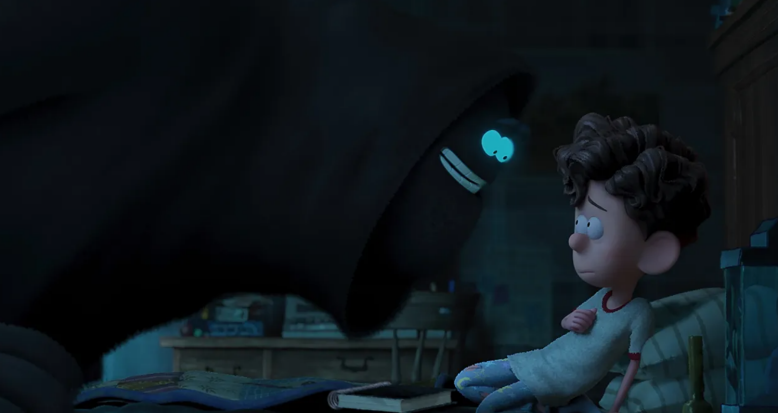
Orion and the Dark (2024) ☆☆☆(3/4): His friend, Dark

Netflix animation film “Orion and the Dark”, which was released in last week, is a simple but engaging children’s story decorated with interesting ideas and visuals. While its narrative structure may be a bit confusing to its main target audiences around its last act, the film has enough wit, personality, style to hold their attention, and it is certainly a witty and likable product to be savored and appreciated.

At first, we are introduced to Orion (voiced by Jacob Tremblay), a shy and neurotic young boy who has been constantly afraid of many different things. For example, he wants to get closer to a certain girl in his school, but he worries about being rejected by her, and he even flinches from a good opportunity to befriend her later. While his parents are loving and understanding, he cannot help but worry about the worst possibilities, and, above all, he always fears being left alone in the darkness of his room at every night.

In the middle of another fearful dark night of his, Orion lets out his anxiety and frustration toward darkness, and, what do you know, there actually comes Dark (voiced by Paul Walter Hauser). Turning out to be much jollier than he seems on the surface, Dark is willing to show more about himself, and Orion eventually agrees to accompany his unexpected visitor despite his initial hesitation.

As flying around here and there around the world, Dark shows Orion how he works at every night, and we get some wonderful visual moments as Dark cheerfully covers the sky with his darkness. In addition, he introduces Orion to several colleagues of his: Sleep (voiced by Natasia Demetriou), Insomnia (voiced by Nat Faxon), Unexplained Noise (voiced by Golda Rosheuvel), Quiet (voiced by Aparna Nancherla), and Dream (voiced by Angela Bassett). Whenever Dark unfolds its darkness across the sky, these five entities of night, which may remind you a bit of those colorful emotion figures in Pixar Animation film “Inside Out” (2015), do their respective jobs, and I particularly enjoyed how Sleep and Insomnia frequently complement each other.

Of course, there is also Light (voiced by Ike Barinholtz) because there is no darkness with light, after all. Whenever Light comes with its blinding force of light for beginning another day, Dark always has to go away along with his nocturnal colleagues, and he certainly do not like Light for that and several other reasons including the ever-bright confidence of Light, which surely makes Dark feel inadequate about himself at times.

While witnessing more of many fascinating things from Dark and his nocturnal colleagues, Orion becomes more comfortable with darkness as appreciating the, uh, bright sides of darkness, but the situation becomes a bit more serious when Orion inadvertently causes a conflict between Dark and his nocturnal colleagues. That leads to a potentially catastrophic situation for everyone on the Earth, and that is when Orion must be more active and courageous for taking care of this troubling circumstance for himself.

Orion’s adventure story is often alternated with a subplot between Adult Orion (voiced by Colin Hanks) and his daughter, who is smart enough to see through her father’s ongoing bedtime story. As they push and pull each other over his story, the story becomes a bit more complex than before, and we are not so surprised when Orion’s daughter comes to participate in the story much more than before.

The film is based on the children’s book of the same name by Emma Yarlett, which is incidentally adapted by Charlie Kaufman. As the screenplay writer of several brainy complex films such as “Being John Malkovich” (1999) and “Eternal Sunshine in the Spotless Mind” (2004), Kaufman is certainly the last one you can expect to be the adapter of such a simple and unsophisticated children’s story like this, but Kaufman’s adapted screenplay keeps everything simple in the story while occasionally showing his own touches. During the sequence where Orion and Dark go inside a sleeping person’s mind along with Dream, the movie naturally enters the area of surrealism, and we are reminded again of how Kaufman has always been occupied with the state of mind throughout his body of work.

The film is buoyed a lot by the spirited voice acting of several notable voice cast members. While Jacob Tremblay earnestly holds the center of the story, Colin Hanks, Ike Barinholtz, Natasia Demetriou, Pat Naxon, Golda Rosheuvel, Aparna Nancherla, and Angela Bassett have each own moment to shine, and Paul Walter Hauser, who has steadily alternated between comedy and drama during last several years as shown from “I, Tonya” (2017) and “Richard Jewell” (2019), is surely a standout in the bunch. While deftly depicting the humorous sides of his character, Hauser is also poignant with his character’s vulnerable sides, and he and Tremblay effortlessly click well with each other as their characters come to bond more with each other along the story.

On the whole, “Orion and the Dark”, which is directed by Sean Charmatz, is a little enjoyable animation film which handles its rather familiar story and characters better than expected. I wish the movie explored the story and characters a bit more, and I am mostly satisfied with the overall result, and I gladly recommend it to young audiences and their parents. Who know? They may become interested in Kaufman’s other works such as “Anomalisa” (2015) later, and they will probably appreciate “Orion and the Dark” more.

Posted in Movies | Tagged , , | Leave a comment

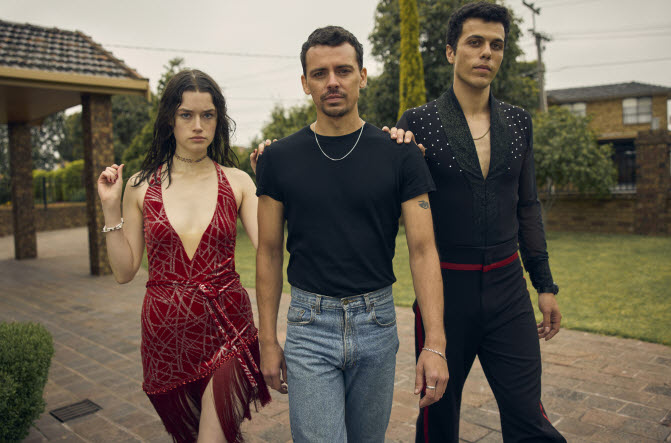
Of an Age (2022) ☆☆☆(3/4): Of a Romance

Australian film “Of an Age” works best whenever its two main characters dance around their mutual attraction. While both of them become more aware of their developing feelings along the story, they hesitate to step forward for each own reason, and their romantic tension on the screen becomes more palpable to us. Although it stumbles a bit at times, the movie is still a sensitive queer romance drama on the whole, and it also reminds me again that attraction is usually more interesting to observe than consummation.

The first part of the film, which is set in Melbourne, 1999, is about one eventful day for an 18-year-old Serbian immigrant lad named Nikola “Kol” Denic (Elias Anton) and his dance partner Ebony Donegal (Hattie Hook). When she wakes up in the next morning after her another wild drinking night, Ebony is surprised to find herself somewhere a bit far from their neighborhood, and she becomes quite frantic for a good reason. She and Kol are going to attend some important local dance competition on that day, and she does not even know where the hell she is now.

While Ebony manages to call Kol at a local phone booth (We did not have smartphones during that time, you know), Kol has to find her current location as well as someone to drive him to that location. It fortunately turns out that her older brother Adam (Thom Green) happens to be available, and Adam willingly comes for help with his car as a good older brother.

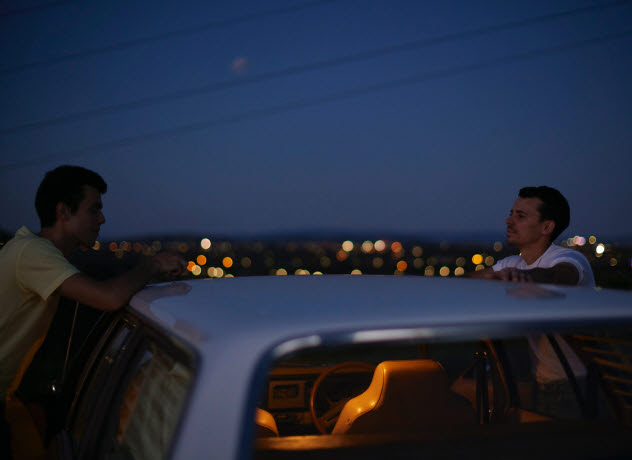
The first few minutes between Adam and Kol in Adam’s car are rather awkward to say the least because Ebony did not tell that much about Adam to Kol even though she and Kol are supposed to be best friends. However, Kol becomes more relaxed as speaking with Adam, who also went to the same high school from Kol and Ebony are soon going to graduate. Adam turns out to be less odd than Kol thought at first, and, what do you know, they come to talk a bit about the books they read. As a college student who will soon do his graduate school study in Argentine, Adam surely knows a lot about literature, and his favorite novel turns out to be one of the best ones in my inconsequential life. In case of Kol, his favorite novel is incidentally the first Charles Dickens novel I read during my high school years, and I surely understand well why it appeals to him so much.

Meanwhile, Kol also comes to learn that Adam is a gay, and, not so surprisingly, that leads to his gradual sexual awakening. While it looks like he has regarded himself as a heterosexual guy, Kol cannot help but look more at Adam as they talk more and more with each other, and Adam also seems to be attracted to Kol, though he never speaks out whatever he is feeling behind his casual appearance. After all, being a gay during the 1990s was not that easy even in Australia, and Adam also happens to have broken up with some dude recently.

Nevertheless, their mutual attraction beneath the surface become more obvious to us, especially when Adam plays the soundtrack of Wang Kar-wai’s “Happy Together” (1997). Around the time when he and Kol finally locate Ebony, Adam takes off his shirts just because it is hot inside the car, and it surely feels like a sort of seduction to Kol as Adam stares a bit toward Kol, while Ebony is somehow quite oblivious to that while slumping in the backseat due to her hangover.

The movie keeps rolling its main characters to the end of the day, and Kol finds himself more aware of his emerging sexuality. Watching him briefly touching a fitness magazine at one point later in the story, I was amused a bit as being reminded of how often I looked at the male bodybuilder photographs of many fitness books and magazines at local bookstores during my adolescent years. Like Kol, I was not that willing to recognize my homosexuality during that time, but, just like he eventually does around the end of the first part of the film, I came to follow my sexual desire in the end without any hesitation.

Compared to the first one, the second part of the film, which is set in 2010, feels rather underdeveloped, and I wish the movie took more time for developing what is going on between its two main characters. Furthermore, several other main characters in the story besides Kol and Adam are not particularly developed much, and Hattie Hook is unfortunately stuck with her superficial thankless role although she tries as much as she can do with the thin materials given to her.

Despite all these and other flaws in the film, the movie still engages us thanks to the good romantic chemistry between its two lead performers. Beside effortlessly embodying his character’s gradual growth along the story, Elias Anton also impresses us for his convincing transformation from a young awkward teenager in the first part to a more confident adult man in the second part, and Thom Green ably complements his co-star via his equally nuanced performance. Thanks to their solid acting, the movie is frequently filled with subtle erotic mood, and that may remind you of several sublime romantic movies of Wong Kar-wai such as “In the Mood for Love” (2000).

“Of an Age” is the second film of director/writer/editor Goran Stoleveski, who previously made a feature film debut with “You Won’t Be Alone” (2022). Although it feels quite different from “You Won’t Be Alone” in terms of mood and style, “Of an Age” is certainly another interesting work, and it confirms again that Stolevski is a talented filmmaker to watch. In short, this is a modest but touchingly intimate romance film, and I sincerely recommend you to check it out someday.

Posted in Movies | Tagged , , | Leave a comment

Beyond Utopia (2023) ☆☆☆(3/4): Away from North Korea

Documentary film “Beyond Utopia”, which won the Audience Award when it was premiered at the US Documentary Competition section of the Sundance Film Festival early in last year, is alternatively chilling and harrowing in its close observation of several North Korean defectors. Yes, there are still many people trying to escape from North Korea even at this point, and the stories of these desperate people are some of the most heartbreaking refugee tales in our current time.

At first, the documentary focuses on Kim Sung-eun, a South Korean Christian pastor who have devoted himself to helping North Korean defectors for more than 20 years. Mainly depending on his connections with those local brokers operating around the border between China and North Korea, he has helped many North Korean defectors not only escape from North Korea but also arrive safely in South Korea despite many obstacles including those heartless Chinese local authorities. As a matter of fact, he is even quite willing to take some big risk for himself outside South Korea although he is often advised not to do that by the South Korean government for becoming persona non grata to China and North Korea.

Pastor Kim later tells us a bit about the origin of his humanitarian devotion to North Korean defectors. When he went to the border area between China and North Korea for the first time in the early 1990s, he often witnessed how things were really hard and difficult for the people of North Korea, and he became determined to help them as much as possible. He even came to marry a North Korean woman later, and the documentary gives us a glimpse of their happy domestic life in South Korea.

Meanwhile, director/editor Madeleine Gavin and several other interviewees occasionally provide some historical background information on North Korea. While Korea was finally liberated from the brutal Japanese colonization period after the end of the World War II, it was immediately divided by US and the Soviet Union, and that eventually led to the Korean War in 1950. Although the war was practically over after the armistice in 1953, North and South Korea kept conflicting with each other as a part of the ongoing Cold War, and this political conflict has been sadly continued for more than 30 years even after the end of Cold War in the early 1990s.

After the end of the Cold War, North Korea, which was already far behind South Korea in terms of economy and many other things, came to hit one bottom after another bottom under its unprecedented dictatorship, which is a deranged mix of communism, Confucianism, and monarchy. Its first leader Kim Il-sung was succeeded by his son Kim Jong-il in 1994, who was then succeed by his son Kim Jong-un in 2011. For the constant control over the country, many of North Korean people have been thoroughly brainwashed to worship their leaders throughout their life as their world becomes more and more like a hell on the earth, and anyone trying to escape was severely punished for giving a savage lesson for others in North Korea.

Nevertheless, many North Koreans have continued to attempt to escape, and we hear about how they are driven to such a risky and desperate decision. Even while its economy is going down and down, North Korea and its despicable leader always put most of its scarce resource to its military power mainly represented by the development of weapons of mass destruction such as nuclear weapon, and that leads to lots of poverty and starvation in the country. Even though things will be more perilous once they cross the border, North Korean defectors are more than willing to take enormous risks, and Pastor Kim is ready to rescue them whenever some of them manage to contact with him via those local brokers.

As it shifts its focus from Pastor Kim to North Korean defectors, the documentary alternates between two narrative lines. In one side, we meet a North Korean defector who had to leave behind her young son in North Korea around 10 years ago, and she is certainly nervous when she is notified that her son may soon come across the border. In the other side, we meet a North Korean family who manages to escape from North Korea just like a few family members of theirs, and you may brace for yourself as frequently being reminded of how they get suddenly arrested and then sent back to North Korea at any point.

Without hurrying itself, the documentary steadily follows the progress of both sides, and what is shown to us in front of the cameras of cinematographer Kim Hyun-seok and several figures not mentioned in the documentary is harrowingly gloomy to say the least. Even when the crew members of the documentary can approach closer to that North Korean defector family after they eventually succeeded in getting out of China, there are always tension and anxiety around them and Pastor Kim, and one of the saddest moments in the documentary comes from when some of them cannot help but automatically praise their fearless leader despite experiencing more of the free world outside North Korea.

On the whole, “Beyond Utopia”, which was recently included in the shortlist for Best Documentary Oscar, do not show anything particularly new to me and South Korean audiences, but it still has some earnest emotional power to hold our attention. To be frank with you, it makes me reflect more on how frequently many North Korean defectors are mistreated and discriminated in the South Korean society after struggling through all those dangers across the border, and I sincerely hope that there will be more documentaries to tell their tragic stories.

Posted in Movies | Tagged , , , , | Leave a comment

Club Zero (2023) ☆☆1/2(2.5/4): Teaching “conscious eating”

Jessica Hausner’s new film “Club Zero” coldly unnerves us with a series of increasingly disturbing moments. While these very uncomfortable moments are presented with artistic precision and control, the movie merely feels distant and hollow in terms of story and characters, and that makes it all the more disappointing considering the committed efforts of its good cast members.

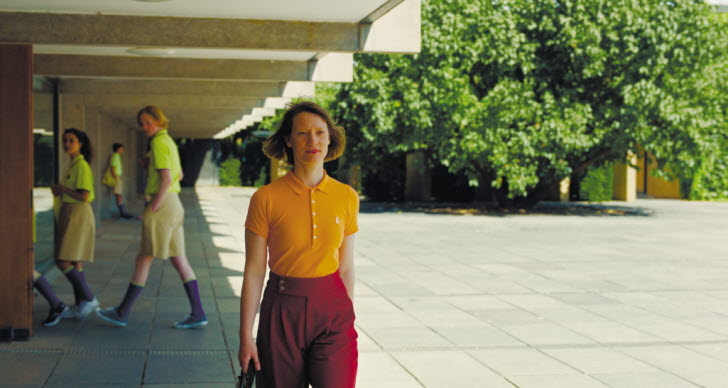
Mia Wasikowska, who has shown the more serious sides of her immense talent since her breakout turn in Tim Burton’s “Alice in Wonderland” (2010), played Miss Novak, a young teacher who has taught an unorthodox way of eating to a small group of students at some prestigious school. During the opening part, the students of her class tell about each own personal motive behind taking her class, and Miss Novak is eager to take all of them under her wing.

According to her rather weird belief, human beings actually do not need much eating once they focus more on “conscious eating”. As taught about her unorthodox eating method day by day, the students begin to practice on that step by step, and, what do you know, they soon find themselves eating much less than before. Even when they have more food than they need, they simply pretend to eat without actually eating them all, and it seems that Miss Novak’s odd teaching has some positive influence on all of them.

However, we gradually discern the disturbing sides of Miss Novak’s supposedly positive influence on her students. Her teaching come to feel more like that of a radical health farm cult, and she even tells her students that they can actually live without eating at all. As usual, most of her students believe her teaching without any question, while some of them naturally begin to show more doubt and skepticism before eventually quitting her class later.

Miss Novak would be stopped or fired at any sensible school, but she is allowed to continue her teaching just because her students have no problem with her at all on the surface. As a matter of fact, she is actually known quite well as an alternative nutritionist outside the school, and there is even a tea merchandise based on her unconventional teaching. The principal, who is played by Sidse Babett Knudsen, also has no problem with Miss Novak besides enjoying that tea merchandise given by Miss Novak, and the parents of the students, most of whom are rather distant to their kids, do not mind either just because their kids become less troublesome than before.

Of course, things subsequently become quite alarming as Miss Novak starts to take her unorthodox teaching to the more extreme levels, which are wholeheartedly accepted by her students without any question. Around that point, their belief and behaviors consequently draw more attention and concern than before, and even the principal comes to see later that something must be done about Miss Novak and her students.

While frequently baffling and disturbing us more and more with its clinical presentation of the madness of Miss Novak and her students, the movie makes some point about how her students are often susceptible to Miss Novak’s increasingly toxic influence. Most of them grow up in fairly affluent environment, but they are unhappy and vulnerable in one way or another as often feeling detached from their respective parents, and, mainly thanks to the convincing acting of the young cast members of the film, you may get some understanding on how people can be thrown under the spell of deceptive cult leaders like Miss Novak.

However, the screenplay by Hausner and her co-writer Géraldine Bajard does not delve much into what actually makes Miss Novak tick. As a matter of fact, we never get to know that much about her even around the end of the story, except how desperately she clings onto her belief for some unknown reason. Wasikowska is excellent whenever her character gets the students under control with her seemingly gentle but ultimately creepy appearance, but the movie strictly does not allow her to show any inner life of her character for more understanding or horror for us.

As a result, we only come to observe the last act of the movie from distant without much care or attention, even though what happens during this part will make you feel quite sick for good reasons (The movie wisely puts the warning involved with eating disorder at the beginning and end, by the way). To be frank with you, I winced a lot as barely watching one of Miss Novak’s students demonstrating more of her, uh, willpower right in front of her shocked parents, and I sincerely hope that nobody dares to try that after watching the film.

Overall, “Club Zero” may interest you for its disturbing story promise, but it only comes to feel like a superficial sick joke without much substance to, shall we say, chew on. Like her previous films such as “Lourdes” (2009) and “Amour Fou” (2014), Hausner did a skillful job of maintaining the ice-cold visual sense of detachment on the screen via precise scene composition and color scheme, and that may grab your attention for a while, but the result only comes to fizzle in the end like “Little Joe” (2019), which also ultimately feels rather empty and pointless despite its initially intriguing horror story promise. While it is a well-made arthouse movie packed with considerable technical efforts, I remember more of how it made me very comfortable at times when I watched it yesterday, and, folks, my stomach still cringes even at this point.

Posted in Movies | Tagged , , , , | Leave a comment

Wild Tour (2019) ☆☆1/2(2.5/4): A modest early work from Shô Miyake

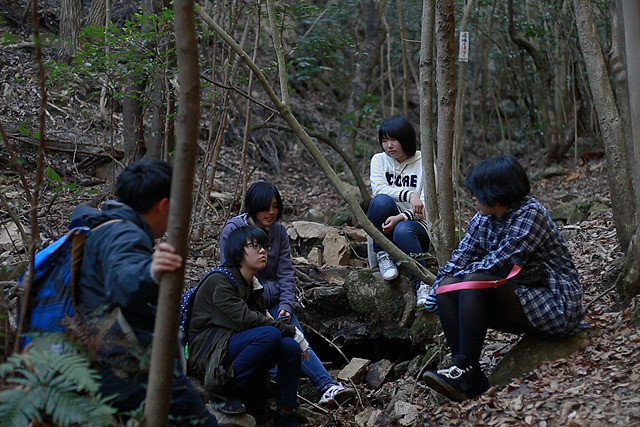
Japanese film “Wild Tour” is a small early work from Shô Miyake, who recently drew my attention for his latest film “Small, Slow but Steady” (2022). While it occasionally feels like a short film extended a bit to long, “Wild Tour” is engaging to some degree as slowly revealing the emotional undercurrents beneath the surface, and it was also a little amusing for me at times due to its main subject incidentally associated a bit with my academic background.

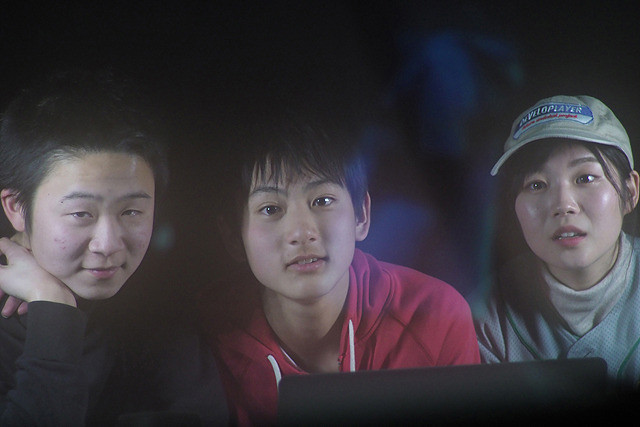
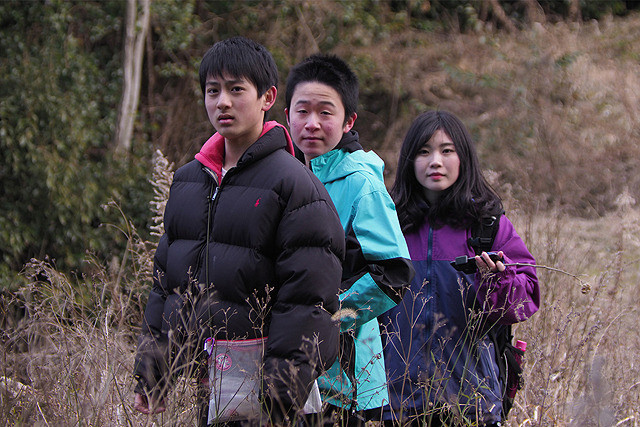
The story mainly revolves around a little scientific workshop program at the media and art center of one small Japanese city. Under the guidance of two university students, its middle school student participants are going to examine the wildlife botany of the city, and they are instructed to sample and record biological specimens to be analyzed via DNA sequencing. At one point in the film, the movie shows a bit of how a DNA sample is extracted from one collected specimen, and I must tell you that I felt quite nostalgic as a guy who studied biology for more than 10 years as an undergraduate and graduate student of Korean Advanced Institute of Science and Technology.

Anyway, the movie mostly focuses on Ume (Honoka Ito), a young woman who is one of the two university students guiding the participants of the workshop program. Once the brief orientation of the workshop program is over, she cheerfully approaches to two adolescent boys who are going to work along with her outside, and we soon observe how they work outside. As they simply go around here and there inside and outside the city, their work process is constantly recorded by their smartphones, and the two boys under Ume’s guidance are willing to do the job as much as possible while often driven by Ume’s genuine charm and enthusiasm.

It gradually becomes more apparent to us that both of these two boys are interested in getting a bit closer to Ume even though they are well aware of the considerable age gap between them and her. Regardless of whether she is actually aware of what is going on between her and them, it turns out later that there is some past with Ume and her male colleague, and the most interesting moment in the film comes from when they happen to have a little private moment between them without knowing at all that their conversation is being heard by one of the two boys.

Meanwhile, the workshop program is being continued day by day as before, and the movie goes astray a little when it comes to pay attention to Ume’s male colleague and several teenage girls under his guidance. This sequence is vivacious as these young girls joyously do their job in the forest of a nearby mountain, and their guide becomes quite interested when one of the young girls comes across a specimen curious enough to be examined and analyzed later.

Eventually, Miyake’s screenplay eventually goes back to the developing triangle relationship among Ume and the two boys. We get to know a bit more about one of these two boys when he happens to have a brief meeting with one of his female schoolmates, who is clearly interested in becoming his girlfriend someday. We are amused a bit when the other boy takes some advantage of his friend’s sincere confession to him. And we get some bittersweet feeling when neither of them succeeds in winning Ume’s heart in the end.

However, as adamantly sticking to its detached docudrama approach, the movie often fails to develop its main characters enough to make us care more about them. While Ume is mainly defined by her casual charm, the boys under her guidance mostly remain as mere story elements, and the same thing can be said about several other substantial characters including Ume’s male colleague, who may have more personal story to tell behind his back.

Despite this glaring flow, the movie is not entirely without interesting stuffs to be appreciated, and you may be impressed by its considerable realism on the screen. Although it frequently looks like a mere promotional film for the media and art center in the film (As shown from the end credit accompanied with the excerpts from various DNA sequencing results, this center really exists in that city, by the way), there is an ample amount of palpable verisimilitude at least, and the characters in the film really feel like real people even though most of them are rather underdeveloped in my inconsequential opinion.

The three main performers at the center of the movie are effective in their unadorned natural acting. While Honoka Ito always lightens up the mood whenever she appears on the screen, young performers Ryutaro Yasumitsu and Osuke Kuribayashi hold each own place around their adult co-star, and it is a shame that the movie does not roll their characters further for more interesting story development.

Overall, “Wild Tour” is not exactly a satisfying experience due to its rather thin storytelling, but it shows its director’s considerable potential to be developed during next several years. Since the movie was released in 2019, Miyake worked in two local TV miniseries and then moved onto “Small, Slow but Steady”, and that movie was certainly one of the more interesting films I watched during last year. With several short and feature films on his belt, he is definitely ready to advance more, and I think I will probably be more impressed by whatever he will make next.

Posted in Movies | Tagged , | Leave a comment

Badland Hunters (2024) ☆☆1/2(2.5/4): A post-apocalyptic flick starring Ma Dong-seok

Netflix film “Badland Hunters”, which was released in last week, is a redundant sequel to acclaimed South Korean film “Concrete Utopia” (2023), which was incidentally one of my best South Korean films of last year. While “Concrete Utopia” is a competent and thought-provoking SF action thriller flick, “Badland Hunters” lacks style and substance compared to its predecessor, and it simply depends on the engaging presence of its lead actor without doing anything else much on the whole.

Right after the prologue part, the movie quickly establishes how things have been hard and difficult for many survivors since a massive earthquake occurred in Seoul around a few years ago as shown in “Concrete Utopia”. Due to the frequent lack of food and fresh water, these two items have become the most valuable assets in their demolished world, and a beefy strong guy named Nam-san (Ma Dong-seok) has been a crucial member of one small community in Seoul for his considerable hunting skills. Along with his younger partner Ji-wan (Lee Jun-young), Nam-san often searches and hunts for any animal meaty enough for them and others, and they surely take a lot of risk when they hunt for a big alligator at one point early in the film (Please don’t ask me how the hell it has inhabited there even though we do not have any wild alligator here in South Korea).

Anyway, everyone likes and respects Nam-san mainly because 1) he sells his meat at fair price to his neighbors and 2) he is the only one who can stand up to a bunch of vicious thugs who have harassed them from time to time. When these thugs, who seem to be auditioning for a South Korean Mad Max film, come again, Nam-san surely show them that he is not the one they should not mess with at any chance, and his neighbors are certainly grateful to him for taking care of their latest trouble.

One of these neighbors is a plucky teenage girl named Eun-ho (Ahn Ji-hye), who has lived with her aging grandmother at their little cozy residence. It does not take much time for us to see that Ji-wan has a crush on Eun-ho, and she also likes him a lot, but then there comes a sudden change. Eun-ho is approached by a bunch of people from the only remaining apartment building in Seoul, and they promise to her that she and her grandmother will live in a much better condition than before. Although he does not like Eun-ho leaving the community, Ji-wan is happy to see her and her grandmother getting such a fortunate opportunity like that, and so is Nam-san.

Of course, Eun-ho gradually senses that there is something not so right about the seemingly generous offer for her and her grandmother. When they are being taken to that precious apartment building along with several other supposedly lucky people, she becomes separated from her grandmother, and she comes to suspect more when she and others eventually arrive at the apartment building, which seems to be not changed that much after what happened in “Concrete Utopia”. Everything looks quite fine and well on the surface, but she and the other young girl in the group are taken to a certain area in the apartment building, and she cannot help but unnerved by the chillingly numb passivity of a bunch of young boys and girls living there.

These young boys and girls are handled by a doctor who turns out to be, yes, your average mad scientist. He has worked on an insane science project mainly motivated by his obsession on his dying daughter, and he is quite determined to succeed by any means necessary while being helped by a group of soldiers willing to do anything in exchange of getting the fruit of the possible success of his diabolical science project first.

After belatedly coming to learn about what will happen to Eun-ho from a rogue soldier who objected to this evil plan from the beginning, Nam-san and Ji-wan quickly go all the way for saving Eun-ho as soon as possible, and the movie naturally serves us a series of gritty physical action scenes as expected. There is an extended action sequence where Nam-san and Ji-wan clash against many thugs, and that is just the prelude to what will be unfolded on the screen once Nam-san and Ji-want finally arrive at the apartment building. Many of their opponents are incidentally pretty much like your typical zombies thanks to that evil doctor’s ongoing science project, and we surely get lots of bloody violence as our heroes busily shoot, punch, and hack on the screen.

Around that narrative point, I felt rather distant to whatever was going on the screen, but I was again impressed by the enduring star quality of Ma Dong-seok, who recently appeared as Dong Lee in Chloé Zhao’s recent Marvel Cinematic Universe film in “Eternals” (2021). Like Arnold Schwarzenegger or Jason Statham, he has natural charisma which can always hold our attention even though he has played basically same characters again and again for years, and the movie always works whenever he goes for more action along the story. In contrast, several main other cast members including Lee Jun-young, Roh Jeong-eui, and Ahn Ji-hye are simply demanded to fill their functional supporting roles, and Lee Hee-joon is unfortunately tasked with an unenviable job of overacting from the beginning to the end.

In conclusion, “Badland Hunters” is not that boring mainly thanks to its lead actor’s good efforts, but it is still one or two steps behind “Concrete Utopia” in terms of storytelling and characterization. Because I gave “Concrete Utopia” three stars, it is fair to give “Badland Hunters” two and half stars, but I will not stop you at all if you happen to have nothing else to watch on Netflix.

Posted in Movies | Tagged , , , | Leave a comment

Ballerina (2023) ☆☆1/2(2.5/4): For her best friend

South Korean Netflix film “Ballerina”, which was released several months ago, is an intense action thriller film which distinguishes itself to some degree. While it lacks substance in terms of story and character, that weak aspect is compensated at times by its bold visual style mixed with several brutal and intense action scenes, and it is also constantly driven by the sheer presence and talent of one of the most talented actresses working in South Korea at present. 

Jeon Jong-seo, who has steadily impressed us more since her crucial supporting role in Lee Chang-dong’s “Burning” (2018), plays Ok-ju, a young woman with a particular set of skills as shown from the opening scene. Although the movie does not tell us that much about her former job, it seems that she once worked as a bodyguard for VIP clients here and there, and she recently quit the job for some unspecified reason.

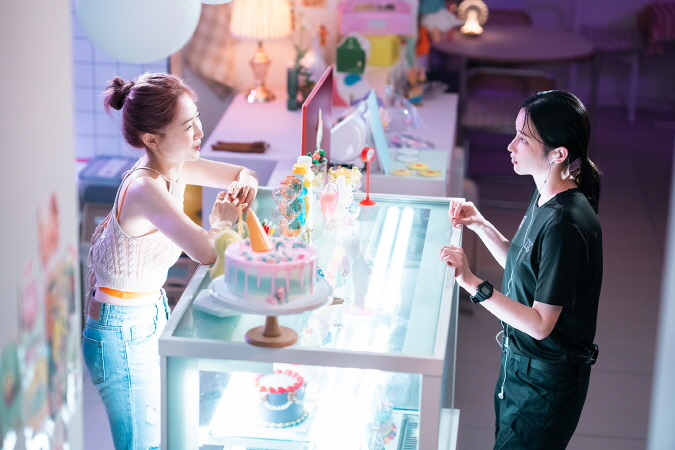
While she lives alone in her apartment, Ok-ju has a person who becomes quite important to her after their accidental encounter. When she comes across Min-hee (Park Yu-rim) at a little local bakery, she does not recognize Min-hee at first, but Min-hee instantly recognizes Ok-ju as an old school friend of hers, and it does not take much time for them to get closer to each other again as they come to spend more time with each other. Ok-ju feels a bit happier with Min-hee, and Min-hee willingly responds to Ok-ju with equal affection, though the movie does not specify whether they actually feel more than mere friendship.

On one day, Ok-ju receives a call from Min-hee, who suggests that they should have another drinking night at Min-hee’s residence. When Ok-ju later comes to Min-hee’s residence, she is baffled by the empty silence surrounding the place, and then she discovers something quite shocking. After leaving a private note to her friend, Min-hee killed herself while wearing her ballet outfit, and Ok-ju is naturally devastated by this sudden unexpected incident. 

On her note to Ok-ju, Min-hee requests Ok-ju to do something as a woman with a particular set of skills, though she only left one small clue to why she committed suicide. Based on that small clue in question, Ok-ju soon comes to learn more about what drove her best friend to such a tragic outcome like that. It turns out that Min-hee happened to be associated with a vile criminal who has sexually exploited not only Min-hee but also many different women for money and pleasure, and Ok-ju becomes more determined to revenge her friend as getting to know more about this deplorable guy’s criminal business.  

As our tough heroine delves into the seedy underworld of her main target and his several criminal associates, director/writer Lee Chung-hyun, who previously collaborated with Jeon in Netflix film “The Call” (2020), fills the screen with stylish visual touches as colorful as Emerald Fennell’s “Promising Young Woman” (2020), which is also about a young woman determined to get the revenge for her dead best friend by any means necessary. The artificial qualities of these visual touches surely make a striking contrast with a series of gritty and bloody action scenes in the film, and you may wince from time to time during some of the most violent moments in the film.

The movie takes a more familiar narrative route as its heroine gets rid of one bay guy after another along the story, and it surely gets more exiting as expected, but the movie does not pay much attention to character development on the whole. Yes, it is refreshing to some degree to see a female character going all the way for action just like many male characters did in countless action flicks for many years, and we certainly need to see more of that even at present, but, to my little disappointment, the movie does not bring enough detail and personality to its heroine. Even at the end of the story, we do not get to know that much about her, and that is the main reason why we observe her actions from the distance at times.

Anyway, Jeon diligently carries the film to the end while wonderfully demonstrating another side of her versatile talent. In “Burning”, she filled her rather thankless role with enough life and personality. In “The Call”, “Nothing Serious” (2021), and “Mona Lisa and the Blood Moon” (2021), she effortlessly moved from one different genre film to another to our delight, and “Ballerina” is certainly another example of that. Besides willingly throwing herself into many different action scenes along the film, she imbues her archetype character with considerable intensity, and the movie is effective whenever she wields her commanding presence across the screen.   

In contrast, many of other main cast members of the film are rather under-utilized. While Kim Ji-hoon is effectively loathsome as required by his villain character, Park Yu-rim manages to leave some impression as Ok-ju’s ill-fated best friend, Shin Se-hwi unfortunately does not have much to do as another crucial female supporting character in the story.        

In conclusion, “Ballerina”, which should not be confused with upcoming Hollywood action film “Ballerina” (2024), is relatively dissatisfying compared to what Lee and Jeon achieved in “The Call”, but it is not entirely boring thanks to Lee’s competent direction and Lee’s admirable professional commitment. In short, this is another average Netflix product, but I think you may enjoy it if you happen to have a spare time to kill.

Posted in Movies | Tagged , , | Leave a comment

Wonka (2023) ☆☆☆(3/4): When Wonka was young and innocent

“Wonka” is a sweet lightweight piece of entertainment which made me less cranky than usual. Sure, this is another redundant character origin story like “Joker” (2019) and “Cruella” (2021), but it is packaged with enough humor, spirit, and heart, and I found it fairly likable even though I think its existence is not exactly necessary from the beginning.

The story is about how Willy Wonka (Timothée Chalamet), who is incientally one of the most memorable characters created by Roald Dahl, started his business many years before he sadistically punishes those spoiled kids in Dahl’s novel “Charlie and the Chocolate Factory”. In contrast to Gene Wilder in “Willy Wonka & the Chocolate Factory” (1971) or Johnny Deep in “Charlie and the Chocolate Factory” (2005), Chalamet plays the titular role as a charmingly idealistic lad full of hope, dream, and imagination, and it does not take much time for us to root for his sincere aspiration as he jubilantly sings during his arrival at one big city.

However, his naïve ambition soon faces a series of considerable obstacles right from his first day in the city. As he does not have much money at present, Wonka comes to stay in a cheap boarding house run by Mrs. Scrubitt (Olivia Colman), and, what do you know, he soon finds himself thrown into Dickensian slavery just like several other unfortunate boarders of Mrs. Scrubitt, all of whom made a certain small but serious mistake just like he did. In addition, his modest chocolate business is quickly stomped by the venal police chief and three powerful chocolate businessmen, who are surely as nasty and ruthless as those three mean farmers in Dahl’s another famous novel “Fantastic Mr. Fox”.

Nonetheless, Wonka is not daunted at all. Mainly assisted by an orphan girl who is also a captive of Mrs. Scrubitt just like Wonka and other boarders, he gradually finds a way to continue his chocolate business whenever he and they can evade Mrs. Scrubitt’s watchful eyes, and, not so surprisingly, he soon gets more and more attention in the city because of his wondrous chocolate products such as the one which can make people float in the air.

As Wonka’s chocolate business is thriving day by day, the movie continues to drop one nice musical sequence after another for our amusement. While Joby Talbot’s score freely quotes the two famous songs from “Willy Wonka & the Chocolate Factory” (1971) throughout the film, the original songs by Neil Harmon are fun and witty enough to make you make hum some of them after the movie is over. As a matter of fact, I was particularly tickled by “Scrub Scrub”, which is about how Wonka and other boarders have to work a lot every day as demanded by their diabolical boardinghouse owner.

In addition, the movie has enough charm and wonder to make us put aside our reservation for a while. Sure, Wonka is more like a wizard than an entrepreneur, but the movie is unabashedly unrealistic with its numerous fantasy elements, so we do not ask too much about the details on how he can make those magical chocolate so easily everyday – or where he did get that magical hat which seems to contain a lot of stuffs.

Above all, just like director/co-writer Paul King’s two previous films “Paddington” (2014) and its 2017 sequel, the movie is gently and cheerfully driven by good will and optimism, both of which we surely need for going through these hard and disturbing days. While we may get another origin story on how Wonka becomes less gentle and innocent later, he is simply decent and caring here in this film, and it is touching to see how his good will and optimism affect several other characters around him. They have been jaded and cynical in one way or another, but they eventually find themselves enlivened a lot by Wonka’s irrepressible spirit, and they come to stick together around him when he becomes more determined not to step back at all later in the story.

Timothée Chalamet, whom we will see again in “Dune: Part Two” (2024) several months later, demonstrates here that he is a good singer who can ably handle several key songs such as “A Hatful of Dreams”. While his performance is less edgy than his two notable predecessors, Chalamet brings considerable youthful energy and sweetness to the titular role as doing his own things to be appreciated, and his resulting performance becomes quite endearing like the titular bear character of “Paddington”.

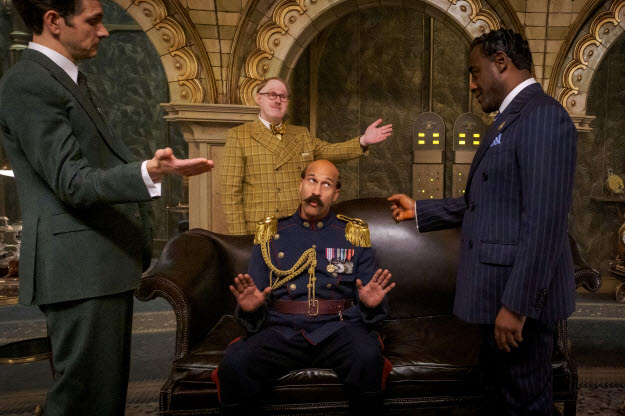
Around Chalamet, the movie assembles a bunch of notable performers such as Olivia Colman, Sally Hawkins, Jim Carter, Rowan Atkinson, Keegan-Michael Key, and Hugh Grant. While Colman and Key have lots of fun with their respective villain roles, Grant plays his literally colorful supporting character with gusto in addition to singing well the two variations of that catchy song from “Willy Wonka & the Chocolate Factory”, and newcomer Calah Lane holds her own place well besides Chalamet while having her own little moment to shine.

On the whole, “Wonka” may not remain that long in our mine compared to “Willy Wonka & the Chocolate Factory”, but it is entertaining enough for recommendation because of the enthusiastic efforts from its cast and crew members. After having another busy day at my workplace, I was a bit tired when I came to the screening room in the previous evening, but then my eyes and ears were entertained by all those nice things in the film, so I will not grumble for now at least.

Posted in Movies | Tagged , , | Leave a comment

The Greatest Night in Pop (2024) ☆☆☆(3/4): One Night Only

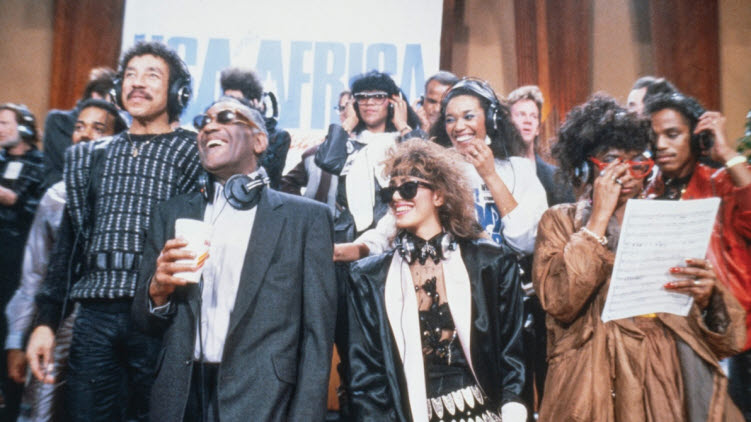
Netflix documentary film “The Greatest Night in Pop” does not disappoint us at all as looking closely into a major event of American Pop music in the 1980s. On January 25th, 1985, a bunch of renowned American musicians were somehow assembled together in a recording studio in LA for a charity single for African famine relief, and the documentary vividly shows us how things were both messy and exciting for everyone in the recording studio before their work was finally and successfully done.

At first, this ambitious event was relatively modest as Lionel Richie and his manager Ken Kragen planned for a little special recording session among Richie and several other African American musicians including Michael Jackson. After watching how much Bob Geldof did in UK via his Live Aid project for African famine relief, Richie and Kragen decided to give a shot to a similar but more modest project under the guidance of Harry Belafonte, and Jackson was willing to compose the song for that project along with Richie, though their collaboration at Jackson’s residence in Las Vegas was not exactly smooth to say the least.

The song was eventually ready around the end of 1984, but there was one big problem. Not only Richie but also Jackson and several other musicians supposed to work along with them were usually pretty busy in their respective schedule, and it turned out that they could work together only on that one day in January 1985. To make matters worse, Richie had to host a major industry award ceremony right before the recording, and that certainly made him all the more pressured than before.

Meanwhile, the project kept growing much more than expected. While it was initially just for African American musicians such as Ray Charles and Tina Turner, Richie and Kragen came to approach to many other popular musicians ranging from Bruce Springsteen and Cyndi Lauper to Willie Nelson and Bob Dylan, and they even contacted with Dan Ackroyd (!). While a few of them such as David Byrne could not come due to being busy with their ongoing concert tours, many of them gladly agreed to spend some time in a certain recording studio in LA, and that surely made another big headache for Quincy Jones, who served as the producer/arranger of the project. For example, Jones and several other technicians had to work a lot on how to arrange the vocals of all these musicians within that one single song, and they also had to pay lots of attention on the placement of each of these musicians in the recording studio for getting the most ideal outcome from the following recording session.

Anyway, Richie, Jones, and their assistants were quite nervous as the day finally came. While they kept preparing along with Jackson, all these musicians came to the recording studio one by one, and I must say that their gathering is much more impressive than whatever I saw from those Avengers flicks of Marvel Cinematic Universe. Although notified that they should set their egos aside for a while at least, they could help but show their talent and presence at times, and that is certainly something we do not see everyday.

For this very special moment, a number of cameramen including Ken Woo were there for capturing everything from all those luminaries of American Pop music, and recording engineer Humberto Gatica had to be all the more careful about the recording environment. Because the time allowed for the recording session was only several hours at most, any kind of problem could be quite disastrous if they did not quickly prevent or fix it, and that frequently made everyone in the studio on the edge.

Of course, things did not go that well right from when they tried to record the chorus part of the song, which is titled, yes, “We Are the World”. As their recording session got delayed for one reason after another, all these musicians in the recording studio often got quite frustrated, and we are not so surprised by when one of them eventually walked out from the studio and never returned.

Nevertheless, the musicians in the recording studios patiently kept sticking together because 1) they all felt the social/cultural importance of the project and 2) they simply enjoyed being around each other as Richie and several other notable interviewees tell us in the documentary. While Jones kept things under control as much as possible, Richie provided some air of fun and camaraderie along with Stevie Wonder, and there was an amusing moment when Wonder willingly led Charles to the bathroom for himself (You know why). Although he looked as awkward and detached as I usually am in many big ceremonies, Dylan patiently stayed around others before his turn finally came around the end of the recording session, and Springsteen really tried his best even though he was quite exhausted as he arrived in LA right after the end of his concert tour.

Overall, “The Greatest Night in Pop”, which is directed by Bao Nguyen, is fun and engaging for showing a lot of things behind “We Are the World”, which is still one of the notable songs from the American Pop music of the 1980s besides being quite successful in achieving its noble goal. It was surely something special which may never be surpassed even during our lifetime despite many following similar efforts (Do you remember how grossly misguided and truly unspeakable that infamous online live performance of “Imagine” by a bunch of big celebrities was during the COVID-19 pandemic?), and the documentary did a good job of presenting it with care and respect.

Posted in Movies | Tagged , , , , | Leave a comment

Ms. Apocalypse (2023) ☆☆☆(3/4): The unlikely relationship of two unhappy women

Some good movies can make us care a lot more about their characters than we expected at first, and South Korea film “Ms. Apocalypse” is one of such cases. Mainly revolving around two different women who are not exactly likable in their respective ways, the movie closely and sharply observes the comic development of their unlikely relationship, and we come to understand and empathize with them more even while getting some painful laughs along the story.

The early part of the film, which is incidentally shot in black and white film, is set in late 1999, and we are introduced to Yeong-mi (Lee Yoo-young), a meek young woman who has worked in the accounting department of some small company. While she is often ignored and ostracized by many male employees in the company for her awkward appearance and attitude, she has a crush on a young (and good-looking) delivery driver named Do-yeong (Roh Jae-won), and we are not so surprised when it turns out that she has been covering up a serious act of embezzlement of his for a while. As a matter of fact, she does some part-time job for earning enough money for covering up his ongoing criminal deed, and, just because of her growing affection toward him, she does not mind this at all even though she becomes quite exhausted from time to time.

However, things get much worse during the last days of 1999, when many people around the world were quite afraid of that possible apocalypse due to Y2K. Yeong-mi’s very sick aunt, of whom she has taken care instead of her aunt’s useless son, dies suddenly. While she tries to handle a number of following matters including the aunt’s funeral, she soon finds herself getting arrested for covering up Do-yeong’s embezzlement, and then she is shocked and devastated to learn belatedly that Do-yeong is actually married.

Anyway, Yeong-mi gets imprisoned for next several months after labeled as Do-yeong’s accomplice, and that is just the beginning of her messy circumstance. When she is eventually released in the middle of 2000 (The film switches to color film at this point, by the way), she remains confused and befuddled as before, and then she is approached by Yoo-jin (Lim Sun-woo), a quadriplegic woman who turns out to be Do-yeong’s wife. Accompanied with a young goofy hairdresser named Joon (Moon Dong-hyeok), Yoo-jin has a certain business to discuss with Yeong-mi, and, after coming to learn that she has nowhere to live at present, Yeong-mi soon lets herself getting involved with Yoo-jin even though she does not like Yoo-jin much.

Yoo-jin, who is incidentally about to divorce with her husband once he gets released some time later, gives Yeong-mi a rather generous offer she cannot easily refuse, but she is no Helen Keller at all. At one point, we see her becoming quite mean and harsh to a young volunteer sent to her little apartment, and we are not so surprised when Yeong-mi subsequently begins to take care of Yoo-jin instead. As a woman who has endured a fair share of mistreatment throughout her life, Yeong-mi is not easily daunted by Yoo-jin’s abrasive sides, and they soon become more like close roommates as days go by.

Now you may think this is another feel-good disability drama like “The Intouchables” (2011), but the screenplay by director/writer Lim Seon-ae, who previously made a feature film debut with “An Old Lady” (2019), wisely avoids that clichéd route. Yes, our two ladies slowly come to show their better sides to each other along the story, but there is always that harsh reality outside, and we get to know more about how messy their respective situations really are. For example, Yoo-jin has a number of private matters which turn out to be more complex than they seem on the surface, and Yeong-mi is also revealed to have a lot more personal issues behind her back.

As getting more exasperated and frustrated in one way or another, Yeong-mi and Yoo-jin naturally come to bond more with each other because, well, they do not have any other option besides that. The mood becomes a bit poignant as they open themselves a little more to each other later in the story, and you may also appreciate how the movie shows some care and attention to several other main characters including Do-yeong, who turns out to be more decent and sincere than he looked at the beginning.

Everything in the film depends a lot on the good comic chemistry between its two talented lead actresses, who did a fabulous job of complementing each other throughout the movie. While Lee Yoo-young, who previously appeared in “Perhaps Love” (2021), ably holds the ground with her engaging performance, Lim Sun-woo, who was terrific in “The Hill of Secrets” (2022), is uncompromising as effortlessly embodying her character’s bitter stubbornness, and several main cast members of the film including Roh Jae-won, Moon Dong-hyeok, and Jang Sung-yoon are also well-cast in their respective supporting parts.

In conclusion, “Ms. Apocalypse”, which is released as “Love at the End of the Century” in South Korean theaters, is Lim Seon-ae’s solid second work after “An Old Lady”, which is one of more impressive South Korean female films during last several years. Although it is not entirely without weak aspects (Several subplots including the one involved with Joon remain rather unresolved, for instance), the movie is still interesting enough to hold our attention, and it surely reminds me again that the future of South Korean cinema lies in the hands of talented female filmmakers like Lim.

Posted in Movies | Tagged , , | 1 Comment