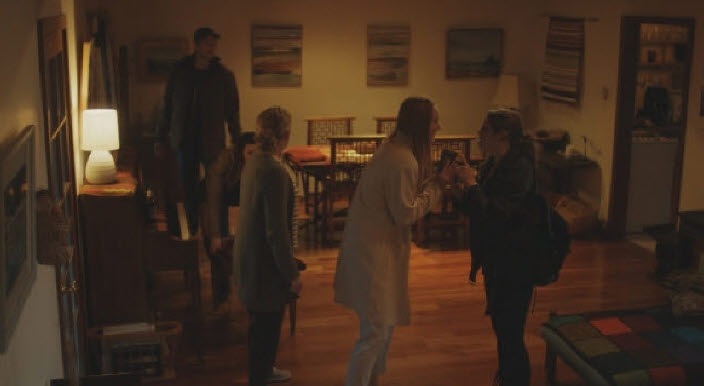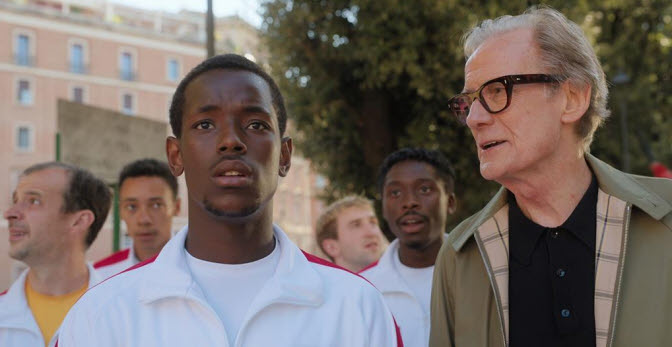
Vengeance (2022) ☆☆1/2(2.5/4): An offbeat comedy mystery drama set in Texas

“Vengeance” baffled me with some amusement and disappointment. Languidly driven by a little investigative reporting process on the mystery surrounding one seemingly plain incident, the movie attempts to make some barbed points on the current social/cultural gaps and divides in the American society, but, ironically, it also dabbles in numerous clichés and stereotypes you can expect from its quirky story promise. The overall result sometimes swings too much between drama and satire without enough balance for that, and I am still scratching my head on how to process its interesting but rather uneven presentation of various ideas and thoughts popping here and there.

B.J. Novak, who also directed and wrote the film, plays a New York City writer named Ben Manalowitz, and the early part of the film shows how superficially self-centered this dude is. While he has been fairly successful enough to support himself, Ben wants more success and attention nonetheless, and that is why he has tried to get draw some interest from a female friend of his who is incidentally an editor working in some big podcast company. However, she is not particularly interested in whatever suggested from him because, probably, she sees through his seemingly fancy but ultimately hollow words right from the start.

On one day, Ben receives an unexpected call which confounds him a lot for a good reason. The caller is the older brother of some young Texan woman with whom Ben slept a few times some time ago, and this guy tearfully notifies to Ben that, as already shown to us at the beginning of the film, his younger sister died recently. Ben is reluctant when he is asked to attend the upcoming funeral to held at that young woman’s hometown in Texas, but he eventually agrees to go there, mainly because her older brother is so persistent in his personal request that Ben cannot possibly say no.

After managing to endure a very awkward moment when he has to say something nice about that dead young woman, Ben is introduced to her surviving family members, who look and feel as clichéd as you can possibly imagine. For example, everyone in the family surely knows how to handle firearm, and they are also inexplicably quite obsessed with a certain local fast food restaurant, which seems to be the best place in their neighborhood although it does not have anything particularly special to eat.

Naturally, Ben is your average fish-out-of-water under this situation, and the movie dryly doles out some droll moments of cultural clashes you can expect from this setup. Yes, he surely comes to have another very awkward moment as an outsider when he attends a local rodeo game at one point. Yes, he also goes to a local bar where many people joyfully dance together on the floor, and he is rather amazed by that. As a matter of fact, it looks like he has never watched such a thing like that from TV or movies, though he says that he attended the SWSX Film Festival in Austin, Texas a few years ago.

Meanwhile, Ben comes to the possibility of an interesting narrative via that dead young woman’s brother, who is somehow convinced that she was actually murdered. Although there is no hard evidence, Ben is willing to investigate the incident more for getting more materials for his future podcast show, and his editor friend actually becomes interested enough to encourage and support him.

Of course, as he delves more into the incident, Ben is reminded again and again of how things can be weird or dangerous in Texas. Not only the local police but also several other law enforcement organizations are not particularly interested in resuming the investigation, and you may be amused by the sequence where Ben keeps facing the dead end in one way or another thanks to their very uncooperative attitude. In addition, it looks like he is not so welcomed by everyone in the area, and that naturally makes his podcast materials look more interesting than before.

However, Novak’s screenplay often loses its way more than once during its final act. While it seems to make a sly fun of Ben and many other stereotype characters in the story, it only scratches the surface without giving much depth to the story and characters. Around the finale, the movie does try to attempt to be more serious as our pathetic hero going through some soul-searching, but then it takes another expected plot turn as going through another odd moment along with him, and that can be a bit too jarring to you.

Anyway, Novak, who is no stranger to comedy considering his substantial supporting turn in American TV comedy series “The Office”, is effective in his character’s frequently self-absorbed status, and several main cast members including Boyd Holbrook, J. Smith-Cameron, and Issa Rae manage to bring some life and personality to their rather thin supporting parts. In case of Ashton Kutcher, he simply steals the show as the elusive but charismatic local music producer who was once associated with that dead young woman, and he will remind you again that he is capable of giving a very good performance if he gets a chance for that.

In conclusion, “Vengeance” is not entirely satisfying despite some enjoyable elements, but it shows at least that Novak, who made a feature film debut here, is a competent filmmaker with some potential. He stumbles a bit too much, here, but he may give us something more satisfying in the next time, and I will certainly keep my mind open for that.

Posted in Movies | Tagged , , | Leave a comment

Soft & Quiet (2022) ☆☆☆(3/4): Tense & Disquieting

“Soft & Quiet” is a small but striking genre piece you will not easily forget. As it pulls no punch at all in its increasingly tense and disturbing presentation of racism, you will probably wince more than once, but the movie will hold your attention to the end thanks to its skillful handling of mood, story, and character, and it will surely make you reflect more on its sensitive main subject after the gut-chilling finale.

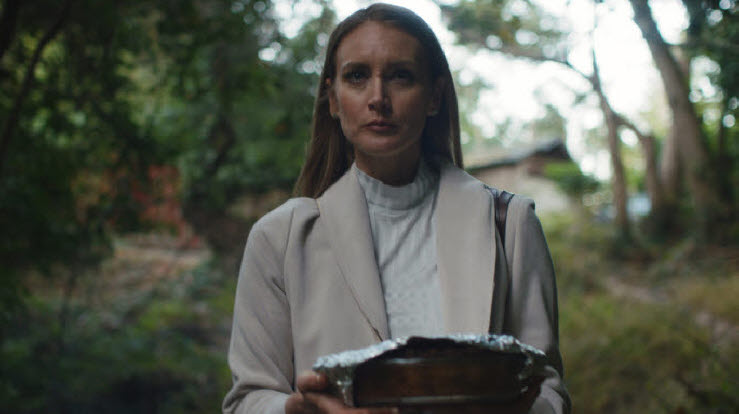
The movie opens with a white woman nervously doing a pregnancy test, and then we get to know a bit about her. She is a kindergarten teacher living in some suburban neighborhood, and we see her interacting a bit with one of her little students before going to some meeting, but then we gradually become uncomfortable about her – especially when she deliberately makes that innocent kid do a small act of racism to a colored janitor of her workplace.

After she subsequently arrives at a meeting where some other white women are waiting for her, she comes to reveal her true color along with a little special pie of hers. They are actually your typical white racists just like those deplorable American people unleashed by the political rise of Donald J. Trump, and their following conversation and discussion feel like a sort of twisted endurance test for any sensible audience. While they look surely absurd in justifying their disgusting racist belief, it is really unnerving to watch them casually and cheerfully exchanging their toxic ideas and thoughts among them, and you may often feel like watching what is happening among a group of anonymous racists at the dark corners of the Internet at every hour.

This is definitely not a pleasant sight to watch at all, but the movie keeps things rolling for a while among these detestable ladies, who are fleshed out bit by bit as they talk more and more with each other. While we come to observe them from the distance with more disgust and uneasiness, they look and feel plausible as persons you may come across inside the American society, and that is why their banality of evil is quite frightening to us – particularly when they discuss more about how they will propagate their racist ideas more out there in “soft & quiet” ways. Their strategies may sound silly and pathetic, but just think about how all those absurd and outrageous racists lies from that orange-faced prick are still appealing to millions of his despicable followers even at this point.

In addition, director/writer/co-producer Beth de Araújo and her crew members including cinematographer Greta Zozula did an impressive job of bringing a considerable amount of realism and verisimilitude to the story and characters. They present the whole movie in one continuous shot, and, though this visual approach has been a lot more common since Alejandro G. Iñárritu’s Oscar-winning film “Birdman or (The Unexpected Virtue of Ignorance)” (2014), the result is still very impressive because they actually shot the movie in real time. Later in the story, the movie moves along with its main characters from one spot to another, but the camera steadily follows them without any interruption, and that makes the following second half of the movie all the more intense.

Now I have to be a little careful about describing the second half of the story, which becomes a lot darker than expected. There is an unpleasant but undeniably tense scene between its racist main characters and a couple of young colored women, one of whom is incidentally associated with what recently happened to the brother of the teacher character. Not so surprisingly, she and her fellow racists become all the more spiteful after this very disagreeable encounter, and then they eventually decide to be more active with their racist belief.

Around that narrative point, I could not help but reminded of that infamous home invasion scene of Stanley Kubrick’s “A Clockwork Orange” (1971), and the movie thankfully restrains itself a bit as they are driven further into cruelty and apathy by the vicious group mentality fueled by their racism. When they belatedly come to face the consequence of their actions, they are naturally thrown into more panic and fear, and then they find themselves going down further into the serious mess caused by them. Although we remain cold and distant to them as before, we are grabbed by the increasing level of tension around them, and you may be thankful for the very last shot, which is a bit contrived but necessary in literally bringing some air for us at least.

De Araújo, who made a feature film debut here after making several short films, also did a good job of pulling the credible performances from her small cast members. Stefanie Estes, Olivia Luccardi, Dana Millican, and Eleanore Pienta ably embody their characters’ deplorable aspects without too showy at all, and Luccardi is especially chilling when her character shows more willingness to go further than her fellow racist women. As the two crucial supporting characters in the story, Melissa Paulo and Cissy Ly are also effective, and Jon Beavers is also solid as the reluctant husband of Estes’ character.

On the whole, “Soft & Quiet”, which was incidentally distributed by the Blumhouse Productions in US (Jason Blum serves as one of its executive producers, by the way), is certainly not something you can casually watch on Sunday afternoon, but it skillfully leads us into the plain but ultimately chilling evil of racism. To be frank with you, I do not know whether I will be ever able to revisit it someday, but I am still impressed enough by the overall result, so I recommend it with some reservation.

Posted in Movies | Tagged , , | Leave a comment

Kung Fu Panda 4 (2024) ☆☆1/2(2.5/4): Enough is enough…

Animation film “Kung Fu Panda 4” is a passable product not bringing anything particularly new or surprising to its franchise, which was started with “Kung Fu Panda” (2008) and then continued in the two following sequels during next several years. I must confess that I do not remember anything much from any of them, but I do remember at least that I enjoyed all of the first three films in one way or another. Sadly, this new Kung Fu Panda film just mildly entertained me as being rather deficient in several aspects including story and character, and the result is another disappointing animation film of this year.

Again, our bumbling Panda hero Po (voiced by Jack Black) finds himself challenged inside as well as outside for more adventure and some spiritual growth on the way, so we are accordingly served with lots of physical comedy and some action as expected, but the film sometimes lacks humor and spirit compared to its predecessors. Sure, it is competent in technical aspects, but what we get here is pretty much same as what we got from those three previous films, and the film simply just stays on autopilot mode from the beginning to the end without trying anything fresh or interesting at all.

Most of all, the villain of this film is a big letdown compared to the villains of the previous films. Viola Davis, who seems to be more uninhibited in her stellar acting career especially after recently becoming another EGOT (Emmy, Grammy, Oscar, and Tony) winner, is certainly having a ball with her villain character here as she previously did in “The Hunger Games: The Ballad of Songbirds and Snakes” (2023), but her good voice performance still does not wholly compensate for her colorless character, and you will come to wish that the film utilized her distinctive talent more effectively.

Anyway, Po’s internal challenge comes when Master Shifu (voiced by Dustin Hoffman), an old red panda who has been Po’s master, notifies that Po must find someone to succeed him as a new Dragon Warrior. Because 1) he has had so fun and excitement as the current Dragon Warrior and 2) he is not so sure about whether he can actually decide who will succeed him, Po is naturally reluctant at first, and Master Shifu only tells his dear pupil that the time for change will come sooner or later no matter how much he resists.

Meanwhile, Po also comes to learn about the menace from Davis’ villain character, and, what do you know, he happens to encounter someone who may lead to his very dangerous opponent. That figure in question is a young corsac fox named Zhen (voiced by Awkwafina), and she gets imprisoned after being caught for stealing some artifacts in Po’s temple, but Po agrees to release her if she accompanies for helping him.

It goes without saying that Po and his rather unreliable companion do not click that well with each other during their bumpy journey to a big city dominated by Po’s latest opponent, and I do not even have to tell you that there is something sneaky about Zhen right from the very beginning. As a matter of fact, her and Po’s narrative arc so predictable to the core that we are not so surprised by her hidden agenda to be revealed later in the story – or how her resulting inner conflict is eventually resolved.

As many of you will agree, both Jack Black and Awkwafina are good comedians, but their voice performance often feels perfunctory in my inconsequential opinion. At least, Black seems a little more committed compared to his rather generic voice performance in “The Super Mario Bros. Movie” (2023), and Awkwafina also brings some sassy pluck to her character as she previously did in “Raya and the Last Dragon” (2021).

Interestingly, the subplot involved with the impromptu journey of Po’s two very different fathers often steals the show from the main plot. Although this part is virtually dragged by the main plot, it has more effective comic moments in fact, and James Hong and Bryan Cranston, who respectively reprise their familiar roles here, are effortlessly funny as a mismatched duo as compensating for the glaring absence of Po’s usual colleagues to some degree.

In case of several other notable voice cast members, some of them manage to inject some spirit and personality to their broad supporting parts despite being mostly under-utilized. While Ke Huy Quan, who has been more prolific thanks to his terrific Oscar-winning turn in “Everything Everywhere All at Once” (2022), shows more of his comic talent as an old associate of Zhen, Ian McShane and Dustin Hoffman do a bit more than required by their thankless roles, and the special mention goes to Lori Tan Chinn, who is hilarious as the cranky owner of a certain dangerous bar.

In conclusion, “Kung Fu Panda 4” is not a total bore at all, but it is one or two steps below its three predecessors, and you may seriously ask yourself whether another Kung Fu Panda movie is really necessary, though, considering the current box office success of “Kung Fu Panda 4” around the world, we will surely get that within a few years. As far as I observed while watching it at a local movie theater, young audiences surrounding me were entertained enough, but, to be frank with you, I really wanted to recommend them “Robot Dreams” (2023), a recent Oscar-nominated animation film which is currently being shown in South Korean theaters. That film is really something special to be enjoyed by not only young audiences but also all other audiences, you know.

Posted in Movies | Tagged , , , , | Leave a comment

The Goldfinger (2023) ☆☆(2/4): Murky and tedious

Hong Kong film “The Goldfinger” did not engage me despite lots of happenings during its 2-hour running time. While it wants to be a grand financial crime drama not so far from “The Wolf of Wall Street” (2013) on one hand, it also attempts to be a dry and earnest police procedural on the other hand, but, alas, the resulting mix is often too frustratingly murky and tepid to discern, and these two different story elements only cause jarring discords between them instead of getting mixed well together.

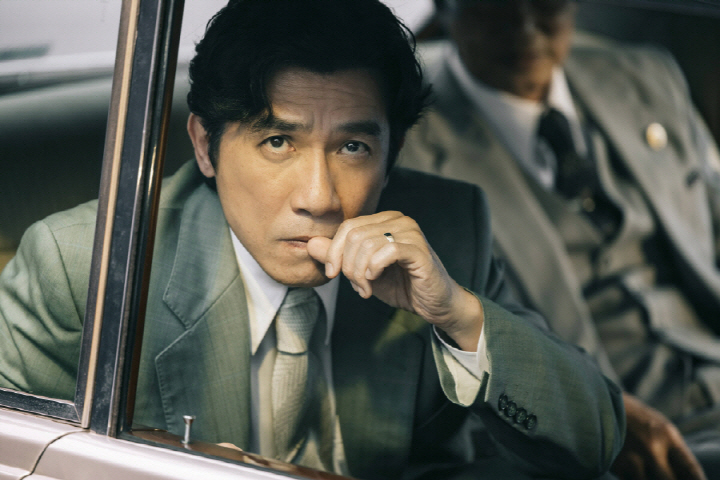
Tony Leung Chiu-wai, who has always brought a touch of class to any movie where he happens to appear, plays Henry Ching Yat-yin, a failed Chinese Singaporean architect who illegally entered Hong Kong in the early 1970s after running away from his hometown and his family due to some serious debt problem. Thanks to a moment of sheer luck, Ching subsequently gets himself involved with the seedy but lucrative real estate business world of Hong Kong, and it does not take much time for him to become one of the most prominent local businessmen operating in the city.

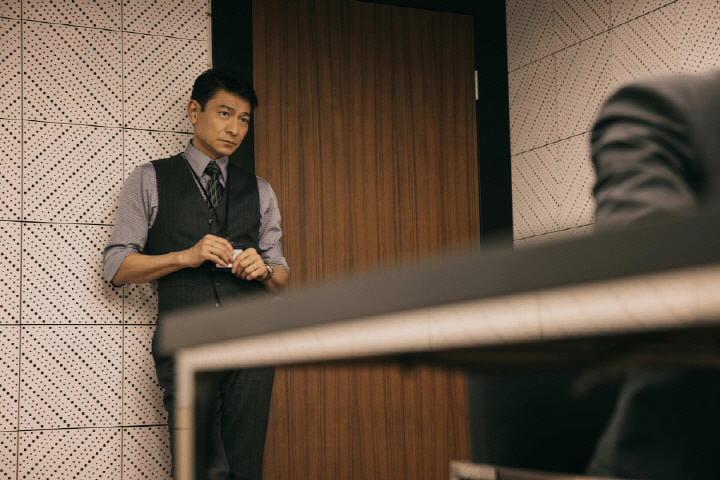
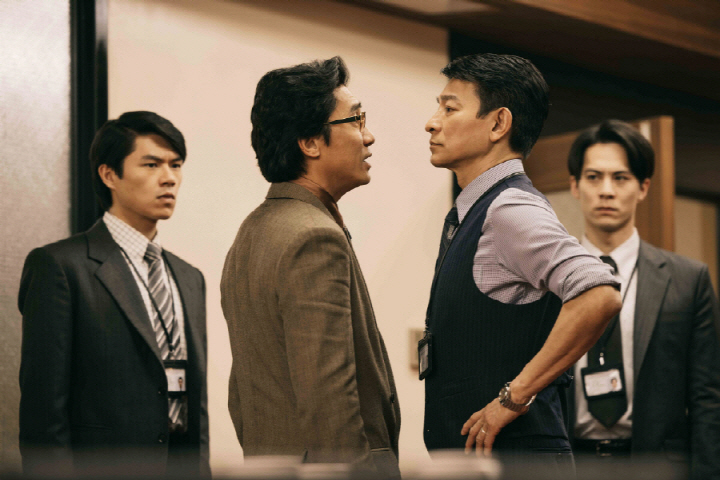
However, as already shown to us during the opening part of the film, everything Ching has built during next several years is about to be collapsed in the early 1990s, and he is also being investigated by the Independent Commission Against Corruption (ICAC), which is mainly represented by one of its principal investigators. Quite determined to arrest and then send Ching to the trial, Lau Kai-yuen (Anday Lau) clearly shows to Ching and his criminal associates from the beginning that he and his investigators are not an easy opponent at all, but Ching remains rather phlegmatic even though it seems everything is really falling down around him.

As Lau and his men interrogate Ching and Ching’s associates, the movie often flashes backward to Ching’s prime period during the 1970-80s. With the help from a number of greedy associates around him, Ching rapidly and aggressive expands his corporation step by step, and his corporation eventually becomes one of the biggest ones operating in Hong Kong. While not many people ask how solid the business profit of his corporation actually is just because everybody at the stock market is eager for any next big opportunity for more money, he and his associates often manipulate the stock price of the corporation for making it look much better on the surface day by day, and this will certainly remind you of that infamous Enron Scandal in the early 2000s. Like those scumbag executives of Enron, Ching and his associates care more about raising their stock price and how much they will benefit from that, instead of doing any real business down there.

However, the screenplay by director/writer Felix Chong does not delve much into what makes Ching tick except presenting him as an aloofly greedy bastard who will stop at nothing for his profit. Around its last act, we come to see more of how sneaky and manipulative Ching is, but Ching remains a superficial antagonist not interesting enough to hold our attention, and we still observe him from the distant without much care even during the last act.

The movie also makes several attempts to bring more energy and spirit into the screen, but I must say that the result feels like a pale and clumsy imitation of all those entertainingly excessive moments of “The Wolf of Wall Street”. I guess the movie wants to avoid any possibility of glamorizing the serious crimes of Ching and his associates, but that only reminds us more of how it lacks substance in terms of story and characters. Lots of characters come and go around Ching and Lau from the beginning to the end, but we never get to know any of them enough as none of them is developed enough to interest us, and we only find ourselves dully following Ching’s criminal rise and fall along the story. In addition, you may be also distracted by how a few substantial female characters in the film including Lau’s disgruntled wife are more or less than redundant plot elements.

It goes without saying that there will eventually come a dramatic face-off moment between Ching and Lau later in the story, but the movie disappoints us again with its overlong anti-climactic finale which merely fizzles as tediously slouching toward the epilogue. At least, Leung did a fairly good job of embodying an utterly despicable man who always seems to have some strong cards behind his constantly unflappable appearance – even when it looks like there is not any possible way for him to get away with all those dirty deeds committed by him.

On the opposite, Andy Lau, who once appeared along with Leung in “Internal Affairs” (2002), is unfortunately stuck with his blandly stoic role, and it is really a shame that he and Leung do not generate much tension or chemistry between them like they once did in “Internal Affairs”. In case of several other main cast members, they are seriously wasted due to their thin supporting roles, but Simon Yam, who also appeared in “Internal Affairs”, manages to leave some impression as one of Ching’s key associates later in the film.

On the whole, “The Goldfinger”, which is incidentally inspired by a real-life financial business scandal in Hong Kong in the 1990s, blandly fails as trying to do a little too many different things together. Quite dissatisfied for watching its two charismatic lead actors getting wasted on the screen, my mind kept being taken to “Internal Affairs” and other better Hong Kong crime drama films out there, and maybe you should check out any of them instead.

Posted in Movies | Tagged , , , | Leave a comment

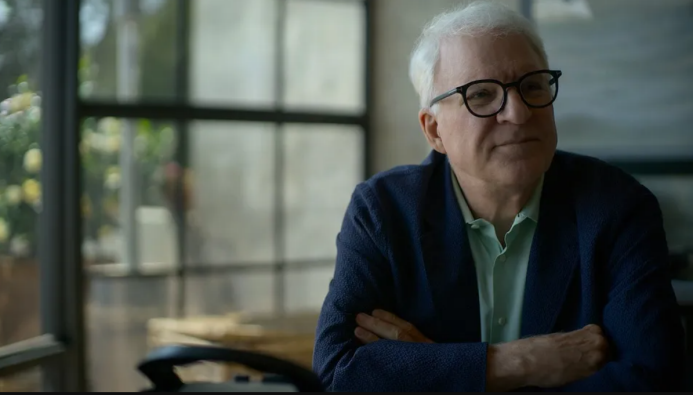
Steve! (Martin): A Documentary in Two Pieces (2024) ☆☆☆(3/4): He did all…

Documentary film “Steve! (Martin): A Documentary in Two Pieces”, which was released on Apple TV+ a few weeks ago, shows us how Steve Martin has contained multitudes. At first, the documentary, which consists of two episodes as reflected by its very title, seems to enumerate merely the high points of his early career period when he struggled to reach for his own comic style, but then it goes for something a bit deeper during the second half where Martin reveals a little more of himself, and it is engaging to observe how its two different parts come to resonate with each other.

The first half of the documentary, “Then”, focuses on how Martin honed his comic talent and style during his early career years. Even when he was young, he was quite interested in show business, and he actually wanted to be a magician at one point. However, he subsequently considered becoming a stand-up comedian instead, and he promised to himself that he would consider other options if he were going nowhere even when he became 30.

As a guy who enjoyed a lot watching a number of different comedians ranging from Bob Hope to Jack Benny, Martin came to find how to try new and different things as an emerging stand-up comedian, though his experiments were not always successful. Unlike most of traditional stand-up comedians, he did not go for punchlines at all as deliberately generating the tension and confusion between him and his audiences, and that certainly baffled his audiences more than once.

While even he was not so sure about whether his comic tactics could work, Martin gradually drew more attention, and he happened to be at the right time for his challenging comic style. As the American society was shaken up a lot by lots of social/political upheavals during the 1960s, many people were ready for new and different things, and Martin’s unorthodox comic style eventually became quite popular enough to boost his career more.

However, Martin was already considering moving onto different stuffs for reinventing his comic persona. Around the time when he frequently appeared along with many notable contemporary American comedians such as Chevy Chase and John Belushi in “Saturday Night Live”, he came to see that his comic style was not exactly a novelty now, so he stopped appearing on the stage after 1980 while readying to expand the range of his comic persona. He appeared in “The Jerk” (1979), and the considerable commercial success of this rather silly comedy film gave him a movie stardom which allowed him to make more comedy films during next several years.

Probably because many of us are quite familiar with what Martin did during his movie acting career, the second half of the documentary, “Now”, goes forward to Martin reflecting on how things have been mostly good to him during last several decades – how he is also ready to go on during the rest of his life. Thanks to the success of his comedy TV series “Only Murders in the Building”, he and his longtime friend/colleague Martin Short came to have an unexpected high point in their later careers, and the documentary often shows them preparing for their upcoming joint stand-up comedy performance.

In addition, we also see Martin working on a graphic novel which presents a series of personal episodes associated with a number of his notable comedy films such as “All of Me” (1984) and “Roxanne” (1987). Checking out the outputs from his collaborators, he became a bit nostalgic at times, but he remains mostly dry and phlegmatic, and that makes a big contrast with when he later reminisces about when he worked with late John Candy in “Planes, Trains, and Automobiles” (1987). As remembering how Candy soulfully delivered a monologue which was sadly cut short in the final version of the film, Martin could not help but become a little sentimental, and that brief poignant moment makes us more curious about whatever Martin has kept to himself behind his familiar public persona.

However, interestingly, Martin does not show or reveal everything to us even though he is often quite frank and straightforward in front of the camera. Many of his friends and colleagues interviewed for the documentary recognize how he has often been shy and introverted, and he honestly admits that he often had anxiety attacks during his early career years, though he is not so willing to delve into his darker personal times. As a matter of fact, he had a very unhappy childhood time mainly due to his distant father, and it took some time for him to process his complex feelings toward his father, with whom he eventually made a peace around the time of his father’s death.

After understanding his father better, Martin has tried to be a good father and husband to his family, though, again, he reminds us again of what a deeply private person he really is. While his second wife gladly tells a bit about her life with Martin, the documentary thoughtfully respects his wish to keep their little daughter out of the screen – even when she comes forward to her father at one point around the end of the documentary.

On the whole, “Steve! (Martin): A Documentary in Two Pieces” is an interesting portrayal of one of the best American comedians of our time, and director Morgan Neville, who previously made “20 Feet from Stardom” (2013) and “Won’t You Be My Neighbor?” (2018) did a skillful job of juggling various elements including the interviews from a number of several notable comedians such as Tina Fey and Jerry Seinfeld, who incidentally has some jolly fun as throwing several questions to Martin in front of the camera. Even at the end of the documentary, Martin remains rather elusive as maintaining his public persona as before, but that is what he exactly wants for now, and the documentary respects that while vividly and successfully showing us how compelling he is an entertainer.

S
Posted in Movies | Tagged , , , | Leave a comment

The Beekeeper (2024) ☆☆1/2(2.5/4): They mess with a wrong beekeeper…

“The Beekeeper” is an oddly uneven action thriller flick. While its action scenes are uttermost serious and intense just like its tough guy hero with a particular set of skills, it is also often so ridiculous in case of story and characters that you may be sometimes rather amused by how it manages to keep its attitude straight even during its most cartoonish parts.

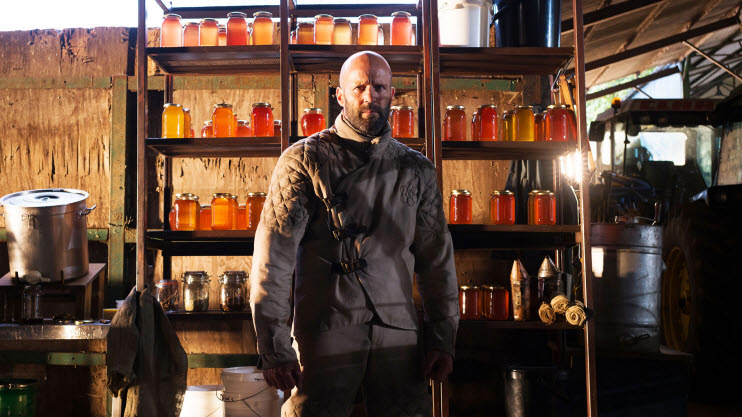
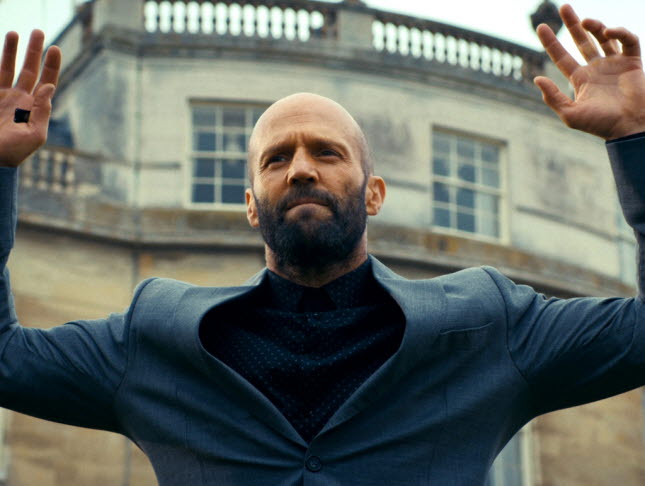
Because its tough guy hero, Adam Clay, is played by Jason Statham, I will definitely not need to describe you that much on his character except that this dude has worked as a beekeeper after retiring from whatever he did in the past. He resides in a barn next to a country house belonging to some nice old black lady, and we observe how much he is dedicated to those beehives of his outside the house – and his dear landlady who has always shown him genuine kindness and generosity.

However, something bad occurs not long after the opening part where his sweet relationship with his landlady is succinctly summarized to us. She receives an unexpected phone call, but, unfortunately, it turns out to be from some vicious local phishing scam operation, and, sadly, she soon finds herself becoming totally penniless once she unwisely lets herself deceived and then manipulated by those scumbags on the other end of the line. So devastated by this immense financial loss (She happens to have a considerable amount of capital for not only her pension but also some non-profit organization, by the way), she eventually commits suicide, and that is belatedly discovered by Clay and then her FBI agent daughter.

While he was initially arrested on the spot by the landlady’s daughter, Clay is eventually released, and then, once he comes to learn of what drove his dear landlady to suicide, he soon embarks on his personal quest for the revenge for her. First, he locates where those aforementioned scumbags are running their seemingly legitimate company, and then he surely unleashes his unforgiving wrath upon them and their workplace.

It subsequently turns out that this criminal company in question is just the tip of a much bigger criminal business, which is owned by some spoiled tech company CEO whose mother is incidentally one of the most powerful political figures in US. Thanks to his mother’s considerable political connections, this despicable lad has a former CIA director as someone to clean and cover up whatever mess he recently causes, and he surely expects everything to be taken care of within a short time. However, he is only informed that he and his criminal associates happen to mess with someone as unstoppable as, say, John Wick, and, as one supporting character says in “Citizen Kane” (1941), he is going to need more than one lesson – and he is surely going to get more than one lesson.

As this spoiled brat clumsily and pathetically tries to get things under control, lots of agents and henchmen go for stopping Clay, and we are accordingly served with lots of brutal physical action scenes where a heap of persons are killed or maimed by this very dangerous guy. While you may wince at how brutally remorseless and ruthless he really is, you may cheer for him to some degree when he doles out his cold-blooded punishment to those deplorable criminals, who are more or less than unpleasant caricatures deserving to be punished sooner or later.

The story becomes all the more outrageous as Clay approaches closer to his final target, but the attitude of the movie and its hero is solemn as ever, and the movie does not seem to decide on which option it should commit itself to. While it does not want to be totally outrageous like those gleefully preposterous action flicks such as “Shoot ‘Em Up” (2007), it also hesitates to be utterly serious to the end like “Wrath of Man” (2021), and its tonal problem is more evident during the climactic part where its hero goes all the way for his final payback moment (Is this a spoiler?).

Anyway, Statham, who produced the film along with director David Ayer, shows again his considerable but rather underestimated longevity as a reliable action movie star. While his acting range may be not that wide, Statham has been a fairly charismatic movie star for more than 20 years as going through many different action flicks ranging from “The Transporter” (2002) to several recent Fast and Furious sequels, and I can easily imagine him working as usual even after 10 years. After all, Charles Bronson and Liam Neeson could pull that off, so why not him?

One of the main weak points of the film is how most of its supporting characters remain underwritten on the whole. Emmy Raver-Lampman tries to bring some emotional complexity to her FBI agent character, but she is mostly limited by her bland thankless role, and so are Minnie Driver and Jeremy Irons, who just simply appear on the screen without doing anything particular to remember. As the main villain of the story, Josh Hutcherson did a hammy acting with capital “H”, and he somehow makes it into a guilty pleasure instead of being merely distracting.

Overall, “The Beekeeper” is a passable action flick which only reminds us again of Statham’s formidable presence as an action movie hero. Yes, I have often not regarded him that seriously, but I admire to some degree how he has kept going during last two decades, so I recommend you to check it out “Wrath of Man” instead, where he was more effective and interesting in my inconsequential opinion. He may not be a very good actor, but he has steadily maintained his star quality and presence at least, and that has been quite entertaining for us to watch, you know.

Posted in Movies | Tagged , , , , | Leave a comment

The First Omen (2024) ☆☆☆(3/4): A spooky prequel to enjoy

To my little astonishment, “The First Omen”, a prequel to Richard Donner’s well-known horror film “The Omen” (1976), is more entertaining and interesting than I expected. As a matter of fact, the movie is one or two steps above “The Omen” as well as its following sequels and remake, mainly because it has much more style and mood in addition to having compelling modern touches to be savored and appreciated.

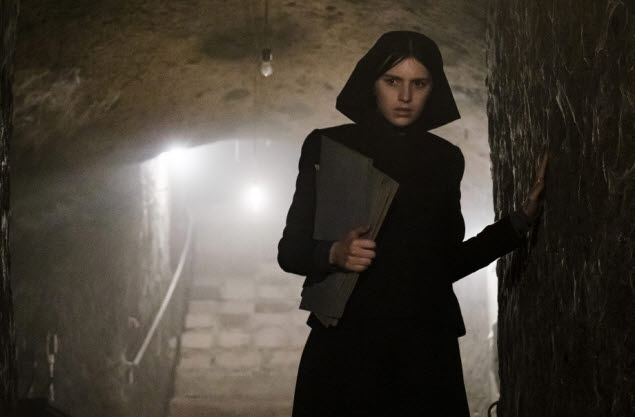
The story, which is set in the early June of 1971, is unfolded mainly via the viewpoint of Margaret Daino (Nell Tiger Free), a young American woman who comes to Rome for working at a Catholic orphanage and officially becoming a nun within a few days. Warmly greeted by her mentor Cardinal Lawrence (Bill Nighy) right after her arrival in Rome, Margaret is soon sent to that orphanage in question, and then she is introduced to a bunch of nuns including Sister Silvia (Sônia Braga), the stern Abbess of the orphanage.

While Margaret is eager to be appointed as a servant of God as soon as possible, everything seems mostly fine around her, but, not so surprisingly, she begins to sense that there is something not so right about the orphanage. While many of the kids in her workplace are quite cheery and innocent to say the least, there is one adolescent girl who looks visibly disturbed from time to time, and there is also a rather odd young nun who does not seem to be right in her mind. Thanks to her rather wild roommate who will soon become a nun just like her, Margaret later comes to have a chance to ease herself a bit as having some naughty fun in the city along with her roommate at one night, but she keeps seeing or experiencing a series of disturbing stuffs nonetheless – especially when it looks like that disturbed orphan girl is not just imagining weird stuffs at all.

Of course, if you have ever watched “The Omen” or Roman Polanski’s “Rosemary’s Baby” (1968), you already have some idea on what is really going on around Margaret. The movie obediently connects itself with “The Omen” via a few main characters shared between them besides that evil Antichrist kid, but it is actually influenced more by Dario Argento’s classic horror film “Suspiria” (1977) and those Italian Giallo flicks during the 1970s. In addition, there is even an utterly wild moment later in the film which is clearly a homage to that infamous moment of sheer madness in Andrzej Żuławski’s cult horror film “Possession” (1981).

While deftly mixing classic genre stuffs into the story, the movie distinguishes itself via a number of modern touches associated with the recent female body horror films during the post-#MeToo era at present. I will not go into details here, but the movie becomes surprisingly thought-provoking in terms of themes and ideas as more of the conspiracy is revealed along the story, and there is even an intriguing possibility for spin-off development around the end of the film.

On the technical levels, the movie is frequently brimming with mood and details on the screen. The stylized ambience of the nighttime scenes in the film sometimes makes a striking contrast with the mundane atmosphere of its daytime scenes, and director/co-writer Arkasha Stevenson, who wrote the screenplay with Tim Smith and Keith Thomas, skillful serves us a number of spooky moments, which are thankfully based more on mood and suspense instead of resorting to perfunctory moments of cheap shock and awe. While you surely get several gruesome death scenes as expected, they are presented as the effective variations of the ones in “The Omen”, and I was certainly delighted when the score by Mark Korven dramatically quotes Jerry Goldsmith’s sensationally diabolical Oscar-winning score for the 1976 film more than once on the soundtrack.

Above all, the movie is equipped with a strong heroine we can really care about. Nell Tiger Free, who has been mostly known for her supporting turn in Apple TV+ series “Servant”, is engaging as ably illustrating her character’s emotional arc along the story, and her committed performance is the one of the main reasons why the predestined climax is emotionally intense instead of merely leading us to the opening part of “The Omen”. Although I have not watched “Servant” (I only remember her playing a minor supporting character in the HBO TV drama series “Game of Thrones”, by the way), Free fully demonstrates here that she is a new exciting talent to watch, and it will be interesting to see how she will advance further in next several years.

In case of several main cast members surrounding Free, they dutifully fill their respective parts as required. While Bill Nighy, Sônia Braga, Charles Dance, and Ralph Ineson are reliable as before despite their rather thankless supporting parts, Nicole Sorace, Maria Caballero, and Ishtar Currie Wilson actually stand out more on the screen, and Sorace is especially impressive during her several key scenes with Free.

In conclusion, “The First Omen” is a nice spooky surprise of this year, and Stevenson, who previously made two short films, establishes herself as another interesting horror filmmaker to watch via this solid feature debut work of hers. While David Gordon Green’s “The Exorcist: Believer” (2023) miserably crashed down along with its franchise in last year, “The First Omen” delightfully rejuvenates its franchise with some good ideas and potentials under Stevenson’s competent direction, and that is a considerable achievement in my humble opinion.

Posted in Movies | Tagged , , , , , | Leave a comment

The Quiet Migration (2023) ☆☆1/2(2.5/4): The somber conflict of a Korean adoptee

To be frank with you, Danish film “The Quiet Migration” is alternatively interesting and frustrating to me. On one hand, the movie phlegmatically examines the inner conflict of its Korean adoptee hero who has always felt like an outsider in his surrounding environment, and it works best whenever it subtly conveys to us his confusion and frustration with his racial identity. On the other hand, the movie also is a bit too heavy-handed at times, and its finale feels rather contrived instead of dramatically impactful.

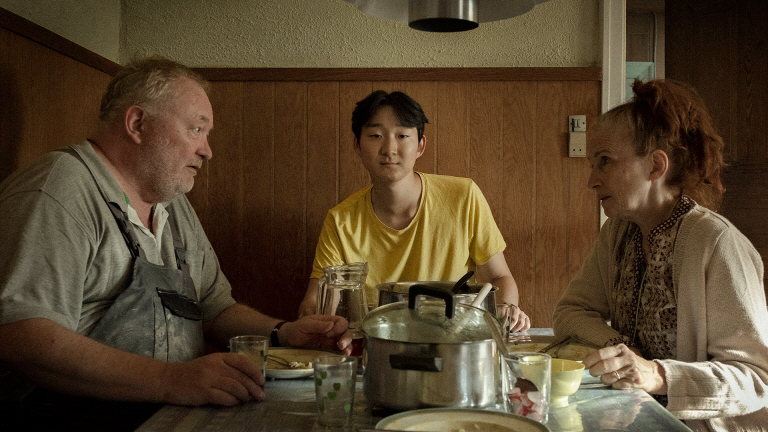
After the opening shot which looks around the vast pasture of one Danish rural area for a while before something odd suddenly occurs, the movie gradually establishes the current status of Carl (Cornelius Won Riedel-Clausen), a Korean lad who was adopted by a decent couple running a big dairy farm in that country region. He returns to his family farm after the end of his boarding school education period, and then we observe how he goes through the daily routines along with his foster parents and some foreign guy hired by them.

Needless to say, Carl is expected to run the farm someday instead of his foster father when his foster father becomes too old and ill to run the farm for himself, but he is not so sure about what he should do for his future. While dutifully working along with his foster father in the farm, he is not particularly interested in the farm business, but he is not also willing to tell his foster father about his growing disinterest.

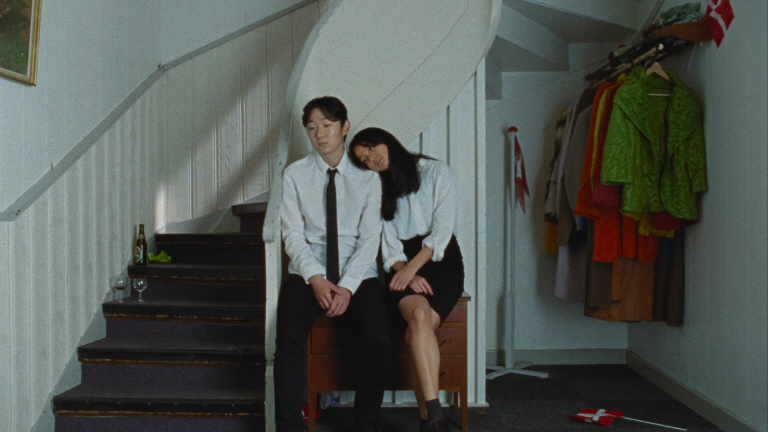
And we see how Carl often copes with his constant position as a racial outsider. At one point, he enters a local gymnasium alone for playing basketball alone by himself, but then he quickly hides in a corner when a bunch of local boys come for a basketball game. When he happens to attend the birthday party of some relative of his foster parents, he surely feels quite isolated as the only Asian man in the room, and he even experiences a casual racist remark from some family member in the middle of the party. Not so surprisingly, he later comes to have a brief but precious moment of emotional bonding with a young Asian woman who is incidentally one of the service employees hired for the party, and this makes him more aware of his racial background than before.

Not long after this little special moment of his, Carl begins the search on his past. After rummaging a bunch of old family stuffs, he found the documents on his adoption, but the documents do not help him much except showing his birthplace in South Korea and original Korean name. Nonetheless, he becomes more interested in Korea, and he eventually expresses his wish to go there when his foster parents later ask him about where he wants to travel.

Now this sounds like your typical adoptee melodrama, but the screenplay by director/co-editor Malene Choi and her co-writer Sissel Dalsgaard Thomsen goes for a more meditative mood coupled. Under Choi’s competent direction, her crew members including cinematographer Louise McLaughlin effectively establish a subtle sense of uneasiness around the screen, and we come to sense more of Carl’s growing inner conflict, even though the camera usually observes him and few other characters around him from the distance.

However, the movie unfortunately stumbles more than once during its final act. Carl’s foster parents subsequently turn out to have several big personal problems besides the increasing economic difficulties in their farm business, but the movie only ends up delving not much into their personal issues, which feel more like an artificial plot element to put more conflict between Carl and his foster parents. When Carl experiences another case of racism from one of his foster father’s close associates, this moment is so blatant and clumsy that I got more distracted instead of more engaged to Carl’s emotional drama, which eventually culminates to a sudden change of mood and place around the end of the story. Sadly, this supposedly dramatic part, which is associated with that odd happening at the beginning of the movie, does not mesh that well the rest of the film, and what follows next may be too anti-climactic to you.

Anyway, Choi draws the commendable performances from her three main cast members. Newcomer Cornelius Won Riedel-Clausen, who incidentally never had a movie acting experience before, carries the film well with his rather passive but mostly effective low-key acting, and he and his co-stars Bodil Jørgensen and Bjarne Henriksen did a credible job of conveying to us the constant emotional gap between Carl and his foster parents even during their warmest moments in the film. Sure, they do love and care a lot about their adopted son, but Carl’s foster parents also do not wholly understand him at times, as reflected by when they celebrate his birthday at a local Chinese restaurant. That is why it is poignant to see how they come to open up themselves to Carl with more love and understanding later in the story.

In conclusion, “The Quiet Migration” does not engage me enough to my little dissatisfaction, but its several good parts make me more interested in Choi, who was also born in South Korea and then grew up in Denmark. I have not watched her first feature film “The Return” (2018) yet, but “The Quiet Migration” shows Choi’s considerable potential as a promising filmmaker despite some glaring shortcomings, and I will certainly check out whatever will come next from her in the future.

Posted in Movies | Tagged , , , | Leave a comment

La Chimera (2023) ☆☆☆1/2(3.5/4): Another charming work from Alice Rohrwacher

It took some time for me to get what and how Alice Rohrwacher’s latest film “La Chimera” is about. At first, the movie requires some patience for slowly getting into its rather aimless low-key mood, but I got more charmed and interested as observing how the story has some quirky fun as simply sauntering here and there along with its shabby hero, and that is enough to compensate for a few weak aspects of the film. 

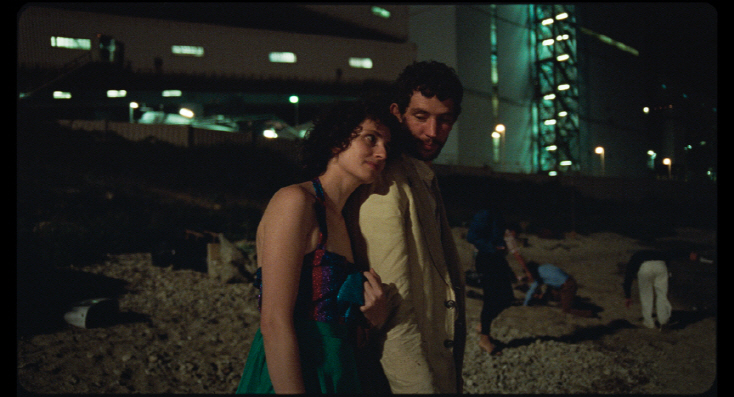
The movie, which is set in Italy around the 1980s, opens with a British lad named Arthur (Josh O’Connor) going to the hometown of his lost girlfriend, who is assumed dead by everyone except her aging mother Flora (Isabella Rossellini). When Arthur arrives at Flora’s old residence, he is sweetly welcomed by Flora, but, for some reason, he chooses to stay at a makeshift shack not so far from Flora’s residence, and he does not seem to care that much about how uncomfortable the shack is for staying.    

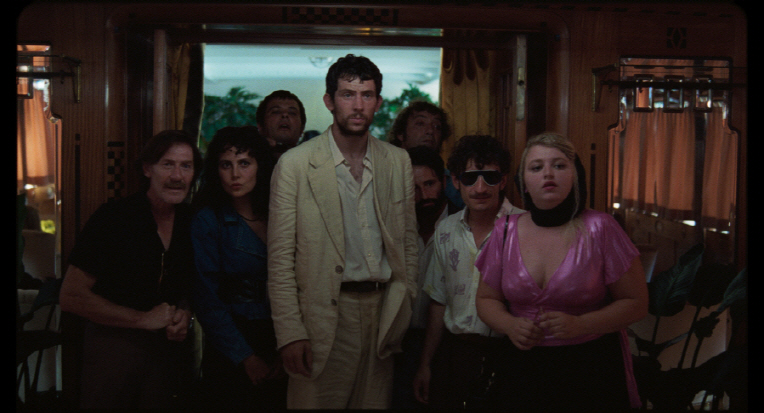
We come to slowly gather that Arthur is an archaeologist who has been associated with a group of local tomb robbers for his certain exceptional talent. Via a sort of the sixth sense, he can easily detect those old ancient graves buried around here and there in the area, and he is willing to work with them again even though he has just been released from prison, though he is not so pleased when he is reminded of how untrustworthy his partners-in-crime often can be.

Anyway, the movie shifts onto a more cheerful tone as Arthur and his accomplices resume their criminal business, which is actually no secret at all to everyone in their town. Although the local police are frequently watchful, Arthur and his criminal colleagues are usually one or two steps ahead of the local police, and the movie even makes their circumstance look all the sillier via a familiar comic visual touch.

In the meantime, Arthur comes to befriend Italia (Carol Duarte), a young woman who has worked as a maid for Flora in exchange of taking a routine singing lesson from her. While she is not exactly talented as Flora dryly points out early in the movie, Italia is actually more interested in staying in Flora’s residence as long as possible for a private reason to be revealed to Arthur later. While generously keeping that secret from Flora, Arthur finds himself getting attracted to Italia, but his mind still cannot help but haunted at times by the memories of his girlfriend (The movie never clarifies what really happened to her, by the way).

Because the movie usually sticks to its hero’s frequently unstable viewpoint, you will come to question what is exactly going around him, and Rohrwacher and her crew members including cinematographer Hélène Louvart, who previously collaborated with Rohrwacher in “Happy as Lazzaro” (2018), willingly blur the line between reality and fantasy from time to time. In one particularly amusing scene, a heated argument between one certain supporting character and Arthur’s accomplices suddenly sounds animalistic for no apparent reason, but then we come to interpret this offbeat moment as how Arthur regards the circumstance, and that is the main reason why we are not so surprised by his following choice.  

In my humble opinion, the finale feels a little too uneven, but it still works on the whole. You may wonder what really happen in the end even after the movie is over, but you will probably appreciate a brilliant touch of magic realism at least. In addition, you will also be amused by its symbolic aspect if, like me, you are familiar with a certain Greek myth associated with a beautiful young princess named Ariadne.     

Above all, the movie is anchored well by another solid turn from Josh O’Connor, a talented British actor who has steadily advanced since his breakthrough performance in Frances Lee’s haunting gay romance drama film “God’s Own Country” (2017). Besides convincing as a lonely outsider constantly reminded of the foreign environment surrounding him, O’Connor ably conveys to us his character’s human qualities without signifying too much in his mostly gloomy presence, and we become more curious about what makes his character tick, even though we still do not get to know his character that much even in the end.

While many of the supporting characters in the film are rather under-developed in comparison, a number of main cast members surrounding O’Connor did a good job of filling their respective roles with enough sense of life. While Isabella Rossellini surely brings some grace and dignity to her mostly functional role, Carol Duarte’s vivacious presence complements well O’Connor’s restrained acting, and Vincenzo Nemolato and Alba Rohrwacher, which is incidentally the sister of Rohrwacher, are also well-cast in their substantial supporting parts.

In conclusion, “La Chimera” may be less impressive compared to “Happy as Lazzaro”, but it is still packed with enough amount of personality and charm. Yes, this is certainly another your average slow arthouse movie, but it is worthwhile to watch for mood, storytelling, and performance, and I am already considering watching it again for appreciating its strong points more. In short, Rohrwacher demonstrates again that she is indeed a distinctive filmmaker to watch, and I will gladly see how she will keep going after this lovely piece of work.

Posted in Movies | Tagged , , | 1 Comment

The Beautiful Game (2024) ☆☆1/2(2.5/4): A story of homeless soccer players

“The Beautiful Game”, which was released on Netflix on last Friday, attempts to tell an inspiring story about one interesting international sports event which deserves more attention from us, but it fumbles more than once despite being well-intentioned to the core. Often trite and scattershot as trying to handle too many balls at once, the movie comes to waste the good efforts from its main cast members, and my mind could not help but get distracted by its many weak aspects while I watched the film at last night.

The main subject of the movie is the Homeless World Cup, an annual international sports tournament which was established in 1999 by the Homeless World Cup Foundation. Every year, many homeless soccer national teams around the world gather together for their little tournament, and this has certainly led to more public awareness of homelessness as it has drawn more attention from the media and the public during last two decades.

The movie begins with how one young British lad gets recruited by the coach of the British team for the Homeless World Cup. Not long after demonstrating a bit of his athletic talent in front of others in the middle of a kids’ soccer game, Vinny (Micheal Ward) is approached by the coach, and the coach, who was once a famous football team coach, suggests that Vinny should join the team. Although he has been virtually homeless for a while, Vinny is initially not so willing to join the team, but he eventually agrees to do that mainly because of the coach’s persistent persuasion.

Vinny is soon introduced to the team members, who all have each own reason for becoming homeless just like him. Although they are not that good compared to Vinny, they are all willing to do their best for proving their worth to not only others but also themselves, and their coach is certainly ready to support and encourage them as much as possible.

However, instead of developing these several main characters with more detail and nuance, the screenplay by Frank Cottrell-Boyce hurriedly pushes them into the tournament held in Rome, and it also throws a lot more characters into the story just for some comic relief. On one hand, we are introduced to the South African team members who are quite confident about winning at the final game of the tournament, and then we are also introduced to the Japanese team members who look far more inexperienced than our British heroes. As a matter of fact, they become more interested in looking around here and there in Rome, and that certainly makes their well-meaning coach all the more frustrated.

The movie also comes to focus on the personal troubles of Vinny, who, not so surprisingly, was once a promising new soccer player. Because of his shame of being stuck with his homeless colleagues, he frequently puts the distance between himself and them, and that certainly causes a lot of conflict between him and his homeless colleagues. In case of a young man who is incidentally a recovering addict, this struggling lad often needs some help and support for staying clean and sober as before, but Vinny does not give much damn about him even though they share the same bedroom, and we are not so surprised by what eventually happen later in the story.

Meanwhile, we get a lot of football game scenes as expected, but they are not exactly thrilling or exciting in my humble opinion. Sure, the games of the Homeless World Cup are relatively more modest than your average professional football games, but the movie somehow fails to inject enough fun and excitement into these football game scenes while simply resorting to cheering a lot for many different soccer player characters in the story. Because we do not get to know them that much, we come to observe their games from the distance without much care or attention, and that is the main reason why the movie feels overlong especially during its second half.

The main cast members do try as much as they can do with their broad archetype roles, and some of them manage to acquit themselves fairly well. As the seemingly weary but undeniably dedicated coach, Bill Nighy reminds us again of how he has always been a pleasure to watch just like many other notable British character actors of his generation, and he occasionally brings a touch of class to the movie even though he is mostly limited by his rather flat character. On the opposite, Micheal Ward, who has steadily advanced since his breakout turn in “Blue Story” (2019), brings some life and intensity to his role, and his efforts almost overcome the clichéd aspects of his character at times. In case of several other cast members, Valeria Golino and Susan Wokoma provide extra humor to the story, and Callum Scott Howells, Kit Young, Sheyi Cole, Tom Vaughan-Lawlor, and Robin Nazari are fairly solid as Vinny’s various team members.

In conclusion, “The Beautiful Game”, directed by Thea Sharrock, is a passable Netflix product you can watch simply for killing your spare time, and I must tell you that this is another recent disappointing sports drama film about the Homeless World Cup. Early in last year, South Korean film “Dream” (2023) also tried on the Homeless World Cup, but it was also hampered a lot by genre clichés and conventions, and the result was one of more disappointing South Korean films of last year. “The Beautiful Game” did the job a bit better in comparison at least, but it still could be much more improved in terms of story and characters, and that is really a shame to say the least.

Posted in Movies | Tagged , , | Leave a comment