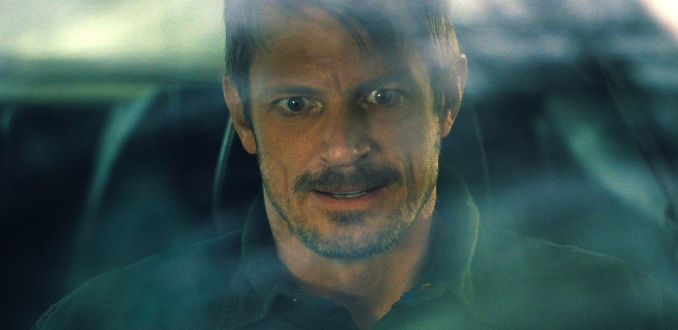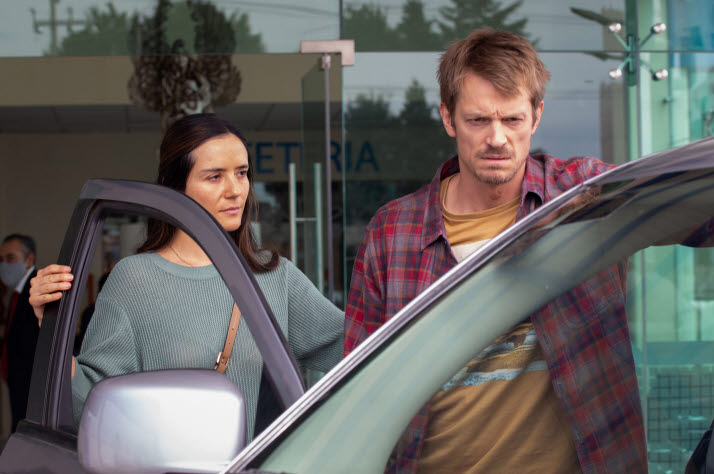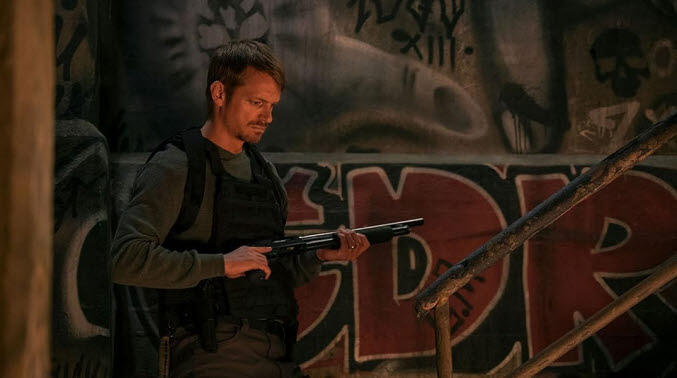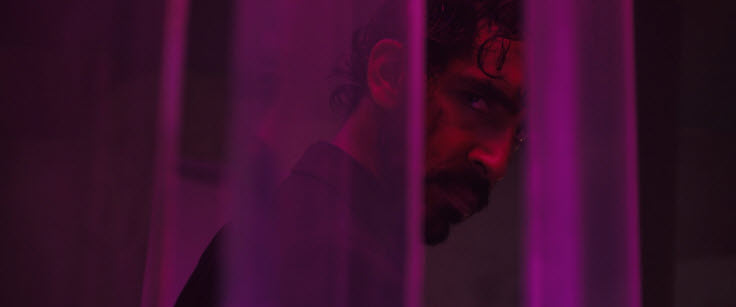
Monkey Man (2024) ☆☆☆(3/4): A gritty and intense debut feature film by Dev Patel

Dev Patel’s debut feature film is a gritty and intense genre piece to be admired for several good reasons. On the surface, this is basically another your typical revenge drama driven by lots of action and tension, but it is packaged with enough style, technique, and ideas to distinguish itself, and the overall result is one of more impressive debut works of this year.

The first act of the movie gradually establishes its taciturn hero played by Patel. He is a poor low-class lad living inside a big city, and this character setting will surely take you back to Patel’s breakthrough turn in Danny Boyle’s Oscar-winning film “Slumdog Millionaire” (2008), but this young dude is quite different although he also has a lifetime goal to pursue behind his back. Have been deeply traumatized by what happened to him and his mother many years ago, he has been looking for a chance for his personal revenge, and now it seems he is almost close to the final stage of his vengeful plan.

We see how he prepares step by step. While often earning his meager living as an underground wrestler figure to be defeated to the cheers of many audiences around the ring, he approaches to a certain powerful criminal figure connected with the main target of his revenge, and then he gets employed at a high-class brothel place belonging to that criminal figure in question. Mainly thanks to a small-time criminal hanging around his workplace, our hero subsequently gets promoted bit by bit, and he soon finds himself serving some of very influential figures in the city.
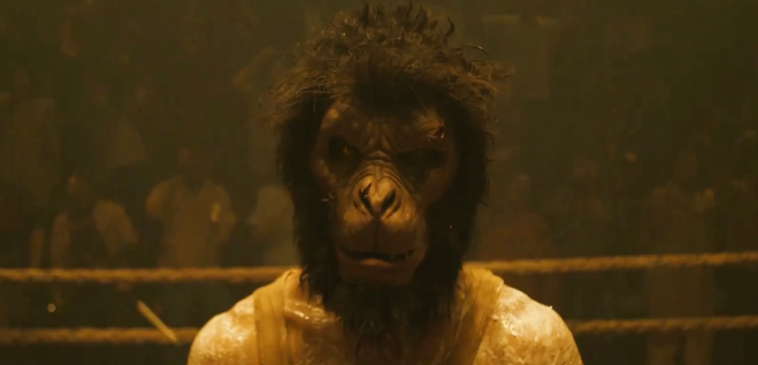
One of such disgusting figures is a corrupt police chief who turns out to be the main target of our hero as shown from the occasional flashback scenes which show more of our hero’s personal motives. Along with a certain prominent political figure, the police chief has been supported a lot by some popular religious leader with lots of money and influence, and we come to gather that these two figures are mainly responsible for our hero’s lifelong trauma.

Once he acquires a gun from some underground arms dealer, our hero is ready to go all the way for his vengeance, and that is where the movie unfolds its major action sequence. Patel and his crew members including cinematographer Sharone Meir bring a substantial amount of style, mood, and energy to this electrifying sequence, and the editing by Dávid Jancsó, Tim Murrell, and Joe Galdo effectively immerses us into the increasingly chaotic situation instead of merely choppy or frantic.

The screenplay by Patel and his co-writers Paul Angunawela and John Collee surprises us as shifting itself to a slow and reflective mood around the middle of its plot, and that is where things get more interesting. As its hero comes to get some time for more reflection and preparation thanks to the unexpected generosity from a certain group of marginalized people, the movie tries a bit of social commentary coupled with some distinctive cultural elements which are mainly represented by a local myth associated with the title of the movie, and it eventually becomes something more than an Indian variation of those John Wick movies.

Although the story stumbles to some degree as heading to its eventual climactic part, the movie still works as not only a character drama but also an action film, and Patel demonstrates here that he is a competent filmmaker who knows how to engage and then thrill us. Even when lots of things happen across the screen, the movie never loses its focus on story and characters, and we come to care about whether its hero eventually accomplished his personal mission in the end.
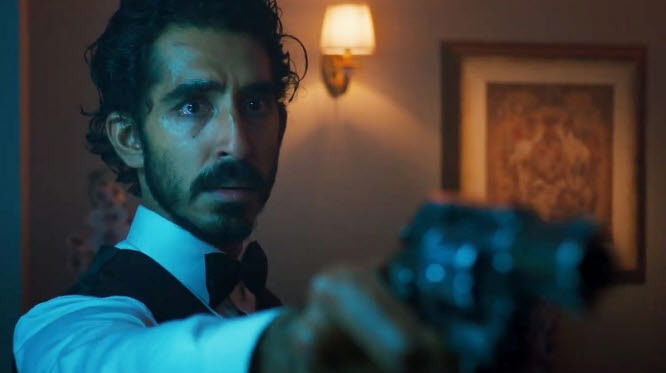
In addition, Patel, who looks brawnier than usual here in this film, demonstrates here that he can be a pretty good action movie hero just like Keanu Reeves in those John Wick movies. While filling his rather broad archetype character with enough presence and personality, he willingly throws himself into many of physical action scenes in the movie, and his considerable commitment generates enough intensity for driving the movie to the end.

Around Patel, the movie has a bunch of colorful performers who dutifully fill their respective spots in one way or another, and my only complaint is that the movie often does not provide enough space for character development for that. While young actor Jatin Malik provides some poignancy during the occasional flashback scenes, Sharlto Copley and Pitobash are suitably cast in the two seedy underground characters associated with Patel’s character, and Sikandar Kher, Ashwini Kalsekar, and Makarand Deshpande are well-cast as the main villains of the story. In case of Sobhita Dhulipala and Adithi Kalkunte, they manage to leave some impression despite their under-developed parts, and Vipin Sharma and Zakir Hussain have some fun with their substantial supporting roles.

On the whole, “Monkey Man”, which could have been sent directly to streaming service by Netflix if it had not been for a last-minute intervention from Jordan Peele who subsequently served as one of its producers, is a solid action flick, and Patel made a commendable directorial debut here. Like many other first-time directors, he understandably tries a little too much as if it were his last movie to make, but he succeeds in showing another side of his considerable talent, and it will be interesting to see whether he will advance further from this striking starting point.

Posted in Movies | Tagged , , | Leave a comment

The Blue Angels (2024) ☆☆1/2(2.5/4): A promotional film with lots of terrific stuffs

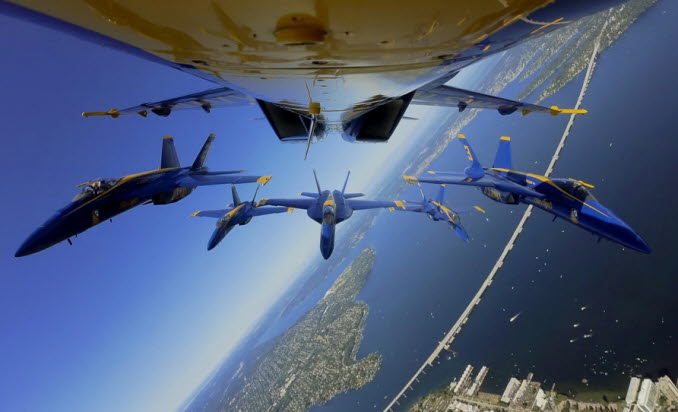
Documentary film “The Blue Angels”, which was released on Amazon Prime a few days ago after getting a limited theatrical release in US, is basically your typical promotional film with lots of terrific technical stuffs to admire. While I was watching the documentary during this Sunday afternoon, I often wondered how many of its memorable moments were actually shot, and that was almost enough to make me overlook its by-the-book promotional presentation.

The main subject of the documentary is the US Navy and Marine Corps flight squadron called “The Blue Angles”, which was established shortly after the end of the World War II. For more than 75 years, this flight exhibition squadron has steadily done a number of heart-stopping airshows here and there in US, and the documentary focuses on how the veterans and newest members of this squadron go through another highly demanding year.

At first, we observe the members of the squadron preparing a lot before their another season is about to begin in January. They practice together two or three times every day for honing their aviation skills more and more, and they gladly show and tell us about how precise they must be in their flight maneuvers to demonstrate in public. In case of one particular flight maneuver, their jet fighters must be very close to each other in addition to being aligned well together, and there is an amusingly intense moment when the members train themselves on this flight maneuver together as visualizing it together in their minds. This moment may look a bit ridiculous on the surface, but they are totally serious in every imagined movement of theirs, and you will admire more of their sheer professional dedication.

Once these pilots are up in the air, the documentary rolls out a series of astonishing shots which are certainly worthwhile to watch via big screen. Cinematographer Jessica Young and her two ariel directors of photography did one heck of job in closely and vividly conveying to us how it feels like being inside one of these speedy jet fighters, and you may not be surprised to know that the cinematography of the documentary was helped a lot by what was specially developed for that amazing cinematography of “Top Gun: Maverick” (2022). As a matter of fact, Glen Powell, who played one of the key supporting characters in that film, actually served as one of the producers of the documentary.

Compared to these awesome visual moments of the documentary, its more down-to-earth moments look relatively trite in comparison. We get to know a bit about several members of the squadron, but they are more or less than your typical model pilots mostly defined by their pride and dedication. At one point, we get some glimpse into the family life of one of the squadron members, but this private moment feels a bit too neat in my humble opinion, and the same thing can be said about the part focusing on the apparent risks of airshows and some human loss caused by these big risks.

Anyway, the documentary keeps impressing us with its technical prowess, and, as a nerdy guy who has a deep aversion to height, I often cringed more than once during my viewing. I still remember when several jet fighters get extremely close to each other as orderly flying together as required, and I cannot possibly forget several dizzy scenes where the squadron members deliberately turn their jet fighters upside down as the part of their maneuvers. If I had watched the documentary in a big IMAX theater as intended by director/co-editor Paul Crowder, I would definitely be on the edge of my seat from time to time.

Needless to say, the new members of the squadron go through lots of rigorous selection process just like its predecessors, and we get some observation from this highly selective procedure. Every year, many top candidates around the country apply for that, and the selection committee certainly must be careful and thoughtful about which candidate is the best one to train and depend on. We subsequently see how the eventually selected pilots go through their following training process, which surely tests a lot on whether they do have the right stuffs for those risky airshows. For example, they all have to do endure the higher levels of gravity one by one, and, not so surprisingly, most of them get fainted during their first trial.

The documentary also briefly observes how these and other pilots of the squadron are constantly supported by numerous mechanics and technicians in the squadron. Just like the pilots, all of these mechanics and technicians are confident and dependent in one way or another, and their close personal/professional relationships with the pilots are evident from how they closely work along with the pilots from the beginning to the end.

In conclusion, “The Blue Angels” did its job as much as intended, and I appreciate that to some degree, but I wish it would go beyond the merely slick promotion of its main subject (With those frequent slow-motion shots, it often feels like your average Michael Bay flick, by the way). Now I am reminded of that famous question from late American film critic Gene Siskel: “Is this film more interesting than a documentary of the same actors having lunch?” Yes, it may be more interesting to watch a documentary on how hard the members of the cinematography department of “The Blue Angels” worked together, and I will gladly watch it if it ever comes out someday.

Posted in Movies | Tagged , , , , | Leave a comment

The Beach Boys (2024) ☆☆1/2(2.5/4): The history of the Beach Boys

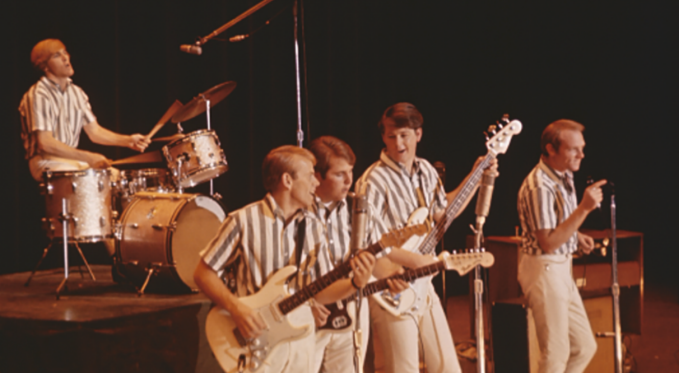
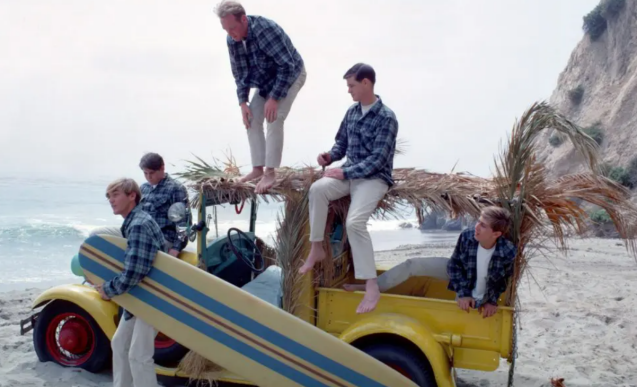
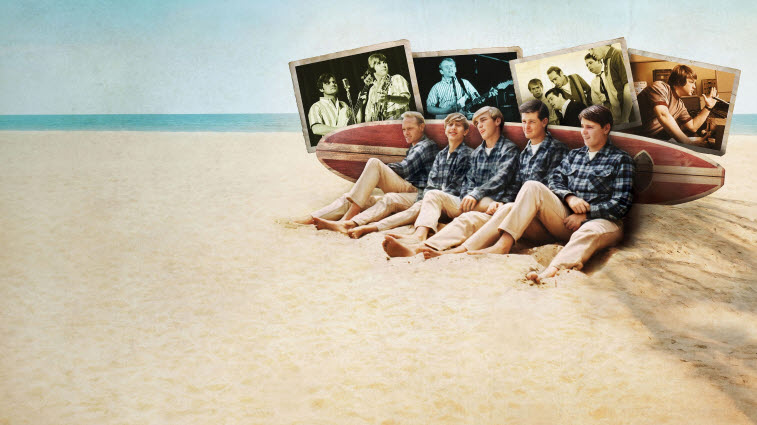
Documentary film “The Beach Boys”, which was released on Disney+ on two days ago, looks over the history of the Beach Boys, one of the legendary American bands during the 1960s. While it is fairly informative to anyone not so familiar with the Beach Boys (Full Disclosure: I am one of such persons), the documentary often feels like merely parading one fact and another without providing enough insight and perspective on its main subject, and this seriously flaw is not even compensated by the timeless quality of many notable songs of the Beach Boys.

Mainly revolving around the new interview clips from several surviving members of the Beach Boys, the documentary starts with how their band got started in 1961. Even they were very young at that time, Bryan Wilson and his two brothers Carl and Dennis already showed considerable interest and talent in music as growing up under their parents who were respectively associated with the American pop music industry, and they and their cousin Mike Love often hanged around with each other as enjoying composing and playing music together. They eventually became determined to take a chance with their musical talent under the support and encouragement of Bryan and his brothers’ parents, and they and a friend of theirs, Al Jardine, came to present themselves as the Beach Boys, though they did not like their band name that much just because it sounded rather corny to them.

Nevertheless, once their band succeeded in drawing more attention with their several early songs such as “Surfin’ U.S.A.”, the rest was the history. During next few years, the Beach Boys swiftly rose to the top of the American Pop industry, and the documentary examines a bit on how the sunny and cheerful Californian spirit in many of their hit songs resonated a lot with the youthful and optimistic mood inside the American society during the early 1960s. With Bryan and Mike respectively functioning as the main composer and lyricist of the band, the band kept going up and up, and it surely looked like the sky was the only limit for them.

However, the members of the Beach Boys soon came to face the necessity of change and maturation around the middle of the 1960s. As not only US but also the whole world were swept with the immense enthusiasm toward the Beatles, Bryan and other members of the Beach Boys certainly felt much more pressured than before, and their subsequent attempts for more change and innovation often caused the clashes between the Wilson brothers and their father, who eventually became a major obstacle to confront as their domineering manager/producer. As all of the Wilson brothers admit, their father was frequently not only demanding but also quite abusive to them, and this might be one of the contributing factors to Bryan’s subsequent mental illness problem.

Anyway, Bryan and his band members kept things rolling for them during next several years. Quite impressed by Phil Spector’s ground-breaking album producing method, Bryan decided to produce a new album in his own way, and he eventually became more focused on album recording after having a big incident of mental breakdown due to the demanding tour schedule of the band. Although his resulting albums including “Pet Sounds” were relatively less successful, his undeniable musical genius was recognized much more than before, and that made the Beach Boys look and sound cool enough to compete with the Beatles for a while.

However, things quickly changed for the boys around the late 1960s, where American pop music became more rebellious as the American society went through a rocky period of social/political turbulence after the beginning of the Vietnam War. The music of the Beach Boys came to be regarded as old-fashioned as a result, and Bryan and his brothers felt hurt more when their father casually sold all the copyrights of their old hit songs.

In addition, the Beach Boys also unfortunately got involved with one of the most notorious incidents during the late 1960s. Around that time, Dennis, who happened to be the wildest one in the bunch, got himself associated with a certain infamous figure who was quite interested in becoming a successful pop musician someday. Dennis willingly introduced this figure to the producer of his band, but the producer understandably avoided this figure, and that eventually led to the aforementioned incident, which was virtually the death knell for the liberal social/political mood in US during the 1960s.

All these and other things in the documentary may satisfy you enough, and I will not deny that I absorbed its presented materials with some interest, but the documentary still looks like your average musician biography documentary nonetheless. Even though Bryan Wilson and his several colleagues look quite willing to open themselves in front of the camera, the documentary seldom delves into their personality and humanity to my dissatisfaction, and this deficient side made me want to revisit Bill Pohlad’s biopic “Love & Mercy” (2014), which is often harrowing as closely looking into the two different troubling periods of Wilson’s life and career.

Overall, “The Beach Boys”, directed by Frank Marshall and Thom Zimny, is informative and engaging to some degree, but I cannot help but wonder whether it could be more insightful about its main subject. Yes, it is certainly poignant to see the surviving members of the Beach Boys eventually gathering later in the documentary, but I still do not feel like getting to know them more in the end, and that is a disappointment.

Posted in Movies | Tagged , , , , | Leave a comment

The Idea of You (2024) ☆☆☆(3/4): Her cumbersome romance with a star

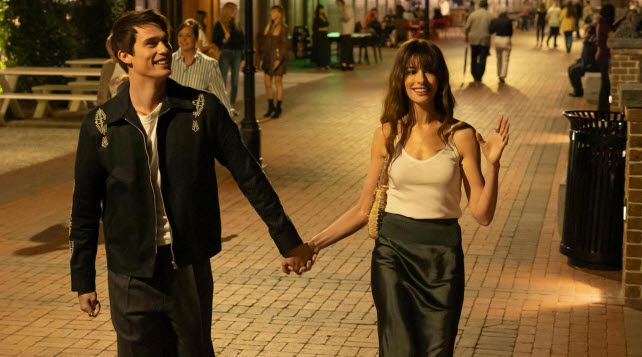
“The Idea of You”, which was released on Amazon Prime early in this month, is an intimate romantic comedy film which turns out to be more than the gender-reversal version of “Notting Hill” (1999). While we already have a pretty good idea about what and how it is about, the movie surprises us with its thoughtful handling of the story and characters, and we come to care more about the romance inside the story than expected.

Anne Hathaway, who has steadily advanced with her stellar career even after her Oscar-winning supporting turn in “Les Misérables” (2012), plays Solène, a divorced woman who has run her little art gallery in LA. For her upcoming 40th birthday, Solène is simply going to have a solitary but peaceful private time outside the city while her adolescent daughter Izzy (Ella Rubin) will spend some time at Coachella along with her close friends, but there comes an unexpected problem at the very last minute. Her husband was supposed to take Izzy and her friends to Coachella, but he happens to have some urgent business schedule change, so Solène has to do the job instead.

While Izzy and her friends are not very enthusiastic about a certain British boy band they are about to meet, Solène is not particularly interested about that either, but then she happens to encounter a member of that British boy band in question when she mistakes his trailer for a toilet. While she is naturally quite embarrassed about her mistake, Hayes (Nicholas Galitzien) is totally cool about that, and Solène and her daughter get to know a bit about this hunky dude during their subsequent meeting with him.

Anyway, it gradually turns out that Hayes is actually smitten with Solène. To her surprise, he suddenly shows up at her gallery, and, after looking around here and there in the gallery, he eventually decides to buy everything inside it. Although knowing well that he is just trying to impress her in a rather superficial way, Solène also cannot help but attracted more to Hayes, and she comes to show him more of what has been stored by her while also teaching him a little on how to regard artworks with more attention and consideration.

In the end, Solène find herself inviting Hayes to her suburban house, and he comes to show more of his growing feelings toward her. While being more aware of many differences between them besides the considerable age gap, she eventually lets herself go along with the mutual attraction between them. Although she later tries to believe that it was just one headless moment of sexual urge to be forgotten sooner or later, she still cannot say no when he later invites her to join his upcoming Europe concert tour, and she surely sees more of how famous he really is.

Naturally, Solène prefers to keep their burgeoning romance in secret, and Hayes has no problem with that, but then she comes to discern more of how things can be quite burdensome for both of them if their romance is exposed in public at any chance. No matter how much they try to keep their relationship hidden behind them, the people around them begin to notice bit by bit, and the other issues surrounding their relationship also often put a strain on their romance.

Nevertheless, both Solène and Hayes feel happy and comfortable whenever they are together in private. The movie, which is based on the novel of the same name by Robinne Lee, provides a series of private moments between them which are handled with enough care and sensitivity. While Solène becomes more aware of how she still desires sex and romance despite being 40, Hayes comes to have more reflection on what he should do with his life and career in the future, and Solène sincerely supports his little artistic project.

I must tell you that it is initially a little difficult for me to accept Hathaway as a plain normal suburban mother due to her inherent star quality, but she compensates for that with a solid performance packed with enough emotional nuances to be observed. While occasionally showing some sense of humor, Hathaway, who also participated in the production of the movie, diligently holds the film to the ground with a substantial amount of gravitas, and we accordingly become more engaged in her character’s emotional journey along the story.

On the opposite, Nicholas Galitzine, a British newcomer who recently drew our attention with his nice comic performance in “Red, White & Royal Blue” (2023), effectively complements Hathaway, and their low-key chemistry on the screen is one of the key factors in the success of the movie. In case of several supporting performers around them, Ella Rubin has a good moment when her character has a honest private conversation with Solène later in the film, and Annie Mumolo and Reid Scott bring some extra humor to the story during their brief appearances.

“The Idea of You” is directed by Michael Showalter, who wrote its adapted screenplay along with Jennifer Westfeldt. As shown from his previous works such as “The Big Sick” (2017) or “Spoiler Alert” (2022), Showalter is a good filmmaker who knows how to mix comedy and drama well enough to amuse and then touch us, and “The Idea of You” is surely the latest example of that. The overall result is still a bit too predictable, but it has enough wit and heart at least, and that is enough for me for now.

Posted in Movies | Tagged , , | Leave a comment

Anyone but You (2023) ☆☆1/2(2.5/4): Destined to romance despite all that

Like most of countless romantic comedy films out there, “Anyone but You” will not surprise you that much if you are your average seasoned moviegoer like me. Right from its conventional Meet Cute moment, the movie is thoroughly predictable no matter how much its two main characters dislike each other on the surface, and you may be tempted go along with that for a while, as appreciating the good chemistry between its two lead performers who deserve better materials considering their considerable charisma and talent.

At first, we are introduced to Beatrice “Bea” Messina (Sydney Sweeney), and the opening scene shows how this young pretty woman comes across Ben (Glen Powell). When she needs to take care of her imminent bladder problem as soon possible at a coffee shop, this handsome lad generously gives her a little unexpected help, and this rather silly situation leads to the first date between them although they do not know anything about each other as two total strangers.

In the end, Bea and Ben’s date eventually culminates to one wonderful night between them, but, of course, there comes a little problem between them. Mainly because she recently broke up with her ex-boyfriend, Bea is not so sure about whether she can continue to meet Ben, and her following impulsive departure certainly lets him down. Quickly regretting about her thoughtless action, she returns to Ben’s residence, but then she changes mind again when she overhears what Ben says to his best friend about her.

Of course, Ben and Bea come across each other via another sheer coincidence. Bea’s older sister is going to marry her longtime girlfriend at last, and, what do you know, Ben’s best friend is actually the younger brother of the future bride of Bea’s older sister. When they are officially introduced to each other in front of others, both Bea and Ben are not so pleased to say the least, but they decide to hide any hard feeling between them just for Bea’s older sister and her future bride.

It turns out that they will have to do this act of pretension of theirs a bit longer than expected. Bea’s older sister is going to have a wedding in Sydney, Australia where she will be wholeheartedly welcomed by her future parents-in-law, and Ben and Bea subsequently find themselves on the same airplane when they go there. Again, they feel bitter and awkward about each other, and the situation becomes a bit more awkward for Bea due to a little incident which happens in the middle of the flight.

As watching the considerable animosity between Ben and Bea, Bea’s older sister and several others around them decide to concoct a little scheme not so far from William Shakespeare’s “Much Ado About Nothing”. They attempt to make both Bea and Ben believe that there are still some affection and longing between them despite their ongoing antagonism, but Bea and Ben are too smart to be deceived from the beginning, and they actually are rather amused by that.

Nevertheless, understanding well the good intentions behind the scheme, Ben and Bea agree to go along with it while looking oblivious to that on the surface, and the movie accordingly serves us a number of funny moments. At one point, they decide to give some spark to their fake romance, and I must admit that I never expected to behold a sort of cross between “Titanic” (1997) and “Open Water” (2003).

It is not much of a spoiler to tell you that this ongoing act of pretended romance gradually becomes something genuine between Bea and Ben. When Bea’s ex-boyfriend and Ben’s ex-girlfriend conveniently appear, you will have a pretty good idea on how these two supporting characters lead to another trouble between Ben and Bea, and the movie will not surprise you at all in the end.

At least, the movie is often elevated by the game efforts from its two lead performers. While Sydney Sweeney, who has been more notable since her Emmy-nominated turn in HBO TV drama series “Euphoria”, effortlessly exudes charm and spirit in her amiable performance, Glen Powell, who has been more notable since his substantial supporting role in “Top Gun: Maverick” (2022), is equally engaging as her counterpart, and I can only hope that both of these charismatic performers will soon move onto better comedy films to support and utilize their presence and talent more. In case of a bunch of supporting performers around Sweeney and Powell, Dermot Mulroney, Bryan Brown, and Rachel Griffiths are dependable as usual, but they are often limited by their rather flat roles, and that is another disappointment in the film.

In conclusion, “Anyone but You” is a total bore at all, and director/co-writer Will Gluck did a fairly competent job on the whole. I was entertained to some degree when I watched it yesterday, but my mind kept rummaging my mental movie database for better romantic comedy films out there, and I must point out that there are already two good comedy films based on that famous play by Shakespeare. Both the 1993 version by Kenneth Branagh and the 2012 version by Joss Whedon are more enjoyable in comparison for having more wit, passion, and spirit, so I recommend either of them instead, but I will not stop from you watching “Anyone but You” if you just kill your spare time.

Posted in Movies | Tagged , , | Leave a comment

Following (2024) ☆☆☆(3/4): And then she dies…

South Korean film “Following” is a darkly amusing thriller about one creepy dude suddenly finding himself framed for what he did not commit just like many Hitchcockian heroes. While it is rather hard to care about its deeply unlikable hero, the movie still works thanks to its taut and efficient storytelling coupled with several good performances, and you may have some naughty fun from his increasingly desperate circumstance.

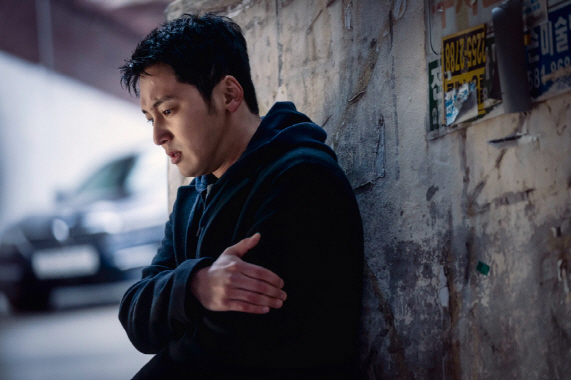
At first, we get to know a bit about the hidden lifestyle of a young man named Jeong-tae (Byun Ho-han). On the surface, he is a fairly successful model real estate agent who have received good words from many of his clients, but he has been hiding something quite creepy behind his back. Using the advantages from his occupation, he can easily sneak into the houses of the clients he dealt with, and he gladly tells us how much he enjoys peeping into the lives of those clients. As a matter of fact, he always collects a sort of souvenir whenever he sneaks into his latest target, and he even has a little private place where he prides over heaps of such items he has collected for a long time.

On one day, someone quite interesting happens to draw Jeong-tae’s attention. She is a young social media influencer named So-ra (Shin Hye-sun), and Jeong-tae finds himself attracted to not only her beauty but also her ongoing duplicity. On her Instagram account, she looks like a popular chic girl who has often flaunted her cool lifestyle coupled with some notable acts of philanthropy, but she actually lives in some shabby neighborhood of Seoul, and Jeong-tae cannot help but wonder more about whatever she is hiding behind her supposedly chic façade.

Although he closely watches on her during next several months, So-ra remains rather elusive, and that certainly frustrates Jeong-tae a lot, but, what do you know, there comes an unexpected opportunity later. So-ra visits Jeong-tae’s office because she wants to move to somewhere, and this surely makes Jeong-tae’s private mission all the easier than before. She gladly hands him the key card of her residence, and Jeong-tae soon embarks on watching and absorbing a lot from her private life.

However, of course, this supposedly lucky chance is subsequently followed by another unexpected happening. When he sneaks into So-ra’s house again, Jeong-tae is startled to discover her bloodied body in the living room, and he quickly leaves for the fear of becoming wrongfully accused and then getting his naughty hobby fully exposed in public.

Not so surprisingly, the situation becomes more confusing and frightening for Jeong-tae. When he later comes to So-ra’s residence along with his two clients who are going to be his witness, her body is gone without any trace. In addition, somebody seems to know everything about what he has been doing around So-ra, and this mysterious figure in question looks like quite determined to ruin his life once for all.

As Jeong-tae tries to find any possible way out in addition to attempting to identify his hidden opponent, the screenplay by director/writer Kim Se-hwi delves deeper into the very unpleasant aspects of social media. It goes without saying that So-ra was hiding a lot more than she seemed at first, and what she and a few associates of hers have done just for more attention and some benefit is quite nasty and deplorable to say the least.

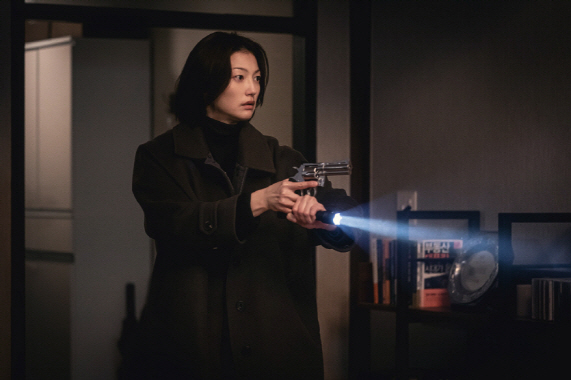
Meanwhile, the movie provides a welcoming voice of reason and morality via a young female detective named Yeong-joo (Lee El), who instantly senses something quite fishy about So-ra as well as Jeong-tae as she starts the investigation on So-ra’s missing. Even though being often disregarded by her male supervisor, Yeong-joo eventually becomes more determined to the get to the bottom of her latest case, and that certainly causes more headache for Jeong-tae.

While we usually observe his character’s plight from the distance, Byun Ho-han, who has been more prominent since his breakthrough turn in “Socialphobia” (2014), keeps holding our attention to the end, and we come to pay more attention to whether his utterly disagreeable character will finally realize what the hell is really going on around him. Although her role seems rather thankless in comparison, Shin Hye-sun, who was terrific in “Innocence” (202), fills her part with enough presence, and we are more surprised and amazed by her character’s pathological narcissism to be revealed along the story. As the no-nonsense female cop who will not be fooled that easily, Lee El holds her own place well around the story, and you will certainly agree to her character’s sobering moral viewpoint on the case.

On the whole, “Following”, which should not be confused with Christopher Nolan’s debut feature film “Following” (1997), is a solid genre product which entertains us as much as intended. Although I think it delivers its eventual resolution a bit too easily, the movie is still satisfying for ably handling its story and characters, and you may also come to have some more critical view on social media and those numerous superficial influencers out there. Sure, I have used a number of social media applications for many years, but I have not given a damn about such banal and uninteresting figures nonetheless, and that will probably be continued for the rest of my life even if I become quite old-fashioned because of that.

Posted in Movies | Tagged , , , | Leave a comment

Power (2024) ☆☆☆(3/4): A Power Called Police

Netflix documentary film “Power”, which was released on last Friday, examines the American history of police brutality and oppression during last several decades. If you are familiar with its main subject like me, you may not be that surprised by what it pointedly presents, but the documentary is still worthwhile to watch for its calm but sobering argument for the necessary social reforms for the American society, and you will probably come to reflect more on its main subject after it is over.

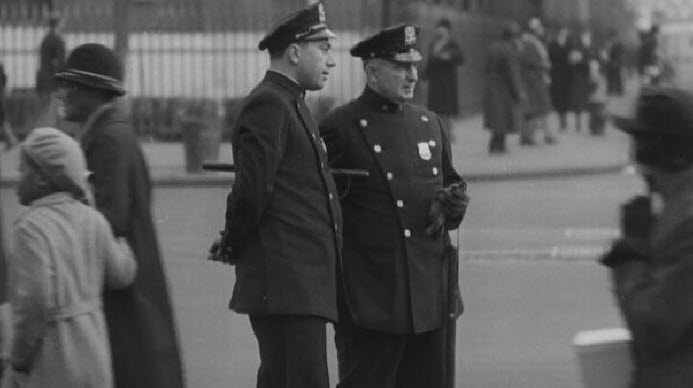
Mainly driven by the words from a bunch of various interviewees, the documentary initially focuses on the dark origin of the American Police. As some of you know, the American Police actually functioned as the patrol for monitoring or punishing African slaves during the 17~19th century, and this is the one of the main reasons for the long and deep mistrust against the police in many of African Americans communities. In addition, the American Police was also a major force behind the oppression on Indigenous people during that period, and that was certainly another shameful history of the American Police.

And this racist aspect of the American Police was naturally extended to some other ethnic groups during the 19th century. When many different European people emigrated into US, most of them were instantly labeled as non-whites just like African Americans. Although their social status was a bit better than that of African Americans, these low-class European people including Irish and Italian immigrants were often oppressed by the police in one way or another, and we see a series of archival records showing the blatant racism against them during that period.

Not so surprisingly, the main purpose of all these acts of oppression and brutality by the American Police was maintaining the status quo for the White Powers That Be, who did not hesitate to use that familiar strategy of “divide and conquer” from the very beginning. Just like they deliberately separated white servants and black slaves during the period of slavery, they intentionally drew the line between the African Americans and the European immigrants, and many of those poor European immigrants did not hesitate to become the parts of the oppressive police system mainly because they got some social reward for that (Have you ever wondered why many of American policemen are of Italian or Irish heritage?).

This alarming tendency of the American Police was continued into the 20th century, while only getting more and more increased along the passage of time. Often showing more of their racist aspects, the American police also oppressed many of labor strikes in the name of the law and order, and the American government and its numerous capitalist backers had no problem with that at all. As a matter of fact, they became all the more supportive when Russia quickly rose with its communist ideology during the late 1950s, and those powerful white guys including J. Edgar Hoover regarded many of those civil rights activists as communist subversives to be eliminated by any means necessary.

As more oppressed than before during that time, the oppressed often became quite radicalized as shown from the rise of those hardcore radical figures such as Huey P. Newton, and there were also more race riots and demonstrations around the country. In the end, the US government tried to analyze the roots of these social problems in the late 1960s, and that led to an influential government report which drew lots of public attention at that time, but. alas, the US government only came to focus more on giving more power and support to the police while not recognizing the real problems at all.

As shown from one montage scene in the documentary, this alarming trend has been maintained for next several decades by both of the two major political parties in the American society, and the consequences have been severe to say the least. The discrimination and oppression against the colored people in US by the American Police keep getting intensified, and there have been many unfortunate victims including George Floyd during last several years, but things still do not change much despite lots of public demand for more social reform.

On the opposite of many different scholars and experts, the documentary puts an active black police officer working in Minneapolis, Minnesota. He is evidently a good cop who really wants to protect and serve citizens, and he sincerely tries to make some change via his diligent work, but he also comes to show some skepticism and frustration. While determined to work as long as possible, he phlegmatically recognizes the toil from trying to do the right things, and that surely tells us a lot about how the system has been deeply flawed from the bottom.

In conclusion, “Power” makes a fairly solid presentation on the very troubling aspects of the American Police even though it occasionally feels uneven and scattershot as trying to show and tell too many things within its rather short running time (89 minutes). Compared to director/co-producer/co-writer Yance Ford’s previous Netflix documentary “Strong Island” (2017), this is relatively less satisfying in comparison, but it did its job mostly well in my humble opinion, and I think you should give check it out if you want to know a bit more about its main subject.

Posted in Movies | Tagged , | Leave a comment

Drive-Away Dolls (2024) ☆☆1/2(2.5/4): A whimsical crime comedy from Ethan Coen

In my inconsequential opinion, Joel and Ethan Coen have often swung back and forth between two extreme ends during last several decades. On one end, they can give us extremely wacky comedy films such as “Raising Arizona” (1987), “The Hudsucker Proxy” (1994), “The Ladykillers” (2004), and “Hail, Caesar!” (2016). On the other end, they can serve us adamantly dry comedy films such as “Blood Simple” (1984), “Barton Fink” (1991), “The Man Who Wasn’t There” (2001), and “Inside Llewyn Davis” (2013). Or, they can also do both of these two very different things together as shown in “The Big Lebowski” (1998), “A Serious Man” (2009), and “The Ballad of Buster Scruggs” (2018).

After “The Ballad of Buster Scruggs”, the Coen brothers decided to make movies individually for a while, and their separate filmmaking results are rather interesting to observe. While Joel was totally serious in “The Tragedy of Macbeth” (2021), Ethan goes all the way for wackiness here in “Drive-Away Dolls”, and the question on whether you will like “Drive-Away Dolls” or not depends a lot on how much you can enjoy, or tolerate, the wackiest aspects of their comedy films.

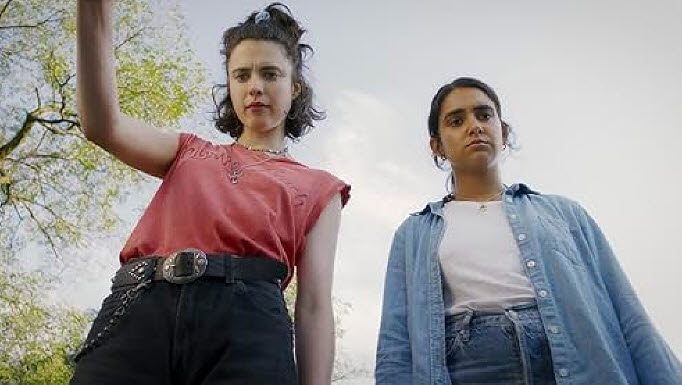
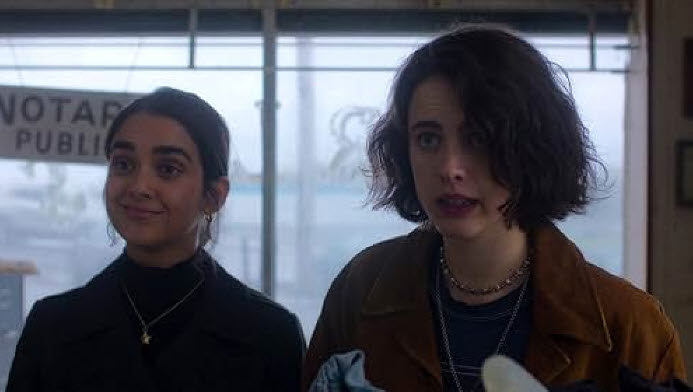
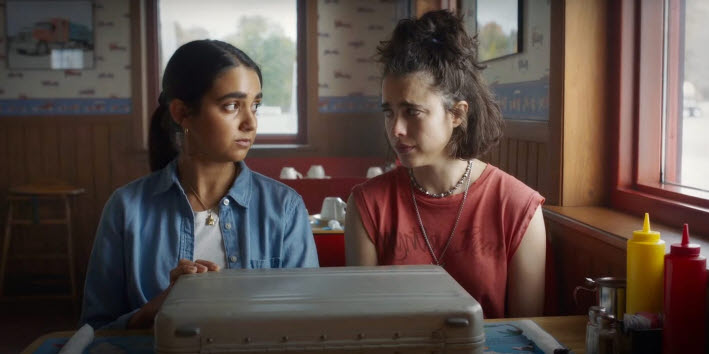
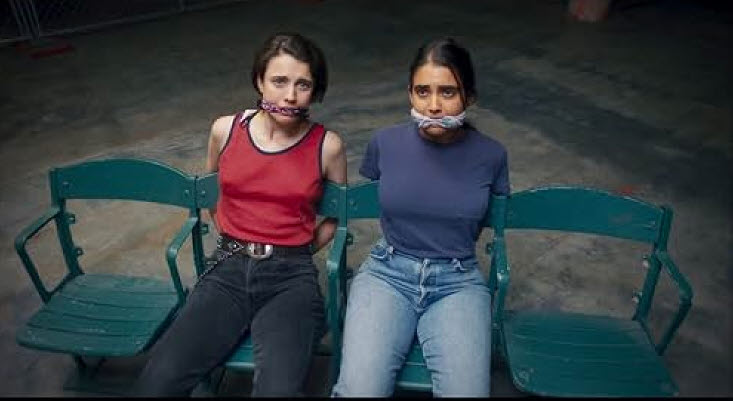
After the exaggeratedly violent opening scene featuring a brief but hilarious cameo appearance by Pedro Pascal, the movie, which is incidentally set in 1999, quickly establishes a complicated relationship between two contrasting young lesbian ladies: Jamie (Margaret Qualley) and Marian (Geraldine Viswanathan). While Marian is your average nerdy girl who loves reading the works of Henry James, Jamie is your typical free spirit who usually acts first before having any thought on action and consequence, and she does not mind at all having a wild sexual fun with her ex-girlfriend Sukie (Beanie Feldstein) even though she is going to be kicked out from Sukie’s residence due to her frequent infidelity.

When Marian is about to visit an aunt of hers in Tallahassee, Florida, Jamie impulsively decides to go along with her. They subsequently go to a local drive-away service center where they may get a car to be driven to Tallahassee, and then there comes a little misunderstanding between them and the manager of the drive-away service center, who happens to mistake Jamie and Marian for the two other figures supposed to take a certain car. Not long after Jamie and Marian take that car and then leave for Tallahassee, those two figures in question eventually come, and it does not take much time for them and their criminal boss come to discern that they have a big trouble to be taken care of as soon as possible.

Having no idea on whatever is being hidden inside the car, Marian and Jamie drive it to the south, and Jamie is already ready to have some more fun along with Marian. Although she simply prefers to finish reading a novel by Henry James, Marian cannot say no when she and Jamie happen to encounter a bunch of young (and horny) schoolgirls at one point, who gladly invite both of them into a little private moment of fun and games.

Meanwhile, those criminal figures continue to chase after Jamie and Marian, and we surely get some laughs as they clumsily try to locate where the hell the girls are now. It gradually turns out that they are working on behalf of a certain prominent public figure in Florida, and one of the biggest laughs in the film comes from when the movie eventually reveals what they try to retrieve.

While its main characters bounce along the story in one way or another, the screenplay by Ethan Coen and his wife Tricia Cooke, who also serves as her husband’s co-writer/co-producer/editor, often catches us off guard with its blatant wackiness. As your average R-rated lesbian comedies, the movie cheerfully features a lot of sex and nudity, and there are also occasional moments of psychedelic style, which do not seem to make much sense on the surface but turns out to be more crucial than expected.

Just like some of the Coen brothers’ comedy films, the movie does a sort of twisted comic puppet play via a bunch of exaggerated comic caricatures, so it is sometimes difficult for us to care about whatever is going in the story. Nevertheless, you may appreciate how its main cast members willingly throw themselves into their broad comic roles. While Margaret Qualley, who has steadily rose to more prominence during last several years, shows more of her comic talent as she previously did in “Sanctuary” (2022) and “Poor Things” (2023), Geraldine Viswanathan is effective as her co-star’s low-key comic foil, and their good comic chemistry throughout the film is one of the main reasons why it works to some degree. In case of several other notable cast members in the movie, Beanie Feldstein effortlessly steals the show whenever she enters, and Bill Camp, Joey Slotnick, C.J. Wilson, Colman Domingo, and Matt Damon are also well-cast in their respective supporting parts.

On the whole, “Drive-Away Dolls” is less satisfying than many of those notable comedy films Ethan Coen made with his older brother, but it is not entirely without fun and entertainment thanks to the game efforts from a bunch of good performers assembled here for the film. I do not know whether the Coen brothers will resume working together later, but both of them demonstrate that they can work separately without much difficulty, and it will be interesting to see how much they can diverge from each other during next several years.

Posted in Movies | Tagged , , , , , | Leave a comment

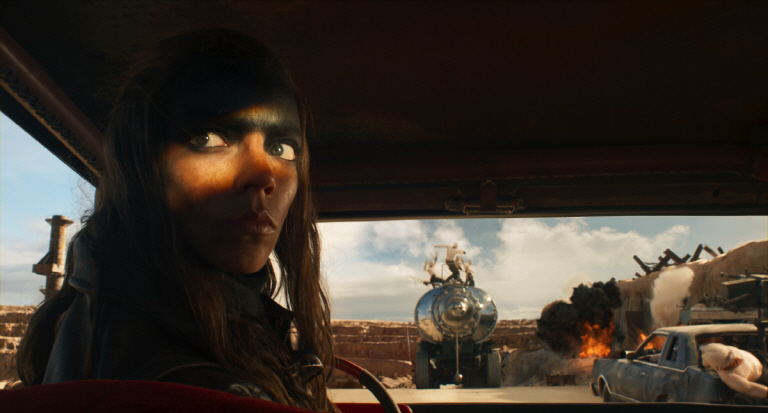
Furiosa: A Mad Max Saga (2024) ☆☆☆1/2(3.5/4): George Miller back in action

George Miller’s latest film “Furiosa: A Mad Max Saga”, which a prequel to “Mad Max: Fury Road” (2015), is another entertaining entry in its memorable series which was started 45 years ago. Although it does not surpass the greatness of its predecessor, the movie is still awesome and compelling thanks to its confident handling of story, mood, and character, and, above all, action, and we naturally come to stick to the end even though we already know where it will eventually arrive.

Consisting of the five chapters, the movie begins with the childhood years of its titular heroine, who was unforgettably played by Charlize Theron in “Mad Max: Fury Road”. Young Furiosa, played by Alyla Browne here in this film, once lived with her mother in a peaceful community hidden somewhere in the middle of the vast post-apocalyptic wasteland, but then she happened to be kidnapped by a bunch of intruders. For her daughter as well as their community, Furiosa’s mother tracks down these bad guys alone by herself, and the first chapter of the film is quietly intense as observing how she gets close and closer to young Furiosa and her kidnappers.

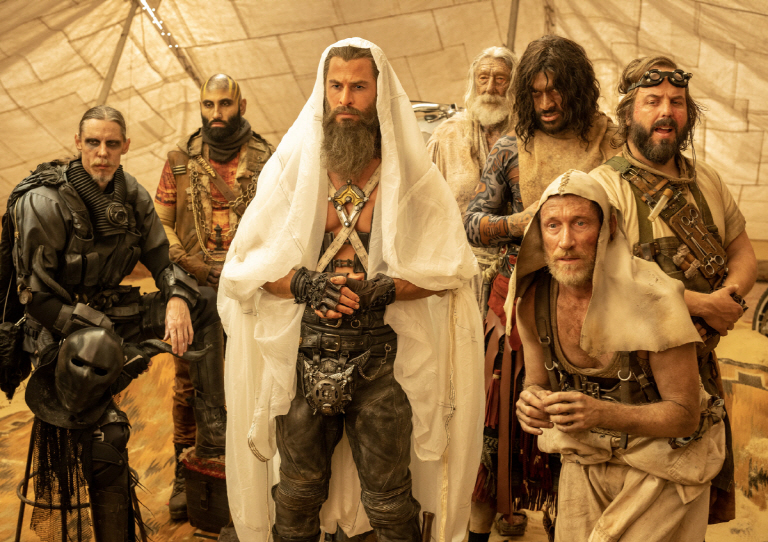
However, despite the valiant efforts of young Furiosa’s mother, young Furiosa eventually finds herself enslaved by a cruel and loony warlord leader named Dementus (Chris Hemsworth) in addition to experiencing a traumatic incident which will haunt her forever. While things remain quite hopeless for her during next several years, she remains very determined for survival and revenge as before, and she does not hesitate at all when she later comes across an opportunity via one of the key figures in “Mad Max: Fury Road”.

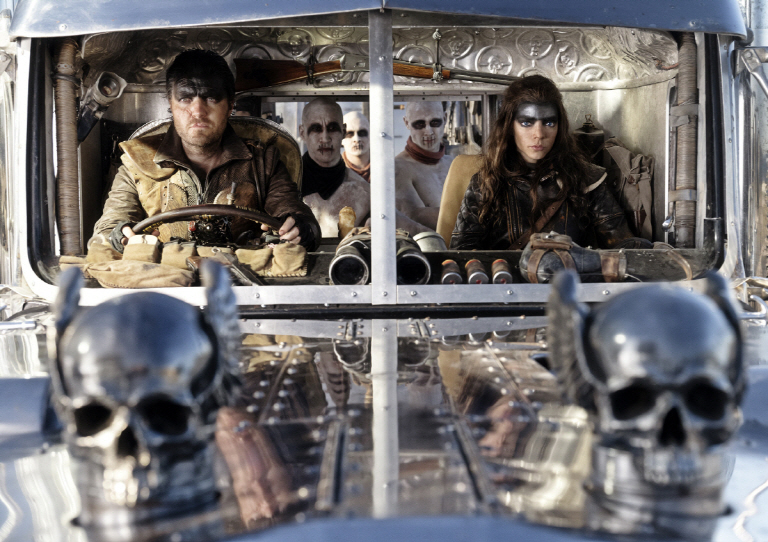
As young Furiosa keeps trying, the movie shows us more of its stark post-apocalyptic world established so well in its predecessor, and Miller and his crew members including cinematographer Simon Duggan did a first-rate job on that. While there are many familiar elements from “Mad Max: Fury Road”, they are presented vividly on the screen with old and new details to observe, and production designer Colin Gibson and costume designer Jenny Beavan, who respectively won an Oscar for “Mad Max: Fury Road”, have another field day as enthusiastically supporting Miller’s distinctive style and vision.

You may lose your patience a bit due to its rather slow narrative pacing, but the movie eventually becomes quite ready to shift its gear for more action when Furiosa later becomes a mostly silent but intense young female warrior who has learned a lot from some tough dude not so far from Tom Hardy’s character in “Mad Max: Fury Road”. Just like Hardy’s character, this dude looks weary and detached in his hardened appearance, but he shows Furiosa some kindness as discerning her considerable potential, and Furiosa, who is now played by Anya Taylor-Joy, finds herself caring more about this unexpected mentor figure than expected, even though both of them know too well that they and many others cannot easily afford affection and compassion in their harsh world.

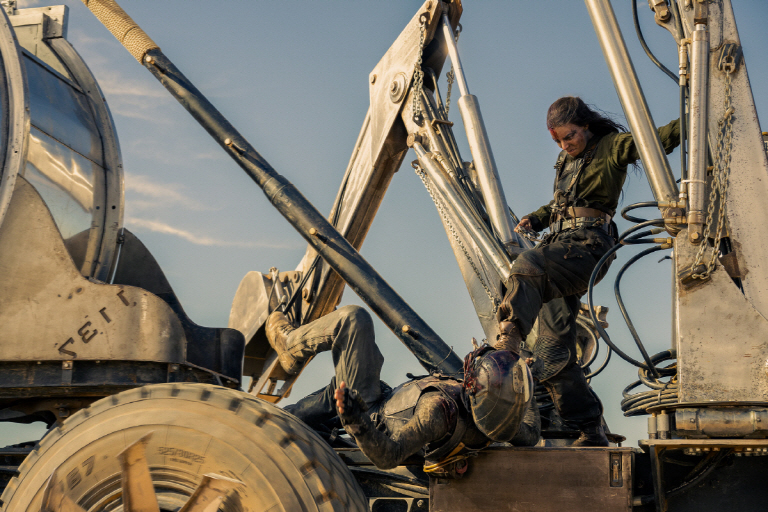
As Furiosa and her mentor later get themselves involved with a big conflict between Dementus and their current boss, the movie serves us a series of impressive action sequences to behold. While it may be a bit disappointing for you to see that these sequences do not reach to the sheer intensity and ambition of the action scenes in “Mad Max: Fury Road”, they are still gritty and intense enough to hold our attention, and the overall result shows again that Miller is still a master filmmaker who really knows how to thrill and then engage us with action as well as storytelling. The screenplay written by Miller and his co-writer Nico Lathouris is occasionally a little sprawling, but it is succinctly efficient in terms of narrative and characterization, and the movie is quite engaging even when it is not on action mode.

It goes without saying that the movie is constantly driven by the presence and charisma of its heroine. Young performer Alyla Browne, who previously played a small role in Miller’s previous film “Three Thousand Years of Longing” (2022), has enough pluck and spirit to carry the early part of the film, and her solid performance is seamlessly connected with Anya Taylor-Joy, who has kept impressing us during last several years since her breakout turn in Robert Eggers’ “The Witch” (2015). Just like Charlize Theron in “Mad Max: Fury Road”, Taylor-Joy is quite convincing as a strong and resilient woman of action, and we certainly root for her character more as she shows more grit and determination along the story.

Around Browne and Taylor-Joy, several cast members have each own moment to shine. As one of the main villains in the story, Chris Hemsworth gleefully chews every scene of his in the film as required, and you will be certainly satisfied with how Furiosa eventually gets a very juicy payback she will definitely savor for the rest of her life. Tom Burke is somber but somehow touching as Furiosa’s mentor who cares much more than he admits, and the special mention goes to Charlee Fraser, who leaves a brief but striking impression as Furiosa’s strong-willed mother.

While it does not surpass its predecessor, “Furiosa: A Mad Max Saga” is one of the better action films of this year nonetheless, and it is really fortunate for us that Miller is still working even though he is approaching to 80 at present. He is surely one of the great movie directors of our time, and, though I do not know whether he has another good idea for his monumental series, I will gladly watch whatever will come from him next.

Posted in Movies | Tagged , , | 1 Comment

Silent Night (2023) ☆☆1/2(2.5/4): A mute revenge action flick by John Woo

“Silent Night” tries to put an unconventional spin on its very familiar genre elements. While this is your average revenge drama action flick, the movie has itself driven mostly by actions instead of words from the beginning to the end, and this storytelling choice makes it interesting to some degree, though its overall result still dutifully follows the footsteps of many of its senior vigilante films such as “Death Wish” (1974).

After opening with a striking action sequence, the movie gradually establishes the devastated status of Brian Godlock (Joel Kinnaman), a plain family guy who was suddenly struck by a very shocking tragedy. While he and his wife Saya (Catalina Sandino Moreno) were spending a wholesome time with their little son at their residence, they were unfortunately caught in the crossfire of a drive-in shooting between the two local drug organization, and their son was killed as a consequence. Quite shocked and enraged, Brian ran after these bad guys, but he only got himself seriously injured in his neck, and that sadly led to his loss of voice.

After eventually released from a hospital, Brian tries to recover along with his wife, but he cannot help but become angrier over their irreversible loss. Moreover, those criminals responsible for his son’s death are not caught by the local police yet, and, to his exasperation and frustration, he comes to discern that he will not get much help from them, though there is one detective who is clearly sympathetic to his case.

In the end, Brian decides to take care of the matter for himself. First, he gets some basic information about a bunch of criminals including the one who shot him in the neck at that time, and then he begins to gather more information about them in private. In addition, he also focuses on training himself a lot for acquiring a particular set of skills necessary for what he is planning to do.

As Brian accordingly comes to spend more time alone in the garage of his house, he naturally becomes more estranged from his wife than before. While quite more concerned about him than before, Saya also becomes more frustrated to realize that there is really nothing she can do about their increasingly distant relationship, and we are not so surprised by her subsequent choice. Although her role feels thankless at first, Catalina Sandino Moreno, a wonderful Colombian actress who has steadily established her solid acting career since her Oscar-nominated breakthrough turn in “Maria Full of Grace” (2004), fills her character with enough human warmth and sensitivity, and she is particularly good when she and her co-star wordlessly convey to us the growing estrangement between their characters.

The movie continues to take more time as its hero prepares more and more during next several months. While still haunted by the memories of his dead son, Brian becomes all the more determined to eliminate all of those criminals associated with his son’s death, and he is fully prepared to say the least when his scheduled D-Day eventually comes.

Even around that point, the movie sticks to its taciturn attitude along with its hero, who surely does not need to explain or justify anything as driven more by his urge for justice and vengeance. Looking as stoic as Charles Bronson in “Death Wish”, Joel Kinnaman ably embodies his character’s quiet anger and steely determination without any unnecessary exaggeration, and his intense performance is certainly crucial in holding our attention to the end.

Once it goes for more action and intensity during its second half, the movie does not disappoint us at all with a series of gritty action sequences, and director John Woo, an influential Hong Kong filmmaker who has been mainly known for his classic Hong Kong action noir films such as “A Better Tomorrow” (1986), pulls all the stops when his movie eventually reaches to the climactic part along with its hero. His crew members including cinematographer Sharone Meir and editor Zach Staenberg did a skillful job of imbuing the screen with enough style and tension, and the score by Marco Beltrami mostly restrains itself while bringing some extra intensity to the film from time to time.

The main weakness of the screenplay by Robert Archer Lynn lies in its rather thin characters besides Brian and Saya. While Harold Torres is menacing enough as the final boss of the story, his character is no more than a cardboard figure to be shot down just like many other criminals targeted by our vengeful hero, and that is the main reason why the finale lacks some dramatic impact compared to the other key scenes in the film. In case of Kid Cudi, he manages to leave some impression as that sympathetic cop character, but his character remains to be no more than a plot element despite his earnest efforts.

In conclusion, “Silent Night” is not wholly satisfying enough for recommendation, but I must say that it is really nice to see Woo still continuing his filmmaking career as before (This is his first American film since “Paycheck” (2003), by the way). He seemed to be losing his distinctive individual touch especially during last two decades, but he demonstrates here that he is still a good action movie director even though his prime period has passed for many years, and I can only hope that he will go up more after this flawed but fascinating genre experiment.

Posted in Movies | Tagged , , , | Leave a comment