Peafowl (2022) ☆☆☆(3/4): She just wants to be herself…

South Korean film “Peafowl” is a flawed but interesting queer family melodrama mainly distinguished by the strong lead performance at its center. Even when the movie unfortunately stumbles in one way or another due to its blatant plot contrivance, it is still supported well by its undeniably charismatic lead performer, and her memorable raw performance will keep you engaged enough to forgive several shortcomings in the film.

The story is mainly about Sin-myeong (Choi Hae-jun, who is also known as Haejun), a transgender Waacking dancer living in Seoul. In the beginning, we see her trying to win the top prize money at the local dance competition for paying for her upcoming gender transition surgery, and she is quite disappointed not only because she eventually fails but also because she is told later that she does not have her own color to distinguish herself more.

Meanwhile, there comes an unexpected phone call from someone in her past. That person in question is Woo-gi (Kim Woo-kyum), who has been the favorite pupil of her estranged father known quite well for his respected “Nongak” (traditional farmers’ music) career. After Sin-myeong came out, her father cut ties with her, but now he passed away, and Woo-gi wants her to attend her father’s funeral at least.

Even though she still feels a lot of anger and resentment toward her father, Sin-myeong eventually returns to her rural hometown, and it goes without saying that she is not welcomed much when she comes to her father’s funeral. While her aunt is mostly fine with her niece’s current appearance, her aunt’s husband is not so pleased to say the least, and that surely reminds Sin-myeong again of why she left her hometown and father.

And then Woo-gi tells her something which draws her attention. According to him, Sin-myeong’s father wanted her to perform a traditional memorial ritual for him, and Woo-gi promises her that she will receive a considerable amount of cash in exchange for that. Sin-myeong is initially reluctant, but she comes to accept the deal after getting some advice from a local fortune teller in her neighborhood in Seoul, and Woo-gi is willing to help her during the following preparation period.

It does not take much time for Sin-myeong to get more accustomed to what she has nearly forgotten for many years, but she soon comes to face a number of troubles just for being proud of who she is in front of others around her. While Woo-gi does not have any problem with her current gender identity, the aunt’s husband remains as hostile as before due to his homophobia/transphobia, and Sin-myeong comes to have more doubt about whether her father really wanted her to perform that ritual.

Around that narrative point, the screenplay by director/writer Byun Sung-bin gets more melodramatic and contrived as Sin-myeong happens to sense and discover a certain hidden fact about someone in the town. For protecting that figure in question, she willingly lets herself misunderstood by her aunt’s husband and several others in the town, and this also puts more strain on her relationship with Woo-gi, who naturally becomes quite frustrated and exasperated despite his good-willed intention behind helping Sin-myeong.

It is rather disappointing to see how the story resolves its complicated personal conflicts too conveniently during the last act, and I also wish the movie delved more into the interesting details of Nongak. It is not much of a spoiler to tell you that our heroine eventually accomplishes her personal task in the end, but her bold attempt to mix old and new stuffs together for the ritual could be more effective for us if we got to know more about Nongak in advance.

Nevertheless, the admirable integrity of Choi Haejun’s good performance continued to hold my attention throughout the film. As a real-life female transgender figure who is also known well as a professional Waacking dancer, she surely has all the right stuffs for playing her character from the beginning, and she also did a commendable job of conveying her to us character’s strength and vulnerability. As a result, we come to have more understanding and empathy on her character along the story, and that is the main reason why it is touching to observe when Sin-myeong finally comes to find her own color around the end of the movie.

In contrast, several supporting performers around Choi are rather under-utilized as mostly stuck in their broad archetype roles. While Kim Woo-kyum brings some genuine decency to his thankless supporting part, Ko Jae-hyun, Hwang Jung-min, and Kim Jin-soo are merely required to fill their respective spots, and Ki Joo-bong appears as Sin-myeong’s father during one brief scene later in the film.

Overall, “Peafowl” could be more improved here and there, but you will not easily forget its unforgettable transgender heroine and the lead performer behind her, who is really a force to reckon with in my trivial opinion. It will be interesting to see whether the movie will give Choi a significant career breakthrough in the near future, and I sincerely hope that the movie also will bring more awareness and sensitivity on gender identity and sexuality to many South Korean audiences out there.

Posted in Movies | Tagged , , , , | Leave a comment

Longlegs (2024) ☆☆☆(3/4): Something insidious this way comes to her…

Osgood Perkins’ latest horror film “Longlegs” is insidious and unsettling from the beginning to the end. Although you may get a bit impatient with its rather slow narrative pacing and loose storytelling, the movie keeps us on the edge with a creepy sense of dread surrounding its increasingly disturbed heroine, and there is also some extra amusement from another odd performance from one of its main cast members.

After the unnerving prologue scene involved with a young little girl who happens to come across some very weird figure, the movie, which is set in the middle of the 1990s, introduces us to Lee Harker (Maika Monroe), a young female FBI agent assigned to a mysterious case not long after her first field experience which turns out to be quite traumatic for her. Although she is still not fully recovered from that shocking happening, her supervisor recruits her anyway because she actually has a sort of psychic ability which may help the investigation of that strange case in question.

As Harker begins to work on the case, we get to know a bit more about its disturbing details. For many years, there have been a series of gruesome family murder incidents, and all of them happen to be linked with an unknown figure named “Longlegs”. While there is no other evidence showing that this figure is actually responsible for these terrible incidents, this figure always leaves a coded letter on the crime scene, and FBI investigators remain quite baffled about who this figure really is – and why and how this figure has done all these killings.

Trying to search for anything to be noticed by her special ability, Harker also often gets quite disturbed by those unnerving details of the incidents associated with Longlegs. In case of the latest incident which happens to be belatedly discovered, she and her supervisor have to face a very unpleasant sight, and some of you may wince a lot even though the movie thankfully does not dwell too long on that.

Meanwhile, it turns out that Longlegs somehow knows that Harker is working on the case. When she is alone in her residence at one night, Longlegs comes and then leaves a letter for her, and that actually leads to a significant breakthrough for the investigation. In addition, Harker eventually discovers the hidden pattern behind the incidents associated with Longlegs, which seems to be involved with some Satanic sacrifice rituals.

As Harker delves deeper into the case, Perkins and his crew members including cinematographer Andrés Arochi Tinajero continue to fill the screen with a lot of moody creepiness. Many of the key scenes feel quiet and static on the surface, but there is always subtle tension beneath the surface, and that is occasionally punctuated by effective moments to jolt us in one way or another.

The story gets more interesting as Harker somehow feels a lot more unnerved about the case than before. While her supervisor is always ready to support her as much as possible, she cannot help but become quite anxious as getting closer to their target, and she also finds herself becoming more distant to her aging mother, who often calls her just for checking out whether she is all right.

Perkins’ screenplay is surely reminiscent of several other serial killer movies such as “The Silence of the Lambs” (1991) and “Zodiac” (2007), but it goes its own way as taking its time for bringing more creepiness to the story. Even when its villain character is fully revealed at last, the movie does not hurry itself much, and then it allows Nicholas Cage to have some morbid fun with his villain character. While almost unrecognizable under heavy makeup, Cage, who also participated in the production of the movie, is as intense and insidious as demanded, and his deliberately loony performance frequently hovers over the screen even during his absence.

As the emotional center of the film, Maika Monroe, who is no stranger to horror movies considering her breakout turn in David Robert Mitchell’s “It Follows” (2014), anchors the movie well with her solid performance. While ably conveying to us her character’s unstable state of mind, Monroe also brings some human qualities to her character, and she is particularly good during several personal key scenes between Harker and her aging mother.

Most of the supporting performers in the film simply fill their respective spots around Monroe, but a few of them manage to do a bit more than their functional roles require. Alicia Witt, who steadily worked during last 40 years since appearing in David Lynch’s “Dune” (1984), has her own moment later in the film, and Blaire Underwood acquits himself fairly well even though mostly being stuck in his blandly thankless supporting part.

On the whole, “Longlegs” is mostly engaging for the mood and performances, and it will certainly interest you if you like Perkins’ two previous films “I Am the Pretty Thing That Lives in the House” (2016) and “Gretel & Hansel” (2020). His works are still a bit of acquired taste to me, but I come to have more admiration for his filmmaking skill and talent, and I am already looking forward to watching his next film which will be incidentally released in the next year.

Posted in Movies | Tagged , , , , | Leave a comment

The Remarkable Life of Ibelin (2024) ☆☆☆1/2(3.5/4): His remarkable online life

Netflix documentary film “The Remarkable Life of Ibelin”, which was released on last Friday, looks into the bountiful online life of one Norwegian gamer who died when he was only 25. Although he did not reveal himself that much to his numerous fellow online gamers, he closely interacted with them for more than 10,000 hours before his eventual death in 2014, and it is often quite poignant to observe how he showed his better sides to others in their online world.

At the beginning, we get to know a bit about the private life of this Norwegian gamer in question. Mats Steen was born to one ordinary couple living in Oslo, Norway in 1989, and his parents were certainly quite devastated when Steen was diagnosed to have a rare type of hereditary degenerative muscular disease a few years later. At first, young Steen simply looked like being rather weak and clumsy in his physical movements, but this only got worse and worse as time went by, and he eventually had to rely a lot on his wheelchair.

While his parents and his younger sister tried a lot for making Steen participate more in their social life, Steen’s attention got gradually drawn to online computer games. He frequently spent many hours on playing online games every day, and his parents could not possibly say no to him even though they sincerely wished he got interested in other stuffs besides online games because, well, they were well aware of how time kept running out for him as well as them.

Steen’s medical condition got much worse during last few years of his short life. He tried to keep going on as much as possible, but he inevitably became too weak to breathe for himself, and his fingers also became too weakened to play Warcraft, which was incidentally his favorite online game. As a matter of fact, he was constantly monitored by a series of different caregivers every day around that point, and both he and his family became more aware of his impending death than before.

Not long before his death, Steen sent his parents his user ID and password to the Warcraft website. After he died, his parents checked out what he had been doing on that online game website during last several years, and what they discovered there was quite revealing to say the least. He actually made a lot of online friends as playing here and there along with them, and, to his parent’s surprise, most of them immediately sent their heartfelt condolence to Steen’s parents when Steen’s parents posted the notification on his recent death on his personal blog site.

Around that point, the documentary delves a lot deeper into Steen’s online life, and that is where it becomes quite extraordinary. Via the digital animation based on the visual elements from the online world of Warcraft, it immerses us more into what was shared among Steen and his many online friends, and then it gives us the vivid reenactment of the excerpts from the vast online records generated among Steen and his fellow online gamers. This looks rather artificial at first, but director Benjamin Ree and his crew and voice cast members handle their materials with enough care and sensitivity, and the overall result is pretty absorbing to say the least.

Just like all the other online gamers, Steen had some fun with presenting himself via his game avatar, which was named, yes, Ibelin. He presented Ibelin as a freelancing detective who can solve problems and mysteries for others around him in addition to having some adventures from to time, and it did not take much time for him to draw the attention of many other online gamers, mainly thanks to his likable personality glimpsed behind Ibelin. He soon made a lot of online friends here and there, and he became closer to some of them as they came to interact more with each other outside their online game world.

We are later introduced to several close online friends of his, and they all have each own personal story about Steen. Although he always drew the line between him and others as keeping hiding himself behind Ibelin, he also showed a lot affection and empathy to many of his online game friends, and there is a particularly touching story on how he helped one of them get closer to her autistic son, who also became Steen’s close friend after joining the World of Warcraft for more communication with his mother.

Needless to say, things were not always rosy and pleasant for Steen and his fellow online gamers – especially when he became angrier and more depressed due to his rapidly worsening medical condition. Nevertheless, he eventually came to realize that he had to open himself much more to his online friends than before, and that led to a moving moment of reconciliation and understanding between him and them. After his eventual death, several online friends of his willingly came to the funeral for remembering him more along with his family, and this certainly reminded his family that he did live as fully as he could before his death.

In conclusion, “The Remarkable Life of Ibelin”, which won the Audience Award as well as the Directing Award at the World Cinema Documentary section of the Sundance Film Festival early in this year, powerfully shows us how positive human interactions are still possible on the Internet. Yes, we all have seen the many negative sides of the online world in one way or another during last several decades, but we can also be quite understanding and empathetic to others across the Internet, and the documentary surely gives us a remarkable example to remember.

Posted in Movies | Tagged , , , , , | 1 Comment

Uprising (2024) ☆☆☆(3/4): A bitter and brutal period drama

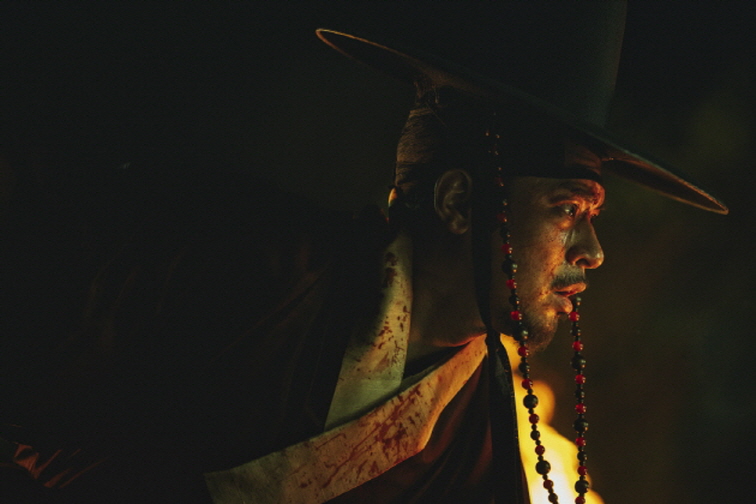
South Korean Netflix film “Uprising”, which was released a few weeks ago, is a bitter and brutal period drama about an intense class conflict in the background of a big historical war in Korea during the 16th century. While it often strikes and shocks us with numerous violent and bloody moments, the movie engages us with broad but strong characters and competent storytelling, and the result is one of the better products from Netflix during this year.

During its early part, the movie establishes the complicated relationship between Cheon Yeong (Gang Dong-won) and Lee Jong-ryeo (Park Jeong-min). Just because her mother became a slave around the time of her pregnancy, young Choen Yeong, played by Jin Jae-hee, also becomes a slave despite his father’s desperate protest, and he is subsequently sent to the house of one of the most influential military officials in the kingdom, where he works as a new whipping boy for the military education of his master’s son.

Of course, the master’s son is none other than young Jong-ryeo, who is played by Lee Yoon-sang. As watching young Jong-ryeo pathetically struggling every day, young Cheon-yeong decides to take care of the matter for himself mainly for avoiding getting whipped a lot by the master, and, what do you know, he comes to show more talent and potential while having a helpful extra training session with the master’s son at every night.

However, though Jong-ryeo’s swordsmanship and other military skills do get improved a lot during next several years, but he is still not good enough to distinguish himself as much as his father desires, let alone pass the annual military annual examination. Again, Cheon-young comes forward to take care of Jong-ryeo’s trouble, and it seems he will be free at last if he helps his master’s son a bit as before.

Not so surprisingly, Cheong-yong finds himself betrayed at the last minute not long after getting that job done, and this only adds more anger and resentment toward not only his master but also the family members of his master including Jong-ryeo. It looks like all is lost for him when he gets captured shortly after his attempt to escape, but then things suddenly get turned upside down in the kingdom when the Japanese Army unexpectedly invades Korea. As not only King Seonjo (Cha Seung-won) but also many ruling class members prepare to leave the capital of their kingdom in advance, thousands of people of lower class in the capital become quite furious to say the least, and we soon see the royal palace being ransacked and then burned down not long after the king runs away along with his underlings to the North.

Around the time when Cheon-yeong manage to escape, all of Jong-ryeo’s family members get killed due to the revolt of their angry servants, and Jong-ryeo becomes quite angry and spiteful as shown from the first bloody action sequence in the film. Wrongly believing that Cheon-yeong is the one mainly responsible for the death of his family members, he is determined to catch and then kill Cheon-yeong, and he keeps looking for Cheon-yeong even after the war is eventually over 7 years later.

Meanwhile, after bravely fighting against the Japanese Army during last several years, Cheon-yeong and many other slaves are all hopeful about becoming free as promised to them at first. However, the king is not so willing to do that as more occupied with restoring the royal palace as well as the class system he is going to rule over as before, and he does not even give any damn about how millions of people of his kingdom are starving to death as struggling a lot among the ruins of the war right now.

The screenplay by Shin Cheol and Park Chan-wook adds more bitter irony to the story during its second half as Cheon-yeong and many of his comrades are cruelly betrayed by the king, who gladly gives full authority to Jong-ryeo for eliminating Cheon-yeoing and his comrades once for all. Following Jong-ryeo’s advice, the king also gives full immunity to a bunch of Japanese soldiers including one particularly notorious general, who are soon ordered to track down Cheon-yeong and his comrades in addition to do something else for the king’s benefit.

As Cheon-yeong and others around them get cornered in one way or another, director Kim Sang-man, who took the helm instead because Park was busy with making his recent HBO TV miniseries “The Sympathizer”, and his crew members including cinematographer Ju Sung-rim continue to serve us more bloody and violent action scenes. You will probably wince a lot as many heads and limbs are ruthlessly severed along the story, but they are skillfully presented while also serving the story and characters with considerable dramatic power, and you may get some dark laugh from when the king eventually gets a sort of comeuppance around the end of the story.

It certainly helps that the main cast members of the film fill their archetype roles with enough presence and personality. While Kang Dong-won diligently occupies the center as required, Park Jeong-min holds his own place well as the counterpart for Kang’s character, and Cha Seung-won and Jung Sul-il, who plays the aforementioned Japanese general, are also solid in their substantial supporting roles.

On the whole, “Uprising” works thanks to its good direction, storytelling, and performance, and that is enough to compensate for its several weak aspects including the glaring lack of the substantial female characters (Kim Shin-rok deserves the special mention for bringing enough spirit to the sole female main character in the story, by the way). It could be improved more, but it is mostly entertaining in my humble opinion, so I will not grumble for now.

Posted in Movies | Tagged , , , | Leave a comment

The Room Next Door (2024) ☆☆☆1/2(3.5/4): Being next to her dying friend

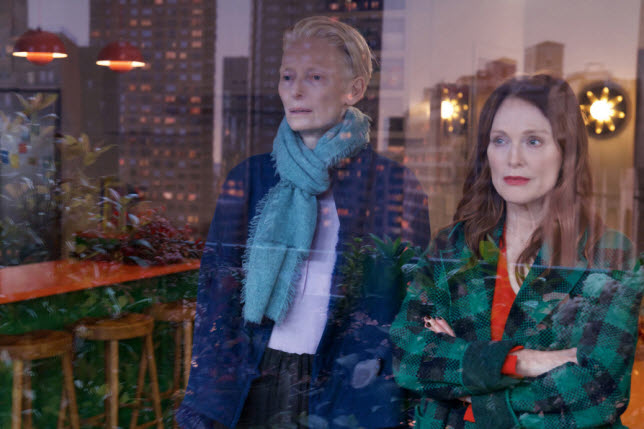
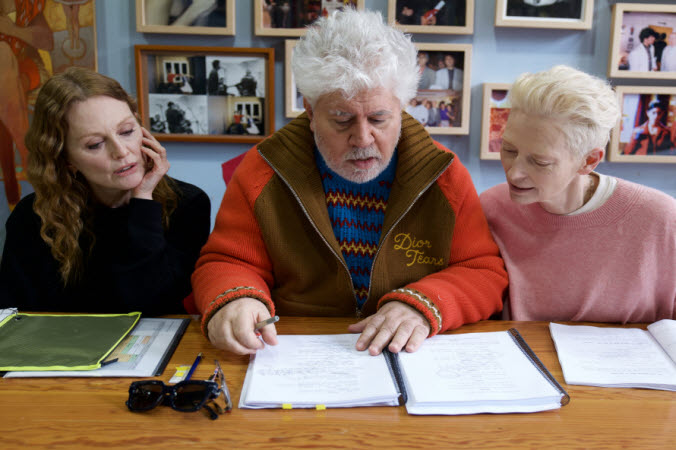
Pedro Almodóvar’s first English-language feature film “The Room Next Door”, which recently won the Golden Lion award at the Venice International Film Festival, is somber but elegantly compelling to work to be cherished. While it is an inherently elegiac melodrama about death and friendship, the movie is also as witty and colorful as you can expect from the director, and it is also carried well by two of the best movie actresses of our time.

At the beginning, we meet Ingrid (Julianne Moore), a successful middle-aged female novelist who has just published her latest novel. Not long after she is back in New York City, she encounters an old friend of hers when she is signing her books at a local bookstore, and she comes to learn that a mutual friend of theirs, Martha (Tilda Swinton) has been seriously ill due to cancer. Although she and Martha have been out of touch with each other for many years, Ingrid comes to a medical center where Martha has received some experimental medical treatment, and both of them are delighted to see each other again after many years.

While they come to spend more time with each other, we get to know a bit about their friendship and Martha’s private and professional life. Martha is a well-known war correspondent, and she was on the top of her field just like her friend before she got very ill, but she has some regret about not being a very good mother to her estranged daughter from the beginning due to her busy work around the world. Her daughter remains distant to her even after learning about her illness, but Martha accepts that without much bitterness nonetheless.

Sincerely hoping for the best for her friend, Ingrid is willing to spend more time with Martha for more emotional support, but things soon get really bad for Martha when it turns out that she does not have much time to live because her cancer turns out to be a lot more malignant than expected. While she is surely recommended to go through more medical treatment, she decides to live a bit more peacefully and painlessly before her eventual death, and she eventually returns to her cozy apartment, whose interior design is as slick and colorful as you can expect from an Almodóvar movie.

And then Martha asks a big favor of Ingrid. She is going to commit a suicide sooner or later, and she simply wants her friend to be around her for a while before her planned death. Needless to say, Ingrid instantly gets disturbed and conflicted about her friend’s suicide plan, but she eventually agrees to accompany her friend as much as possible until Martha decides to kill herself.

We subsequently see Ingrid and Marth embarking on what will be the last few days of their long-term friendship. They go to a slick and comfortable modern house located outside the city, and, as instructed to her in advance, Ingrid stays in a bedroom not so far from the one occupied by Martha, who will leave a certain sign for her friend before she really kills herself as planned.

For not getting her friend into any trouble in the aftermath, Martha thoroughly planned her suicide, but her planning turns out to be not wholly perfect, and Ingrid comes to have more doubt and conflict about their circumstance. Although she still cares a lot about her friend, she is not so certain about whether she can really stay next to her friend to the end, and that leads to more strain on their relationship.

Almodóvar’s screenplay, which is based on Sigrid Nunez’s acclaimed novel “What Are You Going Through”, steadily maintains its calm attitude as subtly building up the emotional narrative beneath the surface. When its two heroines watch together John Huston’s last film “The Dead” (1987), which is incidentally based on the short story of the same name by James Joyce, this key moment initially seems to emphasize the main subject of the story a bit too blatantly, but it is handled with enough care and sensitivity to engage and then touch us, and the movie later delivers something as sublimely poetic as the haunting last scene of Huston’s movie.

Almodóvar shows here that his storytelling talent is not inhibited by language boundary at all, and he and his crew members including cinematographer Ed Grau did a fabulous job of imbuing the screen with a palpable sense of sadness and melancholy. Often driven by the nervous string performance a la Bernard Herrmann, the score by Almodóvar’s longtime collaborator Alberto Iglesias effectively complements what is so dexterously presented on the score, and I will not be surprised if the score gets Oscar-nominated like his score for Almodóvar’s previous film “Parallel Mothers” (2021).

Above all, Almodóvar draws the terrific performances from his two lead actresses, both of whom are dependable as usual. Often shining with her own uncannily ethereal quality, Tilda Swinton ably embodies her character’s tranquilly melancholic acceptance of death, and Julianne Moore is equally excellent in her masterful illustration of her character’s emotional conflict along the story. Around these two great actresses, John Turturro and Alessandro Nivola provide small but effective supporting performances, and Turturro steals every minute of his in the film as providing some sense of humor to the story.

Overall, “The Room Next Door” is another superlative work from Almodóvar, who has rarely bored me and other audiences with his own distinctive style and storytelling during last several decades. In short, this is one of the more interesting movies of this year, and it is certainly much more recommendable than “Venom: The Last Dance” (2024), which happens to be released in South Korean theaters in the same week. While that forgettable flick is a waste of time, “The Room Next Door” is something you must watch at movie theater in my humble opinion, and you may later thank me for my enthusiastic recommendation.

Posted in Movies | Tagged , , , | 1 Comment

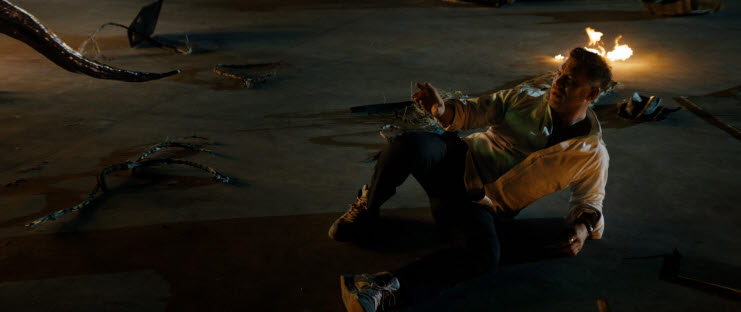
Venom: The Last Dance (2024) ☆☆(2/4): Until death does them apart

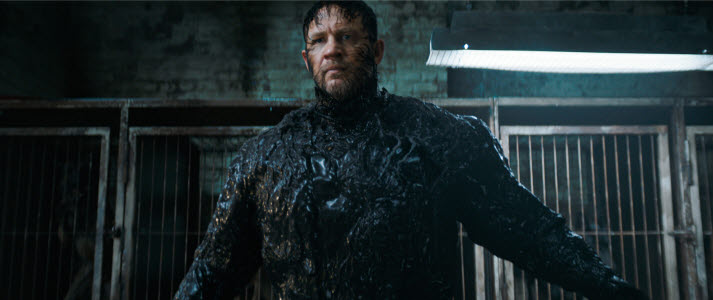
“Venom: The Last Dance”, what is supposed to be the last chapter of the trilogy started with “Venom” (2018), is a schizophrenic mess which fails to mix well its goofy parts with more serious plot elements. While it is occasionally amusing to watch the comic interactions between the mismatched duo at the center of the movie, the story is also too thin and scattershot to hold our attention, and the overall result is another disappointing comic book movie during last several years.

The movie begins at the point not long after the ending of “Venom: Let There Be Carnage” (2021). Eddie Brook / Venom (Tom Hardy) has been a fugitive hiding somewhere in Mexico, and then he and his alien symbiote which imbues him with super-human abilities come to have a very big trouble on their way. The evil creator of symbiotes, who has been imprisoned somewhere in the universe, is looking for something Brook and his alien symbiote have, and one of those hideous alien creatures under this evil dude’s control comes down to the Earth for looking for Brook and his alien symbiote.

Meanwhile, Brook and his alien symbiote are also being pursued by the people associated with a certain top-secret US military project hidden at a site not so far from that famous military zone in Nevada. Once they find Brock’s current location, a bunch of soldiers led by General Strickland (Chiwetel Ejiofor) immediately begin their pursuit, and it goes without saying that they soon encounter that hideous alien creature, which has a rather nasty way of killing whoever tries to interfere with its relentless pursuit.

Anyway, as trying to evade both General Strickland’s soldiers and that hideous alien creature, Brock eventually finds himself in the middle of Nevada, and that is where he gets some help from a goofy family guy and his wife and children, who happen to be traveling around Nevada just for getting any chance to see an alien around that famous military zone of Nevada. The movie has some fun with how Brock tries to hide his little secret from his unexpected helpers as much as possible, and we get a little amusing moment when they attempt to cheer up Brock with a brief musical performance while his alien symbiote is eager to sing along with them.

After more comic moments along the story, the movie becomes much more serious as Brock and his alien symbiote must confront their main opponent, and that is where the movie becomes a lot shakier than before. Hurriedly throwing its hero and several other characters into lots of busy action, the action scenes in the film feel merely frantic and jumbled, and you may get all the more confused when a bunch of additional alien figures appear later. While we surely get a big explosive finale in the end, we already saw that coming from the beginning due to something which can be regarded as an equivalent to Chekhov’s gun, and I must say that this is one of many occasions of ineffectual writing in the film.

Above all, it is often difficult for us to care about the story and characters of the film. Eddie and his alien symbiote are still an amusing mismatched duo, but their dysfunctional relationship is not developed that much from what was shown in “Venom” and its 2021 sequel movie. In case of several substantial supporting characters in the movie, they are mostly flat and bland without much human quality to engage us, and that is the main reason why we do not care much about whatever is being at stake for them along the story.

Tom Hardy, who also provides the voice for Brock’s alien symbiote in addition to serving as the co-writer and co-producer of the film, looks as committed as he did in the previous two films while also having a ball whenever Brock bickers with his alien symbiote. However, his fairly enjoyable efforts here in this film are often limited by the numerous half-baked aspects of the story written by him and director/co-writer Kelly Marcel, who also served as a co-writer in the previous two films, and I can only hope that he will soon move onto something much better for his career.

A number of notable cast members of the film are regrettably under-utilized, though a few of them fortunately acquit themselves well at least. Chiwetel Ejiofor, who is no stranger to comic book movie considering his supporting turn in “Doctor Strange” (2016), is thoroughly wasted without much to do, and the same thing can be said about Juno Temple and Stephen Graham, who often seems merely waiting for getting the paycheck. While Rhys Ifans generates some amusement as that goofy family guy, Peggy Lu, who delightfully stole the show as a Chinese convenient store owner who befriended both Eddie and his alien symbiote in the previous two movies, has another scene-stealing time during her brief but funny appearance around the middle of the film.

In conclusion, “Venom: The Last Dance” manages to reach to the end of its trilogy, but it is disappointing due to its deficient narrative and superficial characterization. After getting quite dissatisfied with “Venom”, I was a bit glad to see some sign of improvement in “Venom: Let There Be Carnage”, but “Venom: The Last Dance” sadly goes down back to the gross level of underachievement shown in “Venom”, and this surely lets me down a lot. To be frank with you, it is already being faded in my mind as I am about to move onto Pedro Almodóvar’s latest film which happens to be released in the same week in South Korea, and I am sure that my memory of “Venom: The Last Dance” will be almost wiped out after watching that Almodóvar movie.

Posted in Movies | Tagged , , , , | Leave a comment

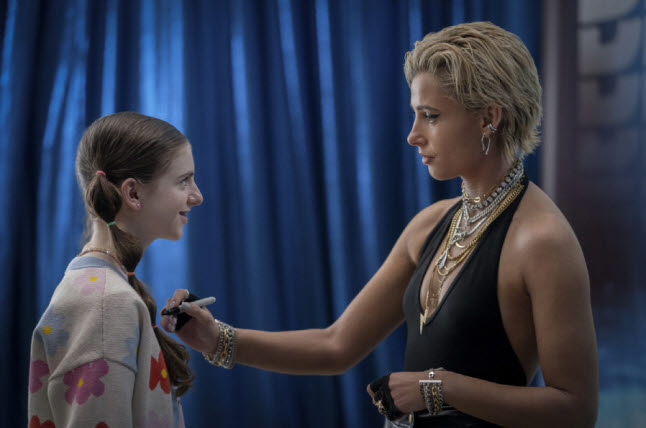
Smile 2 (2024) ☆☆☆(3/4): It’s going to smile again

“Smile 2” goes for more terror and fear in the same playground, and I enjoyed it more than expected. While it is not so different from its predecessor in terms of story setting, the movie gives us a wilder and flashier version packed with enough mood and a darkly vicious sense of humor, and it is also supported well by the strong performance at its center.

The movie begins at the point not long after what happened at the end of “Smile” (2022). As many of you remember, the heroine of “Smile” sadly failed to free herself from some horribly powerful supernatural entity, and she only ended up getting possessed and then committed “suicide” right in front of her cop boyfriend. Six days later, he is also driven to the edge as that evil entity is now stalking him, and he devises his own desperate plan for freeing himself and stopping that evil entity. Unfortunately, his plan does not go well at all just like his girlfriend’s case, and he only comes to get that evil entity transferred to some young drug addict before he also gets killed in the end.

This young drug addict happens to be a friend of Skye Riley (Naomi Scott), a very famous pop star singer who has been trying to be sober and clean after having a devastating car accident due to her addiction problem around one year ago. When she comes to her addict friend’s apartment for getting some painkiller to dull her frequent pain in the back, he has been already quite unhinged due to that evil entity, and, of course, Riley soon becomes the very next target after he eventually gets possessed and then killed.

While trying to recover from this shocking incident, Riley soon comes to realize that something is going very, very, very wrong around her. She begins to have quite frightening nightmares, and then she frequently sees that disturbing smile from others around her. As these happenings get worse and worse to her horror, she becomes more confused about what is real or not, and she even receives the warning texts from a mysterious figure who seems to know well about what is really happening to her right now.

However, Riley does not have anyone who can really help her. Her mother, who has worked as her manager for years, is more occupied with pushing her daughter more for more success along with an executive from some influential recording company. In case of a young woman who was once Riley’s best friend, they have been estranged from each other since the time around when that accident happened, though Riley comes to consider calling her friend for reconciliation and some help as being terrorized more and more by that evil entity.

As that evil entity frequently throws Riley into a series of unnerving mind-bending moments, director/writer Parker Finn, who is also the director/writer of “Smile”, and his crew members including cinematographer Charlie Sarroff have some naughty fun with vividly and strikingly presenting the heroine’s worsening plight. The movie sometimes emphasizes its heroine’s increasingly unstable state of mind with odd camera angles, and the accumulating sense of dread across the screen is further amplified by the score by Cristobal Tapia de Veer.

In terms of story and character, the movie generates interesting resonance between the story setting and its heroine’s profession. Even before she is cornered to the extreme by that evil entity, Skye has already been driven to the edge due to not only her mother and several others around her but also thousands of fans out there, and the movie makes some sharp points on that while also giving us several big moments of music and dance as required.

Good horror films usually have someone for whom we can fear at least, and Naomi Scott, who has been mainly known for her lead performance in “Aladdin”, willingly hurls herself into her high-strung lead character. In addition to handling well the musical scenes in the movie, Scott deftly goes up and down along with her character as palpably conveying to us her character’s terror and confusion, and she surely demonstrates more of her considerable talent and presence here in this film. It goes without saying that Riley is doomed from the very beginning, but Scott is still compelling enough to hold our attention to the end, and the result is another memorable horror movie performance to remember.

In case of several main cast members surrounding Scott, they are more or less than the background figures revolving around her grand performance, but some of them leave some impression nonetheless. While Rosemarie DeWitt is sometimes terrifying as Riley’s demanding mother, Peter Jacobson and Dylan Gelula are also well-cast as two different supporting characters who may actually help Riley, and Ray Nicholson, who is incidentally the son of Jack Nicholson, briefly appears as Riley’s dead boyfriend who got killed during that accident. I need to see more of Nicholson for confirming whether he is a good actor just like his legendary father (He recently played a minor supporting role in “Promising Young Woman” (2020) and “Licorice Pizza” (2021), by the way), but he inherits that killer smile from his daddy, and the movie and that evil entity effectively utilize it.

In conclusion, “Smile 2” is a solid sequel to be appreciated for its several strong points including Scott’s terrific performance, which compensate enough for is familiar story setting and rather overlong running time (127 minutes). Finn shows here that he is indeed a talented filmmaker as observed from his previous film, and it will be interesting to see what he will do next after the considerable achievement in his first two feature films.

Posted in Movies | Tagged , , | Leave a comment

Woman of the Hour (2023) ☆☆☆(3/4): Appearing with a serial killer on TV

Anna Kendrick’s first feature film “Woman of the Hour”, which was released on Netflix on last Friday, chillingly examines sexism via an unbelievable story associated with one real-life serial killer in US during the late 1970s. Yes, as shown from the film, this horrible dude did appear in a TV game show, and it is often disturbing to observe how he managed to get away with his numerous killings during that time (Some estimated that he killed around 130 people at most, though he was convicted for total seven murders on the record).

That serial killer in question is Rodney Alcala (Daniel Zovatto), who incidentally died in prison a few years ago. The opening scene shows how Alcala is preying on a woman who will be his latest victim with his camera, and this dry but undeniably chilling moment comes to us a cross between “Zodiac” (2007) and “Peeping Tom” (1960). As Alcala keeps watching her and throwing a few personal questions to her, the woman gradually uneasier, and then, to our horror, she belatedly comes to realize what is going to happen to her.

The movie soon shifts its focus to Cheryl Bradshaw (Anna Kendrick), a plucky young actress looking for any possible big break for her career in Hollywood. After having another disappointment from her latest audition, Bradshaw gets consoled a bit by a male friend/neighbor who is also an actor, but their following drinking night only reminds her that he is no better than those two guys who callously disregarded her at that audition.

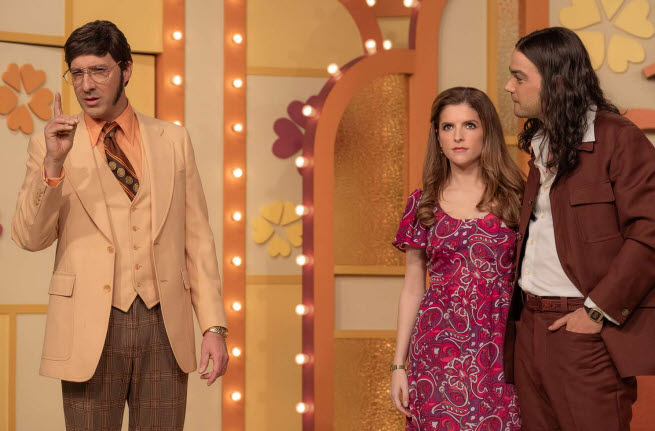
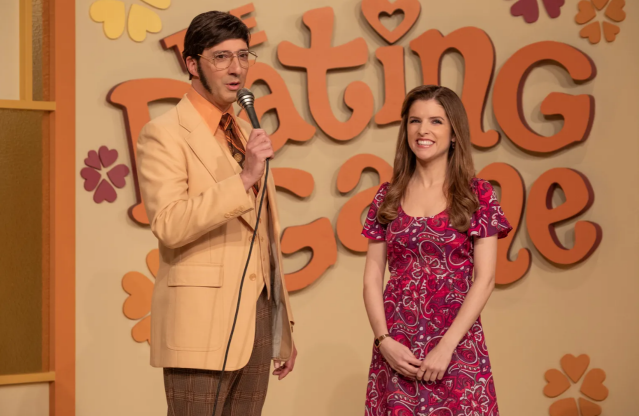
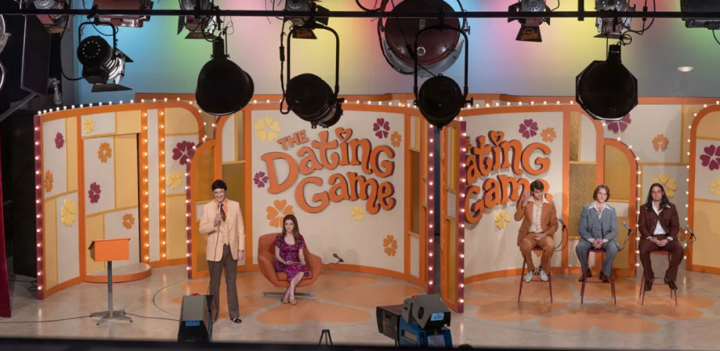
At least, her agent gets her a little job which may lead her to more auditions in the future. She is going to appear as a contestant in the latest episode a popular local TV game show called “The Dating Game”, and all Bradshaw will have to do on that show is just simply following whatever she is instructed to do in front of the camera and the audiences. When she subsequently comes to the set, everyone on the set including the host is already ready to do the show, and she is told that everything will be okay as long as she goes along well with others on the set.

Of course, as a young pretty woman who is simply regarded on the set as an object to be won by three hidden male participants, Bradshaw soon faces another moment of misogyny. For example, she is instructed to ask banal questions which demean her in one way or another, and the host, who is your average egoistic male prick, frequently ridicules and insults her just for drawing more laughs from his audiences. In case of the hidden male participants, the first two guys are pretty pathetic in each own way, while the third dude seems a bit better than these two other guys.

However, this third dude is Alcala, so the mood naturally becomes suspenseful for us step by step. On the surface, everything looks bright and cheery around Bradshaw, but the score by Dan Romer and Mike Tuccillo subtly dials the level of uneasiness around the screen, and we come to fear more for Bradshaw as it is more apparent to us that Alcala considers her as another victim to lure and then kill.

Meanwhile, the movie occasionally flashes back or forward for showing more of Alcala’s atrocious crimes – and how he often managed to avoid police investigation mainly due to sexism. While he seems fairly likable in his plain appearance, women always sense some creepy vibe around him, and he even gladly shows the photographs of his victims to his co-workers. Many of his colleagues, who are incidentally male, are not so serious about that at all, and neither does a detective who comes to his workplace for interviewing him a bit. As a matter of fact, Alcala happens to be recognized by one woman in the audience at one point, but, not so surprisingly, nobody listens to her words at all – not even her boyfriend.

The screenplay by Ian McDonald, who participated in the production along with Kendrick as a co-executive producer, gets a bit more tense as Alcala approaches closer to Bradshaw later in the story. While getting to know him a bit more, Bradshaw becomes more unnerved, but she cannot easily say no to him, even when she comes to sense more that something is not so right about him.

Never hurrying the story and characters at all, the movie skillfully accumulates tension below the surface under Kendrick’s competent direction. While the movie is influenced by “Zodiac” to some degree, it is clear that she did her homework well before making the film, and her result distinguishes itself as bringing substantial female perspective to the story materials besides wisely avoiding gratuitous sensationalism.

While Kendrick holds the center well with another strong performance to watch, she also draws fine performances from her several main cast members. While Daniel Zovatto is subtly creepy as required, Nicolette Robinson and Autumn Best are well-cast in their respective supporting parts, and the special mention goes to Tony Hale, who ably embodies the smug sexism of his smarmy host character.

On the whole, “The Woman of the Hour” is one of more satisfying movies from Netflix during this year, and Kendrick did a commendable job of showing another side of her considerable talent here in this film. It is surely a solid beginning for her directing career, and I think I can have some expectation on whatever she will make next.

Posted in Movies | Tagged , , , , , | 1 Comment

The Last of the Sea Woman (2024) ☆☆☆(3/4): The Women and the Sea

Documentary film “The Last of the Sea Woman”, which is currently available on Apple TV+, is about a group of South Korean women who have worked as “haenyeo”, which means “Sea Woman” in Korean. For earning their living via collecting seafood, they frequently dive deep into the ocean without oxygen tank, and they are actually recognized as an important part of the local culture even though their communities have been sadly declining during last several decades.

At first, the documentary introduces us to a bunch of old ladies still working as haenyeo in Jeju Island. Despite their aging status, they all are ready to do their demanding job nonetheless, and the documentary closely shows how these women work in the ocean. Sure, as an expert points out later in the documentary, every dive is pretty risky and difficult for them to say the least, but they do more than 100 dives during several hours everyday, and we see how they collect seafood as much as possible within the few minutes of each dive.  

Many of these ladies have worked as haenyeo for many years since they were very young. While some of them chose this vocation mainly because of economic reasons, others just like being in the ocean, but they are all proud of how they have been the living parts of their local culture. Although their vocation was often disregarded by many others in the past, it was recently recognized by UNESCO (United Nations Educational, Scientific and Cultural Organization), and they are now regarded as respectable elders in their island.

However, the communities of haenyeo in Jeju Island have been considerably decreased due to several causes. As the island goes through more social modernization during last several decades, less young people are willing to do work as haenyeo, and there are only a few thousands of haenyeos in the island at present. While There is actually a little training academy for haenyeo in the island where several old haenyeo willingly impart their skills and experiences to their students, the number of haenyeo in the island still continues to decrease, and they have accepted that they will probably be the last generation of their old profession. No matter how they try to keep going, they become more vulnerable mainly because of aging, and one of them gets a little depressed when she has to stop working in the ocean due to a serious physical injury.

Nevertheless, there is still some hope and possibility for the tradition of haenyeo. Around its middle part, the documentary shifts its focus to Geoje Island, which is located around the southern end of the Korean Peninsula. Although haenyeo has been mainly represented by Jeju Island, many of seaside towns and islands in South Korea actually had a fair number of haenyeos in the past, and we observe how two young haenyeos work together in Geoje Island while often promoting themselves via their YouTube channel.   

One of these young haenyeos gladly talk about how she came to choose her vocation by accident. When her husband’s little private business was shut down, she moved to Geoje Island along with her family, and, what do you know, she became quite passionate about becoming a haenyeo even though she did not have any previous experience before. It was surely quite hard and difficult for her at first, but she soon became an expert, and she is proud of her job as much as those old hanyeos in Jeju Island.

Instead of delving more into this part, the documentary moves back to Jeju Island for showing more about what has recently been threatening not only the haenyeo communities but also the ocean environment surrounding the island. As the island suffers a number of environment problems including the ongoing global climate disruption, the business has been going down for many of haenyeos in the island, and they certainly become quite worried when the Japanese government decides to release a huge amount of radioactive water from the Fukushima nuclear accident into the ocean. When they later have a group meeting with several activists and experts, they show more concern and anger, and it eventually becomes evident to everyone that they should stick and protest together for protecting their sea.

The documentary subsequently shows the haenyeos doing a group demonstration against the South Korean government, which unwisely lets the Japanese government dump the radioactive water into the ocean without much caution. One of them later goes to Geneva, Switzerland for making a speech in English in front of many representatives from a number of various countries around the world, and that is one of the most poignant moments in the documentary. Although they sadly failed to stop the Japanese government in the end, they did as much as possible at least, and that was a small consolation for them.

I must point out that “The Last of the Sea Woman” does not show anything particularly new to me and South Koreans, mainly because we have been quite familiar to its main subject due to a number of recent local documentaries including “Breathing Underwater” (2016). Nevertheless, it is still a fairly engaging and informative documentary on the whole, and director/co-producer Sue Kim, who incidentally produced the documentary with Malala Yousafzai, presents her human subjects with enough care and respect. I wish it showed and told more, but the overall result is mostly solid at least, and I gladly recommend it if you never heard about haenyeo.

Posted in Movies | Tagged , , , | Leave a comment

The Shadow Strays (2024) ☆☆1/2(2.5/4): Extremely violent and incredibly excessive

Indonesian action thriller film “The Shadow Strays”, which was released on Netflix on last Thursday, is extremely violent and incredibly excessive. While it continues the trend of those bloody and violent Indonesian action flicks mainly represented by “The Raid: Redemption” (2011) and its 2014 sequel, the movie also often feels blatantly overlong with its relentlessly overpowering presentation of big physical actions, and that made me more aware of its glaring deficiency in terms of story and characters.

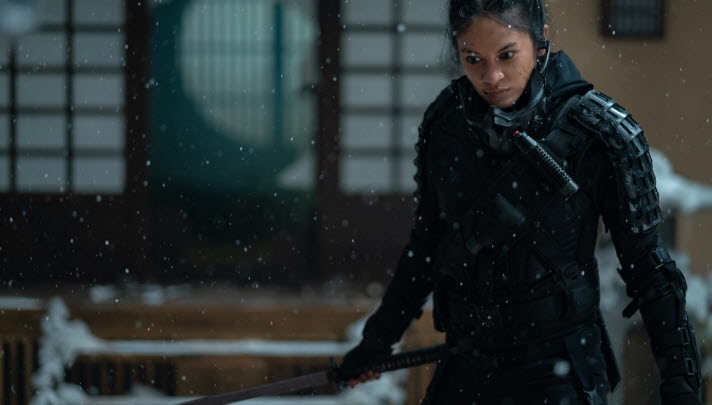
The opening sequence of the film is clearly influenced a lot by “Kill Bill: Volume 1” (2003) and “John Wick” (2014) and its sequels. During one very snowy night, the headquarters of some big Japanese criminal organization is ambushed, and we see a bunch of gang members being brutally eliminated by two ruthless assassins sent from some mysterious assassin group called “Shadow”. Needless to say, this barbaric massacre eventually culminates to the final fight on a snowy ground, and we soon get a dramatic shot showing the snowy ground strewn with blood.

These two assassins are a young woman, who is simply called 13 (Aurora Ribero), and her longtime mentor Umbra (Hanna Malasan). Although their mission was accomplished on the whole, Umbra later chides 13 for making a serious mistake in the middle of the mission, and 13 is subsequently sent to a slum neighborhood of Jakarta, Indonesia for staying quiet during her following suspension period.

All she will have to do is living anonymously for some time in a shabby apartment building, but 13 soon comes to notice the ongoing problem of one of her nearby neighbors. There is a female prostitute living with her 11-year-old son, and it is apparent that she gets herself involved with a bunch of very dangerous criminal figures. Not long after 13 witnesses something serious happening between the prostitute and those criminals, the prostitute dies under a rather questionable circumstance, and then 13 approaches to the prostitute’s son because, well, she comes to feel sorry for the boy as her mind is haunted again by some old memory from her childhood.

It looks like 13 can be a sort of protective big sister to the boy, but, unfortunately, things soon become quite complicated when the boy decides to confront those criminals clearly responsible for his mother’s death. Shortly after he is disappeared, some small-time criminal comes into the boy and his mother’s residence for looking for something important, and, of course, 13 becomes quite determined to take care of this matter for herself.

As our heroine embarks on going after whoever is holding the boy, we get to know a bit more about those criminal figures associated with the boy’s mother. There is a loony but vicious pimp who has controlled over many other prostitutes just like the boy’s mother, and he and a certain local cop are closely associated with a powerful local crime lord, who turns out to be the son of a certain influential political figure in the city.

Even after learning more about how powerful her opponents are, 13 is not daunted at all as willingly throwing herself into the criminal world inside the city, and we are accordingly served with a series of well-made physical action scenes which are striking for not only their remorselessly extreme violence but also their slick style. Director/writer/co-producer Timo Tjahjanto, who previously made “The Big 4” (2020), is apparently eager to demonstrate more of himself as a filmmaker with a particular set of skills, and you will not be disappointed at all if you are a fan of “The Raid: Redemption” (I am not, by the way).

However, as shown from the unevenly distracting mix of comedy, action, and melodrama in “The Big 4”, Tjahjanto is not a very good writer, and his screenplay struggles to provide a narrative engaging enough to hold our attention. While its heroine is a merely effective killing machine without much personality to observe, many of the supporting characters in the story are too broad to generate any interest, though I must confess that it is sometimes amusing to watch how several main cast members playing the villains of the story often try to chew their scenes as much as Al Pacino did in “Scarface” (1983). The movie later tries to humanize its heroine a bit via the subplot between her and mentor, but this part is mostly redundant while only functioning as an excuse for more action (and running time) later in the story.

Anyway, the movie sets the ground for a possible sequel around the end credits with the surprise appearance of a certain recognizable Indonesian actor from “The Raid: Redemption”, and Aurora Ribero shows here that she deserves a sequel where she can show more of her potential as a new action movie star to watch. She and Hanna Malasan are convincing during several demanding physical action scenes of theirs, and it is a shame that the movie does not bring more human substance to their characters’ supposedly complicated relationship.

Despite its several competent action scenes to be appreciated, “The Shadow Strays” does not engage me enough for recommendation mainly due to its narrative deficiencies. I know well that good action movies do not always require good story and characters, but the movie goes a bit too far in my humble opinion, and I hope that its flaws will be rectified in its possible sequel.

Posted in Movies | Tagged , , , | Leave a comment