Crash (1996) ☆☆☆(3/4): The morbidly metallic exploration of a sexual fetish 

David Cronenberg’s 1996 film “Crash”, which happens to be re-released in South Korea this week, is still capable of challenging us even after almost 30 years since it came out. As a cold and dispassionate exploration of one deliberately weird sexual fetish, it will constantly make you disturbed and uncomfortable, but you may come to admire it for how it boldly handles its tricky main subject with style, intelligence, and commitment. 

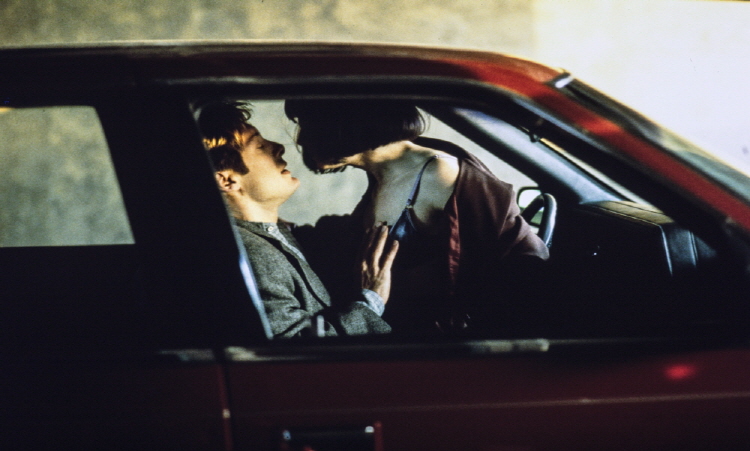
The story, which is based on the cult novel of the same name written by J. G. Ballard, is pretty much like what may come from an AI screenplay writing software after it studies a lot of those kinky erotic drama films such as Bernardo Bertolucci’s infamous movie “Last Tango in Paris” (1972) and then all those Fast & Furious flicks. While there are lots of physical sex scenes throughout the film, there are also a number of fascinatingly morbid scenes where cars are used for sexual arousal in one way or another. This truly bizarre juxtaposition between metal and flesh will certainly amuse you if you are a fan of Cronenberg’s films, many of which are about the horribly compelling exploration of body and mind.

After the opening scene which will instantly challenge you for a good reason, we are introduced to James Ballard (James Spader) and his wife Catherine (Deborah Kara Under), an odd married couple looking for anything to spice up their sexual relationship. At present, they respectively try on extramarital sex for getting more sexual pleasure between them, but it is apparent that they are already getting bored with that. 
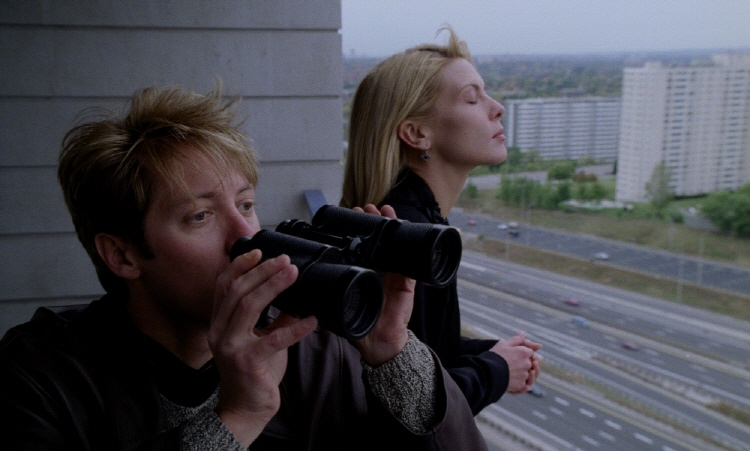
And then something happens at one late night. While returning to his residence by his car, Ballard happens to have an accident due to his serious mistake, and his car crashes right into the car belonging to Dr. Helen Remington (Holly Hunter) and her husband, who instantly gets killed on the spot. As Ballard and Dr. Remington are watching each other across the distance between them, something seems to be aroused between them, and that is accentuated further by Howard Shore’s metallic score.

Quite seriously injured as a consequence just like Dr. Remington, Ballard has to spend a lot of time at a hospital, and that is when he encounters a guy named Robert Vaughan (Elias Koteas) for the first time. At first, this rather weird dude just seems to be fascinated with all those scars and injuries on both Dr. Remington and Ballard, but it later turns out that he has been obsessed with a very weird sexual fetish: car crash. 

Now many of you may roll your eyes for this apparently strange (and very unlikely) sexual fetish, but the movie phlegmatically tackles this undeniably strange subject with clinical interest, and we are alternatively horrified and fascinated with how the main characters virtually or literally drive themselves further for more pleasure and thrill. Once he gets himself associated more with Vaughn via Dr. Remington, Ballard soon finds himself drawn more and more to that strange fetish shared along them, and his wife is certainly eager to join them as a person always welcoming anything kinkier.

Needless to say, their sexual obsession with car crashes including those famous cases including James Dean and Jane Mansfield becomes more perilous along the story, but, not so surprisingly, this does not stop them at all. Quite heedless about the undeniable danger of car crash as before, they keep exploring how they can possibly get more kick from their shared sexual fetish. You may understand them to some degree, if you have ever toyed with your own sexual fetish in private just for, well, getting more.
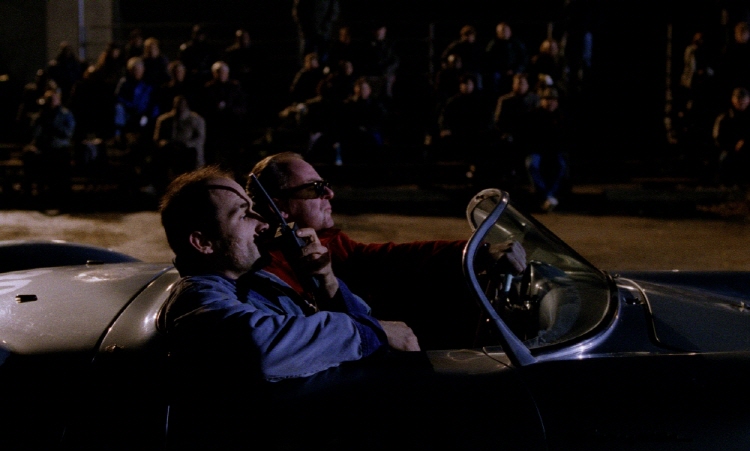
Everything in the movie depends a lot on Cronenberg’s coldly analytical approach to his inherently controversial story materials – and how the main cast members of the film willingly throw themselves into this daring artistic attempt of his. While James Spader, who is usually good at being odd and morbid as shown from Steven Soderbergh’s “Sex, Lies, and Videotape” (1989), brings some offbeat quality to Ballard’s detached fascination with his newly discovered sexual fetish, the other main cast members including Holly Hunter, Elias Koteas, Deborah Kara Unger, and Rosanna Arquette are also equally fearless, and Unger and Koteas are particularly terrific as their respective characters show more of their fluid sexuality later in the story.  

 Besides being one of the most notable works in Cronenberg’s filmography, “Crash” adamantly remains as one of those challenging cult films you will admire regardless of whether you like it or not in the end. To be frank with you, I still hesitate to embrace it more than before, but I observed its many boldly sexual moments with a lot of fascination from the beginning to the end, and I was sort of glad that the movie is not aged at all in its disturbing but undeniably interesting qualities.

As appreciating more of the distinctive qualities of “Crash”, which should not be confused with that Oscar-winning film at any chance, I now reflect more on how steadily Cronenberg have continued in his distinguished filmmaking career. Even though you may not like all of his films, he has been quite consistent as developing and expanding his own territory for more than 40 years, and, as recently shown from Coralie Fargeat’s “The Substance” (2024), his films have considerably influenced many other filmmakers out there during last two decades. He is indeed one of the most important movie directors of our time, and I sincerely hope that he will keep fascinating us as before.

Posted in Movies | Tagged , , | Leave a comment

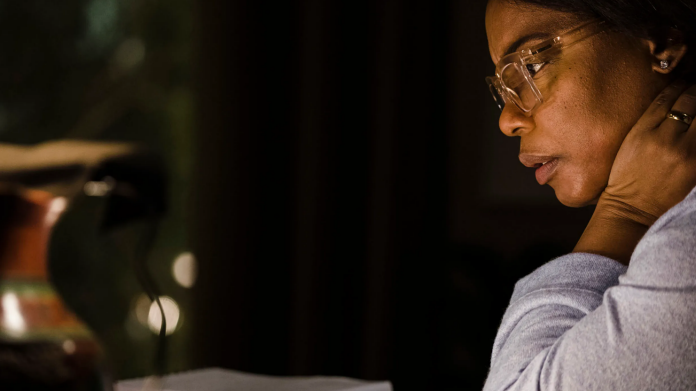
Origin (2023) ☆☆☆1/2(3.5/4): A Writer’s Journey

Movies about writers and ideas are not usually something really engaging or compelling to watch, but Ava DuVernay’s latest film “Origin” is one of those rare exceptions. In addition to being a touching human drama to observe, the movie also works as the fascinating sociological presentation on caste and its toxic effect on the humanity, and its humanist ideas are certainly all the more relevant considering how our global world has been thrown into the dark bottom of apathy and cruelty these days.

The movie, which is based on Isabel Wilkerson’s acclaimed book “Caste: The Origins of Our Discontent”, follows how Wilkerson (Aunjanue Ellis-Taylor) came to write the book around the late 2010s. When the killing of Trayvon Martin happens in 2012, Wilkerson is approached by an old colleague of hers, who suggests that, as a prominent African American writer, she should write about the complex racial issues surrounding that tragic incident. Although she is not so willing to do that mainly because she wants to have some rest after writing her first book which incidentally won a Pulitzer Prize, Wilkerson cannot help but become quite disturbed when she later listens to a piece of recording associated with the incident.

Meanwhile, Wilkerson tries her best in taking care of her aging mother along with her white husband, but then there come a couple of devastating personal incidents which turn her life upside down. Despite still struggling with her immense loss and grief, Wilkerson embarks on her next book project, which is going to find and explore a common theme among Nazi Germany, the American Slavery, and the Indian caste system.

Now it will probably sound rather boring to some of you, but the movie gives us a series of interesting human moments as Wilkerson delves more into the main subjects of her book project. In Germany, she does some extensive research on how Nazi Germany systemically oppressed many Jewish people in the country during the 1930s, and there is a rather amusing moment when a German friend of hers insists that the Holocaust is quite different from the American Slavery even though both of them are basically driven by racism.

Meanwhile, Wilkerson comes upon a revealing moment when she reads a piece of record which inarguably proves a surprising connection between Nazi Germany and the American Slavery. According to that record, those racist policies of the Nazi Germany were actually inspired a lot by how the American society discriminated and oppressed its African American citizens in one way or another, and that makes Wilkerson more convinced that her research process is going on the right way.

For making Wilkerson’s intellectual journey of discovery more palpable to us, the movie sometimes directly shows us several real-life stories she encounters during her research. In case of a real-life African American couple, they came to Nazi Germany around the early 1930s simply for doing some academic research, but they came to witness more of the racism and fascism growing inside the country day by day. When they subsequently returned to America and then did a rather risky academic research on the Southern American society along with a white Academic couple, they faced a racial caste system not so far from what they saw from Nazi Germany, and they and their white partners eventually wrote an influential book based on their joint research.

While the American slavery still exerts its virulent influence over the American society via its lasting caste system, the movie observes along with Wilkerson that caste system and its resulting discrimination and oppression have actually been pretty common around the world. When Wilkerson later visits India for meeting a prominent Indian intellectual, she get to know more about how those people at the bottom of the last caste system in the country have frequently been discriminated and disregarded throughout their whole life, and there is some bitter irony in how one of the founding fathers of India was actually a member of the lowest group in the Indian caste system.

Steadily making a number of strong points on racism and caste, the movie also focuses on a number of intimate human moments observed between Wilkerson and several others around her. We get to know a bit more about the strong marital bond between Wilkerson and her husband, and we are touched as observing how Wilkerson gets some emotional support from a close cousin of hers who has been like a sister to her. When some other cousin of hers reminisces about her first experience of racism later in the story, Wilkerson listens to her cousin’s painful story with empathy and compassion, and that is one of the most poignant moments in the story.

As the human center of the story, Aunjanue Ellis-Taylor, who has been more prominent thanks to her recent Oscar-nominated supporting turn in “King Richard” (2021), gives another stellar performance to remember, and she is constantly engaging as her character becomes more passionate about her book project along the story. She is also surrounded by a bunch of good performers including Jon Bernthal, Niecy Nash, Emily Yancy, Finn Wittrock, Vera Farmiga, Audra McDonald, Connie Nielsen, Blair Underwood, and Nick Offerman, and each of them have each own moment to shine around her.

Overall, “Origin” is another excellent work from DuVernay, who steadily advanced since her first feature film “I Will Follow” (2010). Besides being quite enlightening in many aspects, the movie also comes to us as a powerful drama just like DuVernay’s previous film “Selma” (2014), and it will certainly leave you something to muse on after it is over. In short, this is one of the most thoughtful and intelligent films I have ever watched during last several years, and I think you should check it out as soon as possible.

Posted in Movies | Tagged , , , , , | Leave a comment

Presence (2024) ☆☆☆(3/4): A presence in the house

Steven Soderbergh has tried many different things during last several years. Although he announced his decision to retire around the time when he gave us “Side Effects” (2013) and “Behind the Candelabra” (2013), he came back in business with little comedy film “Logan Lucky” (2017), and he has been quite productive since that point as deftly handling a number of various genres ranging from sports drama (“High Flying Bird” (2019)) to psychological thriller (“Kimi” (2022)).

In case of “Presence” (2024), which came out in US not long before his next film “Black Bag” (2025), Soderbergh attempts to tackle a certain horror subgenre, and the result is another interesting genre exercise from him. While the story and characters are quite typical to the core, the movie firmly sticks itself to the omnipresent viewpoint of something hovering around the main characters from the beginning to the end, and we are alternatively fascinated and disturbed to the end of the story.

At the beginning, we get the ambiguously ominous opening scene unfolded via the viewpoint of that unknown entity moving around here and there inside one suburban house. Not long after that, we see a local realtor coming inside the house for checking out its current condition, and then we observe a family looking around the house along with the realtor. Once Rebekah (Lucy Liu) and her husband Chris (Chris Sullivan) decide to live in the house, the house is subsequently remodeled a bit by a bunch of workers, and then Chris and Rebekah and their two adolescent children, Tyler (Eddy Maday) and Chloe (Callina Liang), soon move into their new home.

During their first days, everything seems mostly okay on the surface, but we begin to notice some serious issues inside the family. Rebekah and Chris have been estranged from each other as Rebekah has been trying to cover up whatever she has illegally done at her workplace, and this surely makes Chris quite conflicted about what he should do as a spouse and father. At one point, he tries to get some legal advice from a lawyer friend of his without telling everything, and we can only guess how serious Rebekah’s crime really is.  

Meanwhile, their kids are occupied with each own issues. As a prominent school athlete, Tyler cares more about being popular in their high school, and he does not care a lot about Chloe’s ongoing mental struggle associated with the recent death of her best friend. Her best friend and some other girl died due to some drug overdose, and Chloe is still trying to process her devastating personal loss, but her mother, who usually pays much more attention to her son, mostly disregards that as often saying that time will take care of her daughter’s issue in the end. 

Probably because of her grieving status, Chloe begins to sense the presence of that unknown entity in the house, and the screenplay by David Koepp, who also wrote the screenplay for “Black Bag”, gradually dials up the level of creepiness along the story. We see this unknown entity moving several objects inside Chloe’s bedroom, and then we see Chole being quite perplexed by the resulting difference. When she later gets closer to a friend of Tyler, this seems to anger this unknown entity a lot for some reason, and that is when Chloe becomes more aware of it. 

Steadily maintaining the ambiguity surrounding this unknown entity, the movie expectedly arrives at the point where even Chloe’s family cannot possibly ignore whatever is going inside their house. Fortunately, their realtor happens to have a sister quite sensitive to sort of spiritual energy, and this lady instantly senses something wrong inside the house right from when she and her husband enter the house.

Soderbergh, who also serves as the unofficial editor and cinematographer under pseudonyms as usual, tries an interesting visual approach for emphasizing the omnipresence of this unknown entity. Always functioning as the viewpoint of this unknown entity, his camera fluidly and continuously moves around the spaces occupied by the main characters in the film, and its wide angel lens often accentuates the uncanny situation surrounding them along with the occasionally dramatic score by Zack Ryan. The result is all the more impressive considering that the movie was actually shot in a real house over only 11 days, and Soderbergh also maintains the narrative pacing of the film well via his skillful editing.

Soderbergh’s main cast members do a bit more than filling their respective archetype roles. Callina Liang is definitely a standout as the most sympathetic character in the story, and she is also supported well by her fellow cast members. While Chris Sullivan has a poignant private moment when his character comes to have a honest conversation with Chloe later in the story, Lucy Liu and Eddy Maday are stuck in their rather thankless parts, but Liu manages to overcome this around the end of the film where her frigid character comes to show that she does have a heart to bleed just like her daughter.          

On the whole, “Presence” brings a bit of fresh air to its genre territory, and I was entertained enough by its mood, storytelling, and performance. Although it is a little dryer than many of recent similar horror flicks, it is certainly another fascinating genre piece from one of the best filmmakers in our time, and I am really interested in checking out how Soderbergh and his crew members made it. That is what any well-made movie usually does, isn’t it?

Posted in Movies | Tagged , , , | Leave a comment

All Dirt Roads Taste of Salt (2023) ☆☆☆(3/4): A stream of her memories

“All Dirt Roads Taste of Salt” requires you to take your time for reflecting more on its many individual moments to be savored and cherished. Yes, this is surely one of those “slow movies” demanding some patience from you, and you may struggle a bit at first as trying to understand what and how it is about. Nonetheless, you may eventually find yourself immersed in a seemingly random but ultimately absorbing stream of personal memories, and you will probably admire its little artistic achievement.

The backbone of the non-linear narrative flow in the film is the life of one plain African American woman living somewhere in a rural region of Mississippi. Her name is Mack (Charleen McClure), and the movie begins with a piece of her childhood memory associated with her parents. As her parents teach her a bit on how to catch and handle fish in the river of their neighborhood, the camera lingers on small details here and there on the screen, and we become more attuned to whatever is being observed and remembered by young Mack (Kaylee Nicole Johnson).

As the movie freely moves from one personal memory to another in a non-chronological way, we gradually gather the outline of Mack’s life story bit by bit. We see young Mack hanging around with one of those neighborhood boys, and then we later observe how they became more than friends when they were about to enter adulthood – and how what happened next between them led to a heartbreaking moment between them for a rather unspecified reason. We also see how close young Mack and her younger sister Josie (Jayah Henry) were to their mother, and we come to learn more of how much both of these young girls were devastated by their mother’s death.

Curiously, the movie does not give a lot of specific details on how these and many other things happened in Mack’s life. While the cause of her mother’s death remains quite elusive, we never get to know that much about why Mack eventually decided to break up with her boyfriend instead of marrying him, and we also do not get much information on how she came to get another chance for love later in her life.

I must confess that this was initially quite confusing for me during the first 30 minutes of the film, but I also came to admire the considerable confidence of director/writer Raven Jackson, who incidentally made a feature film debut here after making several short films. She simply lets us fill some gaps in the story for ourselves and then follow the free-flowing emotional narrative behind it, and she did a commendable job on that. Each individual moment is organically connected with each other via mood and details, and we are more engaged as sensing more of personal feelings beneath the screen.

According to the IMDB trivia, many of the key scenes in the film were inspired by not only the photograph albums of Jackson’s maternal grandmother but also a number of photography books including “The South in Color” by William Ferris, and what Jackson and her cinematographer Jomo Fray present on the screen is quite impressive to say the least. Shot on 35mm Kodak film, the movie is often imbued with the sense of old times being remembered, and Fray’s handheld camera brings a considerable amount of realism and verisimilitude as deftly capturing a series of small but undeniably poetic moments to remember.

What I particularly remember from the film is how it often captures the hands of the main characters throughout the narrative. I remember young Mack’s hand immersed in the muddy water of river. I remember young Mack and her sister’s hands being together with their paternal grandmother’s. And I also remember the hands of Mack and her boyfriend well in the middle of their bittersweet reunion, which tell a lot about their wistful feelings toward something which will never return to them. Later in the film, we see Older Mack (Zainab Jah) putting her hand in the river, and this act of hers speaks volumes even though the movie does not specify her quiet but palpable sense of loss at all.

Even at the end of the film, we do not get to know that much about Mac and several characters around them, but they look and feel vividly real as we go down further along the rather twisty memory lane of hers, and the main cast members of the movie ably embody their respective roles as required. While Charleen McClure, Kaylee Nicole Johnson, and Zainab Jah are flawlessly connected together in their performance, Jayah Henry and Moses Ingram are also effective as Mack’s sister, and several other cast members of the film including Reginald Helms Jr., Preston McDowell, Sheila Atim, and Chris Chalk are well-cast in their small but crucial supporting parts.

In conclusion, “All Dirt Roads Taste of Salt”, which incidentally refers to the common practice of eating clay dirt among poor African American people in the Southern US, is another interesting addition to African American cinema, and its unique poetic qualities will linger on your mind for a long time after it is over. As a foreign audience, I still do not think I totally process and understand what and how it is about, but I was intrigued and impressed enough during my viewing at least, and Jackson is certainly a new talented filmmaker to watch in my inconsequential opinion. I will have some expectation on whatever she will make next, and I am certain that she will go further than this modest but admirable debut.

Posted in Movies | Tagged | Leave a comment

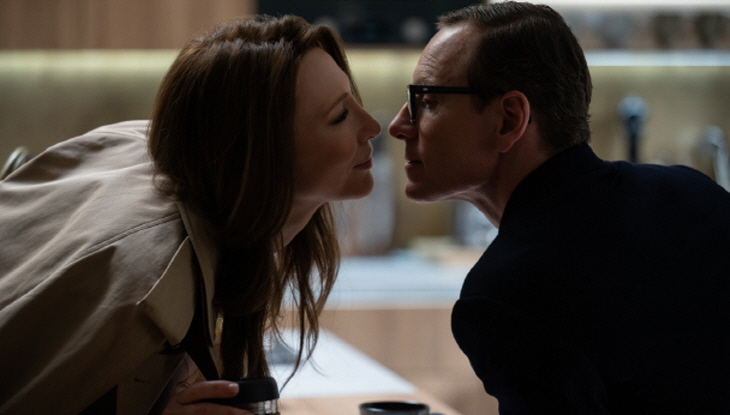
Black Bag (2025) ☆☆☆1/2(3.5/4): Between marriage and espionage

Steven Soderbergh’s new film “Black Bag” is a slick and efficient genre piece to be savored for many good reasons. Although it may feel a bit too murky for you as you try to discern its rather twisty plot, the movie effortlessly bounces from one narrative point to another without any misstep, and the result is another small gem to be added to Soderbergh’s long and illustrious career.

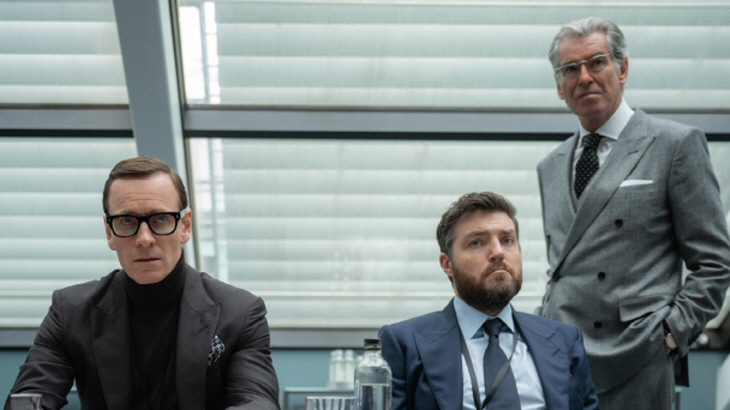
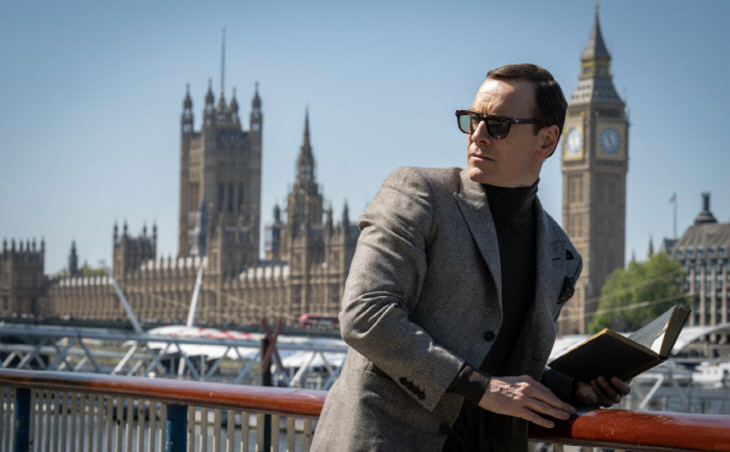
The story opens with its spy hero receiving an important tip from one of his colleagues. George Woodhouse (Michael Fassbender) is a British intelligence agent, and his agency has been in a big trouble because somebody in the agency stole and then leaked something quite dangerous from the agency. It seems that there are five suspects, and Woodhouse is not so amused when he comes to learn that his wife Kathryn (Cate Blanchett), who incidentally also works in the agency, is one of these suspects.

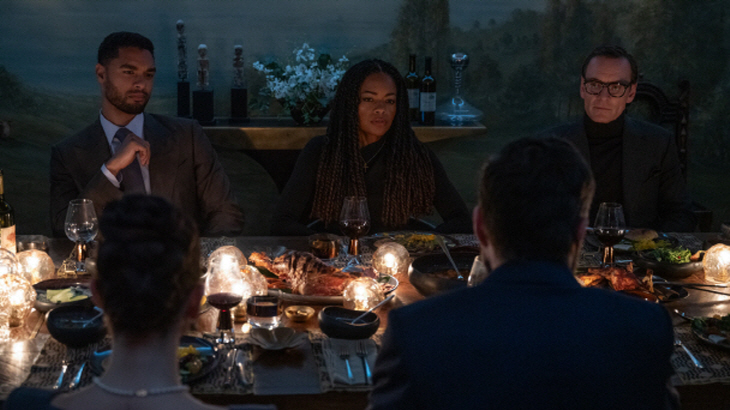
Anyway, along with his wife, George subsequently invites the other four suspects to a little private dinner to be held at his house. They are 1) Freddie Smalls (Tom Burke), a close friend/colleague of George who has some messy private issues behind his back; 2) Clarissa Dubose (Marisa Abela), a young junior agent who has recently had an affair with Freddie; 3) Colonel James Stokes (Regé-Jean Page), a dashing and ambitious dude recently promoted to a rather unspecified position which seems very important nonetheless; and 4) Dr. Zoe Vaughan (Naomie Harris), a psychiatrist monitoring the mental status of many agents inside the agency.

Not so surprisingly, these four people already know George’s hidden motive behind his dinner invitation, and both George and Kathryn also know this too well. As a consequence, the mood gradually becomes tense as everyone gathers at the dinner table, and then Michael makes his intention quite clear to the others around him.

However, in contrast to those four other suspects, Kathryn does not look particularly nervous about whatever her husband is planning to do, because she and George have steadily maintained their married life via being quite honest to each other about who they are despite also being often elusive about whatever they respectively do outside. They supposedly trust and love each other on the surface, but they also do not ask or tell each other too much even inside their little domestic environment. According to George, that is the main reason how he and his wife have so successfully balanced themselves between work and marriage for many years.

In the end, this increasingly uncomfortable dinnertime eventually culminates to a striking act to be committed by one of these six persons at the table, and the movie follows how George embarks on his little secret investigation after shaking up the tree via his rather disastrous dinner party. As he delves more into the case, every suspect on the list seems more untrustworthy, but then he finds himself focusing more on whatever his wife is doing behind her back. As usual, he does not ask too much, and neither does she, but she looks more like a prime suspect as he continues his investigation.

Playfully toying with this possible crisis in the professional/private relationship between Geroge and Kathryn, the screenplay by David Koepp, who previously collaborated with Soderbergh in “Kimi” (2022) and “Presence” (2024), deftly doles out a number of small and big plot turns along the story, and Soderbergh, who also served as the unofficial editor and cinematographer under pseudonyms again, ably rolls the story and characters via his own distinctive filmmaking touches. His cinematography feels dry but slick as providing enough atmosphere and suspense to the screen, and this solid visual result is further enhanced by not only his judicious editing but also the effective score by his usual collaborator David Holmes. 

Above all, Soderbergh draws enjoyable performances from his main cast members. As the center of the film, Michael Fassbender and Cate Blanchett always click well with each other as much as, say, William Powell and Myrna Loy in W.S. Dyke’s classic comedy mystery film “The Thin Man” (1934), and their effortless chemistry on the screen is the constant source of tension and humor throughout the film. Fassbender, who has been always good at playing cold and detached characters as recently shown from David Fincher’s recent Netflix film “The Killer” (2023), steadily and stoically carries the ground as required, and his unflappable appearance is complemented well by the frequently wily attitude of Blanchett, who surely has a ball with her character’s many elusive aspects.

Around Fassbender and Blanchett, several other main cast members hold each own place well as having each own moment to shine along the story. While Tom Burke, Naomie Harris, and Regé-Jean Page are dependable as usual in each own way, Marisa Abela also deserves some praise as another crucial supporting character in the story, and Pierce Brosnan has a brief but juicy fun as the suave head of the agency.              

In conclusion, “Black Bag” is one of the better works from Soderbergh, and I admire more of how consistently productive he has been during last several years since he announced his retirement and then changed his mind not long after that. Around the time of his retirement announcement, he did not seem to feel no particular need for achieving more, but then he has impressed us more and more since that, and I am sure that he will continue to do that for another decade at least. In short, this is one of more interesting films of this year, and you certainly should check it out if you have admired many of his good works as I have.

Posted in Movies | Tagged , , , | 1 Comment

Companion (2025) ☆☆☆(3/4): The Trouble with Iris

“Companion” is one of those solid thriller films which you can enjoy more if you do not know at all what it is about. Therefore, I will try to be very discreet about describing the story and character in this review, but I strongly recommend you not to read my review further if you want to be entertained by this little genre piece as much as possible.

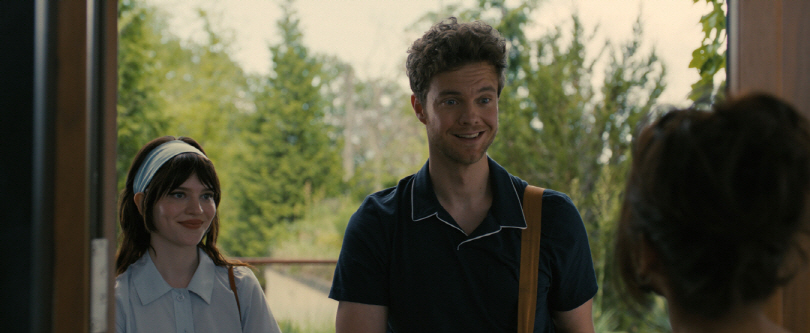
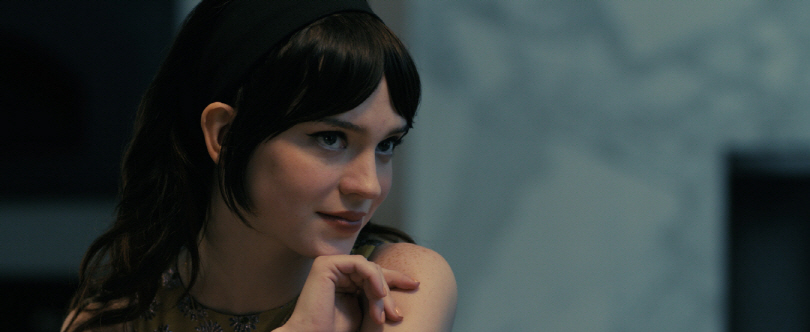
At first, the movie focuses on the seemingly good romantic relationship between a pretty young woman named Iris (Sophie Thatcher) and her boyfriend Josh (Jack Quaid). The opening scene shows her reminiscing about that almost perfect Meet Cute moment between them, but then we come to learn in advance that things will not go that well between them in the end.

Anyway, the very next scene showing Iris and Josh going to a certain remote place belonging to the rich Russian boyfriend of one of Josh’s friends. Although Iris does not feel comfortable about going there, Josh assures her that it will be a fun time for not only them but also a few others who will spend some time along with them, and Iris cannot possibly say no to Josh just because, well, she loves and cares about him as before.

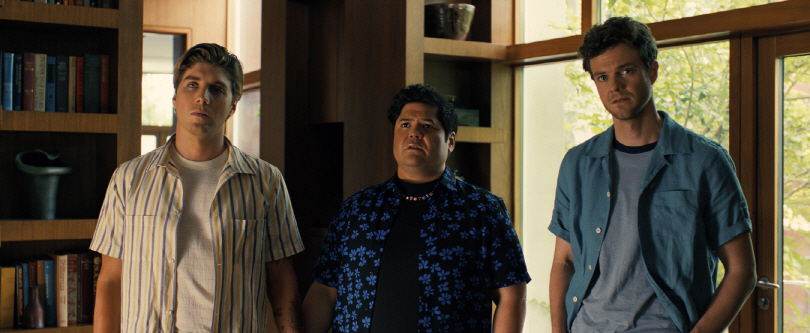
After they eventually arrive at a big modern house located in the middle of that place, we are introduced to the four people waiting for them. Eli (Harvey Guillén) and his boyfriend Patrick (Lukas Gage) seem to be a loving couple, and we later get a flashback scene showing how they fell in love with each other after encountering each other by sheer coincidence. In case of Kat (Megan Suri), she has been having an affair with her rich Russian boyfriend Sergey (Rupert Friend), and she does not seem to mind that he is a married guy who can go back to his wife at any time.

Anyway, the mood soon becomes quite pleasant as these six people in the house enjoy their little drinking party together during the following evening, but then we come to sense something awkward as observing more of how Iris interacts with others. For example, when she has a supposedly friendly conversation with Kat at one point, you may notice some tension beneath their conversation, and you will probably come to wonder more about why Kat does not like Iris much as Iris said early in the story.

On the next morning, Iris goes to a nearby lake alone by herself just because Josh happens to suffer a lot of hangover because of drinking too much at last night. Not long after her arrival at the lake, someone else suddenly appears, and Iris feels quite nervous, because this figure seems ready to do something inappropriate to her while no one else is around them.

Now, for avoiding any possible spoiler, I really should be all the more discreet about what is actually happening around Iris. All I can tell you instead is the screenplay by director/writer Drew Hancock, who incidentally makes a feature film debut here after directing several short films and TV episodes, did a good job of setting the ground for a number of surprises to come along the plot, and the main pleasure of the movie is how the trouble with Iris becomes more complicated in one way or another after she belatedly comes to learn about the true nature of her relationship with Josh. 

Around the middle point of the story, it will probably remind you of a lot of several other certain genre films for good reasons I do not dare to reveal here, and you may have a pretty good idea about how it arrives at its expected ending. Nevertheless, Hancock’s screenplay deftly handles the story and characters with enough suspense and some sense of black humor, and it even shows a bit of poignancy from Partick and Eli, who turn out to be a bit more than your average token gay couple.

The movie also works as the showcase for its lead actress’ talent and presence, and Sophie Thatcher, who was wonderful as ably holding her own place well along with Chloe East in front of Hung Grant’s devious performance in “Heretic” (2024), demonstrates well here that she is indeed a talented newcomer to watch. Besides illustrating her character well with some subtle details during the early part of the film, Thatcher is also believable as her character is going through several changes as required by the plot, and her engaging performance supports well the movie even when it loses some of its narrative momentum later in the story.

Several other cast members of the film dutifully support Thatcher without overshadowing her at all. Jack Quaid, who is Dennis Quaid’s son and has steadily advanced since his small supporting role in “Logan Lucky” (2017), is effective as his character shows petty and nasty sides to Iris along the story. Megan Suri, Lukas Gage, and Harvey Guillén are also well-cast in their respective supporting parts, and Rupert Friend gleefully brings some hammy touches to his rather unpleasant character.

In conclusion, “Companion” does not bring anything particularly new to its specific genre territory, but it is still fairly enjoyable for its competent direction and Thatcher’s strong lead performance. Even though I already knew what the movie is about, I came to care about her character more than expected, and that is what a good film can do in my humble opinion.

Posted in Movies | Tagged , | 1 Comment

The Ministry of Ungentlemanly Warfare (2024) ☆☆1/2(2.5/4): A middling WWII action flick

Guy Ritchie’s latest film “The Ministry of Ungentlemanly Warfare” is a middling copy of many similar World War II actions flicks ranging from “The Dirty Dozen” (1967) to “Inglourious Basterds” (2009). While it surely attempts to have some fun as borrowing a lot from its numerous seniors, the movie is often too flat and bland in terms of story and characters, and we can merely enjoy a few good moments not caring that much about the story and characters.

As emphasized at the beginning and end of the film, the movie is based on one of those interesting real-life stories during World War II. Yes, there were the members of the British Special Forces who accomplished a number of very dangerous missions, and their activities were certainly crucial in fighting against Nazi Germany.

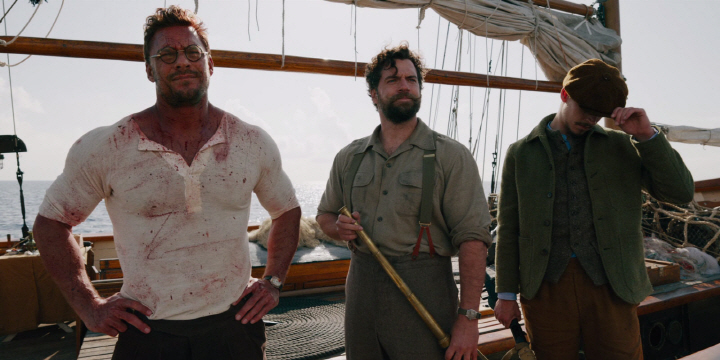
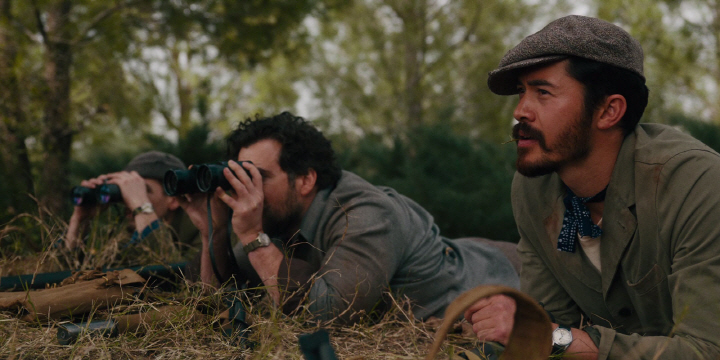
However, it is apparent from the beginning that the story, which is set in 1942, is not interested at all in giving us the realistic presentation of what those brave soldiers went through during that big war. During the opening scene, we are introduced to a British military officer named Gus March-Phillipps (Henry Cavill) and his several comrades, but they are more like archetypes instead of real human figures to observe, and this aspect becomes more evident as they swiftly eliminate a bunch of Nazi German soldiers and their ship within a few minutes.

After that, we get to know more about where they are heading at present. When US eventually joins the war after the Pearl Habor attack in late 1941, Winston Churchill (Rory Kinnear, who vaguely resembles his real-life counterpart) and his British government are certainly relieved a bit, but there is one big problem. US certainly is ready to send soldiers and many other things necessary for the war via ships to sail across the Atlantic, but the Nazi Germany Navy armed with many U-boats and ships is blocking their way at present, and Churchill really needs to find any possible way to deliver a damaging blow to the Nazi Germany Navy.

And then there soon comes a good chance for that. Most of those U-boats usually get their necessary supplies from a certain big cargo ship at a little island near Nigeria, which has incidentally been a neutral zone. All the British intelligence agency, headed by Brigadier Gubbins (Cary Elwes), needs to do is finding when that cargo ship will come while full of those necessary supplies for the U-boats and then handing that information to March-Phillipps and his colleagues, who are sailing to that island while avoiding both the Nazi Germany Navy and the British Navy as much as possible.

While March-Phillipps and his colleagues go through another violent adventure on their way, the movie also focuses on the two British secret agents operating in that island. Disguising himself as a fairly trustworthy broker/businessman, Richard Heron (Babs Olusanmokun, who looks a lot more dapper compared to his brief appearance around the end of Denis Villeneuve’s “Dune” (2021)) assists a female agent named Marjorie Stewart (Eiza González), and he arranges a meeting between her and Heinrich Luhr (Til Schweiger, whom you may remember for playing a crucial supporting role in “Ingourious Basterds”), a sadistic Nazi Germany officer supervising the safety of that cargo ship.

Thanks to their skillful handling of their risky operation, Heron and Stewart not only get the information about that cargo ship but also set the stage for March-Phillipps and his colleagues. Heron is deliberately going to distract those German soldiers and officers in the island via holding a couple of big parties, and March-Phillipps and his colleagues will blow up the cargo ship and then leave as soon as possible.

Of course, they face several setbacks when they are about to begin their perilous operation, but the movie does not generate much suspense as they casually and brutally eliminate any Nazi solider on their way to accomplishing their mission. Sure, Nazi soldiers are run-of-the-mill villains whose death we can usually cheer for without much guilt, but those numerous Nazi soldiers in the movie feel more and more like video game figures to be killed, and the rather laid-back attitude of March-Phillipps and his colleagues on their brutal and ruthless killings further emphasizes that.

Moreover, the screenplay by Ritchie and his co-writers Paul Tamasy, Eric Johnson, and Arash Amel, which is based on Damien Lewis’ nonfiction book “Churchill’s Secret Warriors: The Explosive True Story of the Special Forces Desperadoes of WWII”, fails to develop many of its main characters into interesting figures to amuse or engage us. March-Phillipps and his colleagues just remain as stock war movie characters from the beginning to end, and you may want to check out Lewis’ book for really getting to know who March-Phillipps and his colleagues were in real life (He was actually one of the main inspirations for the character of James Bond in the novels by Ian Fleming, who is incidentally played by Freddie Fox in the film)

Henry Cavill and several notable performers including Alan Ritchson, Alex Pettyfer, Henry Golding, and Cary Elwes try as much as they can do with their caricature roles, but they are often limited by superficial characterization. In case of Eiza González, she brings some genuine spirit to the movie during several key scenes of hers, and the movie could be more interesting if it just focused on her character’s espionage adventure.

Overall, “The Ministry of Ungentlemanly Warfare” does not distinguish itself much compared to its many seniors out there, and it is also underachieving even compared to Ritchie’s recent solid works such as “The Gentleman” (2019) or “Wrath of Man” (2021). To be frank with you, I am considering revisiting “Ingourious Basterds” right now, and I think you should watch it instead of this pale imitator.

Posted in Movies | Tagged , , , | Leave a comment

Snow White (2025) ☆☆(2/4): Not that fair, shall we say

“Snow White”, which is another re-packaged live action product from Walt Disney Pictures, does not have much reason for its existence in my trivial opinion. Probably because I have seen numerous movie adaptations of that famous fairy tale by the Brothers Grimm since I was very young, I saw nothing particularly new here during my viewing while observing how spiritless and insipid it mostly is, and that made me crave more for the greatness of animation film “Snow White and the Seven Dwarfs” (1937).

Considering the movie is simply titled “Snow White”, I should have known better before watching it. To be frank with you, the titular character is a fair but rather boring figure compared to all those other characters including that evil queen, and “Snow White” is no exception at all. While she is presented with some modern touches as required in addition to having some extra pluck, she is still not that interesting despite Rachel Zeagler’s sunny and gentle charisma, and we inevitably come to pay more attention to the rest of the movie.

Alas, I am sorry to report to you that the rest of the movie is not so engaging either. When Walt Disney produced “Snow White and the Seven Dwarfs”, he and a bunch of animators under his command were really trying to make something new and challenging, and their considerable care and spirit shown and felt from the screen is the main reason why it has been regarded as one of the greatest animation films from Walt Disney Pictures for many years. In contrast, “Snow White” simply follows the story and characters in a mechanical fashion without trying anything particularly new or fresh, and it only reminds us more of why live action film often cannot surpass animation film.

The glaring difference in quality between the movie and the 1937 animation film is evident especially when Snow White runs away from her little kingdom and then tumbles into the darkness of a big nearby forest. While the movie surely put a lot of CGI for illustrating the terror surrounding Snow White across the screen, most of you will miss how the 1937 animation film skillfully handles this disturbing moment with much more style and details in comparison. In case of a number of CGI animal characters which later appear to help Snow White, they certainly look as realistic as possible, but, folks, they are less cute and colorful compared to their animation counterparts which are drawn with more personality and spirit.

And there are those dwarf characters in the story, which are incidentally also presented as CGI characters here in this film. Yes, I still cannot remember all of their names, but I remember well how they look colorfully different from each other in the 1937 animation film, and that makes them quite lovable in one way or another. In contrast, those CGI dwarf characters in “Snow White” feel rather creepy even when they cheerfully sing together that famous classic song during their first scene in the film, and, yes, “uncanny valley” immediately came to my mind as my eyes and mind were struggling to adjust to their artificial aspects. Sure, uncanny valley could be overcome to some degree as shown from Gollum in the Lord of the Rings trilogy by Peter Jackson or Robert Zemeckis’ underrated animation film “The Polar Express” (2024), but it is only more exacerbated in case of “Snow White” – especially when its dwarf characters are around Snow White or some other supporting characters on the screen.

In case of the other main characters besides the dwarfs, most of them do not have much personality on the whole. The character played by Andrew Burnap is certainly a modern substitute for the Prince Charming figure in the original story, but he is still as boring as the similar figures in many other Disney animation films. Compared to the 1937 animation film, the movie looks more crowded with lots of secondary characters, but they are more or less than background details, and that is why the final confrontation scene between Snow White and the evil queen later in the story does not have much gravitas to hold our attention.

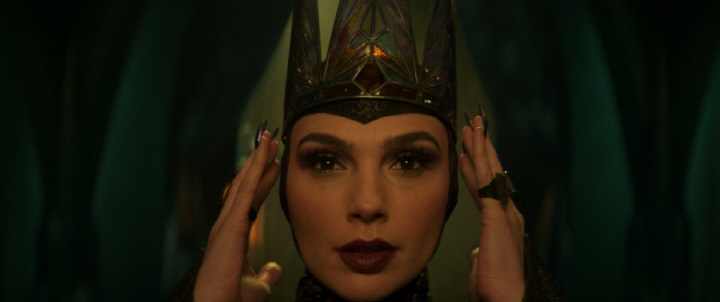
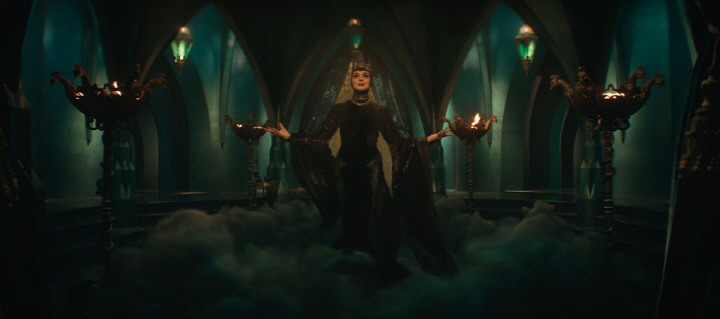
Speaking of the evil queen, she is indeed the showiest character in the story as always, and Gal Gadot willingly chews every devious moment of hers in the film as distancing herself from her most famous movie character as much as possible. Although her efforts are still one or two steps below Charlize Theron in “Snow White and the Huntsman” (2012) and Julia Roberts in “Mirror Mirror”, Gadot is clearly having some hammy fun with her thoroughly evil character besides demonstrating a bit of her singing ability, and my complaint is that the movie presents her character’s eventual exit a little too easily.

Compared to Gadot’s showy villain performance, Zegler is relatively less distinctive at times, but her earnest performance provides a bit of precious warmth and spirit into the movie. As already shown from Steven Spielberg’s “West Side Story” (2021), she is a very good singer, and she ably handles not only the old songs from the 1937 animation films but also several passable new songs provided by Benj Pasek and Justin Paul.

In conclusion, “Snow White”, which is directed by Marc Webb, sadly forgets what really makes the 1937 animation film so special, and I am sure that it will be quickly forgotten just like many other recent Disney live action adaptation products during last several years. Right now, I begin to have an urge to revisit “Snow White and the Seven Dwarfs”, and I think you should do that instead of watching its disappointing live action film version.

Posted in Movies | Tagged , , | Leave a comment

Megalopolis (2024) ☆1/2(1.5/4): Coppola’s disastrous folly

Francis Ford Coppola’s comeback work “Megalopolis” frustrated and baffled me a lot more than once. Here is a legendary filmmaker reaching for another chance for greatness, but the result only shows that he merely wasted a lot of the talents assembled by him as well as the production budget mostly provided by himself (It was more than 100 million dollars, as many of you already know). To be frank with you, this is not even an enjoyable or interesting folly at all compared to Tarsem’s “The Fall” (2006) or the Wachowskis and Tom Tykwer’s “Cloud Atlas” (2012).

The main problem of the movie is that Coppola does not seem to have any clear idea on whatever he wants to achieve here. Sure, lots of literature/philosophical stuffs pop here and there throughout its 138-minute running time, and he looks like trying to present a modern fantasy fable reflecting not only the despairing chaos of our time but also the defiant artistic individual spirit standing against that. However, the movie ends up being a total mess in terms of both idea and narrative, and I must confess that this is one of those very rare cases where I was really at a loss about how to follow and process whatever was going on.

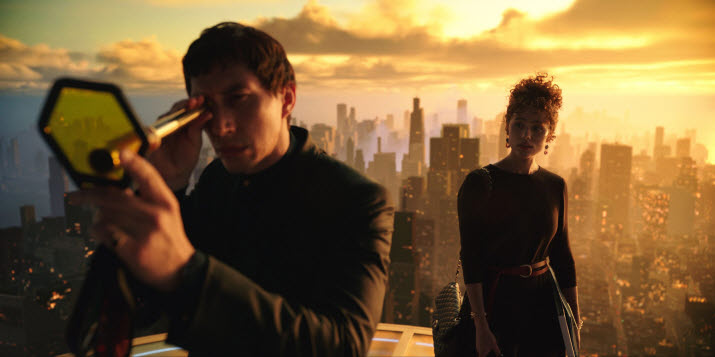
The story, which is set in the post-modern version of New York City which is called “New Rome”, is supposed to be about Cesar Catilina (Adam Driver), a very talented architect who is also an ambitious individualistic visionary a la Ayn Rand. Besides recently receiving the Nobel Prize for inventing some revolutionary metallic material (No, it is not called Unobtainium or Vibranium), he also has a certain special power, and we see him testing his power at the top of the Crysler building during the opening scene.

All Catilina wants to do seems to be unfolding his exceptional futuristic vision upon the city, but he has been involved in a rather complicated political turmoil along with some of the most powerful figures in the city. One of them is the arch-conservative mayor of the city, and Mayor Cicero (Giancarlo Esposito) was incidentally once the district attorney who brought Catilina to the court after Catilina’s wife died under a rather mysterious circumstance. Because he does not approve of Catilina disrupting the status quo of the city, Mayor Cicero is determined to stop Catilina as much as possible, but that is not so easy because Catilina has a wealthy and powerful uncle who is incidentally the head of a very important bank in the city.

Meanwhile, Mayor Cicero’s rebellious daughter Julia (Nathalie Emmanuel) becomes curious about Catilina, and, what do you know, she soon finds herself quite attracted to him even though he has been very promiscuous since his supposedly beloved wife’s death. Naturally, her father is not so amused by this, but she only gets more involved with Catilina while things seem crumbling around them and many others in the city.

Indeed, as Catilina’s driver and assistant Fundi Romaine (Laurence Fishburne) phlegmatically observes via his narration, things do fall apart in the city no matter how much Mayor Cicero tries to get the city and its citizens under control, and we are accordingly served with a lot of wild and chaotic moments including a big public event held for celebrating the recent marriage of Catilina’s rich uncle. During this sequence, the movie randomly mixes lots of Roman stuffs into the 21st century background as expected, and that looks a bit entertaining at first, but then it sadly loses its way in its unruly excessiveness along with its hero having a lot of hallucination in his drugged state.

The movie subsequently attempts to sort out its resulting mess after something eventually occurs as expected from the beginning, but it only comes to ramble and trudge a lot without really intriguing or engaging us at all. We never get to know that much about whatever Catilina is trying to do for the city – or how he is going to pull that off in the end. We never get the full picture of all those political intrigues swirling around Catilina, Mayor Cicero, and many others including Catilina’s opportunistic cousin. And we never get any clear understanding about who they are or what motivates them.

Adam Driver somehow does not embarrass himself throughout this daunting mess, and that is sort of an achievement in my humble opinion. There are several vapid moments of big speech he must deliver with uttermost seriousness, but he manages to survive them all thanks to his own distinctive presence, and I am sure that he will move on as usual after this colossal cinematic catastrophe.

In case of many other cast members, only a few of them are as lucky as Driver. While Giancarlo Esposito and Laurence Fishburne maintain some dignity, Nathalie Emmanuel, Aubrey Plaza, Talia Shire, and Kathryn Hunter are stuck in their respective thankless female roles, which show a lot about how Coppola is hopelessly out of touch in case of female characters. In case of Jon Voight, Shia LaBeouf, and Dustin Hoffman, they simply come and go without much purpose, and I wonder whether Coppola hired them just because they became quite cheaper to get due to their respective controversies during last several years.

Overall, “Megalopolis” is an almost total disaster, and, to make matters worse, Coppola and his distributor Lionsgate Films damaged its public image in one way or another even before it came out in US 6 months ago (You probably heard about the allegation about his serious misconduct on the set, by the way). The movie is an epic mistake, but, folks, Coppola gave us no less than four great films when he was at the height of his filmmaking career during the 1970s, and I think he can afford to make such a humongously self-indulgent mistake like this at least once.

Posted in Movies | Tagged , , | Leave a comment

All We Imagine as Light (2024) ☆☆☆1/2(3.5/4): Three women in Mumbai

“All We Imagine as Light”, which won the Grand Prix award at the Cannes Film Festival early in last year, is a haunting character drama about three different women in Mumbai. While phlegmatically illustrating their daily lives in the middle of the city, the movie dexterously balances itself between vivid realism and delicate poetry, and the result often exudes quiet emotional power along its reflective narrative.

After the opening scene where the movie looks here and there in Mumbai as a number of people casually talk about their life and hope outside the screen, we are introduced to its three main female characters: Prabha (Kani Kuscruti), Anu (Divya Prabha), and Parvathy (Chhaya Kadam). While they are different from each other in many aspects including their respective backgrounds, they all work in a big local hospital, and the early part of the movie observes how they respectively go through another usual working day of theirs.

Besides being close colleagues at their workplace, Prabha and Anu have lived together as roommates mainly because Prabha’s husband has been absent for years since he left for Germany for working there not long after their hasty marriage. There was a time when Prabha and her husband frequently corresponded with each other over the phone, but he has become more distant to her day by day after stopping calling her at some point, and she is reminded more of his absence when she later receives a big package probably sent from her husband.

Meanwhile, we come to sense something being developed between Prabha and one of those doctors working in her hospital. It is apparent from one brief moment between them that the doctor is interested in getting closer to her, and it seems that Prabha is also attracted to this decent dude, but she naturally hesitates as a woman who has always been expected by her social tradition to be a faithful wife despite her husband’s continuing absence. Observing how courteous they are to each other without revealing their respective feelings much to each other to the end, you may be reminded of the restrained but undeniably exquisite romance melodrama of David Lean’s great film “Brief Encounter” (1945) – and how it is usually more interesting to observe two people hesitating to follow their romantic feelings instead of going all the way for that.     

Prabha’s increasingly frustrating personal status is often contrasted with Anu’s burgeoning secret romance, which has incidentally been an open secret among many of her co-workers including Prabha. As a younger woman who is less weary compared to her roommate, Anu does not mind the social restrictions on her romantic relationship with a handsome young Muslim lad, and neither does he, though both of them should be discreet from time to time even when they meet each other outside. Alternatively amused and touched by a series of romantic interactions between these two young people, I could help but reflect more on how numerous social restrictions and taboos have pathetically failed to stop millions of secret lovers out there from passionately following their heart throughout the human history.

Meanwhile, we also get to know more about the ongoing problem of Parvathy, who has worked as a cook in the hospital for many years. She has lived alone by herself in an old building to be demolished sooner or later by some greedy builders eager to build a skyscraper at the spot, but, despite some help from Prabha, it soon turns out that there is not any possible way to stop those greedy builders from evicting her from her old residence.

As director/writer Payal Kapadia’s screenplay takes its time, these three female main characters’ personal stories slowly run in parallel while occasionally resonating with each other, and the streets, buildings, and many various people of Mumbai are also presented as another crucial element in the story. As we listen again to the words from a number of citizens later, the mood becomes more reflective on millions of individual lives in the city later in the movie, and that is quite moving to say the least.  

Not long after Parvathy eventually makes an important decision on her life, the movie surprises us a bit via changing its main background, and that is where its three female main characters come to reflect more on how their respective lives are going – and what they should do for themselves. I will not go into details here, but I can tell you instead that there are several sublime human moments including the one which will linger on your mind for a long time because of its somber but effortless incorporation of magic realism. Around the time when the movie arrives at its very last scene, we observe some important changes from its three main female characters, and Kani Kusruti, Divya Prabha, and Chhaya Kadam are convincing as before while ably carrying the film to the end. 

On the whole, “All We Imagine as Light”, which was sadly not chosen as the Indian submission to Best International Film Oscar (They instead chose “Laapataa Ladies” (2023), which is a fairly good female film but is not a better choice in my inconsequential opinion), is a terrific movie to be admired for its excellent mood, storytelling, and performance. Kapadia, who previously won the Golden Eye award for the best documentary film for her first feature documentary film “A Night of Knowing Nothing” at the 2021 Cannes Film Festival, demonstrates here that she is another new rising filmmaker to watch, and her remarkable first feature film may be just the beginning of whatever she will achieve during next several years. In short, this is indeed one of the best movies of last year, and you will not be disappointed especially if you are looking for something fresh and different.

Posted in Movies | Tagged , | Leave a comment