Hard Truths (2024) ☆☆☆1/2(3.5/4): This bitter woman

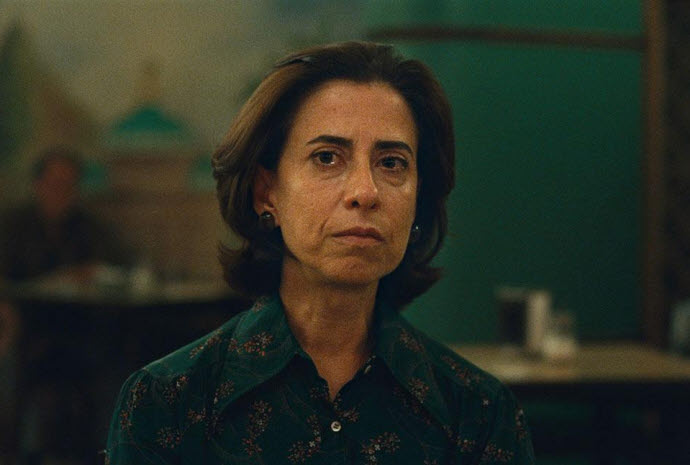
Mike Leigh’s latest film “Hard Truths” gives us one of the most abrasive characters in his filmography since “Naked” (1993). While this is definitely not a pleasant experience at all, Leigh presents this troubled human figure with a lot of care and compassion as he has done many of the memorably flawed but realistic human characters in his numerous acclaimed films for more than 50 years, and the movie is also anchored quite well by one of the best performances of last year.

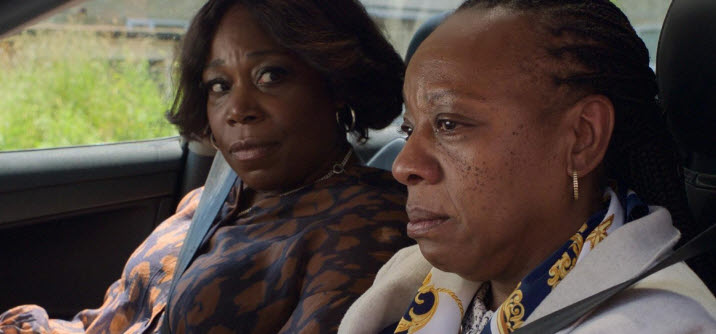
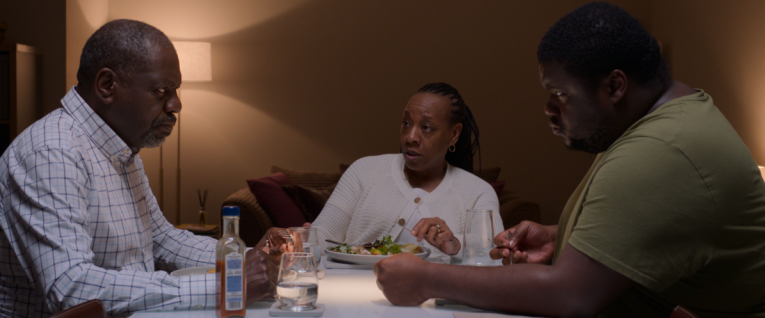
Marianne Jean-Baptiste, who incidentally collaborated with Leigh in “Secrets & Lies” (1996) nearly 30 years ago, plays Pansy Deacon, a middle-aged married black woman who is quite bitter and angry to say the least. Not long after she wakes up in the morning, Pansy verbally harasses her working-class husband as well as their introverted adult son, and we come to sense that both her husband and son have endured her irascible temper for years while being quite unhappy and miserable in each own silent way.

And we see how Pansy also often wields her bitter anger outside her house. As she frequently clashes with others over little petty issues, we are all the amazed and horrified by her hostile attitude full of vitriolic aggression, while also keeping wondering more about her. What is exactly wrong with this apparently problematic woman? Is she actually aware of how much she is making herself as well as others unhappy?
As wincing more for her rather pathological human behaviors, I was reminded of the equally problematic hero of “Naked”, who, embodied so well by one of the best performances from David Thewlis, also often cannot help but make not only himself but also others quite miserable in a decidedly self-destructive way. As he gradually turns out to be a far more complex human figure with considerable wit and intelligence, we come to have some understanding and compassion for him, but he remains to be a very, very, very, unpleasant person to the end, and we continue to cringe for his toxic behaviors as before.

Just like him, Pansy mostly sticks to her very unpleasant sides to the end, but the movie slowly delves into her pain and vulnerability, which brings some human complexity to this very unlikable heroine. Yes, she is indeed the most miserable human being in the story, but we come to gather that she has been helplessly stuck in her anger and torment for so many years that, like many of the pitifully inarticulate characters in Leigh’s films, she does not know how to reach out to others for help or support while keeping scratching and scorching others around her as usual.

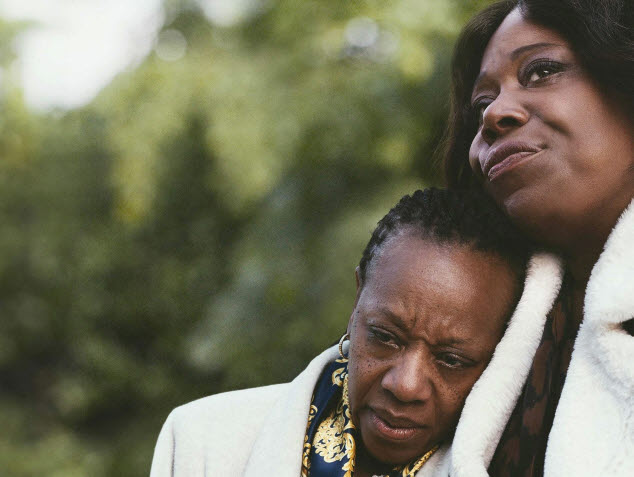
Meanwhile, we also get some achingly human moments as she lets herself softened a bit in front of her hairdresser sister Chantelle (Michele Austin), who is the yang to Pansy’s yin just like the two contrasting twin sister characters in Leigh’s “Life Is Sweet” (1990). Quite different from her sister in many aspects, Chantelle is happy and content with her ongoing life, and we also observe how casual and friendly she is to her two adult daughters, each of whom is leading a fairly good life of each own as shown from their respective brief moments in the middle of the film.

The happy mood among Chantelle and her two daughters makes a big contrast to how barren and cheerless Pansy’s domestic environment feels. Her suburban house looks as sterile and lonely as a rather empty apartment I have simply resided alone by myself during last several months, and we come to sense more of the emotional barrier between her and her son and husband. Instead of confronting their festering domestic issues, both her husband and son usually hide behind that for enduring another bout of her anger, while still being miserably stuck in each own lethargic psychological status.
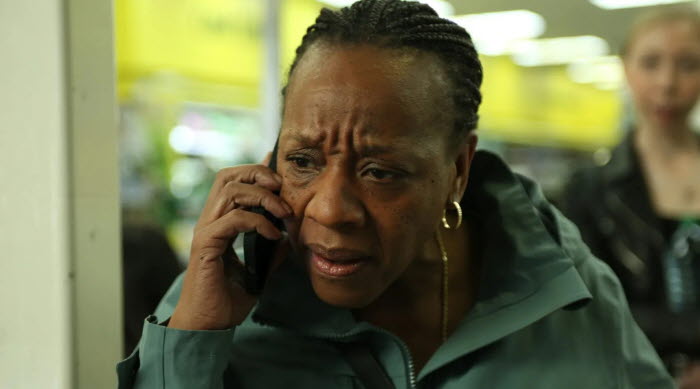
Even as Pansy comes to show more of her worst sides, the movie continues to show more compassion toward Pansy just like Chantelle, who still accepts and tolerates Pansy as a person who knows and understands her sister better than anyone else. During one particular private scene between her and Pansy, we come to learn a bit more about how unhappy they were during their childhood period, and Leigh wisely lets us have some more understanding of what makes Pansy tick instead of directly explaining to us.

It is known well to many of us that Leigh always fleshes out his screenplay as closely interacting with his performers right from the very beginning, and what he and his main cast members bring to the screen is another vivid slice of life to be admired and appreciated. Deftly balancing itself between immediate intensity and subtle human nuances even during the painfully awkward family meeting scene reminiscent of “Secrets & Lies”, Jean-Baptiste’s terrific performance here in this film surely deserves all the praises and awards given to her during the Oscar season of this year, and her failure to get the nomination for Best Actress will be remembered as another biggest mistake in the Oscar history just like Sally Hawkins in “Happy-Go-Luck” (2008) or Timothy Spall in “Mr. Turner” (2014). Around Jean-Baptiste, several performers including David Webbe, Tuwaine Barrett, Ani Nelson, Sophia Brown, and Jonathan Livingstone have each own moment to shine, and Michele Austin, who played minor supporting roles in Leigh’s several previous films including “All or Nothing” (2002), complements Jean-Baptiste well during their several key scenes in the film.

In conclusion, “Hard Truths” shows Leigh back in element after the minor disappointment of his previous film “Peterloo” (2018). While it is surely interesting to observe how Leigh’s own storytelling approach is flawlessly applied to the colored main characters in the film, the movie surely shows that he is still a great filmmaker, and we can only hope that Leigh, who recently had his 82nd birthday in last month, will continue to impress us more during next several years at least.
Posted in Movies | 2 Comments

White Bird (2023) ☆☆(2/4): A Holocaust tale to reform him

Marc Forster’s new film “White Bird” presents its well-intentioned tale in a way so rote and manipulative that I felt like shaking my head more than once during my viewing. As another typical Holocaust drama flick, it does not bring anything particular new or interesting to its old genre territory, and it is also hampered a lot by the superficial handling of story and characters without much human depth or insight to be observed and then appreciated.

The movie is based on R.J. Palacio’s 2019 graphic novel “White Bird: A Wonder Story”, which is incidentally a spin-off work to Palacio’s 2012 children’s novel “Wonder”. As many of you know, that novel was subsequently adapted into the 2017 feature film, and, if you watched that movie, you probably remember Julien (Bryce Gheisar), that young prick who got deservedly expelled for cruelly bullying the young hero of that movie.

At the beginning of “White Bird”, Julien is recently transferred to a new school, and now he finds himself struggling a lot in adjusting himself to a new environment. After his another difficult school day is over and then he returns to his family residence, he is surprised by the visit of her Jewish grandmother Sara (Helen Mirren), and, after seeing that her grandson still does not learn that much from why he got himself expelled, she is ready to tell him a very important life story for the first time. 

As Julien listens to his grandmother’s story, the movie moves back to a little rural French village in the middle of the World War II era, and we are introduced to young Sara (Ariella Glaser) and her loving Jewish parents. When she was very young, everything felt fine and well to Sara, but, of course, she becomes aware of how things are getting worse in her little world due to the Nazi Germany occupation of France, and her parents are often despaired and frustrated as realizing more of how they become more helpless and cornered along with their dear daughter.

In the end, there comes a point where Sara’s parents begin to prepare for escape, but, alas, their situation becomes much worse than expected within a very short time. Not long after Sara begins another school day on one day during the winter of 1942, a bunch of German soldiers suddenly burst into her school, and Sara manages to escape thanks to a young boy named, surprise, Julien (Orlando Schwerdt). She did not pay much attention to him along with many other classmates just because he is physically disabled by polio, but he is now the only one on whom she can depend for survival, and Julien chooses to save and protect Sara along with his parents, because, well, that is the right thing to do for any decent human being.   

What follows next will not surprise you much if you have ever read “The Diary of a Young Girl” written by Anne Frank. As the village is disturbed more and more by those evil Nazi soldiers and a number of despicable collaborators including a vicious local boy with whom Sara was once smitten, Julien and his parents became more cautious about what they are courageously doing for Sara, and Sara feels more desperate and lonely day by day in her secret hiding place, while also hoping for the day when she will be finally free and safe. 

Not so surprisingly, Sara comes to lean more on Julien as they spend more time together in private, and he does not mind this at all because he has been carrying a torch for her as already shown to us around the beginning of the story. While frequently aware of the serious danger surrounding them, they cannot help but feel happy as forming more connection and solidarity between them, and then we get a sentimental sequence where they try a bit of imagination game together inside Sara’s hiding place.

It is not much of a spoiler to tell you that their circumstance inevitably takes a dark turn later in the story, and that is where the movie stumbles more than once. The adapted screenplay by Mark Bomback fails to develop its archetype main characters into real human figures we can really care about, and the last act of the story is quite ham-fisted to say the least for a number of blatant plot contrivances. For example, it is apparent from the start that the aforementioned bully in the story will function as the main villain of the story, but he is more or less than a walking plot element solely existing for generating more anger and suspense, and I was also quite disappointed with how this loathsome bastard eventually gets punished as expected (Is this a spoiler, folks?).

The main cast members of the film try to sell their rather bland characters as much as possible. Ariella Glaser and Orlando Schwerdt are mostly engaging, but they are often limited by their thin parts, and the same thing can be said about Gillian Anderson, who is often wasted as only requiring to look gentle and compassionate throughout the film. In case of Bryce Gheisar, he looks engaged at least when his character is supposed to be listening to Helen Mirren’s, and Mirren certainly brings some class and dignity to her functional character.         

In conclusion, “White Bird” feels rather hollow and banal compared to “Wonder” while also failing a lot in its genre category. Sure, every movie associated with the Holocaust does not always have to be as great as, say, “Schindler’s List” (1993) or “The Zone of Interest” (2023), but “White Bird” is quite underwhelming in one way or another without leaving much impression on us, and now I sincerely want to recommend you Louis Malle’s great film “Au Revoir les Enfants” (1987) instead right now. Believe me, you will thank me if you watch that haunting World War II drama film later.

Posted in Movies | Tagged , , , | Leave a comment

I’m Still Here (2024) ☆☆☆1/2(3.5/4): A family under the dictatorship in Brazil

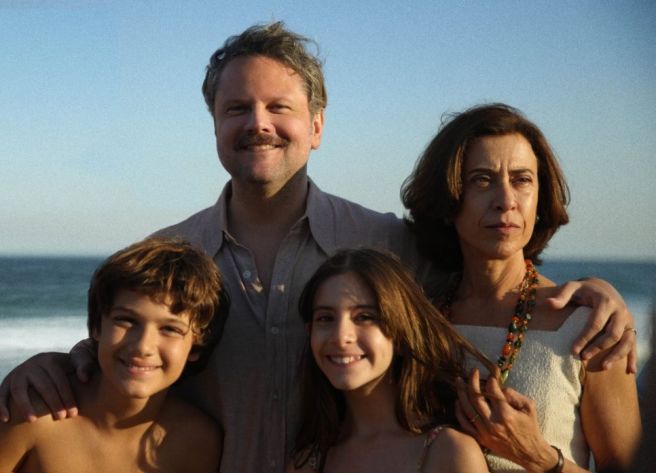
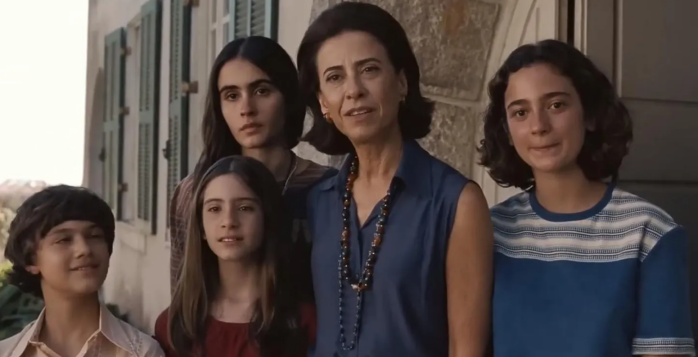
Walter Salles’ latest film “I’m Still Here”, which recently won a Best International Film Oscar, calmly but powerfully observes a real-life personal struggle under the dictatorship period in Brazil during the early 1970s. While never overlooking the grim and horrific aspects of that time, the movie stays focused on small but resonating human moments along the story, and these intimate moments become all the more poignant to us as the story eventually arrives at its two-part epilogue.

The story begins with how things were mostly fine for Rubens Paiva (Selton Mello) and his wife Eunice (Fernanda Torres) and their five children in Rio de Janeiro, Brazil during December 1970. The country has been under the military dictatorship for years since the 1964 Brazilian coup d’état, and Rubens and his family had to go through a brief period of exile due to his left-wing political career during that time. However, he is now back in his old civil career as focusing more on his family’s welfare, and we see how he and his family happily go through their mundane daily life together.

However, the political circumstance of their country gets more volatile day by day, and both Rubens and Eunice become more aware of the possible danger around their family and many others around them. When a close friend of theirs are about to move to London for safety, they decide to have their eldest daughter move to London along with that friend, because they are afraid that she may get into any serious trouble for becoming more politically active just like many other young people in the country.

Meanwhile, Eunice also comes to notice that her husband has been hiding something behind his back. He sometimes has a phone conversation in private while not telling anything about that to her, but Eunice does not ask too much as taking care of the rest of their children after their eldest daughter eventually leaves for London.

And then something unexpected happens on one day. Several guys suddenly come into Ruben and Eunice’s house, and Ruben is soon taken away to somewhere just because he needs to be interrogated for some unspecified reason. As those guys start to watch over her and her children at the house, Eunice begins to fear for the worst, but those guys do not tell anything about why her husband was taken away or when he will be back, so she has no choice but to wait while also protecting her children from the ongoing circumstance to some degree.

In the end, Eunice is also taken away to somewhere along with her second eldest daughter, and what follows next is the darkest part of the story. Although the movie depicts Eunice and her daughter’s following plight with considerable restraint, that is more than enough for us to be disturbed and chilled by the brutal political horror surrounding their circumstance.

Fortunately, Eunice and her daughter are eventually released, but her husband remains missing as before. While the government refuses to admit anything about his disappearance, Eunice decides to search for anything which may help her find her husband, but, of course, it becomes more apparent to her that her husband will never return, and she and her children soon find themselves monitored by some suspicious people who may be government agents.

The screenplay by Murilo Hauser and Heitor Lorega, which is based on the memoir of the same name written by Marcelo Rubens Paiva (He is one of Eunice’s five children, by the way) and received the Best Screenplay award when the movie was premiered at the Venice International Film Festival in last year, wisely sticks to its restrained attitude even at this point. While there are a few melodramatic moments as expected later in the story, the movie patiently follows how much Eunice struggles in one way or another as continuing to search for any information about her husband, and we come to admire her will and determination more when she eventually makes a big decision for herself as well as her children.

Everything in the movie depends a lot on the beautifully nuanced performance of Fernanda Torres, who was deservedly nominated for Best Actress Oscar (The movie was also nominated for Best Picture Oscar, by the way). Subtly conveying her character’s growing worry and desperation to us, Torres gradually takes the center along the story, and her excellent acting comes to function as the heart and soul of the film.

Around Torres, several main cast members have each own moment to shine. While Selton Mello is well-cast as Eunice’s decent husband, Guilherme Silveira, Valentina Herszage, Luiza Kosovski, Barbara Luz, and Cora Mora hold their respective spots well as Eunice’s five children, and Fernanda Montenegro, who is Torres’ mother and known to most of us mainly for her Oscar-nominated performance in Salles’ 1998 film “Central Station” (1998), makes a brief but effective appearance during the epilogue of the movie.

On the whole, “I’m Still Here” is seemingly plain but undeniably absorbing thanks to several commendable aspects including its thoughtful storytelling and the strong lead performance. Although he has been rather silent since his previous feature film “On the Road” (2012), Salles demonstrates here that he has not lost any of his talent yet, and, in my trivial opinion, the result is his best work since “Central Station”. As I heard from many others, this is indeed one of the main highlights of last year, and I wholeheartedly recommend you to check it out as soon as possible.

Posted in Movies | Tagged , , , , | 1 Comment

Exorcism Chronicles: The Beginning (2024) ☆☆1/2(2.5/4): The passable first chapter

South Korean animation film “Exorcism Chronicle” is a modest genre piece simply doing some warm-up exercise for whatever may follow next. Probably because I remember too well the first entry of the short story series it is based on, there is not much surprise for me on the whole, so I just focused on its mood and style during my viewing, but I was only mildly entertained without caring that much about the story and characters.

Phlegmatically observing the story and characters, I became a bit nostalgic about Lee Woo-hyuk’s short story series “Exorcism Chronicles”, which was one of numerous pulpy stuffs I eagerly absorbed when I was young and wild during the 1990s. Like those trashy novels by V.C. Andrews or Sidney Sheldon, they were mostly fun, but I have never felt any desire to revisit the series. To be frank with you, the series is not exactly the worst thing I read during that time, but I think I could have focused on reading something more meaningful instead, such as the works of Henry James or Virginia Woolf.

Anyway, the movie feels like your average TV pilot episode in terms of narrative. First, we are introduced to the principal characters of the series one by one, and the rest of the story is about how they come to gather via their little supernatural adventure, which is involved with a certain clandestine cult hidden somewhere in the rural mountain region of South Korea.

As shown from the opening scene, the leader of the cult is your typical megalomaniac who is also quite dangerous for his growing evil superpower, and this certainly disturbs not only his followers but also several elders who have each own superpower. It is quite apparent to them that the leader is already beyond the point of no return, and they eventually decide to stop the leader before the day when the leader will perform a big ritual which may give him much more power than before.

Besides stopping the leader by any means necessary, their another main goal is protecting a boy who has been training under them and the leader since he was very young. This little boy, Joon-hoo (voiced by Jung Yoo-jung), has already shown considerable potential as learning and practicing a lot under the guidance of the leader and the elders, and the elders must find someone willing to protect the boy at least for a while.

That person in question is Priest Park (voiced by Choi Han), who, like many other priest heroes in occult horror films, knows a lot about how to fight against those evil entities out there. I must tell you that he looks a bit too bulky compared to what I imagined during my reading, and now I cannot help but think of that Jack Black comedy film about a priest moonlighting as a luchador to earn money for the orphanage where he works. Considering his tough confrontation with a very powerful demon early in the story, I guess muscle and stamina are the basic requirement in the battle against demons besides all those necessary holy stuffs.

Anyway, Priest Park is approached by one of the elders who happens to be an old schoolmate of his. Despite some initial reluctance, he agrees to help his old friend as much as possible, so they soon go together to the secret temple of the cult, while not knowing at all that there is someone else on the same path from the start.

That person in question is a young man named Hyeon-am (Nam Doh-hyeong), who is looking for that secret temple for a rather unspecified reason. Via several flashback scenes, it is revealed that this lad, who is also incidentally his own superpower (His right hand seems to be cursed but powerful like that of the hero of “Princess Mononoke” (1997), by the way), has tried to find a way to revenge someone very close to him, and he is quite determined to do anything for that, even though that may lead to his death.

It is not much of a spoiler to tell you that the story eventually culminates to a big battle between good and evil, and director Kim Dong-cheol and his crew members naturally put a lot of efforts onto the screen. The result looks a bit blunt and shabby compared to American or Japanese animation films in terms of detail and style, but the overall result is fairly competent with enough sense of fun and thrill, and that compensates for the rather thin characterization and predictable plot to some degree.

As far as I remember, the screenplay by Lee Dong-ha is mostly faithful to the first short story of the series, but I wish it could take some more time for fleshing out its main characters more. Sure, we are supposed to get to know them more if there really come the following sequels, but the movie does not go further than doling out their respective little background stories bit by bit, and we are only left with the promise on their next adventure to watch in the end.

In conclusion, “Exorcism Chronicle: The Beginning” deserves some attention considering the saddening rarity of South Korean animation feature films during last 25 years, but it does not have enough personality to distinguish itself more. After Lee’s short story series came out, I and South Korean audiences went through a bunch of similar genre products including the 1998 film which is based on Lee’s short story series, and we recently had “Dr. Cheon and the Lost Talisman” (2023) and “Exhuma” (2024). Compared to them, “Exorcism Chronicle: The Beginning” looks like a late guest, and I hesitate to recommend it for now, but I sincerely hope that there will be some improvement in whatever may come next.

Posted in Movies | Tagged , , | Leave a comment

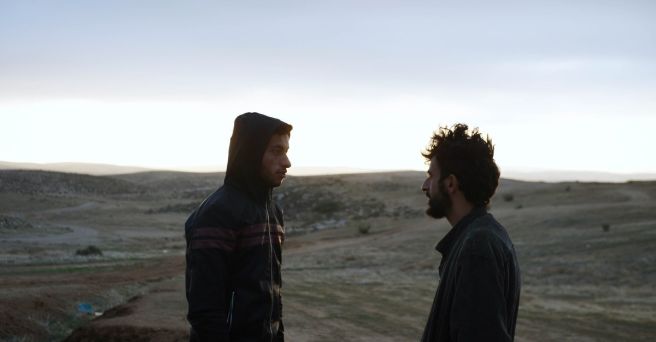
No Other Land (2024) ☆☆☆1/2(3.5/4): “We have no other land”

Documentary film “No Other Land”, which won the two awards including the one for Best Documentary at the Berlin International Film Festival early in last year and then won a Best Documentary Oscar in last week, calmly and thoughtfully follows a personal perspective on what has been unjustly happening in Palestine for many years. It may not shock or surprise you much if you have ever paid any attention to that gross injustice being committed by the Israeli government even at this point, but the documentary is still alternatively heartbreaking and infuriating while never losing its human dimensions, and the result is one of the most powerful documentaries of last year.

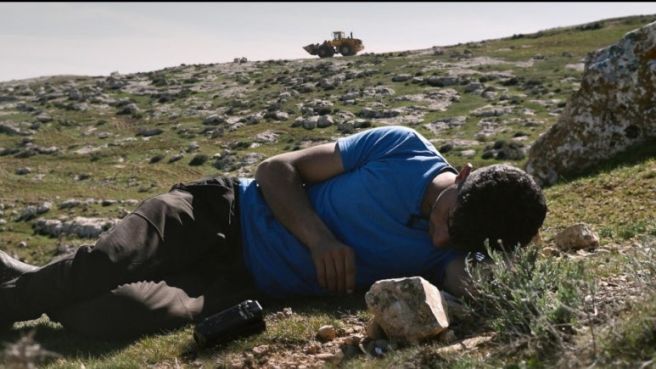
The central figure of the narrative of the documentary is a young Palestinian man named Basel Adra, who incidentally directed, wrote, and edited the documentary along with Hamdan Balla, Rahel Szor, and Yuval Abraham. During the early part of the documentary, a series of archival footage clips shot by Adra’s father show us how things have become worse and worse for him and many others in their little village in the West Bank region during last two decades thanks to the oppressive tactics of the Israeli army and government, and the documentary observes how Adra and many villagers including his father have struggled to record their longtime suffering via video cameras and smartphones.

What they recorded is sadly not so far from what I watched from Oscar-nominated documentary “5 Broken Cameras” (2011) more than 10 years ago, which is the personal chronicle of a plain Palestinian man and his neighbors struggling with the same issues day by day just like Adra and his fellow villagers. Despite frequently harassed by the Israeli army and government, Adra and his fellow villagers defiantly try to stick and stand together because, as one of the villagers flatly says at one point, they have no other land of theirs to live, but their stubborn defiance only leads to more oppression, and Adra and others sometimes cannot help but have more doubt on their ongoing resistance.

At least, Adra and others get some consolation as reminded at times that there are still many people who do care a lot about their increasingly despairing status. One of such people is Abraham, and he and Adra have been close colleagues even though Abraham is a Jewish Israeli. While sometimes reminded that there is always a gap between his position and what Adra and many others have to endure everyday, Abraham is always ready to do more for them, and we observe the genuine mutual trust and admiration between him and Adra during their several casual conversations in the documentary.

As the documentary phlegmatically doles out what they recorded from 2019 to 2023 via their video cameras and smartphones, we see more of the atrocities committed by the Israeli army and government. Once the Israeli Supreme Court rules in the favor of the Israeli army, the Israeli army push into the region containing Adra’s village and several other villages just for making a “military training zone”, and they begin to demolish the villages bit by bit while totally disregarding the angry protests from hundreds of villagers – even after one of those villagers is shot and then seriously injured.

Not so surprisingly, the Israeli army also put more oppression on Adra and Abraham’s defiant journalistic activities. While their activities are blocked more frequently than before, Adra’s village is disturbed more and more by Israeli soldiers suddenly coming for arrest or search, and there is a tense moment showing how Adra manages to evade the Israeli soldiers coming for him on one day. In case of Abraham, his sincere efforts on the Israel media are often undermined by those deplorable right-wing folks, and he even finds himself openly ridiculed by one of those extreme settlers later in the documentary.

However, the documentary does not resort to easy anger at all as quietly and intimately focusing on the human moments observed from Adra and many others in the village. As observing more of the aching humanity of these people, we come to empathize more with their simple human wish to remain in the land which has always been theirs for many years, and there is a poignant moment when Adra bitterly muses a bit on his future during his conversation with Abraham. Sure, he wants to have his own good life just like many other ordinary people out there, but who can possibly try that under such an unstable circumstance like his? 

As many of us know too well, the situation became all the worse for Adra and many other Palestinian people out there during last several months, and now I reflect more on a number of good films and documentaries about the conflict between Israel and Palestine during last two decades besides “5 Broken Cameras” and “The Gatekeepers” (2012), another Oscar-nominated documentary which will make a striking double feature show with “5 Broken Cameras” for good reasons. In one way or another, all of these movies and documentaries emphasize that the conflict must be resolved as peacefully as possible before things will get much worse, but their sincere messages and warnings were mostly ignored by those figures in power, who could begin some change and then peace but choose more violence and oppression instead just for their petty political reasons.     

 Seriously, I have a reasonably pessimistic doubt on whether it can actually do anything about what is going on between Palestine and Israel, but that does not diminish the emotional power of “No Other Land” at all in my inconsequential opinion, and I can only hope that it will bring a bit more awareness on its urgent social/political issue at least. After all, hope is definitely not something we can afford to give up that easily during this increasingly grim period of ours at present, isn’t it?

Posted in Movies | Tagged , , , , | 1 Comment

Porcelain War (2024) ☆☆☆(3/4): Artists in the middle of the ongoing war in Ukraine

Documentary film “Porcelain War”, which won the U.S. Documentary Competition Grand Jury Prize at the Sundance Film Festival early in last year and then was recently nominated for Best Documentary Oscar, looks at the activities of several Ukrainian artists in the middle of the ongoing war in their country. While their country is constantly being disrupted and devastated by the war every day, they all try to maintain their art and culture as much as possible whenever they are not fighting against their enemy, and their artistic defiance is sometimes touching to watch.

At first, we are introduced to three different local artists: Slava Leontyev, Anya Stasenko, and Andrey Stefanov. They all once resided in the Crimea region of Ukraine before they had to leave due to the Russian occupation in 2014, and then all of them joined the Ukrainian defense when Russia invaded their country further in 2022. In case of Leontyev, who incidentally co-directed the documentary with Brendan Bellomo, he became a machine gun trainer, and we later observe his considerable dedication as he trains other volunteers.

When he is not working for his country, Leontyev usually spends time with his longtime partner Anya Stasenko, who has known him for many years since their childhood years. Whenever Leontyev makes a number of porcelain figurines, Stansenko paints these figurines bit by bit, and their lovely results certainly make a big contrast with what is happening in the city where they currently reside. As one of several cities quite close to the frontline, the city is frequently attacked by the Russian military, and we are not so surprised when there eventually comes a point where the horror of the war gets a lot closer to Leontyev and Stansenko’s cozy home than before.

Nonetheless, both of these two talented artists do not give up hope and resistance as continuing their artistic activities as usual, and the documentary sometimes provides lovely animation scenes based on their little precious figurines. Their porcelain works certainly look fragile, but these works also show resilience as well as artistic spirit inside them, while expressing each own stories via their individual shapes and paintings.

Meanwhile, the documentary also shows how things are getting worse for Ukraine and its people via what Leontyev and many other soldiers have to endure and then survive. We see them operating a number of drones which will drop some bombs on their enemy, and we also get a closer look into how they manage to stop their enemy’s advance at least for a while.

Many of the footage clips in the documentary were shot by Stefanov, and he tells his harrowing personal experience at one point later in the documentary. As the city became more dangerous due to the war, he reluctantly accepted the offer from a friend living in Lithuania, who was ready to take care of Stefanov’s two children for protecting them from more trauma to come. While his two daughters safely arrived in Lithuania in the end, he and his family had to go through a lot of risk before that, and he also feels guilty about his present absence even though recognizing that his daughters are now safe at least.

As showing more of the horror and sadness from the war, the documentary seems to lose its focus in my humble opinion. Sure, what Leontyev and Stansenko are trying to do during their private time is nobly defiant, but these intimate artistic moments of theirs are inevitably overshadowed by those more intense moments in the documentary from time to time. For example, there is a gritty and striking sequence which closely follows several soldiers trying to handle their emergency situation, and that is certainly one of the most memorable moments in the documentary. However, I must point out that such a tensely urgent moment like this does not get mixed that well with the relatively milder scenes observed from Leontyev and Stansenko’s personal life.

Perhaps, this jarring impression I got from the documentary is actually its whole point. Even though the circumstance around them and many others in the city becomes all the more despairing later, Leontyev and Stanskenko are not deterred at all as trying to keep going as usual in one way or another, and we are often moved as observing more of their defiant spirit and determination. There is a brief but precious warm moment when they take a walk along with their plucky pet dog in a nearby forest for getting some mushrooms, and the mood remains peaceful and pleasant even while they occasionally locate and then mark a hidden land mine here and there in the forest.

On the whole, “Porcelain War” does not surpass the harrowing urgency shown from recent Oscar-winning documentary “20 Days in Mariupol” (2023), but it will surely be remembered as one of the notable documentaries about the ongoing war in Ukraine. Considering the current status of the war at this point, I seriously wonder whether all those artistic efforts of Leontyev and Stasenko during the wartime may actually mean anything at all in the end, but the documentary reminds me that art itself has always been an act of defiance against all the senselessness and meaningless throughout our frequently chaotic human history. Therefore, I can only sincerely hope that they and their art will prevail – no matter what will happen to them during next several years.

Posted in Movies | Tagged , , , , , | Leave a comment

It’s Okay! (2023) ☆☆☆(3/4): You will like this girl in the end

South Korean film “It’s Okay!” amused and then touched me with its plucky young heroine. You may wince from time to time as watching how irrepressibly spirited and optimistic she really is, but you will come to root for her more as getting to know her more along the story. Believe me, you will smile at times while observing how her big, open heart affects others around her in one positive way or another.

She is a high school girl named In-yeong (Lee Re), and the opening part of the film shows a sudden tragedy which happens while she and her fellow dancing members of the Seoul International Arts Company are ready for another big public performance of theirs. Not long after her phone conversation with her mother, her single mother sadly dies due to an unfortunate car accident, and In-yeong is consequently left alone without any close family member to take care of her.

After one year, we see how In-yeong has tried to go on by herself alone. She still lives in a house where she and her mother resided, but the situation is not so good for her at present. Not long after evading the social workers looking for her, the landlord of the house notifies that she will be soon evicted due to failing to pay her rent during last several months, so she must find another place to stay while going on with her high school life as usual.

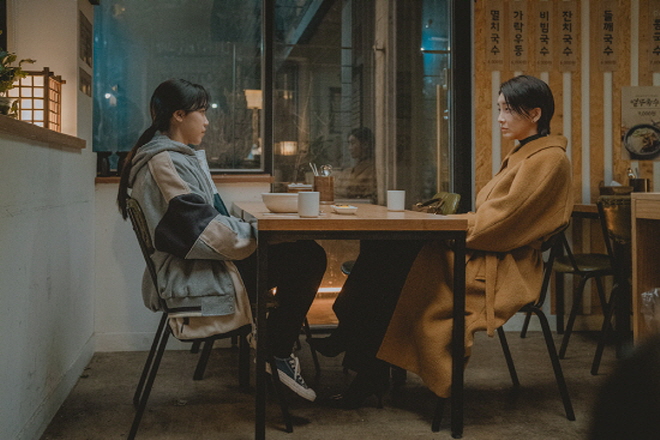
Eventually, In-yeong comes to stay inside the building of the Seoul International Arts Company at every night, but then she happens to be discovered by Seol-ah (Jin Seo-yeon), a former dancer who has been newly appointed as the head choreographer of the company. Probably because she feels a bit sorry for In-yeong, Seol-ah eventually takes In-yeong to her big modern house, and In-yeong is certainly grateful as she is allowed to stay there during next several days at least.

However, In-yeong and Seol-ah soon find themselves clashing with each other due to their considerable personality difference. As a cold, fastidious woman who has devoted almost all of herself to her profession for years, Seol-ah cannot help but annoyed by In-yeong’s cheery attitude at times, but she also feels sorrier to In-yeong as remembering how much In-yeong was devastated by the news of her mother’s death at that time. In addition, In-yeong’s mother was actually one of Seol-ah’s old colleagues, and that makes Seol-ah more protective of In-yeong, though she remains tough and strict to not only In-yeong but also all of the other young members of the company.

Because they must prepare for the upcoming 60th anniversary performance, everyone in the company becomes quite anxious – especially as Seol-ah pushes all of them harder day by day. In case of Na-ri (Chung Su-bin), this young girl has been quite determined to take the center of the performance, but it is apparent to us from the very beginning that she is struggling a lot with amounting anxiety and pressure behind her haughty attitude. In contrast, In-yeong simply enjoys herself throughout a series of training sessions regardless of whether she is better than others or not, and her carefree attitude certainly makes a big contrast with Na-ri’s.

Because In-yeong has been often ostracized by Na-ri and several other young company members, we can easily sense a growing trouble between In-yeong and Na-ri, but the screenplay by director Kim Hye-young and her co-writer Cho Hong-jun surprises us more than once. Yes, there eventually comes a sort of catfight among In-yeong and several other young girls as expected, but it is unexpectedly moving to watch how this conflict of theirs is resolved via In-yeong’s positive influence on them, and this will probably remind you again that girls usually know better than boys.

Furthermore, In-yeong also indirectly makes Seol-ah realize what is really important for herself as well as In-yeong and other young company members. Thanks to In-yeong, Seol-ah comes to get a chance to relax and enjoy her life a bit, and one of the most humorous moments in the film comes from when Seol-ah tries a bit on In-yeong’s favorite food. 

It goes without saying that the movie depends a lot on the presence and talent of its lead actress, and Lee Re, a promising young actress who surely grows up a lot compared to her likable child performance in “How to Steal a Dog” (2014), did a commendable job of filling her character with enough life and personality. While never overlooking the deep sadness behind In-yeong’s vivacious façade, Lee makes her character into a walking life force, and we come to like her more even while occasionally rolling our eyes at her uninhibited spirit.

On the opposite, Jin Seo-yeon ably complements Lee throughout the film, and she also did a good job of conveying to us her character’s gradual inner changer over the story. In case of several other main cast members, Chung Su-bin is surprisingly sympathetic later in the story, and Lee Jeong-ha and Son Suk-ku hold each own small place well as the two other substantial supporting characters in the movie.

In conclusion, “It’s Okay!”, which won the Crystal Bear award at the Generation KPlus section of the Berlin International Film Festival early in last year, is a pleasant and poignant coming-of-age tale, and I wholeheartedly welcomed its optimistic vibe more than expected. As things seem to be getting worse in our world, we really need some healthy dose of positive energy at times for not resorting to cynical nihilism, and I assure you that the movie will give you plenty of that at least for a while.

Posted in Movies | Tagged , , | Leave a comment

Starlet (2012) ☆☆☆(3/4): Between two very different people

Sean Baker’s 2012 film “Starlet”, which happens to be available in South Korea via a local streaming service, is about the unlikely relationship between two very different people. Although their first encounters are rather awkward to say the least, they come to understand and care more about each other along the story, and we are touched by a series of realistic human moments observed from them.

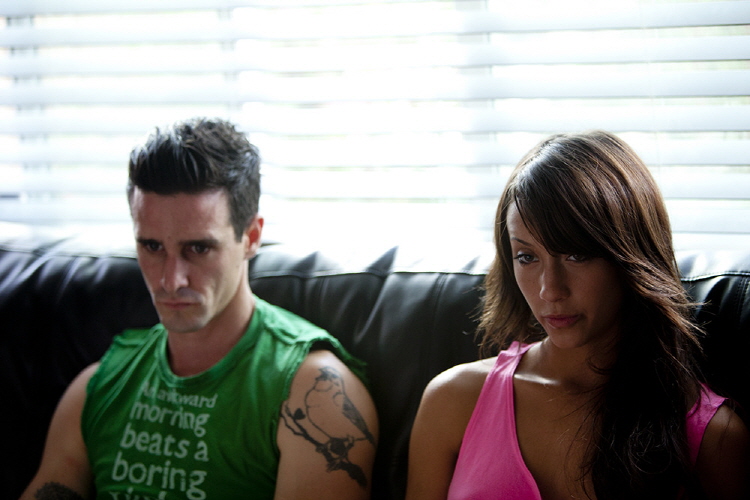
At the beginning, the movie, which is mainly set in the San Fernando Valley area of California, introduces us to Jane (Dree Hemingway), a young woman who has resided in a little apartment rent by her friend/colleague Melissa (Stella Meave) and Melissa’s boyfriend Mikey (James Ransone). On one day, Jane goes to a yard sale held in front of some old lady’s house in their neighborhood because she needs some pieces of furniture to decorate her own little place for herself and a little pet dog named Starlet, but she only ends up buying a little Thermo bottle instead.

Not long after she returns to her place, Jane discovers something hidden inside the Thermo bottle. There are actually a bunch of rolls of hundred dollar bills, so she decides to spend some of them just because she needs to buy some stuffs, but then she feels like stealing the money from that old lady. Therefore, she subsequently goes to that old lady’s house again, but the old lady simply rejects her right from the start.

Nevertheless, Jane is not deterred at all, while feeling more guilt about the old lady. She approaches the old lady more actively in the next time, and the old lady, who is named Sadie (Besedka Johnson). reluctantly accepts a little kindness from Jane despite her reservation. It goes without saying that Sadie naturally becomes more suspicious about whatever this supposedly kind young woman wants from her, but she eventually opens her heart more to Jane, and then Jane finds herself spending more time with Sadie.

And we get to know more about both of these two very different people. As a longtime widow who has lived alone by herself in her little suburban house, Sadie often feels lonely, but things have recently been rather hard for her. Just because she has no one to take care of her around her, her insurance company often demands more safety restrictions on her house, and that means she may have to give up a lot in case of her small but precious private garden.

Meanwhile, the movie gradually shows more of how Jane, Melissa, and Mikey earn their living day by day. All of them are associated with the local adult film industry in one way or another, and we come to gather that both Jane and Melissa are fairly well-known for their sex work, though Melissa is relatively less diligent compared to Jane. As a matter of fact, she gets suspended by their company boss for making one trouble after another, and that consequently leads to some promotion for Jane.

Considering its main subject, you may expect the movie to become quite seedy, but many of its adult film production scenes in the film are actually dry and realistic with enough thoughtfulness and restraint. Besides casting several real adult film professionals in a number of minor roles for some extra authenticity, Baker, who wrote the screenplay with Chris Bergoch, imbues these key scenes with considerable verisimilitude as wisely avoiding making them too exploitative or voyeuristic, and we observe more of how casual Jane and others around her are about their another working day. They are simply there for earning another paycheck, and there is nothing particularly terrible or special about that in their viewpoint. As a matter of fact, Jane’s company boss turns out to be a fairly sensible businessman with some professional ethics and principles, and he even advises Jane that she should distance herself more from Melissa and Mikey (And he turns out to be right, by the way).

Regardless of how she actually feels about her current profession, Jane chooses not to tell that much about her work to her new friend, and that is another source of suspension in the story. As getting to know more about Sadie, Jane really wants to do something really special for her later in the story, and that leads to more tension later in the story – especially after Melissa eventually discovers the money in Jane’s room.

While the movie inevitably arrives at the narrative point where its two main characters confront what lies beneath their relationship in one way or another, it also surprises us with the emotional poignancy observed from the following choices made by them, respectively. I will not go into details here, but I can tell you instead that the eventual ending of the film will take you back to the simple but sublime final touches of those great short stories by Raymond Carver, and you will reflect more on how they will go on with their respective free will.

The two actresses at the center of the film click with each other well as the contrasting duo in the story. While Dree Hemingway brings considerable life and personality to her supposedly plain archetype role, Besedka Johnson ably complements her co-star at every moment of their crucial scenes, and her unadorned performance is all the more touching because this non-professional actress died not long after the movie was released in late 2012. Around Hemingway and Johnson, Stella Meave and James Ransone are also solid in their respective supporting parts, and you may be amused to see Karren Karagulian, who would work with Baker again in Oscar-winning “Anora” (2024).

On the whole, “Starlet”, which is incidentally Baker’s fourth feature film, is an engaging mix of comedy and drama, and you can clearly discern how Baker already established his own artistic style and territory even at that time. As subsequently making “Tangerine” (2015) and “The Florida Project” (2017), he advanced much further than before, and, as many of you know, the rest is the history.

Posted in Movies | Tagged , , | Leave a comment

The Royal Tenenbaums (2001) ☆☆☆1/2(3.5/4): Anderson’s early dollhouse play

Revisiting Wes Anderson’s 2001 film “The Royal Tenenbaums”, I was reminded again of how consistent Anderson has been during last several decades. While this movie and many subsequent works of his are basically his own little dollhouse plays, they are all packaged with an ample amount of distinctive style and personality, and most of them are actually very funny and touching behind their frequently unflappable appearance.

“The Royal Tenenbaums” was incidentally Anderson’s third feature film, which came after “Bottle Rocket” (1996) and “Rushmore” (1998). While these first two feature films of his are more or less than a warm-up exercise because he still needed to hone his own idiosyncratic style and sensibility more at that time, “The Royal Tenenbaums” shows Anderson taking the first real big step at last, and it has almost everything to define a Wes Anderson movie. 

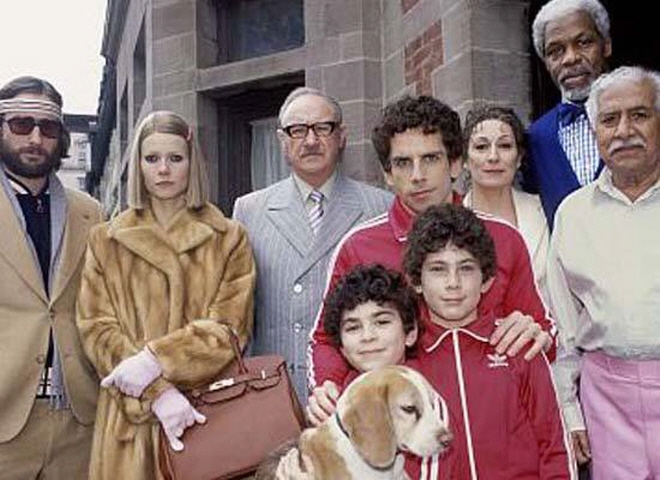
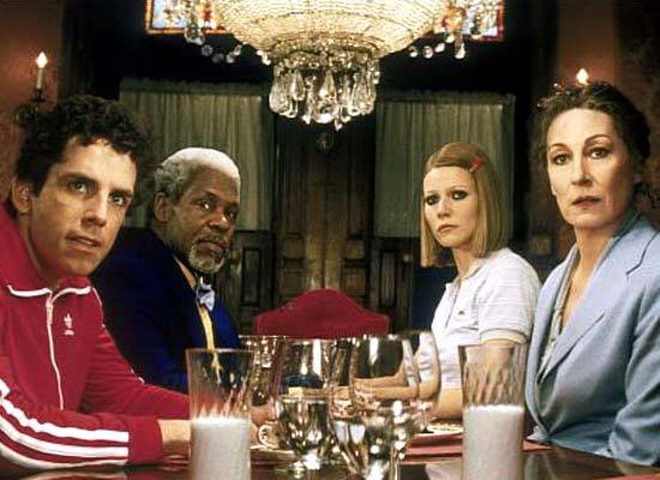
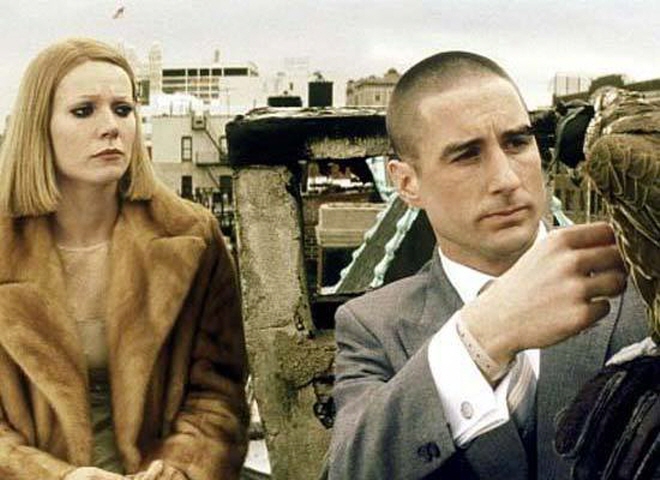
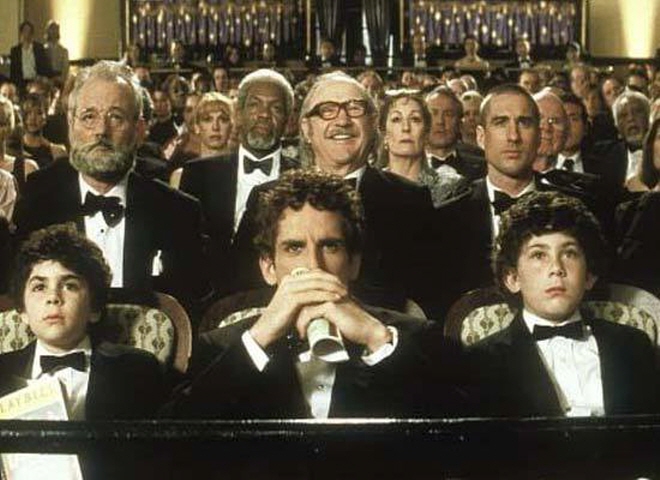
The story, whose amusing narrative frame will be evolved further in Anderson’s subsequent films including “The Grand Budapest Hotel” (2014) and “Asteroid City” (2023), revolves around one dysfunctional family living in New York City. Although they were once promising bright kids wholeheartedly nurtured by their caring mother Etheline Tenenbaum (Anjelica Huston), Chas (Ben Stiller), Margot (Gwyneth Paltrow), and Eli (Owen Wilson) were damaged in one way or another by their selfish and insensitive father Royal (Gene Hackman), and we are not so surprised when his wife eventually decides that enough is enough and then kicks him out of their family house. 

After more than 15 years passed, Etheline begins to consider having a divorce at last as finding herself falling in love with her accountant Henry Sherman (Danny Glover), and that is not a very good news for Royal. In addition to being on the verge of going totally broke, he recently gets kicked out of an expensive hotel room where he has resided for years, and he certainly needs to depend on Etheline more than ever.

For getting more sympathy from his wife and kids, Royal impertinently lies to them that he is going to die sooner or later. Chas, who is still very resentful about what a bad father Royal was to him in the past, strongly objects along with Margot, who is not so amused to see her father again for the same reason (He has always reminded her that she was adopted, which becomes a sort of running gag throughout the film). In contrast, Eli, who still cares about Royal despite having his own fair share of disappointment with his father, insists that they should give their father another chance, and Etheline eventually agrees to let her husband return to their family house.

Needless to say, Royal is quite a pathetic figure, but we also observe more of how his kids have equally been pathetic as your typical cases of arrested development. While he was a little but brilliant businessman during his childhood, Chas becomes a neurotic man who has been quite fastidious about the safety of his two sons after his wife’s tragic death. While she distinguished herself as a child playwright, Margot is now going nowhere as being stuck with her psychiatrist husband who shows more passion in analyzing his latest case. While he was also quite famous as a tennis prodigy, Eli is now coasting on his retirement life without any plan or direction, and it later turns out that he has actually yearned for getting closer to Margot. 

Now this surely looks like your average dysfunctional family story, but the movie distinguishes itself a lot from many other similar films via its sheer wit and style. Quite formal in its narrative structure, the screenplay by Anderson and his co-writer Owen Wilson, who is incidentally Luke Wilson’s older brother and also plays one of the main characters in the film, doles out unexpected quirky moments along the plot, and they are all the more amusing for the deadpan attitudes of the main characters. Regardless of how much they are aware of the absurdities of their comic situations, many of them remain flatly unflappable except a few sudden moments of emotional outbursts, which make a striking contrast with the phlegmatic overall tone of the movie.

At the same time, there are also the underlying pain and pathos around their deadpan comedy, and they prevent the film from becoming merely whimsical. Not so surprisingly, Royal comes to face more of how much he ruined his kids’ childhood, but there is not much he really can do about his damaged relationship with them, and he knows that too well – especially after his deception is eventually exposed later in the story (Is this a spoiler?). In case of his children, they still have to deal with how their respective lives got ruined by not only their father but also themselves, and the most harrowing moment in the film comes from when Eli feels quite betrayed and devastated after learning more about what Margot has been hiding behind her back.                       

Nevertheless, the movie keeps maintaining its lightweight tone before eventually arriving at the finale where it strikes the right balance between humor and poignancy, and it is supported well by its well-rounded ensemble performance. While Ben Stiller, Gwyneth Paltrow, and Luke Wilson ably bring enough life and personality to their sibling characters, Anjelica Huston and Danny Glover provide some necessary gravitas as required, and Bill Murray, Owen Wilson, and Kumar Pallana, who often steals the show as a longtime family employee, flawlessly slip into their respective supporting parts.

In case of Gene Hackman, who sadly passed away in last week, this legendary actor gives one of the rather rare comic performances in his long and illustrious career, and it is constantly entertaining to watch how he effortlessly tickles us while subtly illustrating his complicated character with nuances and details to be observed. Yes, Royal is indeed a bastard as his wife says at one point, but he is also somehow likable despite all those numerous human flaws of his, and Hackman did a fantastic job of fully embodying many human contradictions of his character without any misstep at all. In short, this is his last great performance, but the Academy Awards failed to nominate him at that time, and that was incidentally one of its biggest mistakes during last 30 years.  

 On the whole, “The Royal Tenenbaums” is still a milestone point in Anderson’s career besides being one of the finest moments in the distinguished career of a great American movie actor, and you will admire more of how Anderson has steadily gone his way during last 24 years. After finally getting an Oscar thanks to his Netflix short film “The Wonderful Story of Henry Sugar” (2023), he is already working on his next project, and I am sure that he will find more fun and amusement from his own rich genre territory.

Posted in Movies | Tagged , , , | Leave a comment

Take Out (2004) ☆☆☆(3/4): One day of a Chinese delivery guy

Sean Baker and Shih-Ching Tsou’s 2004 film “Take Out”, which was released on DVD and Blu-ray by Criterion in US a few years ago, is a modest but engaging immigrant drama which gradually draws you into its plain hero’s one particularly desperate day. Although it does not show and tell a lot about him, you will feel like getting to know him and his harsh daily reality more around the end of the film, and you may also admire how the movie handles his story with enough sensitivity and thoughtfulness while not ending up being your average misery porn.

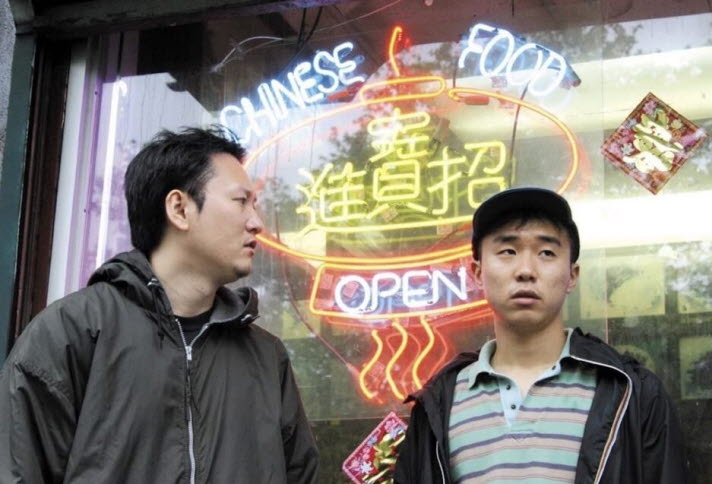
The movie, which is set in a time not long after the 9/11 incident, opens with showing how things are quite bad for Ming Ding (Charles Jang), a young Chinese illegal immigrant who has worked as a delivery man at some little take-out restaurant located somewhere in the middle of the upper Manhattan neighborhood of New York City. He is a hard-working dude dreaming of having a better future along with his wife and their child who may come to US someday, but, alas, he currently owes a considerable amount of money to a local loan shark, and now he must pay those vicious criminals no less than 800 dollars before the end of the day.

At least, Ming’s situation turns out to be a bit better than we expected in the beginning, because there are some people willing to help him to some degree. First, he manages to obtain 500 dollars from a family member of his who is also very busy with earning her meager living just like many others like them. Second, Young (Jeng-Hua Yu), a fellow delivery man who is also Ming’s closest friend, is quite willing to step aside for allowing Ming to do more deliveries during that day after learning about Ming’s big imminent trouble.

What follows next is a series of brief episodic moments where Ming is diligently and desperately trying to earn as much as possible during next several hours. Although it frequently rains outside, that does not deter him at all, and we often watch him hurriedly delivering those packaged Chinese dishes here and there in the surrounding neighborhood.

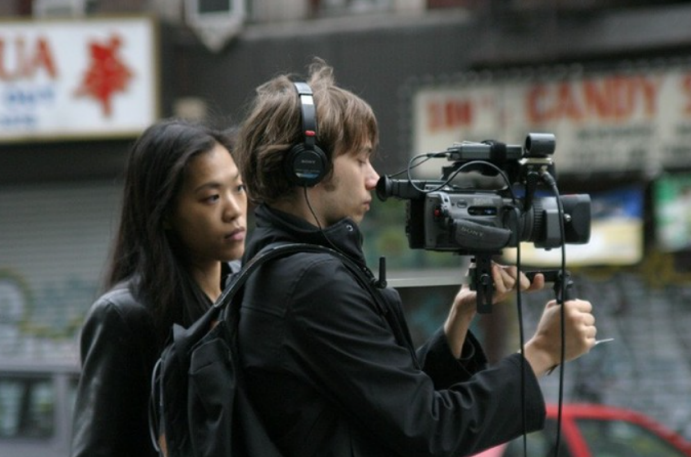
As he encounters one customer after another along the story, you will be reminded more of how diverse New York City really is in terms of people – and how Ming and many other delivery guys out there are often disregarded and under-appreciated. The handheld camera of Baker, who also did the cinematography besides writing, producing, and editing the movie with Tsou, usually sticks around Ming, but we seldom see his face as he faces his customers one by one, and we become all the more aware of his frequently marginalized status in the city.

Although its production budget was no less than 3,000 dollars, the movie does not look limited that much by its very small production budget. While it surely feels raw and rough from the beginning to the end, Baker and Tsou did a commendable job of imbuing it with a lot of realism and verisimilitude, and the result is as vivid and impressive as other similar New York City immigrant films such as Ramin Bahrani’s “Man Push Cart” (2006). As a result, you may sometimes feel like watching a real slice of life being unfolded on the screen, and that is why we get more absorbed in its hero’s ongoing struggle.

You will also probably admire how Baker and Tsou’s screenplay allows some humor and humanity as Ming and several other main characters around him busily work hour by hour. Although they do not tell a lot about themselves as struggling to go through another day of their hard and difficult life as usual, they all come to us as realistic human figures to observe, and there is a little warm and humorous moment when they have a casual lunch break together later in the story.

During its last act, the movie expectedly throws another setback upon our struggling hero, but it does not lose any of its deep care toward its hero at all, and that is where its emotional power lies. From what it has steadily built up before that narrative point, the movie dexterously pulls out a little but precious moment of solidarity and compassion, and this feels all the more relevant considering how our global world and many of us have been crushed more and more by the worst sides of the humanity these days.

The movie certainly depends a lot on its lead actor, and Baker and Tsou found the right one for their film. Although he is actually a Korean American who can also speak Chinese, Charles Jang, who incidentally made a brief appearance in Baker’s recent Oscar-winning film “Anora” (2024), mostly looks natural in his unadorned embodiment of his character’s growing weariness and desperation, and he also clicks with several main cast members including Jeng-Hua Yu, Wang-Thye Lee, and Justin Wan, who respectively bring some colorful human details to the story without being too showy at all.

On the whole, “Take Out” shows how Baker already demonstrated his considerable potential as a new American independent filmmaker to watch. Mainly because of the timeless aspects of its immigrant drama, the movie still does not look that dated at all even at this point, and it is really remarkable to see how far he has advanced during last 20 years since this small but interesting low-budget film. Both “Take Out” and “Anora” show that he has always cared a lot with interest, understanding, consideration, and compassion, and you will agree that he is indeed one of the best American filmmakers of our time.

Posted in Movies | Tagged , | Leave a comment