The Boys in the Boat (2023) ☆☆1/2(2.5/4): The rowing underdogs

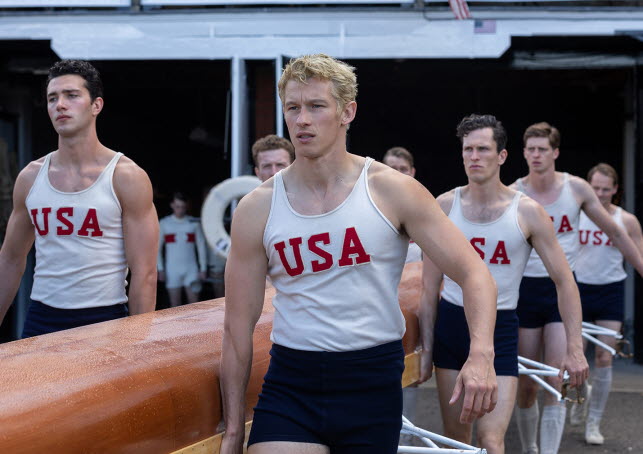
George Clooney’s latest film “The Boys in the Boat” is a typical underdog sports drama which does not have much surprise for us. As a story about one underdog sports team which surprises everyone as going up and up against all odds, it has almost every necessary element to be inspiring, but these elements in the story somehow do not row that well together in the movie compared to those boys in the boat.

At first, the movie starts with the introduction of Joe Rantz (Callum Turner), a plain lad studying at the University of Washington in 1936. Like many other people during that time, Rantz is quite poor to say the least, and we see his daily struggle between his college study and his frequent hardships outside the university. While he really wants to graduate and then become an engineer someday, he is constantly reminded of his current economic status everyday, and things become more desperate for him when he must pay more money for his college education.

While looking for any possible option for him along with his close friend, Rantz comes across a notice on the tryout to be held by the rowing team of the university. Mainly because of the considerable economic benefits from becoming a rowing team member, Rantz and his friend decide to apply for the tryout without much thought, but, what do you know, the competition turns out to be quite stiff, and they and many other young men are soon subjected to a series of arduous physical tests conducted by Al Ulbrickson (Joel Edgerdon), the coach of the rowing team.
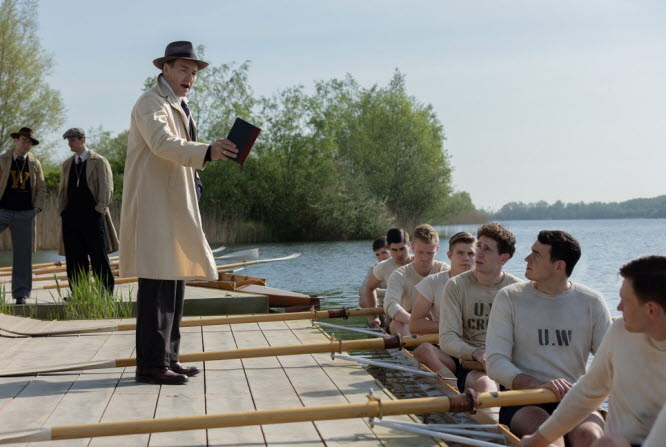
Although he is your average unflappable coach, Ulbrickson knows too well how important the upcoming season is, and he and his staff members are ready to try their best as much as possible. At the end of their tryout, 8 young men including Rantz and his friend are selected as the junior group of the team, and then Ulbrickson and his staff members embark on testing their new team members more. As carefully checking up the strong and weak points of each of their new team members, they must find the right arrangement of the boys on their new boat, and it is naturally followed by a series of trials and errors before Ulbrickson comes to realize what is really necessary for his boys. They need a really good coxswain who can lead and boost them for more power and strength, and Ulbrickson knows the right one, though that person in question is a bit too headstrong for him at times.

Once everything clicks well together for Rantz and his colleagues, his team starts to surprise not only their coach but also everyone else. In their first official competition, they beat one of their main competitors, and this surely excites everyone in the University of Washington. After observing how the boys excel a lot more than expected, Ulbrickson comes to have much more confidence on them than before, and he eventually decides to do a rather risky gamble with them, though his bold decision is not welcomed that much by many people in the university.

It is not much of a spoiler to tell you that Ulbrickson and his boys come to distinguish themselves more as the surprising underdog team of that year. However, Mark L. Smith’s screenplay, which is based on the nonfiction book of the same name by Daniel James Brown, simply sails on their athletic advance without much development in terms of story and character, and that is the main disappointment in the film. While Rantz and many other main characters including Ulbrickson are more or less then broad archetypes, the movie does not delve that much into the human aspects of Rantz and several other colleagues, and a romantic subplot involved with Rantz’ girlfriend is redundant at best and superficial at worst.

At least, the movie does not disappoint us in case of the competition sequences, which are certainly its main highlight as expected. Clooney and his crew members including cinematographer Martin Ruhe and editor Tanya M. Swerling did a good job of bringing enough tension and verisimilitude to these key moments including the climatic one unfolded in the 1936 Berlin Olympics, and the actors on the boats are mostly convincing with their sweaty efforts vividly shown on the screen.

The main cast members of the movie try their best in filling their respective roles. While Callum Turner humbly holds the center as required, Peter Guinness, Jack Mulhern, and James Wolk have each own moment along the story, Joel Edgerton, who has been one of ever-dependable character actors during last two decades, ably imbues his very typical character with a bit of life and personality. Although we are not so surprised when his character gives a big motivation speech in front of Rantz and several other team members around the end of the story, Edgerton deftly handles this clichéd moment with enough sincerity, and the result is a little more dramatically effective than expected.

On the whole, “The Boys in the Boat” is a conventional sports drama film which will not impress you that much especially if you are a seasoned moviegoer like me, and you may also want to check out the two better movies directed by Clooney. After making a promising directorial debut with “Confessions of a Dangerous Mind” (2002), he seemed to advance further with his second feature film “Good Night and Good Luck” (2005), but his next several films including “The Monuments Men” (2014) were not particularly memorable in comparison, and neither is “The Boys in the Boat”. Considering that his prime period seems to be over these days after he won two respective Oscars for “Syriana” (2005) and “Argo” (2012), the lackluster result of “The Boys in the Boat” is not so surprising, but I sincerely hope that he may do better in the next time.


Posted in Movies | Tagged , , , | Leave a comment

And Your Bird Can Sing (2018) ☆☆1/2(2.5/4): Three free spirits

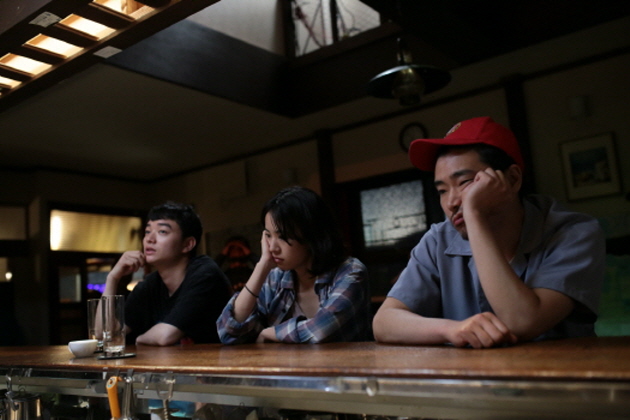
Shô Miyake’s 2018 film “And Your Bird Can Sing”, which happened to be released in South Korean theaters several days ago, seems to be merely following the aimless daily life of its three young protagonists, but it turns out to be more than that. As these three main characters interact more with each other along the story, we come to sense more of the genuine melancholy behind all those youthful moments among them, and this compensates for the rather superficial plot and characters of the film to some degree.

At first, we are introduced to a nameless young man, who is simply named “Me” (Tasuku Emoto) in the end credits. “Me” works as a part-time employee at a local bookstore in his neighborhood, but he is not exactly someone to be chosen as the employee of the month, and we see him going through another drinking night along with his friend/roommate Shizuo (Shôta Sometani) instead of doing some work at that local bookstore.

In case of Shizuo, he is no better than his roommate. He has depended on unemployment benefits for some time, but he is not particularly interested in getting employed, and the only trouble in his daily life is his problematic mother, who usually comes to spend some time with him whenever she is not with his older brother. As he simply listens to whatever she babbles about, it is quite apparent to us that there is some distance between Shizuo and his mother, though both of them are not so willing to recognize that.

Meanwhile, there is some little change in the daily life of “Me”. After letting down a young woman also working in his workplace, he subsequently gets himself involved with Sachiko (Shizuka Ishibashi), another young woman in his workplace. Although it later turns out that Sachiko has been actually in a relationship with their boss, “Me” does not mind that a lot, and Sachiko is willing to get more involved with him just because, well, she can always have some fun time with him besides sex.

Needless to say, it does not take much time for Shizuo to discover what is going on between his roommate and Sachiko, but he lets her spend more time at his and his roommate’s apartment, and we accordingly get something not so far from François Truffaut’s “Jules and Jim” (1962). Just like the three young main characters of “Jules and Jim”, Sachiko, Shizuo, and his roommate come to enjoy each other’s company as spending more time together, and the movie gives us a series of spirited moments as these three main characters casually throw themselves into more fun and excitement.

Needless to say, all of them want their fun time to last as long as long possible, but there always comes another day – along with the reality they have to face in one way or another. While Sachiko must decide where her heart really lies, “Me” comes to realize that he does care much more than his constant laid-back attitude suggests, and Shizuo also becomes a bit more serious about his life after one unexpected incident involved with his mother.

However, Miyake’s screenplay, which is based on the novel of the same name by Yasushi Satô, often spins its wheel in case of plot and character development. As the movie sticks to its calm and distant storytelling approach, we never get to know enough about its main characters even in the end, and that is the main reason why a few dramatic turns later in the film are not as impactful as intended. For instance, the last shot of the film could be more effective if the movie delved more into its main characters’ feelings and thoughts before that narrative point.

At least, there are some strong points to be admired and appreciated. Miyake, who also did the editing of the film, and his cinematographer Hidetoshi Shinomiya did a competent job of capturing the daily atmosphere surrounding the main characters of the film, and you will observe Miyake’s considerable potential as a burgeoning filmmaker. After this film and “Wild Tour” (2019), he advanced further as making “Small, Slow But Steady” (2022) and “All the Long Nights” (2024), and he is now regarded as another new exciting Japanese filmmaker to watch.

Miyake also draws the good natural performances from his three principal performers. While Tasuku Emoto brings some likable human qualities to his rather elusive character, Shizuka Ishibashi imbues her character with enough warmth and spirit, and Shôta Sometani holds his own place well between his two co-stars despite his relatively under-developed character.

In conclusion, “And Your Bird Can Sing” is one of the minor works in Miyake’s filmmaking career, but it is not wholly without interesting stuffs to observe at least. To be frank with you, many of Miyake’s works are an acquired taste for me, but I still admire how effortlessly they bring a considerable amount of realism onto the screen, and “And Your Bird Can Sing” is no exception. Yes, I often felt impatient and distant to its story and characters, but I also got the glimpses of Miyake’s undeniable filmmaking talent, and now I see more of how much he has steadily advanced since he made his feature film debut with “Playback” (2012). Is he really going to be as widely known as, say, Hirokazu Kore-eda or Ryusuke Hamaguchi? We will see, folks.

Posted in Chicago, Movies | Tagged , | Leave a comment

Revelations (2025) ☆☆☆(3/4): A grim religion drama full of madness and despair

Compared to many of his notable live action feature films such as “Train to Busan” (2016), South Korean filmmaker Yeon Sang-ho’s animation feature films are a lot more unnerving and uncomfortable. I still remember how disturbed I was as watching “The King of Pigs” (2011), and I hope I will never have to watch again this truly disturbing story about bullying at school. I also remember how unnerved I was as watching “The Fake” (2013), which struck me really hard with its grim and gritty religious drama of cruelty, hypocrisy, and despair.

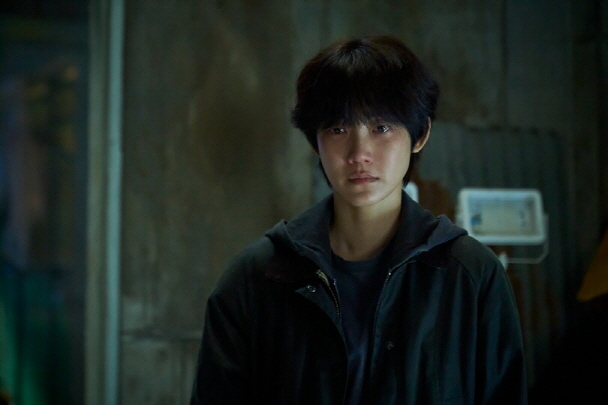
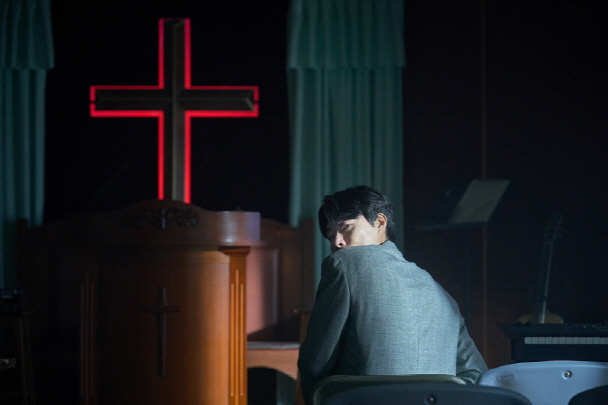
I have often wondered when Yeon will actually make a live action film as dark and despairing as those two animation films of his, and now there comes an answer via his recent Netflix film “Revelations”, which was released several weeks ago. Mainly revolving around several different kinds of delusion, this gloomy piece delves deep into the madness associated with the hypocrisy and cruelty of the South Korean church system in one way or another, and what we are going to behold is pretty unpleasant and uncomfortable to say the least.

At first, we are introduced to Min-chan (Ryu Jun-yeol), a young married pastor who has struggled for getting promoted from his rather shabby church to a bigger (and more expensive) church someday. At the beginning of the film, we see him supervising another prayer meeting at his little church, and that is when he happens to notice a rather suspicious guy who does not even seem interested in joining the church. He is Yang-rae (Shin Min-jae), and, what do you know, Min-chan soon comes to discover that Yang-rae is actually an ex-convict recently released after serving some time in prison for his heinous sex crime.

When his wife notifies him that his young son is missing not long after that, Min-chan certainly becomes quite frantic. After getting the address of where Yang-rae’s current residence, Min-chan instantly goes there, and then he decides to follow after Yang-rae after witnessing Yang-rae in the middle of doing something very suspicious.

After that narrative point, the screenplay Yeon and his co-writer Choi Gyu-seok, which is based on the online comic book series of the same name written by them, takes several dark plot turns as things become more complicated for Min-chan. When he eventually finds himself in a very serious trouble, he happens to see a sort of religious sign, and that is the beginning of his gradual descent into more madness, hypocrisy, and self-justification. Believing more that his God gave him a divine sign, he becomes more like your average loony zealot, and he gets all the more convinced when there comes a couple of reversals of fortune on his way.

In the meantime, the movie also focuses on Yeon-hee (Shin Hyun-been), a young female cop who has been obsessed with Yang-rae for a painful personal reason. Around the time of Yang-rae’s disappearance, a young girl happened to be gone missing, and it is quite possible that she was kidnapped by Yang-rae. As she and other policemen hurriedly look for Yang-rae, Yeon-hee also begins to suspect Min-chan, who happened to try to call the police when he witnessed Yang-rae at that time.

And we get to know more about Yeon-hee’s own troubled state of mind. Still angry about not only what Yang-rae committed but also how he was released rather early, her mind is often haunted by what is supposed to be the ghost of Yang-rae’s victim, and that certainly makes her feel often conflicted about her investigation. She still hates Yang-rae as before, but she really needs to find him alive for saving that kidnapped girl as soon as possible, and then she later finds herself quite tempted by a chance for going all the way for revenge instead.

The movie stumbles more than once during its last act, and the following resolution is delivered a bit too easily in my humble opinion, but the movie keeps us engaged even though we usually observe its three troubled main characters from the distance. It is quite uncomfortable to observe how willingly Min-chan goes down and down into his pit of madness and self-justification, and you may think some of his key scenes are too exaggerated, but, folks, I have seen many South Korean Christians showing such loony behaviors like that in the name of God or whatsoever. While Yang-rae turns out to be a deeply damaged figure who simply cannot help himself in front of his dark impulse originated from his unspeakable childhood trauma, Yeon-hee turns out to be more troubled than expected, and it is poignant to see how she eventually grabs an unexpected opportunity for salvation with some common sense.

The three main cast members are well-cast in their respective parts. Ryu Jun-yeol surely has a number of showy moments along the story, and he deftly delivers these dark moments with enough irony and absurdity under the surface. Shin Hyun-been’s low-key acting is an effective counterpart to Ryu’s more extroverted performance, and Shin Min-jae ably balances his tricky role between repulsion and pity.

In conclusion, “Revelations”, which is incidentally produced by none other than Alfonso Cuarón, is a darkly compelling genre piece which demonstrates that Yeon still can unnerve and disturb us as he did in “The King of Pigs” and “The Fake”. This is definitely not something you can casually watch on Sunday afternoon, but the movie is still worthwhile to watch for its grim but striking drama about belief and madness, and it will probably leave you something to think about after it is over.

Posted in Movies | Tagged , , , , | Leave a comment

The Book of Clarence (2023) ☆☆(2/4): A middling biblical satire

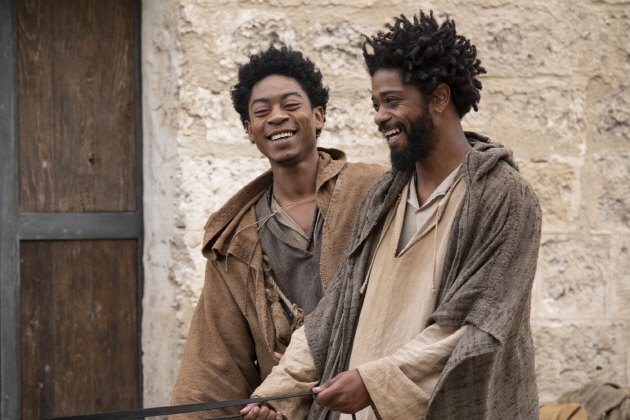
Jeymes Samuel’s latest film “The Book of Clarence”, which is currently available on Netflix in South Korea, is a middling biblical satire disappointing us in more than one aspect. While its story setup and premise are fairly amusing on the surface, the movie is unfortunately too shallow and deficient to work as a satire or a drama, and it is pretty much like a one-joke comedy feeling too long after quickly running out of its comic momentum.

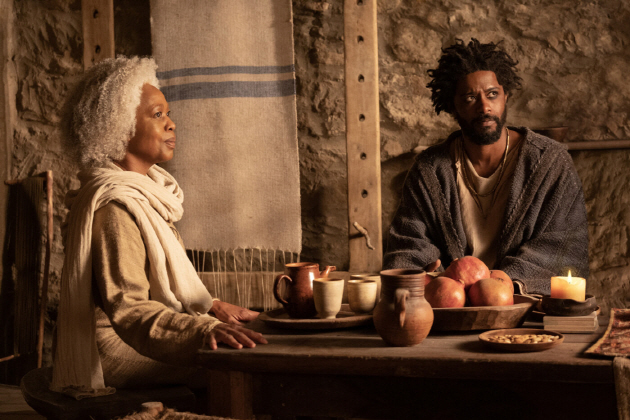
Set in Jerusalem in AD 33, the story is about a young small-time Jewish hustler named Clarence (LaKeith Stanfield). He and his friend Elijah (RJ Cyler) are currently in a big trouble due to owing a lot of money to a local gangster boss, and they must find any possible way to pay their debt within 30 days for not getting killed by their ruthless creditor.

After several attempts and failures, Clarence comes upon a seemingly good idea. Watching how a certain well-known figure and his 12 apostles including his own twin brother exert considerable influence on the people of Jerusalem, Clarence decides to be another apostle of his, and we get a little amusing moment when he approaches to those 12 apostles for proving himself. After seeing that they do not regard him that seriously, he chooses to do his own religion business instead, and Elijah willingly joins his business scheme along with Barabbas (Omar Sy), a hulking gladiator Clarence managed to liberate at one point.

Clarence’s first attempts of speaking out in front of the crowd are not exactly successful to say the least, but, what do you know, he soon gets to learn more of how to engage and motivate the crowd more. As a result, besides quickly getting a lot of money within a short time, he finds himself as widely regarded as another possible Messiah in the town, and those 12 apostles are certainly not amused to say the least.

Of course, things soon become all the more serious as Clarence comes to draw more attention from those Roman soldiers and rulers, who are already ordered to eliminate any possible Messiah in Jerusalem. In addition, as observing his growing power and influence on those people believing in him, Clarence naturally feels conflicted about his religion business, and that ironically makes him quite serious about faith and religion later in the story.

However, the screenplay by Samuel, who also serves as the composer of his movie, does not provide much wit or substance to the story. Yes, it is sort of refreshing to see a biblical film filled with black cast members, but the movie does not go that far from this interesting setup, and we only get a small laugh from the unexpected cameo appearance from a certain prominent white British actor, who incidentally looks quite unrecognizable under his heavy makeup at first. 

Above all, the movie often seems confused about how to present and regard its hero. On one hand, it just wants to laugh for a number of absurd moments around him, but it does not reach to the level of sheer absurdity and hilarity in “Monty Python’s Life of Brian” (1979). On the other hand, it also wants to be quite serious about its hero’s growing inner conflict along the story, but his bumpy quest for recognition and redemption is frequently marred by plot contrivance and superficial characterization.

LaKeith Stanfield, a wonderful actor who has steadily advanced during last 10 years since his breakout supporting turn in “Short Term 12” (2013), surely tries as much as possible, but his dual performance in here in this film surprisingly lacks spirit and interest compared to his recent better works including that Oscar-nominated performance in “Judas and the Black Messiah” (2021). Although he is effective to some degree as having some goofy fun early in the film, he is somehow not that convincing in Clarence’s spiritual transformation later in the story, and, above all, his two characters somehow do not click that well with each other during several scenes of theirs in the movie.

Furthermore, the movie also criminally wastes the talent of its various cast members. While RJ Cyler, Omar Sy, Micheal Ward, Babs Olusanmokun, David Oyelowo are hopelessly stuck in their thankless supporting parts, Alfre Woodard, Teyana Taylor, Anna Diop, and Marianne Jean-Baptiste manage to come and go with their dignity remaining intact, and James McAvoy gladly chews every comic moment of his while looking totally serious as Pontius Pilate. As a matter of fact, considering how effortlessly McAvoy can be both funny and loony, it is really a shame that the movie does not give him something as hilarious as that outrageously uproarious scene with Michael Palin as Pilate in “Monty Python’s Life of Brian”.

In conclusion, “The Book of Clarence” is two or three steps down from the considerable potential Samuel demonstrated in his previous film “The Harder They Fall” (2021). Although I did not like that film enough for recommendation, I admired its bold variation on many familiar genre elements, and that is the main reason why it is really disappointing to observe numerous failures in “The Book of Clarence” As reflected by its boldly anachronistic soundtrack, it certainly wants to do something really different, but it does not work well enough to hold our interest in addition to not surpassing anything in “Monty Python’s Life of Brian” at all, and I think you should watch that classic biblical comedy film instead – especially if you really want to be tickled a lot while also having some stuffs to reflect on.

Posted in Movies | Tagged , , , | Leave a comment

Mr. Robot (2025) ☆☆1/2(2.5/4): A modest SF animation film from South Korea

If it had come out around, say, 20 years ago, I might have been more generous to South Korean animation feature film “Mr. Robot”, which should not be confused with that popular American TV drama series of the same name. As watching it early in the morning at a local theater, my mind instantly compared the film to a bunch of similar works ranging from “Real Steel” (2011) to “The Wild Robot” (2024), and I was a bit dissatisfied mainly because the film is no more than an assembly of numerous familiar genre stuffs.

Set in a futuristic version of Seoul, the story quickly establishes its background via its opening action scene. When a robot suddenly becomes quite dangerous due to some malfunction problem, a special police squad is quickly dispatched to take care of this serious situation, and we soon meet its leader Tae-pyeong (voiced by Park Sung-young), who deftly and swiftly gets things under control once he and his squad members spot and then corner that malfunctioned robot.

Meanwhile, we are also introduced to Nana (voiced by Kim Yeon-woo), a young girl who has felt quite lonely and discontented mainly due to the constant absence of her parents. While her scientist father is usually busy with the ongoing research at his big robot company, her mother is mostly occupied with handling her own big business day by day, and Nana is quite disappointed for having to spend her birthday alone by herself again as only surrounded by her servant robots.

On that day, Nana’s father is going to present the prototype of the latest robot model from his company, but something quite unexpected occurs not long after that prototype robot is presented in front of him and others. The robot suddenly begins to target him for no apparent reason, and Tae-pyeong, who happens to be there with his several squad members just in case, instantly tries to stop it, but he only gets himself seriously injured before it was finally stopped.

Tae-pyeong’s unconscious body is taken to a hospital, but another unexpected thing happens. When he wakes up some time later, he is surprised to discover that his consciousness was somehow transferred to that prototype robot during that incident, and then he gets himself involved with Nana, whom he happens to save when she is in a serious danger due to a villainous figure responsible for her father’s death at that time. While still confused about his current status, Tae-pyeong instantly decides to run away along with Nana, and they are immediately pursued by not only that villain but also Tae-pyeong’s colleagues.

While staying at Tae-pyeong’s little apartment for a while, Tae-yeong and Nana get to know each other bit by bit. While treating Tae-yeong like any other robot in her possession, Nana comes to sense something special about him, and Tae-yeong becomes more protective of her because, well, she reminds him of his lost daughter as reflected by the occasional flashback scenes. As continuing to run away together, they depend and care about each other more than before, and there is a sweet little scene when they come to have a sort of father and daughter moment.

Of course, things eventually become more serious and melodramatic later in the story, and the film naturally pours plenty of action upon the screen. Although our robot hero looks rather simple and blunt on the surface, he is equipped with numerous different tools and gadgets inside his metallic appearance, and these tools and gadgets surely come handy during a number of action scenes in the film. In case of that villain, this nefarious figure has a big factory where hundreds of robots can be easily produced within a short time, and his robots, including a lethal female robot clearly borrowed from “Blade Runner 2049” (2017), are certainly ready to strike upon our robot hero at any time.

The overall result in the film is fairly competent on the whole, but I could not help but notice some deficiency in its technical aspects. For instance, the digital animation of the film sometimes feels too flat and bland, and the human figures in the film actually look more robotic than various robot figures in the film. As a matter of fact, this further emphasizes the superficial characterization of many of the human figures in the story, and I must point out that Tae-pyeong is relatively more expressive as a robot compared to when he was just a stiff human character early in the story.

At least, I cared about the unlikely relationship between Tae-pyeong and Nana along the story. As your average plucky little girl, Nana surely brings some spirit and charm to the film besides being more than a mere damsel in distress, and her bouncy personality is complemented well by the unflappable attitude of our robot hero, which looks gradually softened somehow as he shows her more of his human side.

In conclusion, “Mr. Robot”, directed by Lee Dae-hee (He previously made “Swimming to Sea” (2012), by the way), does not surpass its source of inspiration that much, and it feels instead like a modest test run for whatever may be achieved by the people behind it. Considering not only its relatively small production budget but also how rare it has been for me and many other South Korean audiences to watch a local animation film at theater for many years, the film does deserve some attention, but I still think it could be more creative and imaginative, and I sincerely hope that Lee will entertain me more in the next time.

Posted in Movies | Tagged , , , | Leave a comment

The Amateur (2025) ☆☆(2/4): Amateurish to say the least

“The Amateur” will not surprise or entertain you much for many bad reasons. Compared to all those countless spy thriller films during last several decades, the movie does not have any ounce of style and substance to distinguish itself at all, and you will only mindlessly follow its mechanical plot execution without much care or attention, while also occasionally depressed by the glaring waste of several talented actors on the screen.

Rami Malek, who is still in the search for any possible good role to go further than his Oscar-winning performance in “Bohemian Rhapsody” (2018), plays Charles “Charlie” Heller. a young data analyst/code breaker working for CIA. At the beginning, the movie shows Heller going through his daily work at the CIA headquarters, and we notice how, as your average nerdy dude, he is usually awkward around others whenever he is not doing one task to be handled after another alone by himself.

The only person really close to Heller is his wife Sarah (Rachel Brosnahan), who never asks that much while accepting how her husband is often too busy with whatever he does outside their cozy house. When she goes to London for her another business trip, she is rather disappointed that he cannot accompany her again, but he sincerely promises that he will go to London with her in the next time, even though his mind soon becomes busy with whatever he is supposed to handle next in his workplace.

However, a few days after his wife’s departure, there comes the shocking news. She got unfortunately killed during a terror incident which suddenly occurred in the middle of London, and Heller is certainly devastated to say the least. In the end, he becomes quite determined to track down those several figures associated with his wife’s death for himself, and his direct supervisor is naturally not so pleased about Heller getting too personal about the ongoing investigation on that terror incident.

However, Heller happens to have something to blackmail his director supervisor, who turns out to have been doing a lot of unauthorized operations behind his back. He eventually agrees to let Heller go through a bit of training session under a top-notch trainer working at the CIA recruit camp, and Heller promptly begins his training session, though it looks like he is woefully unprepared as his trainer correctly sensed from the very beginning.

Of course, as many of you already guessed, it is soon revealed that Heller is actually quite ready for what he carefully planned in advance. Once everything is set and ready for him, he immediately runs away and then embarks on his quest for revenge, and he later gets some assistance from one of his key informers, who reluctantly decides to help him despite the considerable risk from that.

While this is certainly quite a typical setup, the screenplay by Ken Nolan and Garry Spinelli, which is based on the novel of the same name by Robert Littell, often fails to develop the story and characters from that. While its hero is a rather flat figure despite Malek’s diligent efforts, many other characters in the story are more or less than bland and superficial archetypes, and this weak aspect is quite evident especially when Heller finally confronts a shady figure directly responsible for his wife’s death. Just like several other villains confronted by Heller, this figure is not particularly interesting or memorable, and that is why the finale feels like a mere whimper instead of feeling dramatic in any possible way.

In case of action, the movie does provide several action sequences as expected, but none of them is impressive or engaging enough to hold our attention, and its technical qualities are surprisingly substandard in my inconsequential opinion. For instance, despite hopping around many different locations around the world, the movie is frequently drenched so much in stark and murky color scheme that it actually looks quite sterile without generating much thrill or excitement, and that makes the whole movie feel all the more tedious.

Many of the notable cast members around Malek do not have many things to do except filling their respective spots as demanded. Although she brings a bit of warmth to her several scenes, Rachel Brosnahan is limited by her thankless role, and the same thing can be said about Caitríona Balfe, who also tries her best with her under-written supporting roles. In case of Laurence Fishburne, Michael Stuhlbarg, Holt McCallany, Julianne Nicholson, and Jon Bernthal, these ever-dependable performers simply come and then go as required without leaving much impression on the whole, and this is another big disappointment in the film.

In conclusion, “The Amateur”, directed by James Hawes, is a pretty amateurish genre piece which does not bring anything new to its genre territory while also failing to entertaining us in more than one way, and I must confess that my mind sometimes went to many other better spy thriller films out there while becoming less and less interested in whatever was happening on the screen. For example, I recently watched Steve Soderbergh’s new film “Black Bag” (2025), and that film has much more wit, interest, and thrill compared to “The Amateur”. Believe me, you will have a lot better time if you watch “Black Bag” instead of this mediocre product, and you may thank me for that later.

Posted in Movies | Tagged , , , | Leave a comment

Taxi Driver (1976) ☆☆☆☆(4/4): A disturbing urban masterpiece from Scorsese

Even after almost 50 years since it came out, Martin Scorsese’s 1976 film “Taxi Driver” still has the power to disturb and fascinate us. Here is a dark but undeniably compelling character study focusing on one very disturbed man and his festering evil, and you will be alternatively interested and alarmed as observing his descent into madness and violence along the story.

Needless to say, Travis Bickle (Robert De Niro) has been one of the most famous anti-hero figures in the movie history, but I noticed again how little the movie shows or tells about his past. At the beginning, we are told that he is an ex-marine who once served in the Vietnam War, but that is all we can know about his past. In fact, he does not seem to have anyone beyond his solitary life in the middle of New York City, though he writes a letter to his parents at one point later in the story.

Nonetheless, Travis comes to us as a vivid human figure to observe as Scorsese and his screenplay writer Paul Schrader skillfully and meticulously illustrate Travis’ aching loneliness and growing anger toward the society. As Schrader’s screenplay adds more detail to its hero’s life and personality, Scorsese and his crew members including cinematographer Michael Chapman palpably capture the urban atmosphere of New York City on the screen, and the frequent nightmarish qualities of the nocturnal scenes in the film give us more understanding on Travis’ increasingly unhinged state of mind, which is full of anxiety and anger fueled by all those seedy sights and figures on the streets and alleys of the city.

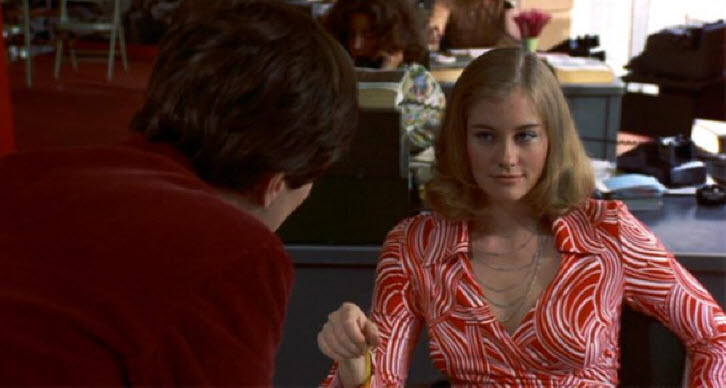
As he drives here and there around the city, Travis feels more isolated and lonelier than before, and he surely feels the need of any kind of human connection, but we observe again and again how clumsy and awkward he is in interacting with others around him – especially women. During one early scene, he tries to approach closer to a clerk working in a local pornography theater, but he only ends up alarming her. In case of Betsy (Cybill Shepherd, who is as alluring as she was in Peter Bogdanovich’s “The Last Picture Show” (1971)), a young beautiful woman working in the ongoing political campaign of a well-known senator, she seems interested when he finally approaches to her after watching her from the distance for a while, but she promptly rejects him without any hesitation when he unwisely takes her to one of his frequent pornography theaters. When he tries to approach to her again on the phone, a sense of rejection is so painful that even the camera soon moves away from him instead of watching him to the end.

What follows next is a textbook case of incel male violence. Getting angrier and moodier due to being rejected by Betsy, Travis becomes gradually obsessed with that senator she works for, and we soon see him buying several guns and then preparing for his spiteful assassination attempt step by step. However, he is still lonely and miserable as before, and that is quite evident from that iconic moment which has been imitated by many people including Robert De Niro himself (Remember “The Adventures of Rocky and Bullwinkle” (2000), folks?). “You talking to me?”, he keeps saying to himself in the mirror, and then that is followed by the one of the most revealing lines in the film: “I’m the only one here.”.

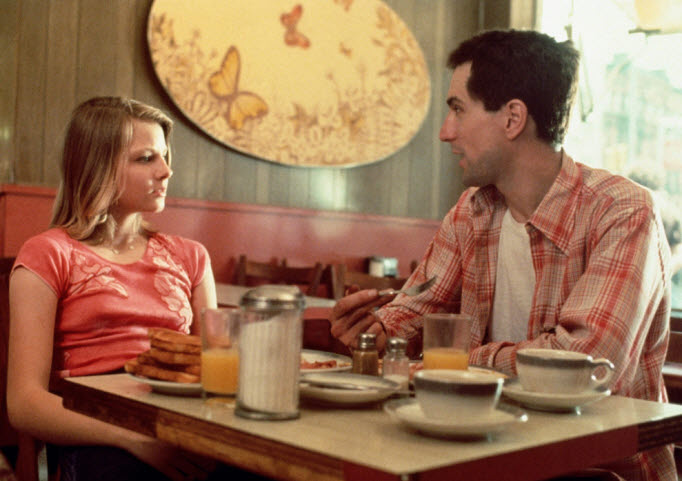
Meanwhile, Travis gets involved with another female figure who happens to be on his way. She is an underage prostitute named Iris (Jodie Foster in one of her first major roles), and Travis immediately feels the need to save her from those horrible people exploiting her, but, just like Betsy, Iris does not feel any particular need to be saved by him. This ironic situation between them is certainly reminiscent of John Ford’s classic film “The Searcher” (1956), where John Wayne’s hero character struggles to extract his kidnapped niece from a Native American tribe but she does not want that at all.

The movie becomes all the more disturbing for us as Travis is about to go beyond the point of no return, but Scorsese’s confident direction holds our attention to the end while never losing the control over the story and characters. After what inevitably happens due to Travis’ exploding madness, the camera phlegmatically and chillingly looks over the aftermath, and that is further accentuated by the broodingly dramatic score by Bernard Herrmann, a legendary film music composer who incidentally died shortly after finishing the recording of his score.

In the end, the movie arrives at the ambiguous ending which may actually be no more than the delusion of Travis’ disturbed mind, and De Niro’s unforgettable performance, which deservedly received an Oscar nomination, adds a small but significant touch to that. Yes, Travis seems to find some inner peace at last, but you may also wonder how long it will last, and De Niro subtly conveys to us another possibility of madness via a brief but disconcerting facial expression. (While watching the rough cut of the film, Herrmann correctly observed this: “You know, he’ll do it again.”).

On the whole, “Taxi Driver”, which happens to be re-released in South Korea yesterday, is one of the best works in Scorsese’s long and illustrious career, but we all also know that it is also something to handle with considerable caution. As shown from the assassination attempt on President Ronald Reagan in 1981, it has inadvertently influenced too many incel dudes like Travis out there, and even Scorsese’s subsequent work “The King of Comedy” (1983), which is sort of the comically straight-jacketed version of “Taxi Driver”, could not stop this at all (Just look at the disagreeable commercial success of Todd Philips’ “Joker” (2019), a hollow and toxic piece of work which shamelessly copies both films in many aspects). Despite all these troubles, “Taxi Driver” survives nonetheless, and I am sure it will certainly continue to intrigue and unnerve us as before.

Posted in Movies | Tagged , | Leave a comment

Akira (1988) ☆☆☆1/2(3.5/4): A chaotically striking Japanese animation film

I must confess that I scratched my head more than once when I watched Katsuhiro Otomo’s 1988 animation feature film “Akira” for the first time in 2010, which happens to be released in South Korean theaters yesterday. Yes, this is one of the most visually striking animation films I have ever seen, and my eyes were thoroughly dazzled to say the least, but my mind kept wondering what is exactly happening in the story.

Maybe that is because the film attempts a bit too much as trying to do a lot of things from Otomo’s classic manga series of the same name. Or, as my critic friend Michael Mirasol told me a few days ago, chaos and confusion are the whole point of the story, where its two lead characters keep struggling to understand what the hell is going on around them along the plot. Regardless of which explanation is correct, I chose to embrace its overwhelming visual qualities as watching it at a Dolby screening room this time, and I am glad that I watched it in this way.

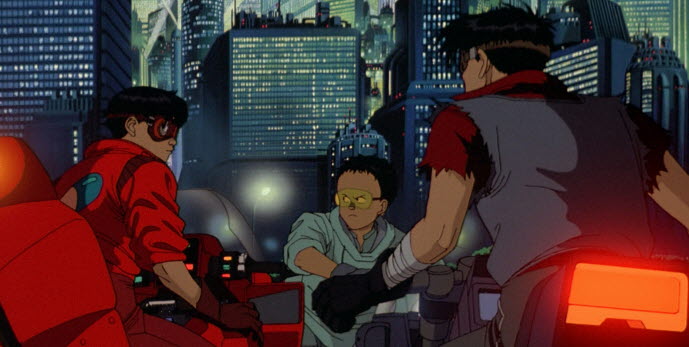
The story is set in New Tokyo, 2019, a futuristic city which was built after the former one was destroyed by one sudden massive disaster which started World War III in 1988. As watching all those towering skyscrapers in this dystopian background, you will be definitely reminded of not only Fritz Lang’s “Metropolis” (1927) but also Ridley Scott’s “Blade Runner” (1982), which incidentally came out in the same year when Otomo’s manga series did.

At the beginning of the film, we are quickly introduced to the two lead characters of the story: Shōtarō Kaneda (voiced by Mitsuo Iwata) and his best friend Tetsuo Shima (voiced by Nozomu Sasaki). They are the members of one of the local biker gangs in the city, and we soon get the intensely exhilarating action sequence where they and their fellow gang members clash with their main rival group.

Mainly because he wants to show that he does not need Kaneda’s protection at all, Tetsuo is quite determined to show more of his skill and guts, but then something unexpected happens. He has an accident when suddenly coming across an odd little figure who looks like an extremely aged boy, and, what do you know, he is soon taken along with that odd figure to somewhere by a bunch of soldiers under the command of Colonel Shikishima (voiced by Tarō Ishida).

While Kaneda is subsequently trying to find where his friend is, the plot thickens with more figures entering the picture. We meet two other strange figures who also look as aged as that odd figure. We get to know more about what Colonel Shikishima and other bureaucrats have been trying to hide behind their back. We see what he and his men do to Tetsuo, who becomes a new subject for their top-secret scientific experiment involved with the titular figure in the story. And we also watch the city being thrown into more chaos and violence as its citizens are more frustrated and furious about the incompetence of their city government.

In the midst of this chaotic circumstance, Kaneda encounters a young woman named Kei (voiced by Mami Koyama), who turns out to be involved with a sort of resistance group in the city. It seems that she and her colleagues try to stop what Colonel Shikishima and his men are attempting to do, and Kaneda eventually gets himself more into their situation because 1) he needs some help from them for finding Tetsuo and 2) he somehow got smitten with Kei right from their first encounter.

Around that narrative point, your mind may feel like being a bit overtaxed by all these and many other things in the story, but the film keeps things rolling via a number of unforgettable images to overwhelm and then haunt you for a long time. As he somehow gains a superpower way beyond his knowledge and control due to that scientific experiment, Tetsuo’s mind becomes more volatile and reckless step by step, and there is a nightmarish moment when his mind gets quite disturbed by the equally considerable psychic power of those three little odd figures, who turn out to have a poignant personal story later in the film.

In the end, everything expectedly culminates to the epic showdown between Tetsuo and Kaneda, who becomes quite determined to stop Tetsuo by any means necessary as his immense but uncontrollable power causes a lot of destruction in the city (I have to warn you that the depiction of violence in the film is quite brutal, bloody, and gruesome, by the way). Although things get quite frantic with a lot of bangs and crashes across the screen, Otomo and his crew never lose their focus on style and detail as well as story and character, and you may not mind at all even when their efforts go way over the top without any restraint.

On the whole, “Akira” will sometimes baffle you due to its rather murky and complicated plot which leaves a lot of things left unresolved and unexplained, but you will be impressed by its undeniable visual power, which has steadily influenced a lot of subsequent works such as Alex Proyas’ underrated SF masterwork “Dark City” (1998). Despite some glaring dated aspects (Its two substantial female characters feel flat and perfunctory, for example), the film is still capable of intriguing and then thrilling us even at this point, and I certainly admire it more than before.

Posted in Movies | Tagged , , , , , | Leave a comment

Cookie’s Fortune (1999) ☆☆☆1/2(3.5/4): A little Southern comedy by Altman

Roger Ebert once observed on Robert Altman: “There may not have been a director who liked actors more.” Altman’s 1999 film “Cookie’s Fortune” exemplifies that, and it is often fun to watch how its main cast members willingly embody the human eccentricities of their colorful characters. Every moment in the film clearly shows that Altman really enjoyed spending time with his cast members, and the result is a little but precious gem full of charm, humor, and that distinctive Southern atmosphere.

The movie is set in a small rural town of Mississippi during one Easter week. As this town is going through another night, everything seems quiet and peaceful, except the busy rehearsal of an amateur theater production of Oscar Wilde’s “Salome” at a local church. In fact, the policemen patrolling around the town are more occupied with their fishing matters than doing their routine job.

And then we meet Willis Richard (Charles S. Dutton), a black handyman working for a wealthy widow named Jewel Mae “Cookie” Orcutt (Patricia Neal). Having lived with his employee for many years, he has been pretty much like her best friend, and we can clearly sense the mutual affection between them when he returns from a local bar. He clumsily attempts to go inside the house without waking up Cookie, but he only ends up waking her up instead. Nonetheless, they have some hearty night talk while he cleans up her dead husband’s guns as he promised before.

However, on the very next day, Cookie decides to join her dead husband just because, well, she is reminded again that she has really missed him so much. While Willis is outside for several other things besides buying some groceries, she commits suicide in her bedroom. Her dead body is soon found by her two nieces Camille (Glenn Close) and Cora (Julianne Moore), who drop by Cookie’s house just for borrowing a certain precious glass object even though they have never have been that close to their aunt. As a haughty lady neurotically fastidious about her family reputation, Camille instantly decides to do some cover-up, and Cora does not object to this at all as a dowdy woman who has always been dominated by her overbearing sister.

Thanks to Camille, Willis later becomes the prime suspect in this “murder” case, but the movie does not hurry itself at all as leisurely doling out one absurd moment after another. Yes, the situation is indeed serious for Willis and several others who really care about him. However, Willis is rather phlegmatic about his circumstance, and there is an amusing moment when he casually plays Scrabble with not only his lawyer (He is the only lawyer in the town, by the way) but also one of the deputy sheriffs inside the jail of the police station (“I’ve fished with him”, he says as guaranteeing Willis’ innocence).

And this is just the beginning of many small humorous moments to follow. Quite confident that she will inherit everything from her aunt as her closest kin, Camille quickly embarks on taking over her aunt’s house. She is not deterred at all even after getting the sheriff’s warning, and her brief moment involved with a cookie jar is simply priceless to say the least. While promptly siding with Willis, Camille’s estranged daughter Emma (Liv Tyler) also cannot help but get drawn more to her ex-boyfriend who is now working as a deputy sheriff, and their constant mutual attraction functions as sort of running gag throughout the film. In case of an unflappable investigator entering the picture later in the story, he often finds himself getting baffled a lot during his interrogations of several eccentric town residents who supposedly saw Willis around the time of the “murder”. As a matter of fact, we are all the more amused as he seems quite oblivious to how two certain black ladies flirt with him together in the middle of one of his interrogations.

Even when everything in the story is about to be resolved as expected, the movie continues to take its time as before. Before eventually heading to its finale where a few hidden personal facts are revealed to our little surprise, the movie lingers a bit on Camille’s hilariously painstaking efforts on that amateur theater production of “Salome”. Altman’s affection toward his performers is apparent here, as he patiently pays attention to the small and big details of that modest stage performance.

Like many of Altman’s works, the main cast members of the film give a solid ensemble performance as bringing enough life and spirit to their respective parts. Although being a bit too exaggerated at times, Glenn Close delightfully chews every theatrical moment of hers as demanded, and she is complemented well by the relatively subdued appearance of Julianne Moore. While Liv Tyler and Chris O’Donnell generate enough romantic chemistry between them, Ned Beaty, Donald Moffat, Lyle Lovett, Courtney B. Vance, and Patricia Neal are colorful in each own way, and the special mention goes to Charles S. Dutton, whose amiable performance effortlessly holds the center around his fellow cast members.

In one of his reviews, Ebert said that he enjoyed comedies “where eccentric people behave in obsessive and eccentric ways and other, equally eccentric, people do everything they can to offend and upset the first batch.”. “Cookie’s Fortune” is surely a prime example, and this small but likable comedy film is too good to be merely forgotten as one of Altman’s several minor works between “Short Cuts” (1993) and “Gosford Park” (2001). Although it does not reach to the greatness of these two high points in Altman’s filmmaking career, it is still quite entertaining to observe Altman simply having a little fun time along with his talented performers, and you may want to savor their cheerful Southern comfort again.

Posted in Movies | Tagged , , | Leave a comment

Voices (2024) ☆☆☆(3/4): Personal memories of a massacre

South Korean documentary “Voices” simply listens to the testimonies from a bunch of people traumatized in one way or another by the massacres during the Jeju uprising during 1948 ~ 1949. Focusing more on the female victims and survivors, the documentary illuminates some hidden human aspects of the Jeju uprising, and it certainly reminds me that I and many other South Koreans still need to learn and remember more of the sheer human tragedies during that dark period.

First, let me give some background information for you if you do not have much knowledge on the Jeju Uprising, When the South Korean government was about to be officially established under President Rhee Syng-man via the upcoming elections in early 1948, many people in Jeju Island began to protest against this just because they did not want their country to be divided in half, and this eventually led to a big insurgency against the local police on April 3rd. President Rhee subsequently declared the martial law upon the island, and then the uprising was brutally suppressed by the local police, the South Korean military, and some right-wing thugs during next several months.

During that terrible time, around 30,000 civilians were massacred just because of being labeled as communists or collaborators. While many of these innocent victims were male, there were also lots of female victims, and the documentary later points out that many of these unfortunate women are not clearly identified while being simply recorded as somebody’s wife or daughter even at this point.

Although many of these female victims were killed at that time, some of them managed to survive, and the documentary introduces us several living survivors one by one as looking closer into their individual tragedies. In case of one of them, she is still haunted by the trauma and guilt from surviving alone by herself, and, not so surprisingly, she is not that willing to tell more about what happened to her and several other young women at that time.

Sadly, she and many other female survivors were forced to move on while never being allowed to talk about their respective personal traumas for several decades, and we can only imagine how much they suffered and endured in silence. At least, the South Korean government finally began to recognize the atrocities during the Jeju uprising not long after the democratization in the late 1980s, and there have actually been lots of efforts for recording and then preserving the testimonies from not only them but many other survivors. At one point later in the documentary, we see a small but valuable archival institute storing hundreds of recorded testimonies, and we are told that there may still be more human tragedies to be uncovered for getting the fuller picture of the atrocities during the Jeju uprising.

Like any other violent time throughout the human history, women were usually quite more vulnerable than men during the Jeju uprising, and the documentary often emphasizes this horrible aspect as often accompanying the testimonies with the brief moments of rough but striking animation. Those soldiers and policemen and right-wing thugs frequently preyed on young women just for satiating their sexual need, and nobody dared to stop this at all. Many of those raped women were killed later merely for silencing them forever, and there is a chilling moment when the documentary phlegmatically looks over a beach cliff where many of those raped women were thrown into the sea right after their execution.

Director Jee Hye-won also focuses a bit on how many of the female survivors of the Jeju uprising managed to continue their respective lives since 1949. After the Korean War during the early 1950s, the people of Jeju Island became all more silent about the Jeju uprising, and many of the female survivors had to take care of themselves as well as their remaining family members without getting much help from others around them. One female survivor reminisces about how hard she worked for many years as a sea woman, or “haenyeo”, not only around the island but also all other parts of South Korea, and she cannot help but become sad and regretful as remembering when she had to work in the sea while leaving her little son tied on the boat just for his safety.

Because all these and many other survivors do not have much time to live due to their old age, remembering their stories becomes all the more important these days, but I am quite concerned as reflecting on how troubling the South Korean society has been due to the considerable political turmoil caused by those right-wing nuts including President Yoon Seok-yeol, who was thankfully ousted two days ago after committing so much harm to the South Korean government and society during last three years. These deplorable people have actively tried to erase the memories and records of many national atrocities including what occurred during the Jeju uprising, and I am sure that they will keep trying that in the future.

Anyway, “Voices” overlaps with another recent South Korean documentary film “Until the Stones Speak” (2022) to a considerable degree, but both of them will inform you a lot on the human dimensions of their common historical subject. In addition, they will also give you more understanding on the historical context of Nobel Prize-winning South Korean author Han Kang’s recent novel “We Do Not Part”, whose story and characters are incidentally closely associated with the Jeju uprising. In my humble opinion, the Jeju uprising indeed needs more public awareness than before, and “Voices” certainly deserves to be watched by more audiences out there.

Posted in Movies | Tagged , , , , , , | Leave a comment