The Lord of the Rings: The Two Towers (2002) ☆☆☆1/2(3.5/4): The middle of an ambitious trilogy

Peter Jackson’s 2002 film “The Lord of the Rings: The Two Towers”, which is currently being shown in selected South Korean theaters, is an effective middle chapter of its ambitious trilogy. While you will surely need to watch “The Lord of the Rings: The Fellowship of the Ring” (2001) first, the movie is as wondrous and exciting as its predecessor as expanding the story and its fantasy world further, and I found myself enjoying it as usual when I watched it at a local theater today. 

The story, which begins right after the inevitable breaking of the Fellowship at the end of the first film, mainly consists of three separate narrative lines, and the first one is about the ongoing journey of Frodo Baggins (Elijah Wood) and Samwise Gamgee (Sean Astin), two young hobbits who must carry a powerful but dangerous magic ring to the dark territory of its malevolent creator for destroying it once for all. Without any guide for them, they soon get lost in the middle of somewhere near that dark territory, and then they encounter Gollum (Andy Serkis), a wretched and treacherous figure who once owned the ring before it accidentally came into the possession of Frodo’s uncle. Still under that seductive power and influence of the ring, Gollum tries to snatch the ring from Frodo, but, after his failed attempt, he comes to serve as a supposedly useful guide to take Frodo and Samwise to that dark territory.

Before the movie came out, I and many other audiences were quite curious about how Gollum would look like as a CGI character, and I can tell you again that some of the best moments in the film come from this alternatively pitiful and sneaky character. Vividly voiced and embodied by Andy Serkis, who would be revered as Ron Chaney of motion capture performances for CGI characters thanks to many notable movies such as Jackson’s “King Kong” (2005) and the recent trilogy of the Planet of the Apes series, Gollum gradually becomes a crucial part of the story instead of being a mere special effects demonstration, and things always get more unnerving whenever the movie focuses on his tricky inner struggle between his ever-growing obsession with the ring and his oath on serving Frodo as his ‘master’. 

Meanwhile, the movie also follows the ongoing search for two other hobbits in the story: Meriadoc Brandybuck (Dominic Monaghan) and Peregrin Took (Billy Boyd). Their three different comrades, Aragorn (Viggo Mortensen), Legolas (Orlando Bloom), and Gilmi (John Rhys-Davies), chase after a bunch of monstrous creatures who took away these two Hobbits, but then they come across the imminent danger upon a nearby kingdom. Eventually, they get involved more into this emergency along with Gandalf the White (Ian McKellen), who was supposed to get killed around the middle point of the first film but has now returned with much more power than before.   

The third narrative line involves with the adventure of Peregrin and Meriadoc, who manage to escape shortly before their captors are ambushed and then slaughtered. They subsequently run away into a nearby ancient forest filled with a lot of uncanny vibe, and that is where they come across a bunch of old tree-like creatures called the “ents”. I must say that these creatures sometimes look like wooden cousins of those big alien robots in those Transformer movies, but Jackson and his special effects team do not disappoint us at all as bringing enough life and personality to these interesting creatures. While Billy Boyd and Dominic Monaghan look convincing on the screen along with these CGI figures, John Rhys-Davis’s voice performance did a wonderful job of imbuing his CGI character with enough sense of age and power. Yes, these ents may usually talk and think pretty slowly, but they are definitely not someone you can mess with.

While taking its time in building up the narrative momentum, the movie often explores more of its fantasy world with a heap of nice touches and details to notice and admire. Again, many different wild landscapes of New Zealand are splendidly utilized for immersing us more into the world so palpably created inside the classic trilogy written by J.R.R. Tolkien, and I particularly appreciate more of some human moments observed from a number of minor characters in the story. Yes, many of the main characters are more or less than simple and broad archetypes, but the movie sometimes emphasizes what is being at stake for many ordinary people at the fringe of the story, and that is the main reason why we come to care more about the story and characters.   

In the end, the movie culminates to a big climax packed with a lot of actions unfolded simultaneously at several different places, and that is where Jackson and his crew members pull all the stops as expected. The digital special effects in the film look a bit dated especially during this part, but Jackson masterfully handles all these CGI spectacles with enough dramatic impact and intensity, and you will not complain at all although Tolkien himself might have found the movie a little too loud and violent for his taste, considering that his peace-loving hobbit characters always come first than any other character in the story.      

The main cast members of the film are solid on the whole. While Elijah Wood and Sean Astin eventually come to us as the small but precious soul and heart inside all those spectacles in the film, Ian McKellen has a lot of fun with his character as before, and several other notable cast members including Viggo Mortensen, Orlando Bloom, Bernard Hill, Christopher Lee, Hugo Weaving, Miranda Otto, David Wenham, Brad Dourif, Karl Urban, Liv Tyler, and Cate Blanchett are also effective in their respective supporting parts.

In conclusion, “The Lord of the Rings: The Two Towers” occasionally feels incomplete as the middle point between the first chapter and the following last chapter of its trilogy, but it still works a first-rate fantasy film thanks to Jackson’s confident storytelling and skillful direction. It did get me more energized for the concluding chapter to follow, and that says a lot about its effectiveness in my trivial opinion.

Posted in Movies | Tagged , | Leave a comment

Jay Kelly (2025) ☆☆☆(3/4): A star in middle-life crisis

Noah Baumbach’s latest film “Jay Kelly”, which was briefly shown in theaters before it is released on Netflix in this week, is a humorous story about the middle-life crisis of one big movie star. While it is quite typical in many aspects, the movie is packed with enough wit and insight as following its celebrity hero’s emotional journey, and it is also anchored well by the solid lead performance at its center.

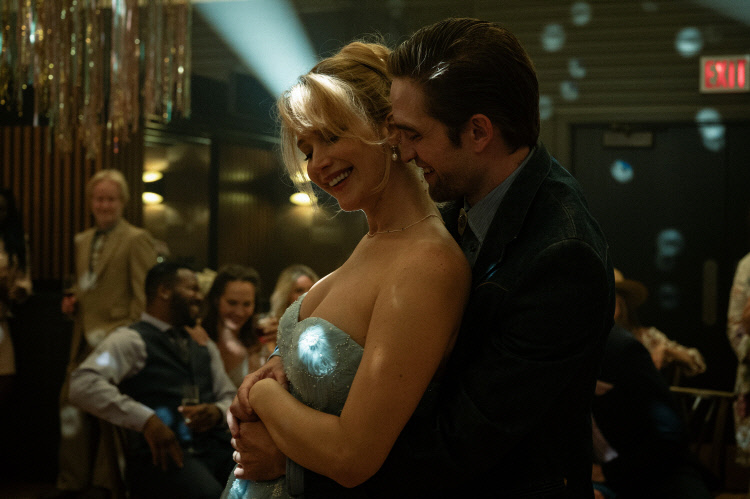
George Clooney, who gives one of his best performances here in this film, plays Jay Kelly, a famous Hollywood actor who has just finished shooting another movie at the beginning of the story. While he will soon move onto the next movie to shoot, Kelly wants to spend some little private time with his adolescent younger daughter Daisy (Grace Edwards) before that, but she is soon going to travel around Europe before beginning to study in John Hopkins University, and that reminds him again of how distant they are to each other at times.

Meanwhile, his longtime manager Ron Sukenick (Adam Sandler) brings him a sudden sad news. Peter Schneider (Jim Broadbent), an old filmmaker who gave Kelly a big career breakthrough many years ago, died, and Kelly cannot help but feel guilty for a good reason. When Schneider requested a bit of help from him not so long ago, Kelly flatly rejected Schneider’s request without much thought. As watching Schneider’s son remembering his father at the following funeral, Kelly feels all the more regretful, and then there comes another figure who knew him during those early years of his career.

Of course, Kelly comes to reflect more on where his life has been going, and then he makes a rather impulsive decision to the surprise of everyone around him including Sukenick. He decides to accept the life achievement award given by some prestigious film festival to be held somewhere in Italy, just because that will make a good excuse for meeting and then spending some time with Daisy, who has already gone to Europe along with several friends of hers.

Needless to say, things do not go that well for Kelly and his several close associates right from when they arrive in France via a private jet plane, and they end up being stuck with many passengers on a train going to Italy. Not so surprisingly, Kelly is instantly recognized by the passengers, and he certainly charms them a lot with his own presence and charisma. After all, he is played by Clooney, and we cannot possibly expect anything less than that, right?  

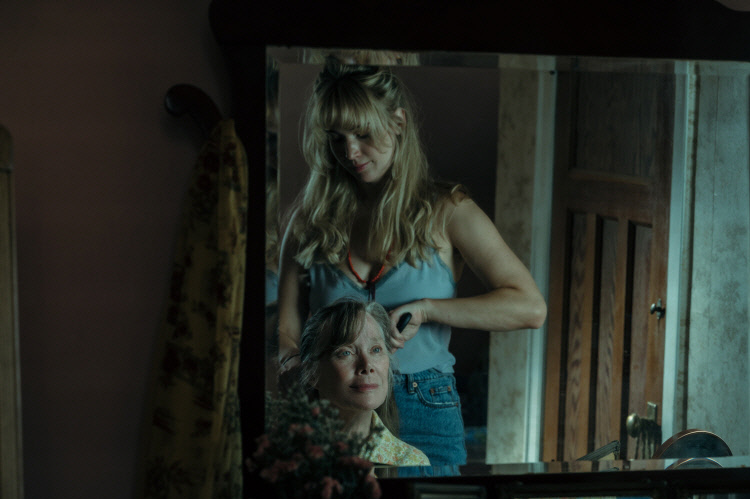
And we also get to know more about Kelly’s many human shortcomings. As he sometimes looks back on his past, he comes to see more of how he has often ruined his relationships with a number of people close to him including Daisy and her older sister Jessica (Riley Keough), who has distanced herself from her father a lot for years. During one flashback scene, he sincerely tries to fix his damaged relationship with Jessica, and then he only ends up running away from facing her longtime pain and resentment caused by him.

In case of Daisy, she is not so amused to see her father again, and Kelly miserably fails to persuade her to join him in that film festival in Italy. In the end, only his aging father attends a little celebration party with Kelly, and Kelly’s father surely reminds Kelly of how Kelly is not so different from his father as becoming a lousy father just like him.

The screenplay by Baumbach and his co-writer Emily Mortimer, who also served as one of the executive producers of the film besides briefly appearing in the opening scene, feels a bit too leisurely at times, but it still engages us with several well-written moments to observe. Besides sharply observing how messy its hero’s private life, the movie also pays some attention to several main characters revolving around him, and it is poignant to observe how much Sukenick has devoted himself to Kelly’s career. Sukenick frequently disappoints his wife and kids a lot along the story due to being always busy with handling all those matters involved with Kelly, but they accept that simply because they understand and love him, and his loving relationship with his family surely makes a contrast with Kelly’s problematic relationship with his kids.

During the last act, the movie becomes more predictable, but it remains buoyed by its overall lightweight mood. Besides deftly handling the wonderful extended shot of the opening scene, cinematographer Linus Sandgren, who previously won an Oscar for Damian Chazelle’s charming musical film “La La Land” (2016), did a splendid job of filling the screen with warm and intimate atmosphere, and that is often accentuated by Nicholas Britell’s witty score.  

As Clooney, who has surely been aged enough to play his character, effortlessly holds the center, a number of various performers have each own moment to shine. While Riley Keough and Grace Edwards are terrific as Kelly’s two different daughters, Laura Dern, Billy Crudup, Stacy Keach, Jim Broadbent, Patrick Wilson, Greta Gerwig, Isla Fisher, and Alba Rohrwacher are effectively cast in their small supporting parts, and Adam Sandler, who previously collaborated with Baumbach in “The Meyerowitz Stories (New and Selected)” (2017), demonstrates again that he can ably dial down his rather abrasive comic persona for the more serious sides of his acting talent.

Overall, “Jay Kelly” is less impressive compared to Baumbach’s previous Oscar-winning Netflix film “Marriage Story” (2019), but it is at least two or three steps up from the disappointment of “White Noise” (2022), another recent Netflix film from Baumbach. I must point out that the movies about affluent white man’s middle-life crisis have been dime a dozen for years, but the movie is a fairly good one at least thanks to its competent handling of story and characters, so I will not grumble for now.

Posted in Movies | Tagged , , | 1 Comment

Sirāt (2025) ☆☆☆1/2(3.5/4): In the middle of a stark existential wasteland 

“Sirāt”, which was recently selected as the Spanish submission to Best International Film Oscar, impresses me a lot with its stark existential wasteland. As its few main characters are merely heading to somewhere across that vast and remote wasteland, the movie often captivates us with its striking visual qualities, and you will admire that more once you come to see what and how it is about.

The movie opens with a big outdoor rave party being held in the middle of some wasteland region of southern Morocco. After the camera wanders here and there around many different European people, the movie eventually comes to focus on a guy named Luis (Sergi López, who looks much shabbier compared to his memorably villainous role in Guillermo del Toro’s “Pan’s Labyrinth” (2006)). He comes along with his young son just for looking for his daughter, and they keep asking a number of people whether they saw her or not, but they only get frustrated more and more as time simply goes by. It seems that nobody saw her at all, and all they can learn is that she could already go to some other spot where another rave party is being held,

Anyway, not long after the arrival of this father and son, the rave party is aborted by the local soldiers due to a sudden global crisis. While most of the attendees follow the evacuation order, a small group of people impulsively decide to drive away and then go to another rave party, and Luis also chooses to follow after them mainly because he believes that they will probably lead him to his daughter’s whereabouts.

Of course, they soon come to see how the situation is much more serious than they thought at first. At one point, they see hundreds of local people evacuating from their region, but they are not so bothered about this while merely annoyed by how it becomes more difficult for them to get more fuel for their vehicles. Fortunately, despite being woefully unprepared for his journey, Luis can provide a bit of help to his new friends, who later help him and his son when his car cannot go across a rather wide stream unlike their vehicles.

Remaining distant to its story and characters, the screenplay by director/co-producer Óliver Laxe, who won the Un Certain Regard Jury Prize at the 2019 Cannes Film Festival for his previous film “Fire Will Come” (2019), and his co-writer Santiago Fillol provides a bit of spirit and humor while its main characters look more like driving into nowhere. As they keep driving their vehicles across a series of endless wastelands, you will probably be reminded of George Miller’s great science fiction action film “Mad Max: Fury Road” (2015), and we later get a little humorous moment when they suddenly decide to drive their vehicles faster for a while.

However, things gradually become more unnerving for the main characters as they drive deeper and deeper into the wasteland region. Although it seems the world is falling apart rapidly according to the radio news reports, they are still not so concerned about that while only focusing on getting to their aforementioned destination, and the movie comes to feel more like an existential drama along their seemingly endless journey.

And then something quite devastating happens later. For avoiding spoiling anything for you, I will only tell you that 1) the main characters of the film have to drive along a route as perilous and suspenseful as the one shown in Henri-Georges Clouzot’s great thriller film “The Wage of Fear” (1953) and 2) you will be surprised by how this sequence subsequently throws a shocking moment for its inevitable dramatic punctuation.     

This sequence certainly resonates a lot with the very title of the movie. Not long after I watched the film, I came to learn about its meaning thanks to my friend Wael Khairy, and that surely made me reflect more on what I observed from the climactic part of the movie. In Islamic belief, the Sirāt Bridge is a narrow and risky bridge which every person must cross on the Day of Judgment to enter Paradise (Jannah). This bridge is not only thinner than a hair but also sharper than a sword, and the faithful can cross this pretty easily, while those sinners may fall into Hell below. When one of the main characters tries what can be regarded as sort of a crossing of faith across a very dangerous area just like that, you will surely come to brace yourself more.  

The film is basically an exercise in style and mood, but Laxe and his crew members including cinematographer Mauro Herce and composer Kangding Ray, whose electronic score deservedly won Cannes Soundtrack Award when the movie was premiered at the Cannes Film Festival early in this year (It also won the Jury Prize along with Mascha Schilinski’s “Sound of Falling” (2025), by the way), did a splendid job of filling the screen with a stark sense of existential dread. The main cast members besides López are actually non-professional performers, but they look convincing in their respective roles, and López subtly takes the center while never trying to outshine his fellow cast members.

In conclusion, “Sirāt” is one of the most interesting films of this year, and I am willing to revisit it soon for appreciating more of its distinctive mood and style. Although I must point out that I was a bit disappointed with its eventual arrival point, the rest of the film vividly remains on my mind even at this point, and that is more than enough for recommendation in my inconsequential opinion.

Posted in Movies | Tagged , , | 1 Comment

Sorry, Baby (2025) ☆☆☆1/2(3.5/4): Before and after what happened to her

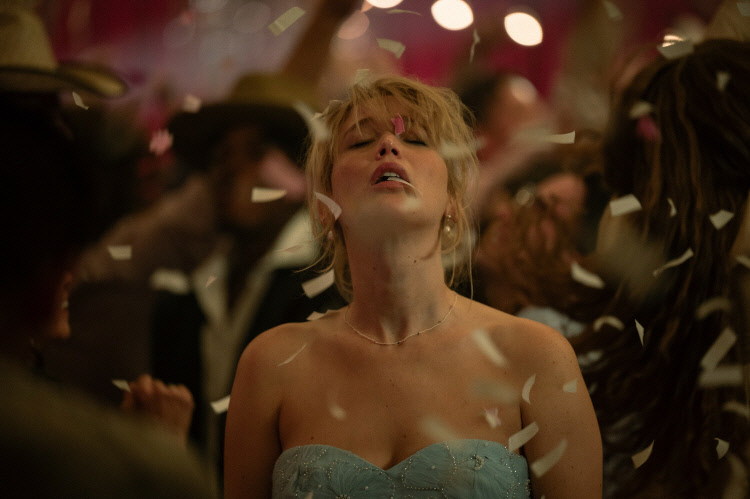
During the first 20 minutes of Eva Victor’s first feature film “Sorry, Baby”, I observed that its heroine is living a wonderful academic life which would have been envied by my late mentor/friend Roger Ebert, who could have taught literature or writing at college if he had kept studying for his doctoral degree course instead of continuing to work in Chicago Sun-Times. She is a fairly young (and popular) literature professor in some liberal arts college in a rural New England region, and she also lives alone in a nice and cozy house where she can work or read alone by herself. Watching her surrounded by many books at home, I could not help but become a bit jealous of her – and Roger could have felt pretty much the same in my inconsequential opinion.

Although it feels a little spirited during its opening part, the movie turns out to be much more serious than expected as gradually delving into what she has lived for a while. Considering that the two reviews I read several months ago did not reveal that much to me, I will also try not to reveal too much here, but I strongly recommend you not to read further if you want to experience its dramatic impact as fully as possible. 

The movie, which consists of several acts, begins with the casual weekend between Agnes (Eva Victor) and her best friend Lydie (Naomi Ackie) at Agnes’ house. Lydie, who is currently married, recently becomes pregnant via in vitro fertilization (IVF), and Agnes is certainly glad about that as her very close friend, but we come to sense that Lydie comes mainly for checking on Agnes’ current status – even when they frankly talk about sex and men. 

That becomes all the more evident to us when they later have a dinner with several others who studied along with them for their doctoral degree under some prominent professor some time ago. When one of them talks a bit too much about Agnes and their adviser, the mood becomes quite awkward to say the least, and Lydie makes some indirect criticism on that not long after Agnes suddenly leaves the spot for a moment.

The movie subsequently goes back to their graduate school years at the same liberal arts college where Agnes currently works. As their adviser keeps praising and encouraging her much more than the other students studying under him, Agnes certainly feels proud and excited, and she is not so concerned at all even when she recognizes to Lydie later that her adviser may actually be not so interested in her academic talent or potential.

In the end, there comes a moment which will affect Agnes and her life forever. The movie wisely distances itself from what happens to her, but the following dramatic impact is quite palpable to say the least. Although the camera simply watches her phlegmatically driving her car to her residence for a while, that is more than enough for us to sense how confused and devastated she really is.

As Agnes struggles to process what happened to her, the movie effortlessly swings between harrowing sensitivity and some dark humor. Fortunately, she gets full emotional support and consolation from Lydie, and that surely helps her a lot – especially when she comes to see that her school is more occupied with maintaining its reputation and avoiding any responsibility. Nevertheless, she does not lose her quirky sense of humor, and there are actually several little humorous moments including the one where Agnes frankly and blatantly confides to Lydie on what she could have done out of her anger and pain.  

And we observe more of how complicated Agnes’ situation has been. As trying to leave behind what happened to her, she kept going in her graduate course, and she gets promoted quite quickly once she began her academic career there. However, as reflected by a brief scene between her and a bitter colleague of hers, she cannot deny that what happened to her is one of the crucial factors in her rather fast career advancement, even though it is also true that she earns her recent promotion via her talent and intelligence. 

While clearly recognizing its heroine’s complex emotional state, Victor’s screenplay, which incidentally received the Waldo Salt Screenplay Award when it was premiered at the Sundance Film Festival early in this year, simply illustrates how she struggles to live more. There is a funny and intimate scene between Agnes and a male neighbor quite willing to accept a certain need of hers, and I was particularly touched by when Agnes finds an expected source of comfort at one point in the story, which will be appreciated a lot by any cat lovers out there (Full Disclosure: I am also a cat lover, though I am too busy with taking care of myself to have a cat).

Victor’s strong lead performance ably holds the center, and this promising new filmmaker also draws good supporting performances from the main cast members of the movie. While Naomi Ackie, who was also wonderful in Bong Joon-ho’s “Mickey 17” (2025), brings extra warmth and humor to her several key scenes with Victor, Kelly McCormack, Lucas Hedges, Lucas Hedges, Hettienne Park, E.R. Fightmaster, and John Carroll Lynch are also effective in their respective supporting parts, and, though he only appears in one single scene later in the movie, Lynch reminds us again that he is indeed one of the most dependable character actors working in Hollywood at present.

In conclusion, “Sorry, Baby” is superlative for its thoughtful and sensitive storytelling as well as a number of stellar performances to remember. It surely shows that Victor is another promising American filmmaker to watch, and I will have some expectation on whatever may come next from this new interesting filmmaker after this remarkable debut work.

Posted in Movies | Tagged , | 1 Comment

Planes, Trains and Automobiles (1987) ☆☆☆☆(4/4): An enduring Thanksgiving Day classic

As a South Korean who has seldom left his country during last 42 years, I have never experienced Thanksgiving Day for my whole life, but I could not help but amused and touched by John Hughes’ 1987 film “Planes, Trains and Automobiles”. While it looks like your average Thanksgiving Day season movie on the surface, the movie works as a surprisingly moving comedy of human nature and understanding, and I found myself again freshly learning its invaluable life lessons. 

The biggest reason for that is how I soon found myself wincing and cringing again thanks to one of its two lead characters. Yes, Del Griffith (John Candy), who is merely a traveling shower curtain ring salesman, is certainly a certain type of person who will make your eyes roll for good reasons, and I was annoyed again by his many flaws during the first 30 minutes of the film, but, surprise, I came to accept, tolerate, and understand him a lot just like I did when I watched the film for the first time around 20 years ago.

The secret of the success of the film is having someone who can function as an effective counterpoint to Del in addition to being changed a lot by his presence and influence. He is a New York City advertisement company executive named Neal Page (Steven Martin), and the first half of the movie has a lot of naughty fun with his amounting frustration from how he keeps struggling to get back in his family home in Chicago before Thanksgiving Day. First, he has to endure his boss’ exasperating indecisiveness on their latest project. Second, he must hurry to get a cab to take him to the airport, and, of course, he spectacularly fails to his annoyance, Third, he manages to arrive at the airport in time, but, what do you know, his airplane to Chicago gets not only delayed during next several hours but also has to land in somewhere else due to an unexpected snow storm in Chicago.

 In the midst of this unbelievable series of bad luck, Neal finds himself stuck with Del, who looks like the cherry on the top of the amounting layers of troubles for Neal. Right from their first formal introduction to each other, Del annoys Neal a lot to say the least, so Neal tries to distance himself away from Del’s friendly approach as much as possible, but, of course, he only gets more stuck with Del, especially when they come to stay in a motel after their airplane landed somewhere in Kansas instead. During the next several hours, Neal comes to learn more of how annoying Del can be in one way or another, and we are not so surprised when he eventually reaches to the breaking point and then becomes very, very, very brutally honest about Del’s many shortcomings.

And that is when the Huges’ screenplay comes to show much more heart than we expected. As cinematographer Donald Peterman’s camera focuses on Del’s face, we come to gather how much Del feels hurt by Neal’s brutal honesty, and it is also implied that this is not the first time when Del unintentionally rubs out others in wrong ways. Once Neal’s rather harsh assessment on his personality is over, Del makes a defiant and poignant argument on how he is not ashamed at all of who he is, and we are not so surprised when Neals soon regrets about what he just said to Del.

Once its two lead characters are established enongh for more development, the movie doles out a series of uproarious comic moments as they go through a series of ups and downs on their road to Chicago. In case of one particular scene which is probably the sole reason for the movie getting rated R, it has one of the most hilarious utilizations of a certain F-word, and the simple but undeniably priceless punchline for this very funny moment still tickles me a lot. I also enjoy that loony highway scene which virtually goes all the way for more laughs, and its coming timing is simply exquisite from the beginning to the end.

Just like many other American comedy films in the 1980s, the movie has some dated aspects to notice. The score for Ira Newborn, who has been mainly known for his contribution to the Naked Gun Trilogy, is mostly effective, but it feels rather old whenever it becomes dominated by those old-fashioned synthesizers, and that reminds me of why I personally believe that those supposedly cool contemporary electronic scores by Trent Reznor and Atticus Ross will quickly be old-fashioned just like that within 20 years. In case of that famous “Those arent’s pillows!” scenes, it only seems to exist for removing the possibility of any homosexual subtext between Neal and Del, while also unintentionally showing some homophobia. 

Nevertheless, Huges’ deft handling of his main characters still shines a lot with a lot of caring and affection, and Steve Martin and John Candy are an impeccable comic duo ably complementing each other from the beginning to the end. Martin brings genuine humanity to his role while never stepping away from his character’s neurotic side, and he is also believable as his character comes to accept and then care about Del a lot more than expected around the end of the story. On the opposite, John Candy imbues his character with a lot of good-natured jolliness and sincerity, and he also did a splendid job of adding subtle moments of pathos to his character.

 In conclusion, “Planes, Trains and Automobiles” has a lot of wonderful things to make into an enduring holiday season to be cherished, and it can be said that it sets a precedent for many different subsequent movies including Oscar-winning film “Rain Man” (1988). Like that classic film, “Planes, Trains and Automobiles” makes an indelible point on the importance of accepting and understanding others in our life, and I think the movie will keep giving that invaluable lesson to me as before.

Posted in Movies | Tagged , , | Leave a comment

The Color of Pomegranates (1969) ☆☆☆(3/4): The life of an Armenian poet

In my humble opinion, a good movie can reach to your heart and mind, no matter how vague and elusive it is in what and how it is about. In case of Sergei Parajanov’s 1969 film “The Color of Pomegranates”, which was incidentally released in South Korean theaters in last week, you will likely be left with a lot of bafflement on what it is really about, especially if you do not know anything about its main subject in advance. To be frank with you, my mind became befuddled again when I watched it yesterday, but my heart was also reminded again that its rough but mesmerizing cinematic beauty is definitely something singular to behold.

Although he has been regarded as one of the greatest filmmakers in the 20th century, the works of Parajanov, who died in 1990, have been sort of an acquired taste to me. Before watching “The Color of Pomegranates”, I watched his another acclaimed work “Shadows of Forgotten Ancestors” (1965), but that film also baffled me a lot although it may be a bit more accessible in comparison. Right after watching it, I moved onto “The Color of Pomegranates”, but I was not wholly enthusiastic, unlike many other critics and filmmakers who cherished the film a lot as it slowly emerged from obscurity during last 46 years.

 The movie is supposed be about the life and career of a 17th century Armenian poet named Saya-Nova (1712 ~ 1795), but, folks, this is not a conventional biography film at all. Here in this film, Parajanov tries a very unorthodox artistic approach on his main subject without any apparent narrative line to hold our attention, and the movie mainly consists of a series of seemingly random individual scenes which are supposedly derived by the life and works of Saya-Nova.

You will surely get quite confused and confounded during its first 10 minutes as I did again, but you may also admire what Parajanov, who also edited the film along with M. Ponomarenko and Sergei Yutkevich, and his crew members including cinematographer Suren Shakhbazyan and composer Tigran Mansuryan are trying to achieve on the screen. Many of the key scenes in the film evoke the statically ordered composition of tableaux vivants for vividly conveying to us the artistry of the works of Sayat-Nova and their cultural/religious backgrounds, and I paid attention especially to how often Parajanov often adds some slight physical movements to the mise-en-scène of many of the key scenes in the movie. For example, he frequently adds an object moving back and forth like an pendulum in the background, and now I wonder whether this little artistic touch symbolizes the passage of time, though what my late mentor/friend Roger Ebert once said comes to my mind: “If you have to ask what it symbolizes, it didn’t.”

In case of those various images in the film, some of them will surely remain in your mind for a while for their striking visual quality. The opening scene is quite impressive as a number of various objects including a knife and, yes, three pomegranates are presented one by one on a piece of white sheet, and we later get the hunting image of the knife covered with the juicy fluid from the crushed pomegranates. In case of a part involved with a youthful romance in Sayat-Nova’s life, this part is unfolded inside a confined space which supposedly stands for a local palace, and Sofiko Chiaureli, who played various roles in the film including “Poet as a Youth”, provides several beguiling moments as a young beautiful woman who seems to be the object of desire for Saya-Nova.

Meanwhile, I came to notice more of several other interesting things in the film during my second viewing. The early part of the movie presents “Poet as a child”, played by Melkon Aleksanyan, and there is a brief but fascinatingly voyeuristic moment when this young boy has some sneaky peek on a local bathing place. Along with him, the movie lovingly looks at the full body of a man, and then there comes a shot showing a naked female torso whose one of the two breasts is covered by a shell. This somehow reminded me of that infamous line from Stanely Kubrick’s Roman period film “Spartacus” (1960): “My taste includes both snails and oysters”.

According to Wikipeida, Parajanov was actually a closeted bisexual who has some serious trouble with the Soviet government, which persecuted him a lot for his bisexuality and several other reasons such as his political involvement surrounding Ukrainian nationalism. Not long after “The Color of Pomegranates” was made, he got arrested and then sentenced to five years in a hard labor camp for homosexuality, and that was just one of many troubles he had with the Soviet government throughout his life and career.

And the movie also went through a pretty hard and difficult time during the same period. Mainly due to its avant-garde style defying against the social realism style of many other contemporary Soviet films during that period, the movie was quickly rejected by the Soviet censors and officials, and the movie subsequently went through a considerable modification process just for making it a bit more accessible to the public. In fact, the very title of the movie was actually not the original one (The original title was simply “Sayat-Nova”).

Fortunately, the movie later went through the 2014 restoration by Martin Scorsese’s Film Foundation in conjunction with Cineteca di Bologna, and the result has been wholeheartedly embraced by many critics and movie fans around the world. In addition, it becomes all the more accessible now thanks to the release of the Criterion blu-ray edition in 2018 (Needless to say, Criterion did not disappoint us at all).    

On the whole, “The Color of Pomegranates” is quite an admirable arthouse film even though I still do not understand and like it that much even at this point. I only give it three stars now mainly because of this reason as well as its adamantly befuddling nature, but I am also willing to revisit and learn more from this remarkable artwork which has surely occupied a very important place in the cinema history. Anyway, I am glad that I watched it at a local movie theater along with several other equally baffled audiences yesterday, and I will remember this interesting movie experience at least for a while.

Posted in Movies | Tagged , | Leave a comment

Kontinental ’25 (2025) ☆☆☆(3/4): A bailiff who cares a lot

Romanian filmmaker Radu Jude’s “Kontinental ’25”, which is one of the two films from him during this year, amused me to some degree. While being relatively less edgy and provocative than his two previous film “Bad Luck Banging or Loony Porn” (2021) and “Do Not Expect Too Much from the End of the World” (2023), the movie is still as absurd and engaging as you can expect from Jude, who has risen as another interesting Romanian filmmaker to watch during last several years.

At first, the movie simply regards the daily life of an old homeless man living in Cluj, Romania. While almost penniless at present, he has lived in the basement of some old building to be demolished sooner or later, and, not so surprisingly, he is later visited by a female bailiff named Orsolya (Eszter Tompa) and several policemen, who are soon going to evict him out of the basement as ordered by the local court. Once he sees that resistance is futile, the old man asks for some time for gathering his private stuffs before eventually getting evicted, and Orsolya and the policemen have no problem with that at all.

However, a very unexpected thing occurs while they wait outside the building. When they return later, they are shocked to discover that the old man committed suicide in a rather grisly way, and Orsolya soon finds herself ridden with a lot of guilt in addition to being blamed for his death by numerous local social media users out there. Incidentally, many of these local social media users emphasize a lot on her specific ethnic background (She is a Romanian of Hungarian descent, by the way), and this certainly exasperates her more.

Needless to say, everyone around her says that she does not need to blame herself at all, but Orsolya continues to wonder more about whether she is responsible for the old man’s death, while nobody gives any definite answer for that. For instance, her husband is more occupied with their upcoming vacation in Greece, and, not so surprisingly, she later decides not to go to Greece along with him and their kids. One of her close friends tries to console and then advise her a bit during their little private meeting, but her friend only comes to show more of her own hypocrisy on many others in the city as disadvantaged as the old man. In case of her mother, the mood seems cordial between them at first, but they only end up arguing with each other over some petty matters, before Orsolya eventually leaves her mother’s apartment.

These and several other key scenes in the film are presented in considerably long and static extended shots, and this will not surprise you much if you are familiar with some of many notable Romanian films during last 20 years. For example, I still remember how long a certain extended scene in the second half of Corneliu Porumboiu’s exceptional comedy film “12:08 East of Bucharest” (2006) is – and how funny and compelling that scene is even though the camera simply observes the absurd situation of its three main characters from its static position without any interruption. In case of Jude’s “Do Not Expect Too Much from the End of the World”, it just presents its finale in static extended shot, but we gradually get its bitter and sardonic point while a lot of things happen in front of the static camera, and that is another big laugh from the film.

Compared to these two films, “Kontinental ’25”, which won the Silver Bear for Best Screenplay at the Berlin International Film Festival early in this year, feels less focused and more scattershot. I must confess that I sometimes scratched my head on what it is exactly about during my viewing, but I appreciate how deftly Radu handles those key scenes presented in extended shots. As the center of the film, Eszter Tompa is splendid as her character often swings back and forth across many different emotional modes, and several other main cast members including Gabriel Spahiu, Adonis Tanța, Oana Mardare, Șerban Pavlu, and Annamária Biluska function as an effective counterpart to Tompa during their respective scenes.

The funniest part in the movie comes from the encounter between Orsolya and her former student, who currently works as a delivery man. Although he does not like his current job much, this lad is pretty vivacious to say the least, and we are not so surprised when Orsolya later meets him not long after her husband and kids went away to Greece. When they talk with each other at a bar, he enthusiastically tells several morbidly amusing anecdotes involved with real-life Buddhist monks, and I assure you that you will have some good laughs even while wincing a bit for good reasons.   

Although you will be a bit disappointed with its rather fizzling ending, you may remain amused by a number of nice humorous touches throughout the film. In case of one particularly offbeat detail during its opening part, you will be caught off guard at first, but you will probably laugh a bit more when that appears again later in the film. The movie also makes some indirect points on the post-socialist economics of the Romanian society and the housing crisis associated with that, and this aspect becomes more evident when the camera simply observes several buildings in the city one by one before the end credits.

In conclusion “Kontinental ’25”, whose title is incidentally inspired by Roberto Rossellini’s 1951 film “Europe ‘51”, is less impressive than “Bad Luck Banging or Loony Porn” and “Do Not Expect Too Much from the End of the World”, but it is still interesting enough for recommendation in my trivial opinion. Again, I merely admire Jude’s filmmaking talent instead of being quite enthusiastic, but I am willing to keep following his career nonetheless, and that is all I can say for now.

Posted in Movies | Tagged , | 2 Comments

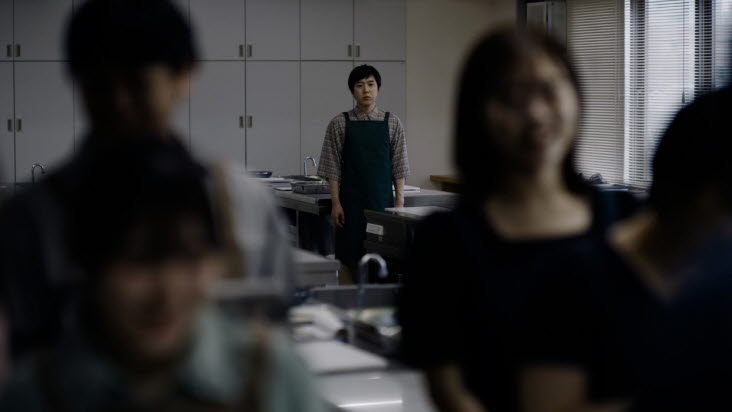
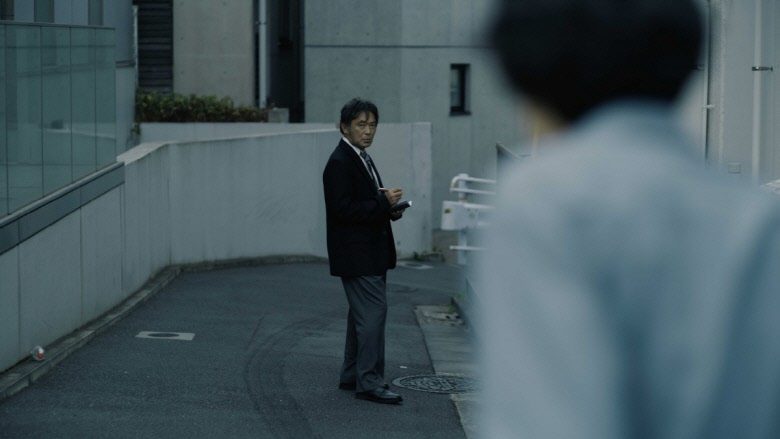
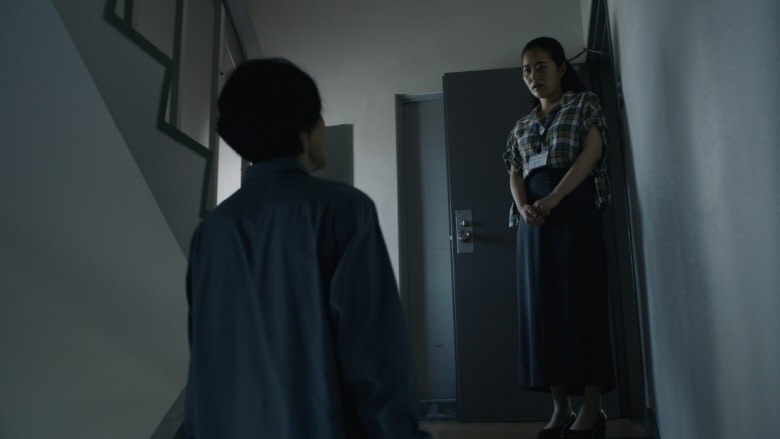
Kokuho (2025) ☆☆☆(3/4): Becoming a living national treasure

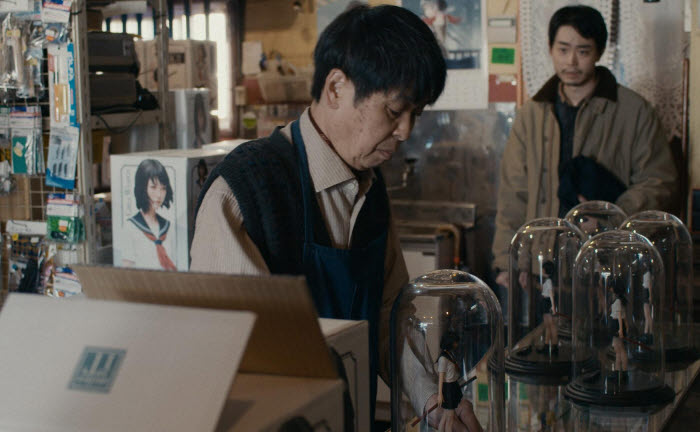
Japanese film “Kokuho”, which was selected as the Japanese entry to Best International Film Oscar at the 2026 Academy Awards, is an ambitious backstage drama to behold. Yes, this is another typical story about that hectic price of artistic achievement and success, but I admire its confident handling of mood and detail, even though I often found myself observing the story and characters from the distance during my viewing.

The main center of the story is a kabuki actor named Kikuo Tachibana (Ryo Yoshizawa), and the opening part of the movie, which is set in Nagasaki, 1964, shows us how young Kikuo, played by Sōya Kurokawa, came to draw the attention of Hanai Hanjiro (Ken Watanabe), a highly respectable kabuki actor from Osaka. When Hanjiro happens to drop by a New Year gathering held by Kikuo’s yakuza boss father, Kikuo presents a little kabuki performance of his in front of them and many others, and his “onnagata” performance (This is a kabuki term for male actors playing female characters, by the way) impresses Hanjiro a lot for his raw acting talent right from the beginning.

However, Kikuo’s father later gets killed due to an ambush from his opposing criminal organization, and Kikuo is eventually sent to Osaka for training and studying under Hanjiro. Once he is introduced to his teacher’s wife and their son Shunsuke (Keitatsu Koshiyama), Kikuo goes through a series of rigorous training sessions along with Shunsuke, and he and Shunsuke gradually become more like brothers despite the constant rivalry between them.

Several years later, both Kikuo and Shunsuke, who is now played by Ryusei Yokohama, are certainly ready to take the first step for their respective kabuki careers, and, of course, there soon comes a golden opportunity they cannot possibly refuse. Mainly thanks to Hanjiro’s considerable reputation and influence, they are asked to perform “The Maiden at Dojoji Temple” together, and, of course, they supremely dazzle and entertain their audiences together with sheer talent and confidence.

However, as enjoying their first career success, Kikuo and Shunsuke are also reminded of the considerable gap between them. While Shunsuke is surely expected to inherit the honorable title of his father someday, Kikuo does not have anyone particularly willing to support and admire his talent except his teacher and Shunsuke, and that makes him all the more serious and competitive than before. Not so surprisingly, he soon aims to get that honorable title of his teacher instead of Shunsuke, and this certainly leads to a growing conflict between him and several others around him including Shunsuke.

The screenplay by Satoko Okudera, which is based on the novel of the same name by Shuichi Yoshida, does not exceed our expectation much as hopping from one point to another along its sprawling narrative spanning no less than 50 years. Yes, there is a big moment of clash between Kikuo and Shunsuke not long after Hanjiro makes the final decision on who will inherit his honorable title. Yes, Kikuo and Shunsuke respectively go through a series of ups and downs after that point, and the movie surely generates some bitter irony from that. Yes, the movie certainly asks some important questions about the price of artistic achievement and success around the end of the story, and it expectedly delivers a dramatic answer with some ambivalent feelings.

The main flaw of the story lies on how the movie remains rather distant to its hero without delving a lot into whatever he feels or thinks behind his mostly detached façade. As far as I observe from the film, he is more or less than a blank canvass to whatever several other characters happen to suffer in one way or another because of him, and this makes us all the more distant to him without really getting to know or caring about him even at the end of the story.

I guess the movie simply wants to observe Kikuo’s relentless dedication to his art and ambition, and it surely does not disappoint us at all in case of its several kabuki performance scenes. I must confess that I do not know that much about kabuki, but I can tell you instead that the kabuki performances scenes in the film are simply superlative for their top-notch production qualities, and Ryo Yoshizawa and several main cast members look quite believable in every physical movement of theirs on the stage (Please do not ask me whether they actually had to depend on body doubles to some degree).

Behind his character’s aloof attitude, Yoshizawa did a good job of embodying his character’s ambition and commitment, and he is also supported by several good performers to notice. Ryusei Yokohama is particularly poignant during one key kabuki performance scene between him and Yoshizawa later in the film, and they are also flawlessly connected with Sōya Kurokawa and Keitatsu Koshiyama. Ken Watanabe, who is surely the most recognizable cast member to many of us, fills his archetype role with a palpable sense of honor and dignity, and Min Tanaka steals the show as an aging kabuki actor who has been appointed as a Living National Treasure (The title of movie means “National Treasure”, by the way). Another main flaw of the movie is its rather flat depiction of several substantial female characters in the story, but Mitsuki Takahata and Shinobu Terajima manage to fill their respective roles with enough presence at least.

On the whole, despite my reservation on a number of notable shortcomings, I enjoyed “National Treasure” enough for recommendation in addition admiring the skillful direction of director Lee Sang-il, a Zainichi (Korean Japanese) director who previously made several other major films including “Hula Girls” (2006). I personally prefer the cheerful spirit of “Hula Girls”, but “National Treasure” has its own strong aspects to appreciate, so I think you should give it a chance someday.

Posted in Movies | Tagged , , | 1 Comment

Hallan (2025) ☆☆☆(3/4): A young mother and her little daughter in the Jeju Uprising

South Korean film “Hallan” turns out to be a lot more haunting than I expected at first. Closely following the harrowing survival drama of a young mother and her little daughter in the middle of the Jeju Uprising (1948 ~ 1949), the movie humbly but powerfully conveys to us the enormous human horror and tragedy behind that incident, and you will come to reflect more on how that painful past never goes away even at this point.

After giving us some background information on the Jeju Uprising, the movie introduces us to Ah-jin (Kim Hyang-gi) and her daughter Hae-saeng (Kim Min-chae). Before the Jeju Uprising was started, they happily lived with Ah-jin’ schoolteacher husband in one small village in Jeju Island, but he came to join those left-wing insurrectionists in the mountain region of the island not long after the beginning of the uprising. As getting threatened more and more by many policemen and soldiers out there, most of the villagers eventually decide to hide away into the mountain area just like those left-wing insurrectionists, and Ah-jin also joins them, but she has her daughter stay with her mother-in-law even though that is the last thing her daughter wants.

At first, things look all right for Hae-saeng and the remaining villagers including her grandmother, but, of course, there eventually come a group of soldiers accompanied with several American military officers on one day. Although they have no definite proof against the villagers, Sergeant Park (Hwang Jung-nam) and his soldiers have no problem at all with labeling all of the villagers as the sympathizers to their enemies, and that leads to one of the most heartbreaking moments in the film.

Meanwhile, Ah-jin becomes more concerned about her daughter’s safety, even after a close friend of hers, who is incidentally a village shaman, tells her that Hae-saeng is still all right. In the end, she decides to go down to the village alone by herself, but, not so surprisingly, she soon comes upon a series of perils, and she also comes to learn that the left-wing insurrectionists can be pretty heartless for their cause just like their opponents.

The movie also pays some attention to the little struggle of Hae-sang, who managed to survive unlike many others in the village including her grandmother. Although she does not know at all where her mother and some other villagers are hiding now, she wanders around here and there in the mountain region without realizing anything about what is happening in the world surrounding her, and the movie gives us a number of achingly innocent moments as this little girl continues her aimless journey across the mountain area.

In addition, we get to know a bit about a few other main characters in the story. Ah-jin’s shaman friend provides some calmly mystic quality to the story, and there are a few interesting scenes showing her some soothsaying. In case of one of the soldiers under Sergeant Park, he becomes more conflicted about whether he and his comrades are really doing the right thing, and he surely functions as a little voice of conscience in the story. However, of course, he is reminded again of how helpless he is in front the bullying influence of Sergeant Park, who does not even hesitate to kill a couple of unfortunate soldiers just because they show a bit of care to those people they are supposed to eliminate at once.

Although the screenplay by director/writer Ha Myeong-mi, who previously made a feature debut with “Her Hobby” (2023), trudges a bit during its second half, the movie keeps us engaged under Ha’s competent direction, and the result is as impressive as O Meul’s “Jiseul” (2012), which is also about the human tragedy behind the Jeju Uprising. Its main characters are rather broad and simple in my humble opinion, but the drama generated among them is often emotionally striking, and we come to care more about Ah-jin and her daughter, though we are not so surprised by what will happen to them in the end. I will not go into detail here, but I can tell you instead that the movie thankfully does not resort to any kind of cheap sentimentalism or catharsis, and the very last scene of the film makes a very clear point on how Jeju Island and its people remain haunted by that darkly sad past which still needs to be revealed and then illuminated more.

Ha draws solid performances from the two lead performers at the center of the movie. While Kim Hyang-gi, who has appeared in a number of notable South Korean films including “Innocent Witness” (2019), gives her best performance here in this film, young performer Kim Min-chae’s effortless natural performance functions well as the other half of the story, and they are surely the soul and heart of the film. In case of several other main cast members, Kim Da-hwin and Kang Chae-young are suitable in their respective supporting roles, but Hwang Jung-nam is unfortunately demanded to chew every scene of his as the main villain of the story.

In conclusion, “Hallan”, whose title incidentally comes from the name of a wild local plant inhabiting in the mountain area of Jeju Island, may feel rather plain on the surface, but it will linger on your mind for a while mainly thanks to its earnest storytelling as well as several fine performances to remember. In short, this is another interesting movie to be added to the list of those numerous films and documentaries about the Jeju Uprising during last several years, and it will certainly make you want to learn more about the Jeju Uprising after it is over.

Posted in Movies | Tagged , , | 1 Comment

Blue Moon (2025) ☆☆☆1/2(3.5/4): He is surely blue…

“Blue Moon”, which is incidentally one of the Richard Linklater’s two movies released during this year, is a biographical drama film packed with a lot of insight and personality. Mainly focusing on one particularly complicated night of a famous American lyricist in the 1940s, the movie vividly illuminates the considerable passion and spirit inside this interesting figure, and the result is quite enjoyable to say the least.

The figure in question is Lorenz Hart, who collaborated with Richard Rodgers for more than 25 years before Rodgers moved onto Oscar Hammerstein II. Because of the enormous success of Rodgers and Hammerstein, Hart and Rodgers’ partnership may look relatively less important in comparison, but they did create a number of memorable songs to remember, and some of them including, yes, “Blue Moon” have survived the passage of time to be recognized and then embraced by many of us even at this point.

After the prologue scene showing its hero’s tragic death in November 1943, the story starts with the opening night of Rodgers and Hammerstein’s successful Broadway musical “Oklahoma!” on March 31st of the same year. While many of the audiences are quite entertained to say the least, Hart, played by Ethan Hawke, is not so amused in contrast. Although he came to the show with his mother, he leaves the theater even before the end of the performance, and then he goes to a nearby restaurant for drinking at its bar before Rodgers and Hammerstein and many others will come for the opening night celebration.  

As he talks with the bartender and a few others who happen to be there, it becomes apparent to us that Hart is really sour about the big success to be enjoyed by Rodgers and his new partner. He brutally criticizes a lot on how corny and sentimental “Oklahoma!” is many aspects, but he also bitterly recognizes that it will be wholeheartedly welcomed by audiences and critics exactly for that. As some of you know, this classic musical actually won the Pulitzer Prize at that time, and it surely would have won a bunch of Tony Awards if it had been made around, say, 10 years later.    

Anyway, Hart is looking forward to meeting a young female art college student Elizabeth Weiland (Margaret Qualley). While encouraging her artistic aspiration for a while, Hart has been quite infatuated with her youthful energy, and he is even willing to ignore his homosexuality just for getting closer to that. Nevertheless, he cannot help but become a sort of drama queen in front of the bartender and a few others around him, and they gladly go along with him because, well, he is quite a fun raconteur to observe despite getting more and more drunk. 

Needless to say, the screenplay by Robert Kaplow, who previously worked with Linklater in “Me and Orson Welles” (2010), needs a very talented actor who can ably handle those numerous wordy moments with a lot of wit and personality, and Hawke, who previously collaborated with Linklater in the Before Trilogy and “Boyhood” (2014), is simply superb as vividly embodying his colorful character from the beginning to the end. Although he is actually much taller than real Hart, Hawke looks convincingly short in addition to wearing a lot of makeup as required, and he also delves deep into his hero’s aching misery and loneliness. While he is not a very social person, Hart always needs someone to work or talk with, and you can clearly sense how much he feels hurt by his former partner’s decision to end their partnership.

When Rodgers and Hammerstein later arrive, they show some respect to Hart in each own way, though Rodgers, played by Andrew Scott, still wants to put some distance between him and Hart. He is willing to work with Hart on the revival of one of their old works, but he also points out how much he tolerated Hart’s many human flaws including his worsening alcoholism, and you can clearly sense that he has already decided that enough is enough even while appreciating Hart’s contribution to their success a lot. Scott, who deservedly won the Silver Bear for Best Supporting Performance when the movie was shown at the Berlin International Film Festival early in this year, did a good job of subtly conveying to us Rodgers’ complex feelings on Hart, and Simon Delaney has a little fun moment as Hammerstein when his character gladly introduces to Hart his little young protégé (This kid’s surname is never mentioned in the film, but some of you surely know that he is none other than Stephen Sondheim). . 

Like Scott and Delaney, several other main cast members function as the effective counterpoints to Hawke’s charismatic acting. As the bartender always ready to serve another drink to Hart, Bobby Cannavale often throws some humorous zaps as required, and Jonah Lee and Patrick Kennedy are also effective as the two other main figures hanging around Hart in the movie (You may appreciate a brief but amusing scene where Hart gives a nice story idea to Kennedy’s character, who is incidentally a real-life writer famous for several classic books for children). In case of Margaret Qualley, who has been more prominent as appearing in a series of acclaimed movies including Coralie Fargeat’s recent Oscar-winning film “The Substance” (2024), she exudes a lot of charm and spirit right from her very first scene in the film, and she and Hawke are quite effortless during a little private moment between their characters later in the story.

In conclusion, “Blue Moon” is another compelling work from Linklater, who has seldom disappointed me and others during last 30 years. Although it is mostly confined inside its limited main background, the movie never feels stuffy or stagy thanks to Linklater’s skillful direction, and it will actually make you check more on its main subject. That is what a good biography drama can do, isn’t it?

Posted in Movies | Tagged , , , | 1 Comment