Bono: Stories of Surrender (2025) ☆☆☆(3/4): Bono on Bono

Documentary film “Bono: Stories of Surrender”, which was released on Apple TV+ on last Friday not long after it was premiered at the Cannes Film Festival, presents a series of personal stories from Paul David Hewton, an Irish musician who is mainly known as, yes, Bono. As a part of the promotion for his memoir “Surrender: 40 Songs, One Story”, Bono did a one-man stage show “Stories of Surrender: An Evening of Words, Music and Some Mischief…” at the Beacon Theatre in New York City during 2023, and the documentary did a commendable job of presenting his personal performance with style and sincerity to hold our attention.

As a talented and well-experienced musician who has been prolific along with his fellow members of U2 during last several decades, Bono surely has a lot of personal stuff to tell and reflect on. He remembers well how unhappy he was as he and his father silently coped with each own emotional struggle after the early death of his mother – and how estranged he and his father became to each other during many following years. He also remembers how humble those early years of the band were, and he jokes a bit about how he and his fellow members did not click that well with each other at the very beginning.

The main reason why Bono became more reflective on his life and career than before is pretty simple. Several years ago, he happened to have a serious medical problem due to his inherently faulty heart condition, and he muses on how much that affected his perception of life. While occasionally showing some self-deprecating humor for our little amusement, he is quite frank about his feelings and thoughts in front of the audiences, and that makes me admire him more even though I do not know a lot about his musical career except a handful songs of U2 including those two Oscar-nominated songs (One of them was for Martin Scorsese’s “Gangs of New York” (2002), by the way).

As getting older and then becoming a father later, Bono sincerely tried to get closer to his father, who seldom recognized his son’s talent and success that much even though he was also a fairly good singer. Yes, this is surely something we have seen from those countless musician biography films out there, but Bono presents his personal story about his father with that typical Irish sense of humor and a lot of heart. There is a little amusing episode about how his father remained unimpressed even after being told that his son might collaborate with a certain legendary Italian opera singer, and then we are all the more tickled as Bono flatly tells us about how his two fellow band members refused to meet that famous opera singer just because, well, they are your average hardcore punk rock dudes who do not give much damn about classic music.

All these and other personal stories are often mixed with a lot of music on the stage, and, of course, Bono performs a bunch of songs from U2 as expected. Although he is only assisted modestly by three musicians, he surely knows how to excite and galvanize his audiences, and all those lighting effects around him on the stage make the show look and feel like another big music concert of his at times.

In case of his long musician career, Bono certainly has several funny anecdotes to tell. Besides showing a lot of sincere appreciation toward his three members who have stuck together along with him for many years, he wryly reminisces about when their band could have got disbanded not long after their first world tour just because of their little personal matter involved with religious faith, and that is certainly one of the most humorous moments in the documentary. 

As U2 subsequently became a lot more famous and prominent than before, Bono and his colleagues were requested to participate in a Live Aid concert, and that was when he became interested in philanthropic activities. He talks a bit about what he and his wife witnessed when they visited one poor village in Ethiopia, and that experience inspired an important song from him while also making him all the more passionate about helping millions of people in poverty and hunger. 

Around the later part of the show, Bono becomes more self-reflective while recognizing his many flaws and regrets. As throwing himself more and more into his demanding profession, he often became distant to his wife, and he recognizes how much she had to cope with that while remaining as the light of his life as usual. In case of his father, he still did not open himself that much to his son even when he was going to die sooner or later, and Bono evidently feels bitter about that, even though he came to understand and accept his father to some degree as trying to spend more time with him at his favorite pub.

Nevertheless, Bono keeps the mood lightened up with more music, and director Andrew Dominik and his crew members including cinematographer Erik Messerschmidt competently handle those individual moments in the show. Shot in black and white film, the documentary is often visually fluid and striking, and you may come to want more even when it is about to be over.

Overall, “Bono: Stories of Surrender” is worthwhile to watch for not only its content but also its style and mood. Although it is rather short in my trivial opinion (86 minutes), it accomplishes as much as intended while never overstaying its welcome at all, and it will entertain you enough even if you are not so familiar with its main human subject.

Posted in Movies | Tagged , , , , | Leave a comment

Big Deal (2025) ☆☆1/2(2.5/4): A conflict over one big soju company

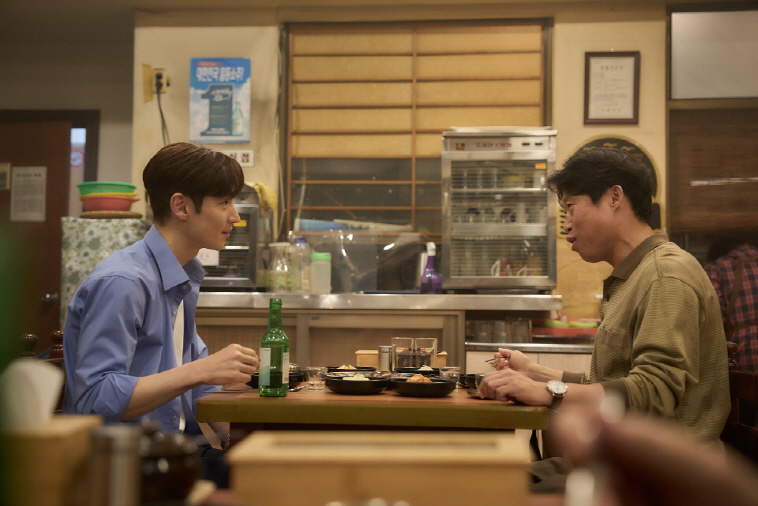
South Korean film “Big Deal” presents a fictional story loosely based on the real-life business deal involved with one of the biggest South Korean alcoholic beverage companies in the late 1990s. While the story itself is fairly interesting, the movie sometimes falters due to several weak aspects including superficial characterization and blatant plot contrivance, and the overall result is rather disappointing despite some good efforts inside it.

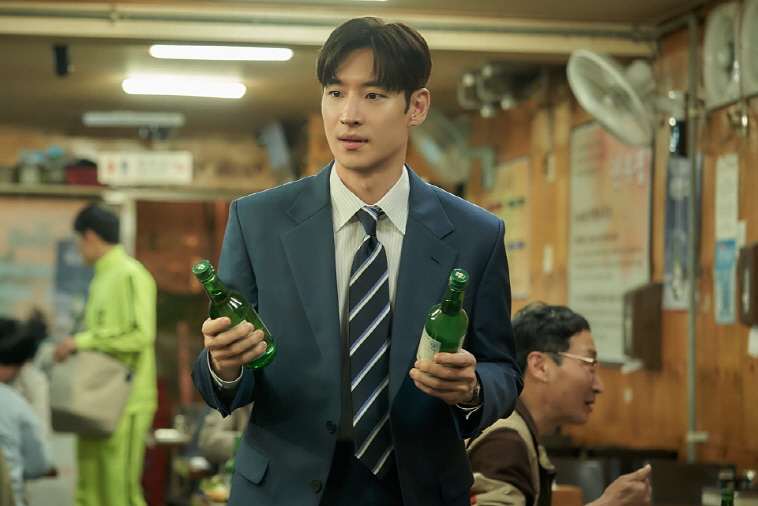
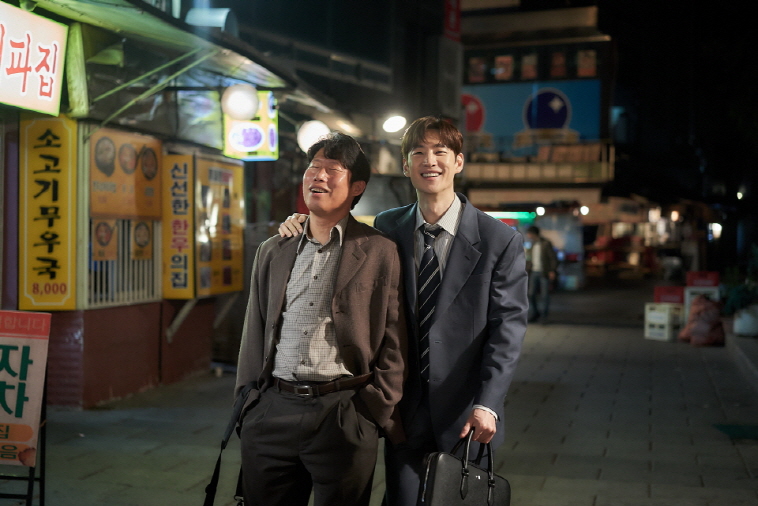
The early part of the story is set in early 1998, when the South Korean economy was turned upside down due to an immense financial crisis which swept up East and Southeast Asia in late 1997. Many of those big corporations in South Korea come to face bankruptcy, and Gukbo Group, which is clearly the fictional version of Jinro Group, is one of such desperate cases. While its CEO, who has simply occupied his position just because of his father who founded the company, is pretty useless to say the least, Pyo Jong-rok (Yoo Hae-jin), a diligent executive who has worked for the company for more than 20 years, has tried really hard for finding any possible way to save the company, and then there comes a chance via a prominent global investment firm named Solqueen. Mainly represented by an ambitious South Korean employee Choi In-beom (Lee Je-hoon), Solqueen has an offer which Jong-rok and his boss cannot possibly refuse, and it seems that the company will be safe at least for a while.

Under his boss’ order, Jong-rok is surely ready to be friendly and cooperative to In-beom as much as possible, and that leads to a series of lightweight moments involved with a lot of drinking between them. While they have one drinking night after another with many bottles of soju manufactured by Gukbo Group, Jong-rok willingly lets In-beom and Solqueen look more into the current financial status of Gukbo Group, and it looks like the promising beginning of the productive partnership between the company and Solqueen.

However, as already implied to us from the beginning of the story, Solqueen actually has a sneaky plan behind its back. Using all the inside information about Gukbo Group, In-beom and his colleagues in Solqueen embark on the hostile takeover of Gukbo Group in 2003, and they are certainly willing to attain their goal by any means necessary. For example, they persuade a powerful local law firm to work along with them even though this law firm also represents Gukbo Group, and the head of this law firm does not have any problem with this serious legal violation at all because, well, he knows how to pull some strings for getting away with it.

After belatedly coming to learn of what In-beom and Solqueen have been planning behind their back, Jong-rok certainly feels quite exasperated and disillusioned, and, to make matters worse, he is reminded again and again that there is no one to help or support him. His boss, who turns out to be more selfish and untrustworthy, cares more about his power and money than what may happen to Jong-rok or many other employees of his company in the end, and this certainly makes Jong-rok have more bitter doubt about his lifelong devotion to the company.

Meanwhile, In-beom comes to have a fair share of disillusionment and frustration as observing more of how mean and ruthless his investment company can be, but he also finds himself driven a lot by his growing hunger for more success and recognition. After all, he is the one who proposed the takeover of Gukbo Group from the very beginning, and his boss already starts to dangle a tempting big reward in front of him.

The second half of the film becomes tense as the business conflict between Gukbo Group and Solqueen eventually leads to the following court battle between them, but the movie does not take side with either of them. While flatly recognizing how greedy and opportunistic Solqueen is, it clearly points out how corrupt and problematic Gukbo Group has been due to its lousy CEO, and it does not overlook at all how the outcome of this conflict will affect those thousands of employees in Gukbo Group.

However, the movie also becomes more deficient around that narrative point. Considering its inevitable ending, several plot turns later in the story are rather unnecessary, and the finale is delivered a bit too abruptly in my inconsequential opinion. The movie soon tries to compensate for this flaw via the following epilogue scene, but this is not mixed that well with the rest of the film due to learning a little too much toward sentimentalism.

At least, the two lead actors of the movie did an admirable job of carrying the story together. Yoo Hae-jin, who has been one of the most dependable character actors in South Korean cinema during last two decades, is believable with the accumulating anger and frustration behind his character’s mild appearance, and his good performance eventually functions as the moral center of the story. On the opposite, Lee Je-hoon is less distinctive compared to his co-star due to his relatively blander character, but he manages to acquit himself well at least, and several other main cast members including Son Hyun-joo, Choi Young-joon, Byron Mann, and Kim Ki-hae are well-cast in their respective supporting parts.

In conclusion, “Big Deal” is enjoyable to some degree, but it could delve more into the story and characters more as giving us more insight on its main subject, and I become more aware of its several flaws including the glaring lack of substantial female character. Although I am not a big fan of soju, I got interested in what the movie is about, and I was ready to be entertained, but, folks, I ended up being rather dissatisfied with how it is about.

Posted in Movies | Tagged , , , , , | Leave a comment

Sinners (2025) ☆☆☆1/2(3.5/4): A bluesy Southern horror from Ryan Coogler

Ryan Coogler’s new film “Sinners” is an enthralling genre piece packed with style, atmosphere, and personality to be cherished. While it sometimes feels a bit too overstuffed with story ideas and elements which do not get totally mixed that well in my humble opinion, it is still quite entertaining genre fusion on the whole, and I enjoyed and embraced those numerous bold and ambitious moments throughout the film.

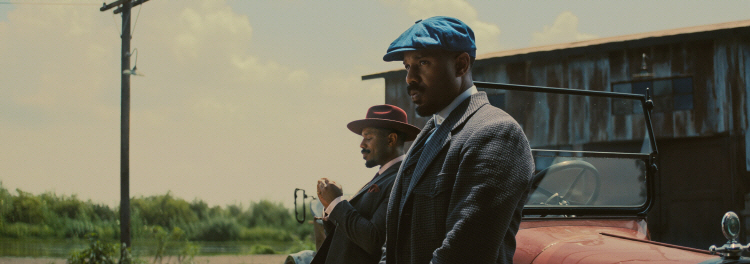
The story, which is set in some rural town of Mississippi in 1932, mainly revolves around two African American twin gangster brothers: Elijah “Smoke” Moore and Elias “Stack” Moore, who are both played by Coogler’s regular collaborator Michael B. Jordan. They once left their hometown for their criminal jobs in Chicago several years ago, but they come back with a lot of money and booze, and they are about to open a juke joint at an abandoned mill factory somewhere outside their hometown.

Needless to say, they need some good musicians to draw those potential customers out there, and one of them is Sammie “Preacher Boy” Moore (Miles Caton), a young cousin of theirs. Despite a firm advice from his preacher father, Sammie cannot resist a chance to perform in front of lots of people, and there is a little musical moment early in the story when he demonstrates a bit of his considerable musical talent to one of the twin brothers.

Meanwhile, the movie takes its time in establishing the ground more, and we get to know more about not only the twin brothers but also several other main characters and their town. When Elias comes across his ex-girlfriend Mary (Hailee Steinfeld), the mood is quite awkward between them as things change a lot since he left her at that time (She is now married to some rich white dude thanks to the passing via her light skin, by the way), but it is evident that they are still drawn to each other despite their respective current status. In case of Elijah, he visits the little tomb of a baby born between him and a local Hoodoo practitioner named Annie (Wunmi Mosaku), and he convinces her to join his and his brother’s juke joint practice as they come to sense more of their remaining affection between them.

Around that narrative point, the movie immerses us more into the vivid and realistic world inhabited by its main characters. As a matter of fact, it did the job so well that it made me wonder a bit about how I would look and feel in the town as an Asian dude, and, what do you know, the movie soon introduced an Asian immigrant family running a couple of stores facing each other across the main street of the town (The main reason behind the existence of these two almost identical stores is one of many signs of the Southern racism during that time in the film, by the way).

Coogler and his crew did a splendid job on the whole. Cinematographer Autumn Duran Arkapaw, who previously collaborated with Coogler in “Black Panther: Wakanda Forever”, deftly builds up that distinctive Southern atmosphere across the screen, which is vividly conveyed to us via the frequent shots of wide cotton fields around the town. The production design by Hannah Beachler and the costumes by Ruth E. Carter are also crucial in bringing more style and detail to the movie, and the score by Ludwig Göransson, who won an Oscar for Coogler’s most commercially successful film “Black Panther” (2018) as Beachler and Carter did, injects the movie with a lot of bluesy mood as required while smoothly mixed along well with a number of big musical performance scenes in the film.

One of these big musical performance scenes, which is incidentally unfolded inside the twin brothers’ juke joint during its opening evening, is particularly striking for good reasons. As Sammie fully demonstrates his unadorned talent in front of a bunch of dancing and drinking people, the mood becomes quite excited to say the least, and then the movie suddenly throws anachronistic elements into the screen to our surprise and amusement. Yes, this could look pretty ridiculous under a lesser director, but it works better than expected under Coogler’s skillful direction, and you may gladly go along with that as appreciating more of its style and ideas.

And then, as announced to us from the very beginning, there comes an unspeakable force of evil, and the situation surely becomes quite intense and bloody to say the least. Although this part feels rather hurried and jumbled compared to the rest of the film, the movie continues to provide more surprise and entertainment for us, and I doubt I will ever forget that wacky juxtaposition between a certain 19th century Irish song and its Southern background, even though I am still wondering whether this is thematically coherent or not.

The main cast of the film are engaging in each own way. While Jordan certainly has the most fun in the bunch as ably going back and forth between his two main characters, Hailee Steinfeld, Jack O’Connell, Wunmi Mosaku, Jayme Lawson, Li Jun Li, Omar Miller, and Delroy Lindo bring a lot of personality to their respective supporting parts, and the special mention goes to newcomer Miles Caton, who holds his own place well among the more notable cast members besides handling well his several musical performance scenes in the movie.

In conclusion, “Sinners” is another excellent work from Coogler, who has steadily advanced since his first feature film “Fruitvale Station” (2013). While “Creed” (2015) and “Black Panther” demonstrated more of his considerable talent and potential besides boosting his career a lot, “Sinners” confirms again that he is indeed one of the most interesting African American filmmakers at present, and it will be fascinating to watch how he will leap further from this point during next several years.

Posted in Movies | Tagged , , , , , | 2 Comments

Cuckoo (2024) ☆☆1/2(2.5/4): At one weird German Alps hotel  

“Cuckoo” alternatively baffled and unnerved me with its deliberate oddness. Although I am not sure about whether it is as effective as intended, I admire how it gradually dials up the level of its sinister suspense beneath the screen before eventually revealing more of its wacky aspects, and that compensates for its rather weak narrative and thin characterization to some degree.

The story mainly revolves around an adolescent girl named Gretchen (Hunter Schafer). She has been grieving a lot over her mother’s death, but her father Luis (Marton Csokas) married his second wife Beth (Jessica Henwick) not long after his first wife’s death, and he and Beth already have a young daughter, who is incidentally mute for some unspecific reason.

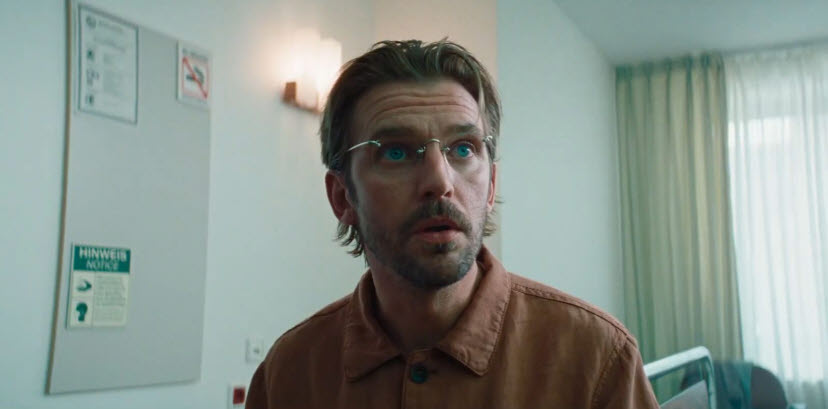
Anyway, Gretchen and her family are moving to somewhere in the German Alps just because Luis’s old German friend, Mr. König (Dan Stevens), offers him not only a job but also a nice house to stay. Needless to say, Gretchen does not like this change that much, and we observe more of the distance between her and the family as they start the first day at their new house. Feeling more isolated and alienated than before, she misses her dead mother more, but there is no comfort or consolation from the others around her, and that makes her all the more frustrated.

Meanwhile, Mr. König suggests that Gretchen should work at his nearby hotel. She accepts his suggestion because, well, that is a bit better than being stuck with her father and his new family in their new house, and then she is quite baffled by how the hotel is managed. While it looks mostly neat and clean, there are only a very few guests and staff members, and that makes the hotel looks as empty and unnerving as that spooky hotel in “The Shining” (1980). 

Moreover, Mr. König emphasizes that Gretchen must go back to the house before nighttime without explaining anything at all, and she becomes more baffled as gradually sensing more of how weird his hotel and its surrounding area are. For example, she notices a guest looking not so well at one point, but her co-worker is not concerned that much, even though there is actually a big hospital not so far from the hotel.

 Above all, it seems that there is something sinister about the area surrounding the hotel – especially after Gretchen has a particularly frightening incident at one late night. When Gretchen later happens to be with her stepsister during one afternoon, she suddenly experiences something quite strange and disturbing, and then her stepsister has sort of seizure. She is immediately taken to that local hospital, but her doctor does not tell much about what is exactly happening to her, and that certainly makes her parents quite worried to say the least.

Becoming more confused and unnerved, Gretchen wants to go away more than before, but, not so surprisingly, she only finds herself menaced and entrapped more by whatever is Mr. König is hiding behind his back. Thanks to a certain stranger who turns out to be more helpful than expected, she subsequently delves deeper into whatever is happening around her, and what she eventually discovers is not so pleasant to say the least.

During the last act, the movie becomes much weirder as going further with more surprise and horror, but that is where it stumbles more than once. Besides Gretchen and Mr. König, most of the other main characters in the story are under-developed, and the movie could bring more depth to Gretchen’s strained relationship with her new family. In addition, once the origin of its horror, which is incidentally associated with its very title, is fully revealed at last, the movie does not seem to know what to do next, and that is why the finale feels deficient without much dramatic impact.

Nevertheless, the movie keeps us engaged to some degree thanks to the committed efforts from its two good performers. Hunter Schafer, who has been mainly known for her supporting performance in HBO drama series “Euphoria”, is compelling as palpably illustrating her character’s inner struggles along the story, and her convincing performance steadily holds the ground to the end. On the opposite, Dan Stevens, who already demonstrated that he can speak German fairy well in “I’m Your Man” (2021), is fun to watch as deftly balancing his character between charm and insidiousness, and his offbeat performance, which is often coupled with a certain little musical instrument, keeps us on the edge right from the start.

In contrast, the movie does not utilize much of its several other main cast members, and that is the main weakness of the film. While Jan Bluthardt, Àstrid Bergès-Frisbey, Marton Csokas, and Jessica Henwick are mostly stuck in their thankless supporting roles, young performer Mila Lieu manages to hold her own place well around her adult co-performers, and I wish the movie paid a bit more attention to her character.

Overall, “Cuckoo” is not entirely satisfying, but it is not boring at all mainly thanks to the enjoyable performances from Schafer and Stevens as well as the competent direction of director/writer Tilman Singer, who previously made a feature film debut with “Luz” (2018). As far as I can see, he is a good filmmaker who does know how to intrigue us with mood and detail, and he may impress me more with whatever he will make next after this flawed but curious second feature film of his.

Posted in Movies | Tagged , , | Leave a comment

The Phoenician Scheme (2025) ☆☆☆(3/4): Wes Anderson on autopilot mode

Wes Anderson’s latest film “The Phoenician Scheme” has everything you can expect from his film. While it has a heap of notable performers who will function as variously colorful dolls to be utilized by Anderson, the movie is certainly full of his own distinctive style and touches to notice, and you may enjoy it even though Anderson seems to be autopilot mode at times.

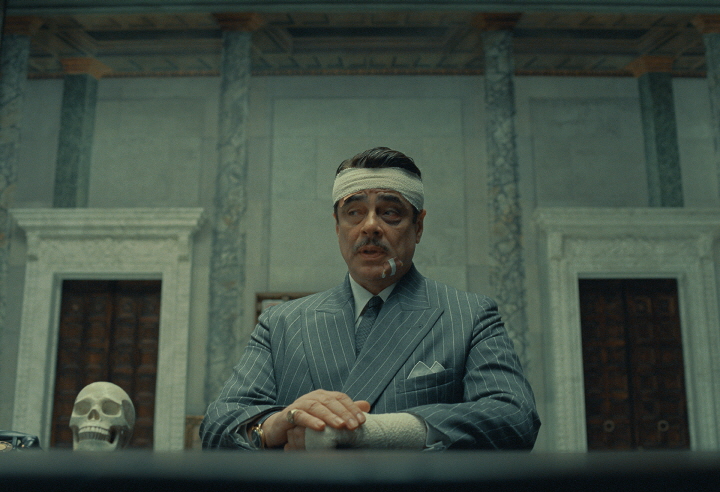
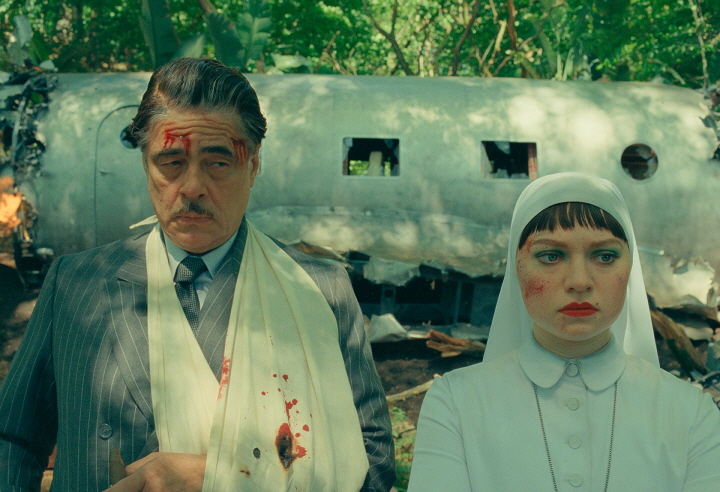
Benecio Del Toro, who previously appeared in “The French Dispatch” (2021), plays Zsa-zsa Korda, a rich businessman who has been rather notorious for his wealth as well as his shady business tactics. Not so surprisingly, Korda has a lot of enemies eager to destroy him, and the opening scene shows how he survives another disastrous airplane crash.

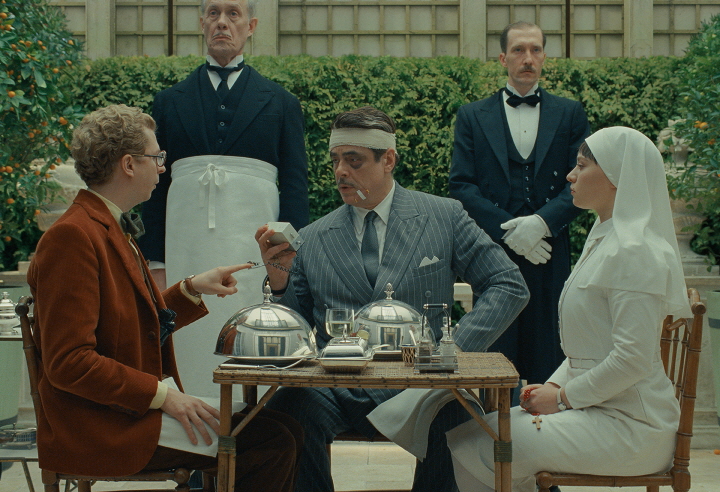
Anyway, after this incident, Korda becomes more serious about who will inherit his fortune and business. Although he already adopted no less than nine boys, none of the boys has impressed him much on the whole, and he comes to pay attention to his only daughter Liesl (Mia Threapleton), who has been in a Catholic convent as preparing for becoming a nun. Although she is not so much interested in getting to know her father and business, Liesl comes to make a deal with his father, and they are accompanied by Bjørn Lund (Michael Cera), who is recently hired by Korda as a tutor but then becomes an “administrative secretary”.

These three characters go to some foreign country for taking care of Korda’s latest business problem, which is incidentally caused by another plot against him. He has financed an ambitious infrastructure project all over that country, but a certain global organization deliberately sabotages his ongoing project via a rather absurd tactic, and now he must convince his several partners to stick together along with him to the end.

As bouncing from one narrative point to another along with its three main characters, the movie provides a series of idiosyncratically humorous moments filled with Anderson’s own style and details. At one point, we have a silly but amusing scene involved with a little basketball match between Korda and his two American business partners, and you may get amused a bit by the sheer incompetence of Korda’s fellow team player. As he continues his business trip all over that foreign country, Korda keeps getting threatened by one assassination attempt after another, and we are not so surprised to learn later that there is even a secret agent reporting on Korda’s ongoing business trip to a bunch of figures in the organization.

Anderson and his crew members surely have some fun with decorating his film here and there. While cinematographer Bruno Delbonnel faithfully sticks to the visual approach established by Anderson and his usual cinematographer Robert Yeoman, the production designer by Adam Stockhausen and the costume design by Milena Canonero are constantly delightful to watch, and the score by Alexandre Desplat is utilized well along with the several classic pieces of Igor Stravinsky on the soundtrack.

However, the screenplay by Anderson and his co-writer Roman Coppola feels rather thin and superficial in terms of story and characters. Yes, many of the characters in Anderson’s films are more or less than broad caricatures, but they sometimes reveal surprising emotional depth even while maintaining their usual deadpan attitude. In case of “The Phoenician Scheme”, Anderson seems to be simply content with merely doing his usual dollhouse playing here without bringing anything particularly new or different to his artistic territory, and that is a bit disappointing compared to his previous film “Asteroid City” (2023). Although I was a little less enthusiastic about the film compared to many other reviewers, I admired how he tried something a little different, and I may revisit it someday just for appreciating it more.

Anyway, the movie is anchored well by the good comic performance by del Toro, who demonstrates more of his comic talent as he did in “The French Dispatch”. While mostly looking quite detached and phlegmatic throughout the film, del Toro effortlessly balances his character between humor and melancholy, and Korda somehow becomes endearing to us than expected despite his many flaws.

Around del Toro, many different performers come and then go as bringing extra amusement to the film, though it is a shame that the movie does not allow enough space for them to shine more. While Riz Ahmed, Tom Hanks, Bryan Cranston, Jeffrey Wright, Mathieu Amalric, Scarlett Johansson, and Benedict Cumberbatch are Korda’s several business partners, Richard Ayoade, Rupert Friend, Hope Davis, Bill Murray, Charlotte Gainsbourg, Willem Dafoe, and Murray Abraham willingly play the minor supporting characters in the film during their respective brief appearances, Michael Cera and Mia Threapleton are solid as holding each own place well around del Toro.

In conclusion, “The Phoenician Scheme” is fairly enjoyable, but Anderson seems more repetitive than before. He has steadily honed his own style during last three decades, but it looks like there is not much to be honed or refined for him now, and I can only hope that this will be a brief respite before he reaches for something fresh later.

Posted in Movies | Tagged , , | 1 Comment

Drop (2025) ☆☆☆(3/4): A tough date, shall we say

“Drop” works best when it stays along with its heroine within its limited main background for a while. Although it is instantly reminiscent of many other similar thriller flicks ranging from “Nick of Time” (1995) to “Carry-On” (2024), the movie has a substantial amount of fun and thrill to support its first two acts at least, and you may forgive its rather weak last act even while observing how it inevitably loses its steam during that part.

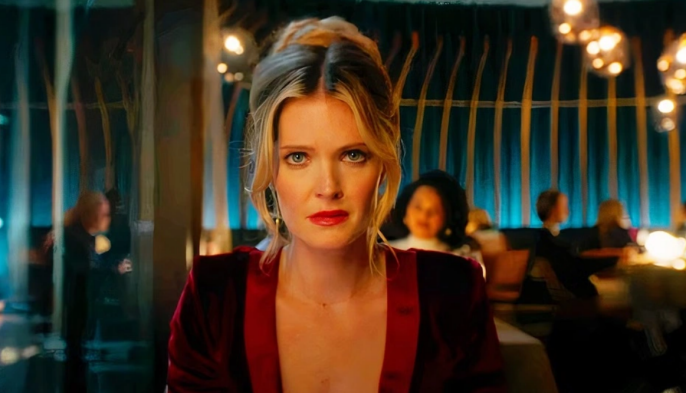
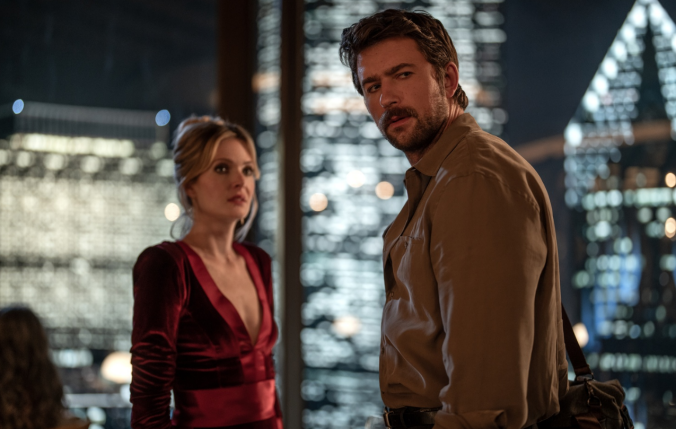
The heroine of the movie is a young single mother named Violet Gates (Meghann Fahy), who has worked as a therapist specializing in domestic violence after the death of her abusive husband. While her life is mostly devoted to her work and her little son, she is now about to have the first date with some guy she encountered via a dating online application, and she understandably cannot help but become nervous even though her son will be taken care of by her younger sister in the meantime.

Violet and her date are going to have a dinner together at a posh restaurant located at the top of one of those skyscrapers in Chicago. Not long after her arrival, her date texts her that he will be a little late, so she wonders whether he will eventually show up or not. Fortunately, he arrives a few minutes later, and they soon find themselves talking more and more with each other as enjoying the view in front of them.

However, something begins to bother Violet around that point. Somebody keeps dropping messages on her smartphone via some other online application, and both she and her date think this is just a mere prank done by someone in the restaurant, but, what do you know, Violet soon comes to realize that this is not a prank at all, while her date is not looking. Someone behind those online messages demands her to steal and then destroy a certain object in her date’s possession, and Violet has no choice but to follow the demand after seeing that her son and younger sister will be killed if she refuses to do that.

Of course, she is subsequently demanded to do something much more serious, and that makes her all the more nervous and conflicted than before. Yes, she surely tries one thing after another for getting out of this nightmarish circumstance, but, not so surprisingly, her opponent seems to hear and see her as well as everything in the restaurant, and Violet is reminded again and again of how much she is trapped right from the beginning as time is running out for her minute by minute.

Once the stage is set after the first act, the movie frequently toys with our expectation via what was termed by my late mentor Roger Ebert as the law of character economy. Besides Violet and her date, there are many other people in the restaurant, and some of them are certainly prominent enough to draw the suspicion from us as well as Violet. For example, when a certain character appears for the first time, you will instantly see that this figure will be bound to be one of several prime suspects around Violet and her date, and you will also have a pretty good idea on how the movie will play with that later, if you are a seasoned moviegoer like me.

Despite its many predictable aspects, the movie did a competent job of generating enough suspense from several key scenes including the one where Violet must think and act fast for having more chance and time for saving her family. The situation becomes all the trickier as her date senses more of how she visibly looks distracted and uncomfortable, and she must assure him that everything is fine and well despite their increasingly awkward date.

Meanwhile, the screenplay by Jillian Jacobs and Chris Roach adds more character details to the story at times. As getting cornered more and more by her opponent, Violet is reminded again of her painful personal experience of domestic violence, and we come to learn a bit more of how traumatic it has been for her. As a matter of fact, she is quite helpless and desperate just like she was in the past, and it looks dreadfully possible to her that there is no chance for escape for her in this time.

During its last act, the movie becomes less engaging as becoming much more preposterous than before, but that is expected from the start, and its lead actress’ solid performance compensates for that to some degree. Meghann Fahy, who has been mainly known for her Emmy-nominated supporting turn in HBO TV series “The White Lotus”, deftly goes up and down along the story without making any misstep, and we keep guessing whether her character can really survive this particularly tough date. Besides looking convincing in his character’s obliviousness to Violet’s ongoing plight, Brandon Sklenar clicks well with Fahy during several early scenes, and the other main cast members including Gabrielle Ryan, Reed Diamond, Violett Beane, and Jeffery Self dutifully fill their respective spots around Fahy and Sklenar as required.

Overall, “Drop” is a fairy enjoyable product, and director Christopher Landon, who previously directed “Happy Death Day” (2017) and “Freaky” (2020). gives us another nice genre variation added to his advancing career. I was not surprised that much, but I will not deny that I was entertained a bit more than expected, so I will not complain for now.

Posted in Movies | Tagged , , | Leave a comment

Deaf President Now! (2025) ☆☆☆1/2(3.5/4): The hidden story of defiant deaf students

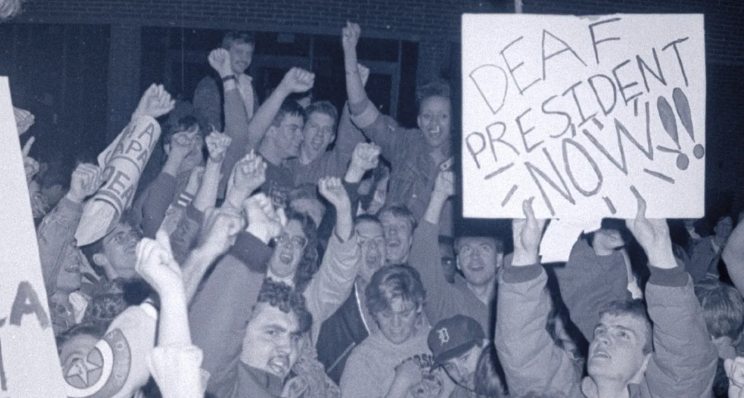
Documentary film “Deaf President Now!”, which was released on Apple TV+ a few weeks ago, presents a remarkable real-life story which will not only touch but also enlighten you a lot. During one week of March 1988, lots of students in Gallaudet University of Washington D.C. protested for more progress for themselves as well as their university, and their stubborn act of defiance actually led to a considerable social change for the people with disability in US.

Everything was started when the board of the Gallaudet University selected the new university president in March 1988. Although the university had been known as the only deaf university in US for more than 100 years, there had not been any deaf president yet, and the demand for a deaf president from the students became fiercer as two of the three final candidates happened to be deaf persons.

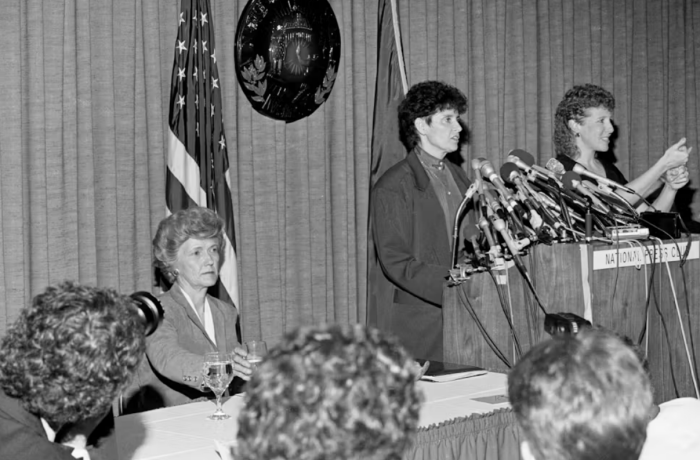
However, the board, which was led by Jane Bassett Spilman at that time and all of whose members were hearing persons, eventually decided to select Dr. Elizabeth Zinser instead, who was the only hearing candidate in the final list and, above all, did not have much knowledge or understanding on deaf people (She did not even know the sign language, for Christ’s sake). Understandably, hundreds of students in the university became quite furious, and they immediately went to a posh hotel in the city for confronting Spilman and several other board members. Once they saw that Spilman and the board would not step back at all, the students soon decided to become much more active, and that was the beginning of the Deaf President Now (DPN) protest.

On the very next day, the students locked all the gates of the university for preventing Dr. Zinser from entering the university, and they demanded the immediate resignation of Dr. Zinser as well as Spilman. As Spilman and the board only became more adamant, the students saw that they really needed to be organized more under strong leadership, and that was how several students stepped forward as the key members of the ongoing protest.

They are Bridgetta Bourne-Firl, Jerry Covell, Greg Hlibok, and Tim Rarus, who all incidentally participated in the production of the documentary besides being interviewed for the documentary. While Covell and Rarus were the ones who often galvanized the protest, Hlibok found himself becoming the unlikely representative of the protest because he just happened to be the president of the student body at that time, and Bourne-Firl also played a crucial part in the protest as a strong-willed liberal feminist who certainly made sure that the protest was inclusive for both female and male students.

As these four different figures talked about their story via sign language, the documentary let us have more understanding and empathy on their story. Thanks to its deft juxtaposition of archival footage clips and occasional reenactment shots, the documentary gradually immerses us more into what they and many other students went through during that time, and it also sometimes turns off or dials down the sound for conveying to us more of how they experienced the world surrounding them.

In addition, the documentary sharply points out that the discrimination against deaf people lies in how their disability has been regarded for many years as something to be fixed instead of being accepted. All of the deaf interviewees in the documentary had each own difficult and painful childhood struggle due to this misguided viewpoint, and that was still holding them back even in the middle of the protest.

Nevertheless, they and many other students persisted against the board of their university and its chairwoman, who is inarguably the main villain of the story along with Dr. Zinser. While Dr. Zinser was an incorrigibly misguided professional who still had no idea on how much her insensitive words hurt the feelings of the students, Spilman, who was your average rich and haughty white old lady, simply cared about showing who the boss was to the students, and she flatly and aloofly refused to step back as only showing more of her deplorably condescending attitude to the students.

As days went by, the students became more unsure about the protest, especially after a deaf candidate fully supported by them came to side with Spilman and Dr. Zinser later. Nevertheless, they stuck together more than before, and then there came a big opportunity when Hlibok was going to have a live TV debate with Dr. Zinser. I will not go into detail about what eventually happened, but I can tell you instead that 1) it is really moving to see Hlibok finding some courage and determination via simply being himself around the end of this debate and 2) I was also quite touched as observing what happened next after what can be described as a breakthrough for Hlibok and his fellow deaf students.

In conclusion, “Deaf President Now!” vividly illuminates a rather obscure but undeniably important part in the American civil rights history, and co-directors/co-producers Nyle DiMarco, an actor who has also been known as a Deaf activist, and Davis Guggenheim, who is mainly known for his Oscar-winning documentary “An Inconvenient Truth” (2006), present this exceptional human story with considerable care and respect. Along with Oscar-nominated Netflix documentary film “Crip Camp: A Disability Revolution” (2020), this is one of the most powerful documentaries about disability during last several years, and I sincerely urge you to check it out as soon as possible.

Posted in Movies | Tagged , , , , , , , | 1 Comment

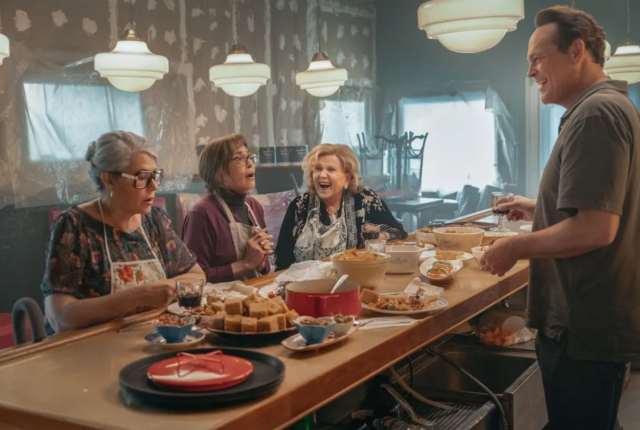
Nonnas (2025) ☆☆☆(3/4): A restaurant with old Italian ladies

Netflix film “Nonnas”, which was released early in this week, is a predictable but undeniably likable comedy drama inspired by one real-life Italian restaurant in New York City. You can clearly see what it is going to serve from the very beginning, but that comes with enough wit and sincerity, and the movie surely earns its expected feel-good moments. 

The hero of the story is Joe Scaravella (Vince Vaughn), a plain working class dude living in a Brooklyn neighborhood of New York City. After the prologue scene showing one special day in his childhood period, the movie instantly moves forward to 40 years later, and we see him grieving over the recent death of his Italian American mother. Now left alone in his family house, he does not know what to do next for his life, and that makes him miss his deceased mother more.

At least, his mother left many of her special recipes to him, though he cannot find one certain important recipe. While doing some cooking based on these old recipes of his mother, Scaravella is reminded more of how important his mother and grandmother’s cooking was for him and his family and neighbors, and then he gets a rather unlikely idea when he visits a Staten Island neighborhood of New York City on one day. He comes across an old and shabby Italian restaurant put on sale due to the owner’s recent death, and he soon decides to buy it for turning it into a special place for himself as well as others, though he does not know anything about culinary business from the start.

Of course, he surely needs a chef right now, and that is where Scaravella wants to try something different. He is going to hire old Italian American ladies who can cook as well as his mother and grandmother, and he believes that they and their own cooking will bring the restaurant a special personal touch to be experienced and savored.

Not so surprisingly, not many old ladies come to his job interview, but he comes to hire four old ladies at least. First, he convinces his mother’s old friend Roberta (Lorraine Bracco) to work at his restaurant despite her initial reluctance. Thanks to Olivia (Linda Cardellini), who was incidentally a schoolmate of his during their adolescent period, he also hires Olivia’s old neighbor Antonella (Brenda Vaccaro), and then there comes Teresa (Talia Shire), a shy old lady who recently decided to do something different just like Scaravella. In addition, Scaravella persuades a local hairdresser named Gia (Susan Sarandon) to join his business because he knows well that she is quite good at making desserts.

What follows next is quite predictable to say the least. Scaravella has some money to be invested into his risky business, but then he must borrow more from his bank for renovating his restaurant with his best friend Bruno (Joe Manganiello) and Bruno’s wife Stella (Drea de Matteo). Furthermore, he must balance himself constantly between his little business and his current job, and he certainly needs some help from his several colleagues at his workplace.

Above all, Scaravella frequently needs to get things under control for his old employees. All of them are surely cooking experts in one way or another, but they do not get along well with each other at times, and that certainly causes some headache for their sincere employer. Nevertheless, the ladies gradually find some harmony as working together more, and they certainly appreciate how Scaravella gives them another chance to feel alive in their life.

However, his restaurant business does not look that promising on the opening day, and the situation becomes more daunting for him, but Scaravella keeps trying as much as possible. He continues to finance his restaurant as before, and he also tries to contact many food critics in the city, though none of them shows any willingness to visit his restaurant.

However, the movie keeps maintaining its lightweight tone as usual, and the screenplay by Liz Maccie engages us more as its main characters come to show more human depth along the story. There is a sweet and poignant scene where the four old ladies come to share their private feelings among themselves, and there is also some extra warmth from a low-key romantic subplot between Scaravella and Olivia, who get closer to each other as she helps him on a certain legal matter involved with his restaurant business.

Above all, the movie depends a lot on the enjoyable ensemble performance from its main cast members. While Vince Vaughn dutifully holds the center as demanded, Lorraine Bracco, Brenda Vaccaro, Talia Shire, and Susan Sarandon are always a pleasure to watch, and the movie becomes quite delightful whenever these wonderful actresses share the screen together. Linda Cardellini, Joe Manganiello, and Drea de Matteo, who once appeared with Bracco in acclaimed HBO drama series “The Sopranos”, are also solid in their substantial supporting roles, and Campbell Scott, who once co-directed “Big Night” (1996) with Stanley Tucci, makes a brief but crucial appearance later in the story.

On the whole, “Nonnas”, which means “Grandmothers” in Italian, is one of more entertaining products from Netflix, and director Stephen Chbosky, who previously directed “The Perks of Being a Wallflower” (2012) and “Wonder” (2017), did a competent job of handling the story and characters with enough care and sensitivity. The result surely looks and feels quite familiar, but it serves fairly well, and I do not see any reason to grumble.

Posted in Movies | Tagged , , | Leave a comment

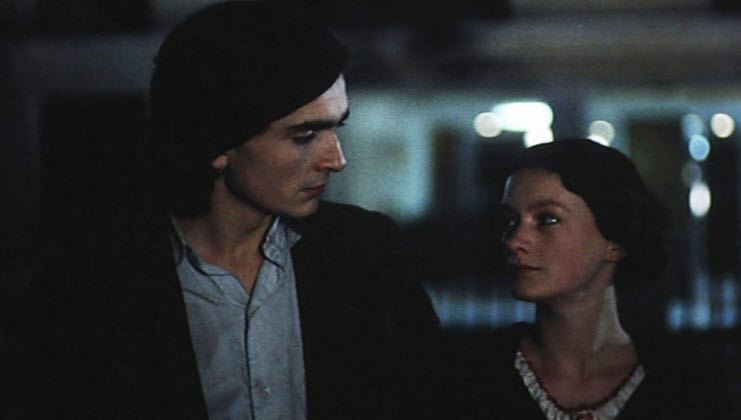
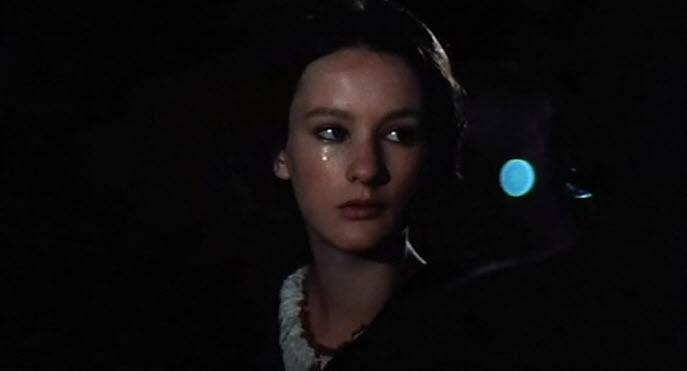
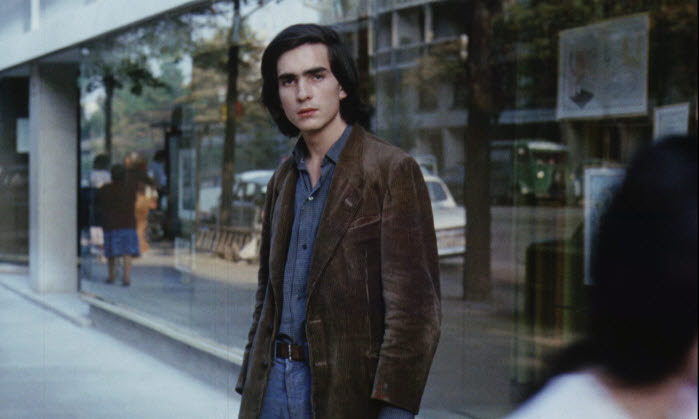
Four Nights of a Dreamer (1971) ☆☆☆(3/4): Bresson on a lightweight mode

Robert Bresson’s 1971 film “Four Nights of a Dreamer”, which was released in South Korean a few days ago, is interesting for its unexpectedly lightweight mood and attitude. Compared to many of Bresson’s notable works such as “Pickpocket” (1959) or “Au hasard Balthazar” (1966), the movie is less dry and austere in its occasionally amusing romantic drama, and it actually feels more like the works of Éric Rohmer at times even though you can still clearly observe Bresson’s own distinctive touches. 

Consisting of several individual chapters, the movie revolves around the accidental relationship between two total strangers. At first, we are introduced to a young Parisian artist named Jacques (Guillaume des Forêts), and the movie simply observes how he aimlessly wanders around here and there before ending up being around one of the bridges in Paris in the middle of one night. He happens to notice a young woman on the bridge, and, what do you know, he comes to rescue her when she is about to jump off from the bridge.

Her name is Marthe (Isabelle Weingarten), and she and Jacques come to confine to each other about their respective miserable lives. Jacques has struggled for more recognition via his artistic activities, but he often finds himself getting more frustrated and alienated without any bright prospect in front of him. Furthermore, he also cannot help but yearn for somebody to love, but, as shown from one flashback scene, he only makes himself look rather creepy and suspicious to several women he encounters during his aimless wanderings.

In case of Marthe, she has been desperately in love with some young man who was once a tenant in her and her mother’s residence. Although she was not so interested in that lad at first, she later found herself attracted to him more and more, and she eventually had a very intimate private moment with him. However, he was soon going to leave for US for his study, and she promised him that she will wait, but, alas, he does not seem that interested in reuniting with her even after his subsequent return.

As spending more nights with Marthe, Jacques gradually finds himself drawn to her, but she flatly admits that she is still hopelessly in love with that dude, even though she sincerely appreciates Jacques’ care and attention. This certainly makes Jacques quite frustrated, but he continues to stand by Marthe simply because he comes to love and care about her more. As a matter of fact, he even willingly helps her ongoing romantic pursuit a bit.

The complicated matter of heart between these two different characters is certainly reminiscent of what is so amusingly presented in Rohmer’s many comedy films, but its comic aspects are illustrated as dryly and flatly as you can expect from Bresson. The dialogues in the film are phlegmatically and monotonously delivered by the lead performers even when their characters become more emotional, and this further accentuates the absurd circumstance of their characters.   

However, the movie sometimes throws several surprisingly tender moments to be admired and appreciated. Bresson and his cinematographer Pierre Lhomme vividly capture the nocturnal mood of the real locations in Paris, and there are also several lovely romantic moments accompanied with incidental music performance. During these wonderful scenes, everything seems fine and well for Jacques and Marthe at least for a while, and we come to sense more of the mutual attraction between them.

As they keep dancing around each other along the story, Bresson’s screenplay, which is loosely based on Fyodor Dostoyevsky’s 1848 short story “White Nights”, steadily maintains the gravitas beneath the romantic circumstance of its two main characters. I will not go into detail on what eventually occurs between them, but I can tell you instead that the movie remains true to what its two lead characters respectively want and desire, and its final scene will linger on your mind for a long time as you reflect more on how things can be tricky in case of the matter of heart.

The lead performers of the film, who incidentally had no previous experience of movie acting at that time, are well-cast in their respective parts. Isabelle Weingarten, who subsequently appeared in a number of notable films including Jean Eustache’s “The Mother and the Whore” (1973), effortlessly balances her character between humor and pathos with her deadpan performance, and she is ably complemented by Guillaume des Forêts, who brings some earnest quality to his youthful but disaffected character. Although they are understated as much as many other performers working under Bresson, their performances click well with each other on the screen, and we are alternatively amused and touched by how their characters pull or push each other throughout the story.

 Overall, “Four Nights of a Dreamer” may not be one of the best works from Bresson, but it deserves more attention because of demonstrating the lighter side of Bresson’s talent. Although it was unfortunately not widely available during last several decades due to some complex issues associated with its distribution rights, it became more available after going through 4K restoration in last year, and that is how I and other South Korean audiences can get a chance to see this rather obscure work in Bresson’s career. I did not expect that much at first because I really did not know anything about it at all, but I was surprised and impressed much, and, folks, that is more than enough for recommendation.

Posted in Movies | Tagged , | Leave a comment

Lilo & Stitch (2025) ☆☆1/2 (2.5/4): likable but unnecessary

“Lilo & Stitch”, the live action movie version of the 2002 Disney animation feature film, is a likable product packed with enough charm and spirit, but I also somehow found it rather unnecessary. This is probably because I belatedly watched the animation film version one week ago, which remains vividly in my memory and inevitably came to my mind again and again while I watched the live action movie version.

Incidentally, the animation film version is one of the better works from Disney Studios during the 2000s. Besides being full of personality and style to be appreciated, it was one of the last cell animation films from Disney Studios during that period, and it still demonstrates well how cell animation can be more stylish and spirited compared to digital animation. Although its story and characters are rather simple on the surface, it has a lot of heart and humor than expected, and it also distinguishes itself well with a considerable amount of distinctive mood, style, and charm.

In case of the live action movie version, it faithfully sticks to its original story while making some small changes here and there, but the result reminds us again that live action films can rarely surpass animation films in terms of style and mood. While it did a fairly good job on the whole, it still looks relatively less distinctive compared to the animation film version despite retaining a fair share of charm and personality from the animation film version, and that is the main reason why I just kept making comparisons throughout my viewing instead of getting really engaged and then entertained. 

Especially, I was quite distracted during the opening part of the movie, which often looks like the shot-by-shot digital animation remake of that of the animation film version. Somewhere in the universe, Dr. Jumba Jookiba (Zach Galifianakis), an alien who is your average mad scientist, is arrested along with his latest creature, but the creature, which looks small and cute but can be quite vicious and destructive, escapes not long before being sentenced to lifelong banishment by the council of the United Galactic Federation. It soon flies away to the Earth via a stolen spaceship, and Dr. Jookbia is ordered to retrieve the creature along with a meek alien official named Wendell Pleakley (Billy Magnussen).

The spaceship stolen by the creature happens to crash onto one of the main islands of Hawaii, and then, after a series of destructive happenings, it ends up being in a local animal shelter. While looking for any possible way to evade its chasers, it happens to encounter a young local girl named Lilo (Maia Kealoha), and it is soon named “Stitch” shortly after getting adopted by Lilo.

While Lilo is quite excited about having a pet which can be her best friend, her older sister Nani (Sydney Elizebeth Agudong) is not so amused in contrast, because she has struggled a lot for supporting herself and her younger sister since their parents’ unfortunate death. If she fails to convince their social worker in the end, Lilo will be separated from her and then put under foster care, and that is certainly the last thing Nani wants, no matter how much she gets exasperated due to her rather unruly younger sister.  

As Lilo befriends Stitch more along the story, the movie provides a number of humorous moments while also using several classic pop songs performed by Elvis Presley. Again, these scenes are pretty much close to what was shown in the animation film version, but they are still effective mainly thanks to the solid lead performance of Maia Kealoha, who ably lifts her scenes with charming innocence and plucky presence in addition to being very effortless in her interactions with Stitch on the screen.

In case of Stitch, I still prefer the animation version more, but the CGI version in the film is also sort of endearing. While quite sneaky and mischievous like some of those Looney Tunes characters, it turns out to have a heart to be affected by the sincerity of his unexpected human friends, and they willingly and openly accept him as another member of their “ohana” (It is a Hawaiian term meaning “family”, by the way).

The supporting characters surrounding Lilo and her alien friend are less colorful compared to their counterparts in the animation film version, but the supporting performers in the film try to fill their respective parts as much as possible. Sydney Elizebeth Agudong brings some gravitas to the story as required, and Tia Carrere, who was incidentally the voice of Nina in the animation film version, Amy Hill, and Courtney B. Vance have a little fun with their characters. As Stitch’s two alien chasers, Zach Galifianakis and Billy Magnussen are frequently amusing as their characters try to adjust themselves to their respective human disguises, and Hannah Waddingham provides a bit of extra humor as the unflappable leader of the United Galactic Federation.

In conclusion, “Lilo & Stitch”, directed by Dean Fleischer Camp, is not bad at all, but it is merely competent without anything particularly new or fresh for the fans and admirers of the animation film version. The people behind it do not forget what makes the animation film version so special, but they simply try to replicate it here, and their result only mildly entertained me in the end. To be frank with you, I am already ready to revisit the animation film version sooner or later, and I assure you that you will have a better time if you watch that instead.

Posted in Movies | Tagged , , , , | Leave a comment