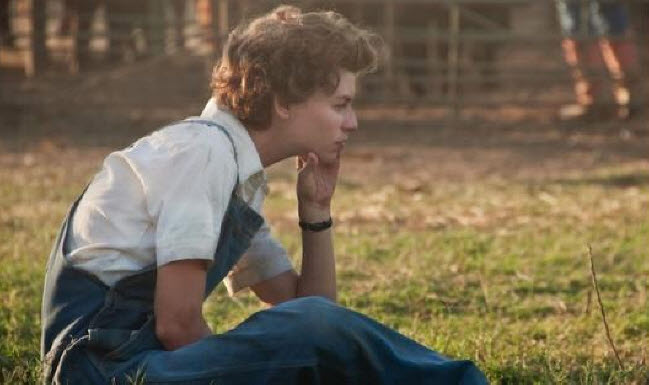
Temple Grandin (2010) ☆☆☆1/2(3.5/4): Different, Not Less

I have a personal soft spot for Mick Jackson’s 2010 HBO TV movie “Temple Grandin”, a deeply empathic drama about the remarkable life and career of Dr. Temple Grandin. Despite being on the autistic spectrum, Dr. Grandin became a respectable professional in animal science and psychology thanks to not only her considerable intelligence and determination but also a lot of support and help from many others around her including her caring mother, and the movie is often touching as letting us have more understanding on her autistic viewpoint.

The early part of the film focuses on how Grandin, played by Claire Danes, struggled a lot when she was about to study at the Arizona State University in the 1960s. Before starting her first semester in the university, she is going to spend some summertime at a rural ranch belonging to her aunt, and we observe how difficult it is for Grandin to adjust to a new environment despite her aunt’s sincere efforts.

Nevertheless, Grandin enjoys being around the animals in the ranch while also showing some brilliance thanks to her autistic brain, which usually thinks in pictures instead of words. For example, she devises a solution to the creaky problem of the front gate of the ranch, and the movie vividly shows us how she visually concocts that idea in her mind. As watching how the cattle in the ranch are handled, she also thinks of a special device to handle her occasional anxiety problem, and that certainly helps her adjust more to her new environment.

Not so surprisingly, Grandin feels quite anxious and overwhelmed right from her first day in the university despite her mother’s assurance. In addition, her awkward attitude and quirky personality certainly draw a lot of ridicule and ostracization from many schoolmates, and this only fuels her anxiety further to her frustration.

Nevertheless, Grandin does not give up at all because of how she was encouraged and supported a lot by her mother from the start. When she was notified that her daughter has autism, Grandin’s mother was quite devastated to say the least, but she refused to send her daughter to an institution, and she instead devoted a lot of herself to her daughter having a proper education for her future. Fortunately, she later found a right school for her daughter when Grandin became a teenager, and Grandin was further supported by a generous science teacher who really understood her and then encouraged her growing interest in science and engineering.

In the end, Grandin finds a way for being allowed to be simply herself in the university, and there is an amusing moment when she gets a new dormitory roommate, who is incidentally blind and has no problem with her quirkiness at all. Right from the beginning, they quickly bond with each other, and they also share their enthusiasm toward several popular TV drama series including “The Man from U.N.C.L.E.”.

Of course, there comes more challenges for Grandin when she subsequently finishes her undergraduate course and then embarks on the graduate course. When she is sent to a ranch along with several other students, she is soon ridiculed and then disregarded due to her odd behaviors as well as sexism, but, again, she is not daunted by this and other obstacles at all, and the mood becomes quite cheerful as her smart brain keeps finding the solutions for stepping forward.
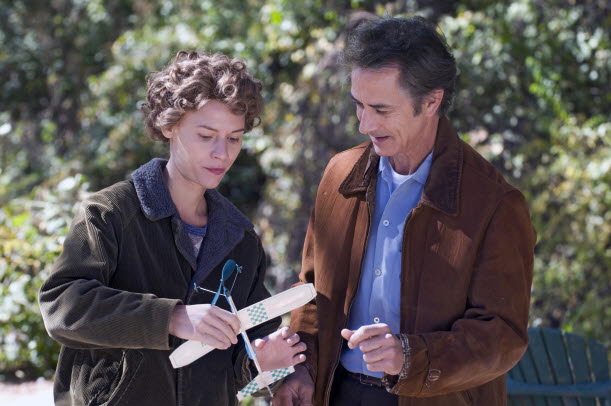
Around the narrative point where Grandin eventually designs how to handle cattle more efficiently and humanely, the movie, which is based on “Thinking in Pictures” by Grandin and “Emergence” by Grandin and her co-writer Margaret Scariano, immerses us more into her viewpoint. A number of visual tactics in the film including the frequent sudden insertion of images to reflect her rather jumpy mind may feel a bit too obvious at first, but they work well enough to give us more understanding on how her autistic mind works, and that is why we come to have more empathy on her human struggles along the story.

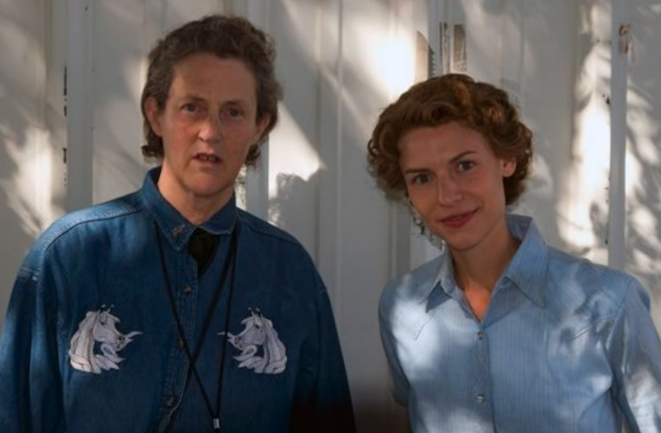
It surely helps that the movie is firmly anchored by Danes’ excellent performance, which rightfully won an Emmy at that time. While feeling quite showy and mannered on the surface, Danes also imbues her role with a lot of life and personality to observe, and she is particularly poignant when her character comes to have a little more intimate human interaction with her mother later in the story.

In case of several notable cast members in the film, they dutifully support Danes’ acting. While Julia Ormond has her own several good moments as Grandin’s devoted mother, Catherine O’Hara brings extra warmth as Grandin’s kind aunt, and David Strathairn, who won an Emmy like Danes and Ormond respectively did, is also terrific as effortlessly exuding wisdom and generosity.

On the whole, “Temple Grandin” is a very engaging human drama which will give you some enlightenment on autism, and it still comes close to me as it did 10 years ago. As a guy on the autistic spectrum, I had a fair share of personal struggles during last 42 years, and I was moved to tears again by the elevating finale of the movie. Despite all those problems associated with my autism, I was able to go forward and then open more doors to the world outside thanks to the support and encouragement from others around me including my parents, and I surely know and understand what Grandin feels around the end of the story. Yes, she is indeed different – but not less at all.
Posted in Movies | Tagged , , , | Leave a comment

You Don’t Know Jack (2010) ☆☆☆1/2(3.5/4): He cared a lot

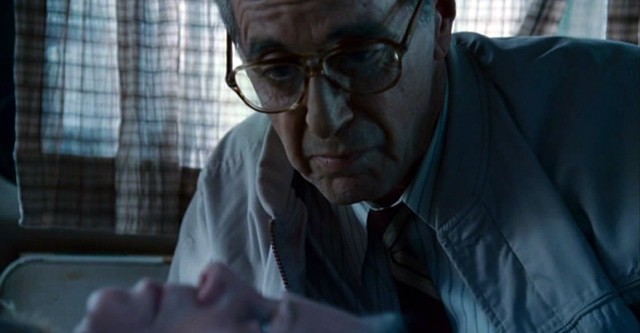
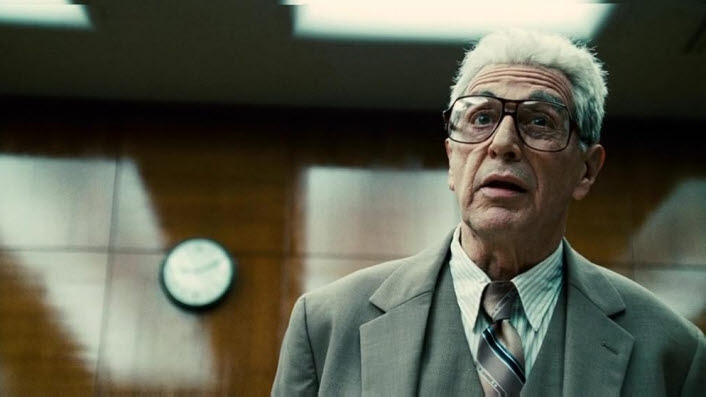
Barry Levinson’s 2010 HBO TV movie “You Don’t Know Jack” observes the legal troubles of Jack Kevorkian (1928 ~ 2011), an American pathologist who became quite controversial as a prominent euthanasia proponent during the 1990s. As sticking to its somber non-judgmental viewpoint, the movie depicts how far he was willing to go for his stubborn belief, and the result is a thoughtful human drama to remember. 

The movie begins with how Kevorkian, played by Al Pacino, went further for the assisted suicides for those terminal patients out there in the early 1990s. After seeing how hard one young terminal patient had to fight for his legal permit to die, Kevorkian becomes more convinced that he should really step forward as an advocate for euthanasia, and his close friend Neal Nicol (John Goodman), who is incidentally a medical technician, and his sister Margaret (Brenda Vaccaro) are willing to help and assist him even though both of them are well aware of the legal risks of his personal project.

First, they must select a terminal patient really ready to die, and that is how Janet Good (Susan Sarandon) enters the picture. As the founder of the Michigan chapter of the Hemlock Society, Good strongly believes in a human right to die, and she is certainly willing to help him as possible as possible just like Nicol and Margaret, though she cannot help him that much when he eventually assists a suicide for the first time later.

Kevorkian’s first case of assisted suicide certainly leads to a lot of legal trouble for him, so, as continuing to assist the suicide of some other terminal patients, he goes to a local lawyer named Geoffrey Fieger (Danny Huston), who assures his client that he will be all right for good reasons. Fortunately, Kevorkian always records his private interview between him and a patient, and, as Fieger correctly observes, those video records always work on the human sympathy of the members of the jury.

As the state prosecution keeps trying to win those legal cases against him, Kevorkian consequently finds himself in the middle of the growing controversy surrounding euthanasia, but he is ready to defend himself and his belief in public, no matter how much he is criticized by those pro-life activists out there. After his successful TV interview with Barbara Walters, he becomes more famous (or infamous) with his nickname Dr. Death, and that eventually prompts him to challenge against the legal system more than before.

When its hero later crosses some lines for his belief, the screenplay by Adam Mazer, which is based on Neal Nicol and Harry Wylie’s book “Between the Dying and the Dead”, stays on its neutral mode as before, but it shows a lot of sympathy and understanding toward to those suffering people coming to Kevorkian. Each of them has an understandable reason to give up living, and Kevorkian and his associates must be gentle and cautious about confirming whether it is right to perform a euthanasia for their client. Sometimes they have to reject some of the clients (One of them is briefly played by Adam Driver, who looks almost unrecognizable behind his heavy makeups), and the movie indirectly recognizes those tricky aspects of deciding on the matter of life and death.

And we get to know more about what motivates Kevorkian, who can be charming at times but does not open himself that much to others including his sister. At one point later in the story, one of his associates asks him about his painful experience from when he was quite helpless about the suffering of his ailing mother, and we come to see that he does care a lot about life as well as death.

Ironically, this human aspect of his subsequently leads to his eventual conviction around 1999. He lets the video clip of him performing another euthanasia broadcast on TV just because he believes that this will generate more discussion on legalizing euthanasia, but the state prosecution is quite prepared to win this case, while he comes to defend himself at the trial as Feiger steps aside for his ongoing state governor campaign. Not so surprisingly, Kevorkian becomes his worst enemy during the trial, and his clumsy defense is frequently blocked by both the state prosecution and the judge presiding over the case.        

As the center of the story, Pacino, who won an Emmy for this film, gives one of his best performances during last 20 years. While he can be quite showy as shown from many of his famous movies such as “Heat” (1995), Pacino can also dial down his presence and intensity a lot as shown from “Donnie Brasco” (1997), and his restrained but rich performance here in this film quietly conveys to us his hero’s complex humanity. Around Pacino, several notable performers including John Goodman, Danny Huston, Susan Sarandon, and Brenda Vaccaro have each own moment to shine, and they all are effective as the colorful counterparts to Pacino’s low-key acting.      

Although it came out 15 years ago, “You Don’t Know Jack” is still interesting for not only its thought-provoking subject but also the strong performances from Pacino and his fellow cast members. Regardless of what you think about Kevorkian, it will make you reflect more on what he cared a lot about, and then we may have some discussion on those complex human matters of life and death surrounding euthanasia.

Posted in Movies | Tagged , , | Leave a comment

Shiri (1999) ☆☆(2/4): A seriously dated South Korean blockbuster

I wonder how I would have responded to the 1999 South Korean film “Shiri” if I had watched it 26 years ago. I did not feel any particular need to watch it mainly because I was unfortunately exposed to its main spoiler at that time, and then the movie somehow evaded me during the next 26 years. After its 4K remastered version was released briefly in local theaters early in this year and then recently went to Netflix in South Korea, I belatedly watched the movie, and it only reminded me of how much South Korean cinema has advanced since it came out.

In 1999, the movie drew a lot of attention for being one of the rare blockbuster South Korean films in the 1990s. Believe or not, it broke the local box office record of James Cameron’s “Titanic” (1997), and I still remember how much many others around me talked about the movie in that year. As a matter of fact, I even participated in a silly school play based on it (I incidentally played the chief, and, as the audiences will attest, I gave the least clumsy acting in the bunch because I instinctively knew that I had to play as straight as possible for selling my part).

However, “Shiri” sadly fails to endure the passage of time, and it is not even a good movie in my humble opinion. While it looks hopelessly dated in terms of technique aspects, the movie also suffers a lot from its mediocre plot and weak characterization, and now we can clearly see that this is more or less than a cheap imitation of many Hollywood action movies during its time.

The plot is inspired by how the political situation between South and North Korea became less hostile than before around the late 1990s. While the political leaders of these two countries become quite willing to do more cooperation for the eventual peace and, possibly, the unification, there are a certain faction of the North Korean army which does not welcome this change at all, and a small group of North Korean special forces soldiers soon infiltrate into South Korea for their secret terror plan.

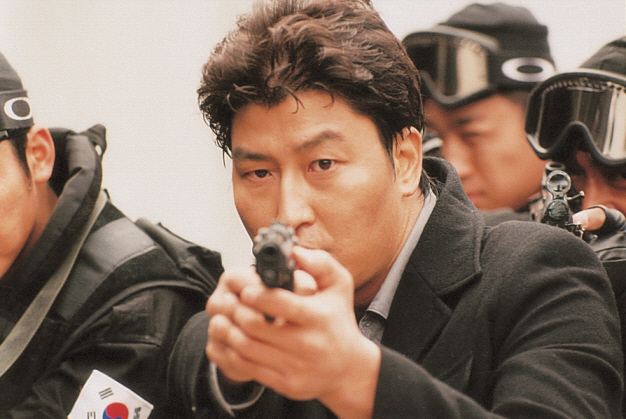
Fortunately, this plan happens to be detected by Yoo Joong-won (Han Suk-kyu), a South Korean secret agent who is incidentally about to marry his longtime girlfriend. Along with his close partner Lee Jang-gil (Song Kang-ho), Yoo tries to find any possible way to track down and stop their dangerous opponents, but their efforts are always thwarted by a mysterious female assassin from North Korea at the last minute, and both Yoo and Lee come to wonder more about the possibility of a mole somewhere inside their agency.

In the meantime, things become more urgent for Yoo and Lee and their agency when their opponents later steal a considerable amount of special liquid bomb which is highly explosive to say the least. In addition, the leader of these North Korean soldiers turns out to be an old foe of Yoo in the past, and that makes Yoo all the more determined to catch him and the other North Korean soldiers as soon as possible.

As the match between Yoo and his main opponent is continued, the movie gives us several action scenes, which might have looked cool at that time but feels now rather corny and dated. In case of a sequence involved with the bombing of a big building in the middle Seoul, you will clearly see that director/writer Kang Je-gyu and his crew used some cheap models for the expected moment of explosion, and you may also be a bit amused by the totally unnecessary red-colored digital timer of the bomb, which has surely been a time-honored cliché in many action thriller movies out there. The shootout sequence later in the film is apparently influenced by the similar one in Michael Mann’s “Heat” (1995) to some degree, but, though this moment is fairly competent on the whole, the movie only knows how to play the notes but not the music itself, and the same thing can be said about the eventual climax part unfolded inside a big sports stadium.

Above all, Kang’s screenplay is very clumsy to say the least. Probably because he was afraid that the audiences might not follow the plot and characters easily, his screenplay is riddled with a lot of exposition and speech from the beginning to the end, and, to make matters worse, it does not bring much inner life or personality to many of its archetype characters. While Yoo is an average clean-cut agent hero, his partner is just a bit more colorful compared to many other characters around them, who are mostly flat or wooden in one way or another. In case of a subplot involved with Yoo’s relationship with his girlfriend, it is so rote and bland that it frequently makes the story lag or stumble to our distraction, and you may also easily guess in advance about how melodramatic it will become later in the film.

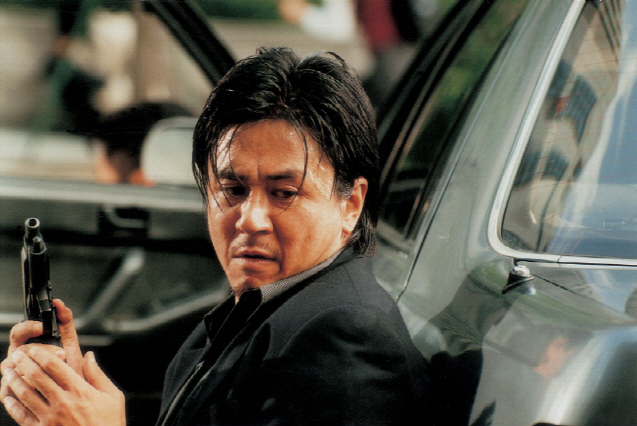
Anyway, the movie was a breakthrough for the respective careers of its four principal main cast members. Although this is not exactly one of his best moments, Han Suk-kyu dutifully carries the film as required. Song Kang-ho, Choi Min-sik, and Yunjin Kim manage to fill their supporting roles to some degree, and, as many of you know, all of them moved onto better things shortly after the movie came out. While Han solidified his status as a star actor, Song soon became one of the best actors working in South Korea as appearing in many notable South Korean films including Bong Joon-ho’s “Memories of Murder” (2003) and, yes, “Parasite” (2019), and the same thing can be said about Choi, who has always been remembered for his fearless performance in Park Chan-wook’s “Oldboy” (2003). In case of Kim, her career was less stellar in comparison, but you may remember her supporting turn in American TV drama series “Lost”.

In conclusion, “Shiri” is more like a relic at present, but it did contribute to the rise of South Korean cinema during the next two decades to some degree. Thanks to its big commercial success, the South Korean movie industry became more willing to go further and take more chance during next several years, and that eventually led to numerous wonderful South Korean films besides the ones mentioned above. Yes, it is regrettably old and tacky now, but I guess we can show a bit of respect for its substantial contribution.

Posted in Movies | Tagged , , , | Leave a comment

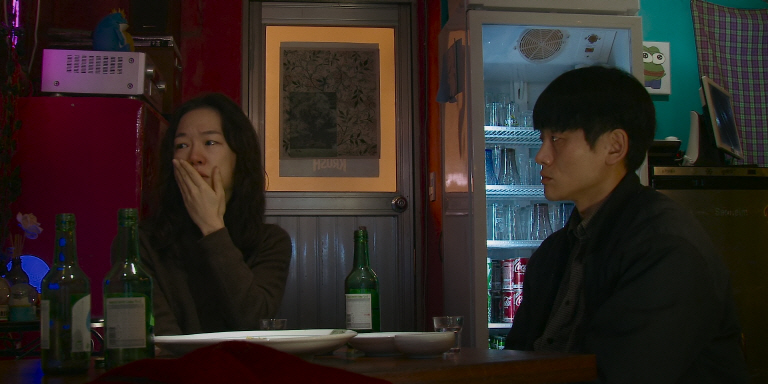
Spring Night (2024) ☆☆(2/4): Misery loves company…

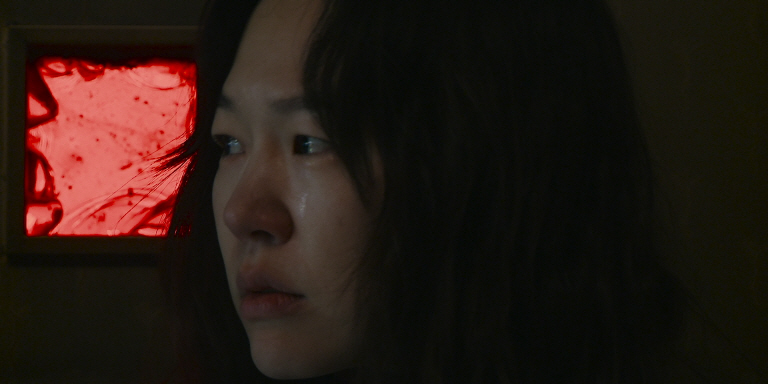
South Korean independent film “Spring Night” is often frustrating for its dry and austere storytelling which does not add much on its barebone narrative. This is a simple story about two miserable people who somehow choose to live together, and the movie surely puts them into more misery and despair as expected, but it does not have much human interest to draw us more into their bleak human condition.

The movie begins with what can be regarded as a sort of Meet Cute moment between its two main characters. Yeong-kyeong (Han Ye-ri) and Soo-hwan (Kim Seol-jin) come across each other when they happen to attend the wedding of their acquaintances and the following drinking party, and Soo-hwan later shows a bit of kindness when Yeong-kyeong is too drunk to return to her current residence for herself.

After this rather awkward encounter, Soo-hwan comes to meet Yeong-kyeong again and again probably because he is smitten with her, and Yeong-kyeong does not mind this at all mainly because she has been quite lonely whenever she is not drinking. It becomes more apparent to us that she is your average alcoholic, and she soon confides to Soo-hwan a lot about her very unhappy life. When her married life crumbled some time ago, she lost her kid as well as her job, and her resulting bitter regret has driven her more into alcoholism.

 In case of Soo-hwan, he has also had a fair share of misery. He once ran a metal factory, but then his business became bankrupt, and he came to lose much more thanks to his ex-wife. Now he is suffering a serious medical condition, but he cannot get insured due to his poor economic status, and that prompts Yeong-kyeong to give him a seemingly practical offer. Considering that she still has some money and an apartment belonging to her, she may be able to help him to some degree once she becomes his new wife on the paper, and Soo-hwan eventually accepts her offer.

The middle act of the story shows how Yeong-kyeong and Soo-hwan try to get accustomed to their new situation. Once she sells his apartment, Yeong-kyeong and Soo-hwan move together to a nursing home where he will get some medical treatment. Yeong-kyeong is already ready to stand by him, and we later see a big bed delivered into their little private room in the nursing home.

Everything seems to be fine and well for Yeong-kyeong and Soo-hwan on the surface, but it soon turns out that Yeong-kyeong is still struggling with her alcoholism. At first, she is just content with a bottle of soju hidden inside her luggage bag, but then, of course, she comes to crave for more booze once the bottle is empty, and she eventually decides to go outside for getting more booze, though the head of the nursing home clearly sees through her when she requests a permit for being outside for a couple of days.

Soo-hwan certainly knows well why Yeong-kyeong wants to go outside, but he does not stop her at all while caring more about her. Even though she is not exactly punctual about her return, he patiently waits for her as long as possible, and that makes Yeong-kyeong feel more guilty about her worsening alcoholism. The more she drinks, the more she cannot help herself over her addiction problem, and this eventually jeopardizes her and Soo-hwan’s current status to a serious degree.

Around that narrative point, we are supposed to care more about their increasingly miserable human condition, but the movie adamantly sticks to its detached attitude, and we come to observe them from the distance without much care or interest. They are indeed sad and miserable characters, but they are only defined by their misery and unhappiness without much inner life or personality. The screenplay by director/editor Kang Mi-ja and her co-writer Lee Ji-sang, who also served as the co-cinematographer of the film, often seems to be spinning its wheels in terms of character development, and that is the main reason why a brief moment of insight into Yeong-kyeong’s tortured mind feels rather superficial.

At least, the movie works to some degree as the showcase of its two lead performers. Han Ye-ri, who recently became more notable thanks to Lee Isaac Chung’s Oscar-winning film “Minari” (2020), has enough presence and talent to fill her cardboard role, and her fairly good efforts here in this film, which make a big contrast with her lightweight comic performance in Kim Jong-kwan’s “Worst Woman” (2016), deserves a better story and character in my inconsequential opinion. On the opposite, Kim Seol-jin is stuck with a thankless job of looking quiet and passive, but he mostly acquits himself well on the whole, while subtly complementing his co-actor’s showier acting.    

 Overall, “Spring Night”, which is incidentally the second feature film from Kang after “Let the Blue River Run” (2008), can be admired for how uncompromisingly austere it is in terms of mood, performance, and storytelling, but it did not engage me enough for recommendation. Although this is not a bad movie at all and Kang is clearly a competent filmmaker, I must confess that my mind struggled to process how it is about during its rather short running time (67 minutes), and I only came to wish that I will have more satisfaction from whatever may come next from Kang.

Posted in Movies | Tagged , | Leave a comment

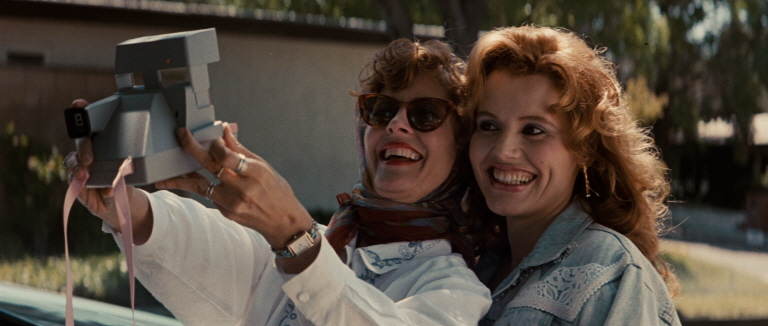
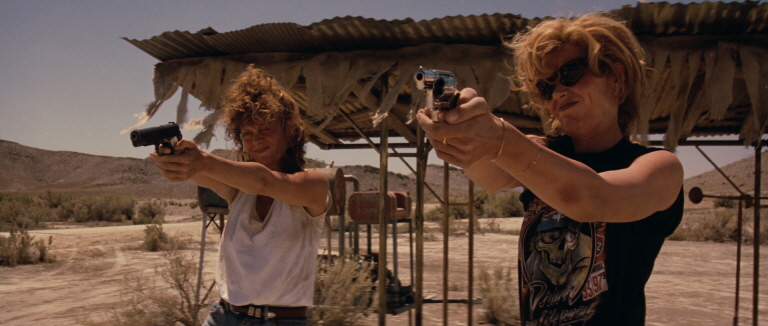
Thelma & Louise (1991) ☆☆☆1/2(3.5/4): Two friends on the run

Ridley Scott’s 1991 film “Thelma & Louise”, which happens to be released in South Korean theaters in this week, remains fresh and vibrant besides being one of the best female drama films from the 1990s. While it looks like a typical mix of two different American genres on the surface, the movie deftly rolls its two unforgettable heroines along its narrative course, and the result is not only funny and exciting but also harrowing and poignant.

As revisiting the film with a bunch of audiences at last night at a local movie theater, I was impressed again by how the story unpredictably and lively bounces from one point to another as driven by the distinctive personalities of its two heroines. As they go through each own personal transformation along their bumpy (and criminal) journey, they are often surprised by themselves, and they feel all the more alive when they fatefully face the end of their journey.

In the beginning, the movie quickly establishes its two heroines’ little weekend plan. Thanks to the insistence of her waitress friend Louise Sawyer (Susan Sarandon), Thelma Dickinson (Geena Davis) decides to have her own good time away from her lousy husband, but she does not tell anything to her husband in advance because she knows too well that her husband, who is your average insensitive jerk, will not allow that at any chance.

Anyway, everything feels fine and all right as Thelma and Louise leave their little suburban neighborhood in Arkansas, and the mood becomes more cheerful when they decide to have some fun time at a local bar. Thelma is ready to have more fun as drinking and dancing more, but Louise is less eager to have a good time there in contrast to her friend – especially as watching how Thelma loses herself more due to more drinking and dancing.

And something very serious happens. While quite excited and drunken, Thelma is sexually assaulted by a guy who seemed nice to her at first, and she is fortunately saved by Louise at the last minute, but then Louise, who comes to the rescue with a gun brought from Thelma’s home, shoots that vile guy when his insulting words trigger something inside her. Naturally, both Louise and Thelma are quite scared and confused to say the least, and they hurriedly leave the scene because they fear that nobody will believe their words. As Louise points out, it is highly possible that people will think Thelma had it coming from the start, and you may be reminded of how many female survivors of sexual assault were disregarded or discredited for similar reasons before the #MeToo era.

Anyway, Louise soon decides to run away to Mexico, and Louise chooses to accompany Louise as her best friend. As they drive Louise’s car along the road to Mexico, Scott and his cinematographer Adrian Biddle, who was Oscar-nominated along with Scott and editor Thom Noble, vividly capture the wide and beautiful landscapes on the screen, and these lovely moments often accentuated how alone Thelma and Louise are in the middle of their escapade – and how free they also are as getting away from everything.

Needless to say, they are soon chased by the state police and FBI, and they also cause more legal troubles as things become more desperate for them later in the story, which becomes a cross between countless road movies and numerous American outlaw films such as “Bonnie and Clyde” (1967). The screenplay by Callie Khouri, which deservedly won an Oscar, skillfully drives its story and characters as doling out some unexpected moments to amuse or touch us. We are moved by how Louise and Thelma’s friendship is strengthened further by their plight, and we also cannot help but tickled by several humorous moments including the one involved with Thelma’s first act of crime, which incidentally made many audiences around me laugh together for a good reason.

Above all, the movie did a good job of letting us get to know more of its two heroines. Although it does not show much of their personal backgrounds, Thelma and Louise are fully established as the center of the story around the end of its first act, and their personal transformations along the plot are handled with a lot of care and sensitivity. As the heart and soul of the story, Geena Davis and Susan Sarandon, both of whom were nominated for Best Actress Oscar (They lost to Jodie Foster in “The Silence of the Lambs” (1991), by the way), wonderfully carry the film together with their rich and strong performances, and it is interesting observe how dynamically their characters interact with each other throughout the film. While Thelma comes to show a surprise amount of pluck and spirit later, Louise comes to show more vulnerability behind her hardened attitude, and some of the most touching moments in the film come from how they complement each other in one way or another.

In case of several notable cast members in the film, they dutifully support Sarandon and Davis without overshadowing them at all. While Harvey Keitel is a no-nonsense cop who turns out to be quite sympathetic to Louise and Thelma’s ongoing plight, Michael Madsen, who sadly passed away a few weeks ago, and Christopher McDonald are also solid as Louise’s boyfriend and Thelma’s husband, and you may be impressed by how Brad Pitt, who was just a young newcomer at that time, is already showing the potential for his approaching stardom.
On the whole, “Thelma & Louise” is still a terrific movie in addition to being one of the best works in Scott’s long and illustrious career. As late critic Roger Ebert correctly pointed out in his 1991 review, the movie stumbles a bit after undeniable dramatic impact of the very last shot (I think it would be more effective if it had a few seconds of silence before moving onto the end credits), but this is thankfully a fairly minor flaw compared to many strong elements of the film, and I am sure the movie will be remembered as a timeless classic as before.

Posted in Movies | Tagged , , , | 1 Comment

Superman (2025) ☆☆1/2(2.5/4): Superman in a cheery reboot

“Superman”, what is supposed to be the first product from whatever has been planned by DC Universe (DCU) during last several years, is a bit welcoming for being, well, cheery. After that ponderously serious period mainly represented by “Man of Steel” (2013), its titular hero is finally moved back into a much lighter territory, and I enjoyed that to some degree while also noticing how clunky it is as an individual product.

The main flaw of the film is that it just puts us into the middle of what feels more like a sequel instead of being the first chapter. Considering nearly all of us are familiar with the origin story of its titular hero, I guess director/writer/co-producer James Gunn decided to skip that part for plot convenience, but his screenplay unfortunately does not spend much time on building up the story and characters while trying to throw a lot of different plot elements into the mix, and the overall result feels often too uneven and scattershot to hold our attention.

At least, Gunn has a suitable actor to fill the titular role. Although Christopher Reeve was not particularly colorful or charismatic, he was perfectly cast as Superman / Clark Kent in the 1978 film because of his plain but natural wholesome presence, and this awesomely perfect match has not been surpassed at all by any of those subsequent Superman movies during the last two decades. David Corenswet, who previously appeared in “Pearl” (2022) and “Twisters” (2024), also does not reach that much to Reeve’s iconic status, but he ably fills his part with enough charm and spirit, and he also shows a bit of good comic timing as Kent.

In addition, Corenswet clicks fairly well with his co-star. As Kent’s fellow Daily Planet reporter Lois Lane, Rachel Brosnahan, who has been mainly known for her Emmy-winning performance in American TV comedy series “The Marvelous Mrs. Maisel”, deftly balances her character between humor and drama, and her best scene in the film comes from when she has an impromptu interview with Superman at one point early in the story. While there have been some private emotions between them, Lane the journalist comes first as she throws some hard questions to her interviewee, who has recently gotten himself involved with a foreign national crisis outside US.

Not so surprisingly, this international issue is also involved with Superman’s arch-nemesis Lex Luthor (Nicholas Hoult), who is a prominent billionaire business as arrogant and narcissistic as, say, Elon Musk. Just because Superman has been respected and admired for many of his heroic deeds, Luthor is quite determined to destroy not only Superman but also everything represented by Superman, and, as shown from the early part of the story, he seems very, very, very close to his ultimate goal.

Needless to say, our caped hero soon finds himself needing a lot more than the emotional support from Lane and his adoptive human parents, and that comes from the three members of a “metahuman” group named the “Justice Gang”: Guy Gardner / Green Lanter (Nathan Fillion), Michael Holt / Mister Terrific (Edi Gathegi), and Kendra Saunders / Hawkgirl (Isabela Merced). The first encounter between them and Superman is not exactly pleasant, but you can easily guess from the very beginning that the gang will be more cooperative to Superman later in the story, and that is the main reason why their presence feels rather perfunctory at times despite the game efforts from Fillion, Gathegi, and Merced.

There are also more plot elements to be thrown into the story, and the movie often looks like losing its way as struggling to juggle a lot of things along the narrative. Besides several scenes unfolded inside Luthor’s own private prison space, we get a subplot involved with Luthor’s online influencer girlfriend, and there is also a more serious drama where Superman comes to have a lot of doubt on who he is as well as the meaning of his existence on the Earth. In addition, there is a cute superdog named Krypto, which usually causes much trouble to Superman’s annoyance.   

Anyway, the movie expectedly throws a lot of action onto the screen during the last act, and that is where my level of interest got all the more decreased. The special effects in the film are mostly competent, but they do not look particularly impactful or spectacle without much sense of wonder and imagination, and that makes me appreciate more of those old-fashioned special effects in the 1978 film, which always somehow feel real and wonderful despite the considerable passage of time.

Nevertheless, I must say that there are several good things to remember in the film besides Corenswet and Brosnahan’s solid acting. As the main villain of the story, Nicholas Hoult is quite intense whenever he is required to chew every line of his, and Sara Sampaio holds her own small place well as Luthor’s girlfriend. While Skyler Gisondo, Wendel Pierce, who plays the editor-in-chief of the Daily Planet, and Christopher McDonald are simply required to fill their respective supporting parts, Pruitt Taylor Vince and Neva Howell manage to bring a bit of human touch to the story as Superman’s adoptive human parents, and Vince, who has been one of ever-dependable character actors working in Hollywood for more than 35 years, is poignant when his character has a private conversation scene with Superman at one point later in the film.

In conclusion, “Superman” attempts to bring some fun and excitement, and it succeeds in some parts while also opening the door for whatever may come next, but I only come to have some reservation instead of feeling much enthusiasm. This is probably because of my growing fatigue on its genre during last 20 years, and I can only wish that there will soon come DCU products to interest and entertain me more.

Posted in Movies | Tagged , , , | Leave a comment

Superman (1978) ☆☆☆1/2(3.5/4): You will still believe that he can fly

The greatness of Richard Donner’s 1978 film “Superman” lies in a rare quality which has been seldom equaled during last five decades. Masterfully balancing itself between earnest gravitas and a witty sense of humor, the movie not only entertains us a lot but also makes us care about the story and characters – even when it is wryly recognizing the inherent silliness in terms of story and character.

As revisiting the film during this evening, I marveled again about how effortlessly it moves back and forth between comedy and drama while never losing any of its unadulterated sense of fun. The first act of the film, which is the origin story of its titular hero, is quite serious to say the least, but then the rest of the film exuberantly takes off from that, and then these two very different parts flawlessly complement each other as engaging us more along the story.

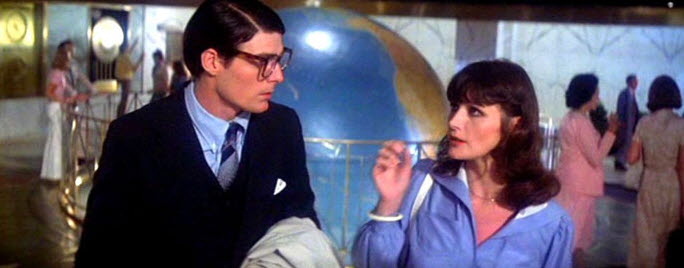
Superman, who often disguises himself as a meek urban newspaper reporter named Clark Kent, is played by Christopher Reeve, who has all the right qualities for playing his famous role. While I must point out that he is not exactly a colorful or charismatic actor, Reeve is equipped with plainly wholesome boyish qualities inarguably perfect for his role, and he also does a good job of making his character’s disguise look fairly believable. Yes, all Superman does for being Clark Kent is simply changing his clothes and then wearing glasses, but, as shown from a brief but funny moment at one point in the middle of the story, Reeve adds some subtle acting touches for making this a bit more convincing at least during our viewing.

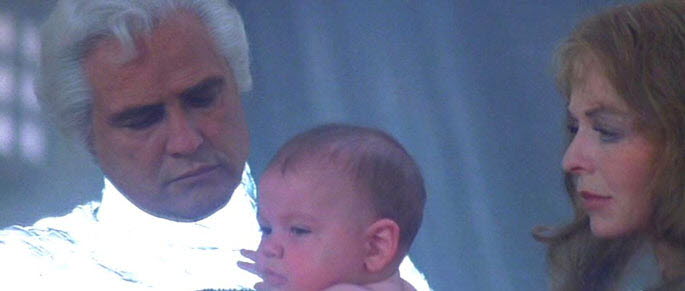
The movie spends nearly a third of its running time (145 minutes) on building up the background of its lead character, but this part seldom bores us as patiently following his well-known origin story. The opening sequence, which is unfolded on his doomed home planet, is still magnificent with enough sense of awe and wonder, though Marlon Brando, who plays Superman’s father, seems contented with merely lending his immense presence despite getting paid a lot for that (He also did like that in Francis Ford Coppola’s “Apocalypse Now” (1979), by the way). The following segment, which is about Superman’s relationship with his adoptive parents on the Earth, is somber but poignant as eventually becoming the humble heart of the story, and it is also compelling to observe how these two contrasting segments resonate with each other a lot around the finale.

Once Superman is ready to introduce himself to the people of the Earth around the middle act of the story, the movie embarks on its tricky dance among a lot of stuffs including fantasy, adventure, and romance. While it is surely fun to see how Superman often defies the laws of physics via his almost unlimited superpower, the movie always remains grounded in its fairly realistic modern world and that is actually not so far from what Christopher Nolan achieved in his Batman trilogy. Sure, Superman and Batman are different from each other as much as yang and yin, but both Nolan and Donner handle their respective superhero characters as seriously and realistically as possible – even though they also often recognize how silly their respective superhero characters feel at times.

Around the narrative point where Superman makes his first big public appearance, we are more immersed into the world inhabited by him and many other main characters including Lois Lane (Margot Kidder), a plucky young woman who is also one of Kent’s fellow journalists in the Daily Planet. Right from the first encounter at their workplace, Superman comes to like Lane a lot, but Lane becomes more attracted to Superman after being dramatically rescued by him, and this certainly leads to a amusingly complicated circumstance between them – especially when Superman makes a big important choice as Kent rather than Superman later in the story. Kidder and Reeve instantly click well with each other from the beginning, and Kidder is also commendable for bringing an ample amount of brash spirit to her strong female character. Seriously, how often do we actually come across a genuinely strong female character in superhero flicks these days?

Needless to say, any superhero film can only be as good as its main villain, and the film has Lex Luthor (Gene Hackman), who is Superman’s arch-nemesis and also about to commit the “crime of the century” as your average supervillain. While his sardonic performance mostly leans more on comedy here, Hackman, who sadly passsed away early in this year, is still deliciously diabolical, and Ned Beatty and Valerie Perrine provide some extra humor as Luthor’s henchman and secretary. These three talented performers give some of the most amusing moments in the film, and they remind me again of how sour and cheerless many of those villain characters merely are in recent superhero movies. 

Around the expected climax part which provides a lot of action and spectacle as expected, we are thoroughly engaged in what is being at the stake for Superman thanks to the first-rate efforts from Donner and his crew members including cinematographer Geoffrey Unsworth, who sadly passed away not long before the movie was released in 1978, editor Stuart Baird. Yes, some of the special effects in the film may look a bit dated, but they look and feel a lot more realistic than the CGIs of many recent Hollywood blockbuster films, and the sense of fun and excitement is all the more amplified by the Oscar-nominated score by John Williams (How the hell this another great score of his could lose to Giorgio Moroder’s tacky electronic score for Alan Parker’s “Midnight Express” (1978)?) 

Despite the considerable passage of time, “Superman” firmly remains on the top of its genre territory along with a few equally great superhero films such as “The Dark Knight” (2008), and the rather dwindling qualities of many of the subsequent Superman films such as Zack Snyder’s “Man of Steel” (2013) only remind us more of how special and precious it really is in many ways. In my inconsequential opinion, there never was or will be anything like it, and I can only hope that it may actually inspire something really good someday.

Posted in Movies | Tagged , | Leave a comment

KPop Demon Hunters (2025) ☆☆☆(3/4): A ridiculously fun K-POP fantasy animation

First, I must confess that animation feature film “KPOP Demon Hunters”, which was released on Netflix a few weeks ago, willingly goes into a musical territory not so familiar to me to say the least. Yes, despite being a South Korean dude, I have not paid much attention to K-POP like I showed no particular interest to hip-hop during my adolescent years (Full Disclosure: I was quite a tight-ass autistic kid during that time), but the film turns out to be both enjoyable and accessible to my little surprise, and I am especially grateful to it for presenting what can be regarded as the inner animal inside myself.

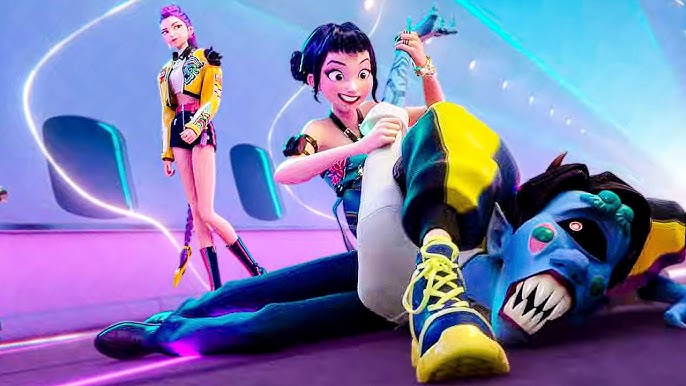
The story is basically a mix between superhero origin story and show business melodrama. At the beginning, we are introduced to a very popular female K-Pop trio group who are actually the latest generation of the time-honored singer warriors fighting against the demons of the underworld, and the opening sequence shows their latest battle which happens right before the last concert of another world tour of theirs.

Besides fighting against those demons eager to suck and then deliver human souls to their mighty master, the ultimate task of Rumi (voiced by Arden Cho), Zoey (voiced by Ji-young Yoo), and Mira (voiced by May Hong) is fortifying and then sealing the spiritual portal to the underworld once for all, and it looks like they are almost close to getting their mission accomplished. Once Rumi writes another powerful song to be spread around millions of fans out there, the portal will be sealed forever at last, and then they may be able to concentrate on their music business more than before.

Of course, the master of those demons in the underworld is not so amused about this impending prospect, and one of those demons comes with a special plan for not only thwarting their opponents but also getting much more human souls than before. That demon in question is a former human singer named Jinu (voiced by Ahn Hyo-seop), and he is going to introduce himself and four other singings demons as, surprise, a new hot male K-Pop group to compete against their opponents.

Jinu’s devious plan turns out to be quite successful right from the beginning. After all, he and his fellow singing demons sing and dance pretty well on the whole, and, most of all, their sexual appeal is literally irresistible, as frankly and broadly recognized by their opponents when these two opposing groups happen to encounter each other.

Needless to say, Rumi becomes quite pressured about writing something to stop the growing popularity of Jinu and his fellow demon singers, but then there are two big issues for her. First, she was actually born as a hybrid between demon and human, and she has been hiding this serious truth even to her two comrades mainly because of their mentor’s firm advice. Second, she and Jinu find themselves more attracted to each other despite the ongoing hostility between their respective groups, and it does not take much time for him to realize her true nature.

Around this narrative point, you can easily guess what will happen next in the story. The film does not go further than whatever you may expect, but it compensates for its rather predictable story and characters with a lot of style and personality to be savored. While Rumi and her two comrades are more or less than stereotypes to say the least, they are also depicted with a considerable amount of charm and spirit, and that is the main reason we come to root for them more along the story. In case of how it illustrates Seoul and its many different citizens, I must say that the film is not exactly realistic or authentic in terms of mood and details, but I must also recognize that directors Maggie Kang and Chris Appelhans, who also wrote the screenplay with Danya Jimenez and Hannah McMechan, did their homework on Seoul fairly well (I was especially tickled by the scene involved with a Korean medicine clinic, by the way).

In addition, the soundtrack of the film is pretty effective as far as I observed during my viewing. Besides functioning well as a part of the story, the original songs in the film are good enough to be recognized then embraced by those countless K-Pop fans out there, and they are also accompanied with a lot of style to engage and then excite us. The overall result is clearly influenced a lot by Oscar-winning animation film “Spider-man: Into the Spider-verse” (2018) and its 2023 sequel (Yes, it is produced by Sony Pictures Animation), but this is still distinctive enough with a lot of local and cultural touches to be appreciated and cherished, and some of my favorite moments come from Jinu’s adorably freakish pet demon tiger, which can be regarded as not only Korea’s answer to Cheshire Cat but also the animal illustration of myself on a rare smiling mode.

In conclusion, “KPOP Demon Hunters” is a delightful surprise during this summer season, and it is a shame that the film went to Netflix instead of getting shown in movie theaters (I would love to observe how enthusiastically its target audiences would respond to its many big musical moments). Anyway, it looks like the opening chapter for whatever may follow next, so there may come a sequel someday. Considering a lot of positive responses from both critics and audiences, that seems quite possible now, and I guess we can have some expectation on that.

Posted in Movies | Tagged , , , , , , | 3 Comments

Heads of State (2025) ☆☆1/2(2.5/4): Cena and Elba on the run

“Heads of State”, which was released on Amazon Prime in last week, works best whenever it focuses on its preposterous story premise for comedy. While it sometimes becomes a bit too serious and intense whenever it is on action mode, the movie compensates for this weak aspect to some degree via the game efforts from the main cast members, and you may gladly go along with that if you simply want to kill your spare time.

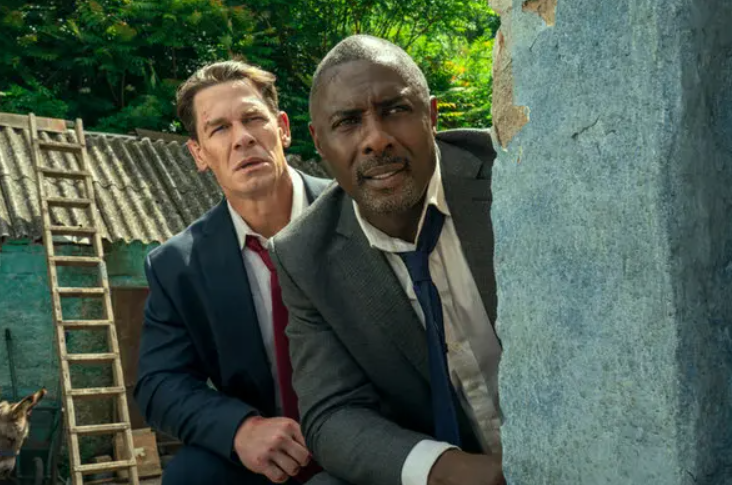
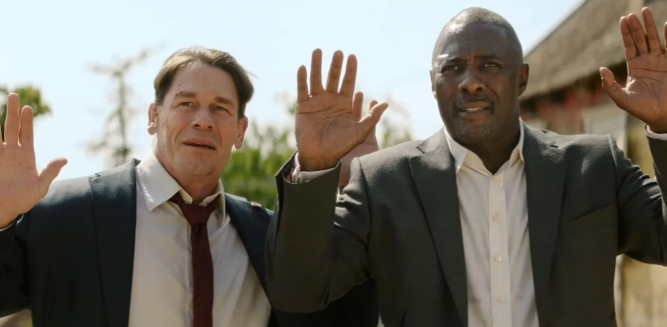
At first, we are introduced to the two vastly contrasting politicians at the top of their field. Although he was formerly a popular Hollywood action movie star not so far from Sylvester Stallone or Arnold Schwarzenegger, Will Derringer (John Cena) is now the President of the United States, and he has been fairly popular even though he looks as crass and superficial as Donald J. Trump. In case of Sam Clarke (Idris Elba), he is current Prime Minister of the United Kingdom, and, as a serious politician who is also a British Army veteran, he does not welcome Derringer much when Derringer drops by London before they attend the NATO summit conference to be held in Trieste, Italy later.

After the unexpected argument between them unfolded right in front of many journalists, these two politicians come to dislike them more than before, but they eventually agree to show the public that the “special relationship” between the countries represented by them remains intact despite their embarrassing clash in front of the press. Clarke gets on the Air Force One along with Derringer for going to Trieste together, and everything seems to be under control for both of them at least for a while.

However, there soon comes a very big trouble. As shown from the opening action sequence set in the middle of that famous tomato fight festival in Buñol, Spain, there is a serious national security threat against US and its allies from a ruthlessly vengeful Russian terrorist leader and his cronies, and they swiftly attack the Air Force One when it is flying to Trieste. Right before the airplane crashes to somewhere in the western region of Belarus (Please don’t ask me how that is possible), Derringer and Clarke manage to escape, and they soon must find any possible way to cross the border between Belarus and Poland and then go to Trieste.

It goes without saying that Clarke and Derringer are a mismatched duo from the beginning, and the movie generates some good laughs from how they are woefully unprepared for this emergency of theirs in one way or another. While Derringer does not have any particular set of skills for their survival, Clarke actually does not have any combat experience during his time in the British Army, so they end up depending on the kindness of a stranger when they need to cross the border without getting noticed or caught at all.
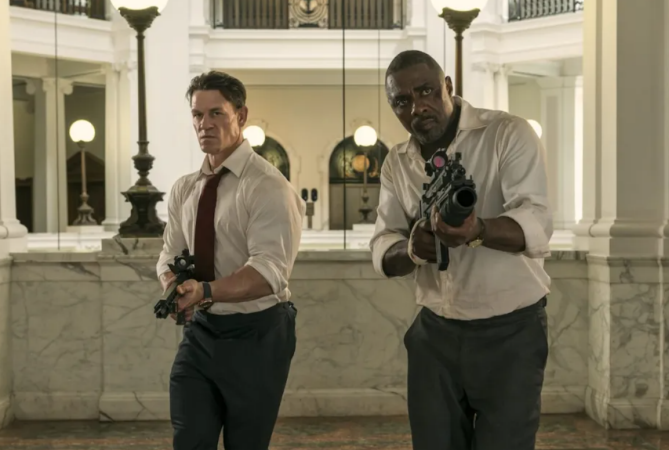
And things become all the more serious for them after that narrative point. That terrorist leader is still searching for Derringer and Clarke for having his personal revenge on them, and Clarke and Derringer fortunately get some help from an MI6 agent named Noel Bisset (Priyanka Chopra Jonas), who was incidentally once quite close to Clarke before he became a politician. They and Bisset subsequently embark on their journey to Trieste, and, as going through more dangers on their way, they become more determined to survive and then arrive at that NATO summit conference in time.

While it unfortunately loses its balance between action and comedy later in the story, the movie retains its sense of fun to some degree. Yes, our two heroes surely come to learn how to get along well with each other despite being quite different from each other, and it is often amusing to watch how they push and pull each other throughout the story. While John Cena, who has shown more comic potential during last several years, ably balances his character between silliness and amiability, Idris Elba, who previously appeared along with Cena in “The Suicide Squad” (2021) and also participated in the production of the film along with Cena, is an effective straight foil to his co-star, and the best moments in the film depend a lot on their solid comic chemistry.

The main weak aspect of the film is the relatively bland supporting characters surrounding its two main characters. Priyanka Chopra Jonas, who previously appeared in “The White Tiger” (2021), brings some pluck and spirit to her character, but she is only required to accompany Cena and Elba when she is doing some action across the screen. In case of several other notable performers including Stephen Root, Carla Gugino, Jack Quaid, and Paddy Considine, they are also limited by their thankless roles, but Considine generates a considerable sense of menace and intensity as the main villain of the story while Quaid delightfully chews every second of his brief but humorous appearance.

On the whole, “Heads of State”, directed by Ilya Naishuller, is not good enough for recommendation, but it is mostly watchable for some entertaining moments generated between its two lead performers who could be allowed to go further for more laugh and amusement for us. To be frank with you, I recommend another recent Amazon Prime film “Deep Cover” (2025) instead mainly because it is funnier and more entertaining in comparison, but “Heads of State” did not bore me at least, and I will not stop you at all from watching it.

Posted in Movies | Tagged , , , | Leave a comment

Central Intelligence (2016) ☆☆☆(3/4): His old schoolmate returns…

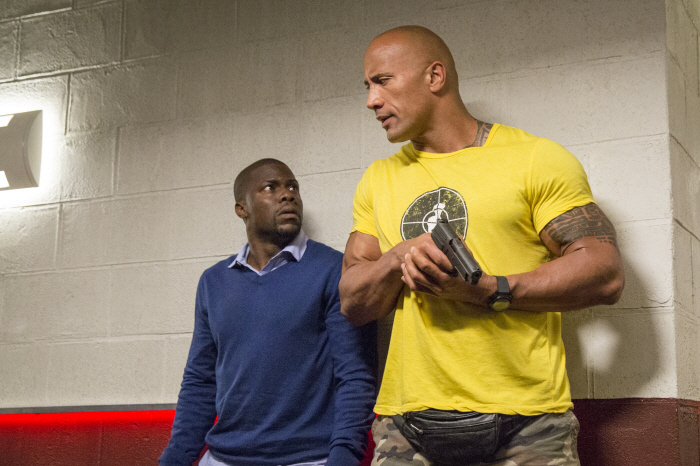
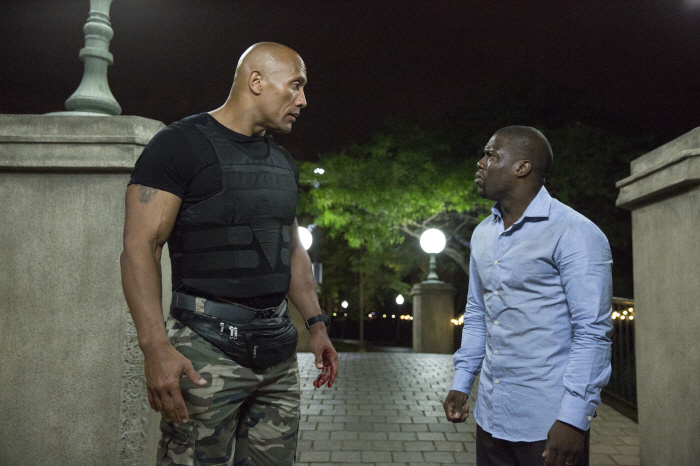
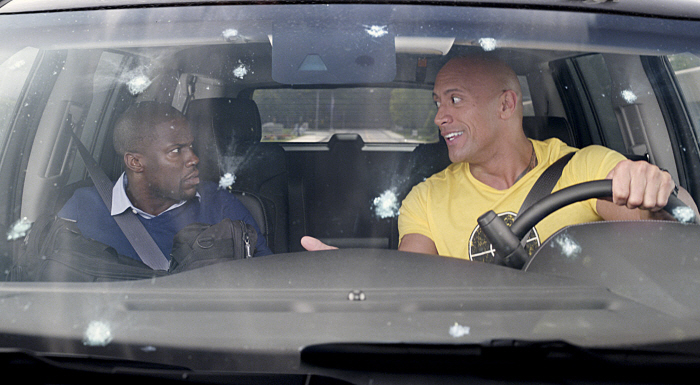
“Central Intelligence” is unabashedly silly and outrageous, but it is also quite hilarious at times for pushing its comic premise as much as it can. While this is basically a mismatched duo comedy reminiscent of many other comedy films such as “The In-Laws” (1979), it works mainly thanks to the undeniable comic chemistry between its two contrasting lead performers, and it is often fun to see how they are having a ball here.

Kevin Hart plays Calvin “Golden Jet” Joyner, a meek accountant who was once the most popular dude in his high school but now feels like going nowhere in his current status. While he has a fairly good job and a loving wife, he is not so pleased when somebody else is promoted instead of him, and then his wife suggests that they should have a therapy session due to the growing estrangement between them.

That is why Calvin is all the more reluctant to attend the upcoming high school, but then someone unexpectedly approaches to him via Facebook. That figure in question is a guy named Bob Calton (Dwayne Johnson), and Calvin does not recognize him at first, but Bob was formerly Robbie Weirdicht, whom Calvin kindly helped a bit in the middle of one of his most humiliating moments in their high school. Although he was quite socially awkward and unpopular besides being quite obese during that time, Bob is now a hulking muscular guy, and it looks like he is quite changed from who he once was.

Anyway, Calvin and Bob have a fairly good drinking evening together, and Bob eventually stays at Calvin’s house for one night, but, of course, there soon comes a big problem for Calvin on the very next morning. It turns out that Bob has actually worked for CIA, and he also has been on the run due to some serious problem involved with national security, which is more or less than your average MacGuffin. Needless to say, Calvin tries to stay out of his friend’s problem as much as possible, but, what do you now, he only ends up getting more involved with his friend instead. They are soon chased by a bunch of CIA agents led by Agent Pamela Harris (Amy Ryan), and they must also find whoever is trying to frame Bob. 

Once its comic setting is established, the movie steadily throws one absurd moment after another besides providing a lot of obligatory action scenes. We get a fair share of chuckles from a hilarious action scene unfolded at Calvin’s workplace, and then we are also tickled a lot by when Calvin must handle his increasingly insane circumstance while not revealing anything in front of his wife. In case of several action scenes in the film, they are handled well under the competent direction of director/co-writer Rawson Marshall Thurber, and they also never become too intense for the comic momentum along the story.

In addition, the movie sometimes shows its sweet sides as Bob comes to show more sincerity to Calvin even though Calvin is often not so certain about whether he can really trust Bob or not. Despite his changed appearance, Bob is still that awkward bullied kid who does not forget Cavin’s compassion and kindness at that time, and that is the main reason why Calvin decides to help Bob more despite more troubles in front of them. As a matter of fact, thanks to his crazy action adventure with Bob, Calvin cannot help but feel more alive than before, and it can be said that Bob is actually helping him just like he helped Bob at that time.

Around the last act, the movie begins to lose some of its comic momentum to some degree as things get more serious for our two heroes as expected, but the effortless comic interactions between Hart and his co-star still carry the film as before. Dialing down his usual rambunctious comic persona a bit, Hart is believable as a plain guy sensibly trying to deal with the sheer absurdity surrounding him, and that surely makes his several comic key scenes in the film all the more amusing to us. On the opposite, Dwayne Johnson, who is no stranger to comedy as well as action, effectively complements his co-star with irrepressible sincerity and jolliness, and he also does not hesitate to go further for more silliness later in the story.

The movie places several good performers here and there around Hart and Johnson, and they mostly play straight for our extra laugh. While Amy Ryan a no-nonsense agent who turns out to be more persistent than expected, Danielle Nicolet has her own moment as Calvin’s genuinely concerned wife, and Aaron Paul is also solid as Bob’s ill-fated ex-partner. In case of Jason Bateman, Melissa McCarthy, and Kumail Nanjiani, they do not disappoint us at all as reminding us again of their considerable comic talent, and Bateman, who can be quite smarmy if that is required, is particularly good when his character cruelly ridicules both Calvin and Bob at one point in the middle of the story.

Although it has been almost 10 years since it came out in 2016 (I somehow missed it around that time, by the way), “Central Intelligence” is often very funny as balancing itself well between humor and action along with its engaging lead performers, and I will not deny that I laughed more than once even though I often clearly saw through where and how it would amuse me. As many of you know, some good comedy films can remain funny and entertaining even after going through a considerable passage of time, and this is one of those nice cases to cherish in my trivial opinion.

Posted in Movies | Tagged , , , | Leave a comment