MadS (2024) ☆☆☆(3/4): An apocalyptic one-shot horror film

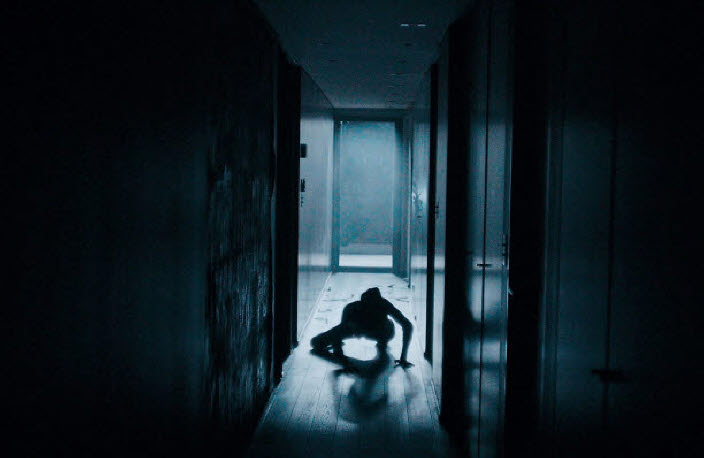
French horror film “MadS” presents a familiar type of horror story via an interesting visual approach. While this is basically another typical zombie horror film, the movie steadily and fluidly follows the story and characters without any interruption, and its intense sense of doom and panic becomes more palpable to us along its relentless narrative.

At the beginning, we meet a lad named Romain (Milton Riche), who is buying some drug from a local dealer shortly before attending an evening party along with his friends. While he subsequently drives his father’s car to his home (His father happens to be conveniently absent for his business, by the way), he suddenly encounters a mysterious woman who seems to need some help right now, but, of course, the situation becomes quite disturbing as she shows alarming behaviors. Although the movie does not explain much about what exactly is going on, we come to gather that she probably escaped from a facility involved with some dangerous medical experiment, because of her patient attire and a piece of recording in her possession.

Even though she drives him into more panic and confusion, Romain tries to get things under control at least for a while, even though he does not have any idea on what is happening to her – and him. After he is exposed to the blood from that woman, he quickly washes himself, but then, of course, he begins to feel not so well. When his friends including his girlfriend eventually come to pick him up, he still does not feel all right, but, not so surprisingly, he decides to go to their evening party anyway.

It is not much of a spoiler to tell you that Romain soon comes to realize the situation is much worse than he thought. As he gets himself swept into the chaotic mood of the evening party, he feels all the sicker than before, and then there is also a serious matter involved with his current girlfriend and some other girl who is incidentally her best friend. In the end, there comes an eventual point where he cannot control his mind and body well, but he still struggles to handle his increasingly frantic circumstance, though it is more apparent to us that not only he but also his world is already doomed.

As you will notice, the movie was actually shot in one continuous take by director/writer David Moreau, and he and his crew members including cinematographer Philip Lozano did an impressive job on the whole. As Lozano’s camera smoothly and relentlessly follows what is happening around Romain and a few other main characters, we become more immersed in their nightmarish situation, and their panic and dread are often accentuated by the harsh electronic score by Nathaniel Méchaly.

According to the IMDB trivia, Moreau and his crew and cast members had to shoot the whole film at least five times (The movie is actually the 5th shot, by the way), and you will admire how the movie effortlessly moves from one spot to another. When Romain hurriedly rides a bike for taking care of an urgent problem in his house later in the story, the camera naturally follows him as he desperately tries to pretend to someone on the other end of the phone line that everything is fine, and we are gripped more by the accumulating tension on the screen.
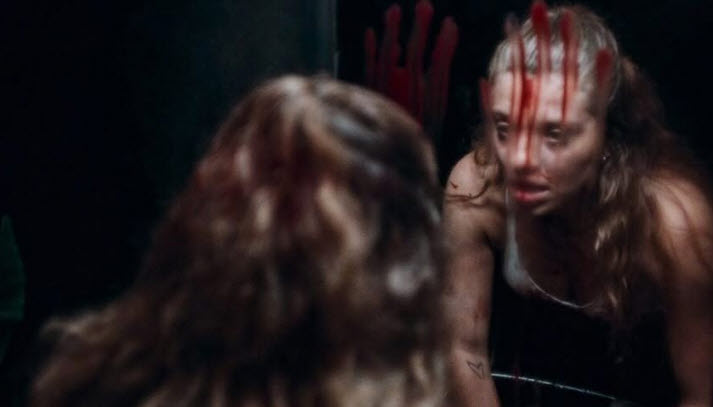
At the middle point of the story, the movie shifts its focus to the two other main characters in the story, and that is where it becomes a bit more interesting. While we surely see a fair share of body horror not so far from what we have seen from countless other similar horror films, we also observe that the ongoing situation around the main characters is much bigger than expected – especially when a bunch of armed (and masked) figures appear.

I must point out that the movie is rather thin in terms of story and characters, but it compensates for that weak aspect via its considerable verisimilitude. What is happening to its main characters along the plot looks real and convincing to us, and its three principal performers are believable as embodying their characters’ growing fear and panic. While Miton Riche carries well the first half of the film, Laurie Pavy and Lucille Guillaume are equally good during several scenes of theirs later in the movie, and Guillaume is particularly terrific as her character is terrified and then swallowed by whatever is happening to her (She did a wonderful job of evoking that infamous scene of Isabelle Adjani in “Possession” (1981), by the way).

To be frank with you, I have not been that scared by zombie movies for many years, but I am still capable of appreciating any zombie movie good and interesting enough to hold my attention, and now I am reminded of two recent examples. South Korean comedy horror film “My Daughter Is a Zombie” (2025) is rather disappointing for being too sappy, but it has some nice comic moments which amused me and many audiences around me, and I am not surprised to see that it is making a considerable success at the South Korean box office at this point. In case of “28 Years Later” (2025), it shows that there are still more interesting stuffs to explore after “28 Days Later” (2002) and “28 Weeks Later” (2007), and it actually touched me in unexpected ways. Although it is another case of “all style but no substance” in my inconsequential opinion, “MadS” succeeded in engaging and then impressing me enough via its distinctive style, mood, and technique, so I will not grumble at least for now.
Posted in Movies | Tagged , | Leave a comment

An Officer and a Spy (2019) ☆☆☆(3/4): A solid historical drama by a problematic filmmaker

I must confess that it has been more than 10 years since the last time I watched and then reviewed a Roman Polanski film. At that time, I watched “Rosemary’s Baby” (1968) for writing an essay to be posted on the website of my late mentor Roger Ebert, and I willingly gave that great horror film 4 stars without any hesitation, though I was certainly well aware of why he came to run away to France not long after “Chinatown” (1974).

Around that point, I thought we could overlook Polanski’s serious sex crime at least for a while as admiring his best works including the two aforementioned movies, which are undeniably great and important in each own genre field. After all, can we possibly discuss about the neo-noir film era without mentioning “Chinatown”? And how can we possibly talk about occult horror or female body horror films without mentioning “Rosemary’s Baby”, which ironically becomes all the more relevant after the #MeToo movement?

As many of you remember, the #MeToo movement exposed many sexual predators in the global movie industry ranging from Harvey Weinstein to Woody Allen, and it also made us a lot more aware of what Polanski’s sex crime than ever. Yes, there was a time when we became a bit more forgiving and Polanski even won a surprise Best Director Oscar for “The Pianist” (2002), but he came to lose his Academy membership not long after the #MeToo movement began, and he has been a persona non grata just like Allen since that point (Come to think of it, it has also been several years since I watched a Woody Allen film for the last time).

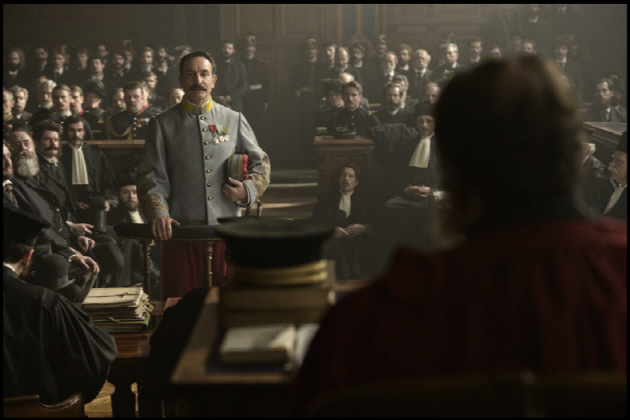
When Polanski came to the Venice International Film Festival with “An Officer and a Spy” in late 2019, I and many others regard this news with understandable reservation. The main subject of the film is none other than the Dreyfuss Affair in France at the end of the 19th century, and I wondered whether this was Polanski’s blatant artistic response to #MeToo movement. Well, the film subsequently received the Grand Jury Prize and the FIPRESCI Prize at the Venice International Film Festival, and the following public controversy surrounding the film became all the more intense when it received the three awards including Best Director at the César Awards in early 2020.

After finally watching the film now (It has been available on a number of local streaming services in South Korean during last several years without getting any theatrical release, by the way), now I can tell you my opinion about it. Yes, this is a solid historical drama to be admired for many things including Polanski’s confident direction, but, folks, I still have some doubt on his intentions behind it.

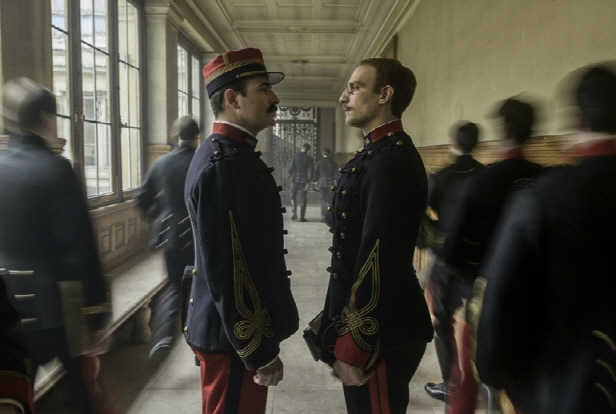
Objectively, the movie can be regarded as the tale of a defiant pursuit of integrity as well as justice, because the center of the story is actually not Captain Alfred Dreyfuss (Louis Garrel, who looks rather dry and distant throughout the film) but Colonel Georges Picquart (Jean Dujardin, who looks much more subdued compared to his Oscar-winning performance in Michel Hazanavicius’ “The Artist” (2011)), who gets appointed as the new head of the secret service section of the French Army not long after Dreyfuss was found guilty of passing military secrets to the German government and then condemned to the imprisonment in the Devil’s Island. At first, Picquart is simply interested in handling the aftermath of the Dreyfuss affair as neatly as possible, but, what do you know, he eventually realizes that the French army actually caught the wrong guy and the real culprit remains free without any particular suspicion on him.

The movie makes some sharp points on how those high-ranking French military officers and generals were willing to frame Dreyfuss from the very beginning. They all cared only about protecting the reputation of their system as much as possible, and Dreyfuss, who is incidentally a man of Jewish heritage, was promptly targeted by them just because of their antisemitic prejudice. When Picquart begins to delve more into how thoroughly they messed up the case, they are certainly willing to stop him by any means necessary, and Picquart soon finds himself facing a lot of infuriating injustice just like Dreyfuss.

Fortunately, there are also a number of prominent public figures willingly showing considerable public support to not only Dreyfuss but also Picquart, and one of them is none other than Émile Zola, who, as dramatically depicted in second half of William Dieterle’s Oscar-winning film “The Life of Émile Zola” (1937), stirred a lot of people in France via his famous newspaper opinion headlined “J’Accuse…!” (This is incidentally the original French title of “An Officer and A Spy”, by the way). Even around this narrative point, the movie does not lose its calm and restrained attitude at all as steadily following Picquart’s increasingly daunting plight to the end, and we come to admire his bravery and integrity more around the end of the story.

However, can I praise Polanski for his competent handling of mood, storytelling, and performance here in this film? Despite being your average amateur reviewer, I do always value integrity and principle, and I can only say that I recommend it for being a good movie even though I must also be honest about my personal thoughts and feelings on Polanski as a human being. In my trivial opinion, he is both a great filmmaker and a deplorable person, and that is why we really should keep dealing with him as well as his works to the end.

So, will “An Officer and a Spy” be eventually remembered as something important but thematically problematic just like, say, Elia Kazan’s Oscar-winning film “On the Waterfront” (1954)? I cannot possibly answer for now, but maybe you should watch it for more talk and discussion among us, and that will probably help us arrive at the eventual verdict in the end.

Posted in Movies | Tagged , , , | Leave a comment

Eyes Without a Face (1960) ☆☆☆1/2(3.5/4): As she waits for another surgery

French filmmaker George Franju’s 1960 horror movie “Eyes Without a Face” is quite striking for its eerie qualities. While it initially feels merely bizarre and disturbing on the surface, the movie gradually draws us into the evil and madness at the center of the story, and it is interesting to observe how it goes further with its morbid story and characters before pulling out an oddly poetic moment to touch and mesmerize us in the end.

The movie is mainly about the private medical project of Dr. Génessier (Pierre Brasseur), a prominent doctor who has studied a lot on “heterograft” for years. After his daughter Christiane (Édith Scob) was severely disfigured in her face due to a recent car accident, the doctor becomes more obsessed about succeeding in his skin transplant experiment, and we come to gather later that he has already experimented on many dogs inside his private residence right next to a hospital located somewhere outside Paris.

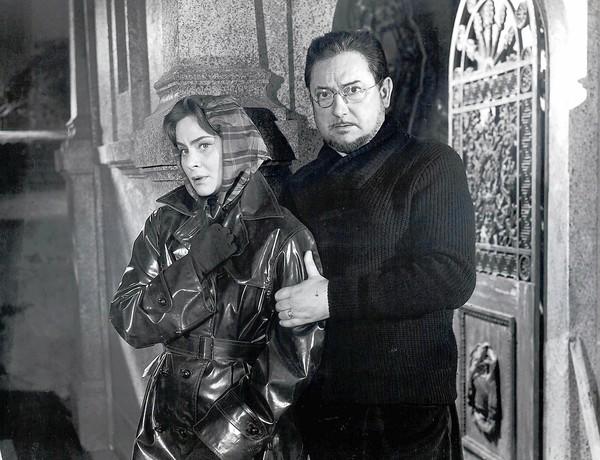
However, Dr. Génessier has not made much, shall we say, progress in case of the final stage of the project. He and his loyal assistant Louise (Alida Valli, who was also quite memorable in Carol Reed’s “The Third Man” (1949)), who are very devoted to him and the project because he did a very successful facial restoration surgery on her some time ago, have kidnapped several young women for taking away their face skin and then grafting it onto Christiane, but they have failed during last several attempts. The opening part of the film chillingly shows Louise taking care of the aftermath of their latest failure, and its horrific aspects are further accentuated by the jaunty score of Maurice Jarre (It was one of his early works before he became a lot more prominent thanks to winning his first Oscar for David Lean’s “Lawrence of Arabia” (1962), by the way).

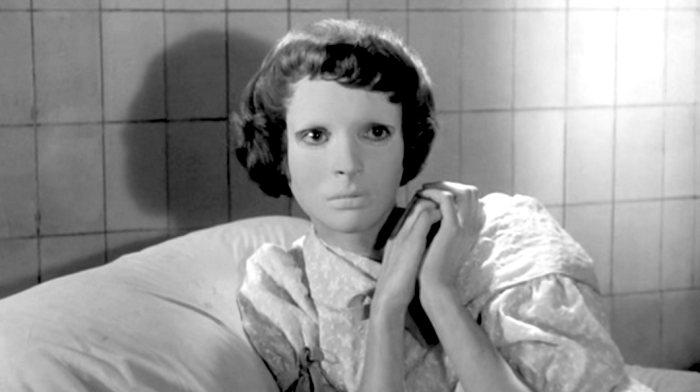
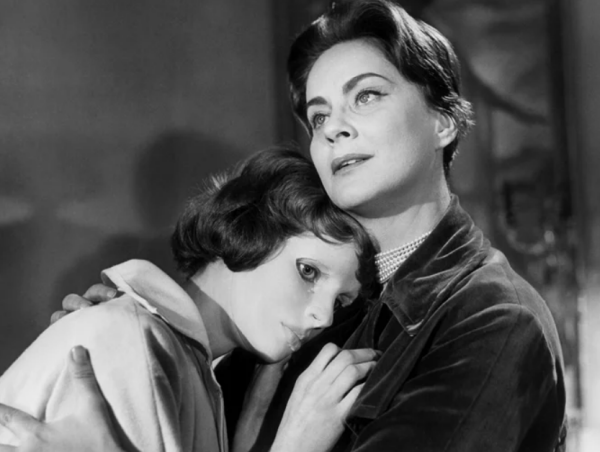
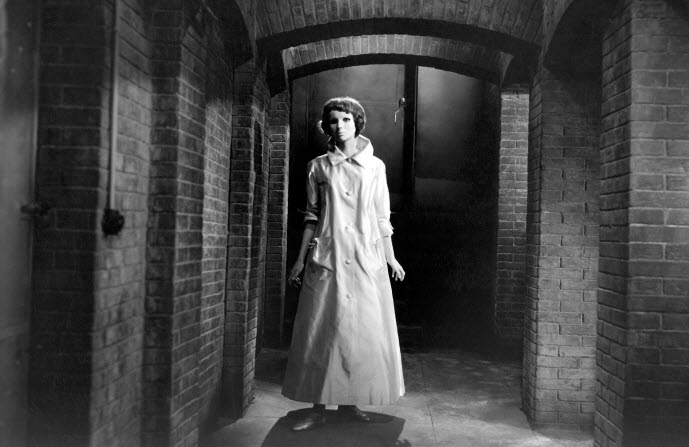
Still not being suspected at all due to his respectable social status, Dr. Génessier is already determined to try again along with his assistant, but Christiane is not so pleased to say the least. Usually wearing a fecklessly white mask covering her face, she is certainly afraid of how she looks at present, but she cannot help but feel quite suffocated as being constantly isolated inside the house, and we come to sense more of her growing guilt on what her father has been doing for her. Sure, the doctor does care a lot about his daughter, but Christiane becomes more and more horrified about his insane project, even though she has yearned to have a face to present in front of others out there someday.

When Dr. Génessier and Louise later kidnap and then work on another unfortunate young woman, the movie does not hesitate to go into those gruesome details of their work process. This unforgettable scene is thankfully shot in black and white film, so the result is relatively tame compared to the horror movie standards of our time, but it still looks and feels quite disturbing even at present. In fact, it is not surprising at all that the movie shocked or repulsed many audiences at the time of its initial theatrical release.

Franju was no stranger to inducing shock and repulsion from his audiences even before making this movie. His short documentary film “Blood of the Beasts” (1949), which is incidentally included in the Criterion DVD and Blu-ray edition, is still capable of shocking us quite hard with all those horrifyingly vivid moments captured from the slaughterhouses in Paris. Strikingly juxtaposed with the rather lyrical depiction of how the city keeps going outside those slaughterhouses, these dreadfully visceral moments are all the more disturbing and powerful, and the resulting impression will linger on your mind forever along with that undeniably brutal and inconvenient truth inside our life and civilization, even if you never want to watch this exceptional short documentary again.

While it is relatively less disturbing in comparison, “Eyes Without a Face” slowly creeps into our mind via its clinically nightmarish atmosphere coupled with a lot of noirish visual touches to be observed here and there throughout the film. The cinematography by Eugen Schüfftan often feels unnerving in its stark contrast of light and shadow; the interior spaces of the doctor’s house are increasingly creepy and insidious along the story, and Christiane’s mask sometimes looks like a sort of second skin as becoming a part of her miserable existence.

I must point out that a subplot involved with the doctor’s young male protégé, who is incidentally Christiane’s boyfriend, is more or less than a mere plot device to maneuver the story toward the eventual finale. Nevertheless, the screenplay by Jean Redon, Claude Sautet, Pierre Gascar, and Boileau-Narcejac (This is the pen name of the French crime-writing duo of Pierre Boileau and Pierre Ayraud, who is also known as Thomas Narcejac. They are mainly known for writing several novels adapted into notable films including Henri-Georges Clouzot’s “Les Diaboliques” (1955) and, yes, Alfred Hitchcock’s “Vertigo” (1958)), which is based on the novel of the same name written by Redon, keeps focusing on the main characters as usual, and there is surrealistic poignancy in what happens after Christiane makes a sudden but understandable choice around the end of the film.

In conclusion, “Eyes Without a Face” is a modest but undeniably influential genre piece which will leave some indelible impression on you. I must confess that I felt rather distant to its story and characters at first, but then I was impressed more about its striking cinematic aspects, and I am certainly willing to revisit it for more appreciation and admiration.

Posted in Movies | Tagged , , , | Leave a comment

High and Low (1963) ☆☆☆1/2(3.5/4): A top-notch police procedural from Kurosawa

On the surface, Akira Kurosawa’s 1963 film “High and Low” simply follows one kidnapping case from the beginning to the end. While the overall result works as a dry but undeniably compelling police procedural, the movie also gives us some revealing glimpses into the social class issues in the Japanese society during the 1960s, and it is certainly one of many high points in Kurosawa’s legendary filmmaking career.

The movie opens with a little private business meeting between a wealthy businessman named Kingo Gondo (Toshiro Mifune) and his several business associates. They want to persuade Gondo to help them taking over their big shoe company, but it later turns out that Gondo has the other idea behind his back. As a matter of fact, he virtually bets all of his assets on this for not only getting richer but also taking over the company for himself.

However, there soon comes an unexpected emergency. Gondo receives a call from someone saying that he has just kidnapped Gondo’s only son. Fortunately, Gondo’s son is actually all right, but it turns out that the only son of Gondo’s chauffeur was kidnapped instead. Gondo immediately calls the police, and several detectives quickly come to his residence, but things become more difficult for Gondo. The kidnapper still demands a big amount of ransom as before, and Gondo naturally becomes quite morally conflicted: Can he really sacrifice all of his wealth for saving his employee’s son?

The first act of the movie is mostly unfolded inside the big living room of Gondo’s posh and expensive residence, but this never feels stuffy at all as Kurosawa and his cinematographers Asakazu Nakai and Takao Saitō effectively use the widescreen ratio of 2.35:1 for generating more drama and suspense across the screen. While the camera usually observes Gondo and the main characters from the distance, the movie subtly conveys to us Gondo’s increasingly impossible circumstance via some effective blocking strategies, and you may be amused a bit by how the movie often shows Gondo on the one or the other side of the widescreen – for accentuating how he feels more cornered as the clock is ticking for him and several others around him.

Around its middle act, the screenplay by Kurosawa and his co-writers Hideo Oguni, Ryūzō Kikushima, and Eijirō Hisaita, which is based on Evan Hunters’ 1958 novel “King’s Ransom” (It is one of those 87th Precinct novels written under his pen name Ed McBain, by the way), begins to shift its focus more on a bunch of plain cops working on the investigation of the kindnapping case. Although there are not many clues which may eventually lead them to the kidnapper, they become more determined to do their job as feeling a bit more sympathetic to Gondo’s ongoing plight, and the movie closely follows their steady and diligent joint efforts step by step. Trying to get additional clues as much as possible, they systemically search for any breakthrough, and we become more engaged as they begin to get closer to their target along the story. I especially like the sequence where the two cops and Gondo’s chauffeur respectively try to locate a certain spot associated with the kidnapper, and there is also a particularly wonderful moment when the movie adds a bit of color for an impactful dramatic effect.

In the meantime, the movie reveals a bit on the identity of the kidnapper, and we become more aware of the class gap between Gondo and many others living around his residence. Placed on a high hill, his house looks like a castle flaunting its power and wealth, and this certainly makes a big contrast with the relatively poor neighborhood around the bottom of the hill, where Gondo’s residence is quite visible from here and there. In fact, you will not be surprised much to learn that this striking class gap shown in the film influenced Bong Joon-ho’s Oscar-winning film “Parasite” (2019) a bit, which also makes a big point on the similar class gap throughout its story.

The final act expectedly culminates to the eventual finale of the cops’ investigation, but the film does not lose its coolly detached attitude at all as patiently following the cops’ pursuit of their target in one particular area of the city filled with drug addicts and homeless people. Around this narrative point, the movie becomes a bit noirish with some disturbing sights shrouded in light and shadow, and this resonates more with the original Japanese title: “Heaven and Hell” (天国と地獄).

While Toshiro Mifune is surely the most prominent figure in the cast, he often steps aside for the well-rounded ensemble performance from the various cast members including Tatsuya Nakadai and Takashi Shimura, who are also Kurosawa’s regular collaborators like Mifune. While Kenjiro Ishiyama often steals the show the colorful partner of the detective assigned to the case, Tsutomu Yamazaki is suitably unpleasant as required by his crucial supporting role, and he and Mifune deftly handle the starkly powerful closing scene of the film.

Overall, “High and Low” may not be on par with Kurosawa’s several great films such as “Ikiru” (1952), “Seven Samurai” (1954), “Red Beard” (1965), and “Ran” (1985), but it is still a superlative genre piece to be appreciated and admired for its dexterous handling of story and character coupled of a lot of realism and verisimilitude. From the beginning, I surely knew what it is about, but I got soon engaged and then enthralled by how it is about, and that is what a good film can do in my trivial opinion.

Posted in Movies | Tagged , , , | Leave a comment

Ballerina (2025) ☆☆1/2(2.5/4): Brutally Redundant to say the least

“Ballerina”, a spin-off installment within the John Wick franchise, is brutally redundant to say the least. While surely serving us a heap of extremely brutal and violent action scenes as expected, this slick and competent genre piece does not bring that much to its franchise on the whole without generating enough fun and excitement to hold our attention, and you may not have much expectation when its end credits eventually roll on the screen.

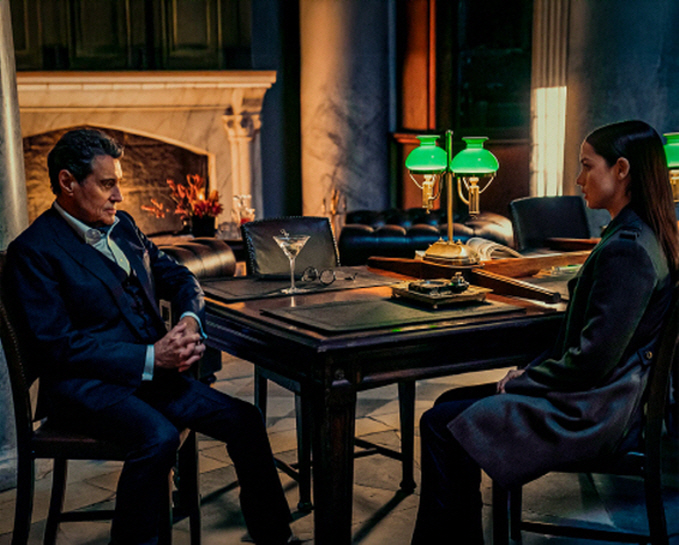
The story, which is mostly set at a time point somewhere between “John Wick: Chapter 3 – Parabellum” (2019) and “John Wick: Chapter 4” (2023), mainly revolves around Eve Macarro (Ana de Armas), a female assassin who has been trained in the traditions of an old assassin organization named the Ruska Roma in New York City since she was a young little girl. At that time, she was being protected for a while by her dear father who escaped along with her from some other equally dangerous assassin organization, but then that assassin organization eventually attacked upon them, and Eve managed to survive alone in the end. Thanks to Winston Scott (Ian MacShane), the enigmatic owner of the New York Continental Hotel who also happened to be an old friend of her father, she was later sent to the Ruska Roma for her safety, and we soon see her going through a number of intense training sessions around 12 years later. 

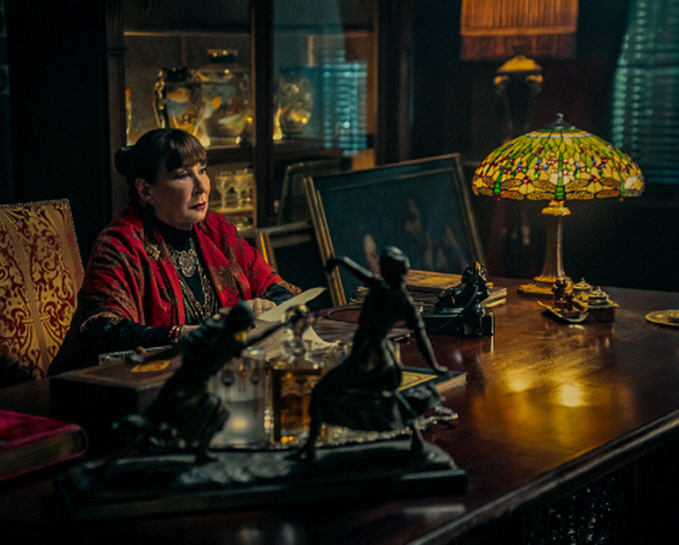
When the Director (Anjelica Huston), an old but strong-willed lady who has been the leader of the Ruska Roma, decides that the time for the first mission comes to Eve at last, Eve is certainly ready to prove her professional worth, and that leads to a stylish action sequence unfolded inside a big nightclub literally frosty to say the least. If you remember how she held her own small place well beside Daniel Craig during a big action scene in “No Time to Die” (2021), you will not be surprised much by how physically committed Ana de Armas looks as throwing herself into a lot of intense actions here and there, but you will still admire her considerable efforts shown from the screen nonetheless. In addition, I must tell you that, like me, some South Korean moviegoers will be amused a bit by the appearance of Jung Doo-hong, a renowned South Korean stunt coordinator who worked in a bunch of notable South Korean action films such as “The Berlin File” (2013).

Within a short period, Eve becomes one of the most dependable (and lethal) members in the Ruska Roma, but then there comes an unexpected discovery for her not long after she finished her latest job. She encounters a member of that assassin organization responsible for her father’s death, and she soon becomes quite determined to track down that assassin organization even though both the Director and Winston firmly warn her of how risky that can be for not only her but also her organization.

Nevertheless, Eve remains adamant about avenging her father’s death, and Winston cannot possibly say no as a man of honor who promised to her in the past that he will not deny a request from her. Thanks to a little piece of information from Winston, Eve comes to Prague, Czech for approaching to a certain figure who may lead her to her target, and that naturally leads to another action sequence filled with a lot of crashes and bangs.

As Eve gets closer to her target, we get to know a bit more about not only the organization responsible for her father’s death but also its fanatic leader. It turns out later that there is some young girl the organization and its leader are ready to take away by any means necessary, and this young girl surely comes to remind Eve a lot of who she once was a long time ago. Around the narrative point where she is eventually going to confront her main opponent, the situation turns out to be much more perilous than expected, but she is not daunted at all – even when someone is sent by the Director to stop her at the last minute.

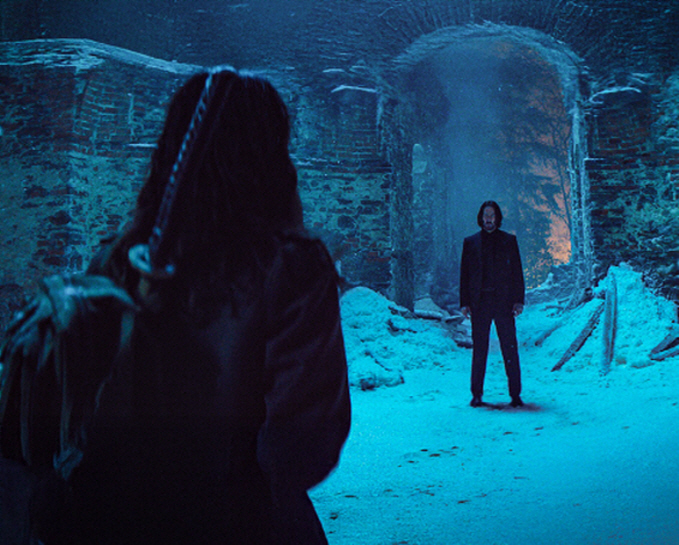
Considering how prominent Keanu Reeves has been in the promotion of the film besides serving as one of its executive producers, I guess I do not spoil anything for you as discussing a bit about his brief appearance in the movie. Reeves dutifully does whatever is required here, but his several scenes feel rather perfunctory, and it is disappointing to see that his character only comes to function as a convenient plot device for the expected climactic part.

Around de Armas and Reeves, a number of notable performers fill their respective spots as much as possible. While Ian MacShane, who is surely the most entertaining performer in the franchise, has some juicy moments as having a small fun with his character’s wily aspects as before, Anjelica Huston brings a little but precious touch of class as she previous did, and Gabriel Byrne broodingly chews every moment of his as the main villain of the story. In case of Catalina Sandino Moreno and Sharon Duncan-Brewster, they are unfortunately under-utilized due to their thin supporting roles, and Lance Reddick, who sadly passed away in 2023, leaves some impression even though he briefly appears in a couple of short scenes shot not long before his death.

Overall, “Ballerina”, directed Len Wiseman, is mostly fine as a passable opener for whatever may follow next, but it is one or two steps below what was achieved by those four John Wick movies. While these John Wick movies are quite amusing as a sort of violent but stylish deadpan joke besides being well-made action films, “Ballerina” is relatively deficient in terms of wit and style, and I only found myself becoming more distant during my viewing. I did not feel like wasting my two hours at least, but I still wonder whether this is necessary, and I will simply let you decide whether you will watch it or not.

Posted in Movies | Tagged , | Leave a comment

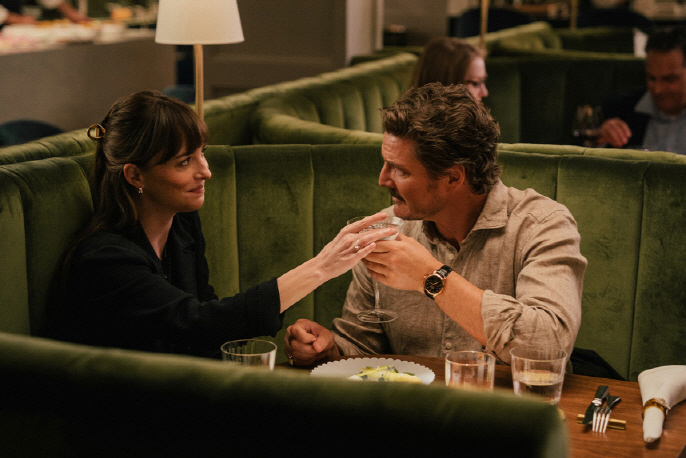
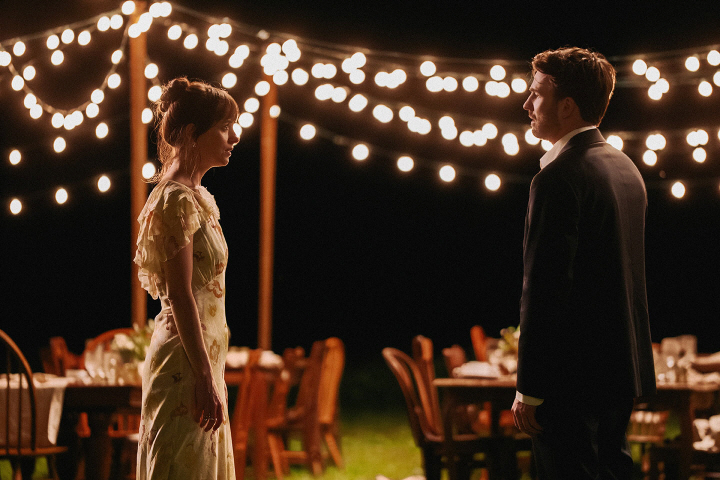
Materialists (2025) ☆☆☆(3/4): A matchmaker between two choices

Celine Song’s second feature film “Materialists” is a calm romance film about one matchmaker who both calculates and cares a lot. While her practical mind seems interested in someone supposedly quite ideal for any woman out there, her heart cannot help but get drawn to a person she still loves despite some issues between them, and the movie illustrates her confusion and conflict with a lot of care and sensitivity.

The opening part of the movie quickly establishes how its heroine works as a fairly good matchmaker in New York City. Lucy (Dakota Johnson) has worked in a local matchmaking service agency for a while, and the movie observes her caring professionalism at one point early in the story. When one of her recent female clients comes to have a sudden serious doubt right before marrying some suitable guy introduced by Lucy, Lucy has a little private conversation with this lady, and she really listens to her client with enough empathy and understanding while respecting whatever her client is going to do right now.
Anyway, her client eventually marries that dude, and that is how Lucy encounters Harry (Pedro Pascal), a handsome bachelor who happens to be the brother of the groom. As they talk more and more with each other during a little party after the wedding, something seems to click between them, and Lucy comes to see more of what an ideal guy Harry is in many aspects. Besides being quite good-looking to say the least, he is also a wealthy financial businessman with a very nice family background. As Lucy points out later, he is virtually what is called a “Unicorn” in her business field, and that certainly makes her all the more interested in him.

However, there comes another unexpected moment for her while she is talking with Harry. One of the employees of the catering service for the wedding turns out to be her ex-boyfriend John (Chris Evans), and both Lucy and John are pleased to meet each other, even though they had a painful breakup some time ago. John is one of those struggling NYC actors who are often quite poor, and that was actually what caused their painful breakup as shown from a brief flashback scene.

Now you will have a pretty good idea about where the story is heading, but Song’s screenplay takes its time for fleshing out its main characters more as deftly maintaining its leisurely narrative pacing. As Lucy comes to spend more time with Harry, Harry turns out to be a lot more decent and thoughtful than expected, and Lucy naturally comes to consider going further with him. Although she does not mind being a single woman at all, she cannot help but yearn for someone to love and lean on, and Harry looks quite ready for being that person as they become more aware of how they seem ideal for each other according to their respective standards.

Nevertheless, Lucy’s heart feels conflicted as she also lets herself get involved with John again. They act as if they were just old friends now, but we gradually notice that the chemistry between them still exists, and we are not so surprised when Lucy subsequently calls John first after having a very unfortunate day at her workplace due to some really bad male client. He patiently listens to her on the phone, and she surely appreciates his generous thoughtfulness.

However, as your average materialist, Lucy is also often reminded of how economically unstable John has been compared to Harry, and the movie makes a sharp point on that from time to time. While it looks like his acting career is finally about to have a little breakthrough, John is still stuck in his old and shabby apartment along with a couple of roommates who are no better than him, and this surely makes a glaring contrast with Harry’s big and expensive apartment.

Needless to say, there eventually comes a moment when Lucy must make a big decision during the last act, but the movie sticks to its calmly restrained attitude as usual. Although it stumbles a bit due to a rather contrived dramatic moment, the story stays true to its three main characters nonetheless, and we come to understand and care more about them than before.

The three principal performers of the film are well-cast in their respective roles, and they all give believable performances filled with enough nuances and details to engage us. Dakota Johnson, who has shown more of her presence and talent since “Fifty Shades of Grey” (2015), exudes somber grace and charm from the beginning to the end, and this surely shows that she is quite ready to move on from that disastrous Marvel Cinematic Universe film which unfortunately garnered her a Razzie award early in this year. While Chris Evans, who seems to be aging well enough to become a more interesting actor, is likable in his earnest acting, Pedro Pascal, a naturally charismatic actor who has become very prominent during last several years, has several good scenes where his character comes to show more of himself to Lucy, and we can easily see why Lucy becomes so conflicted between these two guys.

In conclusion, “Materialists” is relatively lightweight compared to Song’s sublime first feature film “Past Lives” (2023), but it confirms to us more of Song’s considerable storytelling talent. The result is rather typical on the whole, but I found myself amused and touched enough during my viewing, and I will certainly look forward to observing how Song will advance more from her first two feature films.

Posted in Movies | Tagged , , , | 1 Comment

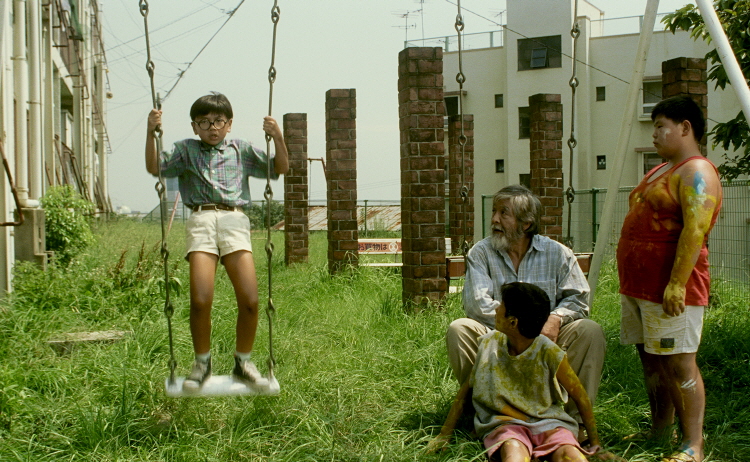
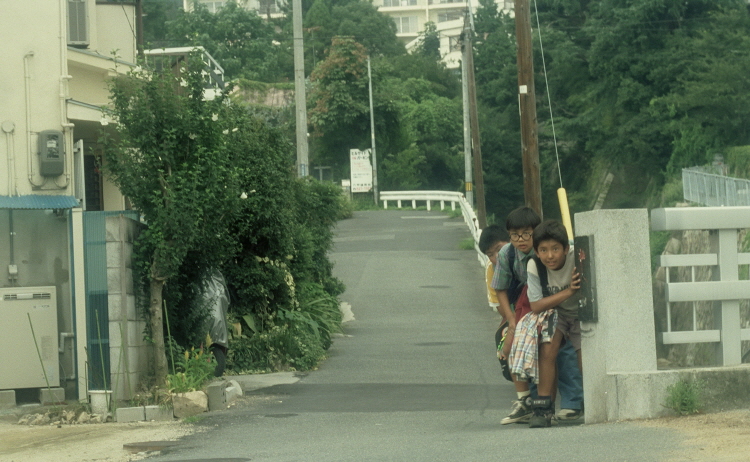
The Friends (1994) ☆☆☆1/2(3.5/4): Three kids and an old man

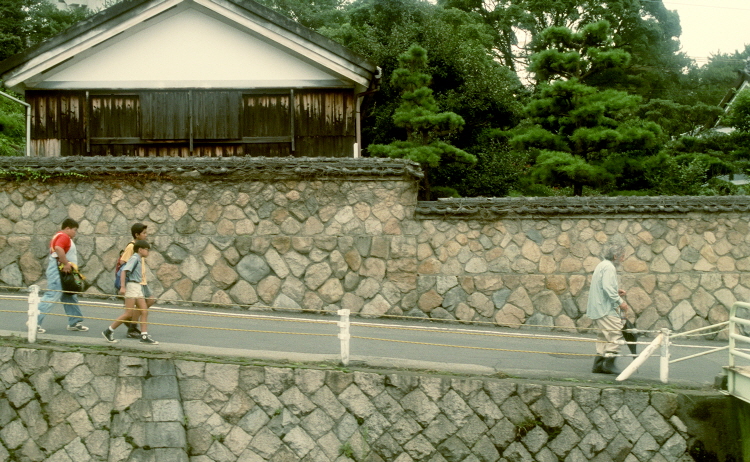
Shinji Sômai’s 1994 film “The Friends”, whose 4K restoration version was released in South Korean theaters yesterday, is gentle, humorous, and poignant in its unadorned coming-of-tale to remember. Calmly and sensitively following its three little young heroes’ eventful summertime, the movie goes much deeper into its main subjects along with them than expected, and we are eventually quite touched as reflecting more on how much they come to learn and then grow up around the end of the story.

At the beginning, we are introduced to three elementary school kids: Kiyama (Naoki Sakata), Kawabe (Yasutaka Oh), and Yamasita (Ken’ichi Makio). Because Yamasita, who is incidentally your average chubby boy, recently went to his grandmother’s funeral, Kawabe and Yamasita have been quite curious about death, and there is a morbidly amusing moment when Kawabe shows more of his curiosity about death while being quite reckless on the railing of an overpass (I sincerely hope that the three child performers of the film were protected enough during the shooting).

These three boys’ shared curiosity leads them to one particular old shabby house in their neighborhood. This house belongs to one reclusive old man who may die sooner or later, and Kawabe, who is often quite imaginative for a harrowing personal reason, suggests that they should monitor this old guy just for getting a chance to watch death someday. At first, they simply watch his house from a gap in the fence surrounding the house, and then, what do you know, they soon get themselves into his reclusive daily life more as becoming more curious about him.

Of course, it does not take much time for the old man to notice the attention from these three boys. At first, he is just surprised and annoyed, and that makes the boys all the more focused on watching on the old man. At one point, they follow after him when he goes to somewhere in the neighborhood, and their silly act of following merely amuses us for a while, and then the movie surprises us as suddenly entering the realm of surrealism along with one of the boys. This may feel jarring at first, but it is so skillfully handled that we have no problem with accepting whatever is experienced by the boy’s very imaginative mind.  

Anyway, as you have already guessed, the old man gradually comes to accept the boys into his residence, and the movie observes how things get changed in his little solitary environment thanks to the boys. First, he has them help him a bit on drying his laundry, and that is just the beginning of how the boys get themselves involved much more with the old man than before. They gladly clean up the foreground of his residence full of tall weeds for planting flower seeds there later, and they also assist him in a bit of renovation inside and outside his house.

It is not much of a spoiler to tell you that our little heroes come to learn a little more about their unlikely friend as caring a lot more about him than expected, but the screenplay by Yôzô Tanaka, which is based on the novel of the same name written by Kazumi Yumoto, takes its time as subtly developing its story and characters via mood and details. As the camera of cinematographer Noboru Shinoda patiently follows or focuses on the boys and the old man, we get to know more about them as well as their developing relationship, and there is an absolutely compelling scene where the old man phlegmatically reveals his longtime personal guilt in front of the boys in the middle of one dark and stormy night.

The following third act of the story depends on a little Dickensian coincidence, but what follows next is presented with a considerable amount of emotional power to engage us more than before. I will not go into details here, but I can tell you at least that the movie handles its expected melodramatic finale with a lot of sensitivity and thoughtfulness to admire, and I assure you that the poetically bittersweet quality of the last scene will linger on your mind for a while. Now I am reminded of that unforgettable quote from Errol Morris’ great documentary “Gates of Heaven” (1978): “Death is for the living and not for the dead.”  

Sômai also draws the wonderful natural performances from his three young actors. They are often quite effortless in their interactions on the screen (You may smile a little when one of them cheerfully sings a song from Hayao Miyazaki’s great animation film “My Neighbor Totoro” (1988), by the way), and it is quite clear to see why Sômai has been admired so much by Hirokazu Kore-eda, who surely knows a lot about how to get good performances from child performers. While never overshadowing his much younger co-stars, Rentarô Mikuni is believable as a man slowly coming out of his shell at last thanks to his unexpected little friends, and Naho Toda and Ritsuko Nemoto are also effective as the two small but crucial supporting characters in the story.

 In conclusion, “The Friends”, whose Japanese title is incidentally “Summer Garden (夏の庭)”, is another hidden gem in Sômai’s fascinating filmmaker career. Although it has been more than 20 years since he passed away in 2001, “Typhoon Club” (1985) and “Moving” (1993), which were already introduced to South Korean audiences before “The Friends”, do not look old at all, and these two films and “The Friends” surely deserve to be introduced to more audiences out there for more recognition on its rather overlooked maker. After watching these three interesting films from him, you will understand why Sômai has been respected a lot by Hirokazu and many other current Japanese filmmakers, and you may want to check out more of his filmography just like me.

Posted in Movies | Tagged , , , | Leave a comment

Jaws (1975) ☆☆☆☆(4/4): Still on the top of the field

If there had not been any shark movie at all after Steven Spielberg’s 1975 film “Jaws” came out, we would not complain that much in my humble opinion. After all, this great film tried and then succeeded in nearly everything we can possibly imagine or expect from shark movie, and it has been virtually impossible for any subsequent shark film to escape from what was achieved so well here in this movie.

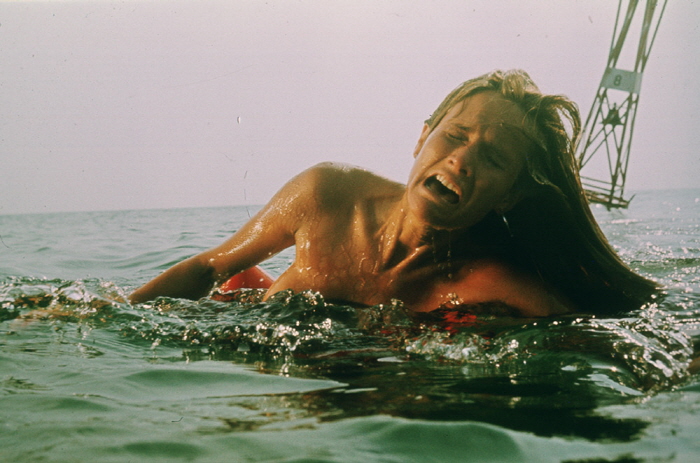
As a first-class horror film, “Jaws” takes time as skillfully setting the stage first, just like William Friedkin’s “The Exorcist” (1973) does during its first act. After that terrifying opening scene showing the first shark attack, the movie pays a lot of attention to establishing its mundane main background and characters on the screen, and everything in the story including that shark becomes all the more believable, as we get totally immersed in the situation surrounding its plain ordinary main characters including Chief Martin Brody (Roy Scheider), a policeman who recently moved to Amity Island from New York City along with his family mainly for getting away from all the danger and anxiety he experienced in the city. 

Well, it turns out that his first summer in this little beach town ready for another swimming season is not as uneventful as he hoped. When it is confirmed to that there was indeed a shark attack, Chief Brody is certainly ready to close the beach, but this is promptly objected and then blocked by the mayor, who, like many local people in the island, does not want anything to interfere with their upcoming summer business.

Needless to say, the circumstance becomes all the more serious with more shark attacks to follow, and there are a number of striking scenes which are still quite effective even though the movie does not show much of that big white shark in question. Yes, it has been well known that Spielberg and his crew had a lot of problems with that mechanical shark on the set, and not showing much of it on the screen was a practical choice for them, but Spielberg brilliantly used this technical limit to the big advantage of the movie, just like Val Lewton and his director Jacques Tourneur did in classic B horror film “Cat People” (1942). While we do not see much of the shark during the first half of the movie, Spielberg and his crew members including editor Verna Fields and cinematographer Bill Butler make us all the more aware of the presence of shark, which is usually announced by the unforgettable Oscar-winning score by Spielberg’s longtime collaborator John Williams (The movie also won in Best Editing and Best Sound by the way).

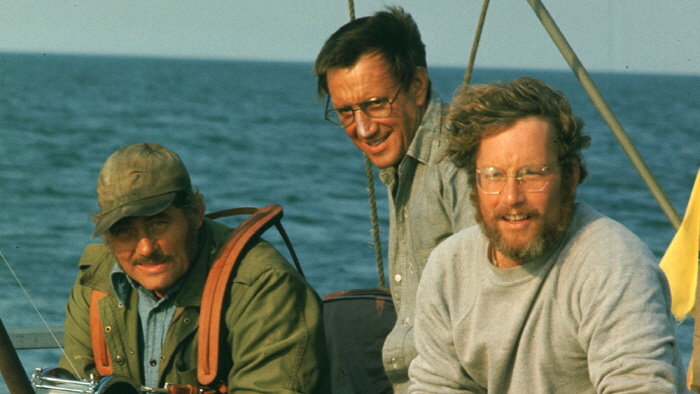
Around the narrative point where Chief Brody must hunt and then kill that shark as soon as possible, the movie is turned into a little but undeniably compelling sea adventure story along with him and the two other main characters already introduced early in the story. One is a young but knowledgeable oceanographer named Matt Hooper (Richard Dreyfuss), and the other is Quint (Robert Shaw), a tough and seasoned shark hunter who does not like sharks at all for a personal reason revealed later the story. As these three dudes go out to the sea, Williams’ score becomes a bit cheerful, and the movie shows some sly humor as observing the personality clashes among its three main characters on Quint’s little boat.

Needless to say, that shark comes to show more of itself, and we get that memorable line delivered by Chief Brody in utter shock and awe (“You’re gonna need a bigger boat”). Like Hitchcock, Spielberg plays us like a piano as dexterously shifting this film amid different modes including horror, action, thriller, and drama, and you will be all the more amazed by how much he and his crew and actors achieved within their rather limited setting. Yes, its scale of action and spectacle may look pretty modest on the surface in comparison to the standard of many summer Hollywood blockbusters to follow during next 50 years, but most of them look pale compared to its almost flawless technical aspects and the pulsating emotional power behind them.

The three main performers in the film, who has been and will always be associated with it, are simply terrific in each own way as bringing enough life and spirit to the screenplay by Peter Benchley and Carl Gottlieb, which is based on the pulpy (and occasionally soapy) bestseller novel by Benchley (I still remember how much I was disappointed with that novel not long after watching the film). Whie Roy Scheider, who became more notable thanks to his Oscar-nominated supporting turn in Friedkin’s “The French Connection” (1971) at that time, functions as the earnest center of the film, Richard Dreyfuss, who was a rising newcomer at that time, ably balances his character between humor and seriousness, and Robert Shaw frequently steals the show with his colorfully masculine performance, which incidentally reaches to the peak during that disturbing but absorbing monologue scene of his.

Thanks to its enormous commercial/critical success, the movie opened the door for not only countless summer Hollywood blockbuster films to follow but also the burgeoning filmmaker career of Spielberg, who only made a theatrical film debut with “The Sugarland Express” (1974) right before moving onto “Jaws”. Although 50 years have passed, the movie is still quite interesting and thrilling while also clearly showing that he was already on the top of his crafts, and he kept impressing us more and more during next five decades as shown from a heap of great films such as “Close Encounters of the Third Kind” (1977), “E.T. the Extra-Terrestrial” (1982), “Raiders of the Lost Ark” (1981), “The Color Purple” (1985) “Schindler’s List” (1993), “Saving Private Ryan” (1998), “A.I. Artificial Intelligence” (2001), “Minority Report” (2002), “Lincoln” (2012), and “The Fabelmans” (2022).   

On the whole, “Jaws”, which was re-released in South Korean theaters yesterday for its 50th anniversary, is a nearly perfect entertainment film, probably except regrettably vilifying sharks (We could not possibly say anything if they ever sue Spielberg and Benchley for slander). Although I have watched it more than 5 times at least, I have never got bored as admiring it more and more, and I sincerely hope that young local audiences out there will experience and then learn a lot from its greatness.

Posted in Movies | Tagged , , , , | 1 Comment

Shall We Dance? (1996) ☆☆☆1/2(3.5/4): His little lively hobby

1996 Japanese film “Shall We Dance?” humorously and touchingly reminds us that we human beings often need a bit more than merely going through our life day by day. Leisurely following its plain middle-class hero’s accidental venture on dancing, the movie smoothly and cheerfully dances between comedy and drama, and we come to root more for not only its hero but several other characters around him. 

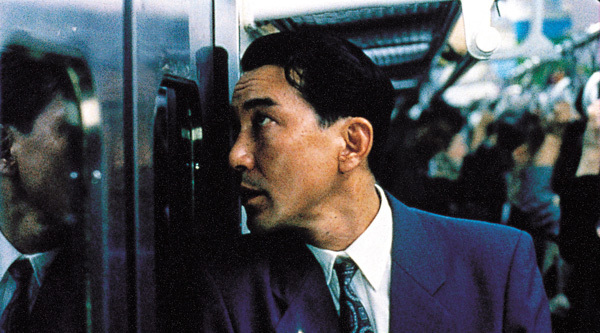
 Kōji Yakusho, who has been one of the best movie performers working in Japan during last three decades, plays Shohei Sugiyama, a fortysomething company accountant who suddenly finds himself feeling rather empty when he is going to accomplish almost everything for him and his dear family. Since his marriage, he diligently worked hard for providing a stable domestic life for the family, and they are now living in a fairly good suburban house, but he feels rather depressed as reflecting more on what may be next for his life.

Shortly after another routine drinking evening with his fellow employees, Shohei goes back to his home by train, and then he notices something when the train stops at one particular station. There is a little dance studio in a nearby building, and his eyes are drawn to a young beautiful woman who later turns out to be one of the instructors working there. As he continues to watch her from the distance evening by evening, he feels something awakened inside him just like the hero of Sam Mendes’ Oscar-winning film “American Beauty” (1999), and he eventually takes the first forward step toward this woman as reluctantly walking inside that dance studio.

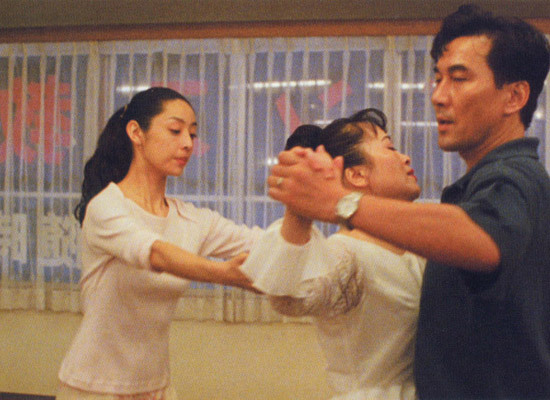
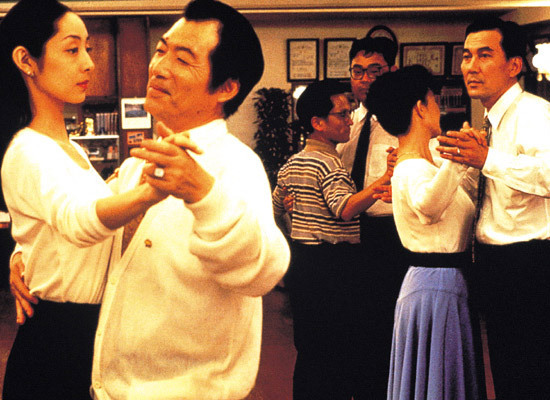
Not so surprisingly, that young lady, Mia Kishikawa (Tamiyo Kusakari), still seems beyond his reach, but Shohei decides to join the class for beginners along with two guys much more eager to learn how to dance. The movie certainly generates some good laughs from Shohei’s painfully awkward attempts to learn dance steps, but we also come to observe his gradual inner change ignited by this accidental lesson of his. As he practices and then makes some progress step by step, he cannot help but feel enlivened more and more, and, what do you know, he often finds himself looking forward to having another good time at the dance studio.

Of course, it does not take much time for Shohei’s wife and their adolescent daughter to notice how he feels a bit livelier than before. In contrast to her husband, Shohei’s wife knows what she wants to do next for her life once their common goal is almost accomplished, but she cannot help but feel confused and anxious as wondering more about whatever her husband is doing behind his back. In the end, she decides to hire a private investigator, and she soon comes to learn more about her husband’s little secret hobby.

Rather than hurrying itself to the expected ending after that narrative point, the screenplay by director/writer Masayuki Suo wisely takes its time for building up its main characters with details and nuances to observe. As continuing to focus on its hero’s inner growth along the story, the movie also pays attention to several other main characters around him, and you may be surprised a bit by the complex human aspects of Shohei’s relationship with Mai. Sure, he was quite infatuated with her from the very beginning, but he subsequently finds himself driven more by his growing passion toward dancing, and this actually touches Mai, who is later revealed to have her own serious emotional issues behind her frigidly haughty attitude.

In the meantime, the movie also generates some low-key dramatic tension from why Shohei does not want to tell anyone about his dance lesson. He is afraid that this may hurt his appearance in both his work and house, and he certainly sympathizes with one of his colleagues, who turns out to be a passionate dancer behind his meek appearance. Despite that horrendous wig for hiding himself a bit, this dude looks much more alive whenever he dances in the dance studio, and he willingly draws Shohei more into the world of dancing even though Shohei often hesitates as usual.

It is not much of a spoiler to tell you that Shohei is eventually pushed toward a big local dancing competition later in the story. While we surely get several expected moments of laugh and surprise during this climactic part, the movie stays focused on the story and characters as before, and that is why its rather overlong finale keeps holding our attention to the end. Around that narrative point, dancing in the film becomes a lot more meaningful than before, and you will gladly overlook the contrived aspects of the final scene. 

The solid performances of its main cast members wonderfully carry the film on the whole. The movie was a breakthrough point for Yakusho’s movie acting career which has constantly impressed us for many years, and this movie and Kiyoshi Kurosawa’s creepy horror film “Cure” (1997) will definitely show you a lot of the considerable range of Yakusho’s acting talent. On the opposite, Tamiyo Kusakari complements her co-star well as subtly conveying to us her character’s human sides, and Naoto Takenaka and Eriko Watanabe frequently steal the show as the two most colorful characters in the story.  

In conclusion, “Shall We Dance?”, whose title incidentally comes from that famous song from Rodgers and Hammerstein’s musical “The King and I”, is a lovely movie even though almost 20 years have passed since it came out. Yes, you can clearly see where its dance steps are heading from the start, but it will alternatively amuse and touch you a lot, and you may come to consider being more serious about whatever you are passionate about in private. After all, that is how our inconsequential life feels a bit joyful and meaningful to us at least for a while, isn’t it?

Posted in Movies | Tagged , , | Leave a comment

My Daughter Is a Zombie (2025) ☆☆1/2(2.5/4): It’s hard to take care of a zombie daughter…

South Korean film “My Daughter Is a Zombie” tries to be a cross between horror comedy and family melodrama, and the result is mildly engaging on the whole. As a horror comedy, it is not absurd enough to be, shall we say, biting, though there are some amusing moments to tickle you at times. As a family melodrama, it surely tries to tug the heart of the audiences especially during the last act, but this is a bit too sappy and mellow with some blatant plot contrivance, and the movie eventually fizzles with its rather contrived ending.

The first act of the movie establishes how its hero has been stuck with his zombie daughter for a while. When Seoul is suddenly swept by a zombie virus epidemic on one day, Jung-hwan (Jo Jung-suk) and his adolescent daughter Soo-a (Choi Yoo-ri) are naturally thrown into panic and fear, but they and their pet cat manage to escape from the city by a car mainly because the zombies in the film are relatively less scary and fast compared to those fearsome zombies in “28 Years Later” (2025). Alas, it turns out that Soo-a was bitten by a zombie at the last minute, and she is soon turned into a zombie in the car to her father’s horror.

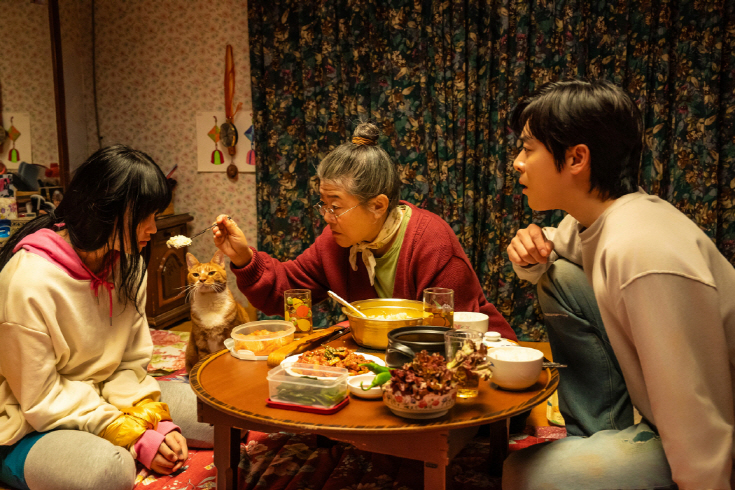
After managing to suppress his zombie daughter for now, Jung-hwan drives the car to his rural seaside hometown. His mother Bam-sun (Lee Jung-eun) surely greets her son when she returns to her house not long after Jung-hwan and his daughter’s arrival, but she soon comes to find what happened to her dear granddaughter. While naturally horrified at first, Bam-sun eventually agrees to hide Soo-a inside her house, and, what do you know, she turns out to be quite unflappable as assisting her son’s attempt to keep his zombie daughter under his control.

Because he has incidentally worked as an animal trainer in a local zoo, Jung-hwan believes that he can tame his zombie daughter, and he becomes all the more motivated as observing Soo-a still showing a bit of her human personality despite her currently zombified condition. With some reluctant help from not only his mother but also a hometown friend of his who is incidentally a town pharmacist, he keeps trying one method after another to our little amusement, and, surprise, there soon comes some little progress from Soo-a.

However, as being constantly aware of how dangerous his zombie daughter can be at any point, Jung-hwan also comes to fear more of the worst possibility for him and Soo-a. The government subsequently manages to get things under control via instantly eliminating any infected person, and it goes without saying that Jung-hwan should be all the more careful about taking care of his zombified daughter.

His circumstance becomes a little more complicated when he later comes across Yeon-hwa (Cho Yeo-jeong), his old sweetheart who recently moved back to their hometown as a middle school teacher shortly after losing someone close to her due to the epidemic. Needless to say, the movie attempts to bring more absurdity to the story as Yeon-hwa inadvertently gets herself involved with what Jung-hwan has tried to hide behind his back, but we only get several silly moments which sadly do not develop much of their rich comic potential. While you may be a bit amused when Jung-hwan tries to make Soo-a more, uh, presentable to others out there, this only leads to silly physical gags without any biting sense of humor, and the same thing can be said about the sequence where Jung-hwan tries something potentially risky just for cheering up Soo-a a bit.

Around the narrative point where the story becomes predictably melodramatic, we are supposed to care more about Jung-hwan and Soo-a, but the movie, which is based on the South Korean graphic novel of the same name by Yun-chang Lee, leans too much on sappy sentimentalism, and that is where my interest in the film became more decreased. To make matters worse, the movie unfortunately resorts to what may be wholeheartedly disapproved by any screenplay writing class, just because it does not want its audiences to feel bad at any chance when the end credits are about to roll.

The main cast members of the film deserve some praise for their good efforts for selling their respective characters. Although he initially looks a bit too young and immature to play his character, Jo Jung-suk fits to his role better than expected – especially after when the rather complex family history between Jung-hwan and Soo-a is revealed later in the story. While Choi Yoo-ri did a fairly commendable job of handling her thankless role, Yoon Kyung-ho is solid as Jung-hwan’s bumbling pharmacist friend, and Lee Jung-eun and Cho Yeo-jeong, who incidentally appeared together in Bong Joon-ho’s Oscar-winning film “Parasite” (2019), are wonderful as slyly balancing their acting between humor and drama. In case of that adorable pet cat in the film, I must report to you that it effortlessly steals its every minute, and its undeniable cuteness almost made me overlook many flawed aspects of the movie.

In conclusion, “My Daughter Is a Zombie”, directed by Pil Gam-sung, is neither very funny nor quite scary compared to many other similar genre works out there, but, considering the reactions from the audiences around me, it will probably be quite successful at the local box office. As a seasoned moviegoer who has experienced a fair share of zombie horror or comedy flicks, I do not like the movie enough, but I will not complain at all if its local box official success actually boosts the South Korean movie industry a bit at least.

Posted in Movies | Tagged , , | 1 Comment