The Thursday Murder Club (2025) ☆☆☆(3/4): A little cozy murder mystery

Netflix film “The Thursday Murder Club”, which was released on last Thursday, is a little cozy murder mystery revolving around a small group of old amateur sleuths. While this is another your average Netflix product, it has enough wit and personality thanks to its solid storytelling and dependable cast, and the overall result is more entertaining than I expected.

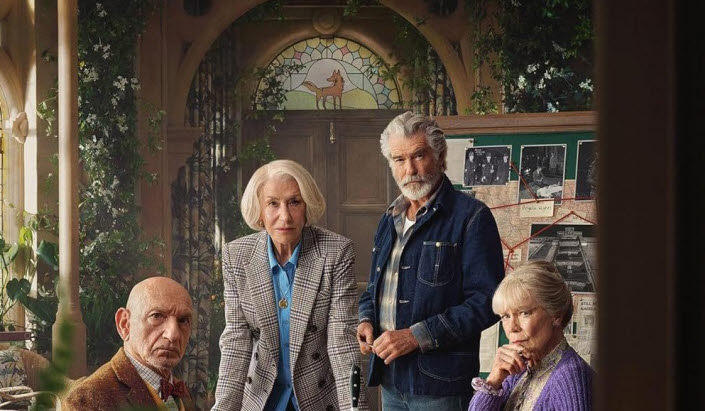
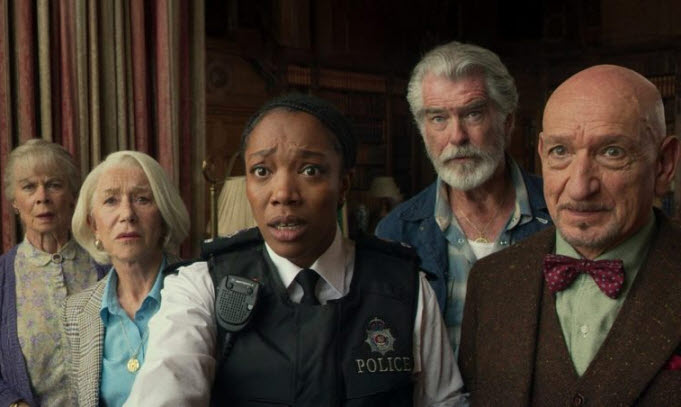
The main background of the story is the home for old retirees somewhere in UK, and the opening part introduces the four members of “The Thursday Murder Club”: Elizabeth Best (Helen Mirren), Ron Ritchie (Pierce Brosnan), Ibrahim Arif (Ben Kingsley), and Joyce Meadowcroft (Celia Imrie), who joins the group after a former member of the group was recently sent to the hospice section due to her worsening illness. The main focus of their interest has been old unsolved cases in the past, and the latest one happens to be about the very suspicious death of one young woman, who was probably killed by her boyfriend shortly before he was vanished.

Anyway, things get more interesting for the members of the Thursday Murder Club as the cozy life in the facility becomes seriously threatened. The facility has been partially owned by a local businessman named Ivan Ventham (David Tennant), and Ventham has been quite eager to change the facility into something else for more profit. However, his plan is vehemently objected by his main business partner, a tough local dude who really cares about the facility for a personal reason.
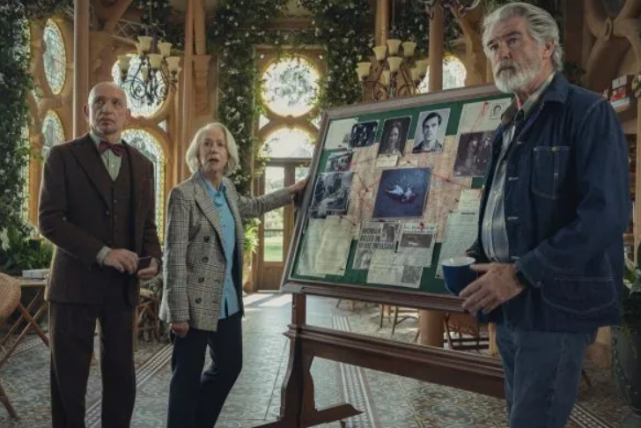
Now you already have a pretty good idea about what will occur next. A murder happens not long after Elizabeth and her three colleagues witness an argument between Ventham and his business partner, and the police soon embark on searching for any possible suspect. As observing how sloppy a local detective assigned to the case is, the members of the Thursday Murder Club decide to handle the matter for themselves, especially after coming to learn that the future of their facility becomes more uncertain due to that murder.

Fortunately, each of them turns out to be fairly resourceful in each own way. As someone who once worked in MI6, Elizabeth surely knows how to sidestep a number of obstacles in front of them, and she soon recruits Donna De Freitas (Naomi Ackie), a smart young policewoman who has been often disregarded by her boss and colleagues due to sexism. While Ibrahim can provide some psychological insight as an ex-psychiatrist, Ron is ready for some action as an ex-union activist, and Joyce was asked to join the group because she was an ex-nurse with considerable medical knowledge.

In front of these four people, there are certainly several possible suspects to be investigated. For example, as they delve more into the business partnership involved with Ventham, it turns out that he has the other business partner who may be involved with the case considering a lot of notoriety surrounding this shady figure. In addition, the situation becomes more complicated when Elizabeth discovers an old hidden secret hidden somewhere around the facility thanks to a little help from a Polish lad who is incidentally one of Ventham’s employees.

The screenplay by Katy Brand and Suzanne Heathcote, which is based on the mystery novel of the same name by Richard Osman, does not hurry itself even though things become more serious and urgent for its main characters. After all, despite their irrepressible eagerness, the members of the Thursday Murder Club have been getting older day by day, and they are often reminded of their approaching mortality via many of their fellow retirees. In case of Elizabeth, she has happily lived with her husband Stephen (Jonathan Pryce) in their comfortable room, but he has unfortunately been suffering from Alzheimer’s disease, and she is afraid of when her husband will not remember her anymore.
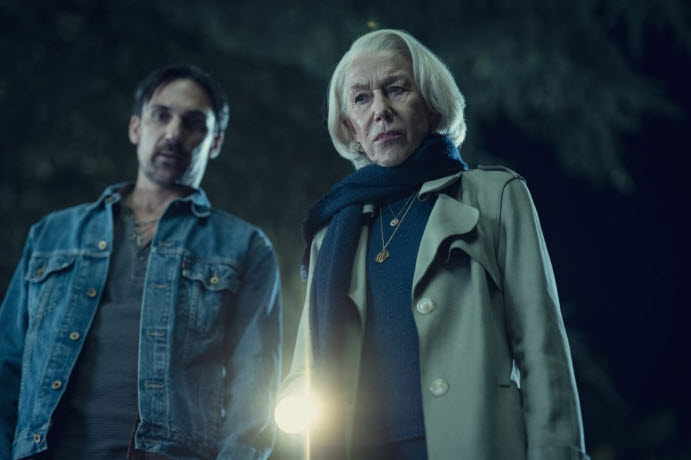
Steadily focusing on character development, the movie eventually arrives at the narrative point where everything is resolved and explained to our little satisfaction. Of course, I do not dare to spoil any of your entertainment, but I can tell you instead that the story neatly pulls out the answer with some poignancy, and I was also quite delighted by how a certain figure unexpectedly functions as your typical armchair detective later in the story.

The four principal main cast members are constantly engaging as bringing some touch of class to the film. While Helen Mirren, Ben Kingsley, and Pierce Brosnan ably fill their archetype characters with enough presence and personality, Celia Imrie holds her own place well among her more prominent co-stars, and these wonderful four performers are surrounded by a bunch of various performers including David Tennant, Naomi Ackie, Daniel Mays, Henry Lloyd-Hughes, Tom Ellis, Ingrid Oliver, and Richard E. Grant, who is enjoyable as usual during his brief appearance later in the movie.

Overall, “The Thursday Murder Club”, directed by Chris Columbus, is often fun to watch thanks to the game efforts of its main cast members. Considering that Osman wrote several sequels and already finished writing the fifth book, I will not be surprised if the movie is followed by at least one sequel, and I will not complain as long as they maintain the level of charm and fun shown from this modest but entertaining movie.
Posted in Movies | Tagged , , , | Leave a comment

The War of the Roses (1989) ☆☆☆1/2(3.5/4): A divorce war with no compromise

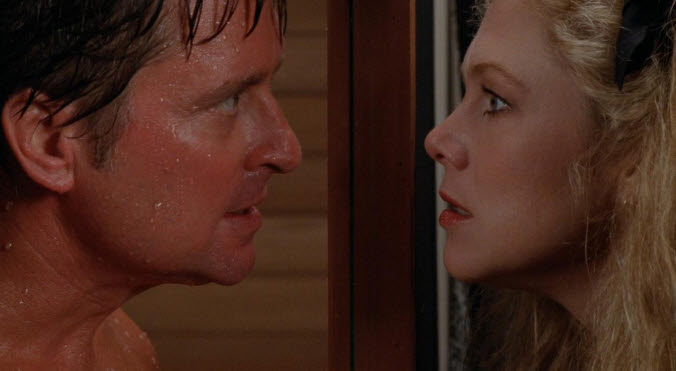
Is there any divorce comedy film as dark, cynical, and vicious as Danny DeVito’s 1989 film “The War of the Roses”? The main pleasure of this particularly nasty classic comedy movie is how uncompromising it is with a number of hilariously extreme moments to make us both laugh and cringe, and you will be amused more to observe it firmly sticking to its edgy comic spirit to the end along with its two rather unlikable main characters.

After the inspired main title designed by Saul and Elaine Bass, the movie proceeds to a private meeting between a lawyer named Gavin D’Amato, played by DeVito himself, and one of his clients (He is played by Dan Castellaneta, who has provided the voice of Homer Simpson in the TV animation series “The Simpsons”). What Gavin is going to tell his client is a cautionary tale involved with his close colleague Oliver Rose (Michael Douglas) and Oliver’s wife Barbara (Kathleeen Turne), and it does not take much time for us to guess from the sardonic tone of Gavin’s storytelling that things did not end that well for Oliver and Barbara.

Their marriage story was started with your average Meet Cute moment. When Oliver and Barbara came across each other at a little auction held in some beach town, something instantly clicked between them as they competed with each other over a certain china figurine, and, what do you know, they married not long after having quite a passionate time between them (“If we end up together, then this is the most romantic evening of my life. And if we don’t, then I’m the world’s biggest slut.”). Although they struggled a bit during the first several years of their married life, Oliver subsequently began to advance more in his lawyer career, and Barbara mostly focused on taking care of those domestic matters including decorating a big house recently purchased by them.

However, around the time when their two kids are going to leave them for studying in Harvard University, Barbara becomes more aware of the distance and friction between her and her husband – especially after she becomes more financially independent as beginning her own catering business. When Oliver is suddenly sent to a hospital due to what turns out to be a rather minor medical problem, she comes to realize that she is not only sick of her husband but also not in love with him anymore, and she eventually tells him that she wants to divorce him right now.   

While naturally quite confused and exasperated, Oliver eventually agrees on their divorce, but there is one big problem between them. Although she is willing to give up almost everything to her husband, Barbara demands that she should get the house because she thinks she deserves it for all the diligent efforts of hers in making the house look much better than before. In contrast, Oliver believes that the house should remain with him as the house was purchased with the money earned by him, and he is certainly willing to fight against his wife to the end.

What follows next is a series of truly mean and vicious clashes which can still raise your eyebrows even at present. Regardless of whether there is really any affection left between them, both Oliver and Barbara become quite determined to go for total war, and their house is consequently turned into a sort of battleground for their ongoing divorce war. Thanks to a bit of legal advice from Gavin, Oliver keeps staying in their house despite Barbara’s demand, and he soon embarks on trying to outmatch his wife by any means necessary, while ignoring the sincere words of caution from Gavin (“Oliver, my father used to say that a man can never outdo a woman when it comes to love and revenge.”).    

The screenplay by Michael J. Leeson, which is based on the novel of the same name by Warren Adler, often delights in the increasingly malicious behaviors of its two main characters. When Barbara holds a party for the clients of her catering business, Oliver deliberately sabotages the party in a certain definite way to make your eyes roll (“I would never humiliate you like this!” – “You’re not equipped to, honey.”), and then Barbara surely shows him that Hell hath no fury like a woman scorned. In case of another conflict of theirs involved with their respective pet animals, the movie steps back a bit to my little disappointment at the last minute, but we still get some dark laugh despite that.

The comic chemistry between the two lead performers of the film is flawless to say the least. As many of you know, Michael Douglas and Kathleen Turner were successfully paired together in Robert Zemeckis’ romantic comedy adventure film “Romancing the Stone” (1984) and its 1985 sequel, and that is why it is quite amazing to see how they effortlessly interact with each other in a totally different comic mode here in this film. Under DeVito’s confident direction, both Douglas and Turner are utterly fearless in their thoroughly uncompromising comic acting, which steadily keeps us engaged to the very end even though we wince more and more as watching the conflict between their spiteful characters from the distance.

 In conclusion, “The War of the Roses” is still quite viciously funny due to its numerous biting comic moments including its starkly cynical ending true to its nasty black comic heart, and it is definitely one of the highlights in the respective careers of DeVito, Douglas, and Turner. Yes, this is surely not something you can casually watch on Sunday afternoon, but you will find yourself tickled more and more by its morbidly cutthroat sense of humor after watching it, and, like me, you may wholeheartedly agree to the advice given at the end of the story.

Posted in Movies | Tagged , , | Leave a comment

Together (2025) ☆☆☆(3/4): A couple’s sticky issue

I enjoyed “Together” more than expected. I already knew a bit about what it is about, so there is not much surprise for me, but this modest horror film turns out to have more wit, style, and substance for handling its story and characters. In addition, it is willing to push itself along with its two committed lead performers, and you will appreciate how these two talented performers are ready to go all the way for its logical conclusion.

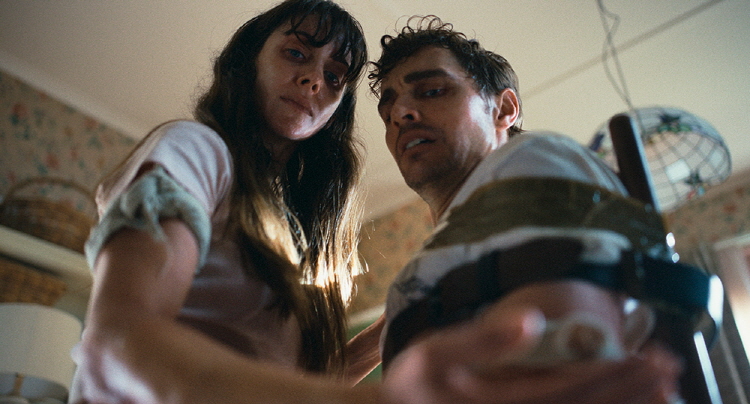
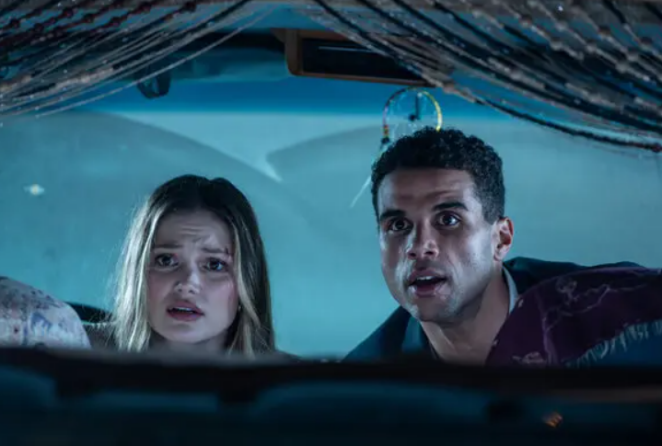
Dave Franco and Alison Brie, who also participated in the production of the film as co-producers, play Tim Brassington and Millie Wilson, a young couple who happen to move to a small town because of Millie’s new teaching job. On the surface, they look fine and happy when they are having a party along with their friends before their moving day, but we gradually feel the conflicts beneath their supposedly stable relationship. While he seems willing to support Millie’s school teacher career, Tim has actually felt more like a burden to his partner’s life and career, and he also wants to continue to pursue his modest musician career more, even though nothing much looks promising in his career for now. In case of Millie, she is willing to go further with more commitment in their relationship, but then she is quite disappointed when her partner hesitates in front of what is going to be a very important moment for their relationship.

Anyway, it seems that things will go fairly well for them as they begin to settle in their new residence, a nice little house located near a big forest outside the town. While Tim works on a new piece of music in their house, Millie starts her first days at a local school, and she also befriends one of her new colleagues, who happens to live not so far from her house and is quite willing to get to know her and Tim as a good neighbor.

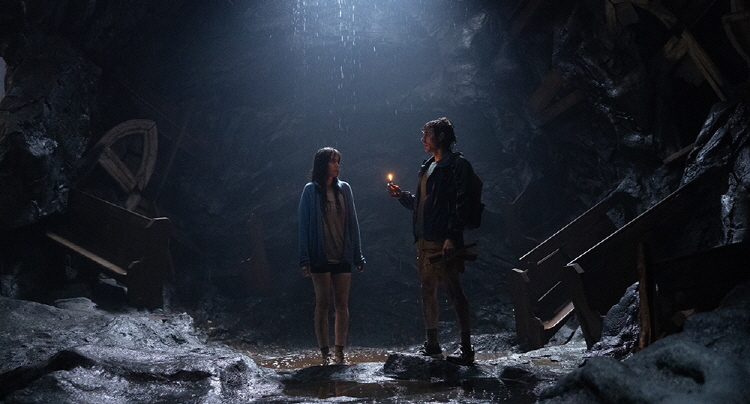
One day, Millie and Tim decide to go inside that big forest for a brief walk, but then they get lost in the middle of the forest before encountering a mysterious cave hidden below the ground. After getting tumbled together into this strange cave, they find themselves helplessly stuck there during next several hours, and they cannot help but notice how odd and disturbing this cave looks with an ominous pool inside it.

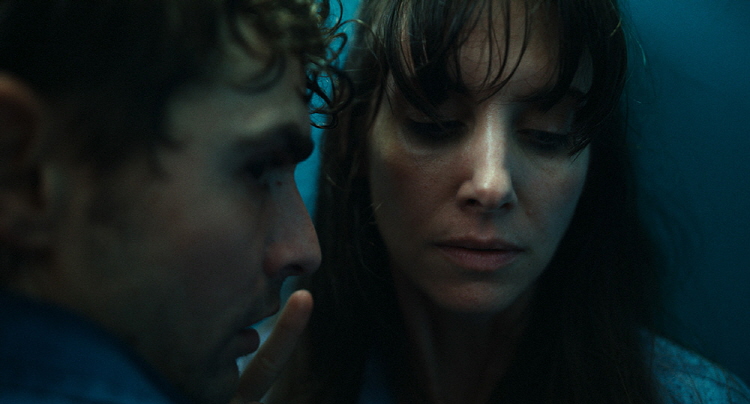
Although the opening part of the movie already shows a bit of what this cave can do, I will not go into detail on what happens next, but I can tell you instead that Tim and Millie begin to face a serious imminent issue not long after managing to get out of the cave and then go back to their house. As they gradually grasp whatever is happening to them, the old issues in their relationship are resurfaced, and this makes their ongoing situation all the more complicated. While reminded again of how they have been rather distant to each other, they also find themselves more entangled with each other along with the story, and this naturally comes to test their love and relationship to an extreme degree.    

The screenplay by director/writer Michael Shanks, who incidentally made a feature film debut here after making several short films, takes its time as the situation of its two lead characters becomes more alarming with a series of ups and downs. While they become more disturbed by their increasingly sticky circumstance, they also come to sense more of the irresistible force driving them toward each other more and more, and the movie has some nasty fun with that from time to time.  

During the last act, the story comes to lose some of its narrative momentum as revealing more information about the cave, but Shanks and his crew members including cinematographer Germain McMicking steadily maintain considerable intensity and realism on the screen. Thanks to the judicious utilization of special effects, several key moments between its two lead characters look believable enough for us to overlook their many preposterous aspects, and you may wince a bit for a good reason when Millie decides to do something quite drastic for her and her partner with something equivalent to Chekhov’s gun. 

 The movie surely depends a lot on the good chemistry between Franco and Brie, who have actually been a married couple during last several years. Besides looking effortless with considerable intimacy right from the very beginning, they also did a splendid job of conveying to us the underlying emotional issues between their characters, and it is compelling to observe how their performances boldly go further from that along with the film. While Franco, who has been mainly known for his comic performances including his recent Emmy-nominated guest performance in Apple TV+ comedy series “The Studio”, demonstrates a more serious side of his acting talent, Brie, who has been known well for a number of works including Netflix drama series “GLOW”, is equally terrific as ably complementing her co-star throughout the film, and they remain quite convincing even while the story eventually reaches to its utterly outrageous but inevitable finale.  

On the whole, “Together” is an effective genre film which also works as a morbid relationship drama thanks to Shanks’ competent direction as well as the commendable efforts from his two lead performers. In my humble opinion, it is one of more interesting horror flicks of this year, and I assure you that you will not forget it easily after watching it.

Posted in Movies | Tagged , | Leave a comment

Huesera: The Bone Woman (2022) ☆☆☆(3/4): Does she really want this?

“Huesera: The Bone Woman” is a creepy supernatural horror film about a young pregnant woman under one sinister influence. Quite reminiscent of a number of recent female body horror films associated with pregnancy, the movie distinguishes itself via its distinctive mood and details to observe, and it becomes more interesting as delving more into its heroine’s increasingly conflicted state of mind later in the story.

At the beginning, we see how everything looks happy and fine for Valeria Hernandez (Natalia Solián) and her husband Raúl (Alfonso Dosal). Living fairly well together in their nice residence incidentally owned by her husband’s affluent mother, they have been trying hard for having a baby as shown from their first scene in the movie, and Valeria soon comes to bring her husband the good news they have eagerly waited for.

However, as she and her husband prepare for the birth of their baby, Valeria cannot help but sense something odd around her. At first, it was just a minor hallucination, but then she finds herself gradually disturbed by one strange happening after another. To her husband, she is simply having a sort of anxiety problem associated with her first pregnancy experience, but those weird happenings of hers feel so real to her nonetheless.

And her family do not help her that much. While her husband’s mother is delighted by her daughter-in-law’s pregnancy, she sometimes annoys Valeria, and so do Valeria’s parents and older sister, who reminds her of an unfortunate old incident in the past. At least, her spinster aunt shows some care and understanding, and Valeria later comes to one of her aunt’s old friends for getting some help on handling whatever is happening to her.

Thanks to that friend of her aunt, everything seems to become all right again for Valeria for a while, but, of course, she soon finds herself terrorized more and more by that sinister entity she felt from the very beginning. As she is thrown into more anxiety and dread, her relationship with her husband gets more deteriorated, and then there comes a point where the situation becomes quite serious for both of them.

Around this point, the screenplay by director Michelle Garza Cervera and her co-writer Abia Castillo reveals a bit about its heroine via a flashback scene. As implied by the contents of a box hidden in the closet of the baby room, there was a time when Valeria was young and wild, but she later decided to become an exemplary daughter for her parents just because of a tragic incident in the family, and this disappoints her best friend Octavia (Mayra Batalla) a lot, who wanted to get away from their neighborhood along with her someday.

When she came across Octavia early in the story, Octavia felt to her like a mere figure from the past, but Valeria comes to lean more on her former lover, and this consequently puts more conflict on Valeria. So far, she has been doing what she is expected to do as a good daughter, wife, and mother, but she cannot help but think more about her wild moments of freedom in the past, and this eventually culminates into an unexpected dramatic moment unfolded in the middle of a loud and crowded punk rock performance.

Still remaining troubled and conflicted as before, Valeria gets cornered more by that sinister entity, and we get one truly frightening moment when she finds herself driven to do something quite terrible. She comes to realize that she really needs a certain measure suggested by her aunt’s friend, but, as her aunt’s friend warned to her in advance, this can be quite risky for her for good reasons.

What follows next is a series of spooky moments experienced by our heroine as she goes through an old ritual executed by her aunt’s friend and several other old ladies. This may look a bit silly at first, but we are gradually captivated by the utterly serious mood surrounding them, and then we are caught off guard by when our heroine is suddenly thrown into what can be regarded as a realm of spirits. What happens to her next is alternatively frightening and baffling to say the least, and then the movie delivers a truly scary climax reminding us more of its very title, which reflects more than that disturbing habit of our heroine.

The performances of the main cast members are effective on the whole. As the center of the story, Natalia Solián is believable in her character’s gradual mental implosion along the narrative, and her solid performance is the main reason why we do not need much explanation on her character’s eventual decision right after that climactic part. In case of several supporting performers surrounding Solián, Alfonso Dosal, Mercedes Hernández, Martha Claudia Moreno, and Mayra Batalla are well-cast in their respective parts, and Batalla is particularly good during her several scenes with Solián.

Overall, “Huesera: The Bone Woman” is a competent genre piece to be admired by mood, storytelling, and performance. Although this is her first feature film, Garza Cervera, who won the Best New Narrative Director and Nora Ephron awards when it was shown at the Tribeca Festival in 2022, demonstrates a considerable amount of skill and confidence here, and it will be interesting to see what may come next from her next.

Posted in Movies | Tagged , | Leave a comment

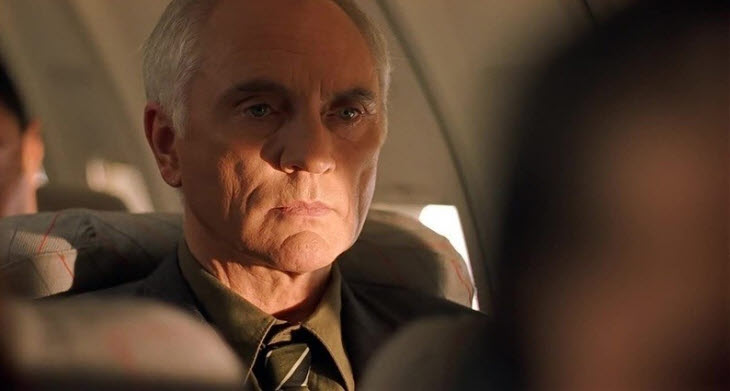
The Limey (1999) ☆☆☆(3/4): A personal issue of one old Cockney dude

Steven Soderbergh’s 1999 film “The Limey” is a modest but slick genre flick about a little violent quest of one old British dude quite determined to find out what really happened to his dear daughter. While this is basically your typical revenge action thriller movie, it takes time in building up style and personality along the story instead of being merely driven by action, and it is also supported a lot by the considerable charisma and presence of its lead actor.

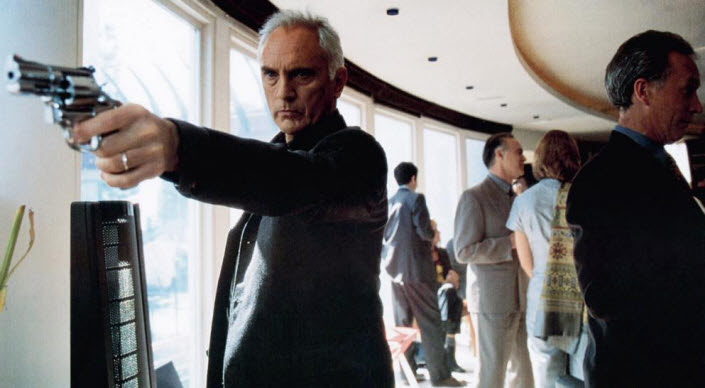
At the beginning, the movie does not show or tell much about Wilson (Terence Stamp), but we gradually gather bits of information about his criminal past in UK. He is one of those professional criminals, but he was imprisoned in jail during last several years since getting arrested due to the betrayal of his criminal associates, and now he is coming to LA for his little private investigation on his estranged daughter’s rather suspicious death.

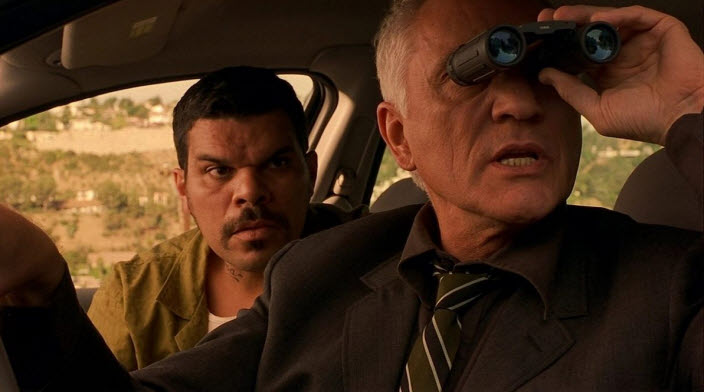
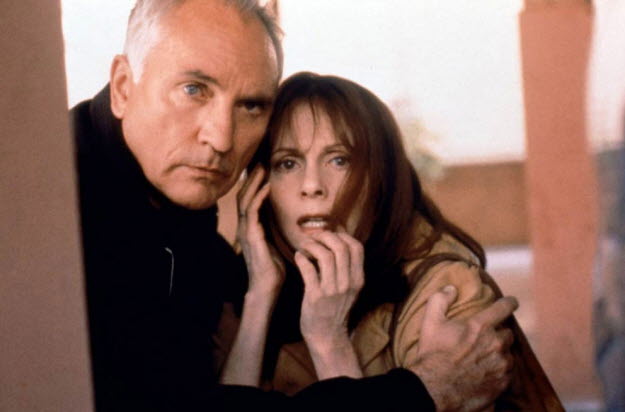
Not long after he arrives in LA, Wilson encounters two different persons who were close to his daughter before her death. One is a local Latino guy named Eduardo Roel (Luis Guzmán), and he is the one who notified Wilson of his daughter’s death via a letter written by him. Although their first encounter is a bit awkward mainly due to Wilson’s Cockney accent (The title of the film is an American slang referring to Britons, by the way), Roel soon begins to assist Wilson’s private investigation, and so does Elaine (Lesley Ann Warren), a middle-aged actress who was the acting teacher of Wilson’s daughter.

Along with Wilson, we get to know more about the rather questionable circumstance surrounding her daughter’s death. On the surface, she died due to an unfortunate vehicle accident, but there were several shady figures in her life, and they are associated with some local drug dealing. One of these people is an old but wealthy record producer named Peter Valentine (Peter Fonda), and Wilson’s daughter was quite close to him around the time of her death.

As Wilson subsequently embarks on his quest toward Valentine, Soderbergh takes a curiously restrained but undeniably effective approach during a few moments of action early in the film. When Wilson goes to a certain warehouse for getting the address of Valentine’s residence at one point, the mood naturally becomes a little intense as Wilson clashes a bit of his opponents, but then the movie holds itself as observing the following payoff moment from the distance. You may be baffled at first, but it becomes apparent that the movie tries something different with its genre conventions, and we get more interested in Wilson’s personal drama.

Mainly to his two accidental new friends, Wilson comes to reveal a bit of himself and his life along the story, and one of Soderbergh’s masterstrokes in the film comes from the occasional brief flashback scenes which are actually excerpts from Ken Loach’s directorial debut film “Poor Cow” (1967), one of the early films in Terence Stamp’s acting career. As Wilson talks more about his past, his phlegmatic words certainly resonate a lot with the image of the younger Stamp in Loach’s film, and that brings some genuine poignancy to the story.

Soderbergh and his editor Sarah Flack also did an interesting job of bringing some offbeat quality to the film. Mainly via the frequent non-chronological jump cuts throughout the film, the movie sometimes seems to flow freely along with the stream of consciousness inside its hero’s mind, and this makes us focus more on his feelings and thoughts.

Around the narrative point where Wilson approaches closer to Valentine, the screenplay by Lem Dobbs still maintains its rather leisurely narrative pacing as usual without hurrying itself at all. While Valentine simply wants to avoid any possibility of annoyance or disturbance as much as possible, his right-hand guy Jim Avery (Barry Newman) is already quite ready to take care of the latest headache in their criminal business, and that leads to more complication in the conflict between Wilson and Valentine. What is eventually unfolded during the expected climactic part is not that loud or bombastic, Soderbergh deftly handles this part with considerable efficiency and impact, and we sense more of the inevitability in the circumstance surrounding Wilson and several other main characters.

Stamp, who sadly passed way two days ago, brings his own quiet but distinctive intensity to the film as ably embodying his character’s gritty human qualities, and he is also surrounded by a number of colorful performers to remember. While Luis Guzmán, who has always been ready to play your average street-smart Latino dude during last four decades, provides some humor to the story, Lesley Ann Warren has a few tender scenes with Stamp as their characters come to befriend each other more, and Bill Duke briefly appears as a DEA agent willing to ignore Wilson’s ongoing private investigation. As the main villains of the story, Barry Newman and Peter Fonda are well-cast in their respective supporting parts, and Fonda surely brings a lot of his own image to his character just like Stamp. After all, both of these two legendary actors were once quite popular in the 1960s, and their considerably aged status in the later 1990s brings extra human dimension to the story.

Overall, “The Limey” may look less impressive as sandwiched between “Out of Sight” (1998) and “Erin Brockovich” (2000), but it is worthwhile to watch just like many other small but solid films in Soderbergh’s productive filmmaking career during last 25 years. Yes, he simply had a little fun along with his lead actor here, but the result is still entertaining, and that surely says a lot about his undeniable talent.

Posted in Movies | Tagged , , , | Leave a comment

Heart Eyes (2025) ☆☆1/2(2.5/4): A murderous “date night”

“Heart Eyes” is another typical hybrid between horror and comedy. This time, we get a mix between slasher horror and romantic comedy, and the resulting mix is often enjoyable mainly thanks to the good chemistry between its two lead performers, though it is also often a bit too predictable to overcome many genre clichés and conventions popping up here and there in the story.

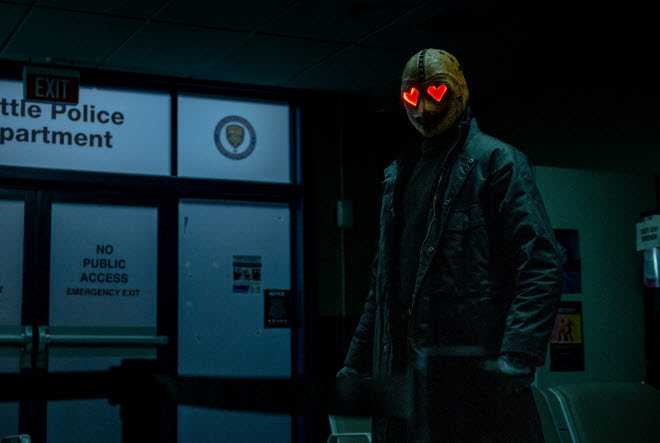
Like any other slasher horror films, the movie starts with a strikingly bloody and violent opening sequence, which shows another unfortunate couple killed by a mysterious serial killer aptly nicknamed “Heart Eye Killer” (HEK). Whenever Valentine’s Day comes, this killer brutally murders a number of young couples in one city after another, and the local police in Seattle, Washington certainly gets alerted when it is quite apparent that HEK comes to their town in this time.

However, that is just a trivial matter to Ally McCabe (Olivia Holt) now, a young woman working as a pitch designer for some prestigious jewelry company in Seattle. While she still does not recover that much from the recent breakup with her ex-boyfriend, she has to face the disastrous public reactions to her company advertisement which is clearly influenced by the current status of her private life, and she must take care of this mess within one day along with a handsome consulting advertiser named Jay Simmons (Mason Gooding).

Needless to say, Ally does not welcome Jay much, though they already had a Meet Cute moment between them before officially introduced to each other. Simply for discussing more about their work, Jay suggests that they should have a dinner together at some posh local restaurant, but she and Jay only come to see more of how much they are different from each other. While he is your average romantic, she is your typical realist, but it goes without saying that there is something being sparked between them as they argue more and more with each other across the table.

Eventually, they decide that they cannot work along with each other that well, but there comes an unexpected moment between them when they are about to leave the restaurant. They come across Ally’s ex-boyfriend and his recent girlfriend who are about to have a date night at the same restaurant, and, to show that she is fine and all right, Ally and Jay end up kissing each other right in front of Ally’s ex-boyfriend and his girlfriend.

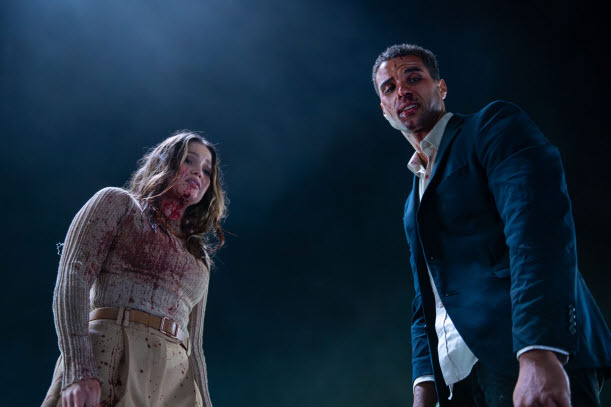
While this looks like a simple act of pretension to both of them, this moment is unfortunately caught by the eyes of HEK, who happens to be lurking somewhere around the restaurant. Not long after when Jay kindly takes Ally to her house, HEK suddenly appears in front of them, and Jay and Ally soon find themselves running for their life.

As HEK goes all the way for another bloody rampage while pursuing Ally and Jay, the movie has a lot of nasty fun decorated with a lot of violence and blood. Just like those killer figures of those countless slasher horror flicks out there, HEK seems quite invincible to say the least, and the movie also toys with a certain possibility which has been mainly associated with “Scream” (1996) and its several sequels.

Meanwhile, as cornered more and more by their murderous opponent, Ally and Jay get to know more about each other as helping each other more, and, not so surprisingly, they come to care a lot more about each other than expected. Despite their contrasting view on love and relationship, both of them actually turn out to have yearned for the same things, and there is a little sweet moment when they get a chance to open themselves a little more to each other while a certain famous classic screwball comedy film is being shown in the background.

During the last act where everything is revealed and then explained, the screenplay by Phillip Murphy, Michael Kennedy, and Christopher Landon (He previous directed and wrote “Happy Death Day” (2017) and the 2019 sequel, and he also wrote the screenplay for “Freaky” (2020) with Kennedy, by the way) comes to lose some of its comic momentum. In case of the true identity of HEK, this is too contrived in my humble opinion (You can easily guess it to some degree if you consider the law of the economy of characters, for instance), and the same thing can be said about the obligatory climax sequence.

At least, the movie is often buoyed by the likable presence of its two lead performers. While Olivia Holt brings some charm and pluck to her character, Mason Gooding, who is hunky enough for his role even though he may not be as perky as his Oscar winner father, clicks well with his co-star during several key scenes of theirs in the film, and that is the main reason we come to root more for their characters. In case of several supporting performers in the movie, they are sadly under-utilized in comparison, but Michaela Watkins gleefully chews every moment of her rather brief appearance, and Devon Sawa and Jordana Brewster bring a bit of extra humor to the story as the two local cops assigned to the case.

Overall, “Heart Eyes”, directed by Josh Ruben, is a fairly nice comic variation on slasher horror film, but it does not go further than the standards set by “Happy Death Day” and many other recent similar horror comedy films. Because its several entertaining moments are not enough to compensate for its weak aspects, I cannot recommend it, but I will not stop you if you simply want to kill your spare time on anything watchable.

Posted in Movies | Tagged , , , | Leave a comment

Night Always Comes (2025) ☆☆☆(3/4): Desperate hours

Netflix film “Night Always Comes”, which was released a few days ago, is a relentlessly bleak mix between character drama and noir thriller, which is mainly driven by the sheer human desperation of its flawed heroine. You may not like her that much even in the end, but the movie understands her growing desperation without making any excuse on her choices and actions along the story, and that keeps us engaged in her increasingly urgent circumstance before the story eventually arrives at its expected ending.

The movie opens with its heroine beginning another hard day of her difficult daily life. Lynette (Vanessa Kirby) has lived with her mother Doreen (Jennifer Jason Leigh) and her handicapped older brother Kenny (Zack Gottsagen) in their old family house for a while since she left behind her wild and problematic past, but they are now on the verge on losing their house due to their ongoing financial difficulty, and Lynette hopes that she can buy back the house from a local real estate businessman via the money saved by her mother for years.

Unfortunately, there comes an unexpected trouble for Lynette at the last minute. Dorren suddenly decides to spend all of that money for buying a new car for herself, and, to Lynette’s frustration and exasperation, she is quite adamant about this impulsive decision of hers. As a consequence, Lynette must find any possible way to get no less than $25,000 before that real estate businessman eventually changes his mind in the next morning.

Needless to say, there is not anyone around her who will willingly borrow such a substantial amount of money to her, so Lynette has no choice but to resort to her old ways of earning money in the past. Besides doing the two jobs, she has also earned some extra money via working as a private prostitute for some affluent dude just for making ends meet for her family, so she naturally pleads to him when they meet later in the evening, but, not so surprisingly, he is mostly interested in getting a moment of pleasure from her.

Lynette subsequently goes to an old colleague of hers who owed her a lot in their past, but her old colleague does not care much about her desperate circumstance from the very beginning, mainly because, well, she is mostly occupied with how she earns and lives day by day. Sure, she is having a much better life compared to Lynette at present, but her current status can be easily lost at any chance as depending on the generosity of her No.1 client who incidentally lets her live in his luxurious apartment, and it goes without saying that helping Lynette is the last thing she wants to do right now.

Becoming all the more desperate than before, Lynette is more determined to get the money by any means necessary, and that is where the story goes into darker territories. She later recruits a young black man who is one of her co-workers at one of her two workplaces, just because she assumes that he has a particular set of skills she needs right now. Although he turns out to be not much of help, he suggests that they should go to someone who can actually help them, and she has no choice but to follow his suggestion.

As Lynette tumbles into the seedy and dangerous world of criminals along with her unlikely accomplice, we get to know a bit more about her and her past. It is apparent that she was once quite a messy walking trouble to herself as well as many others around her including her family, but she really wants to do the right thing for her family, and that makes her keep going even while she finds herself driven to do a number of bad things for her ultimate goal.

In the meantime, we also come to sense more of the grim economic desperation of her and her family and many others in the city. While the local radio programs frequently talk about how things are really bad for many people out there, the movie often shows numerous homeless people here and there in the city, and we come to feel more of how easily Lynette and her family life can tumble into such a gloomy living condition like that at any chance.

The movie, which is based on the novel of the same name by Willy Vlautin, is constantly depressing to watch, but it remains engaging thanks to not only the competent direction of director/co-producer Benhamin Caron (He has been mainly known for directing several episodes of the acclaimed Netflix drama series “The Crown”, by the way) but also the strong lead performance of Vanessa Kirby, who has been quite prominent since her Emmy-nominated supporting turn in “The Crown”. Never overlooking many human flaws of her character, Kirby also conveys well to us her character’s accumulating anxiety and conflict along the narrative, and we come to care more about whatever may happen next, even while observing her character from the distance.

The supporting performers around Kirby are mostly solid on the whole. While Jennifer Jason Leigh is allowed to show her edgy character’s human sides later in the story, Zack Gottsagen, who was unforgettable in “The Peanut Butter Falcon” (2019), holds his own small place well as Lynette’s older brother afflicted with Down syndrome, and Stephan James is also effective in his substantial supporting part. In case of Julia Fox, Randall Park, Michael Kelly, and Eli Roth, they look and feel as sleazy as required by their respective supporting roles, and Kelly is particularly good during his single scene with Kirby. Although their characters do not say a lot about their unpleasant past, they ably express it via their strained interactions on the screen, and that is more than enough for us.

On the whole, “Night Always Comes” can be regarded as your average poverty thriller flick, but it is a competent genre piece which distinguishes itself to some degree via good mood and performance. Although I must point out that what eventually occurs in the end did not surprise me a lot, the movie held my attention up to that point, and I guess I should not grumble for now.

Posted in Movies | Tagged , , , | Leave a comment

At the Bench (2024) ☆☆☆(3/4): Five episodes at one bench

Japanese anthology film “At the Bench” presents five different episodes unfolded at one particular spot. While some of them are connected with each other to some degree, each of these five episodes are fairly engaging in each own way, and we gladly go along with how each of them deftly balances itself between humor and drama from the beginning to the end.

The shared background of all these five different episodes is an old bench which was once a part of some public park located in some neighborhood area of Tokyo. Now almost all of this public park is demolished for building a daycare center someday, and the bench will also be gone once the construction of that daycare center is officially started.

As we notice more of how empty and remote it feels around this bench at the beginning of the first episode, the bench is soon occupied by two young people: Riko (Suzu Hirose) and Nori (Taiga Nakano). As they begin their little private conversation on the bench, we gradually gather that they were once quite close to each other in the past, and we also get to know a bit about how they have been frustrated with the status of their respective lives. The more they talk and interact with each other, the more we sense of something being rekindled between them, and the mood soon becomes a bit romantic with the approaching sunset in the background.

In contrast, the second episode shows another young couple who are not so happy with the current status of their relationship. As they are sitting on the same bench, the girl talks about how much she has been discontented with many human flaws of her boyfriend, and there soon comes an amusing moment when she tries to explain to him her growing discontent via several pieces of sushi to be eaten by him. While he struggles to understand her more, we become more conscious of someone who happens to be right behind the bench, and their situation eventually becomes quite absurd to our little amusement.

The third episode is also about one very problematic relationship. At the beginning, we are introduced to two sisters clashing with each other around the bench, and their heated conversation lets us know more about the ongoing issues between them. One of these two sisters suddenly left for Tokyo and then became a homeless person just because she is quite obsessed with a guy who will not possibly love her back, and her concerned sister certainly wants to take her back to their home as soon as possible, but she remains quite adamant about remaining in Tokyo.

Nevertheless, these two sisters try to understand and persuade each other as much as possible, and that is the main source of amusement for us. Yes, they only come to clash more with each other, but they are also reminded again that they still do care about each other despite all those clashes between them, and you may smile a bit while observing how their circumstance is resolved in the end.

Compared to the raw qualities of the third episode, the fourth episode on the bench is more stylish with some self-conscious touches. At the beginning, we just watch a pair of plain civil servants examining the bench, but then their interactions become increasingly odd and absurd to our little bafflement, and then there comes a series of plot turns which will certainly catch you off guard. I will not go into detail here for avoiding any possible spoiler, but I can tell you at least that you will enjoy the resulting playful mood to the very last shot, and this is certainly the most entertaining part of the film.

In case of the fifth episode at the bench, we meet Nori and Riko again. Although they are still not sure about their relationship, it is evident that they care about each other more than before, and their casual conversation becomes quite philosophical as they get more serious about their life and existence. Although both of them are well aware of many uncertainties in their life, they decide to take a chance with their love, and we come to smile a bit along with them while also observing some poignancy in their reflection on life and existence.

This is the first feature film of director/co-editor Yoshiyuki Okayama, who also participated in writing the screenplay along with Sho Hasumi, Shûko Nemoto, and Miku Ubukata. Under his competent direction, each of the five episodes in the film are imbued with each own distinctive mood and style to be appreciated, and he also drew good performances from his small cast. While Suzu Hirose and Taiga Nakano effortlessly generate enough romantic vibe between them in the first and fifth episode, Amane Okayama, Yukino Kishii, and Yoshiyoshi Arakawa ably handle the absurd situation of their characters in the second episode, and Mio Imada and Nana Mori are fairly effective in the third episode. In case of Riho Yoshioka and Tsuyoshi Kusanagi in the fourth episode, they play their characters as straight as possible for more laughs, and the same thing can be said about Ryunosuke Kamiki, who plays a substantial character later in the fourth episode.

Overall, “At the Bench” is packed with enough wit, mood, style throughout its rather short running time (86 minutes), and Okayama demonstrates here that he is another promising Japanese filmmaker to watch. Although this is still more or less than a test run, it is solid enough for recommendation at least, and I think I can have expectation on whatever may come next from him.

Posted in Movies | Tagged , , , | Leave a comment

Waterdrop (2024) ☆☆☆(3/4): They don’t want to be left alone…

South Korean independent film “Waterdrop” is a somber but sad story about two different kids who simply do not want to be left alone. As closely and sensitively observing their respective emotional struggles along the story, the movie often becomes a bit tense with their pain and desperation, and we come to care more about them with some empathy and understanding.

At first, the movie begins with how things suddenly became quite serious for a 13-year-old girl named Soo-yeon (Kim Bo-min). Due to her parents’ absence (the movie never explains to us why they left her, by the way), her maternal grandmother had to raise up Soo-yeon alone by herself in her little shabby apartment, and she was pretty much like a mother to Soo-yeon, but, alas, she recently died as shown from the opening scene of the film.

Needless to say, Soo-yeon needs any close adult family member who can be a legal guardian for her, but the situation is pretty hopeless to say the least. Besides her parents, the only other candidate is her grandmother’s husband, but he has also been gone for years, so it is quite possible that Soo-yeon will be sent to a facility for orphans or a foster family to take care of her.

This is definitely the last thing Soo-yeon wants, but there is no one around her who is willing to take care of her. In case of the family of a girl who is supposed to be her best friend, she soon sees how she is not welcomed much by them. In case of the Christian family of a neighborhood boy who seems interested in getting closer to her, she soon feels suffocated by their hypocrisy, while we observe more of the boy’s very unpleasant sides.

And then one particularly family comes to draw Soo-yeon’s attention on one day. There is a couple doing a YouTube channel showing a bit of their family life with a little adopted girl named Seon-yool (Choi Lee-rang), and it seems that the couple is going to adopt another kid. Watching how happy they look with Seon-yool, Soo-yeon comes to have an idea of getting herself adopted by this couple, and she soon approaches to Seon-yool, who has no problem with befriending her even though Soo-yeon is a total stranger to her from the very beginning.

Anyway, Soo-yeon later encounters Seon-yool’s adoptive mother, who seems delighted to see that Seon-yool found a friend to play with. She even invites Soo-yeon to her apartment, and Soo-yeon grabs this opportunity without any hesitation. As she gets herself more involved with Seon-yool and her adoptive parents, she naturally comes to open herself more to Seon-yool’s adoptive parents for making them like her more, and it looks like her sneaky plan will succeed before she is sent away to somewhere.

However, of course, we can clearly see that there is no chance for Soo-yeon to get adopted by Seon-yool’s adoptive parents, as noticing more of the pretension behind their supposedly pleasant appearance. For example, you may notice how clean and untouched the kitchen inside their apartment is, when Soo-yeon demonstrates a bit of her cooking skill to them at one point. Above all, there is something really odd about Seon-yool, and this often bothers Soo-yeon a lot. While she looks mostly fine whenever she plays with Soo-yeon, Seon-yool looks curiously detached whenever she is with her adoptive parents, and she also often shows some strange behavior at night.

Not so surprisingly, it gradually turns out that Seon-yool’s adoptive parents are not exactly who they seem to be on the surface, but the screenplay by director/writer Choi Jong-yong, who incidentally makes a feature film debut here, takes its time as steadily sticking to the viewpoint of its two young main characters. As time is running out for her, Soo-yeon desperately sticks to her plan, but it only becomes more evident that she gets herself involved in a bigger trouble, and Seon-yool turns out to have rather complicated feelings about her relationship with Soo-yeon.

Although its narrative flow becomes a bit too jumpy as Soo-yeon and Seon-yool are driven into more anxiety and desperation, the movie remains supported well by the two wonderful performances from its two remarkable young performers. Kim Bo-min ably holds the center as required, and she is quite convincing especially when her character uses honesty for more ingratiation toward Seon-yool’s adoptive parents. On the opposite, Choi Lee-rang effortlessly embodies her tricky role without any misstep at all, and she has an achingly poignant moment when her character directly points out Soo-yeon’s dishonest intention later in the story. In case of several adult performers in the film, they dutifully fill their respective spots around the story without overshadowing Kim and Choi at all, and Kim Hyun-jung and Jin Dae-yeon did a commendable job of imbuing their characters with a banal undertone of insincerity.

On the whole, “Waterdrop”, whose English title incidentally comes from Seon-yool’s little drawing (The original Korean title is “Soo-yeon’s Seon-yool”, by the way), is often uneasy to watch for good reasons, but it still holds our attention thanks to its good storytelling and performance, and you may be relieved by a little glimpse of hope at the end of the story. Yes, there is still a lot of uncertainty in front of them, but they will probably move on despite growing up too early, and we can only hope the best for them.

Posted in Movies | Tagged , , , | 1 Comment

Stop Making Sense (1984) ☆☆☆☆(4/4): It still rocks

Jonathan Demme’s 1984 concert film “Stop Making Sense”, whose recent 4K restoration version was released in South Korean theaters a few days ago, is quite an electrifying experience to say the least. While more than 40 years have passed since it came out, it still rocks in addition to being on the top of the field as before, and you will soon find yourself enthralled by its numerous superb musical moments to behold and then appreciate.

As many of you know, the film was shot over the four nights of December 1983 at Pantages Theater in Hollywood. During that time, Talking Heads performed there as a part of their ongoing promotional tour associated with their latest album, and the film closely and vividly shows us this famous band performing a number of popular songs of theirs such as “Burning Down the House” on the stage.

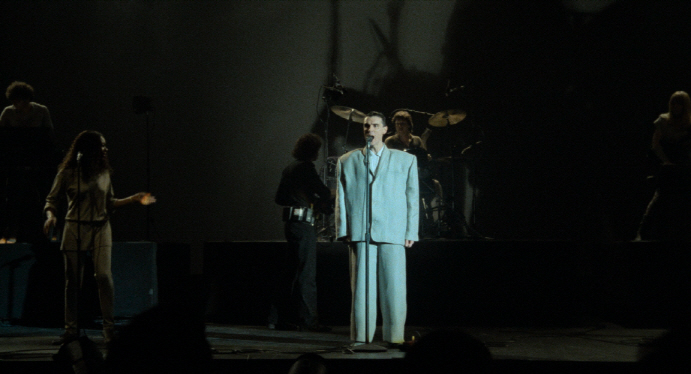
The early part of the film is interesting for how the members of Talking Heads build up the mood and momentum on the stage step by step. At the beginning, we see David Byrne, who was the lead singer of Talking Heads, appearing alone on the stage, and then he performs “Psycho Killer” alone by himself. With the vast empty space surrounding Byrne, this may look and feel modest at first, but his performance generates some excitement around the stage, and the mood gets more elevated as several other members of the band appear on the stage one by one. After Byrne and his fellow band members perform several following songs such as “Slippery People”, there eventually comes “Burning Down the House”, and the stage surely feels all the more galvanized than before.  

And we cannot help but observe the considerable physical efforts shown from Byrne and his fellow band members. Besides singing or performing their instruments well in front of their audiences (We seldom see the audiences except around the end of the film, by the way), they also express a lot of their musical joy and excitement via their dynamic physical movements, and Byrne looks particularly sweaty on his face and body around the point when he and others are performing “Life During Wartime”. In fact, as noticing the sweaty back of his shirts, I wondered how many extra clean shirts were ready for him during every performance.       

 While Bryne often takes the center as expected, the cameras of cinematographer Jeff Cronenweth and his many assistant cinematographers wonderfully capture the styles and personalities of the members of Talking Heads. While Byrne’s fellow lead singer Tina Weymouth has her own moment to shine later as performing “Genius of Love” as a part of her and drummer Chris Frantz’s side project Tom Tom Club, Jerry Harrison and Alex Weir are also memorable for their enthusiastic guitar performance, and Lynn Mabry and Ednah Holt are always ready to provide some extra electricity beside performing as backup singers. In case of Bernie Worrell and Steven Scales, the film sometimes shows a lot of how confidently they perform behind Bryne and several other band members, and this will surely make you appreciate more of their considerable contribution.

Around the middle part of the concert, the mood becomes all the more heated with the two famous songs of Talking Heads: “This Must Be the Place (Naive Melody)” and “Once in a Lifetime”. Now I must confess that these two songs mean a lot to me even though I did not know much about Talking Heads before reviewing Spike’s Lee’s concert film “David Byrne’s American Utopia” (2020). When I came across the former via Oliver Stone’s Oscar-winning film “Wall Street” (1987), the song has lingered on my mind for a long time, and I came to like it all the more when it was memorably used in Paolo Sorrentino’s “This Must Be the Place” (2011). In case of the latter, I still remember how it was brilliantly (and hilariously) used in the trailer of Stone’s subsequent film “W.” (2008), and I was quite delighted to see it being humorously used in recent Pixar Animation Studios film “Elio” (2025). 

Byrne and his fellow band members do not disappoint us at all as vigorously performing these two well-known songs, and I felt more of the lively spirit of the songs during my viewing. Like many of the songs performed in the film, they delve into our feelings and thoughts about life, and “This Must Be the Place (Naive Melody)” actually made me reflect more on my rather solitary status of life. Yes, as a nerdy single gay dude on autistic spectrum, I may never find a man who can both tolerate and love my quirky sides, but this song somehow made me feel comfortable and optimistic to some degree.

 If the film ended after the exuberant performance of “Once in a Lifetime”, which will come close to anyone feeling quite disoriented about the current status of life, I would not complain at all. However, the members of Talking Heads keep throwing more enthusiasm and excitement across the screen, and you may be quite stupefied by a lot of spirit and energy when they perform “Take Me to the River” and then “Crosseyed and Painless”. Again, you may notice how they look all the sweatier, and you will absolutely agree with what my late mentor Roger Ebert observed in his 1984 review: “Starting with Mick Jagger, rock concerts have become, for the performers, as much sporting events as musical and theatrical performances.”      

In conclusion, “Stop Making Sense” is a definite high point in the early filmmaking years of Demme, who would soon move onto several acclaimed mainstream films including Oscar-winning film “The Silence of the Lambs” (1991). I am glad to report to you that the film remains to be a spirited piece of timeless entertainment, and you may also be a bit amused to observe that it happened to come out not long after Rob Reiner’s great mockumentary comedy film “This Is Spinal Tap” (1984). As “This Is Spinal Tap” went all the way for mocking and parodying every conventional aspect of those run-of-the-mill rock concert films during the 1970s, “Stop Making Sense” came as something quite refreshing while simply focusing on the joy and exuberance of musical performance, and this still can excite and then elevate us even at present. That is what a good concert film can do, isn’t it?

Posted in Movies | Tagged , , , | Leave a comment