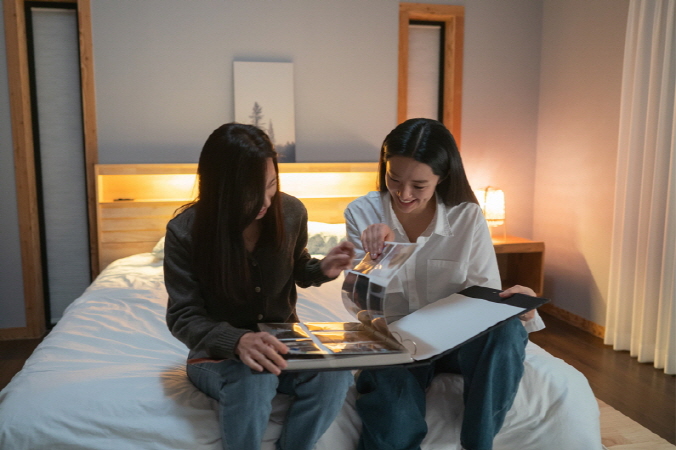
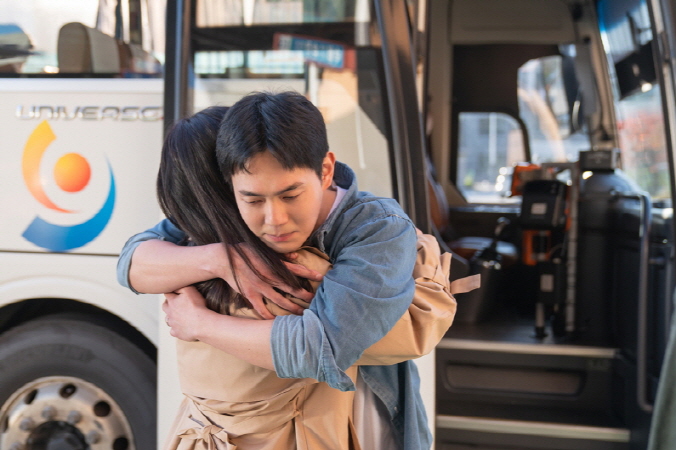
You Burn Me (2024) ☆☆1/2(2.5/4): On desire and life

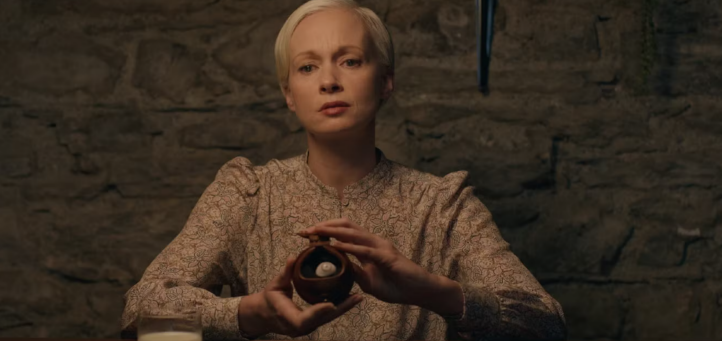
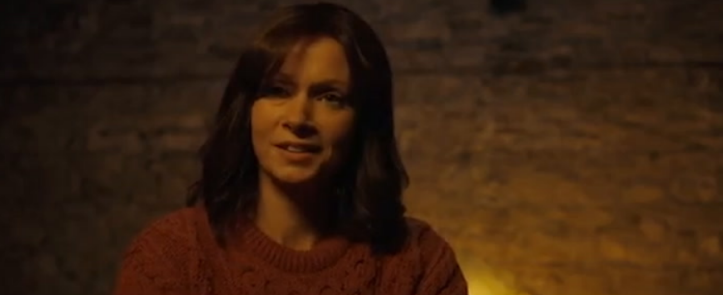
Argentine filmmaker Matías Piñeiro’s latest film “You Burn Me” often baffled and confounded me for good reasons. Probably because I do not have much background knowledge on the main subjects of this experimental film, I simply observed the repeated images and quotes without enough interest, and it was a rather challenging experience on the whole despite its rather short running time (64 minutes).

At least, I knew a bit about what and how the movie is about, because I happened to watch its trailer right before the screening I attended during this afternoon. As the trailer presents a series of seemingly random images, Piñeiro tells us a bit about how the movie will shuffle between the works of two different poets, and we are also introduced to his two lead actresses who will play the central figures of the film.

One of these two central figures is Sappho, a famous ancient Greek poet whose body of work deserves attention as much as her well-known homosexuality (I am sure that you all know well where that well-known word for female homosexuality came from, right?). Unfortunately, as often reflected throughout the film, many of her works have been preserved only in fragmented state, and the movie tells us later that only one of her works remains intact just because of being wholly quoted in the certain famous book of a contemporary male Greek poet.
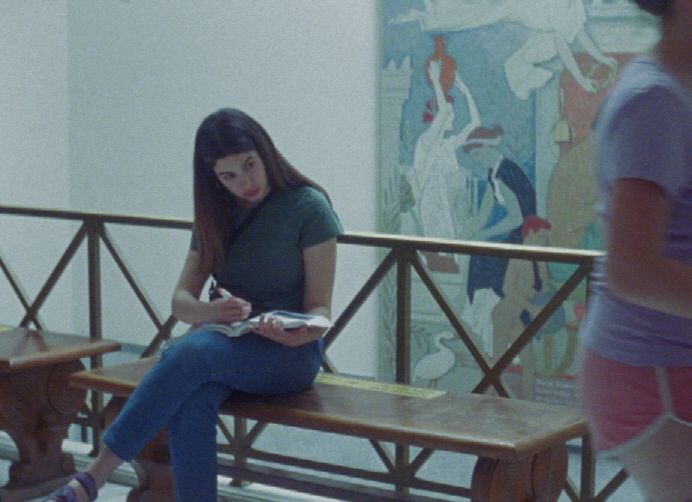
The main ground for the narrative of the film is actually a chapter from the book of Italian poet Cesare Pavese (1908 ~ 1950), whose tragic death by suicide often resonates with how Sappho killed herself due to a matter of heart. In that part of Pavese’s book, Sappho has a private conversation with a nymph named Britomartis, and their following conversation on life and desire gradually takes the center as the film steadily juxtaposes their words with a number of various images shot in various locations around the world.

Piñeiro and his co-cinematographer Tomás Paula Marques shot these images on 16mm films in the screen ratio of 1.33:1, and they deliberately made them look older and shabbier, probably for evoking the ancient aspects of the conversation between Sappho and Britomartis. As their conversation flows from one ancient Greek tale after another, the movie comes to reflect more on how desire has been a constant fact of human life just like it was a key factor in numerous ancient Greek tales such as “The Iliad” and “The Odyssey” by Homer, and both Sappho and Britomartis also mull a bit on how they were destroyed by desire in one way or another. While Sappho killed herself because of a big heartbreak involved with one certain young lady, Britomartis leapt into the sea for escaping from a man who desired her a lot, and there is a little amusing scene involved with a sketch showing how a certain body part of that dude was absurdly cursed due to his fierce desire toward Britomartis.

Piñeiro’s two lead actresses simply play a bit as Sappho and Britomartis in front of the camera or duly read the quotes from the works Sappho and Pavese. Sometimes these quotes are repeated more than once, and the accompanying images are also repeated along with that. Although this feels a bit frustrating at times, it is apparent that the movie expects us to reflect more on this direct juxtaposition between text and image, and you may also come to mull more on the feministic viewpoint on those ancient Greek tales. For example, how much Calypso felt betrayed and devastated when Ulysses eventually decided to return to his faithful wife after living with her for no less than 7 years? And how did Helen of Troy actually feel about all those epic conflicts surrounding her?

However, because I may not be emotionally matured yet despite being over 40, the words in the film feel rather abstract to me instead of genuinely resonating with my heart. Besides, I usually prefer prose to poetry as a guy inclined to being more direct and straightforward, so I must confess that I struggled over understanding the emotional aspects of whatever implied by those fragmented works of Sappho or the conversation between her and Britomartis in Pavese’s book.

Nevertheless, the movie succeeds to some degree in case of igniting more interest toward Sappho and Pavese from me. Although the movie just explains a bit about the circumstance surrounding his last days, Pavese looks like another interesting artist to explore for me, and I will certainly look for any way to get more access to his works. In case of Sappho, well, I come to learn from the film that she was really much more than a historical woman who originated the aforementioned word for female homosexuality, and I can only hope that more of her works will be discovered in the future, though that may be less possible as more time goes by.

In conclusion, “You Burn Me” did not exactly engage me enough, but it enlightened me a bit at least, and I became more aware of the career of Piñeiro, who has steadily made one film after another since his feature debut film “El hombre robado” (2007). Although “You Burn Me” is an acquired taste to me, I recognize that he is another interesting filmmaker with his own artistic style to notice, and I will probably appreciate more of his talent as watching more of his works in the past and the future. Yes, I am still hesitating to recommend the film to you, but I also want to tell you that it is still worthwhile to try – especially if you are willing to go for something different and challenging.

Posted in Movies | Tagged , | Leave a comment

The Roses (2025) ☆☆(2/4): A less vicious and funny remake

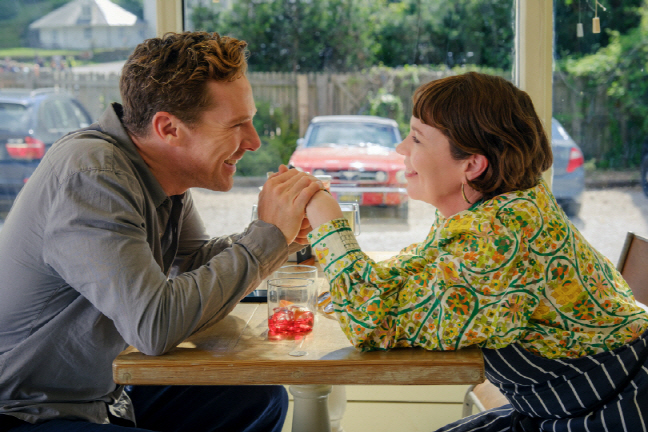
Jay Roach’s latest film “The Roses” is too mild and mellow for becoming truly mean and vicious enough to delve into the dark aspects of its story and characters. As unwisely trying to make the two main characters at the center of the story look more sympathetic and likable for us, the movie often becomes less sharp and thorny than it really needs to be, and its middling result is all the more disappointing, considering a bunch of genuinely talented performers gathered here in this film.

As many of you know, the movie is a remake of Danny DeVito’s 1989 black comedy film “The War of the Roses”, which is based on the novel of the same name by Warren Adler. In that movie, Michael Douglas and Kathleen Turner are darkly hilarious as a married couple going way over the top during their utterly hostile and destructive divorce war, and it is still quite funny to observe how DeVito’s film firmly and admirably sticks to the vicious and unpleasant aspects of its story and characters along with its two fearless lead performers.

In case of “The Roses”, it has Benedict Cumberbatch and Olivia Colman. Sure, these two immensely talented British performers can be as funny and vicious as Douglas and Turner in the 1989 film, but, alas, their undeniable comic talents are rather under-utilized here as often being prevented from being truly mean and funny. While their talents do shine a bit more during the third act where the situation becomes darker with more viciousness, that is too late for us, and the movie does not support them well even when it finally arrives at the ending along with them.

The movie opens with their characters, Theo and Ivy Rose, having a private meeting with their marriage counselor. As they interact more with their marriage counselor, it becomes quite apparent that they do have serious relationship issues between them, but they cannot believe that, as their marriage counselor points out, they are not actually capable of solving these problems.

And then they look back at how things felt all right between them when they came across each other in London 13 years ago. While Theo was a promising architecture, Ivy was a talented chef with a lot of potential (This may remind you of Colman’s recent Emmy-nominated guest appearance in American TV series “The Bear”, by the way), and they instantly clicked with each other right from their accidental encounter at a restaurant where Ivy worked. Not long after their first passionate lovemaking which will not be approved by any sensible health inspector out there, they decided to move to California in US, and Ivy devoted herself to domestic matters including raising their two children during next 10 years, while Theo focused more on his work and career.

When his latest building, a big and spectacular naval history museum which is going to be one of the biggest achievements in his career, is finished, Theo decides to buy an abandoned local restaurant house for showing more appreciation to Ivy, who is certainly delighted as finally getting a chance to show off her culinary skills outside their house. Although her modest restaurant business turns out to be far less successful than expected, she is still excited about finally restarting her professional career, and Theo is certainly happy for that.

However, there soon comes an unexpected change of fortune for Theo and Ivy. Their area is suddenly struck by a disastrous storm, which thoroughly destroys that naval history museum to the horror of Theo and many others who happen to be there with him. Meanwhile, this storm incidentally brings much more customers to Ivy’s restaurant at the same time, and, what do you know, one of these customers turns out to be a very influential food critic, who subsequently wrote an enthusiastic review on Ivy’s restaurant.

As his career tumbles toward the bottom, Theo has no choice but to focus on taking care of the domestic matters while Ivy becomes a lot busier and more successful than before. As time goes by, he cannot help but become petty and sulky about how things have changed in their relationship, and his wife also becomes more aware of the growing strain and estrangement between them.

The screenplay by Tony McNamara, who were previously Oscar-nominated for Yorgos Lanthimos’ “The Favourite” (2018) and “Poor Things” (2023), has some fun with how its two main characters clash with each other more and more along the story, but it unfortunately does not pull all the stops at all. We are occasionally amused by the increasingly bitter and vicious interactions between Theo and Ivy during their following divorce battle, but the movie often seems to hesitate to push them further into more nastiness, even though both Cumberbatch and Colman look like being quite ready for that from the very beginning.
Furthermore, the movie also fails in bringing more life and personality to those numerous supporting characters around Theo and Ivy. For example, their two kids are more or less than mere plot elements to come and then go, and the same thing can be said about a couple played by Andy Samberg and Kate McKinnon, both of whom can be quite funny just like Cumberbatch and Colman but are simply required to look just silly and absurd on the whole. The movie also criminally under-utilizes several other notable performers including Sunita Mani, Zoë Chao, Jamie Demetriou, and Ncuti Gatwa, though Allison Janney manages to steal the show during her brief appearance later in the film.

In conclusion, “The Roses” is just mildly amusing without feeling really biting at all, and my mind kept going back to those many darkly funny moments in the 1989 film, which does not lose any of its dark and vicious sense of humor even at present. While I enjoyed “The Roses” to some degree mainly thanks to the game efforts from Cumberbatch and Colman, they can do a lot better with much sharper and meaner materials in my inconsequential opinion, so I recommend you to stick to the 1989 film instead.

Posted in Movies | Tagged , , , | Leave a comment

Oddity (2024) ☆☆☆(3/4): A piece of oddity

“Oddity” is a little but effective horror film which gradually reveals what it is about as patiently building up its creepy atmosphere and suspense along the story. While it is rather simple in terms of story and characters, the movie slowly unnerves us via a series of spooky moments to be appreciated, and it also shows a bit of morbid sense of humor at times.

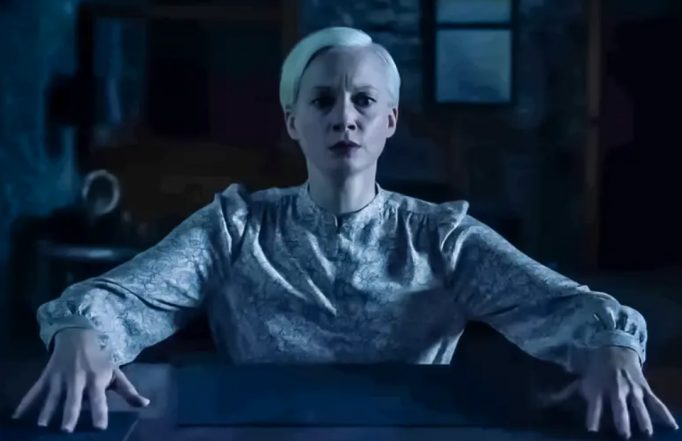
The movie opens with a young woman working on the renovation a big old house located somewhere in a rural region of Ireland. Dani (Caroyln Braken) has to do the job alone by herself, and her psychiatrist husband Ted (Gwilym Lee) is mostly absent as being busy with doing his nighttime work at some mental hospital in a nearby city, but she has no problem with that as expecting to have a nice life with her husband in their house.

However, something quite unnerving happens to Dani at one night, and the movie quickly moves forward to one year later. We come to gather that she was brutally murdered, and it seems that one of Ted’s former patients, who suddenly came there during that time is the one responsible for her death, though he died not long after this horrible incident.

Anyway, Ted visits Dani’s visually impaired twin sister Darcy, who is also played by Carolyn Bracken. Darcy has run a little antique shop full of old odd things which are actually cursed according to her, and this may remind you of that spooky storage room often shown in “The Conjuring” (2013) and its several sequels. At the time of Ted’s visit, Darcy happens to be handling the latest addition to her rather creepy collection, and she willingly tells a bit about its sinister backstory, but Ted does not believe that much as a man of reason and science.

He also does not believe that Darcy is a sort of psychic capable of sensing the past or history from any personal object, though, as she requested, he brings her a personal object associated with that patient assumed to be the killer of his wife. As soon as Darcy touches that object in question, she instantly senses something quite disturbing, and she subsequently embarks on a little plan of hers.

Her plan is pretty simple. On one day which incidentally means a lot to her, Darcy suddenly comes to that big old house where Ted is living along with his current girlfriend Yana (Caroline Menton). Both Ted and Yana are not so amused for good reasons, but Ted cannot say no when Darcy insists that she should stay in the house at least for a day, and Yana is left alone with her after Ted goes out for another nighttime work at his mental hospital.

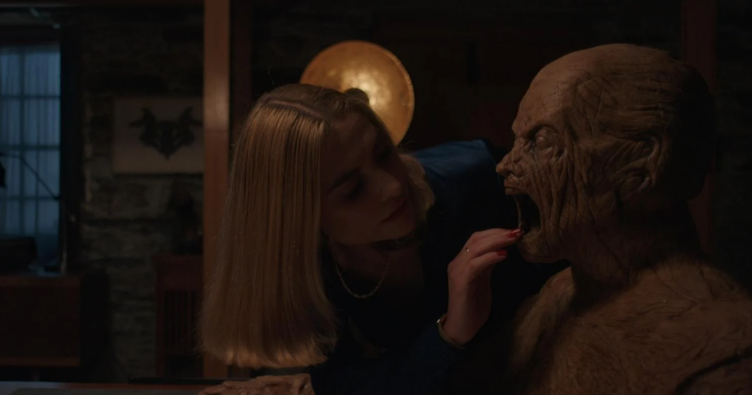
The mood between Darcy and Yana is quite awkward to say the least, especially after when it turns out that Darcy sent something strange to the house right before arriving there. It is an old wooden golem belonging to her family, and this odd big object surely unnerves Yana, though she also cannot help but become more curious about what the hell it is as well as what Darcy is going to do with that.

Although Darcy does not say a lot about the real purpose of her visit, the atmosphere inside the house becomes creepier as the night begins, and Yana comes to feel more of something spooky lurking somewhere inside the house. While that wooden golem certainly looks all the more ominous than before, it seems more possible that Darcy and Yana are not alone inside the house, and we later get a little effective moment of shock involved with a digital camera once belonging to Dani.

The movie also adds some extra creepiness as occasionally paying attention to Ted’s workplace, which looks so drab and depressing that we are not so surprised by more darkness and madness shown later in the story. Nevertheless, Ted seems mostly unaffected by this grim and depressing work environment, though he gets disturbed a bit by a bunch of odd and disconcerting sketches drawn by one of his patients.

It goes without saying that the movie becomes creepier with more dread and tension during the last act, which expectedly reveals what Darcy is actually planning to do behind her back. While there surely come a few expected moments of shock and awe, the movie sticks to its slow but steady narrative pacing as before, and director/writer Damian McCarthy and his crew members including Cinematographer Colm Hogan did a good job of filling the screen with enough interest to engage us. As the camera usually sticks to static positions, we come to pay more attention to background details, and we become more aware of whatever is hovering around its heroine and a few other main characters in the story. In addition, Bracken’s solid dual performance ably holds the emotional center of the movie, and she is also supported well by several effective supporting performers including Gwilym Lee and Caroline Menton.

In conclusion, “Oddity” is interesting for its competent handling of mood and story, and McCarthy, who previously made a solid feature film debut with “Caveat” (2020), confirms to us here that he is a skillful filmmaker who knows how to interest and then engage us. At this point, he is already working on his next film, and I guess we can have some expectations on whatever he will show us next.

Posted in Movies | Tagged , , | Leave a comment

Oslo (2021) ☆☆1/2(2.5/4): The negotiations behind the 1993 Oslo Peace Accords.

HBO TV movie “Oslo” cannot help but look rather naïve to me, considering how things have alarmingly gotten worse between Israel and Palestine since it came out four years ago. Yes, as dramatically presented in the film, there was a time when it seemed that both Israel and Palestine finally could recognize each other for real peace and co-existence, and the film looks into how hard and tricky it was for everyone associated with the behind-the-door negotiations leading up to the 1993 Oslo Peace Accords. However, even though I cared about the story and characters to some degree, I also often wondered what its main characters would think about the current political situation between Israel and Palestine, and that is what the movie cannot answer even at this point.

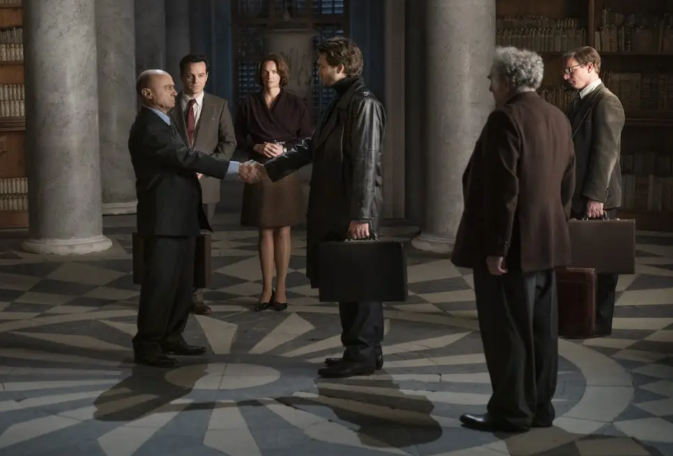
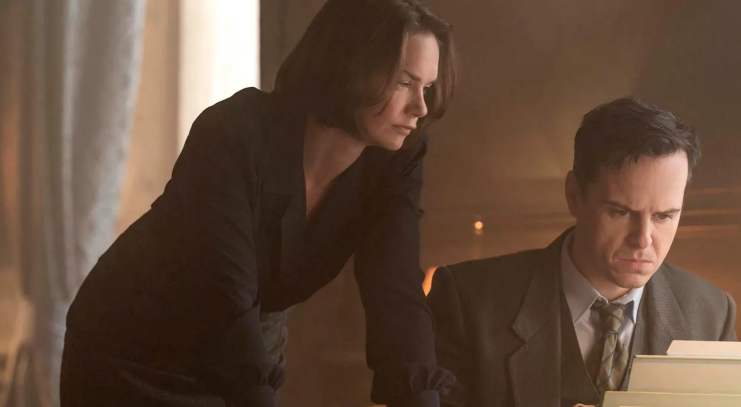
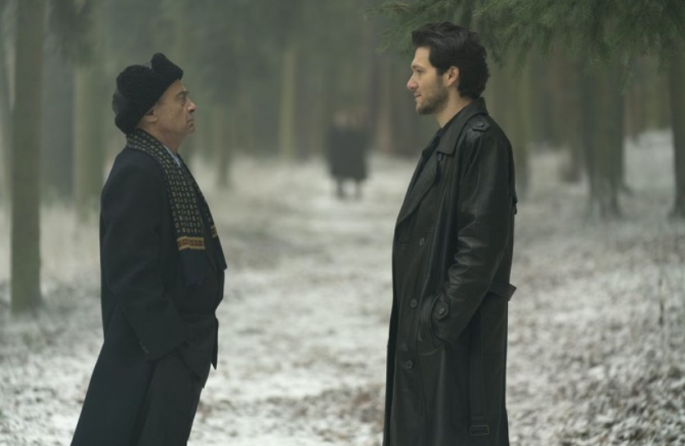
The story, which is based on the Tony-winning play by J.T. Rogers (He also adapted it for the film in addition to serving as one of the co-executive producers, by the way), is mainly told through a Norwegian diplomat named Mona Juul (Ruth Wilson) and her husband Terje Rød-Larsen (Andrew Scott), who is incidentally the director of the Fafo Foundation. They have been quite passionate about brokering a backdoor channel for negotiations between Israel and the Palestine Liberation Organization (PLO), but the circumstance does not look optimistic for them to say the least. For example, the Norwegian Ministry of Foreign Affairs is not so willing to assist their ambitious diplomatic plan, and, above all, the Israeli government and PLO happen to be going through another big political conflict between them.

However, Juul and Rød-Larsen are determined to try as much as possible, and then there comes a breakthrough around early 1993. Juul persuades Ahmed Qurei (Salim Daw), Minister of Finance of the PLO, to come to a little private negotiation meeting to be held at a rural manor in Norway, and Rød-Larsen convinces the Israeli Ministry of Foreign Affairs to send their unofficial representatives to that rural manor in Norway, though, not so surprisingly, nothing is guaranteed from the very beginning.
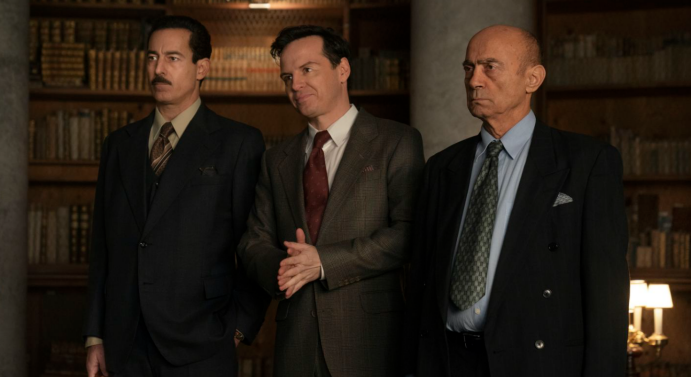
The movie generates some humorous moments when Qurei and his assistant Hassan Asfour (Waleed Zuaiter) meet Yair Hirschfeld (Dov Glickman) and Ron Pundak (Rotem Keinan), the two unofficial representatives of the Israeli government who are incidentally well-known university professors. Nevertheless, as these two contrasting groups push and pull each other over their negotiation under Juul and Rød-Larsen’s supposedly neutral support and guidance, they come to open themselves more to each other while also sticking to their respective beliefs and principles, and, what do you know, it gradually looks like they can actually initiate something quite meaningful for their countries.

However, not only they but also Juul and Rød-Larsen are also reminded more or more of how fragile their back-channel negotiation can be. While the Norwegian government remains reluctant to support this more despite some real progress from it, both the Israeli government and PLO continue to clash each other without much possibility for more compromise and negotiation. This surely generates more headache for Rød-Larsen and Juul, who come to realize that they also should accept some compromise for getting any chance for the eventual success of this ongoing negotiation process.

Rogers’ screenplay naturally provides a lot of talky moments as its main characters struggle to balance themselves between belief and compromise along the story, but the rather stagy ambiance of the movie may often distract you from time to time. In fact, several scenes in Israel are so jarringly tinged with warm orange tone that we cannot help but notice the apparent artificial qualities of these scenes, and I must tell you that this is probably one of the lowest points in the career of cinematographer Janusz Kamiński, who won two Oscars as frequently collaborating with Steven Spielberg for more than 30 years (Not so surprisingly, Spielberg is one of the co-executive producers of the film).

Director/co-executive producer Bartlett Sher, who also directed the 2017 Broadway production of Rogers’ play, simply lets the story and characters roll under his plainly unobtrusive direction, but there are several notable flaws in terms of storytelling. For instance, I do not think the flashback shots involved with Juul’s experience in Palestine are really necessary, and the movie could just trust our imagination when she reminisces about that in front of several other main characters later in the story.

At least, the main cast members hold our attention to the end. While never overshadowing their fellow main cast members, Ruth Wilson and Andrew Scott diligently hold the center as required, and they are particularly good whenever their characters come to show more of the strong personal/professional bond between them along the story. Around them, Itzik Cohen, Sasson Gabai, Dov Glickman, Rotem Keinan, Jeff Wilbusch, Igal Naor, and Waleed Zuaiter have each own moment to stand out, and the special mention goes to Salim Daw, a charismatic Palestinian Israeli actor who has been more notable thanks to his memorable supporting performance in the fifth season of Netflix drama series “The Crown”.

In conclusion, “Oslo” is surely a well-meaning movie, but it also undeniably feels like being out of touch as I reflect more on what happened during next several decades after the Oslo Peace Accords. Sure, we should not give up hope and optimism at all regardless of how the volatile historical narrative between Israel and Palestine will end, but the movie is not effective enough to suppress our growing doubt and skepticism at least for a while, and that is really a shame in my humble opinion.

Posted in Movies | Tagged , , , | Leave a comment

Spirited Away (2001) ☆☆☆☆(4/4): A girl’s adventures in Miyazaki’s Wonderland

As revisiting Hayao Miyazaki’s 2001 animation feature film “Spirited Away” yesterday, I marveled again on the vivid and mesmerizing qualities of its endlessly fascinating fantasy world. Even though the movie does not explain that much on the whole, we instantly accept its singular magical world of spirits and creatures right from the start thanks to its confident handling of mood and details, and we are alternatively intrigued and touched by many of those unforgettable moments in the film.

The opening part introduces us to Chihiro Ogino (voiced by Rumi Hiiragi), a young little girl who is moving to somewhere along with her parents. When they seem to be near their destination, Chihiro’s father decides to take a shortcut through some remote forest area, and then they arrive at a gate leading to what simply looks like an abandoned resort town. Although Chihiro cannot help but feel quite nervous, her parents insist that they should look around whatever is in this abandoned area, and the film provides several lovely moments of serene beauty reminiscent of the finale of Miyazaki’s subsequent work “The Boy and the Heron” (2023) as they walk further into this oddly empty region.

Needless to say, it turns out that Chihiro’s instinctive feelings on this area were right. When she later happens to be alone by herself, she encounters a mysterious handsome boy named Haku (voiced by Miyu Irino), who warns that she and her parents must leave the area before the night comes. Alas, her parents are transformed into a couple of big pigs when she belatedly comes to them, and she soon gets trapped inside the area, which shows its hidden sides once the night begins and then a lot of odd entities appear here and there to Chihiro’s shock and surprise.

Again, Haku comes to the rescue. He takes Chihiro to a big bathhouse which is the center of this very strange area, and we come to gather that this is actually a spa region for millions of many different spirits to come and then go. The mood becomes a bit suspenseful as Chihiro must hide her true identity for a while under Haku’s instruction, but the film takes some time for paying more attention to this hidden magical world unfolded in front of her eyes, and that is a sheer visual feast for our eyes to say the least.

Thanks to some help from Haku and a couple of sympathetic bathhouse employees, Chihiro eventually encounters Yubaba (voiced by Mari Natsuki), an old but powerful witch who has ruled over the bathhouse and its numerous employees. While being as cranky and tempestuous as the Red Queen in Lewis Carroll’s classic children’s novel “Alice’s Adventures in Wonderland”, Yubaba eventually agrees to employ Chihiro in exchange for not transforming her into a piglet, but, of course, there is a catch. She literally takes away Chihiro’s name as giving her new name, and Chihiro must not forget her original name completely for not getting stuck in Yubaba’s world forever.

As Chihiro begins to work in Yubaba’s bathhouse as “Sen”, the story becomes a bit more leisurely as Miyazaki and his crew dole out one awe-inspiring moment after another. We get to look more into here and there in the bathhouse, and we admire more of its grand and intricate design which is an odd but striking cross between European and Japanese style. We see more of various spirit figures in the bathhouse, and you will be delighted for the appearance of those dust bunnies from Miyazaki’s great animation film “My Neighbor Totoro” (1988), which incidentally work for an old spirit taking care of the giant boiler inside the bathhouse with his six spider-like arms.

One of the most awesome highlights in the film comes when a highly stinky entity suddenly comes into the bathhouse. While it instantly shocks and repulses everyone in the bathhouse including Yubaba, Chihiro is ordered to handle this stinky client alone by herself, but, what do you know, her plucky efforts lead to an epic visual catharsis to behold, which also indirectly gives us a bit of environmental message to reflect on.

Meanwhile, we also get to know more about how much Haku has been held against his will under Yubaba, but, again, the movie takes time as moving onto the unexpected tranquility of its last act along with its young heroine. Along with her several unexpected spirit friends including a rather hideous entity nicknamed “No-Face”, she goes to a certain place outside the bathhouse by a sort of magic train, and, again, Miyazaki lets us observe and appreciate more under the leisurely atmosphere of the film. I have no idea on why and how this extraordinary train exists, but it intrigues and then enchants me nonetheless with small but interesting touches here and there (The operator of the train, whose face is deliberately never shown, somehow took me to a similar dude in classic Japanese TV animation series “Galaxy Train 999”, for example).

And then there comes a surprising moment of poignancy to linger on you along with the lovely score by Miyazaki’s longtime collaborator Joe Hisaishi. I will not go much into details, but I can tell you instead that this touching moment will be quite emotionally resonating if you are familiar with those “Earthsea Cycle” novels written by American science fiction writer Ursula K. Le Guin (Incidentally, one of them was adapted into an animation feature film by Studio Ghibli in 2006, but the result has been regarded as one of the lowest points in the history of Studio Ghibli).

In conclusion, “Spirited Away”, which deservedly garnered the first Oscar statue for Miyazaki (He subsequently received the Honorary Oscar and then won another Oscar for “The Boy and the Heron”, by the way), remains quite fresh and alive as brimming with style and imagination, and it can also be regarded as another pivotal point in Miyazaki’s legendary career. In contrast to the sheer scale and ambition of “Princess Mononoke” (1997), the film just shows him simply enjoying himself a lot in his own creative area without feeling much need to prove himself anymore, and this trend has been continued during last two decades with varying degrees of success. I must confess that I am not that enthusiastic about “Howl’s Moving Castle” (2004), “Ponyo” (2008), “The Wind Rises” (2013), and “The Boy and the Heron” compared to many of you, but we all can agree on that they are all as distinctive as you can expect from a Miyazaki animation film nonetheless, and maybe I will regard them with more admiration and appreciation someday just I do to “Spirited Away”.

Posted in Movies | Tagged , , | Leave a comment

The Ugly (2025) ☆☆(2/4): That face, that face, that face…

South Korean film “The Ugly” is willing to explorer the very, very, very ugly sides of the South Korean society during the 1970s, and I appreciate that to some degree even though I am not that sure about whether it works as well as intended. No, I do not mind at all what it is about, but I often could not help but get quite distracted by how it is about, and the overall result is a merely miserable and depressing experience without enough reasons to justify that.

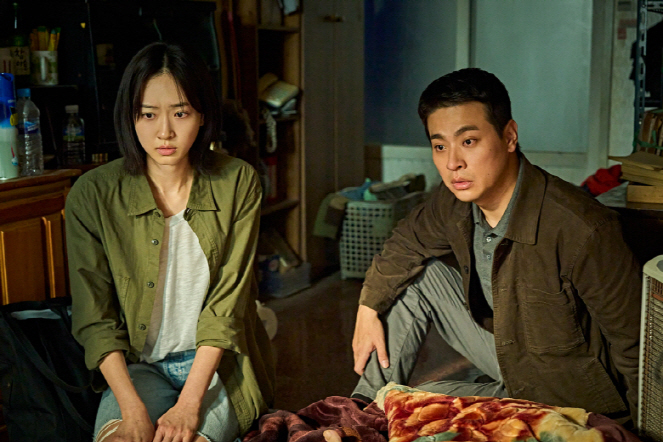
The movie, which incidentally consists of several chapters and a sort of epilogue, begins with a TV documentary interview on a visually impaired old man named Lim Yeong-gyu (Kwon Hae-hyo). For many years, Yeong-gyu has been recognized as a peerless master of seal engraving in South Korea despite his visual impairment. Along with his adult son Dong-hwan (Park Jeong-min), we see him interviewed by a young female documentary director and a few crew members of hers, and the director is certainly eager to get any interesting life story from Yeong-gyu.

Not long after the latest interview session is over, there suddenly comes something quite interesting for the director. The local police call Dong-hwan, and he is notified that the remains of his vanished mother, Young-hee (Shin Hyun-been) was recently discovered somewhere near where his father began his craft in the 1970s. Because his mother was gone around the time when he was just a little baby boy, Dong-hwan does not feel that bad about this news, but he and his father soon come to preside over her following funeral anyway, and the director also attends the funeral out of curiosity.

To Dong-hwan’s little surprise, several family members of Young-hee unexpectedly come just for a little matter on their family assets, and that is when Dong-hwan and the director become more interested in who Young-hee actually was. While being rather reluctant at first, her family members tell them a bit about how Young-hee came to leave her family many years ago – and how ugly her face also was.

Because he knew that his mother worked at some shabby garment factory around the time when she met and married his father, Dong-hwan and the director later approach to the three old people who knew Young-hee and her husband during that time, and they willingly tell them about how things were quite bad and miserable for Young-hee. For instance, she was often ridiculed for her ugly face as well as her rather dim attitude, and there is a painful (and disgusting) flashback scene showing another bad day at her workplace.

The movie did a fairly good job of showing the dark underbelly of the South Korean society during the 1970s, which is incidentally not so far from what is observed from those seedy industrial areas of many developing countries at present. In the name of more advance and development for their country and society, millions of meek laborers like Young-hee were frequently exploited for their physical labor while not often being paid enough for their shabby lives, and this deplorable unfairness during that grim period is mainly represented by their sleazy boss, who was also hiding more unpleasant sides behind his ebullient appearance.

However, the screenplay by director/writer Yeon Sang-ho, which is based on his graphic novel of the same name, fails to develop Young-hee into someone more than an elusive MacGuffin figure. Although Shin Hyun-been does try hard for conveying to us her character’s human qualities, the screenplay unfortunately falters in terms of characterization while simply throwing one moment of abuse after another upon Young-hee along the story, and we just get more disgusted again and again.

To make matters worse, the film adamantly restrains itself from showing Young-hee’s face just for inducing more curiosity and then guilt from us, and this blatant storytelling gimmick is quite distracting for us at times. It may work better in Yeon’s graphic novel (I have not read it, by the way), but this makes us all the more distant to the story and characters instead, and I must tell you that what is eventually (and expectedly) revealed during its second half is pretty anti-climactic to say the least.

Several other main cast members in the film besides Shin are also seriously wasted on the whole. Park Jeong-min, who has been one of the most interesting performers in South Korean cinema since his breakthrough supporting turn in “Bleak Night” (2011), surely has a lot of stuffs to play because he also has to play young Yeong-gyu in the flashback part of the film, but this is not exactly one of his best performances in my trivial opinion. In case of Kwon Hae-hyo, Im Seong-jae, and Han Ji-hyun, they are mostly stuck with their thankless supporting parts, and Han is particularly limited by her thin supporting role more than once.

In conclusion, “The Ugly”, which was recently shown in the Toronto International Film Festival, is disappointing for being superficially grim and stark without enough substance to hold our attention. As shown from his several truly disturbing animations films including “The King of Pigs” (2011) and his recent Netflix film “Revelations” (2025), Yeon is no stranger to something really dark and disturbing, but he can do much better than this monotonously seedy and unpleasant work, and I must confess that my mind is already to wash it away as soon as possible.

Posted in Movies | Tagged , , , | Leave a comment

Perfect Blue (1997) ☆☆☆(3/4): Someone to watch over her

Satoshi Kon’s 1997 animation feature film “Perfect Blue”, whose 4K restoration version happens to be released in South Korean theaters in this week, is a disturbing but striking psychological thriller about one young actress under a certain insidious influence. I must tell you that I was quite disturbed more than once during my viewing, but I must admit that my eyes somehow remained held tight to the screen from the beginning to the end, and that is the main reason behind my recommendation.

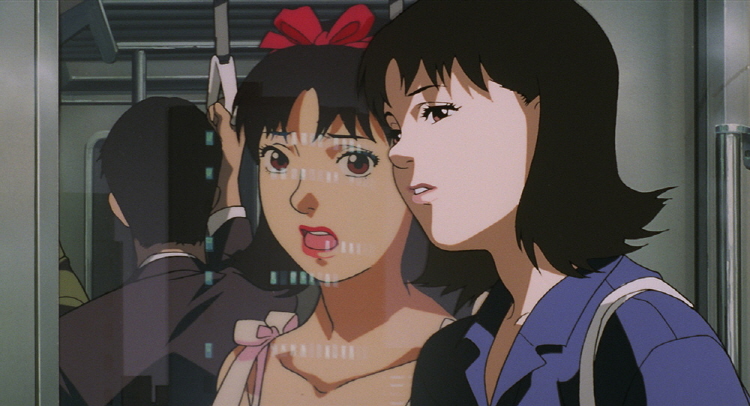
Loosely based on co-producer Yoshikazu Takeuchi’s novel “Perfect Blue: Complete Metamorphosis”, the story follows the plight of Mima Kirigoe (voiced by Junko Iwao), a pretty young girl who has been the member of a very popular J-Pop idol group but then decides to retire and then become a full-time actress. Although many of her fans do not welcome this much, Mima is willing to demonstrate that she is more than a popular pop singer, and her bold decision is supported by her agent as well as her manager.

However, as she prepares for a rather minor role in some popular TV detective drama series, there comes the growing possibility of being stalked by somebody out there. It seems that someone is not so pleased about her ongoing career transition, and Mima is gradually disturbed by a series of alarming incidents happening around her.

And it turns out that whoever is stalking Mima seems to know quite a lot about her daily life. Thanks to some help from her caring manager, she comes to learn how to use the Internet (Some of you may feel quite nostalgic while watching this scene, by the way), and then she checks out a certain little website devoted to her. As looking over the contents of this website, she is alarmed to discover that someone behind this website somehow knows every little personal detail from her private life, so she often cannot help but feel more like being watched at every moment.

The story slowly builds up a sense of anxiety and suffocation around its heroine’s increasingly unstable state of mind. Getting disturbed more and more by the presence of her mysterious stalker, Mima comes to lose more confidence, and, to make matters worse, her agent makes her play a much bigger part in that TV detective drama series. In contrast, her manager, who was incidentally once a successful J-POP idol singer, shows some understandable concern, but her agent does not listen at all as paying more attention to how much Mima’s burgeoning acting career will benefit his agency if his plan goes as well as he hopes.

Around the middle act, the movie becomes all the more disturbing as Mima lets herself to be exploited in one way or another. At one point, the writer of that TV detective drama series makes her character raped in front of many men, and, of course, the shooting of this repulsive scene turns out to be much more grueling than she expected at first. In addition, her agent pushes her into almost being naked in front of a very notorious photographer, and the film boldly enters the realms of adult animation film as never looking away from how disconcerting and humiliating this is for its heroine.

In the meantime, her mysterious stalker becomes more determined to corner her in more than one way. The situation becomes very serious as several figures associated with Mima are brutally murdered one by one, and Mima subsequently faces a certain dreadful possibility as her grasp on reality seems to be dwindling day by day. Is she actually going crazy enough to become a serial killer? And does that stalker in question really exist?

Stylishly and intensely toying with those dark possibilities brimming around its heroine, the film gives us several memorable moments to remember. In case of that brief but striking bathtub scene, it actually influenced Darren Aronofsky when he shot an almost identical one in “Requiem for a Dream” (2000). In addition, you may also notice a parallel between “Perfect Blue” and Aronofsky’s subsequent film “Black Swan” (2010), which is also about a young heroine who gets quite unnerved and then unhinged while being pressured a lot by an ambitious artistic task which might be beyond her talent.

In fact, just like “Black Swan”, “Perfect Blue” unhesitatingly leaps beyond plausibility as throwing its heroine into more madness and chaos during its last act, and this is somehow more acceptable than expected due to being strikingly presented in animation. To be frank with you, I could not help but think of all the preposterous qualities of those Italian giallo films as observing when Mima finally faces the shocking truth during the climax part, and I had no problem with going along with the following craziness unfolded across the screen.

Although I personally prefer the unabashed romanticism of “Millennium Actress” (2001) and the offbeat charm of “Tokyo Godfathers” (2003), “Perfect Blue” is still an interesting debut work from Kon, who died too early in 2010 after making his fourth and last animation feature film “Paprika” (2006). Yes, this is definitely not something you can comfortably watch on Sunday afternoon, but it will leave some indelible impression on your mind nonetheless, and you may want to check out Kon’s other three works later.

Posted in Movies | Tagged , , , , | Leave a comment

Homeward Bound (2025) ☆☆☆(3/4): Guess who’s coming to her home…

South Korean independent film “Homeward Bound” is a little family movie with secrets to be revealed in one way or another. As each of its main characters struggles to handle their rather tricky circumstance while hiding each own secret, the movie earnestly and steadily develops the story with human details to observe, and we come to care more about their respective issues. 

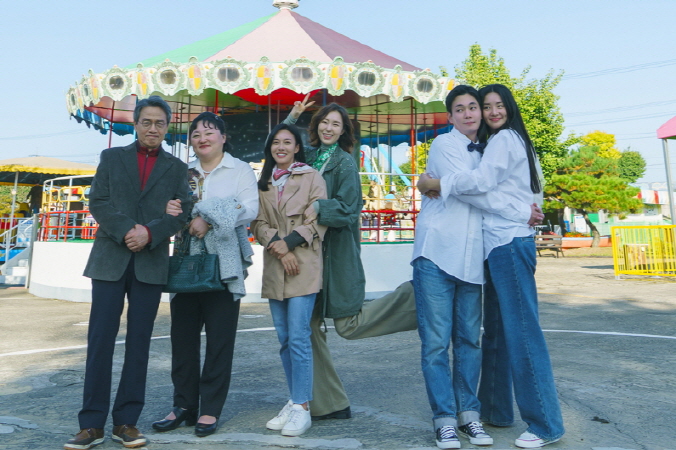
The center of the story is a middle-aged female schoolteacher named Jeong-ha (Jang Young-nam). Although she lost her husband due to an unfortunate incident more than 10 years ago, she remains unmarried as teaching art at a high school located in some local city, and her only son Jin-woo (Ryu Kyung-soo) has been in Canada for some time for preparing for getting a good company job in South Korea someday.

Around the time when she is going to take a leave due to some illness, Jeong-ha is surprised to see that Jin-woo returns to South Korean along with his Korean Canadian girlfriend Jenny (Stephanie Lee). Although nothing much is certain for them at present, Jin-woo and Jenny recently decided to marry simply because they love and care about each other a lot, and Jeong-ha has no problem with that even though she is still concerned about her son’s prospect. While Jenny is soon going to become a medical doctor, Jin-woo has seriously been considering following his real personal passion, and Jeong-ha is not so sure about whether her son makes the right decision about his life and career.

However, it later turns out that there is something Jeong-ha did not tell her son, not long after she lets her son and Jenny into her little but cozy house. A woman named Ji-seon (Ok Ji-young) unexpectedly comes to the house, and we gradually gather that she is actually Jeong-ha’s longtime partner, though Jeong-ha hesitates to reveal their romantic relationship as well as her current illness to her son and future daughter-in-law. 

And then things become more complicated when it also turns out that Jenny’s parents, Moon-cheol (Park Ji-il) and Ha-yeong (Park Ji-a), come to the town without telling anything to their daughter in advance. Mainly because they cannot get any hotel room to stay due to some big local event, Jenny’s parents agree to stay in Jeong-ha’s house, and this surely makes Jeong-ha feel more awkward than before. She simply presents her partner as a close friend, but everyone else naturally wonders more about why Jeong-ha has lived so closely with Ji-seon under the same roof.

As Jeong-ha tries to find the right moment for telling everything to her son and Jenny, the movie generates some laughs from how rude and superficial Jenny’s father is. He only cares about whether his future son-in-law can meet his expectation, and this certainly makes everyone around him quite uncomfortable to say the least. While Jenny comes to show more discontent and resentment toward her father, Ha-yeong tries to handle the situation as peacefully as possible, and we come to sense more of how much she has probably tolerated her husband for many years.

Now you may be reminded of similar queer family films such as, yes, Mike Nichols’ “The Birdcage” (1996), but the movie distinguishes itself as showing some sympathy and understanding to all of its main characters, who turn out to be a bit more complex than expected. While trying to make her son have some second thought about his life and career, Jeong-ha finds herself trying to have him under her control just like her husband did in the past. While certainly frustrated with Jeong-ha hiding their relationship from the others around her including her son, Ji-son remains patient and understanding as a person who has known and loved her a lot for a long time. In case of Jenny’s parents, it is later revealed that they have some personal issues of their own, and that is often contrasted with the loving relationship between Jin-woo and Jenny, who do not care that much about the scale of their wedding simply because, well, they love each other.

You will not be surprised when the story eventually culminates to a dramatic moment among these main characters as their hidden issues are uncovered one by one, but the screenplay by director/writer Kim Dae-hwan, who previously impressed me a lot with “The First Lap” (2017), tactfully handles this expected part with enough humor and sensitivity, and the movie is also supported well by the solid acting from its small main cast. As Jang Young-nam diligently holds the center with her low-key performance to be appreciated for subtle touches to notice, Ryon Kyung-soo, Stephanie Lee, Ok Ji-young, and Park Ji-il have each own good moment around Jang, and the special mention goes to Park Ji-a, who fills her rather thankless supporting role with a considerable amount of personality and humanity.

On the whole, “Homeward Bound” is relatively lightweight compared to “The First Lap”, but it is still an enjoyable mix of humor and drama which will also indirectly remind you of why it is important to show more love, support, and recognition to many LGBTQ+ people out there. Around the end of the story, there are a lot of things to handle for Jeong-ha, but there is also a little but precious sense of hope and optimism for her and her partner nonetheless, and you will come to root for her more as the end credits roll.

Posted in Movies | Tagged , , , , | 1 Comment

Princess Mononoke (1997) ☆☆☆☆(4/4): An epic fantasy drama by Hayao Miyazaki

Hayao Miyazaki’s 1997 animation feature film “Princess Mononoke”, which happens to be re-released in South Korean theaters today, is an epic fantasy historical drama to behold and admire. While its story engages us as a complex drama of ideas, intrigues, and beliefs, the film is visually enchanting for its beautifully wondrous details to observe and appreciate, and it has not lost any of its immense artistic power even though almost 30 years have passed since it came out.

 The story, which is set around the Muromachi-era Japan (1336 ~ 1571), begins with the stunning opening scene. A giant demonic entity suddenly appears near an isolated mountain tribe village located somewhere in the eastern region of Japan, and then it is stopped and then killed by Ashitaka at the last minute (voiced by Yōji Matsuda), a young prince of the tribe who is incidentally the sole male descendant of his royal family. Unfortunately, he gets wounded and cursed in his right arm by the destructive power of that demonic entity, and he is told that he will die soon if he does not find any possible way to remove that curse from him.

Eventually, Ashitaka leaves the village along with his faithful red elk. As looking for the origin of his curse in the western region, he is alarmed to discover that his cursed arm is pulsating with that destructive power of that demonic entity, and we get a brief but rather gory moment of action when he happens to be attacked by several soldiers at one point early in the story. 

After the encounter with a silly but shady monk named Jigo (voiced by Kaoru Kobayashi), Ashitaka arrives in the region surrounding an industrial town ruled by Lady Eboshi (voiced by Yūko Tanaka), a strong-willed noblewoman who has been clashing with the mythic animal creatures of a big nearby forest for getting more iron and power for her and her people. As a matter of fact, her new weapons caused the creation of that demonic figure which cursed Ashitaka, and Ashitaka certainly feels the hate and rage inside his cursed power when he has a private meeting with Lady Eboshi later.

And he also gets to know about San (voiced by Yuriko Ishida), a mysterious young woman who is incidentally the titular figure of the story. She has been tried to protect the forest from Lady Eboshi and her people along with a trio of big wolves including the one who raised her since she was an abandoned baby girl, and Ashitaka soon finds himself in the middle of the ongoing conflict between San and Lady Eboshi.

Now this sounds like a simple conflict between good and evil, but Miyazaki’s screenplay brings some unexpected complexity to the story and characters. While she hates humans as much as her wolf family, San is also a human, and then she finds herself touched by Ashitaka’s courageous act of good will and compassion. In case of Laby Eboshi, she is not a mere antagonist at all, and she is also driven by her will and belief as much as San. In addition, she is actually a fairly good leader for her people, and some of the most poignant moments in the film come from how much her people including a bunch of lepers and ex-prostitutes appreciate her generosity as well as her leadership.

And the story becomes all the more complicated with more conflicts and intrigues circling around its main narrative. Besides battling against those mythical animal creatures including a certain elusive magical entity who is the main life force of the forest, Lady Eboshi must deal with some other lord who has coveted her iron and wealth, and she later gets allied with Jigo, who turns out to have his own sneaky plan involved with that elusive magical entity in question.

While taking its time for letting us process and understand the motives and plans of many different figures in the story, the film dazzles us with the sheer mastery of mood, style, and detail from Miyazaki and his crew. As many of you know, Miyazaki and his crew drew every shot of the film from the beginning, and the result is often strikingly impressive to say the least. Thanks to their painstaking efforts, many details in the film ranging from those wormy tentacles of those demonic figures to the ethereal appearance of that elusive magical entity look quite vivid and distinctive, and that will remind you again of why cell animation usually shows more artistic human touches than digital animation – and why that recent AI imitation program based on the works of Studio Ghibli is quite an unspeakable abomination.

In the end, the story culminates to the climax where a lot of things happen across the screen, but it stays focused on the dynamic dramas among its main figures while never overlooking what is being at stake for them, respectively. According to recent documentary film “Miyazaki: Spirit of Nature” (2024), Miyazaki struggled a lot for getting the right ending for the story even during the production, and all I can tell you is that he did a commendable job of leading the story and characters to a satisfying resolution. 

Overall, “Princess Mononoke” is one of many highlights in Miyazaki’s legendary career, which gave us numerous top-notch animation films such as “My Neighbor Totoro” (1988) and “Spirited Away” (2001). When I watched it for the first time in 2003, it instantly became one of my favorite animation films, and I felt my mind recharged again as revisiting it after more than 20 years since that. This is indeed a great work, and I am glad that I and many other South Korean audiences can watch it on big screen right now.

Posted in Movies | Tagged , , , | Leave a comment

Highest 2 Lowest (2025) ☆☆☆(3/4): A colorful NYC remake from Spike Lee

Spike Lee’s latest film “Highest 2 Lowest”, which was released on Apple TV+ in last week, is an interesting remake of “High and Low” (1963), one of the classic films from great Japanese filmmaker Akira Kurosawa. While mostly following the same basic plot based on the Ed McBain’s 1959 novel “King’s Ransom”, the movie attempts to do its own stuffs here and there, and the result is another colorful New York City movie from Lee.

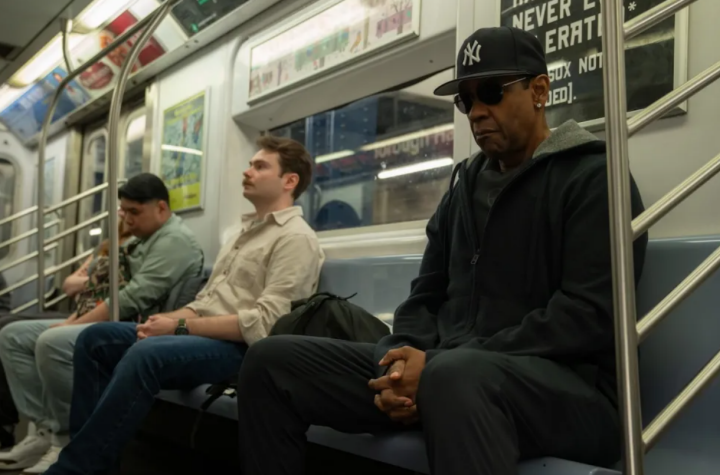
Denzel Washington, who collaborated with Lee again after “Inside Man” (2006), plays David King, a wealthy and prominent music producer currently living with his family in one of those big and posh penthouse apartments in New York City. Although it seems that his music business career has passed its prime, King has been trying to reach for another big opportunity, and he is now virtually betting all of his money and asset on completely buying out his prestigious record company.

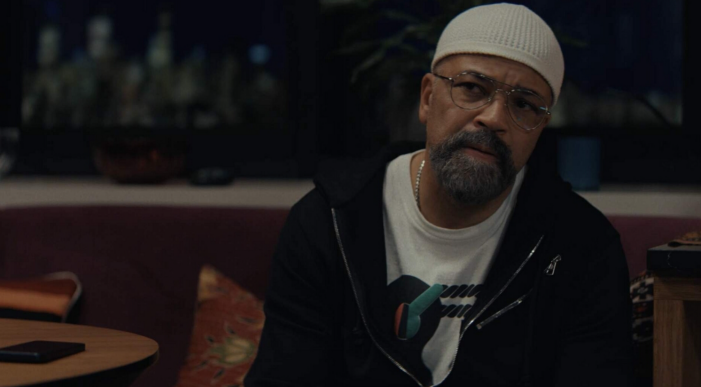
Alas, when King is almost close to his goal, there suddenly comes a big problem for him. Somebody calls King, and he is notified his teenage son is kidnapped. Quite shocked and devastated, King and his wife Pam (Ilfenesh Hadera) soon call the police, and a bunch of detectives promptly work on tracking down King’s son and his kidnapper, but, what do you know, it eventually turns out that the kidnapper took away the only son of King’s driver Paul Christopher (Jeffrey Wright) instead.

While certainly quite relieved, King finds himself facing a serious moral dilemma as the kidnapper still demands that he should pay the ransom. Christopher, a widower who is incidentally a reformed ex-criminal, has been much more than a hired guy for him for many years, and Christopher’s son has been pretty much like a brother to King’s son. Still hoping for the complete buyout of his company, King seriously considers not paying the ransom, but, as one of his business partners warns, that may ruin the public image of him and the company. Now I am reminded of that memorable line from Michael Mann’s “The Insider” (1999): “Fame has a fifteen minute half-life – infamy lasts a little longer.”

As King becomes more conflicted on this impending issue of his, Lee and his crew members including his cinematographer Matthew Libatique did a fluid job of maintaining the tension around King and several other main characters while also adding some interesting details to observe here and there inside King’s penthouse apartment. Besides a number of things from his glorious past, his apartment is also decorated with a lot of valuable artworks associated with African American culture, and they remind us more of his social and racial class as well as his considerable wealth and luxury.

While Kurosawa’s 1963 film focuses more on the diligent works of a bunch of detectives assigned to the kidnapping case, the screenplay by Alan Fox continues to focus on King’s ongoing plight instead, and we see how things get more complicated for him as time goes by. In the end, he chooses to do what should be done for Chrisotpher’s son, but there come more big problems to handle, and it looks like he is tumbling down toward the end of his career.

As his character struggles in one way or another along the story, Washington’s good performance steadily carries the film. Although he is 70 at present, Washington demonstrates again that he is one of the most charismatic actors working in Hollywood, and he also does not hesitate at all in embodying the human flaws and weaknesses of his character. While he cares a lot about the people close to him, King cannot help but remind them of who the man in the house is, and that is evident during a crucial private conversation between him and his son later in the story.

 With Washington’s strong performance functioning as its emotional engine, the movie deftly moves from one narrative point to another as often providing interesting moments to observe. In case of the sequence where King must deliver a bag of ransom money as required, it happens to be juxtaposed with the nearby Puerto Rican Day Parade, and this surely brings extra personality to the soundtrack as well as the vivid and realistic urban atmosphere of New York City in the movie. Around the last act, music and King’s profession turn out to be more integral to the story than expected, and that leads to more irony when King finally confronts the kidnapper.

Around Washington, Lee places several notable performers here and there. While Jeffrey Wright holds his own place well besides Washington (His son Elijah Wright plays his character’s son in the film, by the way), Ilfenesh Hadera and Aubrey Joseph also have each own small moment to shine, and John Douglas Thompson, Dean Winters, LaChanze, Michael Potts, Wendell Pierce, and ASAP Rocky are well-cast in their substantial supporting parts. 

On the whole, “Highest 2 Lowest” balances itself well between old and new things while also having enough style and personality to distinguish itself well from Kurosawa’s 1963 film. Although being one or two steps down from its senior, the movie is still another interesting work to be added to Lee’s long and illustrious filmmaking career, and it is certainly one of better things to watch at your home during this year.

Posted in Movies | Tagged , | 1 Comment