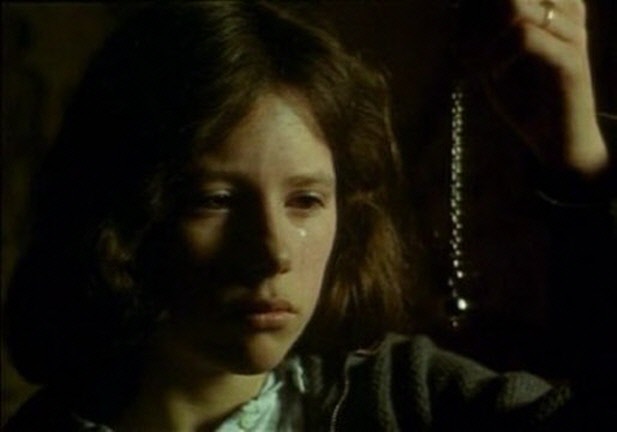
Wake Up Dead Man: A Knives Out Mystery (2025) ☆☆☆1/2(3.5/4): A new priest comes to the town…

Rian Johnson’s latest film “Wake Up Dead Man: A Knives Out Mystery”, which was released on Netflix on last Friday, is another compelling mystery story to watch. Just like its predecessors, the movie throws an interesting murder case and then rolls its colorful story and characters for more fun and intrigue for us, and the overall result solidifies its franchise further while also doing its own different stuffs to observe and appreciate.

The early part of the film mainly revolves around Jud Duplenticy (Josh O’Connor), a young Catholic priest who was once a boxer before accidentally killing his opponent in his last match. Due to an unintentional recent trouble caused by his fist, he is subsequently sent to a little parish located somewhere in upstate New York, and he is certainly willing to do some good things for his parishioners as a new assistant pastor.

However, his main task turns out to be much more challenging than expected. The pastor of the town is Monsignor Jefferson Wicks (Josh Brolin), a charismatic man who has virtually dominated over his congregation for years. He is your average hardcore conservative pastor who usually emphasizes on intolerance and anger instead of acceptance and forgiveness, and Priest Duplenticy observes how most of his parishioners simply conform to the toxic preaching of Monsingnor Wicks due to each own reason.

Mainly through Martha Delacroix (Glenn Close), a devout church lady who handles almost everything in the church as Monsignor Wicks’ right-hand person, Priest Duplenticy comes to know more about the rather complicated past of the church. The church was actually founded by the father of Monsignor Wicks’ prodigal mother, and we come to learn about a little mystery involved with the disappearance of the considerable asset belonging to the founder of the church.

However, there soon comes a much more serious mystery. Not long after Priest Duplenticy comes to have a big clash with Monsignor Wicks at last, somebody is murdered under a rather baffling circumstance, and, not so surprisingly, Priest Duplenticy quickly finds himself being accused of committing that murder in question. He surely insists that he is innocent, but he also cannot help but feel some guilt for an understandable reason, and that makes his circumstance all the more complicated. 

And that is when Benoit Blanc (Daniel Craig), a brilliant private detective we previously met in “Knives Out” (2019) and “Glass Onion: A Knives Out Mystery” (2022), enters the picture. Right from when he comes upon the crime scene, he instinctively senses that the case is a challenging classic “locked room” mystery, and there is an amusing moment when a number of notable classic mystery novels including a certain famous one written by John Dickson Carr are mentioned in the middle of the story. As an avid mystery fan, I did read Carr’s famous novel a long time ago, and I was surely amused by when Blanc gives a brief lecture on locked room mystery, which is incidentally not so far from the one given by the detective in Carr’s novel.

While cheerfully toying with several possibilities surrounding how the murder was committed, Johnson’s screenplay shows some surprising emotional depth mainly via Priest Duplenticy’s emotional struggle along the story. As getting confounded more by what is going on around him, he also comes to question more about his religious mission, and it seems that this conflict of his is the only sure thing for him for now. Josh O’Connor, who has continued to rise as one of the most interesting actors in our time during last several years, brings a lot of gravitas and sincerity to the story, and his character’s intense spiritual struggle often complements the lightweight wit and humor generated around Blanc, who turns out to be much more thoughtful about the case than his colorfully quirky attitude suggests.  

In the end, everything predictably culminates to an obligatory climax scene where Blanc explains everything in front of several other figures including Priest Duplenticy, but the movie still balances itself well between drama and comedy. I will not go into detail here for not spoiling anything for you, but I can tell you instead that 1) Johnson distinguishes himself again as a masterful storyteller to admire and 2) you will appreciate how deftly he and his crew members including cinematographer Steve Yedlin and composer Nathan Johnson (He is Johnson’s cousin, by the way) unwrap the expectedly cathartic moment of revelation around the end of the story.

Again, Daniel Craig has a lot of fun with playing his eccentric but undeniably shrew detective character, and his solid and entertaining reprise is supported well by not only O’Connor but also a bunch of notable performers assembled around them. While Josh Brolin is deliberately hammy and obnoxious as required by his very disagreeable character, Glenn Close, Jeremy Renner, Kerry Washington, Andrew Scott, Cailee Spaeny, Thomas Haden Church, and Daryl McCormack are suitably cast for their respective supporting parts, and Jeffrey Wright and Mila Kunis lend some presence to their rather thankless roles.   

Overall, “Wake Up Dead Man: A Knives Out Mystery” another interesting entry to be added to its advancing franchise, and its rather long running time (144 minutes) will quickly pass by as you keep guessing on the mystery at its center and then get a lot more involved in its compelling drama on faith and forgiveness than expected. In my inconsequential opinion, this is one of the most entertaining genre films of this year, and I will certainly look forward to watching the next Knives Out Mystery.

Posted in Movies | Tagged , , , , | 1 Comment

The Running Man (2025) ☆☆1/2(2.5/4): In a deadly reality show

Edgar Wright’s latest film “The Running Man” could be more entertaining in my humble opinion. While its overall result is as slick and competent as you can expect from Wright, the movie does not distinguish itself enough compared to many of those countless dystopian flicks out there, and that is a shame considering the glimpses of rich potentials along its story.
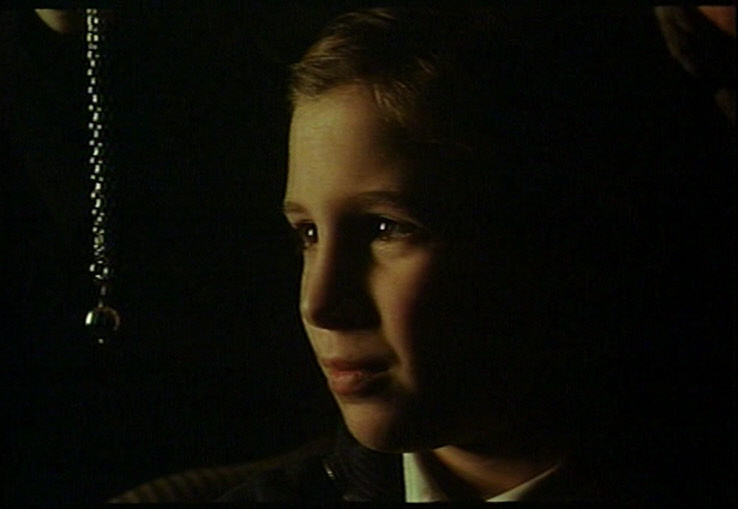
I guess this is probably because the story itself, which is based on the 1982 novel of the same name written by Stephen King under his well-known pseudonym Richard Bachman, is not particularly chilling or refreshing to us at present. When I read King’s novel in 2000, the extreme level of that dystopian reality TV show depicted in the novel felt rather outrageous to me, but that has become far less shocking to me and many others now for many good reasons including the rising vulgarity of numerous reality TV shows out there. After all, we are all pretty much like living in a very big and bad reality TV show especially after that shockingly unbelievable political rise of that orange-faced fascist/racist prick in US who was incidentally the star of a truly cruel and vulgar reality TV show, aren’t we?

Anyway, the adapted screenplay by Wrigth and his co-writer Michael Bacall is mostly faithful to the basic plotline of King’s novel. The hero of the story, an unemployed working-class family man named Ben Richards (Glen Powell), decides to try his luck on reality TV show because his young daughter is very sick and he and his dear wife do not have any money to buy the drug for their ill daughter right now. At first, he simply wants to appear on any kind of reality TV show except “The Running Man”, but, what do you know, he soon finds himself selected as one of the three contestants for the new upcoming season of that infamous reality TV show.

At first, Richards is not so amused by this situation, but then he is persuaded to go along with that selection by Dan Killian (Josh Brolin), the sleazy producer of “The Running Man” who is also one of the top-ranking executives of a very, very, very powerful network company which has dominated over the American society and its citizens for many years as producing “The Running Man” and many other trashy reality TV shows. In the name of more viewership, popularity, and, yes, power, Killian is surely ready to do anything, and he thinks Richards has all the right stuffs for throwing billions of viewers out there into more anger and excitement.

Around the narrative point where Richards are introduced on the stage along with the two other contestants, the movie lays out the rules of their deadly survival game. Exactly 12 hours after they are released right after their introduction time, not only a bunch of company hunters but also the police and the public will pursue after each of them, and they will earn more and more money as they manage to evade and survive day by day, though that is nothing compared to what they will get if they are still alive after 30 days.

As Killian correctly observed, Richards turns out to be quite tough, resourceful, and defiant. Once he gets released, he quickly works on disguising himself with some makeup and a fake identification card. In addition, he also gets some unexpected help from several rebellious persons, who are willing to help him instead of reporting or killing him for getting the bounty promised by Killian and his network company. There are two young brothers who hate the network as much as Richards, and they gladly lead him to an eccentric underground activist who may provide a safe shelter for him.

Needless to say, Richards is reminded again and again of how everything is already fixed for him as well as his two fellow contestants from the very beginning. However, this makes him all the more defiant than before, and we surely get several intense action scenes as he keeps trying to evade the pursuit of those company hunters, who are incidentally led by some menacing masked dude who is also another key figure in “The Running Man”.

While it did a fairly good job of keeping things rolling, the story is also often hampered by a lot of heavy-handed expositions and emphasis. Yes, our hero is surely destined to function as someone to ignite the massive public defiance against the network company, but the movie explains and emphasizes this to us too much and too long. In addition, it understandably makes its finale relatively less bleak compared to the ending of King’s book, but its attempts to lighten up the mood a bit during this part feel rather jarring instead, and that is where the movie comes to lose a considerable portion of its narrative momentum.

Anyway, the main cast members try their best for selling their materials. Glen Powell proves again here in this film that he is an engaging leading man to watch, though he is mostly required to look intense or desperate throughout the film. As the two main villains of the story, Josh Brolin and Colman Domingo are willing to throw themselves into a lot of sleaziness and nastiness, and Domingo chews every moment of his as gleefully as required for our guilty pleasure. In case of several other notable cast members, Michael Cera, Emilia Jones, William H. Macy, Lee Pace, Daniel Ezra, Jayme Lawson, and Katy O’Brian are rather under-utilized on the whole, but Cera impresses us again with another scene-stealing performance of his during this year after his delightful comic acting in Wes Anderon’s “The Phoenician Scheme” (2025).

In conclusion, “The Running Man” is not satisfying enough for recommendation, but I think it shows a bit of improvement compared to the 1987 film of the same name loosely based on King’s novel (The movie makes a little nod to that film via using a bit of the image of the famous leading actor of that film, by the way). Although it does not reach to the cheesy fun of the 1987 film, the movie is not entirely without good elements to enjoy while also showing more skill and competence in comparison, and that can be enough for you if you just want to kill some spare time.

Posted in Movies | Tagged , , , | Leave a comment

Two Seasons, Two Strangers (2025) ☆☆☆(3/4): Journeys and Days

Japanese filmmaker Shô Miyake’s latest film “Two Seasons, Two Strangers” is another modest but engaging work from its talented filmmaker. Consisting of the two different parts, the movie calmly and sensitively follows the journey of its wandering heroine, and its simple but haunting presentation moments will linger on your mind for a while after it is over.

The heroine of the movie is Lee (Shim Eun-kyung), a female South Korean filmmaker living and working in Japan. During the brief opening scene, the movie observes her trying to begin the first scene of a short film to be written by her, and the first half of the film alternates between her writing process and the short film eventually made by her director.

The short film in the movie is set in some remote island, and it is mainly about the accidental relationship between two different young people. Nagisa (Yuumi Kawai) simply comes to the island for summer vacation just like a few other visitors in the island, but she cannot help but feel bored as she merely wanders around here and there in the island. At one point, she drops by a little museum presenting the old history of the island, but she does not seem to be particularly interested in anything inside the museum.

Anyway, as wandering more around the island, Nagisa eventually comes across a lad named Natsuo (Mansaku Takada), who comes to the island because it is his mother’s hometown and looks as bored as Nagisa. Although their first encounter is rather awkward, these two young people eventually come to spend more time with each other, and this makes them a bit less bored than before, even when they and the other visitors are subsequently stuck in the island due to the approaching typhoon.

In the end, the short film in the movie arrives at the dramatic finale at a beach during one rainy day. Natsuo impulsively decides to swim a bit in the sea, and the mood surely becomes intense as the weather becomes gradually stormier. Nevertheless, Natsuo becomes a little more energized than before, while Nagisa watches him from the distance.

And then the movie steps back from the short film in the story. After the little screening of the short film is over, the perfunctory Q&A session follows, and Lee struggles to answer the questions thrown at her and her director. It seems that nobody particularly understands or appreciates much of what she tried to do for the short film, and you may get amused a bit by the superficial commentary from a middle-aged professor.

And then something quite unexpected happens, and the movie soon moves onto its second half, which is beautifully started with the lovely shot of a train moving across the snowy landscapes of some rural area in Japan during one cold winter season. Lee happens to be on the train, and we come to gather that she is searching for any inspiration for her next screenplay to write.

However, things do not go that well for her right from when Lee arrives at some rural town. Unfortunately, all of the hotels and inns in the town do not have any spare room for her, so she has no choice but to go to some remote inn outside the town alone by herself. She eventually locates that inn in question, and its owner, who is a rather gruff bachelor guy named Ben-zō (Shinichi Tsutsumi), is not so delighted by her appearance, though he soon lets her in his empty inn.

Feeling as isolated as she did in the first scene of the film, Lee keeps trying to begin her new screenplay, but her mind becomes more focused on what she observes inside and around her current staying place. While the sense of isolation is more accentuated by the coldly serene atmosphere surrounding the inn, she also gets to know a bit more Ben-zō, who incidentally had a wife and a daughter but then got separated from them after his divorce.

And then Miyake’s screenplay, whose two parts are respectively based on Yoshiharu Tsuge manga short stories “A View of the Seaside” and “Mr. Ben and his Igloo”, adds a bit of humor and suspense. Lee and Ben-zō later decide to try a bit of winter adventure during one very cold evening, and that turns out to be a little riskier than she expected. As they come to commit a little thievery of theirs, the movie throws some small humorous touches such as the quiet stance of a cat which happens to witness them, and you will get some chuckle when Lee and Ben-zō face the consequence of their minor transgression.

Like Miyake’s previous films such as “Small, Slow but Steady” (2022) and “All The Long Nights” (2024), the movie is mainly driven by mood and nuance as rolling its simple and modest story, and cinematographer Yuta Tsukinaga did a splendid job of filling the screen with the two contrasting seasonal atmospheres for the two different parts of the movie, respectively. In case of its small main cast members, Shim Eun-kyung, who has appeared in a number of notable Japanese and South Korean films such as “The Journalist” (2019) and “Sunny” (2021), carries the film well with her diligent low-key acting, and she is also supported well by several other cast members including Yuumi Kawai, Mansaku Takada, Shirō Sano, and Shinichi Tsutsumi.

On the whole, “Two Seasons, Two Strangers”, which received the Golden Leopard award when it was show at the Locarno Film Festival several months ago, is recommendable for its skillful handling of mood, story, and character. I must confess that Miyake’s works are still sort of an acquired taste for me, but it is also undeniable that he is an interesting filmmaker to watch, and I will keep following his advancing filmmaking career as before.

Posted in Movies | Tagged , , | Leave a comment

The Long Walk (2025) ☆☆☆(3/4): The Last Man Walking

“The Long Walk” is a modest but effective dystopian survival thriller driven by one simple but compelling story premise. Although we can clearly see where it is heading from the very beginning, the movie keeps things rolling before eventually arriving at its expected finale, and it is also supported well by a bunch of good performers to notice.

The movie, which is based on the 1979 novel of the same name by Stephen King (It was originally published under his pseudonym Richard Bachman, by the way), mainly revolves around a lad named Raymond “Ray” Garraty (Cooper Hoffman), and the early part of the story quickly establishes his dystopian world, which an alternative version of the American society during the late 20th century. After some big war, the American society in the story has been ruled by a military dictatorship mainly represented by an authoritarian figure called “the Major” (Mark Hamill, who feels as hammy as demanded), who supervises an annual national competition event called “the Long Walk”. Every year, 50 young men, who are respectively selected from the 50 states of the country, participate in this competition, and the rule of this competition is pretty simple: walk in the constant pace as long as possible until you become the last man walking.

While he could quit right before the beginning of the competition, Garraty is already quite determined due to a personal goal to be revealed later in the story. After arriving at the starting spot where many other young men are already waiting for the beginning of the Long Walk, he comes to befriend some of them including Peter “Pete” McVries (David Jonsson), and the mood seems casual among these young lads even though they all know well that they will end up competing with each other in one way or another.

And things gradually gets intense for them as the competition is started right after a big speech delivered by the Major. For whoever will eventually become the winner, there will be a lot of money in addition to one wish to be granted, and many participants are quite eager to win the prize despite the amounting challenge upon them. All they have to do is continuing to walk at the speed of three miles (4.8 km) per hour, but, of course, that becomes harder and harder as they keep walking for more than 24 hours without any rest at all.

The soldiers under the command of the Major provide some water at times as accompanying and monitoring the participants of the Long Walk, but their main purpose is eliminating anyone violating the rule of the competition. If anyone stops or becomes slower than three miles per hour, there will be a warning. Although this can be nullified if he continues to walk during next three hours, he will be instantly eliminated once he gets three warnings in row.

Needless to say, many of the participants get eliminated one by one along the story for various reasons such as a strained ankle. As their number is dwindling step by step, the remaining lads become more desperate for survival, but their competition seems endless as before, and they inevitably find themselves on the verge of facing each own breaking point.

Steadily maintaining its pacing along with its main characters, the adapted screenplay by JT Mollner occasionally allows some character development to engage us more. As they show more of themselves to each other, Garraty and McVries come to bond with each other more, despite still knowing well that only one person will survive and then win in the end. Besides them, we also get to know some of the other participants, and their broad but colorful personalities bring a bit of humor and pathos to the story.

 This is not alien territory at all for director/co-producer Francis Lawrence, who previously made several movies in the Hunger Games series including “The Hunger Games: The Ballad of Songbirds & Snakes” (2023). Although the movie is far more modest and simpler compared to those Hunger Games movies, Lawrence did a competent job of making the story and characters look and feel convincing on the screen. While the story itself is more or less than a social allegory, it is filled with enough mood and tension at least, and that is the main reason why we come to care more about what may happen at the end of the story.

It certainly helps that the main cast members, who will receive the Robert Altman Award along with Lawrence at the Film Independent Spirit Awards early in the next year (The movie actually costs no more than 20 million dollars, folks), carry the film well with their solid ensemble performance. While Cooper Hoffman, who is the son of late Philip Seymour Hoffman and has already shown his considerable potential in Paul Thomas Anderson’s “Licorice Pizza” (2021), holds the center as required, David Jonsson, who has been a new exciting talent to watch after “Rye Lane” (2023) and “Alien: Romulus” (2024), ably complements Hoffman, and several other main cast members including Garrett Wareing, Tut Nyuot, Charlie Plummer, Ben Wang, Jordan Gonzalez, and Joshua Odjick are well-cast in their respective supporting parts.

On the whole, “The Long Walk” walks fairly well enough for holding our attention to the end, and I appreciate how it vividly presents some of the suspense and drama I experienced while reading King’s novel around 25 years ago. Yes, this is not exactly fresh in these days due to many of other similar movies ranging from those Hunger Games movies and Japanese film “Battle Royale” (2000), but it did its job well, so I will not grumble for now.

Posted in Movies | Tagged , , , | Leave a comment

The Monkey (2025) ☆☆☆(3/4): This is one nasty monkey

“The Monkey”, one of the two films from Osgood Perkins during this year, is a creepy film about one nasty toy monkey and several people who unfortunately happens to get involved with it. As striking us hard with several moments as shocking and horrific as those death scenes in Final Destination flicks, the movie also has some naughty fun with the growing sense of dread around its main characters, and the result is another interesting horror film from Perkins.

Based on the short story of the same name by Stephen King, the movie mainly revolves around the troubled relationship between Hal and Bill Shelburn, two twin brothers played by Christian Convery at first and then Theo James later. On one day in 1999, Hal and Bill rummage those old stuffs left by their father who suddenly left them and their mother for no apparent reason some time ago, and then they find a box containing a toy monkey. It seems all they have to do is winding its key a bit and then seeing what it will do next, but, of course, this subsequently leads to a terrible incident which will make you think twice about going to a certain type of restaurant.

Once he comes to see what this malevolent toy monkey can do as beating its drum, Hal finds himself considering winding its key again. Having frequently been bullied by his older brother, he often wishes to kill Bill, so he eventually makes the toy monkey beating its drum. However, he belatedly comes to realize that it chooses its victim randomly rather than following its owner’s wish, and he and his older brother come to have another traumatic incident.

Needless to say, Hal tries to get rid of the toy monkey, but, not so surprisingly, he only comes to see that it will never go away no matter how much he tries. In the end, after confiding to Bill about what it can do, he and Bill decide to throw it away to the bottom of an abandoned well, and it seems that they are finally free from whatever may be caused by the monkey toy.

However, even after more than 20 years later, Hal still finds himself still under his traumatic memories of the toy monkey and all those horrible incidents caused by that. He married, but then he divorced his wife, and he is also not so particularly close to their adolescent son Petey (Colin O’Brien). In fact, Petey is not very willing to spend time with his father although that is recommended by his mother’s current husband, who is broadly played by Elijah Wood. Incidentally, I happened to watch Peter Jackson’s “The Lord of the Rings: The Fellowship of the Ring” (2001) and “The Lord of the Rings: The Two Towers” (2002) at a local movie theater, so Wood’s brief but amusing appearance in “The Monkey” reminds me again of how much he has advanced as a talented actor since that point.

Anyway, as Hal tries to spend some good time with Petey, there comes a sudden call from Bill. It seems that the monkey toy returns and then causes another terrible death, and Bill wants Hal to check whether it really comes back to haunt them again. Needless to say, Hal is reluctant at first, but he eventually agrees to look for the monkey toy, while not telling anything to his son.

Around that narrative point, Perkins’ adapted screenplay goes further as steadily building up the sense of dread on the screen, and we surely get a series of truly gruesome moments of death. I particularly liked the one which will probably make you hesitate to jump into a swimming pool, and I was also amused by a certain grim place filled with several fatal traps – and how one of them leads to an expected payoff moment in the end.

Meanwhile, the movie also shows some surprising amount of seriousness just like Zach Lipovsky and Adam Stein’s “Final Destination Bloodlines” (2025). In both movies, death feels quite unstoppable and inescapable to say the least no matter how much their main characters struggle in one way or another, and “The Monkey” is relatively grimmer as Hal comes to face his longtime dread, trauma, and guilt along the story. While still feeling guilty about what he inadvertently caused, he becomes more traumatized and despaired due to his fateful association with the monkey toy, and we come to care about his plight more even while having some dark laugh from all those deaths happening around him.

The movie becomes a bit too preposterous during its last act, but it still works the effective dual performance by Theo James, who demonstrates his acting skill a lot here in here this film. Besides ably going back and forth between his two contrasting characters, he did a good job of illustrating the pain and trauma shared by them, and he is also flawlessly connected with young performer Christian Convery, who holds his own place well during the early part of the film. In case of several supporting performers in the film, they are mostly limited by their rather thin characters, but Tatiana Maslany and Adam Scott leave some impression during their short appearance, and Colin O’Brien is also solid as Hal’s teenage son.

Like “Longlegs” (2024), “The Monkey” is a more accessible work from Perkins compared to his previous arthouse horror films such as “I Am the Pretty Thing That Lives in the House” (2016) and “Gretel & Hansel” (2020). While it is less subtle in comparison, the movie still provides a fair share of creepiness as you can expect from him, and you may chuckle a bit as appreciating an unexpected moment of acceptance at the end of the story. After all, who can possibly escape death?

Posted in Movies | Tagged , , , | Leave a comment

Souleymane’s Story (2024) ☆☆☆1/2(3.5/4): An immigrant’s story in Paris

French film “Souleymane’s Story” follows the plight of one young immigrant from Guinea. He simply hopes to be allowed to live and work for himself as well as his dear family in Guinea, but his situation becomes quite desperate in one way or another as one important chance seems to slip away from him. Yes, this is another typical immigrant drama on the whole, but the movie is packed with considerable realism and verisimilitude to engage us, and, above all, it is firmly anchored by one of the best movie performances I saw during this year.

After the brief opening scene, the movie quickly establishes how things have been hard and difficult for Souleymane (Abou Sangaré). Some time ago, he left his country for working in France, but his current status is quite unstable to say the least. He has earned his meager living via working as a food delivery guy, and, mainly because he is not legally permitted to live and work there yet, he has to borrow the food delivery account of somebody else, whom he must pay a considerable part of his daily earning in exchange for that. In addition, because he is virtually homeless, he always has to depend on a local homeless shelter at every night, so he must finish his delivery job before being too late for the bus to take him and many others to that facility.

Meanwhile, as already shown from the opening scene, Souleymane has been trying to apply for political asylum, though he was just a mere mechanic in his home country. Needless to say, he must lie a lot about why he came to leave the country, and there is a little amusing scene where a fellow Guinean guy gives some advice to him and several others while also promising to give some necessary documents for political asylum application. Of course, the guy demands some money in exchange for that, but, alas, Souleymane does not have enough money to pay for those phony documents.

In the end, he has no choice but to work harder for earning more money. Because he is going to have an asylum application interview no less than two days later, Souleymane tries to memorize every detail of his fake history as much as possible, but he is not so sure about whether his lie can actually help him settling in Paris, especially when one of his colleagues tells a bit about how he miserably failed in the same attempt.

And he continues to work as usual. We often see him riding his bike here and there in city for one delivery job after another, and this takes my mind to Sean Beaker and Shih-Ching Tsou’s little but memorable movie “Take Out” (2004), which is about a young Chinese immigrant lad working as a delivery guy in New York City. Like the hero of “Take Out”, Souleymane must cope with various difficulties during his working time day by day, and we cannot help but observe how often he is callously disregarded by his clients.

Later in the story, something unexpected happens, and this makes Souleymane’s situation all the more frustrating. As he tries to handle this increasingly despairing circumstance of his, the camera of cinematographer Tristan Galand stays closer to our unfortunate hero for generating more verisimilitude on the screen, and I was not so surprised to learn later that the camera and the boom operator actually had to ride a bike for shooting all those bike-riding scenes in the film.

And the screenplay by director Boris Lojkine and his co-writer Delphine Agut gradually reveals some personal details on its hero. We come to learn later that he came to Paris mainly for earning enough money for taking care of his mentally ill mother more, and there is a sad moment when he talks with his mother in Guinea on the phone for a while. It is clear that her medical condition is getting worse, but he cannot possibly do anything about that. Furthermore, his girlfriend, who is also in Guinea, notifies to him that she is seriously considering marrying someone else now, and this naturally makes him wonder more about whether he made the right decision when he left his country.

In the end, everything expectedly culminates to the asylum application interview between Souleymane and a female government official who is going to listen to his story and will decide whether he can stay in France as a political refugee. At first, things seem to be going fairly well for him, but we come to sense that the government official have seen a lot of guys not so different from him, and the mood accordingly becomes more tense later.

Before the production of his film, Lojkine, who received the Jury Prize when the movie was shown at the Un Certain Regard section of Cannes Film Festival early in last year, went through an extensive search for his leading actor, and he did find the right one from Abou Sangaré, a non-professional Guinean actor who had no previous acting experience before this film. While there is indeed a considerable overlap between his real life and his character, Sangaré, who received the Best Performance award at the Cannes Film festival and then recently received the Breakthrough Performance award at the Gotham Independent Film Awards, is totally compelling is his strong natural performance, and his excellent acting brings enough sincerity and honesty to prevent the movie from becoming another usual immigrant drama film.

In conclusion, “Souleymane’s Story” is another powerful immigrant drama film to notice thanks to Lojkine’s skillful direction and Sangaré’s unforgettable performance at its center. It may not surprise you that much in terms of its main subject, but it will engage you much more than expected, and you will never forget its hero after it is over.

Posted in Movies | Tagged , | 1 Comment

Familiar Touch (2024) ☆☆☆1/2(3.5/4): As her mind declines

“Familial Touch” is a gracefully elegiac drama film which follows the gradual mental decline of its aging heroine. She knows well her mind is fading away, but then there inevitably comes the point where she is often not totally aware of what is happening to her increasingly senile mind, and the movie quietly and sensitively illustrates her growing confusion and frustration along the story.

At the beginning, Ruth (Kathleeen Chalfant) seems fine and well on the surface. She has lived alone by herself in a cozy little house belonging to her, whose warm and sunny interior suggests a lot about her fairy good later years. We see her preparing a lunch for her and her son who is soon going to visit her, and then we observe how sincerely her son cares about her welfare, as they subsequently have a lunch and some conversation together.

However, from the quiet concern shown from her son’s face, we gradually come to sense that Ruth is not fine at all. After their lunch, he suggests a drive for them, but he does not tell anything about where he is going to take her. After Ruth is in her car, he puts a trunk full of her belongings, and we are not so surprised when they come to a facility for old people. Of course, Ruth is not so pleased about this seemingly sudden change, but she does need special care and support, considering that, as her son reminds her, she actually decided to move to this facility some time ago.

What follows next is how Ruth tries to adjust herself to this new environment of hers. She reluctantly accepts this considerable change, and the staff members of the facility are certainly ready to help her in addition to monitoring her mental condition day by day. As time goes by, she comes to befriend some of those residents in the facility, and she is also active in keeping her mind fine and stable as before.

However, despite her efforts and the constant support from the facility staff members, her senile mind only comes to show more symptoms of dementia. For example, she seems perfectly all right while examined by her doctor at one point in the story, but then her mind suddenly goes somewhere, and then she becomes quite confused about what she is doing right now – and whom she has been speaking with. During one morning, she suddenly comes into the kitchen just because she thinks she is a cook as she was many years ago, and then she quickly makes a little nice treat for everyone in the facility.

Now you will be reminded of many other similar films ranging from “Iris” (2001) to “Away from Her” (2006), but the movie sticks to its calm and somber mood even as things gets worse for Ruth. As her senile brain keeps getting wrong in one way or another, she certainly feels more confused and frustrated, and there is a brief but undeniably sad moment when she suddenly remembers her son’s name – and how she will forget that sooner or later.

Without showing or telling a lot about its heroine’s life, the screenplay by director/writer/co-producer Sarah Friedland, who deservedly received the Venice Horizons Award for Best Director when it was shown at the Venice International Film Festival in last year (She also received the Someone to Watch award at the Film Independent Spirit Award early in this year, by the way), carefully adds one small human detail after another. As her brain experiences more error and confusion, her mind often goes back to her past, and there is a surprisingly tranquil scene where she gets relaxed a bit and then is swept by some old memories from the past. At one point later in the film, her son rummages her old stuffs a bit before selling her house, and the little glimpse into her life makes her mental decline all the more harrowing.

And the movie also pays some attention to the facility members, who really care about Ruth and many other old people’s welfare in the facility. From their calm and patient handling of Ruth, we come to gather that they have already seen many other cases like hers. When Ruth inadvertently causes a big trouble later in the story, they remain practical as before, and it is clear to both Ruth and us that she really has to depend on them more than before.

Everything depends a lot on the excellent lead performance by Kathleen Chalfant, who is simply superlative as subtly and exquisitely embodying her character’s gradual mental deterioration along the story. While never asking for pity or sympathy, Chalfant fills her role with a lot of inner life to observe and reflect on, and that is why the eventual finale feels quite sad and poignant. Around Chalfant, Carolyn Michelle Smith, Andy McQueen, and H. Jon Benjamin are also solid in their respective supporting roles, and Friedland also brings a considerable amount of authentic realism as shooting her movie at a Continuing Care Retirement Community in Pasadena, California and having some of its residents and staff members serve as the extras for the film.

On the whole, “Familiar Touch” may look modest on the surface, but its many recognizable human moments will linger on your mind for a while after it is over. Yes, its heroine’s mind will irreversibly fade away more from herself as well as others who care about her, but, as reflected by the very title of the film and its penultimate moment, her body may still remember a bit even at that point. In my inconsequential opinion, the movie is one of the little highlights during this year, and I assure you that you will reflect more on life and aging after watching this small but precious gem.

Posted in Movies | Tagged | 1 Comment

Universal Language (2024) ☆☆☆1/2(3.5/4): A singular cinematic mix

Matthew Rankin’s “Universal Language”, which was selected as the Canadian submission to Best International Film Oscar in last year, is a singular cinematic mix to behold. While clearly influenced by the works of Guy Maddin, Wes Anderson, and Roy Andersson, the movie also distinguishes itself a lot with its own unconventional cultural concoction, and it also shows a bit of surprising human poignancy behind its many moments of deadpan comedy.

The movie, mainly set in Winnipeg of Canada, begins with the dryly absurd opening scene which clearly evoke the deliberately and humorously drab texture of many funny moments in Anderson’s several films such as “You the Living” (2007). On another very snowy day, a teacher comes to his classroom, but he somehow becomes quite annoyed by his perky students, and he comes to say some really bitter things to them, though none of them seems so dispirited by that.

Meanwhile, we notice more of the odd background setting of the film. The city and its citizens look like belonging to an alternative world where Iranian is a common language instead of English, though they still have to learn French for working in Quebec. Although many buildings in the city surely look Western, we observe a number of Iranian elements here and there on the screen, and this alternatively baffles and amuses us.

Anyway, we are later introduced to two young sisters Negin (Rojina Esmaeili) and Nazgol (Saba Vahedyousefi), whose innocent story may remind you a bit of Iranian children’s films such as Abbas Kiarostami’s “Where Is the Friend’s House?” (1987), Because one of her classmates lost his glasses due to a rather unbelievable incident which occurred when he was going to their school, Negin wants to help him as much as possible. At first, she and Nazgol simply try to find his glasses, and then they come across money frozen in ice, and they subsequently look for any possible way for retrieving it and then using it for buying the new glasses for Negin’s unfortunate friend.

Meanwhile, we get to know a bit about Matthew, who is a plain ordinary guy returning from Quebec after his many years of absence and is incidentally played by Rankin himself. He just wants to see his aging mother again, but, alas, he is only notified that his mother died some years ago, and his old family house is now resided by some other family. When he later goes to that house, the current owner of the house treats him with sincere hospitality, and there is a little sad moment when the camera lingers on something from his childhood past for a while.

Because somebody answered when Matthew tried to contact his mother on the phone, he cannot help but become curious about who this person is, and we are soon introduced to this person in question. Massoud (Pirouz Nemati) has worked as a tourist guide, and there are several absurdly amusing scenes where he guides a small group of tourists around a number of rather banal spots which are supposed to be, uh, historically important.

While several different narrative lines in the story eventually get intertwined with each other, the movie takes time for getting us more absorbed in its strange but somehow very realistic background. Rankin and his cinematographer Isabelle Stachtchenko frequently fill the screen with palpable wintry atmosphere, and that makes a good contrast with several unexpectedly colorful comic moments as stylized as the works of Wes Anderson. I particularly enjoyed the part involved with a local turkey shop and its eccentric owner, and the movie adds extra surreal touch via a bunch of living turkeys frequently roaming across snowy streets.

These and many other offbeat moments eventually function as the ground for what can be regarded as the emotional highpoint of the movie. When Matthew finally meets Massoud later in the story, Massoud tells Matthew more about the last years of Matthew’s mother, and Matthew comes to feel more guilt and sadness, especially when he goes inside a certain room and then experiences something quite surreal. I will not go into detail here, but the movie stays straight along with its performers, and that is the main reason why this strange moment works with genuine dramatic impact.

Even at that point, the movie does not lose any of its quirky sense of humor, and this often reminds me of Guy Maddin’s extraordinary film “My Winnipeg” (2007). Although these two films are quite different from each other in many aspects, they also share a lot of common things between them besides their main background, and that is quite evident whenever Rankin cheerfully goes back and forth between deadpan humor and surreal absurdity just like Maddin did in “My Winnipeg”.

Overall, “Universal Language” shines with a lot of offbeat style and humor to be savored, and I am willing to revisit its odd but interesting world just for cherishing more of its distinctive mood and details. Although I have not seen his first feature film “The Twentieth Century” (2019) yet, I can tell you instead that Rankin shows considerable talent in his very next feature film, and I will certainly look forward to watching what may come next from this promising filmmaker. In short, this is one of the best films I saw during this year, and I wholeheartedly recommend you to check it out as soon as possible.

Posted in Movies | Tagged | 1 Comment

Nouvelle Vague (2025) ☆☆☆(3/4): A lightweight reenactment of the Nouvelle Vague era

Richard Linklater’s “Nouvelle Vague”, which was released on Netflix in US several weeks ago, is a lightweight reenactment of how Jean-Luc Godard made one of the greatest films in the cinema history during a few weeks of 1959. While it does not delve that deep into him and many other notable figures around him, the movie is a vivacious pastiche to amuse anyone familiar with the Nouvelle Vague era of French cinema, and you may gladly overlook its rather superficial aspects.

The movie throws right into that exciting period surrounding Godard, played by Guillaume Marbeck, and his several fellow members of Cahiers du Cinéma, a legendary film magazine which was the starting point for not only their film criticism and filmmaking career but also many others in the group. Besides Godard, we are introduced to François Truffaut (Adrien Rouyard), Claude Chabrol (Antoine Besson), and Suzanne Schiffman (Jodie Ruth-Forest), and they certainly have a lot of things to talk about the latest film they watched together.

However, Godard feels like getting late as observing how many of his colleagues in Cahiers du Cinéma already and successfully moved onto filmmaking while he just made several minor short films. For example, Truffaut made a big critical/commercial success with his great film “400 Blows” (1959), and Chabrol and many others including Éric Rohmer (Côme Thieulin), Jacques Rivette (Jonas Marmy), and Agnès Varda (Roxane Rivière) are also beginning each own filmmaking career with more accomplishments compared to Godard.

Needless to say, Godard becomes more determined to prove himself (and his genius) to everyone, and there eventually comes an opportunity for making his first feature film. When producer Georges de Beauregard (Bruno Dreyfürst) approaches to him for discussing on the possibility of the production of a film based on the story written by Godard and Truffaut, Godard is not so willing at first, but then he accepts the producer’s offer simply because he sees the possibility of doing something quite new and different.

After that, he and several others around him prepare for the shooting of, yes, “Breathless” (1960). Although he does not say anything about what and how it will be about except its basic character setting, many crew members including cinematographer Raoul Coutard (Matthieu Penchinat) agree to work with him mainly because they regard his little movie project as a challenging but interesting task. In case of Coutard, he surely knows a lot about improvisation and spontaneity as a guy who learned cinematography during his military years, and it goes without saying that he was the ideal guy for Godard’s own free-flowing filmmaking approach.

In case of the two lead performers of “Breathless”, they are as baffled as many others even before the shooting is started. Because he had some fun while working with Godard for his short film several years ago, Jean-Paul Belmondo (Aubry Dullin) has no problem with working with him again, and he generously tells his co-star Jean Seberg (Zoey Deutch) a bit about what it will be like working for Godard. Although she wants something different to help her burgeoning movie acting career, Seberg soon finds herself getting much more than she wished for, but she also tries to be game as much as possible, and her natural charm and presence make Godard more convinced that he did choose the right actress for his film, though it costs a lot for getting her cast for the movie.

The screenplay by Holly Gent and Vincent Palmo, which is adapted by Michèle Halberstadt Laetitia Masson, has a lot of fun with how Godard tries one thing after another without much clear direction for many others around him – or himself. During the next 20 days, he frequently baffles and confounds his cast and crew as reaching for something supposedly special, and, not so surprisingly, he eventually exasperates his producer a lot, who is not so amused by Godard’s casual handling of the production. Now my mind goes back to what Woody Allen told my late mentor/friend Roger Ebert on how he felt during the shooting of Godard’s later film “King Lear” (1987): “He was very elusive about the subject of the film. First he said it was going to be about a Lear jet that crashes on an island. Then he said he wanted to interview everyone who had done “King Lear”, from Kurosawa to the Royal Shakespeare. Then he said I could say whatever I wanted to say. He plays the French intellectual very well, with the 5 o’clock shadow and a certain vagueness. Meanwhile, when I got there for the shoot, he was wearing pajamas–tops and bottoms–and a bathrobe and slippers, and smoking a big cigar. I had the uncanny feeling that I was being directed by Rufus T. Firefly.”

Nevertheless, something does begin to happen as days go by. Under Godard’s unorthodox direction coupled with some guerrilla filmmaking tactics, the cast and crew members come to enjoy themselves more as generating more chemistry generated among them, and the movie did a lovely job of recreating their joy of filmmaking across the screen. Shot on the grainy black and white film in the ratio of 1.33:1 by cinematographer David Chambille, the movie is filled with authentic period mood and details, and these elements instantly evoke the texture and spirit of “Breathless” and many other classic works of the Nouvelle Vague era. 

It surely helps that the movie has good performers effortlessly embodying their respective roles. Although we never get to know much about Godard as a human being even in the end, Marbeck has a dry fun with Godard’s lofty and distant attitude, and the movie reminds me again that Godard was a prick even when he was young and really talented. Zoey Deutch, Aubry Dullin, and Bruno Dreyfürst have some small but juicy moments, and Deutch brings extra charm to the film just like Seberg did to “Breathless”.  

In conclusion, “Nouvelle Vague” will not show you anything particularly new especially if you admire “Breathless” a lot, but it is still entertaining mainly for its good mood and style. Although I prefer his other recent film “Blue Moon” (2025) more, “Nouvelle Vague” is a fairly good love letter to filmmaking, and Linklater certainly had a productive time as giving us these two well-made works during this year.

Posted in Movies | Tagged , , , | 1 Comment

If I Had Legs I’d Kick You (2025) ☆☆☆1/2(3.5/4): The raw and intense portrayal of a troubled motherhood

Mary Bronstein’s second feature film “If I Had Legs I’d Kick You” is probably one of the most intensely uncomfortable movie experiences I have ever had during this year. Closely and vividly sticking to the increasingly unstable mindset of one very troubled mother, the movie constantly unnerves us via a series of emotionally tense moments which will definitely make you wince and cringe a lot, but it firmly holds our attention to the end mainly thanks to the unforgettable lead performance at the center of the story.

During the opening part, the movie succinctly and effectively establishes how things have been quite stressful for its heroine. After her husband went somewhere due to his busy work, Linda (Rose Byrne) has to take care of their little young daughter alone by herself during next several weeks, but she is already on the verge of having a nervous breakdown for several understandable reasons. Her daughter, whose face is incidentally seldom shown throughout the film, needs constant care due to her eating disorder and the following medical treatment on that, and Linda surely needs some mental support as often getting exhausted from taking care of her daughter everyday, but she is frequently too busy for that. As a psychiatrist, she has to deal with her apparently problematic patients day by day, and she does not get much help from her own psychiatrist, who is incidentally one of the colleagues at her workplace.

On the top of all these and other things, another thing happens to cause more stress and confusion in Linda’s daily life. Not long after she returns to her family house along with her daughter, she belatedly discovers a very serious problem on the ceiling of her bedroom. As a result, she has no choice but to move to a nearby motel along with her daughter, and then she becomes quite frustrated with the rather slow response from the landlord of the house, who is going to be absent for a while due to a very important family matter.

And we see more of how things keep getting stressful for her in one way or another. While she often has to tolerate and handle her daughter’s occasionally unruly behaviors, Linda keeps getting demanded to attend a therapy session for mothers under similar mental pressure, but she is reluctant despite being constantly cornered by many tasks thrown upon her everyday. She usually cannot help but feel guilty about not being a model mother who can handle everything, but she also does not want to face her growing despair and frustration, while only blaming herself again and again.

Not so surprisingly, Linda gradually depends more and more on drinking, and, of course, that does not help her much. At least, she later finds some solace from a kind and sympathetic black lad staying at the same motel, but then there comes another serious trouble when she takes him to her family house just for showing that remaining big problem in the house.

This is just one of many bad choices made by Linda along the story, and you will surely shake your head more than once during your viewing just like I did a few hours ago. Nevertheless, we keep observing her painfully human responses and behaviors thanks to the vivid mood and details swirling around her downward spiral. Right from the beginning, the movie makes us accept and then immerse ourselves more into its heroine’s increasingly unhinged viewpoint, so we are not so surprised by several sudden delusional moments later in the story.

The overall result is definitely quite grueling for us to watch at times, but Bronstein’s screenplay never loses its empathy on Linda’s worsening mental implosion. Sure, she can be quite shrill and abrasive from time to time, but we come to understand more of what makes her tick so often, and there is a somber but undeniably harrowing scene where she eventually confides to her psychiatrist a bit of what has been tormenting her. She comes to grasp more of her impending mental issues, but she also really needs to be more honest and active for getting some real help instead of hiding behind her usual self-blame, and her adamant refusal and denial consequently lead to more problems to come.

This surely makes Linda look all the more unpleasant and unlikable, but we still cannot take our eyes away from her, because Rose Byrne, who deservedly received the Silver Bear for Best Leading Performance when the movie was premiered at the Berlin International Film Festival early in this year, is fully committed in her uncompromising performance. Never making any cheap excuse on her achingly flawed human character, Byrne goes all the way for raw emotional intensity from the beginning to the end, and she also did a commendable job of bringing palpable human qualities to the story and her character. Thanks to her compelling efforts, the movie thankfully avoids becoming a mere misery porn, and she certainly deserve all the acclaims and awards she has received during the Oscar season of this year (She has already received the Best Actress awards from the New York Film Critics Circle and the National Board of Review, respectively).

While it can be said that Byrne’s lead performance is the whole show of the film, I must point out that several notable supporting performers have each small moment to shine. Danielle Macdonald, Christian Slater, and ASAP Rocky are well-cast in their respective supporting parts, and the special mention goes to Conan O’Brien, who, as Linda’s seemingly uncaring psychiatrist, demonstrates well here that he can ably dial down his comic persona for drama acting just like many other good comedians such as, say, Robin Williams.

In conclusion, “If I Had Legs I’d Kick You” is surely not something you can casually watch on Sunday afternoon, but it is worthwhile to watch for its considerable emotional intensity and the strong lead performance behind it. Although I have not watched her first feature film “Yeast” (2008) yet, “If I Had Legs I’d Kick You” shows me that Bronstein is another talented female filmmaker to watch, and it will be interesting to see what she will give us next after this powerful psychological drama film.

Posted in Movies | Tagged , , | 1 Comment