The Lost Bus (2025) ☆☆☆(3/4): It works whenever it is on fire

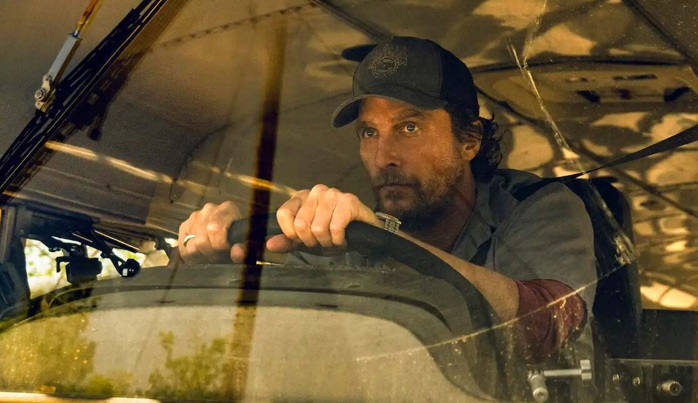
Paul Greengrass’ latest film “The Lost Bus”, which was released on Apple TV+ on last Friday, works whenever it is on fire. Based on one real-life story associated with the 2018 Camp Fire in California, the movie is as clichéd as you can expect from your average disaster survival drama film, but many scenes of fire in the film are filled with considerable intensity and verisimilitude, and that is more than enough for compensating for its several weak points.

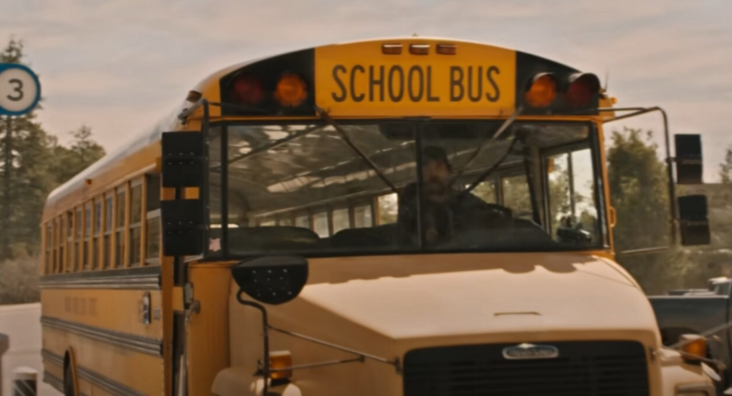
At first, the movie mainly revolves around Kevin McKay (Matthew McConaughey), a school bus driver working in Paradise, California. The early part of the film establishes how messy McKay’s life has been, and things seem to be getting only worse for him on that particular day of November 2018. While he becomes more distant from the only child from his failed marriage, he cannot earn enough money for him to support his child and his ailing mother, and his school bus also needs to be repaired as soon as possible.

Meanwhile, the movie shows how the fire was started and then developed at a spot not far from Paradise early in the morning. Although it is spotted and then reported during its early stage, the fire is quickly spread around the surrounding regions due to the extremely dry weather and the strong wind at that time, and those firemen of California Department of Forestry and Fire Protection (CAL FIRE), led by Ray Martinez (Yul Vazquez), soon begin to realize that they are facing what will be one of the biggest wildfire disasters in the Californian history.
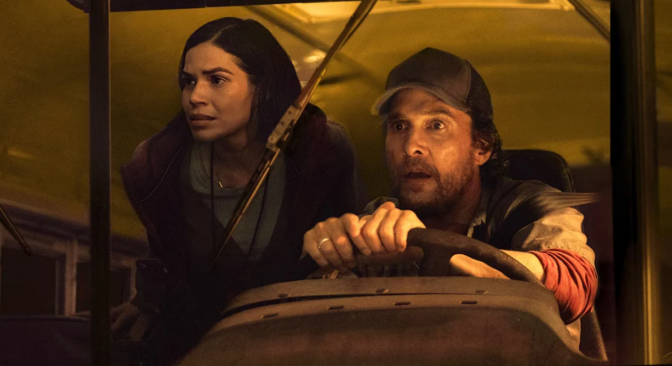
As the fire is being spread toward Paradise, the evacuation is ordered upon the citizens of Paradise, and the whole city is consequently thrown into a lot of chaos and panic. Although he certainly worries about the safety of his family, McKay cannot say no when his dispatcher hurriedly requests him to take a bunch of elementary school students to a safer place right now, and he soon arrives at that elementary school. Under the calm guidance of a teacher named Mary Ludwig (America Ferrera), all the remaining kids in that elementary school quickly get on the bus, and it seems that they are safe at least for now.

However, of course, it does not take much time for both McKay and Ludwig to realize how dangerous the situation is for them and those kids in the bus as well as many others out there. As the fire keeps getting spread over the surrounding regions of the city, the sky becomes quite dark and fiery to say the least, but many of the roads in the city are already saturated with vehicles, while time keeps running out no matter how much McKay tries here and there for getting his job done as soon as possible.

Alternating between McKay and Ludwig’s increasingly desperate situation and the strenuous efforts of the firemen of CAL FIRE against the Camp Fire, the movie, which is based on Lizzie Johnson’s nonfiction book “Paradise: One Town’s Struggle to Survive an American Wildfire”, keeps things rolling even though its road is strewn with one cliché after another. As they stick together more for themselves as well as those school kids in the bus, McKay and Ludwig come to show a bit of themselves to each other, and we naturally get an expected scene where they come to talk about their respective lives when all seems to be lost for them and the school kids at one point later in the story. In case of the scenes involved with Martinez and his people of CAL FIRE, we surely get a series of typical moments as they get frustrated again and again along the story, and the movie does not pull much punch on a certain big local energy company which could have responded more quickly to the disaster from the very beginning. 
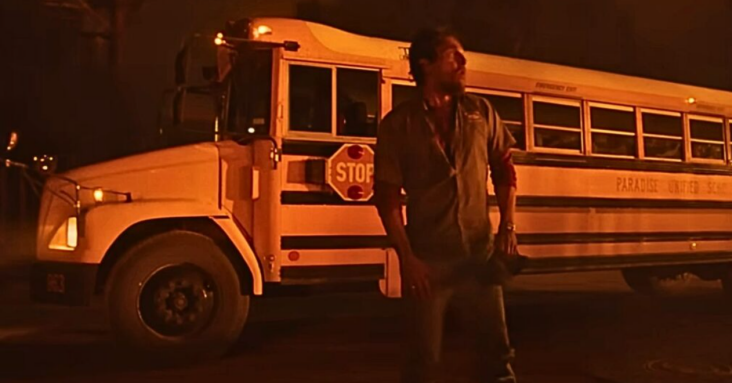
In the end, everything eventually culminates to the point where McKay and everyone else in the bus must face the grave and immense possibility of danger and death, and Greengrass, who wrote the screenplay with co-producer Brad Ingelsby, and his crew members including cinematographer Pål Ulvik Rokseth did a heck of job of putting us right into the middle of the peril experienced by McKay and the others in the bus. Although I am sure that those fire scenes in the film depend on a considerable amount of CGI, they look quite vivid and scary on the screen, and it is a shame that I and many others can only see the movie via the streaming service at present (The movie was briefly released in American theaters in last month, by the way).

In case of the two notable performers of the film, they ably handle the clichéd aspects of their characters as diligently carrying the movie to the end. Matthew McConaughey, who has curiously been less active during last several years, demonstrates that he has not lost any of his talent and charisma yet, and America Ferrera has several moments to shine as steadily holding her spot beside McConaughey. Yul Vazquez and Ashlie Atkinson are effective in their small but crucial supporting parts, and those child performers in the film are also convincing in their natural acting.  

In conclusion, “The Lost Bus” may burn a bit too much of clichés and conventions for starting its engine, but it ably drives along its fiery plot course under the skillful direction of Greengrass, who previously directed several very intense drama films such as “United 93” (2006) and “Captain Phillips” (2013). I still think it could be improved more with less clichés, but it engaged me enough during viewing, so I will not complain for now.
Posted in Movies | Tagged , , , , , , | 1 Comment

Steve (2025) ☆☆1/2(2.5/4): One particularly difficult day for teachers and boys

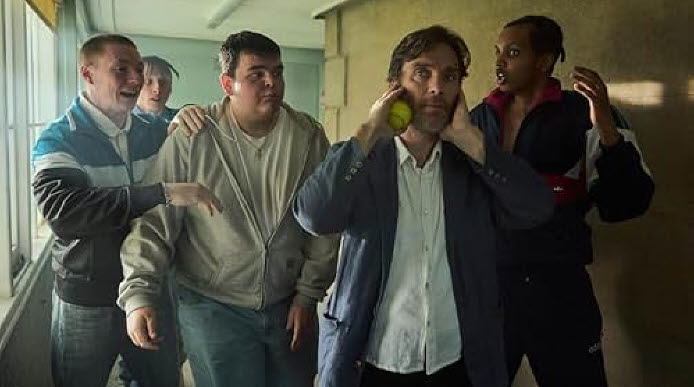
 Netflix film “Steve”, which was released on the streaming service a few days ago after having a limited theatrical release in UK and US a few weeks ago, follows one particularly difficult day for the teachers and boys at one shabby boarding school. While the teachers try really hard to get things under control, the boys keep struggling with each own emotional issues in one way or another, and both of these groups are alternatively exasperated and frustrated all the time without making much connection between them.

The main background of the story, which is mainly set on one day of 1996, is one seriously under-funded boarding school for boys with societal and behavioral difficulties, and the movie opens with its deeply caring headteacher Steve (Cillian Murphy) beginning another busy day at the school. Right before arriving in the school, he spots one of the boys smoking a piece of marijuana, but he does not scold or punish this boy at all mainly because he sincerely understands how problematic this boy’s life has been.

Incidentally, it happens to be the day when the school is visited by a TV reporter and her crew, so Steve and his staff members are quite nervous to say the least. While they are willing to present themselves and their school and students as honestly as possible, they also care a lot about the public image of the school because, after all, the school has been supported by some private foundation as well as a bit of government funding. 

However, as this TV reporter and her crew do their job here and there inside the school, things do not go as well as Steve and his staff members hoped at first. Besides those unruly behaviors of his deeply troubled students, Steve and many of his staff members turn to have each own issues behind their weary appearances, and they cannot help but tell a lot about that when they are respectively interviewed in front of the camera.

And then things get only worse and worse for them. When Steve and a few staff members later have a meeting with the two people associated with the aforementioned private foundation, they are notified that the school will be closed after no less than six months, and this surely exasperates them a lot even though there is really nothing they can do about that. In addition, their students continue to clash with each other as usual just because they cannot help but annoy each other, and this certainly drains Steve and his staff more and more as the day goes by. 

Nevertheless, Steve and his staff members keep trying their best even though the time is running out for them as well as the students. Steve especially cares a lot about the aforementioned boy, and we get to know more about his seriously troubled status, but there is not much progress for this boy even after another session of his with a patient counselor. 

At least, the boy is not stupid at all, and we get a rather amusing moment when the school is later visited by a prominent politician who simply visits there for improving his public image a bit. When he makes some pretentious speech in front of several staff members and students as well as the camera of the TV crew, it does not take much time for everyone else to see through his bullsh*t, and you may chuckle a bit when the boy gives a very honest and straightforward respond to the politician’s speech.

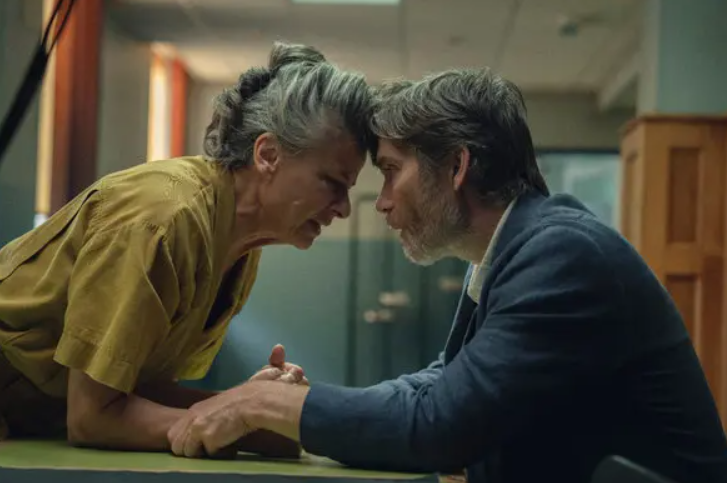
After building up a considerable amount of realism on the screen during its first half, the movie unfortunately begins to falter as getting more melodramatic along with its several main characters during the second half. While his school is cornered much more than before, Steve cannot help but become more unnerved and rattled than before, and Cillian Murphy, who also participated in the production of the film as one of its co-producers, did a splendid job of conveying to us his character’s accumulating weariness and frustration. As Steve struggles more and more along the story, we come to see more of a decent man quite exhausted as always trying to do the right things for his boys, and you may be relieved to see later in the story that he has someone to lean one in his private life at least. 

However, the screenplay by Max Porter, which is based on his 2023 novella “Shy”, does not develop enough Steve and several other main characters in the story. Although director Tim Mielants, who previously collaborated with Murphy in “Small Things Like These” (2024), and cinematographer Robrecht Heyvaert did a commendable job of establishing the vividly realistic atmosphere around the main characters in the film on the screen, Porter’s screenplay often stumbles in fleshing them out more along the story, and that is the main reason why several main cast members besides Murphy feel rather under-utilized in comparison. For instance, Tracey Ullman and Emily Watson are simply required to fill their respective spots around Murphy, while Jay Lycurgo manages to bring some human nuance to his rather thankless supporting role.

On the whole, “Steve” is two or three steps from what Mielants and Murphy powerfully achieved in “Small Things Like These”, an overlooked gem I wholeheartedly recommend you to check out as soon as possible. Although it did not engage me enough during my viewing, the movie has some good elements to admire at least, so I let you decide whether you will check it out or not.

Posted in Movies | Tagged , , | Leave a comment

The Godfather (1972) ☆☆☆☆(4/4): A masterpiece you can’t possibly refuse

Francis Ford Coppola’s 1972 film “The Godfather”, which happened to be re-released in selected South Korean theaters several weeks ago, is a masterpiece you cannot possibly refuse. As compellingly illustrating the transfer of a criminal power from one generation to the other generation, the movie immerses us into the world of various criminal figures, and it somehow makes us sympathize with some of these dangerous figures even we are well aware of what they have done for their “business”.

The opening part of the film, which is set on one day of 1945, is a masterful case of how to introduce and then establish numerous characters within a short time. As many of his guests are enjoying the wedding party of his daughter outside during one sunny afternoon, Vito Corleone (Marlon Brando), the aging boss and patriarch of the Corleone family in New York City, is meeting some of his guests in the dark private room of his big house, and the first scene shows him quietly listening to the request to a father who wants the revenge for his unfortunate daughter. While sharply pointing out how this man has distanced himself from his family, Vito benevolently accepts his request as having this man accept his “friendship”, and the movie pulls out a bit of surprise when Vito requests something very important to this man later in the story.  

Meanwhile, many different characters are introduced to us one by one at the party outside, but we are not so confused at all mainly because they are broad but colorful archetypes played by various performers with distinctive presence. Just look at Salvatore Tessio (Abe Vigoda), Peter Clemenza (Richard Castellano), and Luca Brasi (Lenny Montana), three key figures in the Corleone family. The movie does not show or tell a lot about who they are, but their appearances instantly draw our attention right from the start, and that certainly helps as the plot subsequently thickens with more characters and incidents to come along the way.

And we are also introduced to Vito’s three sons: Sonny (James Caan), Fredo (John Cazale), and Michael (Al Pacino). While Sonny is your average hot-tempered gangster who is usually held in check by Vito and Vito’s adopted son/consigliere Tom Hagen (Robert Duvall), Fredo does not have much right stuff for their family business, and Michael, who is incidentally their father’s favorite, prefers to stay out of their family business as much as possible, though he comes to the weeding party with his girlfriend Kay (Diane Keaton) as required.   

 Ironically, Michael only ends up getting involved with the family business much more than he probably ever imagined, because, after all, he also follows the one important code among his family members – the family comes first above all else. When his father as well the family are seriously threatened, he actively comes forward for providing the solution, and that fatefully leads to the beginning of his descent into crime.

 While also juggling many other crucial plot elements, the screenplay by Coppola and his co-writer Mario Puzo, which is based on the novel of the same name by Puzo, takes time for us to observe how Michael eventually succeeds his father as Vito is ready to walk away from his powerful position. When everything is set for Michael to start a series of events to catapult him onto the top of his criminal world, the movie deftly delivers a climatic sequence to remember, and it is still electrifying to observe how the movie swiftly and smoothly resolves everything in the story before its haunting last shot comes.   

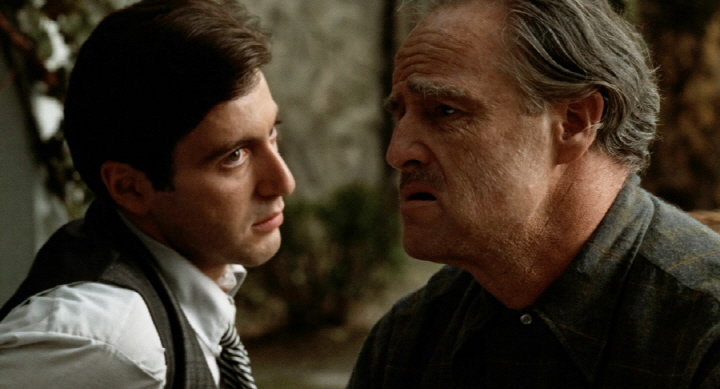
Furthermore, the movie also works as a rich character drama as focusing more on the relationship between Vito and Michael. When they have a private conversation at one point around the last act, Vito shows a bit of sorrow and sympathy as showing his concern on the future of Michael and their family (“I never wanted this for you.”), but he also shrewdly predicts what will happen next once he is gone, and Michael simply listens, while never revealing anything except his deep affection and loyalty toward his father.

Although the movie is actually more about Michael than Vito, Marlon Brando, who won his second Oscar for the movie, delivers an iconic performance to be remembered. As my late mentor Roger Ebert pointed out in his 1972 review, Brando’s performance is basically a “skillful throwaway”, but Brando also brings interesting nuances and details to his character besides a subtle sense of authority and sensibility and that cute little cat, and we somehow come to have some respect for the power and influence of this old but shrewd criminal who has probably done a lot of evil throughout his life. On the opposite, Al Pacino, who just started his movie acting career as showing considerable promise in “The Panic in Needle Park” (1971) at that time, gradually takes the center with his equally indelible low-key performance, and he is particularly effective when his character has a brief moment of conflict and hesitation right before his first act of killing. 

The movie is filled with many wonderful performers to behold. Besides Abe Vigoda, Richard Castellano, and Lenny Montana, a bunch of other character actors ranging from Sterling Hayden to John Marley ably fill their respective spots as required, and John Cazale, James Caan, and Robert Duvall have each own moment to shine. Although the movie is prominently male-dominant, Talia Shire and Diane Keaton hold their small spots as the small but substantial female characters of the film, and Keaton is particularly heartbreaking when her character comes to see what Michael has become around the end of the story.

In conclusion, “The Godfather” is a great film which is also a definite high point for Coppola and many of his cast and crew members including cinematographer Gordon Willis, whose moody cinematographer here in this film surely shows here why he has been often called “the Prince of Darkness”. Although it has been more than 50 years since it came out, the movie can still captivate and mesmerize us from the beginning to the end, and you will admire more of how it confidently and effortlessly takes us into the world of its criminal characters without much objection from us.

Posted in Movies | Tagged , , , | Leave a comment

The Wedding Banquet (2025) ☆☆☆(3/4): An exemplary remake to enjoy

“The Wedding Banquet”, the remake of Ang Lee’s 1993 film of the same name, is an exemplary remake to enjoy. While it understandably adds some big changes to the story and characters, the movie also has a fair share of humor and poignancy just like the original version, and the overall result is actually less redundant than expected.

The story, which is set in Seattle, Washington, mainly revolves around two very different homosexual couples. Angela (Kelly Marie Tran) and Lee (Lily Gladstone) have lived together for years, and they have tried to have a baby via in vitro fertilization (IVF), but Lee recently fails to get pregnant again after her second trial. Unfortunately, they do not have enough money for the third trial at present, and they naturally begin to wonder whether both of them really wanted to have a baby from the beginning.

The other couple in the story is Min (Han Gi-chan) and Chris (Bowen Yang), who have incidentally lived in the garage of Lee’s house and have also been Angela and Lee’s best friends for a long time. The opening scene of the film shows these two couples attending a ceremony for many sexual minority people in Seatle, and Angela’s mother May (Joan Chen) gladly attends this ceremony even though, as revealed later in the story, it took some time for her to accept that Angela is lesbian.

Some time later, Min suddenly faces a serious family problem. As a young South Korean studying in US, he needs to get his student visa extended at present, but his wealthy grandmother Ja-young (Youn Yuh-jung) begins to stop supporting his stay in US, mainly because she and her husband have expected Min to return to South Korea and then join their family business for years. Although he has not revealed yet to his grandmother that he is gay, Min seriously considers marrying Chris, but then Chris hesitates to go further with their relationship.

And then there comes a seemingly good idea to Min not long after he and Chris come to learn about Angela and Lee’s ongoing problem. When Min suggests to Angela that she should marry him and then help him get a green card in exchange for the money for the third IVF trial for her and Lee, Chris as well as Angela and Lee instantly reject this rather outrageous idea, but then Angela and Lee start to wonder whether this can actually a nice solution for not only them but also their two best friends.

It initially seems that all Angela and Min will have to do is simply registering themselves as a legally married couple at the city hall without a wedding ceremony or anything else, but then things soon get quite complicated after Min notifies to his grandmother that he is going to marry Angela. Ja-young unexpectedly decides to come to Seattle for paying a visit to Min and Angela, and Min and Angela as well as Chris and Lee must try to hide their homosexuality as much as possible in front of Min’s grandmother.

Around this narrative point, the screenplay by director Andrew Ahn and his co-writer/co-producer James Schamus, who wrote the screenplay for the 1993 film along with Ang Lee and Neil Peng, takes a little different route compared to the 1993 film. Because homosexuality has become a lot more acceptable at present, the movie does not have the same dramatic/comic tension in the 1993 film, so it focuses more on the internal issues of its four main characters. Although they are quite open about their homosexuality, Angela, Lee, Chris, and Min find themselves and their relationships getting tested more than expected at first, and this alternatively exasperates and frustrates them as Angela and Min’s fake wedding is approaching.

Nevertheless, the movie steadily maintains its lightweight mood as balancing itself well between humor and poignancy. There is an amusing moment involved with how Chris and Min try to make Lee’s house and their place look as straight as possible along with Lee and Angela, and then we get all the more amused when Ja-young, who is your typical no-nonsense old lady, begins to sense something fishy about her grandson’s sudden decision to marry. When Angela’s mother later gets involved with their situation, Angela is not so amused to say the least due to an old personal wound of hers, and that eventually leads to a brief but aching moment between her and her mother.

Although the story trudges a bit as the circumstance becomes all the more serious and complicated for everyone in the story, the movie remains supported well by the well-rounded ensemble performance from its main cast members. Bowen Yang, who has been mainly known for his Emmy-nominated works in “Saturday Night Live” and also appeared in Ahn’s previous film “Fire Island” (2022), demonstrates the more serious side of his acting talent here in this film, and he and South Korean actor Han Gi-chan are believable during several key scenes between them in the movie. On the opposite, Kelly Marie Tran, who has been mainly known for her unjustly maligned supporting turn in Rian Johnson’s “Star Wars: The Last Jedi” (2017), and Lily Gladstone, who has advanced further since her recent Oscar-nominated turn in Martin Scorsese’s “Killers of the Flower Moon” (2023), are also equally wonderful as the other half of the story, and the special mention goes to Joan Chen and Youn Yuh-jung, the two legendary grand dames of Asian Cinema who surely bring a lot of class and grace to their characters as well as the film.

Since I watched “Spa Night” (2016) and then met Ahn at the Jeonju International Film Festival in 2016, I was impressed by how he went further with “Driveways” (2019) and “Fire Island” during next several years, and I think “The Wedding Banquet” will be another substantial stepping stone in his promising filmmaker career just like the 1993 film was in Lee’s career. The movie delighted me for many reasons in addition to entertaining me enough for recommendation, and I hope that I may be able to show it to my parents someday for helping them accept more of my homosexuality. Yes, they still want to marry some nice girl soon even after I came out of my closet in late 2016, and my mother tried another heterosexual matchmaking again a few days ago. Will they really change their mind if they ever watch this film, I wonder?

Posted in Movies | Tagged , , , , | 1 Comment

Your Letter (2025) ☆☆☆(3/4): Searching for his letters

South Korean animation feature film “Your Letter” is a simple but engaging coming-of-age drama about friendship and solidarity. Often reminiscent of the mood and style of Japanese animation films, the movie has several lovely visual moments to remember, and that is more than enough to compensate for a number of shortcomings including the occasionally sappy aspects of the story.

The opening part of the film mainly revolves around how a female adolescent named So-ri (voiced by Lee Su-hyun) begins her first day at her new school. After suffering a serious case of bullying at her previous school in Seoul, So-ri moves to a rural town where her grandmother lives, and she cannot help but feel awkward about her new school environment while still reeling from that traumatic experience of hers caused by the bullying by some cruel classmate of hers. She was bullied just because she stood by one of her classmates as a friend when that classmate was bullied by the same bully, and, because that classmate also eventually left their school just like her, she often wonders whether she really did the right thing.

At least, most of her new classmates look pretty nice and friendly to So-ri, though there is still a considerable gap between them and her. Several days pass by, but none of her new classmates is particularly close to her yet, and that makes So-ri feel all the lonelier while missing that classmate of hers more than before. In fact, she actually wrote a letter to that classmate for checking whether that classmate is fine, but that classmate has not answered yet to her frustration.

On one day, So-ri comes across something unexpected. She discovered a numbered letter hidden inside her class desk, and that is how she comes to learn about a student named Ho-yeon (voiced by Min Seung-woo), who wrote that letter in question. As one hidden letter leads her to another hidden letter, Ho-yeon shows and tells her a lot about the school and her teachers and classmates, and So-ri feels like having the first real friend in her new school even though she has not met Ho-yeon yet.

Meanwhile, as looking for more letters written by Ho-yeon, So-ri befriends two certain figures in the school. One is a middle-aged female school employee, and she turns out to be a nice and pleasant lady with a cute chubby cat even though she is called a “witch” by many students in the school. The other one is a boy named Dong-soon (Kim Min-joo), whom So-ri encounters at a special private place for Ho-yeon in the middle of a forest right next to the school.

Needless to say, Dong-soon knows Ho-yeon well, and the occasional flashback scenes show how these two boys befriended each other during the previous year. When Dong-soon was cruelly bullied by a mean classmate of his on one day, Ho-yeon kindly gave him some emotional support, and they instantly became close friends after that, but then Ho-yeon was suddenly gone due to some personal reason.

Discerning how much Dong-soon feels hurt by Ho-yeon’s sudden departure, So-ri persuades Dong-soon to join her search for Ho-yeon’s hidden letters, and Dong-soon agrees to do that despite his initial reluctance. Although there are some unexpected obstacles including that mean bully of Dong-soon, Dong-soon and So-ri continue to look for more letters from Ho-yeon, and they are more reminded of what a good friend Ho-yeon is to both of them.

Around the last act, the story, which is based on the South Korean online graphic novel of the same name by Cho Hyeon-a, stumbles more than once due blatant melodramatic moments and some glaring plot contrivance, but its earnest handling of story and characters continues to hold our attention as before. There is a poignant moment when So-ri comes to have an unexpected moment of solace and solidarity later in the story, and we get some surprise around the end of the story when the actual motive behind Ho-yeon’s letters is revealed at last.

Above all, the film is constantly filled with beautiful visual moments to entertain our eyes. Yes, its cell animation style, which is incidentally supplemented by a bit of digital animation from time to time, instantly evokes the textures of many different Japanese animation films ranging from those charming works of Studio Ghibli to several recent works of Makoto Shinkai, but director Kim Yong-hwan and his crew members did their study and homework fairly well on the whole, and the overall result is mostly competent despite some notable weak aspects (For example, the main voice performers of the film sound a bit too old at times despite their diligent efforts).

In conclusion, the overall achievement of “Your Letter” is rather modest, but it shows considerable potential in South Korean animation film just like several recent notable South Korean animation films such as “Exorcism Chronicles: The Beginning” (2024) and “Mr. Robot” (2025). Although I did not like these two animation films enough for recommendation, both of them demonstrated at least that South Korean animation films can actually do better than what I and many other South Korean audiences usually expect, and “Your Letter” confirms that to us via its engaging qualities. Considering how the animation films of this year have been rather unimpressive except a few exceptions including “KPop Demon Hunters” (2025), “Your Letter” deserves some attention in my inconsequential opinion, and I assure you that you will be impressed and entertained enough.

Posted in Movies | Tagged , , , , , | 1 Comment

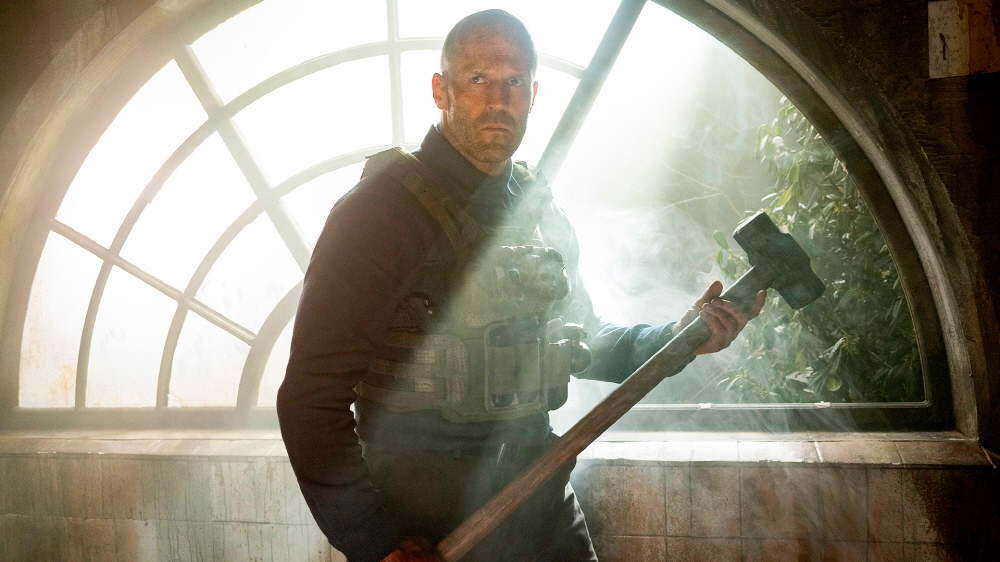
A Working Man (2025) ☆☆1/2(2.5/4): Statham on John Wick mode – no surprise here

David Ayer’s latest movie “A Working Man” is a run-of-the-mill action flick which will not surprise you a lot if you are a seasoned moviegoer like me. As a sort of cross between “Taken” (2008) and “John Wick” (2014), it throws a lot of brutal action into the story while its unstoppable hero goes all the way for accomplishing his personal goal, but you may get bored a bit as observing more of how predictable and superficial it is in terms of story and character.

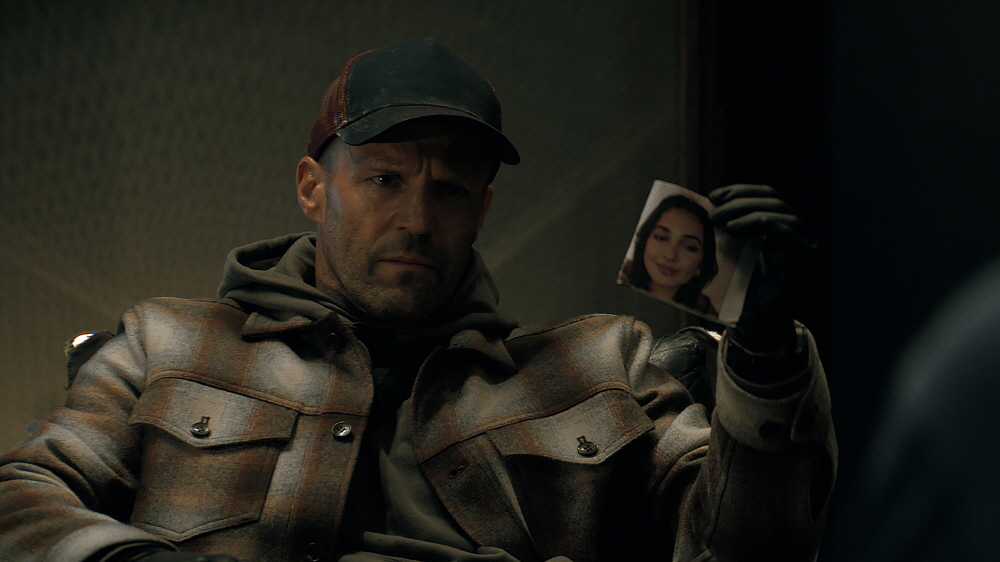
After the opening title whose graphic design looks laughably bland and cheap in my trivial opinion, we are introduced to Levon Cade (Jason Statham), who was once a fearless Royal Marines officer but is now working as a construction foreman in Chicago. As he begins another working day, the movie depicts how much he is trusted and respected by not only those employees working under him but also his boss, but we instantly sense the trouble when his boss’ adolescent daughter is about to have some fun evening time outside after doing some paperwork for her father’s business.

When his daughter is subsequently gone missing, Levon’s boss is quite devastated to say the least. He and his wife immediately report their daughter’s disappearance to the police, but the police are not particularly interested in finding their daughter, and they eventually come to request Levon to do the job instead as soon as possible.

Of course, Levon is very reluctant although he is indeed a man with a particular set of skills required for locating his boss’ daughter. After his wife’s tragic death, he has tried to leave behind his long history of violence for getting the custody of his little daughter, who is being taken care of by his father-in-law at present. Knowing well the violent past of his son-in-law, Levon’s father-in-law does not want his granddaughter to live with Levon at all, and he and Levon have already been conflicting with each other over the custody of Levon’s daughter.

After discussing a bit with one of his old comrades, Levon eventually steps forward for the girl who has been like another daughter to him, and it does not take much time for him to discover that she was taken by several nasty people associated with some of the most dangerous and powerful criminal figures in the city. Needless to say, this discovery does not deter him at all, and his following murderous quest soon draws the attention of the aforementioned criminals, who certainly do not welcome this sudden disruption in their criminal business.

As its hero clashes more and more with his dangerous opponents, the movie naturally provides a number of physical action scenes, and Ayers, who is no stranger to gritty action as shown from his several previous films including “End of Watch” (2012), handles these action scenes with enough skill and mood. At one point later in the film, Levon walks into a lurid bar full of the members of a local biker gang, and you may be amused a bit when the movie shows the gang leader sitting on a big metallic throne reminiscent of the similar one in HBO drama series “Game of Thrones”.

However, the screenplay by Ayer and his co-producer/co-writer Sylvester Stallone, which is based on Chuck Dixon’s 2014 novel “Levon’s Trade”, does not have much substance or personality on the whole. Often grim and ponderous, the story is often too serious about itself to be a pulpy fun, and many of the characters in the film are more or less than cardboard figures to be eliminated in one way or another along the story. Moreover, Levon is not interesting enough to distinguish himself among those countless tough and stoic action movie heroes out there, and that is the main reason why we come to observe his actions from the distance without much care or interest.

At least, you will probably admire how steady Jason Statham is from the beginning to the end. Yes, he is playing another British tough guy here in this film as he has frequently done during last two decades, but he is still capable of exuding his star quality as before, though I must point out that his indelible physical presence was utilized more effectively in Guy Ritchie’s equally grim but more interesting action thriller film “Wrath of Man” (2021). 

Most of the notable main cast members of the film are regrettably under-utilized as often being limited by their thin supporting roles. Michael Peña, who was wonderful with Jake Gyllenhaal in “End of Watch”, is wasted without not much to do on the whole, and the same thing can be said about Jason Flemyng, who once appeared along with Statham in Ritchie’s two crime comedy films “Lock, Stock and Two Smoking Barrels” (1998) and “Snatch” (2000). As Levon’s old comrade, David Harbour simply comes and then goes during his brief appearance, but he manages to steal the show while also enlivening the movie a bit.  

Overall, “A Working Man” turns out to be not as awful as I worried, but it is still not good enough for recommendation. To be frank with you, right after my brain was stimulated so much by Paul Thomas Anderson’s latest film “Battle After One Another” (2025), I needed something to make my brain a bit less active, and “A Working Man” did that job to some degree, but, folks, there are already many other recent action flicks which can provide a lot more dumb fun and excitement than this.

Posted in Movies | Tagged , , , | Leave a comment

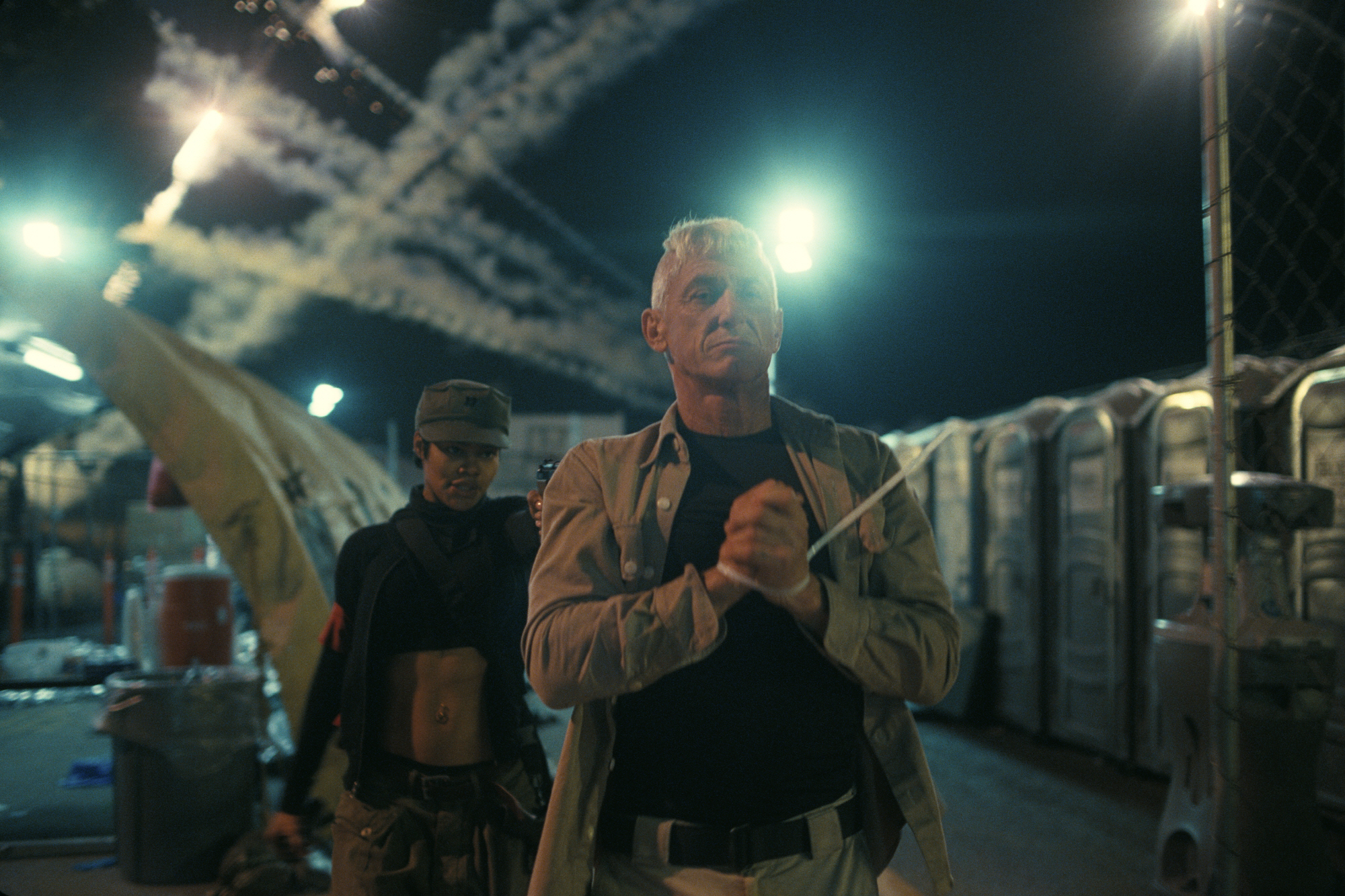
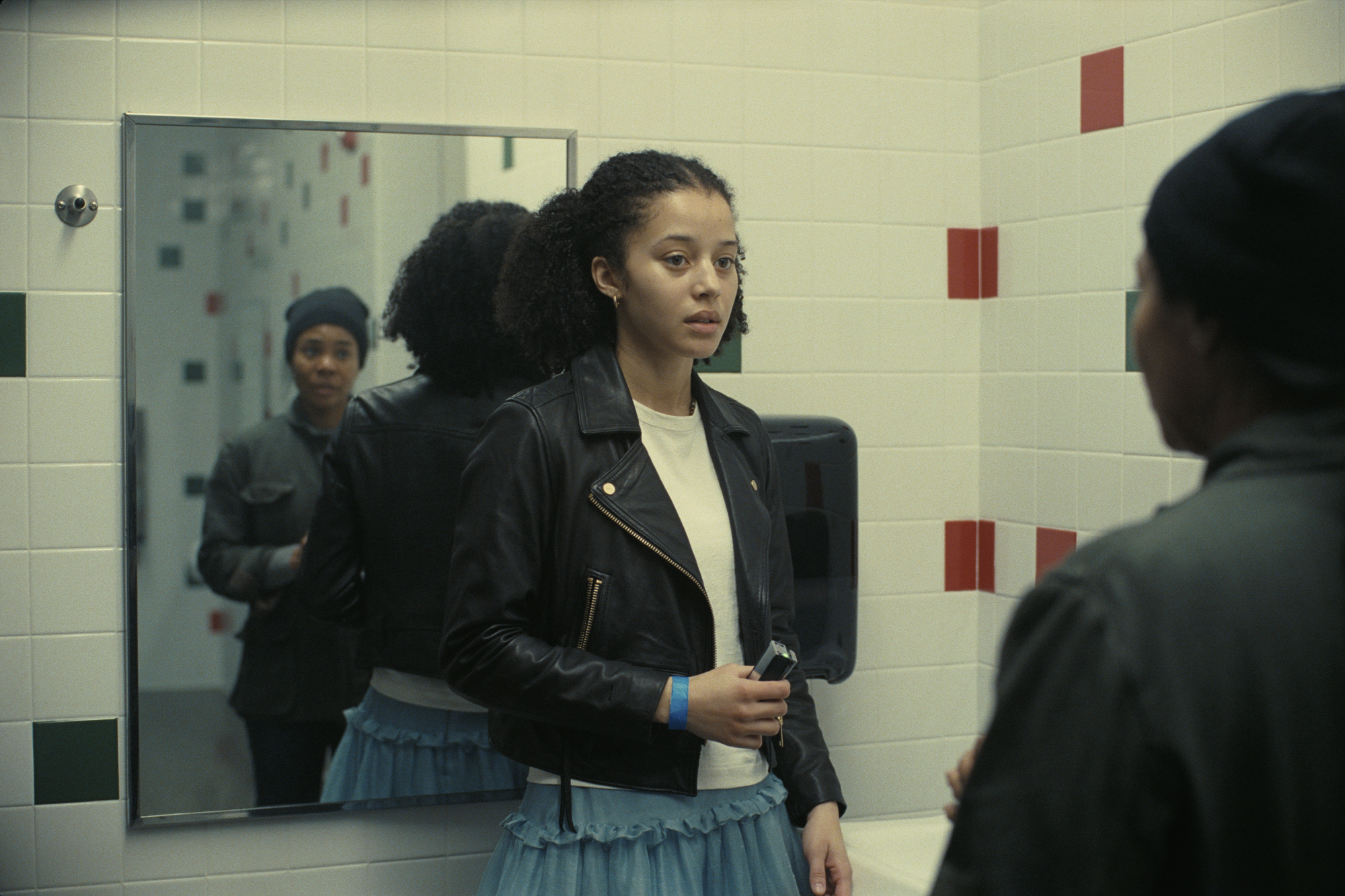
One Battle After Another (2025) ☆☆☆1/2(3.5/4): A full-throttle political genre mix a la PTA

Paul Thomas Anderson’s latest film “One Battle After Another” is a full-throttle political genre mix to captivate and then entertain you in unexpectedly various ways. As he has always done during last three decades since his first feature film “Hard Eight” (1996), Anderson takes another surprising turn for his diverse filmography, and it is quite compelling to observe how ambitiously and brilliantly the movie swings back and forth across many different genre modes while also unabashedly wielding its political ideas on the screen.

The opening part of the film sets the gritty overall tone of the story. A left-wing revolutionary group named “the French 75” attacks a detention center in California for releasing many immigrants held there just for their illegal status, and we are introduced to its several key members including Perfidia Beverly Hills (Teyana Taylor), who is incidentally the fiercest member in the group. While she and her comrades swiftly overpower those soldiers and officers supervising the detention center, an explosive expert named Pat Calhoun (Leonardo DiCaprio) provides some assistance, and the movie does a slick and efficient job of letting us gather the details of their ongoing operation even as a lot of things happen here and there across the screen.

Perfidia and Pat gradually fall in love with each other as they continue to devote themselves to the political cause of their group, but then she gets pregnant. Because she is definitely not the one who can be the mother of the year, Perfidia cannot help but become quite frustrated as struggling to raise her little baby daughter later, but Pat becomes more inclined to settle down along with Perfidia and her daughter. In the end, Pat has to take care of her daughter alone while Perfidia keeps fighting for their political cause as before.

Unfortunately, their situation becomes a lot more serious due to Colonel Steven J. Lockjaw (Sean Penn), who was the supervisor of the detention center and never forgets how Perfidia alternatively humiliates and arouses him during their brief but intense encounter at that time. Quite obsessed with not only having his revenge on Perfidia but also getting his little private satisfaction from her, this sleazy racist dude eventually throws a thorough and ruthless retaliation upon the French 75, and Pat has no choice but to hide away along with Perfidia’s daughter in addition to being separated from Perfidia.

After 16 years, Pat and Perfidia’s daughter are still living under their false identities. Pat is now “Bob Ferguson”, and he becomes a bitter paranoid who is usually occupied with his substance abuse whenever he is not paying attention to his adolescent daughter, who has been quite accustomed to living as “Willa Ferguson” (Chase Infiniti).

On the opposite, Colonel Lockjaw is now more prominent with his anti-immigrant stance and is also about to join a certain powerful group mainly consisting of very rich and influential white guys. After he happens to get the information on the whereabouts of Pat and his daughter, he and his military men quickly go to the city where Pat and his daughter have been hiding for years, while pretending that they are just doing another operation against those numerous immigrants out there in the city.

Around this narrative point, the mood becomes quite tense and volatile to say the least. Many people in the city do not welcome Colonel Lockjaw and his military men at all, and the resulting chaos and pandemonium vividly presented during one particular sequence surely resonate a lot with how the American Society has been shaken up more and more by policemen and soldiers during last several months.

While relentlessly and dexterously juggling many different plot elements without getting lost among them at any point, Anderson’s screenplay, which is inspired by Thomas Pynchon’s 1990 novel “Vineland”, also shows a surprising amount of offbeat humor as Pat struggles to handle his increasingly chaotic situation. While he fortunately has several people to help him, his mind remains rather dopey, and the movie sometimes feels like a hyperactive version of Andersons’ previous film “Inherent Vice” (2014) – especially as there come more intrigue associated with that clandestine group of wealthy white dudes later in the story.

Furthermore, the movie also works quite well as an action thriller film, and this shows us another unexpected side of Anderon’s undeniably broad and immense talent. There are several pulse-pounding vehicle chase sequences in the movie, and all of them are flawlessly executed under Anderson’s firm and confident direction. Often reminiscent of those gritty American action movies of the 1960-70s such as Peter Yates’ “Bullitt” (1968) and William Friedkin’s “The French Connection” (1971), they are filled with a considerable amount of verisimilitude to rattle and then excite you, and they are further accentuated by another unconventional score by Jonny Greenwood, who will be probably Oscar-nominated early in the next year along with his several fellow main crew members including cinematographer Michael Bauman and editor Andy Jurgensen.

Anderson also assembles an impressive array of talented performers for his film. While Leonardo DiCaprio dutifully occupies the center, Sean Penn gives his best performance since his second Oscar-winning turn in Gus Van Sant’s “Milk” (2008) as fearlessly embodying his character’s many unpleasant aspects, and Teyana Taylor, who was utterly unforgettable in A.V. Rockwell’s “A Thousand and One” (2023), is electrifying enough to hover over the story even during her absence. In case of several other substantial cast members, Benicio del Toro, Regina Hall, Eric Schweig, Alana Haim, Wood Harris, and Tony Goldwyn have each own moment to shine, and newcomer Chase Infiniti is also terrific as ably showing considerable potential and talent.

On the whole, “One Battle After Another” is another distinctive work to be added to Anderson’s long and illustrious career. Some good movies can vividly reflect their respective eras in one way or another, and, considering how things become more chaotic and alarming in not only US and but also many other countries, and the movie will probably be regarded as one of the main representatives of our current era. In short, Anderson strikes again, and the result is one of the best films of this year.

Posted in Movies | Tagged , , , | 2 Comments

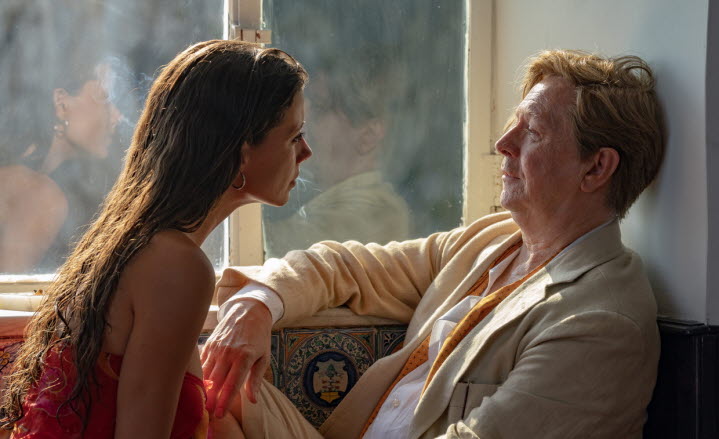
Parthenope (2024) ☆☆1/2(2.5/4): Wandering Beauty 

Paolo Sorrentino’s 2024 film “Parthenope”, which belatedly came to South Korean theaters a few weeks ago, tries something different compared to many of his previous works, and that made me interested to some degree. As shown from “Il Divo” (2008) or “The Great Beauty” (2013), many of Sorrentino’s movies are about aging heroes, but “Parthenope” places a young beautiful lady at its center, and that is sort of refreshing even though the overall result is not satisfying enough in my inconsequential opinion.

The titular character of the film is played by newcomer Celeste Dalla Porta, who instantly grabs our attention with her natural charm and spirit. The opening part of the film shows us when her character, Parthenope Di Sangro, was born to a fairly affluent family in Naples, Italy in 1950, and then the movie instantly moves forward to 1968, when Parthenope is entering adulthood while looking like being quite ready for her upcoming college education.

As your typical natural beauty, Parthenope has certainly attracted the interest of many young guys around her age. While it is apparent that Sandrino (Dario Aita), a close friend of her and her older brother Raimondo (Daniele Rienzo), has been carrying a torch for her for years, she often pays more attention to how she is going to live, and she never responds much to Sandrino’s courtship while merely remaining as a friend to him as before.

Meanwhile, a few older figures come and then go in her life. At a local college, Parthenope impresses an old professor a lot with her intellectual passion, and he willingly becomes a mentor to guide her along the following academic course toward her doctoral degree, though she is also interested in any other possibility in her life besides that.

Several years later, Parthenope goes to Capri along with her older brother and Sandrino, and she is quite excited when she comes across John Cheever (Gary Oldman), a famous American writer who wrote several works admired by her. Although Cheever is your average bitter old drunken man, he and Parthenope come to form a sort of friendship, and he surely has some wisdom to impart to her whenever his inebriated mind becomes a bit more lucid.

And there is a rich old man who is not only the boss of Parthenope’s father but also the godfather of both Parthenope and her older brother. As shown from his extravagant gift in the opening part of the film, he has always loved and cared a lot about his goddaughter, and he and Parthenope get along pretty well with each other as he often cherishes her youthful charm and spirit. 

And then something quite devastating happens to Parthenope, and that leads her to a lot of wandering during next several years. As becoming less interested in her academic career, she tries a bit on becoming an actress, but she is only reminded that this is not exactly what she wants for her life, especially when she encounters an old aging star actress who reveals to Parthenope a lot of bitter personal feelings behind her brash appearance.

While leisurely rolling along with its heroine from one point to another, the movie sometimes intrigues us with a series of oddly striking visual moments to remember. When Parthenope lets herself get involved with a handsome but rather shady lad at one point, we get a brief but dazzling moment filled with a lot of lighted blue baskets descending over a seedy alley, and then we are served with an unnerving sequence where a forced heterosexual copulation is presented in front of a group of older men and women just for an important criminal family business deal.

 However, the movie does not delve that much into its heroine’s personality and humanity as simply following her formative period without much emotional impact. Around the ending, it shows a bit of poignancy as Parthenope and her mentor come to show more affection and respect to each other, but that comes too late to compensate for the rather languid narrative pacing of the story, and the movie feels all the more disjointed with a really bizarre moment involved with her mentor’s private life.

Anyway, Dalla Porta did an admirable job of carrying the movie to end, though the movie does not provide her much to do from the beginning. Thanks to her diligent acting, we sense a bit of how her character gets gradually matured during her wandering period, even though her character is often required to look distant and elusive throughout the film.

In case of a bunch of substantial main cast members, they are mostly limited by their underwritten parts. As the two young main figures in Parthenope’s life, Daniele Rienzo and Dario Aita bring some extra youthful energy to the story, but they are stuck with their thankless supporting roles from the start. Several older performers including Silvio Orlando, Luisa Ranieri, Peppe Lanzetta, Stefania Sandrelli, and Gary Oldman have some nice juicy moments, and Oldman certainly has a bit of fun with his deliberately hammy performance.

In conclusion, “Parthenope” is another disappointment after Sorrentino’s previous film “The Hand of God” (2021), which I was less enthusiastic than many other reviewers and critics. At least, Sorrentino already moved onto “La grazia” (2025) in this year, and I can only hope that this next film of his will impress me more than this disappointing work.

Posted in Movies | Tagged | Leave a comment

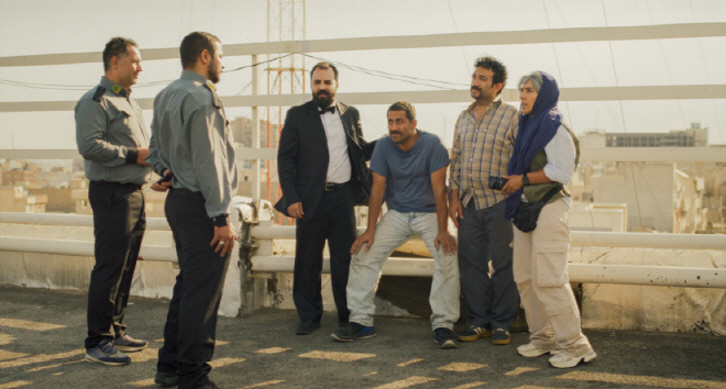
It Was Just an Accident (2025) ☆☆☆1/2(3.5/4): A absurd revenge drama by Jafar Panahi

During last 10 years, I have admired the strenuously defiant artistic efforts of Iranian filmmaker Jafar Panahi. I must confess that I was not so familiar with his filmography when I heard about his ongoing political conflict with the Iranian government around the early 2010s, but his subsequent works such as “Taxi” (2015) and “No Bears” (2022) showed me that he is indeed one of the best filmmakers working in Iran at present, and I was often impressed by how he has managed to keep making interesting movies to watch despite all those limits and obstacles surrounding him and his collaborators.

In case of his latest film “It Was Just an Accident”, which won the Palme d’Or award at the Cannes Film Festival early in this year, it is quite apparent that he will not step back at all in his critical stance against the Iranian government. While looking like a typical revenge drama at first, the movie engages us more than expected as dexterously balancing itself among drama and comedy along the story, and it is certainly another impressive achievement to be added to Panahi’s admirable career.             

At the beginning, we are introduced to a guy driving to his home in the middle of one night along with his pregnant wife and their little daughter. As the camera steadily focuses on their interactions, we get to know these three people bit by bit, and then the quiet mood surrounding them is suddenly interrupted by an unexpected accident involved with some unfortunate dog. As watching this scene, I could not help but amused a little because I happened to watch Christian Petzold’s “Miroirs No.3” (2025) right before watching the movie in the same screening room. That movie also begins the story with a sudden car accident, which leads to the accidental encounter between its two main characters.

That unexpected car accident at the beginning of “It Was Just an Accident” also leads to an accidental encounter, though this encounter is more disturbing in comparison. When it later turns out that his car needs to be repaired, the guy takes his car to a local garage, and then his voice happens to be noticed by a mechanic named Vahid (Vahid Mobasseri), who was once arrested and then tortured for some political protest against the Iranian government. During that grim and horrible time, Vahid was severely brutalized by one particular interrogator, and we come to gather that he has suffered a serious kidney problem in addition to still reeling from the trauma caused by those barbaric tortures and abuses inflicted upon him. 

Although he did not see the interrogator’s face in question during that time, the interrogator’s voice and the squeaking sound of his right prosthetic leg remain quite vividly in Vahid’s mind, and that is why Vahid becomes quite certain that he found the interrogator. Once the guy leaves, Vahid follows after him for getting to know more about him, and then he kidnaps the guy for getting his revenge on the interrogator at last.

At first, it seems that all he has to do is taking the guy to some remote spot outside their city and then killing the guy, but then Vahid comes to have some reasonable doubt as the guy, who gets tied up and blindfolded just in case, keeps insisting that he is not the man responsible for Vahid’s misery and torment. Becoming more aware of the possibility of capturing the wrong man, Vahid eventually decides to get some help from several others who may support or confirm his initial conviction, while his captive is locked in a big wooden box in the back of his shabby van.

We subsequently see several other characters getting involved with Vahid’s increasingly tricky situation, and they turn out to have each own pain and anger as being tortured by the same interrogator during that time. Like Vahid, they never saw the interrogator’s face at that time, but they remember a few recognizable things from him as vividly as Vahid, and their traumatized minds are instantly triggered by what they respectively notice from Vahid’s captive, though both they and Vahid are still not absolutely certain about the identity of Vahid’s captive. 

Now this situation is surely reminiscent of Ariel Dorfman‘s famous play “Death and the Maiden”, and the movie, which gradually feels universal as much as Dorfman’s play, certainly becomes more intense as things get all the more complicated for Vahid and several other characters around him, but it also shows some sense of humor via several moments of sheer absurdity. In case of one particular scene, the movie deftly swings back and forth between absurdity and gravitas in one steady unbroken shot, and it even evokes Samuel Beckett’s classic play “Waiting for Godot” to some degree. 

The story eventually culminates to the inevitable resolution of Vahid and several others’ impossible circumstance, but the movie does not lose any of its narrative momentum under Panahi’s confident direction. The setting of the following climactic part may look pretty simple and plain at first, but the resulting emotional intensity on the screen is overwhelming at times, and then there comes the sublime final shot whose effective sound design you absolutely need to experience at movie theater for good reasons. Panahi also draws excellent performances from Vahid Mobasseri and several other main cast members, and the special mention goes to Ebrahim Azizi, who splendidly handles his crucial moment around the end of the film as we keep oscillating between certainty and doubt along with Vahid.    

In conclusion, “It Was Just an Accident”, which was recently selected as the French submission to Best International Film Oscar, is a seemingly modest but undeniably powerful human drama to remember. In short, this is one of the most compelling movie experiences of this year in my inconsequential opinion, and I am glad that I and many other South Korean audiences can watch this terrific film much earlier than expected.

Posted in Movies | Tagged , , | 2 Comments

Miroirs No. 3 (2025) ☆☆☆(3/4): A minor fun from Christian Petzold

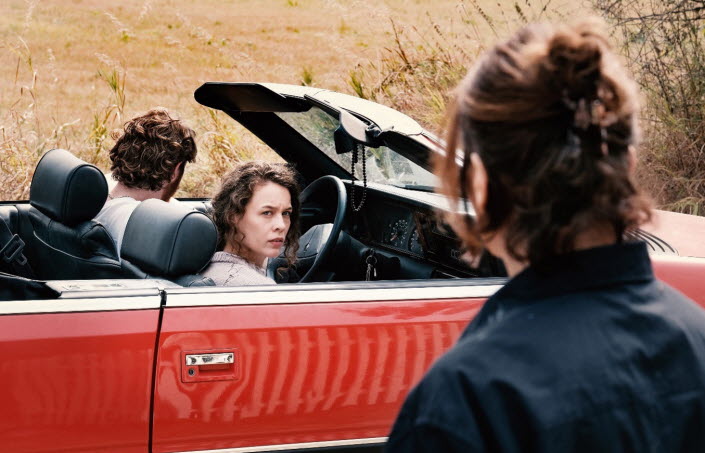
Many of Christian Petzold’s films are interesting for the fascinating psychological tension under their dry and somber mood, and his latest film “Miroirs No.3” is no exception. As revolving around one odd relationship development between its two lead characters, the movie subtly conveys to us whatever is happening between them under the surface, and we come to wonder and care more about what may happen next between them.

At first, the movie introduces us to Laura (Paula Beer), a young woman not so pleased about traveling to somewhere along with her boyfriend and some other couple. In the end, she comes to change her mind, and her boyfriend reluctantly agrees to drive her to a nearby station where she can take a train for going back to Berlin alone by herself.  

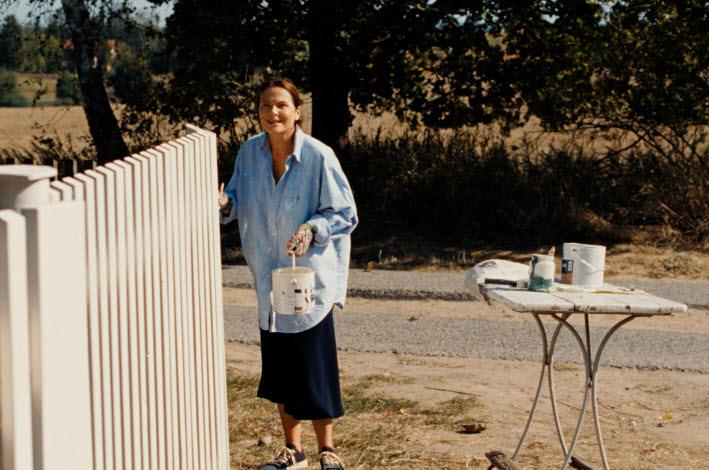
However, something quite unexpected happens in the middle of their drive. When they are passing by some small rural town, they happen to come across some middle-aged woman, who is incidentally painting the white fence of her house. Shortly after this encounter, an unfortunate accident occurs, and Laura’s boyfriend dies while Laura is luckily injured a bit on the whole.

Once she sees what has just happened to Laura, that middle-aged woman quickly calls for help. Her name is Betty (Barbara Auer), and she has no problem at all when Laura, who is quite shocked by the incident, needs a place to stay for more recovery for her mind. She willingly lets Laura into her cozy house with warm hospitality, and Laura surely appreciates the kindness of a stranger, but we sense more of a hidden motive behind Betty, especially when she inadvertently calls Laura by some other name.

As days go by, Laura and Betty become closer to each other, and we get to know a bit more about Betty. She is married, but she lives alone in her house while her husband and their adult son, both of whom are incidentally car mechanics, have been living apart from her due to some personal reason. When Betty later invites them just for introducing them to Laura, they are not so amused because they clearly see whatever is happening between Betty and Laura, though it is evident to us that they still care a lot about Betty despite that. As a matter of fact, they fix a few things including an old washing machine in the kitchen of Betty’s house before they leave, and they come to spend more time with Laura without much complaint.   

However, the movie keeps reminding us that something is not all right beneath the surface. Some town residents stare at Betty and Laura a bit too long without a word when they pass by Betty’s house. Betty’s husband comes to have more private conversations with his wife, and Laura only hears a bit of their conversations as watching them from the distance, while Betty’s son seems quite conflicted about something in his rather sullen appearance.

Around that narrative point, you will probably have a pretty good idea on Betty’s personal motive behind her developing relationship with Laura, but you will also wonder more about how Larua exactly feels about her ongoing situation. While she is not so devastated by her boyfriend’s death as coming to accept that she does not love him as much as she thought, she just seems fine with being taken care of by Betty, who comes to regard Laura more like her own daughter. Is she so desperately alone that she needs anyone who can be someone to lean on? And has she ever wondered why Betty is so nice and kind to her from the very beginning?     

Of course, the movie eventually arrives at the point where both of these two main characters face the true nature of their relationship, and that is where the movie stumbles a bit. In my trivial opinion, the story pulls out its ending a bit too hurriedly, and it may leave you wondering about whatever is exchanged between Betty and Laura in the end.    

Nevertheless, Petzold’s skillfully handling of story and characters continue to hold our attention during the rather short running time (86 minutes). Although it is reported that he shot the film within a few days, the overall result does not feel rough or shabby at all, and he and cinematographer Hans Fromm did a solid job of establishing the tranquil but subtly uneasy atmosphere surrounding the main characters on the screen. 

The main cast members are commendable for ably suggesting the hidden emotional undercurrents among their characters. While Paula Beer, who previously collaborated with Petzold in “Undine”, always brightens up the screen with her distinctive presence, Barbara Auer is splendid as her character gets more emotionally entangled with Beer’s character along the story, and Matthias Brandt and Enno Trebs are also effective in their respective substantial supporting roles. 

 In conclusion, “Miroirs No.3” does not reach to the level of Petzold’s better works such as “Phoenix” (2014) and “Afire” (2023), but it is still recommendable for its engaging mood, storytelling, and performance. If you are familiar with Petzold’s movies, you will instantly see what you will get, and you will probably be satisfied even though it does not exceed your expectation.

Posted in Movies | Tagged , | 1 Comment