
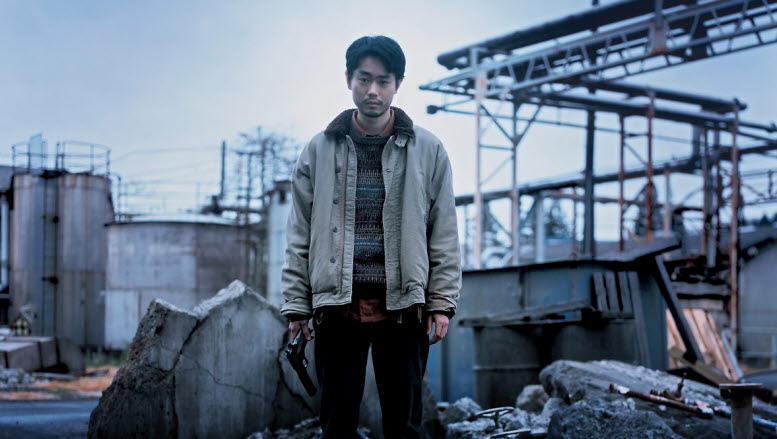
There is usually a creeping sense of uneasiness in the works of Japanese filmmaker Kiyoshi Kurosawa, and “Cloud”, one of the three works from him in 2024, is no exception. At first, you may feel quite frustrated with its rather glacial narrative pacing (Full Disclosure: I did during my viewing), but the movie draws our attention as subtly establishing its uneasy mood, and then things get more interesting once it throws some unexpected plot turns to catch you off guard.
The first half of the story clinically observes the daily life of Ryosuke Yoshii (Masaki Suda), a young factory worker who has gotten some extra cash as an online reseller. The opening scene shows Ryosuke purchasing a bunch of stuffs at a rather cheap price and then selling at a much higher price on the Internet, and, because of this latest big profit of his, he begins to consider leaving his fairly stable factory job even though his supervisor tells him that he can be actually promoted sooner or later.
Once he eventually quits his factory job, Ryosuke prepares for the next step for his online reselling business. He moves to a big house located in some remote place outside the city, and he also hires a local lad to work as his assistant. In addition, his girlfriend also moves into the house along with him, and she is certainly delighted to live in a less stuffy environment, while not asking too much about how he comes to have enough money for renting the house.
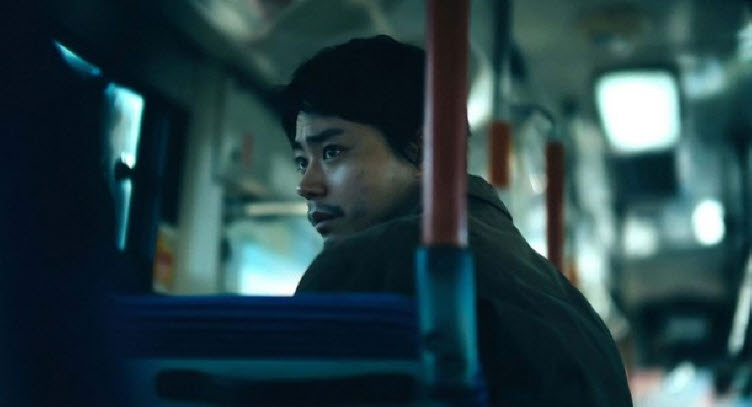
However, we gradually sense trouble along the story. The more money Ryosuke gets, the more paranoid he becomes for understanding reasons, and there are also a series of disturbing incidents which make him all the uneasier than before. In the end, there comes a point where he cannot trust not only his assistant but also his girlfriend, who becomes quite disturbed when their current staying place turns out to be not so cozy or safe at all.
Nevertheless, Ryosuke does not stop at all – even when he comes to learn later that he can be arrested at any point for his shady online business. When there comes another opportunity for big profit, he does not hesitate at all, and we cannot help but notice how many people will spend a lot more money than they planned just because of his petty greed.
And then Kurosawa’s screenplay takes an unexpected narrative turn to our little surprise. I will not go into details here for not spoiling your entertainment, but I can tell you instead that 1) the mood becomes more tense as Ryosuke fatefully faces the consequence of his selfish action and 2) Kurosawa does not disappoint you at all if you are an admirer of his notable works such as “Cure” (1997) and “Tokyo Sonata” (2008), which is incidentally my personal favorite film in Kurosawa’s fascinating filmmaking career.
Although its hero remains quite unlikable to say the least, the second half of the story holds our attention more via its deft mix of suspense and black humor. There are several striking moments of violence, and we come to stay focused on whatever may happen next even though we still observe Ryosuke’s plight from the distance. Furthermore, you will get amused a bit as Ryosuke’s assistant turns out to be much more resourceful than expected, and you may also appreciate a wry sense of dark humor behind the ambiguous last scene between him and Ryosuke, which will make you reflect more on the rest of the story.
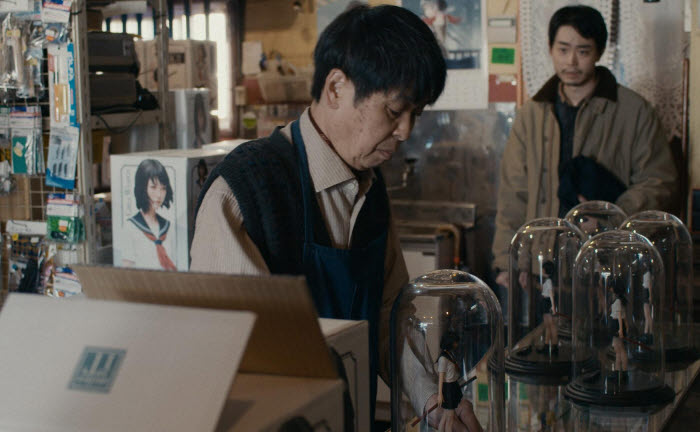
Is this actually a fable on moral corruption and the consequential descent into, well, hell? I am not totally sure about that even at this point, but I enjoy how Kurosawa deftly rolls the story and characters from one unexpected moment to another, and his main cast members firmly stick to the dry overtone of his movie. While Masaki Suda diligently holds the center as required, Kotone Furukawa and Daiken Okudaira are effective as the two crucial supporting characters in the story, and Okudaira is particularly good as his character gradually reveals himself as someone much more cynical and amoral than Ryosuke later in the story.
I must admit that I admire “Cloud” instead of loving it, but I come to reflect more on how Kurosawa, who is incidentally not related to Akira Kurosawa, has been one of the most interesting filmmakers in our time for many years. Although I belatedly came to know about him via “Tokyo Sonata” in 2009, I began to admire him more after watching his subsequent films such as “Creepy” (2016) and “Wife of a Spy” (2020). In case of “Cure”, I am still scratching my head about what actually makes it feel so uneasy and disturbing, but I am also quite impressed by how dexterously Kurosawa sets and then develops the insidious tone along its increasingly baffling narrative. In fact, I can somehow understand how this disturbing masterwork has influenced so many notable filmmakers out there including Bong Joon-ho, who surely learned a lot about mood and storytelling from the works of Kurosawa as shown from his notable films such as “Memories of Murder” (2003) and, yes, “Parasite” (2019).
In conclusion, “Cloud” is a quintessential work from Kurosawa, and now I have some expectation on “Chime” (2024), a short film which is another work from him in 2024 and is currently being shown in South Korean theaters now. After these two works and “Serpent’s Path” (2024), Kurosawa has already moved onto working on his next film to be released in this year, and he will probably strike and impress us again as usual.


 Seongyong's Private Place